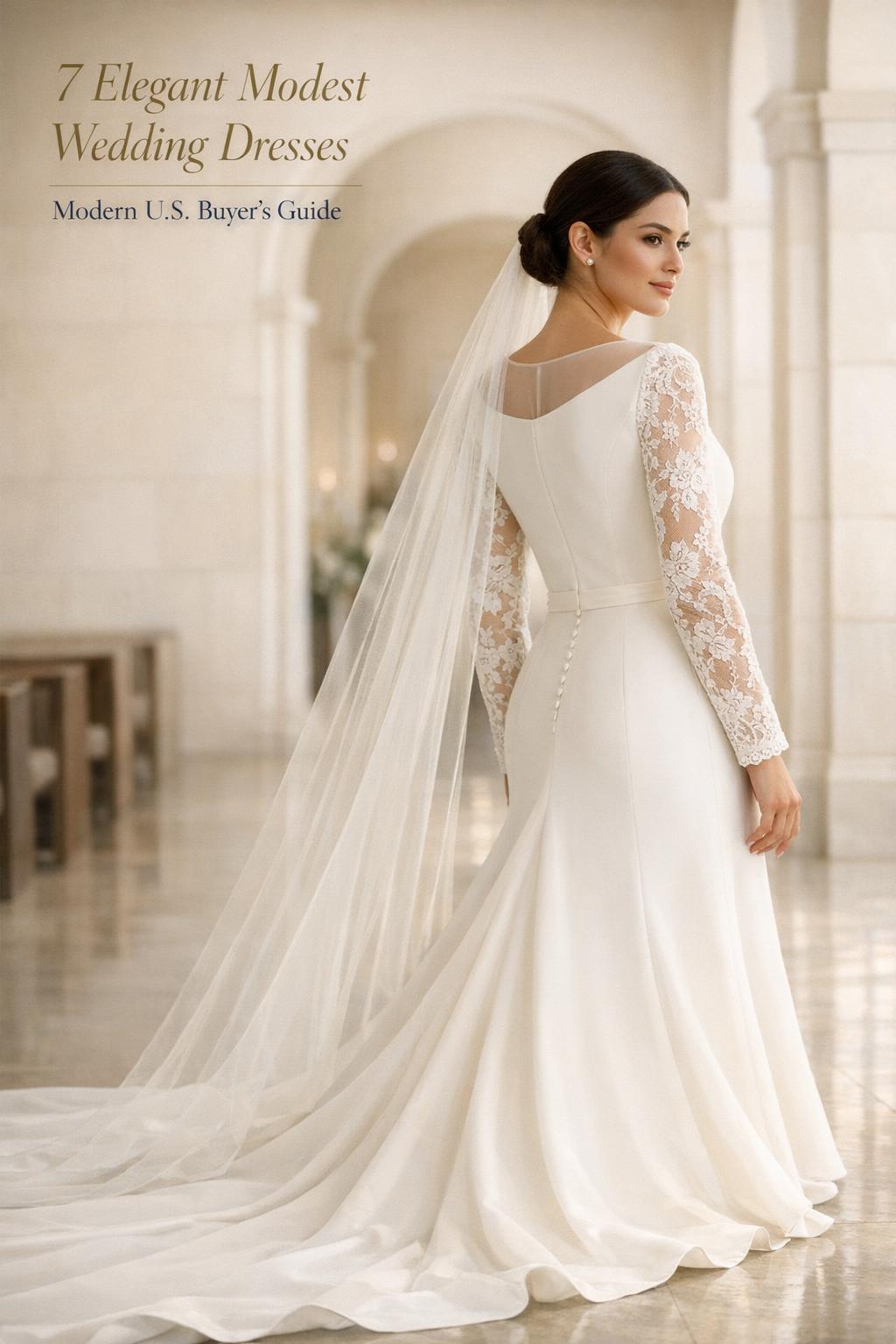
7 Elegant Modest Wedding Dresses: Modern U.S. Buyer’s Guide
Elegant Modest Wedding Dresses: A Modern Buyer’s Guide for U.S. Brides
Elegant modest wedding dresses sit at the perfect intersection of refined design and intentional coverage. If you’re shopping for a gown that feels timeless, elevated, and comfortable in more conservative settings, modest doesn’t mean minimal impact—it often means cleaner lines, richer fabrics, and thoughtful details that photograph beautifully.
This guide is designed for brides who want both inspiration and clarity: how to identify truly elegant modest wedding gowns, how to choose silhouettes, sleeves, and necklines that align with your venue and personal comfort, and how to shop efficiently using filters like sleeve type, neckline, silhouette, and budget.
Whether you’re drawn to classic lace, sleek crepe, satin structure, airy tulle, or illusion details that provide coverage with a light feel, you’ll find practical ways to narrow down your choices—plus tips for sizing, alterations, and styling with veils, boleros, and jewelry.
What Makes a Dress “Elegant” and “Modest”
In bridal fashion, “modest” generally points to coverage—often in the neckline, back, and sleeves—while “elegant” is about refined design choices that feel intentional rather than restrictive. Many modest bridal gowns achieve this with structured silhouettes, elevated fabrics like lace, crepe, satin, organza, and tulle, and finishing touches such as beadwork, pearls, or floral appliqués.
The most elegant modest wedding dresses typically emphasize balance: a higher neckline paired with a fitted waist, long sleeves paired with a clean skirt, or an illusion panel that keeps the look light while still meeting coverage goals.
Coverage can show up in different ways, which is why modest doesn’t have one single “look.” It can be romantic (lace sleeves and a full skirt), modern (high neckline and sheath shape), or classic (satin ball gown with long sleeves). What matters most is how the gown supports your comfort and the tone of your ceremony while still feeling like you.
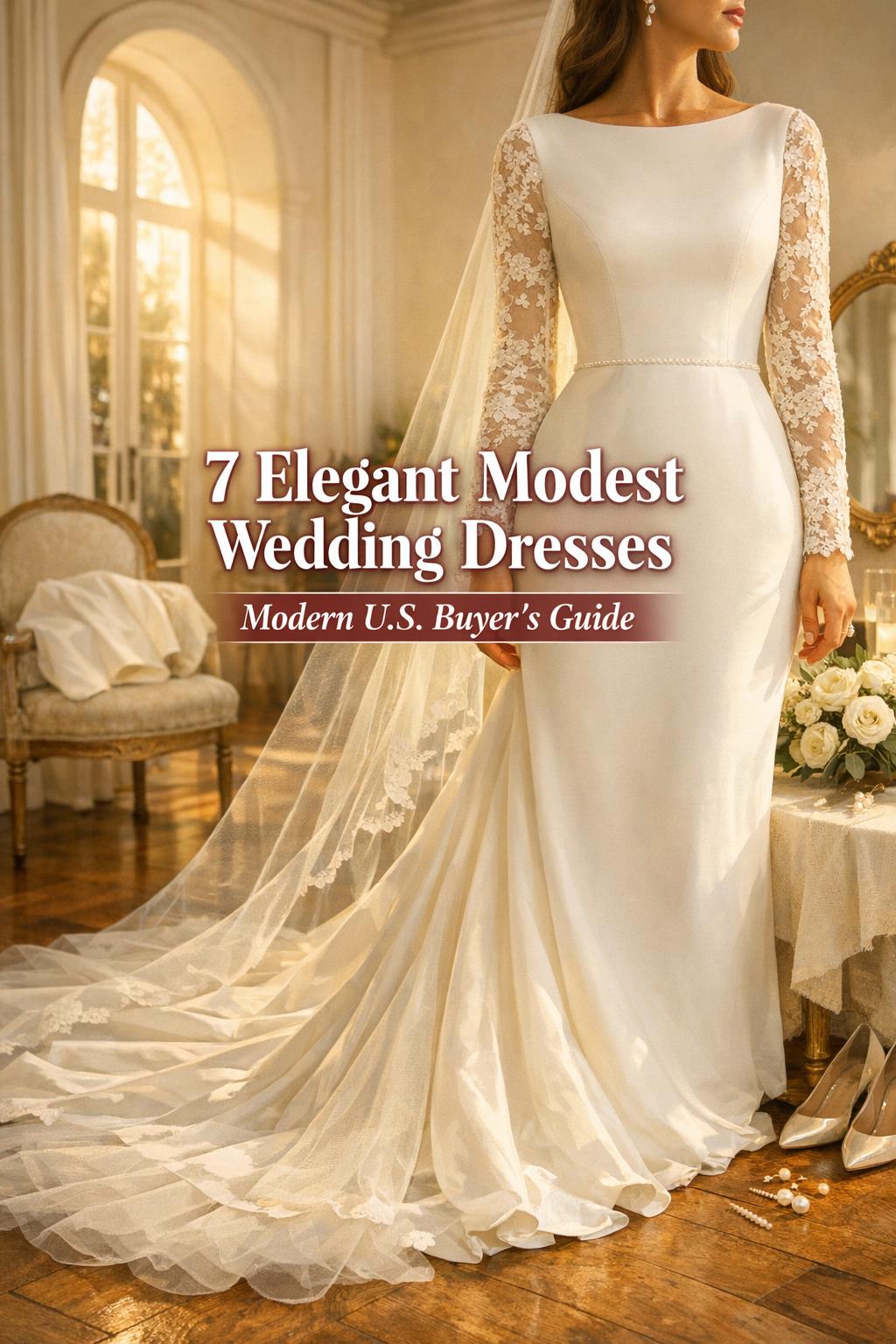
Best-Selling Silhouettes for Modest Brides
Silhouette is one of the fastest ways to narrow your options because it determines the overall mood of the gown. Modest wedding dresses appear across all core silhouettes—A-line, ball gown, mermaid/trumpet, and sheath/column—often distinguished by sleeve length, neckline height, and back coverage.
A-Line and Princess-Cut Elegance
A-line gowns (often described as princess-cut in bridal shopping) are a common choice for modest styling because they’re naturally balanced: fitted at the bodice and gently flared through the skirt. That shape makes it easy to pair with high necklines, boat necklines, long sleeves, cap sleeves, or elbow sleeves without overwhelming the frame.
If you’re comparing options and want a silhouette that feels formal without being overly dramatic, a modest A-line dress is a strong starting point. Lace bodices with sleeves, crepe skirts with clean lines, and tulle overlays all work well in this category depending on whether you want romantic texture or minimalist polish.
Ball Gown Romance with Coverage
The modest ball gown wedding dress is for brides who want unmistakable ceremony presence: a structured bodice and a full skirt that reads traditional and elevated. Modesty features often show up as high necklines, long sleeves, or more covered backs—details that suit formal settings and traditional ceremonies.
Ball gowns can feel especially elegant when coverage is paired with intentional finishing: lace placement that frames the neckline, beadwork that catches light, or satin that creates a smooth, polished surface. If you love the romance of volume, this silhouette is one of the easiest places to add coverage without losing drama.
Mermaid/Trumpet with Moderate Coverage
A modest mermaid wedding dress (or trumpet) is about shape and sophistication. While this silhouette is more fitted through the torso and hips, modesty can be achieved through design choices like long sleeves, higher necklines, illusion panels, and more covered backs. The result is a gown that feels sleek and formal with controlled exposure.
This silhouette often pairs beautifully with lace sleeves, detailed bodices, or crepe for a cleaner look. If your venue is more formal—or if you want a refined look that still feels modern—mermaid/trumpet with modest coverage can be a strong match.
Sheath and Column with High Necklines
Sheath and column gowns lean streamlined and contemporary, and they’re especially suited to high necklines, boat necklines, and illusion necklines. A modest sheath wedding dress can look extremely elevated when the lines are clean and the fabric choice is intentional—crepe is a common direction for a sleek finish, while lace can add softness and texture.
If you want modesty without extra volume, this silhouette keeps the look refined. Many brides also like sheath/column options because they can feel lighter and less structured while still reading as formal through tailoring and finish details.
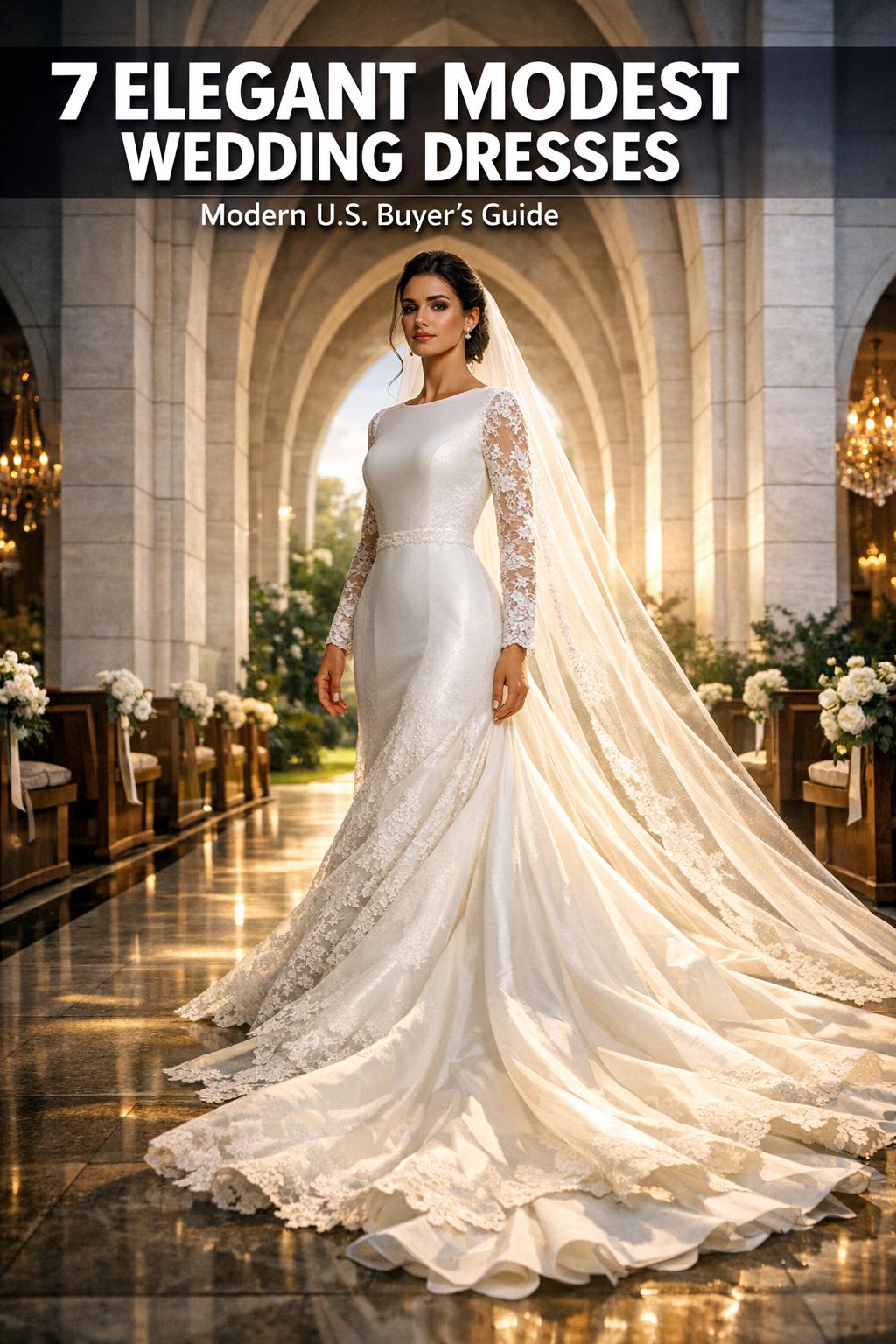
Necklines & Sleeves: The Modest Styling Toolkit
When brides search for covered wedding dresses or conservative wedding dresses, they’re often really looking for specific neckline and sleeve combinations. These elements do more than provide coverage—they shape the overall aesthetic. The same silhouette can feel vintage, romantic, or minimalist based on whether it’s paired with a lace high neck and long sleeves or a simple boat neck with elbow-length sleeves.
High Neck, Boat Neck, and Illusion Necklines
High necklines are a cornerstone of modest wedding gowns, especially for traditional ceremonies. They offer a polished, composed look that can feel timeless in lace or very modern in crepe. Boat necklines create a wider, elegant line across the collarbone and can be a graceful option for brides who want coverage without a fully closed neckline.
Illusion necklines are often used to maintain coverage while keeping the design airy. They can support lace motifs, beadwork, or appliqués, and they’re frequently paired with long sleeves to create a cohesive modest look that still feels light on the body.
Long Sleeves, Lace, and Coverage Details
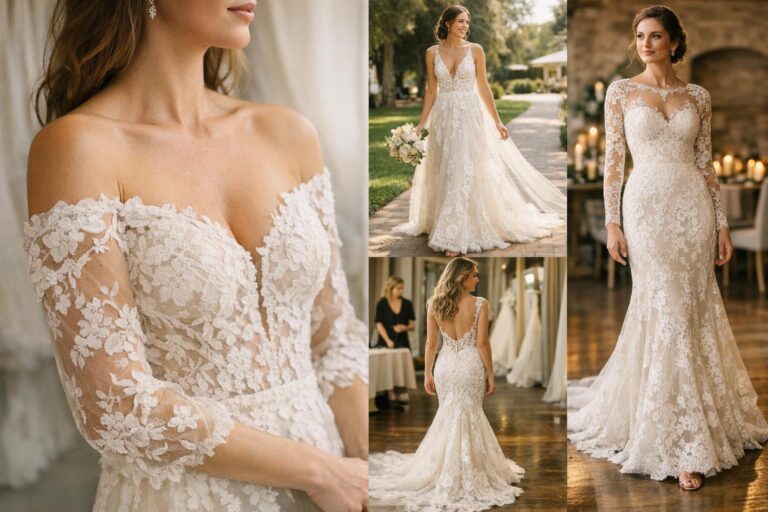
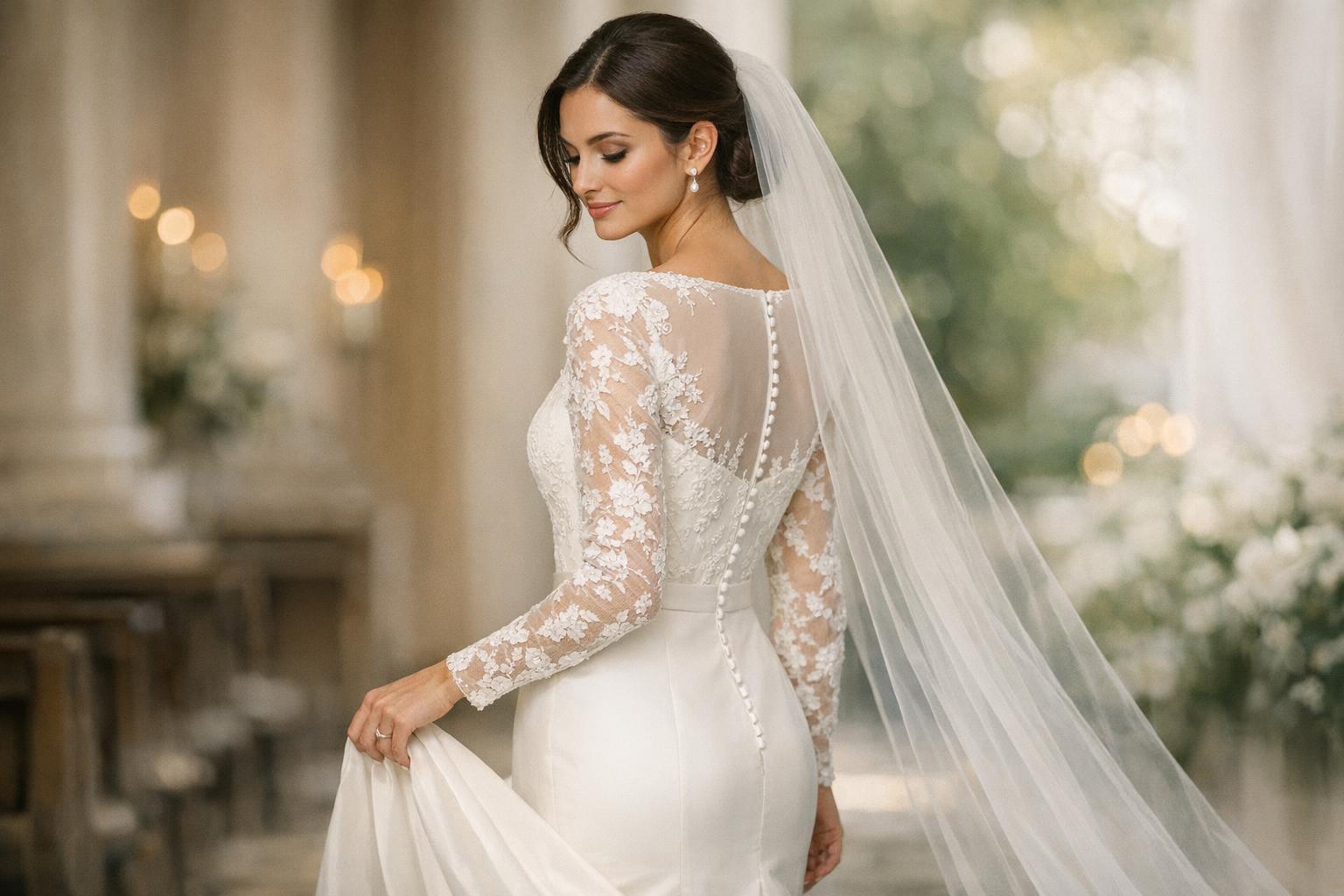
Elegant modest wedding dresses with long sleeves are consistently sought-after because they feel formal and balanced. Long sleeves can be structured and clean, or delicate in lace. In many modest bridal gowns, lace sleeves are used to create texture and softness while still meeting coverage preferences.
Coverage details also matter: cuffs, edge finishing, and how lace motifs meet the hand can shift the look from “pretty” to truly refined. If you’re choosing between multiple long-sleeve dresses, pay attention to whether the sleeve design feels integrated with the bodice rather than added as an afterthought.
Cap to Elbow Sleeves: Balance and Movement
Not every modest look requires long sleeves. Cap sleeves, short sleeves, and elbow sleeves can be a great middle ground: they add coverage and structure while allowing more movement and breathability. These sleeve lengths often pair well with A-line silhouettes and can be especially flattering when balanced by a higher neckline or a more covered back.
If you want a modest look that feels less traditional and more transitional, consider sleeves that stop above the wrist paired with lace or a smooth fabric like satin or crepe. That combination can read timeless without feeling heavy.
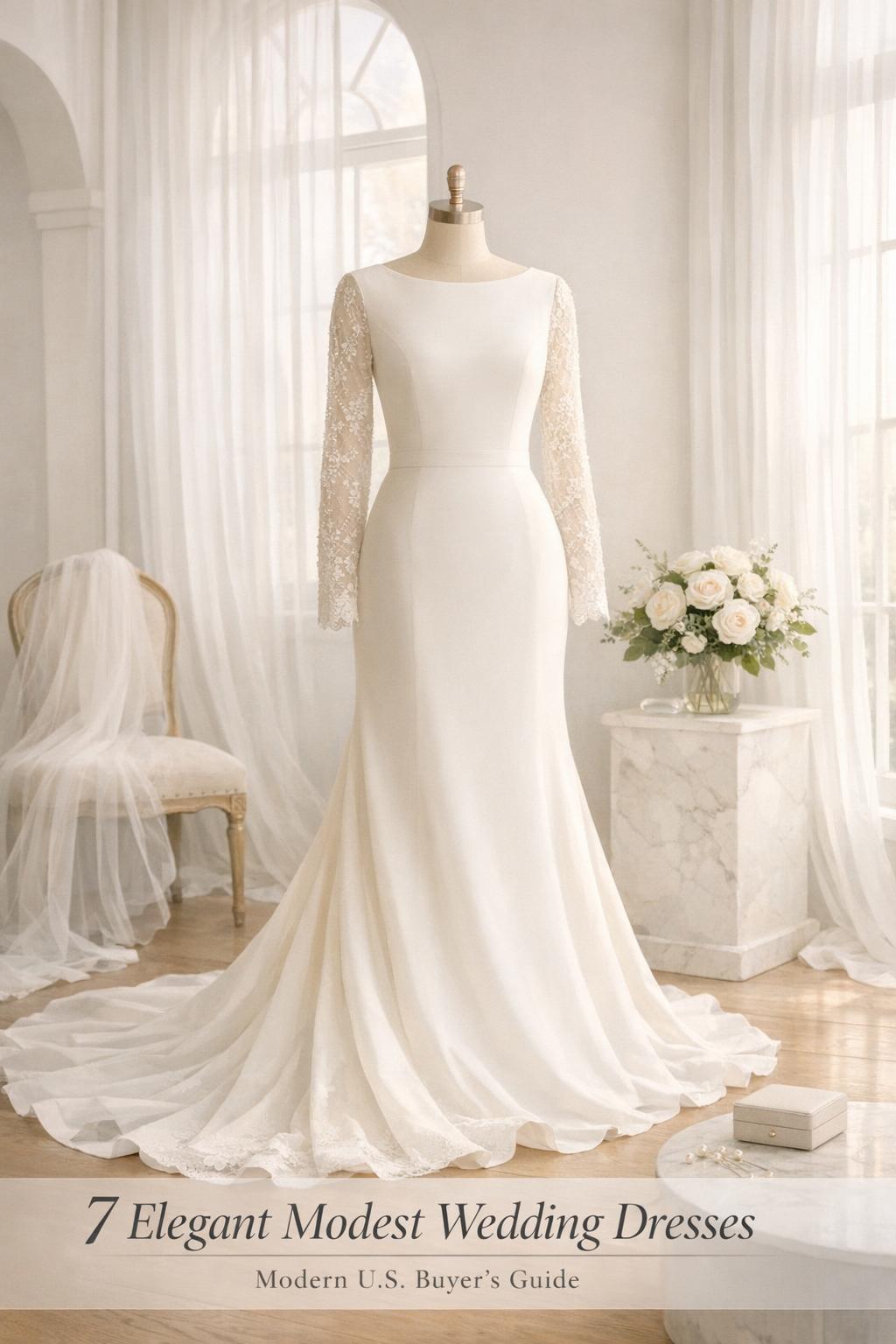
Fabrics and Finishes for Elegant Modesty
Fabric choice can do as much for “elegance” as silhouette. Modest wedding dresses often shine when the material and finishing details are intentional—lace that’s placed with care, crepe that lays smoothly, satin that holds structure, tulle that creates soft volume, or organza for a light, formal presence. Illusion panels can add coverage while keeping the look delicate.
Lace, Satin, Crepe, Tulle, Organza, and Illusion Panels
Lace is one of the most common choices for a classic lace modest wedding gown because it adds texture and detail without requiring a lower neckline or exposed back. Satin is often chosen for a clean, classic look that reads formal, while crepe supports modern minimalism through smooth lines. Tulle and organza can create volume and movement in skirts—especially in A-line and ball gown silhouettes—while illusion panels offer a lighter way to add coverage at the neckline or sleeves.
- Lace: romantic texture and detail across bodices, sleeves, and overlays
- Satin: polished structure and a classic, refined surface
- Crepe: smooth, modern lines for sheath and minimalist silhouettes
- Tulle/organza: airy volume and softness in skirts and trains
- Illusion: coverage that feels light, often paired with appliqués or beadwork
Embellishments: Beading, Pearls, and Floral Appliqués
Embellishments are where modest gowns can quietly become unforgettable. Beading can add dimension at the bodice or cuffs, pearls can soften a high neckline, and floral appliqués can create a romantic, garden-inspired effect even in more conservative designs. The key is cohesion: embellishment should highlight the dress architecture rather than distract from it.
If you’re choosing between similar modest silhouettes, embellishment placement is often the deciding factor. Concentrated detail at the bodice draws focus upward, while scattered appliqués can guide the eye through the skirt in a more subtle, flowing way.
Lace Pattern, Edge Finishing, and Train Length
Small finishing choices often separate “nice” from “elegant.” Lace pattern scale affects how bold or delicate the dress reads. Edge finishing—how lace meets skin at an illusion neckline, how hems are handled, and how sleeve cuffs are completed—contributes to a polished look. Train length also changes the level of formality: longer trains typically feel more ceremonial, while shorter trains can feel simpler and easier to manage.
Tip: When you’re torn between two dresses online, focus on finish details you can see even in photos—neckline edges, sleeve cuffs, and lace transitions. Those are the areas that most often reveal how refined the construction appears.
How to Shop: Filters, Budget Planning, and Buying Tips
Most brides shopping for modest wedding dresses are balancing several constraints at once: coverage preferences, venue expectations, style goals, timing, and budget. Shopping becomes much easier when you treat the process like narrowing a search—starting with silhouette and coverage requirements, then refining by fabric, embellishment level, and price tier.
Use Filters Like a Pro: Silhouette, Sleeve, Neckline, Lace, and More
Many stores and designer catalogs organize modest wedding gowns as a dedicated collection, and some provide filters that make it faster to find what you need. Even if you love browsing, using filters can prevent “option overload,” especially if you already know you want long sleeves or a high neckline.
- Start with silhouette (A-line, ball gown, mermaid, sheath/column)
- Select sleeve length (long sleeves, cap sleeves, elbow sleeves)
- Narrow neckline (high neck, boat neck, illusion)
- Choose fabric direction (lace, satin, crepe, tulle, organza)
- Decide on embellishment level (minimal vs beaded/appliqué detail)
Tip: If you’re shopping for conservative bridesmaid-friendly modesty in a bridal gown (more coverage at the back and neckline), prioritize neckline and back coverage first. Those are typically harder to alter than hem length or skirt volume.
Budget Tiers for Modest Gowns (Under $999, $1000–$1999, $2000+)
Budget matters, and modest styling exists across price ranges. Some brides search for affordable modest wedding dresses under $500, while others are comparing premium designer collections. A practical approach is to decide your comfort zone early and then focus on the details that matter most to you within that tier—such as sleeve construction, lace density, or beadwork.
Within any tier, you’ll often find that cost correlates with the complexity of fabrics and finishes: intricate lace layouts, detailed beadwork, and more complex sleeve construction can raise the overall price. If your priority is a refined look on a tighter budget, consider focusing on clean crepe or satin lines with one standout feature (like a high neckline or elegant sleeves) rather than trying to maximize every detail at once.
Size Inclusivity and Alteration Readiness
Even the most timeless wedding gowns typically require some tailoring. Modest bridal gowns add a few extra considerations: sleeve length, neckline comfort, and how the bodice sits when you move your arms. When browsing, look for designs that appear structurally compatible with your needs so that alterations refine rather than rebuild.
Tip: When you try on a long-sleeve modest gown, raise your arms, sit, and turn your torso. If the neckline feels restrictive or the sleeve pulls at the shoulder, it’s a signal to consider a different sleeve design or a bodice structure that better supports movement.
Lead Times, Return Policies, and Customization Options
Bridal shopping often involves planning around timelines, and modest gowns may include details that take longer to produce or tailor—especially sleeves, lace placement, or intricate embellishment. Before committing, review lead times and return policies so your timeline stays realistic. If your ideal coverage isn’t available off-the-rack, ask about customization options that adjust sleeves, necklines, or coverage details in a way that keeps the overall look cohesive.
Tip: If your ceremony date is approaching, prioritize gowns that already meet your coverage preferences rather than assuming major modifications will be simple. Smaller changes (like hem or minor fit adjustments) are typically easier than reshaping a neckline or redesigning sleeves.
Venue and Ceremony Matching: Choose Modest Elegance That Fits the Setting
Many brides searching for modest wedding dresses are doing so because of the ceremony setting—often a church or a more traditional venue—but modest elegance works everywhere when the styling matches the formality and atmosphere. The goal is alignment: your silhouette, fabric, and embellishment level should look intentional in your space.
Church and Traditional Ceremonies
For traditional settings, high necklines, long sleeves, and more covered backs often feel most at home. Lace, satin, and structured silhouettes (A-line or ball gown) can reinforce the formal tone. If you want a timeless wedding gown that feels ceremonial, consider a dress with refined finish details and a train length that matches the scale of the venue.
Garden and Outdoor Weddings
Outdoor venues can pair beautifully with lace and floral appliqués, especially when the silhouette is easy to move in. A-line shapes in tulle or organza often feel light and romantic while keeping modest coverage through sleeves or higher necklines. Illusion details can also help maintain a modest look without feeling heavy.
Ballroom and Formal Evening Events
Ballrooms and evening venues typically support more structure, more polish, and more dramatic detailing. Satin, beading, and a defined silhouette—whether a full ball gown or a sleek mermaid—can read especially elegant. Modesty in these settings often looks strongest when the gown’s coverage is paired with intentional glamour through finish and fabric choice.
Color, Veils, and Accessories That Elevate Modesty
Accessories can transform modest bridal gowns from simple to striking, especially when they reinforce your dress’s design language. Many modest dresses already bring strong structure through sleeves and necklines, so accessories should complement rather than compete. Focus on cohesive color tones, fabric harmony, and a balanced level of shine.
Ivory, Champagne, and Subtle Shades
Modest wedding dresses are frequently offered in classic bridal color directions like ivory and champagne, plus other subtle variations. If your gown uses lace and illusion panels, keep an eye on how the lace color layers over the underlay; that contrast can shift the look from soft and blended to more defined and graphic.
Boleros, Jackets, and Long Veils
Boleros and jackets can provide an extra layer of coverage or warmth while adding dimension to the look. A long veil can also amplify the elegance of a high neckline or long sleeves, creating a traditional, formal finish without needing extra embellishment on the gown itself.
- Choose a bolero or jacket that matches your gown’s fabric direction (lace with lace, satin with satin, or a clean overlay with crepe)
- Use a veil to add ceremony drama if your dress is minimalist
- If your dress has heavy beadwork or appliqués, consider simpler accessories for balance
Jewelry and Footwear Pairing Tips
High necklines often shift the best jewelry choice away from statement necklaces and toward earrings or hair accessories. If your gown includes beadwork or pearls, echo that tone with subtle shine rather than adding a competing focal point. Shoes can be chosen for comfort and confidence—especially if your ceremony includes standing, walking, or dancing—while staying consistent with the formality of the dress.
Tip: If you’re wearing a high neckline with lace sleeves, try your full look together (dress + veil + earrings). This is the fastest way to see whether the overall effect is refined or visually busy.
Alterations and Fit: A Practical Guide for Modest Gowns
Fit is where modest gowns either feel effortless or distracting. Because modest wedding dresses often include sleeves, higher necklines, and more structured bodices, tailoring should prioritize comfort and mobility as much as shape. The goal is to preserve the designer’s line while making the gown feel like it was built for you.
Common Alteration Priorities for Modest Bridal Gowns
Most brides start with hem and bodice fit, but modest designs add extra checkpoints. Sleeves should allow natural movement at the shoulder and elbow, and necklines should sit smoothly without gaping or feeling restrictive. If the gown includes illusion panels, ensure the transition areas lie flat and look clean from multiple angles.
- Bodice fit: secure support without digging or pulling
- Neckline comfort: smooth lay and stable coverage during movement
- Sleeve mobility: raise and lower arms comfortably
- Hem and train: appropriate length for ceremony and reception flow
- Back coverage: lies flat, closes cleanly, and stays aligned
Tips for Brides Considering Coverage Adjustments
Sometimes a dress is nearly perfect but needs small coverage refinements. The best results usually come from changes that work with the gown’s existing design language, like extending a lining beneath lace, adjusting an illusion panel, or selecting a coordinating layer. When the modification matches the original fabric and finish, it looks intentional and elegant.
Tip: If you’re considering changing a neckline or sleeve construction, prioritize options that keep the same visual motifs—such as repeating lace patterns or matching edge finishing. Consistency is what preserves an elevated look.
Quick Start: Pick Your Look in 60 Seconds
If you want a fast way to narrow your search, use these prompts to identify your most likely match. You can treat the result as your starting category, then refine by fabric and finish details.
- If you want the most universally balanced look, start with an A-line modest wedding gown with sleeves and a higher neckline.
- If you want maximum ceremony presence, start with a modest ball gown wedding dress with a high neck, long sleeves, and a more formal fabric direction.
- If you want sleek modern elegance, start with a modest sheath wedding dress in crepe with a high neckline or boat neckline.
- If you want a fitted, formal silhouette, start with a modest mermaid wedding dress with controlled coverage (long sleeves or illusion details).
Tip: Decide your “non-negotiables” first—sleeve length, neckline height, and budget tier—then let everything else be flexible. This approach keeps you focused without limiting you to just one style.
Building a Personal Shortlist: A Simple Decision Checklist
As you browse collections of modest wedding dresses, it’s easy to save dozens of options and still feel unsure. A shortlist works best when every saved gown is saved for a specific reason tied to your priorities: silhouette, coverage, fabric, and the vibe you want (timeless, refined, graceful, or modern).
The 8-Point Shortlist Test
Before you commit to trying on or ordering, check whether each dress meets your core needs and feels cohesive overall.
- Silhouette matches your comfort level (A-line, ball gown, mermaid, sheath/column)
- Neckline provides your preferred coverage (high neck, boat neck, illusion)
- Sleeve choice aligns with your modesty goal (long sleeves, cap sleeves, elbow sleeves)
- Fabric direction supports the mood (lace, satin, crepe, tulle, organza)
- Embellishment level feels balanced (beading, pearls, appliqués, or minimal)
- Back coverage aligns with your preference
- You can picture it in your venue
- It fits your budget tier and timeline
Tip: Limit your shortlist to 10 gowns max. Then choose your top 3 by asking one question: which dress still feels elegant and comfortable when you imagine wearing it for the entire day?
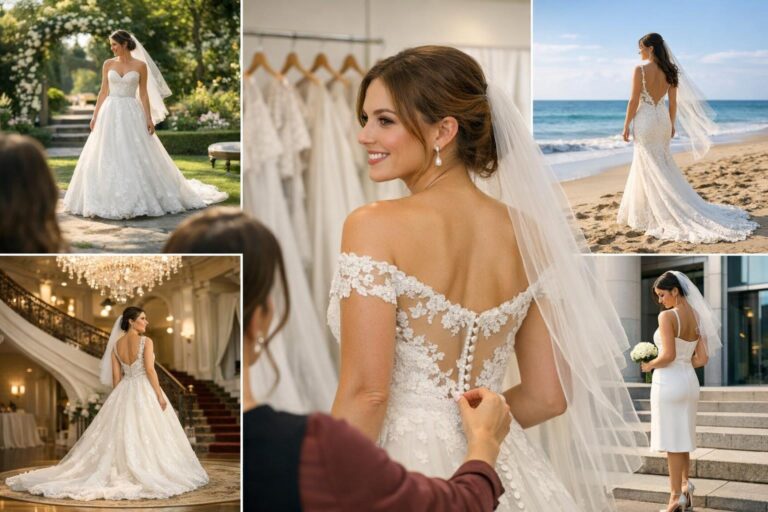
Real-Bridal Gallery: Elegant Modest Gowns in Action (Ideas to Recreate)
Even without a full photoshoot in front of you, you can think like a stylist and build “real-bride” looks using proven modest elements: silhouette, sleeves, neckline, and a finishing accessory strategy. The goal is to create a look that feels authentic, not costume-like—elegant modesty that reads naturally in photos and in person.
Look Idea 1: Timeless Lace + Long Sleeves for a Formal Ceremony
Start with a classic lace modest wedding gown featuring long sleeves and a higher neckline. Keep accessories refined: a veil for ceremony drama and minimal jewelry to let lace texture stay the focal point. This look is consistently associated with a graceful, traditional mood.
Look Idea 2: Modern Minimal Crepe + High Neckline for a Clean, Refined Statement
Choose a sheath or column silhouette in crepe with a high neckline or boat neckline. Keep embellishment minimal and focus on clean lines and fit. Add a long veil if you want to increase formality without adding beadwork or heavy appliqués.
Look Idea 3: Romantic A-Line + Illusion Details for Lightness with Coverage
Pick an A-line dress with illusion at the neckline and lace motifs that provide coverage while keeping the look airy. Pair it with subtle accessories and let the illusion and lace finishing create the elegance. This direction often feels both classic and modern depending on lace scale and sleeve choice.
Look Idea 4: Ballroom Glamour with Modest Structure
Opt for a modest ball gown wedding dress with satin structure or a richly detailed bodice. Add sparkle thoughtfully through beadwork or pearls rather than layering multiple statement accessories. The silhouette provides the drama; your styling provides the polish.
Tip: If you’re unsure whether your look is “too much,” remove one element: either reduce jewelry or choose a simpler veil. Elegance often shows up when the design breathes.
FAQ
What defines a dress as “modest”?
A modest wedding dress is typically defined by more coverage in areas like the neckline, back, and sleeves, such as high necklines, boat necklines, long sleeves, and covered backs, while still maintaining a bridal, formal feel through silhouette and fabric choice.
Are elegant modest wedding dresses only traditional-looking?
No—modest bridal gowns can be timeless and traditional in lace and ball gown silhouettes, but they can also look modern and refined in clean fabrics like crepe with high necklines and streamlined sheath or column shapes.
What silhouettes are most popular for modest wedding gowns?
Common silhouettes for modest wedding dresses include A-line, ball gown, mermaid/trumpet with controlled coverage, and sheath/column styles that often pair well with high necklines and sleeves.
Do modest gowns require special undergarments?
They don’t require special undergarments by default, but fit and comfort matter—especially with structured bodices, sleeves, and higher necklines—so it’s helpful to choose undergarments that support smooth lines and allow comfortable movement.
Can modest wedding dresses be customized for more coverage?
Many brides explore customization to adjust sleeves, necklines, or coverage details, and the most elegant results usually come from modifications that match the gown’s existing fabric, lace patterns, and edge finishing so the final look stays cohesive.
What should I prioritize when shopping for elegant modest wedding dresses with long sleeves?
Prioritize sleeve comfort and mobility, neckline stability, and cohesive design where the sleeves look integrated with the bodice, then refine by fabric choice (like lace, crepe, or satin) and the level of embellishment you prefer.
How do I shop by budget for modest wedding dresses?
Start by choosing a budget tier and then decide which details matter most—such as fabric direction, sleeve design, and embellishment—since intricate lace layouts and beadwork can increase cost, while clean crepe or satin lines can look very refined at many price points.
What accessories work best with high necklines and modest coverage?
High necklines often pair best with earrings or hair accessories instead of bold necklaces, and a long veil can add ceremony drama; if your gown has heavy lace or beadwork, simpler accessories usually create a more balanced, elegant finish.
How should I care for delicate fabrics like lace or illusion details?
Because lace and illusion elements can be delicate, it’s important to handle the gown carefully, keep it protected during storage and transport, and follow the care guidance provided with the dress so the fabric and finishing details stay clean and intact.