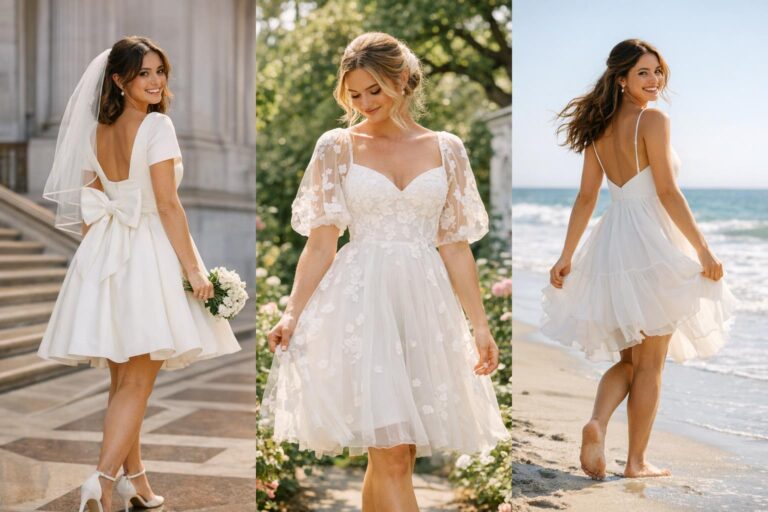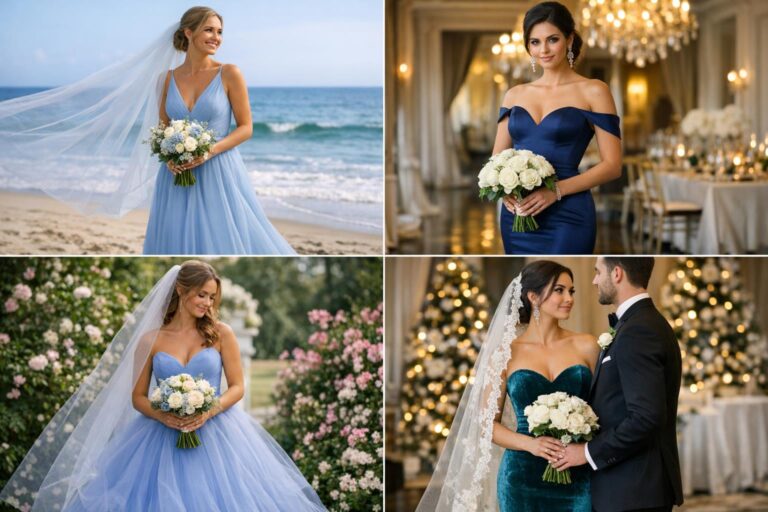
7 Fancy Wedding Dresses: Couture Details & Styling Tips USA
Fancy Wedding Dresses: What “Fancy” Really Means and How to Choose Yours
Fancy wedding dresses are all about intentional drama and elevated detail—looks that feel more formal, more couture-inspired, and more statement-making than a simple gown. “Fancy” can show up as a lavish fabric, ornate embellishment, a striking silhouette, a grand train, or any combination that makes the dress feel unmistakably special. The goal isn’t just to look dressed up; it’s to feel like the most polished, celebratory version of yourself.
This guide walks through the most common ways brides define a fancy bridal look, how to shop with confidence, what to prioritize during fittings, and how to make sure the final head-to-toe styling feels cohesive. If you want a gown that turns heads without sacrificing comfort—or a “wow” moment that still feels like you—start here.
How to Define Your Version of “Fancy”
Before you fall in love with a photo online, decide what “fancy” means for your wedding and your personality. For some brides, fancy equals sparkle and ornate beading. For others, it’s clean structure with a high-fashion silhouette and premium fabric. Clarifying your definition helps you shop faster and avoid dresses that look impressive on a hanger but don’t match your vision.
Fancy Through Fabric and Finish
Even a minimal silhouette can look luxurious when the fabric has weight, sheen, dimension, or a refined texture. Fancy often reads as “expensive” because the fabric holds its shape, photographs richly, and looks intentional from every angle.
Fancy Through Embellishment
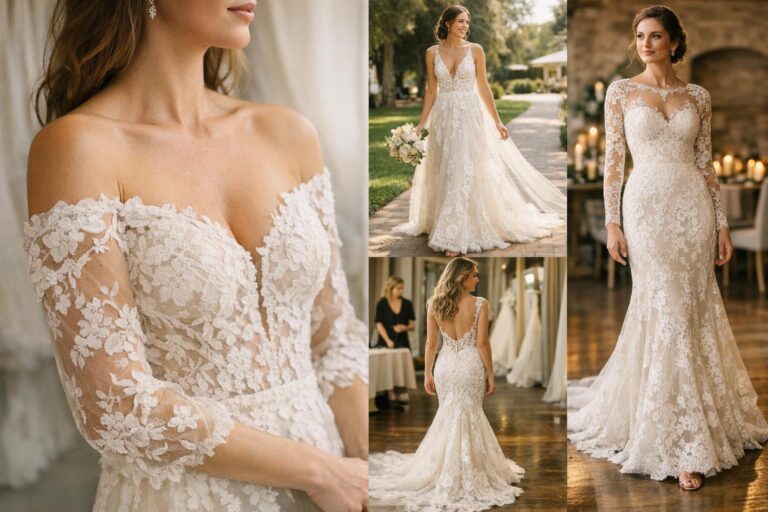
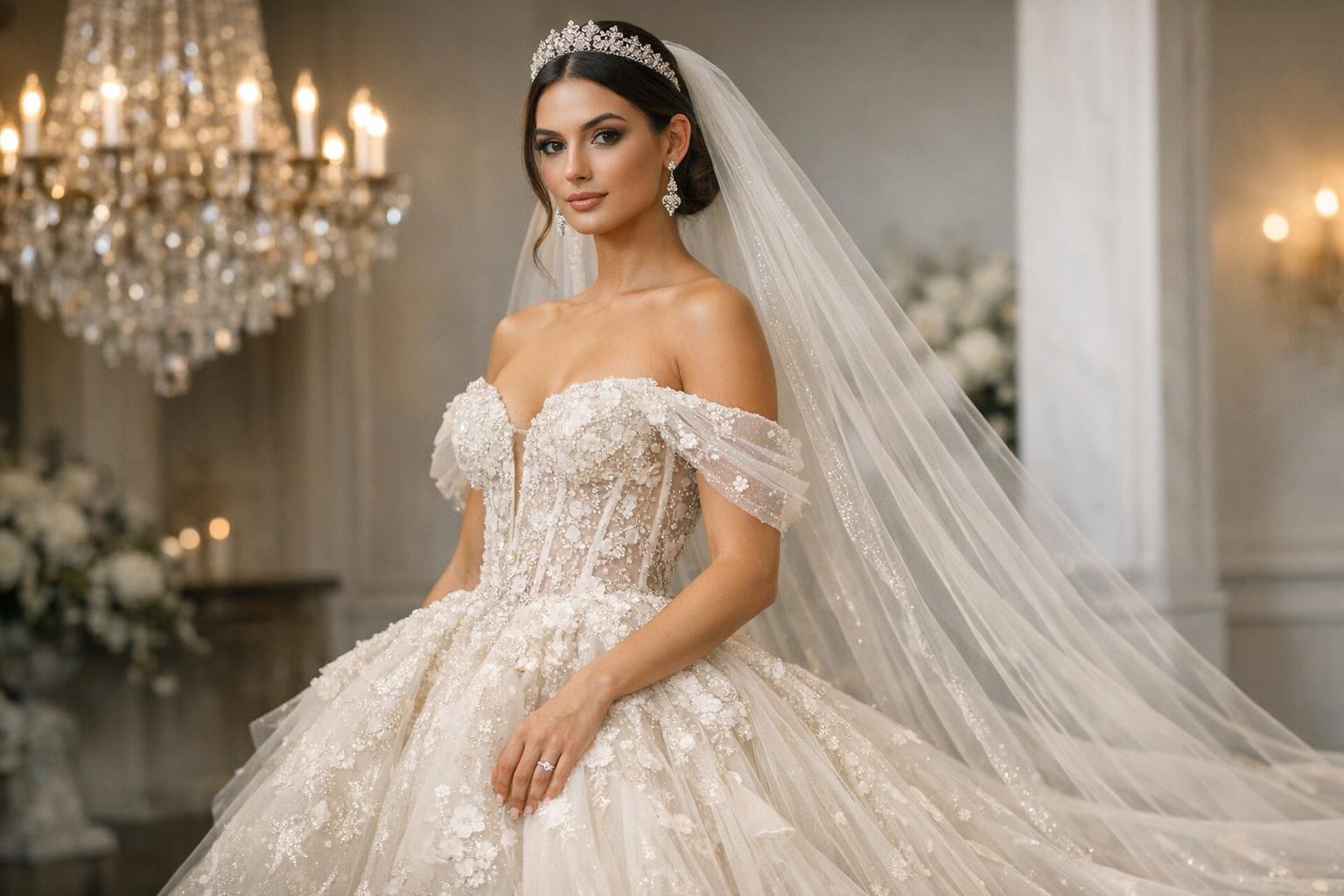
Crystals, pearls, embroidery, lace appliqué, and all-over beading are classic ways to create a “fancy” effect. The key is placement and balance: embellishment can highlight the bodice, frame the neckline, cascade down the skirt, or shimmer subtly across the entire gown.
Fancy Through Silhouette and Structure
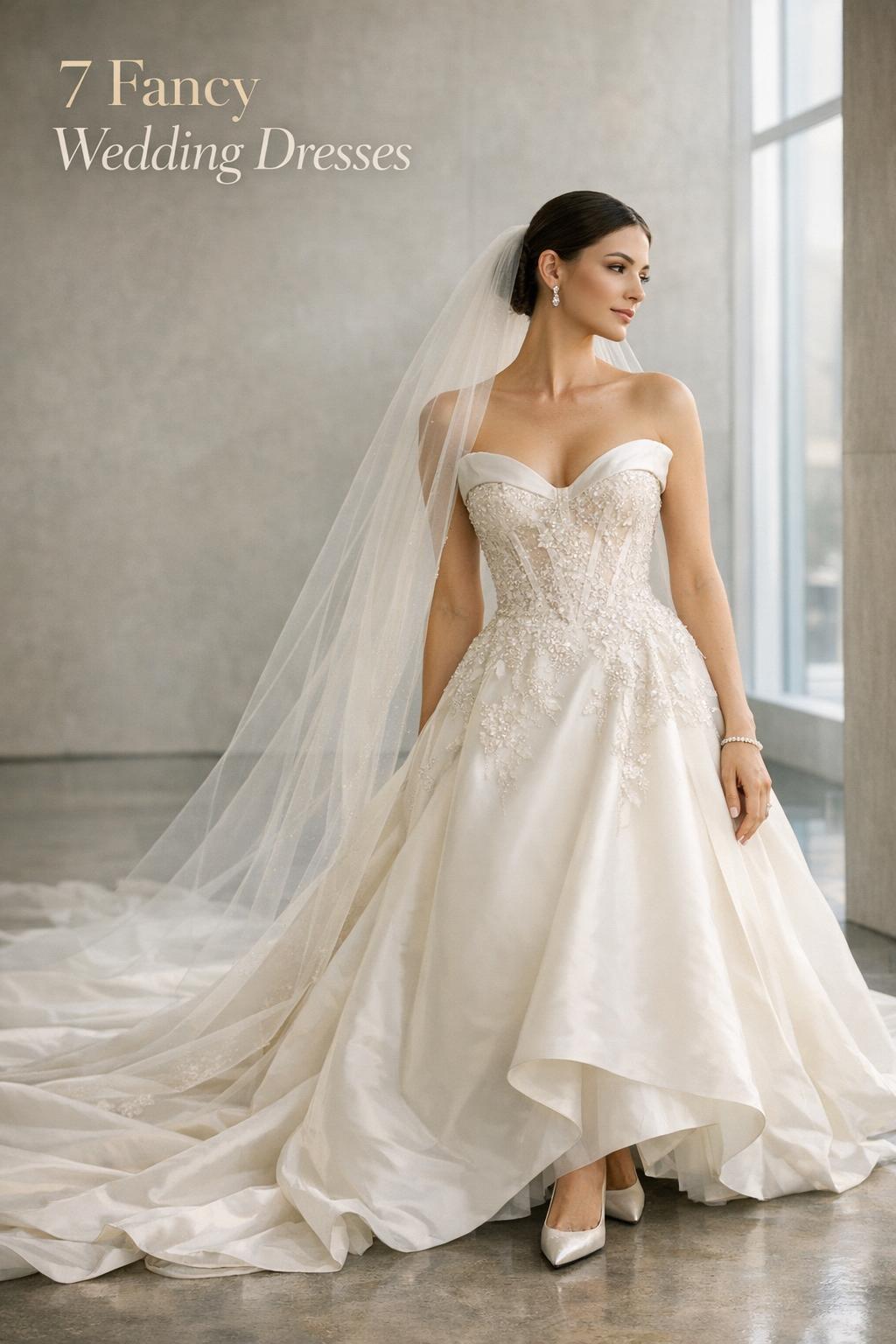
Structured corsetry, sculpted necklines, dramatic volume, and statement trains can look instantly formal and editorial. A gown can be fancy even without sparkle if it’s cut and built like a masterpiece—think crisp lines, supportive inner construction, and a shape that reads “occasion.”
Fancy Through Styling and Accessories
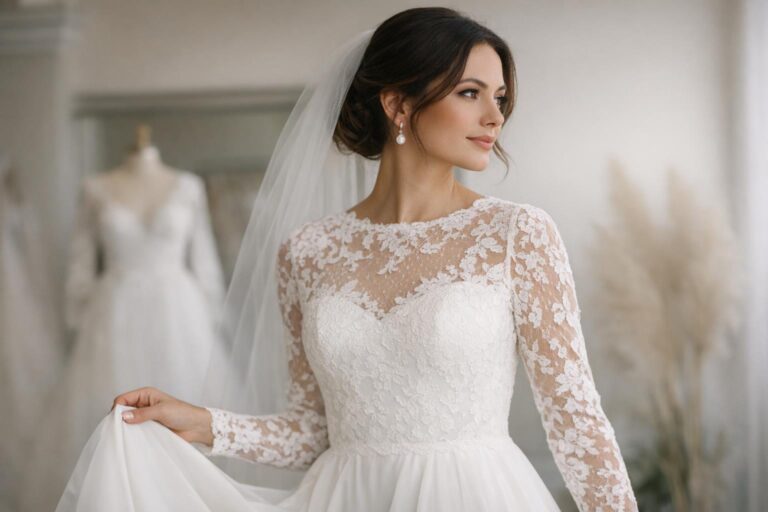
Sometimes the dress is only part of the “fancy” equation. A cathedral-length veil, regal hair accessories, formal jewelry, and a coordinated shoe and bouquet can elevate a simpler gown into a complete luxury look.
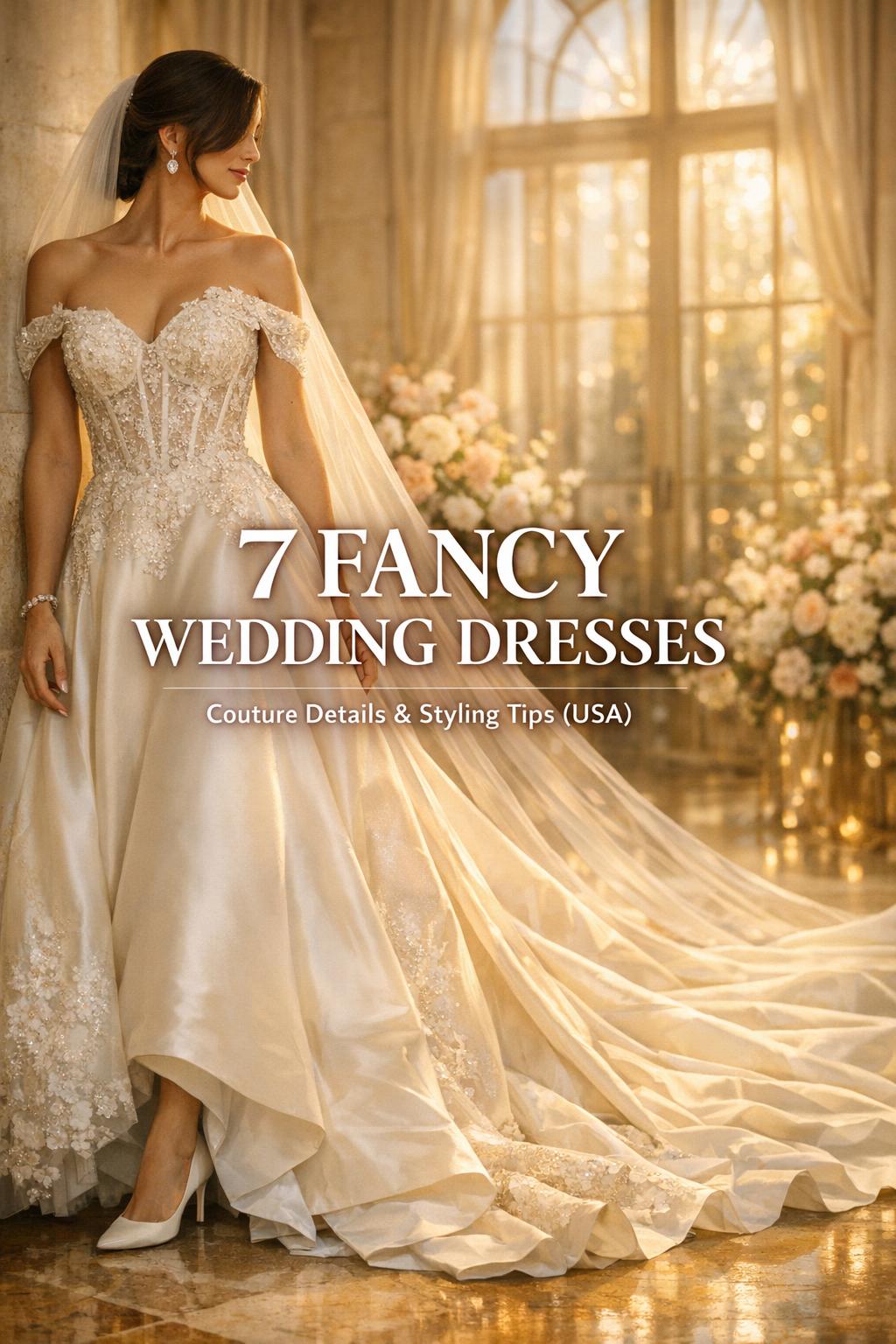
Popular Fancy Wedding Dress Styles (and Who They Flatter)
There isn’t one “best” fancy wedding dress—there are styles that align with your venue, your comfort level, and the features you want to highlight. The most successful choices feel cohesive with your wedding’s formality and photograph beautifully from every angle.
Ball Gown: Maximum Drama
Ball gowns are a signature fancy silhouette because they create instant grandeur. The fitted bodice and full skirt emphasize the waist and deliver a classic, formal “bridal” effect that pairs naturally with ornate fabrics, beading, or lace.
Mermaid and Fit-and-Flare: Sculpted and Glamorous
Mermaid and fit-and-flare gowns read fancy when they’re paired with high-impact details like beaded lace, dramatic trains, or statement necklines. These silhouettes feel confident and eveningwear-inspired, making them a favorite for brides who want a sleek, red-carpet mood.
A-Line: Elegant, Versatile, and Universally Loved
A-line dresses can be as understated or as ornate as you want. For a fancy effect, look for elevated fabric, layered skirts, dimensional lace, or a structured bodice. The silhouette offers comfort and movement while still feeling formal.
Sheath and Column: Clean Luxury
A sheath can still be undeniably fancy when the construction is impeccable and the fabric looks rich. This style suits modern brides who want a refined, fashion-forward look—especially when paired with a dramatic veil, bold jewelry, or a striking back detail.
High-Slit, Off-the-Shoulder, and Statement Necklines
Necklines and strategic reveals can add “event-level” drama without overwhelming the look. Off-the-shoulder, deep V, illusion, and sculpted strapless designs can all read fancy when balanced with supportive structure and thoughtful detailing.
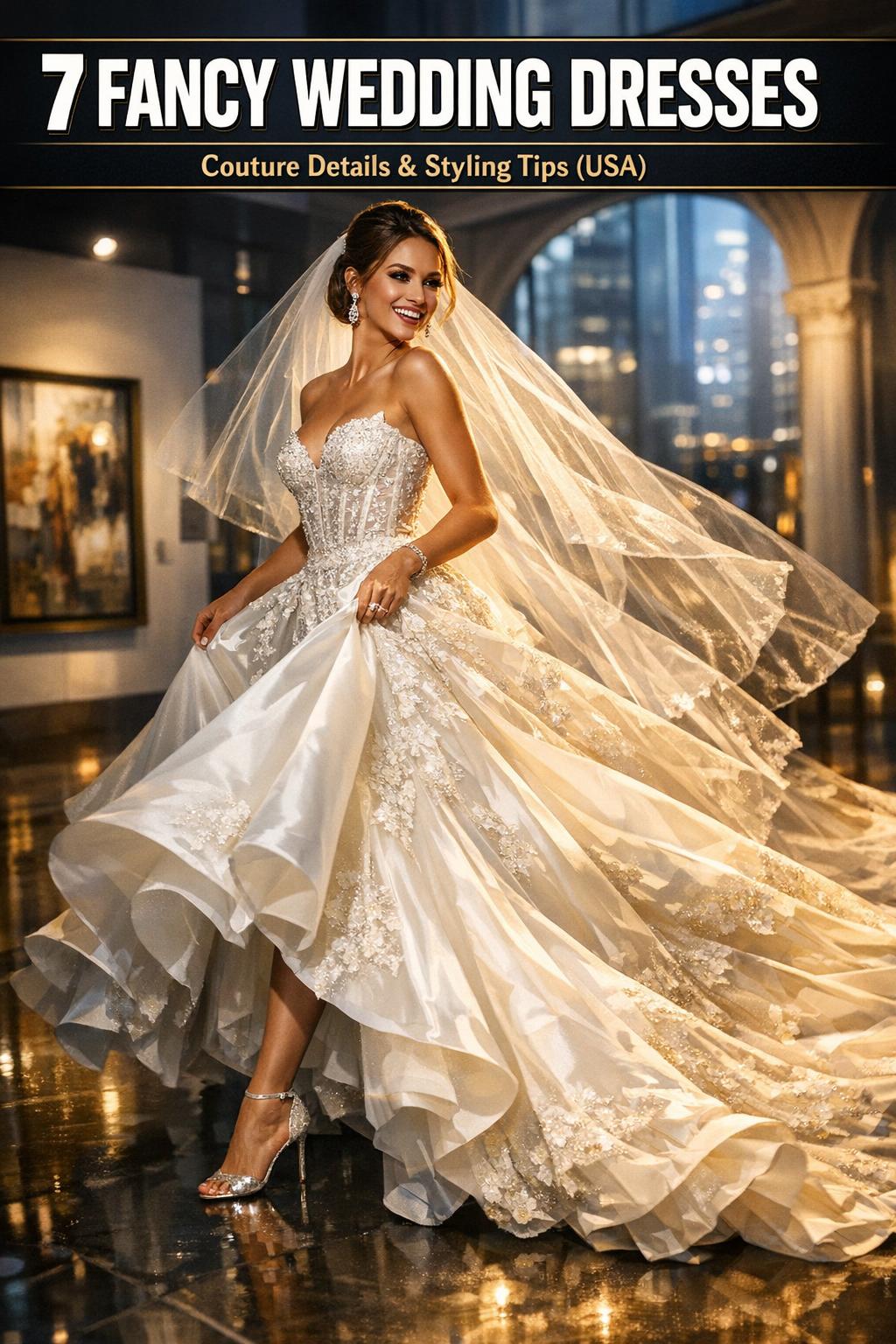
Details That Instantly Make a Wedding Dress Look Fancy
If you’re trying to identify what separates a standard gown from a fancy one, focus on the details that signal craftsmanship and intention. Fancy isn’t only about “more”—it’s about the right kind of more, placed in the right spots.
- Beading and sparkle that looks integrated (not scattered) and catches light in photos
- Dimensional lace or appliqué that adds texture and depth
- Corsetry and boning that shapes and supports while staying comfortable
- Statement trains that create ceremony and movement
- Layered skirts that feel airy yet substantial
- Illusion elements (sleeves, necklines, backs) that look seamless and refined
- Premium-looking finishes like clean hems, polished seams, and a smooth interior feel
Tips: Choose One Main “Wow” Feature
If you want a fancy look that feels sophisticated rather than busy, decide on one primary focal point—like a dramatic skirt, a heavily embellished bodice, or an unforgettable back. Then keep the other elements supportive and cohesive.
Tips: Prioritize What Photographs Best for Your Setting
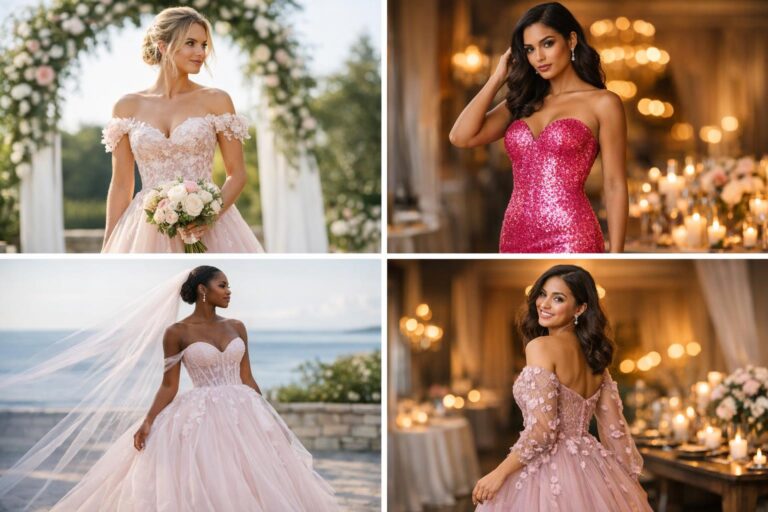
Some details read differently in different lighting. Sparkle can look subtle in daylight and bold at night; lace texture can pop in close-ups; a train transforms wide shots. Think about where you’ll be photographed most—indoors, outdoors, daytime, evening—and choose details that show up the way you want.
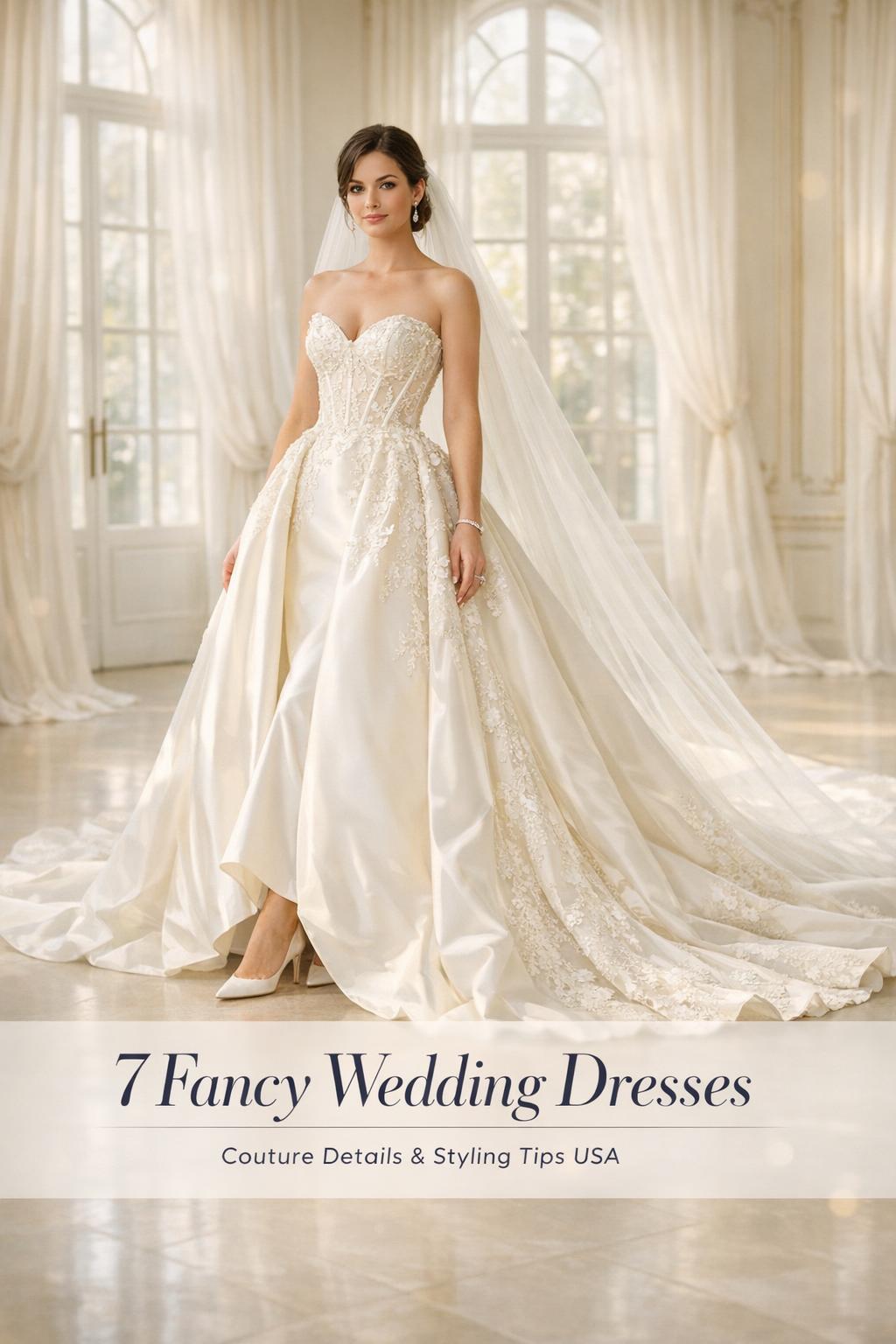
Matching Fancy Wedding Dresses to Venue and Dress Code
Fancy works best when it’s in harmony with your venue and overall formality. A gown that feels perfectly elevated in a ballroom might feel out of place at a casual outdoor ceremony—unless you intentionally style the entire event around that level of glamour.
Black-Tie or Formal Weddings
This is where ornate fabrics, beading, dramatic silhouettes, and long veils feel effortless. A fancy wedding dress can lean into structure, shine, and full-length elegance without needing to “tone it down.”
Garden, Outdoor, or Destination Settings
Fancy can still work outdoors, but comfort and mobility become essential. Consider lighter-feeling grandeur—dimensional lace, a refined A-line, or a statement bodice with a less cumbersome skirt. If you love a big train, plan a bustle you can trust for walking and dancing.
Modern City, Loft, or Art Gallery Venues
In sleek spaces, fancy often reads as clean and architectural. A sculpted neckline, structured corset, luxe fabric, and minimal-yet-striking accessories can feel just as “special occasion” as a heavily beaded gown.
Classic Church or Traditional Ceremony Spaces
Traditional venues pair naturally with formal silhouettes and timeless embellishment. Veils, sleeves, modest necklines, and trains often feel especially at home in this setting, and the overall look can lean regal without feeling forced.
Finding the Right Balance: Glamour, Comfort, and Movement
Fancy is only fun if you can breathe, sit, walk, and celebrate. The most beautiful gown is the one you can wear confidently for hours. Comfort is part of polish—if you’re constantly adjusting straps or restricted by a tight bodice, it will show.
Where Fancy Dresses Commonly Feel “Harder” to Wear
Heavily embellished bodices can feel weighty, fitted silhouettes can restrict steps, and dramatic trains can require coordination in crowded rooms. None of these are deal-breakers; they just require thoughtful planning and alterations.
- Practice walking and sitting during try-ons, not just standing at the mirror
- Ask about dress weight and whether the gown can be lifted easily
- Plan for a bustle if you have a long train and want to dance
- Consider neckline support and whether you’ll feel secure all day
Tips: Comfort-Test Your Dress Like You’ll Wear It
When you try on gowns, move like it’s the wedding day: take steps, turn, lift your arms, sit down, and simulate a hug. Fancy dresses often have structure that feels different after 20 minutes than it does in the first two minutes.
Shopping Strategy: How to Narrow Down Fancy Wedding Dresses Without Overwhelm
It’s easy to get overwhelmed by endless options—especially when “fancy” can mean so many things. A clear strategy helps you avoid trying on dozens of gowns that don’t align with your priorities.
Start With Three Non-Negotiables
Choose three features you care about most—such as silhouette, neckline, and level of sparkle. These anchor your appointments and make it easier to compare dresses that are otherwise very different.
- Silhouette (ball gown, A-line, mermaid, etc.)
- Detail level (minimal luxe, lace-forward, all-over sparkle)
- Neckline or sleeve preference
- Train length (subtle vs. dramatic)
- Overall vibe (romantic, modern, regal, glamorous)
Decide Your “Fancy Threshold” Early
Some brides love maximalism; others want one striking element and a calmer overall look. Give yourself a clear threshold so you don’t end up in a gown that feels too busy or, on the flip side, too plain for your vision.
Bring the Right Undergarments and Shoes
Fancy dresses often rely on smooth lines and secure support. The right undergarments and a heel height similar to what you’ll wear on the day can change how the gown sits on your waist, hips, and bust—and how the hem falls.
Alterations and Fit: What Makes a Fancy Dress Look Truly Expensive
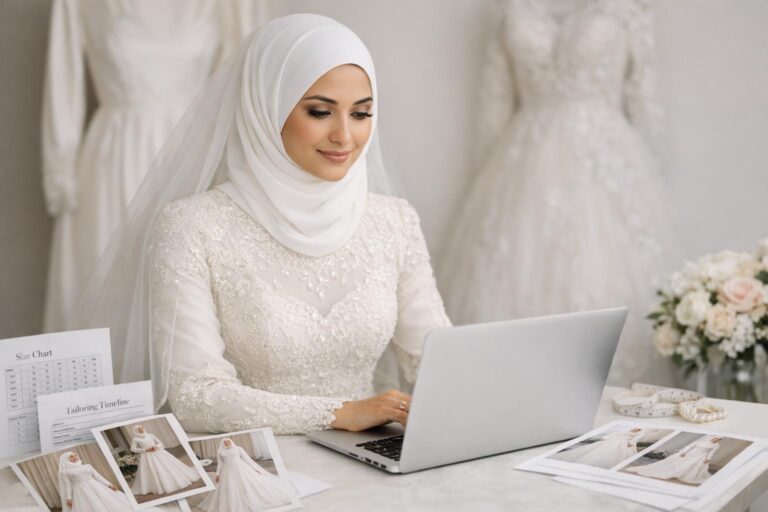
Fit is the difference between “pretty” and “spectacular.” A fancy gown is meant to look intentional and refined, and that effect usually depends on expert tailoring. Even the most ornate dress can look less elevated if the bodice gaps, the hem drags unevenly, or the straps don’t sit correctly.
Areas That Matter Most
Focus on the bodice fit (especially with strapless or corset styles), waist placement, and hem length. If you have a train, plan for how it will be managed after the ceremony so the dress stays beautiful and functional.
- Bodice security: the gown should feel stable without constant adjusting
- Neckline shaping: clean edges and a smooth lay against the skin
- Waist and hip fit: no pulling, bunching, or twisting
- Hem and bustle: even length and a reliable, tidy lift for the reception
Tips: Don’t Ignore the Inside of the Dress
Fancy often means more layers, more structure, and more contact with your skin. If the interior feels scratchy, heavy, or unstable, ask what can be adjusted. Comfort upgrades—like strap positioning, added support, or small lining adjustments—can make a huge difference in how confident you feel.
Accessories That Elevate Fancy Wedding Dresses (Without Competing)
Accessories should reinforce the gown’s “fancy” identity, not fight it. The more detailed your dress, the more you may want accessories to act like punctuation instead of additional paragraphs. If your gown is clean and structured, accessories can carry more of the sparkle and drama.
Veils and Hair Pieces
Veils are one of the fastest ways to make a look feel ceremonial and elevated. A long veil can add grandeur to a minimal gown, while a simpler veil can keep attention on an ornate bodice or embellished skirt. Hair pieces can add polish and formality, especially if you want a refined, intentional finish.
Jewelry: Match the Dress’s “Language”
Let the gown lead. If the neckline is dramatic, consider more restrained earrings or a bracelet. If the bodice is simpler, a statement earring or a refined necklace can add the fancy impact you want.
Shoes and Handheld Details
Shoes often peek out in motion and photos, so choose a pair that aligns with the gown’s formality. Your bouquet and any handheld elements also contribute to the “fancy” impression—cohesion matters more than any single item.
Tips: Do a Full Look Trial
Try your dress with your veil (or hair accessory), earrings, and shoes at the same time at least once before the wedding. Fancy looks are about harmony; a full trial helps you spot anything that competes, overwhelms, or disappears in the overall look.
Color, Shine, and Texture: Keeping a Fancy Look Cohesive
Even within “white,” wedding dresses can vary in tone and reflectivity. Fancy gowns often include shine—whether from satin-like finishes, sparkle, or layered textures—and it’s important that your accessories and styling don’t clash with the gown’s undertones or level of sheen.
Mixing Sparkle With Lace or Clean Fabric
Sparkle can be a full statement or a subtle accent. If your dress is heavily embellished, keep other sparkly items intentional. If your gown is clean, a controlled amount of shine in accessories can create a balanced fancy look.
Texture as a Luxury Signal
Texture reads as richness. Dimensional lace, layered skirts, and structured elements can look incredibly fancy even without heavy embellishment, especially when the fit is precise and the styling is clean.
Budgeting for a Fancy Look Without Regret
Fancy wedding dresses can vary widely in cost depending on fabric, embellishment, construction, and the complexity of alterations. Planning your budget around the full look—dress, tailoring, and finishing touches—helps you avoid last-minute compromises.
Where “Fancy” Often Adds Complexity
Ornate details and structured interiors can require more time and expertise to adjust. Similarly, long trains and multi-layer skirts can require more involved bustling and hemming. Build a cushion so you can keep the features you love while still getting a tailored fit.
Tips: Spend on the Part Everyone Will Notice Most
If you need to prioritize, invest in the element that creates the strongest impression in your wedding setting—often the bodice detail, the overall silhouette, or the train. A single high-impact feature can read just as fancy as all-over maximalism when the fit is flawless.
Making a Fancy Dress Feel Like You
The best fancy gown still feels authentic. If you feel like you’re wearing a costume, the dress may be wearing you. Look for ways to personalize the final look through styling choices that reflect your taste and comfort.
Use Styling to Control the Level of Drama
If the dress is extremely ornate, keep hair and makeup polished but not overly complicated. If the gown is clean and architectural, you can dial up glamour with a bold accessory choice or a more dramatic veil. This lets you fine-tune the “fancy” level without changing the dress.
Think About Your Comfort Personality
Some brides feel best in secure structure; others want softness and ease. Fancy doesn’t require discomfort. The right gown is the one that supports you—physically and emotionally—so you can be present for the day.
Common Mistakes to Avoid When Shopping for Fancy Wedding Dresses
A fancy gown has many moving parts—detail, structure, styling, and logistics. Avoiding a few common mistakes will save time, money, and stress, and help you end up with a look that feels deliberate rather than accidental.
- Falling for a photo without considering comfort, weight, and movement
- Choosing multiple competing focal points (too many statement elements at once)
- Ignoring how the dress will be managed after the ceremony (train and bustle planning)
- Waiting too long to plan alterations and full-look try-ons
- Over-accessorizing an already ornate gown
- Not considering venue formality and how the dress will read in that setting
Tips: Trust What You Feel, Not Just What You See
Fancy should feel empowering. If you feel restricted, self-conscious, or distracted in the gown, that matters. Choose the dress that makes you stand taller and breathe easier—because that confidence is part of what reads as truly elevated.
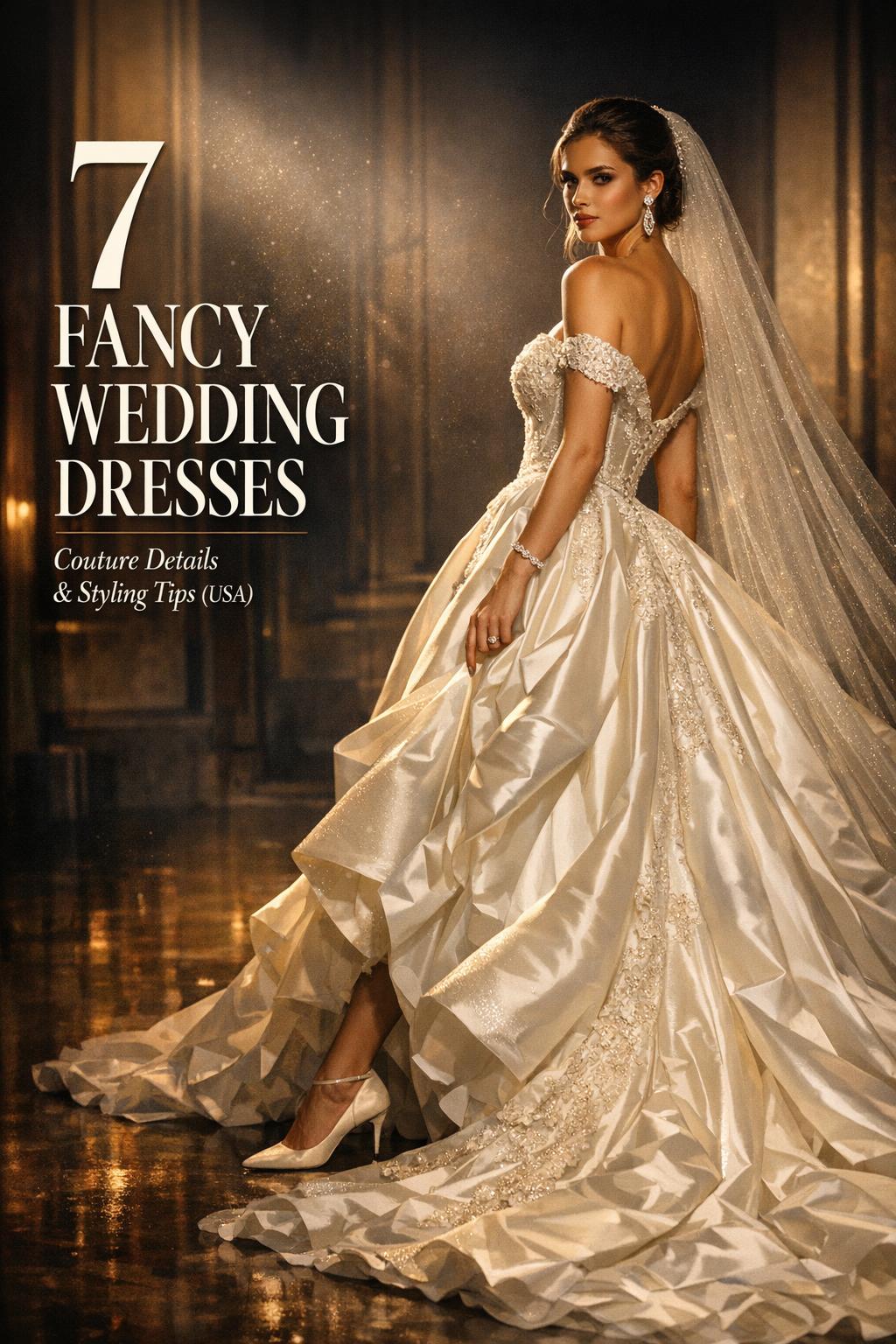
FAQ
What makes a wedding dress look “fancy”?
A fancy wedding dress typically looks more formal and elevated due to details like structured construction, ornate embellishment (beading, pearls, lace appliqué), dramatic silhouettes, premium-looking fabric, and finishing touches like a statement train or an impactful veil.
Can a simple gown still be considered a fancy wedding dress?
Yes—“fancy” can come from clean luxury, impeccable tailoring, and a high-impact silhouette, even without heavy sparkle or lace. A minimalist dress can look very fancy when the fabric and fit feel refined and the styling is intentional.
How do I choose between a heavily embellished dress and a clean, structured one?
Decide what kind of “wow” you want: visible sparkle and texture, or sleek, architectural elegance. Consider your venue, how formal the event feels, and what makes you feel most confident when you move—not just how the dress looks standing still.
Are fancy wedding dresses comfortable enough to wear all day?
They can be, but comfort depends on structure, weight, and proper alterations. When trying on gowns, sit, walk, and lift your arms, and plan for practical details like a secure bodice and a reliable bustle if you have a long train.
What accessories work best with a fancy wedding dress?
The best accessories reinforce the gown instead of competing with it. Ornate dresses often pair well with more restrained jewelry and a simpler veil, while cleaner dresses can handle more dramatic accessories like a statement veil or bolder jewelry.
How can I make sure my fancy dress photographs well?
Choose a primary focal point (like the bodice, skirt volume, or train) and make sure it suits your setting’s lighting. Do at least one full-look trial with shoes and accessories so you can confirm that sparkle, texture, and silhouette show up the way you want in photos.
Do I need a train for my dress to look fancy?
No—a train is a classic way to add ceremony and drama, but a dress can look fancy through structure, fabric, embellishment, or styling. If you do choose a train, plan how you’ll bustle it so the dress stays elegant and functional at the reception.
What should I focus on during alterations for a fancy wedding dress?
Prioritize a secure, smooth bodice fit, clean neckline edges, a balanced hem, and a bustle plan that keeps the gown looking polished after the ceremony. Fancy details look best when the dress feels stable and tailored to your body.