7 Goth Wedding Dresses Ideas for a Modern US Bride
Goth Wedding Dresses: A Modern Guide to Black Bridal Gowns That Feel Like You
Goth wedding dresses aren’t a single look—they’re a spectrum of dark bridal fashion that can feel romantic, dramatic, vintage-inspired, or sleek and modern. What unites them is intention: a bridal gown that embraces black (or deep, moody hues), striking textures like lace, and details that make a statement in real life and in photos. Whether you’re browsing Gothic bridal gowns by silhouette (A-line, mermaid, ball gown) or narrowing down specifics like sleeves, lace patterns, or plus-size options, this guide will help you make confident choices and build a cohesive Gothic bridal look.
You’ll find everything here from defining what “gothic” means for weddings right now, to comparing silhouettes, to practical advice for online sizing and alterations, to care and storage for dark fabrics. If you’re shopping and also planning your styling, treat this as your hub: inspiration plus practical steps that get you closer to the dress that feels unmistakably yours.
What Makes a Dress “Gothic” Right Now
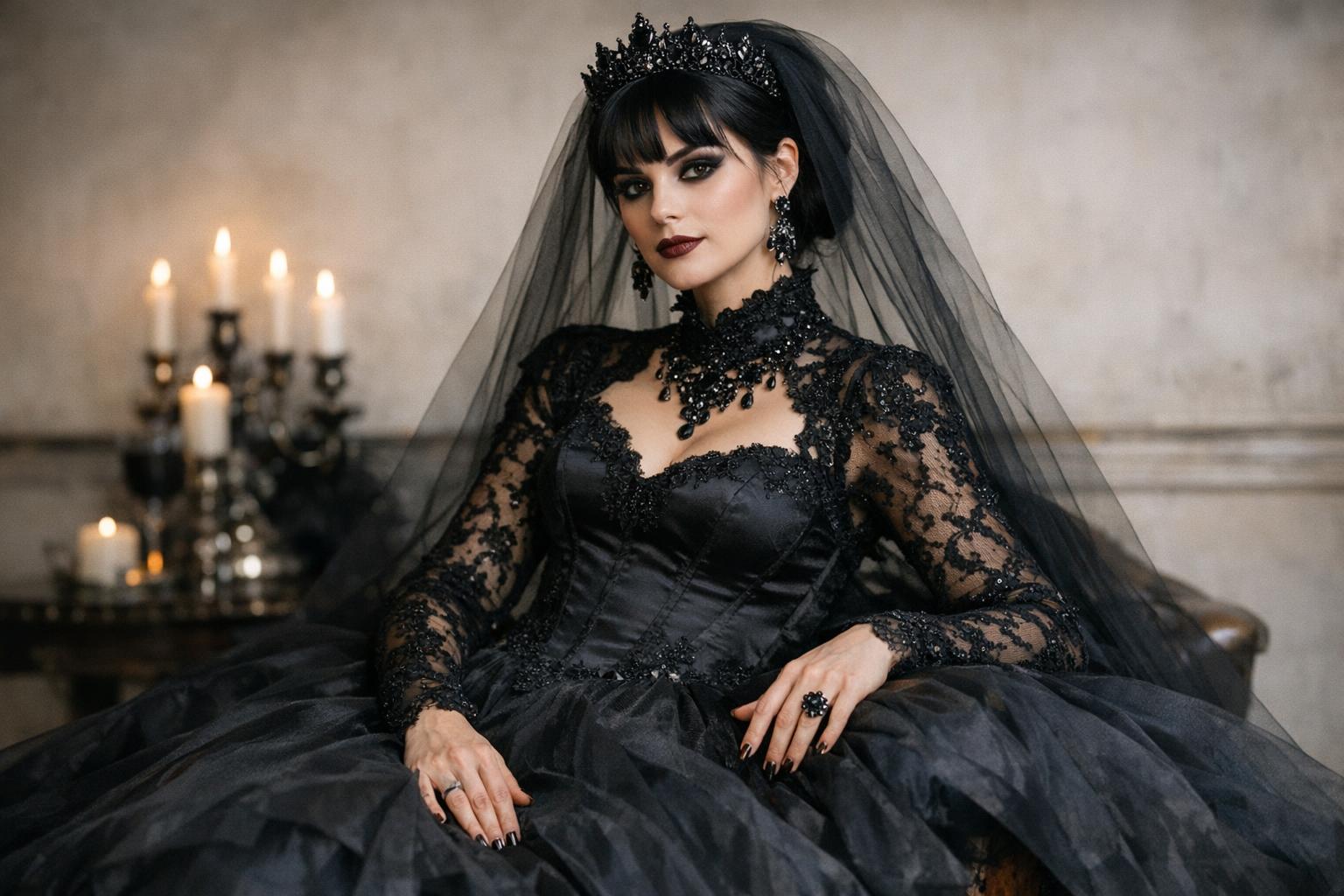
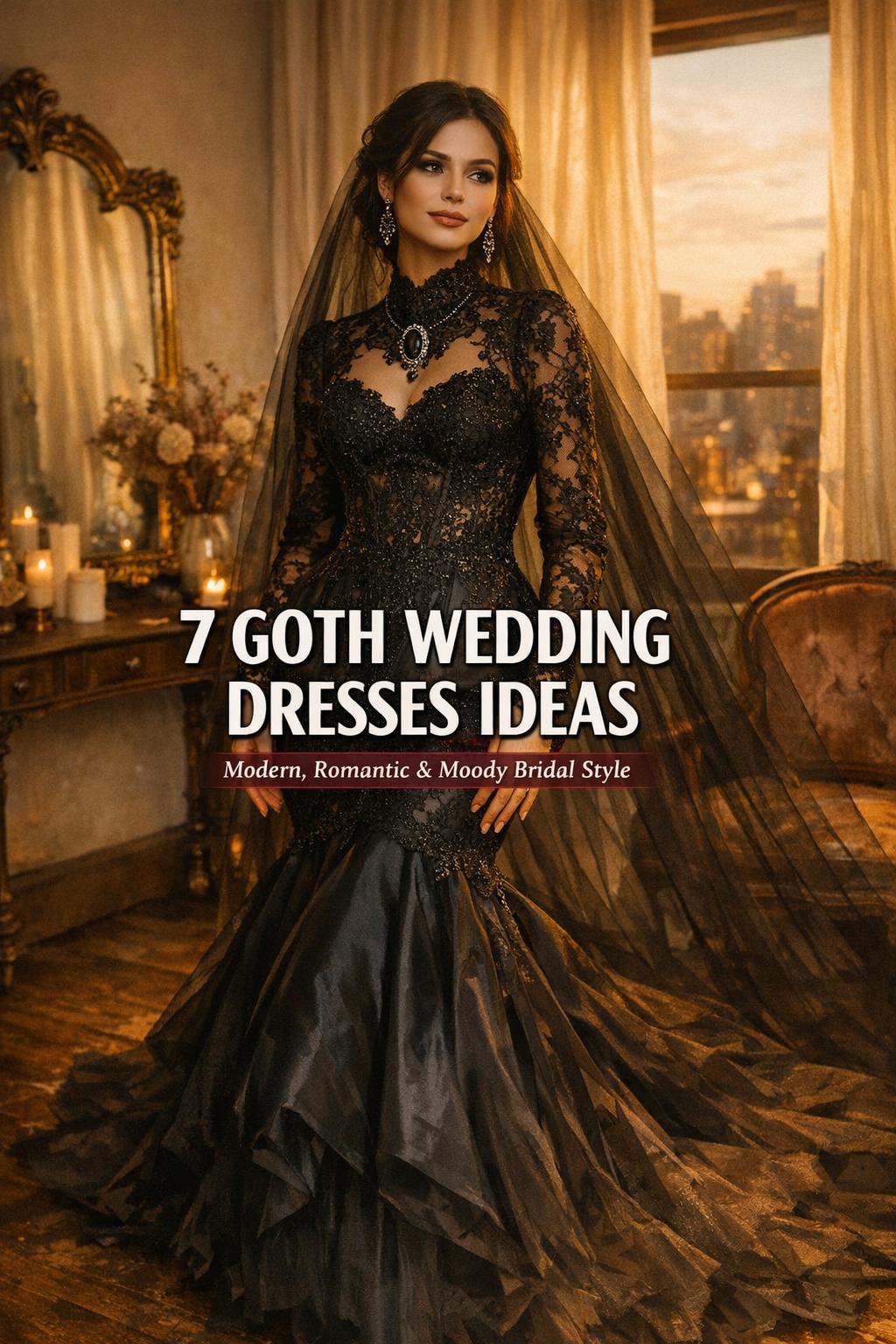
In bridal fashion, “gothic” is less about following a strict rulebook and more about creating a mood. Goth wedding dresses often feature black or near-black color stories, dramatic textures, and architectural details that stand out—especially in motion and in photography. The most recognizable versions lean into lace overlays, beading, long sleeves, high collars, and trains that feel theatrical without losing bridal polish.
Key Gothic Elements to Look For
If you’re trying to tell whether a gown reads “Gothic” at a glance, focus on the details that create contrast and depth. Lace can create shadow and pattern, darker satins can look liquid and sculptural, and structured necklines can shift a dress from “black wedding dress” to “Gothic bridal gown.”
- Lace overlays and lace patterning that shows clearly in photos
- Long sleeves, dramatic sleeves, or distinctive sleeve shapes (including batwing-inspired drama)
- High collars or higher necklines for a more Victorian gothic wedding dress direction
- Beading or intricate details that add dimension without needing bright color
- Dramatic trains that enhance the ceremonial feel
Tip: When browsing a catalog page, don’t just rely on the main image. Look for close-ups of lace, beadwork, and seams. Those “intricate details” are what keep a black gown from reading flat and help it feel unmistakably bridal.
Silhouettes That Flatter a Gothic Aesthetic
Most collections of Gothic wedding dresses organize gowns by silhouette because shape is the fastest way to narrow your options. You’ll commonly see Gothic A-line gowns, mermaid gothic dresses, and gothic ball gowns featured side by side—each creating a different kind of drama. The best silhouette for you depends on how you want to move, how you want to photograph, and which details you want to highlight (lace, sleeves, neckline, or train).
Mermaid vs. A-Line for Gothic Brides
A mermaid gothic dress can feel intensely editorial: it spotlights the body’s lines and often pairs well with bold lace placement, beading, or a statement neckline. An A-line, by contrast, offers softer drama and tends to be the easiest canvas for layers like lace overlays, tulle, and sweeping trains—without feeling overly heavy.
- Mermaid: Best if you want your gown’s details to track along the body and you like a sculpted look; lace and beading can read especially “intricate” here.
- A-line: Best if you want movement, comfort, and a classic bridal outline while staying firmly in a dark bridal gown aesthetic.
- Photography consideration: Mermaid highlights shape; A-line highlights flow and silhouette against the venue.
Tip: If you love lace but worry about it getting lost on a dark gown, consider an A-line with lace in high-contrast placement (bodice, sleeves, or hem). It can help a black lace wedding dress read clearly in both indoor and low-light settings.
Ball Gown With Gothic Details
A gothic ball gown is the quickest path to grand, ceremonial impact. The full skirt gives you space for layered textures—tulle, lace, or satin—and makes trains feel even more intentional. The key is balance: a fuller skirt can look regal and dramatic, while Gothic details (lace, high neckline, beading) keep it moody rather than purely princess-like.
Tip: If you want the ball gown shape but prefer a cleaner, modern vibe, look for a smoother fabric story with concentrated detail—like lace only at the bodice, or beading that catches light without turning the dress into a glitter statement.
Fabrics, Details, and Fit: Getting the Look (and the Comfort) Right
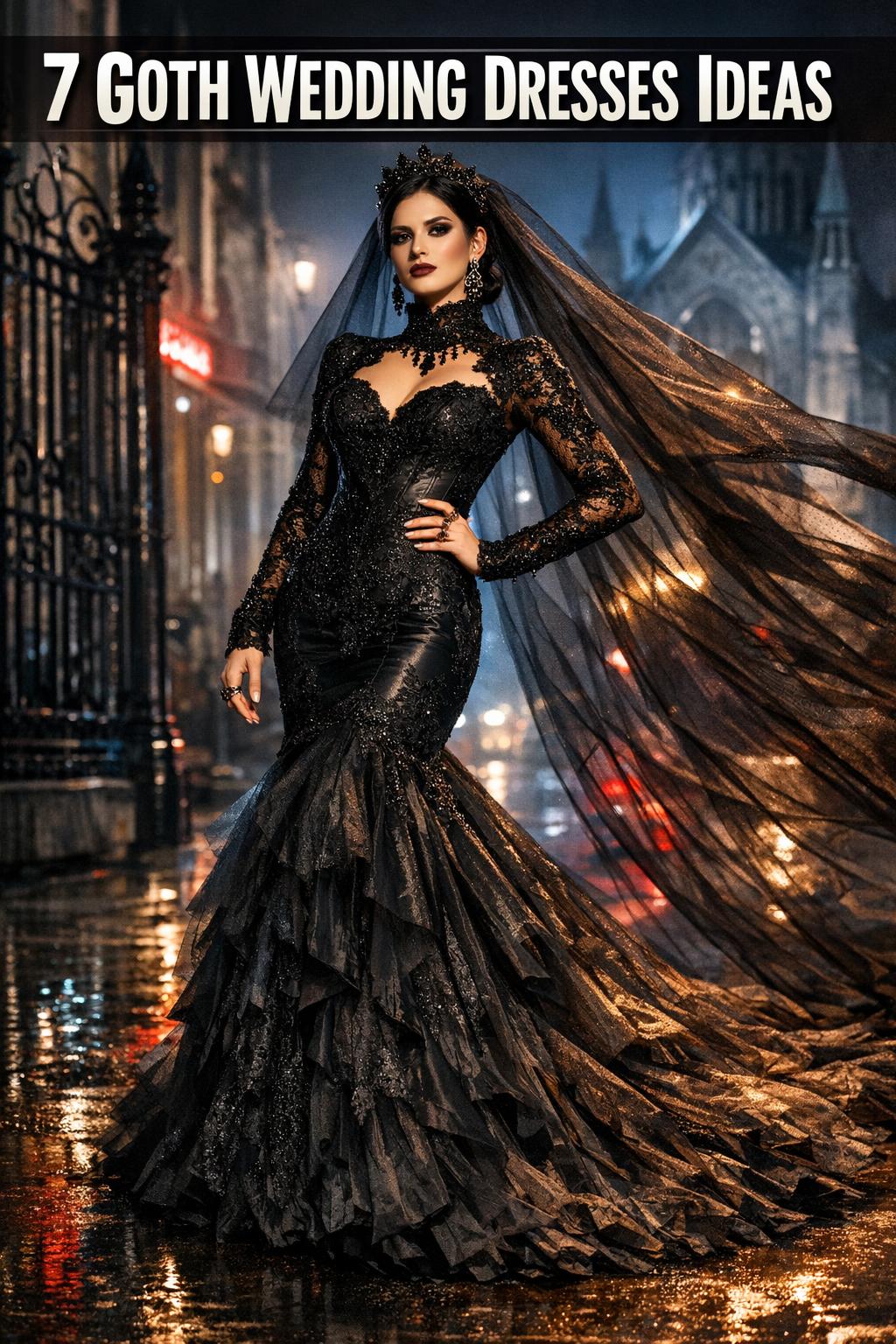
Gothic bridal gowns often rely on fabric and texture to create richness. Many collections emphasize “luxurious fabrics” and “intricate details” because dark colors amplify texture: lace reads as pattern and shadow, satin reads as sheen, and layered materials create depth. But these same choices affect comfort, movement, and alterations—especially when you’re ordering online.
Lace Patterns and Embellishments
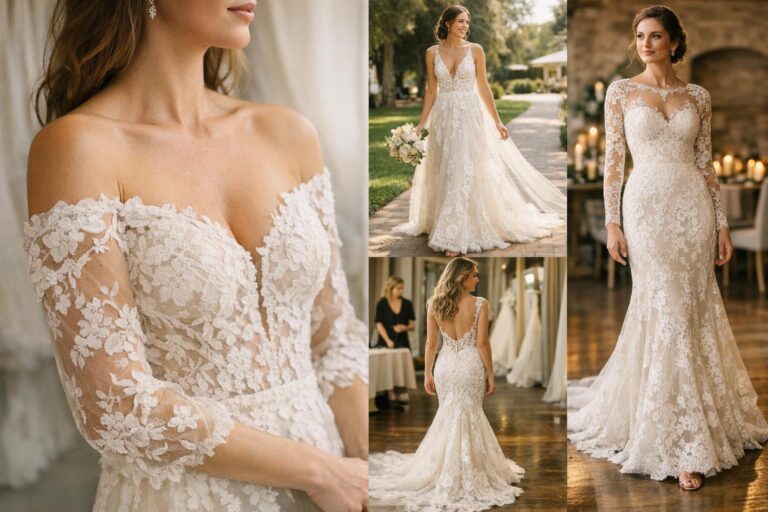
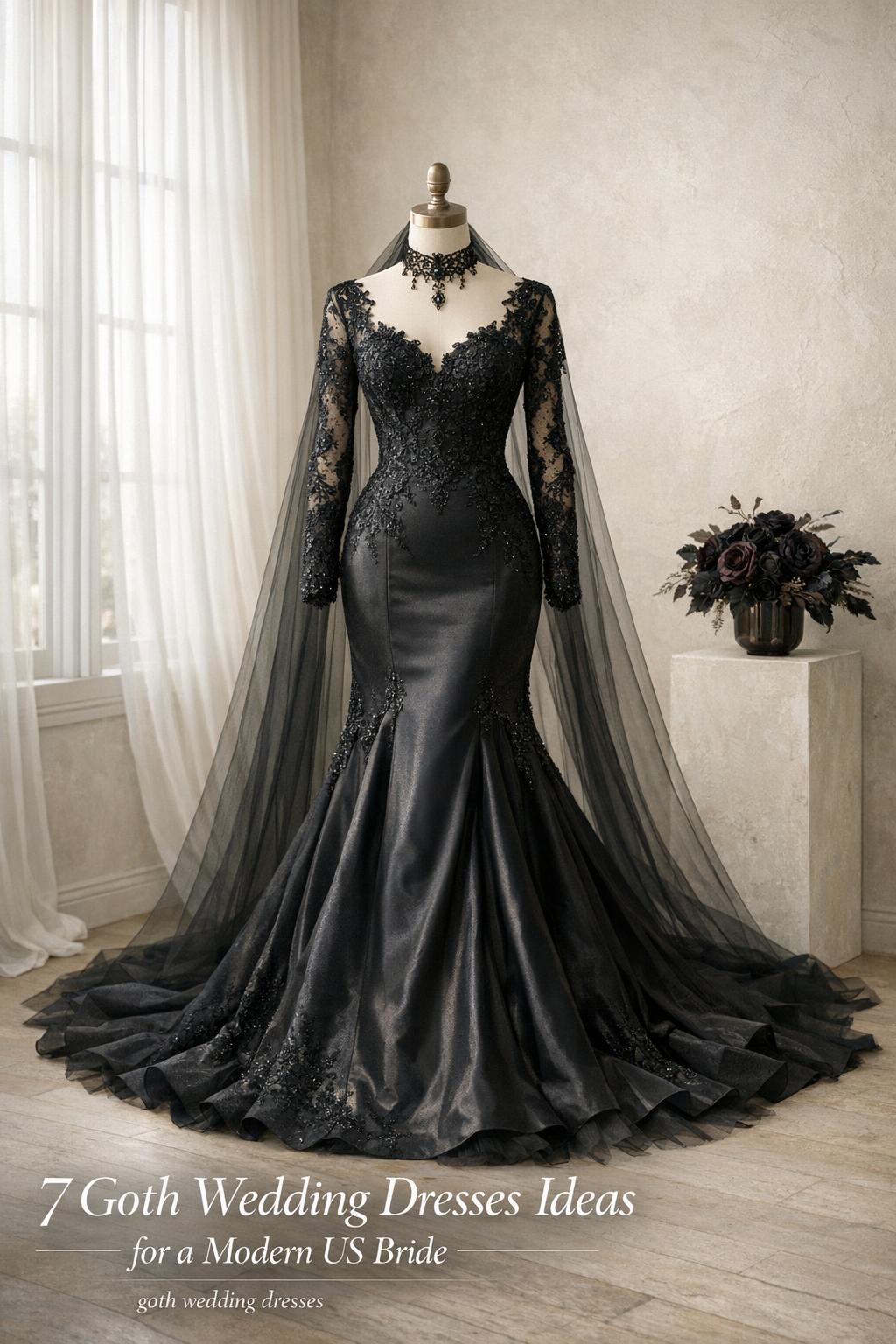
Lace is one of the most common signals of a Gothic wedding dress, especially in black. From all-over lace to structured lace appliqués, the pattern can shift a gown from romantic gothic to more vintage gothic wedding dress territory. Beading can add dimension and a sense of ceremony, particularly on bodices, cuffs, and along the neckline.
- All-over black lace wedding dress: High-impact texture; look for clear pattern definition in photos.
- Lace overlay on satin or tulle: Adds depth and helps silhouette details show.
- Beading and intricate details: Creates highlights and structure; useful when the gown is a deep, light-absorbing color.
Tip: If you’re deciding between two dresses that seem similar, choose the one with better close-up detail photography. The lace pattern and beading quality will influence how “finished” your gown feels, especially for a dark bridal gown where texture does a lot of the work.
Fittings and Alterations for Dark Fabrics
Alterations matter for any bridal gown, but dark fabrics can make certain seams, folds, and changes more visible (or more subtle) depending on the texture. Planning your timeline and knowing what you’ll tailor—hem, waist, bust, sleeves, or neckline—helps prevent last-minute surprises. If your dress features lace motifs, sleeves, or a dramatic train, ask early how adjustments will affect the layout of lace and the way the train falls.
Tips for a smoother alteration experience: Start by identifying the “non-negotiables” of your look (for example, long sleeves, high collar, or a specific lace gothic wedding dress effect). Then prioritize fit changes that preserve those elements. If your gown has a cape or veil pairing, bring those pieces to fittings so the overall Gothic wedding look stays cohesive.
Color Palette: Beyond Black (Without Losing the Gothic Mood)
Black is the anchor for many goth wedding dresses, but a Gothic bridal palette can include dark variations and moody accents while still reading true to the aesthetic. Charcoal, deep plum, and deep burgundy accents can work alongside black gowns and accessories, creating dimension and a personalized color story. The goal is cohesion: a deliberate, dark palette that looks intentional from ceremony to reception.
Tip: If you’re unsure how dark you want to go, decide where you want contrast. You can keep the dress purely black and introduce accents through accessories, or choose a gown with layered depth (like lace over another dark base) and keep accessories minimal so the dress stays the focal point.
Accessories That Complete a Gothic Bridal Look
Accessories are where a “black wedding dress” often becomes a complete Gothic bridal look. Veils, capes, jewelry, and even the choice of finishing details can make the difference between simply wearing a dark gown and creating a fully styled moment. Many Gothic collections also feature cape and veil options because they add movement and drama without needing to change the dress itself.
Veils, Capes, and Jewelry
Start by deciding what you want your accessories to do: soften the look, intensify it, or add vintage-inspired structure. A veil can keep the look bridal while staying moody, a cape can bring immediate drama and silhouette interest, and jewelry can reinforce the Gothic tone through shape and intricacy. The key is to match the accessory “weight” to the gown’s detail level—lace-heavy dresses typically pair best with simpler accessories, while cleaner gowns can handle bolder pieces.
- Gothic veil: A bridal signal that can be styled for romance or drama; works well with lace and high necklines.
- Cape wedding dress styling: Adds movement, frames the gown, and emphasizes ceremony photos.
- Gothic jewelry: Choose pieces that echo the gown’s details—intricate if the gown is intricate, streamlined if the gown is sleek.
Tip: When choosing a cape or veil, consider how it interacts with your gown’s train. If both are dramatic, you may want one piece to be visually simpler so the overall look doesn’t compete with itself.
Vintage and Victorian Gothic Inspiration (With a Modern Point of View)
Many brides searching for goth wedding dresses also gravitate toward vintage gothic wedding dress inspiration and Victorian gothic wedding dress cues—high collars, long sleeves, lace, and a sense of old-world romance. You don’t need a costume approach to capture that influence. In modern styling, a single vintage-leaning element (like a high neckline or a lace sleeve) can transform the mood of an otherwise contemporary silhouette.
If you love the idea of vintage romance, focus on texture and structure. Lace is the most flexible bridge between eras: it can look antique-inspired when dense and ornate, or modern when placed strategically. Pairing a vintage-leaning gown with a clean, minimal accessory choice can keep the look balanced and current.
Real-World Inspiration: Building a Gothic Wedding Look That Feels Wearable
Inspiration matters because gothic bridal style is personal. Some people want a sleek black satin moment; others want lace, sleeves, and full drama. The most helpful way to think about inspiration is to break it into recognizable directions you can shop for: urban gothic, vintage gothic romance, or a more classic bridal silhouette made dark through fabric and accessories.
Real Bride Spotlight: Urban Gothic Wedding
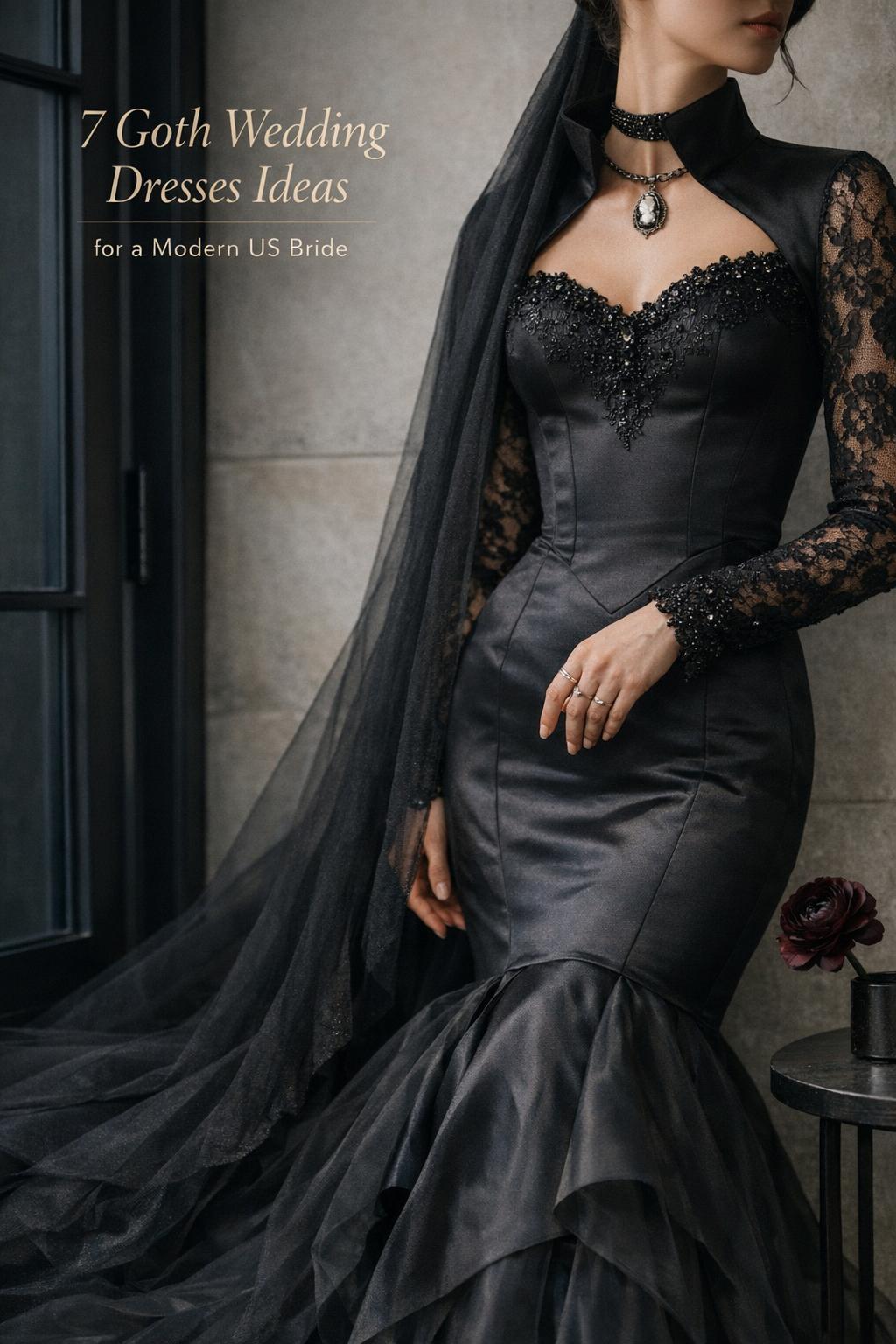
An urban gothic look typically leans modern: a clean silhouette (often mermaid or streamlined A-line), striking black fabric, and intentional accessories like a dramatic veil or cape. The “Gothic” read comes from contrast and confidence—dark tones, structured lines, and detail placement that looks sharp in city settings and indoor venues.
Tip: If your venue is visually busy (architecture, décor, lighting), choose a gown with a strong, simple silhouette and let one detail lead—like a high collar, long sleeves, or an ornate lace panel—so you stay the focal point.
Real Bride Spotlight: Vintage Gothic Romance
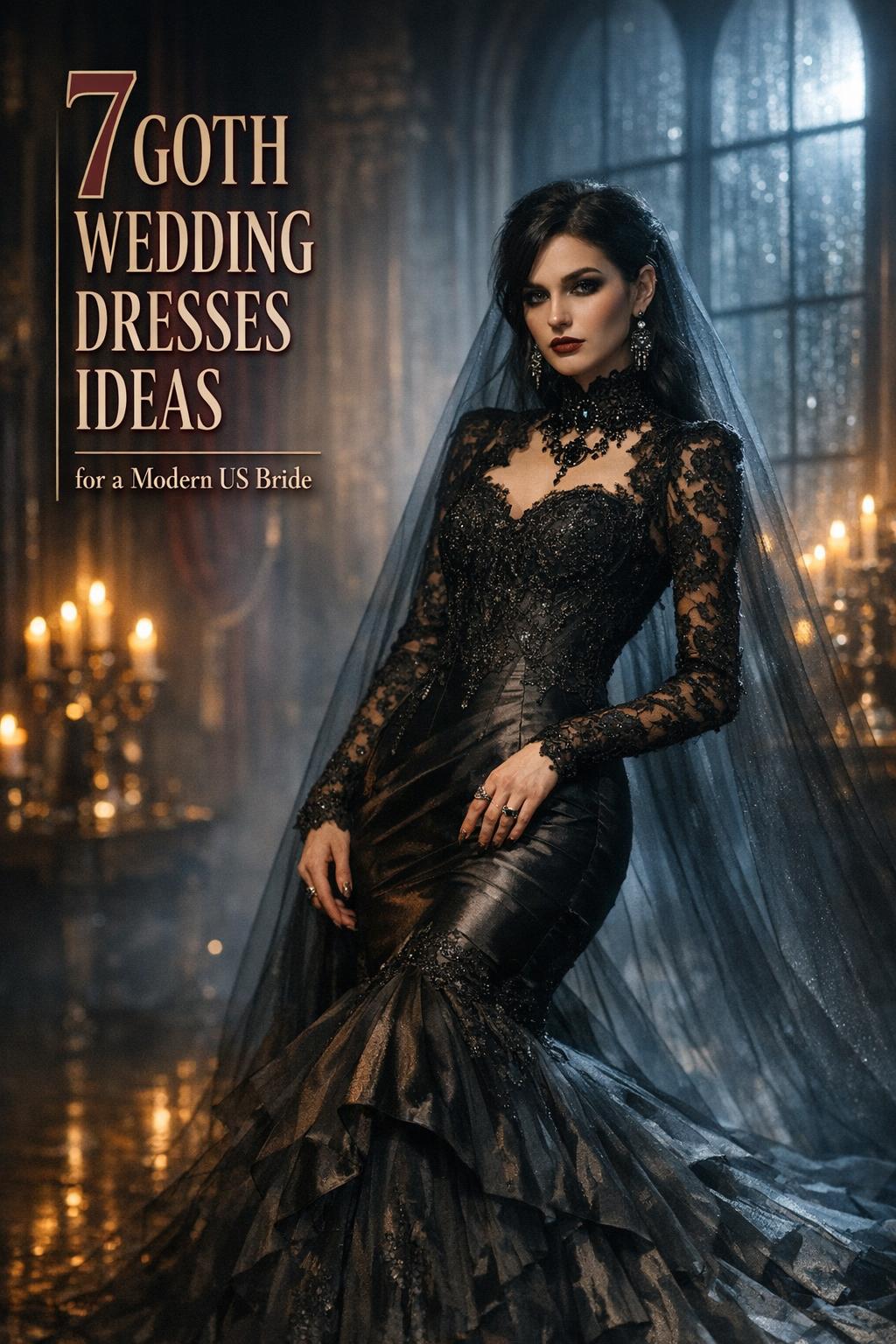
A vintage gothic romance direction emphasizes lace and bridal texture. Think long sleeve gothic wedding dress options, lace overlays, and intricate details that feel heirloom-inspired even if the gown is new. A-line and ball gown silhouettes often fit this direction because they echo classic bridal proportions while leaving room for lace and layered fabrics to shine.
Tip: For a more romantic vintage mood, choose lace that has a clearly visible pattern in photos. If the lace is too subtle, the gown may read as simply “dark” rather than distinctly vintage-gothic.
Shopping Guide: Where to Buy Goth Wedding Dresses in the U.S.
Most shoppers want two things at once: a wide range of styles (A-line, mermaid, ball gown; lace vs. satin; sleeve options) and a clear, practical path to getting the right size. In the U.S., many people start with online category pages that function like catalogs—browsing product cards with photos, price points, and notes about sizing or customization. This makes it easy to compare options and quickly filter down to the few dresses that fit your exact vision.
When you’re browsing, you’ll often see collections organized by specific needs, such as gothic black wedding dresses or plus size gothic wedding dresses. This structure mirrors how people shop: first the mood (Gothic), then the constraints (size, sleeve, silhouette), then the details (lace, neckline, train, accessories).
Plus-Size Gothic Wedding Dresses: What to Prioritize
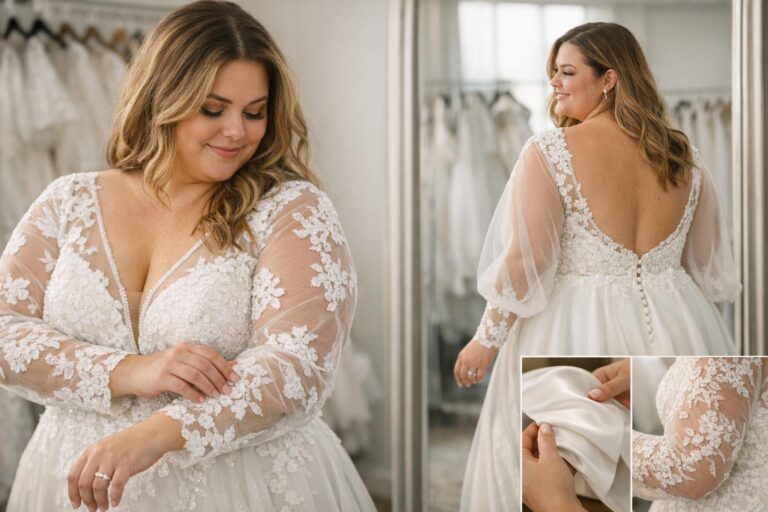
Size-inclusive shopping is easier when collections clearly separate plus-size options and provide straightforward size availability guidance. The best experience is when you can browse multiple silhouettes and sleeve variations without feeling limited to one “type” of Gothic dress. As you narrow down, prioritize consistent sizing information and realistic expectations about tailoring—because fit is what makes the look feel luxurious, regardless of price point.
Tip: If you’re choosing between two similar dresses, pick the one that offers clearer notes on sizing and customization. The confidence of knowing how a gown can be adjusted often matters as much as the initial style.
How to Choose the Right Size Online
Online shopping for Gothic bridal gowns can work beautifully when you approach it like a process instead of a single click. Because many gowns emphasize lace, sleeves, and fitted bodices, you’ll want to be especially thoughtful about measurements and how the dress is meant to sit on your body. Plan for the reality that tailoring is common, and build that into your timeline so you’re not rushing decisions.
- Start by narrowing to your preferred silhouette (A-line, mermaid, ball gown) before comparing details
- Look for sizing notes and any customization guidance offered alongside the dress
- Consider sleeve and neckline comfort early, especially for long sleeve or high collar styles
- Plan ahead for alterations, particularly if the gown includes lace placement or a dramatic train
Tip: Don’t wait until the dress arrives to think about styling. If you know you want a gothic veil or cape, factor that into the dress choice now—some necklines and back details pair better with layered accessories than others.
Choosing by Feature: Lace, Sleeves, Necklines, and Trains
After silhouette, most shoppers narrow down by specific features. These are the details that make your dress feel uniquely “Gothic” rather than just dark. If you’re torn between several options, decide which feature you want to lead the look. A long sleeve gothic wedding dress tells a different story than a strapless black satin gown with a cape, even if both are stunning.
Long Sleeves and Statement Sleeves
Sleeves can be the centerpiece of Gothic bridal styling. Long sleeves, lace sleeves, and dramatic sleeve shapes often amplify a romantic gothic or Victorian-inspired mood. They also affect comfort and movement, so prioritize how the sleeves feel when you sit, raise your arms, and move through the day.
Tip: If sleeves are your priority, choose a gown where the sleeve detail is clear and intentional in photos. Lace sleeves can be breathtaking, but the pattern and placement need to read distinctly to deliver the full effect.
High Collars and Higher Necklines
High collars and higher necklines are among the strongest cues for a Victorian gothic wedding dress direction. They frame the face, add formality, and make even a simple silhouette feel ceremonial. If you’re aiming for a look that’s unmistakably Gothic without relying solely on accessories, neckline structure is a powerful tool.
Tip: Balance is everything. If you choose a high collar plus heavy lace, you may prefer simpler jewelry so the neckline remains crisp and visually readable.
Dramatic Trains
A dramatic train is a classic way to add “bridal grandeur” to a Gothic look. It can be especially effective with black lace, layered fabrics, or a cape pairing. The train also influences your alterations plan and how you’ll handle movement throughout the day, so think through comfort and practicality alongside aesthetics.
Tip: If you want the train for ceremony photos but prefer easier movement later, plan your styling so the dress still looks complete even when the train is managed. A gown with rich lace detail throughout can stay striking even when you’re moving quickly.
Care, Storage, and Longevity of a Black Wedding Dress
Black and dark-toned bridal gowns are stunning, but they deserve thoughtful care so they stay rich and even in color. Dark fabrics can show marks and dust differently depending on texture, and lace requires its own kind of attention. Planning for cleaning and storage is part of owning a gown you’ll be proud to keep—whether for memories, preservation, or future styling.
Dye and Fabric Care Essentials
Start with the dress’s materials and details. Lace care is different from satin care, and gowns with beading or intricate details may need more cautious handling. Treat your gown like a structured, delicate garment: limit unnecessary handling, keep it protected when not worn, and plan cleaning sooner rather than later so any issues don’t set in. Storage should protect both the fabric and the shape, especially if the gown has sleeves, a high neckline, or a train.
- Handle dark fabrics with clean hands to reduce transferring oils or marks
- Be mindful of lace: avoid snagging and store to protect delicate patterning
- Consider the weight of beading and embellishments when hanging or storing
- Protect the gown from unnecessary exposure that could dull the richness of dark tones
Tip: If your gown includes layered lace over another fabric, check both layers when you inspect the dress after the wedding. What looks fine on the surface can sometimes hide small issues underneath, especially in darker layers.
A Practical Timeline: Choose, Order, Style, Alter
Goth wedding dresses often include details—lace placement, sleeves, high collars, trains, capes—that benefit from planning. A simple timeline can keep you calm and keep your final look intentional rather than rushed. Think of the process as four phases: choose the silhouette, confirm sizing and options, build accessories around the gown, and finalize fit.
- Phase 1: Narrow the field by silhouette (A-line, mermaid, ball gown) and your must-have detail (lace, sleeves, neckline).
- Phase 2: Confirm the practical pieces such as sizing guidance, any customization notes, and how the dress is constructed.
- Phase 3: Commit to your styling direction (gothic veil, cape, jewelry) so everything works together.
- Phase 4: Plan alterations with your final accessories in mind, especially if you’re working with sleeves, lace, or trains.
Tip: If you’re unsure between “more dramatic dress, simpler accessories” and “simpler dress, more dramatic accessories,” choose the option that you’ll feel comfortable wearing for hours. Comfort supports confidence, and confidence is what makes Gothic bridal style feel powerful.
FAQ
What are goth wedding dresses, and how are they different from a regular black wedding dress?
Goth wedding dresses usually go beyond color and use Gothic elements like lace overlays, intricate details, long sleeves, high collars, beading, and dramatic trains to create a deliberate dark bridal fashion mood, rather than simply being a wedding dress in black.
Which silhouettes are most popular for Gothic wedding dresses?
Common silhouettes include Gothic A-line gowns, mermaid gothic dresses, and gothic ball gowns, with each shape offering a different kind of drama and a different canvas for lace, sleeves, and trains.
How do I choose between an A-line and a mermaid Gothic bridal gown?
Choose A-line if you want flow, comfort, and an easy-to-wear shape that still reads dramatic in dark fabrics, and choose mermaid if you want a more sculpted look where lace and embellishments emphasize the body’s lines and create an editorial effect.
What details should I look for if I want a Victorian or vintage gothic wedding dress vibe?
Look for high collars or higher necklines, long lace sleeves, lace overlays, and intricate details that add an old-world romance feeling while still fitting a modern bridal silhouette.
Are there plus size gothic wedding dresses available in different styles?
Yes, plus size gothic wedding dresses are often offered as dedicated collections and can include multiple silhouettes and sleeve variations, making it possible to shop by style preferences rather than being limited to one look.
What accessories work best with Gothic wedding dresses?
Gothic veils, capes, and jewelry are common choices, and the best results usually come from matching the accessory “weight” to the dress—simpler accessories for lace-heavy gowns and more dramatic accessories for cleaner, sleeker dresses.
What should I know about alterations for a black lace Gothic wedding dress?
Alterations should be planned to preserve lace placement and the overall structure of the gown, especially around sleeves, necklines, and trains, so it helps to identify your must-have design elements early and tailor around them.
How do I shop for goth wedding dresses online more confidently?
Start by narrowing down silhouette and must-have features, prioritize listings that include clear sizing and customization notes, and assume tailoring is part of the process—especially for fitted bodices, long sleeves, and gowns with lace or intricate details.
How do I care for and store a black wedding dress after the wedding?
Handle dark fabrics carefully, protect lace and embellishments from snags, plan cleaning with the gown’s materials in mind, and store the dress in a way that supports its shape and protects the richness of the dark tones.