7 Lacy Wedding Dresses Styles US Brides Love for 2026
Lacy wedding dresses: how to choose a look you’ll love
Lacy wedding dresses are a timeless choice because lace can feel romantic, classic, modern, or bold depending on the pattern, placement, and overall silhouette. Whether you’re drawn to delicate details or an allover statement, the key is knowing what to look for so the dress feels like you—comfortable, flattering, and right for your venue and photos.
This guide walks through the main decisions that shape the final look: lace types and textures, popular silhouettes, neckline and sleeve options, lining and coverage choices, and practical try-on tips. You’ll also find targeted tips for different styles and settings, plus a detailed FAQ at the end.
What “lace” can mean on a wedding dress
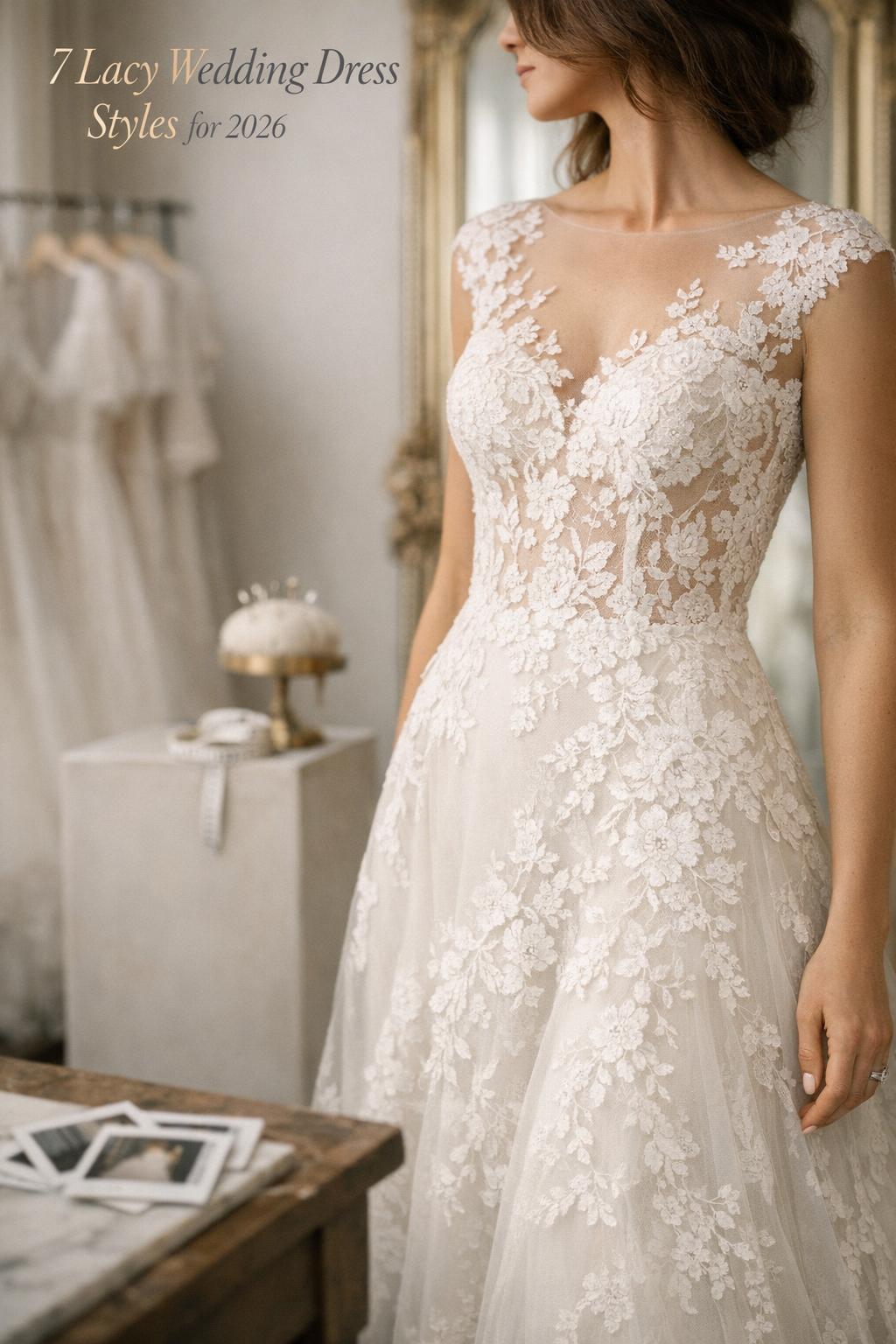
“Lace” isn’t one single look. On wedding gowns, lace can appear as a full overlay, as appliqués placed on top of a base fabric, or as accents at the bodice, sleeves, train, or hem. Some dresses use lace primarily for texture, while others use it to create dramatic patterns, illusion effects, or defined shapes around the neckline and waist.
When you’re shopping, it helps to notice whether the lace is the main fabric story or a design detail. A dress with lace appliqués can feel cleaner and more minimal, while a gown with head-to-toe lace often reads more ornate and traditional. Neither is “better”—they simply create different vibes.
Placement: overlay vs. appliqué
Lace overlay typically means lace sits over another fabric (or lining), giving an overall patterned surface. Appliqué lace is placed in specific areas to highlight shape—like framing a neckline, contouring the bodice, or trailing down a skirt in a gradient. If you love texture but want the dress to feel lighter visually, you may prefer strategic appliqués rather than an allover overlay.
Texture and scale: delicate vs. bold
Lace patterns vary from fine, delicate motifs to large, graphic designs. The scale of the pattern impacts how it photographs and how it feels at different distances. Small motifs can look intricate up close, while larger patterns can read more clearly in full-length photos and can feel more modern.
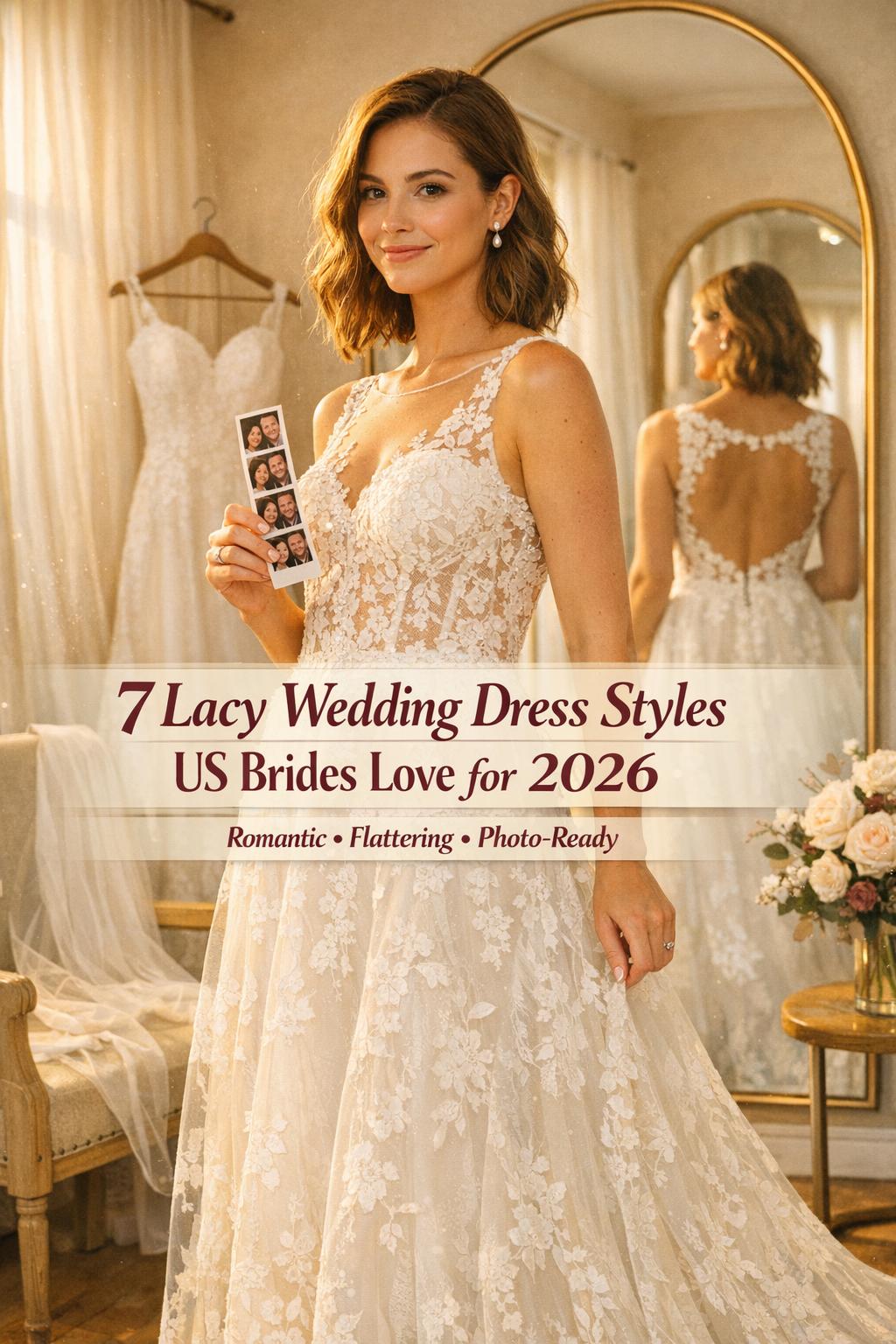
Popular styles of lacy wedding dresses
Lace works across virtually every silhouette, but certain style pairings show up again and again because they create especially flattering lines or iconic bridal looks. Below are common directions many brides consider when narrowing their options.
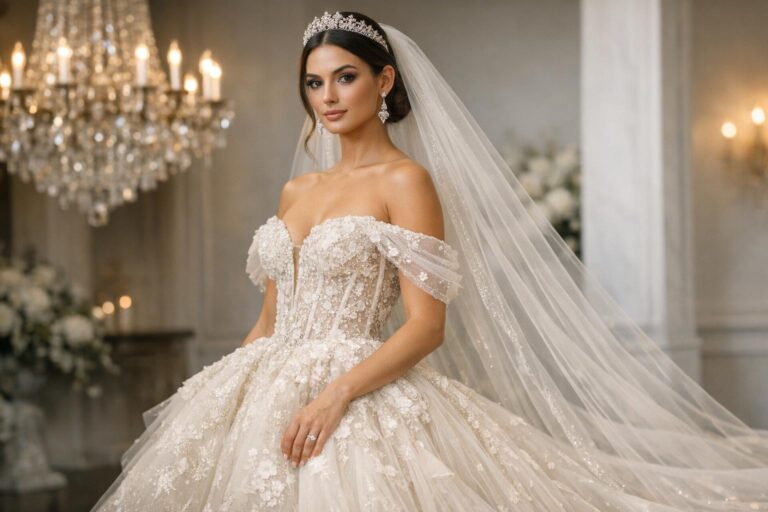
Classic lace ball gown
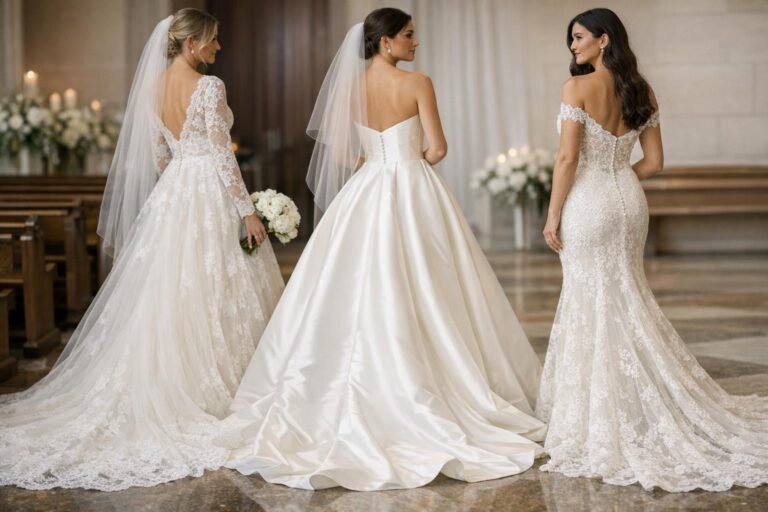
A lace ball gown often combines a structured bodice with a full skirt, making lace feel regal and formal. Lace may concentrate on the bodice for detail and definition, or it may flow down into the skirt for a cohesive look. This style tends to suit grand venues and brides who want a traditional “wedding moment” silhouette.
Romantic A-line with lace
A-line dresses are widely loved because they’re versatile and comfortable. Lace can be used to create soft romance—think gentle motifs, airy placement, or a lace bodice paired with a smoother skirt. If you want lace without feeling weighed down by heavy detail, A-line is often a strong starting point.
Fit-and-flare or mermaid lace gown
Fitted silhouettes pair well with lace because lace naturally adds dimension and draws attention to the body’s lines. Many fitted lace dresses feature pattern placement that emphasizes curves and creates a sculpted effect. If you love a confident, glamorous look, a lace fit-and-flare or mermaid style can deliver drama while still feeling bridal.
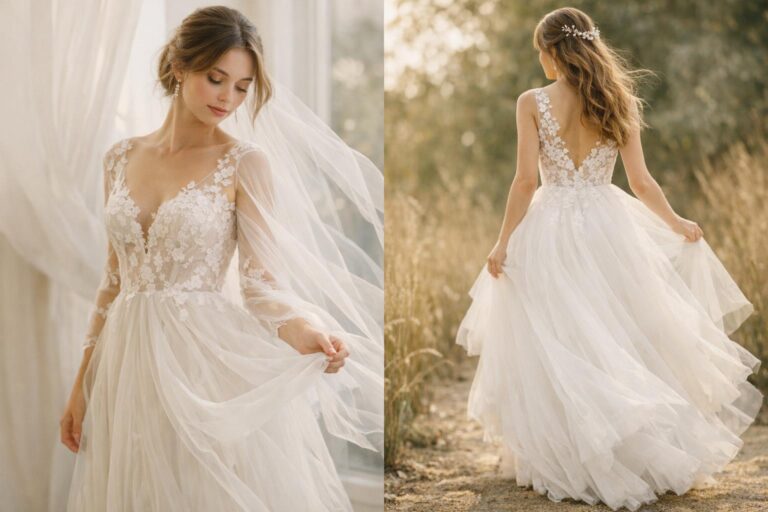
Boho lace wedding dress
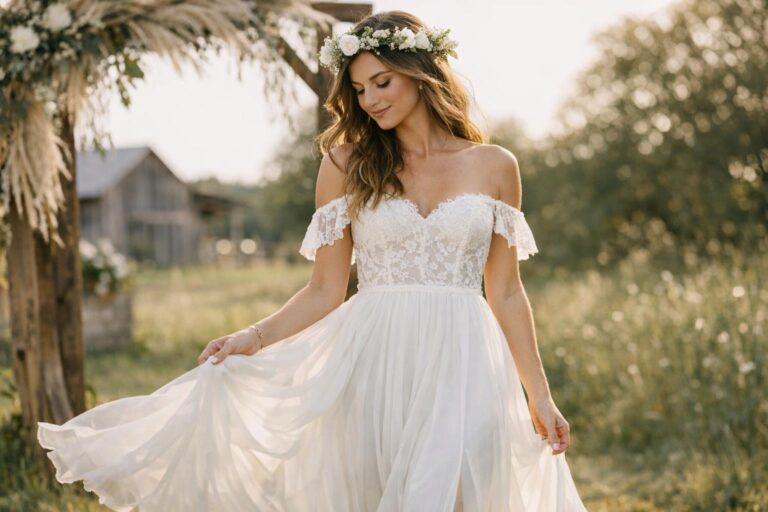
Boho-inspired lace wedding dresses often feel relaxed and expressive. Lace might show up as airy sleeves, open backs with lace framing, or a softer silhouette that prioritizes movement. This direction can be especially appealing for outdoor settings or brides who want an effortless, lived-in romance rather than a highly structured look.
Modern minimalist with lace accents
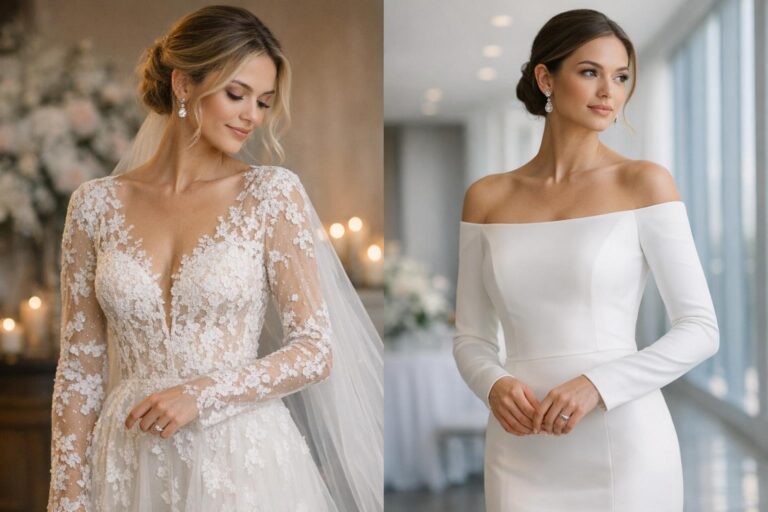
If you love clean lines but still want lace, consider a simpler dress with lace used as a focal detail—such as a lace bodice with a smooth skirt, lace straps, or a lace train. This approach keeps the overall look streamlined while still delivering that unmistakable bridal texture.
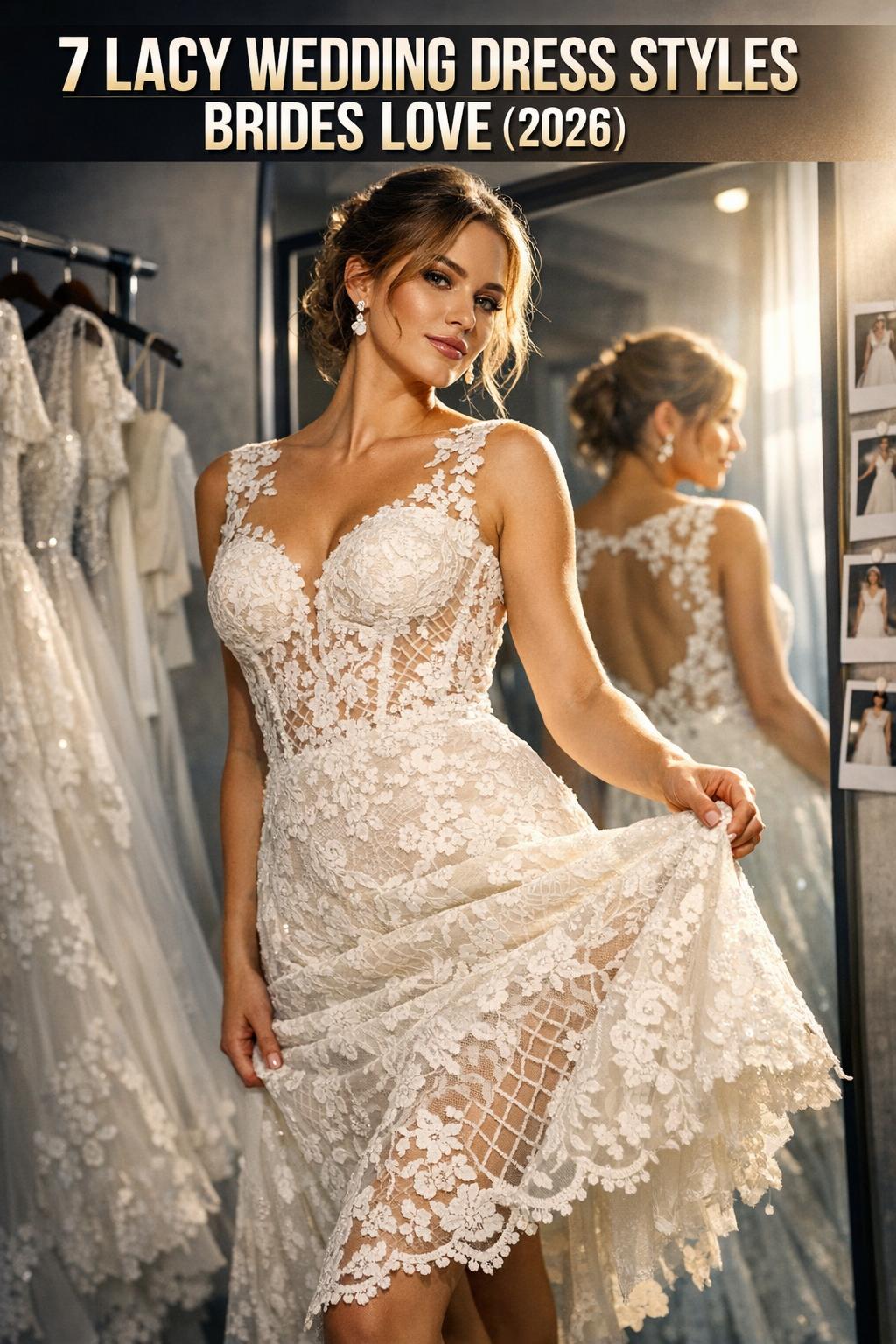
Necklines, backs, and sleeves: where lace makes the biggest impact
Lace is often most noticeable around the face and upper body, which is why neckline and sleeve choices can make or break the overall look. Even a relatively simple dress can feel completely different depending on whether the lace forms an illusion neckline, frames a deep V, or continues into long sleeves.
Illusion lace neckline
Illusion lace uses a sheer base to create the look of lace floating on skin. This can offer coverage while still feeling light, and it can also help lace motifs stand out. If you like the idea of a higher neckline without a heavy, solid fabric across the chest, illusion lace is a common solution.
V-neck and sweetheart lace bodices
V-necks and sweetheart shapes are popular for creating a defined, feminine bodice line. Lace can soften the structure, add dimension, or create a more blended transition into straps or sleeves. If you’re deciding between these shapes, focus on how secure you feel during movement and how the neckline aligns with your overall comfort level.
Lace sleeves: cap, three-quarter, and long sleeve
Lace sleeves can change the mood of a dress instantly. Cap sleeves can feel sweet and delicate, while long lace sleeves can feel timeless, elevated, and slightly dramatic. Three-quarter sleeves often strike a balance—especially for brides who want sleeve coverage without the full commitment of long sleeves.
Open backs and lace-backed details
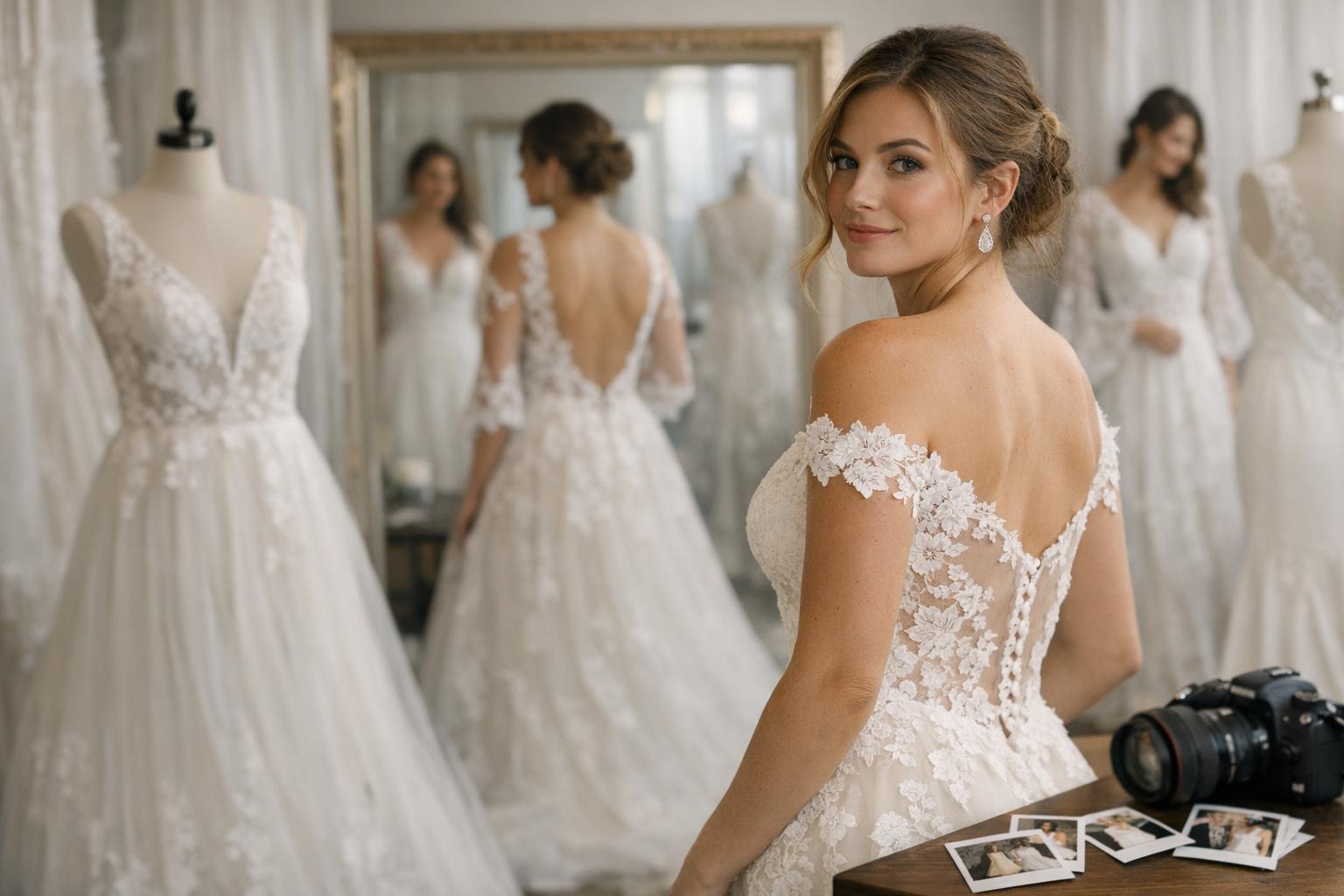
Lace backs can be striking: patterns can frame an open back, soften a low cut, or create an illusion look that appears both romantic and modern. When you try on lace-back styles, pay attention to how the dress fits at the waist and hips, since back design can influence support and comfort.
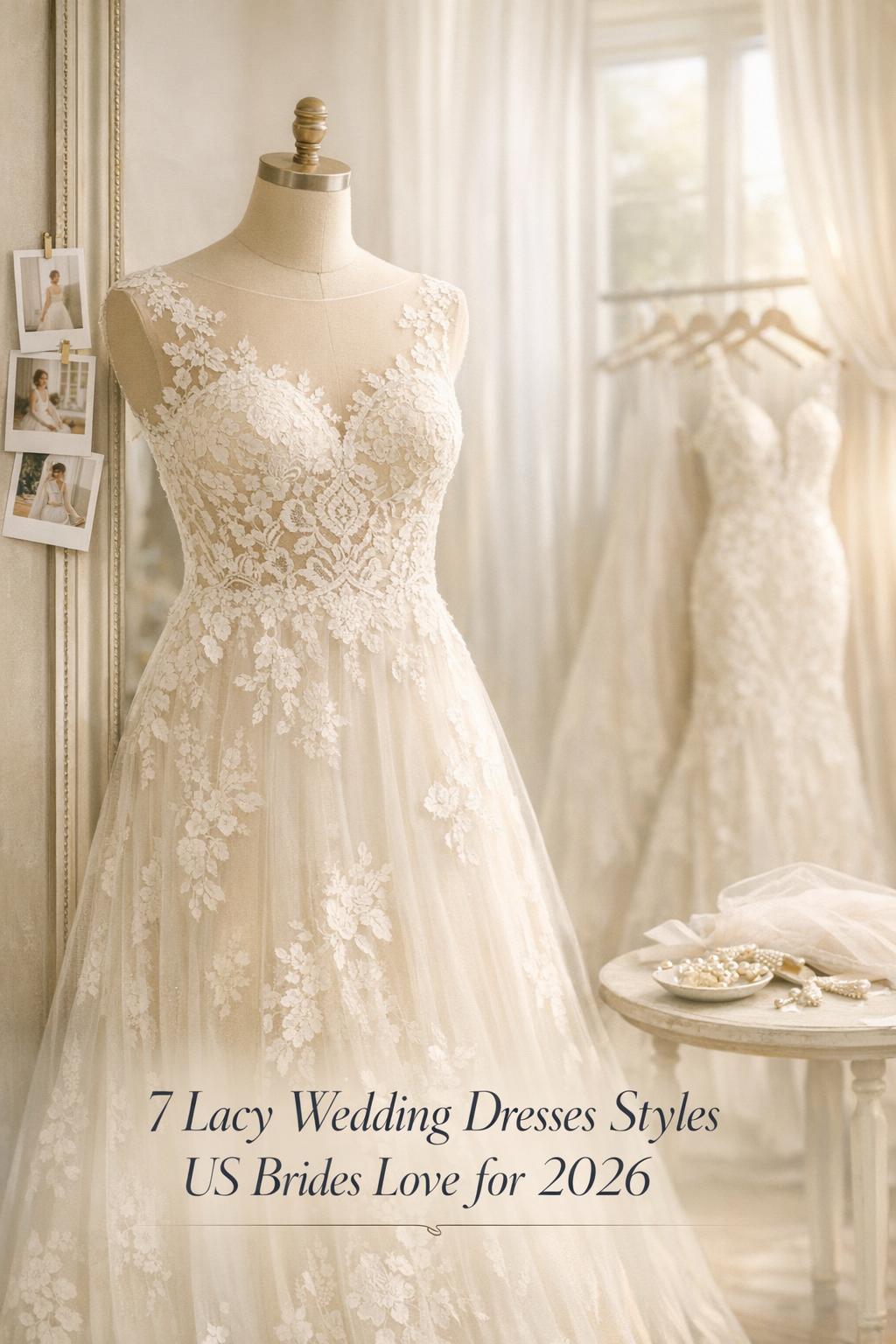
Coverage, lining, and sheerness: making lace feel like “you”
Lace can be airy and sheer or structured and opaque depending on the lining underneath. Many brides love lace but want to control transparency at the bodice, sides, or skirt. The good news is that lining choices can dramatically change the final look without changing the dress’s overall design.
Fully lined vs. partially lined bodices
A fully lined lace bodice generally looks more classic and offers more coverage, while a partially lined bodice can create a lighter, more dimensional effect where lace motifs stand out. Your comfort level matters most here, especially if you’ll be moving, hugging, dancing, and taking photos from multiple angles.
Sheer elements and illusion panels
Illusion panels can show up at the neckline, sides, or back. They can look elegant and delicate, but they can also feel more revealing than expected under bright lighting or flash photography. If you’re considering illusion details, try to view the dress in different lighting and take a few photos during your appointment to see how the effect reads on camera.
Tips: balancing romance and comfort
Tip: When you’re unsure about coverage, prioritize how you want to feel throughout the day rather than how you think you “should” look. A lace dress can be romantic at many coverage levels, and small adjustments—like changing lining color, adding modesty panels, or selecting a different underlayer—can help you feel confident without losing the lace effect.
Choosing lace for your venue and season
Lace is adaptable, but it can present differently depending on your setting. Think about the overall formality, the environment, and how the dress will move. A dramatic lace train may feel perfect for a grand indoor venue, while a lighter lace look may feel more practical for outdoor spaces.
- Formal indoor venues: Consider more structured silhouettes, prominent lace placement, or a longer train for a statement look.
- Outdoor weddings: Prioritize movement and comfort; lace details can still shine without requiring heavy layers.
- Warm-weather days: Airier lace placement or sleeveless designs can feel more breathable while keeping a romantic aesthetic.
- Cooler seasons: Lace sleeves or higher lace necklines can add coverage while staying visually light.
Tips: think about how lace will photograph
Tip: If you love intricate lace, make sure it’s visible at the distance most photos will be taken. Consider a mix of close-up detail (bodice and sleeves) and readable detail (skirt or train) so the lace story comes through in both portraits and full-length shots.
How to find the most flattering lace placement for your body
The most flattering lace dress is the one that supports your shape and aligns with how you want to highlight your features. Lace placement can visually define the waist, elongate the torso, soften lines, or draw attention upward toward the face. Rather than focusing on “rules,” look for what makes you stand taller and feel comfortable.
Waist definition
Some lacy wedding dresses use lace motifs or bands to visually mark the waist, while others use lace to create a smooth, continuous line. If you want a more defined waist, look for lace concentrated at the bodice with a clear transition into the skirt, or lace motifs that naturally narrow at the midsection.
Vertical lines and elongation
Lace motifs that trail downward can create a lengthening effect. This can be especially noticeable when appliqués cascade from the bodice into the skirt, guiding the eye along a vertical path rather than across the body.
Tips: trust movement, not just the mirror
Tip: When evaluating a lace gown, walk, sit, and raise your arms. Lace can feel different in motion than it looks standing still, especially with fitted silhouettes or illusion elements. If you feel restricted, the dress may need a different size, different construction, or a different silhouette—not just a minor tweak.
Try-on strategy: how to shop for lacy wedding dresses with confidence
Shopping for a lace dress is easier when you approach appointments with a plan. Lace has visual complexity, so it helps to narrow your variables: silhouette first, then neckline and sleeves, then the density and placement of lace. This keeps you from getting overwhelmed by details.
- Start with two silhouettes you’re genuinely interested in (for example, A-line and fit-and-flare) and try both in lace.
- Compare an allover lace look to a lace-appliqué look to see which feels more “you.”
- Try at least one option with sleeves and one without, even if you think you’ve decided.
- Take photos in natural light if possible, and look at both close-ups and full-length shots.
- Notice feel: scratchiness, heaviness, and how lace lies against the skin at the neckline and underarms.
Bring the right undergarments (or plan for dress support)
Some lace dresses—especially those with illusion bodices, open backs, or fitted shapes—work best with built-in structure rather than traditional undergarments. During try-ons, focus on whether you feel secure and supported. If you’re not sure, ask what support options are possible within the dress design so you know what the final feel could be.
Tips: decide what “lace” means to you before you shop
Tip: Make one sentence your north star, such as “I want lace that feels delicate and romantic” or “I want lace that makes a bold statement.” When a dress looks beautiful but doesn’t match that sentence, it becomes easier to let it go and keep searching.
Styling ideas that let lace shine
Lace already brings texture and detail, so styling often works best when it’s intentional and balanced. The goal is to complement the dress rather than compete with it. Whether you lean minimalist or maximalist, choose accessories that highlight the areas you love most—neckline, sleeves, back, or train.
Veils and hair pieces with lace
A veil can echo lace details or provide a simpler contrast. If your dress has a lot of lace, a cleaner veil can keep the overall look from feeling too busy. If your dress has lace concentrated in one area, a veil with subtle lace edging can tie the look together.
Jewelry and neckline coordination
Neckline shape influences jewelry choices. With detailed lace near the collarbone, many brides skip a necklace and focus on earrings. With a deeper neckline, a simple necklace can work, but it’s often best to keep it refined so the lace remains the focal point.
Tips: pick one focal point
Tip: Decide where you want attention to land first—your face, your back, or your waist. Then style everything else to support that focal point. This keeps a lace look polished and cohesive, especially in photos.
Common mistakes to avoid with lace wedding gowns
Lace is beautiful, but it can also introduce decision fatigue because there’s so much to look at. Avoiding a few common mistakes can save time and help you feel more certain when you find the right dress.
- Falling for lace detail but ignoring fit and comfort, especially at the neckline and underarms.
- Not checking how illusion lace looks in different lighting and photos.
- Choosing a pattern scale you love up close without considering how it reads in full-length images.
- Trying too many styles without narrowing to a silhouette direction first.
- Over-accessorizing and hiding the dress’s best lace features.
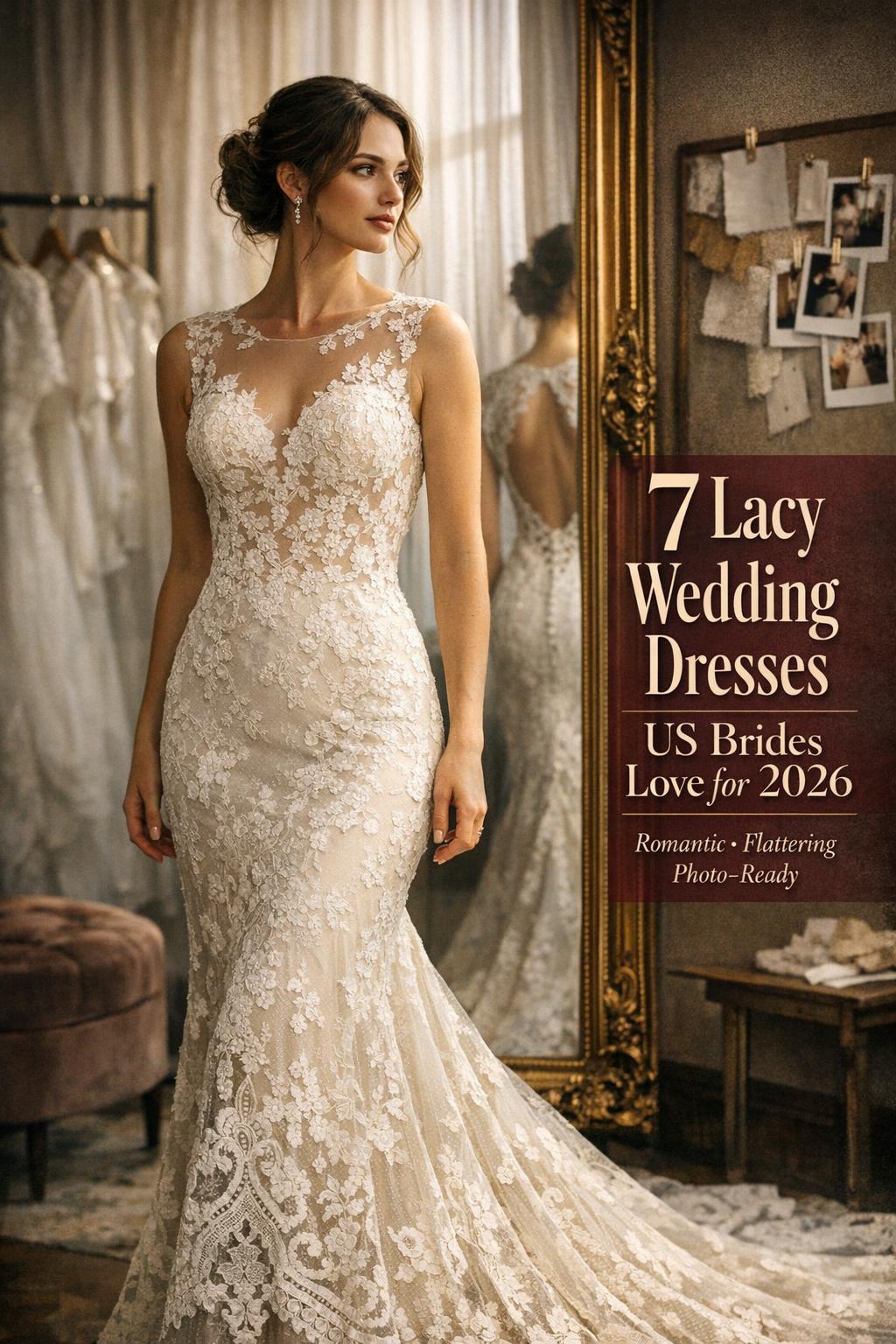
FAQ
What are lacy wedding dresses best known for?
They’re best known for adding texture and romance through patterned detail, whether lace is used all over the gown or as accents on the bodice, sleeves, back, hem, or train.
How do I choose between allover lace and lace appliqués?
Allover lace creates a consistently detailed look from every angle, while lace appliqués feel more selective and can highlight specific areas like the bodice or skirt; try both to see which feels more like your personal style.
Do illusion lace necklines provide coverage?
They can provide coverage while still looking light because the lace sits on a sheer base, but the effect can appear more transparent under bright lighting or flash, so it’s helpful to check photos during your try-on.
Are lace sleeves comfortable for a full wedding day?
They can be, but comfort depends on how the sleeve is constructed and how the lace feels against your skin; during try-ons, move your arms, sit, and dance a bit to make sure nothing pinches or scratches.
How can I make a lace dress feel more modest without losing the lace look?
Modesty often comes from lining choices and small design adjustments, such as adding more lining under a bodice or using a different underlayer, which can increase coverage while keeping the lace pattern visible.
What silhouette works best with lace?
Lace works with many silhouettes, so the best choice is the one that fits your comfort and style goals; A-line is versatile, fitted silhouettes can feel more dramatic, and ball gowns tend to feel more traditional and formal.
How do I know if lace details will show up in photos?
Consider pattern scale and placement, then take both close-up and full-length photos during your appointment to see whether the lace reads clearly at the distances your photographer will use.
What should I focus on during a lace dress try-on?
Focus on silhouette first, then neckline and sleeves, then how the lace feels and looks in motion; also check comfort at contact points like underarms and along the neckline, and view the dress in multiple lighting situations if possible.