7 Minimalist Wedding Dresses U.S. Brides Love for Every Venue
Minimalist Wedding Dresses: A Clean, Timeless Approach to Bridal Style
Minimalist wedding dresses have become a go-to choice for brides who want an elevated look without heavy embellishment. Instead of relying on ornate beading or layered textures, minimalist bridal gowns focus on clean lines, sleek silhouettes, and the impact of excellent fabric and tailoring. The result is a simple wedding dress that can feel modern, timeless, and surprisingly fashion-forward—especially when the cut, neckline, and fit are thoughtfully chosen.
In the U.S., the search for minimalist wedding dresses often blends inspiration with shopping intent: brides want to see examples of slip and sheath styles, strapless and halterneck necklines, cape details, and refined fabrics like crepe, satin, and silk—and they also want practical guidance on where to buy, what to budget for, and how to make “simple” feel special. This guide brings those pieces together so you can move from browsing to confident decision-making.
Whether you’re planning a city hall ceremony, a beach celebration, or a black-tie evening, minimalism is flexible: it can be understated and effortless or structured and architectural. The key is knowing what defines a truly minimalist gown and how to select details that flatter your body, suit your venue, and work with your accessories.
What Defines a Minimalist Wedding Dress
A minimalist wedding dress is “simple” in the sense that it’s restrained—yet it’s rarely plain. Minimalist bridal gowns typically emphasize silhouette, proportion, and fabric quality rather than surface decoration. They often feel sleek and intentional, with design choices that look effortless but are supported by careful construction and fit.
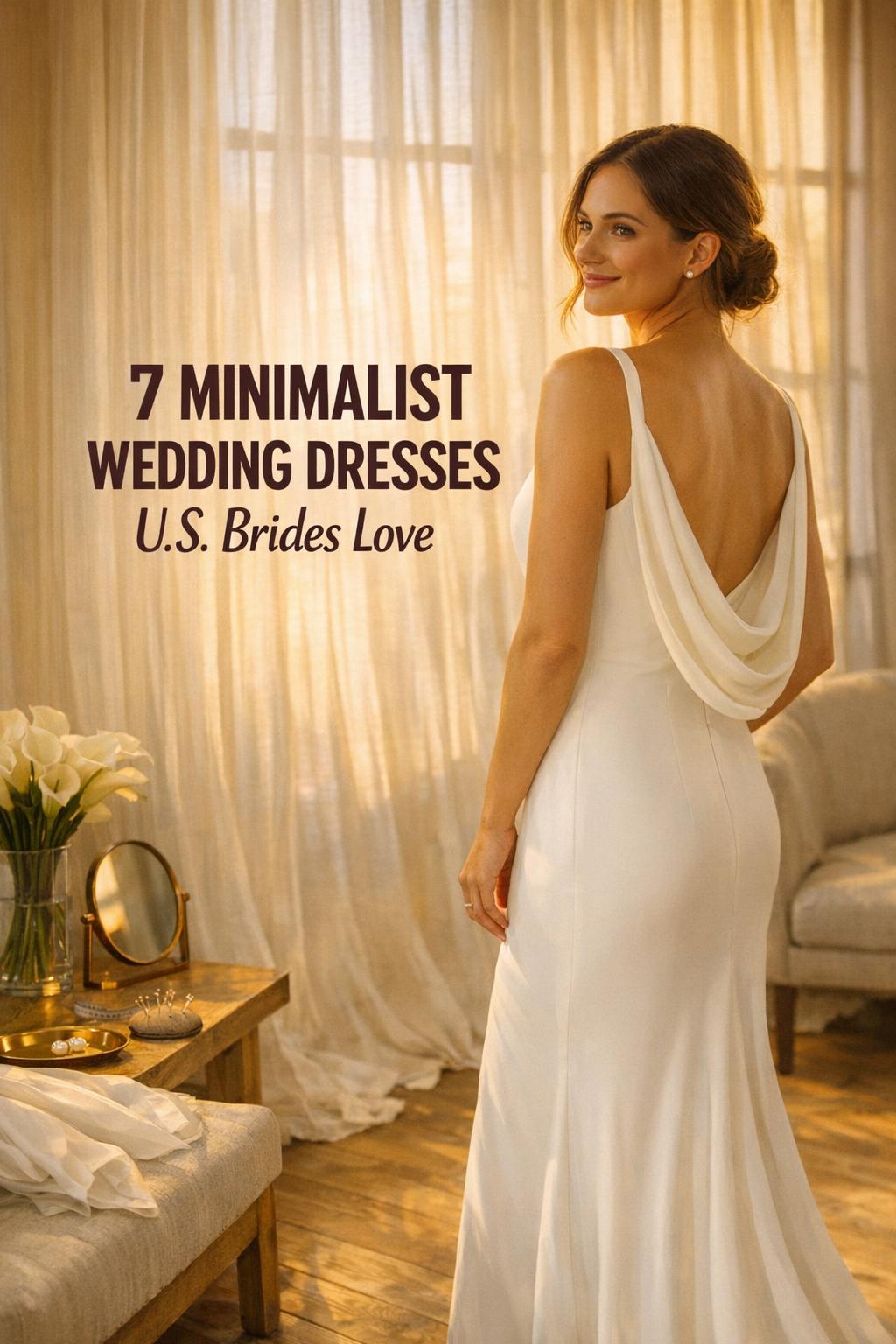
Minimalism in bridal fashion usually shows up as clean-line wedding dresses with minimal embellishment, smooth bodices, and streamlined skirts. You may still see distinct style elements—like a modern neckline, a dramatic open back, a cape effect, or subtle draping—but they’re used sparingly so the gown’s overall look stays refined.
- Clean lines and uncluttered design: fewer seams and overlays, and little to no beading or heavy lace
- Sleek silhouettes: slip, sheath, column, and other streamlined shapes
- Fabric-forward impact: crepe, satin, silk, or charmeuse that creates the “wow” through drape and finish
- Timelessness and tailoring: a fit that looks intentional from every angle, especially in photos
Tip: If you’re deciding whether a dress is truly minimalist, step back and look at the overall silhouette first. If your eye goes to the shape, the neckline, or the fabric’s movement (not the embellishments), it’s likely aligned with a minimalist approach.
Popular Minimalist Silhouettes and Why They Work
Minimalist wedding dress silhouettes range from ultra-simple slip gowns to more tailored, architectural looks. Because the styling is restrained, small differences—like strap placement, neckline angle, and skirt volume—matter more. Knowing the major categories helps you shop faster and compare options more clearly.
Slip and Sheath Silhouettes
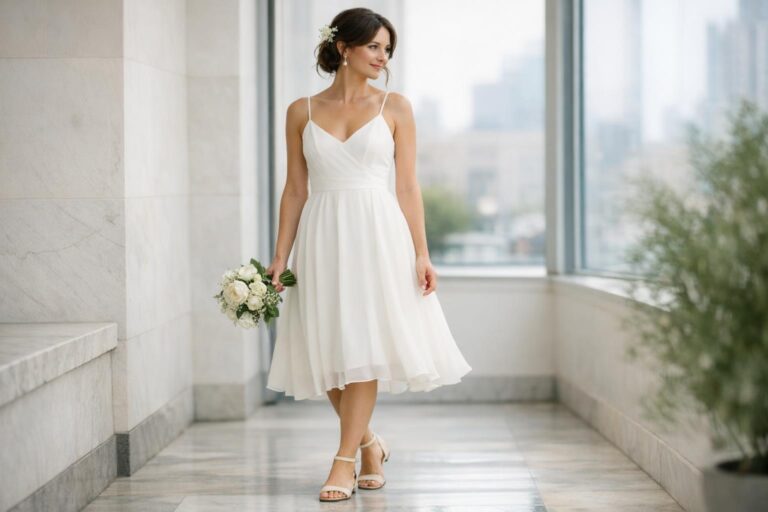
The minimalist slip wedding dress is one of the most recognizable “less is more” looks: fluid, lean, and often made to skim rather than structure. A sheath silhouette offers a similar streamlined profile but can feel slightly more tailored depending on fabric and construction. Both are popular for brides who want something sleek, modern, and easy to accessorize.
Tip: Slip and sheath styles make fabric choice especially visible, so prioritize how the material looks and moves in different lighting. In a minimalist gown, the fabric is part of the design.
Column Shapes and Sleek Maxi Silhouettes
Column and sleek maxi silhouettes read as timeless and polished. They create a long, uninterrupted line that pairs well with understated bridal accessories or, if you prefer, one statement piece (like a bold veil or dramatic earrings). A column shape can also feel subtly “architectural” when paired with a strong neckline such as strapless or halterneck.
These silhouettes work well across wedding settings, from city celebrations to formal venues, because they feel intentional and refined without depending on heavy décor or ornate styling.
Modern Necklines: Strapless, Halterneck, and Clean Square Lines
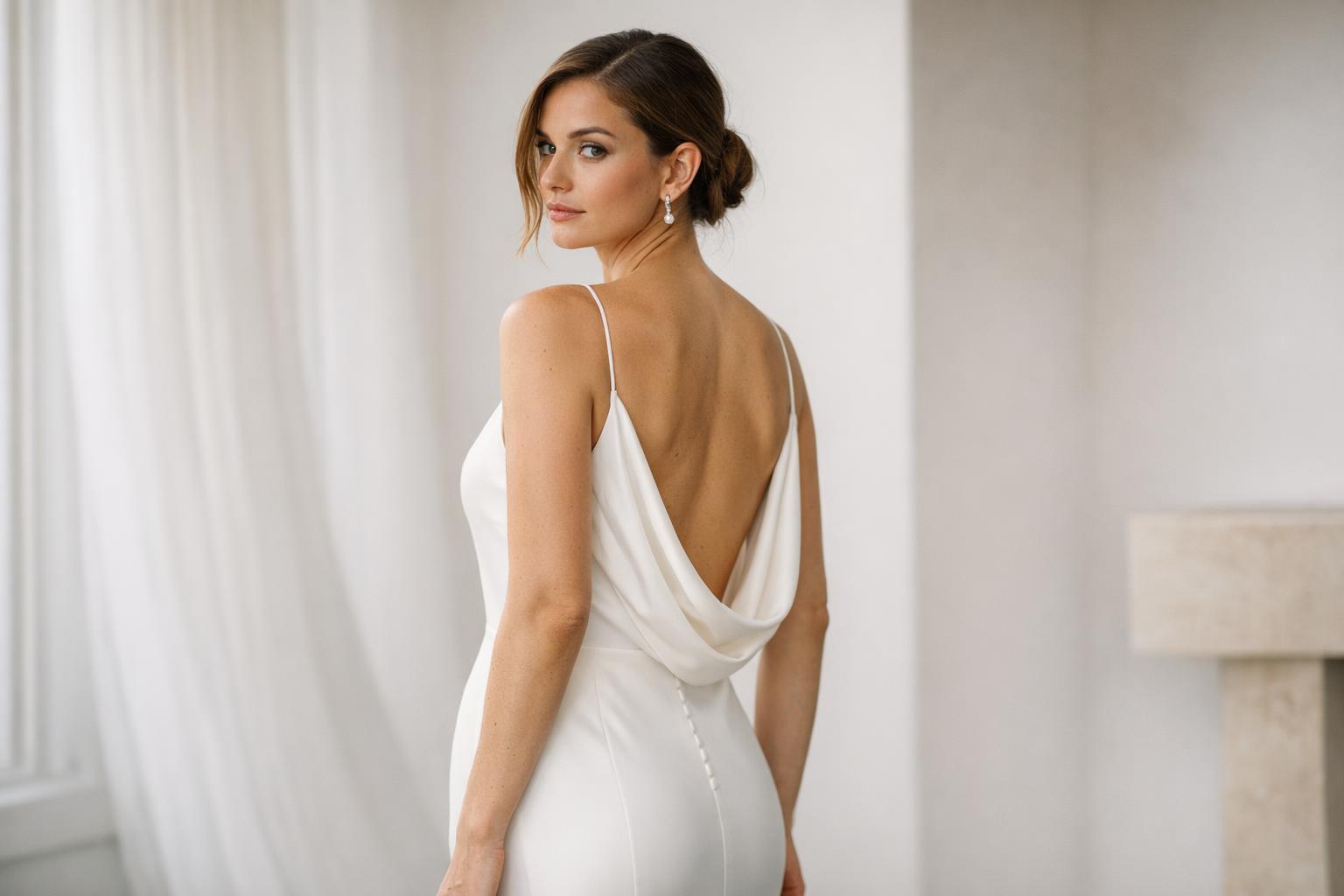
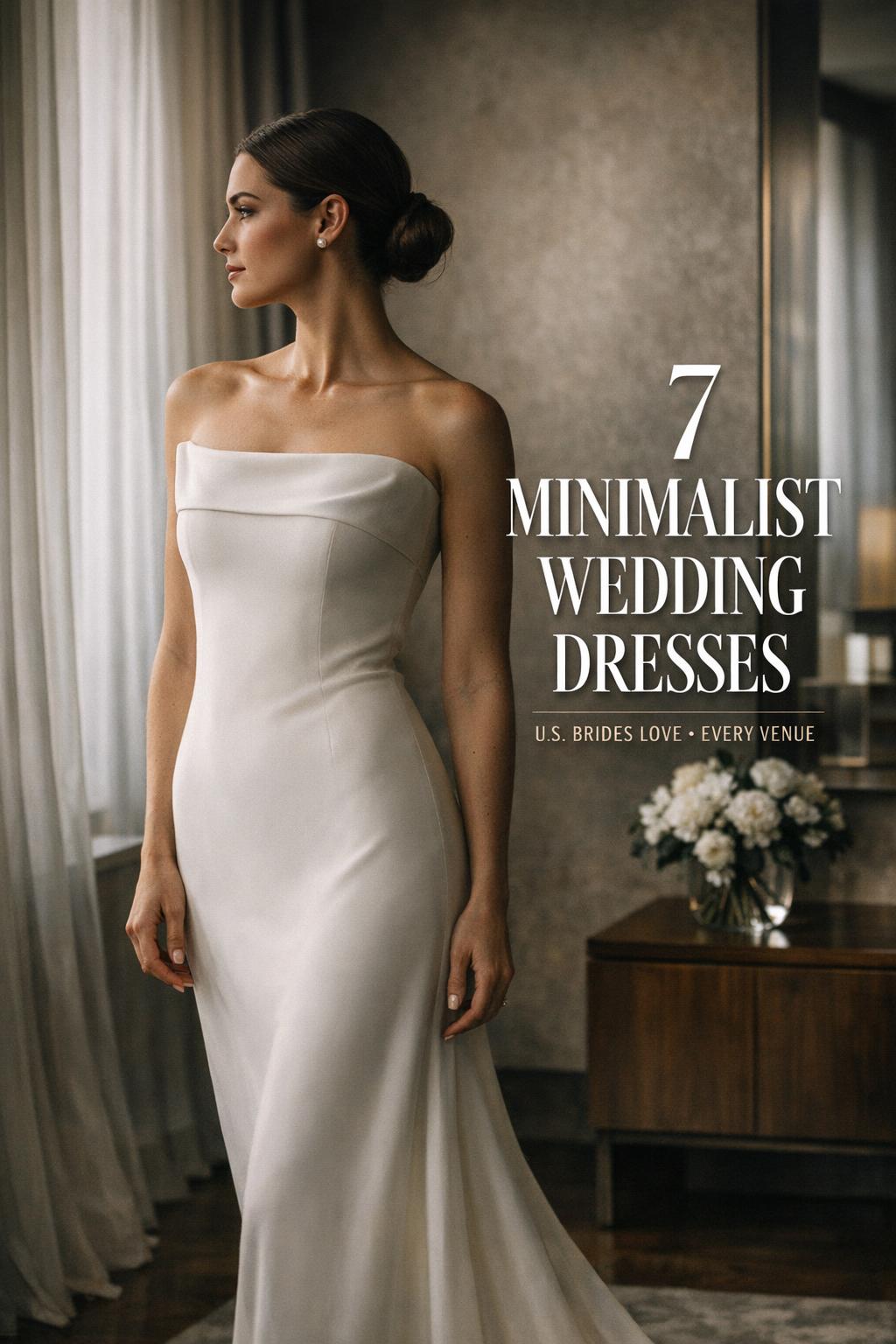
Minimalism doesn’t mean every dress looks the same. A change in neckline can shift the mood dramatically. Strapless minimalist bridal gowns can look sculptural and modern; halterneck gowns can feel sleek and fashion-forward; and clean, structured necklines can give a gown that “tailored” edge even when the skirt is simple.
Tip: When comparing similar minimalist gowns, photograph yourself straight-on and in profile. Neckline angles and strap placement can change how your shoulders and torso read on camera, which is especially noticeable when the dress is free of embellishment.
Capes, Cap Sleeves, and Subtle Draping
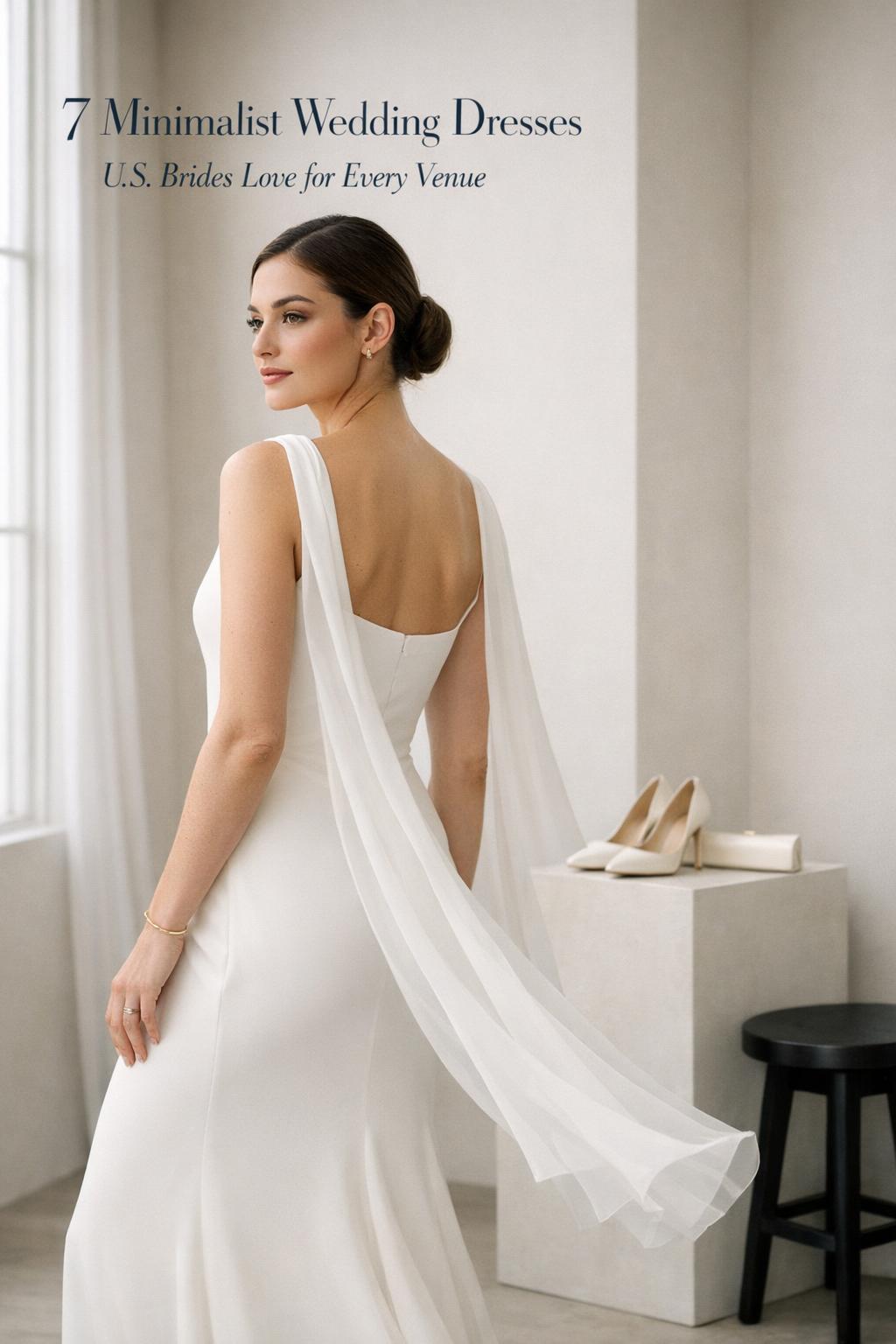
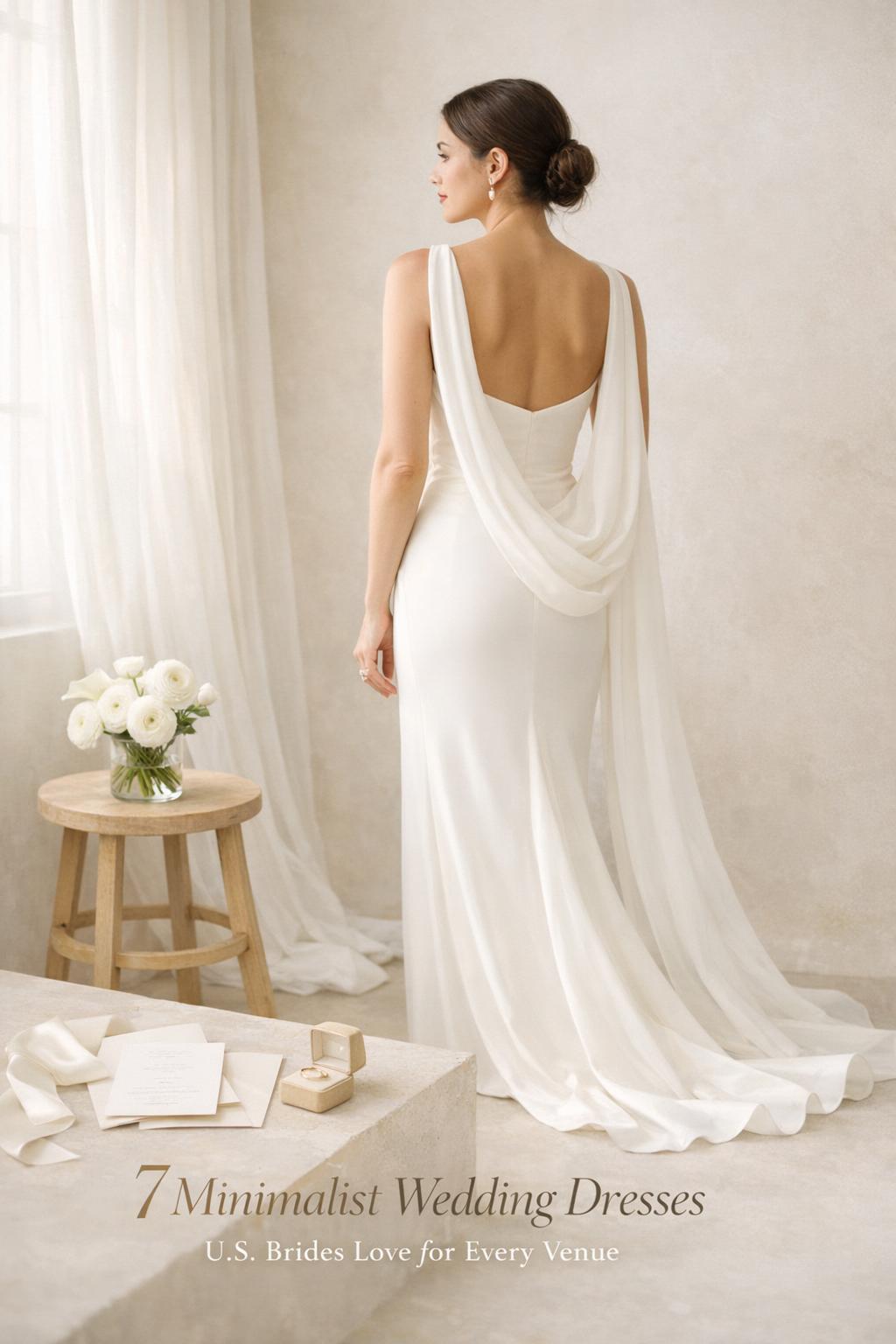
Some of the most striking simple wedding dresses add a single design gesture—like a cape detail, cap sleeves, or subtle draping. These features maintain a minimalist look while adding movement and shape. A cape-effect minimalist wedding dress can feel dramatic in photos while still staying clean and understated.
Because these details become the focal point, they pair best with pared-back accessories. The goal is balance: one strong detail, then everything else edited.
Fabrics That Define Minimalist Bridal Style
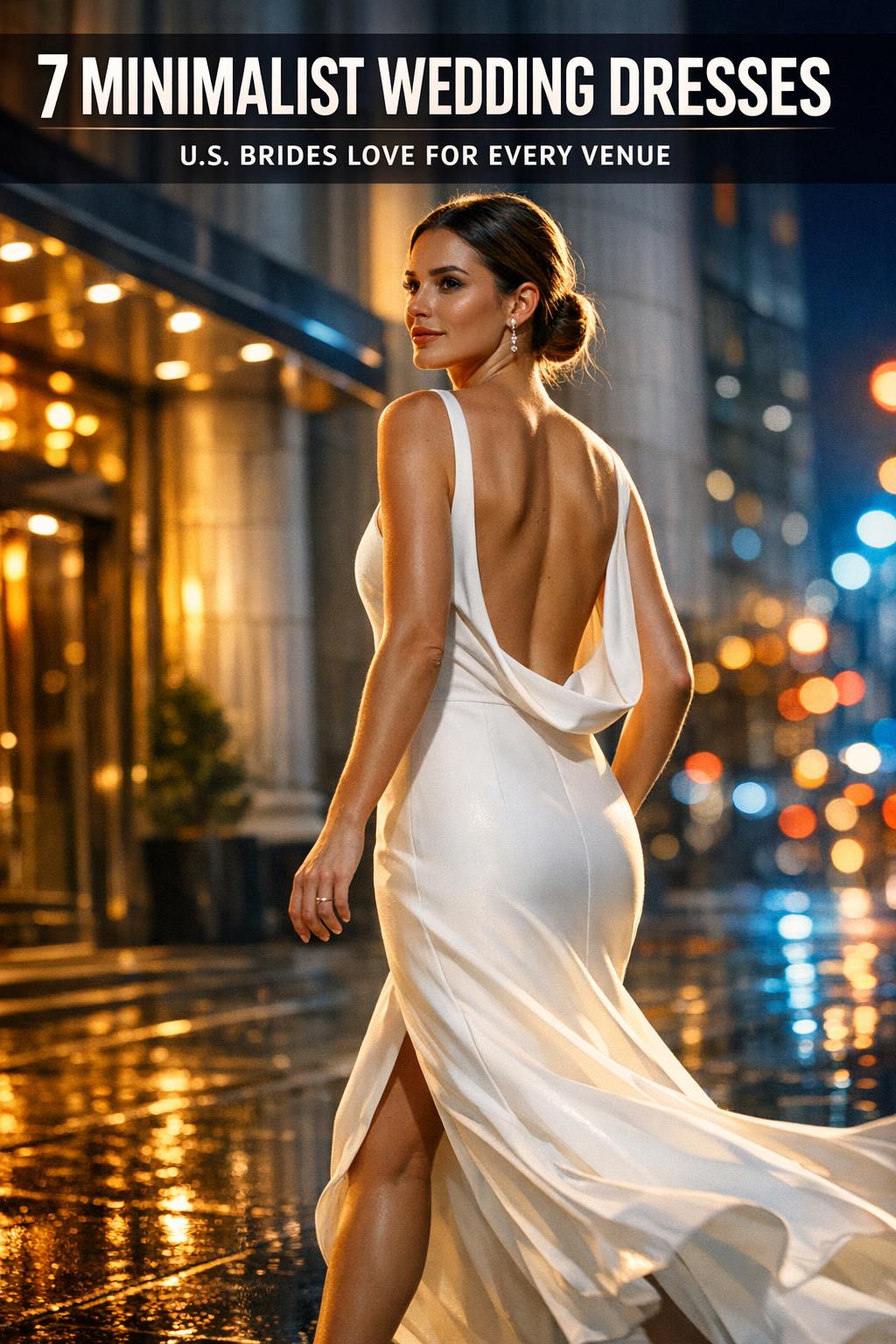
In minimalist wedding dresses, fabric is not a background choice—it’s central. The finish (matte vs. sheen), drape (fluid vs. structured), and overall “hand” of the textile influence how minimalist a gown feels and how well it photographs. Many minimalist collections emphasize fabrics like crepe, satin, and silk, chosen for their ability to look luxurious without extra decoration.
Crepe
A crepe minimalist wedding gown often reads as modern and clean-lined, with a refined surface that supports simple silhouettes. Crepe can be especially effective for sleek shapes because it helps maintain a smooth, uninterrupted line.
Satin
Satin is a classic choice for minimalist bridal gowns when you want polish and a subtle glow. In simple silhouettes, satin’s sheen can become a design feature all on its own, which is why it appears frequently in “simple yet striking” gown roundups and minimalist bridal collections.
Silk and Charmeuse
Silk and silk-like finishes such as charmeuse are often associated with slip styles and fluid shapes. These fabrics can create an effortlessly elegant look, especially when paired with a minimal neckline and a clean hemline. Because the fabric can feel delicate in appearance, fit and underlayers become even more important to keep the line looking intentional.
Tip: When shopping, consider how the fabric supports your priorities: do you want structure and tailoring, or fluid movement? Minimalism can look both ways, but the fabric will determine which direction your gown naturally leans.
Designer and Boutique Spotlights for Minimalist Bridal Gowns
If you’re looking for a designer minimalist wedding dress or want to compare multiple minimalist bridal collections, it helps to know which brands consistently position themselves around clean lines, simple silhouettes, and fabric-forward design. The following labels and boutiques are frequently associated with minimalist wedding dresses, with offerings ranging from curated boutique edits to dedicated “simple by design” collections.
Grace Loves Lace (Simple by Design)
Grace Loves Lace highlights simplicity as a core aesthetic, emphasizing clean lines and timeless fabrics such as crepe, satin, and silk. The brand’s minimalist positioning is centered on “minimal by design” looks that aim for strong impact through fit, neckline choices, and streamlined silhouettes.
Caeli NYC (Minimalist Wedding Dresses)
Caeli NYC presents minimalist wedding dresses with an emphasis on clean-line silhouettes and a USA-made, quality-driven approach. The brand also highlights customization alongside ready-to-wear options, which can be appealing if you want a minimalist gown with carefully tailored proportions.
Léshva (Minimalist Collection)
Léshva frames its minimalist collection as “gracefully simple,” focusing on refined silhouettes and understated elegance. This is the type of minimalist bridal approach that leans into timelessness—where the gown’s restraint is the point, and the overall look reads polished and composed.
Grace + Ivory (Minimalist Bride)
Grace + Ivory offers a boutique-style category focused on the minimalist bride, presenting modern silhouettes with practical shopping cues like style names and accessible browsing. If you want to compare multiple minimalist looks in one place, a curated category can help you see variations in neckline, skirt shape, and overall vibe without switching between entirely different aesthetics.
Royce Bridal (Simple Minimalist Dresses)
Royce Bridal positions its collection around simple minimalist dresses and includes practical customer guidance embedded alongside shopping—topics like sizing, alterations, and shipping. For U.S. brides who want a streamlined gown and a straightforward buying process, this kind of built-in guidance can be a meaningful part of the experience.
The Wolf and Lily (Modern Minimalist Gowns)
The Wolf and Lily’s wedding dress collection is aligned with modern minimalist styling, emphasizing clean lines, movement, and a range of fabric feels from soft satin to crepe. This is a useful example of how minimalism can still offer variety—different necklines, skirt shapes, and levels of structure—without shifting into heavy embellishment.
Editorial Inspiration: Minimalist Beauty in Luxury Gowns
If you’re exploring a luxury direction, editorial roundups of minimalist gowns often focus on refined details, clean lines, and designer craftsmanship, showing how “simple” can still feel elevated and venue-appropriate for more formal settings. These features are useful for inspiration, styling cues, and understanding how minimalism translates across different designers.
Where to Buy Minimalist Wedding Dresses in the U.S.
Most brides shopping in the U.S. mix online browsing with either in-person appointments or at-home try-ons, depending on the brand and boutique model. Because minimalist bridal gowns depend so heavily on fit, it’s important to choose a buying path that supports accurate sizing, reasonable lead times, and a clear plan for alterations.
Online Shops vs. Boutiques
Online shopping can be efficient for comparing silhouettes, necklines, and fabric types across many minimalist bridal collections. Boutiques can be helpful when you want hands-on experience with fabric weight, structure, and the way a clean-line dress falls on your body. Either route can work—what matters is understanding what the retailer or brand offers in terms of sizing support, alteration recommendations, shipping timelines, and return pathways (where applicable).
- Online-first can be ideal if: you already know your preferred silhouette (slip, sheath, column) and want to compare options quickly.
- Boutiques can be ideal if: you’re deciding between fabrics (crepe vs. satin vs. silk) and want to see how each one looks in person.
- Either way, plan ahead for: fittings, tailoring, and the accessories that complete a minimalist look.
Custom and Ready-to-Wear Options
Minimalist wedding dresses can be found in both ready-to-wear formats and custom or customizable programs. Customization can be especially valuable when the dress is simple: small adjustments to neckline height, strap placement, or length can dramatically improve the final look. Ready-to-wear can be a strong option if you want a faster path and plan to rely on alterations to fine-tune fit.
Tip: If you’re choosing between custom and ready-to-wear, ask yourself one question: are you trying to change the design, or just perfect the fit? Minimalist gowns often look best when the design stays clean and the tailoring does the heavy lifting.
How to Choose the Right Minimalist Dress for Your Body and Comfort
The beauty of minimalist bridal gowns is that they highlight you, not the dress. The challenge is that a clean silhouette can be less forgiving: fit issues are easier to spot when there’s no embellishment to distract the eye. Choosing the right minimalist wedding dress is largely about proportion, neckline balance, and a realistic alterations plan.
Height and Proportion Considerations
In a simple minimalist wedding gown, proportion is everything. A column or sheath silhouette can elongate the body, while certain neckline shapes can visually lengthen the neck and balance the shoulders. Because minimalism is about restraint, look for a dress that feels “right” from a distance—where the overall line looks effortless and uninterrupted.
Tip: Try on minimalist dresses with the heel height you expect to wear. The hemline and the way the fabric breaks at the floor are a major part of the look in sleek, clean-lined gowns.
Neckline and Shoulder Balance
Necklines do a lot of visual work in minimalist wedding dresses. Strapless, halterneck, and other modern necklines can shift attention to the shoulders, collarbone, and face. If you love the sleekness of a minimalist silhouette but want a bit more framing, consider cap sleeves or a cape element that still maintains a clean aesthetic.
Alterations and Fittings: The Non-Negotiable for Minimalism
Even the most timeless wedding dress can fall flat if the fit isn’t right. Minimalist gowns often rely on smooth lines across the bodice and hips, so small fit issues can be noticeable. Plan for fittings and tailoring as part of your dress decision, not as an afterthought, and prioritize comfort and movement alongside appearance.
- Schedule enough time for multiple fittings if needed.
- Pay close attention to the bodice fit and neckline stability in strapless and halterneck styles.
- Walk, sit, and move in the dress to see how a sleek fabric behaves throughout the day.
Undergarments, Footwear, and the “Invisible” Details That Make Minimalism Work
Minimalist wedding dresses put the spotlight on the silhouette, which means your undergarments and shoes can influence the final line more than you might expect. A clean-lined gown is meant to look seamless, so anything that disrupts that smoothness—visible lines, shifting support, or uncomfortable shoes—can affect both photos and your experience.
Footwear matters because it changes posture, hem length, and the way a simple skirt falls. Undergarments matter because they support the bodice and keep the lines looking intentional. In a minimalist slip or sheath, these “invisible” choices can be the difference between a dress that looks effortless and one that looks fussy.
Tip: Treat your shoes and underlayers as part of your fitting plan. If you can, bring them to fittings early so the final alterations reflect your real wedding-day setup.
Accessorizing Minimalist Gowns Without Losing the Minimalist Effect
Minimalist wedding dresses are famously versatile: they can support a wide range of accessories, from a simple veil to statement jewelry. The goal is to keep the overall look balanced and intentional. Because the dress is restrained, accessories can take on more visual weight—so editing is key.
Veils, Jewelry, Shoes, and Outerwear
Many brides love pairing a simple wedding dress with a veil or carefully chosen jewelry to add personality. A minimalist dress can also look striking with modern shoes or a sleek outer layer. If the gown has a feature like a cape effect, cap sleeves, or a strong neckline, consider scaling accessories back so the silhouette remains the focal point.
- If your dress is ultra-clean: consider one statement accessory (veil or earrings) rather than many small ones.
- If your dress has a cape or dramatic neckline: keep jewelry minimal and let the gown lead.
- If you want a fashion-forward feel: pair sleek lines with equally streamlined shoes and a polished finishing touch.
Hair and Makeup to Match a Minimalist Dress
Minimalist bridal styling often looks best when hair and makeup feel aligned with the gown’s simplicity: clean, polished, and intentional. Because the dress doesn’t compete for attention, your overall presentation becomes the “detail.” The result can feel modern and confident, especially in photos that highlight face, neckline, and silhouette.
Tip: If you’re unsure how much to do, choose one area to emphasize. For example, if your dress is a sleek strapless column, you might keep hair simple and add a more defined accessory choice—or keep accessories minimal and let hair be the statement. The point is controlled contrast, not accumulation.
Minimalist Wedding Dress Ideas by Wedding Type
Minimalism works across venues and dress codes because it’s more about design principles than one single style. The best approach is to match silhouette and details to the setting, then build accessories around that foundation.
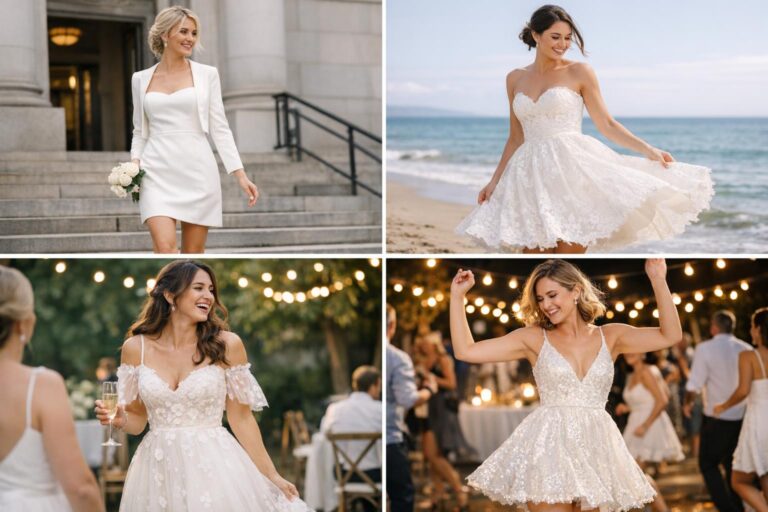
City Hall and Courthouse Weddings
For city hall, many brides gravitate toward sleek, simple silhouettes like slip, sheath, and column shapes. Minimalist wedding dresses can look especially sharp in an urban environment, where clean lines feel modern and purposeful. A strong neckline—like halterneck or strapless—can make the look feel elevated without adding embellishment.
Beach and Destination Celebrations
Minimalist gowns can be a natural fit for beach settings because they often prioritize movement and ease. A fluid slip or a simple sheath can look effortlessly elegant, especially when paired with minimal jewelry and a focus on comfort. Choosing the right fabric and ensuring the fit supports comfortable movement becomes especially important in a setting where you’ll be walking on uneven surfaces.
Black-Tie and Formal Evenings
For black-tie events, minimalist doesn’t mean casual—it can mean refined. A structured satin gown, a clean column silhouette, or a dramatic cape detail can read luxurious precisely because it’s restrained. In formal settings, tailoring and fabric finish tend to be the elements that communicate “dress code” most clearly.
Tip: If you want minimalist style but worry about looking underdressed, look for one elevated design element—like a cape, a striking neckline, or a beautifully clean train—then keep everything else simple.
Real-World Wear: Fit, Comfort, and Movement in Minimalist Bridal Gowns
Minimalist wedding dresses often win brides over because they feel wearable. Comfort, however, depends on the specific silhouette, fabric, and how well the gown is fitted and altered. A sleek dress can be comfortable all day when the bodice is secure, the hem is correct for your shoes, and the fabric supports movement instead of fighting it.
Movement is also a major part of how minimalist dresses photograph. Since there’s less surface detail, the gown’s drape and how it flows when you walk or turn becomes a visible feature. That’s why it’s worth testing movement during try-ons and fittings, especially if you’re choosing a fabric-forward slip or a tailored crepe sheath.
- Walk and sit during every try-on to see how the dress behaves.
- Check the neckline and bodice stability—especially in strapless and halterneck styles.
- Notice how the fabric looks in motion; minimalism often shines when it moves.
Sustainability, Longevity, and the “Buy Once” Mindset
Minimalist wedding dresses naturally align with a longevity mindset: the designs are often timeless, which can make them easier to rewear, repurpose, or pass along. Many brides also explore eco-friendly wedding dresses that lean minimalist, since simplicity can pair well with efforts to minimize waste and focus on quality materials and long-term use.
Sustainability in bridal shopping is often connected to making intentional choices: selecting a dress you genuinely love, choosing a silhouette that won’t feel dated quickly, and prioritizing quality and fit so the gown remains in great shape over time. A clean-lined gown can be a strong foundation for that approach because it’s less trend-dependent and more about enduring design.
Tip: If longevity matters to you, focus on timeless shape and fabric quality first. In minimalism, those two choices tend to have the biggest impact on how the dress looks now and how it holds up later.
Shopping Checklist and Quick Reference for U.S. Brides
Because minimalist bridal gowns are so dependent on clean fit and thoughtful finishing, a simple checklist can save time and prevent last-minute stress. Use the reference points below to guide appointments, online orders, and your alterations timeline.
Quick Fit Checklist
- Does the neckline sit securely (especially strapless or halterneck)?
- Do the seams and lines look smooth from the front, side, and back?
- Can you move comfortably—walk, sit, and lift your arms—without constant adjusting?
- Does the fabric drape the way you want, both still and in motion?
- Is the hemline compatible with the shoes you plan to wear?
Budget Ranges and What to Consider
Minimalist wedding dresses span a wide range of price points, from affordable “less is more” collections to luxury designer gowns featured in editorial roundups. Rather than focusing only on the initial price, consider what you’re truly buying: fabric quality, construction, and the level of tailoring needed to achieve that clean, seamless look.
Tip: When comparing two minimalist dresses, ask which one will require fewer compromises. If one fits better off the rack or has a fabric you love, it may deliver more value even if the initial price is higher.
Lead Times, Returns, and Alterations Planning
Many minimalist bridal shopping pages include practical guidance on sizing, alterations, shipping, and related policies. These details matter because minimalist gowns often need precise fit to look their best. Before purchasing, clarify your timeline, your alteration plan, and what happens if you need a different size or a change in approach.
- Confirm your timeline for ordering and delivery.
- Understand what alterations are likely for your silhouette.
- Review how sizing is handled and what support is available if adjustments are needed.
FAQ
What is a minimalist wedding dress?
A minimalist wedding dress is a gown defined by clean lines, sleek silhouettes, and restrained detail, often relying on fabric quality and tailoring rather than heavy embellishment to create impact.
Are minimalist wedding dresses the same as simple wedding dresses?
They overlap, but not always. “Simple” can mean minimal decoration, while “minimalist” typically also implies intentional design choices—clean proportions, refined construction, and a silhouette that feels edited and modern.
What silhouettes are most popular for minimalist bridal gowns?
Popular minimalist silhouettes include slip, sheath, and column shapes, along with modern variations featuring strapless or halterneck necklines, cap sleeves, subtle draping, or cape effects that add drama without adding clutter.
What fabrics are common in minimalist wedding dresses?
Minimalist gowns frequently feature crepe, satin, silk, and charmeuse, because these fabrics can look luxurious and photograph beautifully while keeping the overall design clean and understated.
How do I accessorize a minimalist wedding dress?
Start by choosing one focal point—such as a veil, statement earrings, or sleek shoes—then keep the rest restrained so the dress’s silhouette remains the centerpiece; if the gown already has a bold neckline or cape detail, scale accessories back even more.
Do minimalist wedding dresses require alterations?
Alterations are often important for minimalist dresses because clean silhouettes make fit details more noticeable; planning for fittings and tailoring helps ensure the bodice, seams, and hemline look smooth and intentional.
Where can I buy minimalist wedding dresses in the U.S.?
You can shop minimalist wedding dresses through brand collections and boutique categories offered online and through select retail models, with options ranging from ready-to-wear to customizable designs depending on the label and the level of fit personalization you want.
Are minimalist wedding dresses comfortable for all-day wear?
They can be very comfortable, especially when the fabric supports movement and the fit is correct; the most important factors are bodice stability, hem length with your chosen shoes, and an overall silhouette that lets you walk, sit, and celebrate without constant adjusting.
How do minimalist gowns connect to sustainability?
Minimalist design often supports a longevity mindset because timeless silhouettes and fabric-forward styling can be easier to rewear or repurpose, and many brides exploring eco-friendly wedding dresses are drawn to minimalist shapes that emphasize quality and reduce reliance on disposable trends.