7 Photo-Ready Non Traditional Wedding Dresses for U.S. Brides
Non Traditional Wedding Dresses: Unique Styles for Modern Brides in the U.S.
Non traditional wedding dresses have moved from niche choice to a mainstay for modern brides who want their outfit to feel personal, fashion-forward, and true to the day they’re planning. Instead of defaulting to a single “bridal uniform,” many couples now treat wedding attire as a form of storytelling—through color, silhouette, fabric, and styling choices that reflect personality, culture, venue, or simply taste.
This guide brings together the most searched-for nontraditional directions—colorful gowns, two-piece wedding dress options, jumpsuit wedding dress looks, minis and tea-length silhouettes, and dramatic cape details—along with practical, real-world considerations like shopping paths, alterations, and how to style bold choices so they still feel cohesive and intentional.
What Counts as “Non-Traditional” in 2026
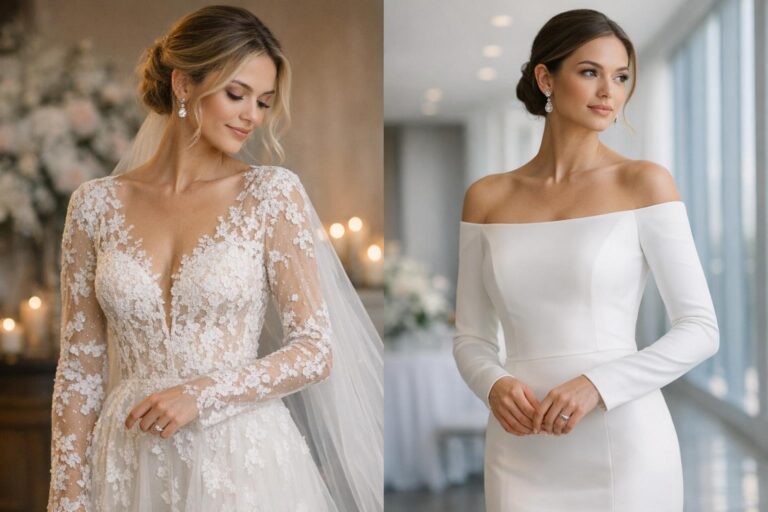
In today’s bridal landscape, “non-traditional” usually means stepping outside a narrow set of expectations: a white or ivory floor-length gown with classic bridal accessories. A nontraditional wedding dress might still be formal and undeniably bridal, but it breaks the mold in at least one noticeable way—color, shape, structure, or the way the outfit is assembled.
Think of non-traditional wedding dresses as a spectrum. On one end are subtle updates: a modern cut, unexpected texture, or a new approach to accessories. On the other end are full convention-defying looks: black or metallic gowns, separates instead of a single dress, or a custom piece made from vintage textiles that carries a story.
- Color beyond white: blush, blue, emerald, black, and metallics can feel just as celebratory and elevated as traditional neutrals.
- Silhouettes beyond the classic ballgown: jumpsuits, short hemlines, sleek modern shapes, and dramatic statement forms.
- Multi-piece ensembles: a two-piece bridal set, separates, or a dress paired with a cape, capelet, or cape sleeves.
- Textile and embellishment twists: velvet, silk crepe, satin shine, embroidered tulle, metallic thread, florals, or fringe.
If you’re torn between “bridal” and “alternative wedding dress,” it helps to remember that nontraditional doesn’t have to mean casual or costume-like. The best unconventional wedding dress choices still look intentional in photos and feel aligned with the formality of your event.
Popular Non-Traditional Silhouettes and Colors
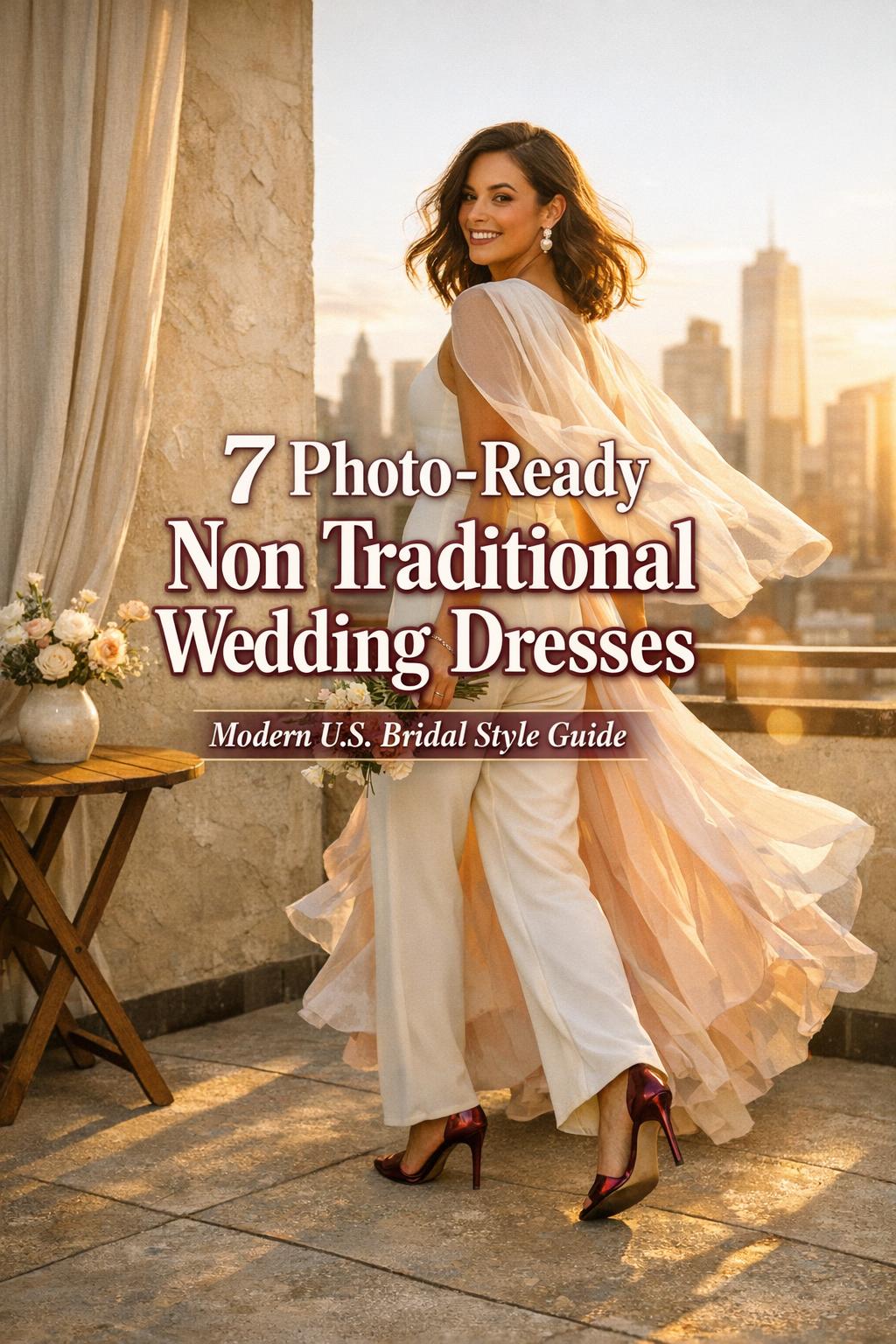
The most common search paths for alternative bridal fashion are specific: colored gowns, two-piece wedding dress looks, jumpsuits, shorter lengths, and dramatic add-ons like capes. Use the ideas below as a menu—many brides blend two or three of these directions into one outfit.
Colorful gowns: blush, blue, emerald, black, and metallics
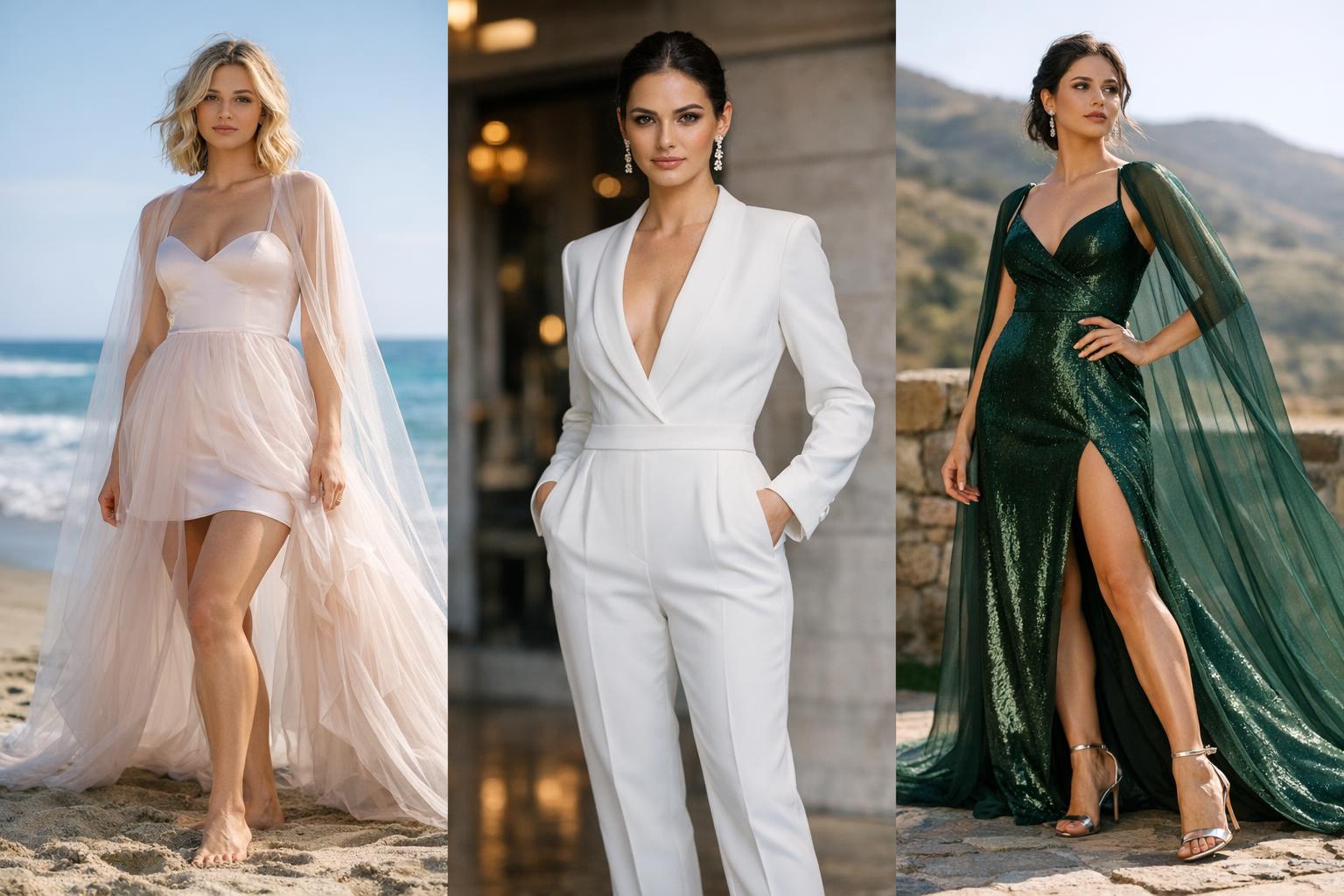
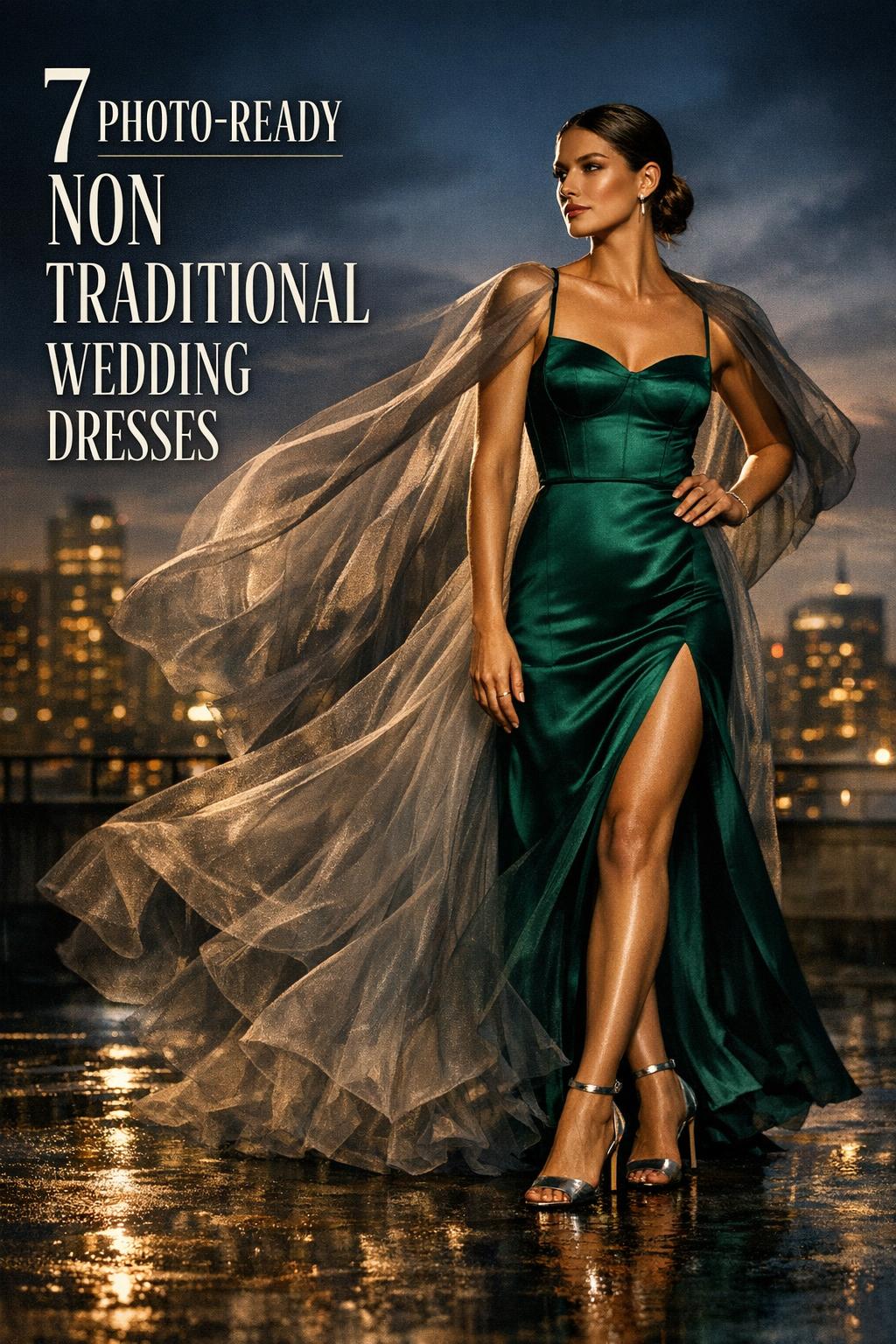
A color wedding dress is one of the clearest ways to signal “nontraditional,” but it can still feel timeless when the silhouette is clean and the styling is thoughtful. Blush tones can read softly romantic, blues can feel modern and editorial, emerald can look rich and dramatic, black can be striking and fashion-forward, and metallics can bring celebration energy without relying on heavy sparkle.
Color also creates an opportunity to coordinate with a venue or broader aesthetic—especially when you’re leaning into a city setting, a beach environment, or a rustic backdrop. Photography-driven inspiration often emphasizes how location affects color: a shade that feels subtle indoors can look bold in bright outdoor light, and a deep tone can look especially luxe against natural textures.
Tip: If you want color but worry about it feeling “too much,” consider a dress with color in the fabric layers (like a tinted underlay) or a look where embroidery or embellishment introduces color without changing the whole base tone.
Jumpsuits and two-piece sets
For many brides, a jumpsuit wedding dress alternative hits the sweet spot: modern, comfortable, and undeniably intentional. A well-tailored jumpsuit can work for courthouse ceremonies, city weddings, and minimalist events, and it can also be elevated for formal settings with strong fabric choice, clean lines, and standout accessories.
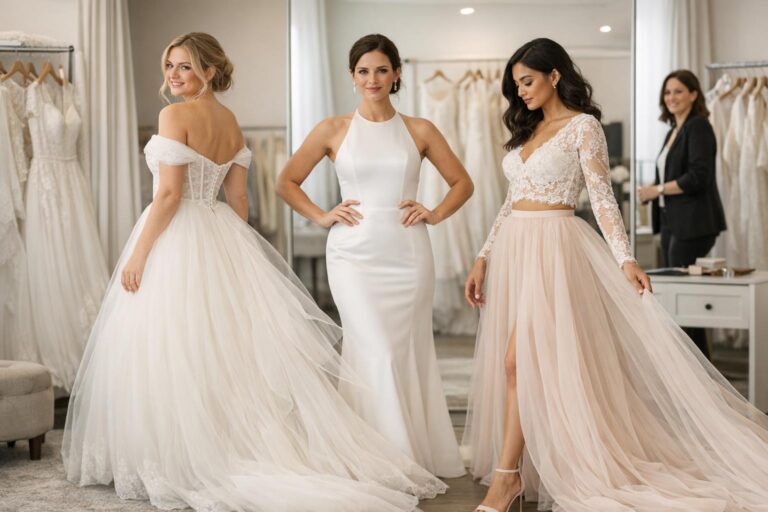
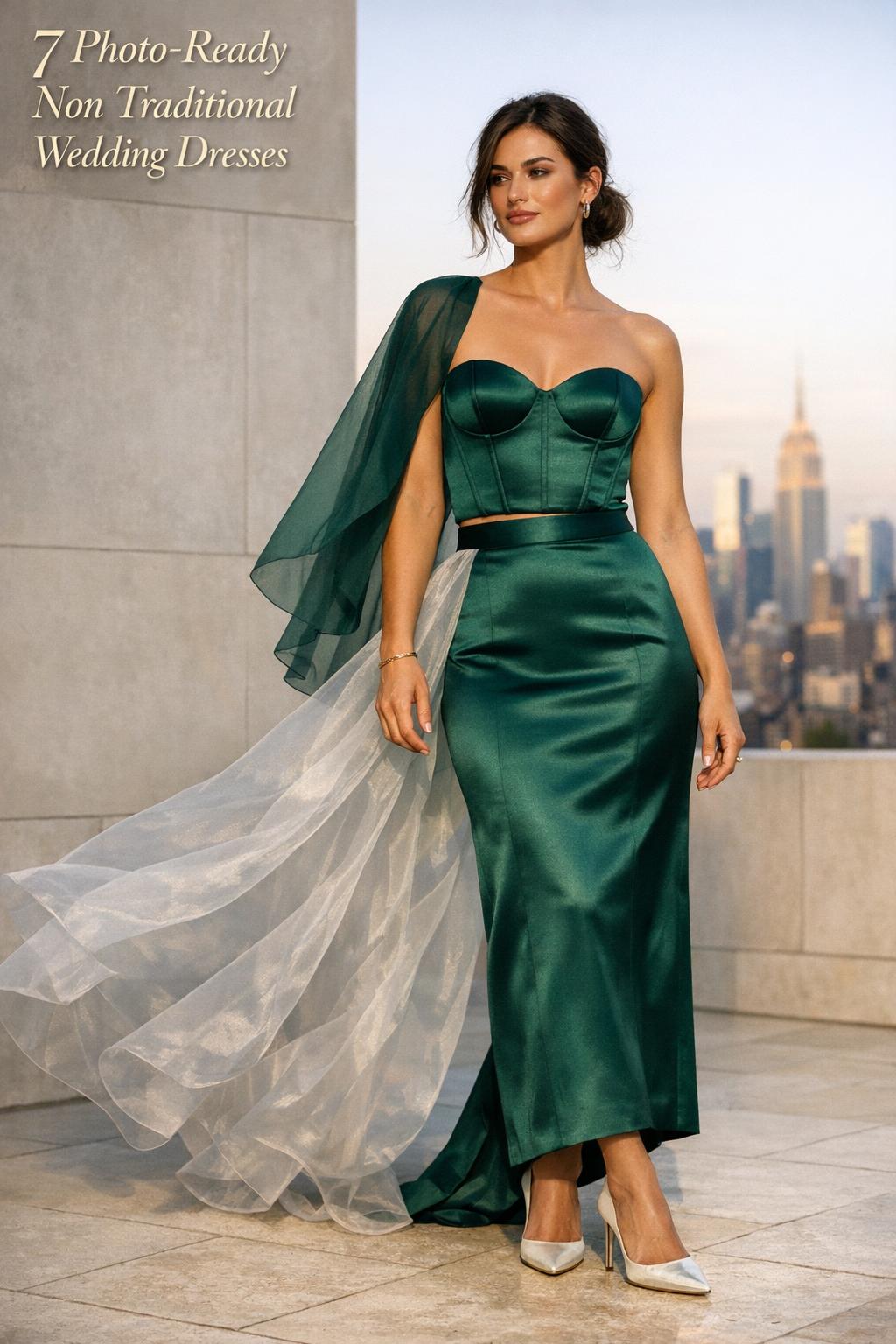
A two-piece wedding dress—often a crop top paired with a skirt, or a top layered with a separate overskirt—gives you flexibility. It’s also a natural choice if you love the idea of multiple looks without a full outfit change: remove a skirt layer, swap the top, or add a cape for ceremony drama.
- Best for movement: dancing, outdoor celebrations, and venues with lots of walking.
- Best for flexibility: separates can be styled differently for rehearsal events and the wedding day.
- Best for personalization: you can mix textures—like satin with embroidered tulle—to create contrast.
Tip: When you try on jumpsuits or separates, move like it’s the wedding day: sit down, raise your arms, and take steps. Comfort is part of what makes these options feel confident and polished.
Mini, midi, and tea-length options
Short hemlines—mini, midi, or tea-length—are a classic route into unconventional wedding dress territory because they’re instantly different while still feeling bridal. They can lean playful, vintage-inspired, or sleekly modern depending on fabric and detailing. They’re also a practical choice for warm-weather celebrations and energetic dance floors.
Tea-length silhouettes in particular often bridge old and new: the shape nods to tradition, while the hemline feels fresh. Minis can read editorial and bold, while midis can look sophisticated and fashion-focused—especially when paired with standout shoes.
Tip: If you choose a shorter dress, plan your shoe strategy early. The shoe becomes a key design element, not an afterthought, and it can help your whole look feel “styled,” not simply shortened.
Cape, cape-sleeve, and capelet details
Capes are a powerful styling tool in non traditional wedding dresses because they add ceremony-level drama without forcing you into a single silhouette. A cape can read minimalist or regal, depending on fabric, length, and attachment style. Cape sleeves and capelets can soften the look of a structured outfit or add movement to a sleek gown.
They’re also an elegant answer for brides who want coverage but dislike the feel of traditional sleeves. A cape-like layer can create a beautiful line in photos and offers a quick switch between ceremony and reception aesthetics.
Convertible and wrap-inspired dress ideas
Convertible looks—like a convertible wrap dress concept or a dress with removable layers—fit the practical side of nontraditional bridal style. The point isn’t novelty; it’s the ability to adjust your outfit to the pace of the day. A removable overskirt can make an entrance for the ceremony and then come off for a sleek reception-ready shape.
These designs also support the growing interest in wardrobe versatility: the idea that parts of the bridal look could be re-worn or styled again, especially if you’re choosing separates or a top layer that functions beyond one day.
Fabrics and Details That Break the Mold
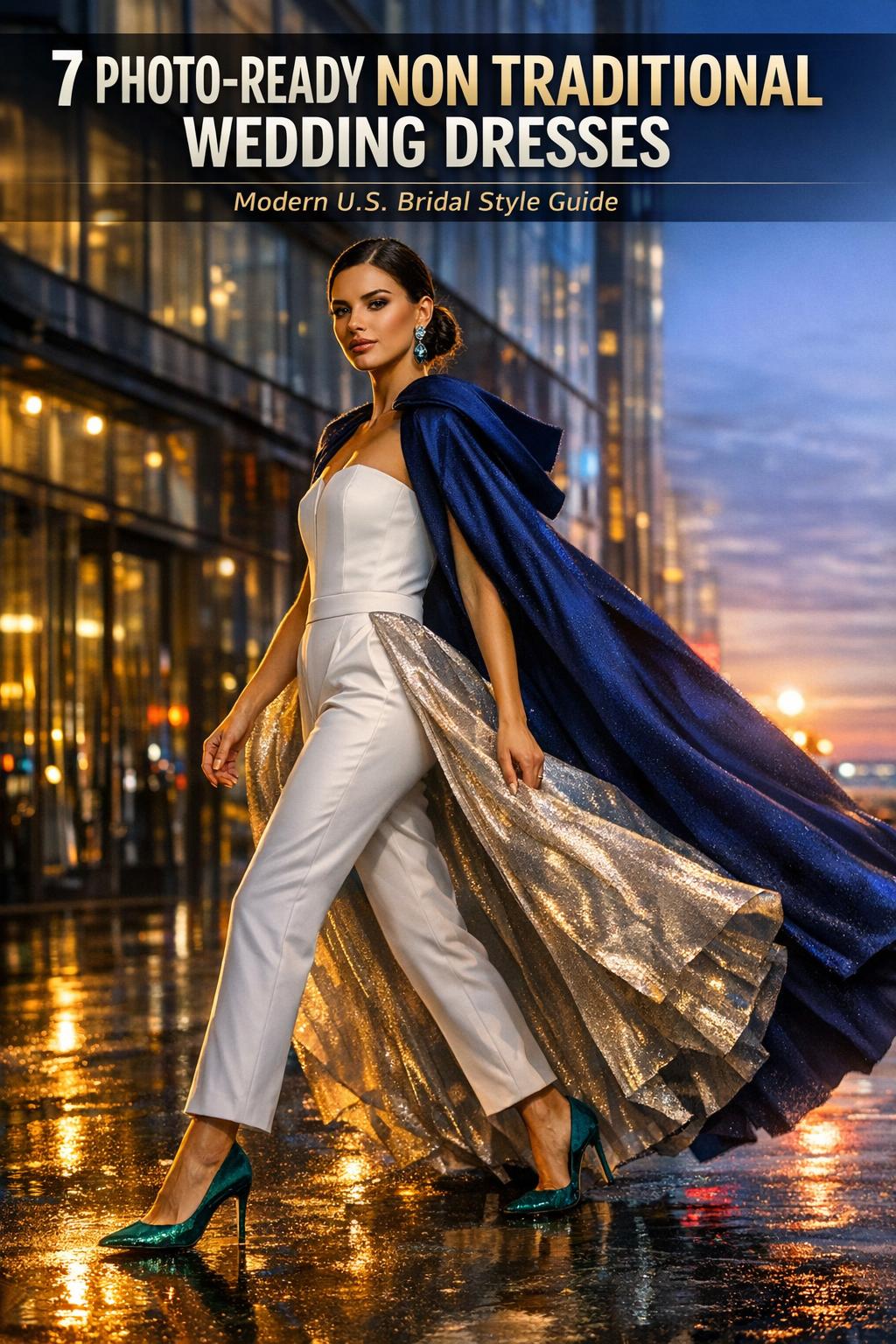
Once you’ve chosen a direction—color, silhouette, or styling concept—fabric and detail choices are what make the look feel rich and complete. Many unconventional wedding dresses stand out not because they’re loud, but because the texture, weight, and finish of the material are unexpected in bridalwear.
Velvet, satin, silk crepe, and embroidered tulle
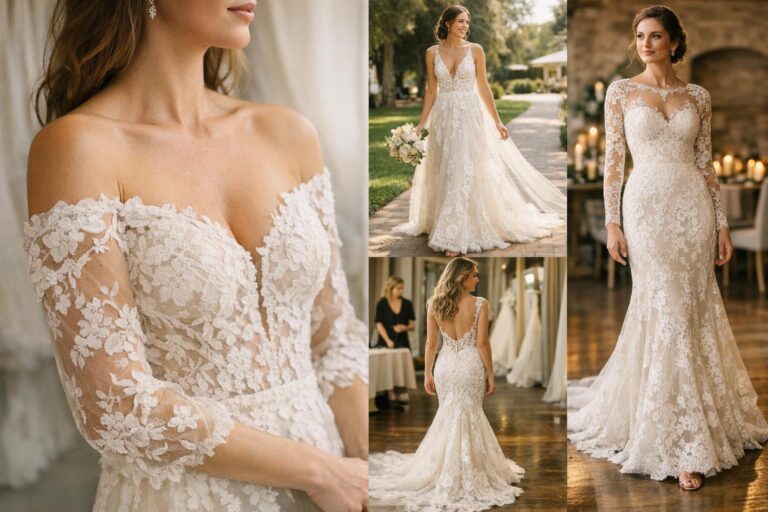
Non-traditional fabrics can shift the vibe immediately. Velvet can feel dramatic and luxurious, satin can look clean and reflective with a modern edge, silk crepe can feel understated and sophisticated, and tulle becomes something else entirely when embroidery adds dimension and visual storytelling.
Fabric choice is also practical: it influences how a dress moves, how it photographs, and how it holds structure. A minimalist silhouette can look more “bridal” when the fabric has depth, sheen, or intricate detail.
Tip: When evaluating fabric, look at it in motion and in different light. What feels subtle in a fitting room can look dramatically different in sunlight or under reception lighting.
Embellishments and motifs: florals, metallic thread, and fringe
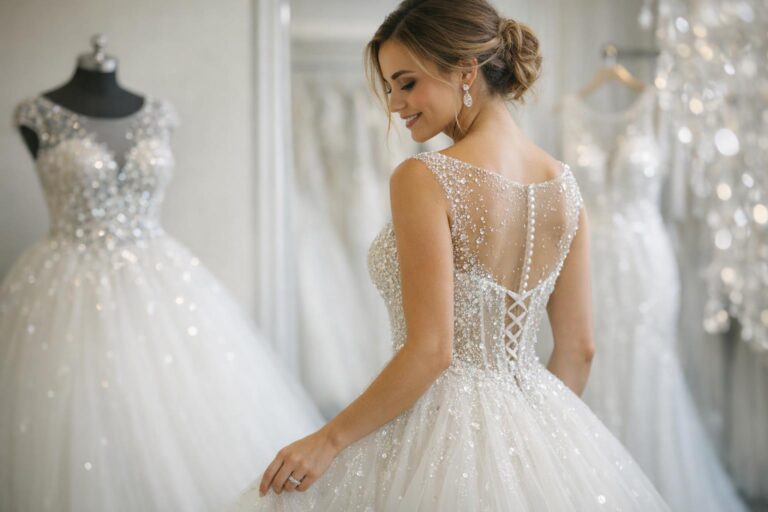
Embellishment is one of the easiest ways to go “alternative” while keeping a familiar silhouette. Florals can make a dress feel romantic or artful. Metallic thread can bring a modern glow without committing to a fully metallic gown. Fringe can feel playful, bold, and movement-driven—especially for reception looks where dancing is a priority.
Because embellishment draws the eye, it also helps create a focal point. If you’re building a bridal look from separates, a strong motif can unify the top and bottom into a single visual statement.
Customization and vintage textiles as a storytelling choice
Some of the most memorable nontraditional bridal looks come from customization: a piece created or adapted to reflect personal history, aesthetics, or values. One prominent fashion-forward approach is a custom dress made from vintage textiles, turning the gown into a narrative object rather than a standard purchase.
This isn’t only about uniqueness; it’s about meaning. A textile with history can make the final look feel intimate and intentional, especially when paired with modern construction or styling that keeps the silhouette current.
Real-World Inspiration: How Non-Traditional Looks Work by Venue and Vibe
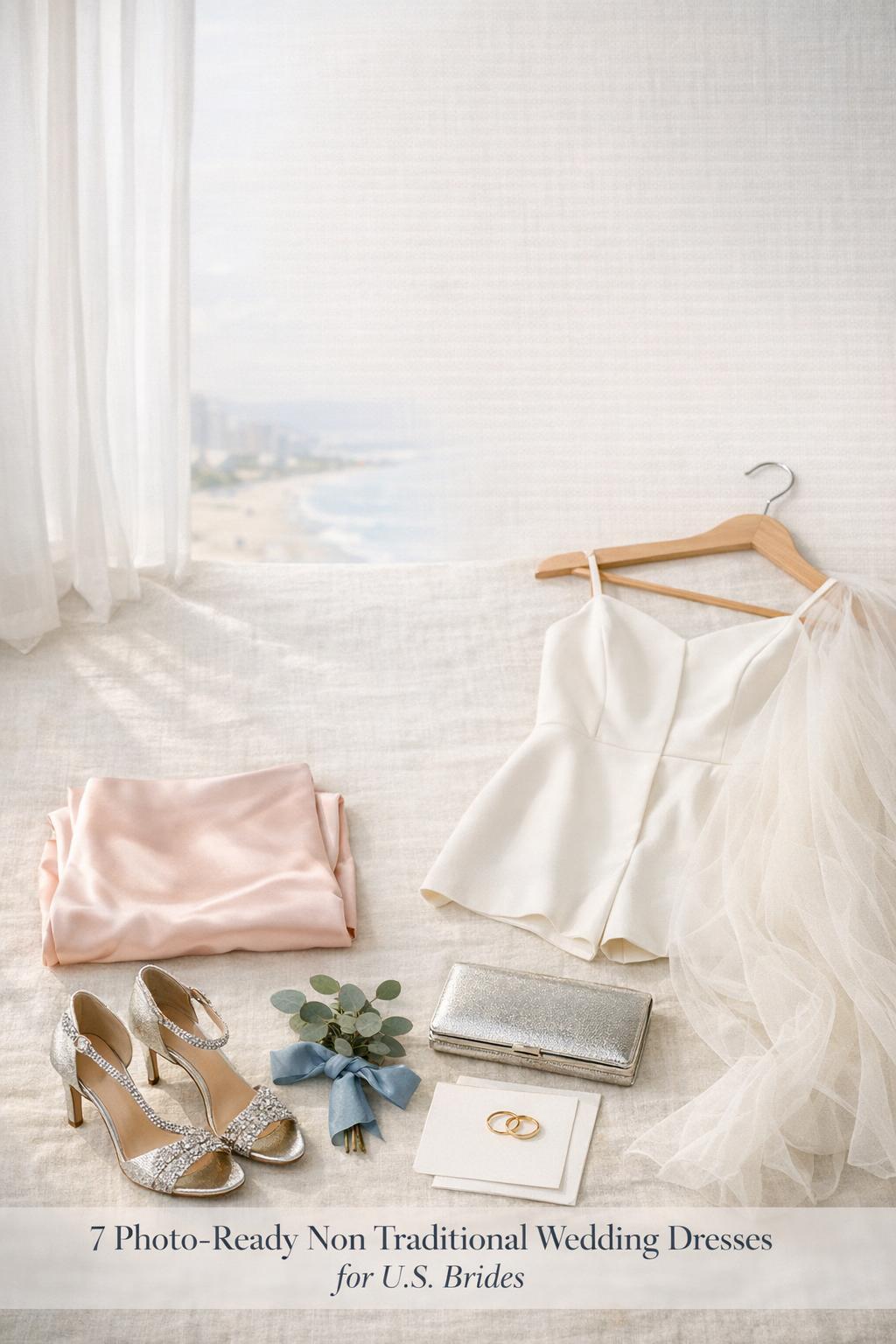
Nontraditional wedding attire often looks best when it feels connected to place and pace. Photography-driven inspiration frequently highlights this: color and styling are not abstract ideas—they interact with backgrounds, lighting, and movement.
Beach and destination settings: lightness, movement, and color
For beach environments and bright outdoor settings, lighter silhouettes and fabrics that move tend to read effortlessly elegant. This is where a colored gown in a softer tone, a tea-length look, or a two-piece set can feel natural and unforced. The goal is a look that photographs clearly in strong light and still feels comfortable throughout the day.
Tip: If you’re drawn to embellishment for a beach setting, consider placement. Details that add dimension can look beautiful, but you’ll want the overall feel to remain airy rather than heavy.
Urban and modern venues: sleek silhouettes and editorial styling
City weddings and modern venues are ideal for sleek silhouettes: structured dresses, minimalist satin, tailored jumpsuits, and bold choices like black or metallic. This is also where accessories can do heavy lifting—modern veils, sculptural jewelry, and strong makeup can create an editorial finish without requiring an ultra-ornate garment.
The advantage of an urban setting is clarity: clean lines and intentional styling can look striking against architectural backdrops. If your dress is simple, focus on one standout element—like a cape or metallic thread detail—to avoid the look feeling unfinished.
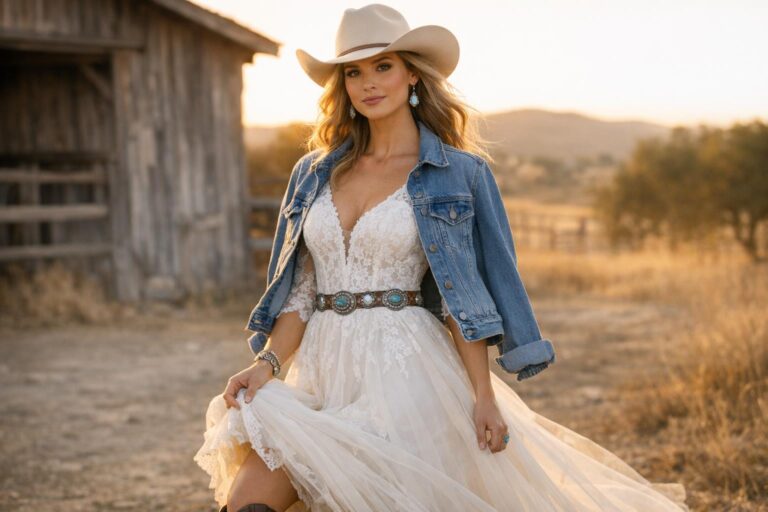
Rustic and natural backdrops: texture, florals, and warm tones
Rustic venues often pair well with texture-forward choices: embroidered tulle, floral motifs, and rich color stories like blush or emerald. The environment can support detail because there’s visual warmth in the surroundings—wood, greenery, and layered landscapes that complement intricate fabrics.
Instead of trying to “match” the venue literally, think in terms of harmony. A statement maxi dress with floral embellishment can feel grounded and romantic without leaning overly traditional.
Shopping Guide: Where to Find Non-Traditional Wedding Dresses in the U.S.
Shopping for non traditional wedding dresses usually follows one of three paths: bridal media galleries that link to retailers, designer or brand collections with styling guidance, and online marketplaces that offer wide variety and customization. The best route depends on how specific your vision is, your timeline, and how comfortable you are with online ordering and alterations.
Boutiques and designer-driven collections
Designer and boutique shopping can be especially helpful if you want expert guidance on fit, styling, and how to make a nontraditional choice still feel bridal. Brand-led editorial guidance often focuses on how to style a non-traditional wedding dress—pairing the gown with accessories, veils, and makeup choices that create a complete look.
This route can also be reassuring if you’re experimenting with an unconventional silhouette. Tailoring and construction matter more when the look is sleek or structured, and in-person support can help you evaluate movement, comfort, and proportion.
Online marketplaces for variety, customization, and price range exploration
Online marketplaces are a major destination for alternative wedding dress searches because they offer breadth: many colors, silhouettes, and size options, plus the ability to filter by practical constraints like budget. You’ll also see a wide range of non-white bridal gown options and statement designs that may not appear in traditional boutiques.
The tradeoff is that the buyer needs a plan: pay close attention to measurements, return policies, shipping timelines, and whether the dress will require tailoring after arrival. This is particularly important for jumpsuits and fitted designs, where small differences in torso length or waist placement can change how the outfit sits.
Using galleries and curated lists to narrow your direction
If you’re early in planning, curated galleries can be an efficient way to identify what you actually mean by “nontraditional.” Many lists group ideas by silhouette—two-piece sets, colorful dresses, short hemlines, and jumpsuits—making it easy to spot patterns in what you’re drawn to. Once you’ve identified a direction, it becomes easier to shop intentionally rather than endlessly browsing.
- If you’re overwhelmed: pick one nontraditional element (color, hemline, or silhouette) and keep the rest classic.
- If you’re decisive: build a mini “capsule” of references—two or three features you want (like metallic + cape + sleek shape).
- If you’re budget-aware: start with the silhouette you want most (jumpsuit, two-piece, statement maxi) and stay flexible on minor details.
Sizing, alterations, and budget expectations
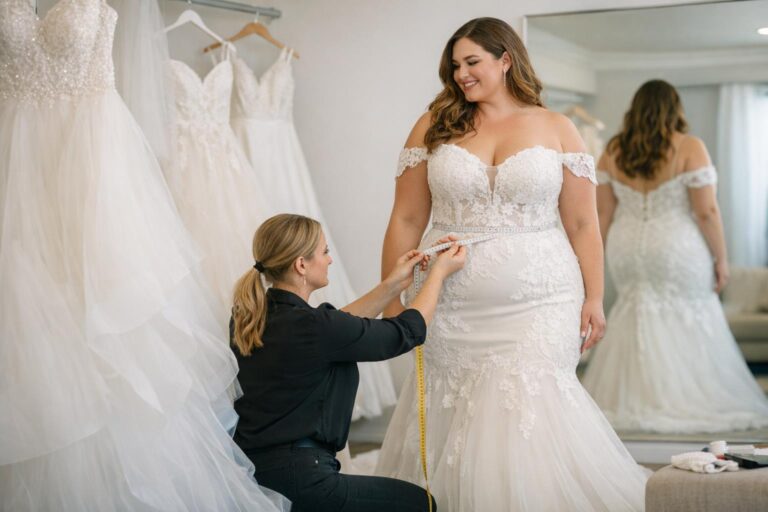
Alterations matter for every wedding outfit, but they’re especially important with nontraditional silhouettes. Two-piece bridal sets need clean meeting points between top and skirt. Jumpsuits rely on torso length and waist placement. Short dresses make proportion and hemline precision more noticeable. Even cape attachments can need adjustment so they sit correctly and don’t overwhelm the look.
Budget planning is also part of the nontraditional process. Many shoppers want a clear sense of what’s possible at different price points—from more accessible online finds to luxury, highly customized pieces. Regardless of spend, it’s smart to treat tailoring as a standard part of the plan, not an emergency expense.
Tip: When you try on or order a nontraditional look, decide early whether you’re aiming for “effortless” or “architectural.” Effortless styles can be more forgiving, while highly structured pieces demand more precise tailoring and styling choices.
Styling Like a Pro: Accessories, Veils, Hair, and Makeup
Styling is the difference between wearing an unconventional wedding dress and owning it. Nontraditional bridal outfits often benefit from a clear styling plan because your look may not come with pre-set rules. The goal is cohesion: every element should feel like it belongs to the same story.
Veils and capes that complement bold looks
Modern veil choices can help “bridalize” a non-white gown, a jumpsuit, or a two-piece set. If your dress is already a statement, a simpler veil can add tradition without competing. If your base outfit is minimal, a veil or cape can become the main visual feature for the ceremony.
Capes and capelets are especially useful if you want a quick transformation: dramatic for the ceremony, streamlined for the reception. This approach mirrors the versatility many brides seek in nontraditional styling.
Jewelry strategy: one focal point is often enough
With nontraditional wedding dresses—especially colored gowns, metallics, or embellished fabrics—jewelry can either sharpen the look or clutter it. A common approach is choosing one focal point: statement earrings, a bold necklace, or a sculptural hair accessory, and keeping everything else quieter.
Tip: If your dress includes metallic thread, fringe, or heavy embroidery, try your jewelry on with the dress (or a fabric swatch) to see how finishes interact. The goal is intentional contrast or intentional harmony, not accidental mismatch.
Makeup and hair that match the “alternative bride” energy
Nontraditional bridal styling often pairs well with a makeup plan that feels contemporary and confident. Some brides use makeup to echo the dress—like leaning into a bolder lip with a minimalist jumpsuit—or to balance it, keeping makeup soft when the dress is a statement color or texture.
Hair can do the same: sleek styles can amplify modern silhouettes, while looser, romantic styles can soften a strong shape. There’s no single rule; the best approach is aligning hair and makeup with the same vibe you chose for the outfit: modern, romantic, editorial, playful, or dramatic.
Tips for Choosing the Right Nontraditional Look (Without Second-Guessing)
Choosing non traditional wedding dresses can feel liberating—and oddly high-pressure—because there are fewer “default” answers. These tips are designed to help you commit to a look that feels true to you and photographs beautifully.
- Anchor on one nontraditional decision: pick your main twist (color, silhouette, or fabric), then keep the rest of the look more classic.
- Match the outfit to the day’s structure: if you want two distinct looks, choose convertible elements (cape, overskirt, or separates) rather than forcing a full change.
- Use venue cues as guidance, not rules: think about light, backdrop, and movement; choose what harmonizes with your setting.
- Plan styling as part of the purchase: especially for minimalist pieces, decide on veil/cape, jewelry, and makeup before you finalize the outfit.
- Prioritize fit for modern silhouettes: jumpsuits and sleek dresses demand precise tailoring to look effortless.
Tip: If you’re worried about regret, take a photo of each option you try on and ask yourself one question: “Would I recognize myself immediately in this look?” The best alternative wedding dress choice usually feels like an amplified version of you, not a disguise.
The Bottom Line: Choosing What Feels Like You
The rise of convention-defying bridal fashion reflects a bigger shift: brides want freedom to define what “wedding” looks like on their own terms. Whether you choose a nonwhite bridal gown, a sleek jumpsuit, a two-piece bridal set, or a custom piece with vintage textiles, the best result is the one that feels cohesive with your venue, your comfort level, and your personal story.
Non traditional wedding dresses don’t require you to reject tradition entirely. They simply give you more room to decide what matters, what flatters, and what makes you feel confident stepping into a day that’s meant to be unforgettable.
FAQ
Is a colored wedding dress acceptable for a U.S. wedding?
Yes—colored wedding dresses are widely embraced, and many modern weddings treat bridal attire as a personal style choice rather than a strict rule. If you’re concerned about formality, choose a refined silhouette and elevated fabric so the look reads intentional and bridal in photos.
Do non-traditional wedding dresses photograph well?
They can photograph beautifully, especially when the color and fabric are chosen with the venue and lighting in mind. Try to view your dress choice in different light and plan styling details—like veil or cape options—so the overall look stays cohesive on camera.
What are the most popular non-traditional wedding dress alternatives?
Popular alternatives include non-white or metallic gowns, two-piece wedding dress sets, jumpsuit wedding dress looks, mini or tea-length hemlines, and outfits featuring cape, cape-sleeve, or capelet details. Many brides also combine elements, like a minimalist jumpsuit with a dramatic cape for the ceremony.
What alterations are common for nontraditional silhouettes like jumpsuits and two-piece sets?
Common needs include hemming, waist shaping, and fit adjustments that affect proportion and comfort, especially in tailored jumpsuits where torso length matters. Two-piece sets often require precise alignment between top and skirt, and capes may need attachment adjustments so they sit correctly and move well.
Where can I buy non traditional wedding dresses online?
You can shop through online marketplaces with extensive filters for color, silhouette, size, and price, as well as through designer or brand sites that offer editorial styling guidance. Curated galleries can also help you narrow your preferred direction before you commit to a specific retailer or maker.
How do I style a non-traditional wedding dress so it still feels bridal?
Focus on one or two bridal signifiers—like a modern veil, a cape for ceremony drama, or polished hair and makeup—while keeping the rest streamlined. Cohesion matters more than following any single tradition, so choose accessories that support the dress rather than competing with it.
Are capes a good alternative to traditional veils?
Yes—capes and capelets can add movement and ceremony-level impact without the feel of a traditional veil. They also work well with sleek dresses, jumpsuits, and two-piece sets, and they can be removed to quickly shift into a simpler reception look.
How do I decide between a bold color and a more subtle nontraditional detail?
Start by identifying what you want to feel when you look back at photos—dramatic and fashion-forward, or softly distinctive. If you want lower risk, keep the base color closer to classic and add nontraditional impact through texture, embroidery, metallic thread, or a cape layer.