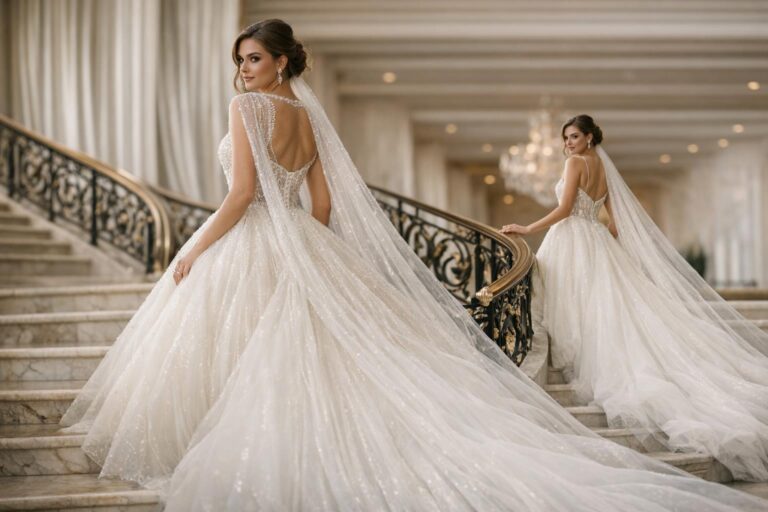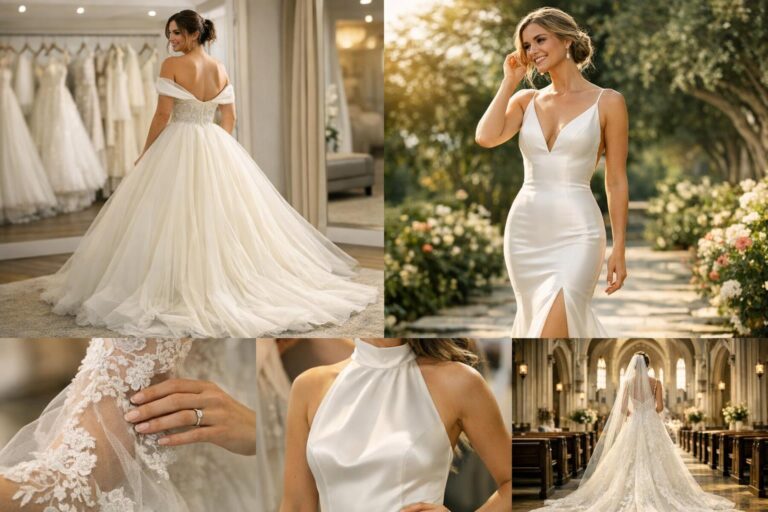
7 Satin Wedding Dresses Styles for Every US Venue & Season
Satin Wedding Dresses: The Complete Guide to Fabric, Silhouettes, and Styling
Satin wedding dresses have become a go-to choice for brides who want a clean, luminous look that feels both classic and modern. Whether you’re drawn to a minimalist satin wedding dress, a dramatic mermaid silhouette, or a satin wedding dress with a front slit, satin offers a distinctive blend of sheen, structure, and drape that photographs beautifully and reads “bridal” without needing heavy embellishment.
This guide walks through what satin is known for in bridalwear, how different satin finishes can change the way a gown looks and moves, which silhouettes and necklines tend to pair well with satin, and the practical realities of caring for and altering satin on the way to your big day. If your goal is to confidently shop satin gowns—online or in-store—this is your start-to-finish playbook.
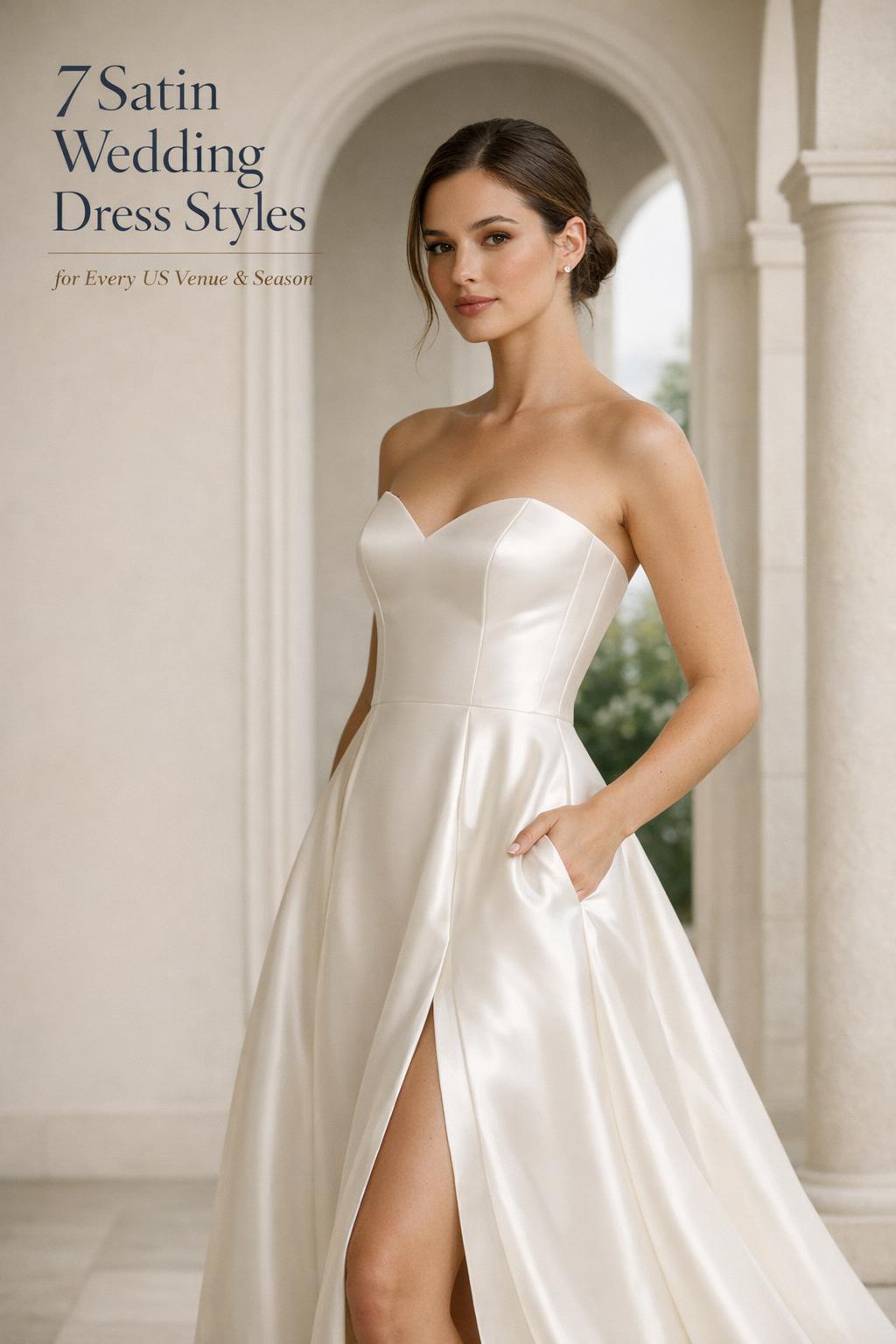
What Makes Satin a Classic Choice for Weddings
Satin is often described as a “glossy wedding dress fabric,” but the real reason it stays popular is how it balances polish with simplicity. A satin bridal gown can look luxurious with a clean bodice and skirt because the fabric itself becomes the design feature: it catches light, emphasizes seamwork, and highlights the overall shape of the dress.
In bridal shopping, you’ll also see satin referenced alongside “silk satin bridal gowns” or “satin gown wedding dress” listings. Those terms tend to reflect how sellers position the look and feel (smooth, lustrous, elegant) and how shoppers search when they want that unmistakable satin finish.
Why satin works so well for bridal silhouettes
Because satin can be either fluid or structured depending on the finish, it appears across a wide range of wedding dress silhouettes—from sleek sheath and column designs to full ball gowns. Many satin wedding dress collections emphasize how satin supports clean lines, crisp necklines, and dramatic skirt volume without relying on lace layers.
Tip: When you’re comparing dresses online, look beyond the photo and focus on the silhouette category (A-line, mermaid, ball gown, sheath/column) and the neckline/sleeve details. Satin tends to make construction details more visible, so a well-designed bodice and thoughtful seaming matter more than ever.
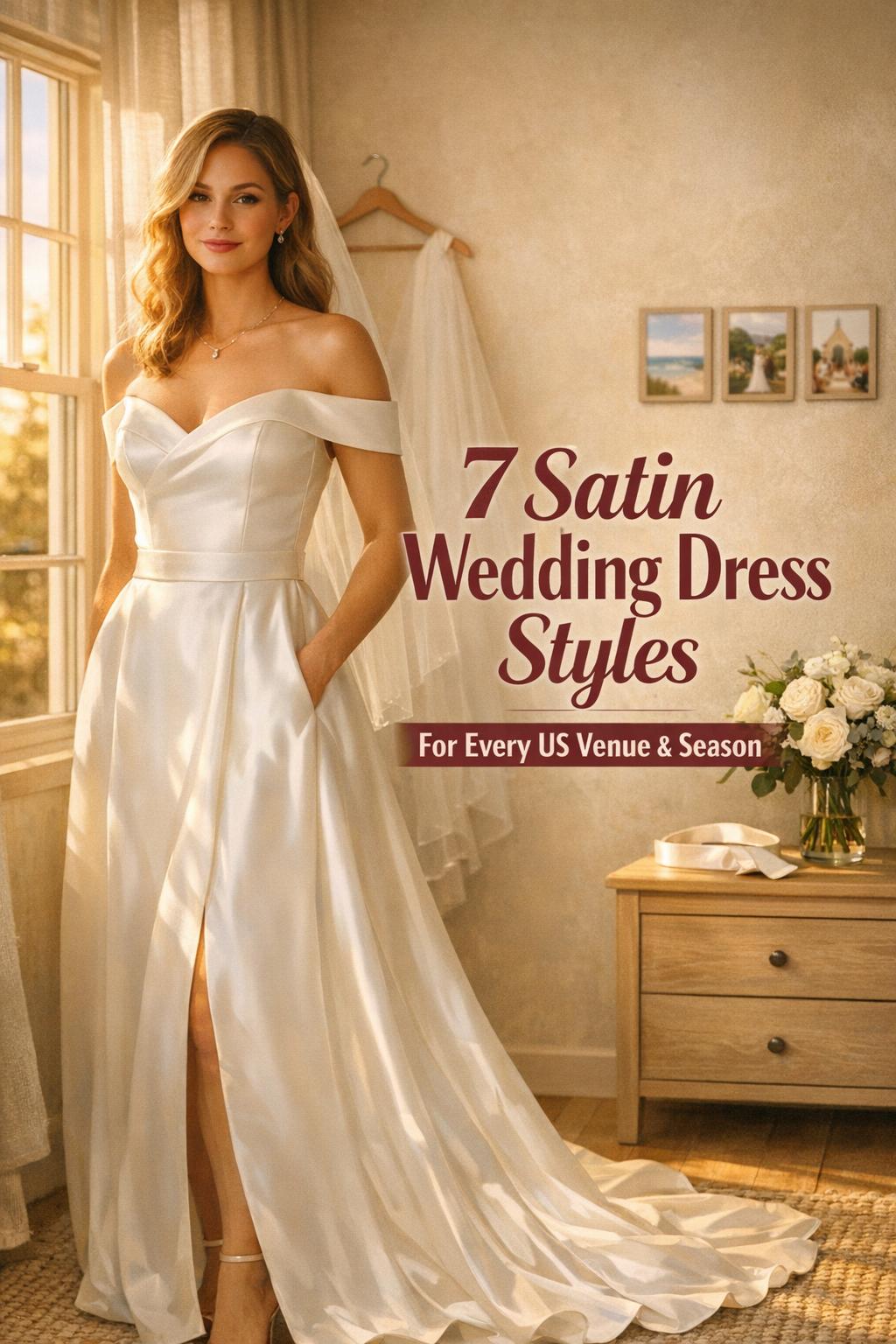
Satin Silhouettes: Which Shape Works for You?
Most shopping pages for satin wedding dresses organize gowns by silhouette because shape is the fastest way to narrow options. Start with the overall outline you want—then refine by neckline, sleeve style, length, and features like pockets or slits.
A-Line Satin Wedding Dresses
A satin A-line wedding dress is one of the most common and versatile choices. The fitted bodice and gently flared skirt create a balanced shape that can feel formal or understated depending on the neckline and finish. Satin’s sheen adds a “finished” look even when the design is minimal.
A-line is also a natural match for brides who want movement without the full volume of a ball gown. In many collections, A-line satin gowns show up with a range of necklines (including sweetheart and off-the-shoulder) and practical add-ons such as pockets.
Mermaid / Trumpet Satin Wedding Dresses
If you’re searching for a satin wedding dresses mermaid silhouette, you’re likely after a more glamorous, curves-forward look. Satin can enhance that drama because it reflects light along the fitted areas and creates a striking contrast where the skirt flares.
Mermaid and trumpet shapes often look especially bold in smooth satin, where the line from bodice to hip reads clearly. If you like a statement detail, this is also a silhouette where a front slit or a distinctive neckline can make a big impact without needing heavy embellishment.
Ball Gown Satin Wedding Dresses
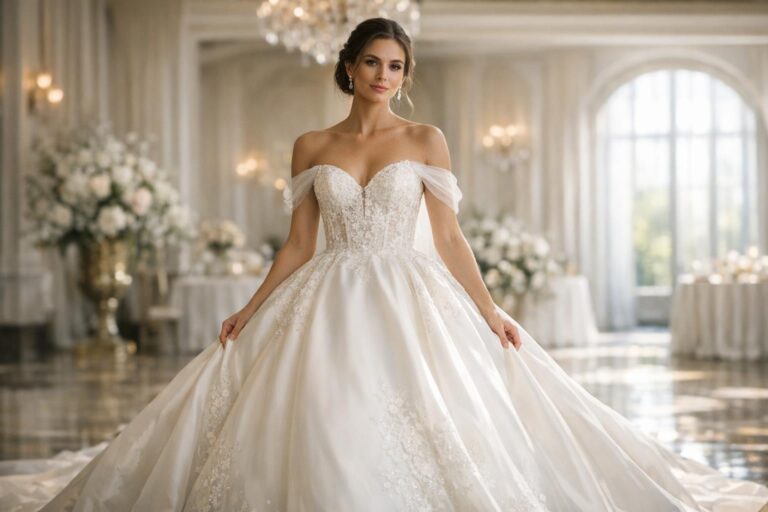
A satin ball gown wedding dress is the definition of traditional bridal drama: a fitted bodice paired with a full skirt. Satin is frequently used for ball gowns because it can hold volume and shape, creating a clean, architectural look that suits formal venues and classic ceremonies.
Ball gowns also showcase satin’s ability to look elegant from every angle, particularly when the skirt moves. For brides who want a timeless silhouette but prefer a streamlined aesthetic, satin is a strong alternative to heavily layered or heavily textured fabrics.
Sheath / Column Satin Wedding Dresses
A satin sheath wedding dress (often grouped with column silhouettes) leans minimalist, modern, and sleek. In these shapes, satin’s drape becomes the focal point—how the fabric falls, how it skims the body, and how it moves when you walk.
This category is popular for brides searching for a minimalist satin wedding dress, especially when paired with clean straps, a simple neckline, or subtle detailing. Because the overall look is pared-back, fit and tailoring play an outsized role in how polished the dress appears.
Off-the-Shoulder and Sweetheart Satin Necklines
Neckline choice can completely shift the vibe of a satin bridal gown. Two of the most requested looks are the satin off-the-shoulder wedding dress and sweetheart necklines. Both options highlight the upper body and pair well with satin’s naturally elegant finish.
Off-the-shoulder designs can read romantic or fashion-forward depending on sleeve shape, while sweetheart necklines can feel distinctly bridal, especially with a structured bodice. If you’re browsing category filters, it often helps to select your preferred neckline early to avoid decision overload.
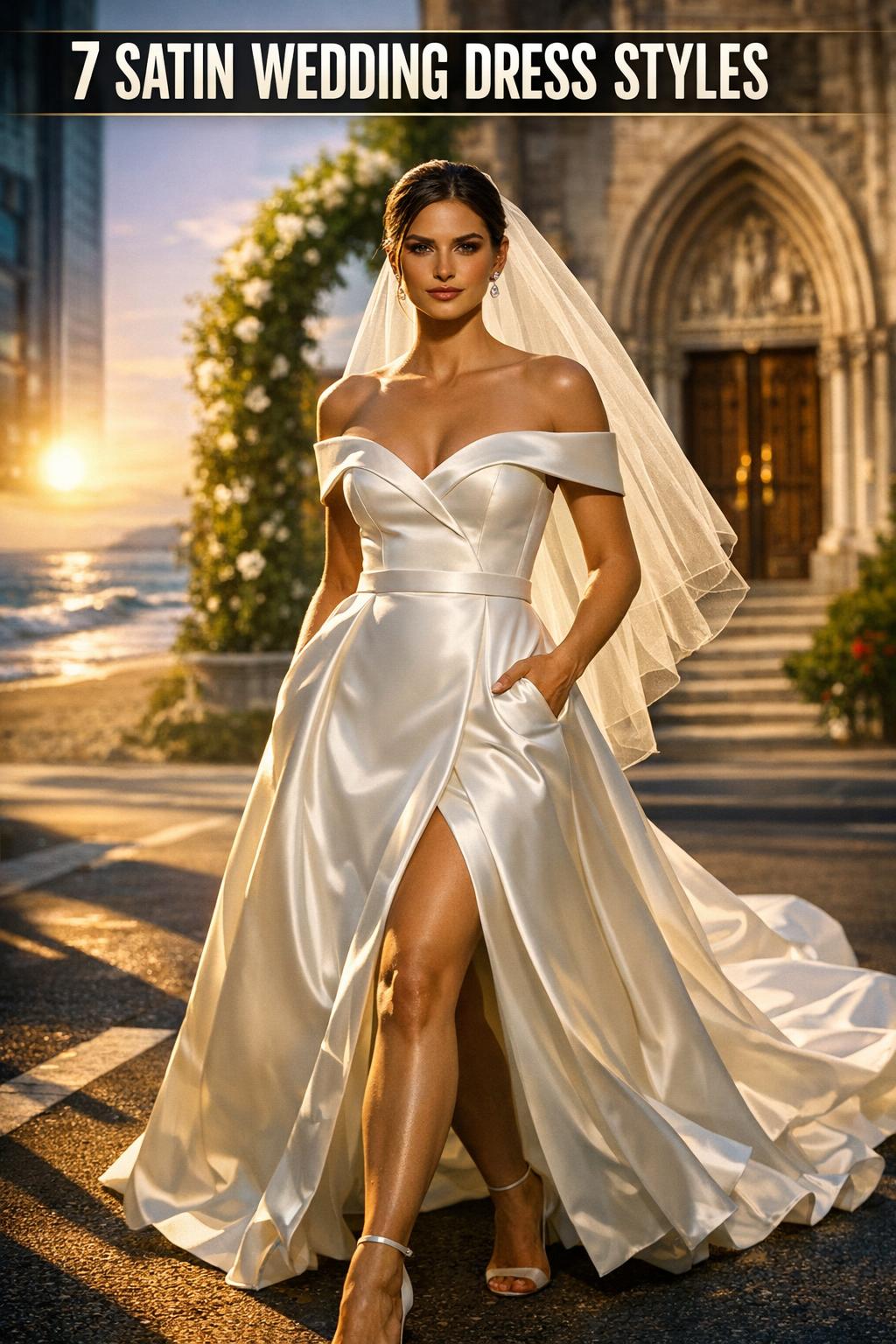
Popular Satin Finishes and How They Affect Your Look
Not all satin looks or behaves the same. Many shopping pages use “satin” as a broad label, but the finish and backing can influence how glossy the gown looks, how it drapes, and how structured the silhouette feels. This is one of the most common areas where brides want clearer guidance.
Duchesse vs. Charmeuse vs. Matte Satin
Brides often compare duchesse satin, charmeuse satin, and matte satin when trying to decide between a crisp, structured look and a softer, more fluid effect. While listings may not always specify the exact type, the name (when provided) is a useful clue for how the dress may fall and photograph.
- Duchesse satin: Often associated with a more structured, formal look that supports shape-driven silhouettes.
- Charmeuse satin: Commonly linked to a more fluid drape and a softer, slinkier finish, often seen in sleek designs.
- Matte satin: A lower-shine option for brides who want satin’s smoothness with a more understated surface.
Tip: If a retailer doesn’t specify satin type, look for close-up photos and movement shots. A highly fluid look in the skirt and bodice often signals a softer satin finish, while crisp folds and pronounced structure typically suggest a more substantial satin.
Textured vs. Smooth Satin
Many collections lean into smooth satin for a clean, reflective surface, but textured satin wedding dress options can add dimension without the need for heavy beading or lace overlays. Texture can also subtly reduce how much the surface reflects light, which some brides prefer for a softer look.
When deciding between textured and smooth satin, focus on your overall styling plan. Smooth satin tends to pair well with statement veils or bold jewelry because the dress itself stays visually calm. Textured satin can hold its own as the primary visual interest, allowing accessories to remain understated.
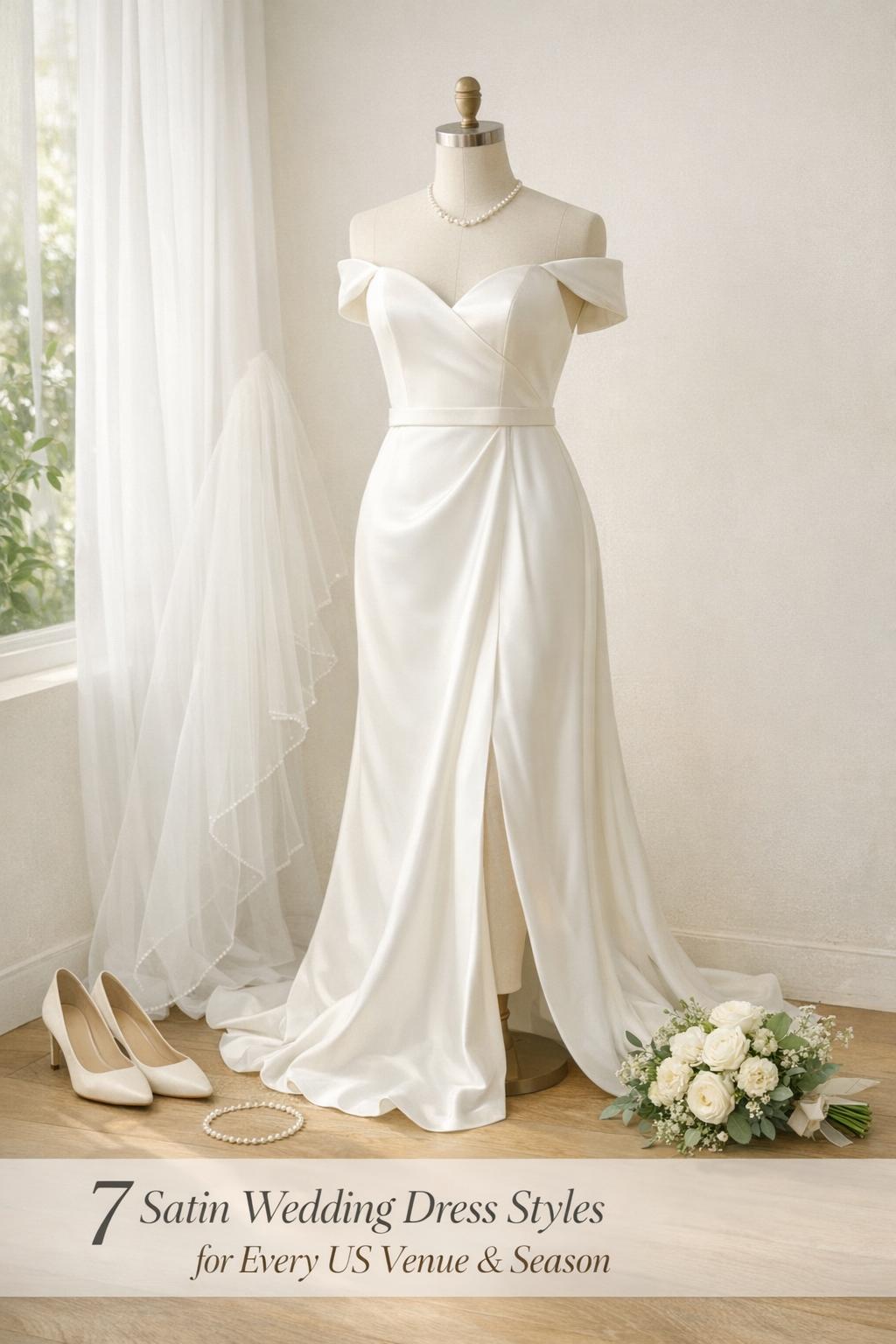
Choosing Satin by Wedding Setting and Season
One reason satin remains so popular is its flexibility across wedding styles. Still, your venue and season can influence which satin gowns feel most comfortable and practical—especially when considering movement, heat, and how the fabric behaves outdoors.
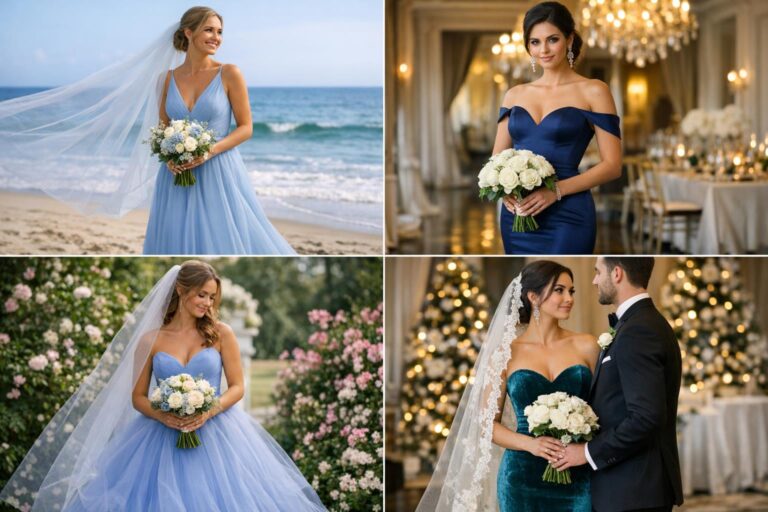
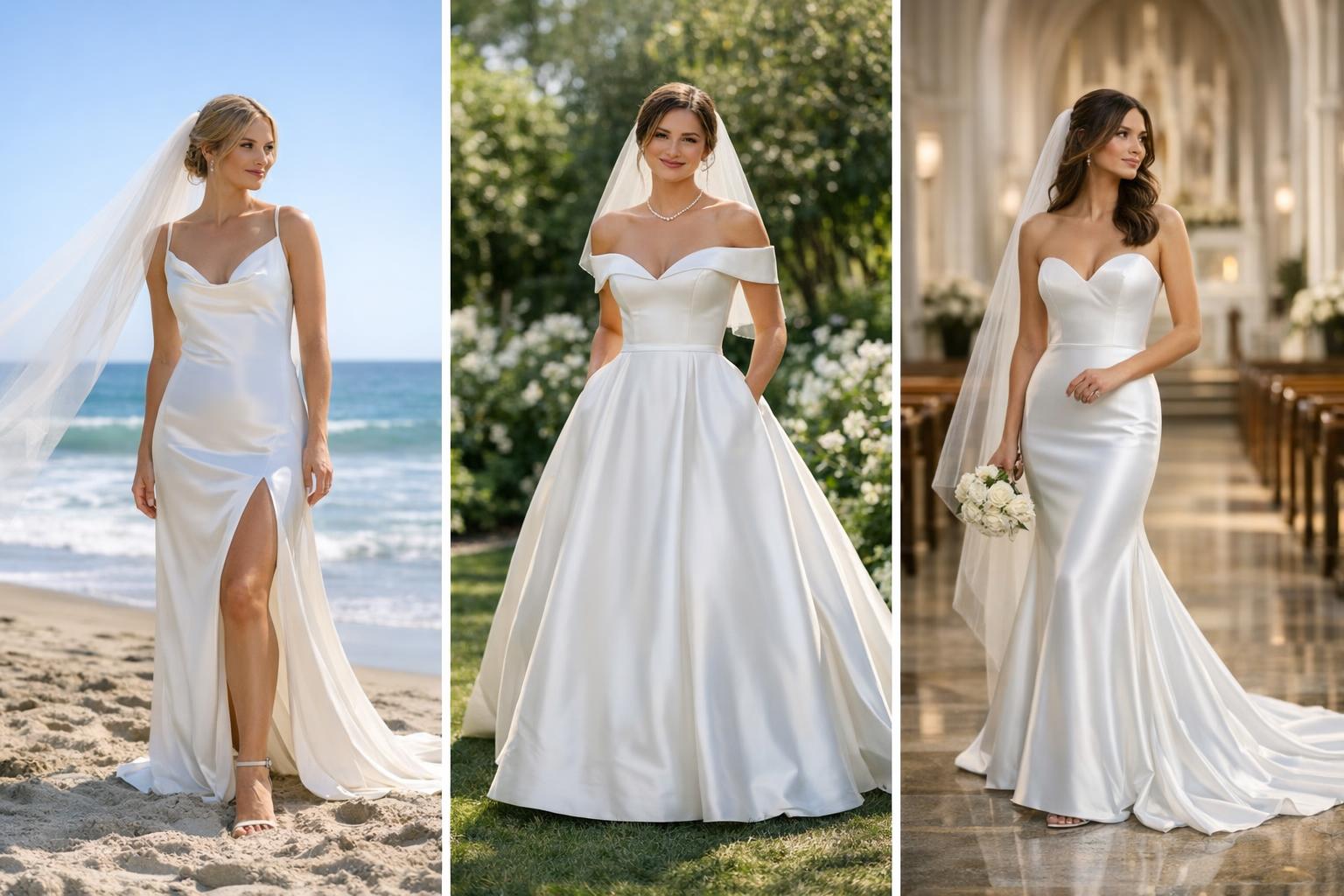
Beach vs. Church vs. Garden
Queries like “best satin wedding dresses for beach weddings” reflect a real concern: outdoor elements change how a gown feels and moves. For beach settings, brides often gravitate toward lighter silhouettes (like sheath/column) or simpler A-lines, and they may prioritize designs that move easily and feel less restrictive.
For church ceremonies or formal indoor venues, structured satin silhouettes—such as ball gowns or more architectural A-lines—often match the setting’s traditional tone. Garden weddings can go either way: a clean satin gown can look striking against greenery, and details like an off-the-shoulder neckline can add softness without changing the core simplicity.
- Beach: Consider easier movement, wind, and a silhouette that won’t feel heavy; look for sleek lines or controlled volume.
- Church/formal: Structured satin and classic shapes often feel most aligned; polished necklines and longer trains can suit the setting.
- Garden: A-line and soft silhouettes can feel romantic; minimalist satin can look especially modern in natural light.
Seasonal considerations for satin weight
Shopping pages and style filters frequently highlight that satin can come in heavier or lighter interpretations, which influences comfort and how the skirt holds shape. If you’re comparing thick satin vs light satin, treat it as a decision about structure versus fluidity and about how warm or airy the gown may feel.
Tip: When ordering online, look for descriptive cues in product details and reviews—words like “structured,” “crisp,” “drapey,” or “fluid” help you infer weight and movement. If you’re booking an appointment in-store, ask to compare two satin gowns side-by-side so you can feel the difference immediately.
How to Accessorize a Satin Wedding Dress
Satin’s clean surface makes it surprisingly adaptable: it can support minimalist styling or a dramatic accessory moment. The goal is balance. Because satin already reflects light, accessories should complement rather than compete, especially in photographs.
Veils, belts, and jewelry that complement satin
Many brides search specifically for satin wedding dress accessories because satin changes how details read—every added element stands out clearly. Veils, belts, and jewelry work best when they echo the dress’s level of simplicity or intentionally contrast it in a controlled way.
- Veils: A simple veil can enhance a minimalist satin gown, while a more detailed veil can become the focal point if the dress is clean and unembellished.
- Belts: A satin belt can define the waist without disrupting the gown’s streamlined look; it’s especially useful for A-line silhouettes.
- Jewelry: Choose pieces that match the neckline—off-the-shoulder and sweetheart styles can pair well with carefully chosen statement or delicate options, depending on your desired mood.
Tip: If your gown has a strong design feature—like a front slit, dramatic neckline, or structured bodice—keep one accessory category quieter. For example, pair a satin wedding dress with a front slit with simpler jewelry and let the silhouette and movement be the statement.
Caring for Your Satin Dress
Satin is often chosen for its polished finish, so care matters before, during, and after the wedding. Many satin dress listings focus heavily on style and silhouette, but practical care guidance can be surprisingly light. A thoughtful plan helps protect the gown’s surface and keeps it looking smooth for photos.
Cleaning, stain removal, and storage tips
Satin can show marks more readily than heavily textured fabrics, so the safest approach is to prioritize prevention and professional support when needed. If something happens on the day, avoid aggressive rubbing that could alter the surface appearance, and treat stain concerns as time-sensitive so they don’t set.
- Keep a “no-fuss” getting-ready environment to reduce makeup, food, or drink transfer onto the fabric.
- If a spot appears, handle it gently and avoid harsh at-home experiments; preserve the fabric surface as much as possible.
- After the ceremony, store the gown carefully to minimize creasing and protect the finish until it can be cleaned appropriately.
Tip: If your venue includes outdoor areas (garden or beach), plan how you’ll manage movement between spaces. Having a clear plan for bustling, lifting the hem, or changing shoes can help prevent unnecessary friction or snag risks around the skirt.
Alterations and fit tips for satin gowns
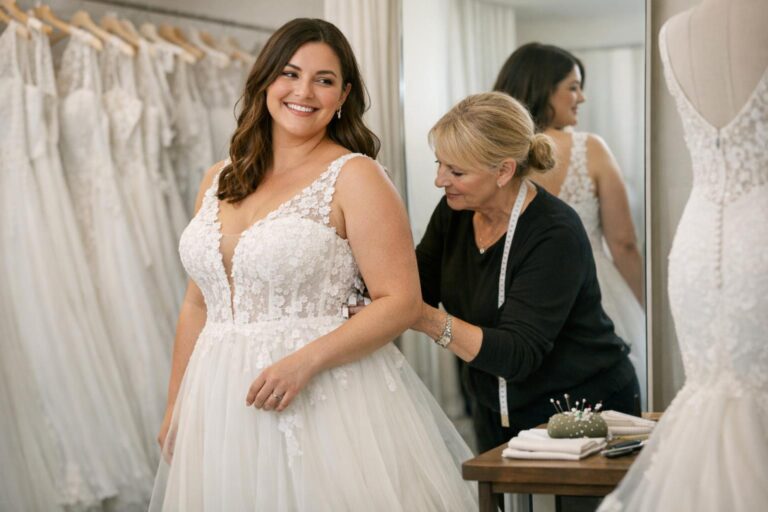
Tailoring satin wedding dresses requires careful technique because satin’s smooth surface can make seamwork and fit changes more noticeable. That’s not a reason to avoid alterations—it’s a reason to plan ahead and prioritize a clean, precise fit from the start.
Common areas brides address include bodice fit, strap length, hem length, and refining how the dress sits through the waist and hips, especially in sheath/column and mermaid silhouettes. If you’re shopping inclusive sizing or planning plus-size alterations, a confident fit plan matters because satin highlights the intended lines of the gown.
Tip: When you try on satin, move intentionally: sit, walk, raise your arms, and turn. Satin can look perfect standing still and feel different in motion. A few minutes of movement can reveal whether you need support adjustments, strap changes, or small refinements to keep the gown comfortable.
Budget, Brands, and Where to Shop
Shopping for satin wedding dresses is often a mix of style preference and budget reality. Many retailers offer satin gowns across a broad range of price points, from affordable satin wedding dresses to more premium options with detailed construction, detachable elements, or refined finishing.
Price ranges and what impacts cost
Even within the same fabric category, pricing can vary widely. The biggest drivers are typically how complex the gown is to construct, how many design elements are included, and the level of finishing detail visible in the bodice and skirt. Features like sleeves, pockets, and detachable components may also influence the overall cost.
When you compare listings, focus on what you’re actually getting for the price: silhouette complexity, the presence of structured bodices, the amount of fabric used (especially in ball gowns), and whether the design includes multiple wearable options through detachable pieces.
How to evaluate retailers and listings
Many satin gown category pages make it easy to filter by neckline, sleeves, length, silhouette, and sometimes details like pockets. Those filters aren’t just convenient—they’re also a roadmap for how to compare options fairly when you’re browsing multiple stores.
- Use silhouette filters first (A-line, mermaid, ball gown, sheath/column) to narrow the field quickly.
- Then filter by neckline and sleeves (including off-the-shoulder) to match your comfort and style preferences.
- Look for size options and any clear guidance on fit, including whether appointments, try-ons, or sizing tools are offered.
- Compare product photos for fabric shine and drape; seek listings with multiple angles when possible.
Tip: Keep a short list of “non-negotiables” (silhouette, neckline, and one practical feature like pockets or a slit) and a separate list of “nice-to-haves.” Satin gowns can look similar in thumbnails, and your criteria will help you spot the ones that truly fit your vision.
Real Brides: Satin Dress Stories (What to Pay Attention To)
Many brides look for satin wedding dress reviews because satin is as much about how it wears as how it looks. While every experience differs by gown design and venue, the most useful “real bride” takeaways tend to be practical: how satin moved during the ceremony, whether the dress felt comfortable across hours of wear, and how well the chosen silhouette matched the day’s setting.
When you’re collecting feedback—whether from reviews, friends, or your own try-ons—pay attention to repeated themes: comfort while sitting and dancing, confidence in the bodice support, and how the fabric looked across different lighting conditions. Satin can look especially luminous in photos, so it’s worth considering how your gown will appear in both indoor and outdoor light if your day includes multiple settings.
Tip: If you can, prioritize try-on moments that mimic real conditions: walk on different surfaces, test the train or hem length, and see how the satin looks under bright lighting and softer lighting. Satin’s sheen can shift depending on where the light hits, and a quick check can prevent surprises.
Expert Tips and a Quick-Start Checklist
Choosing a satin wedding gown is often about dialing in the right mix of shape, finish, and details. The checklist below is designed to keep you focused while shopping across many similar-looking options.
14-point satin dress shopping checklist
- Decide your top silhouette: A-line, mermaid/trumpet, ball gown, or sheath/column.
- Pick your neckline direction (including off-the-shoulder or sweetheart, if those are favorites).
- Decide on sleeves vs. sleeveless/straps.
- Choose whether you want a minimalist satin wedding dress or visible detailing.
- Consider whether you want a satin wedding dress with a front slit.
- Think about venue needs (beach vs. church vs. garden) before you fall in love with a look.
- Consider season and whether you prefer thick satin vs light satin.
- Check whether the listing specifies satin type (duchesse satin, charmeuse satin, matte satin).
- Look for multiple photos/angles to assess shine and drape.
- Confirm size options and the availability of a size chart or sizing guidance.
- Plan for alterations—especially for fitted silhouettes where satin highlights the line.
- List your must-have comfort needs (movement, sitting, dancing).
- Decide how you’ll accessorize (veil, belt, jewelry) so the styling feels cohesive.
- Shortlist a few finalists and compare them using the same criteria, not just the best photo.
Quick styling dos and don’ts for satin
Do let the fabric be the star—satin rewards clean, intentional styling. Do match accessory scale to the gown’s simplicity: bolder accessories can work beautifully when the dress is sleek, while subtler pieces can elevate a structured, formal silhouette without competing. Don’t underestimate fit; satin’s smooth surface makes the gown’s lines and construction more visible. Don’t add too many focal points at once—if you choose a strong neckline or a high-impact slit, keep the rest of the styling streamlined so the look feels purposeful.
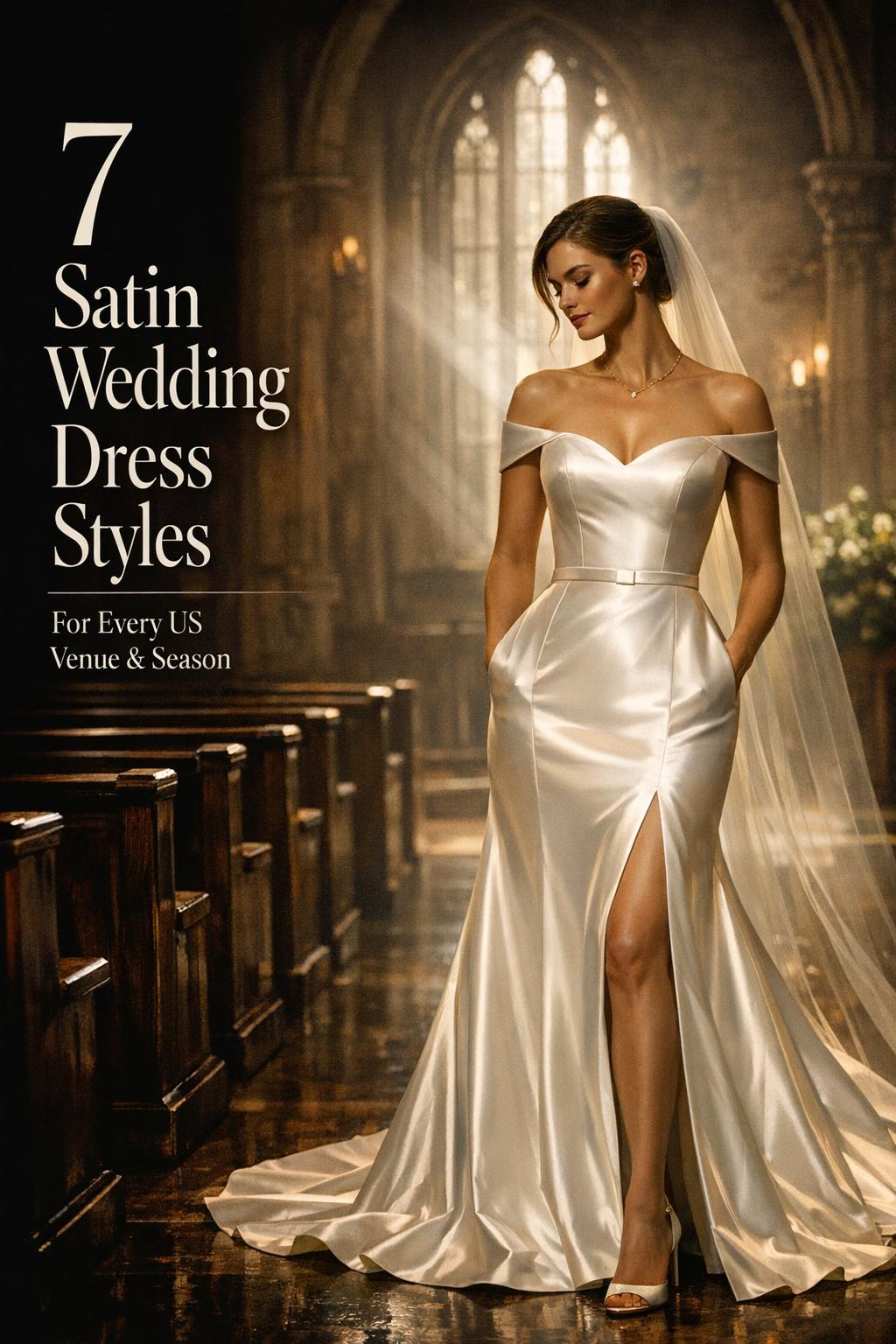
FAQ
Is satin suitable for all wedding venues?
Yes, satin works across many venues, but the best choice depends on silhouette and satin weight: sleek sheath/column styles and simpler A-lines often feel easier outdoors (including beach settings), while more structured satin—often seen in ball gowns and formal A-lines—can suit traditional venues like churches and formal indoor spaces.
What’s the difference between duchesse satin, charmeuse satin, and matte satin?
These terms describe common satin finishes that influence shine and drape: duchesse satin is typically associated with a more structured, formal look; charmeuse satin is usually linked to a softer, more fluid drape; and matte satin offers a more subdued surface for brides who want satin’s smoothness with less sheen.
Which silhouettes are most popular for satin wedding dresses?
Popular choices include satin A-line wedding dresses for versatility, satin mermaid wedding dresses for a more fitted, glamorous shape, satin ball gown wedding dresses for classic volume and drama, and satin sheath/column dresses for a sleek minimalist look.
Are satin wedding dresses a good choice for a minimalist bridal style?
Yes, satin is one of the strongest fabrics for minimalist bridal looks because the fabric’s sheen and smooth finish create visual impact without heavy embellishment, especially in clean silhouettes like sheath/column or simple A-line designs.
How do I choose a satin wedding dress for a beach wedding?
Focus on ease of movement and a silhouette that won’t feel overly heavy in outdoor conditions; many brides lean toward sleek shapes (sheath/column) or controlled A-lines, and they often avoid excessive volume if wind and sand are a concern.
How should I care for satin if something spills on the dress?
Handle satin gently to protect the surface finish, avoid aggressive rubbing, and prioritize prompt, careful attention so marks don’t set; when in doubt, preserve the fabric and seek professional cleaning guidance rather than trying harsh at-home methods that could change the look of the satin.
Can satin wedding dresses be altered easily?
Satin gowns can be altered, but careful tailoring matters because satin’s smooth surface can make fit changes and seamwork more noticeable; planning time for alterations and prioritizing a precise fit is especially important for fitted shapes like mermaid/trumpet and sheath/column styles.
What accessories pair best with satin wedding dress styles?
Satin pairs well with accessories that match the gown’s level of simplicity: a clean veil can enhance a minimalist satin dress, a satin belt can define the waist on many silhouettes, and jewelry should be chosen to complement the neckline—especially with popular off-the-shoulder and sweetheart styles.