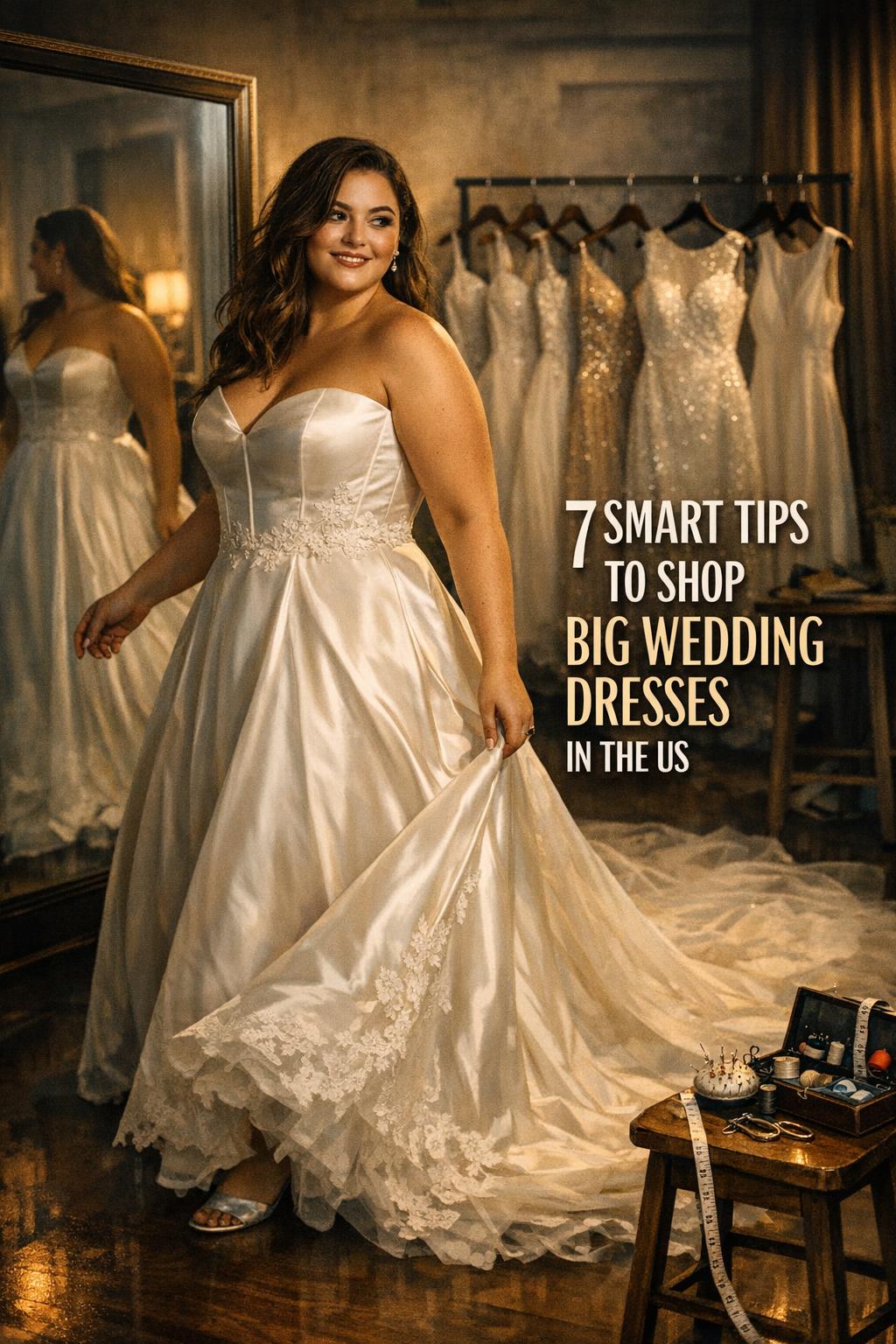
7 Smart Tips to Shop Big Wedding Dresses in the US
Big Wedding Dresses: A Confident Guide to Bold, Flattering Plus-Size Bridal Style
Shopping for big wedding dresses should feel like stepping into a celebration of your style, not a compromise. Whether you call it plus-size bridal, large size wedding gowns, or gowns for curvy brides, the goal is the same: find a wedding dress that fits beautifully, supports comfortably, photographs the way you want, and feels like you. This guide walks through silhouettes, fabrics, supportive construction details, sizing and alterations, budgeting, and where to shop in the U.S.—with practical tips designed for real-world dress buying.
If you’re early in the process, start by saving a few silhouette ideas (A-line, ballgown, fit-and-flare, mermaid, sheath) and then focus on fit and support. If you’re already browsing plus-size wedding dresses 0-30 or searching where to buy plus size wedding dresses, you’ll find a structured approach here: how to measure, how to plan a realistic timeline, and how to make a big dress feel effortless on the day.
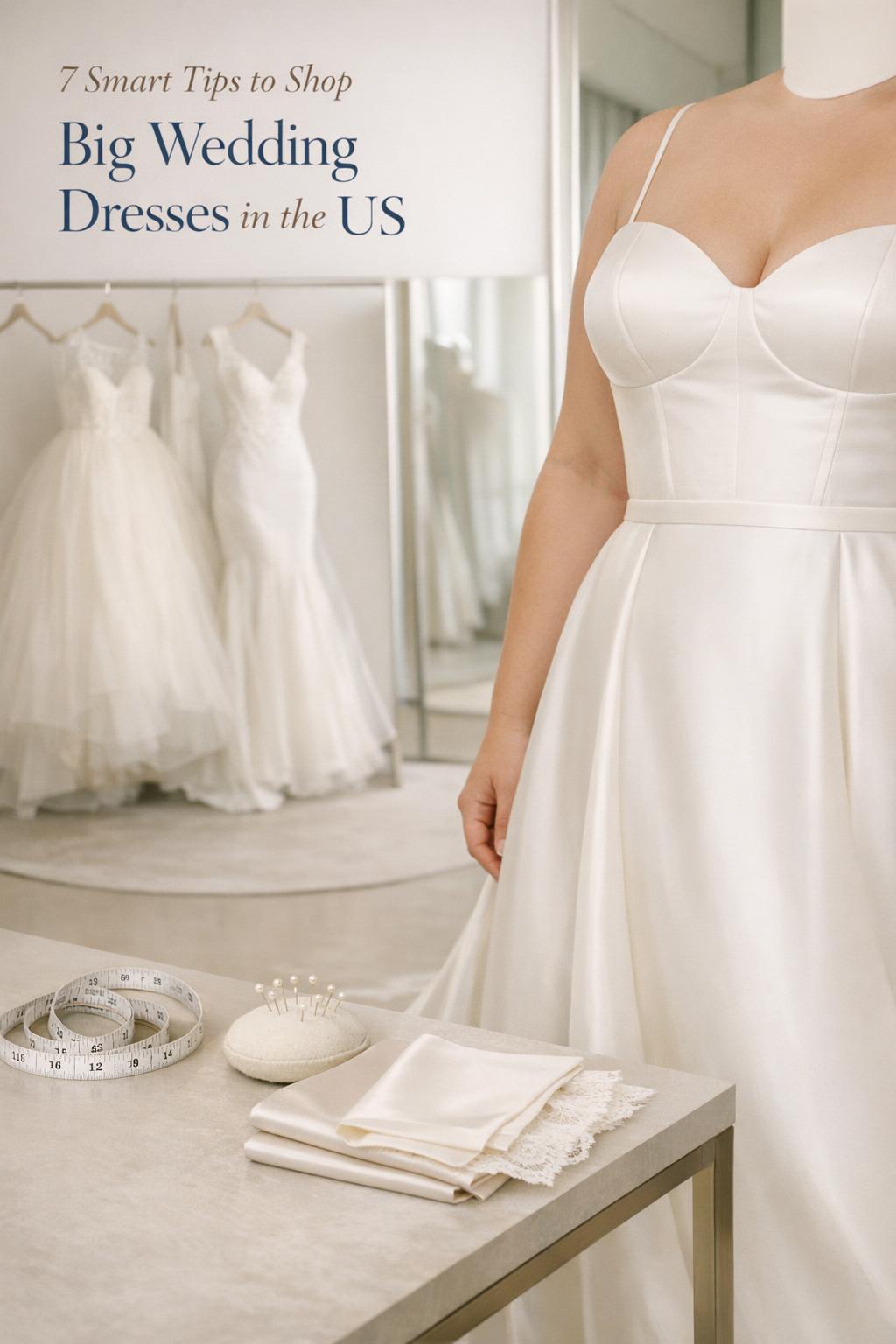
Understanding What “Big” Means in Wedding Dress Shopping
“Big wedding dresses” can mean two different things in bridal shopping. It can describe size-inclusive bridal sizing (often called plus-size wedding dresses or large size wedding dresses), and it can also describe bold, statement-making gowns with dramatic volume, trains, or embellished fabrics. Many brides want both: a size-inclusive fit and a dress that looks grand and couture-ready.
Because bridal sizing varies by brand, the most reliable approach is to focus on your measurements and the gown’s construction rather than the number on the label. Retailers and designers interpret size ranges differently, so a gown that feels true-to-size in one collection may fit differently in another. Understanding this early helps you shop with more confidence and fewer surprises.
Tips: Start with your goals before you start with a size
Before you fall in love with details like lace motifs or a dramatic train, decide what matters most for comfort and movement: bust support, waist definition, arm mobility, and how light or structured you want the skirt to feel. This makes it easier to compare plus size bridal gowns across retailers, especially if you’re mixing in try-on-at-home options or online ordering.
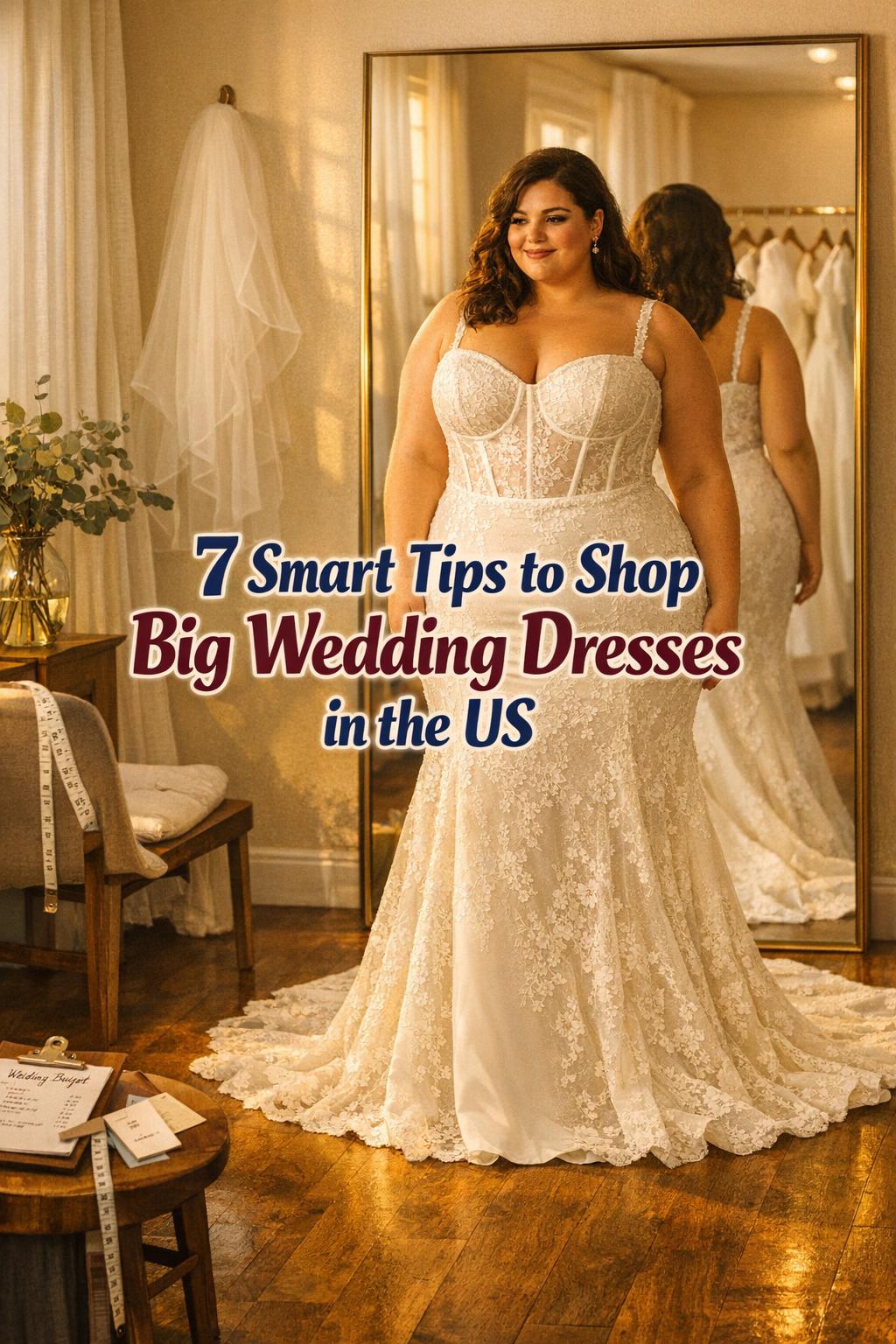
Top Silhouettes for Big Wedding Dresses
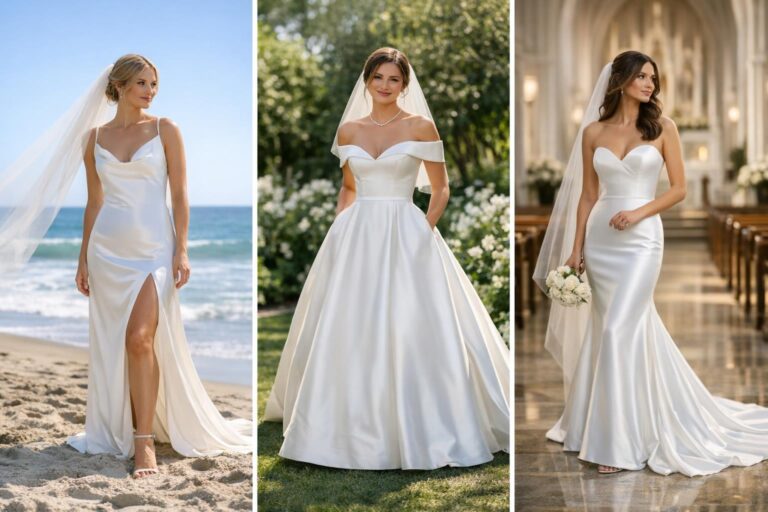
Silhouette is the fastest way to narrow down your options when browsing best plus-size wedding dresses. The “best” silhouette is the one that balances your preferred look with the level of support you want in the bodice and the amount of ease you want through the hips and thighs.
Ballgown: Volume without adding bulk
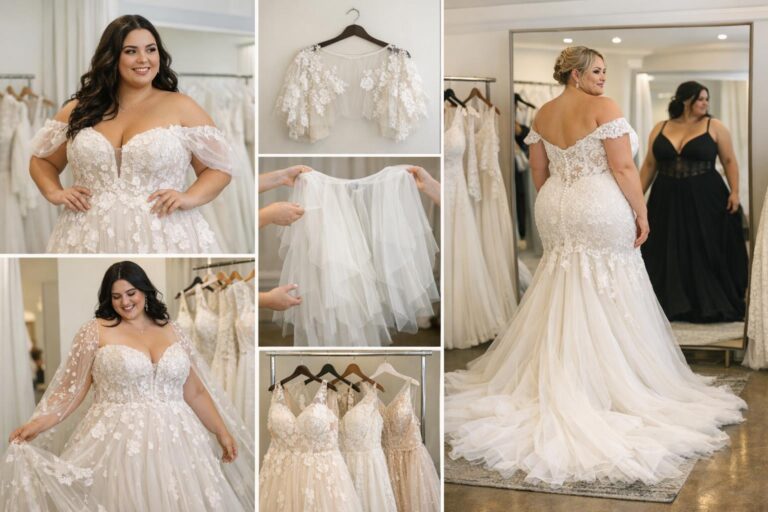
A ballgown is a classic choice for a big, statement look because the structure is intentional: a fitted bodice paired with a full skirt. For many curvy brides, that contrast can create a balanced shape while keeping the skirt’s volume controlled through layers that are designed to hold form. If you’re searching specifically for a ballgown wedding dress for plus size, prioritize a bodice that feels supportive and secure—especially at the top edge for strapless or off-the-shoulder looks.
Ballgowns are also helpful if you want more room to walk and sit comfortably without the dress hugging the hips. The tradeoff is that a truly voluminous skirt can feel like “a lot” in tight spaces, so it helps to think about your venue layout and how much movement you’ll do during the day.
A-Line: Classic, universally flattering
An A-line wedding dress is often the easiest starting point for plus-size wedding dresses because it creates a clean line: fitted through the bodice, then gradually widening from the waist or upper hip. It’s a strong “try this first” silhouette if you’re torn between multiple styles, because it can look minimal and sleek in satin or feel romantic and soft in lace and tulle.
Small adjustments can change the feel of an A-line dramatically. A longer train reads more formal and grand, while a shorter train can feel lighter and easier to manage. If you want structure but don’t want the full volume of a ballgown, A-line is often the happy middle.
Princess/Empire & Fit-and-Flare: Emphasizing waist, elongating lines
Princess and empire styles focus on where the dress “breaks” visually. An empire waist bridal look highlights a high waistline and can create an elongated feel through the skirt. Fit-and-flare, on the other hand, is more sculpted: it follows the body through the bodice and hips, then flares out. If you’re comparing A-line vs fit-and-flare, the key difference is the degree of closeness through the hip and thigh.
These silhouettes can be especially satisfying when you want definition through the waist and a confident, curve-forward shape. The most important factor is comfort through the lower body: you want to be able to take full steps, sit, and dance without constantly managing fabric.
Mermaid and Sheath: Sleek, confident, and detail-driven
Mermaid silhouettes are popular for dramatic, fashion-forward big-size wedding dresses because they highlight curves and then flare out. Sheath dresses are typically straighter and more streamlined. Both benefit from thoughtful fabric choice and strong internal support, because the eye is drawn to the line of the dress rather than skirt volume.
If you love a fitted silhouette, consider how you want the dress to feel after hours of wear. A supportive bodice and intentional seam placement can make a fitted dress feel secure rather than restrictive.
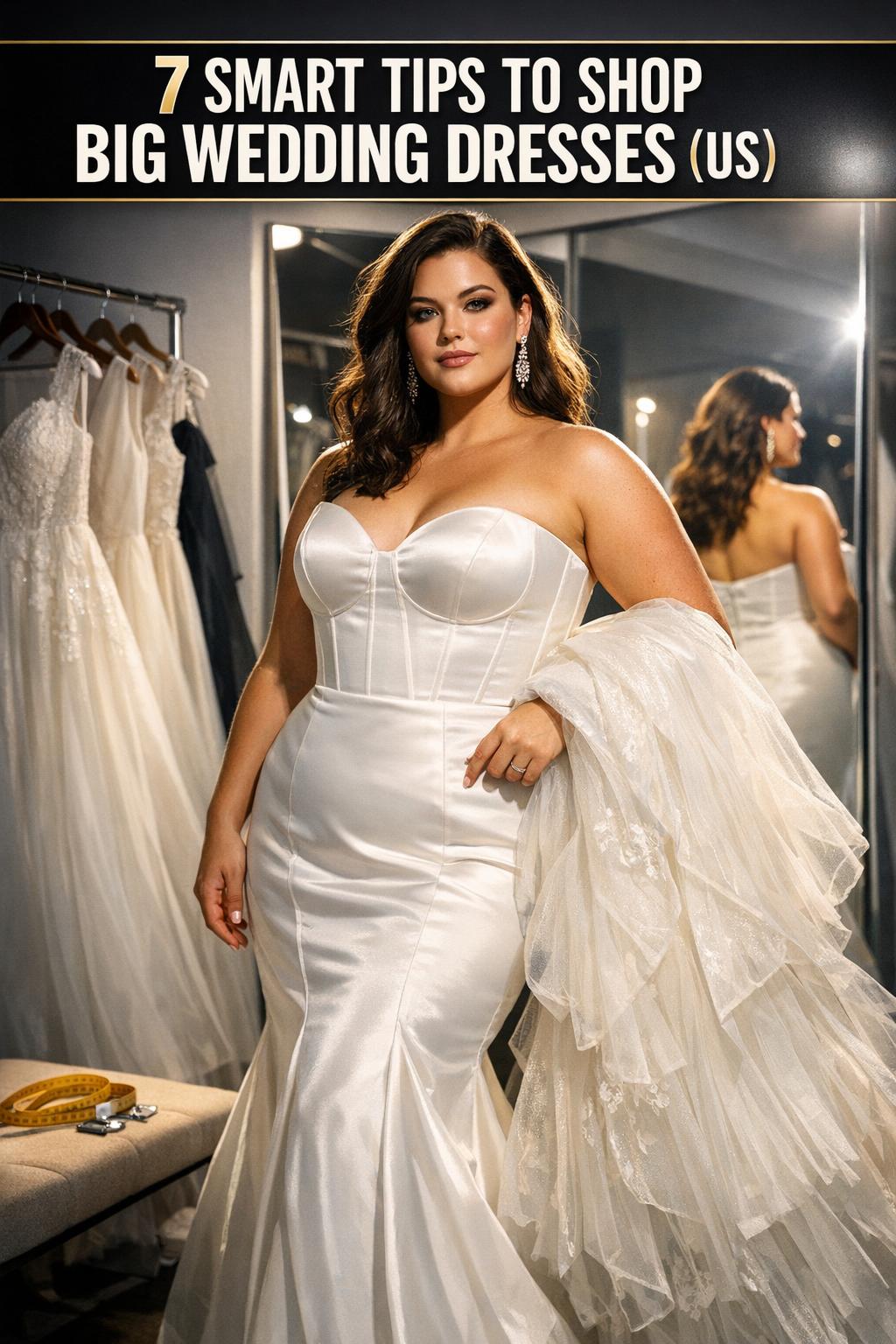
Fabrics and Details That Work for Bigger Brides
Fabric and embellishment determine how a gown moves, how it photographs, and how much structure it holds. For big wedding dresses, it’s useful to think in terms of “soft drape” versus “structured hold,” and then choose details that reinforce the support you want.
Lace, Tulle, Sequins, and Satin: Pros and cons
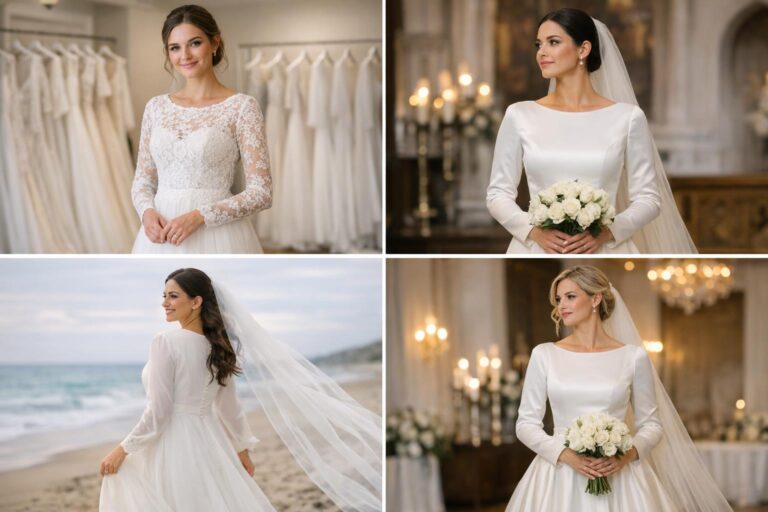
Lace can add romance and visual interest, especially when placed strategically on the bodice or sleeves. Tulle can create airy volume in skirts, which is helpful if you want a fuller shape without heavy fabric. Sequins and high-shine embellishments create a bold statement look and can elevate a simple silhouette. Satin often reads classic and clean, and it can look especially striking in structured silhouettes like A-line or ballgown.
When comparing fabrics, consider not only the look but also the feel against your skin and how the dress will behave over a long day. If you’re sensitive to scratchy textures, pay attention to lining and how embellishments are finished on the inside.
Supportive elements: boning, built-in cups, and supportive seams
Support is not just about shape—it’s about comfort and confidence. Many plus-size bridal gowns rely on internal structure like boning, built-in cups, and supportive seams to help the bodice stay in place. These elements can reduce the need to constantly adjust the neckline and can help the dress sit smoothly through the torso.
If you’re considering a wedding dress with built-in bra elements or strong bodice structure, focus on how it feels when you move: lift your arms, sit down, take full steps, and simulate a hug. The right level of support should feel secure, not tight.
Tips: Use details to personalize without overcomplicating
If you’re trying to keep decisions simple, choose one hero element—like an illusion neckline, a lace bodice, a dramatic skirt, or shimmering embellishment—and let everything else be clean. This approach works across many retailers’ plus-size collections because you can search by silhouette and then filter by fabric or neckline to refine the look.
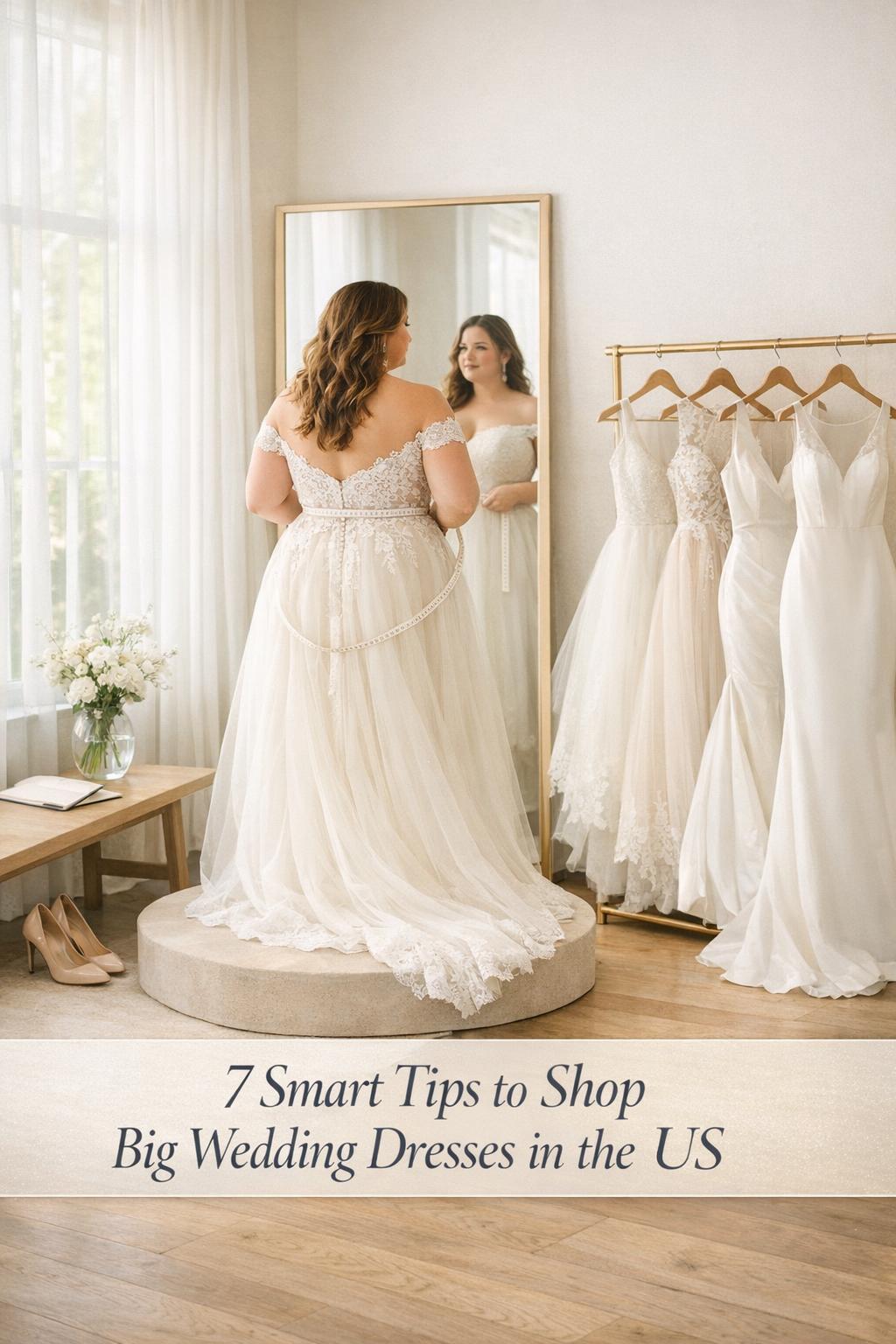
Sizing, Alterations, and the Path to the Perfect Fit
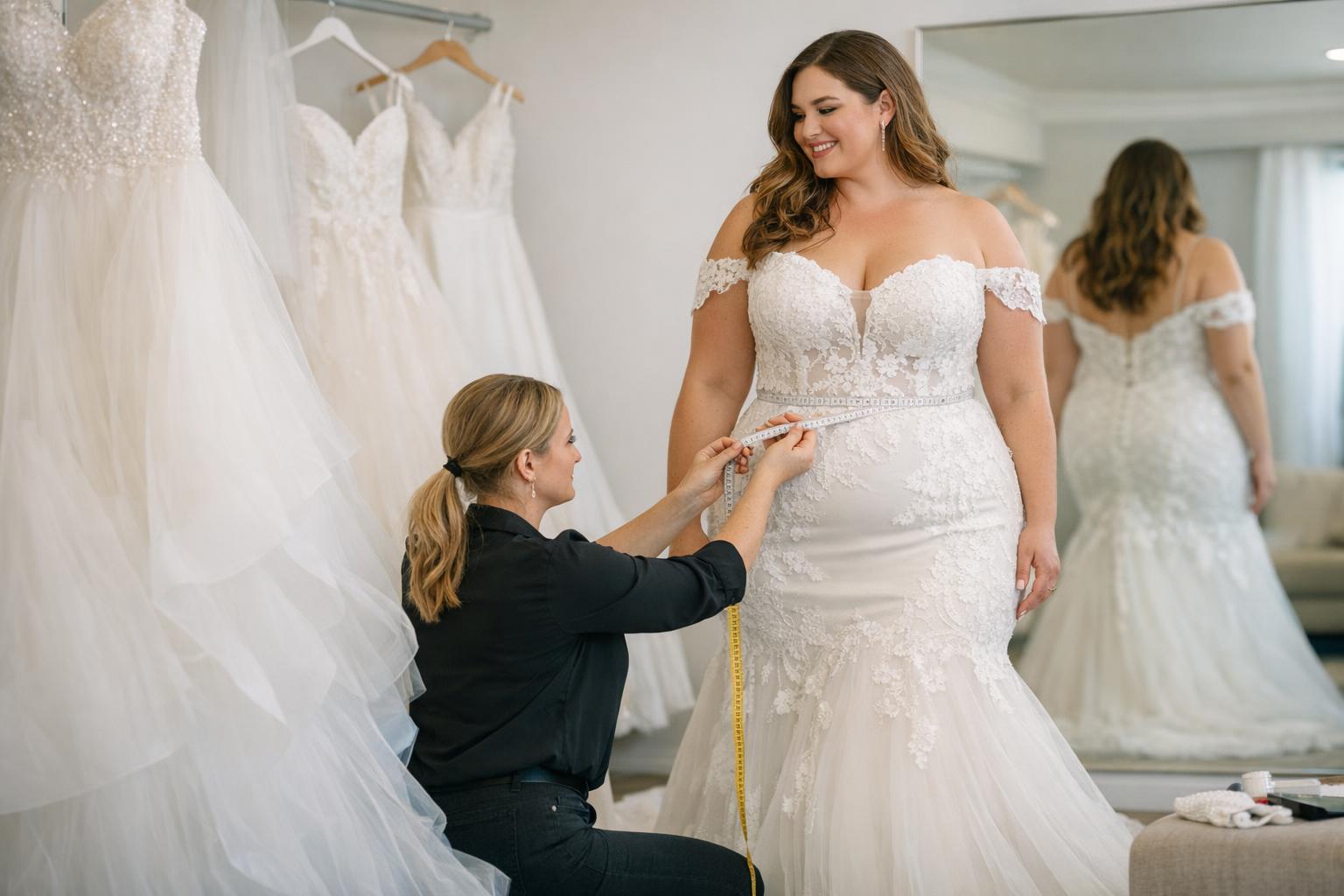
Fit is the difference between “pretty on the hanger” and “mine.” For size-inclusive bridal, alterations are normal, not a sign that something went wrong. Even when a gown comes in an extended range, tailoring is often what makes it feel custom and supportive.
How to measure for wedding dresses
Accurate measurements help you choose the best starting size, especially when shopping online. Common measurement points include bust, waist, hip, and hollow-to-hem. These measurements help match you to a brand’s size chart and inform what tailoring might be needed once the gown arrives.
- Bust: Measure around the fullest part of the bust, keeping the tape level.
- Waist: Measure at the narrowest part of the torso (or where the dress waistline will sit).
- Hip: Measure around the fullest part of the hips and seat.
- Hollow-to-hem: Measure from the hollow at the base of the neck down to where you want the hem to fall (helpful for length planning).
Use these numbers as your anchor when comparing large size wedding gowns across retailers, especially if you’re switching silhouettes (like A-line to fit-and-flare), because each silhouette interacts with measurements differently.
Timeline for ordering and alterations
A realistic timeline reduces stress and improves your options. Many brides benefit from building in time for shipping or delivery windows, multiple fittings, and final tailoring steps. If you’re shopping online or considering try-on-at-home workflows, it’s especially helpful to start early so you can compare fit, fabric feel, and support before committing.
- Early phase: Browse silhouettes and shortlist retailers and designers with size-inclusive options.
- Decision phase: Order or purchase the gown once you’re confident in the silhouette and support level.
- Alteration phase: Plan for more than one fitting so changes can be tested and refined.
- Final phase: Schedule final adjustments close enough to the wedding that fit is current, but not so close that you’re rushed.
This approach is flexible: some brides buy off-the-rack and tailor quickly, while others order and build in more steps. The key is to avoid leaving hemming and bodice refinements to the last minute.
When to tailor vs. buy off-the-rack
Off-the-rack can be ideal if you need a gown on a shorter timeline or want to try several options quickly. Ordering can be ideal if you want access to a broader range of silhouettes, fabrics, and size runs. In both cases, expect alterations to fine-tune the fit—especially at the bodice, straps, neckline, and hem.
If you’re torn between two sizes, choosing the size that matches your largest measurement often provides a safer starting point for tailoring. Alterations can usually refine a gown to your shape, while a gown that is too small can limit changes and comfort.
Tips: Bring fit questions to every try-on
Whether you’re in a boutique appointment or trying dresses at home, treat each try-on like a fit test. Ask yourself: Does the bodice stay put when I move? Can I sit comfortably? Do I feel supported without relying on constant adjustments? Those answers are more valuable than how the dress looks in one still mirror moment.
Budgeting and Shopping Smart for Big Wedding Dresses
Budgeting for plus-size wedding dresses is easiest when you separate the cost of the gown from the cost of getting the fit right. Many dresses can be elevated through tailoring, thoughtful styling, and supportive undergarments, so you don’t have to assume the boldest look requires the highest price point.
Price ranges by silhouette and fabric
Price can vary based on fabric, embellishment, and construction. In general, gowns with more elaborate structure or heavy detailing may sit at higher price points, while simpler silhouettes may offer more room in the budget for alterations and accessories. The most helpful way to shop is to decide what you want to “spend on the dress” versus “spend on the final look.”
How to shop smart during sales and promotions
Many brides find their gown by watching for seasonal assortment updates, limited-time promotions, or sale sections—especially at online retailers. If you’re shopping during a promotion, prioritize confirming the return window and understanding whether sale items have different rules, so you can still evaluate fit at home without pressure.
Return and alteration policy considerations
Return and exchange policies matter most when you’re ordering online or trying a new brand for the first time. Before buying, confirm the basics: how long you have to decide, how exchanges work if you need a different size, and whether the gown can be returned after it’s been altered. These details can influence whether you order one dress or multiple options to compare.
Tips: Build an “all-in” budget
To avoid surprises, plan an all-in number that includes the gown, tailoring, and the essentials that affect fit (like supportive undergarments and shoes for accurate hemming). This makes it easier to compare a lower-priced gown that needs more refinement versus a higher-priced gown that fits closer to perfect immediately.
Where to Buy: Top U.S. Retailers and Resources for Big Wedding Dresses
If you’re wondering where to buy plus size wedding dresses in the U.S., a strong strategy is to mix inspiration sources with retailers that make browsing by silhouette and size easy. Some destinations focus on curated editorial guidance and designer spotlights, while others focus on shoppable catalogs with filters for size, fabric, and silhouette.
Editorial inspiration and curated guidance
Content hubs and bridal magazines can be useful at the start of the process, especially if you want to see curated plus-size wedding dresses by silhouette and get shopping guidance in one place. These resources often highlight designer picks, body-type-friendly silhouettes, and practical tips for shopping, making them helpful when you’re deciding what to try first.
- The Knot: Curated plus-size wedding dresses, silhouette ideas, shopping guidance, and designer quick links.
- Brides: Bridal fashion stories, designer spotlights, gown trends, and wedding dress shopping tips.
Retailers with filters by silhouette, fabric, and size
If you prefer to browse visually and narrow quickly, look for retailers that let you filter by silhouette (A-line, ballgown, sheath), fabric, and size. This makes it easier to compare big wedding dresses across styles without starting over every time you change one preference.
- BHLDN: A broad wedding dress catalog with filtering by silhouette, size, and fabric plus product detail pages.
- WeddingsShoppe: A retailer hub that combines plus-size selection with an appointment-focused experience.
Size-inclusive online shopping and accessible price points
Online-first and category-driven retailers can be especially effective if you want to compare many looks quickly, shop by price point, or use at-home try-on workflows where available. These stores often make it easy to browse “large size wedding dresses” or “plus size bridal gowns” as dedicated categories and then refine from there.
- Eloquii: A dedicated large size wedding dresses category focused on plus-size options and current assortment.
- Lulus: A plus size wedding dresses category with quick browsing and visible price points.
- Avery Austin: Plus-size new arrivals with silhouettes like strapless, A-line, and fit-and-flare, with an emphasis on try-on notes.
Tips: Compare retailers using the same checklist
When you’re comparing multiple stores, use a consistent checklist: size range availability, how detailed the fit notes are, whether silhouette filters are easy to use, return/exchange clarity, and whether the product descriptions help you understand structure (like bodice support). This keeps the process objective, especially when several dresses look equally beautiful.
Try-On Success: A Size-Inclusive Buying Guide You Can Use Anywhere
Trying on big wedding dresses is part style discovery and part fit research. The best try-ons are repeatable: you test movement, support, and comfort the same way each time, whether you’re in a store appointment or trying at home.
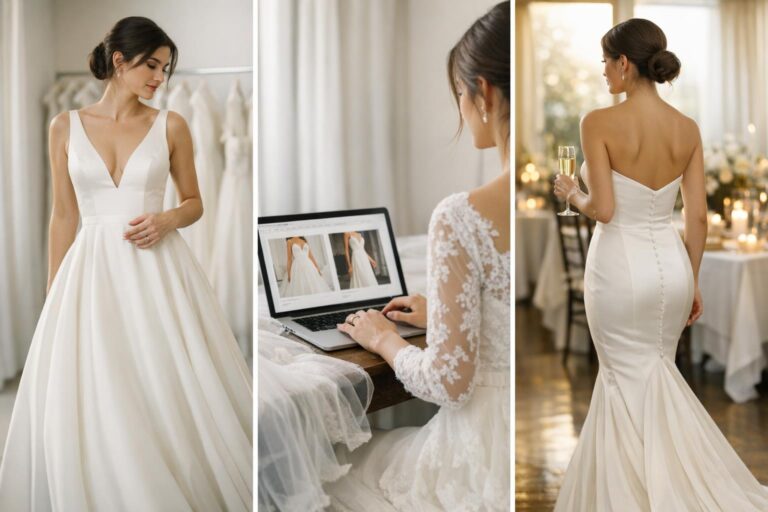
Your at-home fitting checklist
An at-home try-on can be surprisingly effective if you keep the conditions consistent. Wear the undergarments you’re most likely to use (or something similarly supportive), and have heels or shoes with a similar height to what you might wear on the day.
- Stand, sit, and walk for several minutes to test comfort.
- Lift your arms and move your shoulders to confirm the bodice stays in place.
- Check the waist placement and whether it feels secure without pinching.
- Take photos from multiple angles to evaluate proportions and silhouette.
- Note what you’d alter: straps, neckline, waist, hips, and hem.
Tips: Choose a “baseline dress” early
If you try on one simple, classic silhouette early—often an A-line—you’ll have a baseline for comparison. From there, it’s easier to decide whether you want more drama (ballgown), more shape (fit-and-flare or mermaid), or a more minimal line (sheath). This reduces decision fatigue and helps you shop faster, especially when browsing large online catalogs.
Alterations Deep Dive: What Changes Make the Biggest Difference
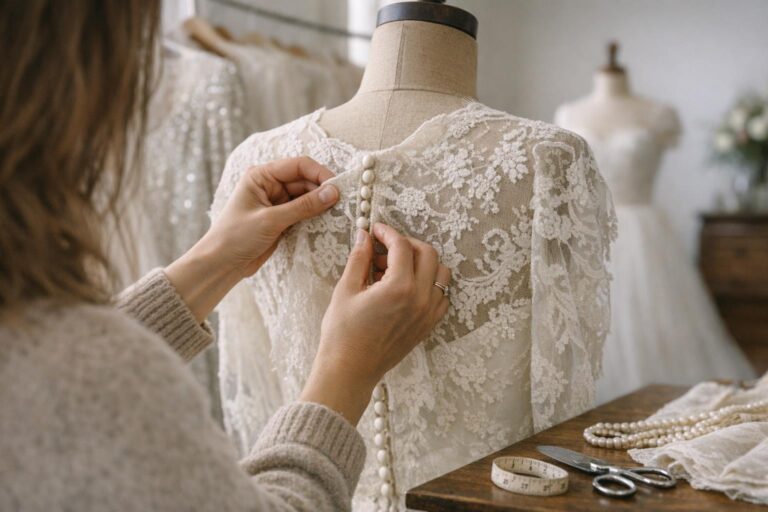
Alterations are where a good gown becomes your gown. For plus-size gown tailoring, the most impactful changes often relate to support and proportion: refining the bodice, adjusting straps or sleeves, and ensuring the hem length works with your shoes and how you’ll move.
Common tailoring goals for big wedding dresses
Many brides use tailoring to create a smoother line through the torso, secure the neckline, and improve overall comfort. The exact changes depend on the silhouette, but the intention is consistent: make the gown feel stable, wearable, and balanced from every angle.
- Neckline security: Adjusting the top edge so it stays put during movement.
- Strap refinement: Shortening, repositioning, or balancing strap tension for comfort.
- Bodice shaping: Refining seams and support so the bodice feels anchored.
- Waist placement: Aligning the dress’s waist with your natural waist or preferred position.
- Hem and train control: Setting length for your shoes and deciding how the train will be managed.
Tips: Talk about comfort in practical terms
When you describe what you want, use movement-based language: “I want to lift my arms without the neckline shifting,” or “I want to sit without pressure at the waist,” or “I want the skirt to feel easy to walk in.” Clear comfort goals help guide tailoring decisions, especially for structured gowns and fitted silhouettes.
Styling Big Wedding Dresses: Make the Look Feel Like You
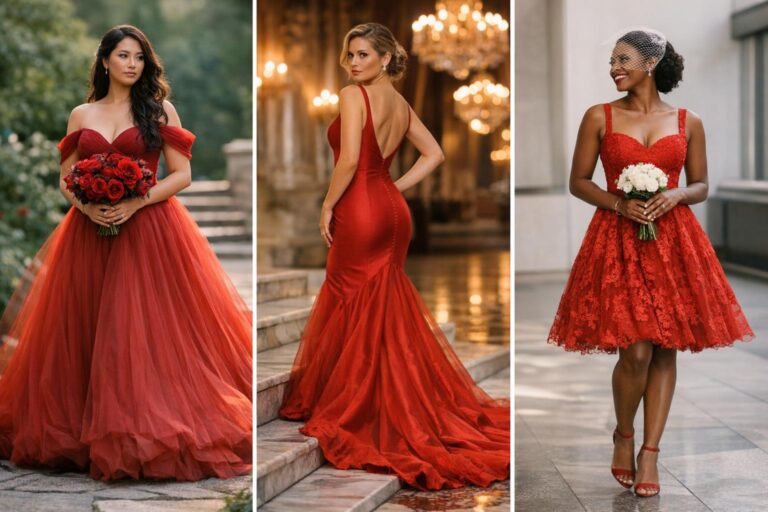
Styling should reinforce your dress, not fight it. Whether your gown is minimalist satin or full lace and tulle, your accessories and finishing touches can help you feel cohesive and confident. Many brides build a styling plan around the dress’s most distinctive element: a neckline, sleeves, a dramatic skirt, or sparkling embellishment.
Tips: Choose accessories that support the silhouette
If the dress is already a bold statement (like a ballgown or heavily embellished look), consider simpler accessories so the overall look feels intentional. If the dress is sleek (like a sheath), you may prefer one standout accessory choice. The aim is balance: the dress remains the focus, while styling completes the story.
Real Bride Stories: Big Wedding Dresses in Action
Real-world fit is where the shopping process becomes clearer. While every body and brand fits differently, “in action” examples tend to highlight the same success factors: a supportive bodice, a silhouette that matches movement needs, and tailoring that fine-tunes proportion.
Case study approach you can use when evaluating any gown
When you look at photos or try-ons, evaluate the dress like a before/after transformation—even if you’re only seeing the “after.” The question isn’t “Is the dress beautiful?” but “What choices made it look that good?” Usually, the answer is a combination of silhouette selection and alterations that improved support and balance.
- Silhouette match: The skirt shape supports the look without restricting movement.
- Bodice stability: The neckline and torso stay in place naturally.
- Proportion refinement: Waist placement and hem length make the whole look intentional.
- Comfort readiness: The dress appears wearable, not merely posed for a single photo.
Tips: Plan for “movement photos”
If you can, take at least a few try-on photos that include movement—walking, turning, and sitting. Big wedding dresses can look different in motion than in a still mirror view, especially with layered skirts, trains, or fitted silhouettes. Movement photos help you confirm you’ll love how the dress looks throughout the day.
Gallery Guide: Big Wedding Dress Inspiration by Silhouette
If you’re building a shortlist, organize inspiration by silhouette first and then by detail. This keeps the browsing process efficient, especially across retailers that offer filters by A-line, ballgown, sheath, and fit-and-flare.
- Plus-size ballgown with structured bodice: Look for supportive construction and a skirt that holds its shape.
- Plus-size A-line gown with lace overlay: Focus on the waistline placement and how the lace is lined for comfort.
- Fit-and-flare with clean seams: Prioritize seam placement and comfort through hips and thighs.
- Mermaid with statement detailing: Choose a neckline and bodice structure that stays secure while moving.
- Sheath with minimal finish: Evaluate fabric drape and how the dress skims the body.
Once you’ve collected a few favorites from each silhouette category, you’ll usually see a pattern in what you’re drawn to—like a consistent neckline, a preference for satin versus lace, or a desire for more or less skirt volume.
Final Checklist for Your Big Wedding Dress
Use this checklist as a practical finish line once you’ve chosen a gown. It’s designed to help you confirm that the dress is not only beautiful, but also wearable and ready.
- Confirm your measurements and compare them to the brand’s size guidance before ordering.
- Choose a silhouette that matches your movement needs (walking, sitting, dancing).
- Plan time for multiple fittings and final adjustments.
- Decide on undergarments and shoes early enough for accurate hemming.
- Confirm return/exchange rules before purchase, especially for online orders.
- Do a full comfort test: arms up, sit down, walk, and turn.
- Take photos in natural light and in motion to confirm proportions.
- Schedule final tailoring with enough buffer to avoid last-minute stress.
FAQ
Do plus-size wedding dresses fit true to size?
Fit can vary by brand and collection, so “true to size” is less reliable than your measurements; using bust, waist, hip, and hollow-to-hem measurements to choose a starting size is usually the most consistent way to shop across different retailers and designers.
What silhouettes are most popular for big wedding dresses?
Ballgown and A-line are popular for bold, flattering shape and comfortable movement, while fit-and-flare and mermaid are common for brides who want more curve definition; sheath styles appeal to those who want a streamlined, minimalist look.
How do I measure myself for an online wedding dress order?
Take accurate measurements at the bust, waist, and hip, and include hollow-to-hem for length planning; those measurements help you match a brand’s sizing guidance and anticipate which areas may need tailoring once the dress arrives.
How far in advance should I plan for ordering and alterations?
Build in time for delivery or shipping, then allow for more than one fitting so tailoring changes can be tested and refined; starting earlier also gives you more flexibility to compare silhouettes and retailers without rushing.
When should I buy off-the-rack vs. order a gown?
Off-the-rack is helpful when you need a dress sooner or want to try many options quickly, while ordering can give you broader access to silhouettes and size ranges; in both cases, alterations are typically the step that perfects support and proportions.
What construction details matter most for support in plus-size bridal gowns?
Supportive elements like boning, built-in cups, and well-placed seams can help the bodice stay secure and comfortable; the best test is movement, since the right structure should feel stable without feeling overly tight.
How can I make a big dress feel lighter and easier to wear on the day?
Choose a silhouette that matches your movement needs, prioritize comfort-focused tailoring (especially at the bodice and hem), and do a full movement test during try-ons; a secure, well-fitted bodice and a well-planned hem length often make the biggest difference in how manageable the dress feels.
Where can I buy plus-size wedding dresses in the U.S.?
You can start with curated inspiration and shopping guidance from bridal publications and then browse retailers offering size and silhouette filters; options include broad bridal catalogs, dedicated plus-size categories, and brands highlighting plus-size new arrivals and try-on notes.
Can I order custom sizes for big wedding dresses?
Some brides pursue a more customized fit through careful sizing selection and alterations rather than relying on a single “custom size” option; if you’re ordering online, using precise measurements and planning time for tailoring is a dependable path to a personalized fit.