7 Smart U.S. Tips for Wedding Dresses Indian Online Shopping
Wedding Dresses Indian: A Complete US Buyer’s Guide for Brides and Guests
If you’re searching for wedding dresses indian in the U.S., you’re likely balancing two goals at once: finding an outfit that feels true to the occasion and getting a smooth shopping experience with clear sizing, shipping, and (often) customization. The good news is that the U.S. market offers a wide range of Indian wedding outfits online—especially for lehengas, sarees, gowns, and Indo-Western styles—often organized by event (Haldi, Mehndi, Sangeet, Wedding, Reception) and by dress type to make selection easier.
This guide breaks down the main Indian wedding dress styles, how to shop smart from the U.S., how to plan outfits event by event, and what to know about sizing, customization, and returns. It’s designed for brides, bridesmaids, family members, and guests who want clarity—not guesswork—when buying Indian wedding dresses online USA.
Understand the Indian Wedding Dress Landscape in the U.S.
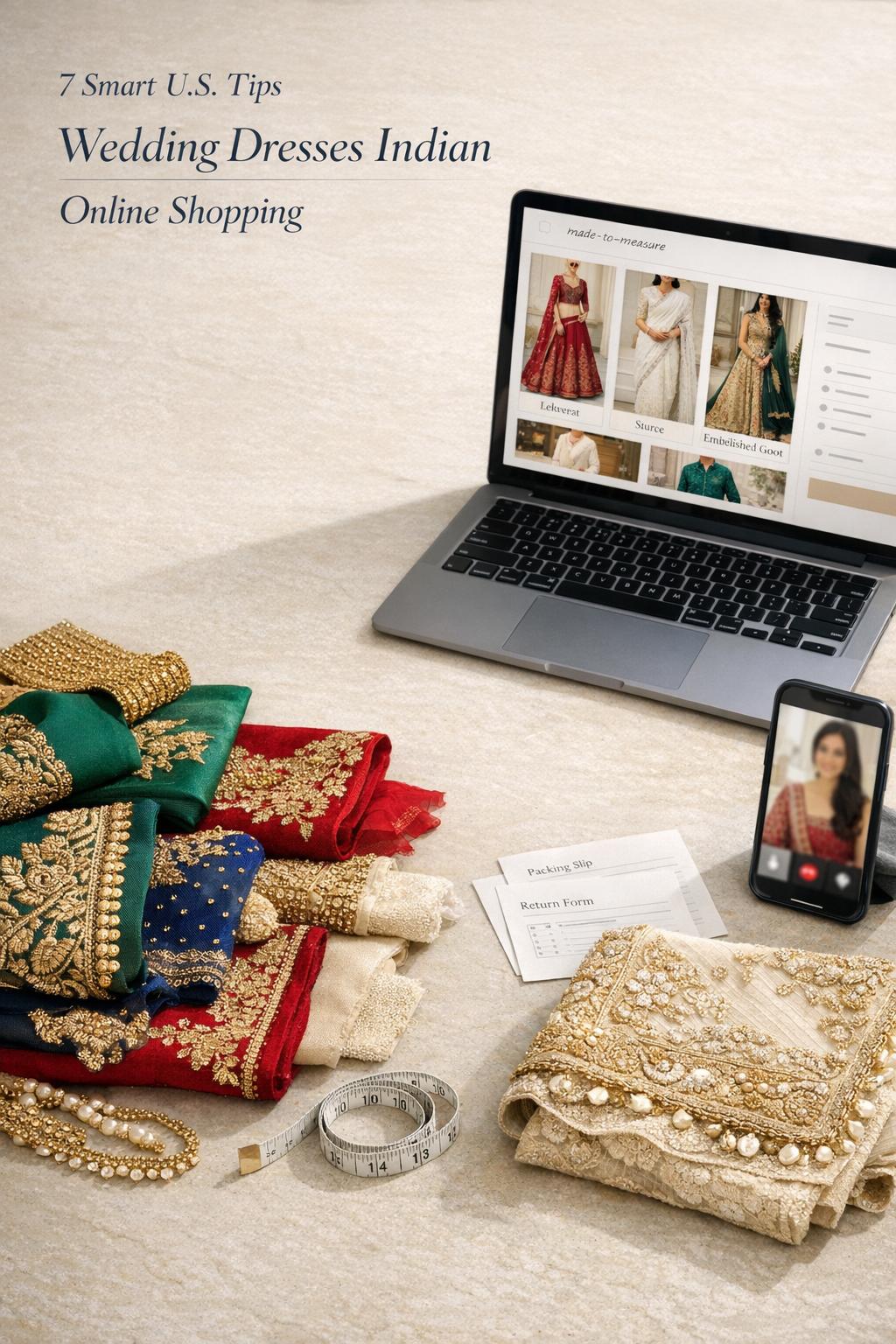
When people in the U.S. search for Indian wedding dresses, they usually mean more than one garment type. Many stores structure their collections around both dress types and wedding events, because each event can call for a different level of formality, color story, and comfort. That’s why you’ll often see navigation that splits shopping into “By Occasion” (Wedding, Bridal, Mehndi, Sangeet, Haldi, Reception) and “By Dress Type” (Lehenga, Saree, Gown, Indo-Western).
From a practical standpoint, the U.S. market also emphasizes convenience signals: ready-to-wear options, plus-size availability, shipping to the USA, and services like video shopping or digital-led customization. For many shoppers, those service details matter as much as the look itself—especially when timelines are tight.
Who this guide is for
This article is built for anyone buying Indian wedding outfits in the U.S., including brides choosing a bridal lehenga or bridal saree, guests searching for Indian wedding guest dresses, and families coordinating outfits across multiple events. It also helps if you’re comparing traditional vs Indo-Western wedding dress options and want a clear way to decide.
Top Indian Wedding Dress Styles for Brides and Guests
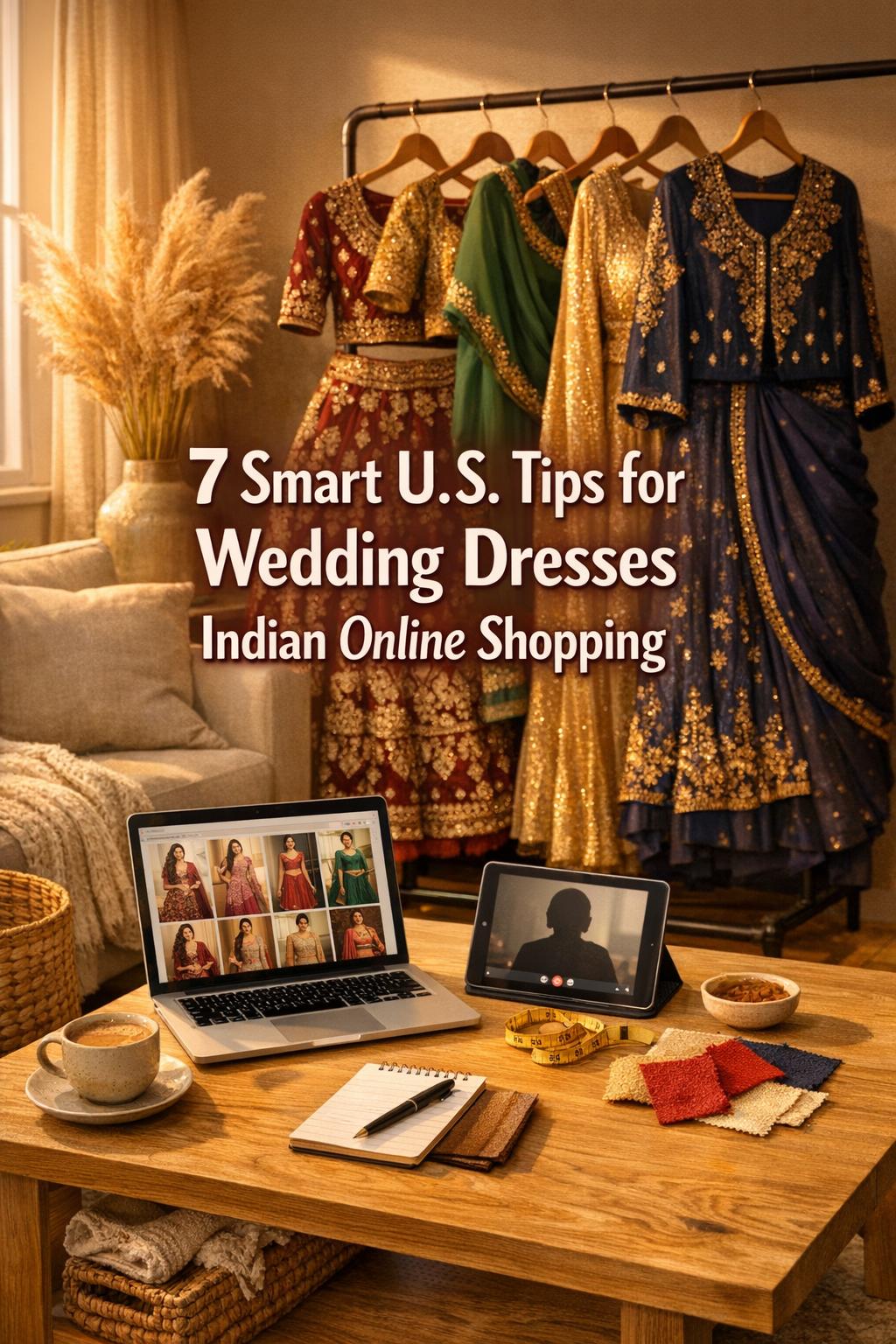
Most Indian wedding wardrobes revolve around a few core silhouettes. Understanding what each style offers makes it easier to shop confidently, compare listings across retailers, and decide when customization is worth it.
Lehenga Choli: the classic choice for bridal and wedding events
A lehenga choli is one of the most searched and widely available options in Indian wedding dresses online USA. Collections often include bridal lehenga styles as well as lighter looks for Mehndi or Sangeet, making the lehenga flexible across the wedding timeline. You’ll commonly shop lehengas by embroidery intensity, fabric feel, and how “bridal” the overall finish looks.
Because lehengas rely heavily on fit at the blouse and waist, many U.S. shoppers prioritize customization options. Some retailers emphasize custom design workflows, including digital-first tools that help you visualize the final look before production. If you’re investing in a bridal lehenga with customization, the fit process becomes part of the purchase—not an afterthought.
Sarees for weddings: traditional impact with flexible styling
Wedding sarees remain a cornerstone of Indian bridal dress shopping, and they’re also popular for guests who want a formal look without the bulk of a heavily structured outfit. Many storefronts organize sarees alongside lehengas and gowns, positioning them as equally “wedding-ready,” especially for the main ceremony or reception depending on your styling preferences.
Saree shopping often centers on craftsmanship and finish—how the fabric falls, the detailing, and whether the styling reads more traditional or contemporary. If you’re buying a bridal saree online, pay close attention to product descriptions and how the blouse is handled (ready-made, unstitched, or customizable), since that can affect both timeline and fit.
Indo-Western fusion: modern silhouettes with Indian detailing
An Indo-Western wedding dress blends a Western-leaning silhouette with Indian textiles or embellishment cues. For U.S. shoppers, Indo-Western looks can be especially appealing for events like Sangeet and Reception, where movement and a contemporary vibe may matter more. Retailers frequently include Indo-Western as a core category alongside lehengas, sarees, and gowns.
Indo-Western styles can also help if you’re attending an Indian wedding and want something culturally aligned but closer to your everyday comfort zone. The key is to shop with the event formality in mind so your outfit doesn’t feel underdressed next to more traditional ensembles.
Gowns: when a wedding dress gown makes sense
Indian wedding gowns appear across U.S.-facing collections as a strong alternative to lehengas and sarees. You’ll often see gowns marketed for guests and wedding-related events, and sometimes positioned as a reception-friendly option when you want a single-piece outfit with Indian-inspired detailing.
If you’re deciding between a lehenga vs gown, think in terms of movement, styling effort, and how much adjustability you want on the day. A gown can feel simpler to wear, while a lehenga offers the classic multi-piece styling experience many people associate with Indian bridal wear.
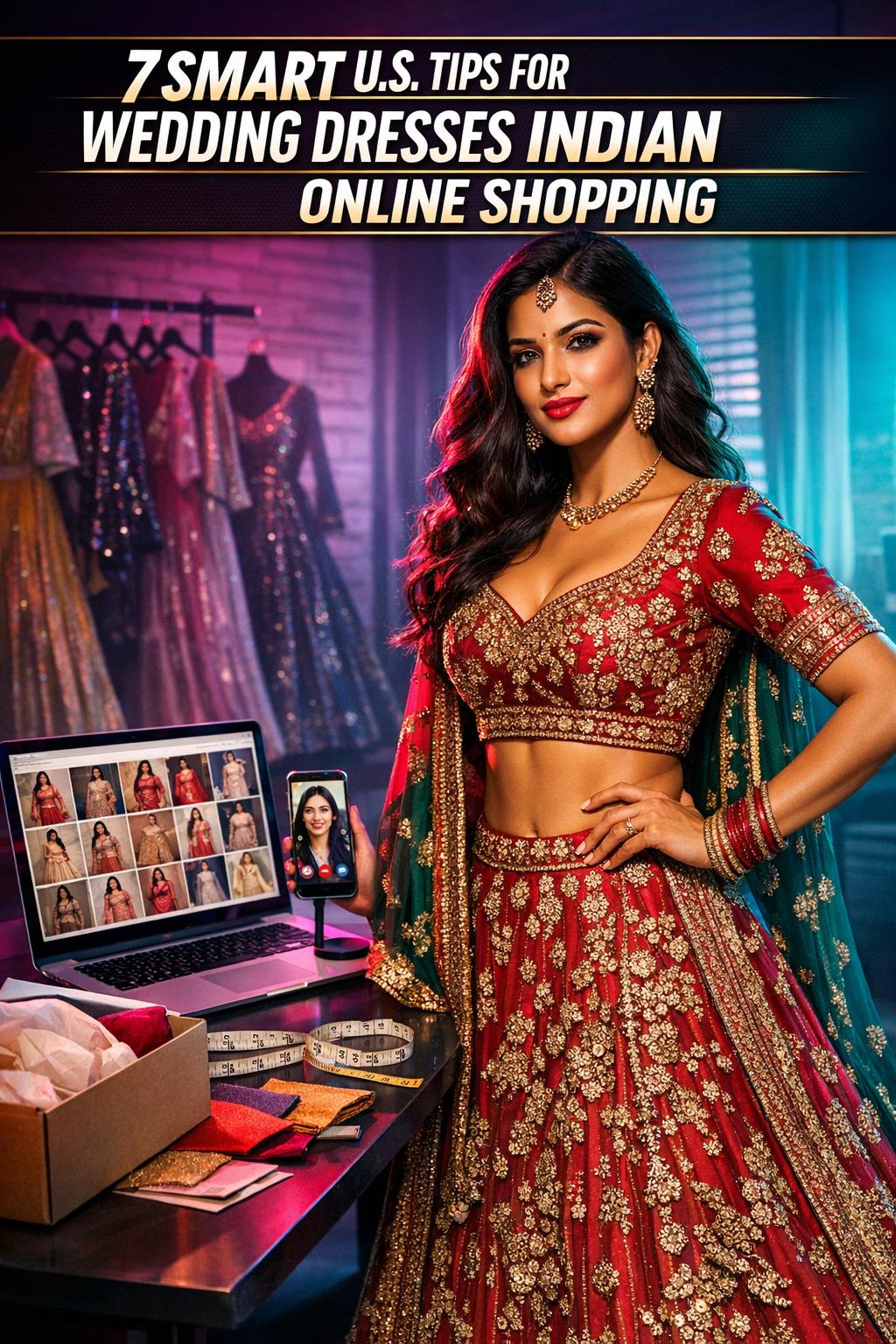
How to Shop Indian Wedding Dresses in the U.S.
Shopping for Indian wedding outfits from the U.S. is easiest when you treat it like a process: define your event needs, pick your silhouette, confirm sizing, and then choose between ready-to-wear vs customization. Many U.S.-targeted retailers now build their experience around those steps, offering clear categories and add-on services to reduce risk.
Where to buy: online stores, U.S.-focused shipping, and showrooms
Most shoppers begin with online retailers because they offer the broadest catalogs and filters by occasion and dress type. In the U.S. market, many sites emphasize USA shipping, doorstep delivery, and a shopping experience tailored to U.S. customers. You’ll also find retailers highlighting features like video shopping, and brands built around bespoke workflows for brides, grooms, and family outfits.
- If you want variety fast, look for large catalogs that separate “By Occasion” and “By Dress Type” so you can compare lehenga, saree, gown, and Indo-Western options side by side.
- If fit is your top concern, prioritize stores that clearly advertise customization options and a defined workflow for measurements and tailoring.
- If you want more confidence before buying, consider retailers that promote video shopping or a guided virtual experience.
Ready-to-wear vs custom-made: what to choose in the U.S.
Ready-to-wear Indian wedding dresses can be the simplest path when your timeline is short or you want fewer variables. Many retailers emphasize ready-to-wear collections and inclusive sizing, including plus size sections, because shoppers want predictable delivery. Custom-made outfits are often preferred for bridal wear and statement looks where fit, length, and finishing details matter most.
Custom isn’t only about measurements; it can also be about design. Some services focus on custom-designed outfits for the bride, groom, and family and highlight digital-led design support, such as 3D-based visualization. If you’re choosing a bridal lehenga with customization, clarify what “custom” covers: sizing only, design edits, or a full made-to-order build.
Sizing and measurements: avoid the most common online mistakes
Sizing is one of the biggest friction points when buying Indian wedding dresses online USA because listings may use different size conventions and tailoring assumptions. A smart approach is to treat the purchase as measurement-led, not label-led. In other words, prioritize your actual measurements and how the retailer expects them submitted, especially for blouses, structured bodices, and fitted waistlines.
Tip: Before you place a high-value order, write down your key measurements and keep them consistent across every retailer quote or customization form. This single habit reduces back-and-forth, and it makes it easier to compare ready-to-wear sizing to custom options.
Shipping, returns, and customization: plan for real timelines
Many U.S.-facing Indian wedding dress retailers highlight shipping to the USA and delivery convenience. Still, the practical details can differ dramatically depending on whether you’re buying ready-to-wear or custom-made. Returns can also be more straightforward for standard sizes than for customized pieces, so it’s worth thinking through risk upfront rather than after the outfit arrives.
Tip: If customization is involved, treat the delivery date as more than a shipping estimate. Build in time for a first try-on and potential alterations, especially for bridal outfits where the blouse and hem length are critical to comfort and photos.
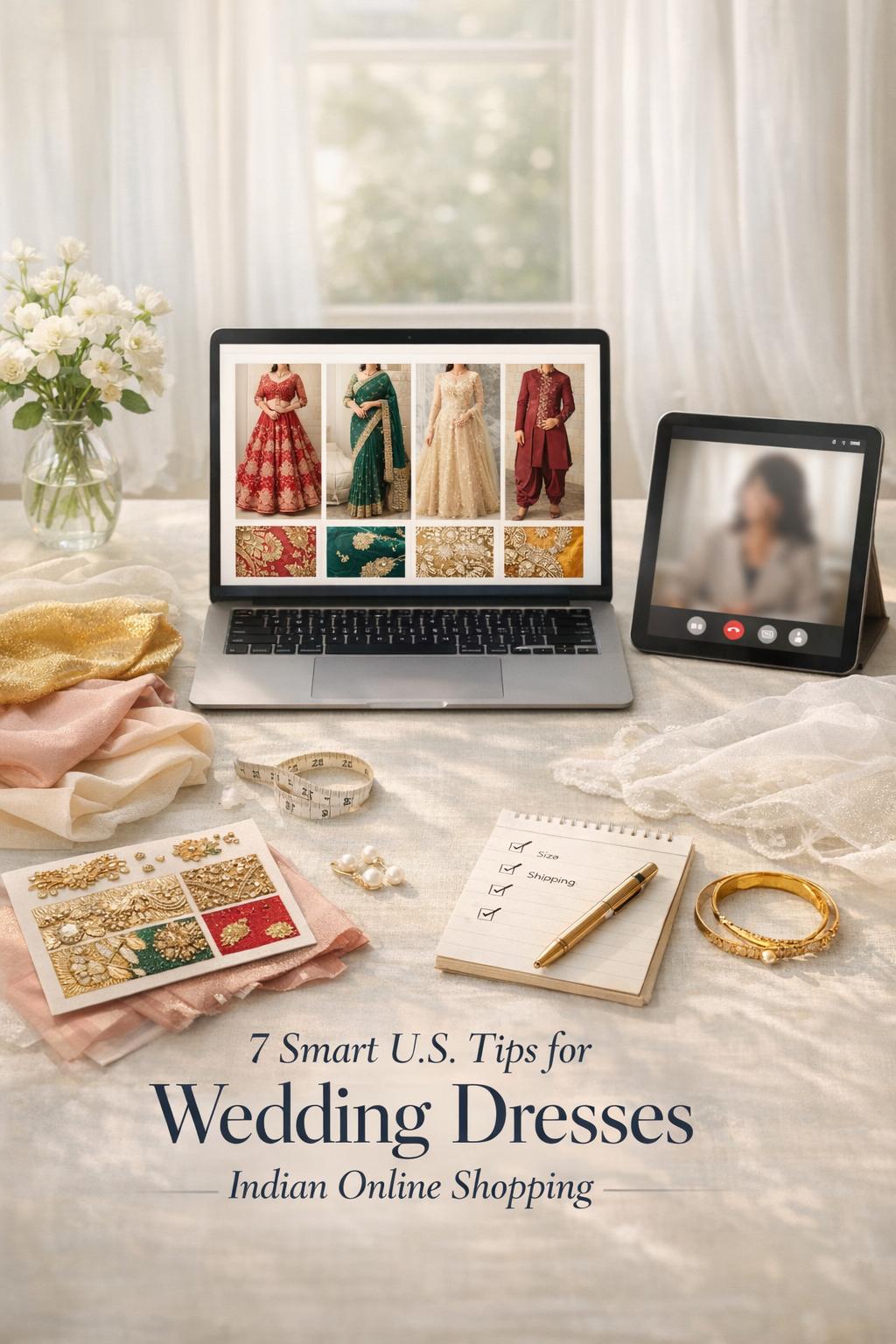
Event-by-Event Outfit Planner (Haldi to Reception)
A major gap in many shopping experiences is the lack of a clear event sequence plan. Indian weddings often include multiple events, and many retailers categorize outfits by those occasions—Haldi, Mehndi, Sangeet, Wedding, and Reception—because the styling expectations can shift from one event to the next. Using an event-by-event approach helps you avoid buying outfits that feel too heavy, too light, or repetitive across photos.
Haldi: choose ease, movement, and a look that feels celebratory
For a Haldi dress, comfort and movement matter. This is the kind of event where you’ll typically want an outfit you can wear confidently without constantly adjusting. Many shoppers look for lighter Indian wedding outfits here compared to the main ceremony, choosing designs that still feel festive but not overly formal.
Tip: When shopping for Haldi outfits online, prioritize clear photos and descriptions that help you gauge how wearable the look is over several hours. If you’re uncertain between two options, choose the one that seems easier to move in and less dependent on precise draping or heavy layering.
Mehndi: pick an outfit that photographs well and lasts all day
A Mehendi outfit often needs to work for long stretches of time, and shoppers frequently want a balance: detailed enough for photos, but comfortable enough to stay in. In U.S. catalogs, you’ll often find Mehndi categories under broader “wedding occasions,” making it easier to browse outfits intended specifically for this event.
- Lehengas with moderate detailing can feel festive without becoming heavy.
- Indo-Western styles can be a strong pick if you want a streamlined silhouette.
- If you choose a saree, focus on how manageable you expect the drape to be throughout the day.
Sangeet: prioritize impact, dance-ready comfort, and styling flexibility
Sangeet outfits tend to lean into statement-making style. This is where shoppers often explore bold lehengas, gowns, or Indo-Western looks that feel modern while still reading as Indian wedding attire. Many U.S.-targeted collections include a dedicated Sangeet section because demand is strong for outfits that look dramatic and move well.
Tip: If you’re shopping for a Sangeet lehenga color that stands out, remember that your comfort matters just as much as the look. Choose a silhouette and weight you can comfortably wear while sitting, walking, and moving for extended periods.
The wedding ceremony: the most formal moment in the wardrobe plan
The main ceremony is typically where brides invest most heavily, often choosing a bridal lehenga or bridal saree with elevated craftsmanship and a more formal finish. Guests and family may also choose their most traditional looks for this event. Since this is the moment with the highest photo volume and the most lasting memories, many shoppers lean toward outfits that feel unmistakably “wedding.”
Tip: If you’re buying a ceremony outfit online, make sure the listing provides enough detail to assess craftsmanship and finish. If the retailer offers a guided experience—such as video shopping or a structured customization workflow—use it for your ceremony outfit first.
Reception: a chance to switch silhouettes (or go Indo-Western)
The reception is where many shoppers choose a different silhouette, such as a gown or an Indo-Western wedding dress, especially if the ceremony look is heavier. U.S. collections often position gowns and fusion styles as reception-ready because they can feel sleek and modern while still aligning with Indian wedding aesthetics.
Tip: A reception outfit is a great place to optimize practicality. If your ceremony outfit is multi-piece and detailed, a reception gown or structured Indo-Western look can reduce styling complexity while still delivering a standout result.
Fabrics, Embroidery, and Craftsmanship: What to Look For Online
Many shoppers know what they want visually, but online buying requires you to translate photos into real-world expectations. That’s where fabric and embroidery cues matter. Retailers often describe their work in terms of fabric families and embellishment techniques, and learning those terms makes it easier to compare products across large catalogs.
Embroidery and embellishment terms you’ll see often
Indian wedding outfits frequently highlight craftsmanship through embroidery. In product descriptions, you’ll commonly see terms that point to the style and density of embellishment. While photos show the overall impact, the text clues can help you understand whether a look is subtle, balanced, or heavily ornate.
- Zari embroidery
- Zardozi
- Gota work
Tip: When comparing two outfits that look similar in photos, use the description language to judge which one is likely to feel more “bridal” versus more “guest-friendly.” If you’re unsure, pick the one whose craftsmanship details are explained more clearly—clarity usually signals a better buying experience.
Fabric families that shape comfort and drape
Fabric choice affects how an outfit drapes, how it moves, and how comfortable it feels during a long event. Many wedding outfits are listed with fabric names that indicate whether the piece is structured, flowy, lightweight, or layered. Even without touching the garment, you can often infer wearability by combining fabric cues with silhouette and the level of embellishment.
- Silk
- Georgette
- Net
- Chiffon
Tip: For multi-event weddings, try not to buy every outfit in the same “feel.” Mixing a more structured look with a more fluid one can help you stay comfortable while keeping your overall wardrobe varied across photos.
Budgeting for Indian Wedding Dresses in the U.S. (Without Guesswork)
Indian wedding wardrobes can range widely in price, and many U.S. shoppers want help aligning spending with what they actually get: fabric, embroidery density, and whether customization is included. A practical budget plan also helps you decide where to splurge (usually ceremony or reception) and where to go lighter (often Haldi or Mehndi).
Think in tiers: what changes as the price increases
Across retailers, the biggest differences between affordable Indian wedding dresses and higher-priced options usually show up in how elaborate the craftsmanship appears, how premium the overall finish feels, and how many service features are bundled into the purchase (like customization support or virtual shopping).
- Entry-level budgets often focus on ready-to-wear and lighter detailing for guests or smaller events.
- Mid-range budgets commonly balance statement design with manageable wearability and may include some customization options.
- Higher budgets are where shoppers often prioritize bridal wear with more intensive craftsmanship and a stronger customization workflow.
Sample budgeting approach for brides, bridesmaids, and guests
Instead of setting one number for every event, assign your budget based on impact and importance. Brides often allocate the most to the ceremony outfit, while guests may invest in one standout look and keep other event outfits simpler. This approach also reduces the risk of overspending early and feeling forced into compromises later.
Tip: If you’re buying multiple outfits, consider prioritizing service quality (clear sizing, shipping transparency, and return policies) for the most expensive purchase. A smoother experience on one major outfit often reduces stress across the entire shopping journey.
Real-World Inspiration: How to Use Trend and “Celebrity Look” Energy Without Guessing
Many shoppers look for inspiration that feels elevated—often described as celebrity- or influencer-inspired—without necessarily needing an exact match. The most practical way to apply inspiration is to identify the silhouette you love (lehenga, saree, gown, Indo-Western) and then replicate the level of detail and overall mood rather than chasing a single image.
Focus on what’s easiest to translate into an online purchase: the garment type, the overall balance of traditional and modern, and whether the look reads as bridal, bridesmaid, or guest. That keeps your shopping grounded in what retailers actually categorize and sell, especially in U.S.-facing catalogs where navigation by dress type and occasion is the clearest path to the right options.
Buyer’s Guide: Dos and Don’ts for U.S. Shoppers
Buying wedding dresses indian online can feel high-stakes, but most mistakes are preventable if you use the same checklist mindset retailers build into their best experiences: clear categories, clear service policies, and clear fit processes.
Do: use virtual shopping tools when they’re available
Some retailers offer video shopping, and some emphasize 3D-led design workflows for customization. If you’re unsure about silhouette, detailing level, or how an outfit might look on you, guided shopping can help you decide faster and reduce uncertainty—especially for bridal wear and for first-time buyers.
Do: plan fittings and alterations like part of the timeline
Even with accurate measurements, many buyers still prefer a final try-on window. Treat this as standard planning for ceremony outfits and any piece with a fitted blouse or structured bodice. A small time buffer can make the difference between feeling comfortable and feeling rushed.
Don’t: assume all “custom” experiences are the same
Customization can mean different things depending on the store: sizing adjustments, design modifications, or a fully custom-made outfit. Before ordering, clarify what the workflow includes and what it implies for returns. This is especially important when you’re comparing ready-to-wear plus size options with made-to-measure services.
Don’t: shop only by one event label—cross-check by dress type
Many catalogs label products by occasion, but dress type often tells you more about wearability and styling complexity. If you’re browsing “Mehndi outfits,” also cross-check the same product under lehenga, saree, gown, or Indo-Western categories so you can compare similar silhouettes and avoid buying something that doesn’t match your comfort expectations.
Tips for Building a Cohesive Multi-Event Wardrobe
When you need more than one outfit, planning matters as much as shopping. A cohesive wedding wardrobe feels intentional across events while still giving each look its own moment. The simplest way to do this is to vary silhouette, vary the level of embellishment, and keep your comfort needs realistic for each event.
Tip: If you want your photos to look distinct from one event to another, avoid choosing the same outfit type every time. For example, if you’re already committed to a bridal lehenga for the ceremony, consider a gown or Indo-Western look for the reception, and a lighter lehenga or manageable saree for Mehndi or Sangeet.
Tip: Make service quality part of your decision. If you’re ordering from the U.S., prioritize retailers that clearly communicate USA shipping, delivery expectations, and support options (like video shopping or structured customization). The most beautiful outfit is less helpful if the process feels uncertain.
FAQ
Do U.S. sizes translate directly to Indian wedding dress sizes?
Not always; many shoppers get better results by using measurements rather than relying on a familiar size label, especially for fitted pieces like blouses and structured bodices where precise fit matters.
What are the most common types of wedding dresses indian shoppers buy in the U.S.?
The most commonly featured categories across U.S.-facing stores are lehenga choli, sarees, gowns, and Indo-Western outfits, often organized by wedding events like Mehndi, Sangeet, Wedding, and Reception.
How do I decide between a lehenga vs gown for a wedding event?
Choose a lehenga if you want a classic multi-piece Indian wedding look with traditional styling, and choose a gown if you prefer a simpler single-piece silhouette that can still feel wedding-appropriate, especially for receptions or guest outfits.
Are there Indian wedding guest dresses available online for U.S. delivery?
Yes; many retailers offer Indian wedding guest dresses online USA with collections that include lehengas, anarkali-style options, gowns, and Indo-Western outfits, along with U.S.-oriented shipping and shopping support.
What should I look for if I want a bridal lehenga with customization?
Look for a clear customization workflow that explains how measurements are collected, what changes are allowed, whether design support is included, and what the policy implications are for returns or alterations.
Do any stores offer virtual help like video shopping or digital design tools?
Yes; some retailers promote video shopping for guided selection, and some custom-focused services emphasize digital-led design support such as 3D-based visualization as part of the customization process.
How should I plan outfits for Haldi, Mehndi, Sangeet, Wedding, and Reception?
A practical approach is to go lighter and more comfort-focused for Haldi and Mehndi, choose a more statement-ready outfit for Sangeet, reserve your most formal look for the wedding ceremony, and consider a gown or Indo-Western silhouette for the reception if you want a different feel.
What embroidery terms should I recognize when shopping online?
Common embellishment terms used in listings include zari embroidery, zardozi, and gota work, and recognizing them can help you compare the level of detailing across outfits.
What’s the safest way to manage timelines when ordering from the U.S.?
Start with your event dates, then choose ready-to-wear or customization accordingly, and build in time for a try-on and possible alterations—especially for bridal wear—while confirming shipping and policy details before you purchase.