7 Stunning Blue Wedding Dresses for Every U.S. Venue & Season
Blue Wedding Dresses: The Ultimate Guide to Shade, Silhouette, and Style for U.S. Brides
Blue wedding dresses have moved from “unexpected” to genuinely sought-after—showing up across major bridal retailers, boutique stylists, and inspiration roundups. Whether you’re dreaming of a whisper-soft powder blue wedding dress for a beach ceremony or a dramatic navy blue wedding dress for a formal winter celebration, blue offers a full spectrum of moods, silhouettes, and fabric effects. This guide pulls together the most useful, real-world considerations brides look for: how to choose the right shade, which silhouettes pair best with different aesthetics, what fabrics look most elevated in blue, how to coordinate accessories and décor, and how to shop confidently in the U.S.
Because interest spans both inspiration and purchasing, you’ll find practical guidance alongside idea-starters: “blue by season,” the most photographed shades (like dusty blue), and wardrobe coordination ideas that help you decide whether the bride, bridesmaids, or both should wear blue.
Why Choose Blue for Your Wedding Dress
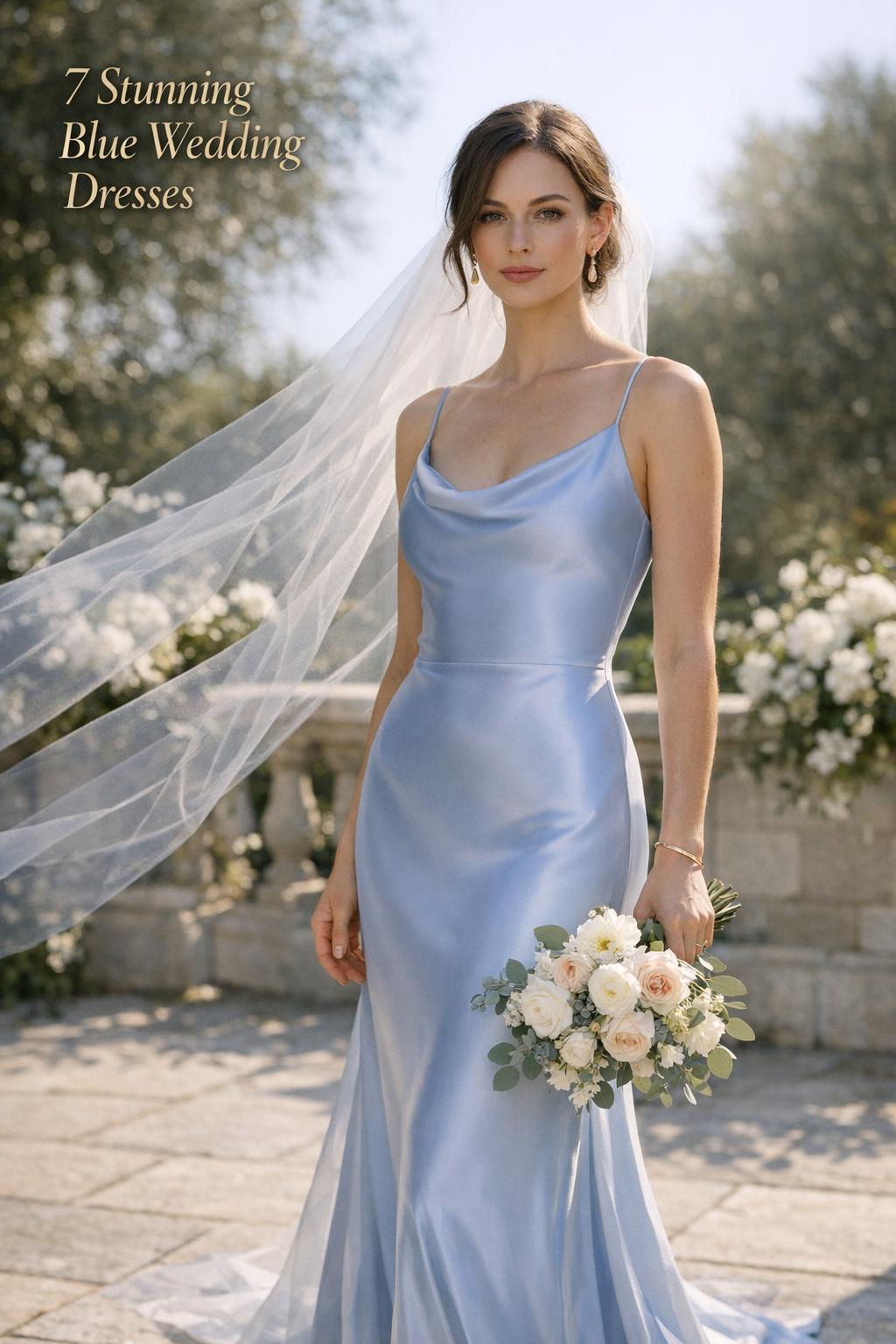
A blue wedding gown can feel romantic, modern, vintage-inspired, or strikingly formal—depending on the shade and styling. Brides gravitate toward blue because it’s versatile: pale tones can read airy and bridal, while deeper blues can feel sleek and fashion-forward. Blue also plays well with a wide range of venue styles, from garden ceremonies to black-tie ballrooms, and it pairs naturally with many popular wedding palettes.
Another reason blue resonates is how clearly it communicates your point of view. A blue dress can still feel “bridal,” but it also signals intention—whether that’s leaning into a fashion statement, honoring a favorite color, or simply choosing a hue that photographs beautifully with your chosen décor.
Tips: Decide What “Blue Bridal” Means to You
If you’re torn between subtle and bold, define your goal before you shop: do you want the dress to read almost-white from a distance (light blue and powder blue often do), or do you want unmistakable color (navy, midnight, and oceanic/teal blues)? Making that single decision early narrows your choices dramatically and helps you stay consistent with accessories, bridal party attire, and décor.
Shades of Blue: From Powder to Navy
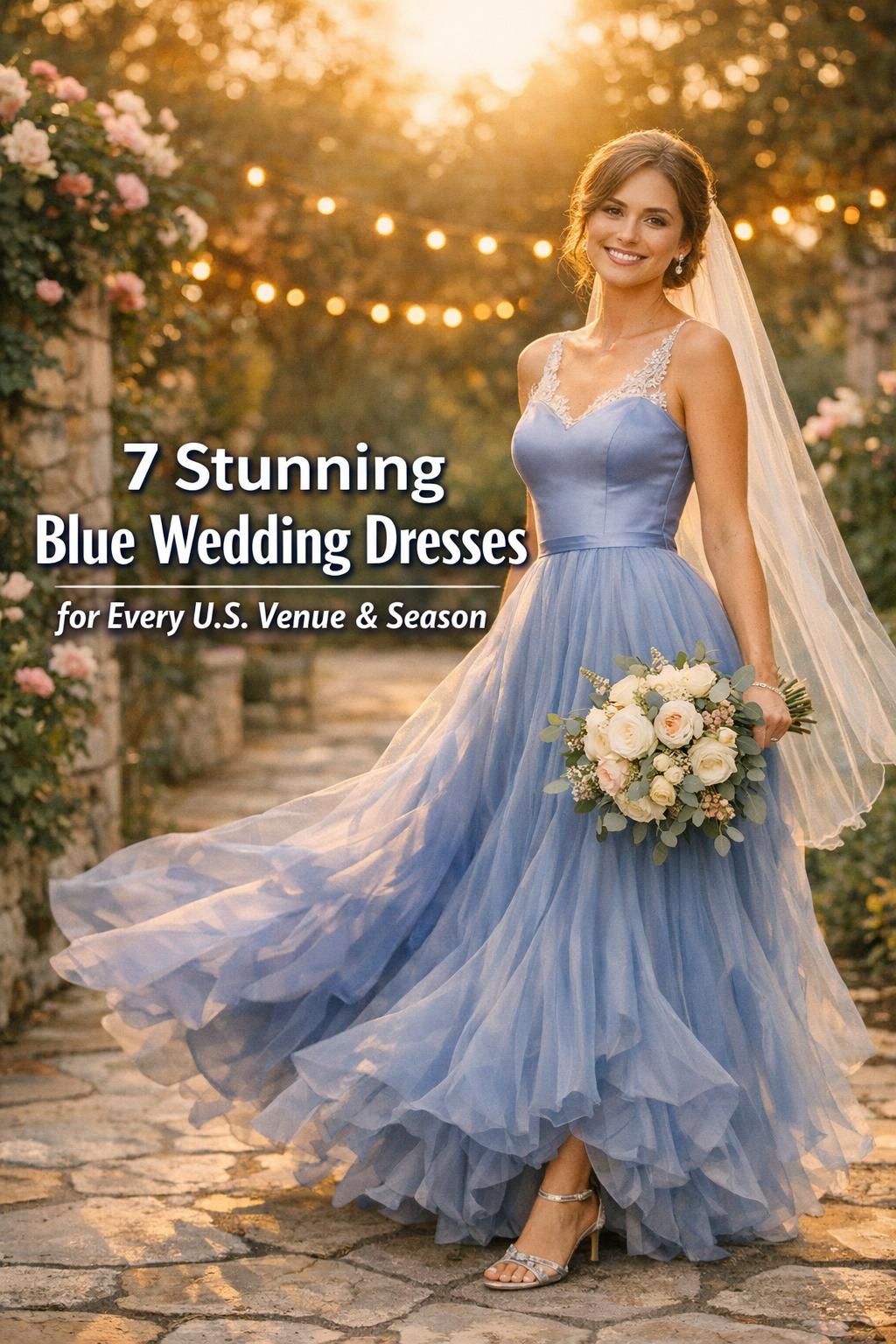
“Blue” is not one look—it’s a spectrum that changes with lighting, fabric, and styling. When you browse blue wedding dresses, you’ll commonly see shade families such as powder/light blue, sky/periwinkle, dusty/slate, midnight/navy, and more vivid oceanic or teal-leaning options. Each shade family creates a different impression and works especially well for certain seasons and aesthetics.
Powder Blue and Light Blue Wedding Dresses
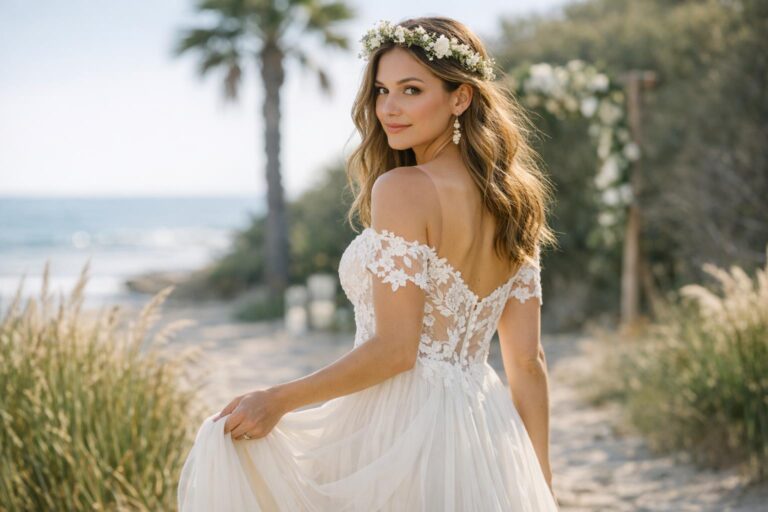
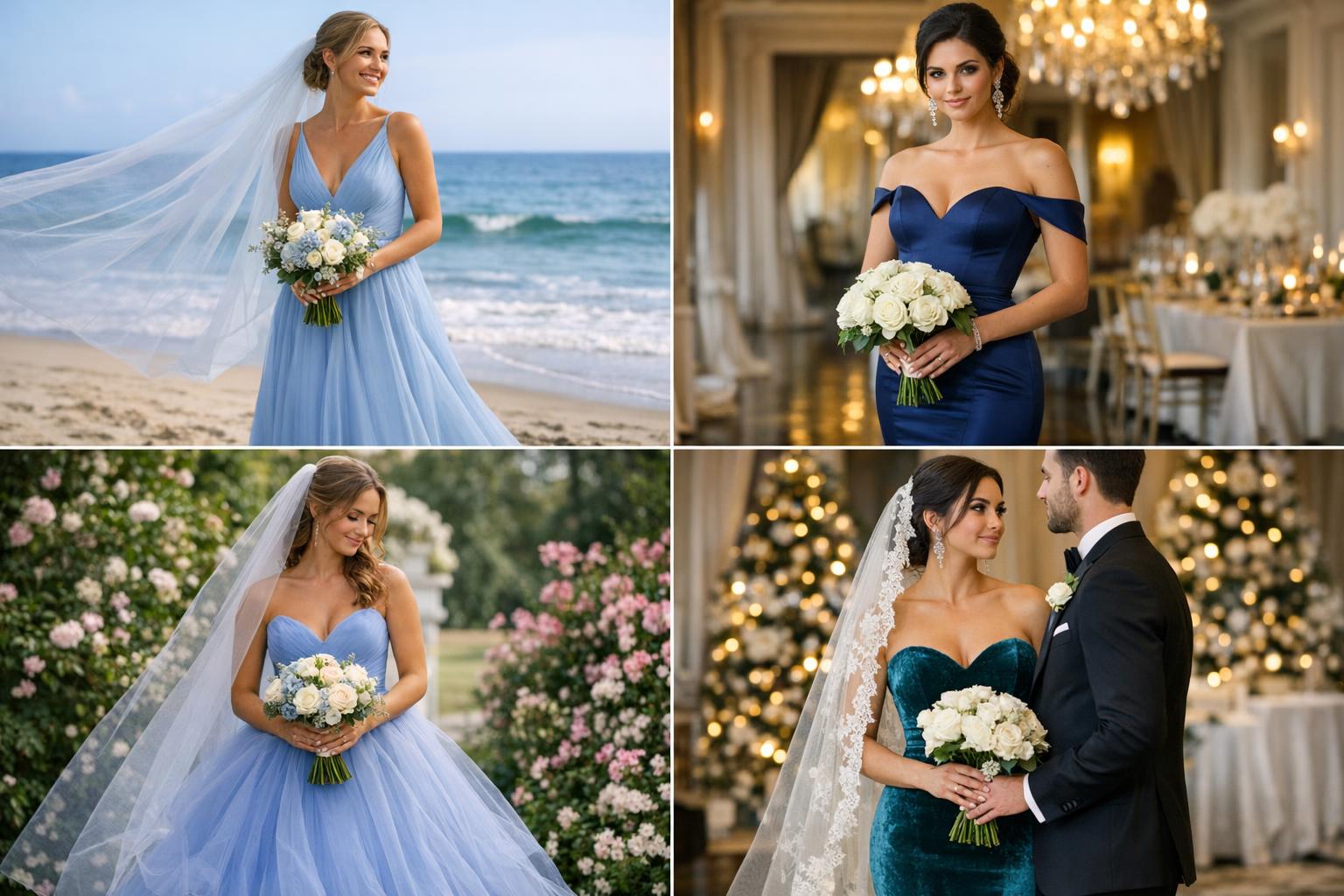
Powder blue wedding dresses and other light blue wedding dresses feel soft, airy, and gentle. They’re a natural fit for spring and beach settings, where the color can echo the sky and water while still reading delicate and bridal. In photos, these shades can look luminous—especially in fabrics that catch light with a smooth surface or layered translucence.
Light blue is also a strong choice if you want a nontraditional gown that still feels classic. The overall look depends heavily on fabric: light blue satin can feel sleek and formal, while light blue tulle or chiffon can feel ethereal and romantic.
Sky Blue and Periwinkle Wedding Dresses
Sky blue and periwinkle tones often feel fresh and romantic—ideal for garden weddings and outdoor ceremonies where greenery and natural light frame the look. These shades tend to read clearly as “blue” while remaining approachable and sweet, which makes them a favorite for brides who want color without going ultra-dark.
Because these hues sit between pastel and medium intensity, they pair well with both delicate details (like lace textures) and cleaner, minimalist lines (like sheath and column shapes). If you like the idea of a pastel blue wedding dress but want it to show more distinctly, this family is worth prioritizing.
Dusty Blue and Slate Blue Wedding Dresses
Dusty blue wedding dresses and slate-blue variations are popular for a reason: they photograph beautifully, feel slightly vintage-inspired, and blend effortlessly with many wedding themes. “Dusty blue” can read romantic and understated rather than loud, and it’s commonly featured across dress collections that include multiple lengths, fabric options, and styling directions.
Dusty and slate tones also coordinate naturally with wedding parties—especially if you want the bride and bridesmaids to share a cohesive palette without matching exactly. A dusty blue bride’s gown can be complemented by bridesmaids in nearby blues (or by mixing lighter and deeper shades for dimension).
Midnight Blue and Navy Blue Wedding Dresses
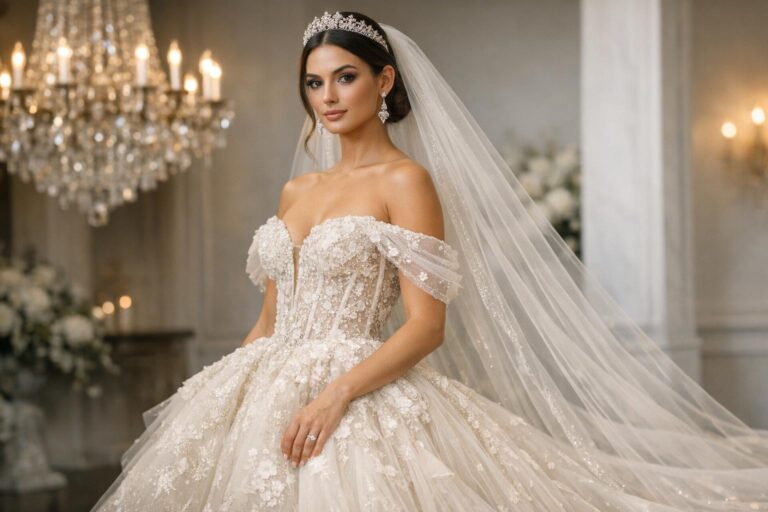
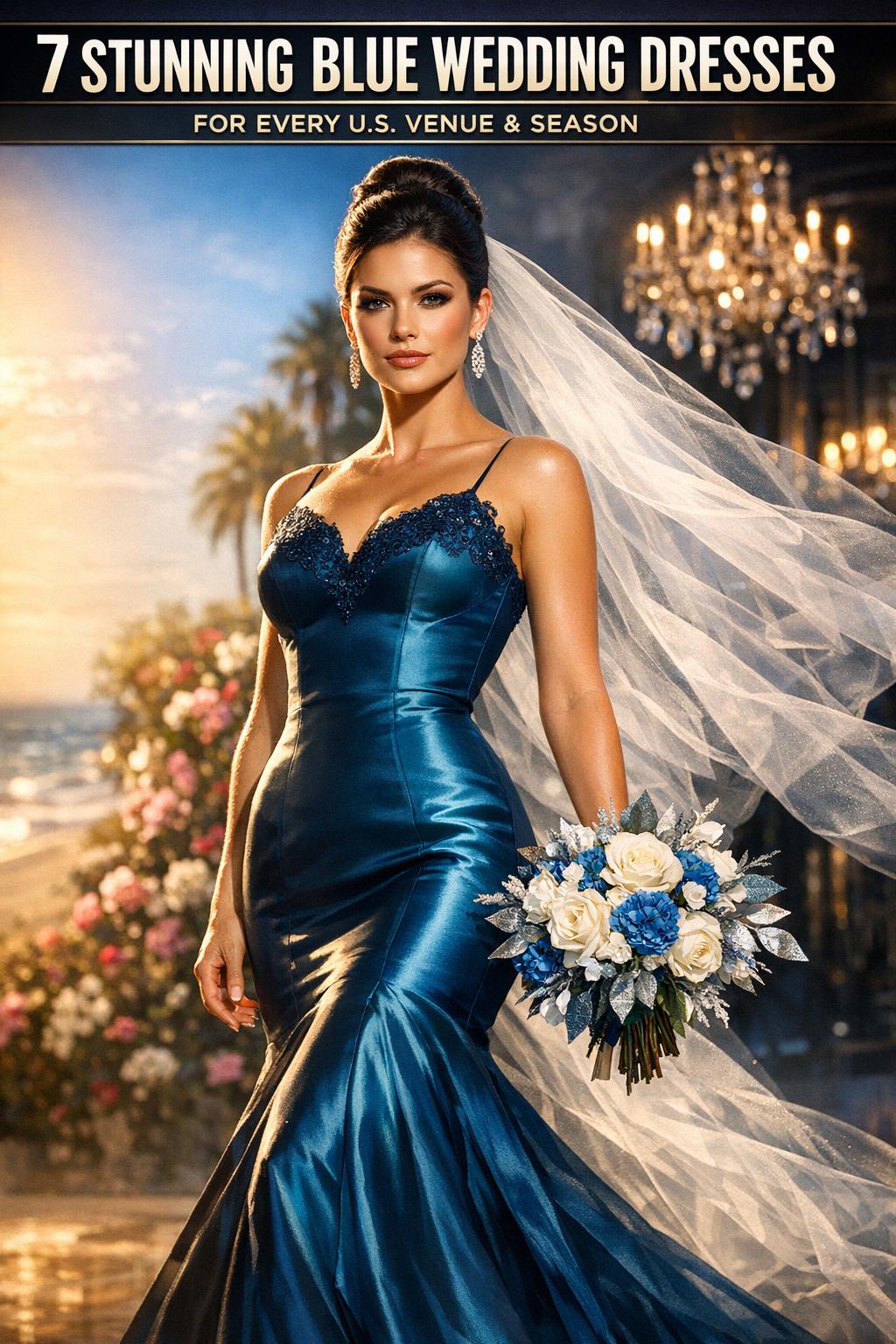
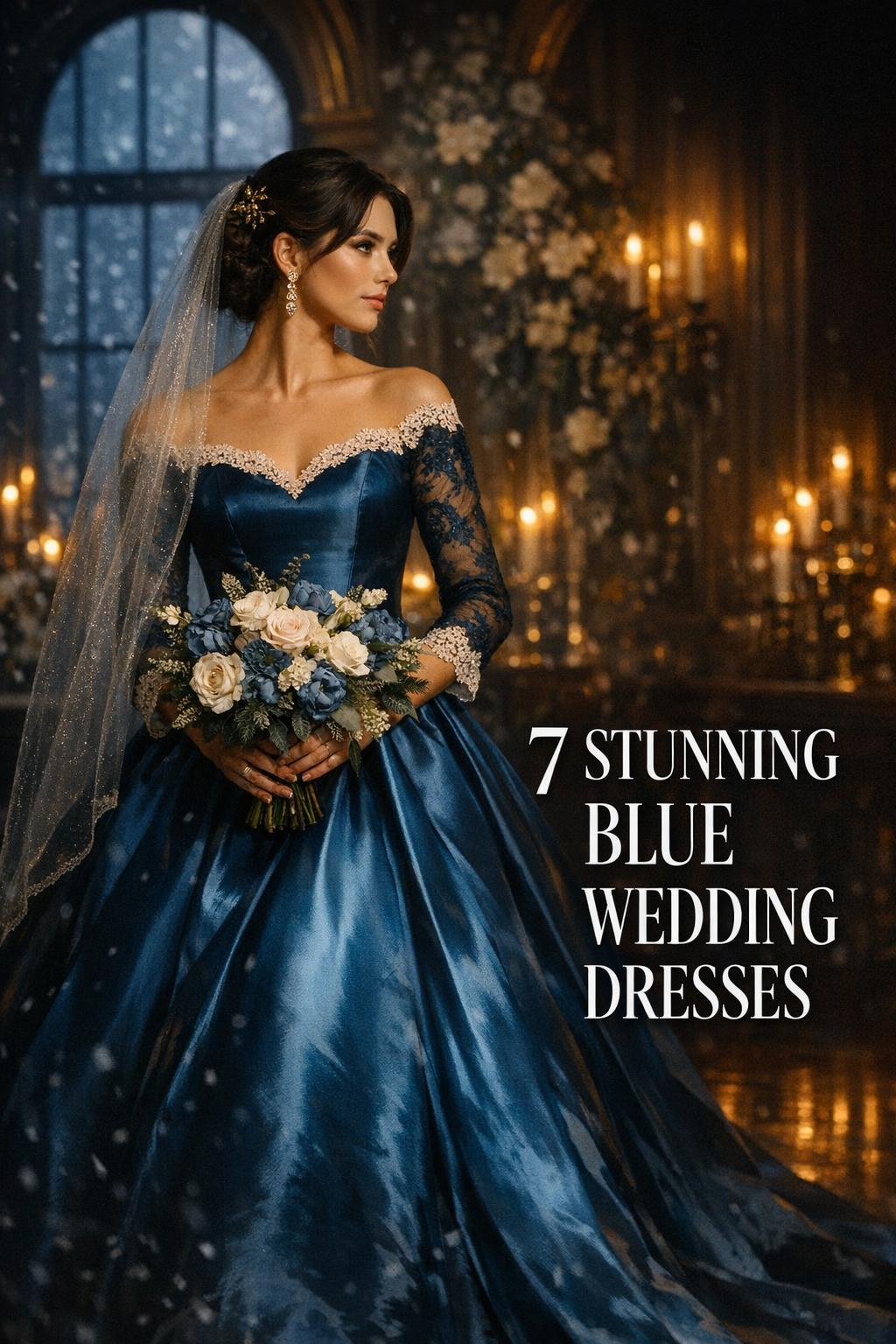
Midnight and navy blue wedding dress options are the most formal-looking part of the spectrum. They can feel dramatic, structured, and refined—especially in silhouettes like ball gowns, fit-and-flare styles, or sleek columns. Deep blues are a natural match for black-tie and evening celebrations, and they’re frequently suggested for winter weddings where richer tones feel seasonally appropriate.
In deep shades, details matter: a clean neckline or intentional draping can look architectural, while lace overlays and textured fabrics can soften the intensity and add romance. If you’re considering a navy wedding dress, it’s worth paying extra attention to fabric and lighting, because dark blues can read differently indoors versus outdoors.
Oceanic, Sapphire, and Teal-Blue Wedding Dresses
For brides who want color with a modern punch, oceanic and teal-blue wedding dress shades can feel bold and editorial. You may also see sapphire blue wedding dress searches when brides want a vivid, jewel-toned look. These hues can be striking in streamlined silhouettes, but they also bring unexpected drama to classic shapes like A-line and ball gown styles.
Because these shades draw the eye, they’re especially effective when you keep the rest of the styling focused: choose a clear metallic direction, keep accessories intentional rather than excessive, and let the dress remain the centerpiece.
Tips: Compare Shades in the Fabric You Want
The same shade name can look different across materials. If you’re choosing between blue satin wedding dress options and blue chiffon dress options, expect satin to look deeper and more reflective, while chiffon reads softer and more airy. When possible, narrow your choices to a shade family first, then compare that family across fabrics so you’re judging like-for-like.
Silhouette Spotlight: Which Cut Flatters Which Shape?
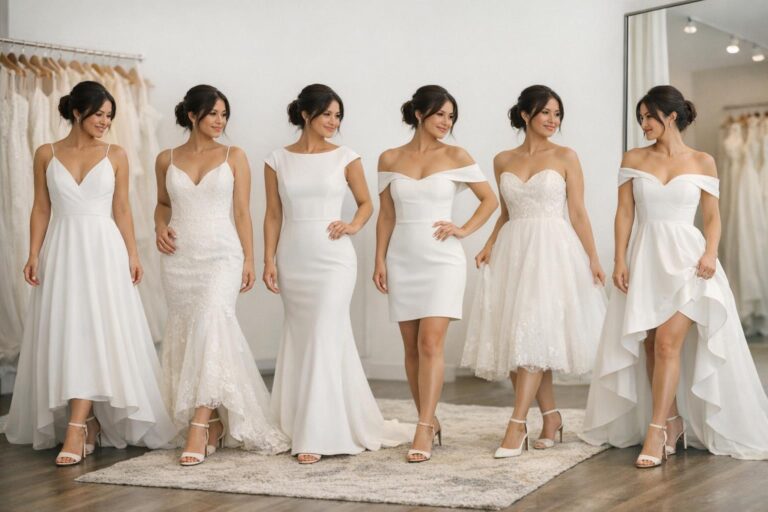
Once you’ve chosen a shade direction, silhouette becomes the biggest driver of how “bridal,” “fashion,” or “romantic” your look feels. Many collections and roundups highlight staples like A-line, mermaid, ball gown, off-shoulder, and minimalist sheath styles. The key is matching the structure of the dress to your comfort level, venue, and overall aesthetic.
A-Line and Ball Gown for Fairytales
A blue A-line wedding dress is one of the easiest ways to wear color while keeping a timeless bridal silhouette. A-line shapes create movement and balance, and they adapt to many venues—from gardens to classic indoor ceremonies. If you want extra drama and a more formal presence, a blue ball gown wedding dress amplifies the color impact and creates a statement that’s unmistakably “main character.”
In pale blues, these silhouettes can feel dreamy and light; in navy or midnight, they can feel regal and high-impact. For brides who want color without sacrificing tradition, A-line and ball gown shapes are often the most intuitive starting point.
Mermaid and Fit-and-Flare for Dramatic Elegance
If you’re drawn to a sleek, sculpted look, a blue mermaid wedding dress or fit-and-flare silhouette can be especially striking. These shapes emphasize line and movement, and the color can enhance the effect—particularly in darker blues where the dress reads polished and intentional. Mermaid and fit-and-flare styles often pair well with simpler accessories, letting the cut and color do the work.
When choosing these silhouettes, prioritize comfort and mobility, especially if your day includes extended standing, dancing, or outdoor terrain. The most memorable look is the one you can wear with confidence for hours.
Sheath and Column for Minimalist Modernity
A sheath or column blue wedding gown reads modern and clean. These silhouettes can look effortless in sky, periwinkle, or dusty tones, and sophisticated in midnight/navy. If your vision leans minimalist, consider keeping the shape simple while using fabric texture—like lace detailing or a smooth satin finish—to add dimension without cluttering the look.
Because these cuts are often more streamlined, pay attention to tailoring and alterations so the dress sits smoothly through the bodice and hips. In blue, clean lines can look especially crisp in photos.
Tips: Use Necklines and Sleeves to Balance the Color
Color intensity can feel more or less bold depending on how much fabric is present. If you’re nervous about a deep shade, consider a neckline or sleeve style that introduces openness—like off-shoulder or a more open bodice shape—so the overall look feels balanced rather than heavy. If you want the color to feel richer, choose a silhouette with more fabric volume or a more structured bodice.
Fabrics and Textures That Shine in Blue
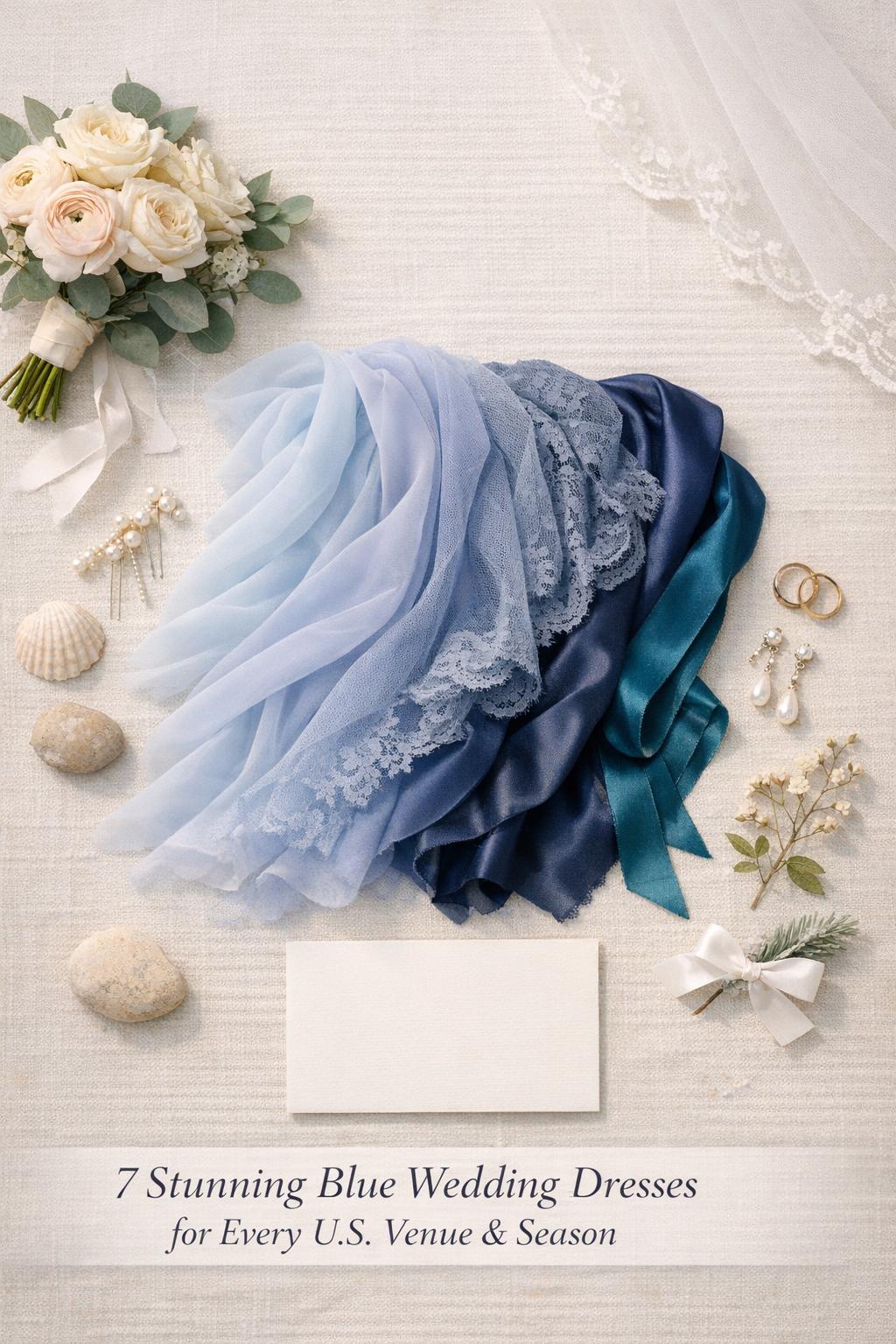
Fabric choice determines how blue reads in real life and in photography. Many popular dress pages and collections highlight materials like satin, chiffon, tulle, and lace—each producing a different “blue effect.” Before you commit, decide whether you want your dress to look glossy and saturated, soft and airy, or textured and dimensional.
Satin: Sleek, Reflective, and Formal
A blue satin wedding dress tends to look polished and elevated, with light reflecting across the surface. Satin can make darker shades like navy and midnight appear especially rich. It’s also a strong option for structured silhouettes where you want clean lines and a refined finish.
Chiffon: Airy Movement and Soft Color
A blue chiffon dress (including bridesmaid and bridal-adjacent styles) often reads romantic and weightless. Chiffon is associated with movement, which can be beautiful in outdoor settings and in photos where the dress catches a breeze. In dusty blue, chiffon can look gentle and vintage-inspired; in lighter blues, it can feel almost cloudlike.
Tulle: Dreamy Volume and Layered Dimension
Tulle brings softness and volume, making it a natural match for A-line and ball gown silhouettes. Layering can create depth in color—especially in pale blues that might otherwise read very subtle. If you love a fairytale feel, tulle helps keep even a colorful gown feeling light and bridal.
Lace: Texture, Romance, and Detail
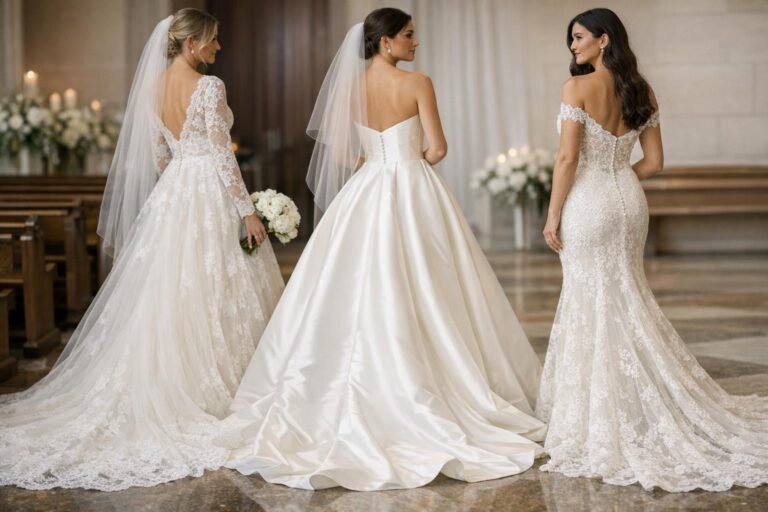
Blue lace dresses can lean romantic, vintage, or even modern depending on the pattern and placement. Lace adds texture that breaks up solid color and can make a blue wedding gown feel more traditionally “bridal” through detail work rather than through color alone. Lace also pairs well with dusty, slate, and periwinkle tones for a soft, dimensional look.
Tips: Choose Texture Based on Your Venue and Photos
If your venue is visually complex (lush gardens, ornate interiors), consider a cleaner fabric like satin so the gown doesn’t compete with the background. If your venue is visually simple (minimalist space, beach horizon), lace or layered tulle can add interest and texture that reads beautifully in pictures.
Blue by Season: A Practical Way to Narrow Your Options
Many brides search by occasion and season—looking for a blue wedding dress for winter, a beach-friendly blue gown, or a spring garden look. Using a seasonal filter can help you choose a shade depth and fabric weight that feels cohesive with your setting, without locking you into one strict “rule.”
Winter Blues: Midnight and Navy for Formal Celebrations
For winter weddings, deeper blues like midnight and navy often feel intentional and dressy. Pairing these shades with a structured silhouette, or selecting a fabric that looks refined (like satin), can create a strong, formal impression. If you want the look to feel romantic rather than severe, incorporate texture through lace or a softer overlay.
Spring Gardens: Sky, Periwinkle, and Dusty Blue Romance
Spring garden weddings naturally complement fresh blues. Sky and periwinkle feel bright and romantic, while dusty blue offers a softer, more vintage-inspired tone that coordinates easily with florals and greenery. Chiffon and lace often look particularly at home in this season, emphasizing movement and texture.
Summer Beaches: Powder and Light Blue for Airy Ease
For beach ceremonies, powder blue and light blue can feel effortless and breezy. If you’re planning for sun and wind, consider fabrics that move well and don’t feel overly heavy. Light blues can also blend beautifully with natural scenery, making the overall look cohesive without requiring elaborate décor to “match” the dress.
Tips: Keep One Element Constant Across Season and Shade
If you’re choosing between two seasons or two venues, keep one anchor consistent—either the silhouette or the shade family. For example, decide you want an A-line no matter what, then test it in dusty versus navy; or decide you want dusty blue no matter what, then test it in sheath versus ball gown. This prevents decision fatigue while still giving you meaningful options.
Bride vs. Bridal Party: How to Use Blue Without Blurring Roles
Blue is widely used for bridesmaid dresses, which raises a common styling question: if the bride wears blue, what should the bridal party wear? The good news is that blue is flexible—so you can design contrast or cohesion depending on your preference. The key is making sure the bride’s look remains clearly intentional and distinct from the bridesmaids’ look.
If you love the idea of blue bridesmaid dresses but also want a blue gown, consider separating the looks by shade depth (bride in a lighter or more vivid hue, bridesmaids in dusty or navy) or by fabric and silhouette (bride in lace or satin with a distinctive cut; bridesmaids in simpler chiffon styles).
- High contrast approach: Bride in navy or sapphire; bridesmaids in pale blues or mixed light blues.
- Soft contrast approach: Bride in powder or sky; bridesmaids in dusty blue or slate blue.
- Texture approach: Keep everyone in the same general blue family, but make the bride’s fabric clearly different (for example, more detailed lace or a higher-shine satin effect).
- Silhouette approach: Keep bridesmaids in simpler, consistent silhouettes while the bride wears a statement cut (ball gown, dramatic mermaid, or striking off-shoulder).
Tips: Decide Whether You Want Matching or “Mixed Blue”
Many collections make it easy to shop by blue shade family—dusty blue, navy, sky—so you can choose a single shade for uniformity or blend several related blues for a dimensional “mixed blue” look. If you love the mixed look, keep the undertone consistent (soft and muted together, or bold and saturated together) so the overall bridal party still feels cohesive.
Accessories and Color Coordination
Styling a blue wedding dress is largely about thoughtful coordination. Many dress pages and editorial roundups highlight how accessories can either soften blue into a romantic bridal look or sharpen it into a modern statement. Start by choosing the role you want accessories to play: supporting and subtle, or intentionally bold.
Veils, Jewelry, and Shoes that Complement Blue
Accessories for blue wedding dresses work best when they echo one element of the gown—its formality, its softness, or its texture. If your gown is sleek (especially in satin), clean and refined accessories often feel aligned. If your gown is textured (lace, layered tulle), you can choose simpler accessories so the dress remains the focal point.
- For pale blues: Keep accessories light and delicate to preserve the airy effect, or choose a slightly stronger statement piece if the dress is very subtle in tone.
- For dusty/slate blues: Lean into vintage-inspired softness with understated jewelry and cohesive textures.
- For navy/midnight: Consider streamlined accessories that match the gown’s formality and keep the overall look polished.
- For oceanic/teal blues: Choose fewer, more intentional pieces so the color reads as the centerpiece.
Bouquets and Décor Harmony
Your bouquet and décor can either mirror the dress (for a cohesive palette) or create contrast (to spotlight the gown). Dusty blues often blend well with soft, romantic décor choices, while deeper navy and midnight blues can feel dramatic and formal. If your décor already includes blue elements—like bridesmaid dresses or table details—consider using your bouquet to bridge your gown’s shade with the rest of the palette so nothing feels disconnected.
Tips: Build a “Starter Kit” for Coordinating Blue
Before you finalize purchases, create a simple set of references you can show to your stylist, florist, or bridal party: a photo of your dress shade, your preferred metallic direction, and one or two accent colors you plan to repeat. This keeps accessories, bouquet choices, and décor decisions aligned—especially helpful when blue appears in multiple places (gown, bridesmaids, or guest attire).
How to Buy Blue Wedding Dresses in the U.S.: Budget, Retailers, and What to Look For
Shopping for blue wedding gowns typically falls into two pathways: dedicated product catalogs that let you filter by color family (including multiple blue shades), and editorial galleries that help you compare styles and price ranges while linking out to retailers. Using both approaches can be powerful: start with inspiration to clarify your direction, then move into catalogs to confirm availability in your size, preferred fabric, and silhouette.
Where Blue Options Commonly Show Up
In the U.S., blue wedding dresses appear across large retailers with extensive color filters and reviews, as well as brand collections that emphasize certain trending shade families like dusty blue. You’ll also see product-feature pages that spotlight a single dress (often with fit notes and styling suggestions), which can be helpful when you want specifics rather than a broad gallery.
- Color-filtered catalogs: Useful for comparing many silhouettes (A-line, mermaid, ball gown, off-shoulder) and multiple blue shade families in one place, often with size guidance and reviews.
- Curated roundups: Helpful for quick comparisons, editor-style picks, and finding a range of retailers and budgets.
- Brand collections focused on a shade: Especially helpful if you already know you want a specific tone such as dusty blue, and you want to see fabric and length variations.
Budget Strategy: Under $299, Mid-Range, and Designer
Blue wedding dress shopping often spans a wide range of budgets, and many “best of” guides group options by price point to help you evaluate value. If you’re shopping under $299, focus on streamlined silhouettes and fabrics that look elevated without needing heavy embellishment. In the $300–$1000 range, you can often prioritize fabric quality, detailing, and broader silhouette selection. For designer and luxury picks, you’ll typically be paying for premium construction, distinctive design details, and boutique-level styling support.
Rentals, Borrowing, and Budget-Conscious Alternatives
If you love the concept of a blue wedding gown but want to stay budget-conscious, consider alternatives like rental or borrowing within your community. This can be especially appealing for bold, high-impact colors you may not rewear. If you go this route, prioritize timing: you’ll want enough lead time for any necessary alterations and to ensure the color matches your overall palette under your venue’s lighting.
Tips: Use Reviews and Fit Notes to Reduce Risk
When shopping online, prioritize listings with robust size guidance, fit descriptions, and customer reviews—especially for fabrics like satin and chiffon that can behave differently across cuts. A blue gown’s color depth can also shift in photos, so look for multiple images and descriptions that clarify whether the shade is powder, sky, dusty, or navy-leaning.
Real-World Inspiration: Bringing Blue to Life
Inspiration galleries frequently highlight how diverse blue can be: pale blues for soft romance, dusty blues for a vintage tone, and deep blues for dramatic elegance. The most helpful way to use inspiration is to identify patterns in what you’re saving. If you keep bookmarking off-shoulder dusty blue dresses, that’s a direction. If all your favorites are navy satin columns, that’s also a direction.
Try to translate inspiration into a simple “formula” you can shop: shade family + silhouette + fabric. For example: dusty blue + A-line + lace, or midnight + fit-and-flare + satin. This turns a sea of options into a focused shortlist.
Tips: Make a One-Page Decision Sheet Before You Order
Write down your non-negotiables (shade family, silhouette comfort, fabric feel) and your nice-to-haves (sleeve style, level of detail). This helps you avoid buying a beautiful blue wedding dress that doesn’t match your venue, season, or comfort needs once the excitement of the color wears off.
Care, Alterations, and Peace of Mind for Blue Gowns
Blue fabrics can be stunning, but they deserve practical planning—especially when the material is delicate or the shade is deep and saturated. Alterations are often part of bridal shopping, and planning for them early helps you protect the fit and finish of your gown. If your dress includes details like lace overlays, layered tulle, or a structured satin bodice, consider how changes will affect the overall look and how the color appears across seams and hems.
Alteration Tips for Blue Wedding Dresses
Schedule alterations with enough time for multiple fittings, especially if your gown has a complex silhouette like mermaid or a layered skirt. Blue shades can draw attention to lines and structure, so precise tailoring matters. If your dress has multiple layers (like tulle), ask how hemming will affect the color gradient and movement so the finished look remains intentional.
Fabric Care Basics (Especially for Satin and Chiffon)
Handle delicate fabrics thoughtfully: avoid unnecessary friction, store the gown carefully, and keep it protected from makeup or spray products during getting-ready time. If you’re wearing a deep navy or midnight gown, be especially mindful that surface marks may show differently depending on fabric sheen and lighting.
Insurance and Practical Safeguards
If your blue wedding gown is a significant purchase, consider simple safeguards that protect your investment: keep documentation, confirm timelines for alterations, and plan how the gown will be transported and stored before the wedding. Peace of mind matters, and a little logistics planning can prevent last-minute stress.
Tips: Do a “Full Look” Test Under Similar Lighting
Blue can shift under different lighting conditions. Before the wedding, try your full look—dress, accessories, and bouquet direction—under lighting similar to your ceremony space (bright daylight, warm indoor light, or evening lighting). This helps confirm that the shade reads the way you want and that accessories complement rather than compete.
FAQ
Which blue shade is best for my skin tone?
The most reliable approach is to compare a few shade families (powder/light, sky/periwinkle, dusty/slate, and navy/midnight) in the fabric you want, because material changes how the color reads near your face; if you want the safest starting point, dusty blue and other softened tones are often easier to wear and style while still clearly reading as blue.
Can I wear blue as a bride?
Yes—blue wedding dresses are widely accepted as a bridal choice, and you can make the look feel distinctly bridal through classic silhouettes (like A-line or ball gown), bridal fabrics (like lace or layered tulle), and cohesive styling with accessories and décor.
What’s the difference between dusty blue, powder blue, and navy?
Powder blue is very light and airy, dusty blue is softened and muted with a vintage-inspired feel that photographs beautifully, and navy (or midnight) is deep and formal; choosing between them usually comes down to how bold you want the color to read and how formal your overall wedding style is.
What silhouettes are most popular for blue wedding gowns?
Commonly featured silhouettes include A-line, mermaid, ball gown, off-shoulder styles, and minimalist sheath/column shapes; A-line and ball gown often feel the most traditionally bridal, while mermaid and sheath styles can look especially striking in deeper blues.
What fabrics look best in blue wedding dresses?
Satin tends to look sleek and formal with richer color payoff, chiffon reads soft and romantic with lots of movement, tulle creates dreamy layered dimension (especially in pale blues), and lace adds texture that can make blue feel more classically bridal.
How do I coordinate a blue wedding dress with bridesmaids in blue?
Create separation through shade depth, texture, or silhouette—such as a bride in a lighter or more vivid blue while bridesmaids wear dusty or navy, or keeping everyone in a similar shade family but giving the bride distinctive fabric detail and a more statement silhouette.
Are blue wedding dresses good for winter weddings?
They can be an excellent fit, especially deeper shades like midnight and navy that feel formal and seasonally appropriate; pairing them with refined fabrics like satin or adding texture through lace can help you control whether the look feels sleek, romantic, or dramatic.
What venues suit blue gowns best?
Blue can work across many venues, but the shade and fabric help determine the strongest match: light blues often feel natural for beach settings, sky/periwinkle and dusty tones complement garden venues, and navy/midnight can look especially polished for formal indoor spaces.
How can I reduce risk when buying a blue wedding dress online?
Focus on listings with detailed fit guidance, multiple images, and customer reviews, and try to confirm your shade family (powder, sky, dusty, navy) before ordering; once it arrives, plan alterations early and do a full-look test in lighting similar to your venue so the color and styling meet your expectations.