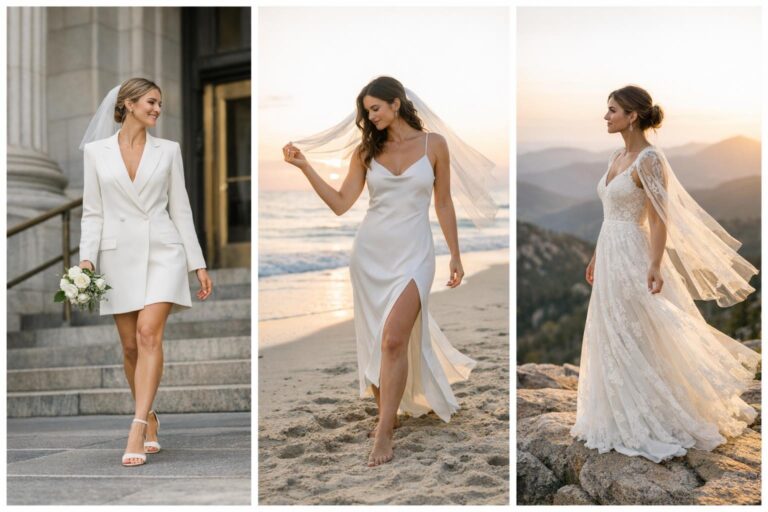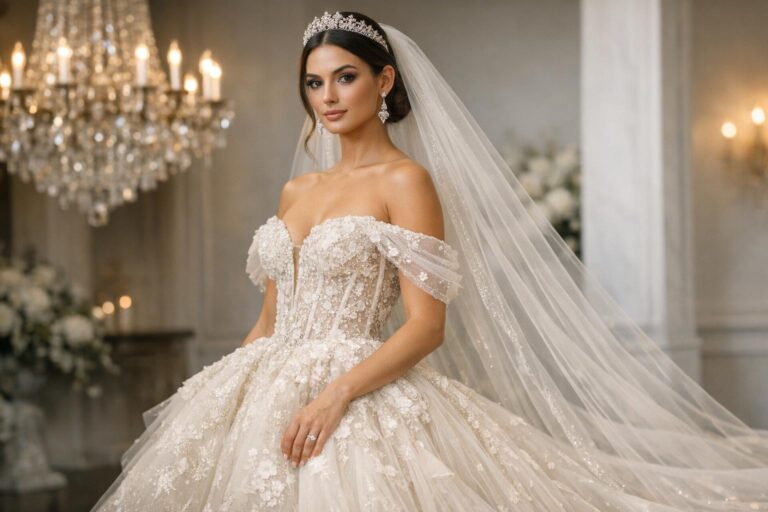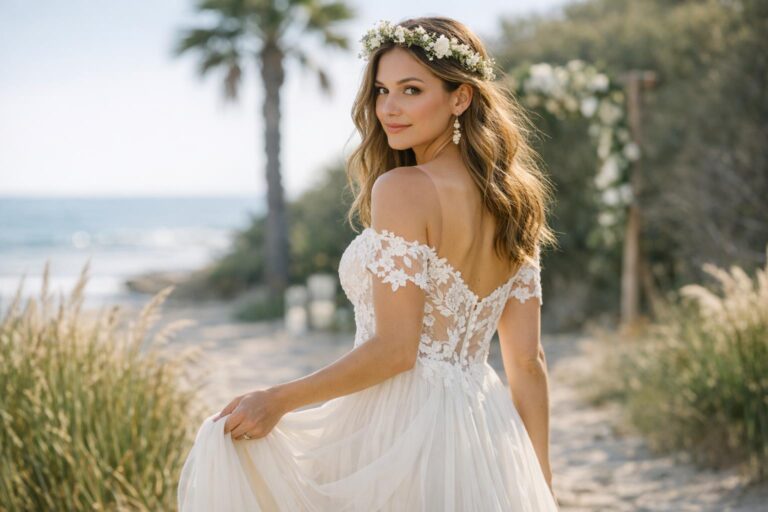
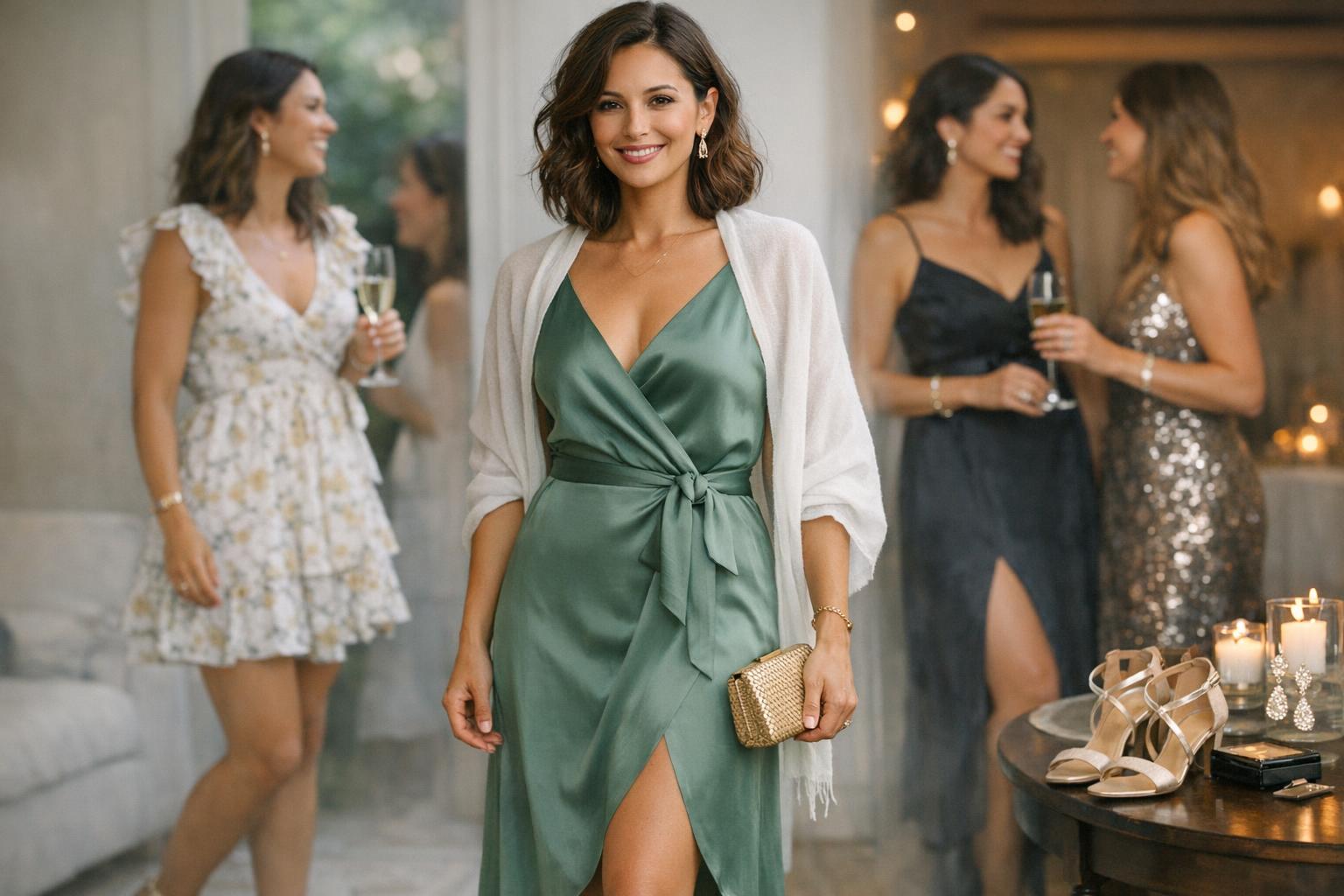
7 Wedding Function Dresses for Every US Wedding Event
Wedding Function Dresses: How to Choose the Right Outfit for Every Celebration
Wedding function dresses are a go-to choice for guests who want to look polished across multiple events—from a relaxed daytime gathering to a formal evening celebration. The challenge is that “wedding function” can mean different dress codes, venues, and vibes, sometimes all in the same weekend. This guide breaks down how to select a dress that fits the function, respects the couple’s tone, and still feels like you.
You’ll find practical ways to match formality, choose silhouettes and fabrics that suit the setting, style your look with accessories, and plan outfits for multiple events without overpacking. The goal is simple: feel confident, appropriate, and comfortable at every wedding function you attend.
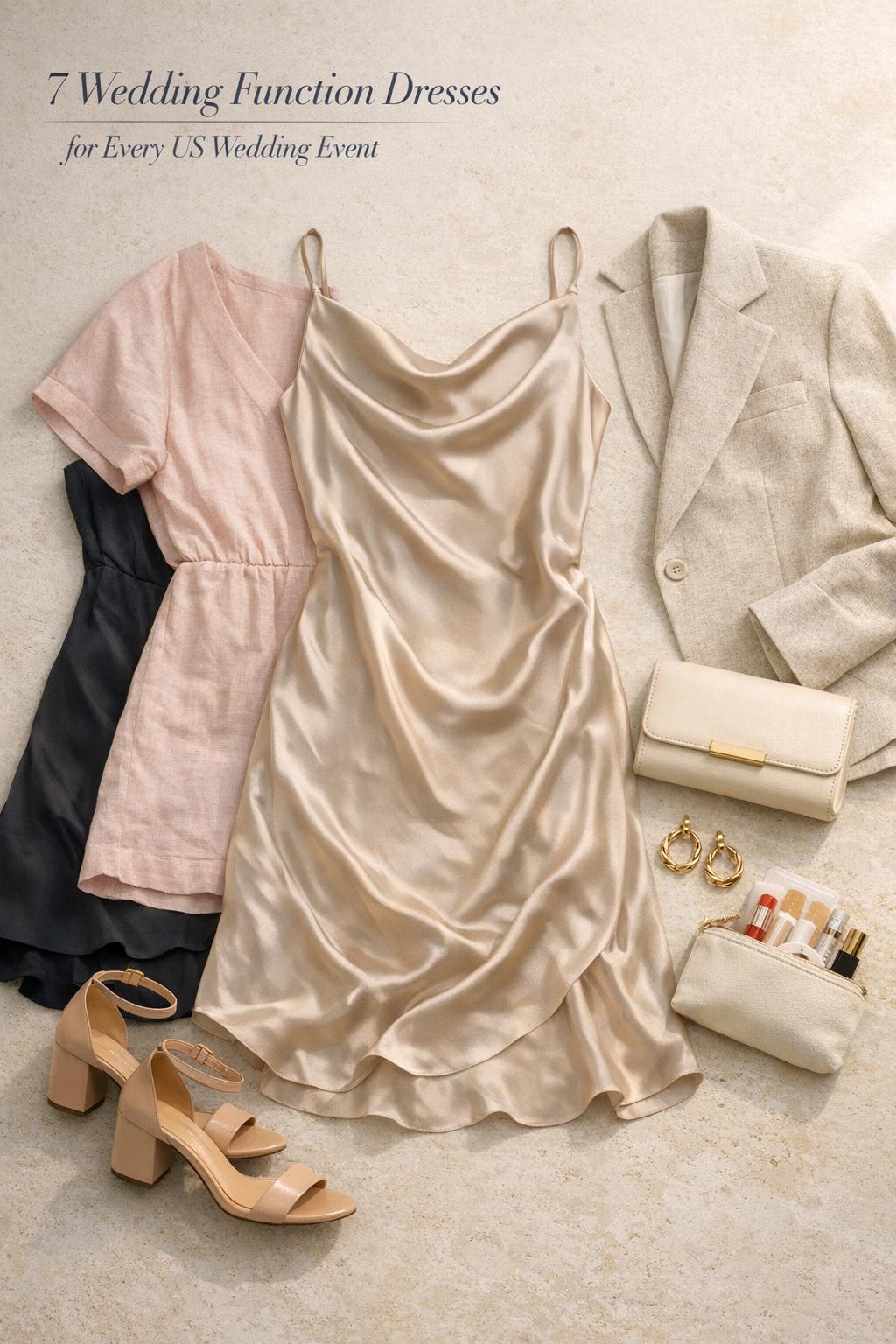
Start With the Dress Code (Even When It’s Not Clearly Stated)
The fastest way to narrow down wedding function dresses is to identify the expected formality. If the invitation includes a dress code, follow it closely. If it doesn’t, use the venue, time of day, and event type as your guide. A daytime garden celebration typically calls for lighter colors and easier silhouettes, while an evening event at a formal venue usually leans dressier in fabric and finish.
How to interpret common wedding formality levels
Think of formality as a spectrum. “Casual” still looks intentional, “cocktail” is elevated but not full-length by default, and “formal” often asks for more structure, richer fabric, or longer hemlines. When in doubt, err slightly more polished rather than underdressed, especially for evening functions.
- Casual or daytime: simple midi dresses, airy materials, understated accessories
- Dressy casual: refined prints, better drape, elevated shoes and bag
- Cocktail: knee-length to midi, tailored shapes, statement jewelry
- Formal: floor-length or elevated midi, luxe texture, structured styling
Tip: When the dress code is vague, match the location
If the invite only lists a venue, let it do the talking. A hotel ballroom points to cocktail or formal; a beach or backyard suggests lighter fabrics and practical footwear. Your dress should look like it belongs in the photos taken there—without competing with the wedding party.
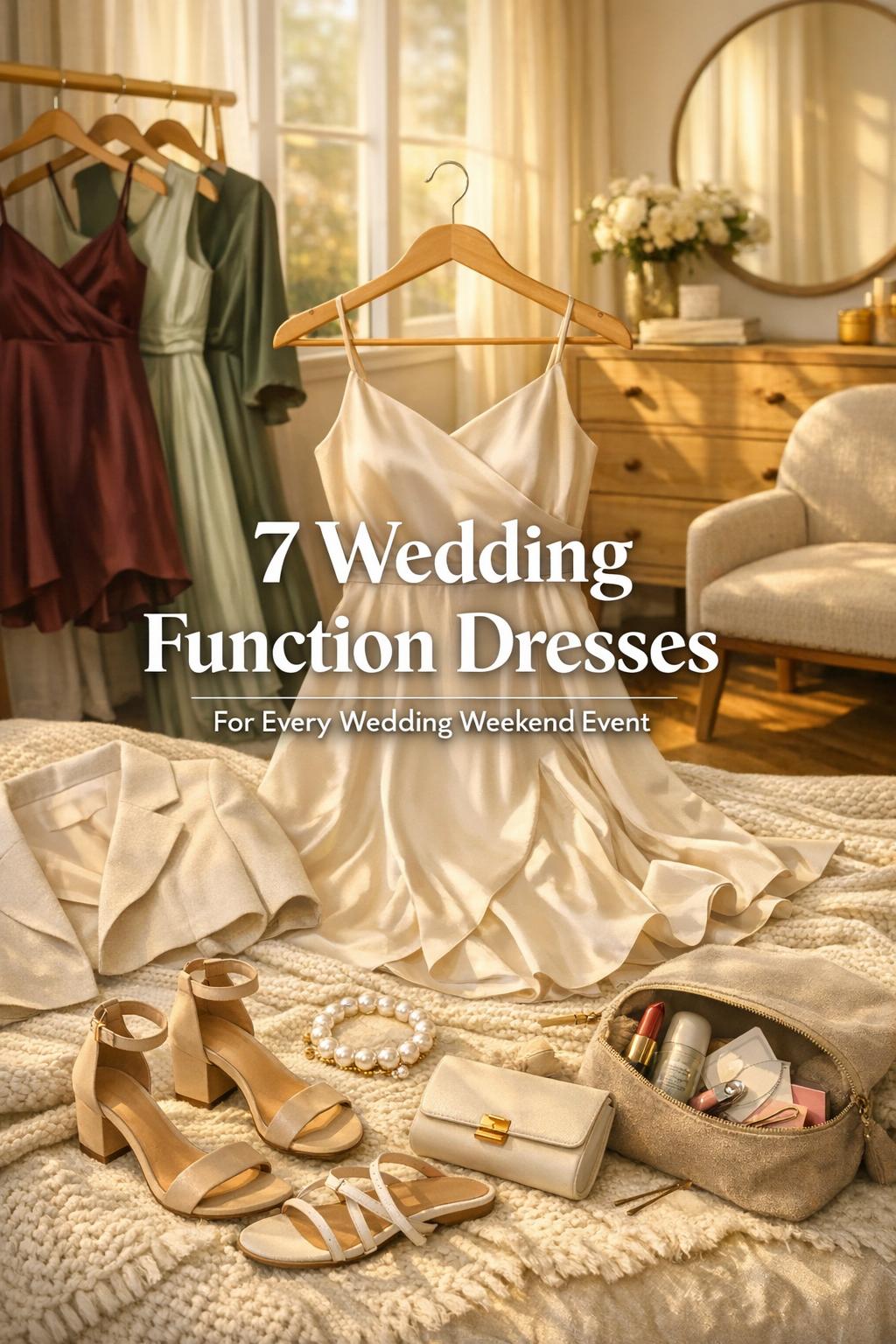
Choose a Dress That Fits the Specific Wedding Function
Many weddings include multiple functions, each with a different mood and expectation. Your dress for a ceremony may not be the best pick for a dance-heavy reception, and a casual pre-wedding event may call for something relaxed rather than dramatic. Planning function-by-function helps you avoid outfits that feel out of place.
Engagement party
Engagement parties often land in the “dressy casual” range. A polished midi, a simple wrap dress, or a chic jumpsuit-style silhouette can work well if you prefer an alternative to a dress. Keep your look celebratory but not overly formal unless the venue demands it.
Bridal shower
Showers commonly happen during the day and feel more social than ceremonial. Think light, fresh, and comfortable: softer fabrics, wearable hemlines, and accessories that won’t feel heavy after hours of mingling. If photos are a big part of the event, prioritize a dress that holds its shape and looks neat when seated.
Rehearsal dinner
Rehearsal dinners can skew more elevated than other pre-wedding events. A sleek midi, a dress with structured tailoring, or a richer fabric choice can feel right—especially if it’s held at an upscale restaurant or evening venue. The look should be refined, but still secondary to the wedding day.
Ceremony and reception (guest attire)
For the ceremony and reception, comfort and appropriateness matter equally. Choose wedding function dresses that move well, photograph well, and allow you to sit, stand, and dance without constant adjusting. Consider strap stability, hem length, and whether you’ll need a layer for temperature changes.
After-party
After-parties are often darker, louder, and more fashion-forward. If you’re changing outfits, this is where you can choose a more playful silhouette, bolder accessories, or a shorter hemline—while keeping the overall look tasteful. If you’re not changing, consider adding a statement accessory to refresh your reception dress.
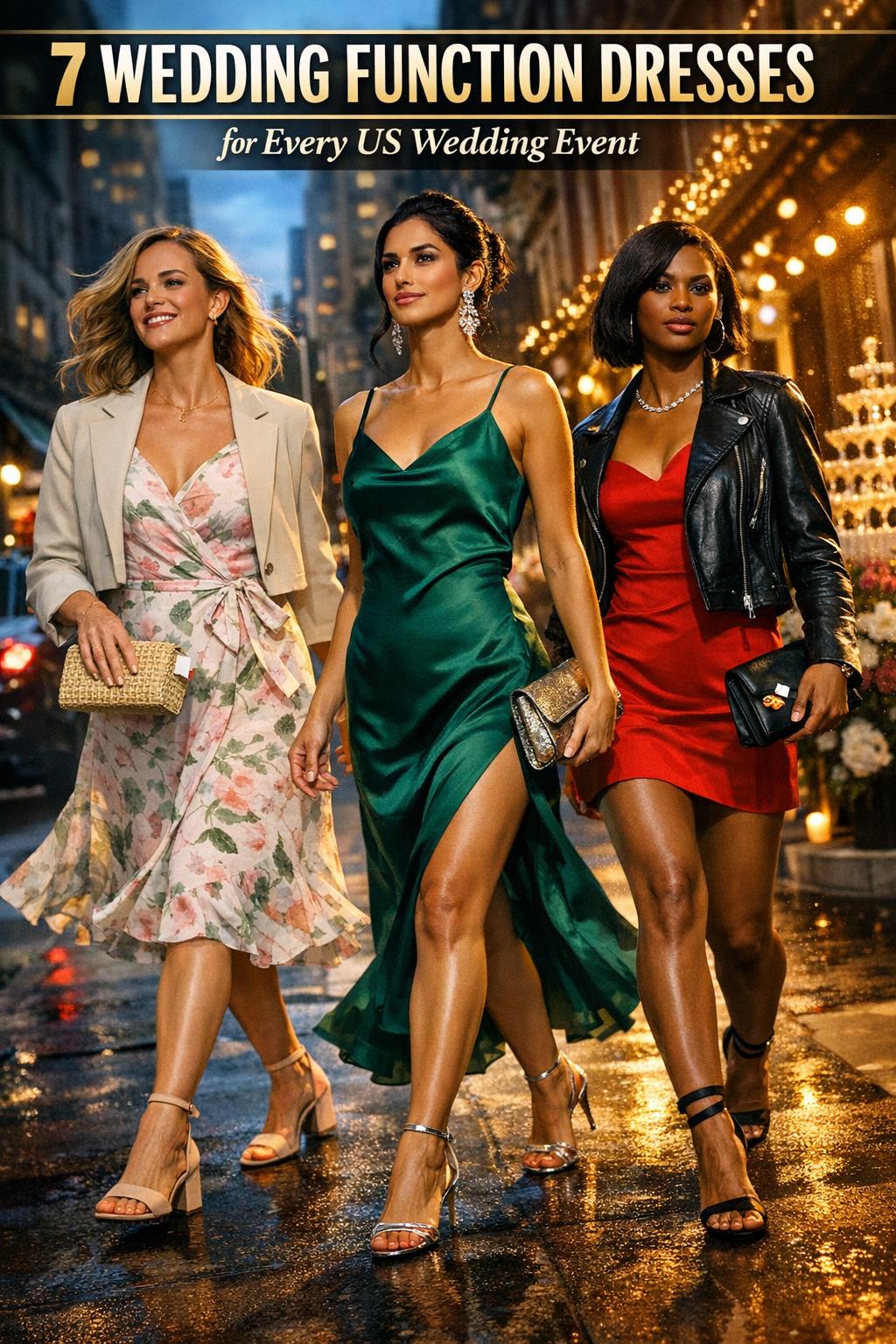
Pick the Best Length: Mini, Midi, or Maxi
Length affects formality, comfort, and how practical your outfit is for the venue. The “right” hemline is the one that fits the function and lets you move naturally. If you’re attending multiple events, length is also a helpful way to create variety without needing completely different styles.
Mini dresses: best for casual and after-party settings
Mini dresses can feel fun and modern, especially for a casual daytime celebration or an after-party. Balance the shorter hem with a more refined fabric or a more covered neckline to keep the look wedding-appropriate.
Midi dresses: the most versatile choice
Midi wedding function dresses work across a wide range of dress codes, from daytime garden events to cocktail receptions. They also pair easily with different shoe styles, which helps you adapt to lawns, patios, or dance floors.
Maxi dresses: ideal for formal and evening functions
Maxi dresses typically read as more formal, especially in richer materials or darker tones. They’re also a strong choice when you want a streamlined look. Make sure the hem length works with your shoes so you’re not stepping on it throughout the night.
Fabrics and Finishes That Look Right in Photos
Fabric is one of the biggest cues of formality. Even a simple silhouette can look elevated with the right texture and drape. When choosing wedding function dresses, consider how the material behaves when you sit, walk, and move, and how it looks under indoor lighting or bright sun.
- Lightweight, breathable: best for warm weather and daytime events where comfort is key
- Structured, tailored: great for cocktail settings and venues that lean formal
- Soft drape: flattering for movement-heavy receptions and long celebrations
- Textured finishes: can look more elevated without needing heavy embellishment
Tip: Choose fabrics that won’t require constant maintenance
If you’ll be traveling or attending multiple functions, avoid materials that crease instantly or cling uncomfortably. A dress that stays smooth and comfortable helps you focus on the celebration rather than adjusting straps, smoothing wrinkles, or worrying about how it looks after hours of wear.
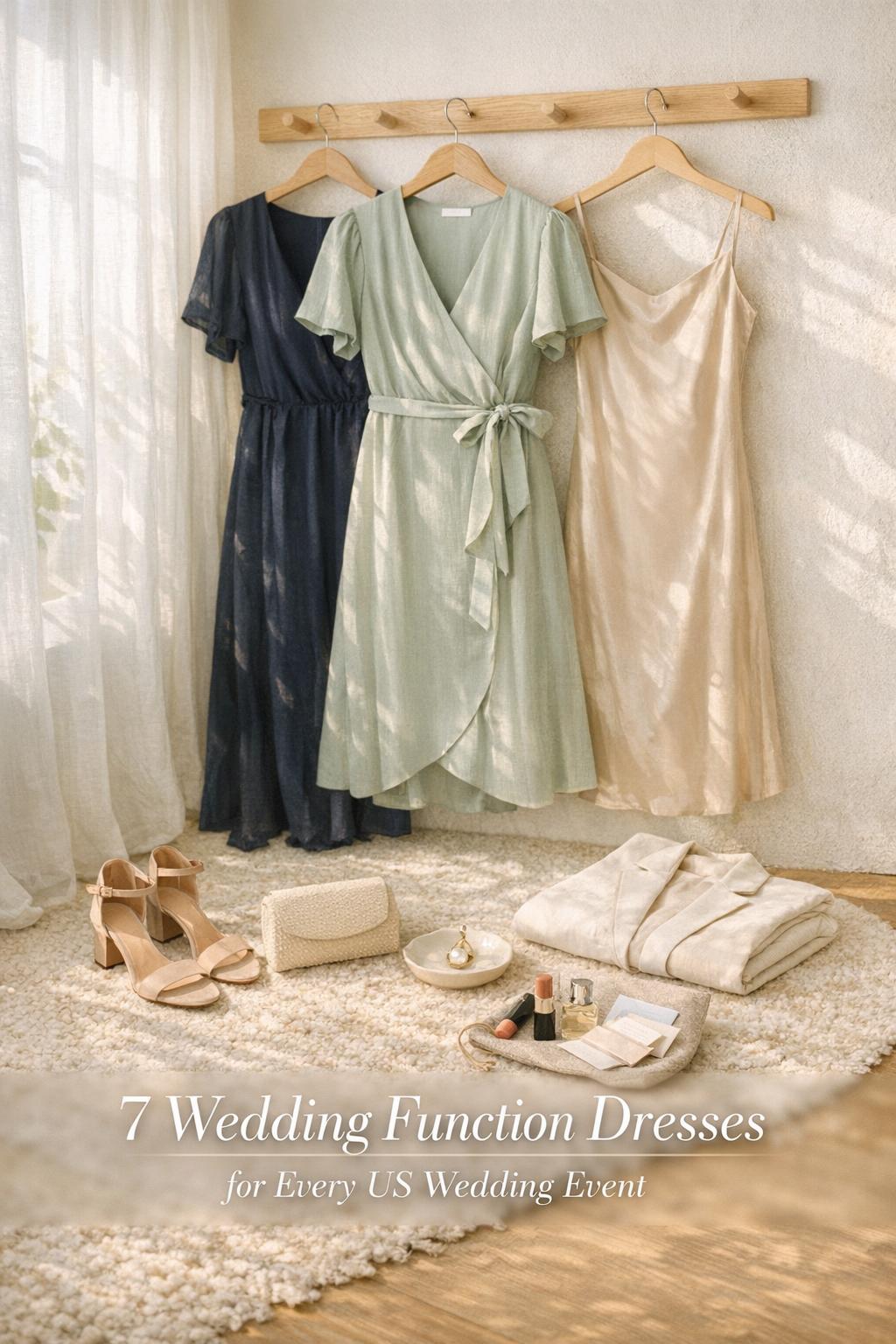
Color and Print: Look Festive Without Pulling Focus
Color is where many guests overthink or underthink their outfit. The safest approach is to aim for celebratory, polished, and appropriate for the time of day. If you love prints, keep them intentional—cohesive, not chaotic—and consider the scale of the pattern for photos.
Daytime vs. evening color direction
Daytime functions often suit lighter tones and softer prints, while evening functions usually pair well with deeper shades or more refined finishes. Instead of relying on a single “rule,” make sure your color choice matches the overall mood of the event and the venue.
Tip: When wearing a bold color, simplify everything else
If your dress color is vibrant or high-impact, keep accessories and styling streamlined. A clean shoe, a simple clutch, and minimal jewelry can make the whole look feel intentional rather than loud.
Silhouettes That Work for Different Venues and Comfort Needs
The best wedding function dresses feel secure, flattering, and comfortable for the length of the event. The “best silhouette” depends on your preferences, how formal the event is, and how active you’ll be. A seated dinner calls for a different kind of comfort than a night of dancing.
Wrap and tie-waist styles
Wrap silhouettes are adjustable and can work well for meals, movement, and long wear. They’re also easy to dress up or down depending on shoes and jewelry, which makes them useful for multi-function weekends.
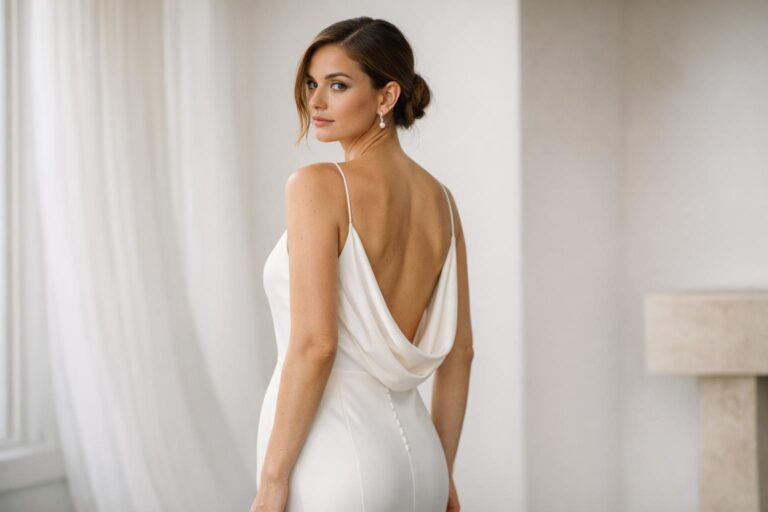
Slip and bias-cut styles
Slip-inspired dresses can feel sleek and modern, especially for evening receptions and after-parties. Pay attention to undergarment compatibility and whether you want added structure in the bodice for a more secure fit.
A-line and fit-and-flare styles
A-line shapes tend to feel balanced and comfortable, especially for dancing and walking. They also create a classic guest look that suits many venues without feeling overly trendy.
Body-skimming and structured styles
More structured silhouettes can look especially polished for formal settings. If you choose a fitted shape, check that you can sit comfortably and move naturally; a wedding function can be several hours long.
Accessories That Elevate Wedding Function Dresses
Accessories can shift the same dress from daytime to evening, casual to cocktail, or ceremony to after-party. The key is cohesion: one or two intentional accents are usually more effective than layering on too many elements at once.
Jewelry
Choose jewelry based on your dress neckline and the overall vibe. If the dress has detail, keep jewelry simpler. If the dress is minimal, a bolder earring or bracelet can create a more finished look without changing your entire outfit.
Bags and clutches
For wedding functions, a small bag is usually easiest. Make sure it fits essentials and doesn’t feel awkward to carry all evening. A structured clutch often reads dressier, while a softer small bag can suit casual or daytime events.
Outer layers
Temperature shifts happen. A light layer can keep you comfortable during an outdoor ceremony, air-conditioned dinner, or late-night exit. Choose a layer that complements your dress rather than hiding it.
Tip: Build one “upgrade kit” for quick outfit changes
If you’re attending more than one event, pack a small set of accessories that instantly elevates your look—like a dressier pair of earrings and a more polished bag. This helps you adapt without needing a completely different dress for each function.
Shoes: Balance Style, Venue, and Hours on Your Feet
Shoes can make or break your comfort at a wedding function. A beautiful heel isn’t worth it if you’re distracted all night. Consider where you’ll be walking, how long you’ll be standing, and whether the event includes outdoor spaces like grass, gravel, or sand.
- Outdoor lawns or gardens: sturdier heel shapes or flats that won’t sink
- Beach or sand: secure, easy-to-walk-in options that won’t snag
- Ballroom or indoor venues: dressier heels or refined flats, depending on comfort
- Dance-heavy receptions: stable shoes you can move in confidently
Tip: Prioritize stability over height
If you want a heel, choose one you can actually wear for hours. Stability tends to look more confident than a higher heel you can’t walk in comfortably. Your posture and ease matter just as much as the shoe itself.
How to Style One Dress for Multiple Wedding Functions
If you’re attending a wedding weekend, you may not want a separate outfit for every function. You can get more mileage out of wedding function dresses by shifting the styling. Small changes—like swapping shoes, changing jewelry, or adding a layer—can create a noticeably different look.
Day-to-night styling approach
Start with a base that works in daylight, then elevate it for evening. A midi dress is especially adaptable. Keep daytime accessories light and practical; then switch to more polished pieces for the later function.
- Change footwear to a more formal option for evening
- Swap a casual bag for a structured clutch
- Add one statement jewelry piece instead of multiple small pieces
- Adjust hair or makeup slightly to match the formality
Tip: Use the neckline as your styling anchor
When you’re changing accessories quickly, the neckline tells you what to do. A simpler neckline can handle bolder earrings or a necklace, while a more detailed neckline usually needs quieter jewelry. This single decision keeps your styling consistent and fast.
What to Avoid: Common Guest Outfit Mistakes
Most wedding guest outfit mistakes come from mismatching formality or choosing something difficult to wear for the length of the celebration. A wedding function is not the best time for an outfit that requires constant adjusting or feels uncomfortable after sitting down.
- Choosing a dress that doesn’t align with the function’s formality
- Wearing a hemline or shoe that doesn’t work with the venue
- Overloading accessories so the look feels busy
- Ignoring comfort factors like strap security and ease of movement
Tip: Do a “sit, walk, dance” test at home
Before the event, try sitting, walking, and moving the way you will at the wedding. If you’re constantly tugging the dress, worried about the hem, or uncomfortable in the shoes, adjust now—whether that means tailoring, different underlayers, or a change in footwear.
Planning and Packing for a Wedding Weekend
If you’re traveling for a wedding, planning ahead reduces stress and helps you avoid last-minute purchases. Think in terms of a small, coordinated set of wedding function dresses (or one versatile dress) plus accessories that create different looks. Comfort and practicality matter more when you’re living out of a bag and moving between venues.
Create a simple outfit plan by function
List each function, then assign an outfit level: casual, dressy casual, cocktail, or formal. Once you know the level, choose the dress and then fill in shoes, bag, and layer. This prevents you from packing items that don’t pair well together.
Tip: Pack one backup option
A backup doesn’t have to be a full extra dress. It can be an alternative shoe, a second clutch, or a layer that changes the look and saves you if weather shifts or a venue feels more formal than expected.
How to Feel Confident in Your Dress Choice
The best wedding function dresses aren’t just “allowed”—they fit the moment and make you feel like your best self. Confidence comes from alignment: the dress fits the function, fits your body comfortably, and fits your personal style. When those three things match, you won’t second-guess your look.
If you’re unsure, aim for a classic silhouette, a reliable length (often midi), and a refined finish. Then let one element—color, jewelry, or texture—carry the personality. This approach keeps your outfit appropriate and memorable for the right reasons.
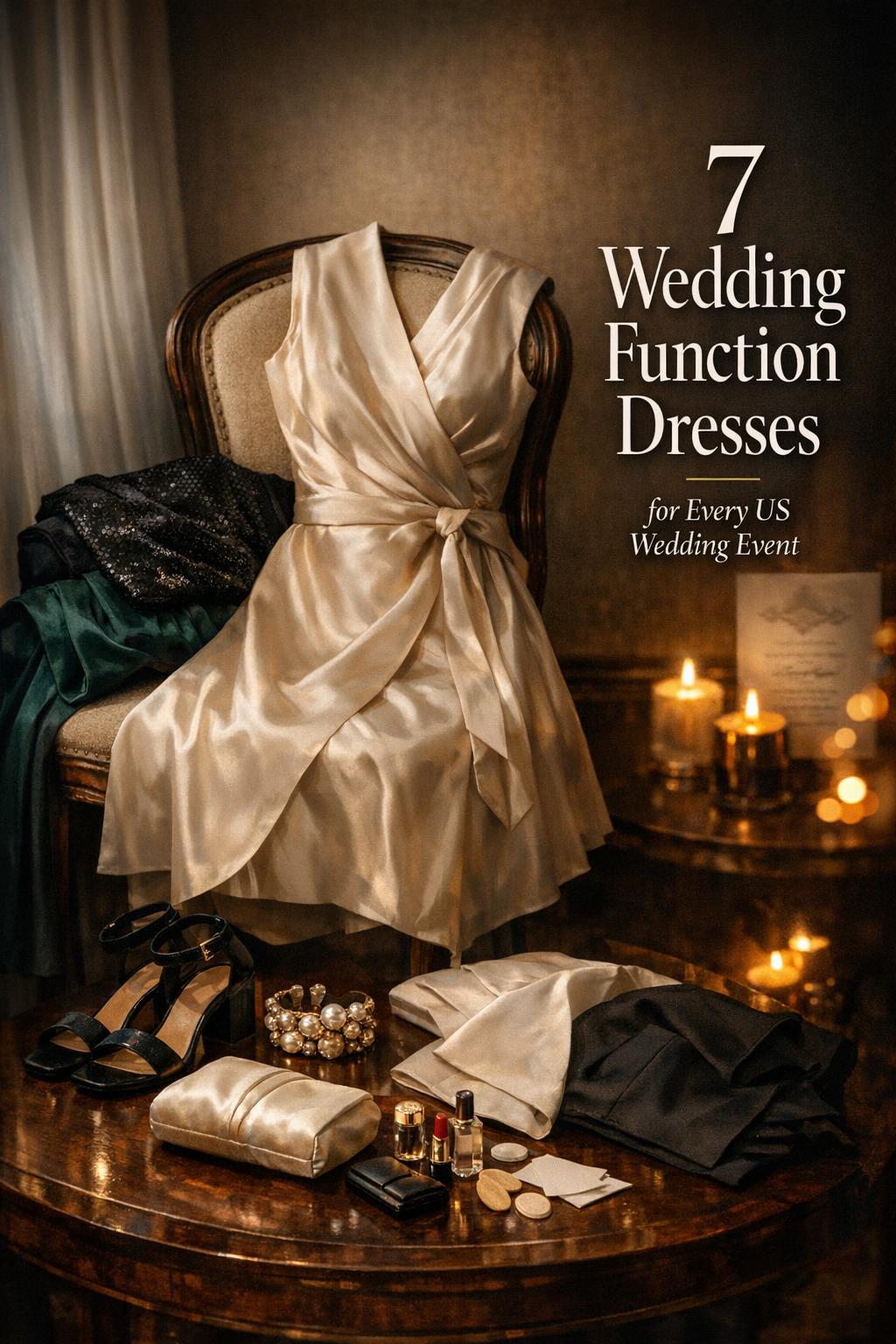
FAQ
What are wedding function dresses?
Wedding function dresses are outfits chosen specifically for wedding-related events such as engagement parties, showers, rehearsal dinners, ceremonies, receptions, and after-parties, with the style and formality matched to the specific function.
How do I choose a dress if the invitation doesn’t list a dress code?
Use the venue and time of day as your guide: daytime and outdoor locations typically call for lighter, more relaxed dresses, while evening and formal venues usually suit more polished fabrics, structured silhouettes, and elevated accessories.
Is a midi dress appropriate for most wedding functions?
Yes, a midi dress is one of the most versatile choices because it can work for daytime events, cocktail settings, and even more formal functions depending on the fabric, color, and accessories.
What should I consider when choosing shoes for a wedding function?
Consider the venue surface, how long you’ll be on your feet, and how much walking or dancing is involved; stability and comfort are essential, especially for outdoor spaces like grass, gravel, or sand.
Can I wear the same dress to multiple wedding events?
Yes, you can restyle one dress by changing shoes, bag, jewelry, and outer layers, creating a daytime version and a more formal evening version without needing a completely different outfit.
How do I avoid looking overdressed or underdressed?
Match the dress to the function’s formality and the venue, then adjust the level with accessories; when uncertain, aim slightly more polished rather than too casual, especially for evening events.
What makes a dress feel more formal without changing the silhouette?
Fabric and finishing details often determine formality; a more refined texture, better drape, and structured accessories like a clutch and statement jewelry can make a simple silhouette feel noticeably more elevated.
What’s a quick way to test if a dress will be comfortable for a long wedding?
Do a “sit, walk, dance” test at home to check strap security, ease of movement, and whether the dress stays comfortable when seated and active, then adjust with tailoring, different underlayers, or a shoe change if needed.