8 Long Wedding Dresses: US Venue-to-Fit Style Checklist
Long Wedding Dresses: A Complete Guide to Floor-Length Gowns in the U.S.
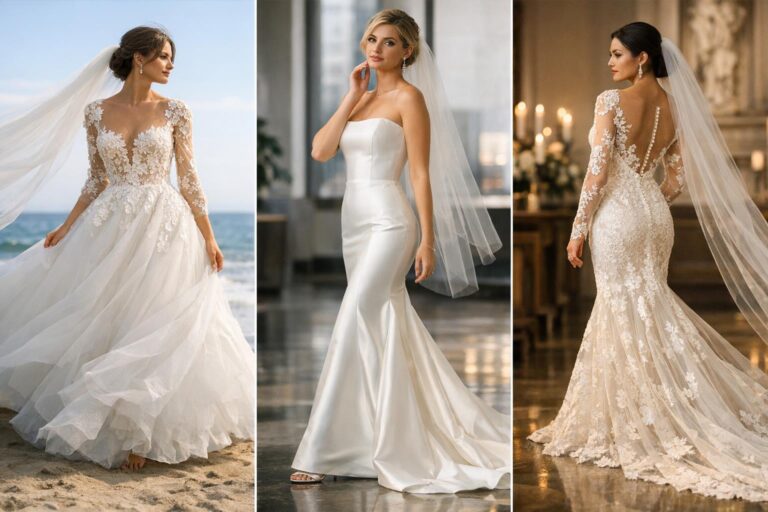
Long wedding dresses are a timeless choice because they instantly read as “bridal,” photograph beautifully, and give you endless options across silhouettes, fabrics, sleeves, necklines, and trains. Whether you’re drawn to a dramatic ballgown, a sleek sheath, or a lace floor-length wedding dress with a train, the right long gown should match your venue, your comfort needs, and your personal style—not just a trend.
This guide walks through the most important decisions U.S. shoppers make when choosing a floor-length bridal gown: silhouette, fabric and detailing, hem length and heel height, styling by venue, budgeting and where to shop, fit-first advice for petite and plus-size brides, and care after the wedding. Use it to build a clear shortlist and shop with confidence.
Long Dress Silhouettes: Which Floor-Length Gown Is Right for You?
Silhouette is the foundation of how a long wedding dress looks and feels. It affects movement, comfort, how the dress photographs, and how details like lace, beading, or a train will show up from every angle. Start here before you get lost in fabric swatches and neckline options.
Ballgown vs A-line vs Mermaid: How to Compare the Most Popular Long Gown Shapes
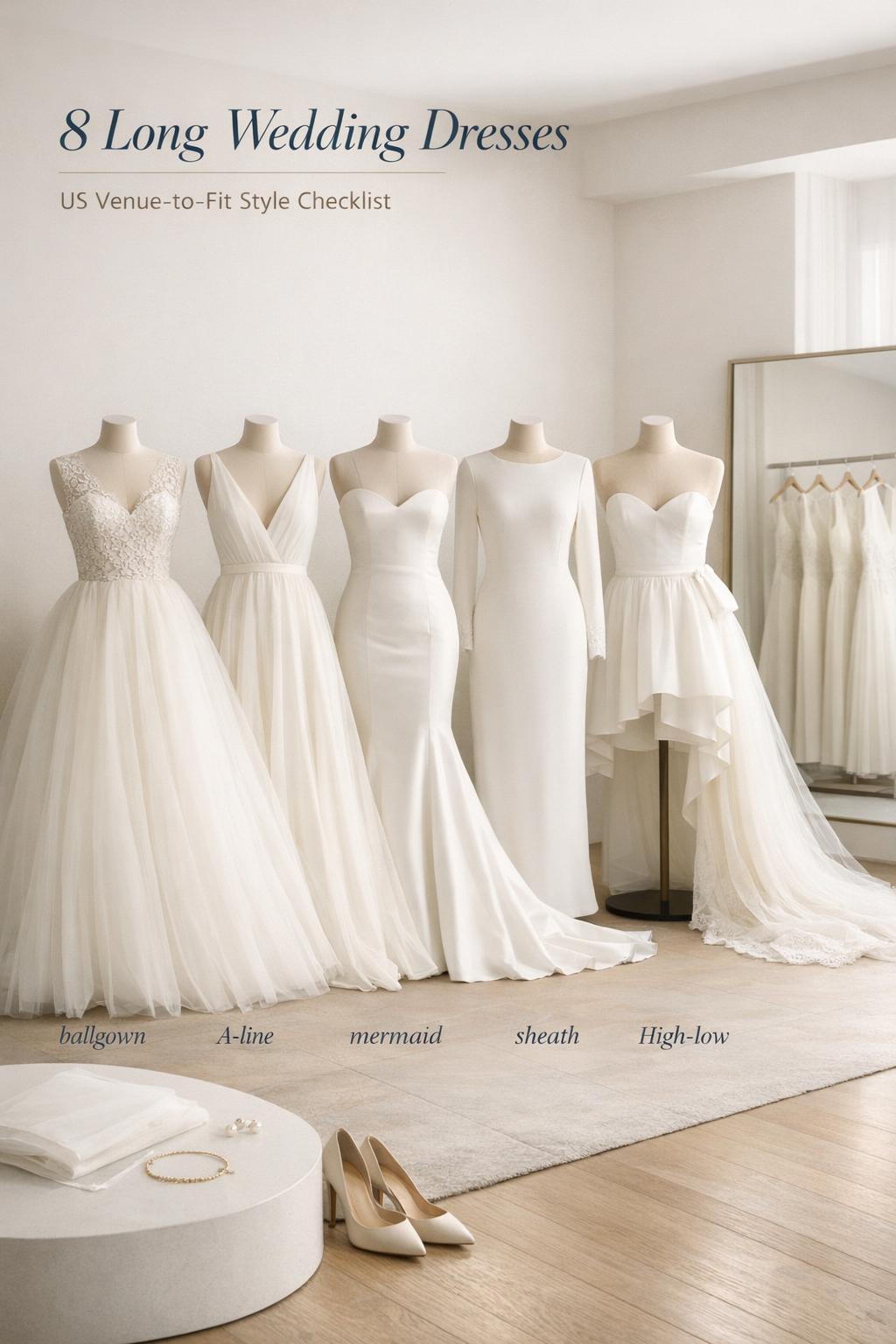
Ballgown, A-line, and mermaid long wedding dresses often appear side-by-side because they can all be full-length and formal, yet they create totally different lines. Ballgowns lean into volume and drama. A-line silhouettes offer a classic, balanced shape that many brides find easy to wear. Mermaid styles emphasize a more fitted look through the body and bring high impact in a long-cut wedding gown, especially when paired with bold details like a long train.
- Ballgown long wedding dress: Statement-making volume, a “princess style wedding dress” feel, and strong presence for traditional or formal settings.
- A-line long wedding dress: Classic proportions, versatile styling, and a widely loved option when you want elegant movement without maximum volume.
- Mermaid long wedding dress: A more fitted, curve-forward look that makes details like lace placement, beading, and seam lines especially noticeable.
Tip: If you’re deciding between mermaid vs ballgown long wedding dress styles, think about how you want to move during the ceremony and reception. A silhouette that looks incredible standing still should also feel manageable walking, sitting, and dancing.
Sheath and Column: Modern, Minimalist Elegance in Full-Length Bridal Gowns
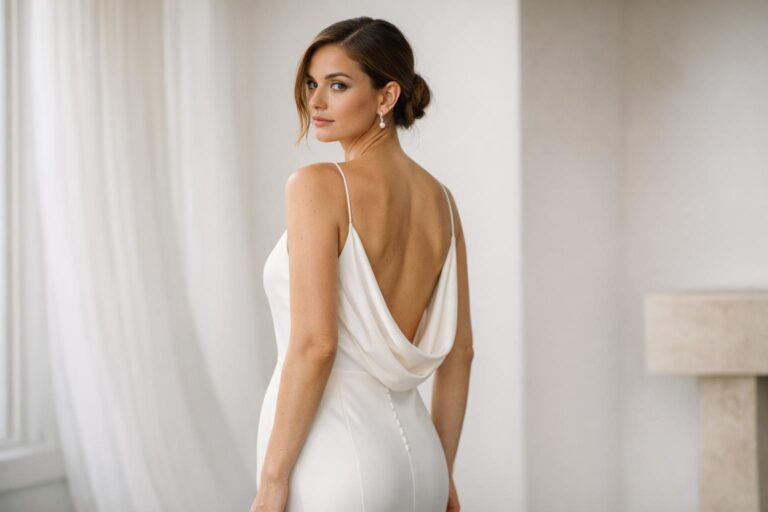
Sheath and column silhouettes are often chosen for a modern, clean look. In a floor-length wedding dress style like this, the fabric and finish matter even more because the design relies on line and drape rather than volume. These styles can feel understated or fashion-forward depending on details like sleeves, necklines, or a train.
Tip: If you love minimalist long gowns, prioritize comfort and mobility during try-ons. A sleek full-length wedding dress can feel effortless, but small differences in fit and drape can change everything.
High-Low and Detachable-Skirt Options for Two Looks in One
Some brides want the formality of a long gown for the ceremony and the ease of a different shape for the reception. High-low and detachable-skirt options can give you that versatility while still aligning with the floor-length bridal gown aesthetic. Detachable elements can also make dramatic trains and volume feel more manageable when it’s time to mingle or dance.
Tips for versatile styling: When trying convertible looks, pay attention to how the dress transitions. You want the “second look” to feel intentional, not like an afterthought. Ask yourself whether the long gown still looks complete after removing a skirt or train element.
Fabrics, Details, and Trims: What Makes a Long Dress Stand Out
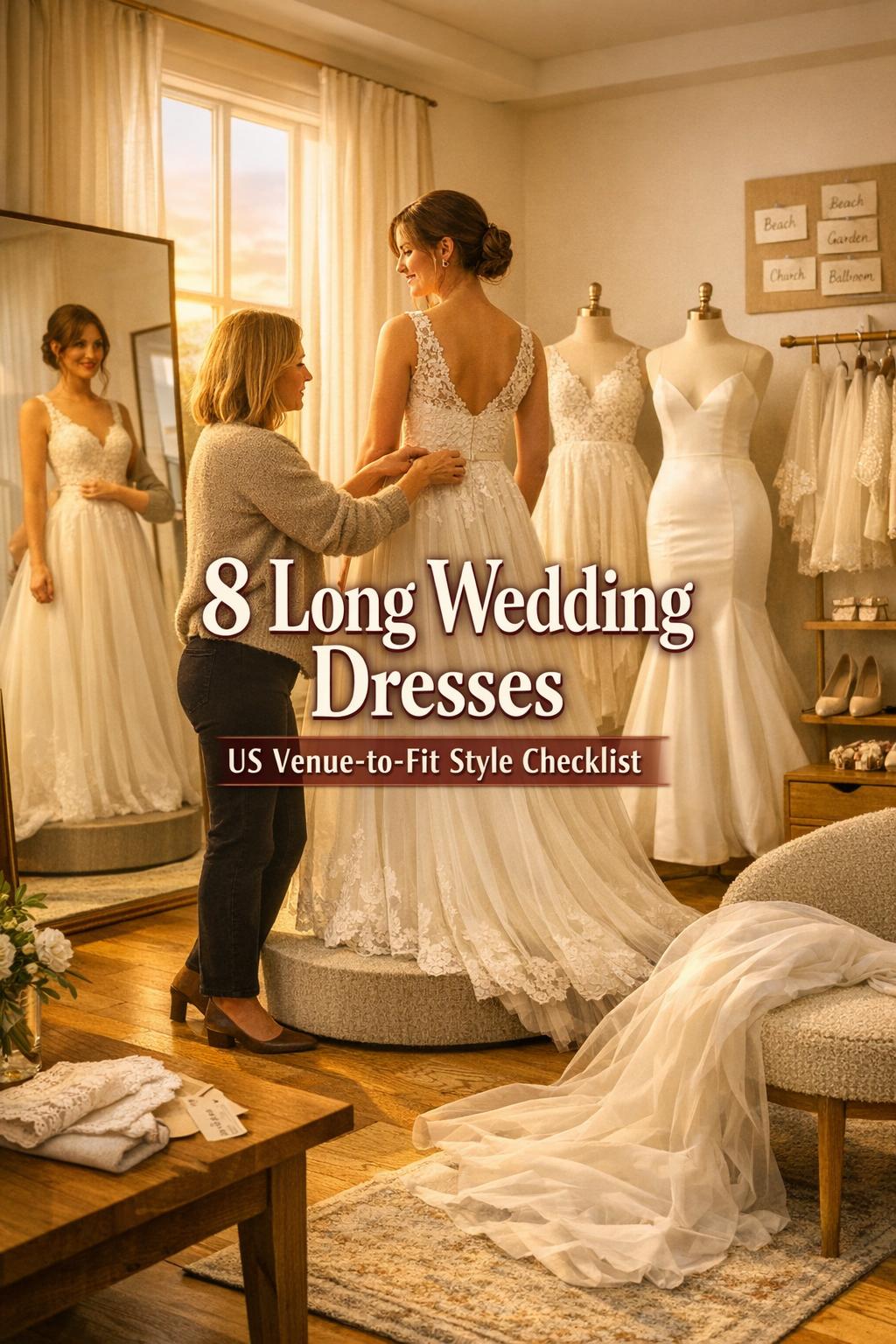
Once you’ve identified silhouettes you love, fabric and detailing help you refine the mood. Many long wedding dresses differ less by overall shape and more by what they’re made of and how they’re finished: lace, tulle, satin, chiffon, beading, appliqués, embroidery, and train treatments. These choices influence everything from comfort to formality.
Lace, Tulle, Satin, Chiffon: Choosing the Right Material for Your Vision
Different fabrics create different energy in a floor-length gown. Lace long wedding dress styles often read romantic and detailed, highlighting pattern and texture. Tulle can feel airy, layered, and classic in a ballgown or A-line. Satin is known for a smoother, more polished look that supports clean lines. Chiffon often leans lighter and can complement softer silhouettes and movement-forward designs, including boho long wedding dress styles.
- Lace: Emphasizes texture and pattern; can feel traditional, romantic, or vintage depending on the design.
- Tulle: Adds softness and volume; popular for layered skirts and dramatic silhouettes.
- Satin: Sleek and refined; highlights structure and seam lines.
- Chiffon: Light and flowy; complements easy movement and relaxed styling.
Tip: When comparing fabric options, imagine the full day: ceremony, photos, and reception. A fabric that looks perfect in a still photo should also feel good against the skin and remain comfortable through hours of wear.
Trains, Appliqués, Beading, and Embroidery: The Details That Change Everything
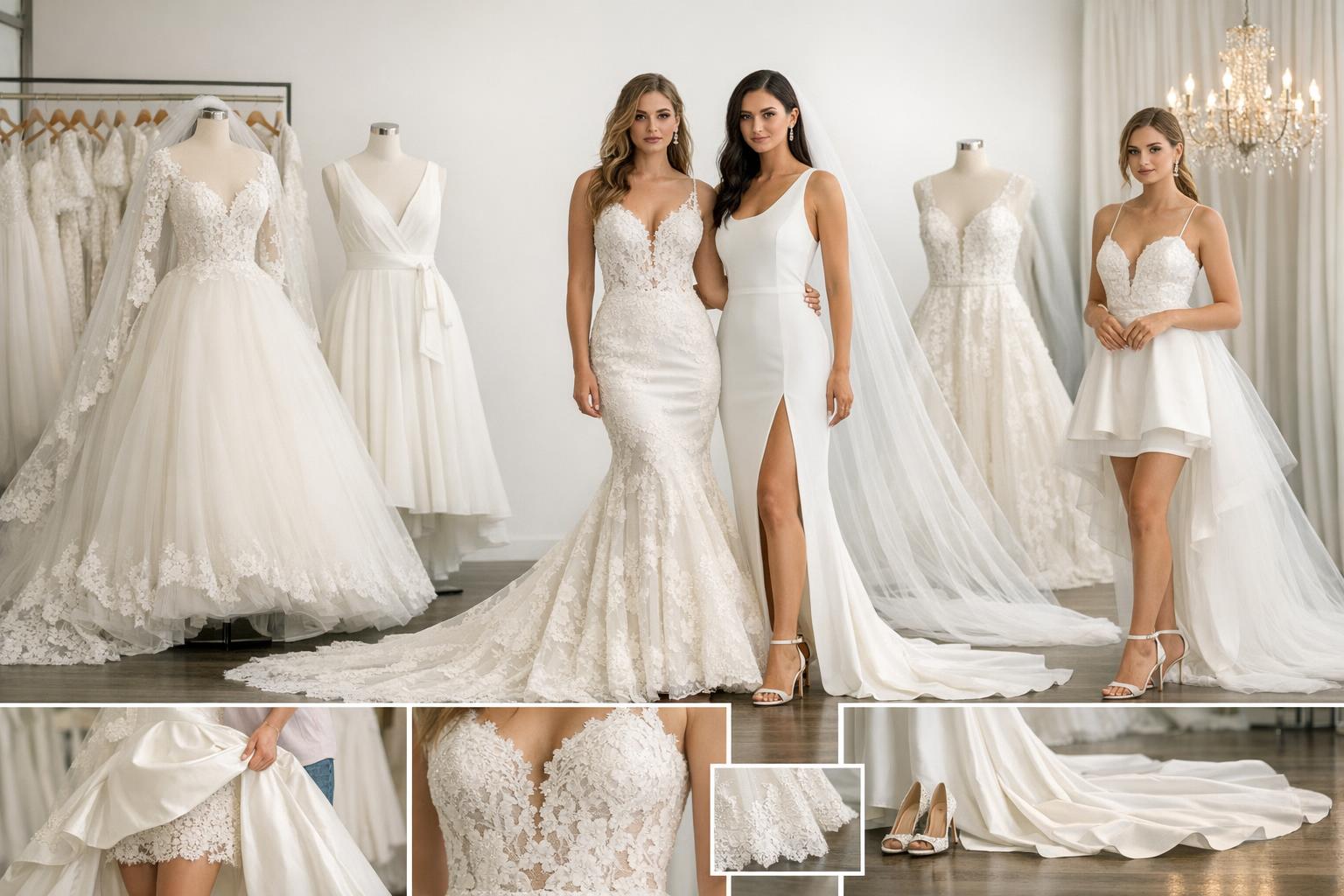
Long wedding dresses with trains are often chosen for added drama and a more formal presentation. Beyond trains, details like appliqués, beading, and embroidery can make a gown feel couture-inspired or richly textured. The overall effect depends not only on the detail itself, but also on how it’s placed—whether it draws the eye upward, elongates the body, or highlights the skirt.
Tips for detail-heavy gowns: If you love ornate finishes, focus on comfort and practicality during try-ons. Consider how the dress feels when you sit, how it moves when you walk, and whether any embellishments snag easily. You want the “wow” factor without spending your wedding day adjusting your gown.
Necklines and Sleeve Options for Long Wedding Dresses
Necklines and sleeves are a major part of how a floor-length bridal gown frames your face, shoulders, and overall silhouette. Long sleeve wedding dress styles can look especially refined and season-flexible, while sleeveless or strap-focused designs can feel clean, modern, or romantic depending on fabric and detailing. Pairing neckline choices with silhouette is often where a dress becomes “the one.”
- Long sleeves: A classic option that can balance ornate fabrics and create a polished look.
- Sleeveless looks: Often emphasize simplicity and allow details like lace or beading to take center stage.
- Balanced styling: If the skirt is very dramatic, a simpler neckline can keep the overall look cohesive.
Length, Heels, and Proportions: Getting the Hem Right
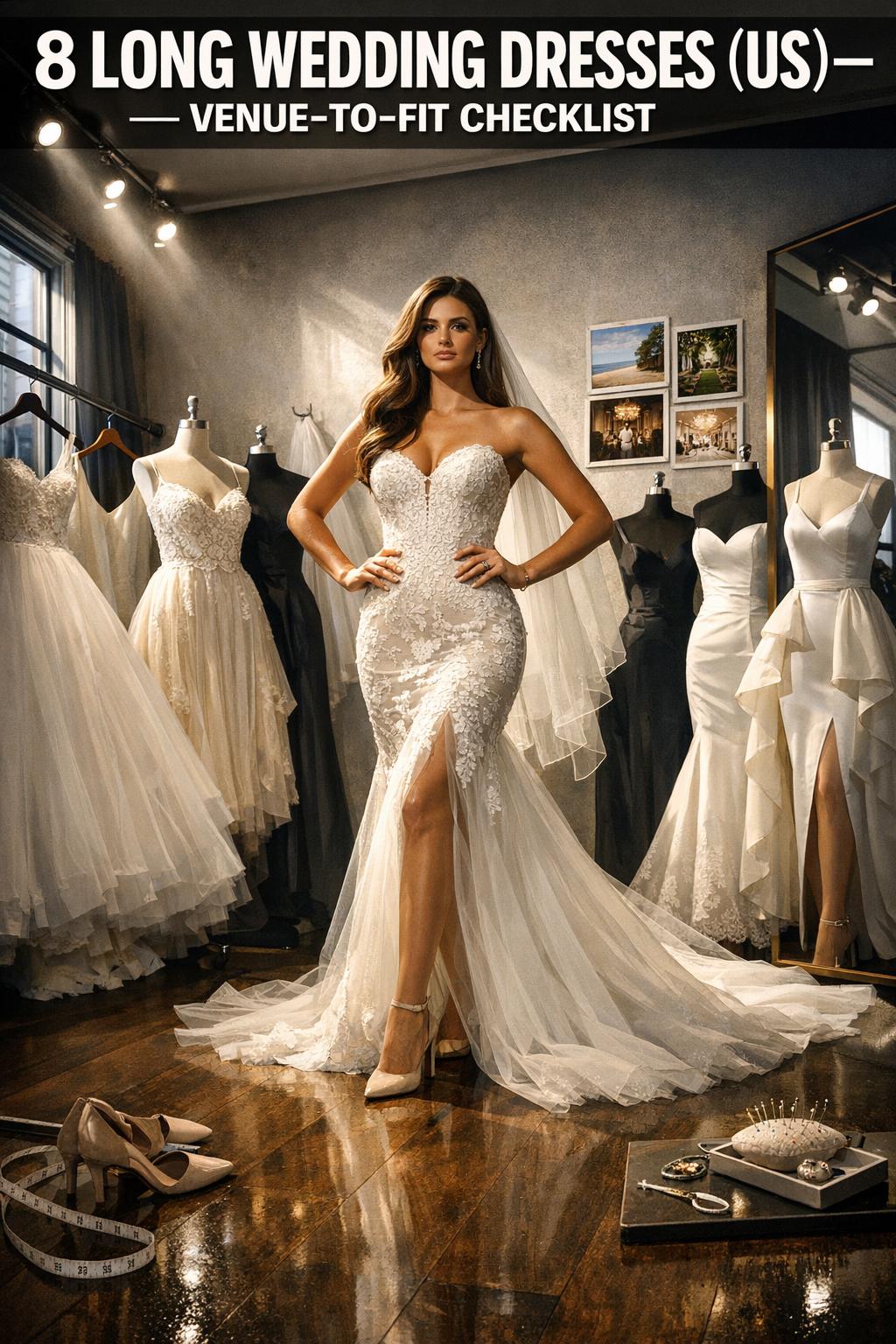
Even the most beautiful floor-length wedding dress can feel “off” if the hem is wrong. Wedding dress length depends on your height, proportions, shoe choice, and how much of the dress you want grazing the floor. Getting the hem right improves comfort, prevents tripping, and makes walking down the aisle feel effortless.
How to Think About Hem Length with Different Heel Heights
Heel height can change how a long gown breaks at the floor. A small shift in shoe height affects how the dress hangs and whether it skims, pools, or lifts. If you plan to switch shoes between the ceremony and reception, that decision matters for your final hem as well.
Tip: Bring your intended wedding shoes (or a similar heel height) to fittings whenever possible. It’s one of the simplest ways to make wedding dress hem height decisions more accurate and less stressful.
Petite, Average, and Tall Adjustments: Proportion Comes First
Petite long wedding dress shopping often comes down to proportion: where the waist hits, how the skirt begins to flare (if it does), and how much fabric is visually “below” you. Tall brides may prioritize how length and train details appear in photos and whether they want a sweeping effect. No matter your height, the best long wedding dresses feel balanced from neckline to hem.
Tips for proportion checks: During try-ons, take a quick mirror look from multiple angles and do a short walk test. The goal is to spot whether the hem drags too much, whether the waistline placement feels right, and whether the dress remains comfortable when moving.
Alterations: Timeline, Expectations, and Why Planning Helps
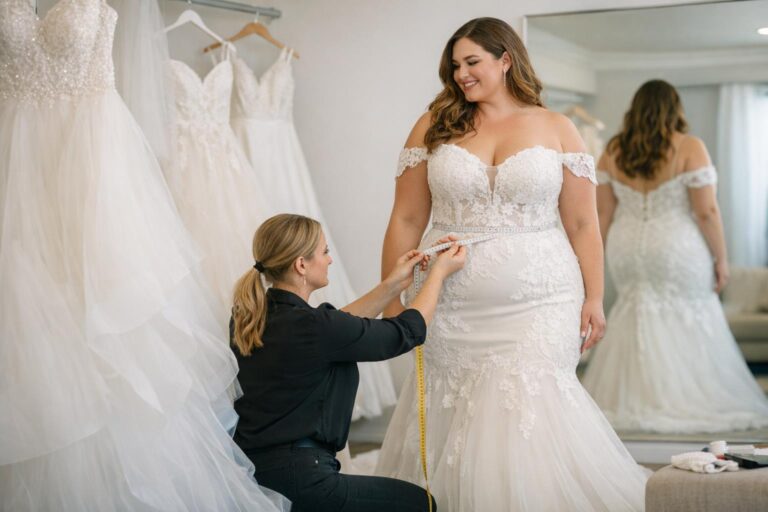
Alterations are common for floor-length bridal gowns, especially when you’re fine-tuning hem length, adjusting fit through the bodice, or aligning sleeves and neckline placement. Planning your fittings early helps you avoid last-minute stress and gives you time to make thoughtful decisions about shoes, undergarments, and accessories that affect how the dress sits.
- Decide on your shoe height early so hem decisions are consistent.
- Expect that long gowns may need more than one fitting to feel finished.
- Re-check comfort after changes, especially around the bodice and sleeves.
Styling Long Dresses for Different Venues in the U.S.
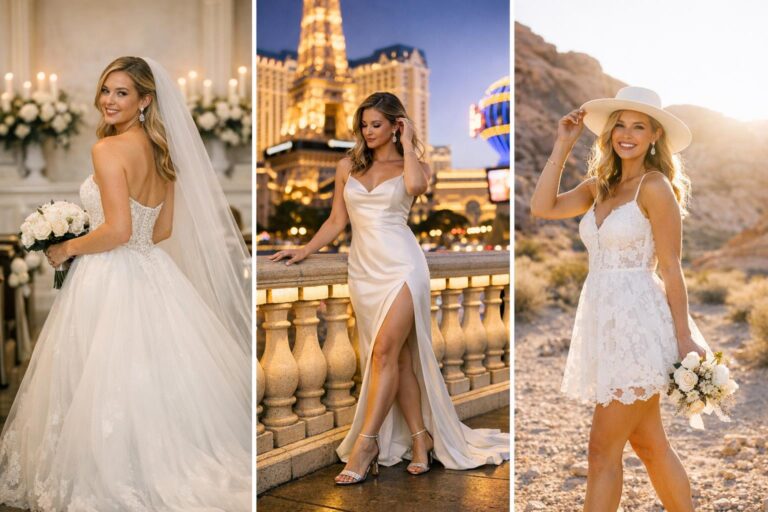
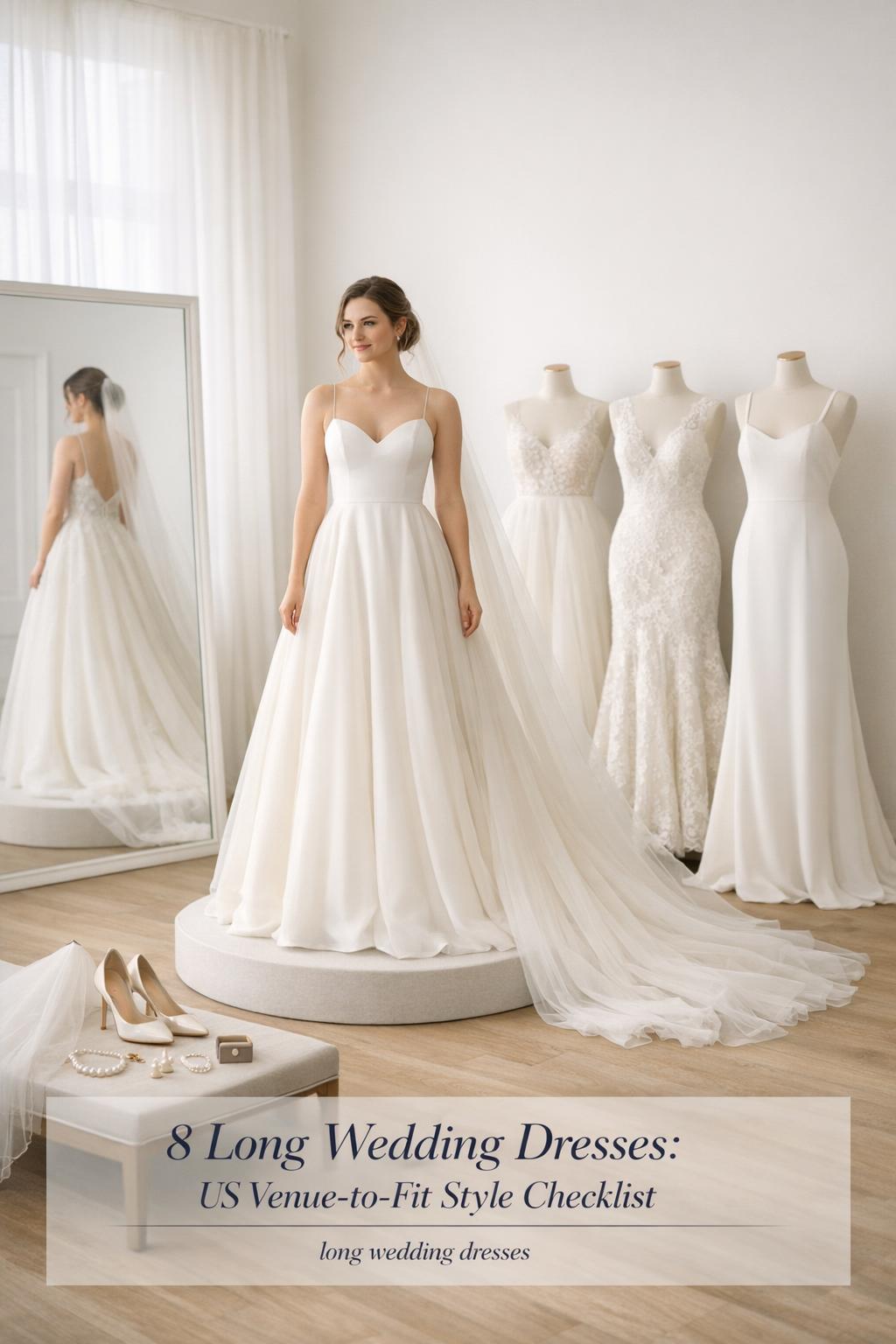
Venue affects everything: the formality level, the practicality of a train, fabric comfort, and even shoe choice. Styling long wedding dresses by venue keeps your look cohesive and helps you choose details that feel intentional rather than random.
Beach vs Garden vs Church vs Ballroom: Matching the Moment
A beach wedding may call for a long gown that prioritizes ease of movement and lighter styling, while a ballroom setting often supports more dramatic silhouettes and train moments. Garden weddings can sit comfortably between polished and airy, and church ceremonies often align with more classic long-cut wedding gown styling, including sleeves or a more formal train if desired.
- Beach: Consider movement-forward silhouettes and manageable length.
- Garden: Romantic textures like lace can feel natural; keep comfort in mind.
- Church: Classic floor-length bridal gowns and refined styling often feel aligned with the setting.
- Ballroom: Dramatic shapes like ballgowns, longer trains, and statement details can shine.
Tip: If you love the idea of a cathedral-train gown but worry about practicality, look at detachable elements. You can keep the ceremony impact and simplify for the reception.
Accessory Pairings: Veils, Jewelry, and Shoes That Work with Floor-Length Gowns
Accessories should support your dress rather than compete with it. The more detailed the gown (lace, embroidery, heavy beading), the more your accessories can lean streamlined. If your dress is minimalist, accessories can provide the focal point. Shoes matter for both comfort and hem length, so treat them as part of the dress decision—not an afterthought.
- Veils: Consider how the veil’s edge interacts with the dress’s details and any train.
- Jewelry: Use neckline as your guide; the goal is a clean frame for your face.
- Shoes: Choose for comfort and the hem; even small heel changes affect length.
Tip: When deciding on a wedding veil with a long dress, do a full look test during a fitting if you can. It’s the easiest way to confirm the combined effect of neckline, hair, veil length, and train.
Comfort and Movement: Styling Choices You’ll Feel All Day
Floor-length wedding dresses are at their best when they’re beautiful and livable. Styling impacts comfort: sleeve choices affect range of motion, trains affect walking and turning, and shoe height affects fatigue. A successful look isn’t just what you see in a mirror; it’s what you can wear confidently for hours.
Tips for a comfort-focused long gown: Walk, sit, and take a few steps as if you’re greeting guests. If anything pinches, slips, or restricts movement, address it early through fit adjustments or a different style direction.
Budget and Where to Shop for Long Wedding Dresses in the U.S.
U.S. shoppers looking for long wedding dresses typically split between wanting editorial guidance (to narrow down styles) and wanting a place to browse and buy immediately. Your budget helps you choose where to shop and how to evaluate quality, construction, and detail work.
Budget Tiers: From Affordable to Designer Long Wedding Gowns
Some brides prioritize affordable long wedding dresses, while others are focused on designer long wedding gowns or couture-level details. Either way, it helps to define your comfort range early and then evaluate dresses by what matters most to you—silhouette, fabric, detail, and overall finish.
- Affordable focus: Look for clean construction, a flattering silhouette, and comfortable wearability.
- Mid-range shopping: Compare fabric feel, lining, and how details are applied.
- Designer/couture direction: Expect elevated finishing and dramatic elements like detachable skirts or bold trains.
Retailer and Marketplace Paths: What Each Shopping Style Is Good For
In the U.S., many brides shop through a mix of retailer category pages (to filter by length, silhouette, sleeves, necklines, and price) and editorial roundups (to compare styles and trends). Others explore marketplaces that list floor-length wedding dresses across many brands, including pre-owned options, which can expand variety and price ranges. Each path supports a different stage of decision-making.
Tip: If you’re early in the process, start broad: scan a wide range of floor-length wedding dress styles and save your top silhouettes. If you’re close to buying, narrow aggressively by fabric, sleeves, neckline, and train preferences so you’re comparing truly similar options.
How to Compare Quality and Fit When You’re Browsing Online
Because long wedding dresses can look similar in photos, focus your comparisons on what you can evaluate clearly: silhouette description, fabric type, featured details (like lace, embroidery, beading), and how the dress handles length and trains. Then match those features back to your venue and comfort priorities.
- Compare dresses within the same silhouette family before switching shapes.
- Use fabric as a filter if you already know you prefer lace, satin, tulle, or chiffon.
- Be realistic about train length for your venue and movement needs.
Designer Spotlight: Long Dress Trends for 2026–2027
Long wedding dress trends often show up as silhouette shifts and detail emphasis rather than a complete reinvention of the floor-length gown. Editorial coverage frequently spotlights silhouette categories (like ballgown and A-line) and highlights notable features such as dramatic trains and detachable elements. In the luxury and couture space, long gowns may lean into runway-inspired impact and high-detail finishes.
Couture Inspiration vs Accessible Style: Two Ways Trends Show Up
Some brides want a designer-led feel—bold lines, striking details, and elevated finishing. Others want a trend-aware look that’s still approachable and easy to wear. Both can be achieved in long-cut wedding gowns; the difference is often how extreme the silhouette is and how dramatic the details become.
Notable Long-Gown Features: Dramatic Trains and Detachable Skirts
If you’re drawn to maximum impact, prioritize long wedding dresses with trains or gowns that offer detachable skirts for versatility. These features can deliver a high-fashion look for the ceremony while giving you options later. For many brides, this creates the best of both worlds: the formal moment and the practical one.
Tip: When you’re trend-shopping, keep your “non-negotiables” separate from your “nice-to-haves.” Your silhouette and comfort come first; trend details should enhance them, not override them.
Petite and Plus-Size Long Dresses: A Fit-First Guide
Inclusive shopping isn’t only about size availability; it’s about choosing long wedding dresses that support your proportions and tailoring them so you feel secure and comfortable. Petites often need special attention to hem and waist placement. Curvy and plus-size brides often benefit from a focus on supportive structure, intentional seam placement, and smart alterations.
Petite-Friendly Long Gowns: How to Keep the Look Elongated
Petite long wedding dress success usually comes from balance: a silhouette that doesn’t overwhelm, a hem that’s precise, and details that guide the eye in a flattering way. Because floor-length gowns can add visual weight, petites often do best when the dress feels cleanly proportioned from top to bottom.
- Prioritize hem precision so the dress skims rather than drags.
- Look for waist and seam placement that feels natural on your torso.
- Choose details that feel intentional rather than excessively heavy.
Tip: Don’t judge a petite fit based on a quick try-on alone. A long gown can change dramatically with the right hem and small bodice adjustments.
Plus-Size and Curvy Brides: Support, Structure, and Tailoring Strategy
Plus-size long wedding dresses can be stunning across every silhouette, from A-line to mermaid to ballgown. The key is focusing on how the bodice supports you, how the fabric feels over time, and how the dress stays secure through movement. Tailoring can refine the fit so the gown feels stable and comfortable without losing its intended design lines.
Tips for fit-first confidence: During try-ons, test movement and support. If you’re adjusting straps, tugging at sleeves, or feeling like you need to “hold” the bodice in place, make that feedback part of your decision. The right gown should let you focus on your day.
Alterations Mindset: Plan for a Polished Finish
Most brides—petite, tall, or plus-size—benefit from some level of alterations in floor-length bridal gowns. Rather than viewing tailoring as a sign something is wrong, treat it as the final step that makes the dress yours. This is especially important for length and trains, where small changes have a big impact on comfort and presentation.
Care, Maintenance, and Longevity of Long Wedding Dresses
Your long wedding dress doesn’t stop mattering after the last dance. Many brides want to preserve a gown as a keepsake, while others want it cleaned and stored properly. Long gowns with lace, beading, or trains benefit from careful handling because details can snag or crease if they’re rushed through packing and storage.
Cleaning, Storage, and Preservation After the Wedding
Wedding dress care is about protecting fabric and details for the long term. Cleaning and storage decisions can depend on fabric type and embellishments, but the overall principle is consistent: treat the gown as a structured garment with delicate elements and store it intentionally.
- Handle embellished areas gently to avoid snagging.
- Store the dress in a way that supports its shape and protects details.
- Consider preservation if you want the gown kept as a long-term keepsake.
Cataloging and Insurance Considerations for Keepsakes
If your gown is a significant keepsake, it can help to document details like the designer or retailer, key features (fabric, silhouette, train type), and any major alterations. Some brides also consider insurance for valuable garments. The goal is simple: protect what matters to you and make future care easier.
Tip: Take a few clear photos of your gown after alterations and after the wedding. A quick record of the final look and condition can be useful for preservation decisions later.
Gallery: Long Wedding Dress Inspiration by Style and Setting
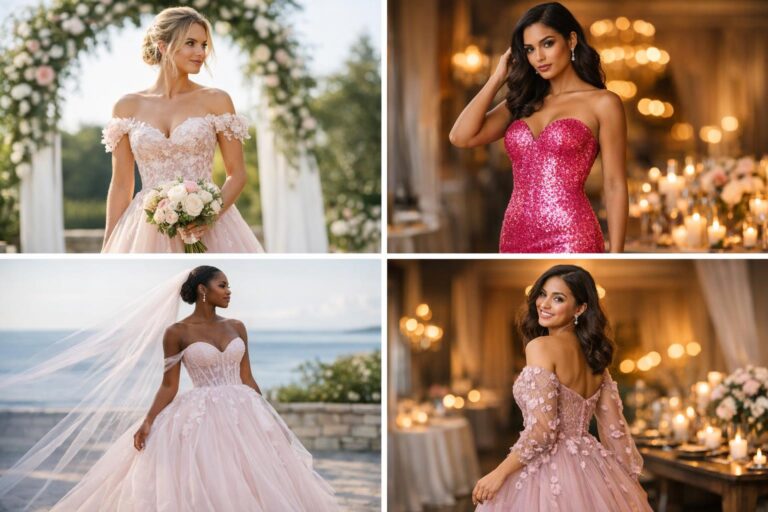
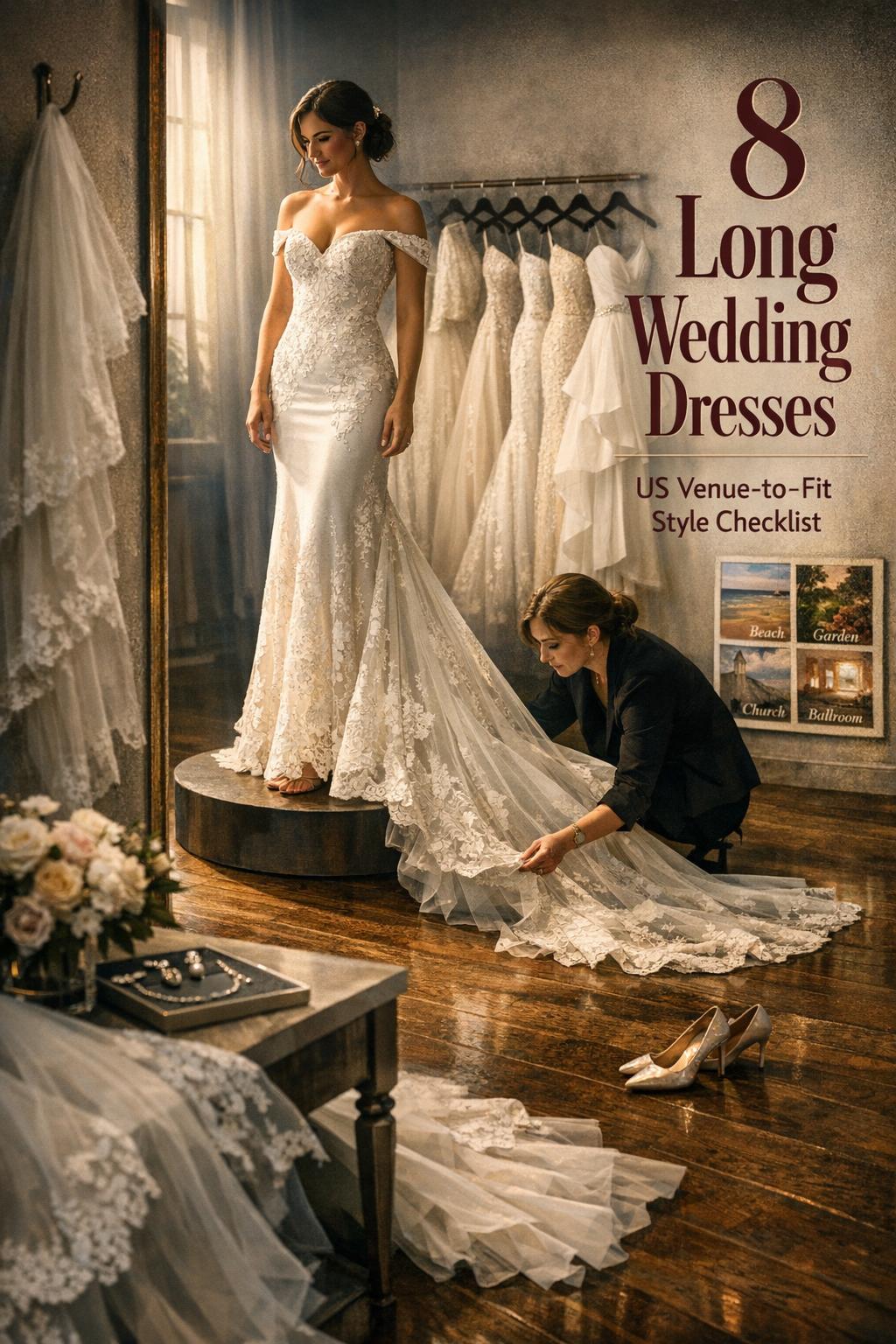
When you’re narrowing down long wedding dresses, inspiration is most helpful when it’s organized by silhouette and venue. Instead of saving dozens of unrelated photos, group your favorites into a few categories and look for patterns in what you consistently love—like lace plus long sleeves, satin in a clean sheath, or A-line with a train.
Build a Shortlist by Silhouette
A shortlist works best when it’s cohesive. If you’re comparing too many shapes at once, it becomes hard to evaluate what’s truly flattering versus what’s just different. Grouping by silhouette helps you make clearer decisions on fabric and details.
- A-line long wedding dress favorites
- Ballgown long wedding dress favorites
- Mermaid long wedding dress favorites
- Sheath/column full-length wedding dress favorites
- Boho long wedding dress favorites
Build a Shortlist by Venue and Formality
Venue-based grouping makes practical decisions easier, like whether you want a long train wedding dress, whether you prefer sleeves, and how formal you want the overall look. It also helps you spot which dresses can flex between ceremony and reception with minimal adjustments.
Tip: If you feel torn between two styles, try framing the choice as “Which dress best matches my venue and my movement needs?” That question often clarifies the right answer faster than focusing on tiny design differences.
FAQ
What length should my wedding dress be with heels?
Your wedding dress hem should be determined with your intended heel height in mind, because even small changes in shoes affect how a floor-length gown falls; bring your planned shoes (or a similar heel height) to fittings so the final hem length matches how you’ll actually wear the dress.
Do long wedding dresses work for petite brides?
Yes, long wedding dresses can look incredible on petite brides when proportions are prioritized, especially waist placement and a precise hem; a petite-friendly long gown often comes down to tailoring so the dress feels balanced rather than overwhelming.
How do I choose between a ballgown, A-line, and mermaid long wedding dress?
Start with how you want to feel and move: ballgowns deliver maximum drama and volume, A-line silhouettes offer classic balance and versatility, and mermaid styles create a more fitted, high-impact look; try walking, sitting, and turning in each shape to see which one fits your comfort and venue needs.
What are the best fabric options for long wedding dresses?
Common choices include lace for texture and romance, tulle for airy volume, satin for a sleek polished finish, and chiffon for lighter movement; the best option is the one that matches your silhouette, comfort preferences, and how formal you want the overall look to feel.
Are long wedding dresses with trains practical?
They can be practical if you match the train to your venue and movement needs, and many brides prefer options like detachable elements to keep the ceremony drama while making the reception easier; the key is testing how the train feels when walking and turning during try-ons.
How many alterations are typical for a long wedding dress?
Alterations are common for long gowns, especially for hem length and bodice fit, and it’s normal to have more than one fitting as details are refined; planning early helps you make consistent decisions about shoes, accessories, and comfort.
How should I style a long wedding dress for different venues like beach or ballroom?
For beach settings, prioritize easy movement and manageable length; for ballroom venues, dramatic silhouettes and trains can shine; for garden or church settings, classic floor-length gowns and thoughtful accessory choices (veil, jewelry, shoes) help the look feel cohesive and appropriate.
Where can I shop for long wedding dresses in the U.S.?
You can shop through major bridal retailers and e-commerce catalogs that filter by length, silhouette, sleeves, necklines, and price, and you can also browse marketplaces that compile floor-length wedding dresses across brands, including pre-owned options, depending on your budget and shopping preference.
How do I care for and store a long wedding dress after the wedding?
Focus on careful handling of delicate details like lace, beading, and trains, then choose intentional cleaning and storage so the gown’s shape and finish are protected; if the dress is a keepsake, preservation and basic documentation of its details can make long-term care easier.