9 Timeless Classic Wedding Dresses for Elegant US Brides
Classic Wedding Dresses: Timeless Styles, Silhouettes, and How to Choose Yours
Classic wedding dresses are the gowns brides return to again and again because they feel elegant, enduring, and “right” across venues, seasons, and decades. While fashion cycles shift, certain silhouettes, fabrics, and details consistently read as timeless—whether you’re drawn to a clean column gown, a structured A-line, or a full princess-style ball gown. This guide breaks down what makes a dress truly classic, the core shapes that never go out of style, and how to shop across budgets and brands while staying true to that timeless bridal look.
Instead of focusing on fleeting runway moments, you’ll find practical ways to evaluate fit, comfort, and styling—plus tips on fabrics, necklines, sleeves, and customization. If you’re looking for a classic bridal gown that photographs beautifully today and still feels iconic years from now, start here.
What Makes a Dress “Classic”?
A dress reads as classic when it balances restraint and romance: a recognizable, time-tested silhouette; high-impact fabric with an elevated finish; and details that enhance rather than overpower. Classic wedding dresses tend to rely on proportion and structure more than novelty—think clean lines, refined lace placement, subtle beading, or a polished satin or mikado surface that looks intentional from every angle.
Classic doesn’t mean plain. Many timeless bridal gowns include unmistakable design moments—strapless bodices, sculpted necklines, long sleeves, or an elegant train—but those elements feel integrated into the gown rather than competing for attention. In other words, the dress wears you, not the other way around.
Tip: If you’re unsure whether a gown will feel classic long-term, consider how it would look in a simple portrait with minimal styling. If the silhouette still feels strong and the details still feel refined without extra accessories, you’re likely looking at a timeless design.
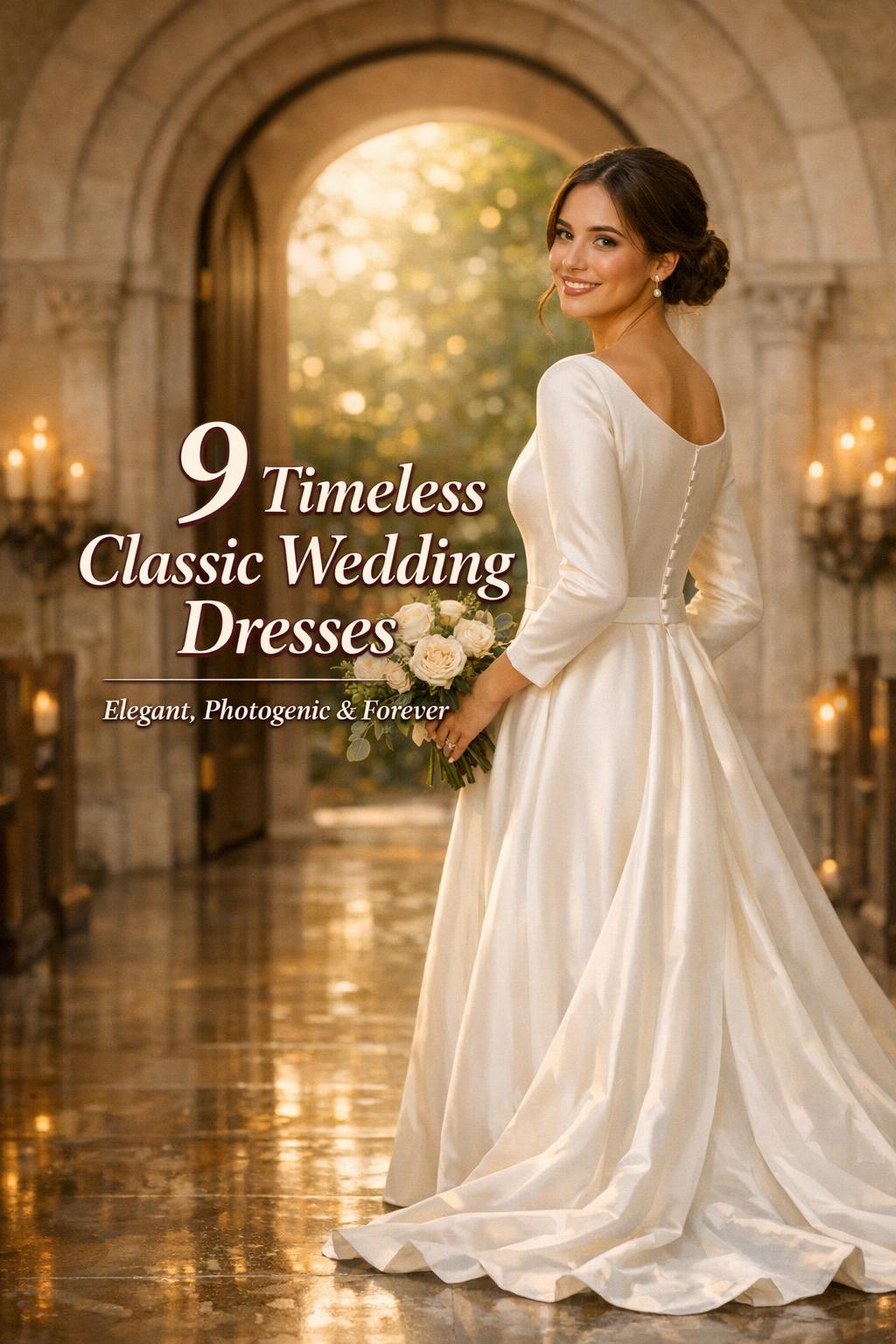
The Core Silhouettes That Never Go Out of Style
Silhouette is the foundation of a timeless wedding dress. While trends may highlight certain shapes in specific years, these core silhouettes consistently appear in classic collections and editorial roundups because they flatter a range of brides and suit a wide variety of ceremonies.
A-line: Flattering Movement and Versatility
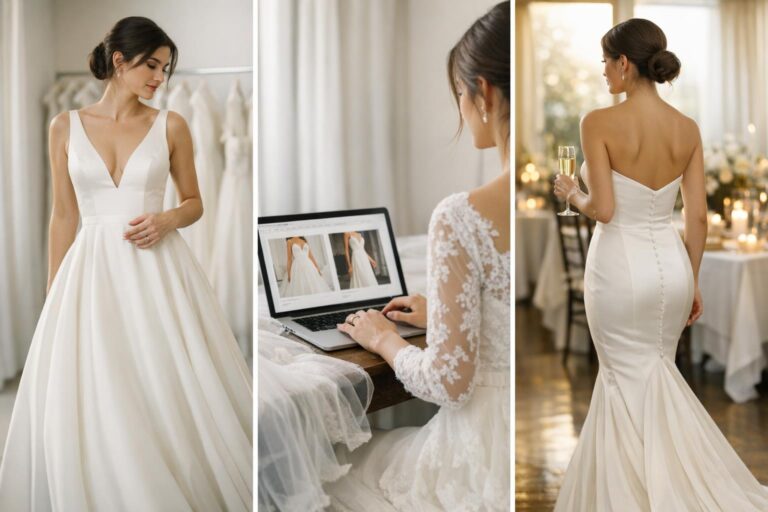
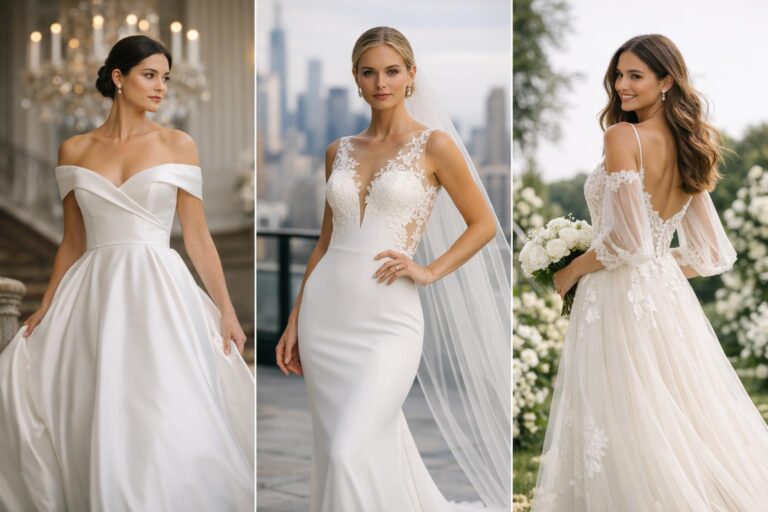
An A-line classic wedding dress is defined by a fitted bodice that gently flares from the waist, creating a clean, balanced shape. This silhouette is often associated with effortless elegance because it’s formal without being overly dramatic, and it moves well for ceremonies, photos, and dancing. An A-line can look equally timeless in satin, lace, crepe, or tulle, which makes it one of the most versatile “forever” options.
Tip: If you want a classic look that adapts to many venues—church, garden, city, or ballroom—start with A-line. Then decide whether you want the emphasis to come from fabric (like mikado) or detail (like lace).
Ball Gown (Princess): Iconic Formal Drama
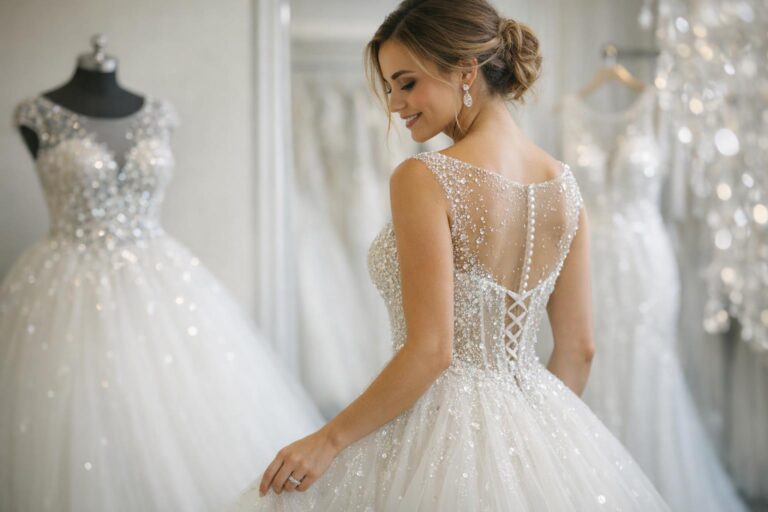
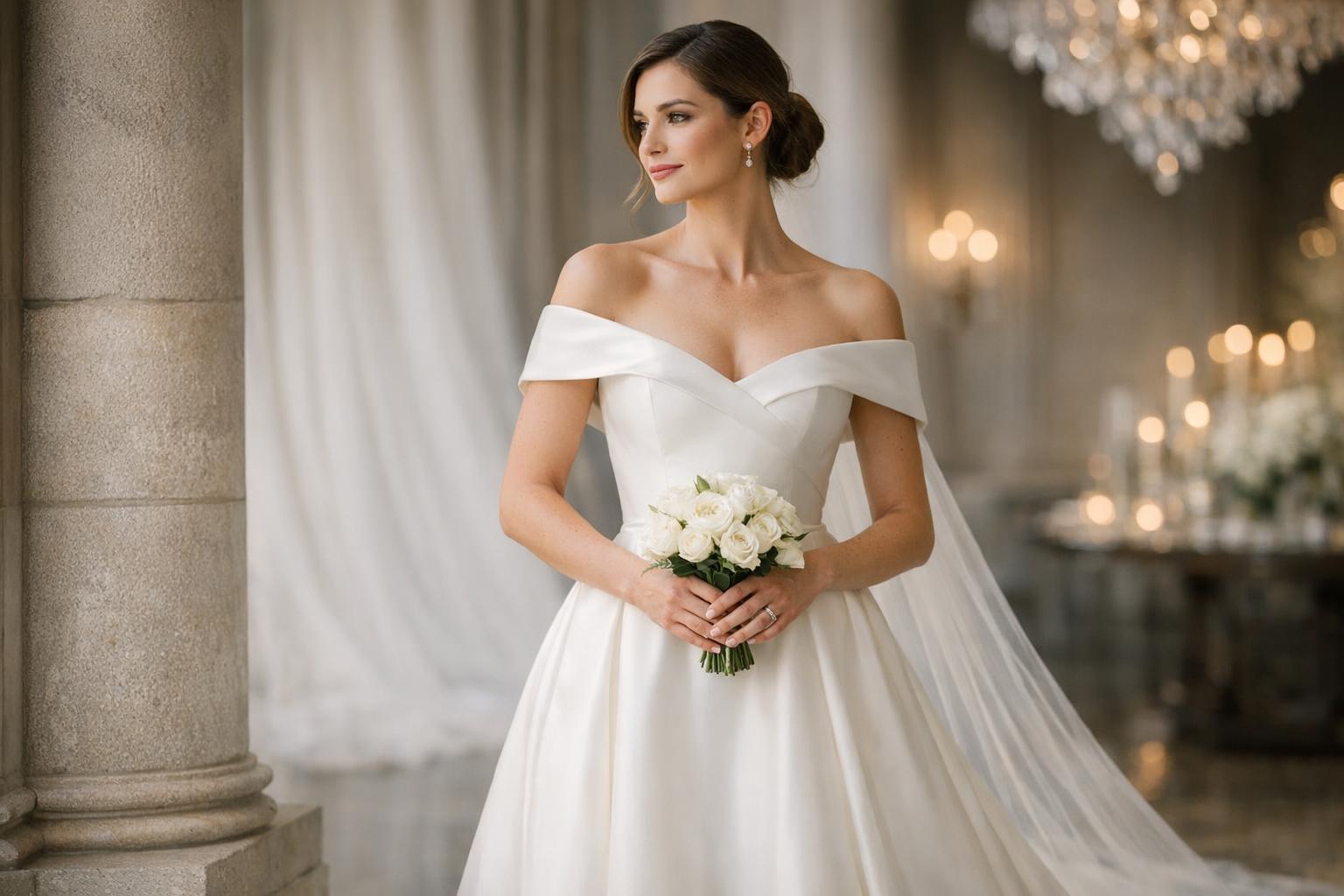
Ball gowns—often called princess gowns—pair a structured bodice with a full skirt for a high-impact entrance. This silhouette is a staple in classic bridal styling because it instantly reads as ceremonial and traditional, especially for black-tie celebrations, grand venues, and formal religious ceremonies. The key to keeping a ball gown classic is proportion and finish: clean lines in satin or mikado, thoughtful lace placement, and a skirt volume that feels intentional rather than costume-like.
Tip: If you love the idea of a ball gown but worry about feeling overwhelmed, look for a defined waist and a skirt that flows rather than stiffly stands. The right balance preserves the timeless effect.
Mermaid and Fit-and-Flare: A Modern Hourglass Classic
Mermaid and fit-and-flare silhouettes are often chosen for their sculpted, confident shape. They can still feel classic when paired with timeless fabrics like crepe or satin, or when lace is used in a refined, elegant way rather than overly ornate. This silhouette frequently appears in brand “classic” sections because it delivers a formal, bridal look with a sleek profile.
Tip: For a more enduring take, consider a fit-and-flare instead of an ultra-tight mermaid. The transition from fitted to flared is softer, and movement can feel more natural while keeping the signature hourglass line.
Sheath and Column: Minimalist Elegance
Sheath and column gowns are the cornerstone of minimalist, timeless bridal style. Their beauty comes from clean construction, elegant fabric, and a silhouette that feels effortless. These shapes are frequently highlighted in luxury editorial picks because they allow subtle “extra details”—like a refined neckline, immaculate seaming, or a dramatic train—to stand out without clutter.
Tip: If you’re considering a column silhouette, prioritize impeccable fit and fabric quality. In minimalist gowns, the tailoring and finish do the heavy lifting.
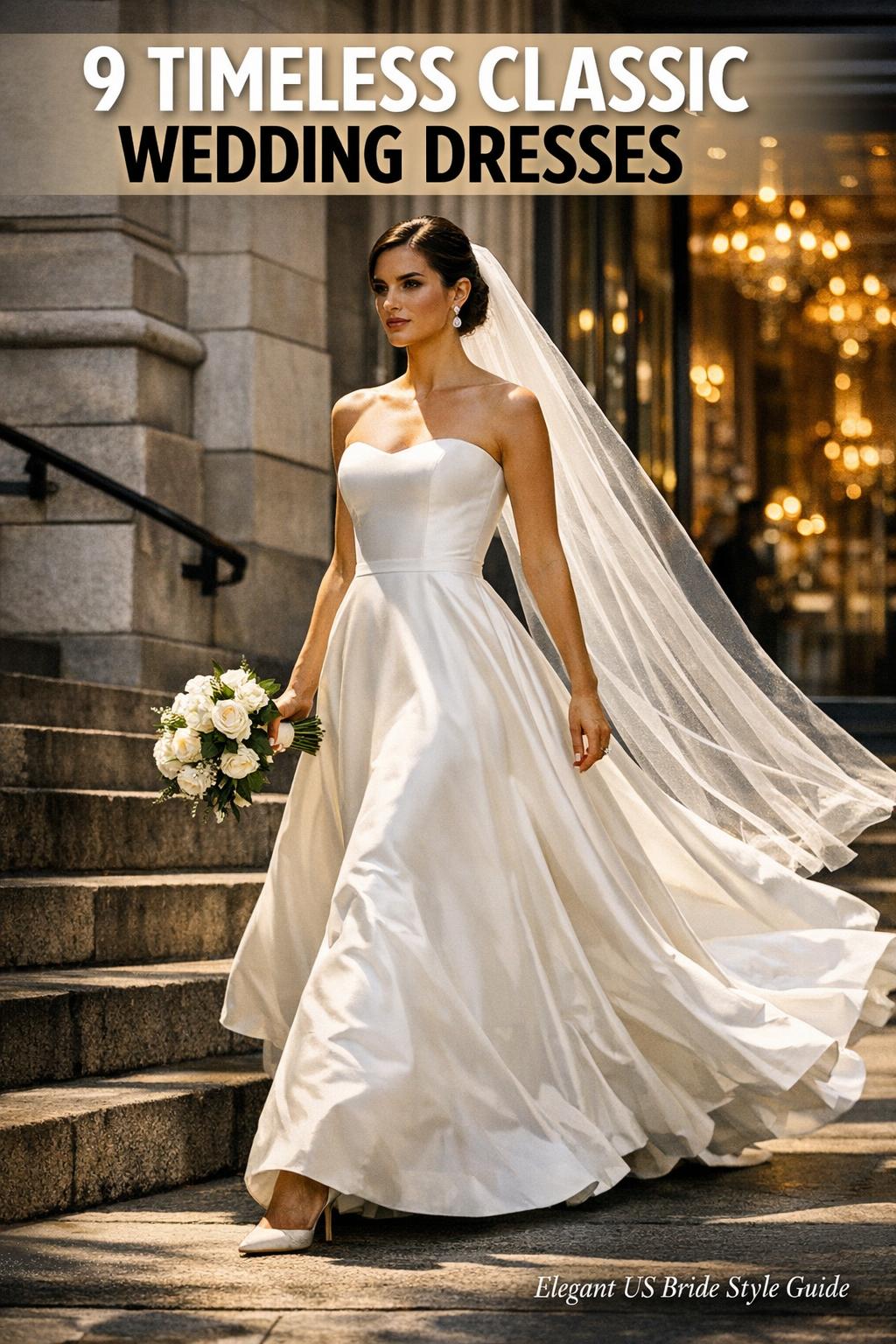
Fabrics and Details That Read Classic
Fabric and detailing are where a timeless wedding dress becomes unmistakably elevated. Many classic bridal gowns use a small number of materials and keep embellishment intentional. The result is a look that feels polished across decades—whether your style leans traditional, vintage-inspired, or modern-luxe.
Signature Fabrics: Lace, Satin, Crepe, Tulle, and Mikado
Classic collections frequently center on lace, satin, crepe, tulle, and mikado because each fabric communicates elegance in a distinct way. Lace can feel traditional and romantic; satin reads formal and luminous; crepe tends to look sleek and refined; tulle adds softness and volume; and mikado is prized for its structured, couture-like presence. Choosing the right fabric is less about what’s “in” and more about what best supports your preferred silhouette and level of formality.
- Lace: Often used as an overlay, bodice detail, or illusion element for timeless romance.
- Satin: Smooth, classic sheen that suits ball gowns and A-lines beautifully.
- Crepe: Clean and modern, especially striking in sheath or fit-and-flare shapes.
- Tulle: Light, airy volume that complements classic princess styling.
- Mikado: Structured and refined, ideal for crisp silhouettes and sculpted bodices.
Tip: When comparing fabrics, move and sit in the gown (or as close as you can during try-on). A fabric that looks timeless in photos should also feel workable in real life—especially if your day includes stairs, ceremony seating, and dancing.
Necklines and Sleeves That Feel Timeless
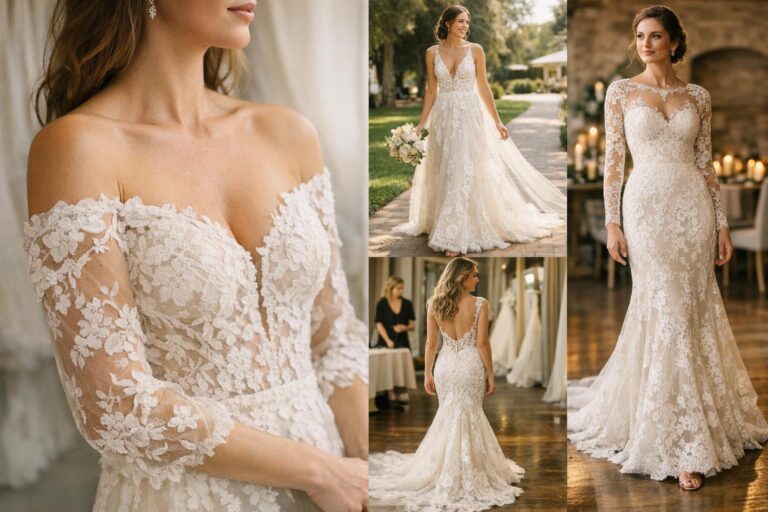
Necklines and sleeves are among the fastest ways to signal “classic” without changing the entire gown. Timeless bridal styling often includes strapless bodices, clean scoop shapes, and refined boat or bateau lines. Illusion lace is another common classic cue, especially when used to create a soft, elegant frame at the neckline or along sleeves without feeling heavy.
Classic sleeves can range from delicate lace to clean long sleeves depending on the overall aesthetic. The most enduring approach is consistency: if the gown is minimalist, keep sleeves simple and tailored; if the gown is lace-forward, keep lace placement intentional and balanced.
Beading and “Extra Details” Without Losing the Classic Look
Classic doesn’t require zero sparkle—it requires control. Subtle beading, tasteful embroidery, and thoughtfully placed texture can elevate a gown while preserving a timeless effect. Editorial dress roundups often group “extra details” as standout features, but the most classic versions keep those details cohesive with the gown’s silhouette and fabric story.
Tip: If you love embellishment, look for gowns where detail appears in one primary zone (bodice, neckline, or hem) rather than across every surface. This helps the dress remain elegant instead of busy.
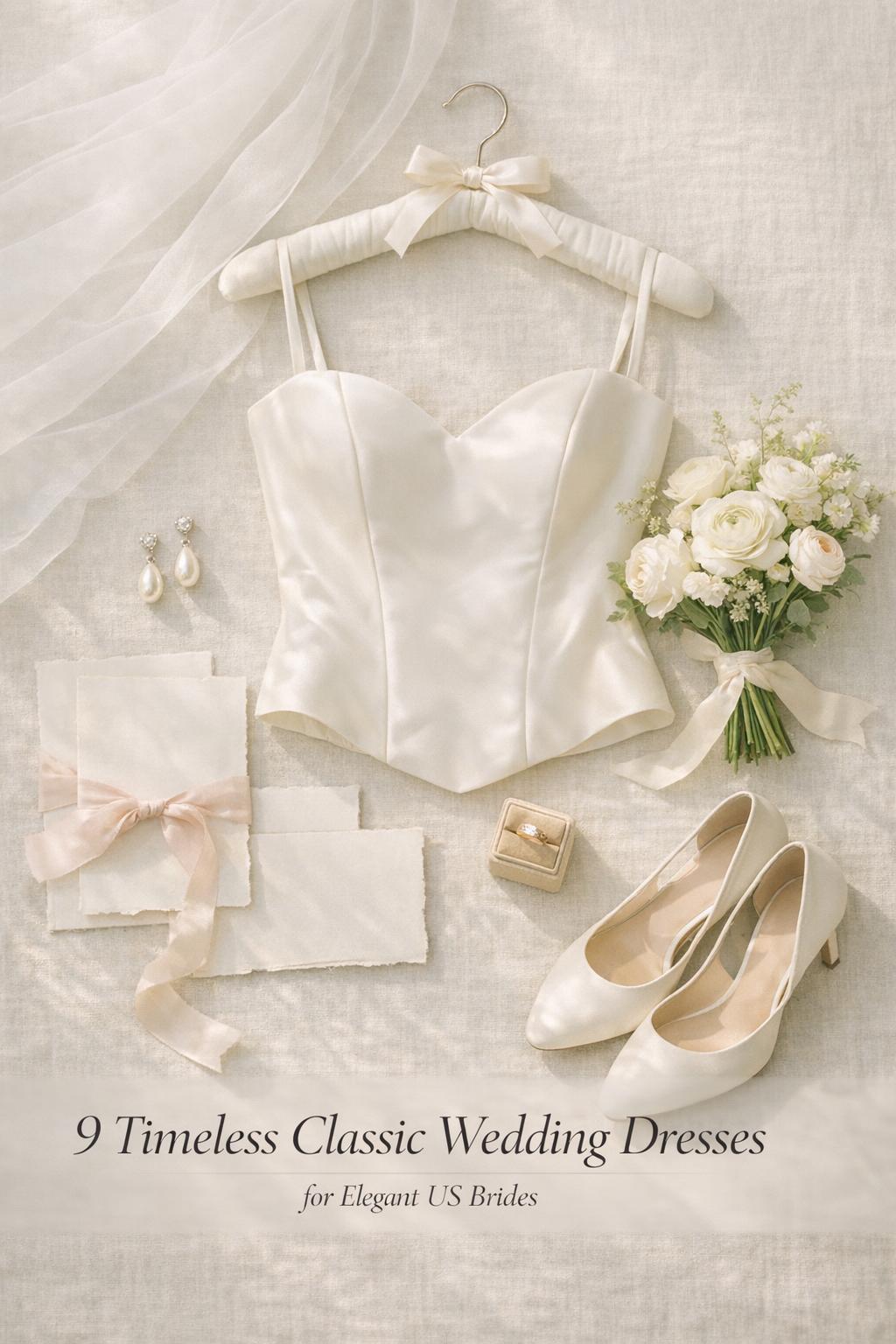
How to Match Classic Dresses to Your Wedding Style
The same classic wedding dress can read differently depending on venue, styling, and overall formality. Rather than treating “classic” as one look, think of it as a flexible foundation you can tailor to your setting—traditional, outdoor, or modern-luxe.
Church Ceremony or Formal Ballroom Reception
For traditional ceremonies and formal receptions, classic silhouettes like ball gowns and structured A-lines often feel most aligned with the setting. Satin and mikado tend to read especially refined in these environments, and lace can enhance a timeless, ceremonial mood. A train can also feel more at home in formal spaces where grand entrances and longer aisles are part of the experience.
Tips: If you’re planning a more formal day, prioritize support in the bodice and consider how you’ll handle the train after the ceremony. A well-planned bustle can protect the dress and make the reception more comfortable.
Garden Weddings and Seasonal Outdoor Celebrations
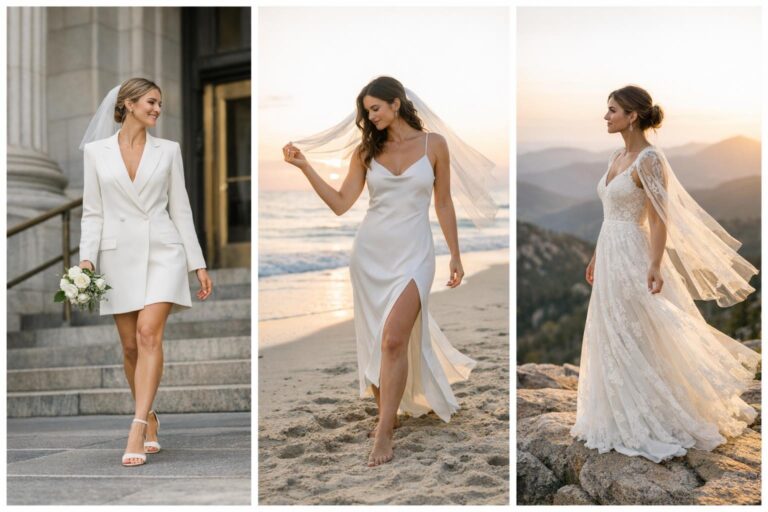
Outdoor weddings pair beautifully with classic A-line silhouettes and lighter fabric stories—think tulle for soft movement or lace used in a delicate, airy way. A timeless outdoor look often balances romance with practicality: a gown that photographs beautifully in natural light while still allowing comfortable movement across grass, pathways, or uneven terrain.
Tips: If your venue is outdoors, practice walking and turning in the silhouette you choose. Classic doesn’t have to mean heavy, and many vintage-inspired options aim for comfort and movement while preserving that timeless bridal feeling.
City Weddings and Modern Luxe Celebrations
City venues and modern-luxe celebrations often highlight clean lines, polished construction, and editorial silhouettes like sheath and column gowns. Strapless styling can feel especially classic in a modern way, and crepe is often associated with sleek elegance. You can keep the look timeless by choosing one “hero” element—like a dramatic train, sculpted neckline, or precise tailoring—while leaving everything else refined and minimal.
Tip: If your dress is minimalist, focus your styling choices: a clean veil, simple jewelry, and a thoughtful hairstyle can make the entire look feel intentional and enduring.
Real-World Comfort and Fit: Movement, Support, and Alterations
A timeless wedding dress should still feel wearable. Comfort often comes down to how the bodice is built, whether the dress provides bra or corset-like support, and how the skirt behaves when you sit, walk, and dance. This is especially important for structured satin or mikado gowns and for fitted silhouettes like mermaid and fit-and-flare, where mobility can change significantly once the dress is tailored to you.
Alterations are a normal part of achieving a classic look because the hallmark of timeless style is fit that appears effortless. Hemming, strap adjustments, and bodice tailoring can refine proportions so the silhouette looks clean and intentional rather than “off the rack.”
- Practice movement early: Walk, sit, and raise your arms during try-ons to spot tightness or shifting.
- Plan for support: Consider whether you want built-in structure or space for your preferred undergarments.
- Factor in bustle needs: If your gown has a train, plan how it will be managed for the reception.
Tip: If you’re torn between two classic silhouettes, choose the one you can imagine wearing comfortably for hours. The most timeless photos come from a bride who looks relaxed, not restricted.
Color, Length, and Customization Options
Classic bridal style isn’t limited to a single shade or a single train length. Subtle choices—like ivory versus white, or a more manageable train—can preserve a timeless look while making the gown feel better suited to your preferences and wedding format.
Ivory vs. White and Subtle Hue Shifts
White and ivory are both common choices in classic wedding dresses, and the difference can be more about the overall softness or crispness you want in your look. A shade that feels “classic” is one that harmonizes with your gown’s fabric and details—especially lace, which can read differently depending on the underlying tone.
Tip: When comparing shades, view the dress in more than one lighting condition if possible. A tone that feels perfect in a boutique can look different in natural daylight.
Train Lengths and Bustle Planning
Trains contribute heavily to that timeless bridal feeling, particularly in formal settings. But classic doesn’t require the longest train possible—it requires proportions that match the silhouette and your day’s logistics. A well-chosen train can look iconic during the ceremony, then be managed with a bustle so you can move comfortably at the reception.
Tip: If you love the look of a train but worry about practicality, focus on bustle planning early. A polished bustle helps preserve the gown’s classic lines rather than disrupting them.
Shopping Guide: Classic Wedding Dresses Across Budget Tiers
Shopping for a classic bridal gown usually looks one of two ways: curated editorial inspiration that highlights standout dresses and designers, or brand collections that let you filter by silhouette, neckline, sleeves, and fabric. A smart approach combines both: get inspired by timeless silhouettes and details, then narrow your search using the practical facets that matter most to you.
High-End and Editorial Designer Picks
If you’re exploring luxury territory, editorial selections often spotlight designer-driven gowns where structure, fabric choice, and craftsmanship define the “timeless” factor. You’ll commonly see classic strapless styles, refined columns, and sculptural ball gowns, along with carefully controlled “extra details.” Designer names frequently featured in classic and best-dress roundups include labels such as Markarian, Ralph Lauren, and Vivienne Westwood, alongside bridal-focused designers known for timeless silhouettes and craftsmanship.
Classic designer shopping is especially useful if you have a strong point of view—minimalist elegance, traditional grandeur, or modern-luxe—and want a gown where every design choice feels intentional.
Established Bridal Brands With Classic Collections
Many well-known bridal houses maintain dedicated “classic” sections that make shopping more straightforward. These collections typically include princess ball gowns, A-line gowns, mermaid silhouettes, and other timeless staples, often with filters for lace, sleeves, and necklines. Brands with clear classic-category offerings include Pronovias and House of St. Patrick (San Patrick), where the catalog approach helps you quickly compare shapes and styling details.
Tip: When browsing catalog-style collections, pick two “must-have” filters and two “nice-to-have” filters. For example: must-have A-line and satin; nice-to-have sleeves and a certain neckline. This keeps the search focused without excluding unexpectedly perfect options.
Modern Vintage-Inspired and Comfort-Forward Options
Not every classic wedding dress is traditional in the strict sense. Many brides want a vintage-inspired classic vibe—romantic lace, soft silhouettes, and an overall timeless mood with a modern approach to movement and comfort. Grace Loves Lace is a prominent example of a brand that frames its assortment as a modern take on vintage styling, often emphasizing how the gown feels as well as how it looks.
This lane can be especially appealing if you want classic romance without a heavily structured ball gown, or if comfort and ease are central to your day.
Accessible and Online-Friendly Classic Collections
If you’re shopping with a tight timeline or a defined budget, online collections can still deliver classic silhouettes and vintage-inspired looks. Catalog-style stores and boutiques often group classic wedding dresses into easy-to-browse sections with product grids, price-forward browsing, and a mix of strapless and sleeved options. Examples in this category include Nataya and Alisse Bridal, as well as larger online selections like Victoria’s Queen that organize classic styles with category facets.
Tip: When buying online, prioritize listings that clearly show the silhouette and fabric effect in multiple angles. For timeless styles, clarity matters: you want to see the bodice structure, skirt drape, and the finish of lace or beading.
How to Build a Timeless Look With Accessories and Styling
Classic wedding dresses give you flexibility: you can keep everything understated for a traditional, elegant feel or add a few refined touches to personalize the look. The goal is cohesion. Since timeless gowns rely on silhouette and finish, accessories should support the dress instead of competing with it.
- If your gown is lace-forward: Keep jewelry simple so the texture remains the focal point.
- If your gown is minimalist: Consider one statement element—like a veil style, a bold but clean neckline choice, or a defined train moment.
- If your gown has beading: Echo the tone subtly rather than layering on more sparkle.
Tip: A timeless styling trick is to repeat one idea two or three times, then stop. For example: clean satin gown, simple veil, and refined earrings. Or: lace bodice, subtle hair detail, and minimal jewelry. Repetition makes the overall look feel intentional and classic.
Care, Preservation, and Resale Considerations for Classic Gowns
Because classic bridal gowns are designed to endure aesthetically, many brides also think about how the dress will endure physically—before, during, and after the wedding. Preservation and care planning are especially important for delicate lace, detailed beading, and lighter layers like tulle, as well as for structured fabrics that crease or mark if handled roughly.
Classic wedding dresses can also be strong candidates for resale or consignment because timeless silhouettes and fabrics tend to appeal to future brides. If resale is part of your plan, keep customization choices and heavy alterations in mind, and prioritize careful handling during the day so the gown stays in the best possible condition.
Tip: If you’re adding personalization, aim for reversible or easily removable options when possible. A timeless gown with flexible styling can be easier to repurpose, preserve, or pass on.
Gallery in Words: 20 Enduring Classic Wedding Dress Ideas to Inspire Your Search
If you’re not sure where to start, use these classic wedding dress ideas as a quick inspiration gallery. They’re not tied to one brand or one year; they’re built around enduring silhouettes, fabrics, and details commonly seen in classic collections and editorial dress spotlights.
- A strapless satin ball gown with a clean, structured bodice
- An A-line lace gown with an illusion lace neckline
- A crepe column dress with minimalist seaming and a refined train
- A mikado A-line with a crisp skirt and understated neckline
- A fit-and-flare crepe gown with subtle, elegant contouring
- A traditional princess gown with lace appliqué concentrated on the bodice
- A tulle ball gown with soft volume and classic proportion
- A scoop-neck satin A-line for a timeless, balanced frame
- A bateau/boat-neck gown emphasizing clean, classic lines
- A long-sleeve lace gown with restrained, elegant pattern placement
- A strapless column gown with one standout “extra detail” (like a dramatic train)
- A mermaid silhouette in satin with controlled, refined embellishment
- An A-line gown pairing lace and satin for traditional romance
- A minimalist sheath with a polished finish and classic neckline
- A structured mikado ball gown for formal, black-tie grandeur
- A vintage-inspired gown with classic lace texture and soft movement
- A lace-and-tulle A-line that feels airy for outdoor celebrations
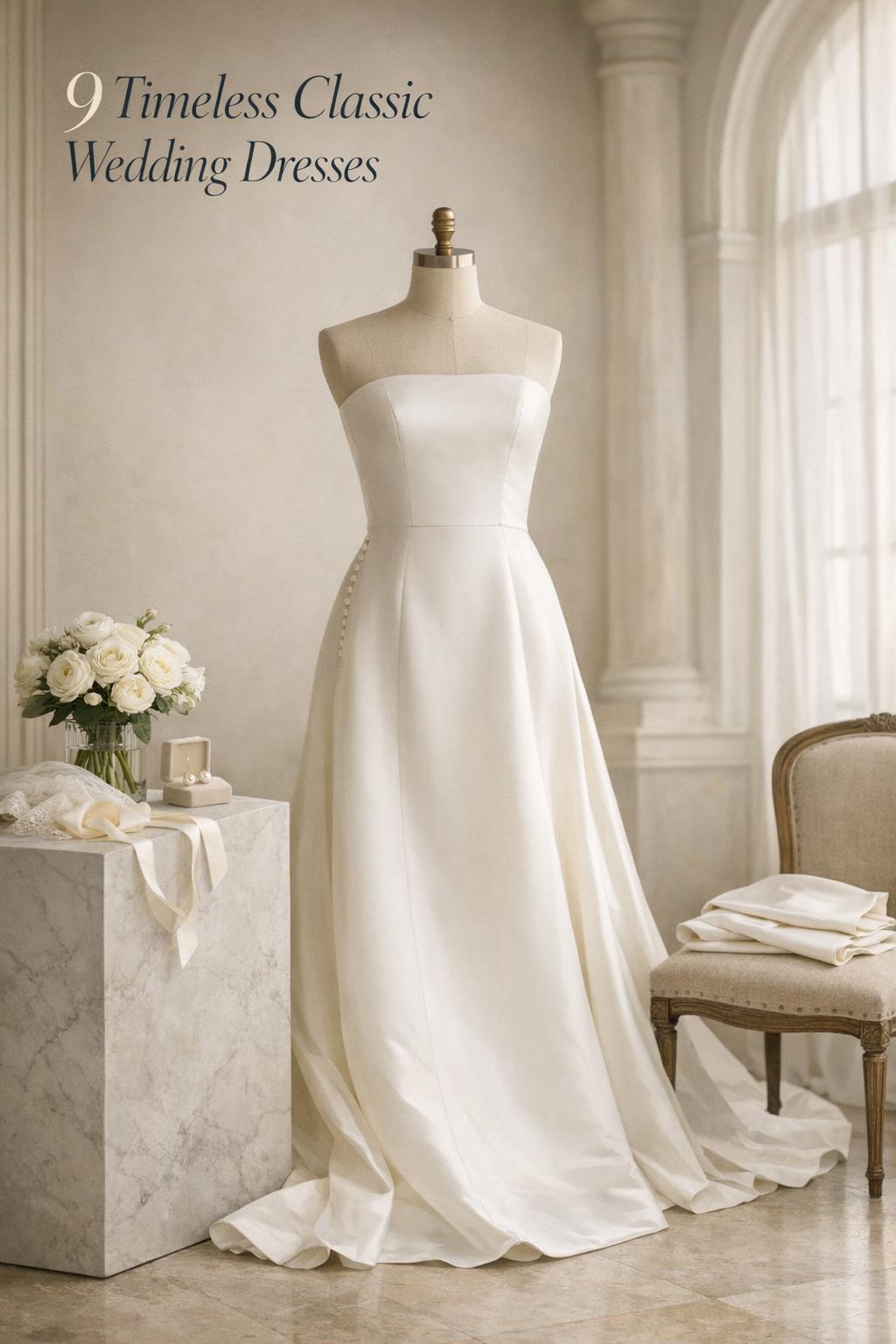
- A clean satin gown with a timeless strapless bodice and simple skirt
- A refined A-line with subtle beading placed thoughtfully for glow, not sparkle overload
- A classic gown with a ceremony-ready train and reception-ready bustle plan
Tip: Choose three ideas from the list that genuinely feel like you, then translate them into shopping filters: silhouette (A-line/ball gown/column), fabric (lace/satin/crepe/mikado/tulle), and one detail (strapless, sleeves, illusion lace, or subtle beading). That combination is often enough to narrow a huge market into a manageable shortlist.
Final Checklist: Choosing a Classic Wedding Dress With Confidence
Before you commit, use this checklist to pressure-test whether a gown truly fits your timeless vision and your real-life wedding day needs.
- Does the silhouette feel timeless on you (A-line, ball gown, mermaid/fit-and-flare, sheath/column)?
- Does the fabric support the look and the venue (lace, satin, crepe, tulle, mikado)?
- Is the detailing refined and cohesive rather than overly busy?
- Can you walk, sit, and move comfortably—especially if it’s fitted?
- Do you have a plan for support in the bodice (built-in structure, bra/corset considerations)?
- If there’s a train, have you considered bustle planning for the reception?
- Does the dress still look “you” with minimal accessories?
- Does it match your wedding style (church/formal, outdoor, city/modern luxe)?
A classic wedding dress is ultimately the one that makes you feel unmistakably bridal without relying on a trend to do the work. When silhouette, fabric, fit, and styling align, you get a timeless result that’s both elegant now and enduring later.
FAQ
What are classic wedding dresses?
Classic wedding dresses are gowns defined by timeless silhouettes, refined fabrics, and cohesive details that don’t rely on a short-lived trend. They often feature enduring shapes like A-line, ball gown, sheath/column, or mermaid/fit-and-flare, paired with fabrics such as lace, satin, crepe, tulle, or mikado.
Which silhouette is the most timeless?
A-line is often considered the most universally timeless because it balances elegance and wearability and works across many venues and fabric choices. That said, ball gowns, columns, and fit-and-flare silhouettes can be equally classic when the proportions and detailing are refined.
How do I choose a neckline that looks classic?
Classic necklines are typically clean and balanced, such as strapless, scoop, or boat/bateau shapes, and illusion lace can also read timeless when used with restraint. The best choice is the neckline that feels cohesive with your gown’s fabric and silhouette while giving you the support and comfort you need.
How many alterations does a typical classic gown need?
Alterations are common for classic wedding dresses because a timeless look depends on precise fit, especially at the bodice and hem. Many brides plan for at least basic tailoring like hemming and bodice adjustments, with additional work depending on straps, sleeves, and train or bustle needs.
Can I wear a classic wedding dress for a non-traditional venue?
Yes—classic bridal gowns are flexible and can be styled to fit many settings, including outdoor, city, and modern spaces. The key is choosing the right silhouette and fabric for the environment, then styling with cohesive accessories that match the venue’s formality.
What fabrics feel the most classic?
Lace, satin, crepe, tulle, and mikado are among the most classic bridal fabrics because they consistently communicate elegance and photograph beautifully. The most timeless choice is the one that supports your silhouette—structured fabrics like mikado for crisp shapes, or softer fabrics like tulle for airy volume.
How do I keep beading or “extra details” from looking too trendy?
To keep embellishment timeless, look for beading or ornate details used in a controlled, cohesive way—such as concentrated around the bodice or neckline rather than spread everywhere. When the gown’s silhouette remains the star and the details feel integrated, the overall look stays classic.
What should I consider if my classic gown has a train?
If your dress has a train, plan ahead for how it will work during both the ceremony and reception. A bustle plan helps you move comfortably later in the day while preserving the gown’s clean, classic lines.
Are vintage-inspired wedding dresses considered classic?
Many vintage-inspired gowns can be considered classic when they use timeless silhouettes and refined materials, especially lace and other elegant textures. A modern take on vintage styling can still feel enduring if the overall design remains cohesive and not overly costume-like.