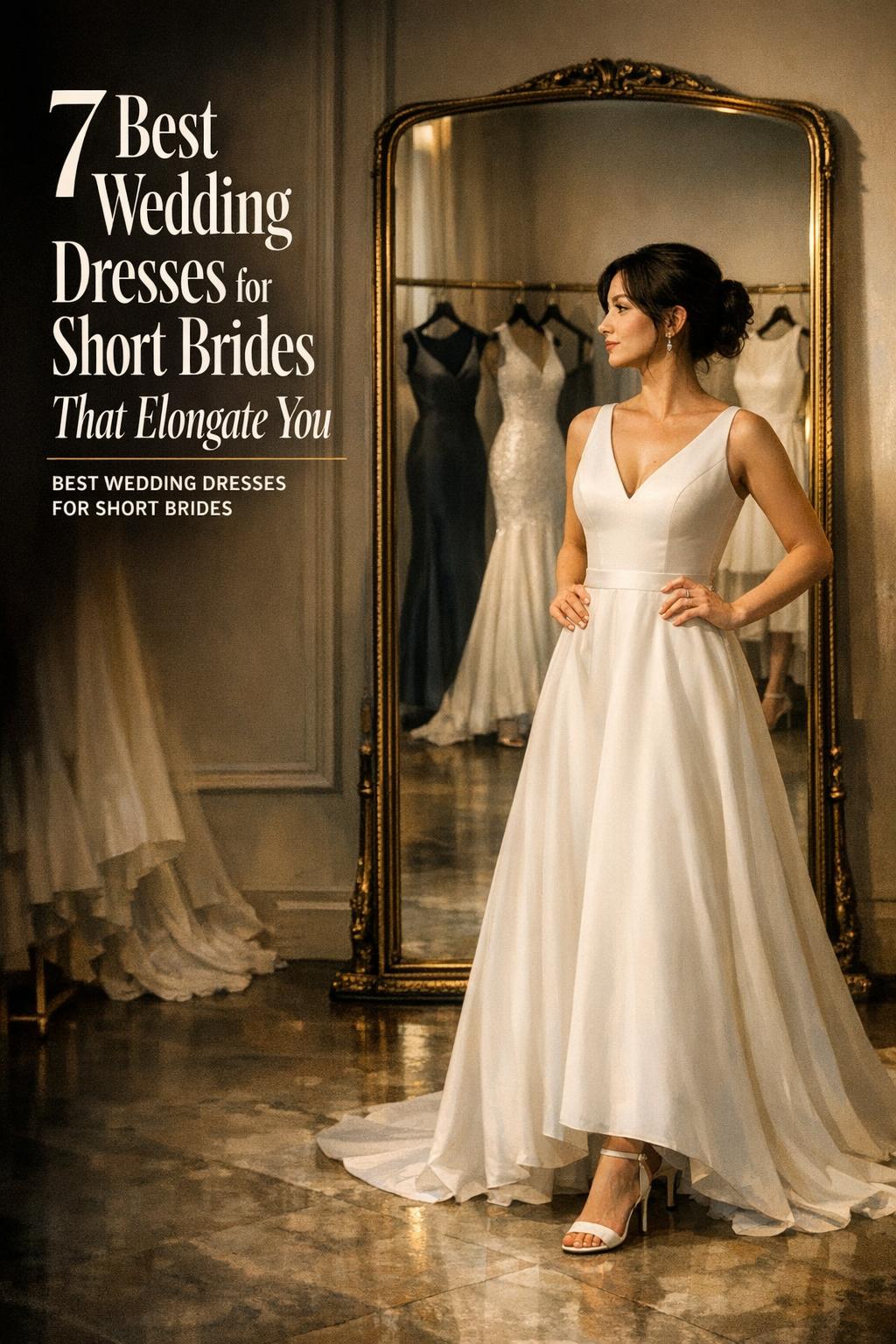
7 Best Wedding Dresses for Short Brides That Elongate You
Best Wedding Dresses for Short Brides: A Petite-First Guide to Silhouettes, Fits, and Styles
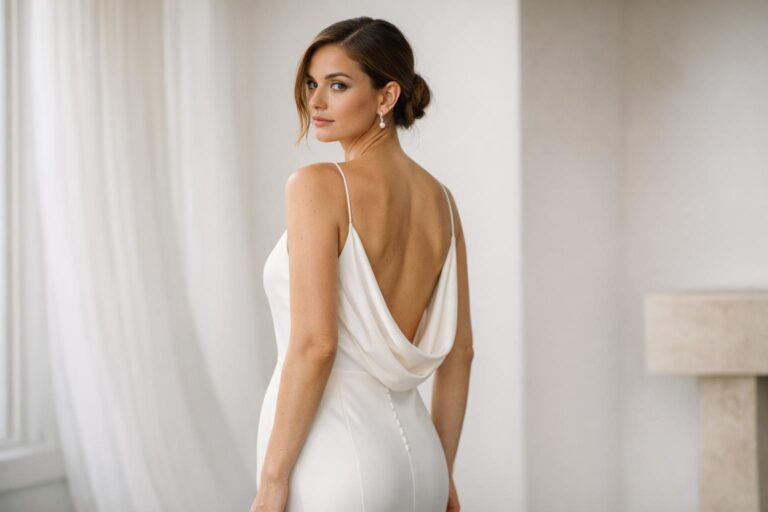
Finding the best wedding dresses for short brides often comes down to one thing: proportion. A dress can be beautiful on a hanger and still feel “off” when the waist sits too low, the skirt overwhelms your frame, or the neckline shortens the look of your torso. The good news is that petite-friendly bridal shopping is more flexible than ever, with strong options across short wedding dresses, tea-length and midi-length wedding dress styles, and modern high-low wedding dress silhouettes—plus tailoring strategies that can make nearly any look feel custom.
This guide is built for short brides who want both inspiration and a practical plan. You’ll find a petite-first approach to silhouettes (A-line, fit-and-flare, sheath, mini, tea-length, midi, and high-low), neckline and detail choices that complement a smaller frame, fabric and construction tips, a budget ladder, a real-world “lookbook” approach for different venues, and an alteration roadmap so you can buy with confidence.
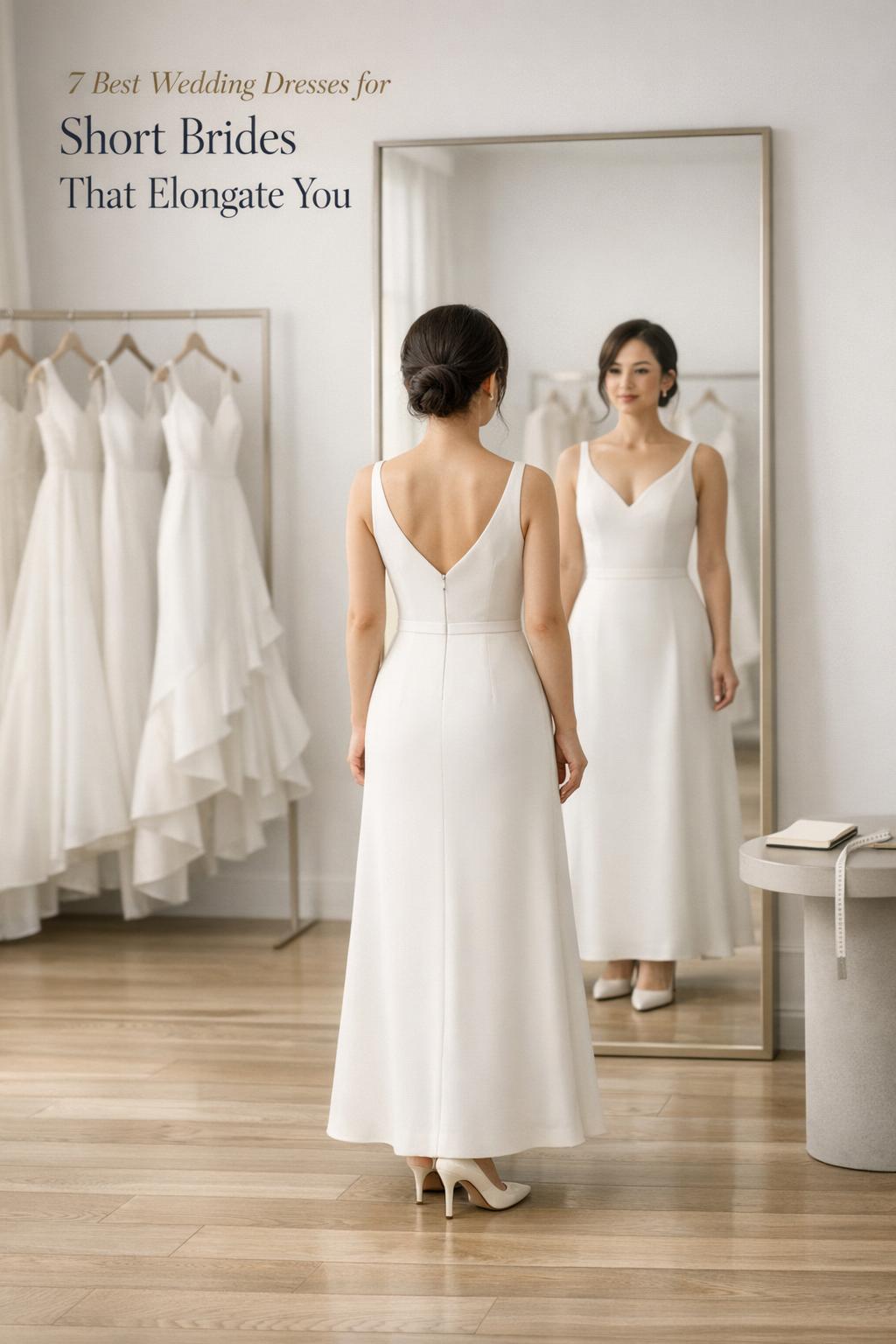
Understanding Proportions for Short Brides
Height matters in bridal because dresses are designed around standard proportions, not just overall length. For short brides, the most common frustration isn’t simply that the hem is too long—it’s that multiple points on the dress (waistline, bust placement, strap length, hip curve, and skirt volume) can land in the wrong place. When you evaluate petite wedding dress ideas, think in terms of where the dress “breaks” your body into visual sections and how cleanly the lines flow from neckline to waist to hem.
Key tailoring adjustments that make a dress feel custom
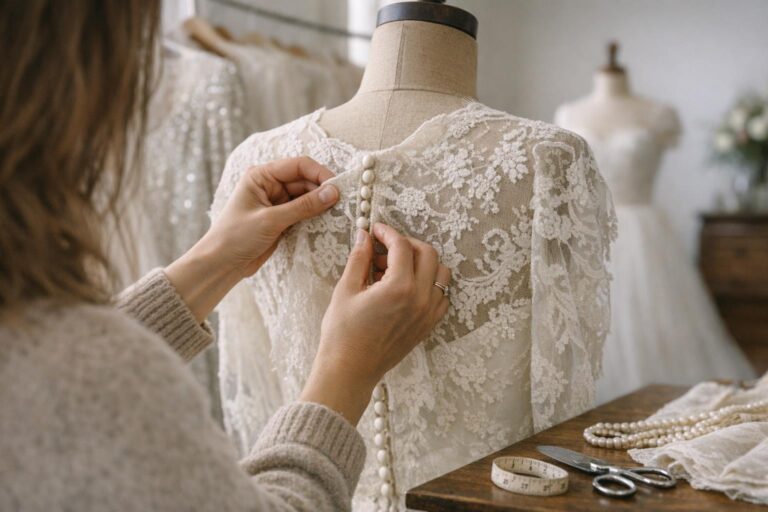
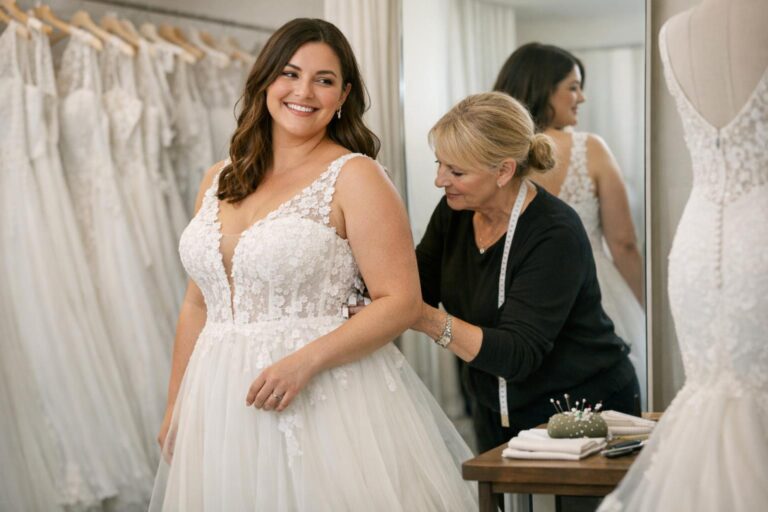
The most impactful petite wedding dress alterations usually target fit before length. Hemming is common, but short brides often benefit even more from restoring the intended proportions of the design. A bodice that’s shortened slightly can lift the waist to the right spot, straps can be adjusted to keep the neckline from dipping too low, and subtle shaping can prevent extra fabric from bunching at the torso. When the top half fits properly, the skirt drapes more cleanly and looks more intentional—whether you choose a mini wedding dress, a tea-length wedding dress, or a more traditional silhouette.
Your wedding look is only the beginning.
Keep your guest list, vendors, timeline, and every important detail together with Zarellea — so your day feels as considered as your style.
Tips: When you try on dresses, take a quick mirror check from three angles: front (waist placement), side (bust and torso smoothness), and back (zipper line and seat/hip fit). If you’re tugging the bodice up or the straps are sliding, that’s a proportion issue—not a “size” issue—and it’s a tailoring conversation worth having early.
How heel height influences silhouette
Heel height is one of the easiest levers short brides can use to refine a silhouette, especially with short wedding dresses and tea-length or midi-length hems where shoes are visible. A small change in heel height can shift the hem’s visual balance, change how the skirt moves, and affect posture. It also matters for alterations: you want to finalize (or at least commit to) your wedding shoe height before the final hem and bustle decisions are made.
Tips: If you’re choosing a high-low wedding dress, bring your ceremony shoes to the fitting. The shorter front hem makes shoe height and shape more noticeable, and the “right” look is usually the one that keeps the front line clean and intentional rather than hovering awkwardly above the ankle.
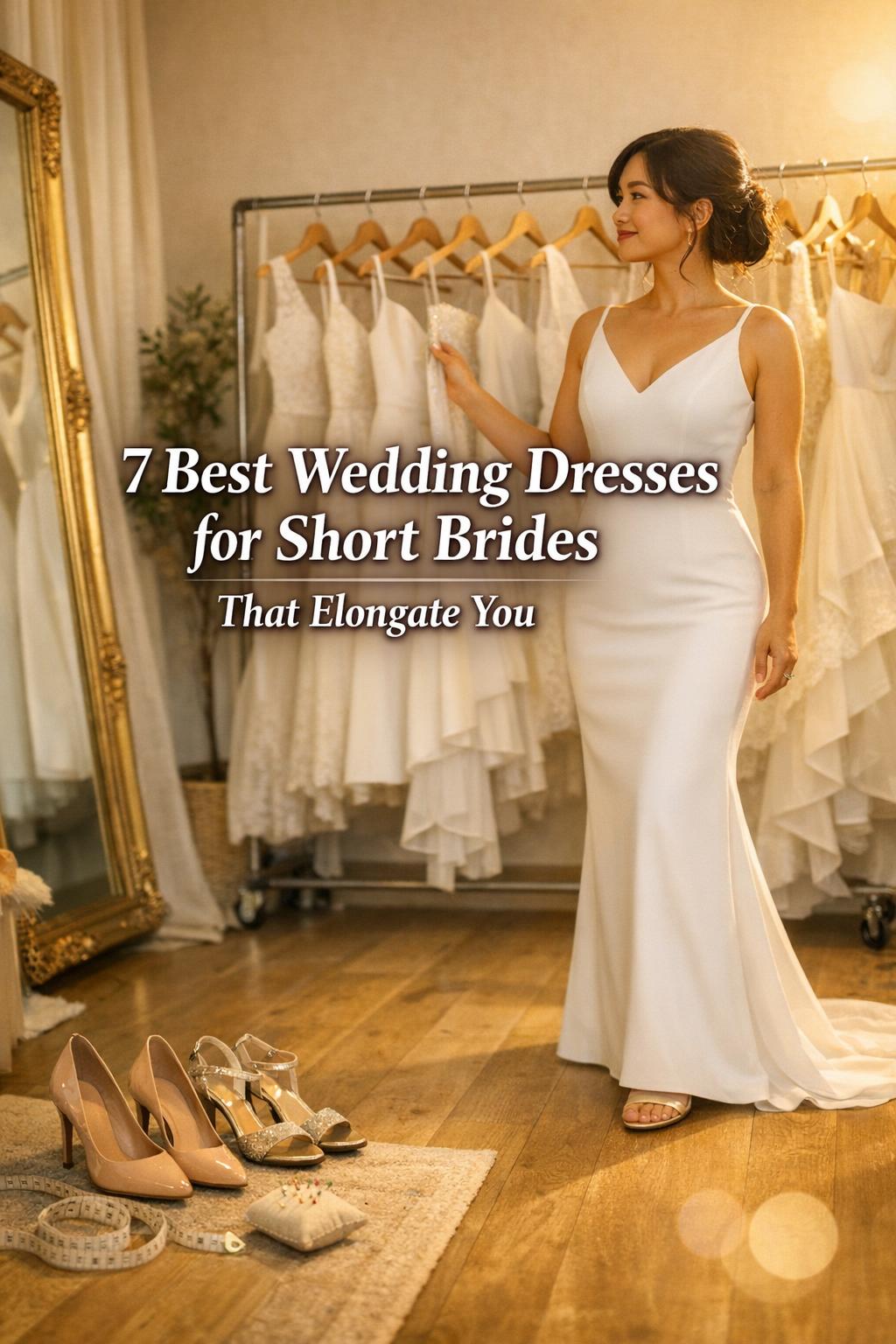
Best Silhouettes for Short Brides
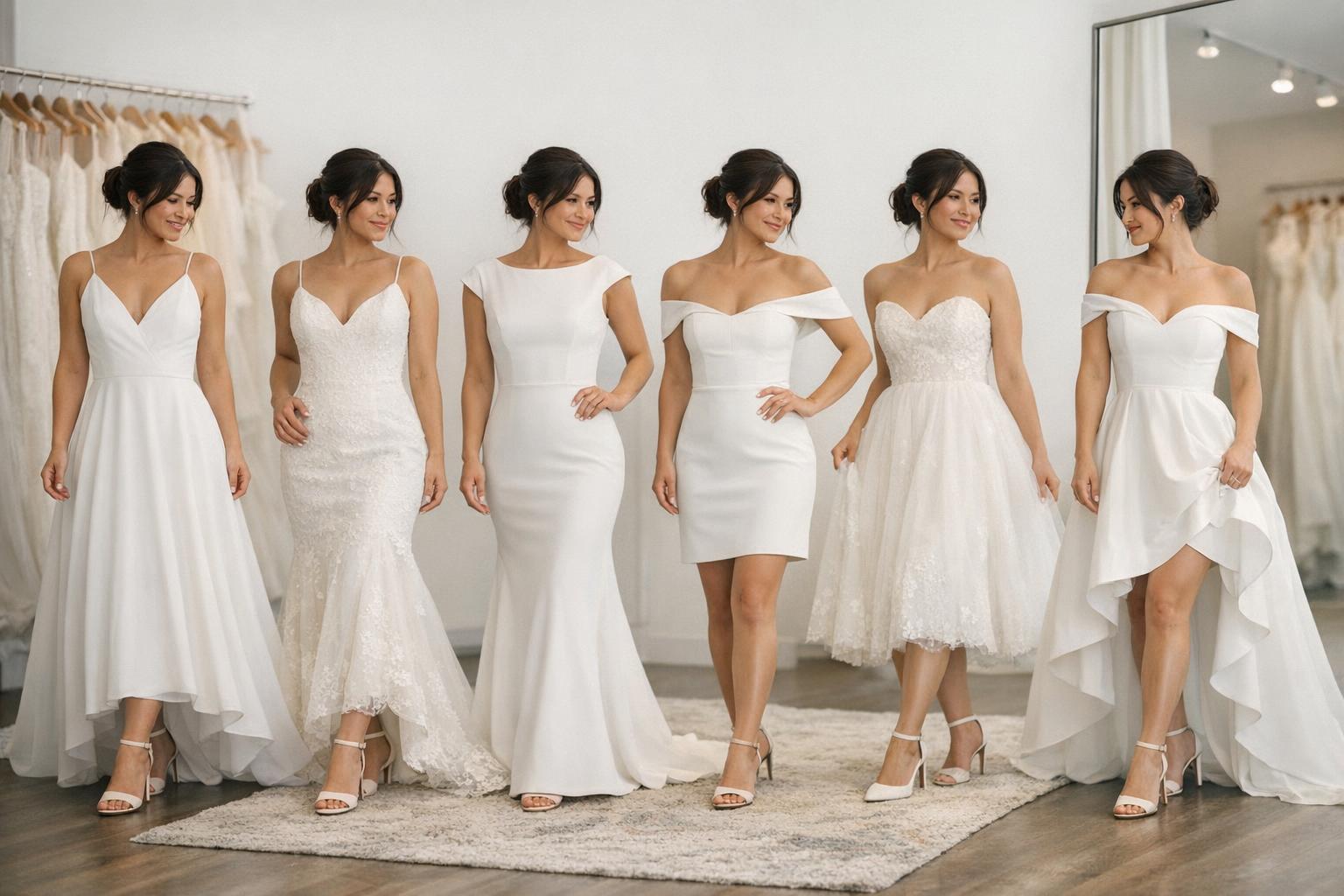
There isn’t one universal “best” shape, but there are silhouettes that tend to work especially well when you’re building a petite-proportion look. Below are the short wedding dress silhouettes and related options that commonly align with what short brides want: length, balance, movement, and a clear waistline.
A-Line: a reliable favorite for petite frames
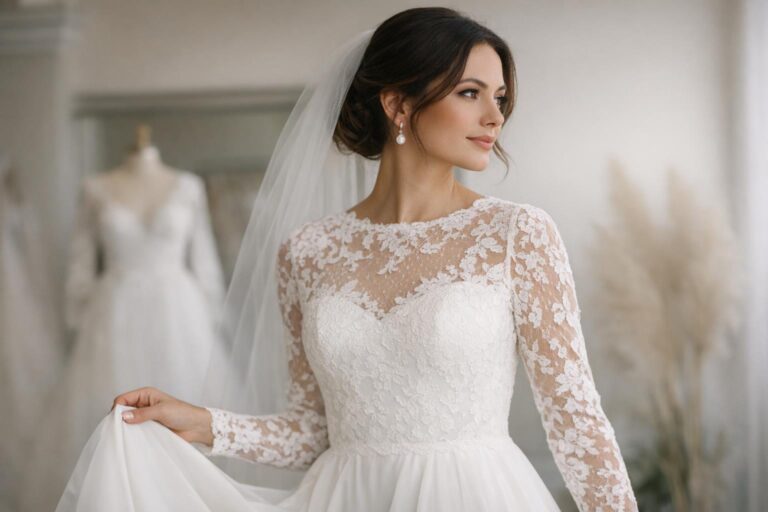
An A-line is often recommended because it defines the waist and allows the skirt to skim without swallowing your frame. For short brides, the key is scale: a clean A-line that starts at the natural waist and opens gradually tends to feel lighter and more elongating than an overly full skirt that begins too low. This silhouette also transitions well across settings—from garden weddings to more formal venues—without forcing you into a single aesthetic.
- Look for a waistline that sits where your waist naturally narrows, not on the hips.
- Consider skirt volume that feels “floaty” rather than heavy or bulky.
- If you’re going tea-length or midi, choose an A-line shape that stays crisp at the hem.
Fit-and-flare: balance, movement, and shape
Fit-and-flare silhouettes can be an excellent middle ground for short brides who want definition without overwhelming volume. The fitted portion highlights your shape, and the flare adds movement. The petite-friendly advantage is control: when the flare begins at the right point, it creates a clean line that can feel longer and more streamlined than a dress with too much fabric around the waist and hips.
Tips: If a fit-and-flare feels too tight or the flare begins too low, it can shorten the look of your legs. Pay close attention to where the dress transitions from fitted to flared, and ask whether the bodice length can be adjusted so the flare starts in a more flattering spot.
Sheath and mini wedding dress options: modern, clean, petite-friendly
Sheath silhouettes and mini wedding dress styles are often naturally petite-friendly because they reduce bulk and keep the vertical line clear. This category also overlaps with “little white dress” energy—perfect for courthouse ceremonies, receptions, or brides who want a fashion-forward look. Many editorial roundups highlight mini dresses as statement pieces, from sleek strapless styles to dramatic embellished options with bows, ruffles, beads, or feather details.
- Choose clean lines if you want the most elongating effect.
- If you love statement details (ruffles, feathers, heavy embellishment), keep the overall silhouette simple so the dress doesn’t feel costume-like.
- For a reception dress, minis can be both practical and high-impact.
Tea-length and midi-length wedding dress styles: classic with shoe-forward styling
Tea-length wedding dress and midi-length wedding dress options are popular for short brides because they offer the romance of a fuller skirt while keeping the look light and mobile. They also create a natural opportunity to show off shoes, which many brides love—especially if you want a more playful, party-ready bridal outfit. The key is choosing a hem that looks intentional on you, not like a long dress that was shortened without considering proportion.
Tips: When trying tea-length or midi options, walk and sit in front of a mirror. If the hem visually “cuts” you at an awkward point or the skirt bounces in a way that feels too heavy, try a slightly different length or a lighter skirt construction.
High-low wedding dress silhouettes: drama without heaviness
A high-low wedding dress can be a strong choice when you want the romance of a longer back with the ease of a shorter front. This silhouette often works well for short brides because it creates movement and shows the legs and shoes, while still delivering ceremony-level impact. The front hemline can make you look taller and more dynamic, while the back brings in that traditional bridal feel.
- Look for a front hem that feels clearly designed (not uneven or accidental).
- Make sure the back length doesn’t overpower your frame from behind.
- Plan your accessories and shoes early; the front view puts them in the spotlight.
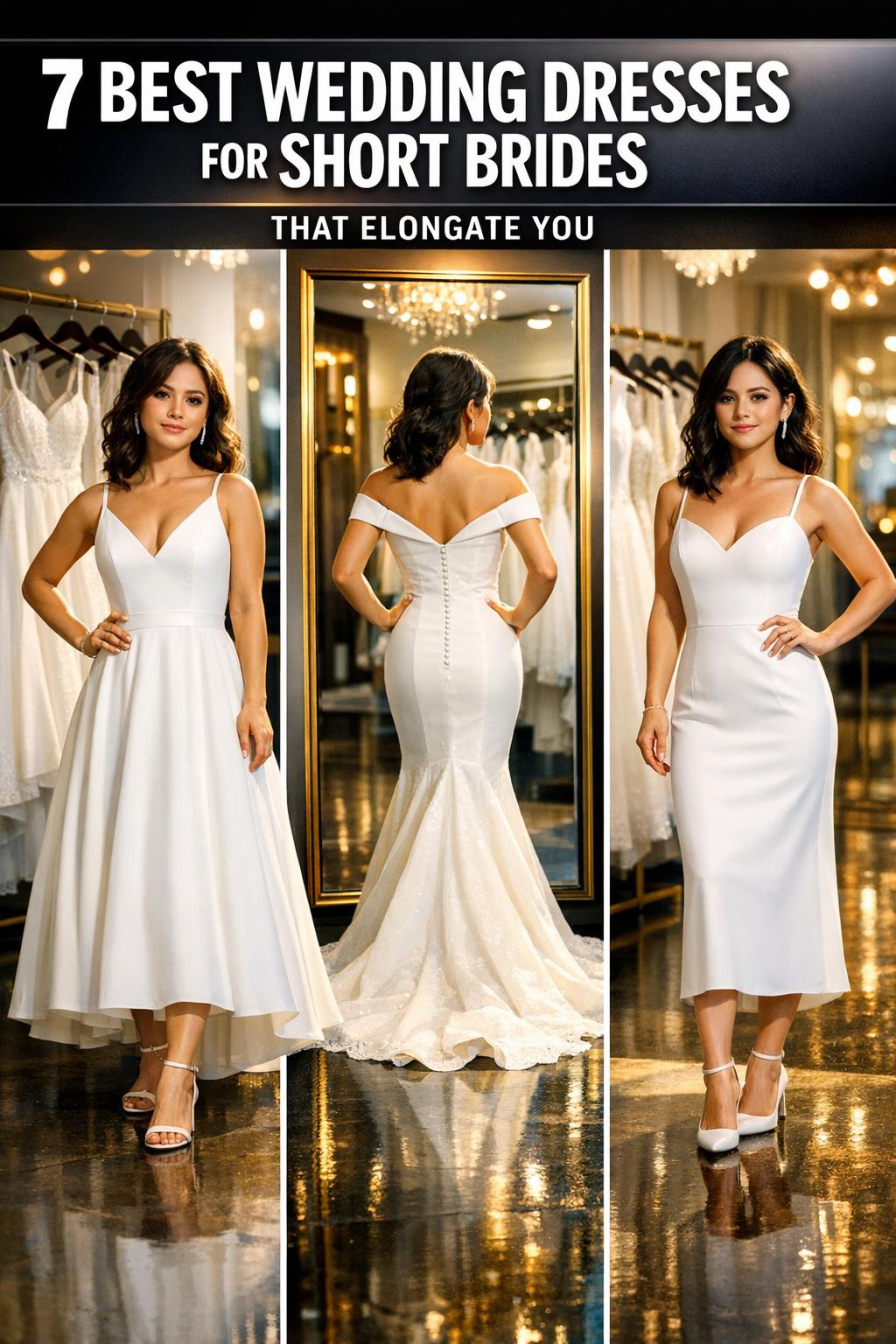
Necklines and Details That Complement Short Heights
Necklines and detail placement can change the perceived proportions of your torso and shoulders—two areas that strongly affect how “tall” or “balanced” you look in photos. For short brides, the goal is usually to keep the upper body looking open and intentional, and to avoid detail clusters that visually weigh down the top half of the dress.
Sweetheart, V-neck, bateau, and off-the-shoulder: choosing what works
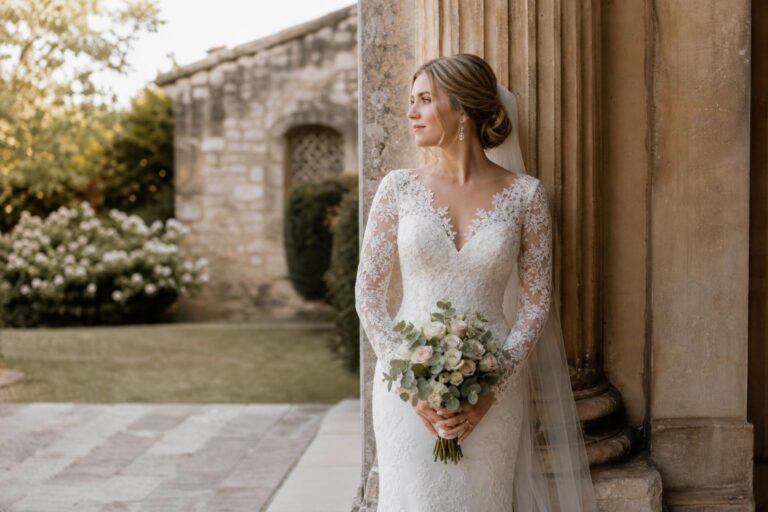
Many short brides gravitate to sweetheart and V-necklines because they create an open, lengthened look through the center line of the body. Bateau and off-the-shoulder can also work beautifully, especially for more editorial styling, but fit is crucial: if the neckline sits too low on the arm or too wide across the shoulders, it can overwhelm a petite frame. The best neckline is the one that stays in place and supports your posture without constant adjusting.
Tips: If you’re unsure, take quick photos straight-on and slightly from below (the way many candid photos happen). Necklines that look fine in a dressing room mirror can read differently on camera, especially on a shorter frame where every inch of neckline placement matters.
Embellishments and focal points: where to place them for optical balance
Embellishments can be petite-friendly when they’re placed strategically. Designer mini dresses often feature bold elements—beading, bows, ruffles, feathers, and textured fabrics—that bring personality and fashion impact. For short brides, a helpful rule is to choose a single main focal point (neckline, waist, sleeves, or hem) rather than multiple competing statement zones. This keeps the look intentional and prevents your frame from disappearing under detail.
- If the skirt has texture or volume, keep the bodice cleaner and more fitted.
- If the bodice has heavy embellishment, consider a simpler skirt line.
- Use a defined waist detail to reinforce proportion, especially with tea-length and midi skirts.
Fabrics, Skirts, and Constructions That Work
Fabric choice affects how a dress drapes, how it photographs, and how “heavy” it feels on a petite body. Short brides often benefit from materials that move cleanly and don’t create unnecessary bulk. Construction matters just as much: linings, skirt layers, and internal structure can either support a polished look or add weight that shortens the visual line.
Lightweight fabrics for movement: chiffon, satin, and crepe
Lightweight fabrics can help short brides maintain a clean silhouette—especially in A-line, fit-and-flare, sheath, and tea-length styles. Chiffon often reads airy and mobile, satin can look sleek and elevated, and crepe is known for a modern, streamlined finish. The best choice is the one that supports your desired vibe (minimal, romantic, or fashion-forward) without adding stiffness or bulk in the wrong areas.
Tips: If you’re considering a short wedding dress for a beach, garden, or outdoor setting, prioritize movement. A fabric that catches and releases as you walk tends to photograph beautifully and can feel more comfortable over a long day.
Skirt structure and lining: how to avoid overwhelming volume
Skirt structure can make or break petite balance. Some skirts hold their shape in a way that looks crisp and intentional; others create extra width that can visually shorten the body. Linings and layers are part of the story: too many layers can add weight and create a “floating” hem that looks disconnected from the body. For short brides, a skirt that follows your movement—rather than fighting it—usually looks more proportional.
- Check the skirt at rest and in motion; walk, pivot, and sit during try-ons.
- Look for a clean waist-to-hip transition with minimal bunching.
- Consider how the hem finishes; a crisp hem can make a tea-length or midi feel deliberate.
A Petite Silhouette Quick Guide (Use This When You Shop)
When you’re browsing or trying on dresses, it helps to have a simple framework that matches style goals to silhouettes. Instead of chasing a single “perfect” dress, short brides often do best when they identify the silhouette family that consistently flatters them, then compare details like neckline, sleeve, hemline, and fabric within that family.
- If you want classic bridal energy with a light feel: choose an A-line in tea-length or midi length.
- If you want shape and movement: start with fit-and-flare and fine-tune where the flare begins.
- If you want modern minimalism: look at sheath styles and streamlined crepe or satin finishes.
- If you want a fashion statement: consider a mini with one bold focal detail (bow, beading, ruffles, or feathers).
- If you want ceremony drama without a heavy skirt: explore high-low silhouettes.
Tips: Treat this as a starting point, not a strict rulebook. The best short wedding dress ideas become “best” when they match your venue, comfort needs, and willingness to tailor—because petite success is often a combination of silhouette and smart adjustments.
The Budget Guide: Short Dresses by Price Point
Short brides shop across a wide range of price points. Some want luxury, editorial minis; others want inclusive sizing and approachable pricing through accessible collections; many want the sweet spot where quality meets a manageable alteration plan. Use the tiers below to organize your search and compare not just dress cost, but also the likely need for petite wedding dress alterations.
Under $500: best value options
This tier is often about practicality, speed, and flexibility—especially for second looks, receptions, courthouse ceremonies, and brides who want a “little white dress” moment without committing to a traditional gown budget. It’s also where return policies and sizing options can matter the most, because you may be ordering multiple styles to try at home before committing.
- Focus on simple silhouettes (sheath, clean A-line, or minimalist mini) that are easier to tailor.
- Prioritize fabric and fit at the bodice; hem adjustments are straightforward compared to major reshaping.
- Plan a small alteration buffer even at this price point, particularly for strap and waist placement.
$500–$1500: designer-inspired fits with more structure
In this mid-range, you’ll often find more refined construction and a wider variety of petite-friendly short wedding dress silhouettes, including tea-length, midi, and high-low options. This is a strong zone for short brides who want a main-ceremony dress that still feels special, plus enough structure to keep the silhouette clean in photos.
Tips: In this range, ask yourself whether you’re paying for a specific design detail (like a statement neckline, bow detail, or textured fabric) or for overall fit and drape. Either can be worth it, but knowing what you value helps you decide what to tailor versus what to buy “right” from the start.
$1500+: couture-ready silhouettes and editorial minis
This is where luxury editorial energy shines—think statement mini dresses with bead embellishment, bold ruffles, feather details, or sculptural bow accents. For short brides, high-end short wedding dresses can be especially compelling because the design intent is often very clear: the hemline is meant to be short, the detailing is deliberate, and the overall look is built to stand on its own.
- Keep tailoring focused on proportion (waist, straps, bust placement) to preserve the designer’s lines.
- Make sure the statement detail doesn’t compete with too many accessories.
- Consider a second look strategy: an editorial mini for the reception paired with a more classic silhouette for the ceremony.
Real-World Lookbooks: Petite Brides in Action
Instead of thinking in abstract style categories, it can help to visualize how short wedding dresses and petite-friendly silhouettes behave in real settings. Below are three common wedding environments and the types of silhouettes that typically fit the moment while supporting petite proportions. Use them as inspiration for building a cohesive look from dress to shoes to accessories.
Beach: light movement with a clean line
For beach celebrations, many short brides gravitate toward simpler silhouettes and lightweight fabrics that move easily. A sheath, clean A-line, or short wedding dress that doesn’t rely on heavy skirt structure can feel more comfortable and look more natural in motion. The goal is an effortless silhouette that still reads as bridal, without extra bulk that can feel heavy in a breezy environment.
Tips: If your dress is short or tea-length, your shoes become part of the “beach story.” Choose something that supports the setting and makes you feel stable and confident, especially if you’ll be walking on uneven ground.
Garden: romantic hems and balanced volume
Garden weddings pair beautifully with tea-length and midi-length wedding dress silhouettes, especially when the skirt has gentle structure and a defined waist. This setting is also a natural home for detail—like texture or soft embellishments—so long as the dress keeps a clear focal point and doesn’t stack too many statement elements at once.
- Try a tea-length A-line with a defined waist to keep proportions crisp.
- Consider a neckline that opens the upper body (sweetheart or V-neck) for balance.
- Keep accessories intentional; let either the dress detail or the styling be the star.
Formal or urban venues: streamlined shapes and editorial statements
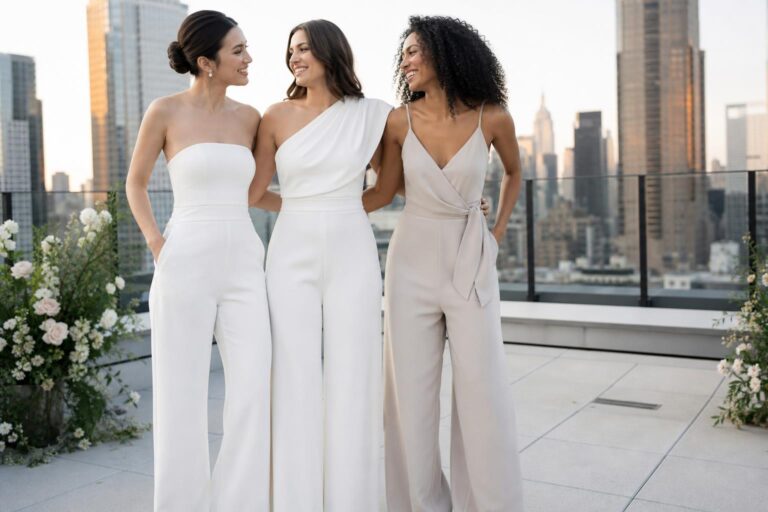
For formal venues, short brides can go two directions: a streamlined silhouette (sheath or refined fit-and-flare) that looks clean and modern, or a deliberate statement mini that reads like bridal fashion. High-low wedding dress styles also work well here, giving you a dramatic back view while maintaining an airy front profile.
Tips: If you choose an editorial mini with a bold feature (like beading, ruffles, feathers, or a sculptural bow), keep the rest of the look sleek. This helps the dress feel elevated rather than busy and keeps the focus on you.
Alteration Roadmap for Petite Brides
Tailoring is often the difference between “pretty” and “perfect,” especially for short brides. The goal isn’t to change the dress into something else—it’s to make the waist, neckline, and hem land exactly where they should on your body. A clear alteration roadmap also reduces stress: you’ll know what to prioritize, what to ask, and how to plan fittings around your wedding timeline.
Timeline and tips for tailoring
Even if you buy a petite-friendly silhouette, alterations are still common. Build in time for multiple touchpoints so adjustments can be made gradually and accurately. If you plan to switch shoes or add a second look, factor those changes into your schedule so your final hem and overall balance are based on what you’ll actually wear.
- Start with the bodice: secure straps, neckline placement, and waist position before finalizing the hem.
- Bring your intended undergarments and shoes to fittings so the dress sits correctly.
- Re-check movement: walk, sit, and turn to confirm the silhouette holds its shape on a petite frame.
What to discuss with your tailor (petite-specific)
Short brides benefit from specific questions that keep tailoring focused on proportion rather than only length. A good conversation includes where the waist should sit, how to keep the neckline stable, and whether the skirt volume needs refining to avoid overwhelming your frame. This is also the moment to confirm whether the design details (like embellishments or a bold hem treatment) will be preserved after adjustments.
Tips: When you’re trying on pinned changes, take photos from the front and side. Petite proportion issues often show up in photos first—like a waist that reads low or a neckline that makes the torso look shorter—so visuals can help you and your tailor align quickly.
Shopping Checklist for Short Brides
Shopping for the best wedding dresses for short brides is easier when you walk in with a plan. Instead of only searching by “petite,” think in categories: silhouette, hem type, neckline, and how much tailoring you’re comfortable doing. Many brides also shop across sources—editorial inspiration for statement pieces, bridal publications for curated roundups, and brand collections for size range and accessible pricing—so a checklist helps you compare consistently.
- Choose your top two silhouettes before you shop (A-line, fit-and-flare, sheath, mini, tea-length/midi, or high-low).
- Identify your comfort priorities: movement, support, and how the dress feels over time.
- Decide whether you want shoes to be a visible feature (tea-length, midi, high-low, or mini).
- Ask about sizing options and policies: returns, exchanges, and how alterations affect eligibility.
- Plan for tailoring: assume at least minor adjustments for straps, waist placement, and hem.
Tips: When you’re trying multiple short wedding dress ideas, take quick notes right after each try-on: what you loved, what felt off, and what would need tailoring. Petite shopping gets clearer when you track patterns (for example, “V-neck + defined waist works,” or “too much skirt volume hides my shape”).
How to Choose Between Short, Tea-Length, Midi, and High-Low
Short brides often have more than one “best” option because the right hem depends on your wedding format and personal style. A mini wedding dress can be ideal for a reception or courthouse ceremony, while a tea-length wedding dress might feel perfectly bridal for a garden venue, and a high-low wedding dress can give you ceremony drama without a heavy full-length skirt. The decision becomes simpler when you choose based on where you want attention: legs and shoes, waist definition, or overall movement.
- Pick a mini if you want a bold, modern, fashion-forward look and maximum ease of movement.
- Pick tea-length if you want classic bridal energy with a playful, timeless silhouette.
- Pick midi if you want a refined, contemporary hemline that still feels formal.
- Pick high-low if you want a dramatic back view and a lighter, leg-lengthening front.
Tips: If you’re torn, consider a two-look plan. Many brides do a more formal silhouette for the ceremony and a short wedding dress for the reception. This approach can also make tailoring easier because the reception look can be simpler and more forgiving.
FAQ
What are the best wedding dresses for short brides?
The best wedding dresses for short brides are the ones that keep proportions balanced—often A-line, fit-and-flare, sheath, mini, tea-length, midi, and high-low silhouettes—paired with a well-placed waistline and a bodice that fits correctly so the whole look feels intentional.
Are short wedding dresses a good option for petite brides?
Yes, short wedding dresses can be especially petite-friendly because they reduce visual bulk and can create a cleaner line, and they also make it easier to highlight shoes and styling while staying comfortable for walking, dancing, and moving through the day.
Is a tea-length wedding dress flattering on short brides?
A tea-length wedding dress can be very flattering on short brides when the waist sits in the right place and the skirt volume is balanced, because it keeps the look light while still offering a classic bridal silhouette that showcases shoes.
Should short brides consider a high-low wedding dress?
A high-low wedding dress is often a great option for short brides who want a dramatic back view without the heaviness of a full-length skirt, since the shorter front can spotlight legs and shoes while the back still feels ceremony-ready.
What petite wedding dress alterations matter most?
For short brides, the most important alterations are usually bodice and proportion adjustments—like waist placement, strap length, and neckline stability—followed by hemming, because fixing the top half first helps the entire dress drape correctly.
How do I choose the right heel height for a short wedding dress?
Choose a heel height that you can comfortably wear for the length of your event and commit to it early enough to guide final fittings, because heel height affects hemline balance and overall posture, especially with mini, tea-length, midi, and high-low styles.
What necklines work best for short brides?
Many short brides like sweetheart and V-necklines for an open, lengthened look, while bateau and off-the-shoulder can also work when fitted precisely, since neckline placement and stability are key to keeping proportions balanced on a petite frame.
Can petite brides wear statement mini dresses with embellishments?
Yes, statement minis with features like beading, ruffles, feathers, or bow details can look striking on petite brides, especially when the silhouette stays clean and the dress has one main focal point rather than multiple competing statement areas.
What should I check when shopping online for a wedding dress as a short bride?
Focus on silhouette and bodice fit first, then confirm sizing guidance and policies like returns and exchanges, and assume you may need petite-focused alterations for waist placement, straps, and hem so you can plan your purchase and fitting timeline confidently.