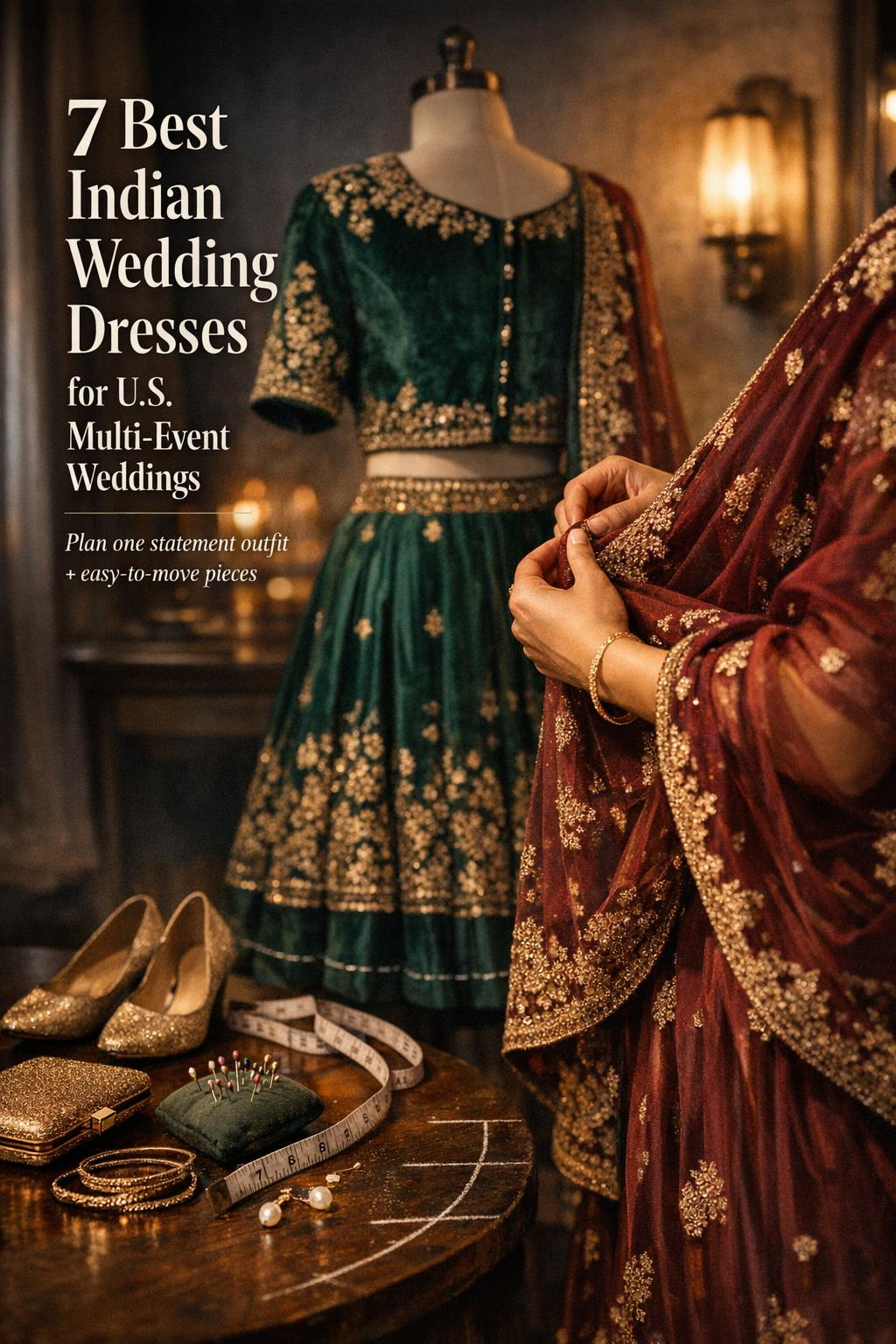
7 Best Indian Wedding Dresses for U.S. Multi-Event Weddings
Choosing the Best Indian Wedding Dresses: A Practical Guide for U.S. Shoppers
Searching for the best indian wedding dresses can feel overwhelming because “best” depends on your ceremony plans, comfort, personal style, and how you want to honor tradition. The good news is that you can narrow the options quickly by focusing on a clear set of decisions: what kind of outfit you need (and for which event), how formal it should be, what silhouettes and fabric details you actually like wearing, and how you’ll shop—online, in-store, or custom.
This guide is designed to help you compare popular Indian wedding outfit directions, plan for multiple events, and make confident choices about fit, styling, and shopping considerations—without assuming there’s only one “right” look.
Start With the Wedding Events: What You Need and When You’ll Wear It
Indian weddings often include more than one celebration, and the “best” dress for the wedding day may not be the best choice for every function. Instead of trying to pick one outfit that does everything, decide what you need per event. This prevents buying something too heavy for a smaller function or too understated for the main ceremony.
Outfit planning across multiple functions
Many people plan at least one major statement look plus additional outfits that are easier to move in. Your plan can be as simple as “one formal, one semi-formal,” or more detailed if your schedule includes several gatherings.
Your wedding look is only the beginning.
Keep your guest list, vendors, timeline, and every important detail together with Zarellea — so your day feels as considered as your style.
- Main ceremony look: typically the most formal, most photographed outfit
- Pre-wedding function look(s): festive but often easier to wear for long hours
- Reception look: can be equally formal but may prioritize comfort for sitting, greeting, and dancing
- Family or guest looks: coordinated outfits that fit the dress code without competing with the bride
Tips: Keep your wardrobe cohesive without matching everything
Choose a unifying approach—such as a consistent level of embroidery, a shared color family, or a similar styling mood—so your photos look intentional across events. This also makes accessories easier to reuse.
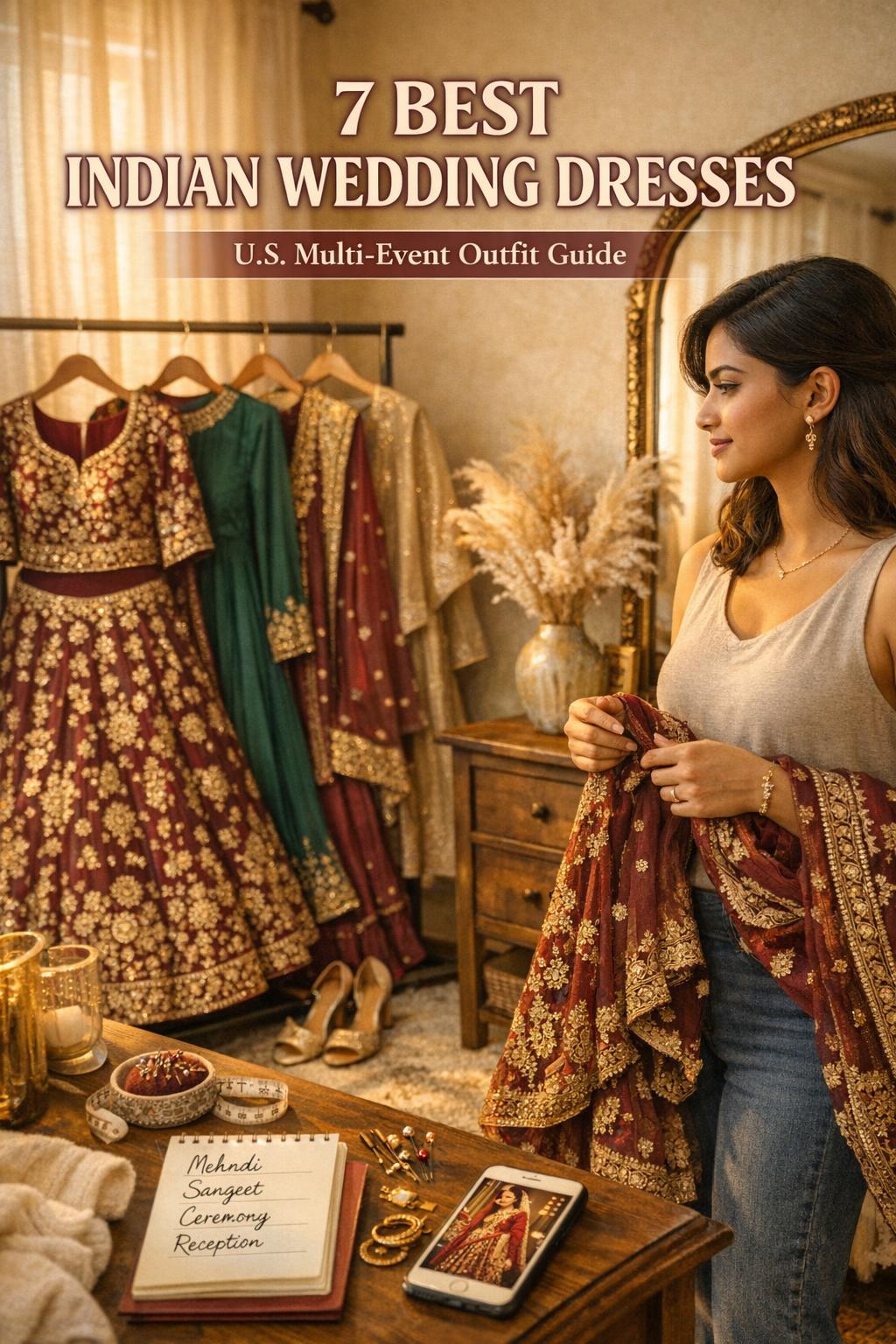
Decide the Outfit Type: Bridal and Wedding-Guest Directions
Indian wedding attire spans multiple silhouettes and outfit formats. Some people want a traditional bridal statement; others want a modern interpretation that’s still culturally grounded. There’s also a big difference between what makes sense for a bride versus a guest.
Traditional bridal statement
If you want a timeless bridal presence, focus on an outfit that reads as ceremonial and photo-ready. Prioritize strong structure, refined detailing, and a complete styling plan (dupatta, jewelry, and hair/makeup coordination) so the look feels intentional rather than pieced together.
Modern bridal approach
A modern approach can still feel deeply traditional if you preserve key elements—like formal finishing, a clear silhouette, and thoughtful draping. Instead of chasing novelty, aim for a look that feels current but will still look elegant in photos years later.
Wedding guest and family looks
For guests, the “best” Indian wedding dress is one that respects the couple’s dress code and the tone of the event while staying comfortable for several hours. Family looks may be more formal and coordinated, but it’s still smart to prioritize mobility, breathable fabrics, and reliable fit.
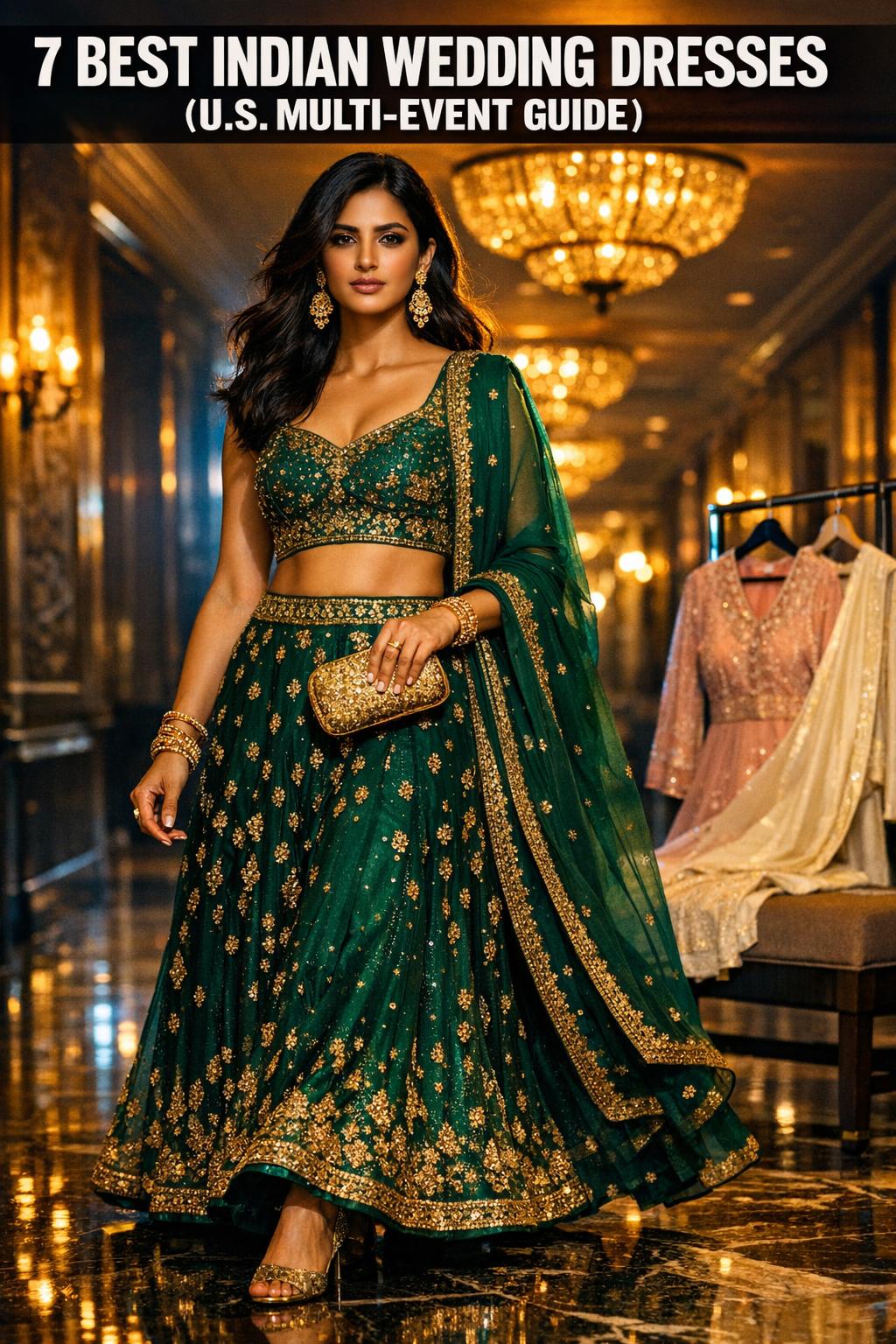
Focus on Fit and Comfort: The Difference Between “Beautiful” and “Wearable”
Indian wedding outfits can be structured, layered, and embellished, which makes fit a deciding factor. The best indian wedding dresses are not only visually striking—they also allow you to sit, walk, greet people, and enjoy the day without constant adjustments.
Mobility checks to do before you commit
Whether you’re buying ready-to-wear or ordering custom, evaluate movement early. Small issues (tight shoulders, restrictive waistlines, heavy hems) can become major problems over a long event.
- Raise your arms comfortably without pulling across the bust or shoulders
- Sit and stand repeatedly without the waist digging in
- Walk in your shoes with the hem length you’ll wear
- Check if embellishments scratch the skin at the underarm and neckline
- Confirm you can manage the dupatta drape without constant slipping
Tips: Comfort upgrades that don’t change the look
Comfort often comes down to small tailoring and finishing choices. A smoother lining, a more secure closure, and a well-planned dupatta setup can make a formal outfit feel dramatically more wearable while keeping the same overall appearance.
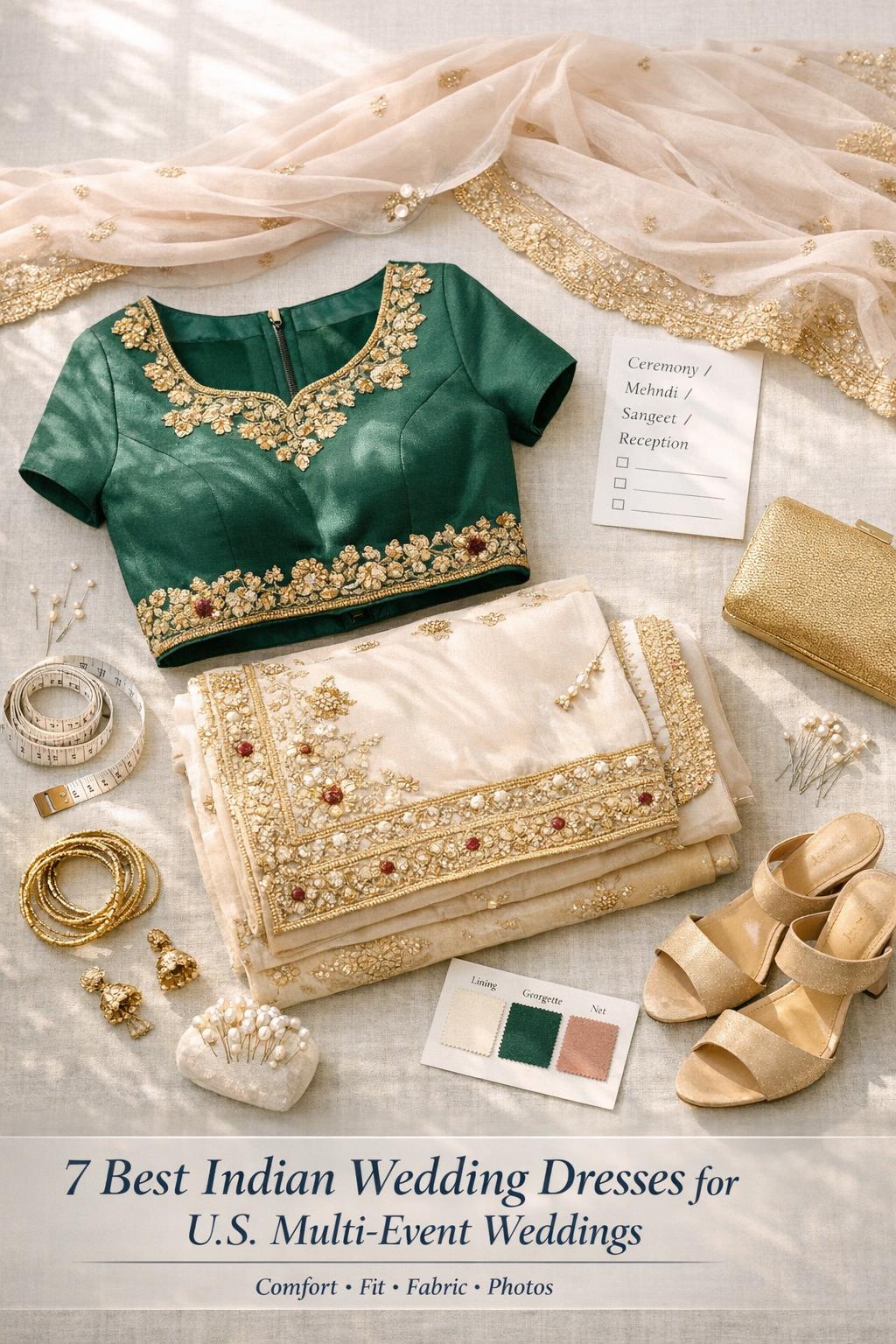
Fabric, Work, and Visual Impact: How to Judge Quality Quickly
When comparing Indian wedding dresses, you’re often evaluating fabric plus “work” (the decorative detailing) plus finishing. Even when photos look similar, quality can vary. Build a simple method for judging what you’re seeing—especially if you’re shopping from the U.S. and relying on online product images.
Fabric considerations for U.S. climates and venues
Consider where the wedding will be held and how long you’ll wear the outfit. A heavy, layered outfit may be perfect in a cool indoor venue but uncomfortable outdoors. If you expect long ceremonies or warm spaces, focus on options that feel breathable and manageable for hours.
Reading embroidery and embellishment in photos
Look for consistent detailing across the garment, clean finishing at edges, and a balanced layout that looks intentional from multiple angles. If the most detailed area is only in front-facing product photos, ask for additional views so you can assess how it will look in real movement and candid images.
Tips: Ask the right questions before you buy
If you’re ordering online, asking specific questions can prevent surprises when the outfit arrives. Instead of asking whether the outfit is “good quality,” ask about construction details and what you will actually receive.
- Is the blouse/kurta fully lined, and if so, with what kind of lining?
- What closures are used (hooks, zipper, tie), and how secure are they?
- How heavy is the outfit, and how heavy is the dupatta?
- Is the dupatta border embellished or lightweight, and how will it drape?
- What is included (dupatta, can-can, belt, extra fabric, etc.)?
Color and Styling Choices: Make the Look Photograph Well
Color selection can make an outfit feel iconic—or distracting—depending on lighting, venue, and the rest of your styling. The goal is not to chase a single “correct” bridal color, but to choose a shade that complements your skin tone, coordinates with event decor, and looks balanced with jewelry and makeup.
Balancing color with detailing
If the outfit has intense embroidery and sparkle, a more controlled color palette can feel elevated. If the silhouette is sleek or the work is minimal, a stronger color can provide the drama. Think in terms of the overall effect: silhouette + color + work + accessories.
Tips: Build your styling plan from the neckline outward
Start styling decisions with the neckline and blouse/kurta detailing, then choose jewelry that fits that space. This prevents overcrowding the look and makes the final result feel polished. If the neckline is highly detailed, consider more streamlined jewelry; if the neckline is clean, jewelry can carry more of the statement.
How to Shop in the U.S.: Online, In-Store, or Custom
In the U.S., people often shop for Indian wedding outfits through a mix of online ordering, local boutiques, and custom tailoring. Each path can work well, but the best choice depends on your timeline, fit needs, and how confident you are about sizing and alterations.
Online ordering: convenient, but detail matters
Online is ideal for browsing variety and comparing styles quickly. The risk is receiving something that fits differently than expected or looks different in person. Reduce uncertainty by confirming measurements, return policies, and what’s included with the outfit.
In-store shopping: the easiest way to confirm fit and weight
Trying outfits on is the fastest way to understand fabric weight, drape, and comfort. If you can shop in-store, prioritize how the outfit feels when you move. This is especially valuable for heavily embellished looks that can feel different on the body than they appear in photos.
Custom or made-to-measure: best for precise preferences
Custom can be the most satisfying option when you have a specific vision or need precise tailoring. It also requires clear communication and enough time for fittings and adjustments. If your schedule is tight, you may prefer a ready-to-wear outfit with alterations.
Tailoring and Alterations: What Usually Makes the Biggest Difference
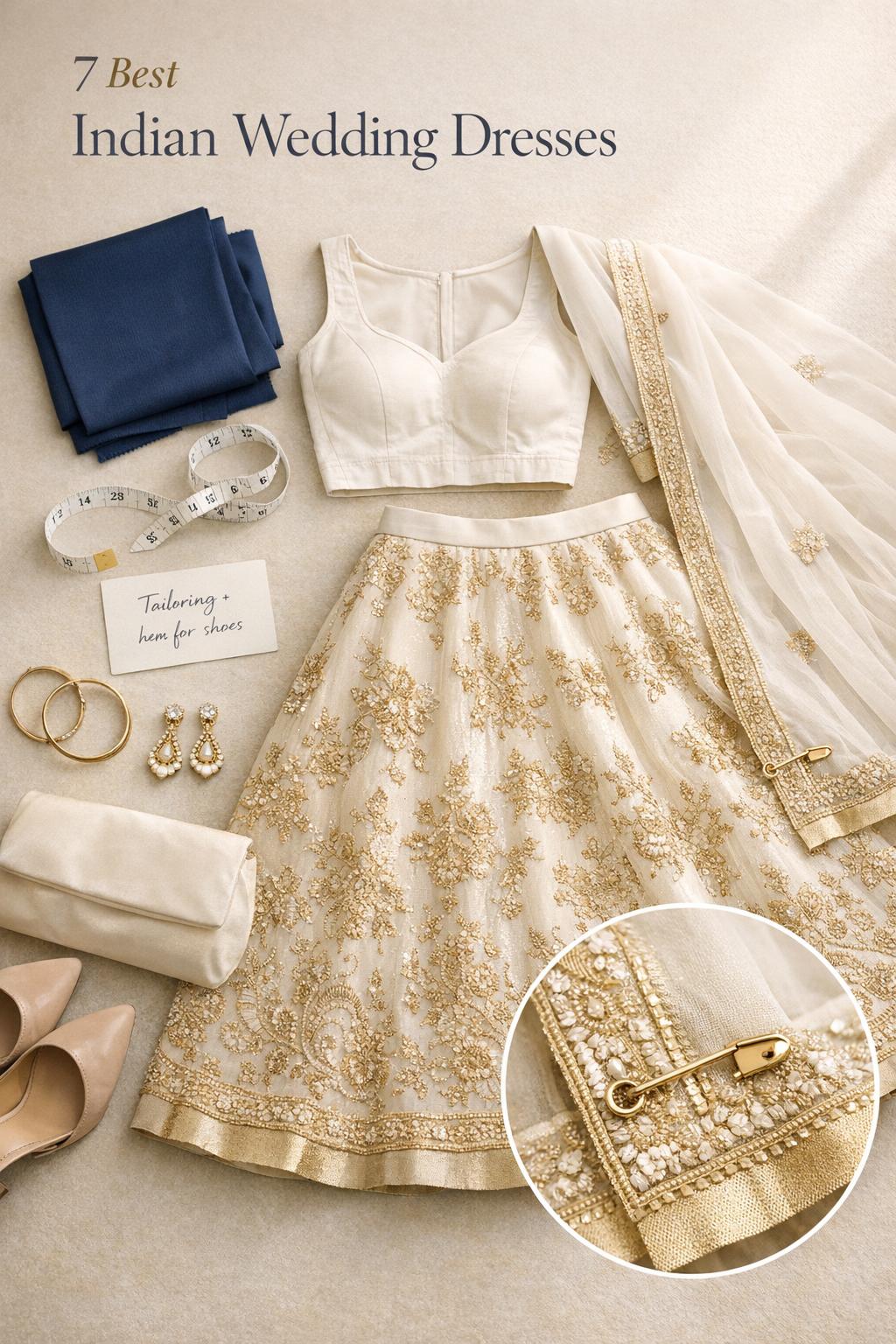
Even an incredible outfit can look off if the proportions are wrong. Tailoring is often what separates “pretty” from “perfect.” Plan for basic alterations as a normal part of buying Indian wedding attire, especially if you’re purchasing ready-to-wear.
Common alteration priorities
Focus first on changes that improve structure and comfort. Then fine-tune the drape and finishing details so the outfit looks intentional in photos and feels secure during the event.
- Blouse/kurta fit at bust, waist, shoulders, and armholes
- Hem length for your exact shoes
- Waist support for skirts or pants so the outfit doesn’t shift
- Dupatta length and any attachments for stable draping
- Adding or adjusting lining for comfort and opacity
Tips: Don’t wait until the last week
Alterations often take longer than expected, especially during peak wedding season. Build in buffer time for a second fitting so you can walk, sit, and pose comfortably without rushing changes at the end.
Making the Look Feel Complete: Dupatta, Jewelry, and Finishing Details
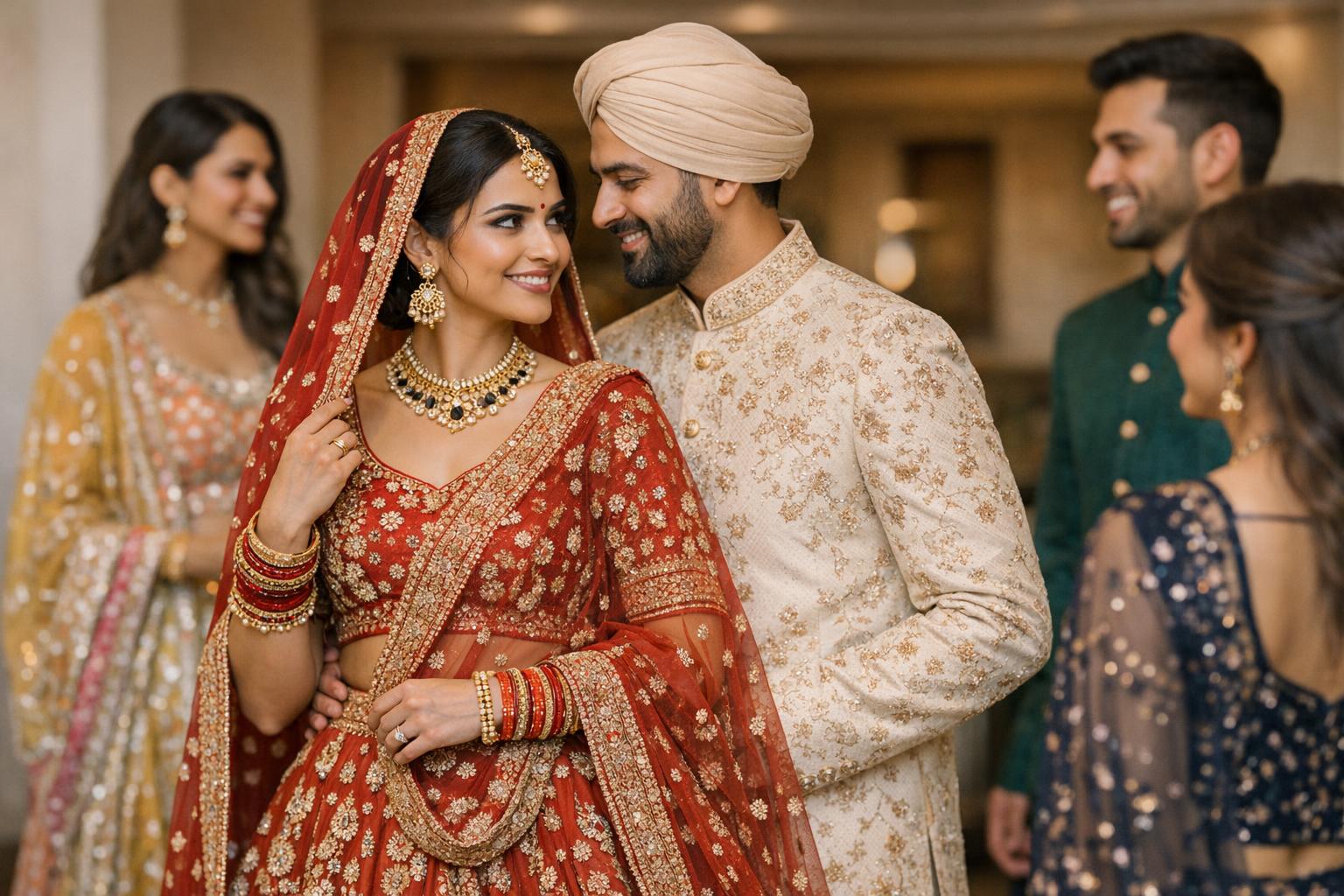
Indian wedding attire is a full look, not just a dress. The dupatta drape, jewelry scale, and finishing details can transform how an outfit reads in person and in photos. When people feel unsure about whether an outfit is “best,” it’s often because the styling plan is incomplete.
Dupatta draping and security
Choose a drape that fits your comfort level and the event’s formality. A secure drape reduces fidgeting and helps you move confidently. If you know you’ll be greeting guests or dancing, prioritize a drape that stays put rather than one that requires frequent re-setting.
Jewelry balance and proportion
When the outfit is heavily embellished, jewelry can be slightly more refined so the overall look feels expensive and intentional. When the outfit is simpler, jewelry can be the focal point. The goal is balance, not maximalism.
Tips: Do a full dress rehearsal at home
Try on the full outfit with undergarments, shoes, jewelry, and your planned dupatta drape. Walk around for at least a few minutes. This reveals what slips, scratches, feels heavy, or needs extra support—before your event day.
Common Mistakes to Avoid When Buying Indian Wedding Dresses
Many disappointments come from avoidable gaps: unclear event needs, guessing measurements, or focusing on front-facing photos only. Avoid these patterns and you’ll significantly increase your chances of loving what you buy.
- Buying before you know the event formality and dress expectations
- Choosing an outfit that photographs well but restricts movement
- Assuming sizing will match typical U.S. sizing without checking measurements
- Waiting too long to plan alterations and styling
- Not confirming what pieces are included with your outfit
How to Know You’ve Found “The One”
The best indian wedding dresses are the ones that make you feel confident, supported, and appropriately dressed for the occasion. The decision becomes easier when you evaluate the outfit as a whole: comfort, fit, visual impact, and practicality for the length of the event.
A simple confidence checklist
If you can say “yes” to most of the points below, you’re likely very close to the right choice for your wedding or event.
- I can move, sit, and walk without struggling
- The neckline, sleeves, and waist feel secure
- The outfit looks good from multiple angles, not just the front
- I understand what tailoring (if any) is still needed
- I have a clear plan for dupatta draping, jewelry, and shoes
FAQ
What are the best indian wedding dresses for a bride?
The best option is one that matches the formality of the main ceremony, photographs well from multiple angles, and feels comfortable enough to wear for hours; prioritize a secure fit, balanced detailing, and a complete styling plan including dupatta and jewelry.
How do I choose an outfit if there are multiple wedding events?
Start by assigning one most-formal look for the main ceremony, then choose additional outfits that are easier to move in for other functions; keeping a cohesive style approach across outfits helps everything feel intentional without repeating the exact same look.
Is it better to buy online or shop in-store in the U.S.?
Online shopping offers variety and convenience, while in-store shopping makes it easier to confirm fit, fabric feel, and weight; the best choice depends on your timeline, how confident you are about measurements, and whether you can plan for alterations.
What should I ask before ordering an Indian wedding outfit online?
Ask what pieces are included, whether the garment is lined, what closures it uses, how heavy the outfit and dupatta are, and request additional photos or views so you can assess detailing beyond the front-facing images.
How important are alterations for Indian wedding dresses?
Alterations are often essential because a precise fit improves both comfort and how the outfit looks in photos; prioritize blouse/kurta fit, hem length for your shoes, and dupatta support, and build in time for at least one follow-up fitting.
How can I make a heavily embellished outfit more comfortable?
Focus on comfort upgrades that don’t change the look, such as smoother lining, more secure closures, better waist support, and a stable dupatta drape so you aren’t constantly adjusting during the event.
How do I make sure my outfit looks good in photos?
Choose a balanced combination of silhouette, color, and detailing, confirm the outfit looks strong from multiple angles, and plan styling from the neckline outward so jewelry and dupatta placement enhance the outfit instead of competing with it.
What’s the easiest way to test if an outfit will work on the wedding day?
Do a full dress rehearsal at home with shoes, undergarments, jewelry, and your dupatta drape, then walk and sit for several minutes; this quickly reveals slipping, scratching, heaviness, or tailoring needs.