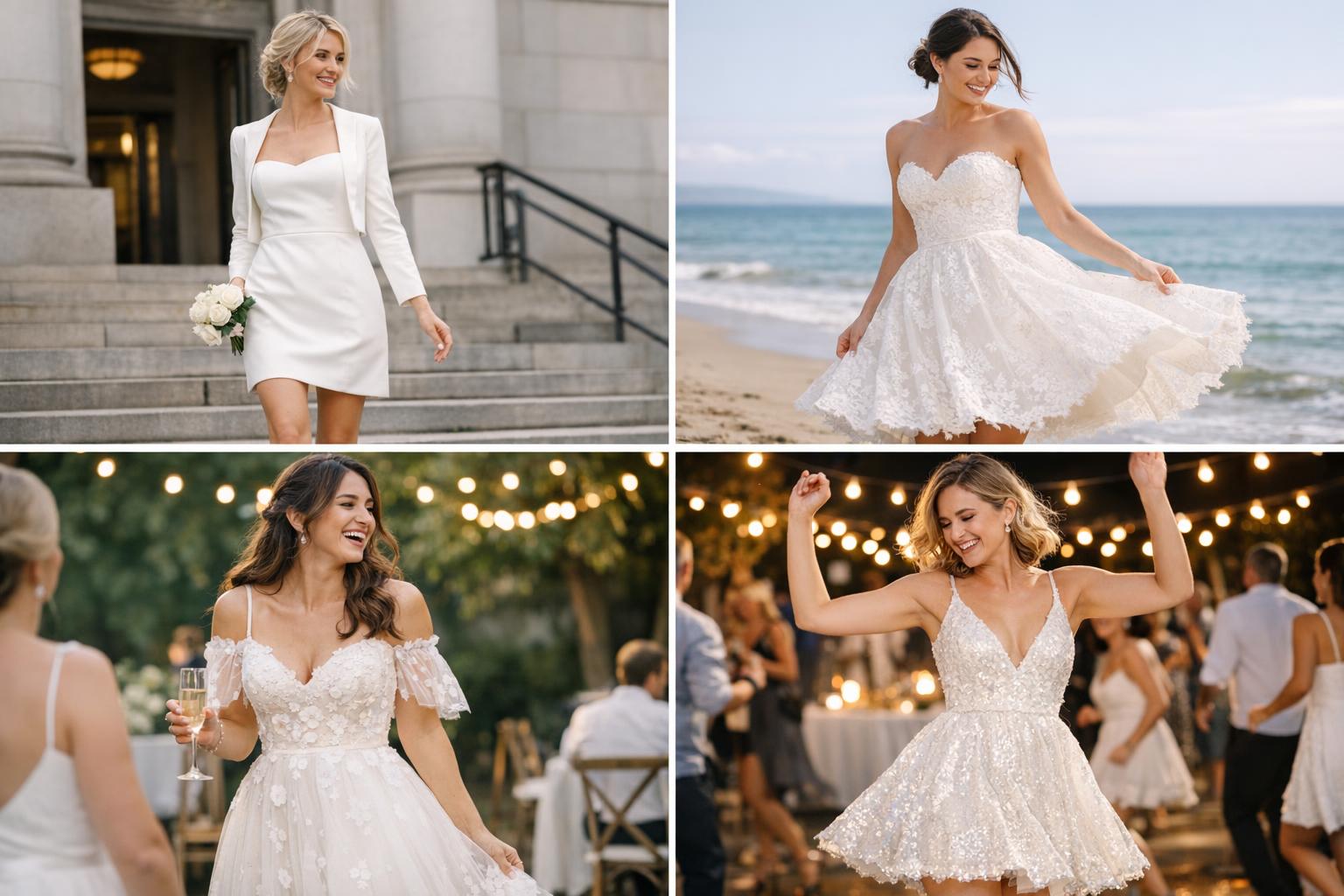
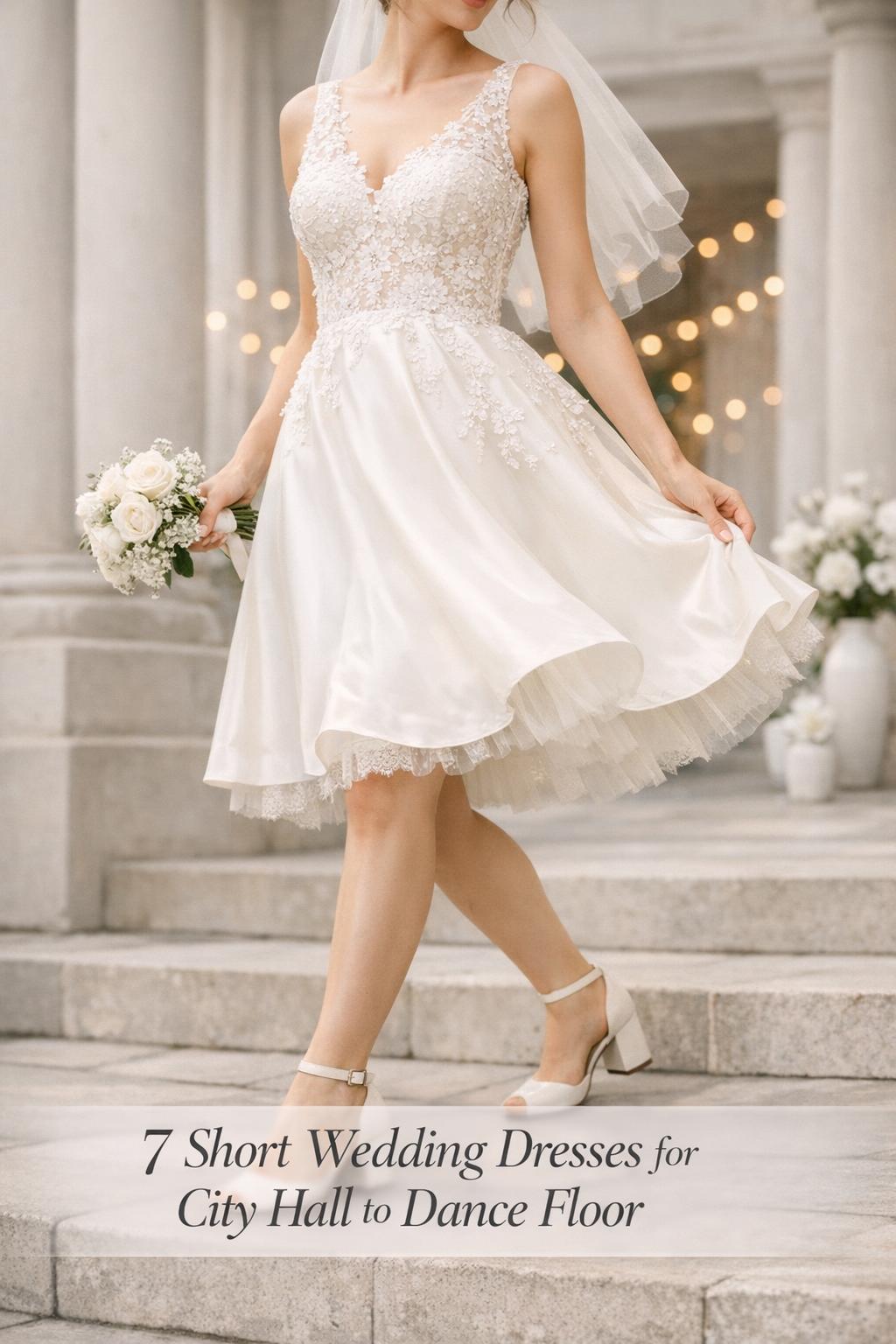
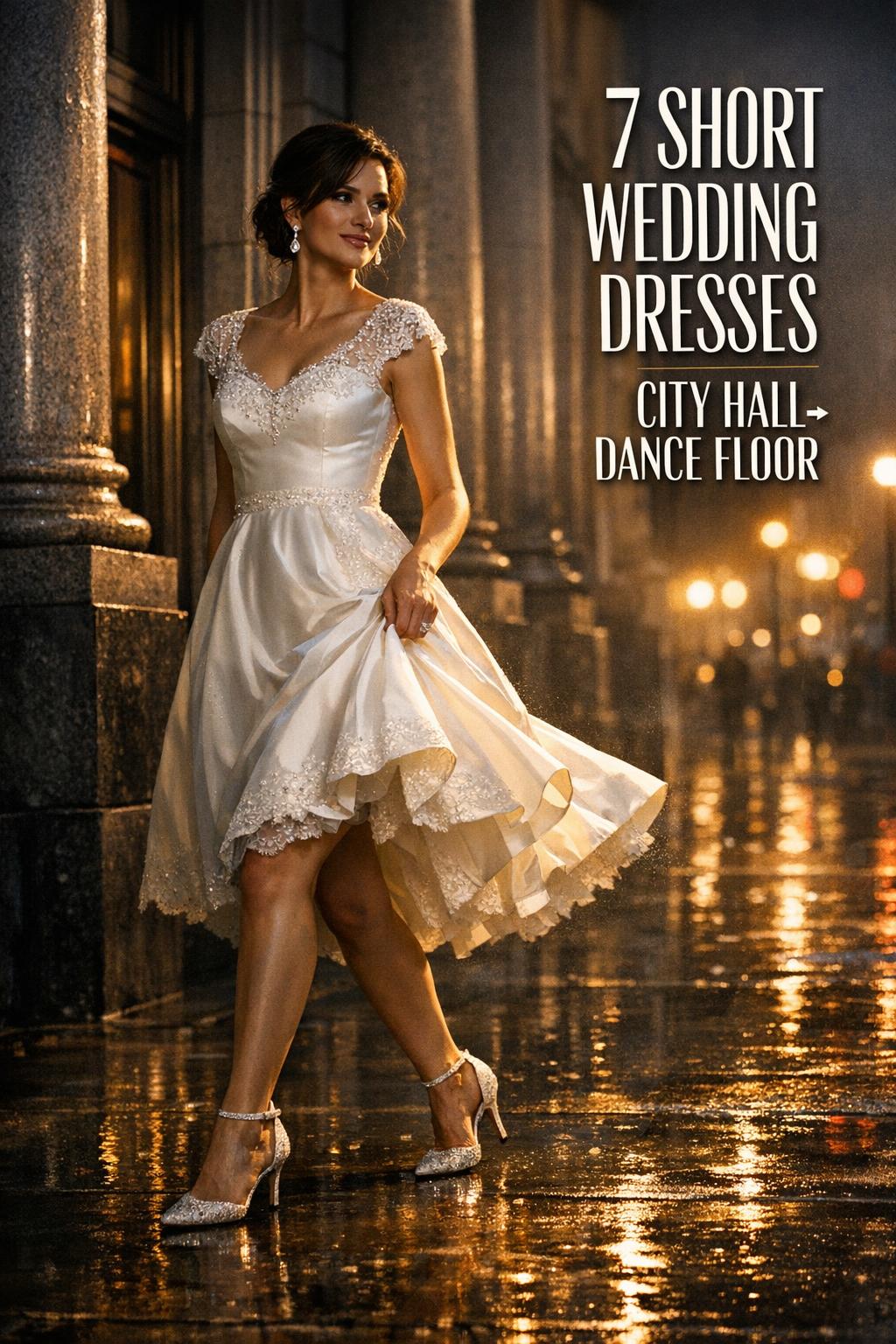
7 Short Wedding Dresses for City Hall to Dance Floor
Short Wedding Dresses: A Modern Guide to Tea-Length, Knee-Length, and Mini Styles
Short wedding dresses have moved from “alternative” to firmly at-home in modern bridal style. Whether you’re planning a courthouse ceremony, an intimate celebration, a beach wedding, or a reception-focused day built around dancing, a shorter hem can feel intentional, fashion-forward, and refreshingly practical. Today’s short bridal looks span everything from lace and embroidery to satin minimalism and shimmering, beaded minis—often designed to transition from ceremony to celebration with a simple switch of accessories.
This guide breaks down the most common lengths (tea-length, knee-length, and mini), key fabrics and details you’ll see while shopping, and how to match your dress to your venue, comfort needs, and overall wedding vibe. You’ll also find real-world shopping guidance—like how to think about sizing, made-to-order timeframes, shipping, and alterations—so you can buy confidently whether you’re booking a bridal appointment or shopping online.
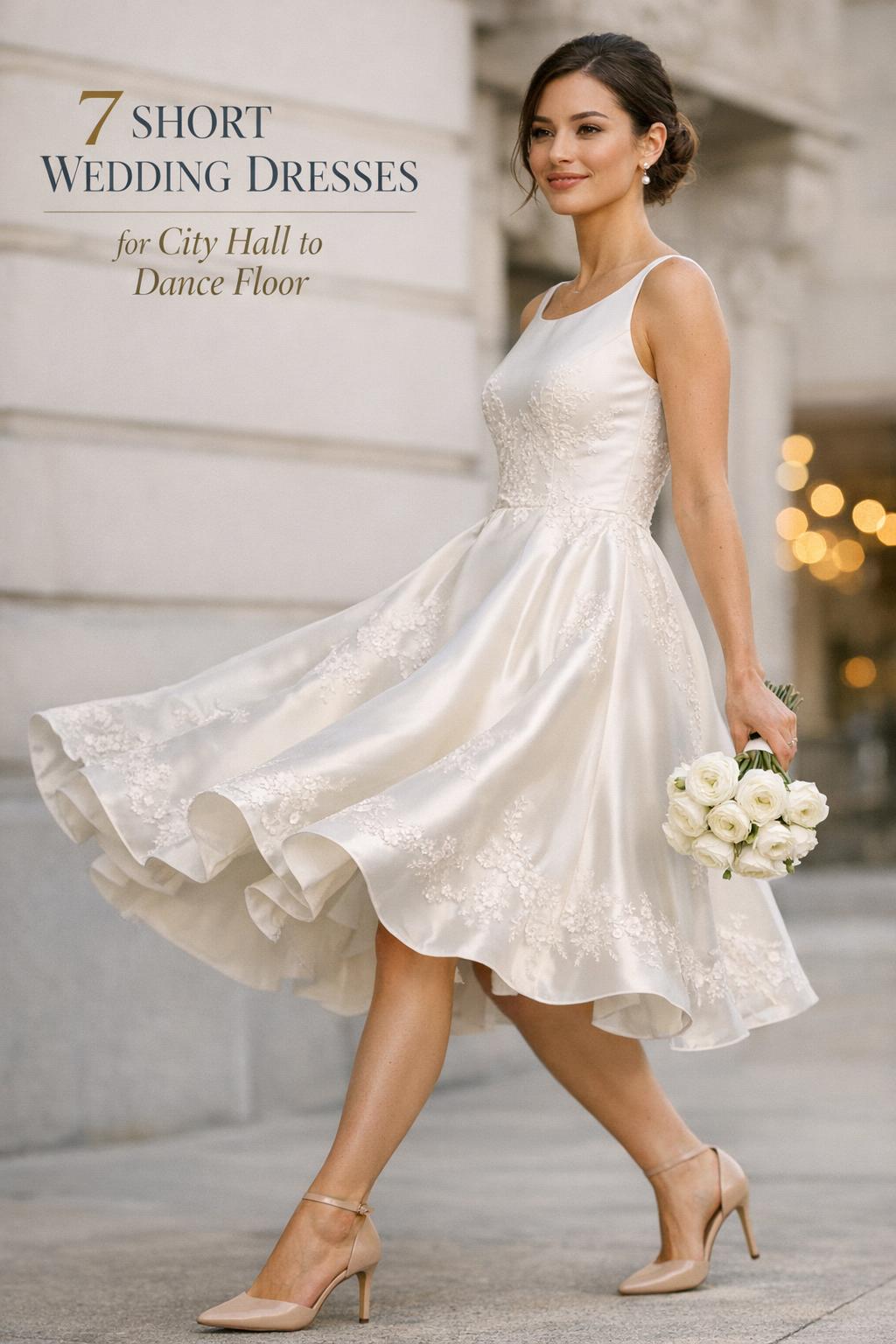
Why Choose a Short Wedding Dress in 2026
Brides are choosing shorter gowns for reasons that go beyond aesthetics. A short bridal gown can be easier to move in, more comfortable for warm-weather celebrations, and more versatile across multiple wedding events. Many collections position short dresses as ideal for bridal showers, receptions, civil ceremonies, and courthouse weddings—moments where you want bridal impact without the formality (or weight) of a full-length gown.
Shorter lengths also invite playful styling. Shoes become part of the look, and accessories can quickly change the tone—from sleek and minimalist for city hall to shimmer-forward and party-ready for a dance-all-night reception. If you want a look you can re-wear or repurpose after the wedding, a short dress can also feel like a more flexible choice than a traditional gown.
Your wedding look is only the beginning.
Keep your guest list, vendors, timeline, and every important detail together with Zarellea — so your day feels as considered as your style.
Tip: Decide how many events you want the dress to cover
If you want one dress to carry you through the ceremony, dinner, and dancing, prioritize comfort and movement. If you’re shopping for a second look (for example, a reception dress), you can lean more into mini lengths, shimmer, beading, or bolder silhouettes that feel “party-ready.”
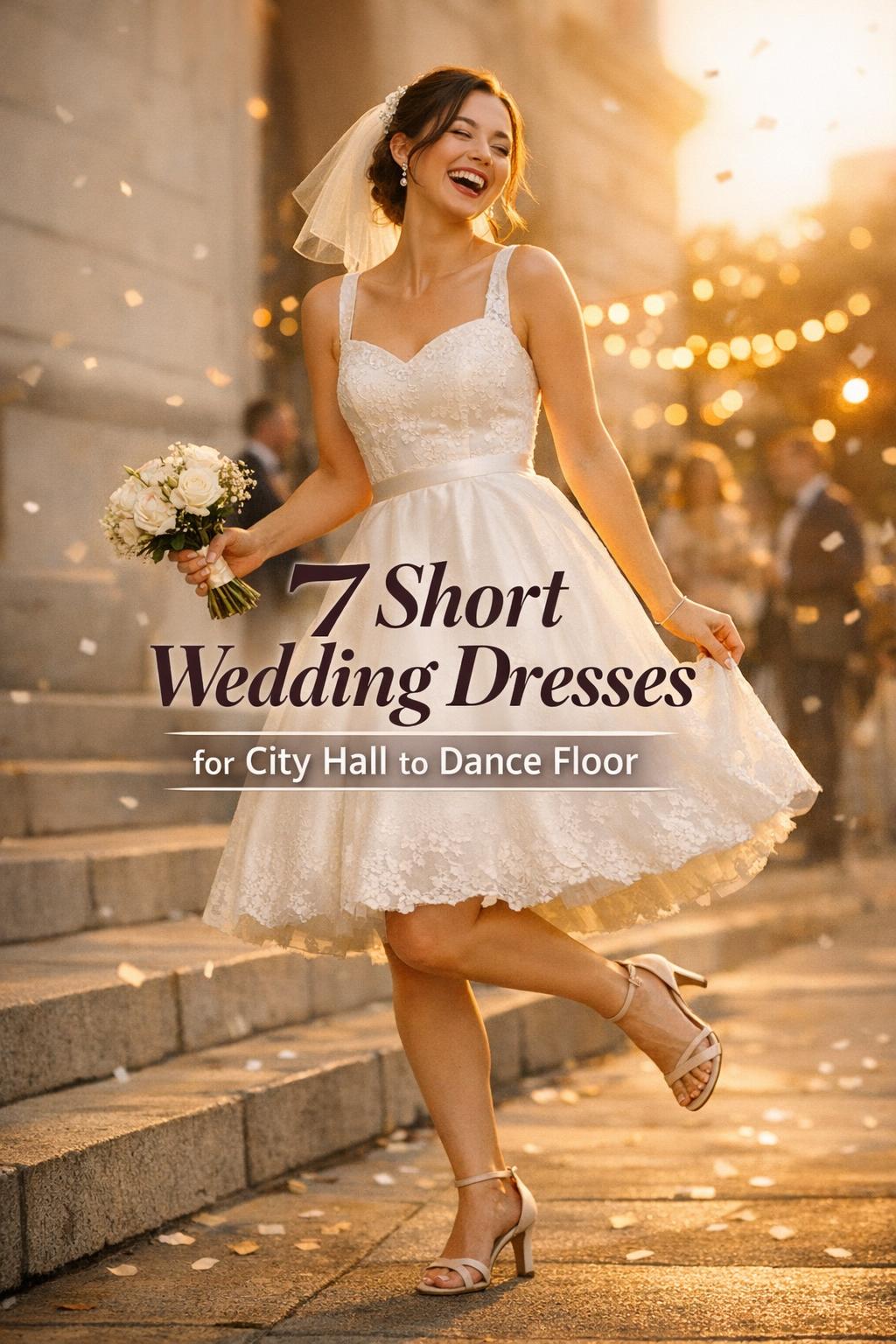
Length Options: Tea-Length, Knee-Length, and Mini
When people search for short wedding dresses, they’re often comparing tea-length wedding dresses, knee-length silhouettes, and mini wedding dresses. Each length creates a different mood, photographs differently, and works better for certain venues and footwear. Think of hem length as both a style decision and a practicality decision—especially if you’re planning to walk outdoors, dance for hours, or travel with your dress.
Tea-Length: Romance With Movement
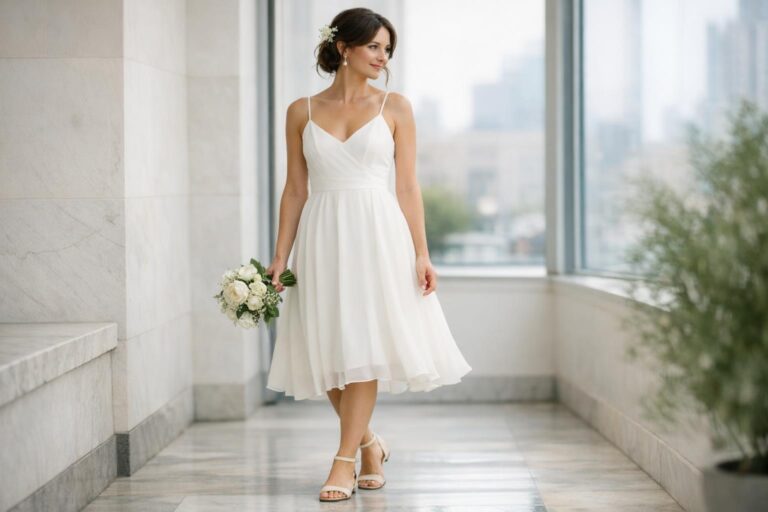
A tea-length wedding dress is often the “best of both worlds” option: shorter and easier than a full-length gown, but still undeniably bridal and classic. Tea-length silhouettes frequently appear in lace, satin, tulle, or chiffon, and they can feel romantic and polished without looking overly casual. This length works well for garden celebrations, beach weddings where you want airflow and ease, and courthouse ceremonies where you still want a formal silhouette.
Tea-length lace dresses are especially popular when you want texture and tradition. Satin tea-length styles lean sleek and minimal, while tulle and chiffon bring a light, airy feel for warmer seasons or daytime ceremonies.
Knee-Length: Clean, Confident, and Event-Ready
A knee-length wedding dress often reads as modern and effortless. It’s a strong choice for brides who want a clean silhouette for a city hall or courthouse wedding dress moment, and it can also work for casual celebrations or beach events where you want a straightforward, easy-to-wear hemline. Knee-length lace wedding dresses bring instant bridal texture, while satin and chiffon versions can feel crisp and refined.
Knee-length styles can also be a smart option if you want a dress that’s easy to pack, transport, and move in. Because the hem is higher, details like sleeves, neckline, and fabric finish take center stage.
Mini: Playful, Party-Forward, and Made for Dancing
A mini wedding dress is the most fashion-forward end of the short spectrum, and it’s often chosen for receptions, second looks, engagement parties, and other celebration events. Minis show off shoes and legs and feel especially aligned with dancing and late-night energy. If you love sparkle, this is also where you’ll often see beading, shimmer, and statement embellishments—think a mini wedding dress with beading or a short dress with embroidered details that catches the light.
Because a mini has less fabric overall, construction details matter. Look closely at how the bodice is built, how the fabric drapes, and how the hem is finished—especially if you want it to feel elevated rather than simply “short.”
How to Choose the Right Length for Your Venue and Theme
Venue and setting should guide your hemline as much as personal taste. Courthouse wedding dresses often lean short because they’re easy to move in and feel appropriate for an intimate, non-traditional ceremony. Beach wedding dress short styles are popular for comfort and mobility, especially in warm weather. Reception-focused plans favor mini and knee-length options that let you dance without worrying about a long train.
- Courthouse or city hall: knee-length or tea-length for a polished, modern look; mini for a bold second-look vibe
- Beach: tea-length or knee-length in lighter fabrics like chiffon; consider easy movement and minimal fuss
- Reception-heavy timeline: mini or knee-length for freedom on the dance floor
- Garden or daytime celebration: tea-length for romantic movement and classic bridal energy
Tip: Let your shoes help decide the hem
If you already have shoes you love, use them to guide the length. A tea-length hem can highlight a heel while still feeling formal, while a mini makes footwear a central style element. If comfort is your top priority, choose a dress length that won’t catch underfoot as you walk and dance.
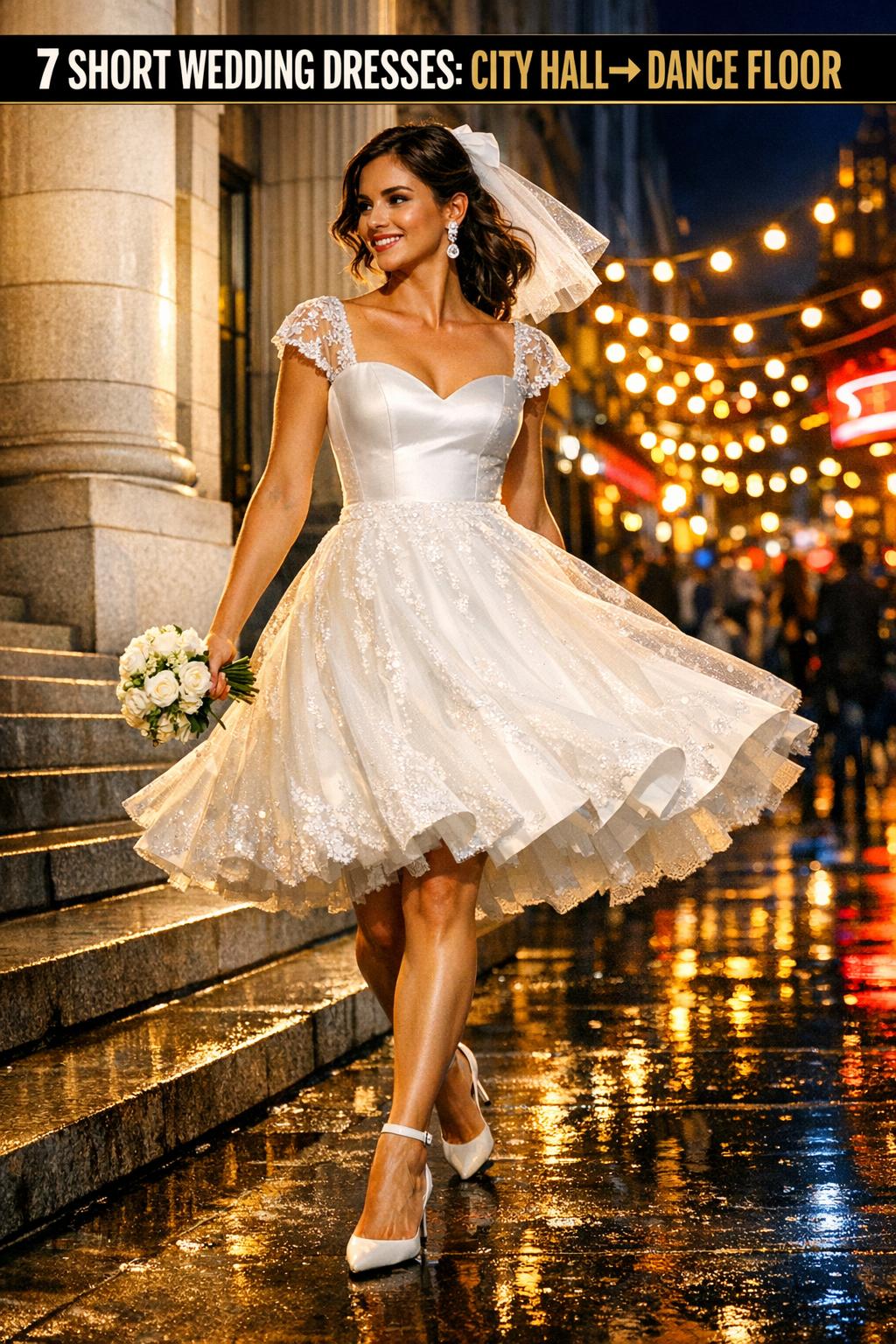
Fabric and Texture: Lace, Satin, Chiffon, and Tulle
Fabric choice is one of the biggest factors in how short wedding dresses feel. The same hemline can look romantic, minimalist, or party-ready depending on whether it’s crafted from lace, satin, chiffon, tulle, or embellished materials. Many collections highlight decorative approaches like embroidery, shimmer, and beading—details that can help a shorter silhouette feel unmistakably bridal.
Lace Short Wedding Dresses for Timeless Romance
A short lace wedding dress is a go-to for brides who want traditional texture with a modern hemline. Lace can bring softness and detail to tea-length and knee-length silhouettes, and it often reads as instantly bridal in photos. Some designs incorporate features like corded lace or layered lace effects, creating depth and dimension that elevates a shorter cut.
Lace also pairs easily with a range of accessories—classic veils, statement earrings, or simple shoes—so you can steer the look more traditional or more contemporary depending on your styling choices.
Satin: Sleek Minimalism With Structure
A satin short wedding dress often feels clean, confident, and modern. Satin can emphasize silhouette lines—especially in A-line, sheath, or fit-and-flare shapes—and it tends to suit brides who prefer a minimalist look where the cut and construction do the work. In tea-length form, satin can look refined and formal; in a mini or knee-length style, it can feel like a chic bridal cocktail dress.
Because satin can draw attention to seams and fit, prioritize accurate sizing and consider whether you’ll want minor tailoring for a smooth finish.
Chiffon: Light and Airy for Warm-Weather Weddings
Chiffon appears frequently in short and tea-length categories because it supports movement and comfort. It’s a strong choice for spring and summer weddings and is especially suited to beach or outdoor venues where you want a breathable feel. Chiffon can create a soft, floating effect as you walk, and it’s often used in casual-to-dressy designs depending on the bodice and neckline.
Tulle: Volume, Texture, and a Bridal “Moment”
Tulle is a popular option when you want a short dress to still feel like a statement. In tea-length silhouettes, tulle can create that classic, celebratory volume while keeping the hem off the ground. It’s also common in A-line shapes and designs that lean playful, making it a natural match for reception looks and party-ready styling.
Embellishments: Beading, Shimmer, and Embroidered Details
Short dresses are often where designers lean into special finishes. Beading, shimmer, and embroidered details add light-catching dimension—particularly in mini lengths or fitted silhouettes. If you’re drawn to a mini wedding dress with beading or a shimmering lace effect, these details can make a compact silhouette feel elevated and distinctly bridal.
Embellished styles also tend to be naturally reception-friendly, since they photograph beautifully under evening lighting and complement a dance-forward timeline.
Tip: Match the fabric to your comfort priorities
If your day involves lots of movement, prioritize fabrics that feel good against your skin and allow easy walking and sitting. If you’re buying online, look for clear product details, fabric descriptions, and care guidance so you know what to expect before the dress arrives.
Necklines, Sleeves, and Silhouettes to Flatter Every Body
Short wedding dresses come in the same variety of silhouettes and bodice designs as longer gowns, and those upper-body details often define the overall vibe. When the hemline is shorter, elements like a sweetheart neckline, a V-neck, sleeves, and the waist shape become even more visually important. Many top collections highlight popular silhouettes such as A-line, fit-and-flare, and sheath, along with neckline and sleeve variations designed to suit different preferences and events.
Neckline Guide: Sweetheart, V-Neck, Square, and Boat
Necklines set the tone. A sweetheart neckline short dress can feel romantic and classic, especially in lace or tulle. V-neck designs often read modern and elongating, and they pair easily with minimalist jewelry or bold statement pieces. Square and boat necklines can feel clean and structured, leaning into a sleek bridal cocktail look—especially when paired with satin.
When shopping online, use product photos and descriptions to assess how high or low a neckline sits and whether it matches your comfort level for your venue and audience.
Sleeve Options: Cap, Flutter, Short Sleeve, and Longer Sleeves
A short wedding dress with sleeves can balance a shorter hemline with extra coverage and structure on top. Cap sleeves and flutter sleeves are common in lighter, romantic styles, while short sleeves can feel polished and versatile for courthouse ceremonies and daytime celebrations. If you’re considering tea-length wedding dresses with sleeves, think about whether you want the sleeve to feel airy (like chiffon) or more defined (like lace).
Sleeves can also help a short dress feel seasonally flexible, particularly if your wedding spans cool evenings or you’re planning multiple events where you want the same dress to work in different settings.
Silhouette Comparisons: A-Line, Sheath, and Fit-and-Flare
Silhouette influences both comfort and the overall formality of a short dress. A-line short wedding dresses tend to feel classic and forgiving, working well in tea-length and knee-length cuts. Sheath styles often feel sleek and contemporary, emphasizing clean lines that pair beautifully with satin or refined lace. Fit-and-flare silhouettes blend structure with movement, making them a common choice for brides who want shape while still being able to dance comfortably.
If you’re deciding between silhouettes, consider how you want to move throughout the day. Sitting, hugging, walking outdoors, and dancing are all easier to evaluate if you prioritize movement-focused designs.
Tip: Use your event timeline as a fit test
Before committing, picture your full day in the dress: ceremony, photos, transportation, dinner, and dancing. If you’re planning a reception dress, prioritize mobility and comfort; if it’s your ceremony dress, you may want more structure or classic detailing like lace or embroidery for a more formal feel.
Where to Buy: Shopping Paths and Real-World Picks
Short wedding dresses are widely available across bridal brands, major retailers, and curated multi-brand shops. You’ll find dedicated short and tea-length categories, courthouse-focused collections featuring party-ready options, and individual product pages that go deep on details like sizing, shipping, and ordering timeframes. Your best buying path depends on whether you want an in-person bridal appointment, a quick online checkout, or made-to-order craftsmanship with a specific production timeline.
Designer Showrooms and Bridal Appointments vs. Online Shopping
Some brands encourage brides to either shop online or book a bridal appointment, offering flexibility depending on how you like to buy. Appointments can be helpful if you want to compare multiple silhouettes in one session. Online shopping can be ideal if you already know your preferred style and want access to a broad range of short bridal gown options—especially if you’re choosing a dress for a courthouse ceremony, reception, or bridal shower on a tighter timeline.
When browsing online, look for pages that clearly outline sizing and measurements, shipping and delivery expectations, and ordering timeframes. Product pages that provide “finer details,” FAQs, and size guides can reduce uncertainty—particularly if the dress is made-to-order.
Budget Tiers: Under $300, Mid-Range, and Investment Pieces
Budget is a major driver for brides exploring short options. You’ll see everything from affordable short wedding dresses under $300—often positioned as “little white dress” choices for multiple events—to more detailed lace, beaded, or made-to-order designs that sit higher. Rather than focusing only on price, consider value: how many times you’ll wear it, how easily it can be styled, and what the return or exchange policies look like.
- Under $300: great for engagement parties, bridal showers, receptions, and courthouse ceremonies when you want a budget-friendly look
- Mid-range: often offers broader fabric choices (lace, satin, chiffon) and more silhouette variety across tea-length and knee-length styles
- Investment: frequently includes more detailed construction, embellishments like beading or shimmer, and robust sizing/fit support with made-to-order options
Customization, Sizing, and Made-to-Order Considerations
Some storefronts highlight sizing and customization options, which can be especially useful if you’re trying to achieve a precise tea-length or knee-length hem. Other brands focus on made-to-order craftsmanship and include dedicated sections on sizing & measurements, ordering timeframes, and shipping & delivery. These details matter because short hemlines are visually exact—small changes in length can significantly change the look.
When comparing options, favor listings that clearly explain fit guidance and policies. Short dresses are often easier to alter than full-length gowns, but you’ll still want clarity on how quickly you can receive the dress and what adjustments are realistic before your event date.
Tips for Alterations and Quick Turnarounds
If your wedding date is close, focus on what you can control: understand the retailer’s shipping and delivery expectations, check ordering timeframes, and choose a silhouette that tailors easily. Simple hems and straightforward fabrics can be less complicated to adjust than heavily embellished designs.
- Confirm delivery timing before you buy, especially for made-to-order dresses
- Prioritize accurate measurements and use the brand’s size guide
- Choose a hem length you can walk and sit in comfortably, then fine-tune with alterations if needed
- If you’re choosing beading or shimmer, plan extra time for careful tailoring
Short Wedding Dresses for Specific Occasions
One reason short wedding dresses are so popular is how naturally they fit into modern wedding calendars. Many brides want a primary ceremony look and additional outfits for related events—bridal shower, engagement celebration, rehearsal moments, courthouse paperwork, and the reception itself. Short silhouettes also work well when the setting is casual, warm, or movement-heavy.
Courthouse Wedding Dresses: Modern, Non-Traditional, and Comfortable
Courthouse wedding dresses often prioritize comfort and confidence. Collections designed for civil ceremonies frequently spotlight short and party-ready gowns that don’t feel overly formal yet still feel bridal. If you want a look that can be worn beyond the ceremony, choose a style that’s easy to re-style with different shoes, a jacket, or statement jewelry for future occasions.
Reception Dresses: Best for Dancing and Celebration
If your top priority is dancing, short hemlines are a natural fit. Minis and knee-length fit-and-flare dresses can offer freedom of movement and reduce the need to manage fabric on a crowded dance floor. This is also where beading, shimmer, and embellished details can shine, especially under evening lights.
Beach and Warm-Weather Weddings: Easy Movement Matters
For warm-weather ceremonies, lighter fabrics like chiffon and certain lace constructions can feel more comfortable. Tea-length and knee-length dresses are especially popular for beach wedding dress short searches because they balance airflow and ease while still feeling dressed up. If you’re choosing a beach setting, prioritize a silhouette that won’t feel restrictive and a length that won’t drag or pick up debris.
Bridal Showers and Engagement Parties: The Little White Dress Moment
Short bridal looks frequently show up as “little white dress” options for pre-wedding events. Minis, knee-length sheaths, and tea-length A-lines can all work, depending on how formal the event is. Budget-friendly collections under $300 are often positioned for these moments, offering a way to feel bridal across multiple celebrations without committing to a full gown each time.
High-Low Wedding Dresses: A Related Option for the Best of Both
If you love the idea of a short front but still want drama and movement in the back, a high-low wedding dress can bridge the gap between short and traditional. High-low styles offer leg-baring ease in front while delivering a more gown-like silhouette from behind. This can be especially appealing if you want your shoes visible and your stride unencumbered, but still want a statement shape for photos and entrances.
High-low designs can range widely in look and price, and they can be styled to feel either romantic or modern depending on fabric choice and accessories.
Styling and Accessories to Complete the Look
Styling is where short wedding dresses truly shine. With less fabric taking up visual space, every accessory choice reads more clearly—shoes, jewelry, veils, and outer layers can all change the mood. Many short-dress collections emphasize mix-and-match styling to help brides create a look that works for the ceremony, reception, and beyond.
Shoes That Complement Short Dresses
Because the hem is higher, shoes become part of the main outfit rather than a hidden detail. Consider whether you want your shoes to blend in and let the dress lead, or stand out as a statement. Tea-length dresses often highlight heels elegantly, knee-length styles feel modern with streamlined shoes, and minis can handle bolder choices because the overall silhouette is more playful.
Veils, Capes, and Jewelry: How to Balance the Silhouette
Short dresses can pair beautifully with classic bridal accessories. A veil can add ceremony energy and tradition to a mini or knee-length dress, while jewelry can push the look minimalist or glamorous. If your dress has heavy embellishments like beading or shimmer, consider simpler jewelry to keep the look cohesive. If your dress is sleek satin, you can use accessories to add texture and personality.
Outerwear for Cool Evenings and Multi-Event Wear
Outer layers can be especially useful for courthouse days, travel-heavy timelines, or receptions that run late. A jacket or wrap can also help you re-wear your short bridal gown later, turning it into an event dress with a different vibe. When shopping, consider whether the dress’ neckline and sleeve shape will layer smoothly with outerwear.
Tip: Build two accessory “sets” to stretch one dress across multiple moments
If you want one short dress to cover both ceremony and reception, plan two styling directions: one more classic for vows (veil or refined jewelry), and one more party-forward for dancing (statement earrings or a bolder shoe). This approach is especially effective for courthouse wedding dresses and reception minis.
A Practical Fit and Comfort Framework for Short Dresses
Short bridal dresses place more emphasis on precise proportions. Hem length, waist placement, and bodice fit are immediately visible, and the dress needs to support how you’ll move throughout the day. While many retailers include detailed size guides and measurement instructions, it helps to adopt a consistent, practical approach before you order—especially if you’re shopping online or choosing a made-to-order design.
A simple decision framework: choose length, then structure, then detail
Start by choosing the hemline that suits your venue and timeline. Next, decide how structured you want the bodice and silhouette to be for your comfort and support preferences. Finally, pick the level of detail—lace, satin minimalism, chiffon softness, or beading and shimmer—based on how formal you want the finished look to feel.
- Length: tea-length for classic romance, knee-length for modern polish, mini for party energy
- Structure: A-line for ease, sheath for sleekness, fit-and-flare for shape and movement
- Detail: lace and embroidery for texture, satin for clean lines, embellishment for sparkle
Tip: Think about sitting, walking, and dancing—then decide on sleeves
Sleeves can change how a dress feels over hours of wear. If you’ll be moving a lot, make sure the sleeve design doesn’t restrict your shoulders or arms. If you want extra coverage for a courthouse setting or cool weather, a short wedding dress with sleeves can feel balanced and versatile without changing the hemline.
Final Checklist: Choose and Buy With Confidence
Short wedding dresses can be simple to shop for once you know what to prioritize: length, fabric, comfort, and practical logistics like delivery timelines. Use this checklist to move from browsing to a confident purchase.
- Choose your primary use: ceremony, courthouse, beach, reception, or multiple events
- Decide on hem length: tea-length, knee-length, or mini (or a high-low alternative)
- Select your fabric direction: lace, satin, chiffon, tulle, or embellished shimmer/beading
- Pick neckline and sleeves based on comfort and the formality you want
- Check the product details: sizing & measurements, FAQs, and care guidance
- Confirm shipping & delivery and any ordering timeframes, especially for made-to-order
- Plan for alterations if needed, and leave enough time before your date
- Choose accessories (shoes, veil, jewelry, outerwear) to complete the look
FAQ
What lengths count as short wedding dresses?
Short wedding dresses typically include tea-length styles, knee-length silhouettes, and mini wedding dresses, with each hemline creating a different level of formality and movement.
Are short wedding dresses appropriate for a courthouse wedding?
Yes, short wedding dresses are commonly chosen as courthouse wedding dresses because they feel modern, comfortable, and easy to wear while still looking bridal for an intimate or civil ceremony.
Which short wedding dress length is best for dancing?
Mini and knee-length dresses are often the easiest for dancing because they offer maximum freedom of movement, while tea-length can also work well if you want a more classic look with plenty of mobility.
What fabrics are most common for short bridal gowns?
Common fabrics include lace, satin, chiffon, and tulle, and many short styles also feature decorative elements like embroidery, shimmer, or beading to create a more elevated bridal finish.
How do I choose between lace and satin for a short wedding dress?
Lace tends to feel timeless and textured, while satin reads sleek and minimalist; choosing between them usually comes down to whether you want romantic detail (lace) or clean, structured simplicity (satin).
Can I find affordable short wedding dresses under $300?
Yes, affordable short wedding dresses under $300 are commonly available and are often positioned as “little white dress” options for engagement parties, bridal showers, courthouse ceremonies, and reception looks.
What should I look for when shopping online for a short wedding dress?
Prioritize listings with clear product details, sizing and measurement guidance, FAQs, and transparent shipping, delivery, and ordering timeframes, especially if the dress is made-to-order.
Do short wedding dresses usually need alterations?
They can, because small changes in hem length and bodice fit can noticeably change the look; it’s best to plan time for alterations and select a retailer that provides clear sizing guidance.
Are tea-length wedding dresses with sleeves common?
Yes, tea-length wedding dresses with sleeves are a popular option for brides who want a balanced silhouette that feels romantic and polished while adding coverage and structure on top.