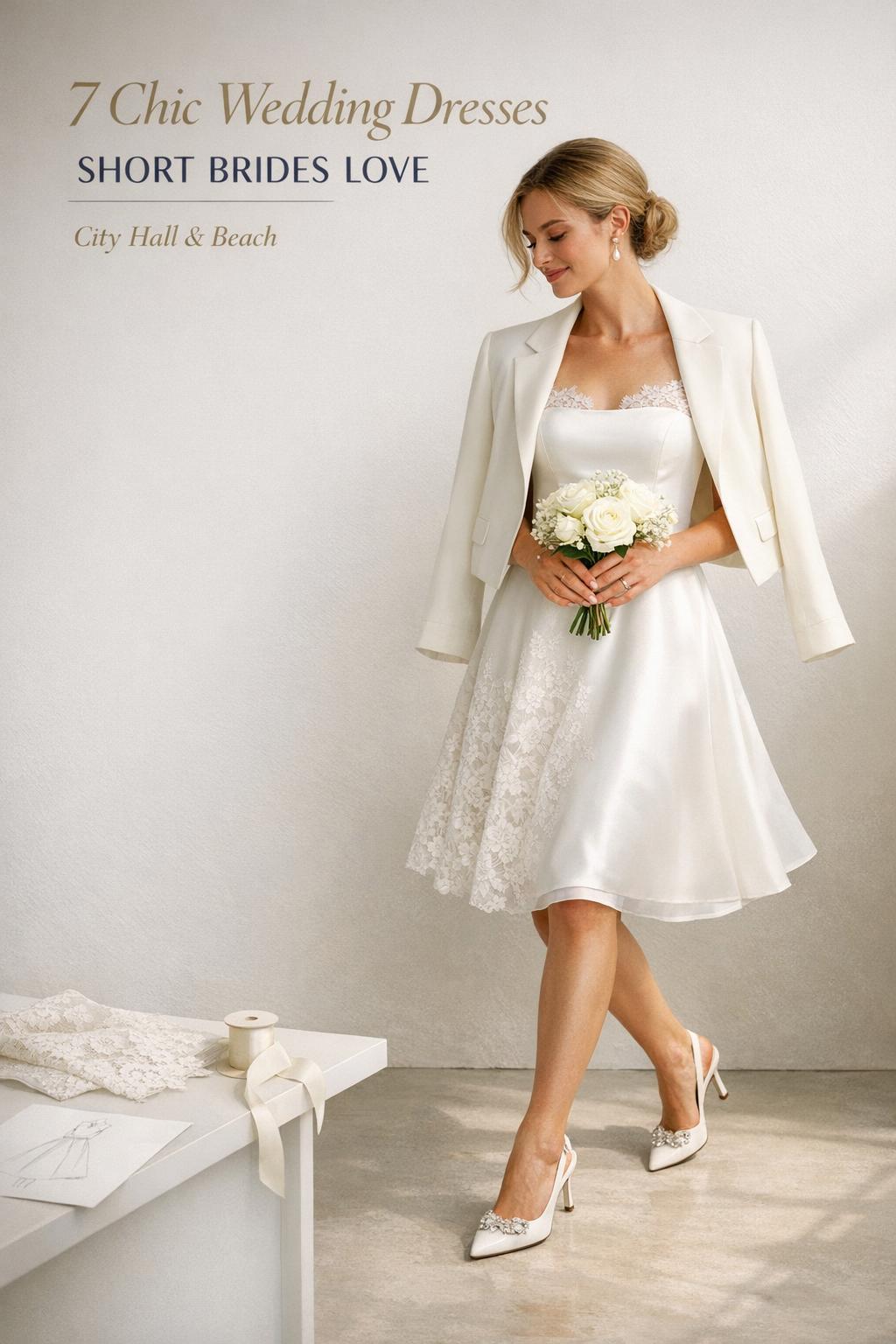
7 Chic Wedding Dresses Short Brides Love for City Hall & Beach
Wedding Dresses Short: A Modern Bride’s Guide to Mini, Knee-Length, Tea-Length, and Midi Styles
If you’re searching for wedding dresses short enough to feel easy, modern, and wearable, you’re not alone. Short wedding dresses have moved far beyond the “after-party only” category and now show up everywhere brides celebrate: city hall ceremonies, beach weddings, casual gatherings, receptions, and more. The best part is how much variety exists—mini wedding dresses, knee-length wedding dresses, tea-length wedding dresses, and midi wedding dresses—each with its own vibe, movement, and styling possibilities.
This guide breaks down what “short” really means, how to choose the right length and silhouette, what fabrics to consider (like lace, satin, tulle, and chiffon), and how to think through sizing, alterations, and styling. You’ll also find practical tips and a shopping checklist, plus a FAQ section that answers the most common questions brides ask when choosing a short bridal gown.
What Counts as a “Short” Wedding Dress?
“Short wedding dress” can describe several lengths, from a true mini to a hem that lands at mid-calf. When you’re comparing options online, the length label can help you narrow your choices quickly—but the final effect depends on your height, where the dress sits at the waist, and what shoes you plan to wear.
Mini wedding dress
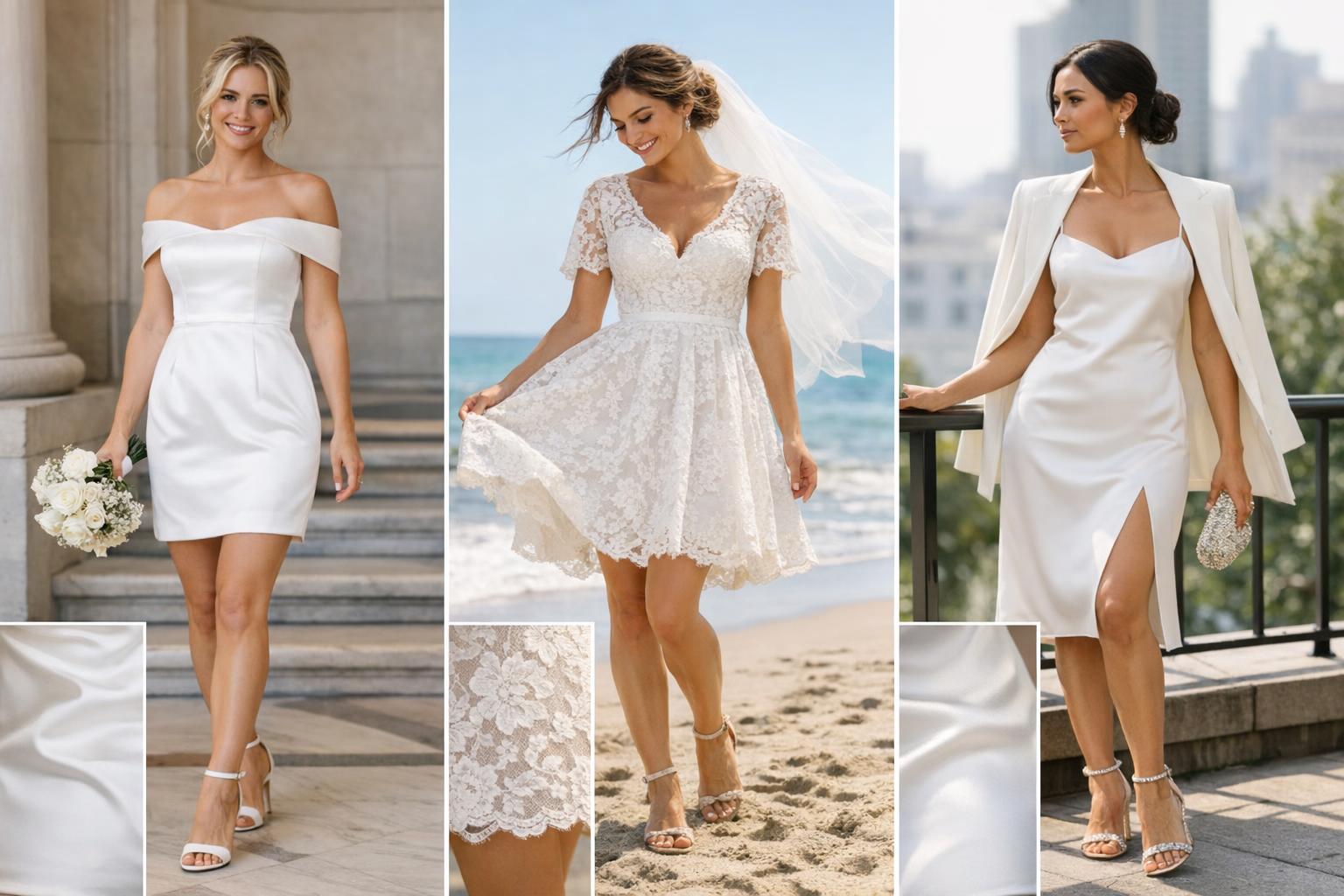
A mini wedding dress is the shortest end of the spectrum, often creating a bold, fashion-forward look that’s especially popular for modern brides, receptions, and bridal events. Minis can feel playful and chic, and they naturally highlight your shoes and legs—making styling choices more visible than they would be with a long gown.
Your wedding look is only the beginning.
Keep your guest list, vendors, timeline, and every important detail together with Zarellea — so your day feels as considered as your style.
Knee-length wedding dress
A knee-length wedding dress typically hits at or near the knee and is one of the most classic “cocktail length wedding dress” options. This length can read polished and bridal without feeling overly formal, making it a go-to for courthouse weddings, smaller ceremonies, and brides who want comfortable movement throughout the day.
Tea-length wedding dress
A tea-length wedding dress usually falls between the knee and the ankle, often around the mid-calf area. This length is frequently associated with a romantic, vintage-inspired feel, but the same length can look sleek and modern depending on fabric, neckline, and overall silhouette.
Midi wedding dress
A midi wedding dress generally sits below the knee and above the ankle, overlapping with tea-length in some collections. Midis can feel refined and city-ready, and they often work well when you want a short wedding gown that still has a bit more coverage and visual “dress” presence than a mini.
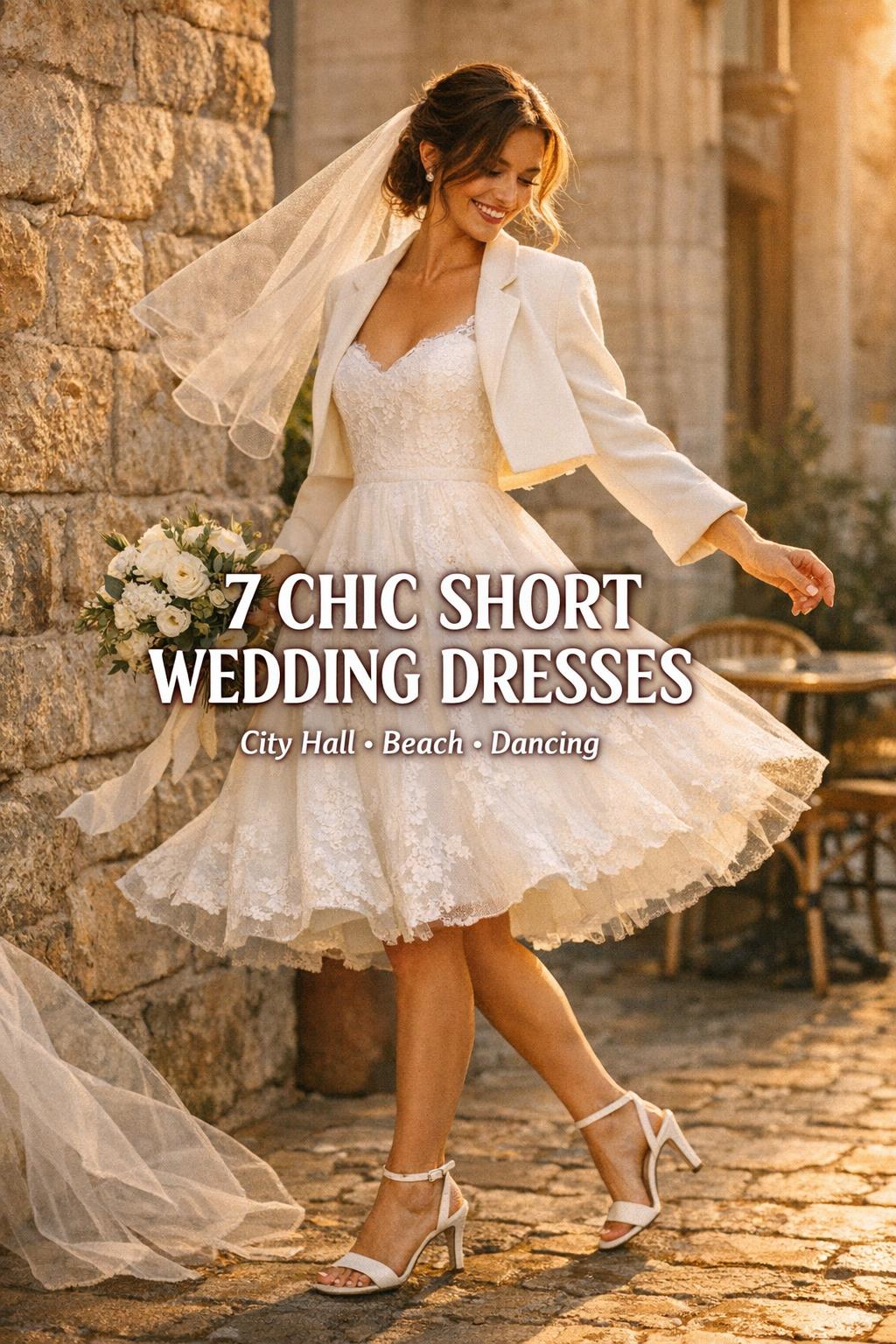
Short Dress Silhouettes: Which One Fits You?
Length is only one piece of the puzzle. The silhouette determines how the dress moves, how it balances proportions, and how comfortable you feel from ceremony to reception. Short wedding dresses show up in a wide range of shapes, from easy A-line styles to sleek fitted looks and richly detailed lace designs.
A-line short wedding dresses
An A-line short wedding dress is a classic choice because it creates a defined waist with a skirt that gently flares out. This silhouette tends to feel universally wearable and suits many wedding settings—from casual celebrations to more traditional ceremonies—while still delivering the ease that makes short dresses so appealing.
Tips: If you’re unsure where to start, try A-line first. It’s often the easiest silhouette to picture across different hem lengths (mini, knee-length, tea-length, and midi) and pairs well with many fabrics, including lace, satin, tulle, and chiffon.
Fitted and sheath short wedding dresses
A fitted or sheath short wedding dress keeps the line closer to the body for a clean, modern look. This silhouette can feel especially contemporary in a mini or knee-length cut, and it often reads “minimal” even when it includes elevated details like applique or embroidery.
Tips: Because fitted silhouettes show the outline more clearly, pay extra attention to sizing guidance, fabric feel, and return policies. Comfort is key when the dress is designed to skim closer to the body.
Lace, embroidery, and appliqué details
Lace short wedding dresses remain a favorite for brides who want texture and romance in a shorter hemline. Embroidery and appliqué can add dimension and a couture-like finish, whether the dress is a simple tea-length style or a strapless mini with intricate surface detail.
Detailed dresses can feel more formal than their length suggests. That’s useful if you love the practicality of a short bridal gown but still want a look that feels elevated and ceremonial.
Off-shoulder, sleeves, and neckline options
Neckline and sleeves can completely change the mood of wedding dresses short in length. Off-the-shoulder styles can lean romantic and bridal, while strapless minis often feel bold and contemporary. Some short dresses also feature sleeves or even detachable sleeve options, which can help you shift between ceremony and reception looks without changing your dress.
- Off-the-shoulder: Romantic and photo-friendly, often paired with A-line or fitted shapes.
- Strapless: Clean and modern; frequently seen in mini lengths with elevated details.
- Sleeves: Adds coverage and changes the overall balance of a short hemline.
- Detachable sleeves: A flexible way to adjust coverage and style across events.
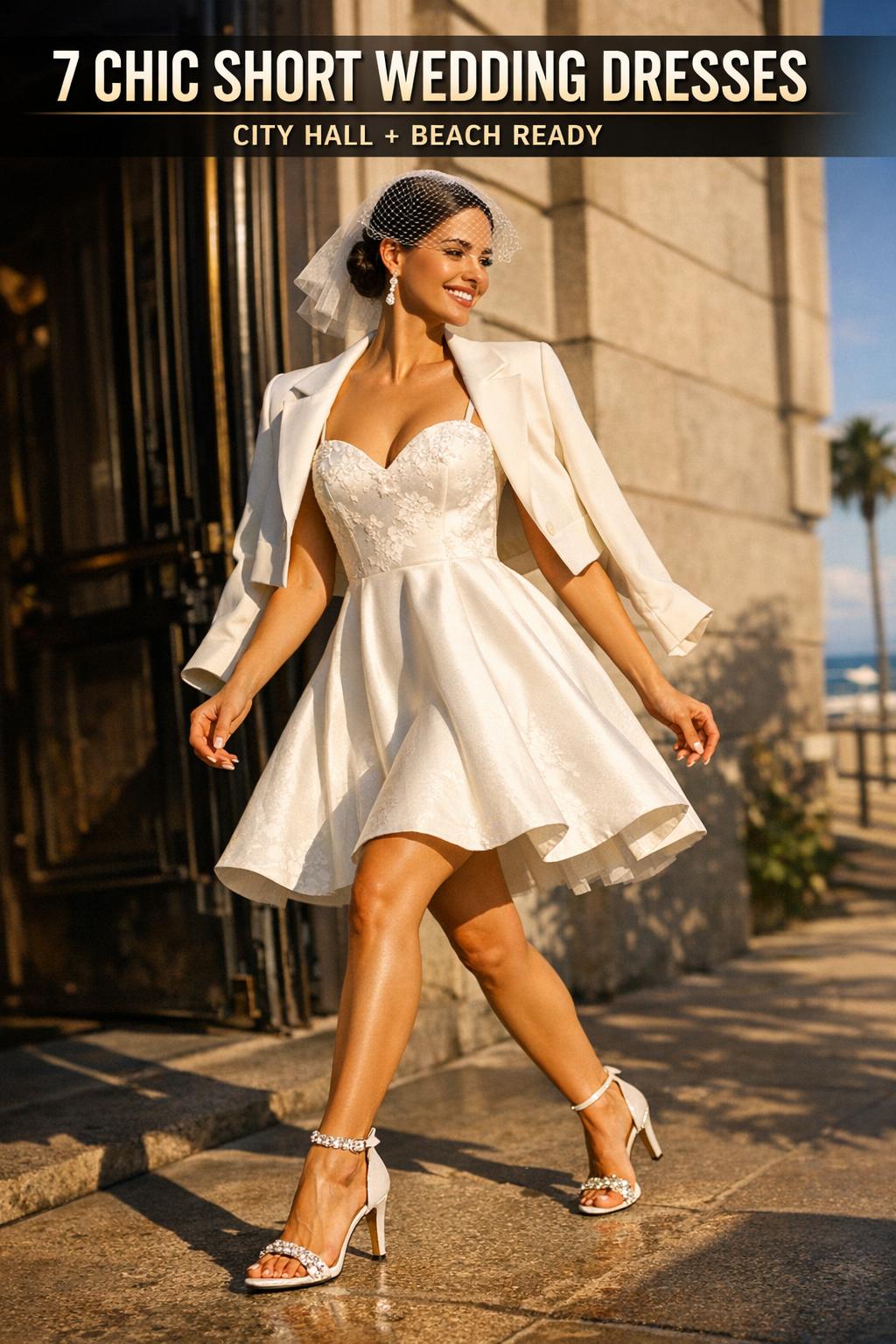
Where Short Wedding Dresses Shine: Venues and Seasons
Short wedding dresses are often chosen for their ease—especially when the day includes walking, dancing, travel, or outdoor elements. The venue and season matter because they influence comfort, movement, and how “formal” a short hemline feels in context.
Beach weddings and warm-weather celebrations
Short wedding dresses for beach weddings and summer celebrations can feel refreshingly practical. Less fabric can mean more comfort in warm temperatures and easier movement on sand or along boardwalk-style paths. In these settings, short lengths can look intentionally styled rather than unconventional.
Tips: If you’re planning a beach wedding dress short in length, think about how the fabric behaves in wind and humidity. You’ll also want shoes that make sense for your location since your footwear will be more visible.
Garden, outdoor, and casual ceremonies
Garden weddings and outdoor ceremonies often pair beautifully with tea-length and midi wedding dresses, especially when the dress has movement in the skirt. A-line shapes can feel particularly suited to this setting, offering that bridal silhouette while keeping the hem off the ground.
City hall and modern city venues
Courthouse weddings and city venues are natural matches for sleek knee-length and midi looks, including minimalist satin styles or fitted silhouettes. If you want a reception dress for wedding celebrations later the same day, a short wedding gown can transition seamlessly from ceremony to dinner and dancing.
Reception and second-look moments
Many brides love short wedding dresses as a second look. A mini wedding dress can feel fun and light for dancing, while still reading as unmistakably bridal through fabric, detailing, and accessories. If you’re choosing one dress for the full day, a tea-length or midi can be a middle ground: short enough for mobility, long enough to feel ceremonial.
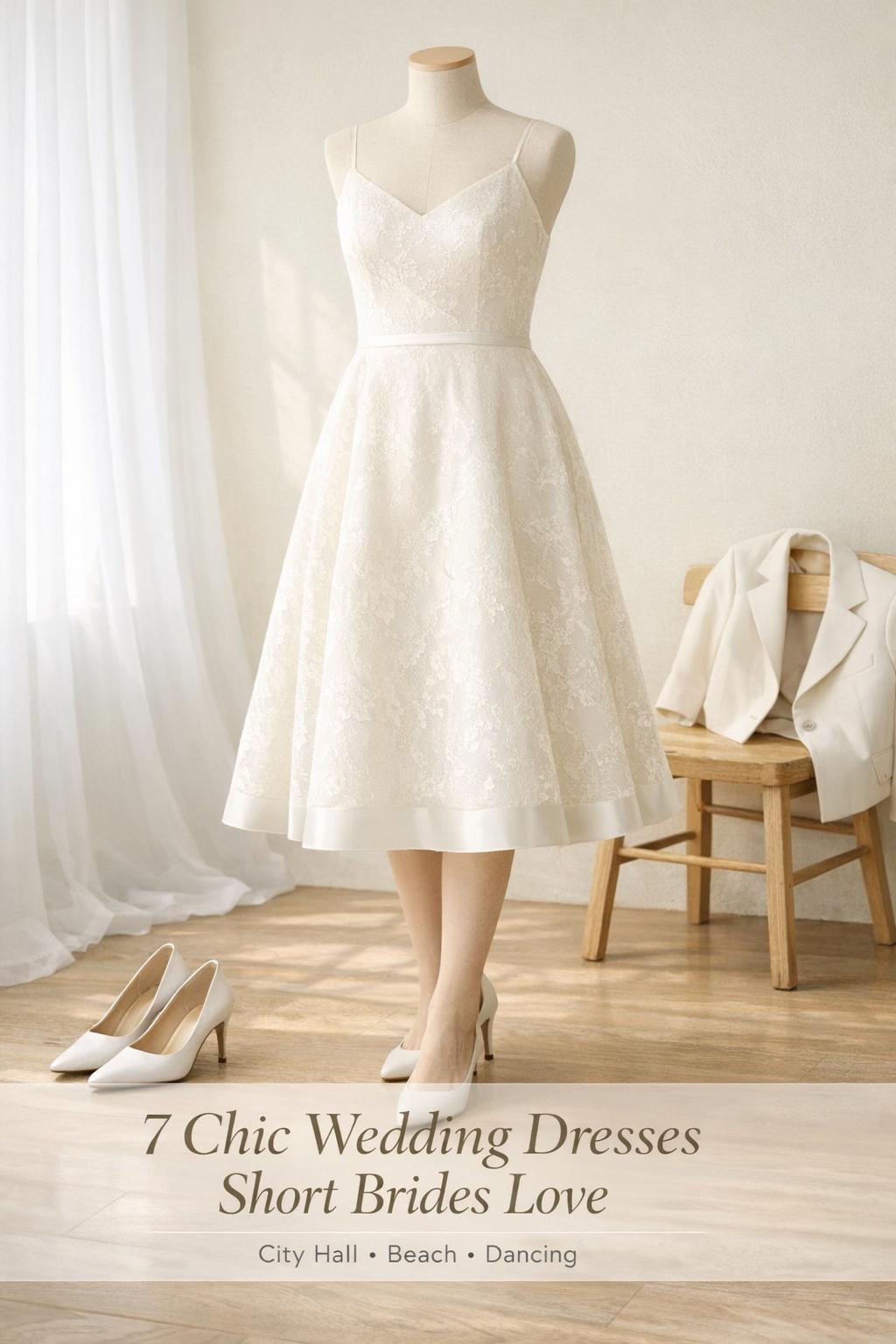
Fabric Guide for Short Wedding Dresses
Fabric choice matters even more in shorter dresses because the hemline and overall structure are clearly visible. The fabric affects how the dress holds shape, how it moves when you walk or dance, and how formal it looks despite a shorter length.
Lace: textured and romantic
Lace is one of the most common and recognizable bridal fabrics for short dresses. A lace short wedding dress can feel traditional and romantic, while still offering the modern practicality of a shorter hemline. Lace also pairs well with detailing like embroidery and appliqué for added depth.
Satin: clean, sleek, and modern
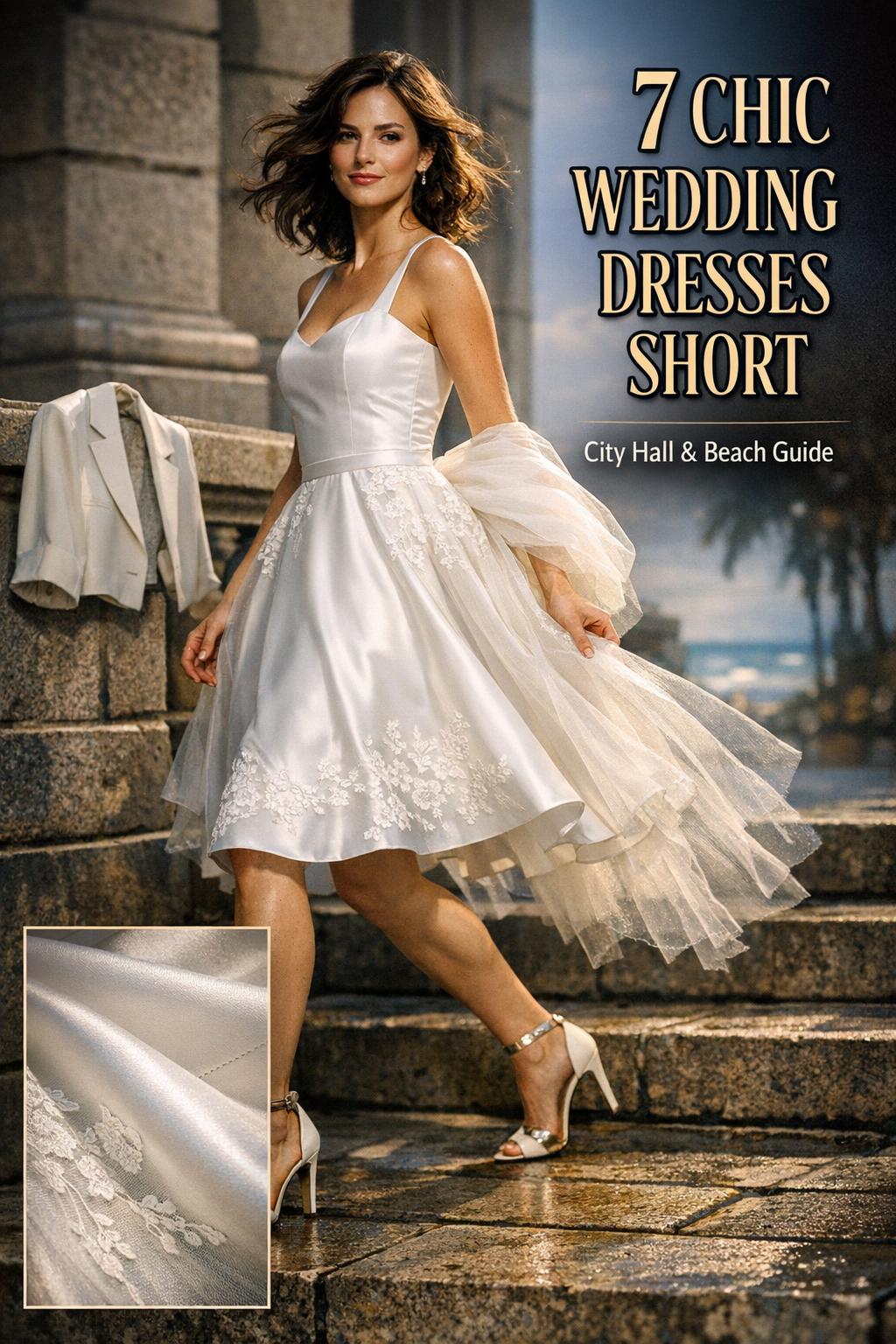
Satin short wedding dresses often look polished and contemporary, especially in fitted silhouettes or minimalist designs. Satin can emphasize clean lines and a structured look, which can be particularly striking in a knee-length or midi cut.
Tulle: airy volume and movement
Tulle is commonly associated with skirt volume and a light, airy feel. In tea-length and midi lengths, tulle can create a classic bridal shape without the weight of a full-length gown. In shorter lengths, it can also bring a playful edge while still feeling wedding-appropriate.
Chiffon: soft, floaty, and easy to wear
Chiffon short wedding dresses tend to feel light and fluid, making chiffon a natural consideration for warm-weather or beach settings. The way chiffon drapes can also make a shorter dress feel effortless and relaxed while still looking intentional and bridal.
Tips: When comparing fabrics online, focus on how you want the dress to behave: structured and sleek (often associated with satin), textured and romantic (lace and embellishment), or light and floaty (chiffon and tulle). For short wedding dresses, “movement” is not just a nice-to-have—it’s part of what makes the look work.
Sizing, Custom Options, and Alterations: How to Get the Fit Right
Fit is where a short bridal gown can truly shine—because the hemline is intentional and your proportions are on full display. Many short wedding dress collections emphasize broad size ranges (including petite to plus size) and may also offer custom-size orders or custom measurements. Those options can be particularly helpful when you want a precise hem placement at the knee, mid-calf, or just above the ankle.
Petite, tall, and in-between: why length placement matters
With wedding dresses short in length, a small change in hem placement can shift the entire look. A knee-length dress that lands slightly above or below the knee can read differently, and tea-length or midi dresses can visually change proportion depending on where the hem hits your leg.
Tips: When you’re choosing between knee-length, tea-length, and midi, think about the exact spot you want the hem to land when you’re wearing the shoes you plan to wear. If the brand offers custom measurements, that can be a practical way to reduce uncertainty.
Custom measurements, made-to-order, and rush timelines
Some short wedding dress options are made-to-order and may involve specific timelines, while others offer rush orders. That difference matters if you’re shopping closer to your date or if you want customization. Because these policies vary by retailer and designer, it’s worth reading the dress details closely before committing—especially if you have a firm deadline.
Alterations: the most common changes for short gowns
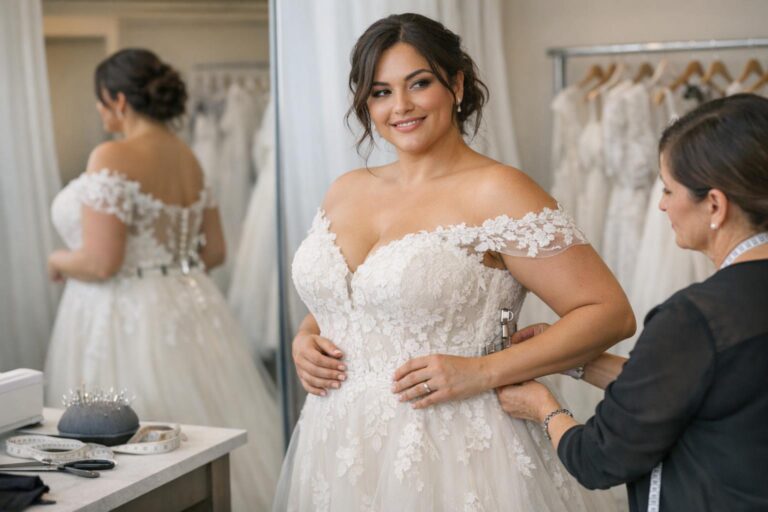
Even when you choose the right size, alterations can make a short wedding dress feel truly “made for you.” Hem adjustments are often the biggest factor because short lengths depend on precision. Other common tweaks can include refining the waist or bodice fit to match the silhouette you’re aiming for.
- Confirm where you want the hem to hit (mini, knee-length, tea-length, or midi) and communicate it clearly.
- Plan your shoes early, since heel height impacts hem length and the overall balance.
- Prioritize comfort: you should be able to sit, walk, and dance confidently in a short bridal gown.
Trying before you buy: practical checks
Short wedding dresses are often purchased online through brand storefronts and curated catalogs, where the most useful information is usually in the product details: sizing guidance, shipping timelines, return policies, and fabric notes. Use those details to reduce guesswork and to decide whether you want a ready-to-ship option or something made-to-order.
Tips: If you’re torn between two sizes, focus on the area that matters most for your chosen silhouette. For A-line styles, waist and bust fit often set the foundation. For fitted or sheath dresses, overall fit through the torso tends to matter more.
Styling Your Short Wedding Dress: Shoes, Accessories, and Outerwear
Styling is one of the biggest advantages of a short wedding dress because your accessories become part of the main look. Shoes are more visible, and outerwear can play a bigger role in the outfit’s silhouette. Short dresses can also move easily between ceremony and reception with small styling changes.
Shoes for short wedding dresses
Because your shoes are on display, choose a pair that fits your venue and your comfort needs. A beach wedding dress short in length may call for a different approach than a city hall ceremony, and a reception-focused mini may prioritize dance-friendly comfort.
Tips: Decide your heel height early. For knee-length, tea-length, and midi wedding dresses, a small change in shoe height can subtly shift where the hem appears to land and how the overall outfit is proportioned.
Accessories that complement shorter hems
Short wedding dresses can support a range of accessory styles, from minimalist and modern to romantic and detailed. Consider the dress’s fabric and embellishment level: intricate appliqué or embroidered lace may need simpler accessories, while a clean satin mini can handle more statement styling.
- If the dress is heavily detailed (lace, embroidery, appliqué), keep accessories streamlined.
- If the dress is minimal (simple satin or clean lines), accessories can add personality and contrast.
- Match your accessories to the event structure: ceremony feel vs. reception energy.
Cover-ups and outerwear for short wedding gowns
A cover-up for a short wedding dress can help you adapt to temperature changes and shift the look between moments. This can be especially useful for outdoor ceremonies, travel between venues, or events that move from day to night. Outerwear becomes part of the styling story since it won’t be hidden by a long skirt.
Short Wedding Dresses for Different Wedding Moments
One reason short wedding dresses are so popular is flexibility. They can be your main ceremony dress, your reception dress for wedding celebrations, or a piece you wear across multiple events. Thinking about when you’ll wear the dress helps you choose the right balance of comfort, formality, and detail.
As the main ceremony dress
A short bridal gown can absolutely function as your primary wedding look. Brides often choose lace or detailed designs for a more traditional bridal feeling, or opt for an A-line tea-length silhouette that reads intentionally “wedding” while still being easy to move in.
As a reception dress (or second look)
For a second look, many brides gravitate toward minis and knee-length styles for dancing and movement. A short reception dress can feel celebratory and fun while still aligning with bridal aesthetics through fabric choices like satin, lace, or carefully placed appliqué.
As a re-wearable bridal piece
Short wedding dresses can offer strong “second-wear” value because they’re closer in form to cocktail and occasion dresses. If re-wearability matters to you, prioritize a silhouette and fabric that feels comfortable beyond the wedding day and aligns with how you like to dress for events.
Tips: To maximize versatility, consider a short wedding dress with styling flexibility—such as a neckline that works with different accessories, or sleeve options that can shift the look from ceremony-ready to party-ready.
Real-World Considerations: Comfort, Movement, and Confidence
Short wedding dresses often appeal because they feel freeing. Still, the most comfortable option depends on your event flow. Consider how long you’ll be standing, whether you’ll walk on uneven ground, and how much dancing you anticipate.
- Movement test: Make sure you can take normal steps and sit comfortably without constant adjusting.
- Venue match: Beach, garden, city hall, and reception environments each place different demands on fabric and shoes.
- Coverage preference: If you want more coverage without giving up the short-dress concept, look to tea-length and midi lengths or styles with sleeves.
- Confidence check: Choose a hemline that feels like you, not just a trend—because you’ll feel it in every photo and every moment.
Tips: If you’re new to short formal dresses, a tea-length wedding dress is often a comfortable bridge: it gives you the movement benefits of a short dress while still delivering a “bridal gown” presence.
Where to Buy Short Wedding Dresses: What to Look For
Most of the top places brides shop for short wedding dresses are brand storefronts, curated catalogs, and designer product pages. Each type of retailer tends to highlight slightly different priorities—like affordability, a broad range of silhouettes, inclusive sizing, customization, or made-to-order craftsmanship.
Brand storefront collections
Brand storefronts and dedicated short-wedding-dress collections often emphasize variety: mini, knee-length, tea-length, and midi options; different silhouettes like A-line and sheath; and multiple fabrics such as lace, satin, tulle, and chiffon. Some also highlight petite to plus size availability and custom-size ordering.
Catalog-style shops
Catalog-style shops can be helpful if you want to compare many short wedding gowns quickly across different style directions—boho, simple, lace-forward, satin, and more. These pages often focus on product specs and visuals, which makes it easier to narrow down to a shortlist.
Designer product pages (made-to-order detail)
Designer product pages may go deeper into the story and construction of a single dress, including detail-focused descriptions, made-to-order notes, and practical information about sizing, shipping, returns, and timelines. If you’re considering a higher-end short wedding dress with intricate appliqué or couture-like finishing, these pages often provide the clarity needed to buy with confidence.
Tips: No matter where you shop, look for the same essentials: clear length description (mini, knee-length, tea-length, midi), fabric notes (lace, satin, tulle, chiffon), sizing guidance (including petite to plus size when offered), and straightforward information about shipping, returns, and customization.
Short-Wedding-Dress Buying Checklist
Use this checklist to keep your search focused and avoid common pitfalls when buying wedding dresses short in length—especially online.
- Choose your length first: mini, knee-length, tea-length, or midi.
- Match the venue: beach, garden/outdoor, city hall, reception-focused, or multi-location day.
- Pick a silhouette: A-line for classic shape, fitted/sheath for sleek simplicity, or detailed lace/appliqué for elevated romance.
- Confirm fabric priorities: lace for texture, satin for clean lines, tulle for airy volume, chiffon for floaty ease.
- Review sizing options: look for inclusive sizing, petite to plus size availability, and custom measurements if offered.
- Plan alterations: especially hem placement, which is critical for short lengths.
- Read timelines: made-to-order vs. ready-to-ship; check for rush orders if needed.
- Understand returns: confirm return eligibility and conditions before purchasing.
- Decide on styling: shoes, accessories, and a cover-up/outerwear plan if your day spans temperatures or locations.
Final Tips for a Confident, Comfortable Day
A short wedding dress should feel like freedom, not compromise. The right choice blends the practical (comfort, movement, venue fit, timelines) with the personal (the silhouette and detailing that feels like you).
Tips: If you want your short dress to feel more formal, lean into elevated details—lace, embroidery, appliqué—or choose a sleek satin construction with a refined neckline. If you want it to feel more casual and effortless, prioritize lighter movement-focused fabrics and a silhouette you can truly live in for the full celebration.
Tips: When in doubt, make your decision based on two things you’ll feel all day: where the hem hits when you walk and how the bodice feels when you sit. If those are right, everything else—shoes, accessories, outerwear—gets easier.
FAQ
Can you wear a short wedding dress to a formal ceremony?
Yes—short wedding dresses can feel formal when the design, fabric, and details are elevated, such as lace, embroidery, appliqué, or a sleek satin finish, and when the overall styling (shoes and accessories) supports a more ceremonial look.
How long should a short wedding dress be?
It depends on your style and comfort: mini is the shortest, knee-length is classic cocktail length, tea-length sits around mid-calf, and midi falls below the knee and above the ankle; the best length is the one that lands where you want it to when worn with your chosen shoes.
What is the difference between tea-length and midi wedding dresses?
Tea-length typically refers to a hem that falls between the knee and ankle, often around mid-calf, while midi generally sits below the knee and above the ankle; in practice, the terms can overlap, so it’s best to check the product description and photos for exact hem placement.
Are short gowns appropriate for plus-size brides?
Yes—short wedding dresses are available in inclusive sizing in many collections, and silhouettes like A-line or thoughtfully structured fitted styles can work beautifully; focusing on accurate sizing guidance and considering alterations can help ensure the hem and proportions feel intentional.
What short wedding dress styles work best for a beach wedding?
Many brides prefer shorter lengths for beach settings because they’re easier to move in, and light-feeling fabrics like chiffon or airy tulle are often considered for comfort; choose a silhouette that supports easy walking and plan shoes that suit sand or uneven terrain.
Is a mini wedding dress only for the reception?
No—mini wedding dresses can be worn for the ceremony, especially for modern city hall weddings or fashion-forward celebrations, but they’re also a popular choice as a reception dress because of their ease for dancing and movement.
Should I look for custom measurements when buying a short wedding dress online?
If custom measurements or custom-size orders are available, they can be especially helpful for short wedding dresses because hem placement and proportion are so visible; they may also reduce how much hemming is needed later, depending on the retailer’s policies and timelines.
What should I prioritize when choosing shoes for a short wedding dress?
Prioritize venue-appropriate comfort and decide heel height early, since your shoes will be more visible and the heel height can change how the dress hem appears to hit at the knee, mid-calf, or above the ankle.