7 Timeless Traditional Wedding Dresses to Shop in the US
Traditional Wedding Dresses: What “Timeless” Really Means Today
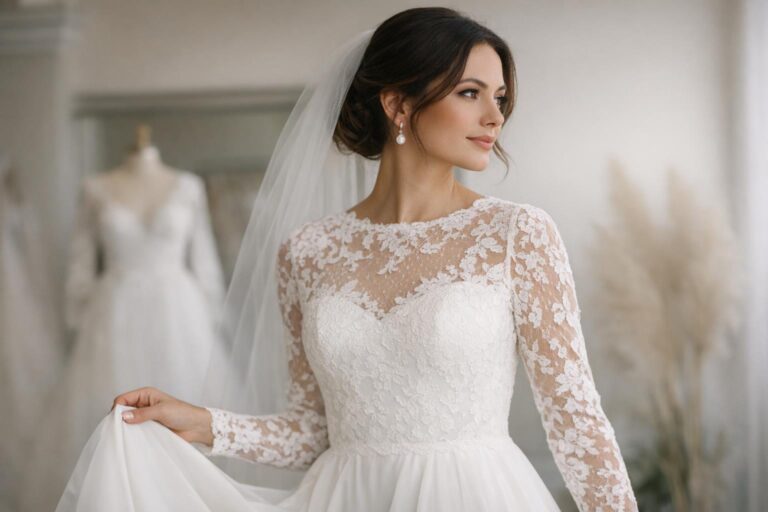
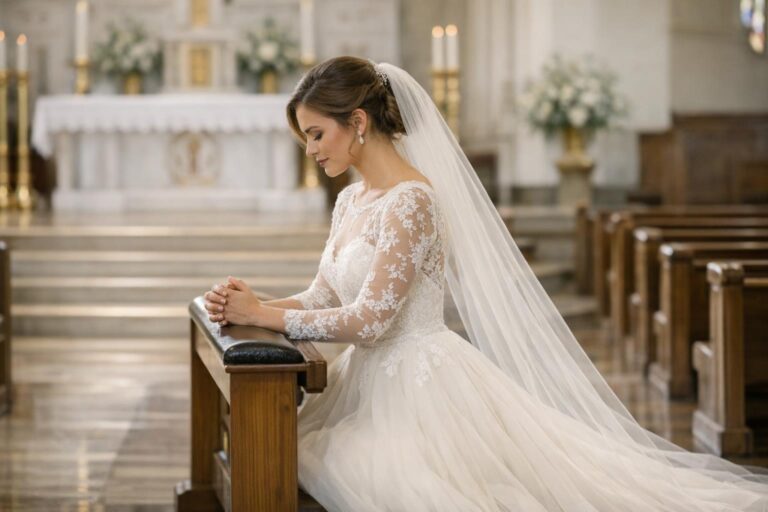
Traditional wedding dresses remain a top choice for U.S. brides who want a classic bridal gown that looks elegant now and still feels right years from today. “Traditional” doesn’t have to mean predictable or outdated—it often means choosing enduring shapes, formal finishes, and familiar bridal details (like lace, satin, structured bodices, sleeves, or a train) that have stayed popular across generations. The result is a timeless wedding dress style that can anchor a formal ceremony, a church wedding, or a modern venue that still calls for a polished, classic look.
This guide breaks down traditional bridal gowns by silhouette, fabric, and design details, then walks through how to choose the right option for your body type, budget, and wedding setting. You’ll also find practical tips for shopping, alterations, and long-term care so your gown can truly become an heirloom wedding dress—whether you plan to preserve it, restyle it, or simply remember it as the defining piece of your day.
What Exactly Are Traditional Wedding Dresses?
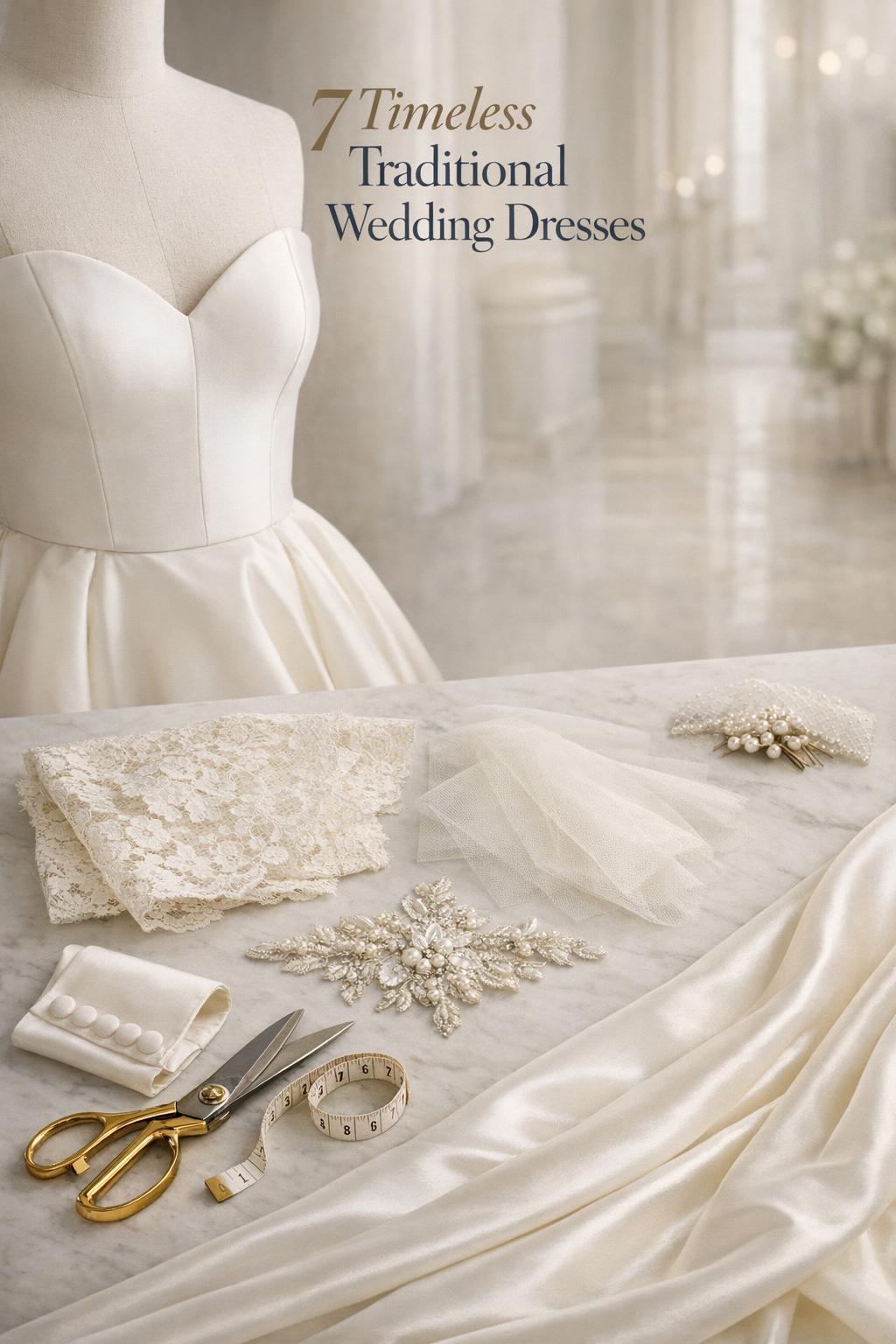
Traditional wedding dresses are bridal gowns built around classic silhouette families, formal materials, and refined finishing details rather than highly themed or novelty designs. In a U.S. context, they typically prioritize timeless proportion, structured tailoring, and recognizable “bridal” textures such as lace, satin, Mikado, and tulle. A traditional bridal gown can be simple and clean or richly embellished, but it generally aims for an enduring, ceremonial presence.
Many shoppers use “traditional” interchangeably with phrases like classic wedding dress, timeless bridal gown, formal wedding dress, or vintage-inspired wedding dress. While the wording varies, the intent is similar: a gown that feels appropriately bridal, photographs beautifully, and won’t feel tied to a fleeting trend.
Your wedding look is only the beginning.
Keep your guest list, vendors, timeline, and every important detail together with Zarellea — so your day feels as considered as your style.
Traditional vs. Modern: The Difference Is Often in the Styling
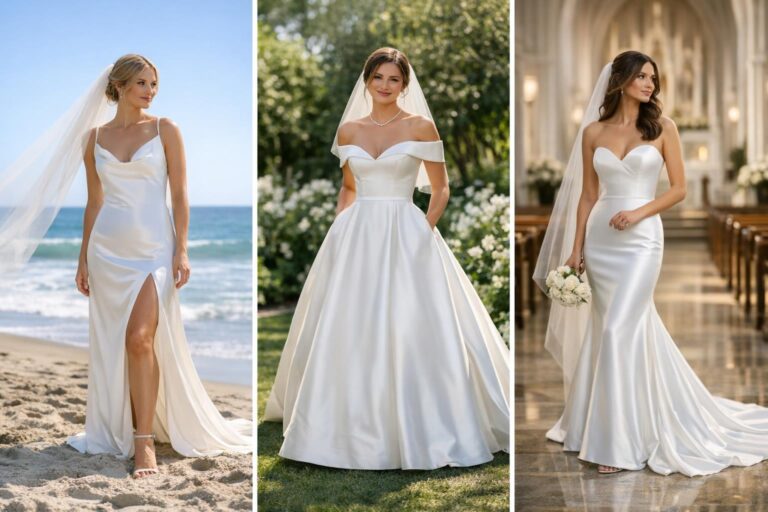
Traditional vs. modern wedding dress choices aren’t always opposites. The same silhouette can read traditional or contemporary depending on fabric, neckline, sleeve type, and accessories. A clean satin A-line can be very traditional with a long veil and a structured bodice, or more modern with minimal jewelry and simpler styling. Thinking of tradition as a “foundation” rather than a strict rule makes it easier to choose a gown that fits your taste and your wedding setting.
Tip: Start by Defining What “Traditional” Means to You
Before you shop, write down the two or three elements that feel most traditional in your mind—silhouette (like ball gown), fabric (like Mikado), or detail (like sleeves or lace). This small step keeps you focused when browsing large collections and helps you communicate clearly in boutiques or online filters.
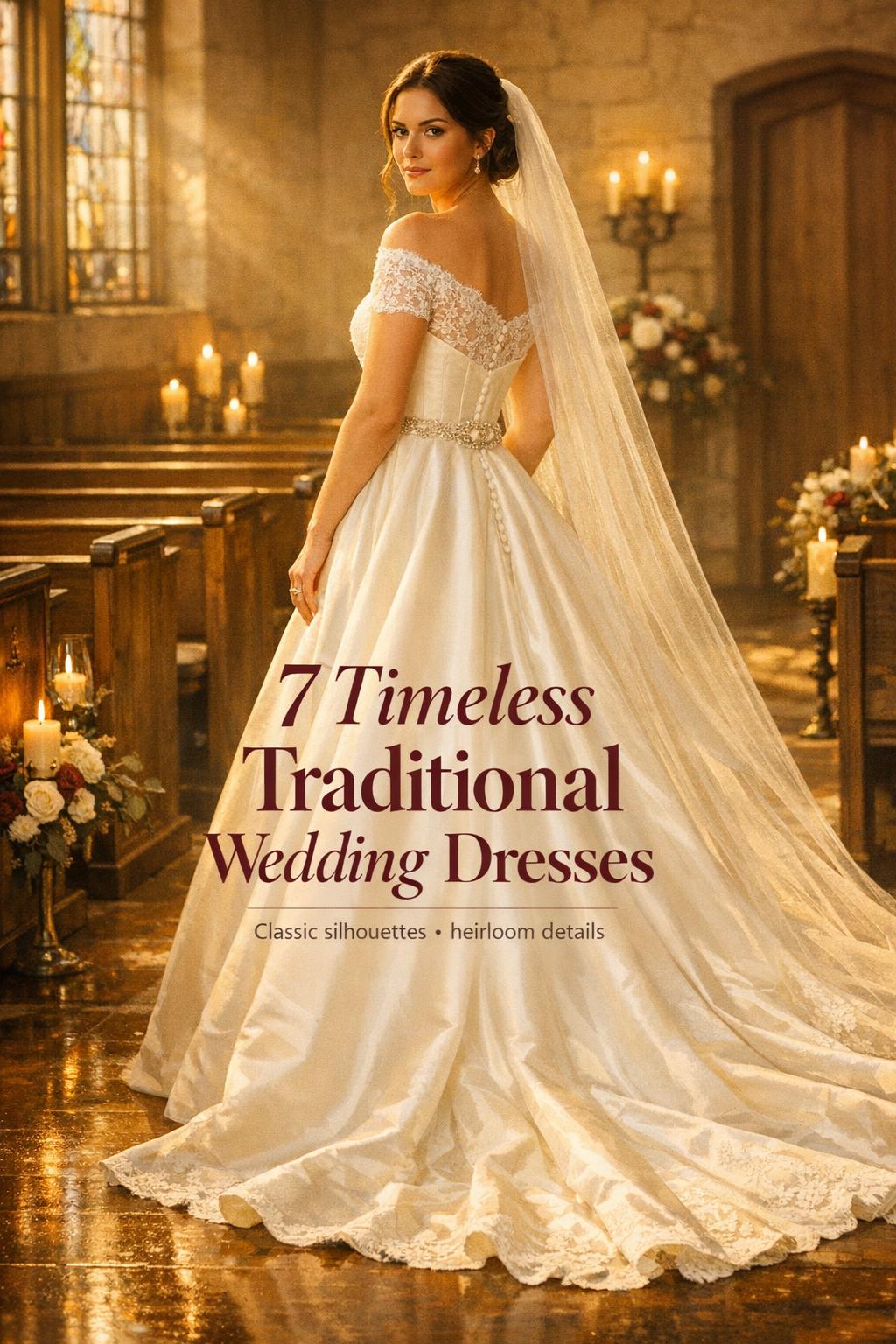
Classic Silhouettes That Never Go Out of Style
The easiest way to navigate traditional wedding dress styles is to start with silhouette. Many collections group gowns by familiar shapes, and those shapes do a lot of the visual “work” in signaling tradition, formality, and timelessness.
Ball Gown — The Fairytale Tradition
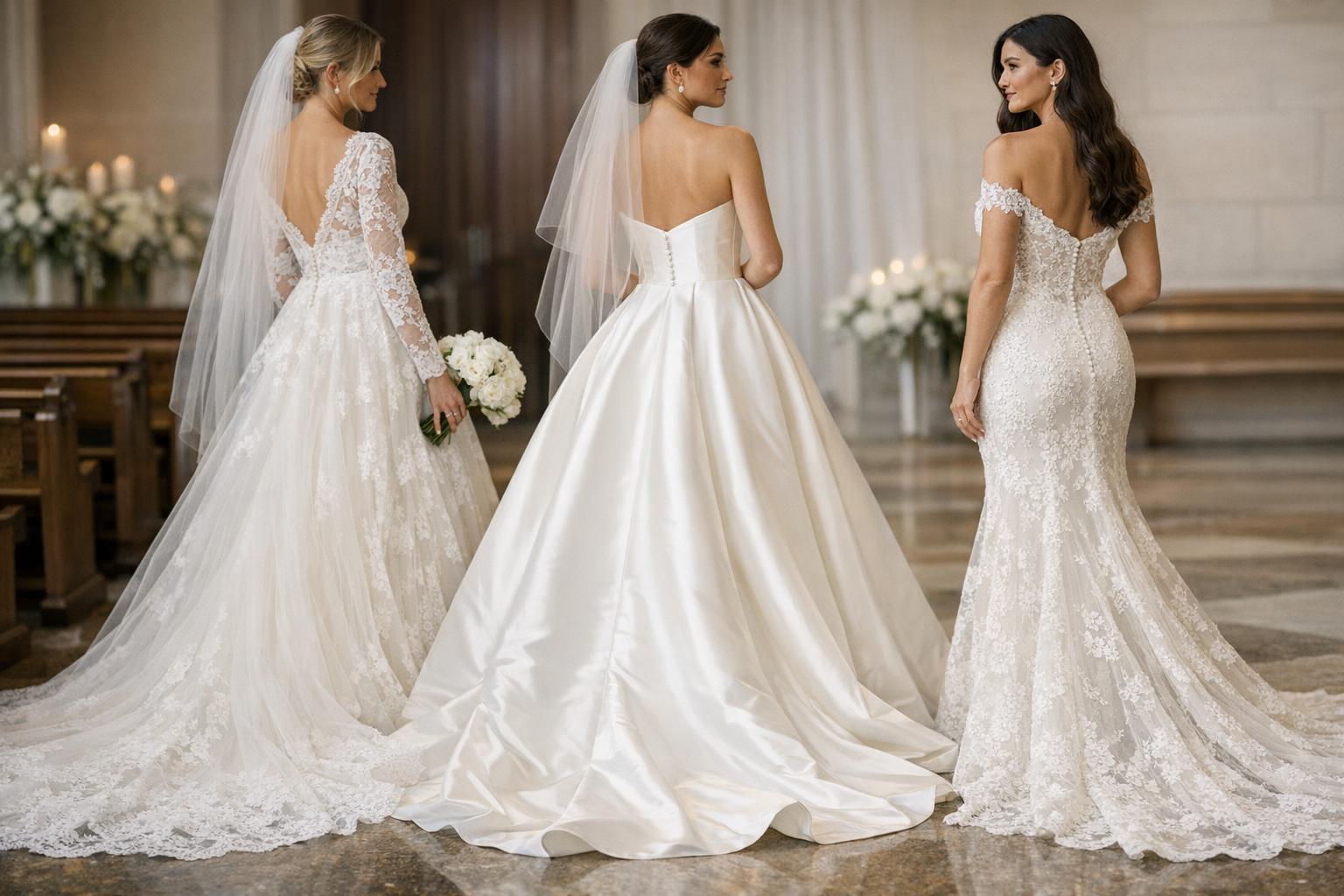
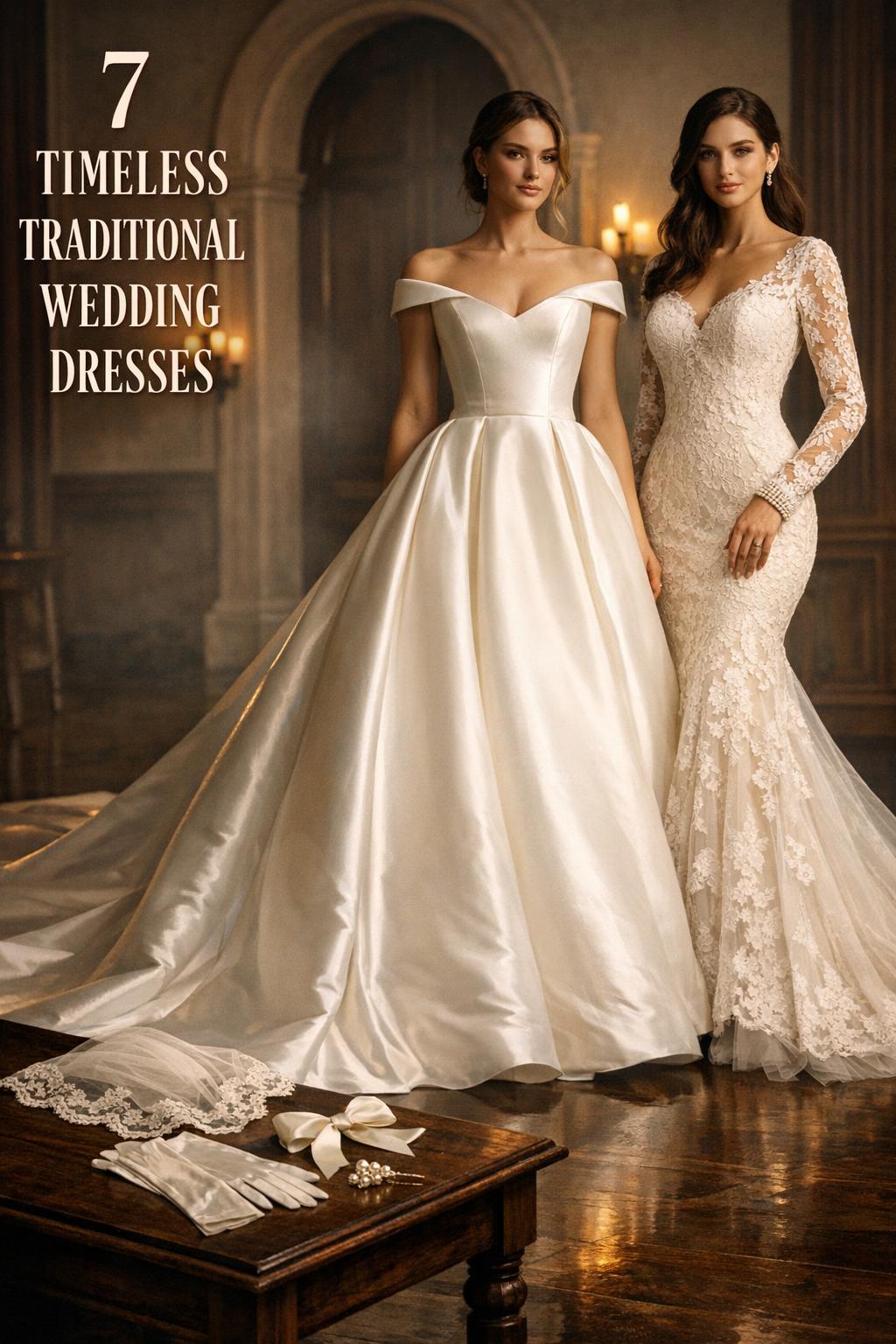
A ball gown wedding dress is one of the most iconic traditional silhouettes: a fitted bodice with a full skirt that creates dramatic volume and a formal, ceremonial feel. It’s often chosen for classic venues and for brides who want a strong “bridal moment” from the first look through the last dance.
Because the skirt carries the drama, ball gowns can be interpreted through different fabrics—lace for romantic texture, satin or Mikado for a crisp, formal finish, or tulle for airy volume—without losing their traditional ballgown identity.
A-Line — The Flattering, Timeless Shape
The A-line wedding dress is a classic bridal gown silhouette that gently flares from the waist, creating a balanced shape that feels traditional, polished, and widely flattering. It’s a go-to choice for brides who want a timeless wedding dress style that works across many venues and levels of formality.
A-line gowns are also easy to personalize: change the neckline, sleeve type, fabric, or train length and the overall look can shift from romantic lace to clean satin minimalism while staying comfortably within “traditional bridal wear.”
Mermaid/Trumpet — Sleek, Formal Lines
Mermaid wedding dress and trumpet gown shapes are defined by a close fit through the bodice and hips with a flare lower on the skirt. In traditional styling, these silhouettes often lean formal and evening-forward, especially when paired with classic fabrics like satin or structured Mikado and finished with refined details.
For brides who love a more defined silhouette but still want a traditional bridal gown feeling, mermaid and trumpet options can offer that balance: confident shape with classic bridal materials and finishing.
Fit-and-Flare — Traditional with Everyday Ease
Fit-and-flare sits between A-line and mermaid, offering a fitted look through the bodice and upper skirt with a more gradual flare. Many brides consider fit-and-flare a “safe classic” when they want a formal wedding gown silhouette that still feels comfortable and practical for moving, sitting, and dancing.
Sheath/Column — A Modern Classic
A sheath wedding dress (sometimes described as a column) follows the body in a straighter line and often reads minimal and elegant. While it can lean modern, it becomes a traditional sheath when made in classic fabrics and finished with bridal-leaning details—like lace overlays, refined necklines, or a more formal train.
This is a strong option for brides who want a classic wedding dress that doesn’t rely on volume to feel formal.
Tip: Build a “Silhouette Shortlist” Before You Filter by Details
When shopping online collections or browsing a boutique rack, select two silhouettes you’re most drawn to (for example, A-line and ball gown). Then explore fabrics, necklines, and sleeves within those shapes. This keeps you from getting overwhelmed and makes comparisons more meaningful.
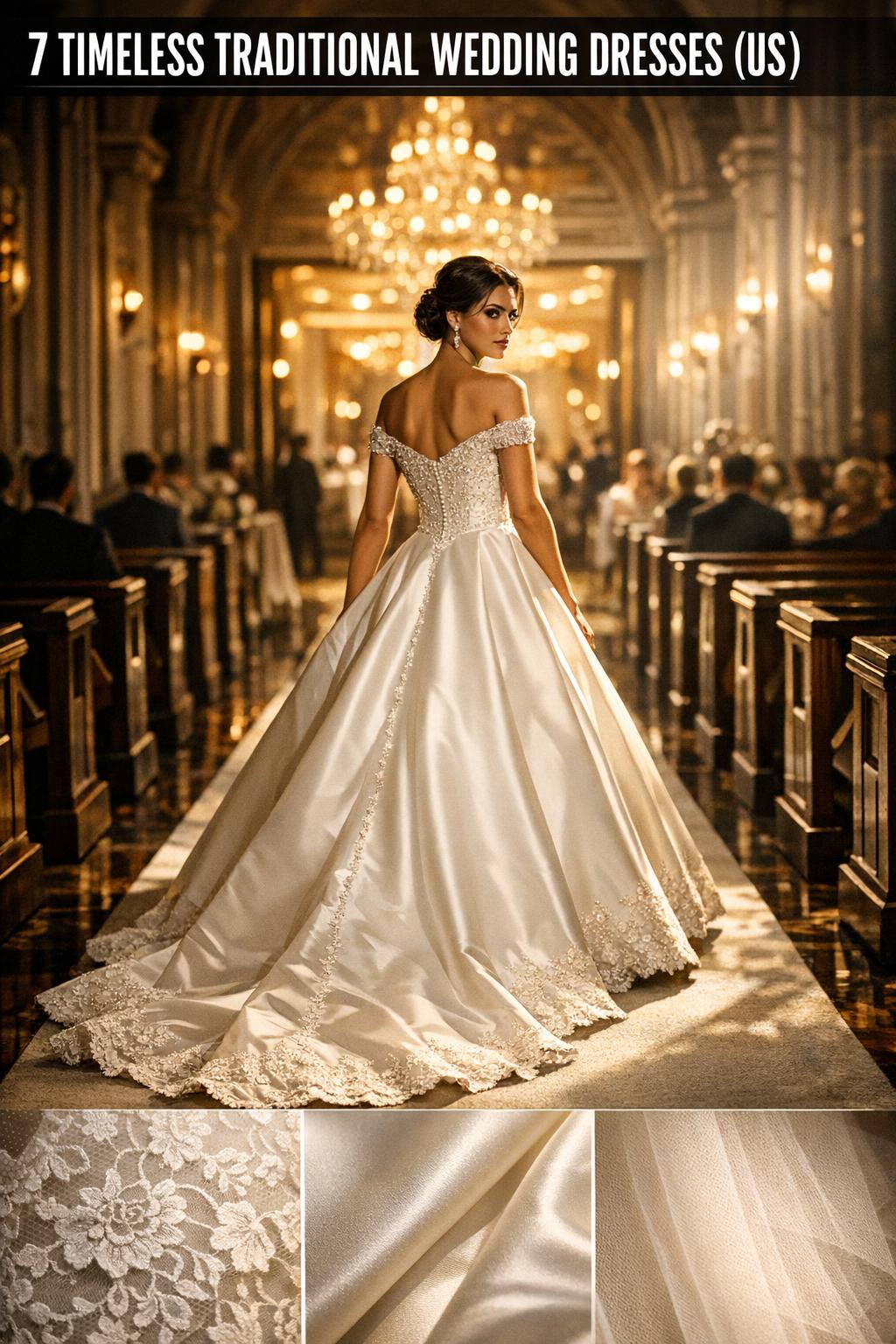
Fabrics, Embellishments, and Details That Define “Traditional”
Silhouette sets the foundation, but fabric and finishing details are often what make traditional wedding dresses feel rich, formal, and unmistakably bridal. Many collections highlight core fabric types and offer filters for neckline, sleeve type, and silhouette, which is helpful when you’re narrowing your options quickly.
Lace, Satin, Mikado, Tulle, and Silk — What Each Says
Traditional gowns commonly appear in lace, satin, Mikado, tulle, and silk. Lace often signals romance and heritage, especially when used as an overlay or as a key bodice feature. Satin typically reads sleek and formal, making it a cornerstone for classic bridal styling. Mikado, known for a structured and refined look, is a frequent choice for crisp ball gowns and A-line silhouettes. Tulle brings airy volume and softness, often used to create traditional fullness without heavy weight. Silk is associated with an elevated, timeless bridal gown feel and is often chosen when you want refined simplicity with a luxurious finish.
Necklines, Sleeves, and Trains — Tradition Meets Comfort
Traditional bridal gowns often include design elements that feel ceremonial: structured bodices, classic necklines, and sleeves that can shift a gown from simple to unmistakably formal. Trains also play a major role in the traditional look, adding drama and movement in photos and during the ceremony.
- Necklines: Traditional looks often center on balanced, timeless necklines that feel elegant and “bridal” without needing extra theme or novelty.
- Sleeve type: Sleeves can create a classic feel, add coverage, and help your gown align with a more traditional setting.
- Trains: A train can elevate even a clean silhouette into a formal wedding gown statement.
Embellishments: Beading, Embroidery, and Illusion Panels
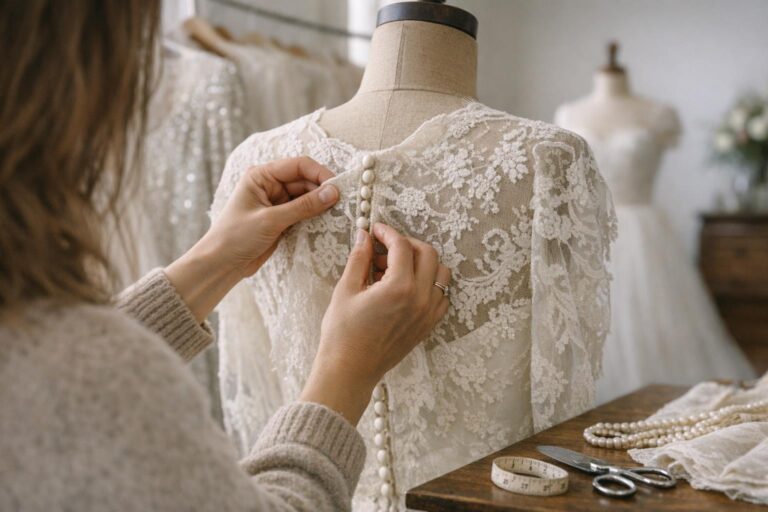
Beading and embroidery are common ways traditional wedding dresses add depth and detail without changing the overall silhouette. These elements can make a gown feel more heirloom-inspired or more formal depending on placement and intensity. Illusion panels can also appear in classic bridal gowns, typically used to create a refined neckline effect or add intricate lace placement while maintaining coverage and structure.
Tip: Use One “Hero Detail” to Keep a Traditional Look Clean
If you’re drawn to multiple details (lace, beading, sleeves, dramatic train), choose one as the hero and keep the others simpler. This approach helps your gown feel timeless rather than visually crowded, especially in photos.
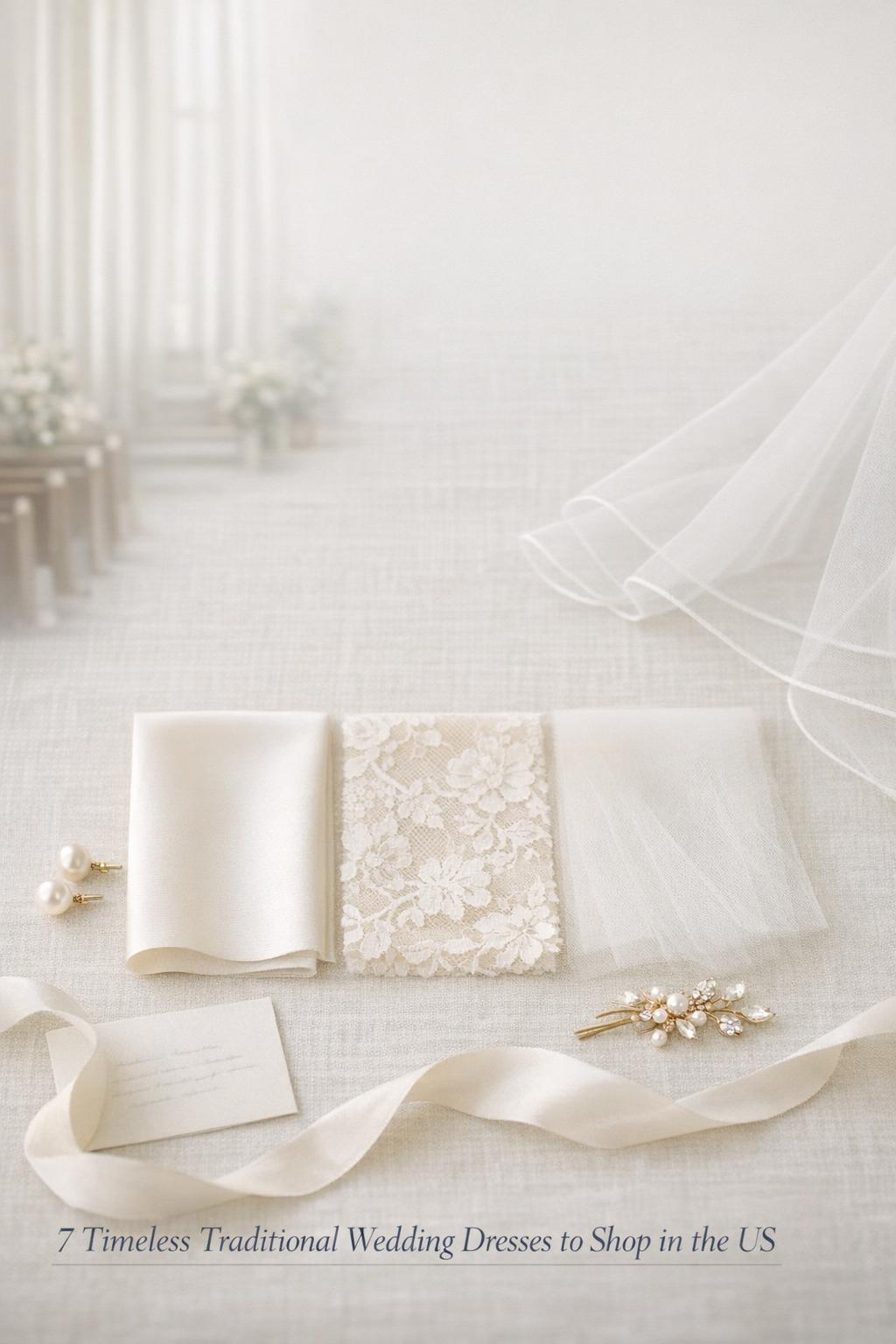
How to Choose Your Traditional Dress
Shopping for a traditional wedding dress is easier when you treat it like a decision framework: silhouette first, then fabric, then comfort and logistics. Whether you’re shopping a boutique appointment or browsing online collections, the goal is the same—find a gown that looks classic, fits beautifully, and supports your full wedding day from ceremony through reception.
Body Type and Proportion
Traditional silhouettes are popular in part because they offer clear proportion tools. Ball gowns emphasize the waist and create a strong hourglass effect. A-line shapes balance proportions with an easy, classic line. Mermaid, trumpet, and fit-and-flare highlight curves and create a more sculpted formal look. Sheath/column lines keep the profile sleek. Rather than chasing a “rule,” focus on how the gown balances your shoulders, waist, and overall length, and how confidently you move in it.
Venue, Season, and Destination Considerations
Traditional doesn’t require a specific venue, but the setting can influence which traditional elements feel best. A formal space often pairs naturally with structured fabrics and a stronger train, while a more relaxed venue may call for an A-line or sheath that still reads classic without heavy volume. Season matters too: airy tulle can feel lighter and more flexible, while satin and Mikado can feel more structured and formal.
If your wedding has a distinct theme or environment, you can still keep the gown traditional by anchoring in classic silhouette and fabric while adjusting smaller details such as sleeve type, neckline coverage, or train length.
Budgeting for a Timeless Gown
Traditional wedding dress shopping often includes more than the price tag of the gown itself. Budgeting also involves anticipating alterations and care. Many brides prefer traditional gowns specifically because they can feel like an “investment” piece—timeless enough to preserve, pass down, or simply keep as a meaningful wardrobe heirloom.
- Set a target range for the gown and keep room for wedding dress alterations.
- Consider whether you want detailed embellishment (which may affect complexity and fit work).
- Plan for cleaning and preservation if longevity matters to you.
Tips for a Confident Dress Appointment (or Online Shortlist)
Traditional bridal gowns can vary widely even within the same silhouette, so it helps to arrive with a plan. If you’re visiting a boutique, be ready to describe the overall vibe (classic, formal, heirloom-inspired) and your top two silhouettes. If you’re shopping online, start by filtering by silhouette and fabric, then compare necklines and sleeve type across a smaller set of favorites.
Tip: Take quick notes after each try-on (or each product page) about what you loved and what you’d change. Traditional dresses can look similar at first glance, and a short written list makes the differences clear.
Where to Buy Traditional Wedding Dresses (U.S. Boutiques + Online)
In the U.S., traditional wedding dresses are widely available through boutique appointments and online collections. Many shoppers begin with brand category pages and curated collections because they provide immediate browsing by classic silhouettes, fabrics, necklines, and sleeve types. Others prefer boutiques for guided styling, fit feedback, and a more confident ordering experience.
Boutique Stores: The Appointment Advantage
Boutiques often combine a curated selection of traditional bridal gowns with hands-on styling advice. This can be especially helpful if you’re unsure whether your ideal is a ball gown, A-line, or fit-and-flare, or if you’re trying to balance tradition with comfort. A boutique environment can also help you compare fabrics side by side—lace versus satin, tulle versus Mikado—so you can see which feels most “you.”
Tip: When booking, mention that you’re looking for traditional wedding dress styles and list your preferred silhouettes and fabric types. This helps the boutique pre-pull options that match your definition of timeless.
Major Brands and Designers: Start with Signature Silhouettes
Many brands present traditional styles in dedicated category hubs or collections, often framed around timeless design and enduring silhouettes. These pages are useful for scanning breadth quickly: you can see how one brand interprets the same classic shapes through different fabrics, necklines, sleeve types, and levels of embellishment. If you already know you want a classic bridal gown silhouette, these collections can help you refine your preferences before you try anything on.
Online Collections and Curation Pages: Filter by Fabric, Neckline, and Silhouette
Online collections make it easy to browse traditional bridal gowns by the exact components that define the look: silhouette (A-line, ball gown, mermaid, fit-and-flare, sheath), fabric (lace, Mikado, satin, tulle), and design features like sleeve type or neckline. This structure supports both inspiration and fast decision-making, especially if you’re narrowing to a shortlist before visiting a boutique.
- Start with silhouette filters to avoid “style overload.”
- Use fabric filters to clarify the overall mood: structured and formal (like Mikado) versus soft and romantic (like lace or tulle).
- Compare similar dresses with different sleeve types or necklines to find the most comfortable traditional option.
Tradition Meets Modern Versatility: How to Make a Classic Gown Feel Like You
One of the biggest misconceptions about traditional bridal wear is that it has to look the same on every bride. In reality, traditional wedding dresses are adaptable. You can stay within timeless wedding dress styles while still expressing personality through fabric choice, sleeve type, neckline, and overall styling.
Keep the Silhouette Traditional, Experiment with the Finish
If you want a truly classic bridal gown silhouette but worry it might feel “too expected,” shift your focus to finish and texture. A satin A-line reads different from a lace A-line. A Mikado ball gown reads different from a tulle ball gown. The silhouette keeps you anchored in tradition; the material lets you personalize the mood.
Use Accessories to Move Between Classic and Contemporary
Traditional vs. modern wedding dress styling can be adjusted without changing the gown. If your dress is timeless and formal, you can keep the overall look traditional with classic accessories and a refined veil, or simplify styling for a cleaner, more contemporary interpretation. The dress remains the same; the final impression shifts based on what you pair with it.
Tip: Choose Photos That Match Your Definition of “Traditional”
When you save inspiration, choose images that match your exact goal—classic silhouette plus lace, or classic silhouette plus minimal satin, for example. This prevents confusion during shopping, where “traditional” might mean different things to different people.
Global Influences and Traditional Bridal Wear: Broadening the Inspiration
Traditional wedding attire varies widely around the world, and exploring global traditional dress can be a meaningful way to expand your inspiration. Many cultures have distinctive bridal garments, symbolism, and color meanings that offer context for what “traditional” can represent beyond a single silhouette or fabric choice. Even if you’re choosing a Western-style traditional bridal gown, global influences can inspire thoughtful touches—such as how you approach color, pattern, or ceremonial accessories—while still keeping the main gown classic and timeless.
Tip: If cultural heritage is part of your wedding, consider how you want to reflect it: through a second look, ceremony elements, or subtle styling details. That approach lets your primary gown remain a classic wedding dress while honoring tradition in a broader, more personal way.
Care, Alterations, and Longevity of a Traditional Gown
Traditional wedding dresses often feature structured bodices, formal fabrics, and detailed finishing, so it’s important to plan for wedding dress alterations and long-term care. When the fit is refined, traditional silhouettes look their best—and when the gown is properly cleaned and stored, it can truly become an heirloom wedding dress.
Alteration Timelines: Build in Breathing Room
Alterations are a normal part of bridal shopping, especially for classic bridal gown silhouettes that rely on clean lines and tailored structure. Even minimal designs can require precise adjustments to sit correctly at the waist, neckline, and hem. The key is to plan early enough that you can refine the fit without rushing, particularly if your gown has sleeves, lace placement, beading, or a complex train.
Tip: When you choose a dress, immediately map out your fitting schedule so you’re not making major fit decisions close to the wedding date.
Cleaning, Storage, and Preservation
If longevity matters, treat gown care as part of your overall plan. Cleaning and proper storage help preserve fabric texture and color over time. Many brides who choose timeless bridal gowns do so because they value the idea of keeping the dress as a memory or preserving it as a potential heirloom.
- Store your gown carefully after the wedding to protect the fabric and structure.
- If you plan to keep it long term, prioritize preservation-oriented care rather than casual storage.
- Consider how embellishments and delicate fabrics may need more thoughtful handling.
Inspiration Gallery (What to Look For When Browsing Traditional Styles)
A true inspiration gallery is visual, but you can still browse strategically by knowing what to look for: silhouette, fabric, and the “traditional signals” that make a dress feel timeless. As you scroll collections or lookbooks, focus on how the same silhouette shifts across materials and detailing.
Traditional Silhouettes Across Fabrics
Try comparing these combinations as you browse: A-line in satin versus A-line in lace, ball gown in Mikado versus ball gown in tulle, or fit-and-flare with clean lines versus fit-and-flare with embroidered embellishment. This side-by-side approach helps you identify whether you prefer structured formality, romantic texture, or a blend of both.
Timeless Details to Screenshot (and Bring to a Fitting)
- A neckline that frames your face in a classic way
- A sleeve type that feels traditional and comfortable
- Lace placement that looks refined rather than overly busy
- A train length that matches your venue’s formality
- A fabric finish (satin sheen, Mikado structure, tulle softness) that matches your vision
Tip: Save inspiration in small sets of five to ten images per style direction (for example, “classic satin A-line” or “lace ball gown with sleeves”). Smaller sets create clarity and help you make decisions faster.
FAQ
What is a traditional wedding dress?
A traditional wedding dress is a bridal gown built around classic silhouettes and formal design elements—often featuring timeless shapes like ball gown or A-line and familiar bridal materials like lace, satin, Mikado, tulle, or silk—so the overall look feels enduring rather than trend-dependent.
What are the most traditional wedding dress silhouettes?
The most recognized traditional silhouettes include ball gown and A-line, with other classic options like mermaid/trumpet, fit-and-flare, and sheath/column also fitting the traditional category when paired with formal fabrics and refined bridal details.
Are traditional wedding dresses appropriate for modern weddings?
Yes—traditional gowns can work beautifully in modern weddings because you can keep a timeless silhouette while choosing contemporary finishing touches through fabric, neckline, sleeve type, and overall styling to match your venue and personal taste.
How do I choose a traditional wedding dress for my body type?
Start by trying classic silhouette families and focus on proportion and comfort: ball gowns emphasize the waist, A-lines create balanced lines, mermaid/trumpet and fit-and-flare highlight curves, and sheath/column styles keep the profile sleek; the best choice is the one that fits well and lets you move confidently.
What fabrics are most common in traditional bridal gowns?
Traditional bridal gowns frequently use lace, satin, Mikado, tulle, and silk, with each fabric creating a different feel ranging from romantic texture (lace) to sleek formality (satin) to structured elegance (Mikado) and airy volume (tulle).
Where can I buy traditional wedding dresses in the U.S.?
You can buy traditional wedding dresses through bridal boutiques that offer appointment styling and fit guidance, as well as through online brand collections and curated category pages that let you filter by silhouette, fabric, neckline, and sleeve type.
How much should I expect to spend on a traditional wedding dress?
Costs vary widely by brand, fabric, and embellishment level, so it’s best to set a target range and also plan for related expenses such as wedding dress alterations and post-wedding cleaning or preservation if you want long-term longevity.
How far in advance should I plan for wedding dress alterations?
Plan alterations with enough time to refine the fit without rushing, especially if your traditional gown has structured fabric, sleeves, lace placement, beading, or a train, since those details can require careful adjustment to maintain a clean, timeless look.
How do I care for and preserve a traditional wedding gown?
To support longevity, handle the gown carefully after the wedding, prioritize proper cleaning, and store it thoughtfully to protect fabric and structure, particularly if it includes delicate lace, embellishments, or formal materials that you want to keep in heirloom condition.