7 Best Wedding Dresses for Short Brides (2026 Petite Guide)
Wedding Dresses for Short Brides: The Ultimate Petite Guide for 2026
Shopping for wedding dresses for short brides can feel like a search for a gown that was designed with your proportions in mind—because fit, seam placement, and length impact how a dress looks and feels on a petite frame. The good news is that petite wedding dresses (and petite-friendly styles within standard collections) exist across silhouettes, necklines, and hemlines, from classic floor-length gowns to short wedding dresses and tea-length options.
This guide breaks down the most reliable style directions for short brides, the details that create a lengthened look, and the tailoring steps that turn “almost right” into “made for you.” You’ll also find practical shopping questions to ask, a quick-reference outfit toolkit, and a comprehensive FAQ at the end.
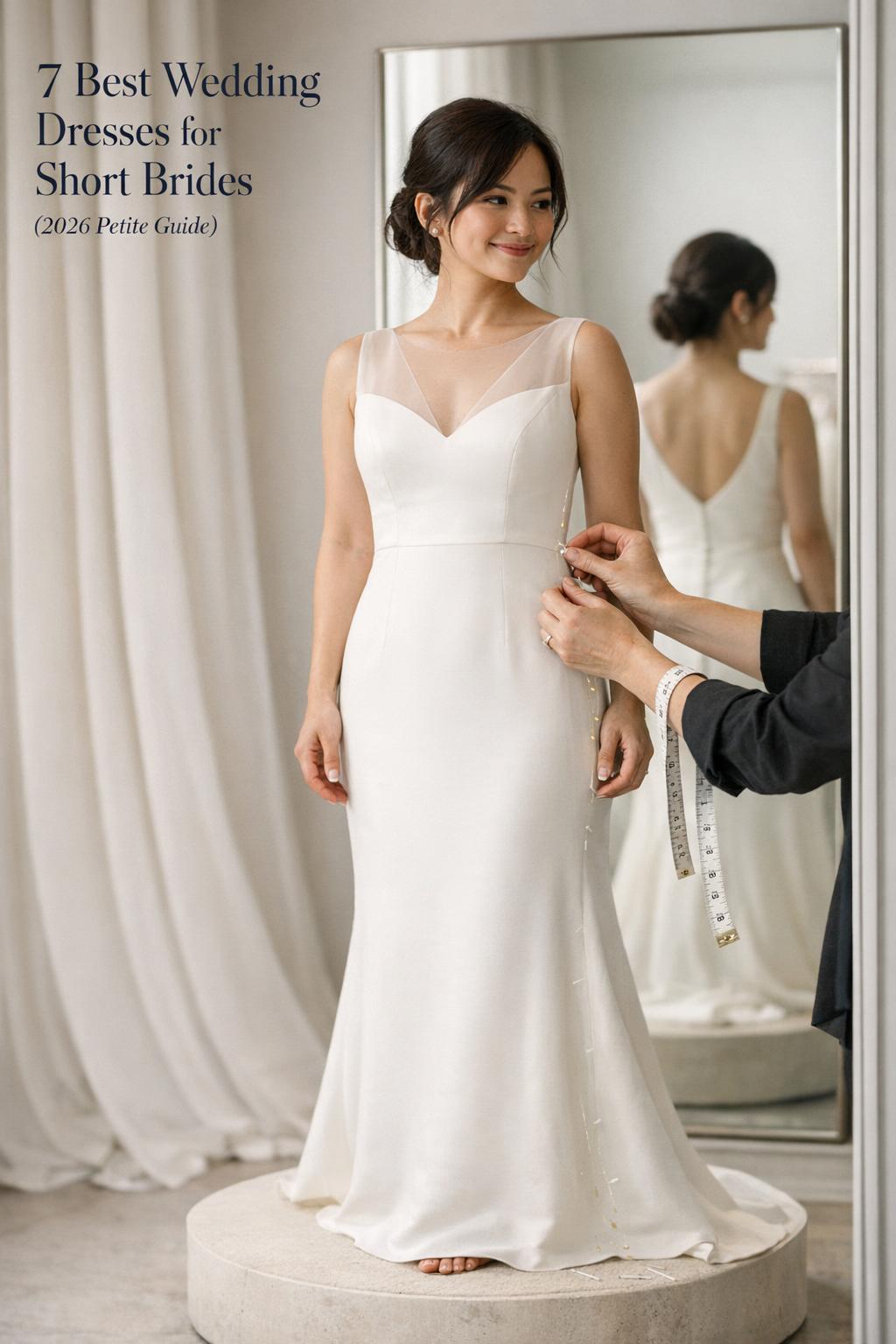
Why Petite Women Need Special Silhouettes
When you’re shorter, the same dress can read differently because proportions—not just size—determine where the waist hits, how long the bodice feels, and whether the skirt overwhelms your frame. A gown that’s stunning on a taller model may need thoughtful adjustments to keep the look balanced on a petite bride.
Petite-friendly designs typically prioritize clean vertical lines, intentional waist placement, and skirt shapes that don’t “wear you.” Even when you choose a more dramatic silhouette, a petite strategy is less about limiting your options and more about choosing details that support your proportions.
Your wedding look is only the beginning.
Keep your guest list, vendors, timeline, and every important detail together with Zarellea — so your day feels as considered as your style.
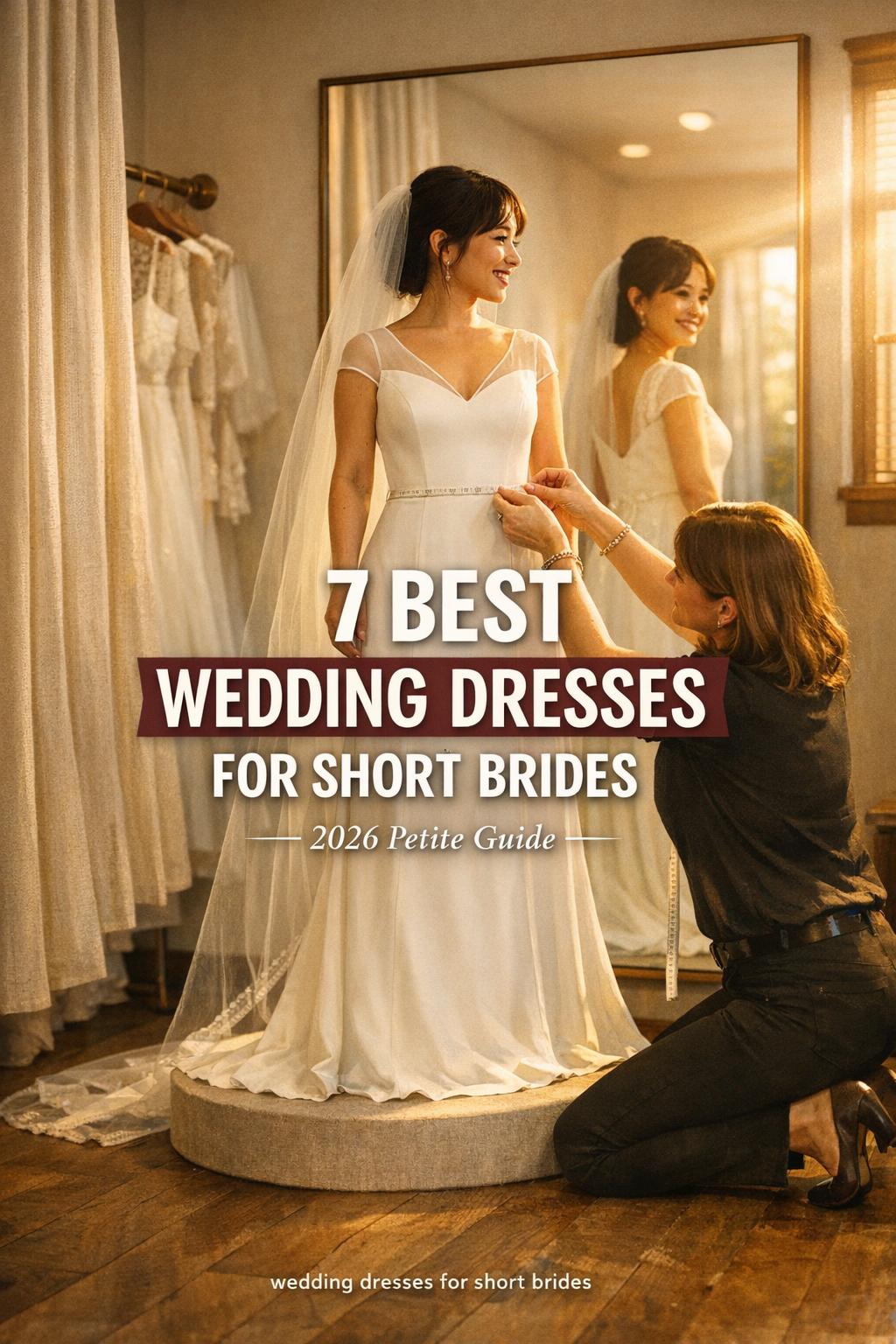
Best Silhouettes for Short Brides
Silhouette does most of the heavy lifting for petite brides. The most flattering options tend to create length through the torso and legs, maintain a balanced skirt-to-bodice ratio, and avoid unnecessary bulk at the waistline.
Empire Waist and High Waist
An empire waist wedding dress for short brides (or any high-waist variation) visually lifts the waistline, which can make legs appear longer and the overall figure look taller. This approach is especially helpful if you have a short torso or want a streamlined look that feels light and elongated.
Tips: Pay attention to where the seam sits under the bust and how the fabric falls from that point. A clean, continuous line downward reads long and elegant; overly busy transitions can break the vertical effect you’re trying to create.
A-Line and Sheath (Slim, Vertical Fits)
A-line and sheath gowns are consistent favorites in petite wedding dress roundups because they’re easy to tailor and naturally balanced. An A-line wedding dress for short brides can define the waist without adding heavy volume, while a sheath keeps the silhouette narrow for a strong head-to-toe line.
With both styles, seam placement matters: petite brides often benefit when the waist and hips look “lifted” rather than pulled downward by extra length in the bodice.
- A-line: A gentle flare gives structure without overpowering your height.
- Sheath: A clean column can create maximum vertical length, especially with minimal bulk.
- Hybrid looks: A slim A-line can offer movement while staying petite-friendly.
Ball Gown Variants (With Caution)
Ball gowns can work for short brides, but they typically require more care in selecting volume and shaping. A petite-friendly ball gown tends to look best when the skirt volume is controlled and the transition from bodice to skirt is clean, so the waistline stays defined rather than visually lowered.
Tips: If you love the drama of a ball gown, prioritize a clearly structured bodice and avoid excessive layers that add width at the hip. A more moderated shape can preserve the “wow” while keeping your frame in focus.
Sheer/Illusion Necklines and V-Necks
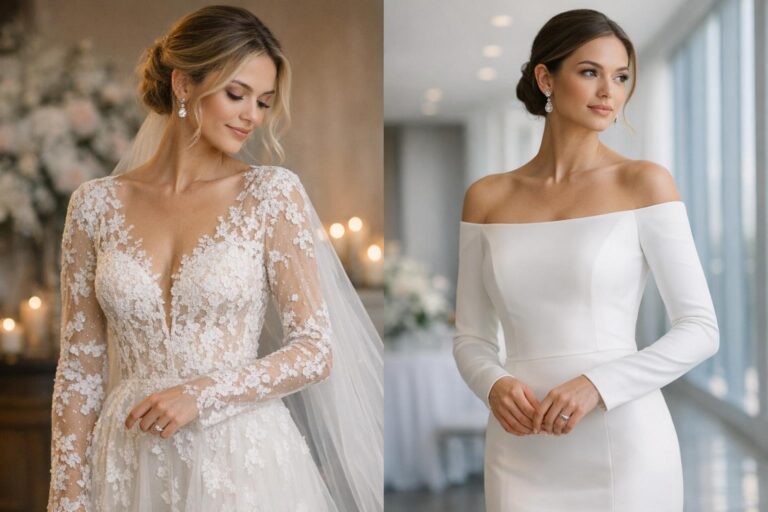
Necklines can change your proportions instantly. A V-neck wedding dress petite brides choose often lengthens the neckline area and draws the eye vertically, while illusion details can create openness without visual heaviness. Both approaches can make the upper body look longer and more streamlined.
The key is proportion: petite brides often look best when the neckline feels intentional and uncluttered, rather than crowded with heavy elements that shorten the neck or compress the bodice visually.
Shorter Hemlines and Tea-Length Options
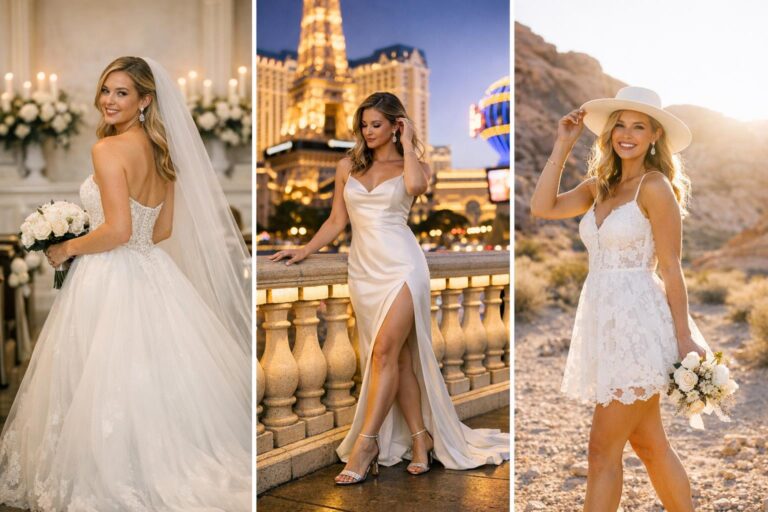
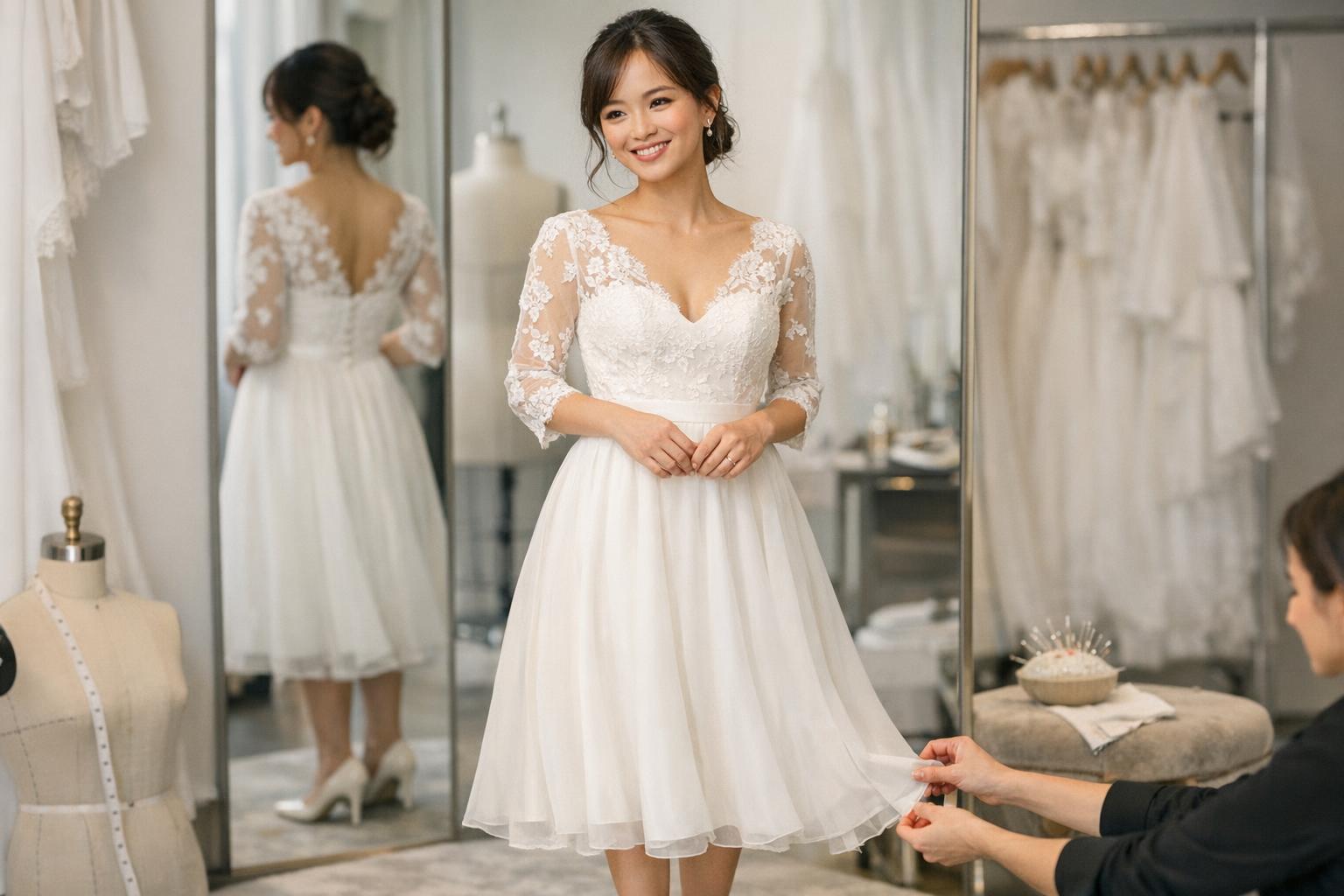
Short wedding dresses, including tea-length wedding dresses, can be a powerful choice for petites—especially if you want to highlight your legs or lean into a modern, fun, or ceremony-specific look. Shorter hemlines can also reduce the need for extensive hemming and can feel easier to move in for elopements, courthouse ceremonies, or receptions where comfort is a priority.
Tips: The most flattering short bride dress ideas tend to keep a clean line through the bodice and avoid overwhelming proportions with bulky skirts. If you want detail, consider concentrating texture in a way that doesn’t visually “chop” your frame.
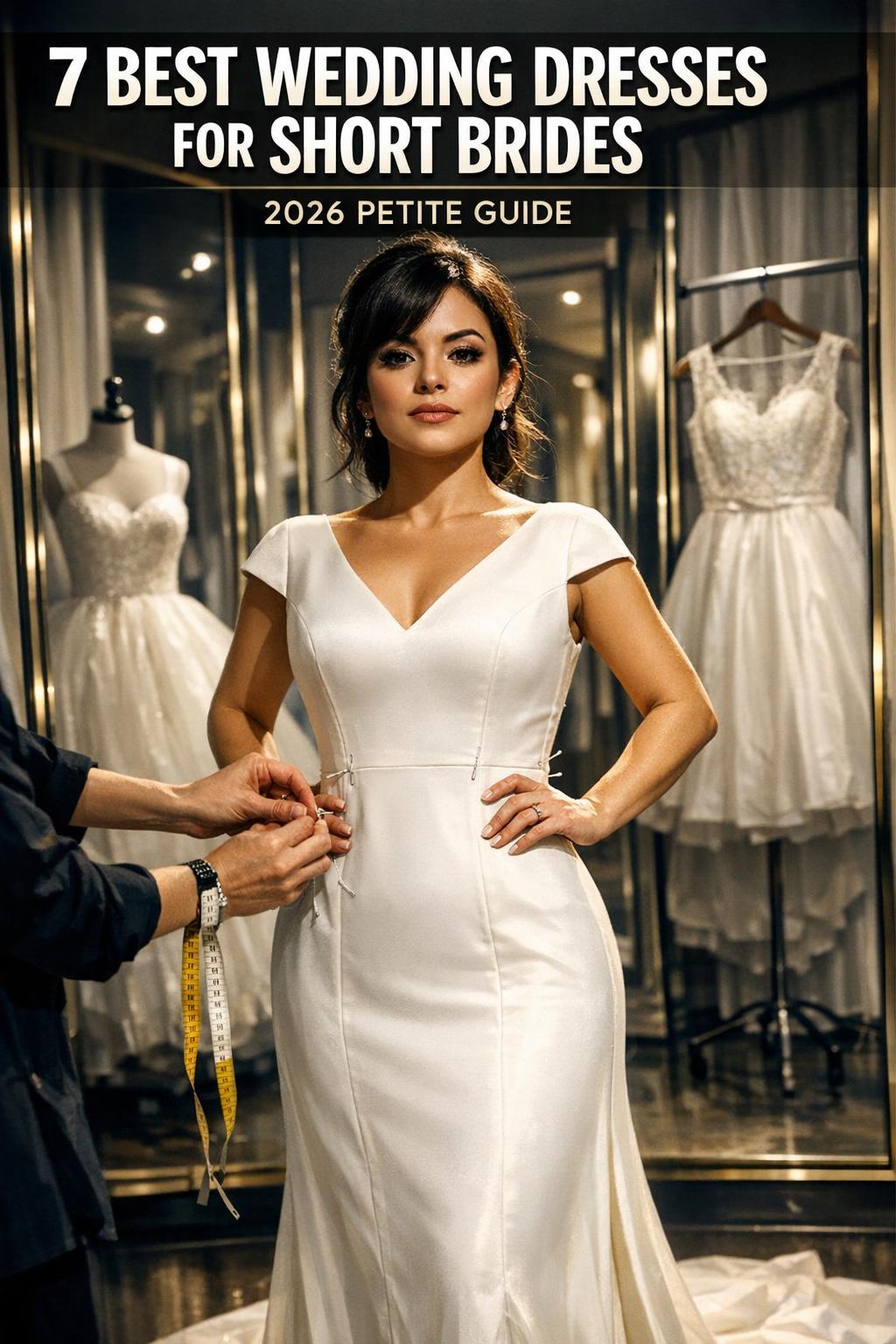
Necklines, Sleeves, and Details that Help Short Brides
Once you’ve identified a silhouette direction, the next level is choosing design elements that keep the look elongated. Necklines, sleeves, and embellishments can either support a petite frame or unintentionally shorten it, depending on placement and density.
Necklines that Elongate
Necklines that open the chest and draw the eye upward can help you look taller and keep the bodice from feeling compressed. V-necks are a frequent petite go-to, and some off-the-shoulder options can work well when the neckline shape emphasizes width gently without visually lowering the upper body.
Tips: If you’re choosing a more horizontal neckline, keep the rest of the bodice sleek. A neckline that’s wide and heavily embellished can make the upper body look shorter; a refined neckline with clean lines is often more petite-friendly.
Sleeve Choices
Sleeves affect how long your arms look and how balanced the dress feels. Petite brides often find that lighter sleeve designs—such as cap sleeves or three-quarter sleeves—can look intentional without overpowering the frame. The best sleeve choice depends on how it integrates with the bodice and neckline.
- Cap sleeves: Can add structure while keeping the look light.
- Three-quarter sleeves: Often create elegant proportion and focus on the narrowest part of the forearm.
- Minimal straps: Can keep the neckline area open and lengthened.
Embellishments and Texture (Lace, Beading, Embroidery)
Lace wedding dress petite styles can be especially beautiful, but placement matters. Texture can add dimension without adding bulk when it’s strategically distributed. Dense beading or heavy embellishment concentrated at the waist can visually “cut” the figure and shorten the appearance of the torso and legs.
Tips: If you love ornate detail, look for designs that guide the eye vertically—through the bodice line, down the skirt, or along the neckline—rather than placing the heaviest emphasis in a single horizontal band.
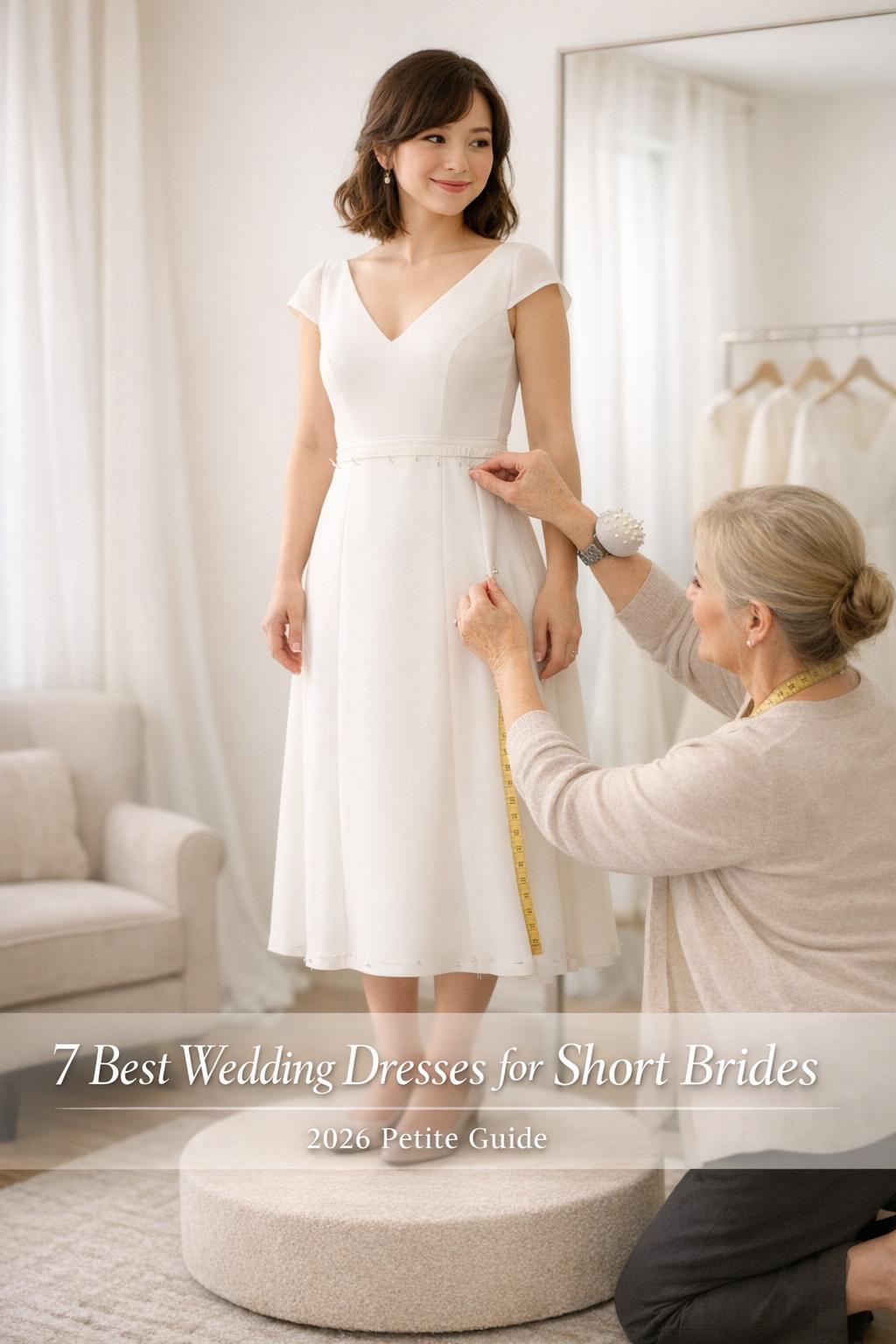
Tailoring Tips for the Perfect Petite Fit
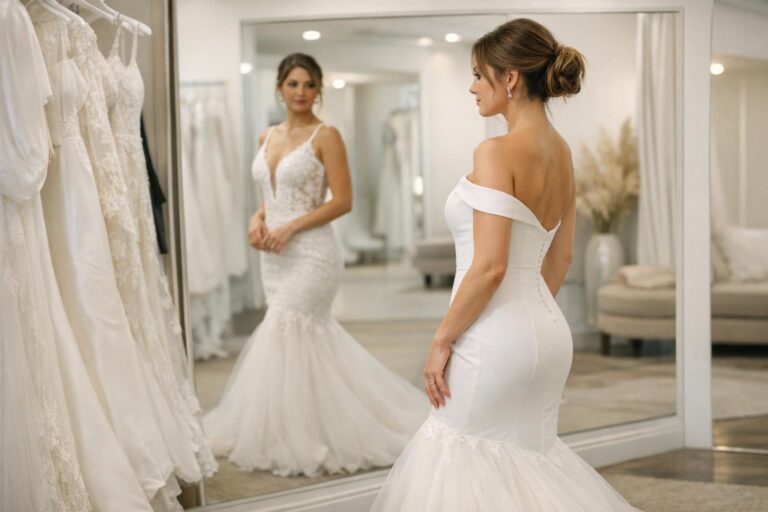
Tailoring is not a last-minute rescue; it’s often the step that transforms a dress into a petite wedding dress experience. Many short brides expect only a hem, but petite alterations frequently involve aligning the waist, refining the bodice length, and ensuring the dress holds its intended shape.
How Much to Hem by Silhouette (Practical Ranges)
Hemming needs vary based on silhouette and how the skirt falls. Some shapes are forgiving, while others reveal even slight proportion issues. Use hem decisions to support the visual line you want—especially if you’re balancing a fuller skirt or a more structured design.
- A-line: Often looks best when hemmed to preserve a smooth flare rather than stacking fabric at the front.
- Sheath: Hem length can noticeably change the vertical line, so precision matters for a clean finish.
- Ball gown: Hemming often involves managing layers so volume stays intentional rather than heavy at the bottom.
- Tea-length/short: Hem placement is a style statement; aim for a deliberate finish that matches your shoe plan.
Tips: Bring the shoes (or at least the heel height) you plan to wear to fittings. Hem decisions and shoe decisions are inseparable, especially for short brides trying to maintain an elongated line.
Waist Placement and Bodice Length (The Petite Game-Changer)
Waist placement is one of the most important fit variables for wedding gowns for short women. If the waist is too low, the torso looks longer than it is and the legs look shorter. If the bodice is too long, the dress can bunch or distort, even when the size is otherwise correct.
During fittings, pay attention to where your natural waist sits relative to the dress seam or structure. Petite brides often benefit from aligning the dress so the waist feels lifted and supportive rather than resting low on the hips.
Bra and Undergarment Guidance
Undergarments can support the silhouette or change it. The goal is stable support that doesn’t create extra bulk under fitted bodices or distort delicate lines on sheath and A-line dresses. Choose undergarments that work with the neckline and back details so the gown stays smooth and secure.
Tips: Treat undergarments like part of the dress system. If you change support later, you may change how the bodice sits, which can affect waist placement and hem accuracy.
Shopping Tips: How to Choose, Where to Shop, and What to Ask
Short brides often shop across two major pathways: petite-focused dress selections and standard bridal collections that can be tailored effectively. Both routes can work. The key is approaching shopping with a petite checklist, knowing what needs to fit well immediately and what can be adjusted through alterations.
Measuring Guide (Printable Approach)
A petite wedding dress measurement routine should emphasize proportions as much as numbers. Measurements help you compare sizing and communicate clearly with boutiques or online shops, especially if you’re considering ready-to-wear, made-to-order, or tailoring plans.
- Bust and underbust (for bodice structure and seam placement)
- Natural waist (for accurate waist alignment)
- Hips (especially for sheath or fitted styles)
- Hollow-to-hem (helpful for length planning and hemming)
- Torso feel (note whether you’re short-torso or long-torso; it affects bodice comfort and waist placement)
Tips: When you try on dresses, take notes on what feels “off” before deciding it’s not your style. Petite brides often mistake proportion issues for style issues, when the fix is adjusting the waist or bodice length.
Designer/Brand Focus for Petites (What to Look For)
Petite wedding dresses appear in both curated petite collections and broader catalogs that filter by silhouette, neckline, sleeve, and other features. When browsing, look for clear design cues: a defined waist, clean vertical lines, and silhouettes known to flatter shorter frames. Many shoppers also compare short wedding dresses and tea-length options when they want a lighter, less alteration-heavy path.
If you’re shopping online, prioritize listings that provide detailed dress information and clear guidance on fit and sizing. If you’re shopping in person, ask to pull petite-friendly silhouettes first so you can identify your “best base” before trying more experimental styles.
Alteration Timelines and Costs (Planning for Reality)
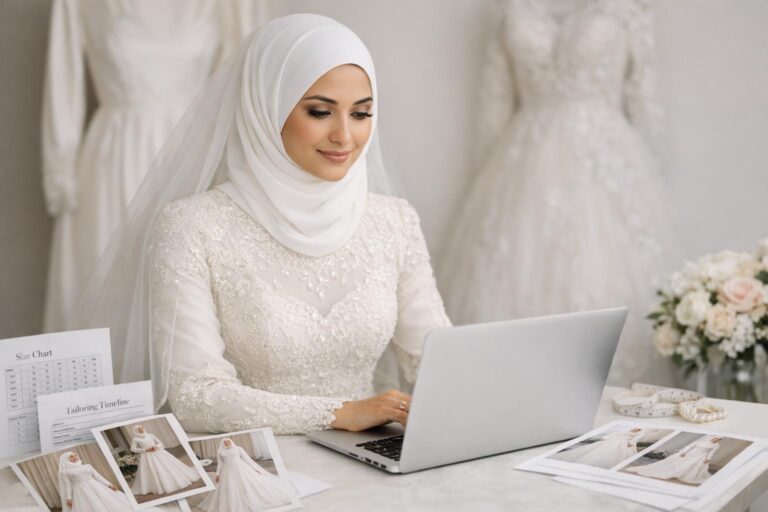
Short brides should expect alterations to be part of the process, even when the dress is labeled petite. Build a plan around the number of fittings you may need and leave room in your budget for the changes most likely to matter: hem, waist placement refinement, and bodice adjustments for proportion.
Tips: When comparing dresses, consider “alteration complexity” as part of the cost. A gown that needs fewer proportion changes may end up being the simpler, more predictable option—especially if you’re working with a tighter timeline.
Real Stories: Petite Bride Galleries (How to Use Them)
Many short brides gain clarity by looking at petite bride galleries and before/after alteration examples. The value isn’t just inspiration—it’s learning how specific changes impact the final look. Even without seeing your exact body type, you can spot patterns in what consistently improves fit on petite frames.
Case Studies with Before/After Alterations (What to Observe)
When reviewing a petite bride alteration success story, focus on the specific adjustments rather than the overall styling. Look for changes that bring the waistline up, shorten or refine the bodice, and smooth the skirt line. These are the types of fixes that often make a dress look “custom,” even if it started as a standard size.
- Does the waist seam align with the bride’s natural waist after alterations?
- Does the bodice look smooth and stable, without bunching?
- Does the skirt fall cleanly from the waist without heavy stacking at the hem?
- Does the neckline feel open and lengthening rather than crowded?
Quick Style Breakdowns for Diverse Petite Bodies
Not all short brides have the same proportions. Some have a short torso; others have shorter legs; others have broader shoulders or a fuller bust. Use quick style breakdowns as a starting point: match the silhouette strategy (like empire waist, A-line, or sheath) to your proportions, then fine-tune with neckline and sleeve choices.
Tips: If you’re size-inclusive or need more structure, focus on gowns where the bodice looks supportive and the waist placement is clear. Petite success often comes from a strong foundation in the bodice, followed by tailoring that refines proportion.
Budget and Availability: Finding the Right Dress for Your Wallet
Petite brides shop across every price point, and availability varies: some dresses are ready-to-wear, others are made-to-order, and many are available through boutiques that offer try-ons and fittings. Your budget should account for the full pathway: the dress itself plus the alterations that make it truly petite-friendly.
Budget Ranges and Where to Shop
If you’re budget-conscious, start by narrowing silhouettes that typically require fewer complex adjustments (often A-line, sheath, and certain short or tea-length options). If you’re shopping at a higher price tier, you may prioritize design details, fabric, and boutique experiences—while still planning for petite-tailored finishing.
- Affordable path: Prioritize simple silhouettes and predictable alterations.
- Mid-range path: Balance design details with tailoring-friendly construction.
- Luxury path: Focus on craftsmanship and boutique support, then refine the fit with expert alterations.
Online vs. In-Person Fitting
Online shopping can expand options for wedding dresses for petite brides, especially if you’re looking for specific silhouettes or shorter hemlines. In-person boutiques can be ideal when you want hands-on guidance, clear try-on feedback, and immediate insight into what tailoring will be required.
Tips: If you’re shopping online, be extra disciplined about measurements and questions. If you’re shopping in person, arrive with a petite-first plan: try the silhouettes most likely to work before experimenting with shapes that are more sensitive to proportion.
Quick-Reference Outfit Toolkit for Petite Brides
Once the dress direction is clear, the final look comes together through accessories and styling choices that keep the proportions intentional. For short brides, the goal is rarely “bigger.” It’s “cleaner, longer, and balanced.”
Must-Have Accessories for Petite Brides
Accessories can emphasize your waist, complement your neckline, and support the overall line of the gown. Think of accessories as tools that finish proportion, not distractions that compete with it.
- Belts or sashes: Helpful when placed precisely to define the waist without visually lowering it.
- Veils: Choose lengths and styles that support the silhouette rather than adding visual heaviness at the waist.
- Jewelry: Consider pieces that draw the eye upward and keep the neckline area refined.
Shoe Height Guidance and Height-Boosting Tricks
Shoes influence posture, hem length, and how confidently you move. Some petite brides prefer heels for extra height; others prioritize stability and comfort. Either choice can work, as long as the hem is tailored to your final shoe plan and the silhouette stays clean from waist to floor (or to your chosen shorter hemline).
Tips: Decide shoe height early enough that your fittings reflect real conditions. Even small changes can alter the hem, the way the skirt falls, and the overall proportion of the gown on a shorter frame.
Your Path to a Flattering Petite Gown
The most successful wedding dresses for short brides follow a simple formula: a petite-friendly silhouette, elongating details at the neckline and waist, and tailoring that aligns the dress to your proportions. Start with shapes that naturally balance a shorter frame—like empire waist, A-line, sheath, and thoughtfully chosen short or tea-length designs—then refine with waist placement, bodice length, and hem precision.
Whether you shop online, in a boutique, or through curated petite collections, prioritize how the dress is built and how it can be tailored. When you treat fit as a strategy rather than a gamble, the right gown becomes much easier to recognize—and much easier to love.
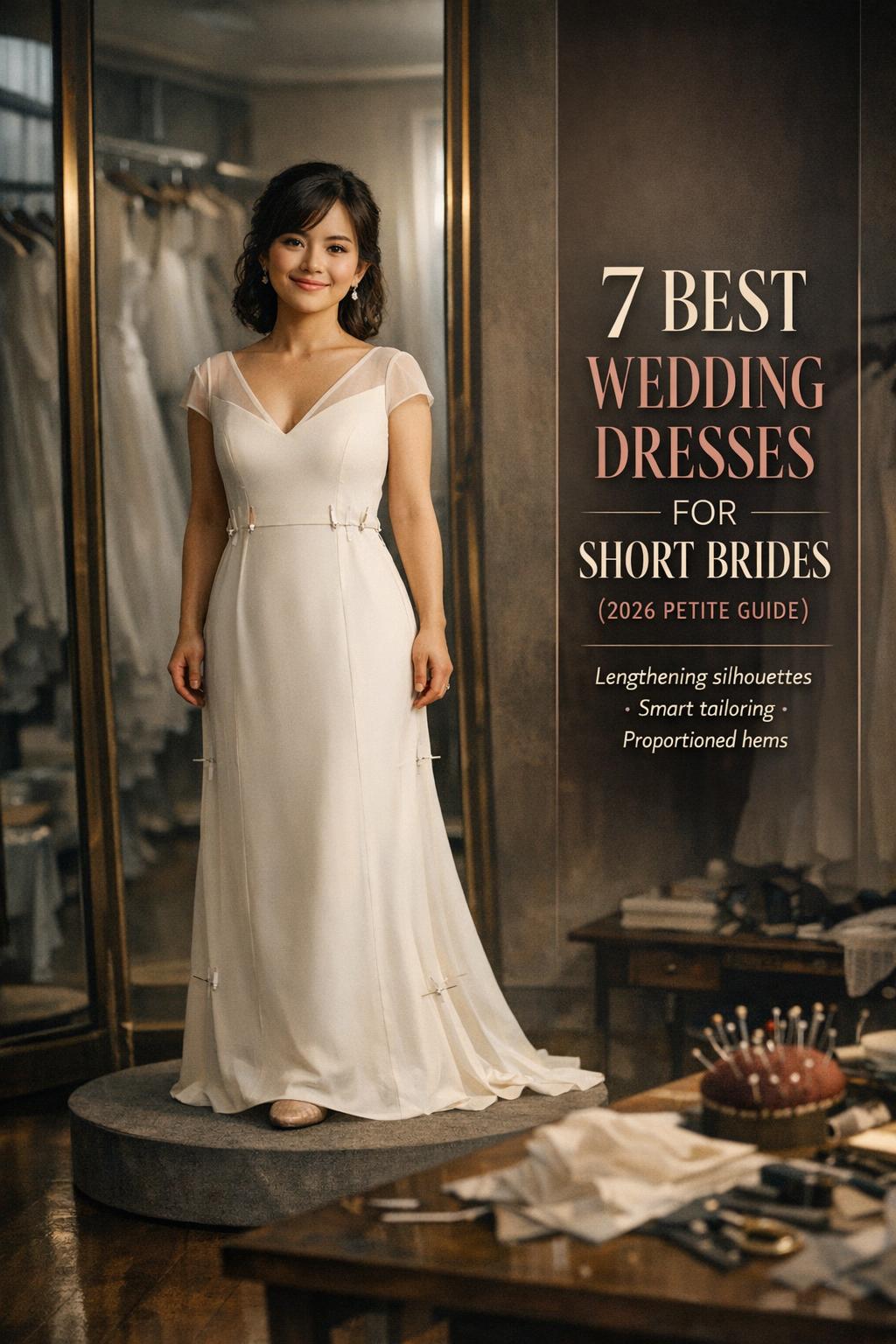
FAQ
Do all brides need alterations if they’re short?
Many short brides should expect some alterations, even with petite wedding dresses, because the best fit depends on proportions like waist placement and bodice length as well as overall size; hemming is common, but aligning the waist and refining the bodice often makes the biggest difference.
What are the best silhouettes for wedding dresses for short brides?
Empire or high-waist gowns, A-line dresses, and sheath styles are widely considered petite-friendly because they create cleaner vertical lines and balanced proportions; ball gowns can work with careful volume control, and short or tea-length options can be especially flattering when the bodice stays streamlined.
How do I choose a wedding dress when I’m short?
Start by trying petite-friendly silhouettes first, then evaluate neckline and waist placement to make sure the upper body looks lengthened and the waist sits where it should; from there, choose a dress that can be tailored cleanly, especially at the hem and bodice, rather than relying on size alone.
Do V-necks work for petite brides?
V-necks are a popular choice for petite brides because they can visually elongate the neckline and draw the eye vertically, which helps create a lengthened look through the upper body, especially when the bodice is not overly cluttered with heavy details.
Will a shorter gown look shorter if I have short legs?
A shorter hemline can still look balanced on short legs when the outfit is styled intentionally, with a clean bodice line, thoughtful waist placement, and shoes that match your comfort and posture; the key is avoiding visual breaks that “cut” the figure in the middle.
Are short wedding dresses and tea-length wedding dresses good options for petites?
Yes, short wedding dresses and tea-length styles can be excellent for petites because they can highlight the legs and reduce the heaviness that sometimes comes with long skirts, especially when the silhouette remains structured and the hem is finished to look deliberate.
What should I ask at a bridal boutique if I’m a petite bride?
Ask which silhouettes tend to work best for petite frames, what alterations are commonly needed for the dresses you try on (especially hem and waist placement), how many fittings they recommend, and how early you should finalize your shoe height so the hem can be tailored accurately.
What’s the single most important fit detail for petite wedding dresses?
Waist placement and bodice length are often the most important because if the waist sits too low or the bodice is too long, the entire dress can look disproportionate on a shorter frame even if the size technically fits.