7 Steps to Choose Pretty Wedding Dresses for Any US Venue
Pretty Wedding Dresses: How to Find “The One” Without Feeling Overwhelmed
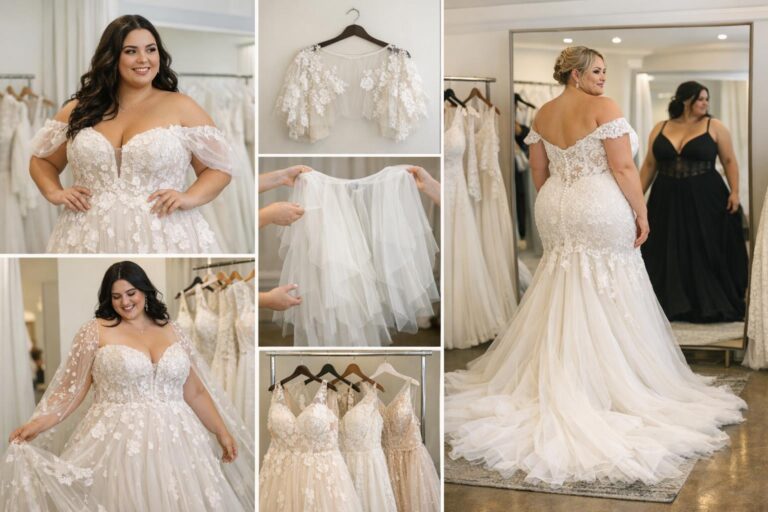
Shopping for pretty wedding dresses can feel like stepping into an endless world of silhouettes, fabrics, necklines, and sparkle—each one “the one” until the next one appears. The good news is you don’t need to try on everything to find a dress that feels beautiful, flattering, and true to your wedding vision. You need a clear process: define what “pretty” means to you, narrow the styles that suit your body and setting, and shop with a plan that respects your budget and timeline.
This guide walks you through the decisions that matter most—from choosing a silhouette to understanding what makes a gown look elevated in photos and in person. You’ll also find practical tips for fittings, accessories, and avoiding common pitfalls so you can shop with confidence and enjoy the experience.
What Makes a Wedding Dress “Pretty” (and Why It’s Personal)
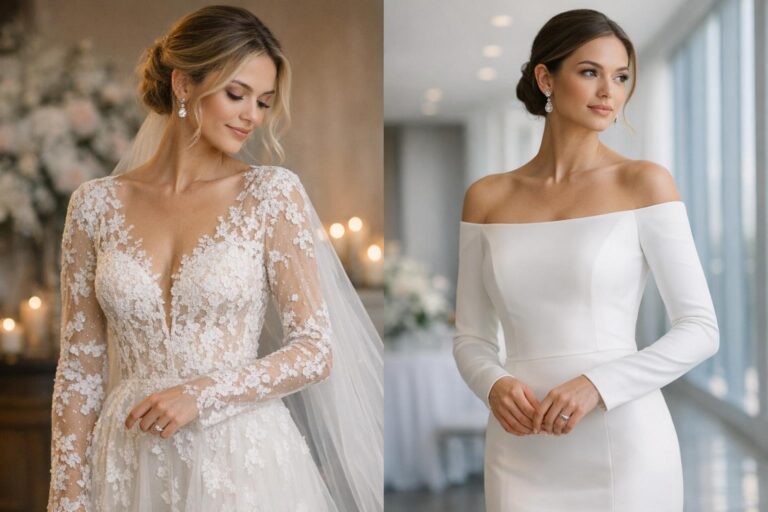
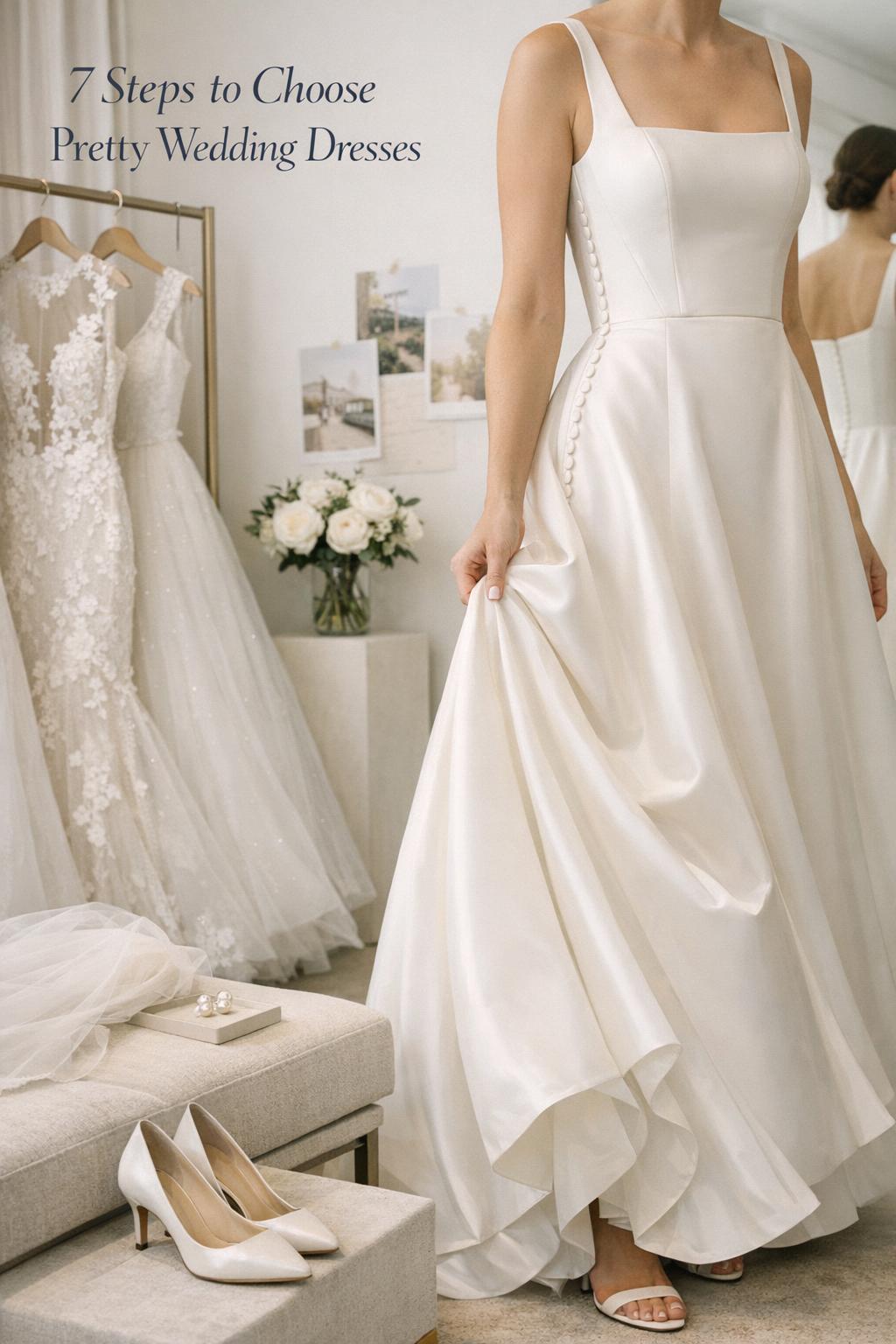
“Pretty” is not one universal look. For some brides, it means airy tulle and delicate lace. For others, it’s sleek satin with a clean neckline. Many define pretty as a combination of flattering proportions, thoughtful details, and a look that feels effortless rather than overworked.
A useful way to define your version of pretty is to separate what you love in photos from what you love on your body. A dress can be visually stunning on a hanger or model and still not feel like you once it’s on. When your definition includes comfort, movement, and confidence, you’re more likely to choose a gown you’ll still adore when you look back at your wedding album.
Your wedding look is only the beginning.
Keep your guest list, vendors, timeline, and every important detail together with Zarellea — so your day feels as considered as your style.
Three “pretty” directions brides commonly gravitate toward
- Romantic: soft layers, lace, floral appliqué, tulle, whimsical textures
- Classic: structured bodice, refined fabric, timeless neckline, minimal embellishment
- Modern: clean lines, architectural seams, sleek silhouettes, subtle statement details
You don’t have to pick just one. Many of the most memorable gowns blend categories—like a classic silhouette with romantic lace, or a modern crepe dress paired with a soft veil.
Start With the Big Four: Silhouette, Fabric, Neckline, and Detail
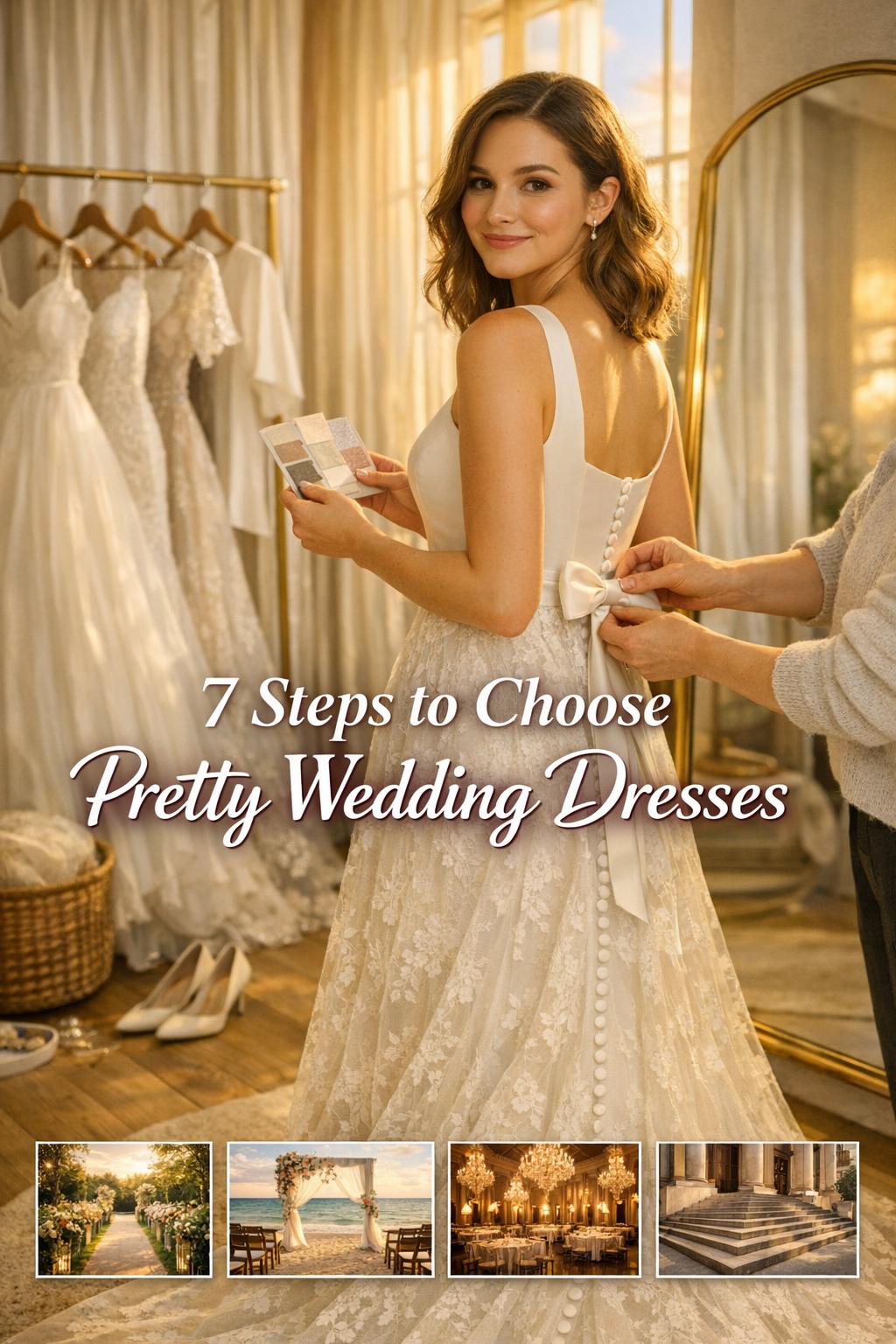
If you focus on these four elements first, your search becomes dramatically easier. You’ll quickly learn which shapes and textures feel “pretty” to you—and which ones feel like a costume.
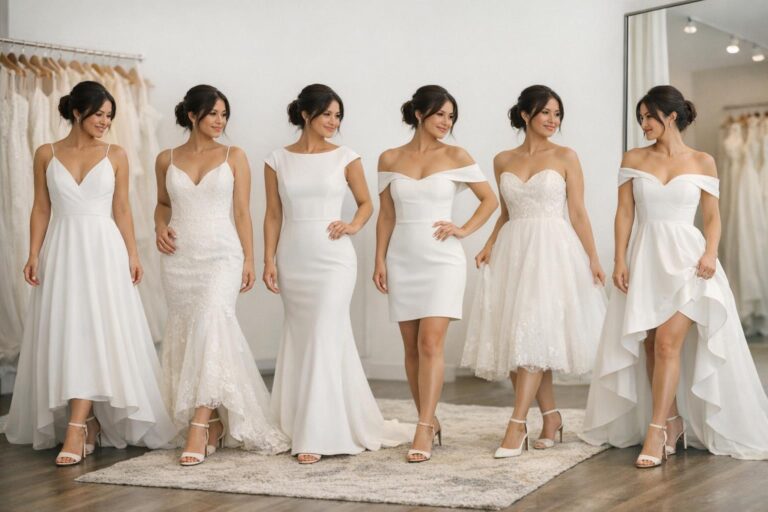
Silhouette: the foundation of the look
Silhouette determines how the dress reads from across the room and how it moves as you walk, hug, and dance. It also shapes the overall vibe—dramatic, romantic, polished, or playful.
- A-line: a widely loved choice for a balanced, soft, universally flattering look
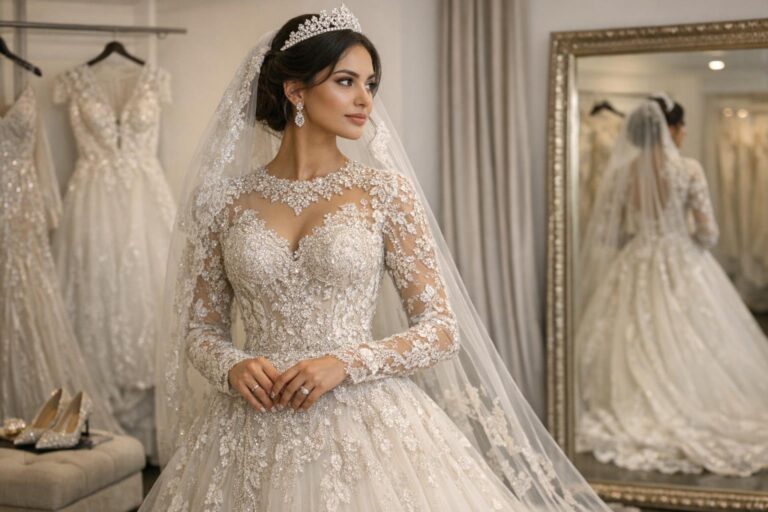
- Ball gown: a statement-making shape that feels formal and fairytale-like
- Mermaid or fit-and-flare: a defined shape for a glamorous, curve-focused look
- Sheath: a streamlined option that often feels simple, modern, and easy to move in
Tips: If you’re torn between two silhouettes, consider your venue and your comfort with volume. A big skirt may feel magical for the aisle but cumbersome on the dance floor, while a slimmer dress may feel effortless but less dramatic in a grand space.
Fabric: where “pretty” becomes visible up close
Fabric affects everything: the way a gown drapes, how it photographs, and whether it feels light, structured, crisp, or soft. Many brides discover they love a fabric more than a silhouette once they see it in motion.
Lace can read romantic and detailed, while satin often reads classic and glossy. Tulle tends to feel airy and dreamy, while crepe can look sleek and refined. Even when two dresses share the same shape, fabric can make them feel like entirely different gowns.
Neckline: the frame for your face and jewelry
Necklines change the mood instantly. A sweetheart can feel soft and bridal, a square neckline can feel chic and structured, and an off-the-shoulder neckline can feel romantic and elegant. The right neckline also impacts how you feel throughout the day—especially if you’re sensitive to straps, sleeves, or a tight bodice.
Tips: If you plan to wear a statement necklace, you may prefer a simpler neckline. If you want statement earrings, consider a neckline that doesn’t compete with them.
Details: the difference between simple and unforgettable
Details are where “pretty” often lives: delicate buttons, floral appliqué, sparkle that catches light, illusion lace, a dramatic train, or a bow that adds personality. The key is choosing details that complement your overall style instead of overwhelming it.
When in doubt, remember that one signature detail can be more impactful than many competing ones. For example, a clean gown with a beautiful veil can feel just as pretty as a heavily embellished dress—sometimes more so.
Choosing Pretty Wedding Dresses by Wedding Style and Venue
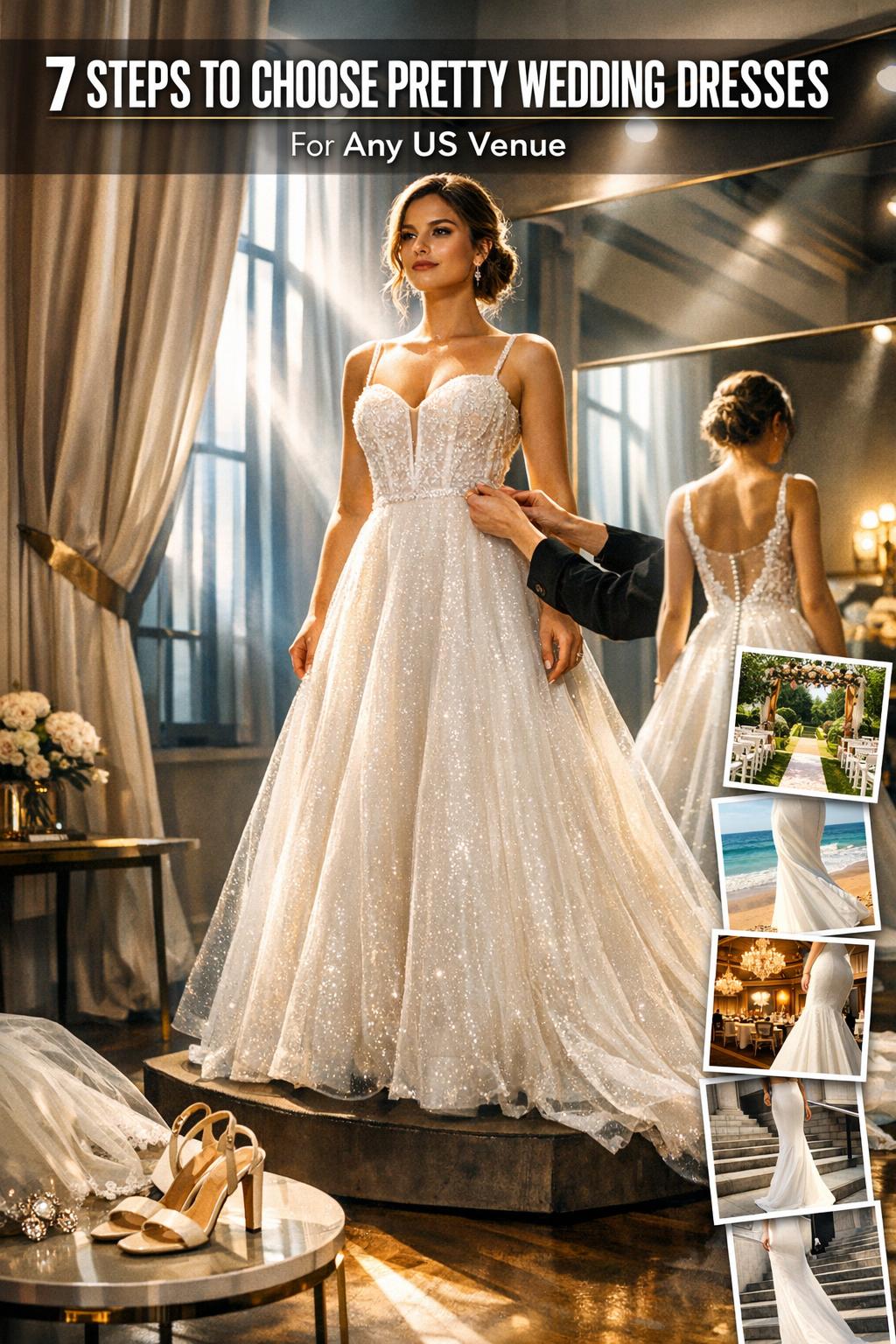
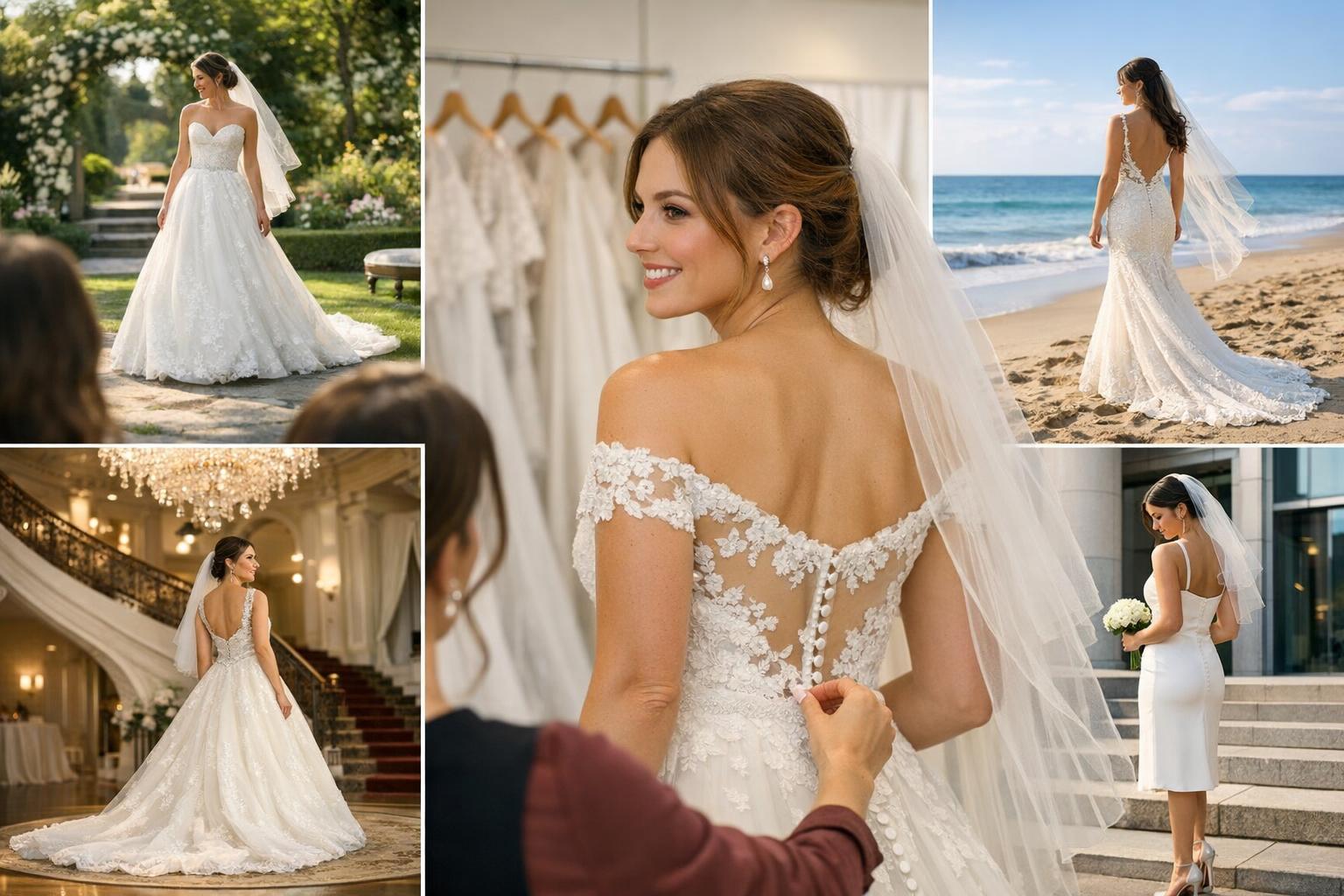
Your setting shapes what looks and feels “right.” The same dress can read formal in one place and underdressed in another. Thinking about venue early helps you avoid falling in love with a gown that doesn’t match the day you’re actually planning.
Garden, outdoor, or spring/summer weddings
Many brides lean toward lighter fabrics and romantic details for outdoor celebrations. Movement matters because wind, grass, and heat can affect comfort. A dress that feels pretty outside often looks effortless and natural, with texture that reads well in daylight.
Tips: If you’ll be on grass, consider how the hem and train will behave. If you want a longer train for ceremony photos, plan on bustling it for the reception.
Ballroom or formal evening weddings
Formal venues can carry dramatic silhouettes, structured bodices, and statement trains. Rich-looking fabrics and refined finishing details often read especially “pretty” under evening lighting, where subtle shine and dimension stand out.
Beach weddings
Beach settings typically favor ease of movement, lighter constructions, and silhouettes that won’t fight the wind. A pretty beach bridal look often comes from simplicity, graceful drape, and thoughtful accessories rather than heavy layers.
Tips: Consider how sand, salt air, and humidity might affect your comfort and the dress’s appearance. Plan footwear and hem length with walking in mind.
Courthouse, city, or modern micro-weddings
City weddings often pair beautifully with clean lines, minimal silhouettes, and modern necklines. Many brides choose a sleek gown, a shorter dress, or a look that can be styled up with a veil, gloves, or a statement hairpiece.
Pretty here often means polished: the fit is impeccable, the fabric looks elevated, and the styling is intentional.
How to Pick a Flattering Dress Without Chasing “Perfect”
Most brides don’t need a perfect dress; they need a dress that fits well and supports how they want to feel. The most consistently “pretty” dresses are the ones that create balanced proportions and allow you to stand, sit, and move comfortably.
Focus on structure and fit first
A supportive bodice, a waistline that sits where it should, and a skirt that flows cleanly can make a simpler dress look far more expensive and beautiful. If you’re choosing between two gowns, the one with better structure and fit will usually look prettier in real life and in photos.
Let your comfort be a deciding factor
Comfort isn’t a bonus—it’s part of what makes a dress look good. If you’re tugging at straps, holding your breath, or constantly adjusting the neckline, it will show in your posture and expression. A dress that feels secure and wearable allows you to relax, and relaxed confidence reads as beauty.
Tips: During try-ons, do a real-life test. Sit down, raise your arms, take a few steps, and mimic a hug. If you can move naturally, you’re closer to the right choice.
Balance trend and timelessness in a way you’ll still love later
It’s normal to want a look that feels current. At the same time, many brides also want their photos to feel enduring. A practical approach is to choose a dress that feels timeless in silhouette and personalize it through styling—veil choice, jewelry, shoes, or a second look for the reception.
Budgeting for a Pretty Dress That Still Feels High-End
A gown can look stunning at many price points when the priorities are clear. “Pretty” often comes from fit, fabric, and finishing—not necessarily the highest price tag. The key is to budget beyond the dress itself and plan for the full look.
Consider the full cost of the bridal look
- Dress cost
- Alterations and fittings
- Veil or hair accessories
- Shoes and undergarments
- Cleaning and preservation (if you want it)
Tips: If you’re deciding where to spend, prioritize fit and alterations. A properly tailored dress can elevate the entire look more than an additional layer of embellishment.
How to keep a dress looking beautiful in photos
Even the prettiest gown can photograph poorly if it wrinkles easily, doesn’t fit cleanly, or creates visible lines from undergarments. When you try on dresses, pay attention to how the fabric behaves when you sit and stand, and how the bodice lays across the bust and waist. These small details often make a bigger difference than you expect.
Tips: Take a few quick photos from different angles during try-ons, including a close-up of the bodice and a full-length shot. What you notice on camera can help you make a clearer decision.
Pretty Details to Consider: Sleeves, Backs, Trains, and Lace
If you already know your general silhouette, details are where you can personalize the dress and find the version that feels distinctly yours. These are the features brides often cite when they say a dress is “so pretty” in person.
Sleeves and straps
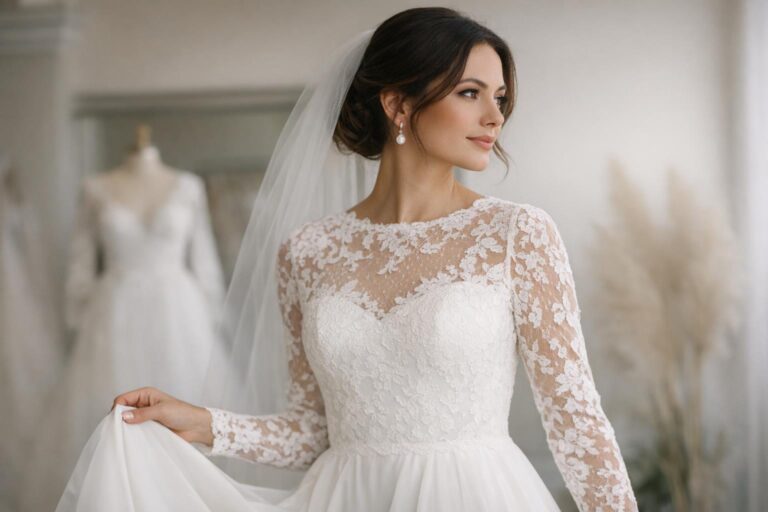
Sleeves can add romance, softness, or structure depending on the fabric and shape. Straps can make a dress feel secure while still looking delicate. If you love the idea of sleeves but worry about movement, consider how they feel when you raise your arms and how they sit when you hug.
Low backs and statement backs
A striking back can make a simple front feel more special. Buttons, lace edging, illusion details, or a deep V back can create that “pretty” moment as you walk down the aisle and during the first dance.
Trains and drama level
Trains can instantly elevate the bridal look, but they also add practical considerations. If you want a train for ceremony impact, plan for bustling or a second look for the reception so you can move freely.
Lace, appliqué, and sparkle
Lace and appliqué often read as romantic and dimensional, while sparkle can read as glamorous and celebratory. If you’re drawn to embellishment, consider where it’s placed. Concentrated detail on the bodice can frame your face and highlight your waist, while all-over detailing creates an immersive, ornate effect.
Tips: If you love sparkle, check it in different lighting. What looks subtle under boutique lighting may appear more pronounced outdoors or under flash photography.
How to Shop for a Wedding Dress: A Simple Timeline and Game Plan
A good shopping plan protects your excitement. It also reduces last-minute stress and helps you avoid rushed decisions that don’t reflect your real style.
Before you book appointments
- Choose a realistic budget range for the dress and alterations
- Pick 2–3 style directions (silhouette + fabric + vibe) to start
- Decide what you must have and what you definitely don’t want
- Bring the right undergarments or choose a strapless-friendly option
Tips: Keep your inspiration focused. Too many saved photos can make it harder to see what you truly like.
At the boutique or try-on session
Start with a familiar silhouette, then try one or two options outside your comfort zone. Many brides discover a new favorite once they see it on their body. Keep your attention on how each dress makes you feel, not just how it looks on a hanger.
Tips: If you’re shopping with guests, set expectations beforehand. Tell them whether you want opinions on the overall vibe, the most flattering silhouette, or which dress feels most “you.”
After you find the dress
Once you say yes, plan your fittings and keep your styling decisions cohesive. The best-looking bridal outfits are coordinated: the veil complements the dress, the jewelry doesn’t compete with key details, and the final fit supports your posture and comfort.
Tips: Avoid changing too many variables at once. If you’re considering a dramatic accessory change, try it during a fitting so you can see the full effect with the gown.
Styling Pretty Wedding Dresses: Veils, Jewelry, Hair, and Shoes
Styling can turn a beautiful dress into a complete bridal look. The goal is harmony: your accessories should highlight the dress rather than distract from it.
Veils and hair pieces
A veil can add softness, tradition, or drama, depending on its length and detailing. If your dress already has heavy lace or sparkle, a simpler veil often looks more polished. If your dress is minimal, a veil with detail can add that “pretty” finishing touch.
Jewelry
Choose jewelry based on neckline and dress detail. A detailed bodice often pairs best with minimal jewelry, while a clean dress can handle a stronger statement. The goal is to keep the focus on your face and overall silhouette.
Shoes
Shoes affect your hem length, comfort, and posture. A pair you can wear confidently all day will support better photos and a better experience. If your ceremony and reception locations differ, consider whether you want a second shoe option without disrupting the look.
Tips: Bring your shoes (or shoes with the same heel height) to alterations so the hem is tailored correctly.
Common Mistakes to Avoid When Choosing a Pretty Dress
Many wedding dress regrets come from pressure, timing, or trying to satisfy too many opinions. Avoiding a few common mistakes makes it easier to choose a gown you love wholeheartedly.
- Buying a dress that needs “too many changes” to feel right
- Ignoring comfort and assuming you’ll “get used to it”
- Falling in love with a look that doesn’t fit your venue or day-of plan
- Trying on too many dresses without a clear direction
- Letting conflicting opinions drown out your own reaction
Tips: If you feel torn, ask yourself a simple question: “Would I be relieved to wear this on my wedding day?” Relief is often a clearer sign than excitement alone.
Making a Final Decision You’ll Feel Good About
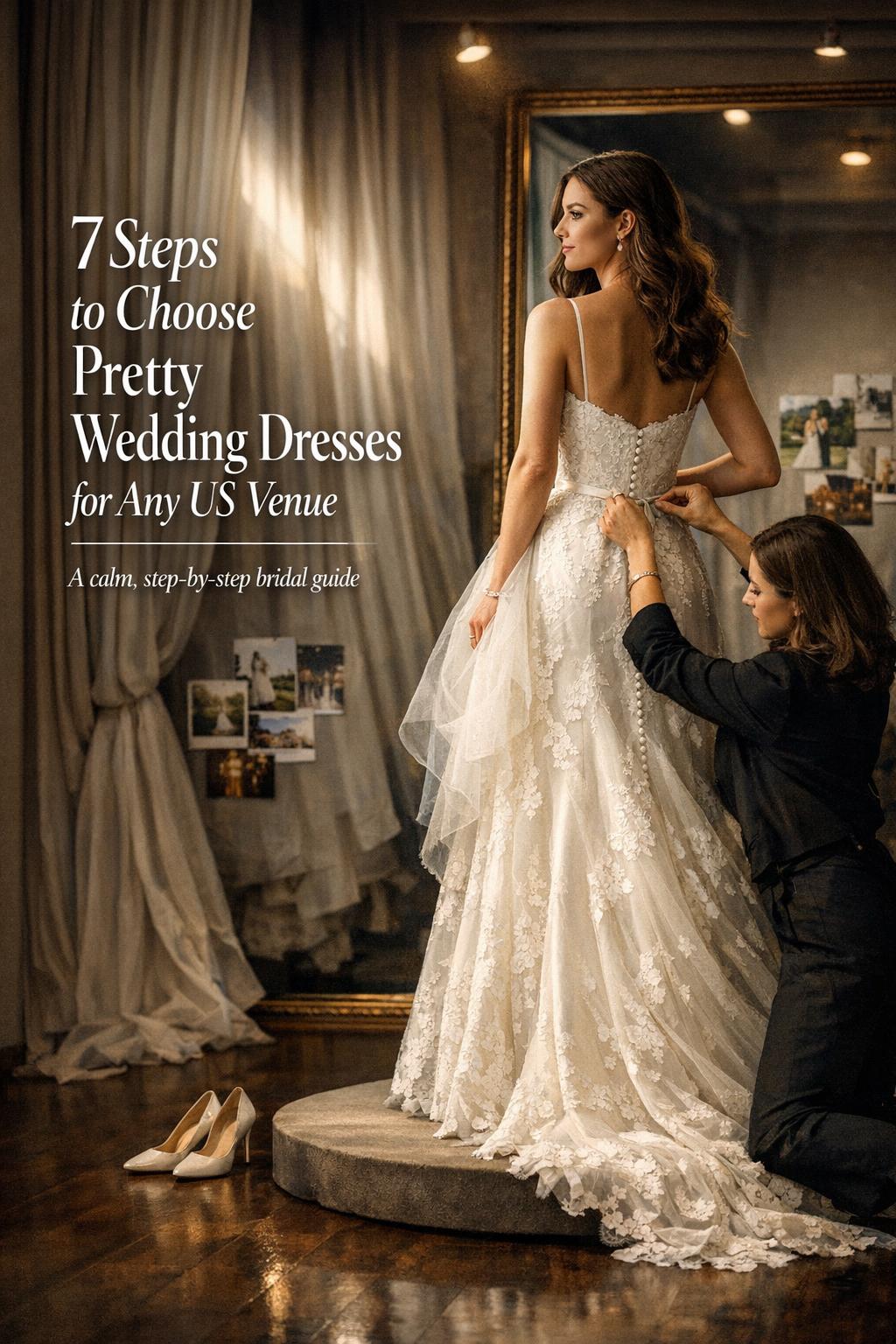
When you’re down to a shortlist, the best choice is usually the one that aligns with your priorities: comfort, fit, style, and how you want to feel. The prettiest dress is not necessarily the most elaborate; it’s the one that looks like it belongs on you.
A practical “tie-breaker” checklist
- You can move comfortably and breathe normally
- The bodice feels supportive and secure
- The dress fits the tone of your venue and celebration
- You like how it looks in photos from multiple angles
- You can picture yourself wearing it for the full day
Tips: Sleep on it if you can. If you keep thinking about the same dress the next day—and not because you’re worried you’ll lose it—that’s often a sign you’ve found the right one.
FAQ
What styles are considered pretty wedding dresses?
Pretty wedding dresses commonly include romantic styles with lace, tulle, or floral appliqué; classic looks with clean lines and refined fabric; and modern designs that feel sleek and minimal with one standout detail such as a statement neckline or back.
How do I choose a flattering wedding dress silhouette?
Start by trying a few core silhouettes—such as A-line, ball gown, fit-and-flare, and sheath—and focus on balance, comfort, and support in the bodice; the most flattering option is usually the one that fits cleanly, lets you move naturally, and matches how you want to feel.
How can I make a simple dress look prettier?
You can elevate a simple gown by prioritizing impeccable fit through alterations and adding cohesive styling like a veil, hair accessory, or refined jewelry that complements the neckline and any existing dress details.
Should I pick my accessories before I buy my dress?
It’s usually easier to choose the dress first and then select accessories that match its neckline, fabric, and overall vibe, since the dress sets the tone and prevents you from forcing a gown to fit accessories you already bought.
What should I bring to a wedding dress appointment?
Bring a clear budget range, a focused set of inspiration, and practical basics like appropriate undergarments and shoes (or a similar heel height) so you can evaluate fit, comfort, and proportions more accurately during try-ons.
How do I know if a dress is comfortable enough for the whole day?
During try-ons, sit down, walk, lift your arms, and mimic a hug; if you can breathe normally, the dress stays in place without constant adjusting, and you feel secure in the bodice, it’s more likely to be comfortable from ceremony through reception.
What’s the biggest mistake to avoid when shopping for a wedding dress?
A major mistake is choosing a dress that requires extensive changes to feel like you, because it often increases cost and stress; it’s typically better to start with a gown that already matches your preferred silhouette and overall style direction.
How do I choose between two dresses I love?
Use practical tie-breakers: pick the one that fits and supports you better, feels comfortable to move in, suits your venue and wedding tone, and looks consistently beautiful in photos from multiple angles.