Elegant Wedding Dresses, Edited: Clean Lines, Luxe Fabrics
Elegant wedding dresses, and the quiet decisions that make them feel unforgettable
The pursuit of elegant wedding dresses often starts with a single image—clean lines, a composed silhouette, a fabric that catches light without shouting for it. But the feeling of elegance is rarely just one thing. It’s proportion and restraint, yes, but also how a gown moves across a dance floor, how the neckline frames your face in photos, and how the fabric behaves after hours of wear. In the U.S. bridal market, you’ll see “elegant” used to describe everything from lace-sleeved mermaid gowns to minimalist sheath styles, from luxury design house collections like Elissar Bridal to wide, affordable catalogs like JJ’s House, 27dress, Leely, Tirdress, and Royce Bridal. The common thread is the same: an elegant bridal gown looks intentional from every angle, and it stays believable on a real body in a real setting.
This guide breaks elegance down into the decisions that actually shape it—silhouette, fabric, details, shopping channel (online vs. in-store), and the brand experience that surrounds the dress. Along the way, you’ll see how “timeless” and “luxury” can mean different things depending on whether you’re browsing a product catalog online, booking appointments at a boutique with real bride galleries, or seeking a retailer network experience in the United States.
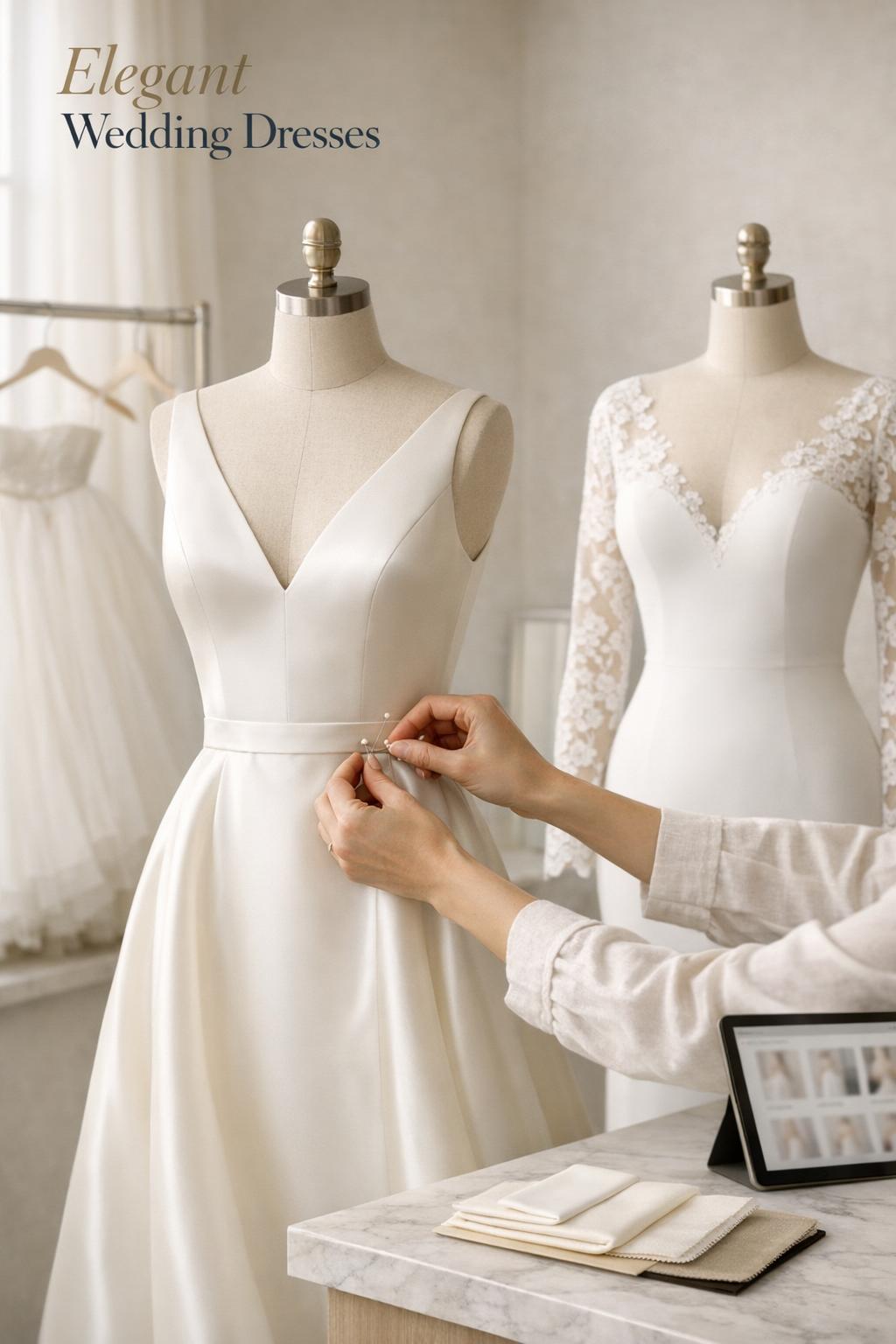
What “elegant” really means in bridal style (beyond the adjective)
Elegance in bridal fashion is less about adding and more about editing. The most consistently “elegant design” cues across top bridal shopping experiences—whether luxury or affordable—come back to a few principles: clean proportion, fabric quality (or at least fabric behavior that reads as refined), and cohesive detailing. A dress can be lace-forward and still feel sophisticated; it can be minimal and still feel romantic. The difference is whether the dress looks deliberate rather than busy.
In practical terms, an elegant wedding dress tends to do three things well. First, it creates a clear silhouette (A-line, ballgown, sheath, fit-and-flare, or mermaid) without fighting the body. Second, it chooses one or two “hero” elements—like long sleeves in lace tulle, or satin with a simple V-neck—rather than stacking every trend. Third, it commits to a consistent story: timeless bridal style, modern contours, or romance through craft.
Your wedding look is only the beginning.
Keep your guest list, vendors, timeline, and every important detail together with Zarellea — so your day feels as considered as your style.
Tips: a quick elegance check you can do in a fitting room (or at home)
Whether you’re trying on gowns in-store or narrowing down options online, step back and evaluate the dress in motion: walk, sit, raise your arms, and turn slowly. Elegance shows up when the fabric falls back into place, the neckline stays stable, and the overall look remains refined even when you’re not posing. If you feel like you have to “hold” the dress into looking polished, it may not be the right foundation for an elegant, all-day wear.
Silhouettes that consistently read as refined
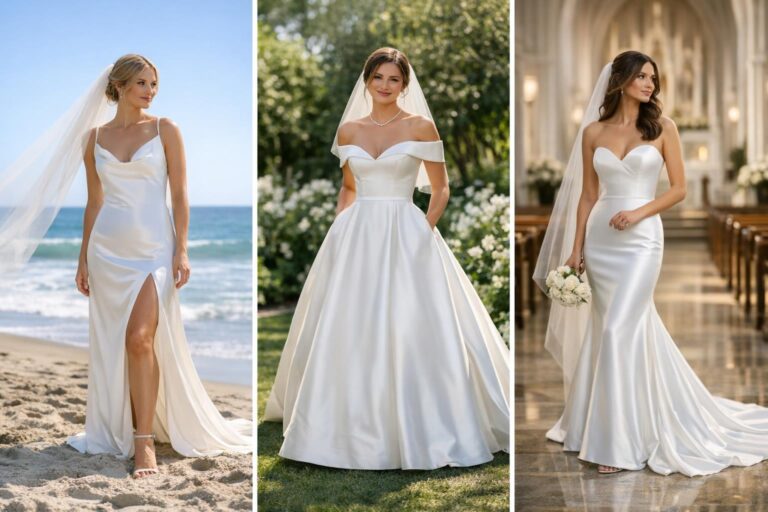
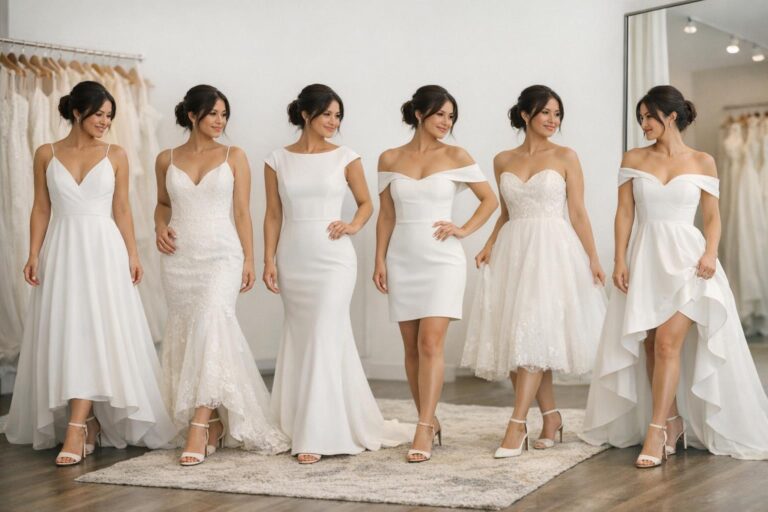
Silhouette is the fastest way to signal elegance because it shapes the entire first impression. The top shopping pages for elegant wedding dresses tend to cluster around classic forms—A-line, mermaid, and ballgown—while editorial guidance pushes you to consider how you’ll shop (online labels vs. boutique appointments) and how the dress will translate to real life. Think of silhouette as your “structure,” and everything else—lace, tulle, satin, sleeves, beading—as the finishing language.
A-line and ballgown: classic grace without effort
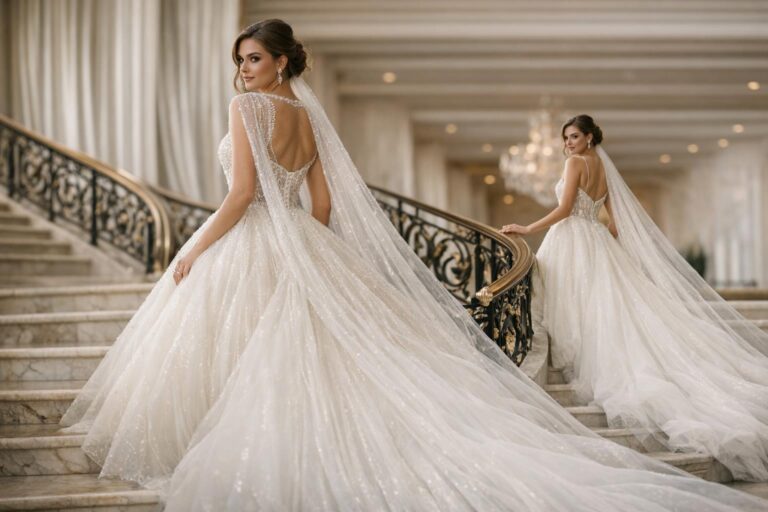
A-line and ballgown silhouettes are enduring because they create a clean relationship between bodice and skirt. With an A-line, the line from waist to hem feels composed and balanced; with a ballgown, the drama is built into the shape rather than into heavy embellishment. If your goal is a classic bridal dress that photographs elegantly from multiple angles, these silhouettes often deliver—even when fabrics vary from satin to tulle to lace overlays.
These shapes also support a wide range of “elegant” interpretations. A structured satin ballgown leans formal and timeless. A tulle A-line with lace elements leans romantic and airy. In both cases, elegance tends to come from clarity: a bodice that fits cleanly, and a skirt that holds its intended volume without collapsing or looking bulky.
Sheath and fit-and-flare: modern contours, minimalist confidence
For a more modern “refined bridal gowns” mood, sheath and fit-and-flare silhouettes deliver a streamlined effect. This is where fabric choice becomes decisive: crepe and silk-like drape read sleek, while satin can read luminous and formal. The trade-off is that these silhouettes are less forgiving of fit issues; even small sizing mismatches can disrupt the polished line that makes the look feel sophisticated.
In real-world wear, sheath styles can feel comfortable for intimate ceremonies and city venues, while fit-and-flare offers a little more structure through the hip and thigh—often a helpful balance if you want elegance with shape. If you’re shopping online, prioritize clear sizing guidance and plan for alterations, because elegance here depends on precision.
Mermaid: the “statement” silhouette that can still be timeless
Mermaid gowns show up repeatedly in product catalogs for elegant wedding dresses, often paired with V-necklines, long sleeves, lace, and tulle. Mermaid can feel undeniably glamorous, but the most elegant versions keep the transition from fitted body to skirt smooth and intentional. If the flare starts too abruptly or the fabric bunches when you sit, the effect can shift from refined to fussy.
A practical lens helps: mermaid dresses can be breathtaking for ceremonies and portraits, but consider movement across a long day. If you want to dance comfortably, walk up steps, or move easily through a venue, you may prefer a fit-and-flare that echoes the mermaid idea without restricting stride as much.
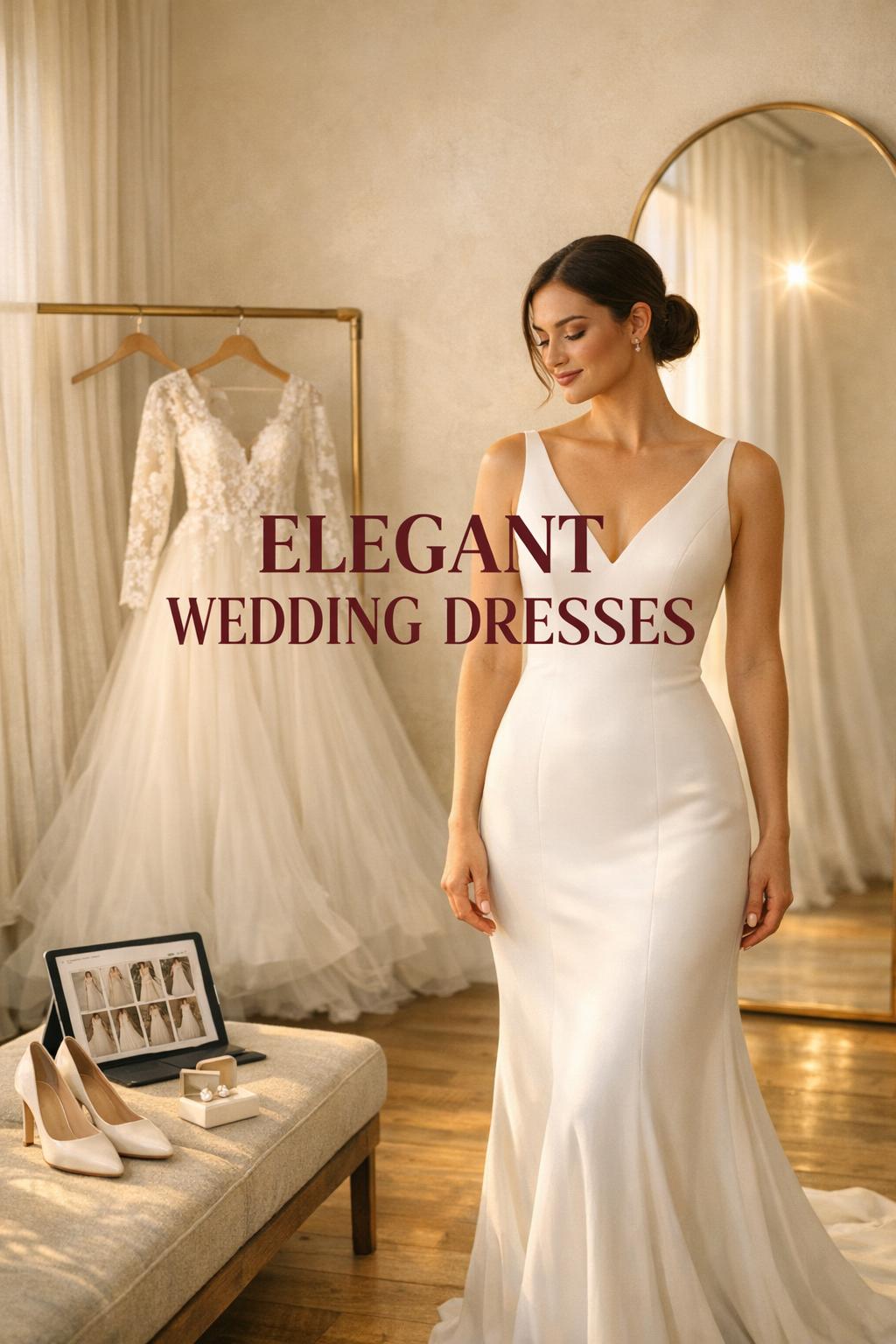
The fabrics and details that elevate an elegant bridal gown
Silhouette sets the structure; fabric and detailing set the tone. Across the top collections—from luxury design house positioning to affordable, wide catalogs—certain materials and details repeatedly communicate elegance: lace and tulle for romance, satin and silk-like finishes for formality, and subtle beading or embroidery for controlled sparkle. The key is alignment: the fabric should support the silhouette, and the details should support the mood.
Lace and tulle: romance with craft
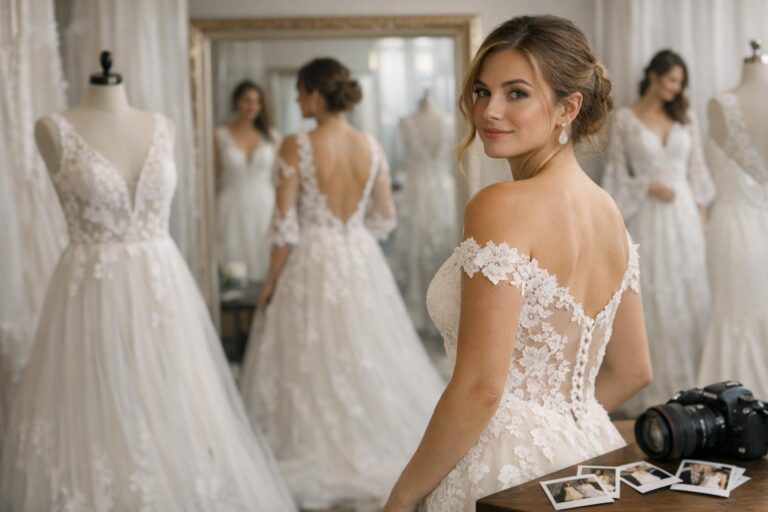
Lace and tulle appear constantly in “elegant wedding dresses lace sleeves” searches and in catalog titles that highlight long-sleeve lace tulle combinations. The elegance here comes from how lace is placed and how tulle carries volume. A lace bodice paired with a tulle skirt can look refined if the motifs feel cohesive and the transitions are clean. Long sleeves in lace can read timeless, especially when the rest of the gown stays edited—simple neckline, controlled train, and minimal competing embellishment.
One real-life consideration: lace sleeves and bodices can feel different after hours of wear, especially if the lace is dense. If you’re planning a long ceremony plus reception, pay attention to comfort at the elbow and underarm, and confirm you can move naturally without the lace pulling or twisting.
Satin, silk, and crepe: drape, shine, and the “polished” factor
Satin and silk-like fabrics are often associated with timeless bridal gowns because light interacts with them in a controlled, luxurious way. Satin reads formal and structured, which can make A-line or ballgown silhouettes feel instantly elevated. Crepe tends to read modern and understated, making it a strong match for sheath and fit-and-flare styles. The elegance is in the surface: when a fabric holds a smooth line, it signals refinement even before you add any embellishment.
There’s a trade-off, especially for online shopping: smooth fabrics can be less forgiving in photos and in real life if sizing is off. If you love the idea of a minimalist wedding dress but worry about comfort or fit, consider whether your shopping path includes alterations—and whether the brand or retailer provides clear fit guidance and policies.
Embroidery and beading: subtle glamour that doesn’t compete
Elegant doesn’t mean plain. Embroidery and beading can add dimension, but the most sophisticated wedding gowns treat sparkle as an accent rather than a headline. Look for beading that follows the architecture of the dress—along a neckline, at the waist, or in a controlled pattern that supports the silhouette. When embellishment is scattered without intention, it can flatten the overall line and distract from the dress’s strongest feature.
A practical styling insight: subtle beading often photographs better than heavy shimmer in varied lighting. If your venue shifts from daylight ceremony to evening reception, controlled embellishment can keep the look consistent across settings.
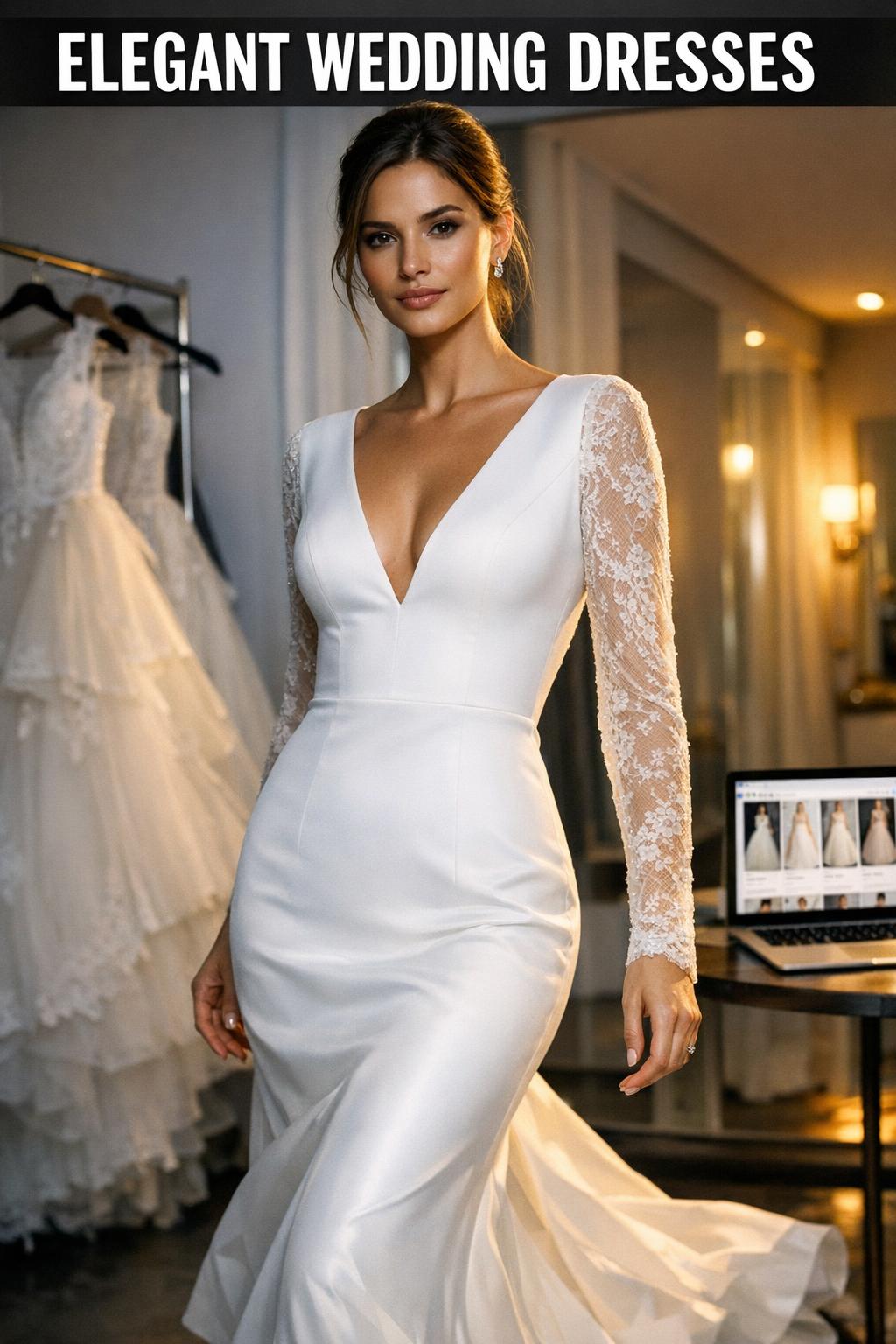
Where “elegant” lives on the market: luxury houses, broad catalogs, and curated boutiques
Elegance is a style goal, but it’s also a shopping experience. In the U.S., you’ll encounter elegant wedding dresses through several pathways: luxury brands with retailer networks, large online catalogs optimized for variety and affordability, and boutiques that emphasize real bride inspiration and in-store guidance. Each route can produce an elegant result, but the strengths—and limitations—are different.
- Luxury brand experience and retailer networks: Elissar Bridal positions elegance through timeless design, storytelling, and a luxury experience supported by a U.S. retail network and store locator cues. This route often emphasizes the brand world—collections, new arrivals, classic favorites, and the feeling of being guided through a curated selection.
- Large e-commerce catalogs: 27dress, JJ’s House, Leely, Tirdress, and Royce Bridal emphasize variety across silhouettes (mermaid, A-line, ballgown), materials (lace, tulle, satin), and details (long sleeves, V-neck). This route makes it easier to compare options quickly, especially for “affordable elegant wedding dresses,” but it demands more decision discipline from the shopper.
- Boutique curation and real bride proof: Here Comes The Dress-style boutiques highlight how wedding dresses look on real bodies, pairing inspiration galleries with in-store shopping cues and curated designer lines. This route can help translate “elegant” from a concept into a real-world fit and styling plan.
Think of these paths as different ways of reducing risk. Luxury houses reduce risk through curation and brand consistency. Large catalogs reduce risk through breadth and filters, giving you more shots at finding your exact silhouette and fabric combination. Boutiques reduce risk through experience—fit guidance and real bride references that keep expectations grounded.
Design language you’ll see again and again (and how to choose yours)
“Elegant” is a wide umbrella, so it helps to choose a design language before you fall in love with a single gown. Once you define your version of elegance, it becomes easier to evaluate lace density, sleeve style, and silhouette without getting overwhelmed by endless product grids.
Timeless elegance: restraint, symmetry, and a clean story
Timeless bridal style typically emphasizes clean lines, balanced proportions, and details that feel integrated rather than decorative. A satin A-line, a structured ballgown, or a simple sheath can all feel timeless when the dress doesn’t rely on trend-driven elements to make its point. This is where a minimalist wedding dress can still look special—because the “special” is in the cut and drape.
Romantic elegance: lace, sleeves, and softness with discipline
Romantic wedding dress styling often leans into lace and tulle, sometimes with long sleeves that immediately communicate refinement. The disciplined version of romance avoids over-layering: choose lace as the hero, then keep the neckline and skirt line composed. Many catalogs foreground this combination in product titles and filters because it reliably reads “elegant” to shoppers—especially for classic ceremonies and formal venues.
Modern luxury: sleek silhouettes and intentional detail
Modern luxury tends to show up as streamlined silhouettes—fit-and-flare or sheath—paired with confident simplicity. The elegance here comes from the absence of clutter and the precision of fit. If you’re drawn to this approach, prioritize construction and tailoring: the more minimal the design, the more the eye notices fit issues.
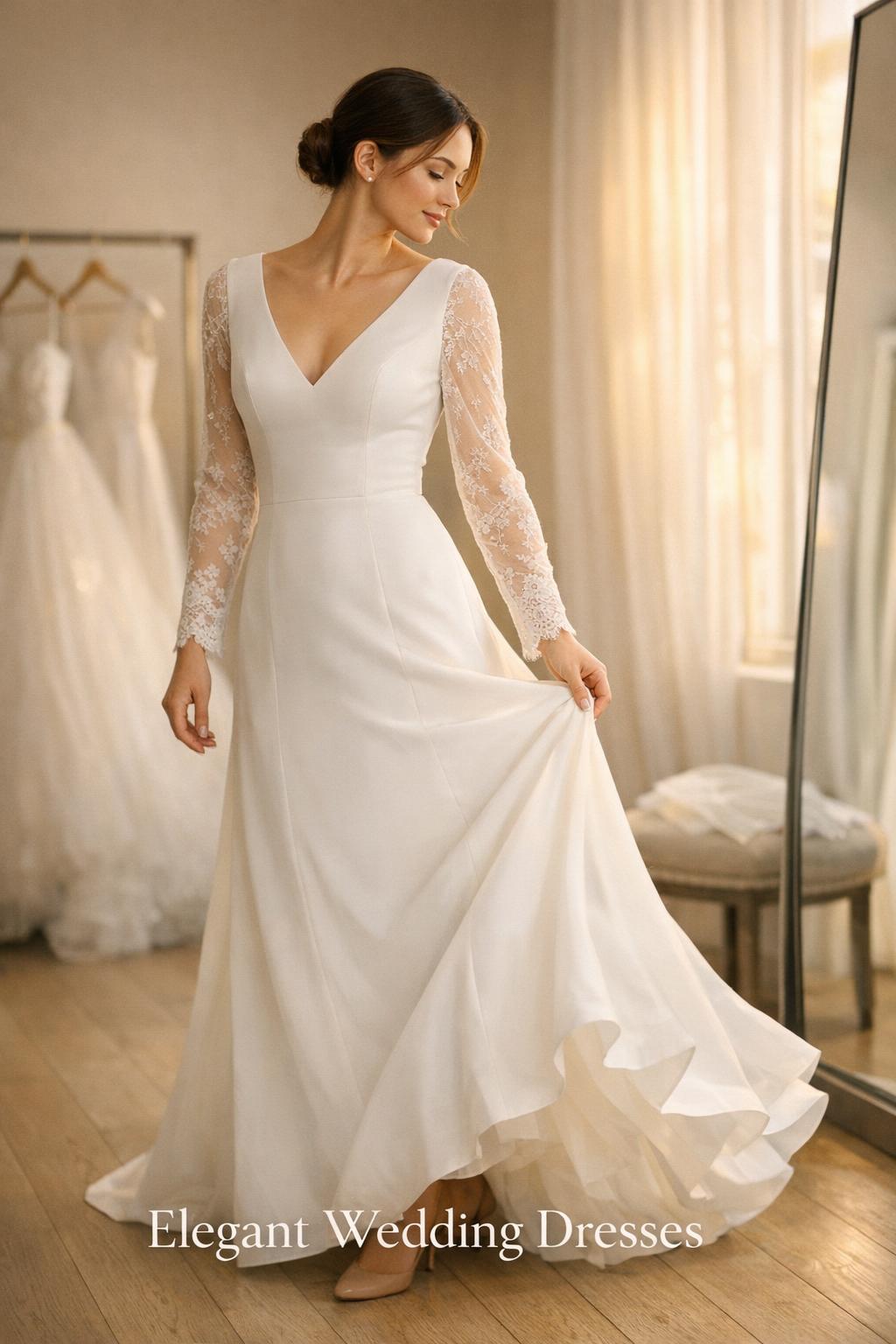
Real brides and real bodies: why elegance looks different off the runway
One of the most helpful shifts in bridal shopping is moving from “Does this look elegant in a still photo?” to “Does this stay elegant on a real body through a real day?” Boutiques that emphasize real bride galleries and the idea that wedding dresses look different on real bodies offer a valuable reminder: elegance is experiential. It’s posture, comfort, and how naturally you inhabit the dress.
Consider a realistic scenario: you choose an elegant wedding dress with long sleeves because the lace looks refined and timeless. During the ceremony, you’re composed and still—perfect. During cocktail hour, you’re hugging friends, lifting a glass, taking photos at different angles. If the sleeves pinch or the bodice shifts, you’ll adjust constantly, and that interrupts the very ease that makes a look feel elegant.
Tips: bring “movement tests” into every try-on
Ask yourself: can you sit without the bodice digging in, can you lift your arms without the neckline pulling, can you take a normal step without the skirt catching? This is especially important for mermaid silhouettes and long-sleeve lace designs. Elegance isn’t fragile, but it does depend on you feeling secure enough to forget about the dress once it’s on.
Shopping for elegant wedding dresses: online convenience vs. in-store certainty
Shopping online for a wedding dress is now a normal part of the bridal landscape, covered not just by retailers but also by fashion editorial guidance. The online route can be ideal if you want broad access to silhouettes, fabrics, and price points—especially for affordable elegant wedding dresses. The in-store route shines when you want guided comparison, immediate fit feedback, and a sense of how fabric and structure read in person.
Online shopping: how to keep “elegant” from turning into “uncertain”
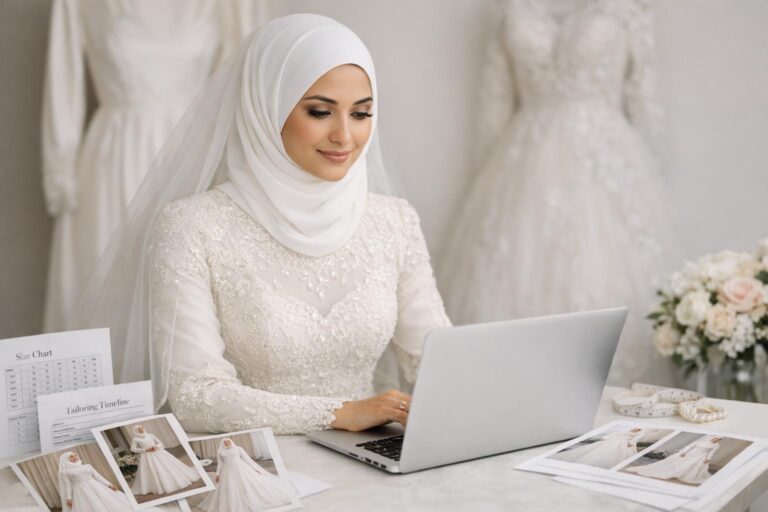
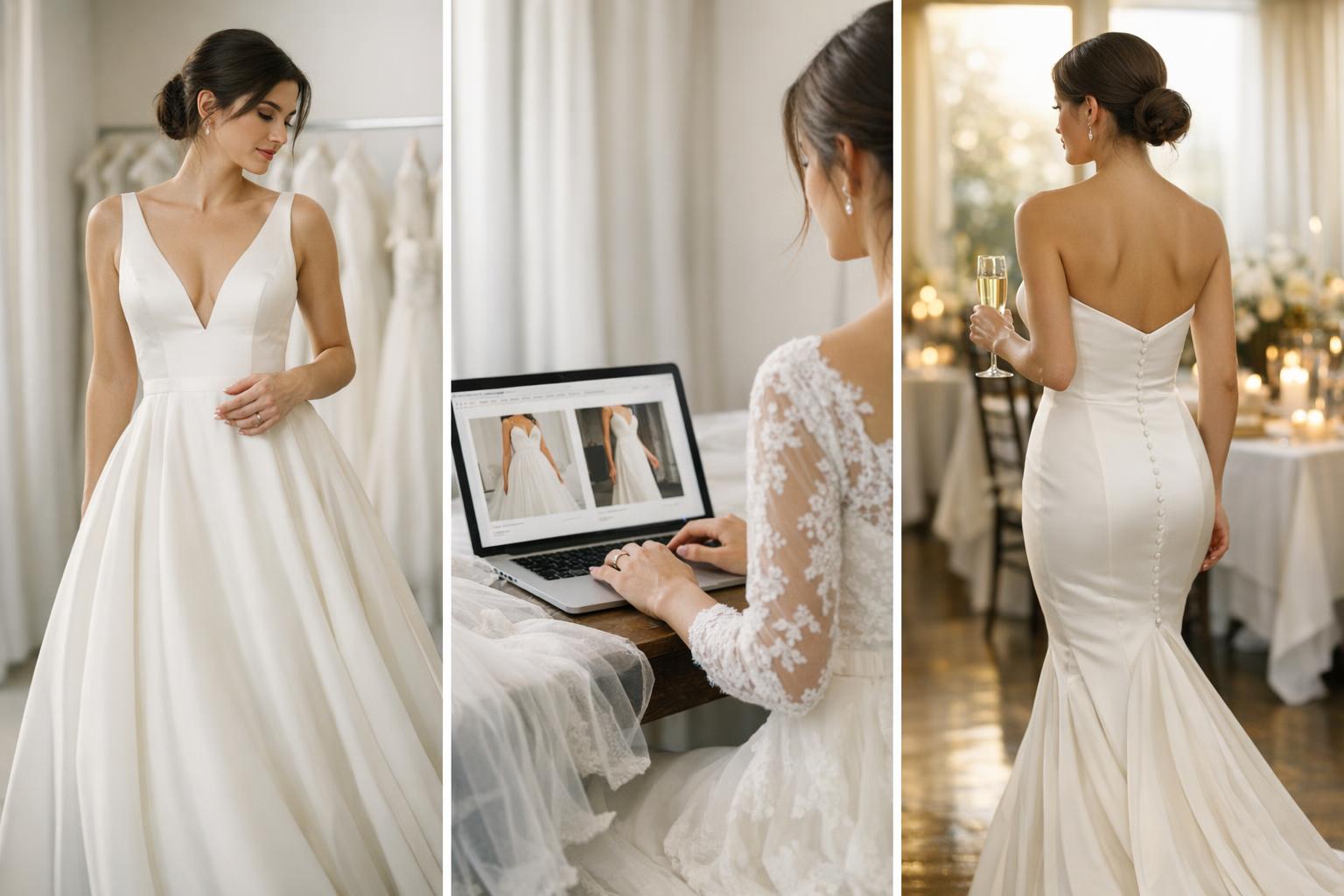
Online catalogs like JJ’s House, 27dress, Leely, Tirdress, and Royce Bridal often make it easy to filter by silhouette and detail—mermaid, lace, tulle, satin, long sleeves, V-neck—so you can quickly build a short list. The challenge is translating a product grid into a confident choice. Elegance depends on fit and fabric behavior, and those are hardest to judge through a screen.
- Use silhouette as your first filter, then fabric as your second; this keeps you from comparing dresses that can’t deliver the same kind of elegance.
- Prioritize listings that clearly communicate fit guidance and shopping policies, including returns and sizing notes (commonly foregrounded on brand stores like Royce Bridal).
- Expect alterations as part of the plan, especially for minimalist or smooth-fabric gowns where precision is visible.
In-store shopping: the value of curation, feedback, and a “luxury experience”
In-store shopping is where you can feel the difference between lace that scratches and lace that drapes, between tulle that holds volume and tulle that collapses. It’s also where brand storytelling and service become part of the decision—something luxury houses emphasize through “experience” language and retailer networks. If you’re exploring a luxury brand like Elissar Bridal, the store locator and retail network concept is part of the promise: elegance isn’t just the gown, it’s how you arrive at it.
Boutique experiences like Here Comes The Dress add another layer: they often connect you with real bride imagery, designer line curation, and social proof that helps you visualize the dress beyond the product shot. That can be especially helpful if your definition of elegant is tied to how the gown reads on real bodies.
Context matters: matching elegance to venue, formality, and the length of your day
Elegance is not one fixed look; it’s a relationship between dress and setting. Even without naming specific venues, you can use practical cues—formality, movement, and lighting—to decide whether your elegant bridal gown should lean structured (satin ballgown), romantic (lace and tulle with sleeves), or streamlined (crepe sheath or fit-and-flare). This is the section many shoppers skip, and it’s where regret tends to start.
Start by thinking through your day in chapters: ceremony, photos, reception. A ballgown may feel majestic in a formal ceremony and photographs beautifully, but you’ll want to consider how it navigates tight spaces. A mermaid gown may look striking in portraits, but it can limit stride if the day involves a lot of walking. A-line often splits the difference, offering movement and classic lines. Elegance becomes easier when you choose a silhouette that works with your reality, not against it.
Tips: do a “timeline fitting” before you commit
When trying on dresses, mentally rehearse the day: how you’ll walk, where you’ll sit, whether you’ll be outdoors for photos, and how long you’ll be in the gown. If you’re torn between two elegant wedding dresses, the one that feels stable and effortless over time is often the more genuinely elegant choice—even if the other has more immediate drama on the hanger.
Color, customization, and personalization: subtle moves that keep the look refined
Elegance is often built through subtlety. Color choice (ivory vs. white), sleeve length, neckline depth, and the placement of embroidery or beading can all shape whether a gown feels classic, modern, or romantic. Many catalog-driven sites focus on style descriptors—long sleeves, lace, tulle, V-neck—because these are the levers shoppers actually use to personalize the look while staying within the “elegant” family.
Personalization doesn’t need to be elaborate to matter. A refined approach is to customize one element that changes the feeling without changing the architecture: sleeves that add coverage and formality, a neckline adjustment that improves proportion, or tailoring that sharpens the line of a sheath. The most important personalization is often invisible in photos: fit that makes you stand naturally and move without self-consciousness.
Common mistakes that can make an elegant gown feel less polished
Because elegance relies on cohesion, small mismatches can have an outsized effect. These aren’t moral “don’ts”—they’re practical pitfalls that show up when shoppers try to combine every beautiful detail they see across different gowns and brands.
- Competing hero elements: Long sleeves, heavy lace, dramatic beading, and a bold mermaid flare can each be elegant, but stacking them can look crowded.
- Ignoring the fabric–silhouette relationship: A streamlined sheath needs fabric that drapes cleanly; a structured ballgown benefits from fabric that holds its form.
- Choosing a look that requires constant adjustment: If you’re tugging at sleeves, shifting straps, or worrying about the neckline, the overall impression becomes less composed.
- Underestimating the importance of policies and sizing guidance when shopping online: Returns, sizing notes, and fit guidance are not administrative details; they’re part of achieving a refined result.
Many of these mistakes are easy to correct once you decide what kind of elegance you’re building—timeless, romantic, or modern luxury—and then edit your choices to support that single story.
Building a short list: a practical way to compare gowns without losing the plot
With so many elegant wedding dresses available—especially across large online catalogs—it’s easy to end up with an inspiring but confusing collection of tabs. A cleaner process is to compare dresses on a few consistent criteria that reflect how elegance actually shows up: silhouette line, fabric behavior, and detail discipline.
Here’s a real-world approach that works whether you’re browsing JJ’s House and 27dress for affordable options, exploring Leely and Tirdress for variety, considering Royce Bridal for a brand-store experience with policy visibility, or stepping into a boutique environment centered on real bride galleries. Start with silhouette (A-line, ballgown, sheath, fit-and-flare, mermaid). Next, choose your primary fabric mood (lace/tulle romance or satin/crepe polish). Finally, choose one detail that makes it yours (long sleeves, a V-neck, subtle beading, or embroidery). If a dress doesn’t fit into that framework, it may still be beautiful—but it’s less likely to feel elegantly intentional.
Tips: photograph your top two choices the same way each time
If you’re trying on in-store, take quick photos from the front, side, and back in similar lighting and posture. If you’re shopping online, save images and notes that describe what you like using the same language (silhouette, fabric, sleeves/neckline). Elegance is consistency; your comparison method should be consistent too.
FAQ
What makes a wedding dress “elegant” rather than just formal?
An elegant wedding dress typically looks intentional and refined through proportion, fabric behavior, and disciplined detailing, while “formal” can simply describe the level of dressiness; elegance shows up when the silhouette is coherent, the fabric supports the design, and embellishments (like lace, embroidery, or beading) enhance rather than compete.
Are lace long-sleeve gowns considered timeless bridal style?
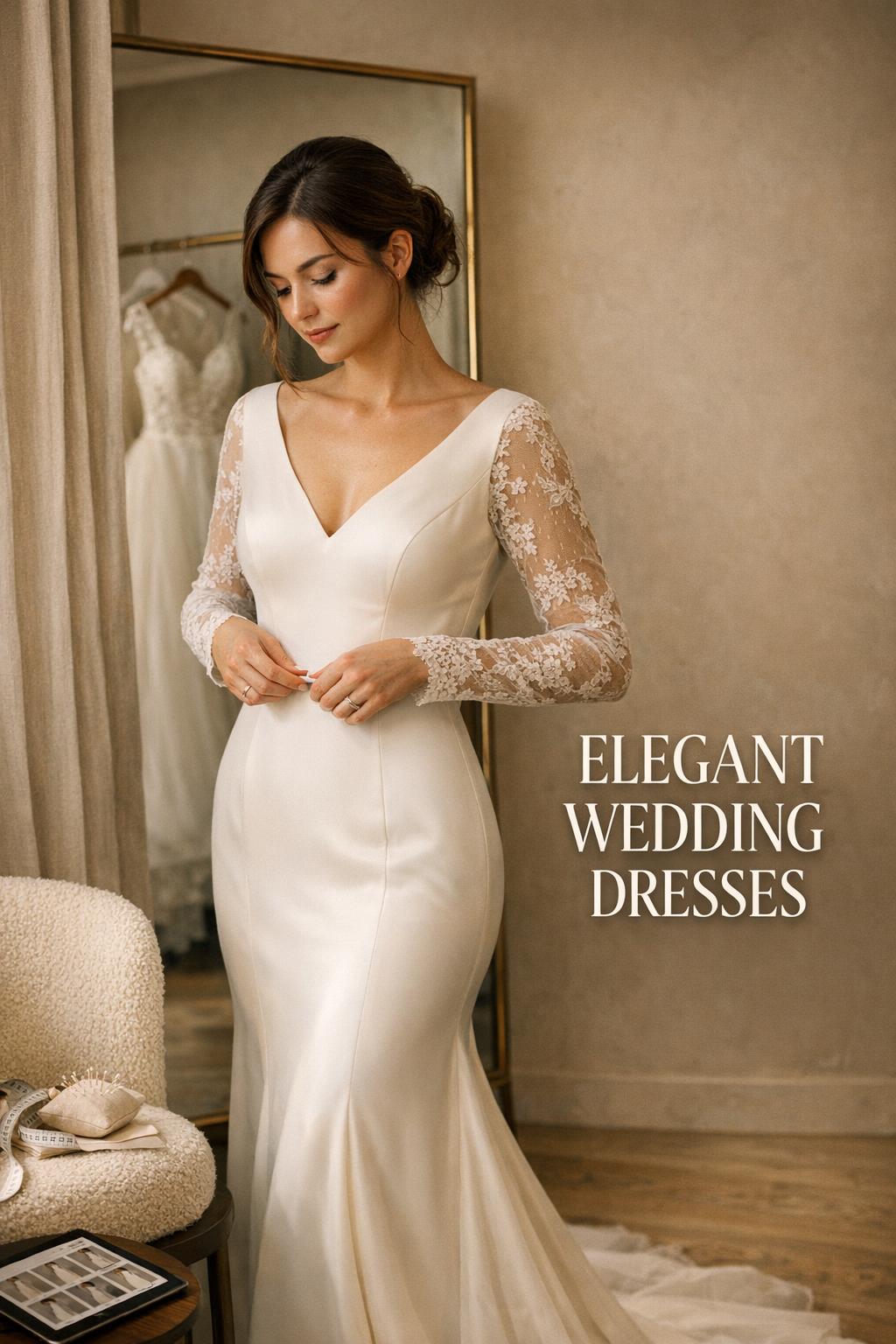
They can be, especially when the rest of the design stays edited—clean neckline lines, controlled skirt volume, and lace placement that feels cohesive—because long sleeves in lace are a consistent “elegant” cue across many collections, particularly when paired with balanced silhouettes like A-line or a smooth mermaid transition.
What silhouettes are most common for elegant wedding dresses?
A-line, ballgown, mermaid, sheath, and fit-and-flare are the silhouettes most frequently associated with elegant bridal gowns across major catalogs and boutique selections, with the final “elegant” effect depending on fit, fabric choice (lace, tulle, satin, crepe), and how restrained or focused the detailing is.
Is it realistic to find affordable elegant wedding dresses online?
Yes—large e-commerce catalogs such as JJ’s House and 27dress, along with brands like Leely, Tirdress, and Royce Bridal, offer wide variety in elegant styles, but the best outcomes come from using a clear silhouette-and-fabric plan and accounting for sizing guidance, returns, and likely alterations to maintain a polished look.
How do I choose between shopping online and shopping in-store?
Online shopping offers breadth and easy comparison across silhouettes and details, while in-store shopping offers tactile confirmation of fabric, immediate fit feedback, and guided curation—whether through a boutique experience focused on real bride galleries or a luxury brand experience supported by a retailer network, like Elissar Bridal.
Why do minimalist wedding dresses require such precise fit?
Minimalist designs rely on clean lines and fabric drape to communicate sophistication, so sizing issues and small fit distortions are more noticeable than they might be on heavily embellished gowns; in sheath and fit-and-flare styles especially, alterations often play a key role in keeping the look refined.
How can I tell if a mermaid gown will feel elegant all day, not just in photos?
Focus on movement: the most elegant mermaid gowns maintain a smooth transition into the skirt and allow you to sit, walk, and turn without constant adjustment; if the flare starts too abruptly or the dress restricts stride significantly, a fit-and-flare alternative may preserve the same sleek concept with more real-life ease.
What should I look for in sizing and return information when ordering an elegant gown online?
Look for clear sizing guidance and transparent shopping policies—commonly surfaced on brand stores and collection pages—because an elegant result depends on achieving a stable fit; understanding returns and sizing notes reduces the risk of ending up with a dress that looks good on-screen but won’t hold a polished line in real wear.
Do real bride galleries actually help with choosing an elegant wedding dress?
They can be very helpful because they show how wedding dresses look different on real bodies and in real settings, making it easier to judge whether a silhouette, sleeve style, or lace-and-tulle combination reads as refined beyond studio lighting and idealized product imagery.