Modern black tie wedding guest dress: Polished, No Guesswork
A black-tie invite, a suitcase, and the “what do I wear?” moment
Black-tie wedding guest dressing tends to hit all at once: the formal invitation arrives, the venue looks upscale, and suddenly you’re balancing elegance, comfort, and a dress code with very little room for guesswork. A black tie wedding guest dress isn’t just “a nice dress”—it’s guest attire that needs to read as eveningwear, photograph well under dim reception lighting, and still let you sit through a long ceremony, stand for cocktails, and move comfortably on the dance floor.
In the U.S., black tie wedding guests also face an extra layer of nuance: regional expectations can shift, seasons change fabric comfort dramatically, and your venue (ballroom vs. coastal) affects how “formal” looks in practice. This guide breaks down what black tie means today, how to choose a silhouette and fabric that works for your event, and how to shop intelligently—whether you’re browsing an editorial roundup for inspiration or filtering through large collections at retailers like Lulus, Windsor, Oh Polly, Club L London, Gaâla, Tobi, Carlyna, and JJ’s House.
What “black tie wedding” means right now: the non-negotiables and the flexible parts
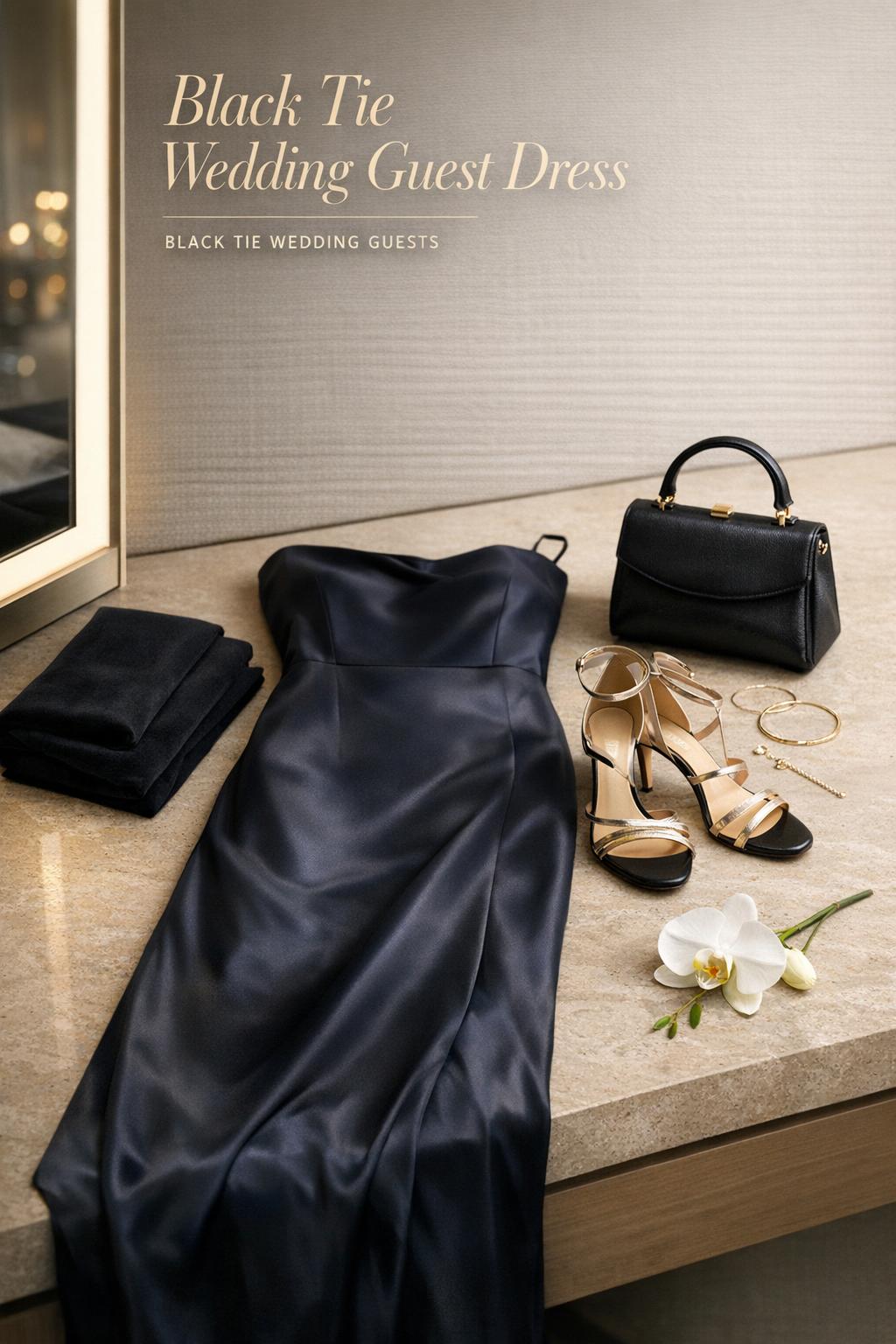
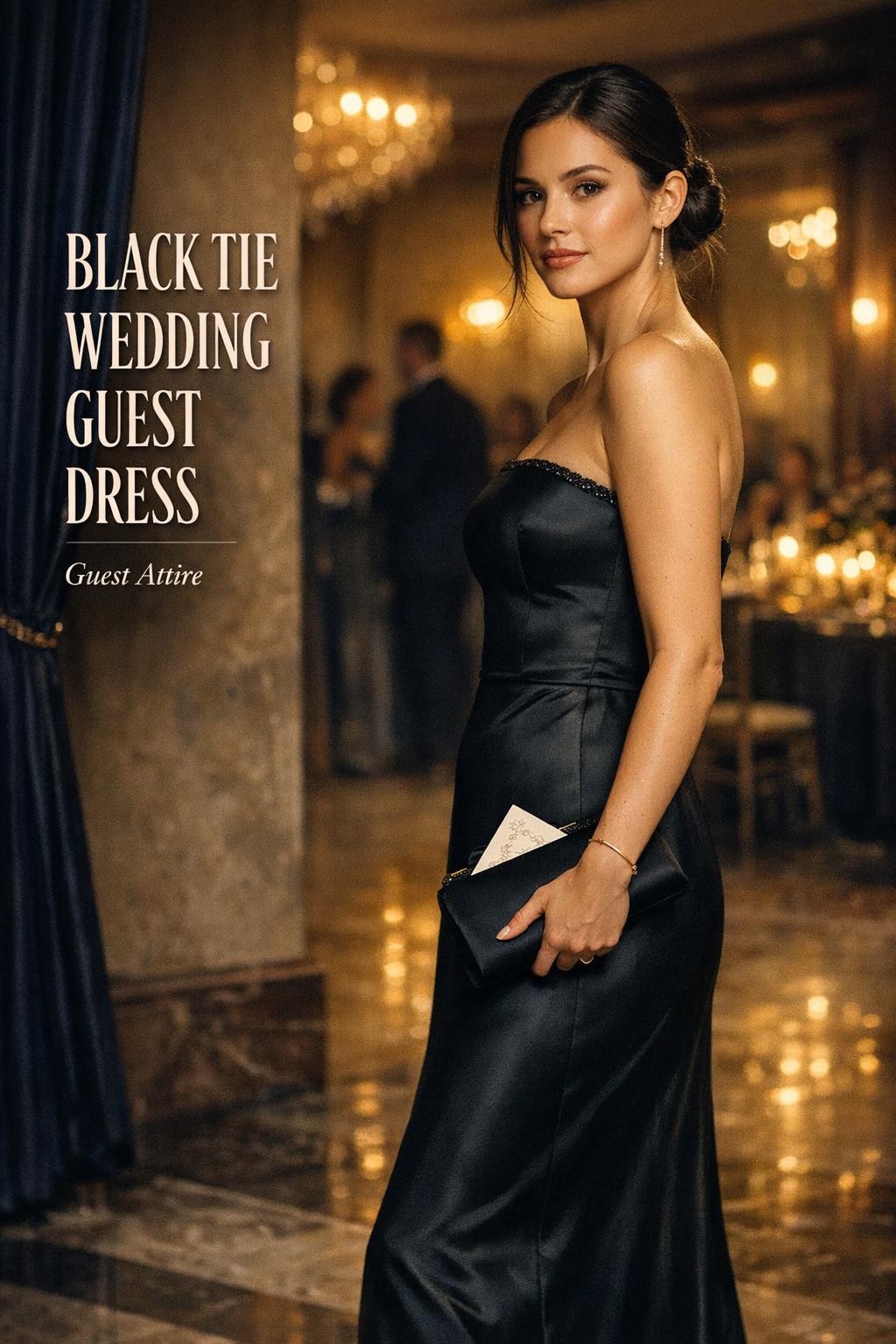
At its core, black tie is a formal eveningwear dress code. For guests, that usually translates to a floor-length gown or a full-length, highly formal maxi in elevated fabric and finish. The best black-tie looks don’t rely on loud novelty; they communicate polish through silhouette, fabric, and detail—think satin, velvet, crepe, tulle, beading, or sequins used with intention.
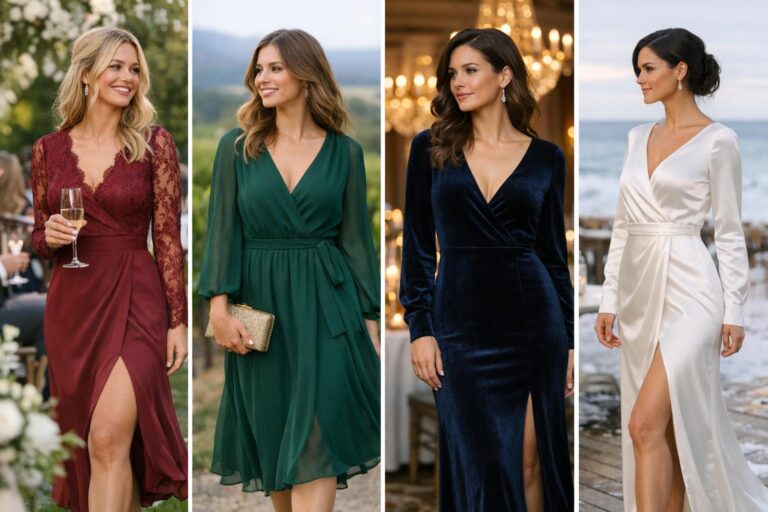
The flexible part is how you interpret “formal” through mood and styling. Vogue’s editorial approach breaks black-tie guest dresses into clear style families—like “The Classic Black,” “The Touch of Floral,” “The Something Blue,” and “Shimmer and Shine”—which is a useful way to think about your own options. Those categories aren’t rules, but they help you pick a direction and commit to it, which matters more in black tie than in cocktail dress codes.
Your wedding look is only the beginning.
Keep your guest list, vendors, timeline, and every important detail together with Zarellea — so your day feels as considered as your style.
Another modern reality: many guests shop online. Retail collection pages are built around filters and silhouettes (maxi, midi, strapless, embroidered, sequin), which means you can get to “black tie appropriate” quickly if you know what you’re looking for. But the inverse is also true—those same filters can tempt you into dresses that are pretty yet not quite formal enough. Your goal is to prioritize the dress code first, then choose the version of black tie that fits the setting, season, and your personal style.
Start with silhouette: why shape does most of the dress-code work
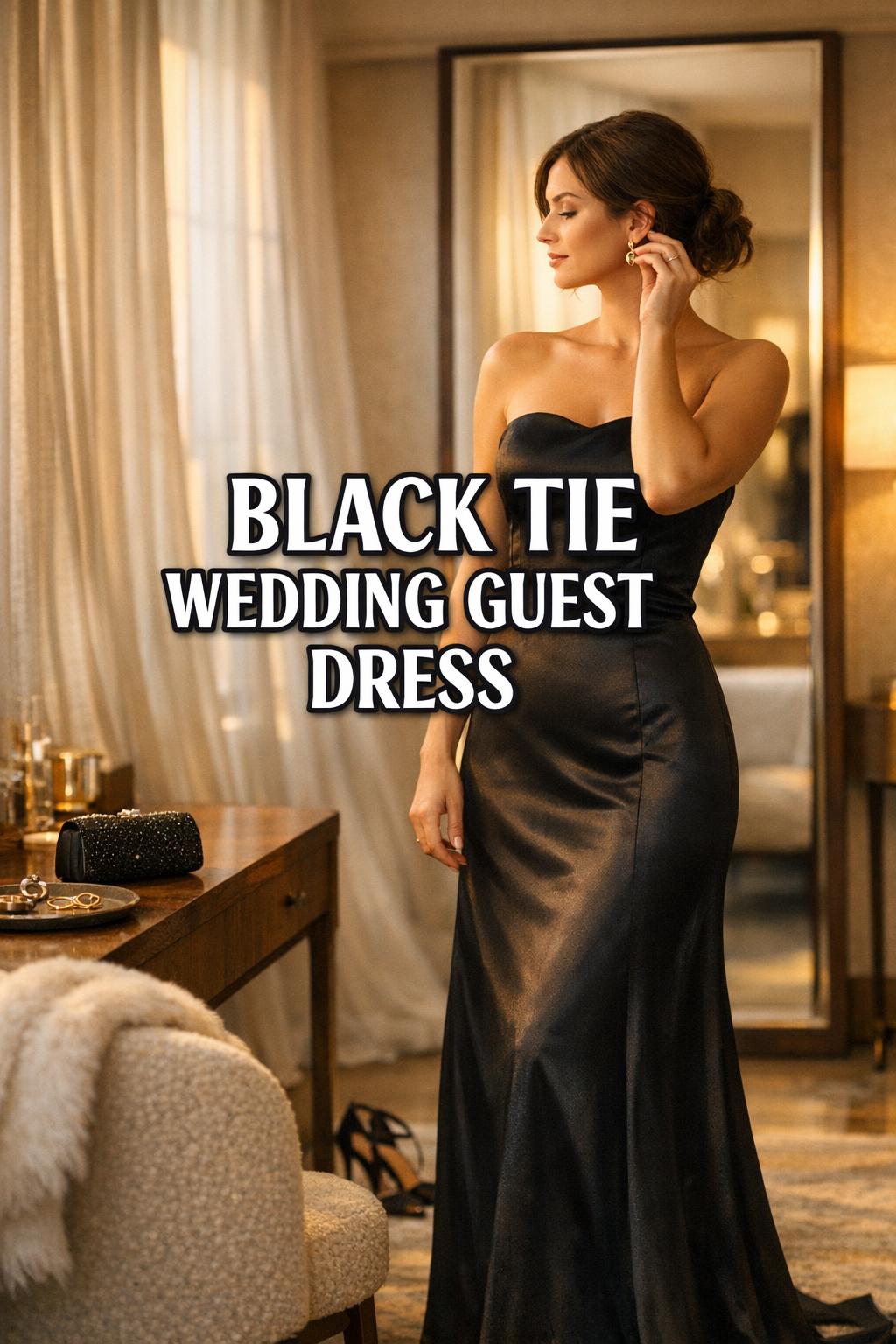
For black tie wedding guests, silhouette is your strongest signal of formality. Even before anyone notices color or accessories, the outline—column, sheath, A-line, ball gown, or a sleek gown—sets expectations. If you’re deciding between two dresses, the more structured, floor-length option typically reads more black tie than a shorter hem or a casual-cut maxi.
Column and sheath gowns: the “city black tie” baseline
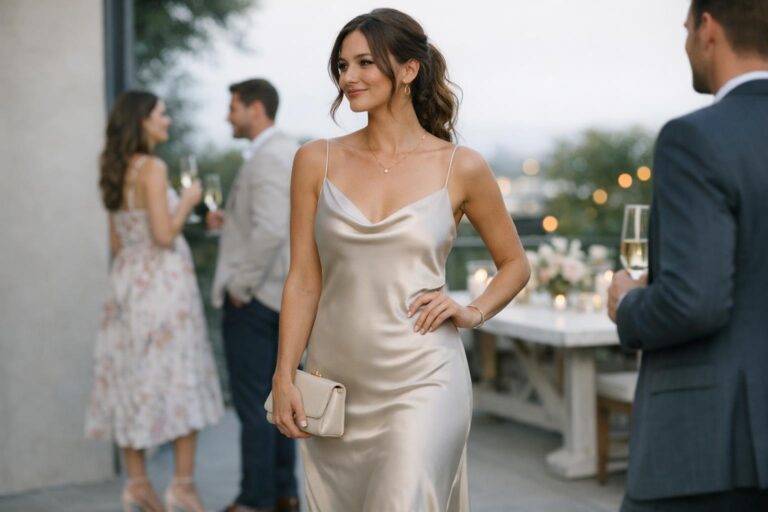
A column or sheath gown is often the cleanest solution for urban venues and upscale receptions. It’s the silhouette that pairs naturally with minimalist styling—simple jewelry, a small evening bag, and refined shoes—without looking underdressed. This is the lane where designer energy shows up clearly: pieces from labels like Khaite, Victoria Beckham, Acne Studios, and Galvan often work here because the impact comes from cut and fabric, not excess decoration.
A-line and fuller skirts: romantic without losing formality
An A-line gown offers structure and movement, which can feel especially right for traditional ceremonies and reception spaces that lean classic. It’s also one of the easiest silhouettes to wear for long events because it’s forgiving at the waist and hips and doesn’t restrict stride as much as a narrow skirt. If you’re drawn to florals or “The Touch of Floral” mood, an A-line can keep the look formal even when the print is more expressive.
Strapless and halter necklines: elegant, but plan around comfort
Strapless and halter options show up frequently in black-tie collections, and they can be stunning—especially for “shimmer and shine” finishes like sequins or beading. The practical trade-off is support and security across a long timeline. If you’ll be adjusting your bodice during cocktail hour, it distracts from an otherwise polished look. When you shop strapless, pay extra attention to bust structure and how the bodice feels when you sit and stand repeatedly.
- If you want a strapless gown, prioritize a firm bodice and a stable top edge that doesn’t roll.
- If you want a halter, check whether the neckline pulls at the neck after a few minutes—some styles feel fine at first but tire you out late in the reception.
- For either neckline, plan accessories early so you don’t overwhelm the open neckline with too much sparkle.
Fabric matters more than trend: choosing materials that look luxe and feel wearable
Black tie is one of the few dress codes where fabric quality and finish are immediately visible. Under evening lighting, a smooth satin, rich velvet, or fluid crepe signals formality even in a simple cut. Meanwhile, a fabric that wrinkles, clings unpredictably, or looks thin can make even a long gown feel less elevated than intended.
Velvet: the winter wedding guest dress hero (with one caveat)
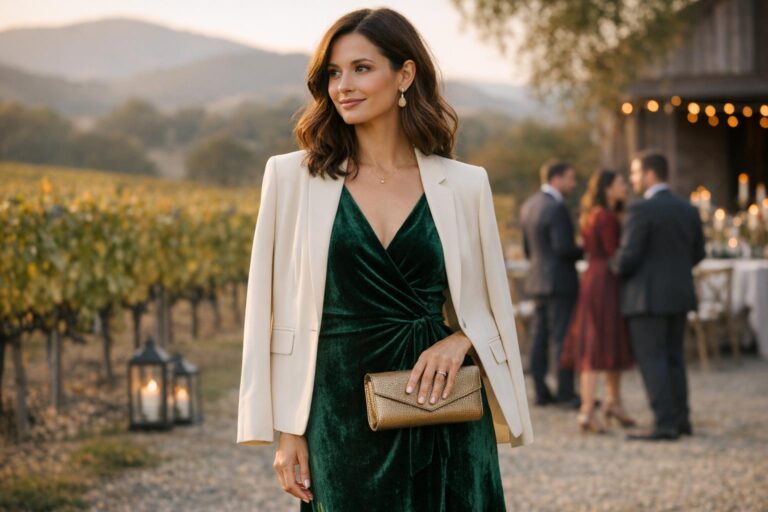
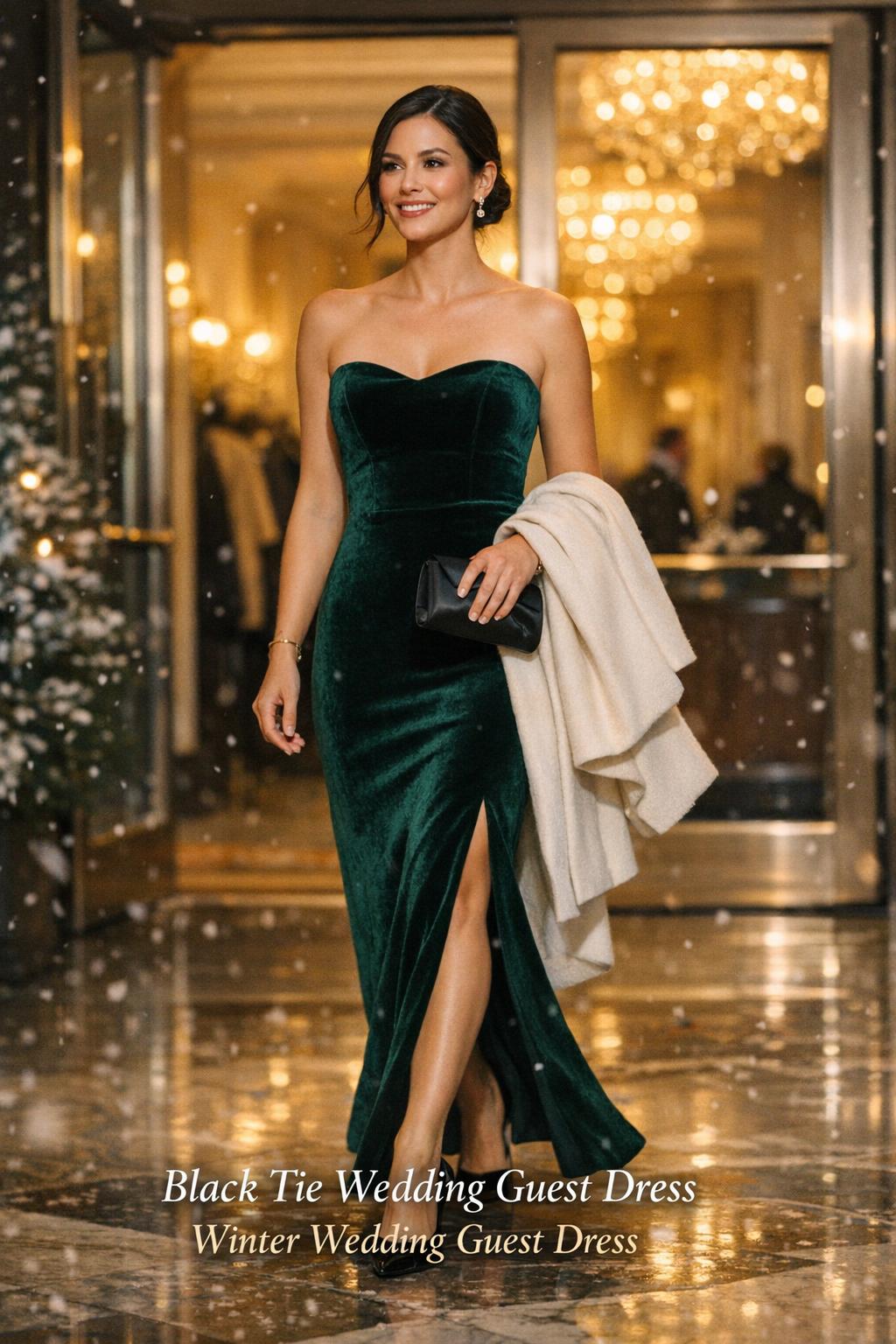
Velvet is a natural fit for a winter wedding guest dress because it reads instantly formal and feels seasonally appropriate. It also photographs beautifully in low light, which is a common reception environment. The caveat is warmth and weight: velvet can be too heavy for crowded indoor venues or warmer regions. If your black tie wedding is in a climate where you’ll move between heated spaces and packed dance floors, choose a velvet gown with a silhouette that allows airflow and doesn’t restrict walking.
Satin: high shine, high payoff, but be honest about wrinkles
Satin delivers that classic eveningwear sheen—ideal for “The Something Blue” palette or for a “classic black” gown that feels unmistakably formal rather than simply dark. The trade-off is that satin can show creases from sitting, travel, or tight packing. If you’re flying to the wedding, consider how you’ll transport the dress and whether you’ll have time to smooth it before the ceremony.
Crepe: understated, flattering, and reliable for long events
Crepe is a strong choice when you want a streamlined look without the maintenance of high-shine fabrics. It tends to drape well and can look especially refined in column silhouettes, which is why it pairs naturally with minimalist styling. If you’re aiming for the “less is more” version of black tie, crepe helps you stay in that lane while still feeling properly dressed for an upscale venue.
Tulle and embellished finishes: “shimmer and shine” done the grown-up way
Tulle, beading, metallic thread, and sequins can be black-tie-perfect when the overall silhouette remains formal and the detailing looks intentional. A fully sequined gown is a statement; it can be spectacular for an evening reception, but it’s also less forgiving for comfort. Sequins can catch on wraps and sometimes feel scratchy at the arms, which matters if you expect cool weather or you’ll be seated close to others. The best approach is to let one element lead: either the shimmer is the point, or the silhouette is the point—rarely both at maximum volume.
Color and pattern: “The Classic Black,” florals, and the case for something blue
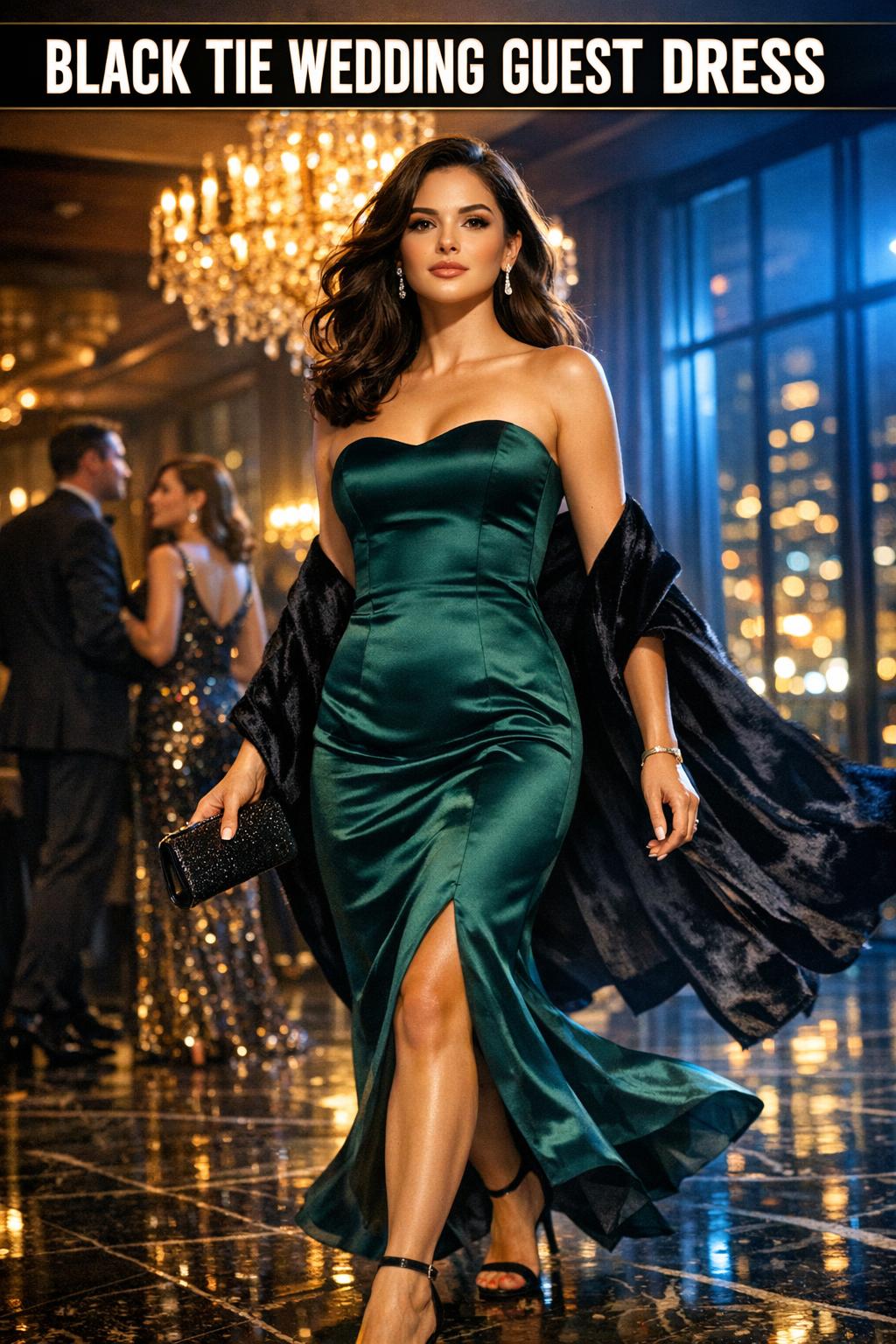
Color choices for black tie wedding guests often get framed as “safe vs. bold,” but a more useful approach is “formal vs. casual.” Black is timeless for black tie and aligns naturally with the “classic black” category seen in editorial roundups. But black tie is not limited to black: deep tones, muted palettes, and refined pastels can all work when the fabric and silhouette carry the formality.
“The classic black”: why it keeps winning
A black gown gives you maximum flexibility across venues because it always reads evening. It also makes accessorizing straightforward: you can go minimalist with clean lines or introduce drama with shine—without drifting into a costume feel. If you’re uncertain about the couple’s style or the venue’s mood, classic black is the lowest-risk way to look correct.
“The touch of floral”: pattern can work if the dress is still a gown
Florals show up frequently in retailer listings (including black floral maxi options), and they can be beautiful for weddings. The key is scale and context: floral can skew daytime if the fabric looks light or the silhouette is too casual. A floral gown is most black-tie-appropriate when the cut is formal (floor-length), the fabric looks elevated, and the print doesn’t read like a sundress pattern translated into a maxi.
“The something blue”: a strategic way to stand out without shouting
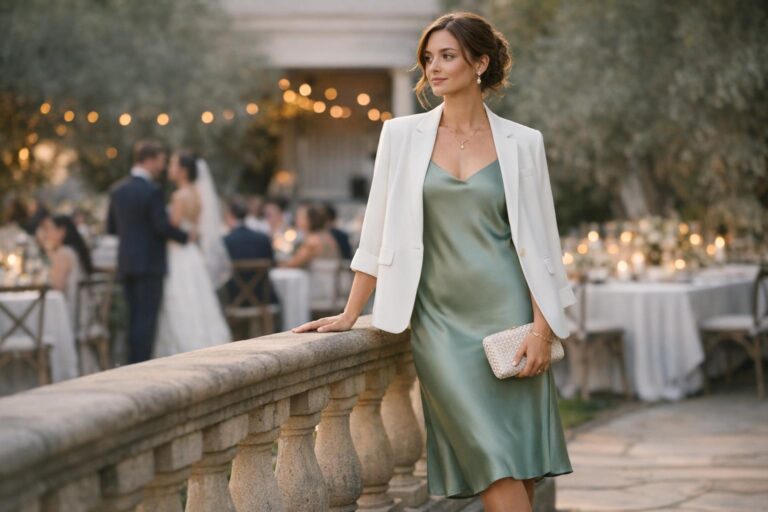
Blue—especially in lighter, refined tones—can feel fresh and wedding-appropriate while still looking formal when paired with the right fabric. The “something blue” idea works particularly well when you want to avoid black but still keep the look controlled and elegant. If you choose a lighter blue, prioritize structure and finish so the color reads intentional rather than casual.
Tip: If you’re wearing color or pattern, keep accessories quieter. If you’re wearing a minimal solid gown, that’s when you can lean into “shimmer and shine” via jewelry or a sleek metallic finish—without competing elements fighting for attention.
Brand and retailer reality: how to shop black tie without getting overwhelmed
Search results for black tie wedding guest dresses are dominated by two worlds: editorial inspiration (like Vogue’s curated selections) and deep e-commerce catalogs built for filtering. The fastest way to shop well is to decide which world you need first. If you don’t know what you want, start with inspiration to define your category—classic black, floral, something blue, shimmer—and then move to retailer filters. If you already know your direction, go straight to collections and use the structure to narrow quickly by length, neckline, and finish.
Retail collections for breadth and filters
Large category pages—like those from Lulus and JJ’s House—offer extensive variety and a filterable way to compare many silhouettes. This is helpful when you’re working with constraints (a specific neckline, a particular color family, or the need for a floor-length gown) and you want to see dozens of viable options without hopping across sites.
Lulus, for example, organizes black-tie wedding guest dresses within a wider “Shop By Style” ecosystem and surfaces product names that make browsing feel concrete—like the Niyati Black Floral Strapless Maxi Dress or the Celeste Light Blue Floral Burnout Bustier Maxi Dress. Whether or not those exact styles fit your body or venue, the naming cues help you think in terms of neckline (strapless, bustier), length (maxi), and mood (black floral, light blue floral).
Curated brand edits for a specific aesthetic
Brand-specific collections like Windsor, Oh Polly, Club L London, Gaâla, Tobi, and Carlyna tend to feel more curated. Oh Polly positions its edit as “elegance with an edge,” which can be useful if you want a fashion-forward black-tie look without hunting across countless product pages. Gaâla’s collection language emphasizes a curated approach to black tie wedding guest dresses with attention to fabrics and silhouettes, which is the right mindset for formalwear: you’re buying into a look that should feel tailored to the occasion.
- If you want maximum options quickly, start with a broad catalog retailer (like Lulus or JJ’s House) and filter hard.
- If you want a consistent vibe and easier decision-making, start with a curated brand edit (like Windsor, Oh Polly, Club L London, Gaâla, Tobi, or Carlyna).
- If you want to sanity-check what “black tie” looks like at the highest level, use an editorial roundup to benchmark the standard before you buy.
Designer references that define the black-tie bar
Even if you’re not shopping designer, it helps to understand what the top end is doing, because it clarifies the dress code. Editorial selections frequently feature labels and specific pieces that illustrate black-tie principles: Khaite (including the Khaite Yael dress), Galvan (including the Sienna gown), 16Arlington, Acne Studios (including the Dassy gown), Jacquemus (including the Croisière dress), Victoria Beckham, Self-Portrait, and Jenny Packham. Retailers like Net-a-Porter and Nordstrom show up in the same ecosystem as shopping destinations associated with these designers.
What these names have in common is not one trend; it’s consistency in formal cues. The dresses are designed to hold a shape, drape cleanly, or deliver a high-impact finish (like sparkle) without looking informal. Use that as your quality check: if your chosen dress communicates a clear eveningwear intention—through length, fabric, and finish—you’re closer to the black-tie standard regardless of price point.
Venue and season in the U.S.: how black tie shifts between ballroom, city, and coastal settings
Black tie is a formal baseline, but real-world guest attire adapts to where you are. The research landscape points to a major opportunity that many guides gloss over: regional nuance. Even within the U.S., guests read “appropriate” through venue cues. You don’t need a different dress code; you need a different strategy for the same dress code.
Upscale venues and city receptions: lean into sleek structure
For an upscale venue—think the kind of space that feels naturally aligned with designer eveningwear—structured silhouettes and refined fabrics tend to look the most effortless. This is where a crepe column or a satin gown in a restrained color feels correct from ceremony to final dance. Accessories can be minimal because the formality is built into the garment.
Coastal or warm-weather black tie: prioritize breathable elegance
Warm climates complicate black tie because guests still need floor-length formality without overheating. In these settings, consider lighter-feeling fabrics (while still looking luxurious) and necklines that allow comfort. A “something blue” satin or a refined floral gown can feel especially aligned with the environment as long as the silhouette remains formal. The win is looking like you dressed for the code, not for the temperature—while quietly selecting materials that make the night bearable.
Winter black tie: velvet, deeper tones, and practical layering
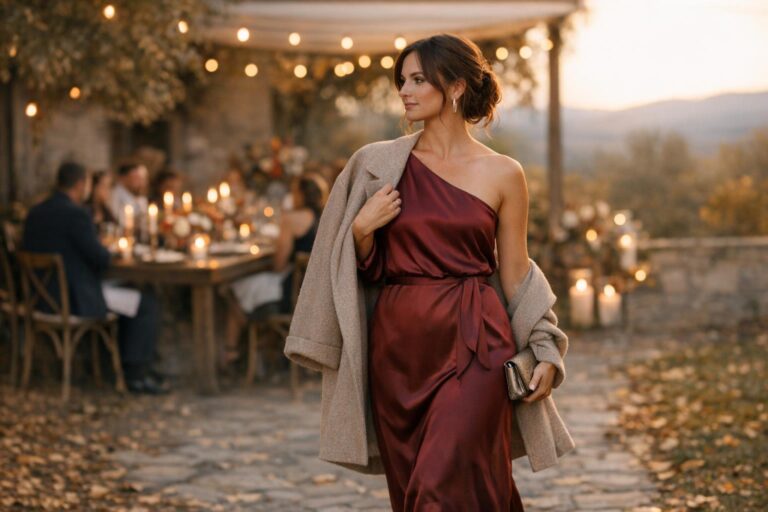
For a winter black tie wedding, the winter wedding guest dress question is often less about “what’s formal enough?” and more about “what’s warm enough without looking bulky?” Velvet is the obvious ally, and deeper, muted tones can feel seasonally right. If you choose sequins or beading for winter, remember that you may want a wrap or outer layer on the way in and out—so test whether the embellishment catches or snags on what you plan to wear over it.
Tip: If your venue includes outdoor transitions (parking, patios, or photo moments), plan your entire look as a system: gown, shoes that can handle short walks, and an outer layer that won’t fight your fabric finish. This is one of the most common places black tie looks fall apart in real life—everything is perfect indoors, then looks uncomfortable or impractical outside.
Accessorizing black tie: the quiet choices that make a gown look intentional
Accessories can elevate a simple gown or destabilize a great one. Black tie wedding guests are usually best served by editing, not adding. The goal is cohesion: your jewelry, bag, and shoes should look like they belong to the same story as your dress category—classic black, floral romance, something blue, or shimmer and shine.
- With “shimmer and shine” dresses, keep jewelry cleaner so the dress remains the focal point.
- With a minimalist crepe or satin gown, you can introduce shine through a single statement element rather than stacking multiple loud pieces.
- With florals, choose accessories that pull a tone already present in the print for a deliberate, styled feel.
A helpful mental check: if your accessories would look dramatic on their own, they probably need a quieter dress. If your dress is dramatic, accessories should act like punctuation, not a second headline.
Fit, alterations, and the comfort tests people forget to do
In black tie, fit is part of etiquette. A gown that constantly slips, drags too far, or restricts your movement can look less polished than a simpler dress that fits beautifully. Many shoppers focus on how a dress looks standing in front of a mirror, then discover issues after an hour of sitting, walking, and hugging relatives.
The three-moment fitting routine
Before you commit to a black tie wedding guest dress, test it in three moments: seated (ceremony posture), walking (cocktail hour and transitions), and dancing (movement and heat). This is especially important for strapless and halter silhouettes, and for sequined finishes that can irritate the skin with motion.
- Sit for five minutes: does the bodice dig in, wrinkle oddly, or slide?
- Walk across the room: can you take normal steps without kicking the hem?
- Lift your arms as if greeting friends: does anything shift or pull?
Hemlines: floor-length polish without the “tripping hazard”
Floor-length is a major black-tie cue, but the hem still has to work with your shoes and the venue. Too long and you’ll step on it; too short and it can read less formal than intended. If you’re deciding between altering the hem or changing heel height, choose the option that keeps you comfortable all night. A black tie wedding is a long event, and guest attire that forces you into painful shoes can unravel your confidence by the second hour.
Tip: If you’re shopping from broad catalogs, narrow your shortlist to dresses that will need minimal changes. Alterations can perfect a gown, but they add time pressure. If you’re close to the wedding date, prioritize a silhouette that already sits well at the waist and bust, and only plan for a hem adjustment if needed.
Common black-tie guest mistakes (and how to fix them fast)
Most black tie “mistakes” aren’t about taste; they’re about misreading the level of formality. These issues show up repeatedly when guests shop quickly or rely on a single photo rather than assessing the whole look.
- Choosing a dress that’s formal in color but casual in fabric: fix it by upgrading to satin, velvet, crepe, or a well-executed embellished finish.
- Wearing a floral that reads daytime: fix it by selecting a more formal cut (full-length gown) and keeping accessories sleek.
- Over-accessorizing “classic black”: fix it by choosing one hero item—either earrings, a bracelet, or a standout bag—and letting the gown stay clean.
- Ignoring movement: fix it by doing the seated-walk-dance test before removing tags, especially with strapless and halter styles.
The quickest way to course-correct is to return to the core black-tie signals: floor-length silhouette, elevated fabric, and a cohesive styling story. When those are aligned, you look like you understood the invitation.
Style snapshots: how to translate inspiration into real guest attire
It’s easier to shop when you can picture a complete outfit. Instead of chasing one “perfect” dress, choose a style category and build a look that matches it. The point of these snapshots isn’t to prescribe exact items; it’s to show how the relationships work—silhouette plus fabric plus accessory restraint equals black-tie polish.
A “classic black” gown for an upscale venue
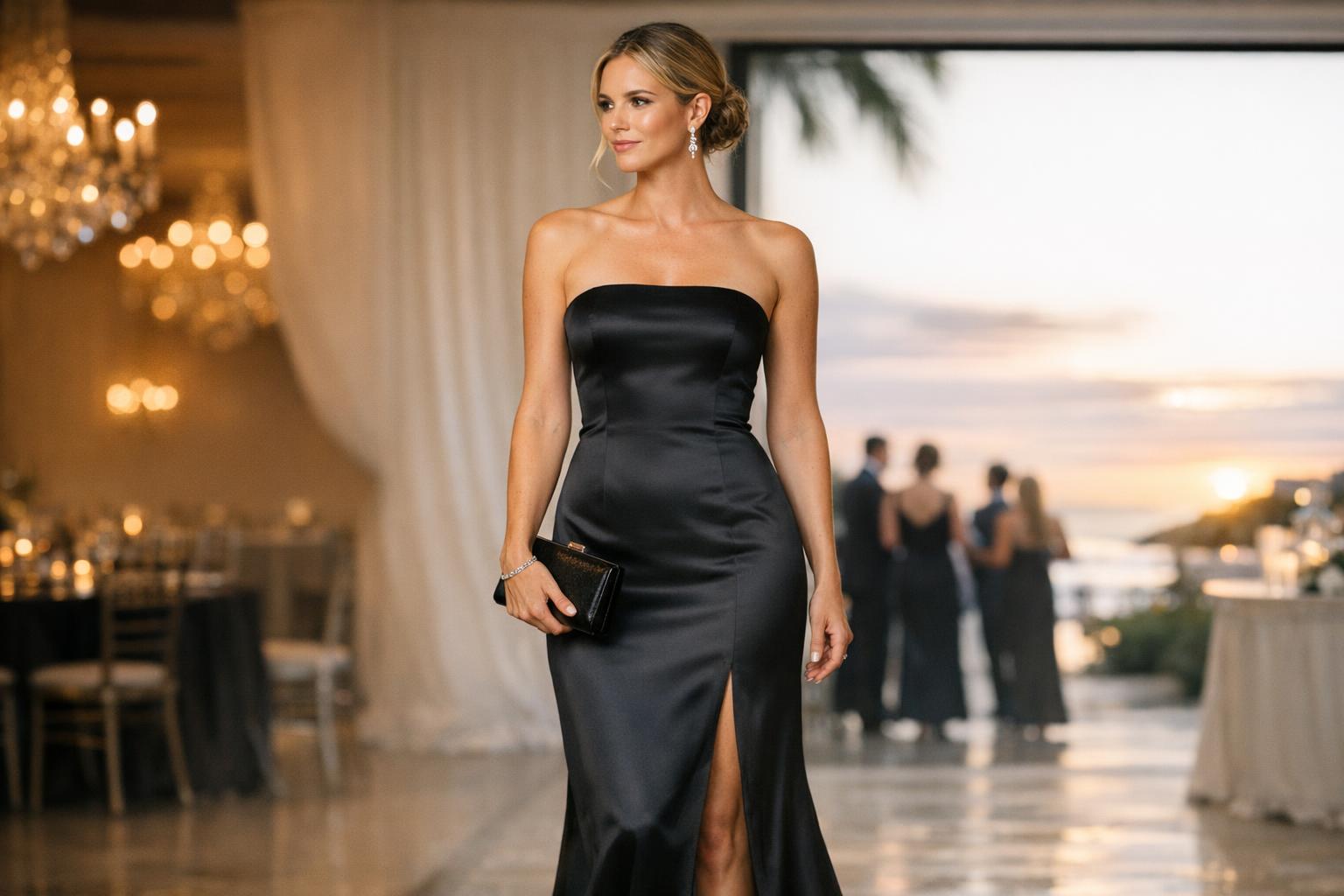
Picture a floor-length black crepe column gown with clean lines, styled with minimal jewelry so the silhouette stays sharp. This is where designer references like Victoria Beckham, Khaite, or Galvan make sense as inspiration: the look is about cut and drape. If you’re shopping a retailer collection (Windsor, Club L London, Carlyna, or JJ’s House), use that same standard—seek a long, refined shape and let the fabric do the work.
A “something blue” satin moment that still reads formal
A light blue satin gown can be striking without feeling loud, especially when the styling stays controlled. Keep the accessories simple and let the sheen provide the impact. If you’re browsing large catalogs like Lulus, a product title that signals structure—like “bustier,” “maxi,” or other formal cues—can help you avoid casual sundress-adjacent cuts in lighter colors.
“Shimmer and shine” without discomfort
A sequined or embellished gown is a true black-tie option, but plan it like you would a high-impact piece: keep everything else clean. Also, consider how it feels at the underarm and along the sides, because that’s where irritation shows up after hours. If you’re choosing between a fully sequined dress and one with more targeted embellishment, the latter often wears better through a long reception while still delivering the evening effect.
Shopping toolkit: compare, filter, and buy with confidence
Most guests don’t have time to browse endlessly. The smartest way to shop is to turn the dress code into a few clear filters, then evaluate finalists with a practical lens. This approach works whether you’re buying from a large multi-style catalog like Lulus or JJ’s House, or from a more curated edit like Oh Polly, Gaâla, Windsor, Tobi, Club L London, or Carlyna.
- Filter for length first: prioritize floor-length gowns and formal maxi dresses.
- Choose your category: classic black, touch of floral, something blue, or shimmer and shine.
- Match fabric to season: velvet for winter wedding guest dress needs, satin or crepe for year-round polish, embellished finishes for evening emphasis.
- Shortlist three options: then run the seated-walk-dance comfort test and pick the one you can wear for hours.
- Decide accessories last: once the dress is confirmed, build around it rather than forcing the dress to match accessories you already own.
Tip: If two dresses feel equally “pretty,” choose the one that looks more deliberate as guest attire for a black tie wedding: the one with cleaner construction, a more formal hemline, and a fabric that reads luxurious under low light. Those are the details that separate a generic formal dress from a true black tie wedding guest dress.
FAQ
Does a black tie wedding guest dress have to be floor-length?
Black tie guest attire is strongly associated with floor-length gowns and full-length, formal maxi dresses; that length is one of the clearest signals of eveningwear, so it’s the safest choice when you want to meet the dress code without second-guessing.
Can I wear a floral dress to a black tie wedding?
Yes, florals can work for black tie wedding guests when the silhouette stays formal (ideally a gown or truly formal maxi) and the fabric and styling read elevated; the easiest way to keep floral from feeling casual is to prioritize a structured, full-length shape and restrained accessories.
What fabrics look most appropriate for black tie weddings?
Velvet, satin, crepe, tulle, and embellished finishes like sequins or beading are all strongly associated with formalwear; the best choice depends on season and comfort, but in general these materials signal “evening” more clearly than casual or thin fabrics.
What’s the best winter wedding guest dress option for a black tie dress code?
Velvet is a standout for a winter wedding guest dress because it looks immediately formal and feels seasonally right; just consider warmth and weight so you stay comfortable through a long reception, especially if the venue is crowded or indoors.
Is a strapless black tie wedding guest dress a good idea?
Strapless gowns can be very black-tie-appropriate, but they require a secure, supportive bodice that stays in place when you sit, stand, and dance; before committing, test the fit over time so you’re not adjusting the neckline all night.
How do I choose between “classic black” and “shimmer and shine”?
Choose classic black if you want maximum versatility and a timeless formal look, and choose shimmer and shine if you want the dress itself to be the statement; in both cases, the key is balance—when the dress is dramatic, keep accessories minimal, and when the dress is simple, let one accessory add emphasis.
Where do people shop for black tie wedding guest dresses online?
Many guests shop through a mix of editorial inspiration and retailer collections, with common destinations including Vogue-style curated selections for ideas and large or curated e-commerce collections from Lulus, Windsor, Oh Polly, Club L London, Gaâla, Tobi, Carlyna, and JJ’s House for filtering and purchase.
What’s the easiest way to tell if a dress is too casual for a black tie wedding?
If the dress lacks a formal floor-length silhouette and isn’t made in an elevated fabric or finish (such as satin, velvet, crepe, tulle, sequins, or beading), it often reads more like general formalwear than true black tie; upgrading length and fabric is usually the fastest fix.