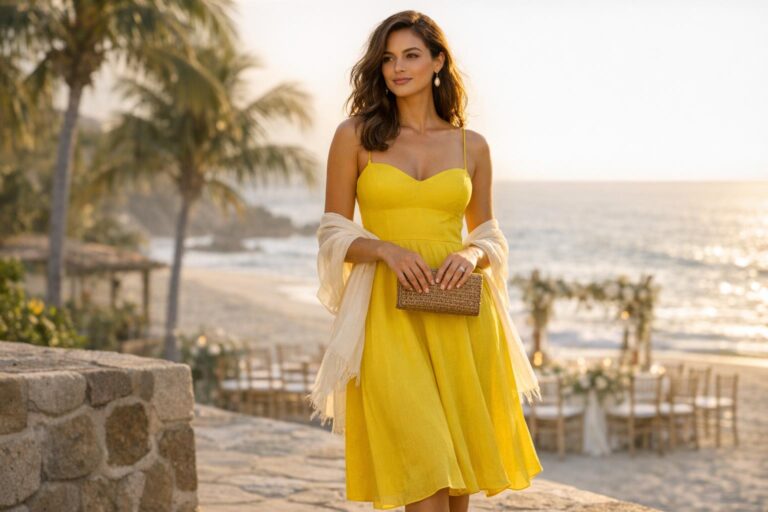
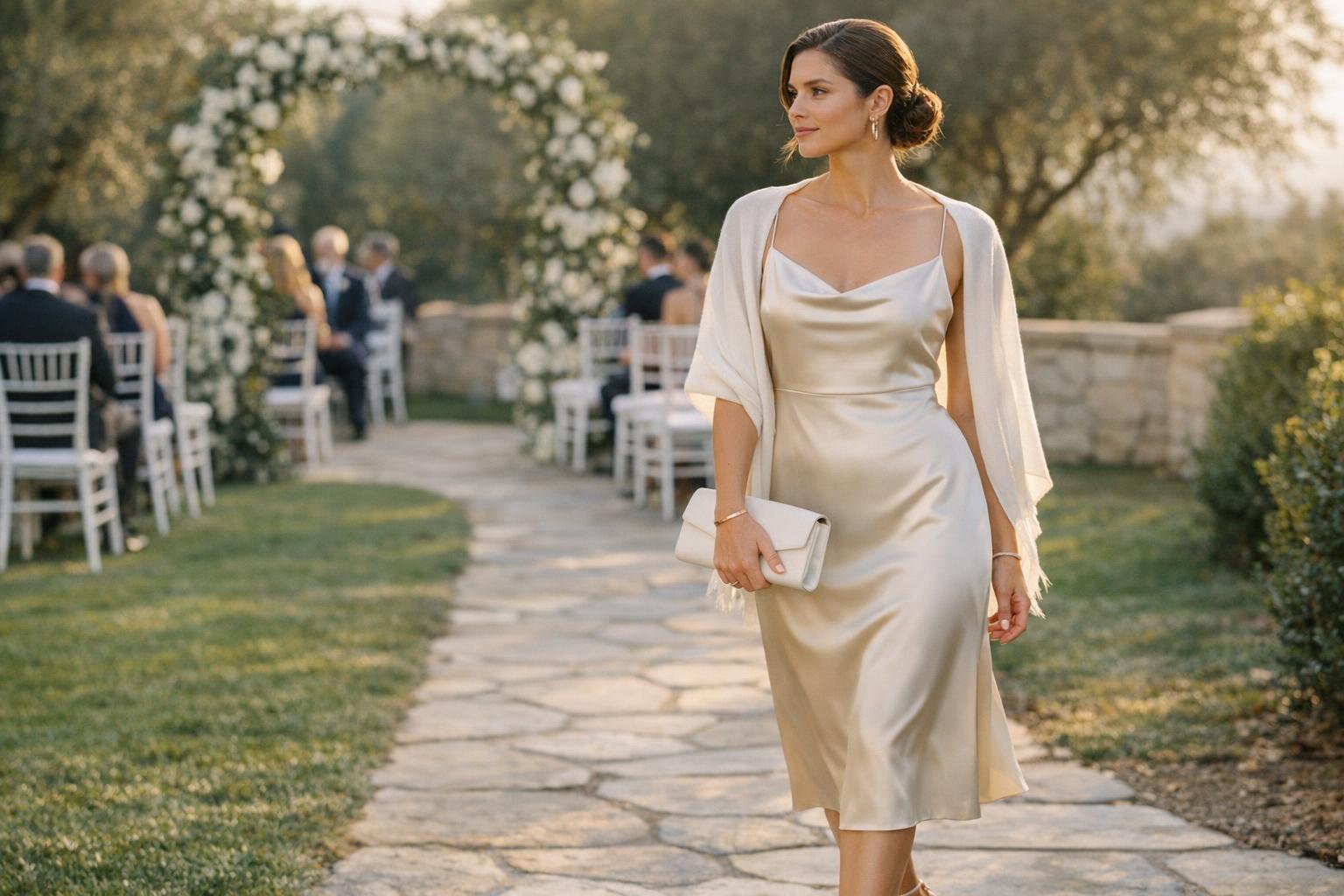
Formal Summer Wedding Guest dress: Polished Looks for Heat
A formal summer invitation is a little paradox in one line: the dress code asks for polish, while the season asks for restraint. You want a silhouette that reads “wedding-appropriate” in photos, but you also need to make it through a sunny ceremony, a cocktail hour on warm stone, and a long reception without feeling overdressed, overheated, or tugging at your outfit all night.
This is exactly why shopping for a formal summer wedding guest dress can feel more complicated than it should. “Formal” often cues heavier fabrics, darker colors, and structured tailoring—while summer calls for breathable materials, lighter linings, and movement. Add a venue shift (outdoor vows, indoor ballroom dinner) or travel logistics, and even confident dressers can second-guess their guest attire.
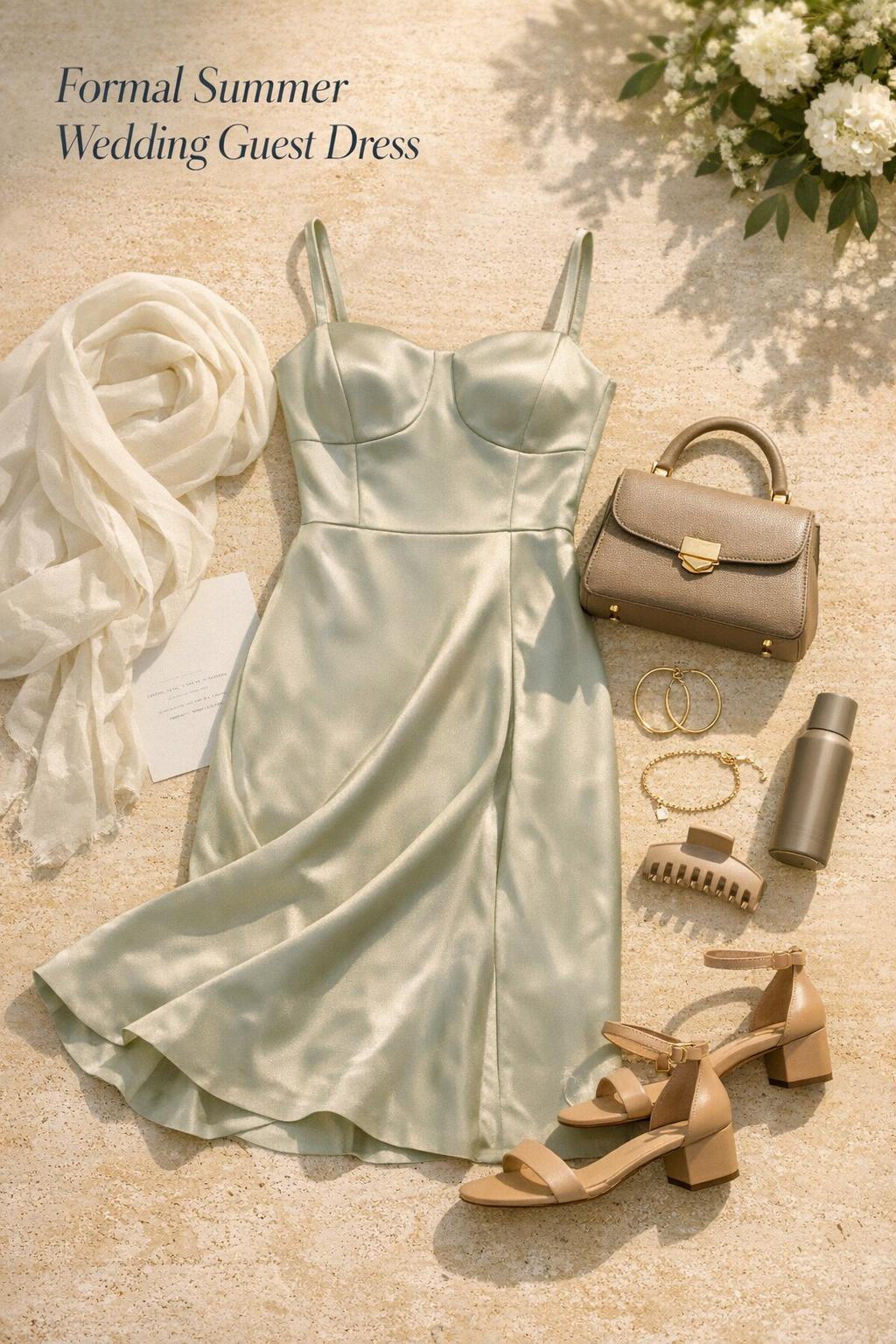
Think of this guide as a calm styling plan: how to decode formality in warm weather, what to prioritize first (fabric, fit, footwear), and how to build an outfit that looks intentional from ceremony to send-off. You’ll also find practical outfit solutions—including satin dresses for wedding guest moments, a structured midi dress approach, and options that work when the invitation lands in that tricky “semi formal for women wedding” territory.
Understanding the styling challenge: formal dress codes in real summer weather
Summer weddings tend to stretch across multiple micro-climates: midday heat, late-afternoon humidity, aggressive indoor air conditioning, and the occasional breeze once the sun drops. A dress that feels perfect at 5 p.m. can feel stifling at 6 p.m. when you’re standing in a crowded ceremony, then surprisingly chilly during dinner under blasting vents.
Your wedding look is only the beginning.
Keep your guest list, vendors, timeline, and every important detail together with Zarellea — so your day feels as considered as your style.
Comfort, in this context, is not a secondary concern—it’s what allows you to look elegant. When you’re constantly adjusting a neckline, fanning a heavy skirt, or wincing in shoes that sink into grass, your outfit stops reading “formal” and starts reading “fighting it.” The most successful personal attendant dresses and guest looks are designed around movement: walking on uneven terrain, hugging relatives, sitting through speeches, and dancing without worrying about slips, gaps, or cling.
There’s also the etiquette layer. Weddings are photographed in high definition and remembered for decades, which is why formal guest attire needs to look refined from every angle. In summer, the temptation is to choose anything light and minimal—but the goal is a balanced look that feels airy while still elevated.
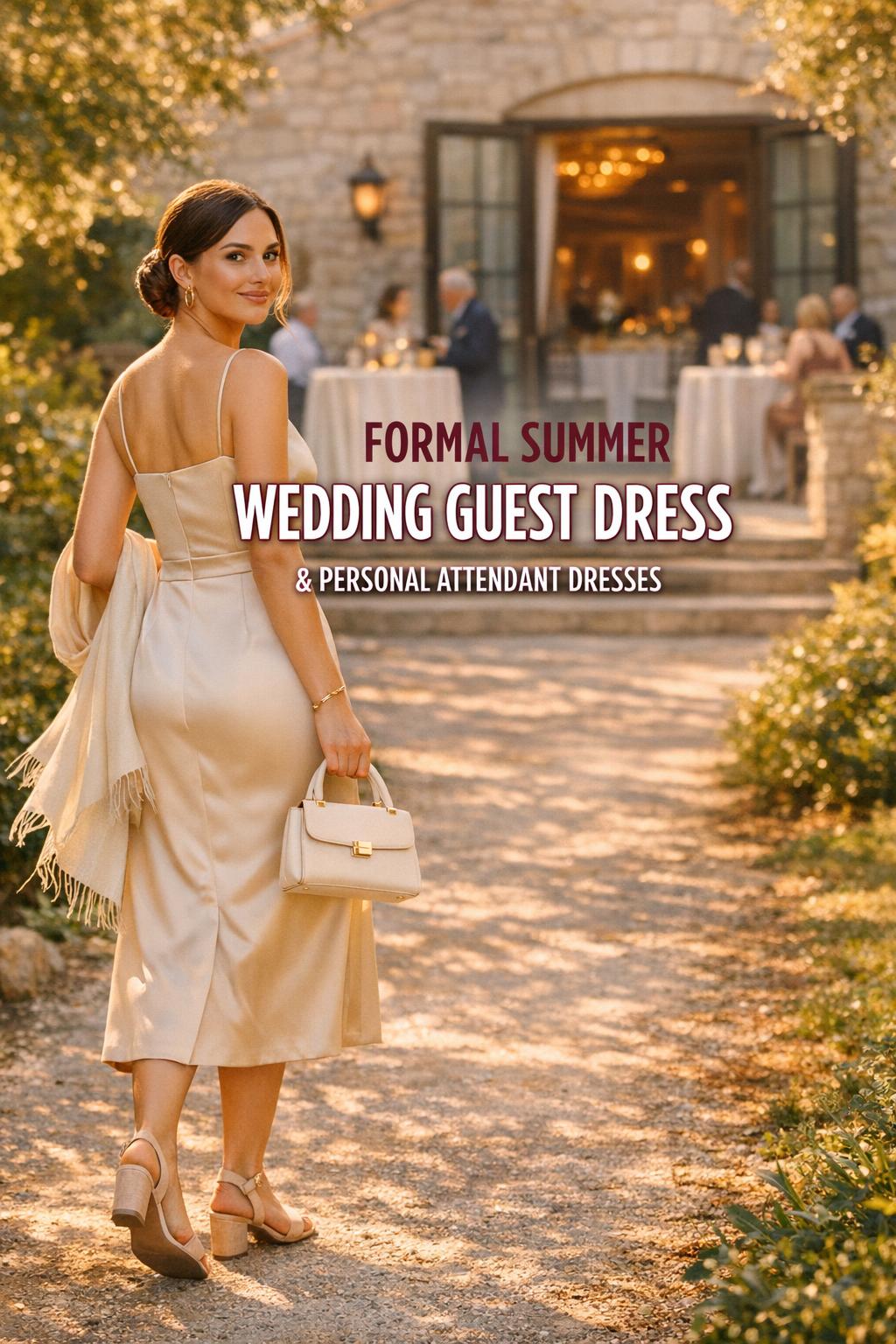
Key dressing principles that keep a formal look light, polished, and wearable
Start with fabric behavior, not just fabric names
When readers think “summer,” they often think only about how a fabric feels at first touch. For weddings, pay attention to how it behaves after two hours of sitting, standing, and moving. A formal summer wedding guest dress should hold its shape enough to look crisp in photos but release enough air to keep you comfortable. Satin is a classic example: it photographs beautifully and reads formal immediately, which is why satin dresses for wedding guest outfits are so popular—but it can show heat and creasing if the cut is too tight or the underlayer is too heavy.
The practical solution is to match the fabric’s personality to the dress’s construction. Fluid fabrics benefit from intentional shaping (a defined waist, a stable neckline, or a skirt that moves without clinging). More structured fabrics can be surprisingly wearable if the silhouette is clean and the lining is light.
Use structure strategically: the “structured midi dress” advantage
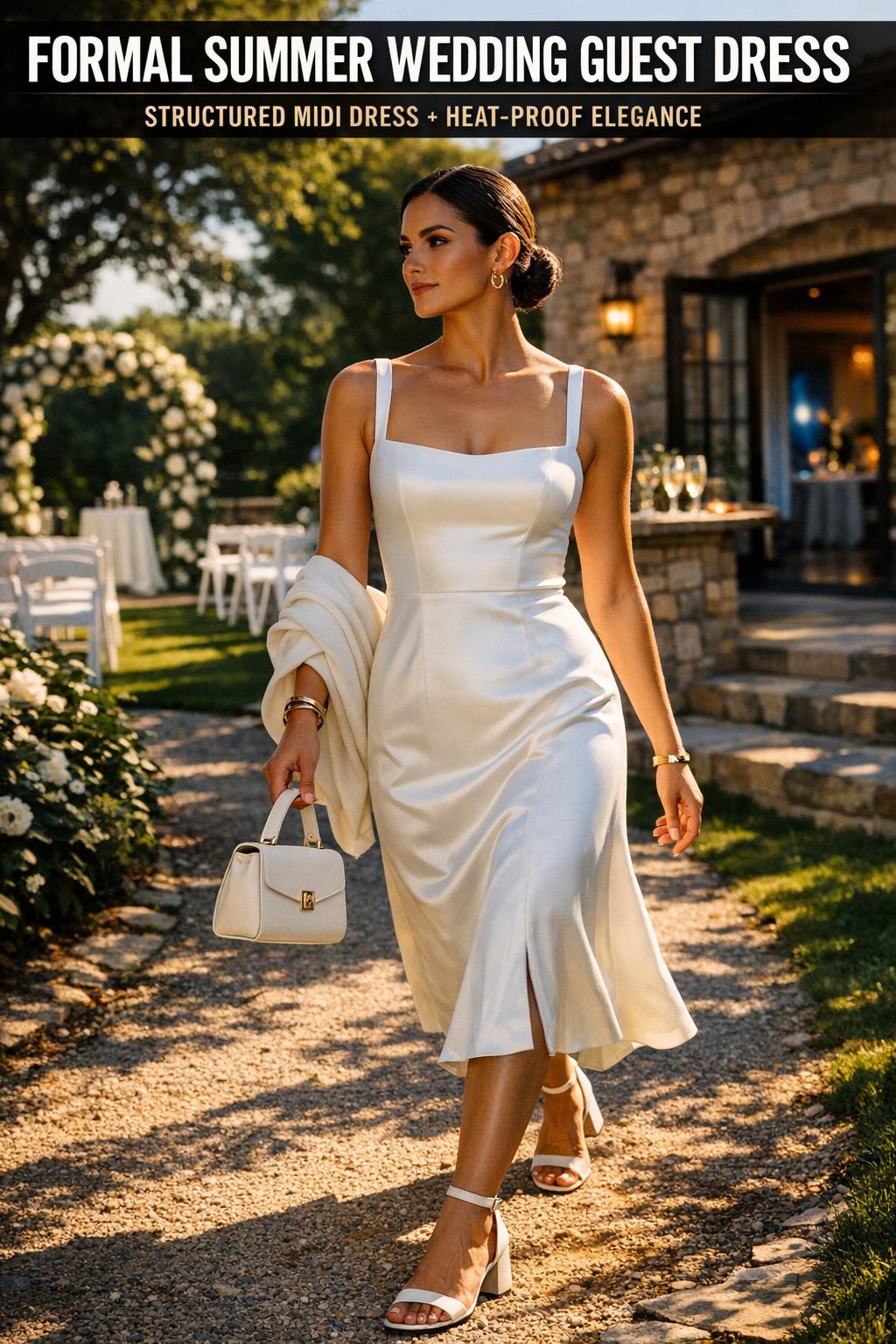
There’s a reason stylists return to the structured midi dress for formal summer weddings. The midi length feels elevated, the hemline is practical for outdoor paths and dance floors, and the structure creates that “event-ready” outline without requiring heavy embellishment. It’s also an excellent bridge if the invitation language is ambiguous—especially for semi formal for women wedding dress codes where you want to look dressy but not costume-formal.
Look for structure in the bodice (boning-inspired seaming, a secure strap layout, or a tailored waist) rather than in a thick skirt. This keeps the look refined while letting your legs and overall silhouette breathe.
Balance skin exposure with overall refinement
Summer invites open necklines, sleeveless shapes, and lighter coverage—but “formal” is often communicated through proportion and finish. If the neckline is low or the back is open, keep the skirt more classic. If the hemline is higher, consider a more covered top or a more tailored cut. This is less about strict rules and more about creating an outfit that looks intentional in wedding photos from every direction.
Plan for the venue floor before you pick shoes
Your footwear decision is part of the dress decision, not an afterthought. A beach ceremony, a garden lawn, a vineyard path, and a downtown rooftop all demand different levels of stability. If you know you’ll be on grass or gravel, the sleekest dress in the world can lose its elegance if you’re wobbling or sinking. A formal look is, in practice, a confident look.
Dress code clarity: formal vs. “semi formal for women wedding” invitations
Many summer invitations mix signals: a formal dress code paired with an outdoor venue, or a “semi formal” note paired with a black-tie-leaning timeline. The simplest way to navigate this without stress is to build your look around one clearly formal element, then keep the rest season-appropriate.
- If the invite says formal: prioritize an elevated fabric (satin, a refined crepe-like hand feel), a longer hemline (midi to floor), and a polished shoe and bag.
- If the invite says semi formal for women wedding: choose a dress with a clean silhouette and intentional details (structure, a flattering neckline, subtle sheen) and keep accessories sleek rather than sparkly.
- If the venue is outdoors in peak heat: aim for “formal by finish,” not by weight—think smooth drape, neat seams, and jewelry that looks deliberate.
In editorial terms: let the outfit whisper “occasion,” not shout “struggle.” Your guest attire should feel celebratory and composed, even in golden-hour heat.
Outfit solutions for formal summer weddings (with styling logic you can actually use)
Outfit solution: satin elegance that still breathes
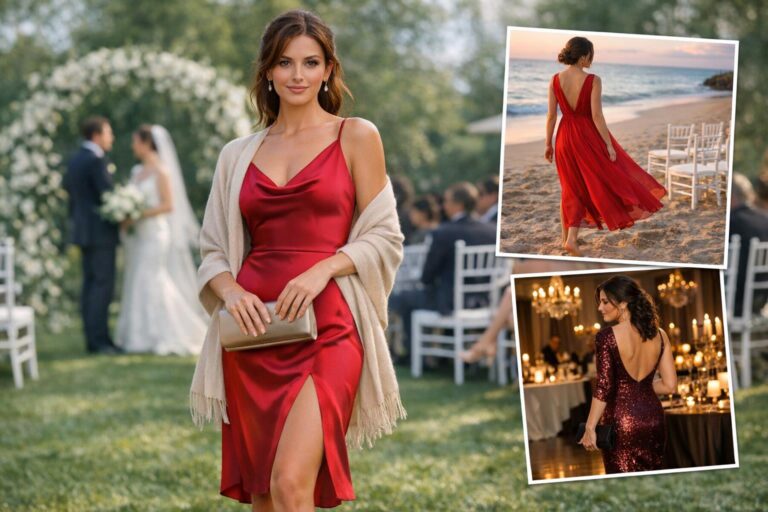
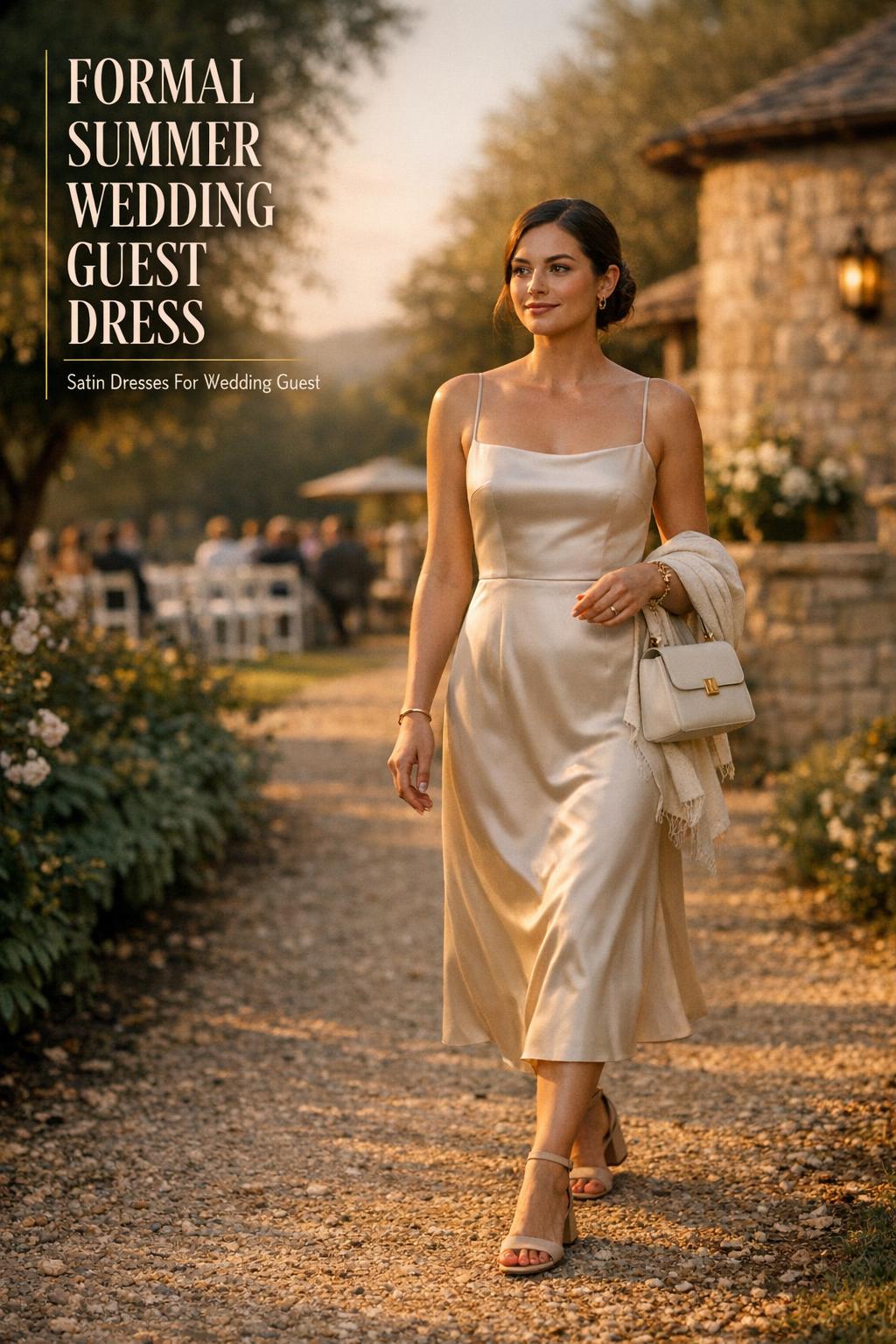
For an evening reception—think candlelight, a string quartet, and a room that looks best after sunset—satin dresses for wedding guest outfits deliver instant formality. The key is choosing a silhouette that creates air space and security at the same time. A satin slip shape can be beautiful, but it works best when it’s not overly tight through the hips and when the neckline sits flat without constant adjusting.
To keep satin feeling summer-appropriate, style it with minimal, refined accessories rather than heavy layers. If you anticipate indoor air conditioning, bring a light wrap that doesn’t crush the dress’s finish. You’ll look polished walking in, and you’ll still feel comfortable once the dance floor heats up.
This outfit solution is especially useful when the dress code leans formal but the venue is warm—because satin communicates “evening” without needing sequins or weighty beading.
Outfit solution: the structured midi dress for garden-to-ballroom transitions
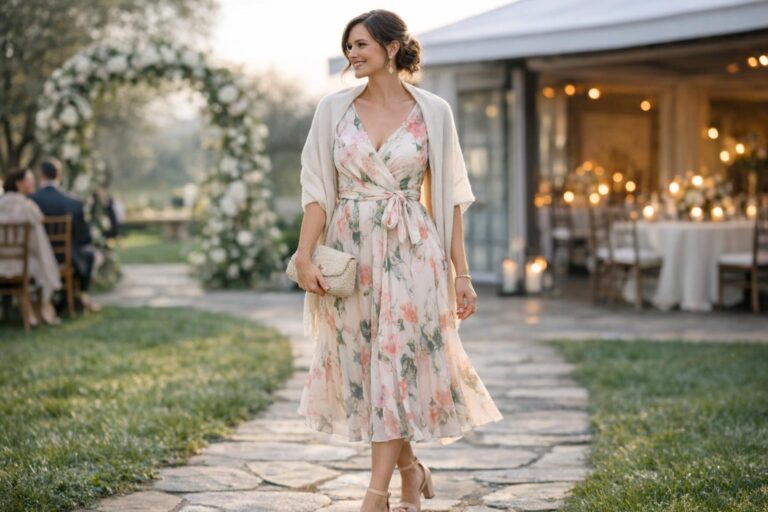
A garden ceremony often begins in bright light and ends in a more traditional indoor reception. This is where a structured midi dress becomes the quiet hero of the day. In the sun, the tailored lines look crisp and intentional; indoors, the silhouette reads formal without asking for a full-length gown.
To make this work as true formal guest attire, treat the styling as part of the structure: a sleek hairstyle, a refined bag, and shoes you can stand in on grass and still feel elegant during dinner. The midi length also reduces the practical headache of hems dragging on lawns or catching under chairs, which means you move through the day looking composed.
If you’re attending as part of the wedding party support system—helping family, greeting guests, keeping timelines on track—this kind of personal attendant dresses approach is particularly smart. You’ll look elevated without sacrificing mobility.
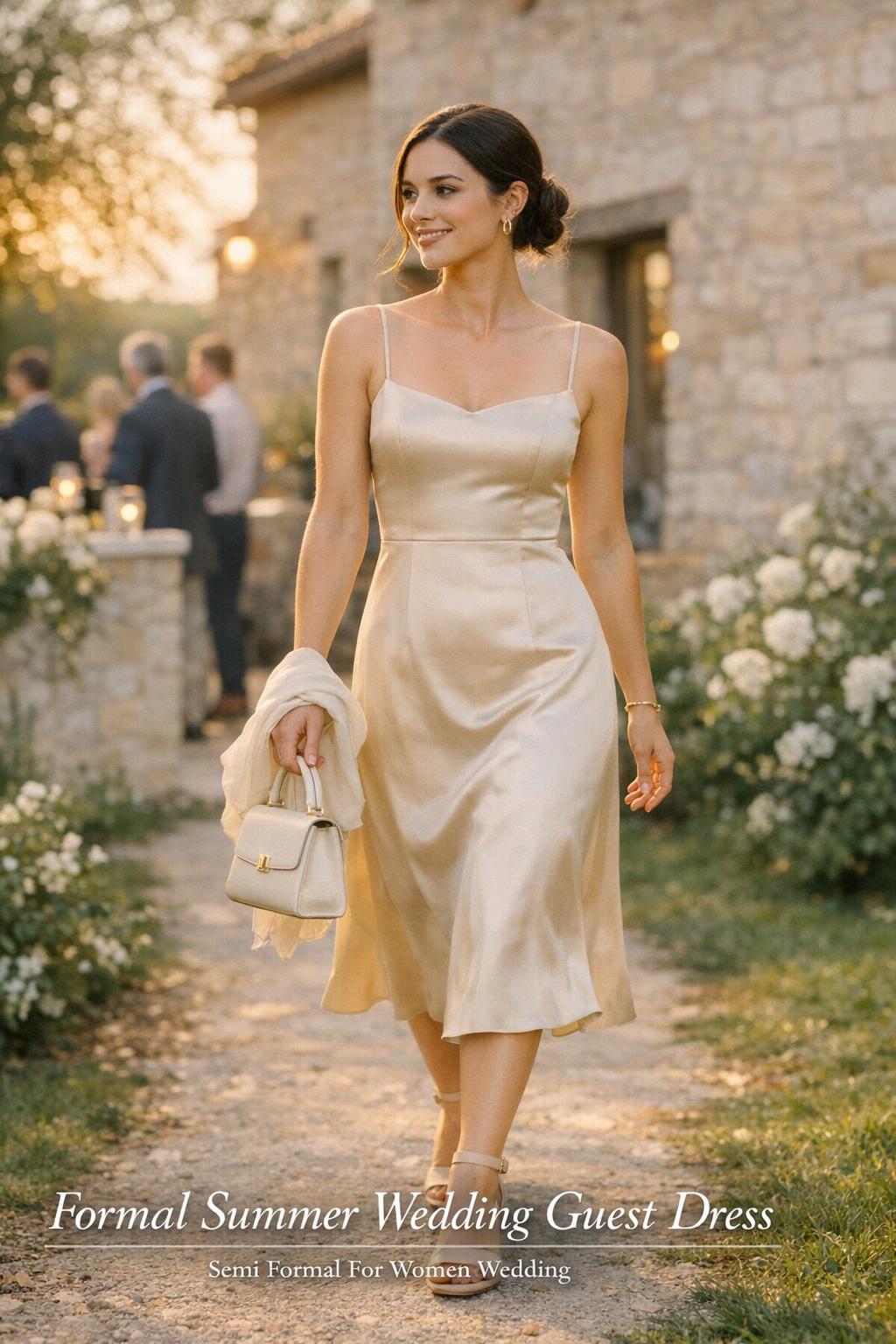
Outfit solution: a refined “semi formal for women wedding” look that still reads special
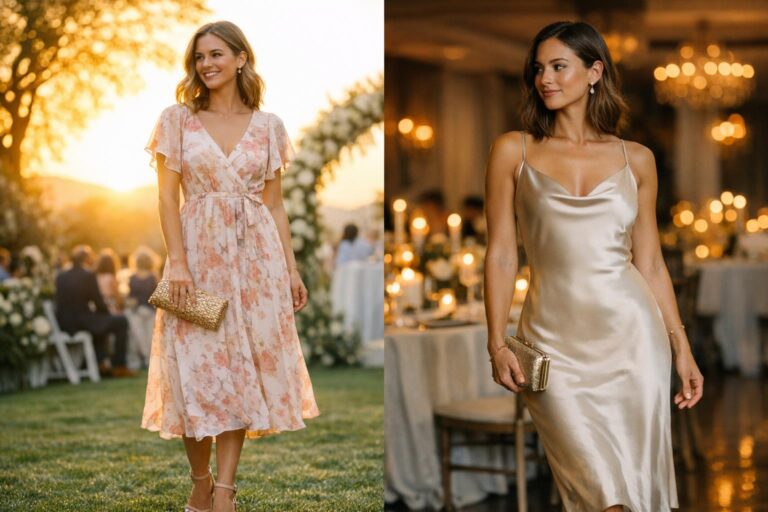
Some invitations land squarely in the middle: not cocktail-casual, not black-tie, and very much open to interpretation. In that case, build a semi formal for women wedding outfit around a dress with one standout element—clean structure, a subtle sheen, or a sculpted neckline—then keep everything else restrained.
The goal is to avoid looking underdressed in photos without committing to a gown that feels too heavy for summer. A midi length, a stable shoulder line, and a fabric that doesn’t cling in humidity will carry the entire look. Add a polished shoe and a simple, elegant bag and you’ll land in the sweet spot: elevated, but effortless.
Outfit solution: destination wedding guest attire that survives travel day
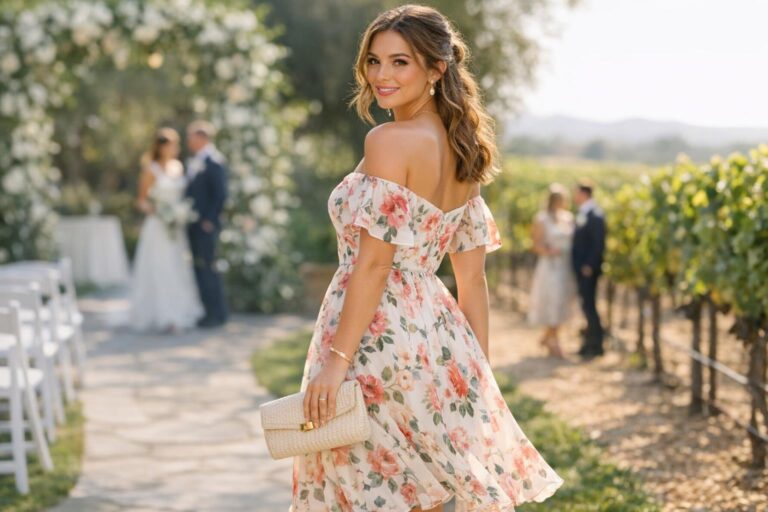
Destination weddings add a specific, very real constraint: your dress has to arrive looking like it belongs at a formal event. If you’re packing for a beach ceremony, a coastal resort, or a vineyard weekend, your choice needs to resist wrinkling (or at least recover gracefully) and handle a range of temperatures.
In this scenario, the smartest formal summer wedding guest dress is the one you can steam quickly, pair with comfortable shoes for walking, and elevate with accessories once you arrive. Think of the dress as the canvas; your guest attire becomes formal through finish—sleek jewelry, a neat hairstyle, and an intentional bag choice—rather than by adding weight.
If you’re tempted by satin here, it can work beautifully, but be honest about packing. Satin can crease; if you choose it, make sure the cut doesn’t show every fold and plan a quick steam before the event.
Outfit solution: personal attendant dresses that look formal and feel functional
Sometimes you’re not just a guest—you’re the friend who helps with place cards, the sister who keeps the day moving, the cousin who runs errands between ceremony and reception. In those moments, guest attire needs to be photogenic and practical at once. The best personal attendant dresses for a formal summer wedding are secure at the shoulders, comfortable at the waist, and easy to walk in.
Prioritize a neckline you don’t have to monitor, a hemline that won’t trip you when you’re carrying a garment bag, and a fabric that stays smooth after hours of activity. This is where structure again earns its keep: when the dress holds its shape, you look polished even after a full day of helping.
Accessories that keep the look formal—without making it heavier
In summer, accessories do more than decorate. They stabilize a look, elevate a simple silhouette, and solve practical issues like hair in humidity or chilly indoor air. The most elegant wedding guest styling tends to be deliberate and edited rather than maximal.
Tips: warm-weather accessories that work hard
- Choose a structured bag: even a minimalist dress reads more formal when paired with a bag that holds its shape.
- Keep jewelry intentional: a few refined pieces look more elevated than many competing items in summer heat.
- Plan a light layer: a wrap or evening layer can save you from indoor air conditioning without overwhelming your dress.
- Secure your hair strategy: a style that stays in place (rather than falling flat) helps you look composed from ceremony to reception.
Think of these as quiet upgrades. They don’t fight the season; they simply ensure your outfit still reads “formal” even when temperatures rise.
Footwear and comfort: the formal look is only convincing if you can move
Shoe regret is one of the fastest ways to derail a wedding guest look. Formal summer weddings often involve walking farther than expected: from parking to ceremony, ceremony to cocktail hour, and then across a dance floor that gets crowded quickly. The best shoe choice is the one that supports your posture and pace—because posture is part of elegance.
If the venue includes grass, gravel, or sand, prioritize stability. If you’re in a city venue with stairs, consider how your shoes handle steps. And if you’re wearing a midi hemline, remember that your shoes will be visible in nearly every photo—so they should look intentional, not like a practical compromise you’re apologizing for all night.
Tips: comfort upgrades that stay invisible
Before the wedding, do a full try-on at home: dress, undergarments, shoes, and bag. Walk, sit, and raise your arms as if you’re greeting people and taking photos. If anything shifts, rubs, or twists, fix it now—because a small fit issue becomes a big distraction over a six-hour celebration.
Also consider the “heat factor”: if your shoes only feel comfortable when you’re cool, they may not feel comfortable once the day warms up. Planning for that reality is what makes your guest attire feel effortless.
Common mistakes that make a summer formal look fall flat
Most missteps happen for understandable reasons: the desire to keep cool, the fear of being overdressed, or the assumption that a pretty dress automatically reads formal. In practice, a few predictable issues tend to show up at summer weddings.
- Choosing fabric that clings in humidity: a dress can look sleek on a hanger but become unforgiving once you’re outside. Opt for shapes that allow movement and airflow.
- Going too casual to “match the season”: summer doesn’t mean beachwear unless the dress code truly says so. Formal is still formal, even in the sun.
- Ignoring the venue surface: sinking heels and dragging hems are visible and uncomfortable, and they make you look less polished.
- Overloading accessories: too many pieces can read busy, especially in daylight. Summer elegance is often more edited.
- Skipping a layer entirely: indoor air conditioning can make even the best dress feel uncomfortable, and discomfort shows.
If you recognize yourself in any of these, don’t worry—each one has a simple fix. The goal isn’t perfection; it’s a look that holds up through the full arc of the day.
A quick decision checklist for buying (or re-wearing) the right dress
Whether you’re shopping new or styling something you already own, a few questions can clarify your next step quickly. This is the behind-the-scenes logic stylists use to keep formal summer outfits from becoming too heavy or too casual.
- Does the silhouette stay put when you move—especially at the neckline and waist?
- Can you sit comfortably for a full dinner without tugging or creasing aggressively?
- Does the fabric look elevated in daylight and evening light?
- Can you walk on the venue’s surfaces in your chosen shoes?
- Do your accessories make the look more formal without adding bulk or heat?
If you can answer “yes” to most of these, you’re not just wearing a formal summer wedding guest dress—you’re wearing one that will actually let you enjoy the wedding.
Conclusion: effortless formality is built, not guessed
Summer formal dressing becomes much easier when you treat it as a set of practical choices: fabric behavior, strategic structure, proportion balance, and venue-aware footwear. From satin dresses for wedding guest evenings to a structured midi dress that carries you from garden vows to a ballroom reception, the most elegant guest attire is the kind that remains comfortable and composed through every chapter of the celebration.
When the next invitation arrives—formal, semi formal for women wedding, or somewhere in between—return to the same foundation. Build the outfit around one clearly elevated element, keep the styling refined, and choose pieces that move with you. That’s the real secret to looking perfectly dressed for summer’s most memorable “I do.”
FAQ
What counts as a formal summer wedding guest dress?
A formal summer wedding guest dress typically has an elevated finish (such as a refined fabric with a smooth drape or subtle sheen), a polished silhouette (often midi to floor length), and styling that looks intentional in photos, while still being comfortable in warm weather and appropriate for the venue.
Can I wear satin dresses for wedding guest attire in hot weather?
Yes—satin can be an excellent choice because it reads formal quickly, but it’s best in silhouettes that don’t cling too tightly and in designs with secure necklines and comfortable movement so the fabric stays elegant rather than showing every crease or heat-related wrinkle.
Is a structured midi dress formal enough for a summer wedding?
A structured midi dress can be very formal when the tailoring looks crisp and the accessories are refined; it’s also one of the most practical lengths for summer venues because it’s easier to walk in outdoors and still looks elevated indoors.
How do I dress for a “semi formal for women wedding” dress code in summer?
For a semi formal for women wedding, aim for a clean, event-ready silhouette with one elevated detail (structure, a flattering neckline, or a subtle sheen), then keep shoes and accessories polished so the overall guest attire feels special without looking overly heavy for the season.
What should I bring as a layer for a summer formal wedding?
Bring a light, refined layer that won’t crush your dress’s shape—especially if the reception is indoors with strong air conditioning—so you can stay comfortable without making the look bulky or casual.
How do I choose shoes for an outdoor formal summer wedding?
Choose shoes based on the venue surface first—grass, gravel, sand, or stairs require stability—then make sure they visually match the formality of your dress; if you can walk confidently and stand comfortably, you’ll look more elegant throughout the event.
What are personal attendant dresses, and how should they differ from standard guest attire?
Personal attendant dresses are outfits chosen by guests who will be especially active helping during the wedding day; they should still read formal, but with added focus on secure fit, easy movement, walkable shoes, and a hemline that won’t get in the way during errands or transitions.
How can I keep my formal look from feeling too heavy in summer?
Keep formality in the finish—an elevated fabric, clean structure, and polished accessories—while choosing silhouettes that allow airflow and movement, avoiding overly tight cuts and heavy layering that can feel uncomfortable in warm weather.