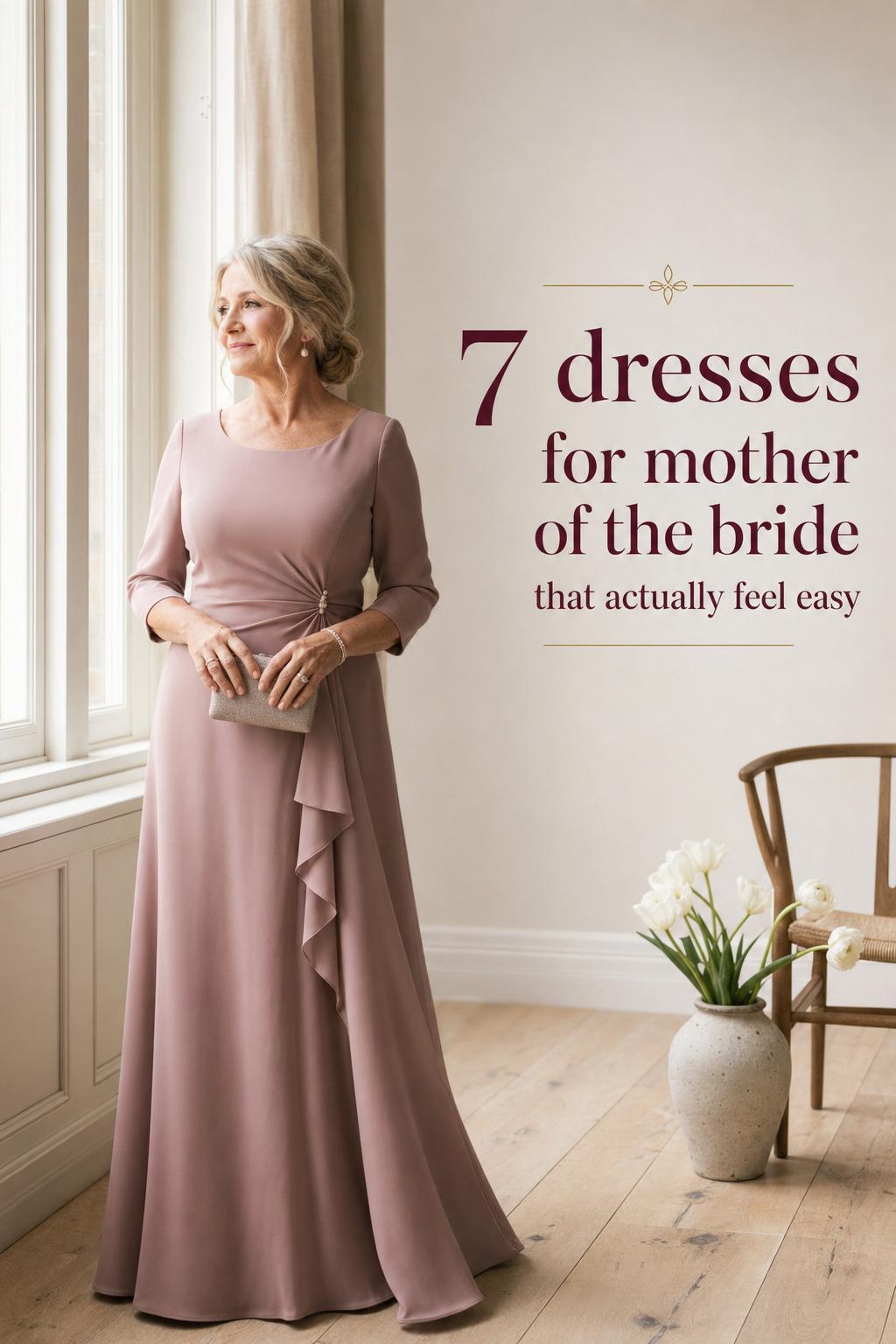
Dresses for Mother of the Bride for Every Wedding Venue
Some of the most emotional shopping in the wedding timeline happens long before the ceremony doors open. Finding dresses for mother of the bride can feel surprisingly complex: the look needs to honor the occasion, photograph beautifully, work with the wedding palette, and still feel like the woman wearing it. Add a long day of hugs, standing, walking, dining, and dancing, and the choice becomes far more than simply picking a pretty gown.
The challenge usually comes from competing priorities. A mother of the bride may want elegance without stiffness, polish without looking overdone, and a silhouette that flatters in person as well as in photographs. Color coordination with bridesmaids, venue expectations, sizing questions, and alteration timelines all add pressure. The best dress is rarely the trendiest one in isolation; it is the one that fits the wedding, the body, and the rhythm of the celebration.
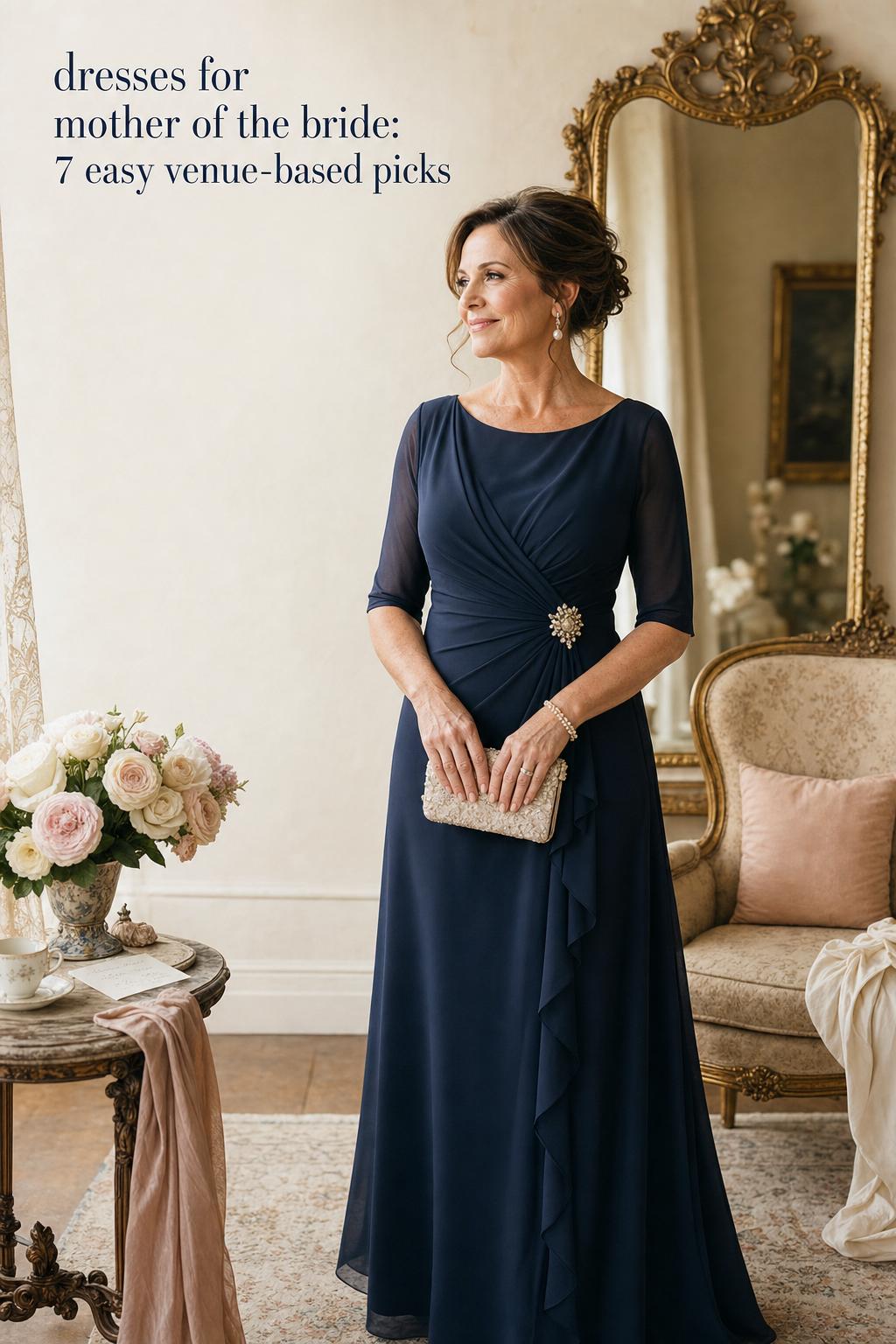
This guide approaches the decision the way a wedding stylist would: beginning with silhouette and fabric, then moving into color, fit, venue, shopping options, and practical finishing details. Whether the celebration is in a church, garden, beach setting, or ballroom, the goal is the same—a mother-of-the-bride look that feels graceful, confident, and easy to wear from ceremony to reception.
Why this dress decision feels harder than it should
Mother-of-the-bride dressing sits in a unique space between formalwear etiquette and personal style. It is not the same as general wedding guest fashion, because the role carries visibility. Family photos, processional moments, and conversations with guests mean the outfit is seen from every angle and over many hours. A dress that looks lovely on a hanger can quickly become tiring if the fabric feels heavy, the fit shifts when sitting, or the hem is difficult on uneven ground.
Your wedding look is only the beginning.
Keep your guest list, vendors, timeline, and every important detail together with Zarellea — so your day feels as considered as your style.
Weather and venue intensify the challenge. A garden ceremony often asks for breathable fabrics and movement, while a candlelit ballroom reception can support richer structure and deeper tones such as navy or burgundy. Comfort matters as much as style: necklines affect support and proportion, silhouettes influence mobility, and alterations often make the difference between a dress that is merely acceptable and one that looks truly finished.
There is also the visual balance of the bridal party to consider. The dress should coordinate with the bride’s palette and the bridesmaids without blending in too closely or competing for attention. That is why the most successful choices usually come from a clear decision framework rather than impulse shopping.
The styling principles that solve most mother-of-the-bride dress problems
Before looking at brands, colors, or price points, it helps to understand the principles that make a mother-of-the-bride dress work. These are the quiet details that create ease and elegance throughout the day.
- Choose silhouette before color if fit is the main concern. A flattering line does more for confidence than any trend shade.
- Match fabric weight to venue and season. Chiffon, crepe, satin, and lace each create a different level of structure and movement.
- Think about the full event timeline, not just the ceremony. Sitting, greeting guests, climbing steps, and dancing all reveal whether the dress is practical.
- Use color as a coordinating tool. Navy, burgundy, and pastels are popular because they can feel formal while still fitting many wedding palettes.
- Plan for alterations early. Even well-made dresses from David’s Bridal, Windsor, Birdy Grey, Avenue, or Lili Bridals often need tailoring for hem, waist, or shoulders.
These principles also help narrow the overwhelming number of mother of the bride dresses on the market. Instead of comparing everything at once, it becomes easier to ask: does this silhouette flatter, does this fabric suit the venue, and does this color support the wedding atmosphere?
Starting with silhouette: the smartest way to narrow the search
Silhouette is the foundation of the entire look. It affects proportion, movement, comfort, and how formal a dress appears even before accessories are added. Among the most commonly featured options, A-line, sheath, and ballgown shapes remain central because each solves a different styling need.
A-line for balance, softness, and broad versatility
An A-line mother-of-the-bride dress is often the easiest place to begin because it creates shape without clinging. Fitted through the upper body and gently flaring through the skirt, it offers comfort for long celebrations and works across a wide range of formality levels. David’s Bridal highlights A-line dresses in its collections for exactly this reason: they are versatile, widely flattering, and easy to adapt through fabric and neckline changes.
For a church ceremony or classic ballroom reception, an A-line silhouette in satin, crepe, or lace can feel refined and timeless. For an outdoor wedding, the same line in chiffon moves more lightly and feels less restrictive. This is often the safest solution for those who want polish without a heavily structured gown.
Sheath for a cleaner, more modern line
A sheath silhouette follows the body more closely and creates a sleek, contemporary impression. It can be especially appealing for modern wedding settings or for mothers who prefer understated tailoring over volume. The trade-off is mobility: a sheath dress typically requires more attention to fit through the hips, knees, and stride, so alterations matter more here than with a softer A-line.
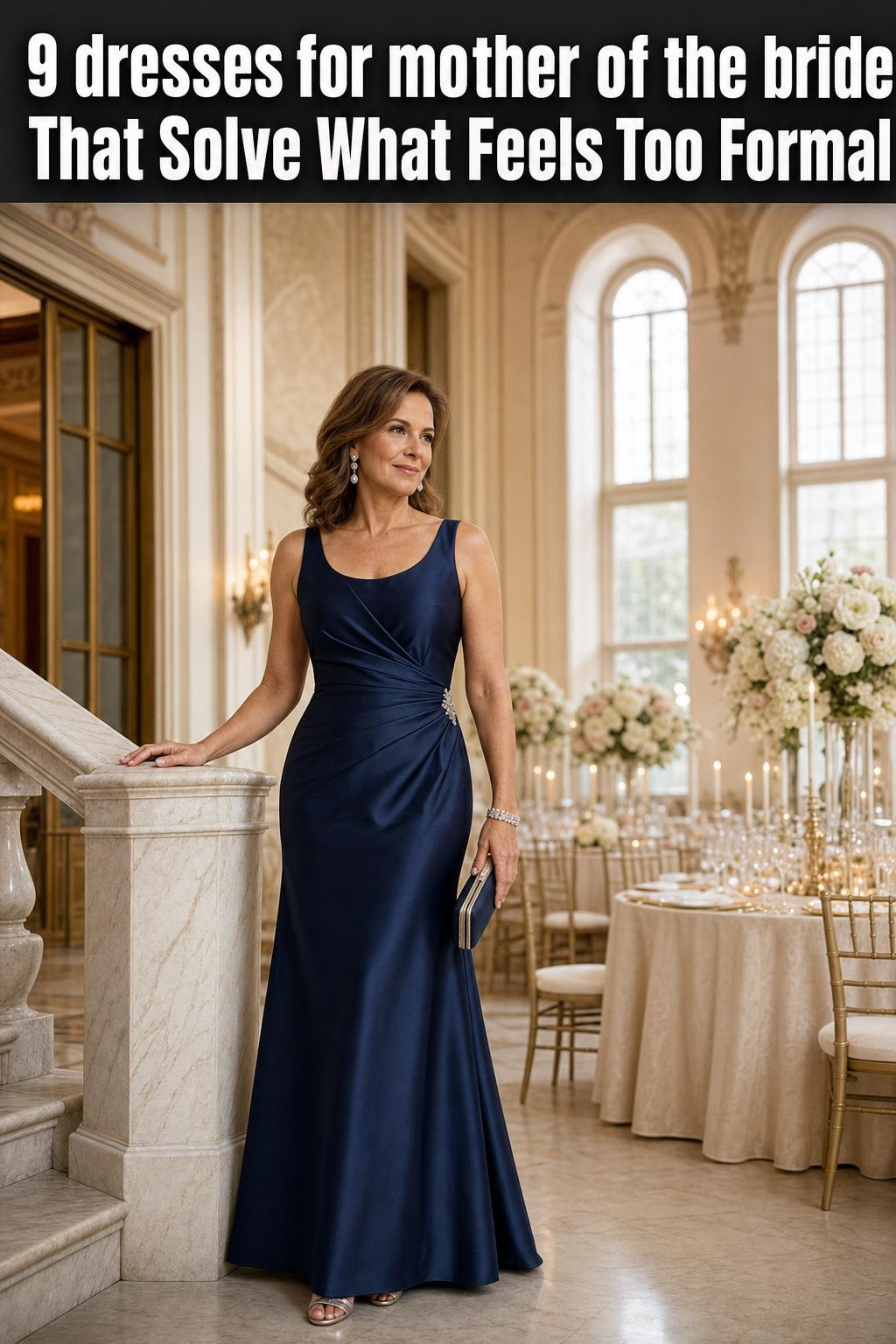
Sheath styles pair well with scoop necklines, subtle embellishment, and richer shades like navy. They also tend to photograph beautifully in evening light, where a clean outline can look elegant and architectural. If comfort is a top concern, choosing a sheath in a more forgiving fabric such as crepe rather than a rigid material usually helps.
Ballgown for heightened formality and visual presence
A ballgown silhouette brings the most drama and is best suited to weddings with a distinctly formal atmosphere. In a grand ballroom or traditional setting, the fullness can feel ceremonial and celebratory. It is less practical for beach weddings, rustic outdoor venues, or long walks across grass, where volume and hem length may become difficult.
This option works best when the wedding itself supports the level of occasion. If the bride’s overall aesthetic is elevated and formal, a ballgown can be appropriate. If the event is lighter and more relaxed, the silhouette may feel too heavy compared with the setting.
Tips for choosing by body type and movement
Many mothers begin by asking what flatters their body type, and that instinct is useful, but it should be paired with movement. A flattering dress that limits walking or sitting can become distracting by the reception. A-line styles are often the easiest for balancing shape and mobility, while sheath dresses reward precise tailoring. Plus-size mother-of-the-bride shopping benefits especially from this approach, since silhouette, fabric drape, and proper alterations work together more effectively than relying on size label alone.
Color and fabric: where the mood of the wedding comes into focus
Once silhouette is clear, color and fabric shape the mood. They connect the mother-of-the-bride dress to the bridal party, the venue, and the time of day. This is where many readers hesitate, especially when trying to look distinctive without conflicting with the wedding palette.
Navy, burgundy, and pastels each tell a different story
Navy blue remains one of the strongest choices for formal mother-of-the-bride dressing because it feels elegant, versatile, and quietly authoritative. It suits evening celebrations particularly well and is widely represented in retailer collections, including Windsor’s navy-focused pages. Navy also pairs easily with many bridesmaid palettes, which makes coordination simpler.
Burgundy offers depth and richness, lending itself beautifully to romantic receptions and more dramatic seasonal palettes. Windsor also emphasizes burgundy mother-of-the-bride dresses, showing how a single color can work across multiple silhouettes and fabrics. Burgundy tends to feel more statement-making than navy, yet still grounded and sophisticated.
Pastels bring softness and are especially at home in daytime settings, garden ceremonies, and lighter wedding themes. They can feel fresh and graceful in photographs, though they require slightly more care with bridal party coordination so the tone does not compete too closely with bridesmaids or wash out in bright natural light.
How fabric changes the same color completely
A navy satin gown and a navy chiffon dress do not communicate the same thing. Satin reads smoother and often more formal. Chiffon brings movement and airiness. Crepe offers a cleaner, more modern finish, while lace adds texture and a traditional romantic note. The fabric determines how the color reflects light, how the skirt moves in photos, and how comfortable the dress feels through a long celebration.
For beach and garden weddings, chiffon and lighter fabrics often make more sense because they move easily and feel less dense. For church ceremonies and ballroom receptions, satin, crepe, or lace can create the structure and presence that the venue supports. The most polished mother-of-the-bride looks almost always feel in conversation with their setting.
Color coordination without looking overly matched
The goal is usually harmony rather than duplication. Coordinating with bridesmaids means understanding the wedding palette and selecting a tone that belongs within it while still identifying the mother of the bride as a distinct figure. This is why many women choose adjacent or complementary shades rather than the exact bridesmaid color. The result feels thoughtful in family photos and avoids the accidental uniform effect.
Tips: if the wedding palette is soft and romantic, pastels may feel natural; if the reception is formal and evening-led, navy or burgundy often provides the right depth. Ask how the color will look in both daylight and indoor reception lighting before committing.
Where fit makes the difference: sizing, comfort, and alterations
Even the best-designed dress can lose its effect if the fit is off through the shoulders, waist, hem, or bust. This is why confident mother-of-the-bride dressing depends as much on tailoring as on style selection. The right alterations make a dress feel composed rather than merely wearable.
- Check how the dress feels when sitting, turning, and walking, not only when standing still.
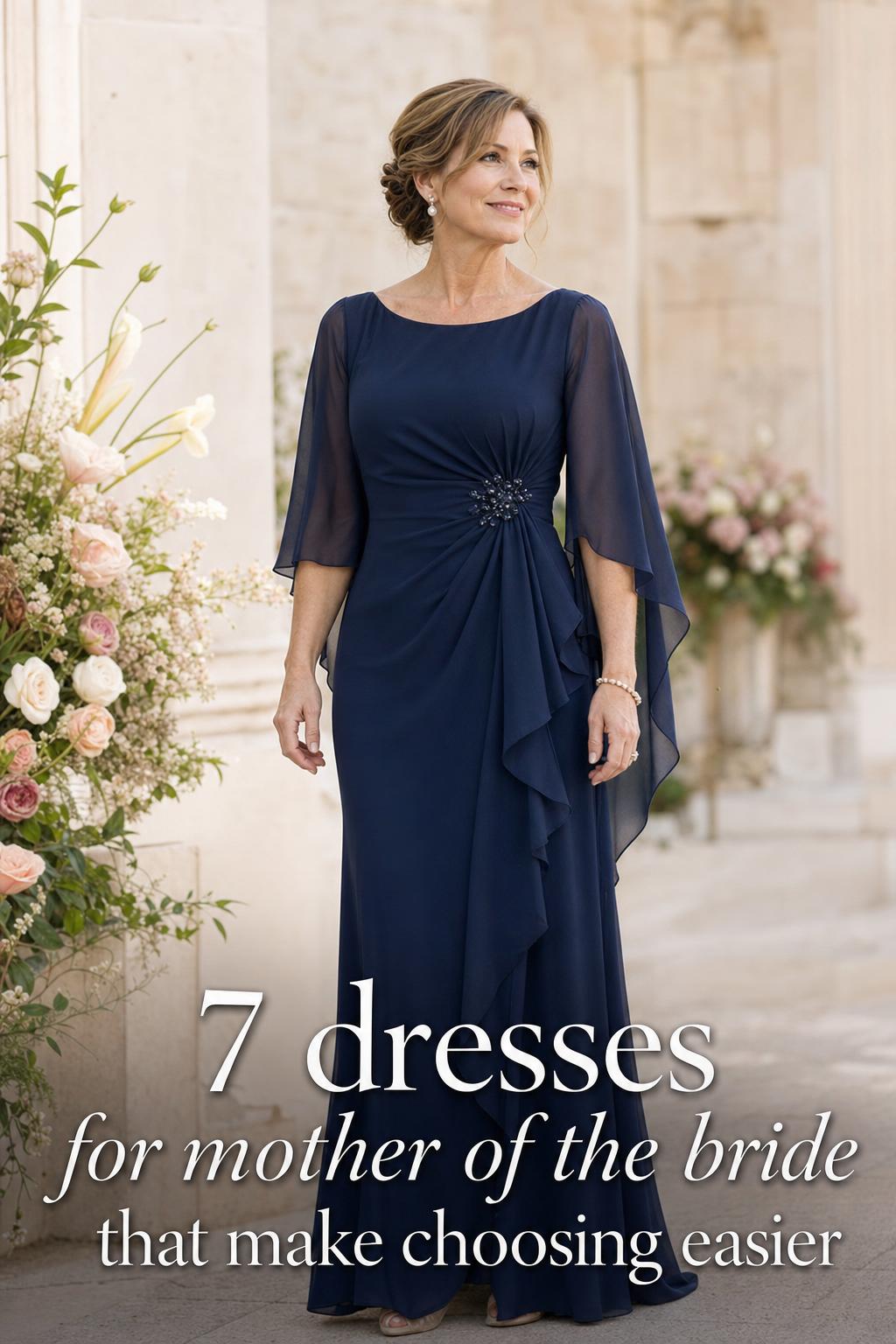
- Pay close attention to shoulder placement and neckline support, especially with scoop neck styles.
- Allow time for hem adjustments if the wedding venue includes stairs, outdoor paths, or dancing.
- For plus-size shopping, focus on drape, structure, and mobility rather than assuming one silhouette category will suit everyone the same way.
Birdy Grey, Avenue, and other retailers with inclusive sizing help widen the options, but sizing alone does not replace tailoring. A dress may technically fit and still need refinement through the waist or length to look finished. This is particularly true for formal gowns and more exact silhouettes like sheath styles.
Alteration timing also matters. Shopping too late often forces compromise, while shopping early enough allows for measured adjustments and calmer decision-making. Mothers who feel most comfortable in their dresses on the wedding day are often those who treated alterations as part of the purchase, not an afterthought.
Outfit solutions by wedding setting
The venue should shape the final styling decisions. A dress that feels exquisite in one setting can feel impractical in another. Thinking in scenes rather than categories often clarifies the best option.
Outfit solution: church ceremony elegance
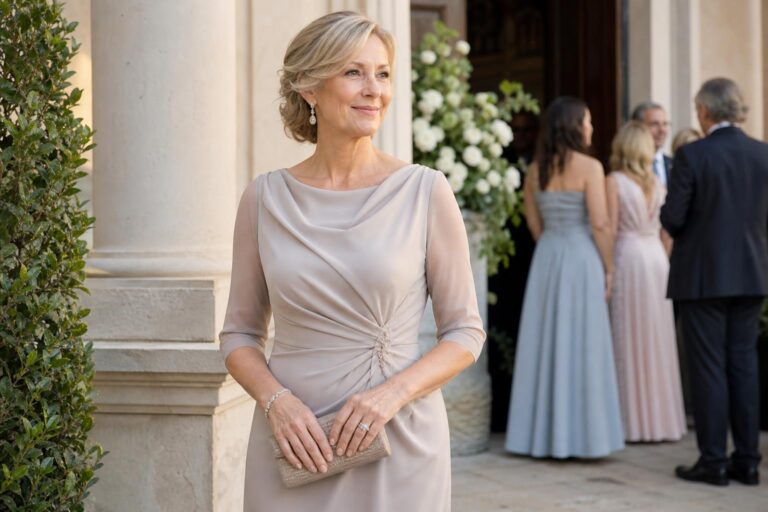
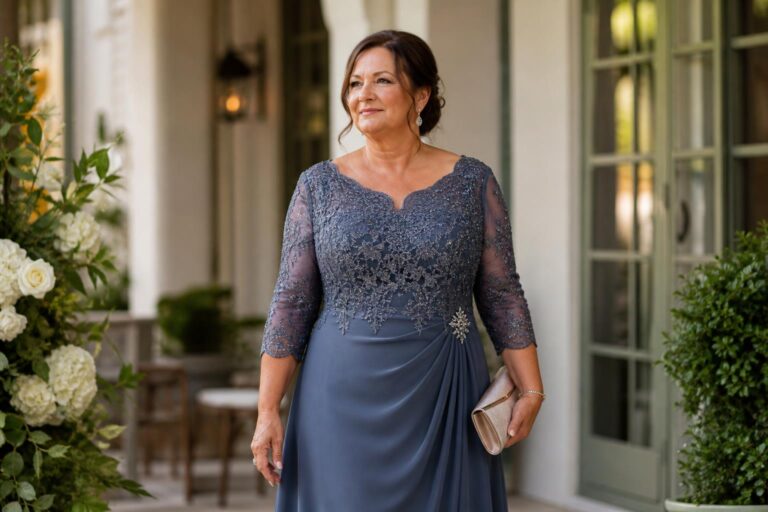
For a church wedding, an A-line or refined sheath dress in navy, soft pastel, or burgundy usually strikes the right tone. Satin, crepe, or lace works well here because the architecture and ceremony often call for a more polished presence. A scoop neckline can soften the upper body while still feeling appropriate, especially when balanced by a graceful sleeve or structured bodice. This combination solves the challenge of looking formal and respectful without appearing severe.
Outfit solution: garden wedding softness with movement
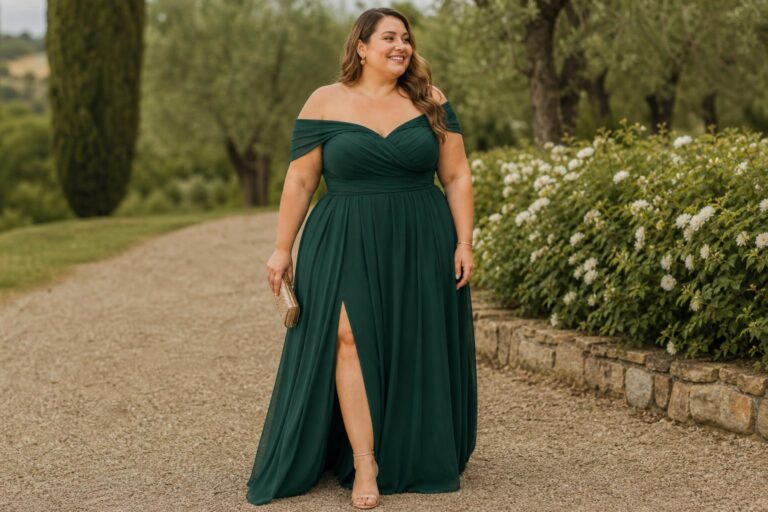
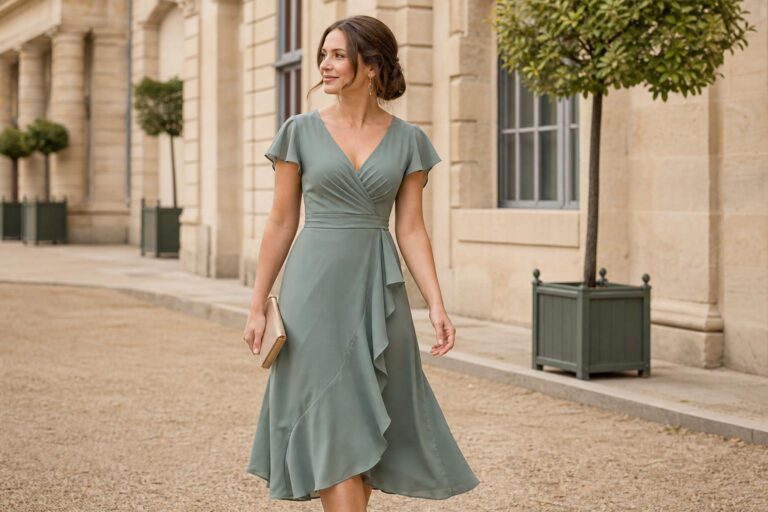
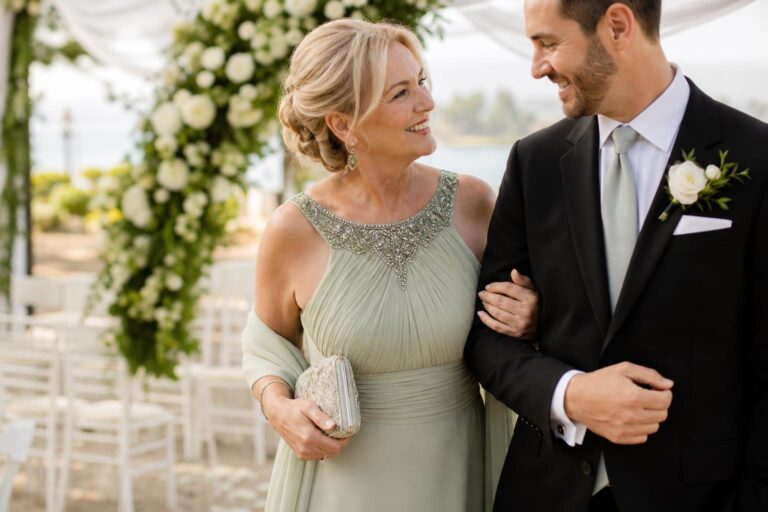
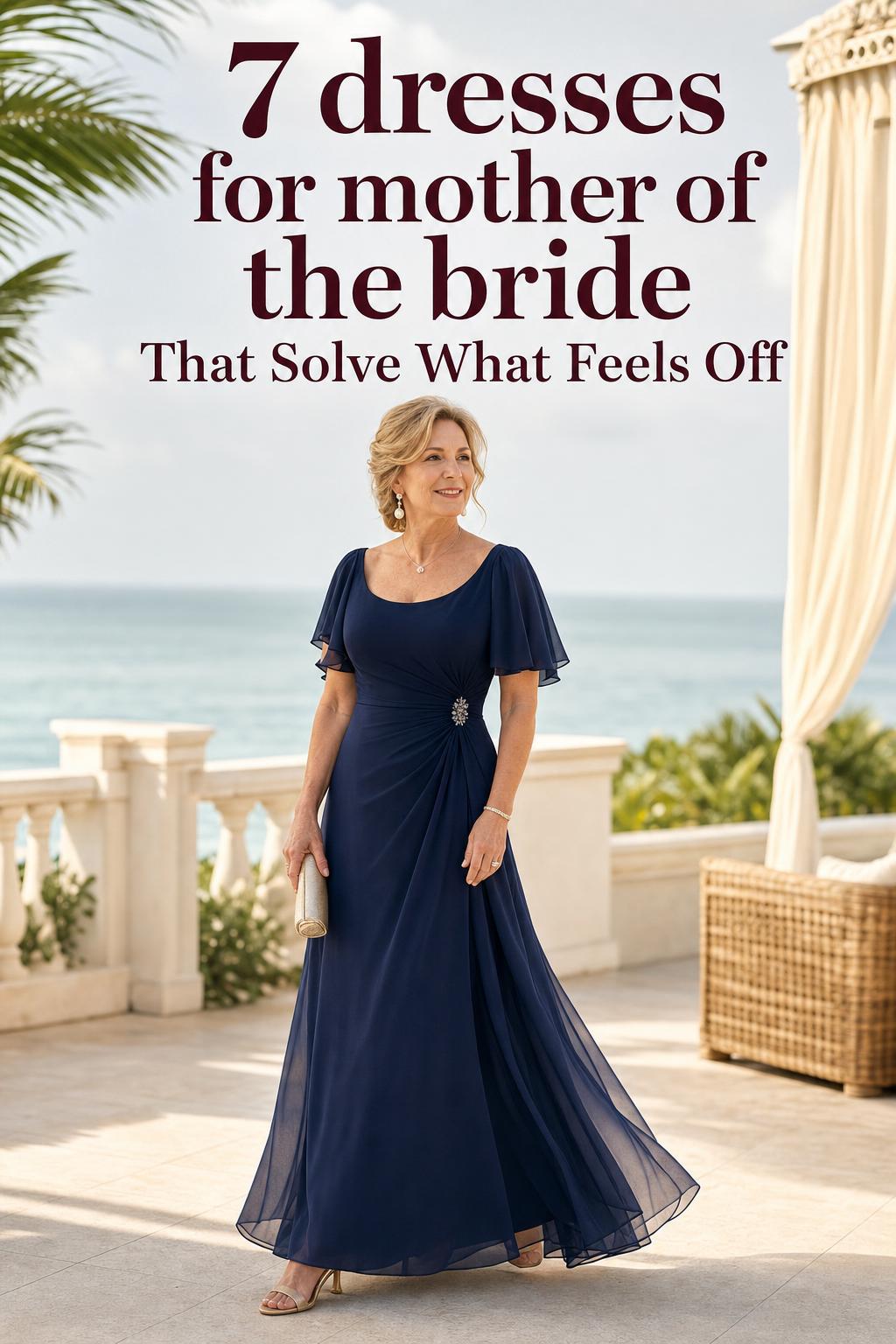
A garden ceremony at golden hour calls for lighter movement and a more breathable feel. An A-line silhouette in chiffon or a softly draped crepe creates ease when walking on grass and mingling outdoors. Pastels often feel especially natural in this setting, though a softened navy can also be beautiful if the wedding palette is more classic. This kind of look works because it balances romance with practicality; the fabric moves with the breeze instead of fighting the environment.
Outfit solution: beach wedding practicality without losing polish
Beach weddings benefit from simplified silhouettes and lighter fabrics. A full ballgown usually feels too heavy, while a flowing A-line or easy sheath is more manageable. Chiffon is especially useful here because it keeps the look dressy but not rigid. Softer colors and controlled volume prevent the outfit from feeling visually out of place against a relaxed coastal backdrop. The solution is not to dress down, but to choose elegance with air and movement.
Outfit solution: ballroom evening glamour
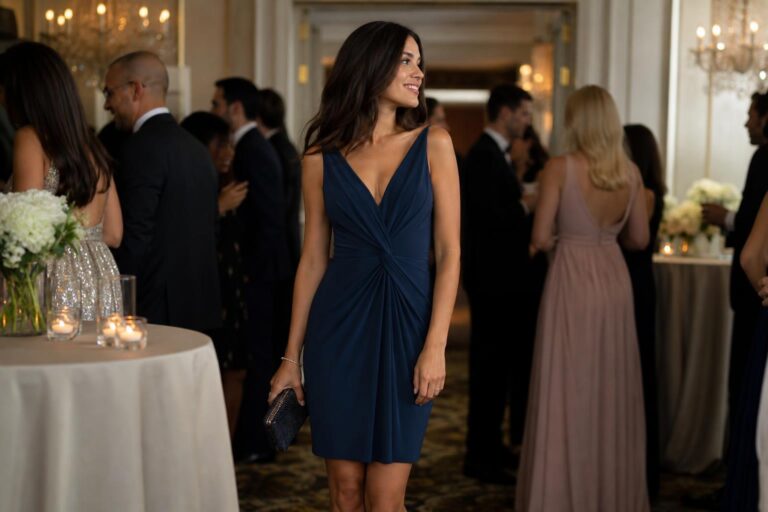
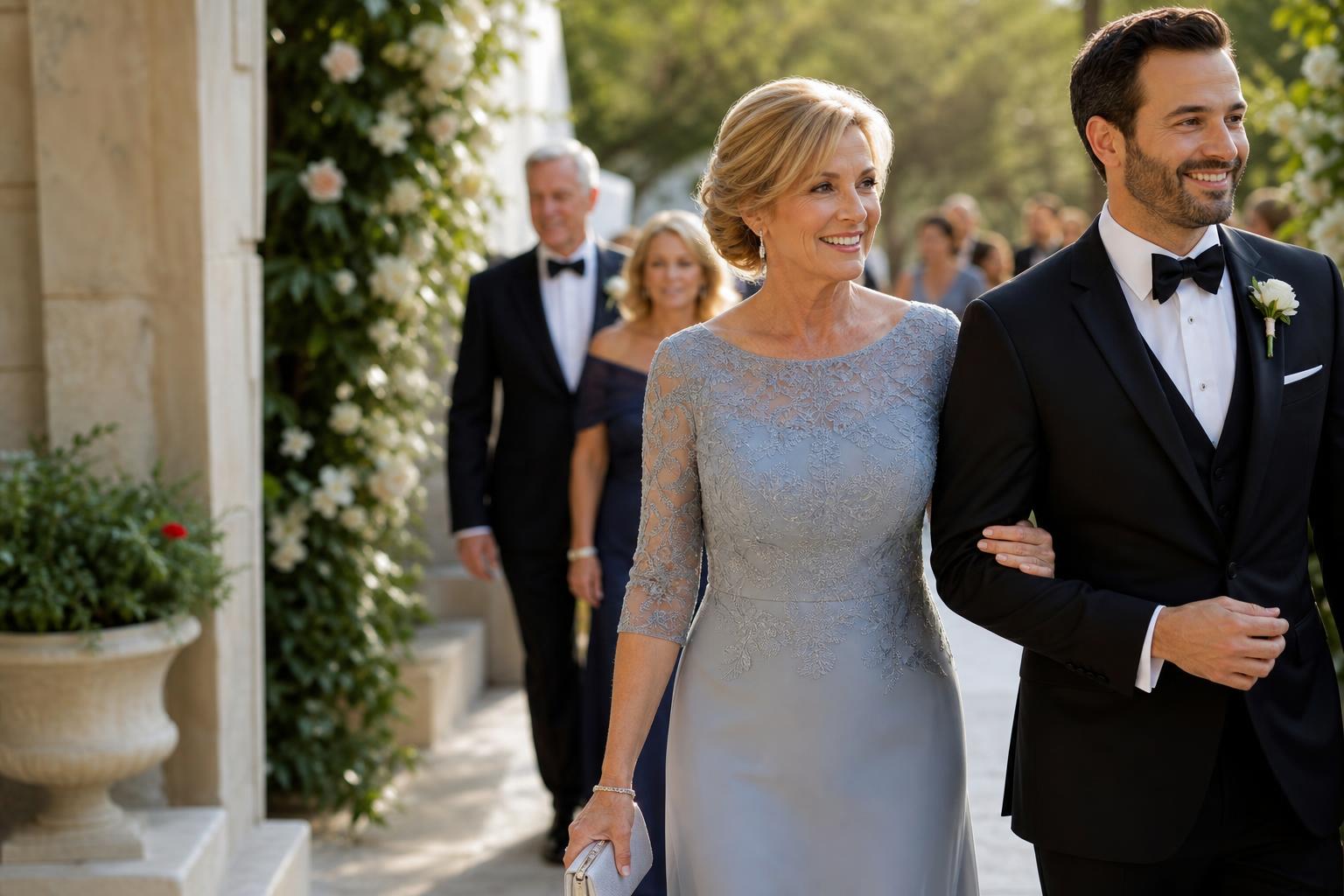
In a ballroom, richer fabrics and more sculpted silhouettes often come into their own. Navy satin, burgundy crepe, or lace with a formal skirt line can look especially striking under reception lighting. A ballgown becomes more appropriate here if the wedding tone is elevated, though a polished sheath can be just as compelling for a modern aesthetic. This setting allows the mother-of-the-bride dress to carry more visual weight, making fabric choice particularly important.
A practical retailer guide for U.S. shoppers
Shopping becomes easier when you understand what different retailers are known for. Some are stronger in color-specific browsing, others in silhouette-driven collections, and others in inclusive sizing or modern styling. For U.S. shoppers, this can save time and reduce decision fatigue.
David’s Bridal is especially useful when the silhouette itself is the priority, particularly for A-line mother-of-the-bride dresses. Windsor stands out for color-led shopping, including navy blue and burgundy collections that make palette decisions more straightforward. Birdy Grey offers mother of the bride and groom dresses with a modern, comfort-focused perspective and inclusive sizing notes that can be helpful when narrowing options.
Avenue presents contemporary gowns with size guidance and occasion framing, while Lili Bridals organizes collections with price bands and fit notes that can support more structured comparison. The Knot serves a different role: rather than acting primarily as a retailer, it functions as an inspiration and product-discovery hub, with galleries that sort mother-of-the-bride dresses by silhouette, color, body type, and theme. That can be especially useful early in the search, before brand loyalty becomes relevant.
Tips: start with the retailer that matches your main concern. If color is the issue, browse Windsor. If silhouette is the issue, begin with David’s Bridal or The Knot’s gallery-style pages. If modern fit and comfort matter most, compare Birdy Grey and Avenue. This is a more efficient strategy than browsing every store in the same way.
Budgeting with style: what value really looks like in a mother-of-the-bride dress
Price matters, but value in occasion wear is not only about the ticket number. It includes fabric quality, fit potential, wearability through the event, and whether the dress actually solves the visual and practical demands of the day. A less expensive dress that needs extensive alteration may not end up being the stronger value. Likewise, a premium dress that requires little adjustment and feels effortless for twelve hours can justify its place more easily.
Retailers commonly present dresses across budget-friendly to premium ranges, often with designer cues and price differences linked to fabric, detail, and construction. This is why it helps to decide where your budget should work hardest. Some women prefer to spend more on a superior fabric such as satin or lace, while others prioritize a universally flattering silhouette and keep embellishment minimal.
Rental versus new purchase can also enter the conversation when value is the main concern. Renting may make sense if the wedding is highly formal and the desired look is very specific to the occasion. Buying usually works better if alterations are needed or if comfort and fit certainty are non-negotiable. The right choice depends less on trend and more on how personalized the fit needs to be.
The finishing details that keep the look graceful all day
A mother-of-the-bride dress should still feel elegant at the end of the reception, not only in the first photograph. This is where accessories, maintenance, and thoughtful styling adjustments become important. The most polished looks are often the least fussy.
- Choose accessories that support the dress rather than compete with it. Hats or fascinators can work when the wedding style and venue make them feel natural.
- Consider how the dress will photograph from the side and while seated, not only from the front.
- Use care instructions that suit the fabric, especially with satin, crepe, chiffon, or lace.
- Store the dress properly after the event if it has sentimental value or may be worn again for another formal occasion.
Post-event care is easy to overlook, yet important for fabrics commonly used in mother-of-the-bride dressing. A beautiful formal dress deserves proper cleaning and storage, particularly if lace or satin is involved. Longevity is part of value, and preserving the garment well keeps the memory attached to it just as polished.
Style inspiration from real-world trends and polished public-facing looks
Many women find it easier to choose once they can picture the mood rather than just the product. Public-facing style inspiration, whether from editorial galleries, designer spotlights, or influencer-led formalwear looks, often works best when translated into real shopping categories. The useful question is not whether a look is aspirational, but which elements can be adapted: the neckline, the color story, the skirt line, or the fabric texture.
A modern inspiration route might take a clean scoop-neck sheath and reinterpret it through Birdy Grey or Lili Bridals. A classic romantic route might begin with lace or chiffon options gathered on The Knot and then narrow to an A-line silhouette from David’s Bridal. A bolder evening route could start with Windsor’s burgundy edit and build from color outward. Inspiration becomes practical when it is translated into silhouette, fabric, and retailer language.
Common mistakes that make mother-of-the-bride dressing harder
Some shopping mistakes are so common that they are worth naming directly. Avoiding them often saves more stress than finding one more round of dress options.
Choosing by color alone
A beautiful navy or burgundy shade can be tempting, but if the silhouette does not flatter or the fabric feels wrong for the venue, the dress will still disappoint. Color should support the decision, not carry it entirely.
Ignoring alteration needs
Many women expect formal dresses to fit perfectly off the rack. In reality, tailoring is part of the process. Hem length, waist definition, and neckline placement all affect comfort and appearance.
Dressing for the ceremony but not the full celebration
A dress may feel lovely for a short walk down the aisle and still become uncomfortable by dinner. Movement, sitting, and dancing should be tested before committing.
Forgetting the venue’s practical realities
A formal ballroom can handle heavier structure. A beach or garden wedding usually cannot. When the setting and the dress work against each other, elegance starts to look effortful.
A calm approach to the final decision
The strongest mother-of-the-bride looks tend to come from clarity rather than excess choice. Begin with the wedding setting, narrow to the most flattering silhouette, then choose a color and fabric that complement the atmosphere and the bridal party. After that, fit and alterations turn the dress into your dress.
Whether you are drawn to a navy A-line from David’s Bridal, a burgundy formal style from Windsor, a modern option from Birdy Grey, or an occasion gown from Avenue or Lili Bridals, the same rule applies: elegance is most convincing when it feels comfortable and considered. The right dress should not distract from the day. It should let you be fully present in it.
FAQ
What color is best for mother-of-the-bride dresses?
Navy, burgundy, and pastels are among the most versatile choices because they can feel formal, flattering, and easy to coordinate with a wedding palette. The best color depends on the venue, time of day, and how closely the dress should relate to the bridesmaids’ colors.
Are A-line dresses the most flattering option for the mother of the bride?
A-line dresses are often the easiest and most broadly flattering option because they define the upper body while allowing comfortable movement through the skirt. They are especially useful when you want elegance, mobility, and flexibility across different wedding settings.
How should the mother of the bride coordinate with the bridesmaids?
The goal is coordination rather than an exact match. Choosing a complementary or related shade usually looks more polished in photos and helps the mother of the bride stand apart gently while still fitting the overall palette.
What fabrics work best for different wedding venues?
Chiffon tends to work well for beach and garden weddings because it is light and moves easily, while satin, crepe, and lace often suit church ceremonies and ballroom receptions where a more structured formal look feels appropriate.
Should the mother of the bride get alterations even if the dress already fits?
Usually, yes. Even a dress that fits reasonably well may benefit from hemming, waist refinement, or neckline adjustment. Alterations improve comfort, posture, and the overall finish of the look, especially for a long event.
Where can I shop for mother-of-the-bride dresses in the U.S.?
Popular options include David’s Bridal for A-line collections, Windsor for color-specific edits such as navy and burgundy, Birdy Grey for modern mother of the bride and groom dresses, Avenue for contemporary gowns, Lili Bridals for collection-based shopping, and The Knot for broad inspiration and product discovery.
What is the difference between a sheath and an A-line mother-of-the-bride dress?
A sheath follows the body more closely and creates a sleek, modern line, while an A-line is fitted at the top and gently flares outward for softer balance and easier movement. The best choice depends on your comfort preferences, fit needs, and the formality of the wedding.
Can the mother of the bride wear a scoop neckline?
Yes, a scoop neckline can be elegant and flattering, especially when balanced by the right silhouette and proper tailoring. It often softens the upper body and can work beautifully for both modern and classic wedding styles.
Is a ballgown appropriate for the mother of the bride?
A ballgown can be appropriate when the wedding is very formal, especially in a ballroom or traditionally grand setting. For outdoor, beach, or more relaxed celebrations, it may feel too heavy or impractical compared with an A-line or softer formal silhouette.
How early should the mother of the bride shop for her dress?
It is wise to shop early enough to allow time for comparing silhouettes, confirming color coordination, and completing alterations without pressure. The more formal or fitted the dress, the more important that extra time becomes.