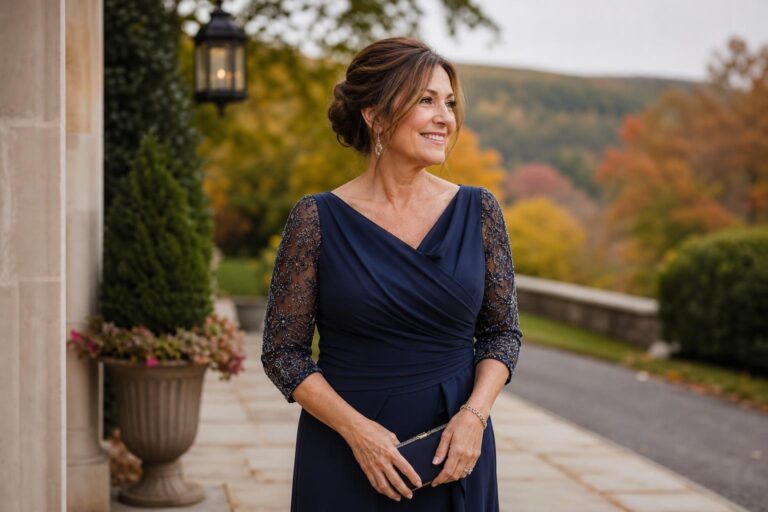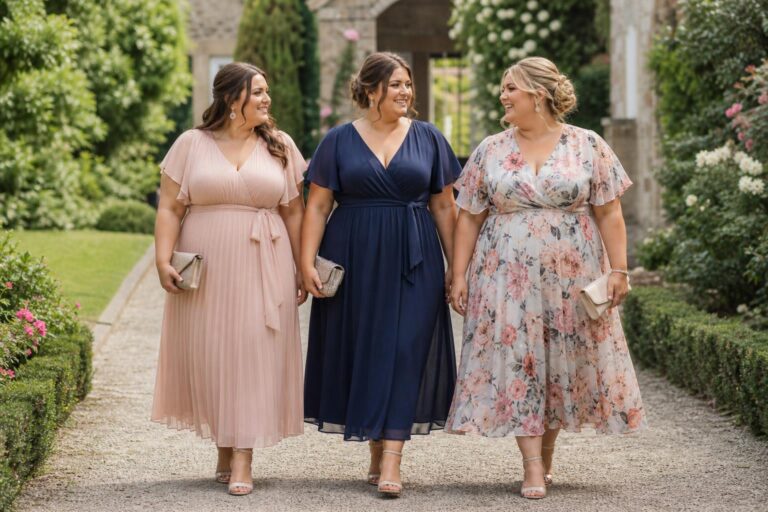
Simple Mother of the Bride Dresses for a Modern Wedding
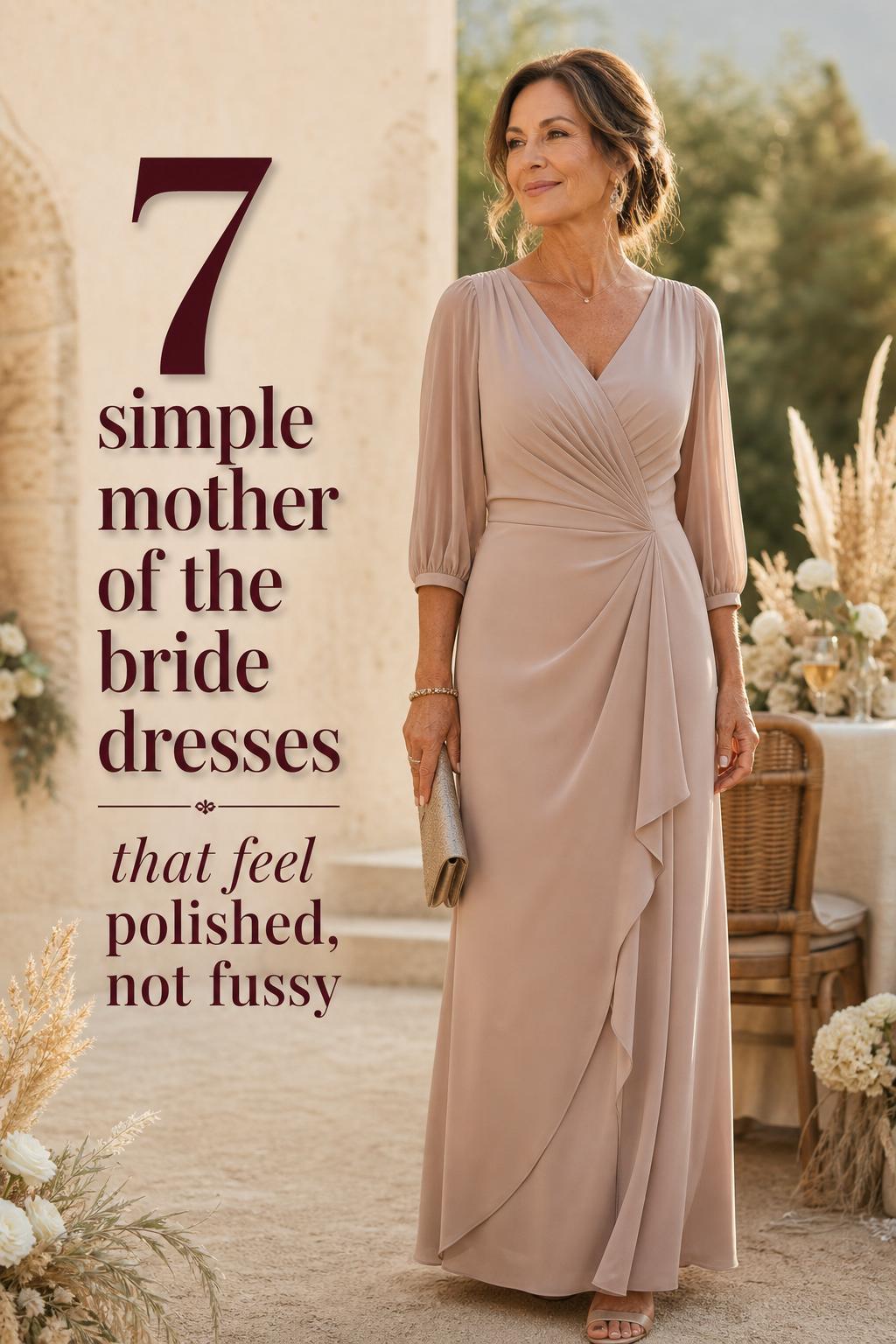
On the wedding morning, the mother of the bride often faces a distinct style question: how do you look elegant, celebratory, and fully occasion-ready without wearing something that feels overly ornate? That is exactly why simple mother of the bride dresses remain such a strong focus in modern wedding dressing. They sit at the intersection of polish and restraint, offering a look that feels intentional rather than understated by accident.
The conversation usually brings together several closely related aesthetics: simple, elegant, and minimalist. They are often used interchangeably, yet they are not quite the same. A simple mother of the bride dress may rely on a clean silhouette and a refined fabric, while a minimalist mother of the bride gown tends to push even further toward reduction, with fewer visual details and a sharper sense of edit. Understanding those nuances makes shopping easier, whether you are comparing Adrianna Papell, Azazie, La Femme, JJ’s House, Adasa, Couture Candy, GlamLora, or MarlasFashions.
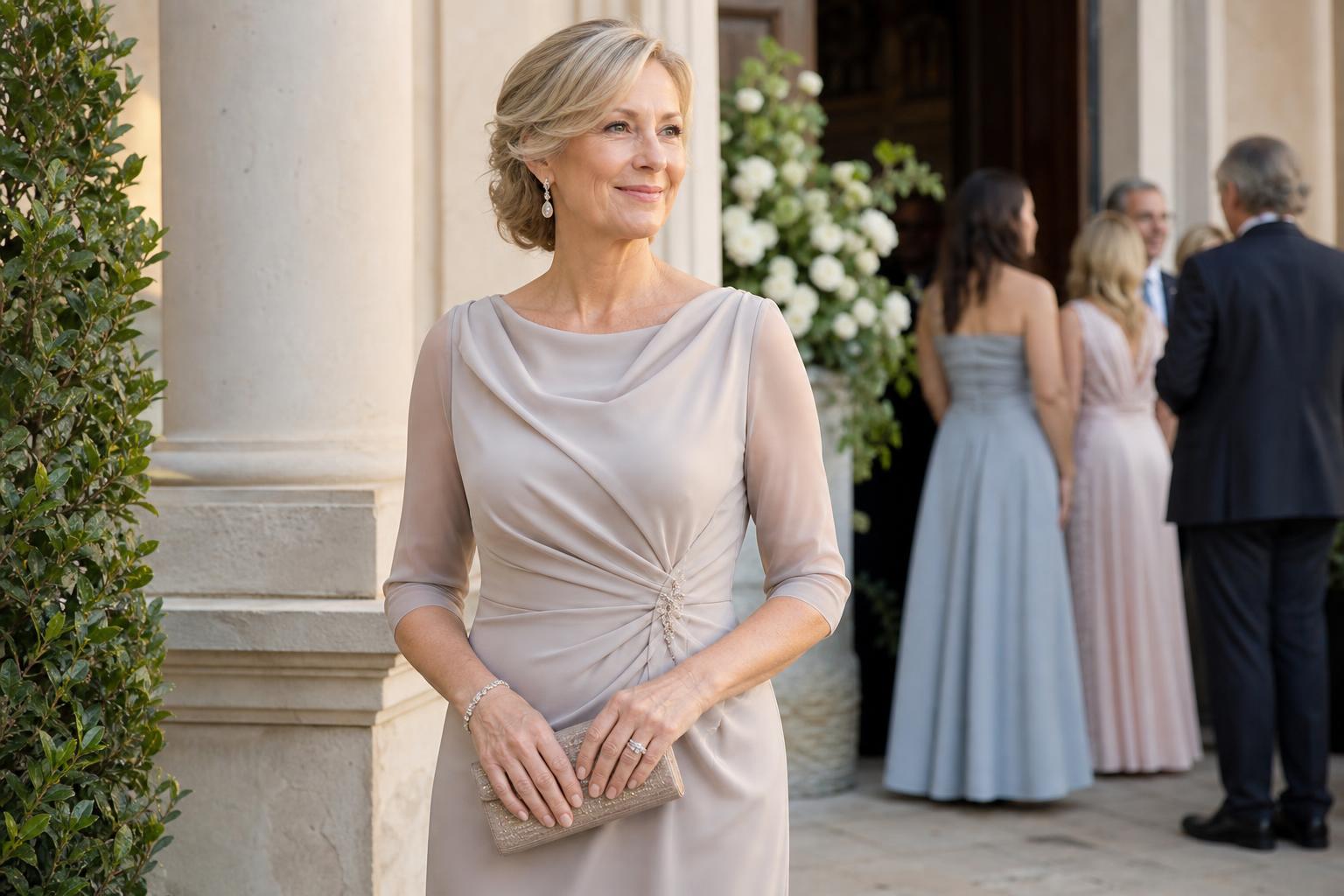
This guide breaks down the main style approaches behind simple mother of the bride dresses, compares silhouettes, fabrics, colors, and styling philosophy, and shows how each approach works across wedding themes and seasons. The goal is not only to identify what looks beautiful in a product gallery, but also what photographs well, feels comfortable through a long celebration, and suits the atmosphere of the day.
Two style directions behind a simple mother of the bride look
Most dresses in this category fall into two overlapping but distinct directions. The first is classic simple elegance: polished, flattering, and occasion-focused, with timeless details such as an A-line shape, a sheath silhouette, soft sleeves, or a refined tea-length or floor-length hem. The second is true minimalist styling: cleaner, more reduced, and often more architectural in feeling, with less decorative emphasis and stronger reliance on fabric and cut.
Your wedding look is only the beginning.
Keep your guest list, vendors, timeline, and every important detail together with Zarellea — so your day feels as considered as your style.
Both belong naturally in the mother of the bride wardrobe. The difference is not whether one is formal and the other is not. The difference is in how the dress creates impact. Classic simple elegance uses softness and familiarity. Minimalism uses clarity and restraint.
Style overview: classic simple elegance
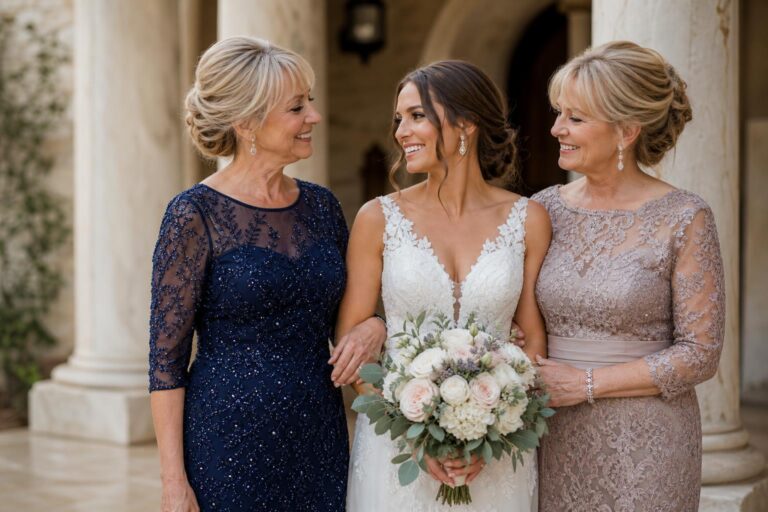
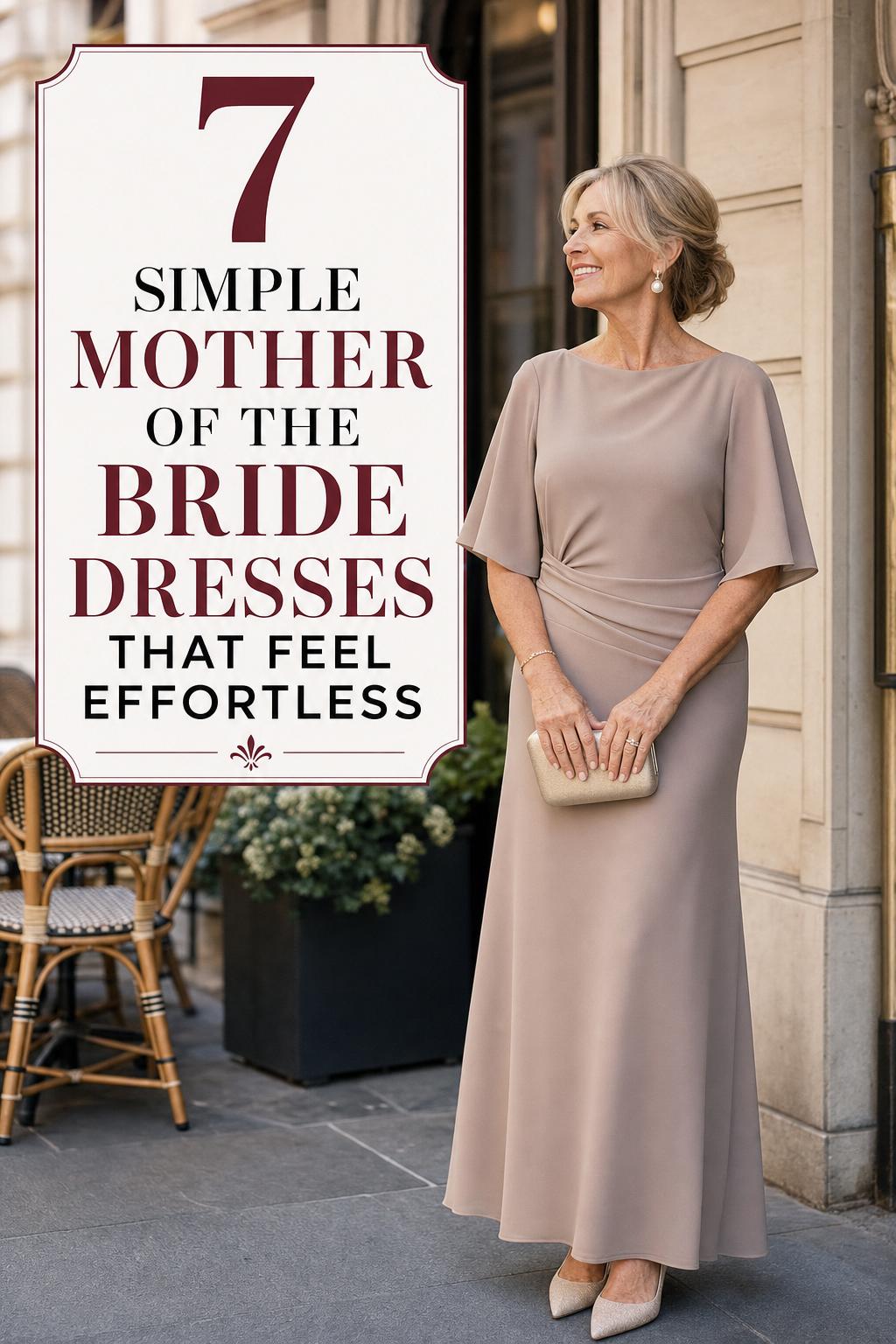
This style is the most widely recognized interpretation of simple mother of the bride dresses. It centers on silhouettes that feel reassuring and graceful rather than trend-driven. Sheath and A-line dresses dominate here, often in chiffon, satin, or crepe. The color palette leans timeless, with navy, champagne, dusty rose, and other soft or refined shades that sit beautifully within a wedding setting.
The overall mood is effortless elegance. It suits mothers who want a look that reads polished in family photographs, feels appropriate from ceremony through reception, and harmonizes with traditional wedding themes such as classic formal celebrations, garden ceremonies, and black-tie evenings.
Style overview: minimalist mother of the bride dressing
Minimalist mother of the bride dressing strips away anything unnecessary. The silhouette may still be sheath or A-line, but the lines tend to be cleaner, the embellishment quieter, and the visual impact more dependent on drape, proportion, and fabric finish. Crepe and satin are especially at home here because they communicate simplicity without looking plain.
The mood is more modern and edited. Instead of relying on multiple style signals, the dress may make its statement through one strong choice: a fluid column-like fall, a crisp neckline, or an uninterrupted floor-length line. This direction works especially well for modern minimal weddings, contemporary venues, and evening celebrations where a calm, refined look can feel more powerful than a heavily detailed one.
Where the two styles overlap
It is easy to see why these aesthetics are discussed together. Both favor restraint over embellishment. Both often appear in the same fabrics and many of the same colors. Both are likely to be labeled “simple” on retailer pages from Azazie, JJ’s House, La Femme, or GlamLora. And both aim for elegance rather than spectacle.
In practice, the overlap is strongest in the following areas: flattering silhouettes, controlled color palettes, and a preference for dresses that feel versatile across venue types. A navy chiffon dress with sleeves, for example, may read as classic simple elegance on one mother and as minimalist on another depending on the styling, length, and finish.
- Both styles often use sheath and A-line silhouettes.
- Both favor refined fabrics such as crepe, satin, and chiffon.
- Both usually avoid heavy decoration in favor of clean lines.
- Both work well for weddings where the mother of the bride wants quiet confidence rather than visual excess.
The real differences: silhouette, color, fabric, and styling philosophy
The clearest way to compare simple elegance and minimalism is to move beyond labels and examine how each approach handles the building blocks of a dress. The distinction becomes much easier once you look at silhouette, palette, texture, and the overall logic of the outfit.
Silhouette and structure
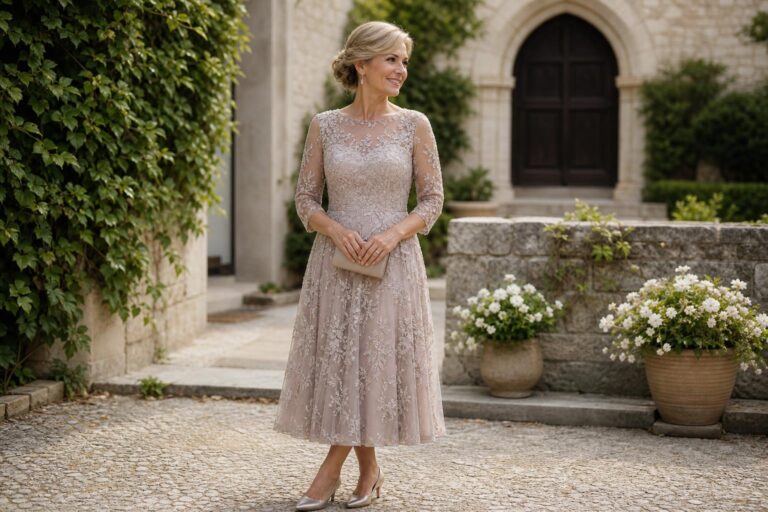
Classic simple elegance tends to prioritize softness and ease. An A-line dress is a natural example: it offers movement, a gentle shape, and broad appeal for many body types. A sheath in this category usually skims rather than clings, creating a long line without feeling severe. Tea-length can feel especially charming for daytime weddings, while floor-length usually reads more formal.
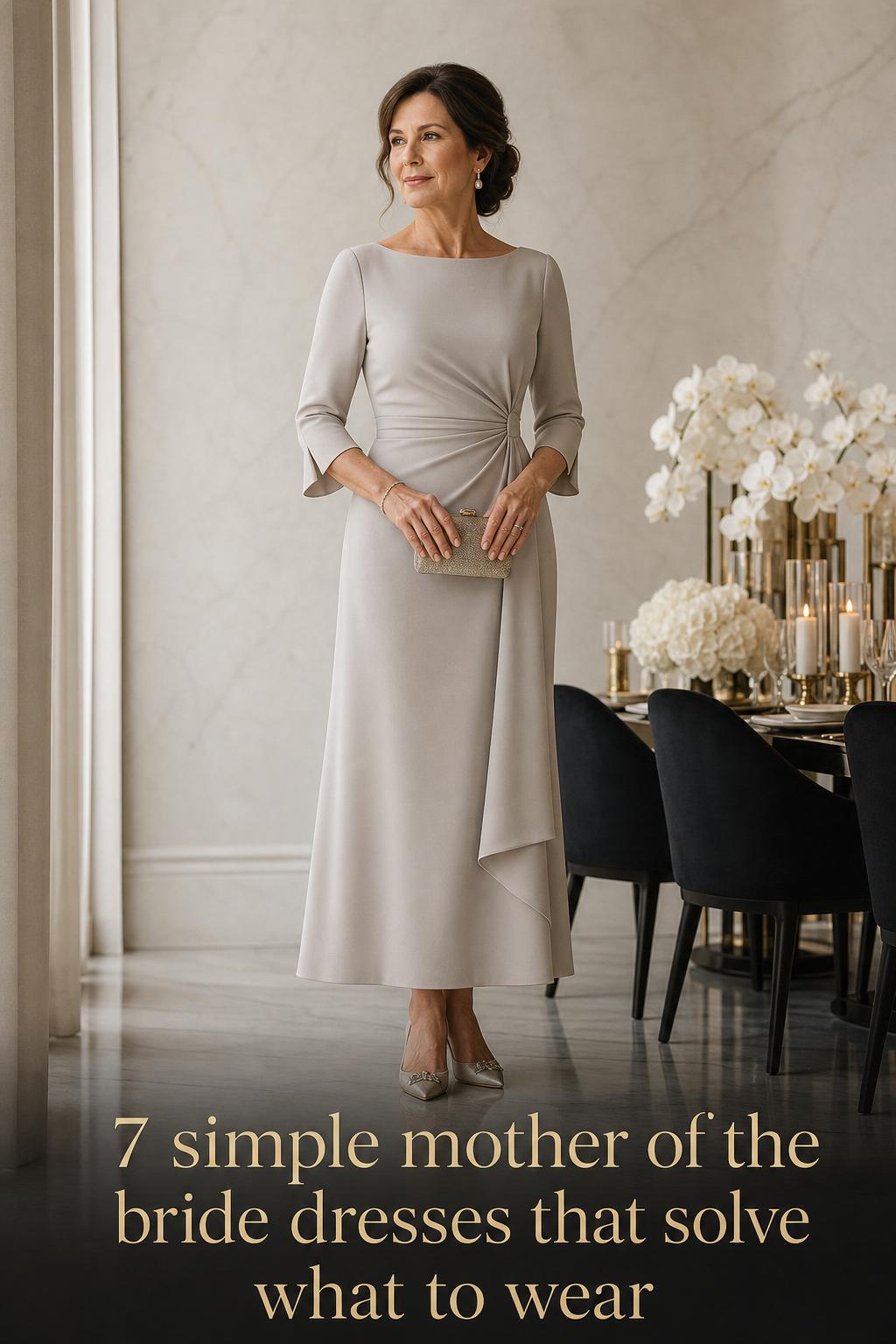
Minimalist styling, by contrast, depends more heavily on line discipline. A sheath becomes sleeker. The A-line may be more restrained, with less volume and fewer interruptions. Length matters here because uninterrupted lines often create the elegance; floor-length gowns therefore tend to feel particularly aligned with minimalism, especially in satin or crepe.
Color palette
In the classic simple category, color often carries some of the romance. Navy, champagne, dusty rose, and soft neutrals remain central because they look graceful across many wedding themes. Pastels and select jewel-tone accents can also fit comfortably, especially for garden and seasonal celebrations.
Minimalist dressing usually narrows the palette. Navy and champagne still work, but the emphasis is on calm, controlled shades rather than expressive color moments. The effect is less about the shade standing out and more about the shade supporting the silhouette. This is one reason simple champagne mother of the bride dresses can feel so modern when cut in satin, while the same color in chiffon may feel softer and more classically romantic.
Fabric and surface texture
Fabric is one of the most important differentiators. Chiffon belongs naturally to classic simple elegance because it creates movement, softness, and a forgiving drape. It is especially suited to spring and summer weddings, outdoor ceremonies, and mothers who want comfort across a long day.
Crepe and satin sit at the heart of both categories, but they behave differently depending on the styling approach. In a classically elegant dress, satin may be used to introduce richness and occasion-ready sheen. In a minimalist gown, satin often becomes the central visual statement because the rest of the dress remains so edited. Crepe is similar. It can be quietly flattering in a traditional sheath, yet in a more minimalist cut it creates a modern, sculpted look without overt decoration.
Level of formality
Neither style is inherently more formal, but they signal formality differently. Classic simple elegance tends to feel more universally wedding-coded at first glance. It easily adapts to ballroom receptions, church ceremonies, and traditional evening weddings because it speaks the visual language guests expect.
Minimalism can feel equally formal, but often in a quieter, more contemporary way. At a candlelit black-tie reception or a city venue with clean architecture, a sharply edited floor-length crepe or satin dress can look exceptionally polished. The trade-off is that minimalism leaves less room for design distractions; fit becomes even more important.
Silhouettes that shape the comparison
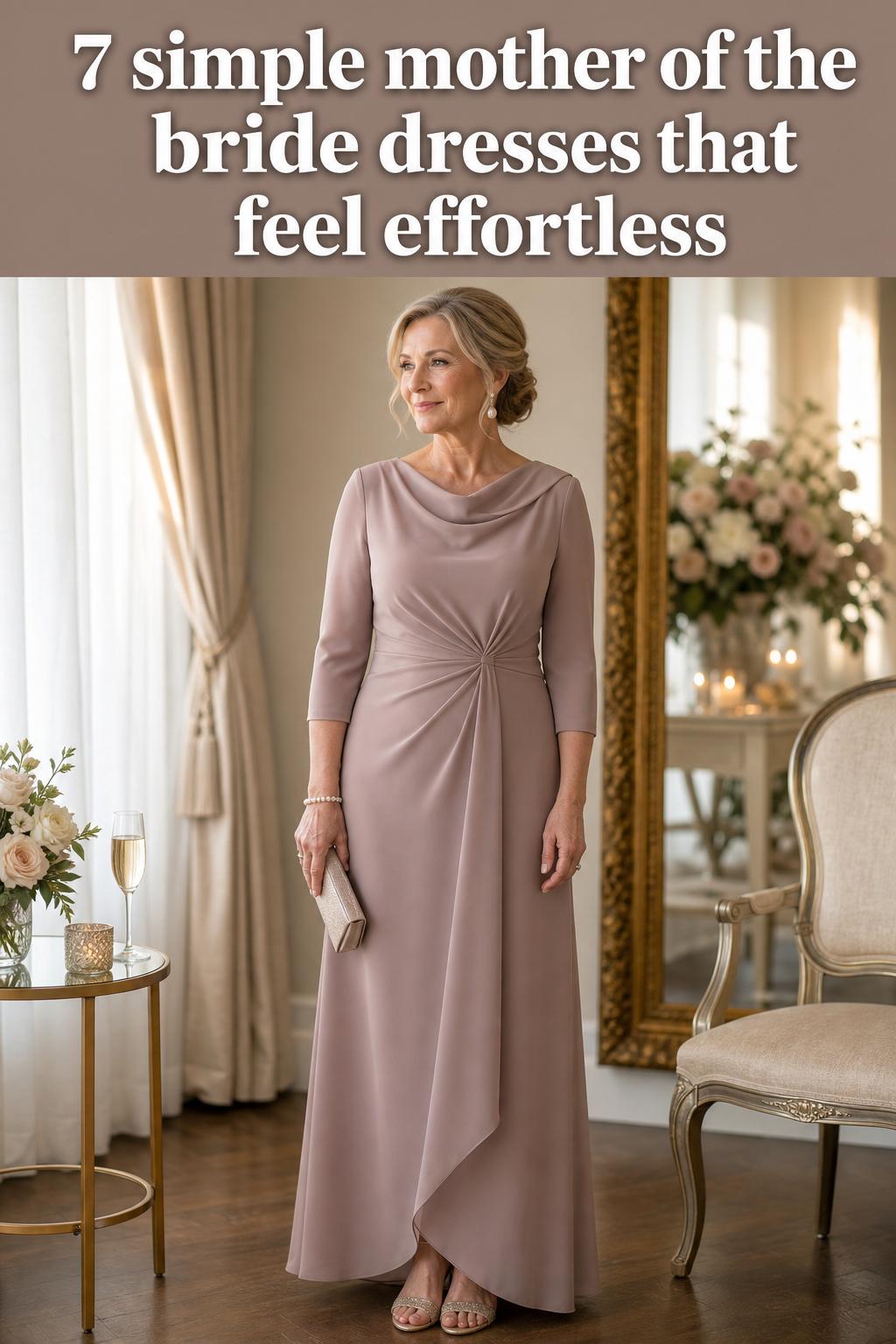
Retail collections repeatedly return to a few silhouettes because they consistently express simplicity well. For the mother of the bride, the most useful comparison is not dramatic versus modest, but fluid versus structured and soft versus sleek.
Sheath and A-line: why both work so well
The sheath is the most direct route to a clean, elegant line. It works particularly well for mothers drawn to minimalist styling, and it also appears widely in collections from La Femme and Adrianna Papell because it photographs beautifully and carries fabric well. In crepe, it reads composed and modern. In chiffon, it softens.
The A-line has broader styling flexibility. It often feels more traditionally graceful, making it a dependable choice for classic simple elegance. A simple A-line mother of the bride dress can work across venues from a garden ceremony to a formal hotel reception because it balances structure and ease. It also tends to allow easier movement during long celebrations.
Tea-length versus floor-length
Tea-length dresses usually feel lighter, more daytime-friendly, and slightly more relaxed. They suit outdoor weddings, spring ceremonies, and settings where the tone is polished but not highly formal. In the simple elegance category, tea-length can feel especially charming when paired with chiffon or a soft neutral tone.
Floor-length dresses naturally create more visual continuity, which is why they often align with minimalist dressing. They are also a strong choice for formal evening weddings and black-tie celebrations. If the venue involves dramatic lighting, a longer hem in satin or crepe tends to hold its presence beautifully without needing embellishment.
How wedding theme changes the meaning of “simple”
A simple mother of the bride dress does not exist in isolation. It is always in dialogue with the wedding itself. The same dress can feel ideally judged in one setting and slightly disconnected in another. That is why wedding theme alignment matters so much when comparing styles.
Classic formal and black-tie weddings
In a ballroom or formal evening setting, simple elegance often takes the lead. Floor-length silhouettes, navy or champagne tones, and fabrics with a graceful fall feel appropriate under evening lighting. Minimalist dressing also works here, but it benefits from sharper execution: cleaner tailoring, stronger line, and a fabric such as satin or crepe that carries the formality on its own.
Garden and romantic outdoor celebrations
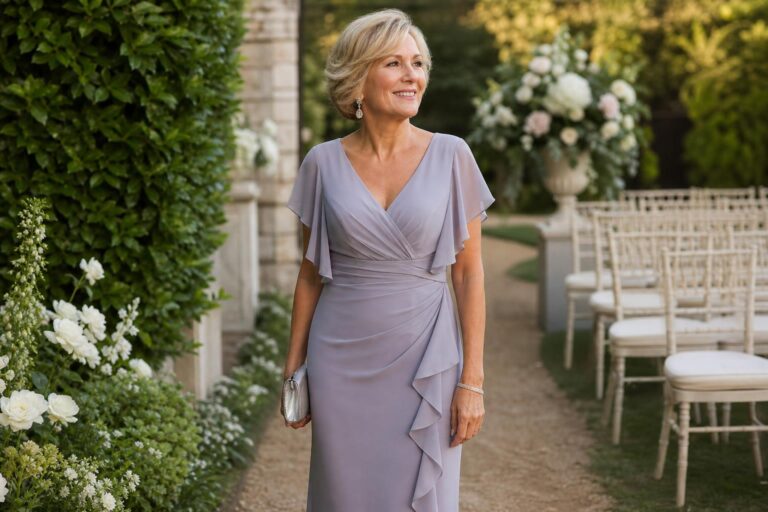
A garden ceremony calls for softness. Chiffon, dusty rose, soft pastels, and easy A-line shapes feel naturally at home against floral surroundings and daylight. Here, classic simple elegance often feels more intuitive than strict minimalism because movement and lightness matter. A minimalist dress can still work, but it usually benefits from a softer fabric or gentler color.
Beach weddings and lighter destination atmospheres
For a beach wedding, simplicity should feel breathable and unforced. Chiffon becomes especially practical because it moves easily and generally feels lighter than richer-looking fabrics. Tea-length or fluid floor-length silhouettes can both work, depending on formality. In this context, minimalism works best when it avoids stiffness; the dress should still feel comfortable in a more relaxed setting.
Modern minimal venues
Contemporary venues often make minimalist mother of the bride dressing look especially compelling. In a clean-lined city setting or a reception space with a more edited design mood, a sleek sheath in crepe or satin can look entirely sufficient on its own. The beauty comes from proportion, drape, and a controlled palette rather than decorative detail.
Seasonal comparisons: spring softness versus winter polish
Seasonality changes not only comfort but the visual success of the dress. Fabrics, sleeve options, and color depth all become more noticeable once the ceremony moves outdoors, the evening cools down, or the reception stretches for hours.
In spring and summer, chiffon and lighter palettes often feel more convincing. Soft pastels, dusty rose, champagne, and breathable silhouettes complement garden and daytime celebrations. In fall and winter, crepe, satin, and deeper tones such as navy tend to look richer and more grounded. This does not mean a summer mother must avoid satin or a winter mother must avoid chiffon; it simply means the styling logic shifts with the atmosphere and light.
- Spring: soft color, chiffon movement, tea-length or airy A-line shapes.
- Summer: breathable fabrics, controlled layering, comfort through warm ceremonies.
- Fall: richer drape, navy or champagne depth, more structured silhouettes.
- Winter: floor-length polish, satin or crepe refinement, stronger sleeve and coverage choices.
Visual style breakdown: how these dresses read in real life
Online product grids are useful, but the real test of style is how the dress appears during an actual wedding day. Movement, lighting, accessories, and the pace of the celebration all change the impression.
Layering approach
Classic simple elegance often accommodates light layering naturally. A wrap or bolero can sit comfortably over chiffon or a soft sheath without disrupting the look. This is particularly valuable for ceremonies that begin outdoors and continue into cooler evening receptions.
Minimalist dressing requires more caution with layering. Because the dress depends so much on line, any outer layer should support rather than interrupt it. The cleaner the gown, the more visible an awkward addition becomes. In practical terms, fewer but more considered accessories usually work best.
Garment proportions and outfit balance
Simple elegance is often forgiving because the look can balance itself through soft shape and movement. An A-line skirt, gentle sleeve, and fluid fabric naturally create proportion. Minimalism is more exacting. If the silhouette is sleek, every element around it becomes more noticeable, including hem length, sleeve shape, and how the dress falls when walking or sitting.
Accessories and footwear
Accessories should elevate a simple dress without breaking its mood. With classic simple elegance, jewelry can add a little softness or subtle radiance, especially for evening receptions. With minimalism, restraint matters more. The accessories should feel aligned with the dress rather than compensating for it.
Footwear follows the same logic. For a garden wedding, practical footing matters as much as appearance. For ballroom or city venues, a cleaner formal shoe can support the line of a longer dress. The key is that the shoe should complete the balance of the outfit, not compete with the dress’s simplicity.
Outfit comparisons for real wedding settings
Golden-hour garden ceremony
In classic simple elegance, this setting often calls for a chiffon A-line or a soft tea-length silhouette in dusty rose, champagne, or a gentle pastel. The logic is movement and softness. The dress should catch the light delicately and feel comfortable during an outdoor ceremony and reception transitions.
In a minimalist interpretation, the same garden setting might favor a more reduced sheath in a calm neutral tone. It can look striking, but it works best when the venue itself has a clean visual mood. If the surroundings are highly romantic and floral, too sharp a minimalist line may feel slightly separate from the atmosphere.
Formal evening ballroom reception
Classic simple elegance might lean toward a floor-length navy dress with sleeves, perhaps in satin or chiffon, depending on the desired softness. The color carries formality, and the silhouette supports a traditional evening setting.
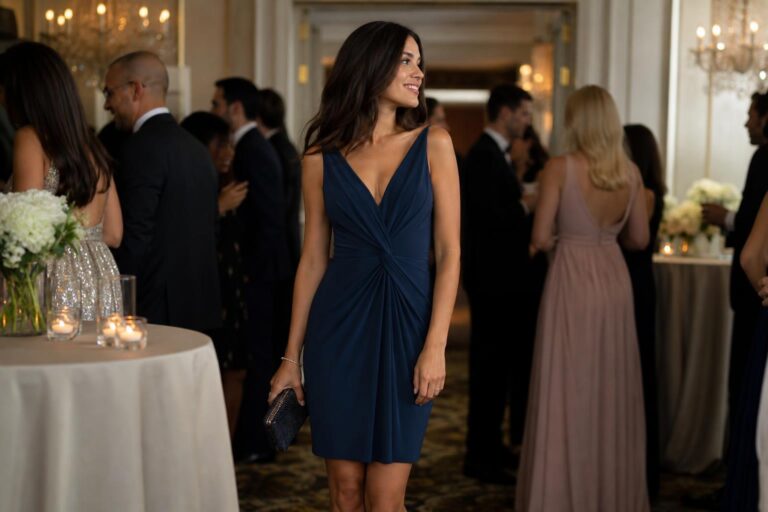
Minimalist styling in the same ballroom could take the form of a sleek crepe or satin floor-length sheath in navy or champagne. Under candlelit reception lighting, this kind of dress often looks especially refined. The trade-off is that the fit needs to be exceptionally considered, because there is little visual distraction if proportion is off.
Beach ceremony with a relaxed dress code
The classic simple version usually wins here: lightweight chiffon, a softer silhouette, and easy movement. A tea-length or flowing floor-length cut can feel graceful without looking overdressed for the setting.
The minimalist version should be approached carefully. It can work, especially if the dress remains fluid rather than rigid, but strong structure or heavy visual severity may feel too formal against a beach backdrop. In this environment, simplicity should look effortless, not austere.
Choosing by comfort, fit, and coverage
For the mother of the bride, a dress is never judged by appearance alone. Weddings involve standing, sitting, greeting guests, moving through photos, and staying polished for many hours. Comfort is part of elegance. A simple dress that feels easy to wear usually looks better by the end of the celebration than a more ambitious option that demands constant adjustment.
Sleeves, coverage, and balance
Simple mother of the bride dresses with sleeves remain especially appealing because they solve both style and comfort concerns. Sleeves can contribute to a modest, polished line while also supporting seasonal practicality. Long sleeves tend to suit cooler-weather weddings and more formal settings, while lighter sleeve coverage can feel softer for spring and summer.
Coverage should always feel integrated into the dress rather than added as an afterthought. In classic simple elegance, sleeves often blend naturally into the softness of the design. In minimalism, sleeve shape becomes even more important because it affects the overall geometry of the look.
Alteration awareness
The simpler the dress, the more visible fit becomes. This is particularly true of sheath silhouettes and clean crepe or satin designs. A-line dresses and chiffon can be more forgiving, but even they benefit from thoughtful length and proportion. Small adjustments in hem, waist placement, or sleeve fit can make the difference between a dress that looks merely fine and one that looks composed.
Tip: when comparing dresses online, do not focus only on the front view. Think about how the silhouette will behave during walking, sitting, and photographs from the side. Simplicity places greater emphasis on shape, so movement matters as much as static appearance.
Accessories that support, rather than crowd, a simple dress
A simple mother of the bride look is rarely about adding more. It is about adding with intention. Jewelry, shoes, and a wrap or bolero should reinforce the dress’s mood, not interrupt it. This is where many otherwise elegant outfits lose their clarity.
With a chiffon A-line or softer sheath, accessories can bring a touch of evening polish without overwhelming the dress. With a minimalist satin or crepe gown, restraint is usually more effective. The clean dress already carries the message; the accessories simply need to finish it.
- Choose jewelry that echoes the dress’s tone rather than competes with it.
- Use a wrap or bolero when the ceremony-to-reception temperature changes.
- Select footwear with venue conditions in mind, especially for garden or beach weddings.
- Keep hair and makeup aligned with the dress mood: soft for romantic simplicity, cleaner for minimalist polish.
Tip: if the dress has very little surface detail, avoid trying to “fix” that with too many styling additions. A clean silhouette often looks more elevated when the entire outfit remains edited.
Brand comparison: how leading names approach simple mother of the bride dresses
Different brands and retailers approach simplicity from slightly different angles. Understanding that distinction helps narrow the search more quickly, especially for U.S. shoppers balancing inspiration with practical concerns such as inventory, filtering, and size options.
Adrianna Papell
Adrianna Papell stands out for guidance-oriented presentation around style, fabrics, colors, and how to choose based on season or wedding theme. The brand’s framing of simple mother of the bride dresses leans toward classic elegance, with attention to crepe, satin, and widely favored silhouettes such as A-line and sheath. It is a useful reference point for mothers who want style advice alongside product browsing.
Azazie and JJ’s House
Azazie and JJ’s House are particularly strong for filter-based shopping. Their simple mother of the bride dress collections emphasize browsing by style, color, size, and related attributes. This makes them practical starting points for mothers who already know they want, for example, a navy simple dress, a chiffon option, or a silhouette with sleeves. Their strength is breadth and sorting convenience rather than a heavily editorial style perspective.
La Femme
La Femme presents simplicity through a style-gallery lens. The brand’s approach tends to spotlight elegant gown silhouettes with clean visual impact. For mothers drawn to a more polished, sleek, and occasion-forward look, La Femme can feel closer to the refined side of the spectrum, where simple does not mean casual in any sense.
Adasa, Couture Candy, MarlasFashions, and GlamLora
These retailers offer curated or broad collections that often include multiple designers and a range of dress attributes, including sleeves, fabric, and length variations. Adasa and Couture Candy are especially relevant when shoppers want a retailer-curated view across labels rather than a single-brand aesthetic. MarlasFashions and GlamLora add further browsing options, including collections tied to simple or minimalist styling trends.
For readers looking at broad inspiration lists, Wedding Dresses Guide also reflects how simple mother of the bride dressing is often grouped alongside classy or unusual alternatives, with references to brands such as Alicia Rueda, Carla Ruiz Costura, and Alex Evenings. That broader view can be useful when deciding whether your own preference leans truly simple or merely less embellished than average.
Where each style works best in a real wardrobe
Although this is occasion dressing, mothers still benefit from thinking in terms of wardrobe function. The best dress is not just attractive in isolation; it is suited to the event’s tone, season, venue, and the wearer’s comfort needs.
Choose classic simple elegance when
- the wedding is traditional, romantic, or garden-oriented
- you want a look that feels universally flattering and easy to wear
- movement, softness, and all-day comfort are priorities
- you are drawn to chiffon, soft satin, A-line silhouettes, or tea-length options
- you want the outfit to feel immediately wedding-appropriate in family photos
Choose minimalist mother of the bride styling when
- the wedding has a modern, city, or edited formal atmosphere
- you prefer cleaner lines over decorative detail
- you are confident in a sharper silhouette such as a sleek sheath
- you want fabric and cut to carry the look rather than embellishment
- you are comfortable investing attention in fit and proportion
Tip: if you feel torn between the two, choose a bridge look. A simple sheath or A-line in crepe, navy, or champagne often balances classic elegance and minimalism beautifully. That middle ground is one of the most versatile choices in the category.
Common mistakes that make a simple dress feel less polished
The appeal of simplicity is clarity, but that clarity can be lost quickly. The most common issue is not that a dress is too plain; it is that the surrounding choices are not aligned with the dress’s logic.
- Choosing a fabric that fights the venue or season.
- Adding accessories that disrupt an otherwise clean line.
- Ignoring hem and fit details, especially in sheath silhouettes.
- Selecting a color that feels disconnected from the wedding theme.
- Assuming “simple” means less formal, when a black-tie setting may require more visual presence through length or fabric.
A well-chosen simple mother of the bride dress should look intentional from every angle. That intention comes from the relationship between silhouette, fabric, color, and wedding context. Once those are aligned, the outfit rarely needs much more.
A final styling lens before you shop
The most successful simple mother of the bride dresses do not rely on trend language alone. They work because they express the right kind of simplicity for the occasion. For one wedding, that may mean a chiffon A-line in dusty rose at golden hour in a garden. For another, it may mean a floor-length crepe sheath in navy under ballroom lighting. The dress changes, but the principle stays the same: simplicity should feel deliberate, elegant, and appropriate to the event.
If you remember one distinction, let it be this: classic simple elegance is about softness and timeless occasion dressing, while minimalist mother of the bride styling is about reduction and precision. Both are beautiful. The best choice depends on venue, season, comfort, and how you want your presence to register in the room. In many cases, the strongest look borrows from both.
FAQ
What color should the mother of the bride wear to a formal wedding?
For a formal wedding, timeless shades such as navy and champagne are especially strong choices because they carry elegance naturally and work well in evening settings. The best color should also feel aligned with the wedding theme, season, and overall palette.
Are simple mother of the bride dresses appropriate for black-tie weddings?
Yes, as long as the simplicity still feels formal through silhouette, length, and fabric. A floor-length dress in satin or crepe usually reads more black-tie appropriate than a shorter, more casual-feeling option, even when both are simple in design.
What fabrics work best for a simple mother of the bride dress?
Crepe, satin, and chiffon are the key fabrics most closely associated with this style. Chiffon brings softness and movement, satin adds refined richness, and crepe offers a smooth, polished line that works especially well in clean silhouettes.
Is an A-line or sheath silhouette better for a simple mother of the bride look?
Both work beautifully, but they create different effects. A-line dresses usually feel softer and more classically graceful, while sheath dresses look sleeker and more streamlined. The better choice depends on the wedding setting, the fabric, and how tailored or fluid you want the look to feel.
Do simple mother of the bride dresses with sleeves look more formal?
Sleeves can make a dress feel more polished and composed, particularly for formal weddings or cooler seasons. They also add coverage and comfort, which is why they remain a popular option in both classic simple and minimalist mother of the bride styles.
How do I choose between tea-length and floor-length?
Tea-length often suits daytime, garden, and lighter-formality weddings, while floor-length is usually the stronger choice for evening, black-tie, and more formal venues. The right hem should reflect both the dress code and the atmosphere of the celebration.
Which brands are known for simple mother of the bride dresses?
Adrianna Papell, Azazie, La Femme, JJ’s House, Adasa, Couture Candy, GlamLora, and MarlasFashions all appear prominently in this category, though they differ in approach. Some focus on editorial guidance, while others are especially useful for broad product selection and shopping filters.
How much should a mother of the bride dress cost?
Price varies widely depending on the retailer, designer, and fabric, which is why many shoppers compare multi-brand retailers with brand-specific collections. It is usually more helpful to judge value by fit, fabric, and how well the dress suits the wedding than by price alone.
Can a minimalist mother of the bride dress still feel warm and celebratory?
Yes, especially when the color, fabric, and styling are thoughtfully chosen. A minimalist dress in champagne satin or navy crepe can feel very occasion-ready, but it should still connect to the wedding’s atmosphere so the look feels elegant rather than too severe.
What is the easiest way to keep a simple mother of the bride outfit polished all day?
Start with a comfortable silhouette, a fabric suited to the season, and accessories that do not compete with the dress. A well-fitted sheath or A-line in chiffon, satin, or crepe usually holds up far better over the course of a long celebration than a dress that looks beautiful at first but feels difficult to wear.