Blush or Bold? Choosing a Pink Wedding Guest Dress by Venue
Pink wedding guest dress, decoded: romantic blush vs statement fuchsia in real wedding settings
The last outfit decision before a wedding rarely happens in a quiet moment. It happens while you’re picturing the venue—sunlight on a garden aisle, a candlelit reception, a black-tie ballroom—and realizing “pink” can mean entirely different things depending on the shade, fabric, and silhouette. A pink wedding guest dress can read soft and bridal-adjacent in one context, bold and celebratory in another, even when the hemline and dress code are similar.
This is why two pink aesthetics are constantly discussed together and so often confused: the romantic blush approach (think airy, pastel, and understated) and the statement fuchsia approach (think saturated, confident, and high-impact). Both can be elegant, both can be appropriate, and both can go wrong if the proportions, formality level, or styling cues don’t align with the invitation.
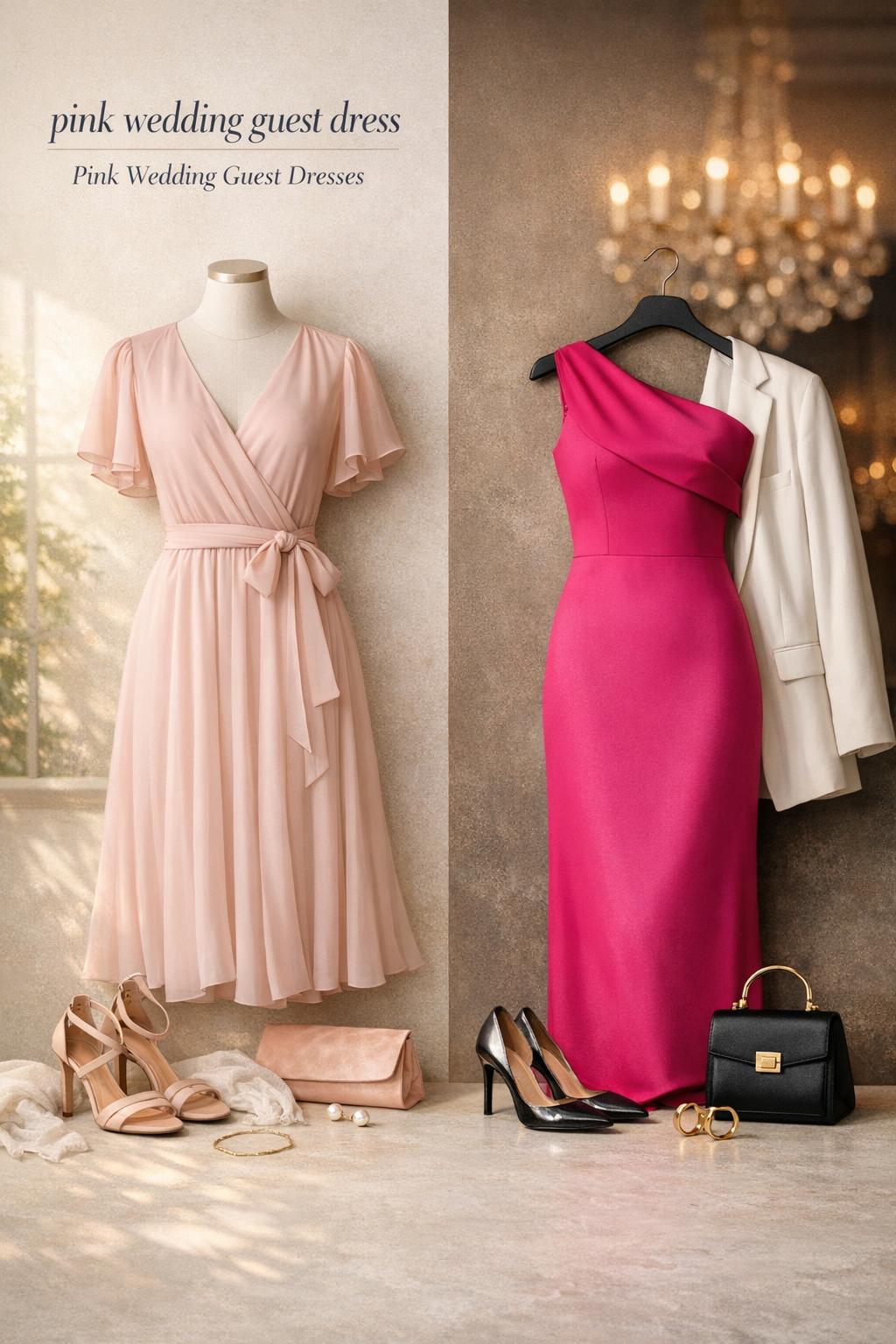
Below, you’ll find a style breakdown that compares these two directions across silhouette, fabric behavior, accessories, and venue logic—plus practical outfit interpretations that show how each pink family translates into Pink wedding guest dresses, pink formal dresses, and even the more dramatic lane of elegant ball gowns and floor length prom dresses when the dress code leans formal.
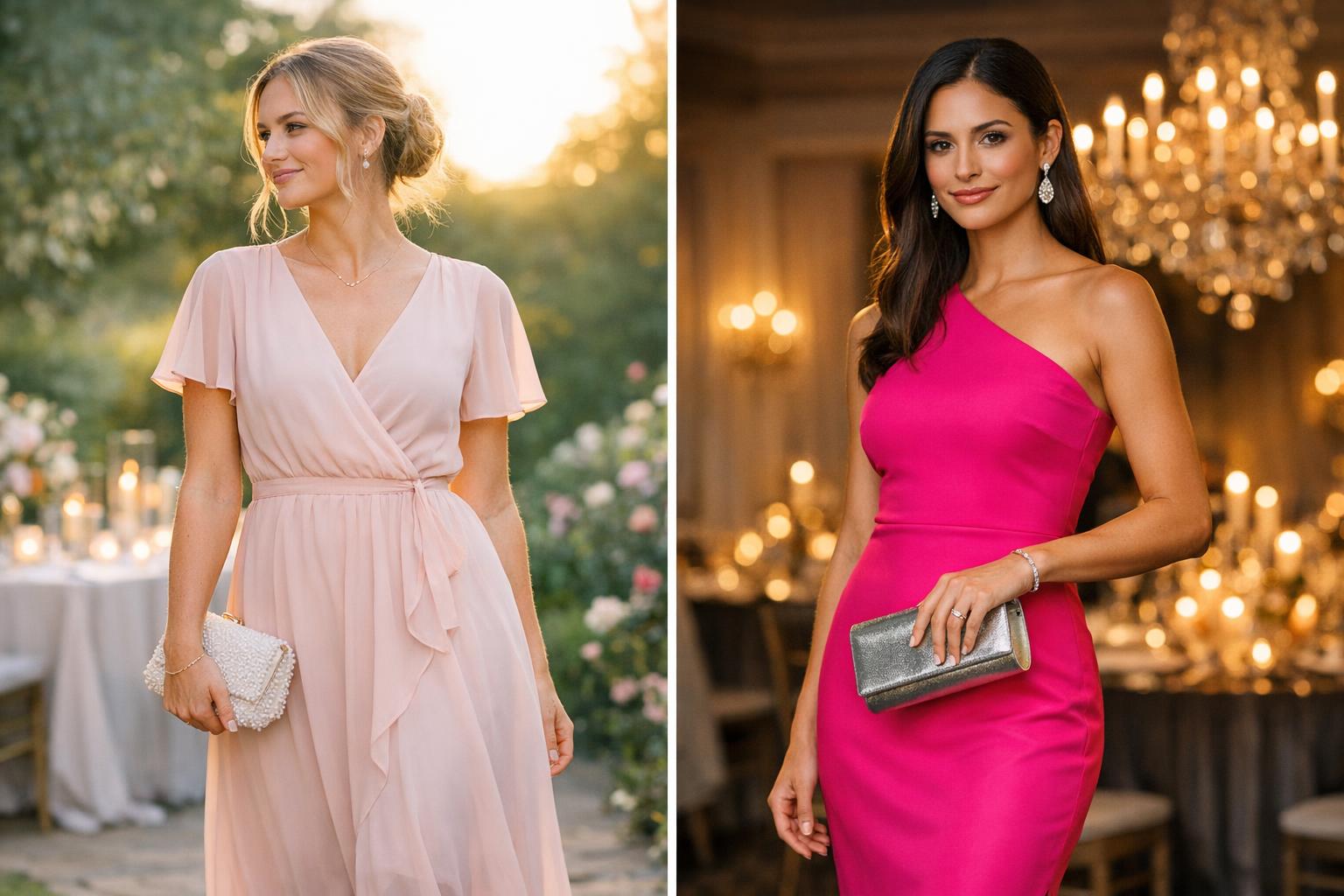
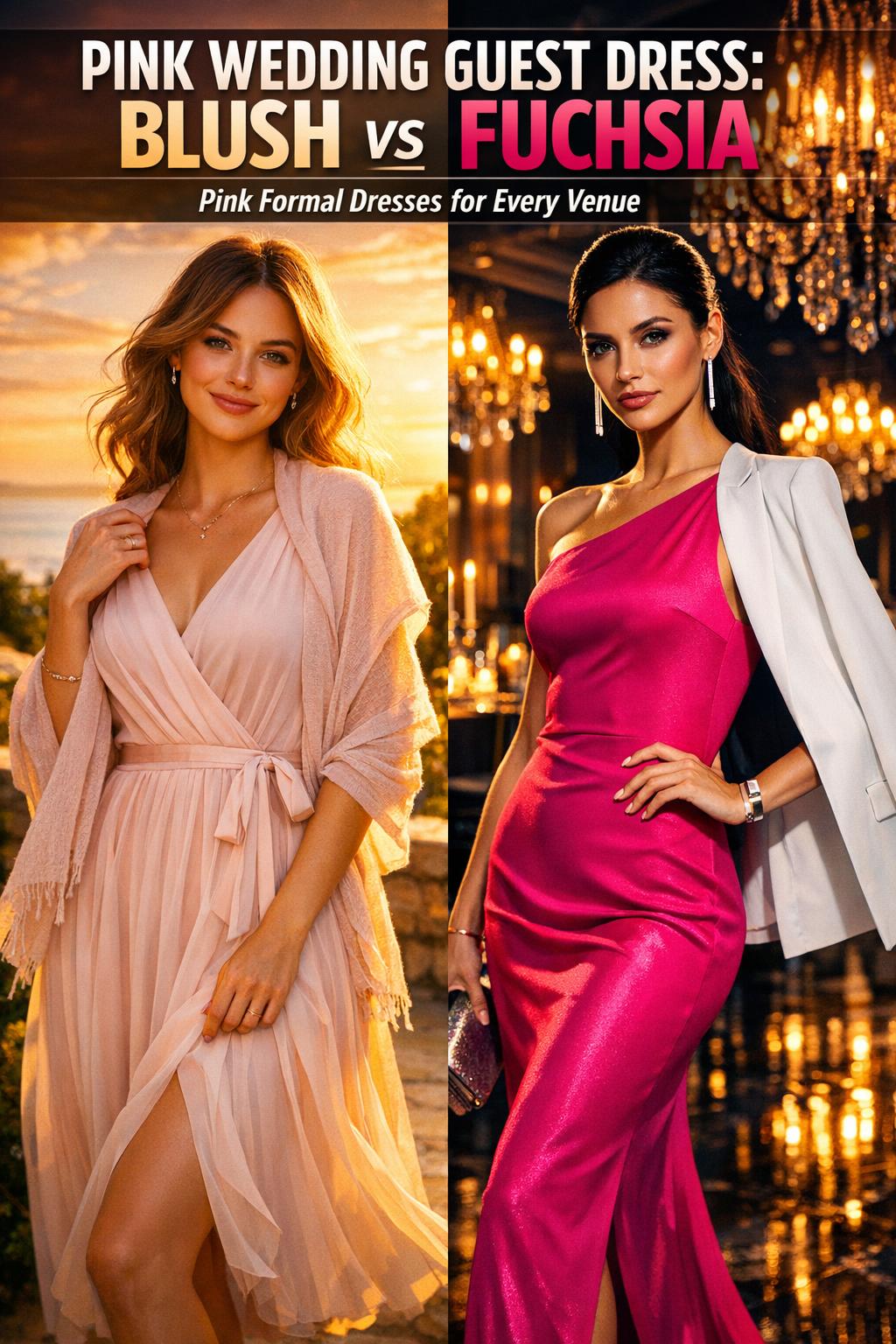
Style overview: romantic blush pink (soft, airy, “golden hour” elegance)
Romantic blush is the pink that feels at home in natural light: gardens, vineyards, coastal ceremonies, and daytime receptions where the mood is refined but not severe. It’s defined less by “look at me” color and more by texture, movement, and delicacy—pink used as a gentle wash rather than a spotlight.
In silhouette, this aesthetic tends to favor fluid lines: midi and maxi lengths that move when you walk, soft wrap shapes, gentle pleating, subtle draping, and skirts that sway rather than hold a rigid shape. When it does go structured, it’s usually in a tailored bodice that still feels light—never heavy or architectural.
The mood is romantic and occasion-aware: elegant enough for wedding photos, comfortable enough for long ceremonies, and intentionally restrained so it doesn’t compete with bridal styling. In the broad universe of Pink wedding guest dresses, blush is the “effortless polish” lane: it looks considered even when it’s minimal.
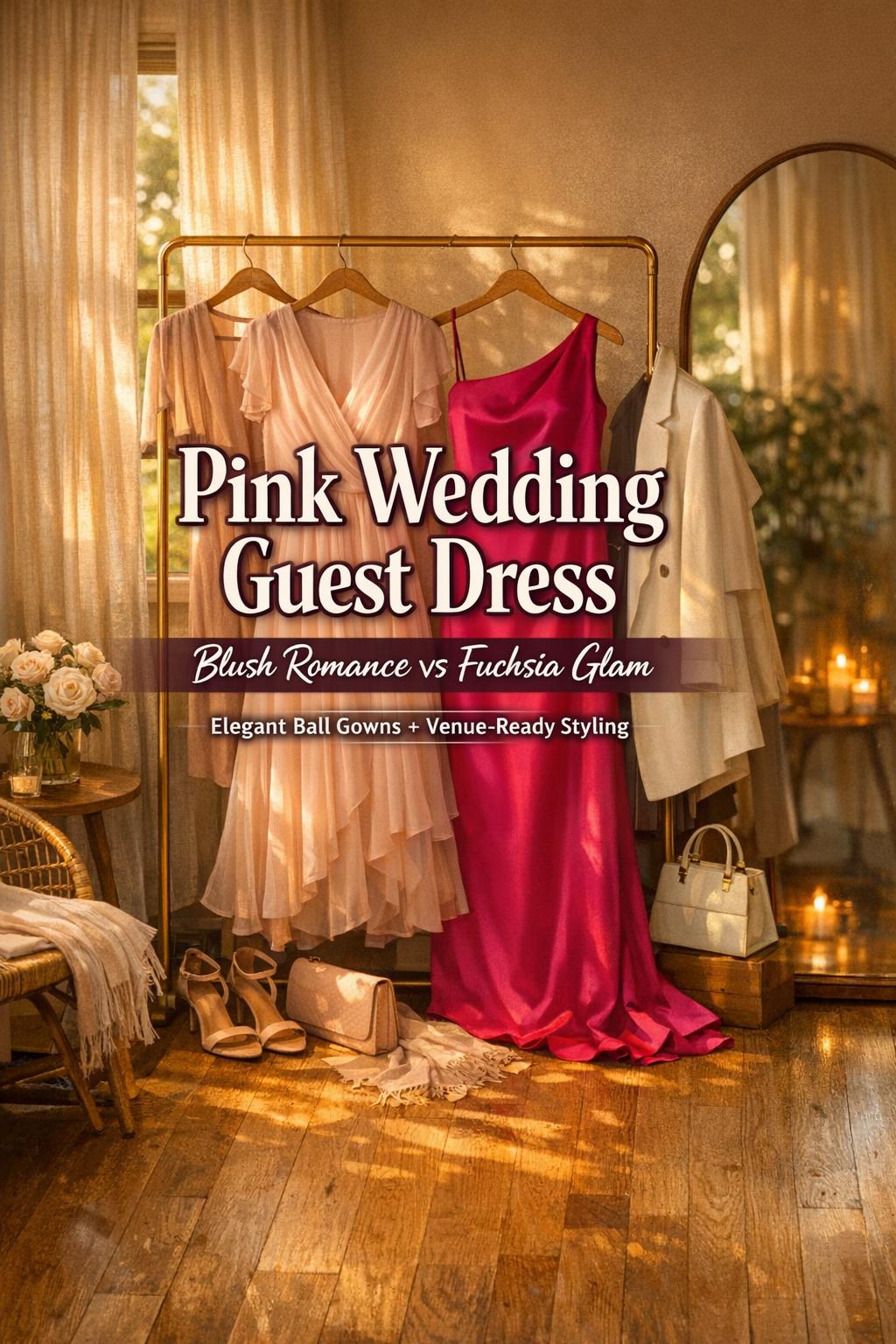
Style overview: statement fuchsia pink (bold, modern, “reception-ready” glamour)
Statement fuchsia is pink with a point of view. It’s saturated, energetic, and designed to read clearly in evening lighting—under chandeliers, in candlelit rooms, and on dance floors where a stronger color holds its own. This aesthetic is often chosen when the guest wants the outfit to feel fashion-forward while still respecting the formality of the celebration.
Silhouettes here can be sleek or dramatic. On the sleek side: a clean slip profile, a one-shoulder line, or a column that elongates. On the dramatic side: fuller skirts, sculptural sleeves, or high-impact proportions that flirt with the language of elegant ball gowns. This is also the pink that crosses over most naturally into pink formal dresses, formal prom dresses long, and floor length prom dresses—especially when the event calls for maximal polish.
The aesthetic mood is confident and celebratory. It doesn’t rely on whisper-soft texture; it relies on color intensity and strong styling choices. Done well, it feels like a deliberate tribute to the couple’s party—dressed up, camera-ready, and unmistakably festive.
Why these two pink aesthetics get mixed up
Blush and fuchsia share the same color family, but weddings rarely judge a dress only by its hue; they judge it by the total message of the outfit. A soft pink in a glossy fabric can suddenly read louder than intended. A bright pink in a matte, streamlined shape can read surprisingly restrained. This is the core reason people debate what counts as “too much” or “not formal enough” when they search for a pink wedding guest dress.
Another point of confusion is dress code overlap. The same wedding might include a sunny outdoor ceremony and a formal evening reception. In those situations, blush and fuchsia aren’t competing choices so much as different solutions: blush harmonizes with daylight and floral settings, while fuchsia claims space after dark. The right answer depends on where the wedding lives on the spectrum between romantic daytime elegance and evening glamour.
Key differences that matter at a wedding
Silhouette and structure: float vs frame
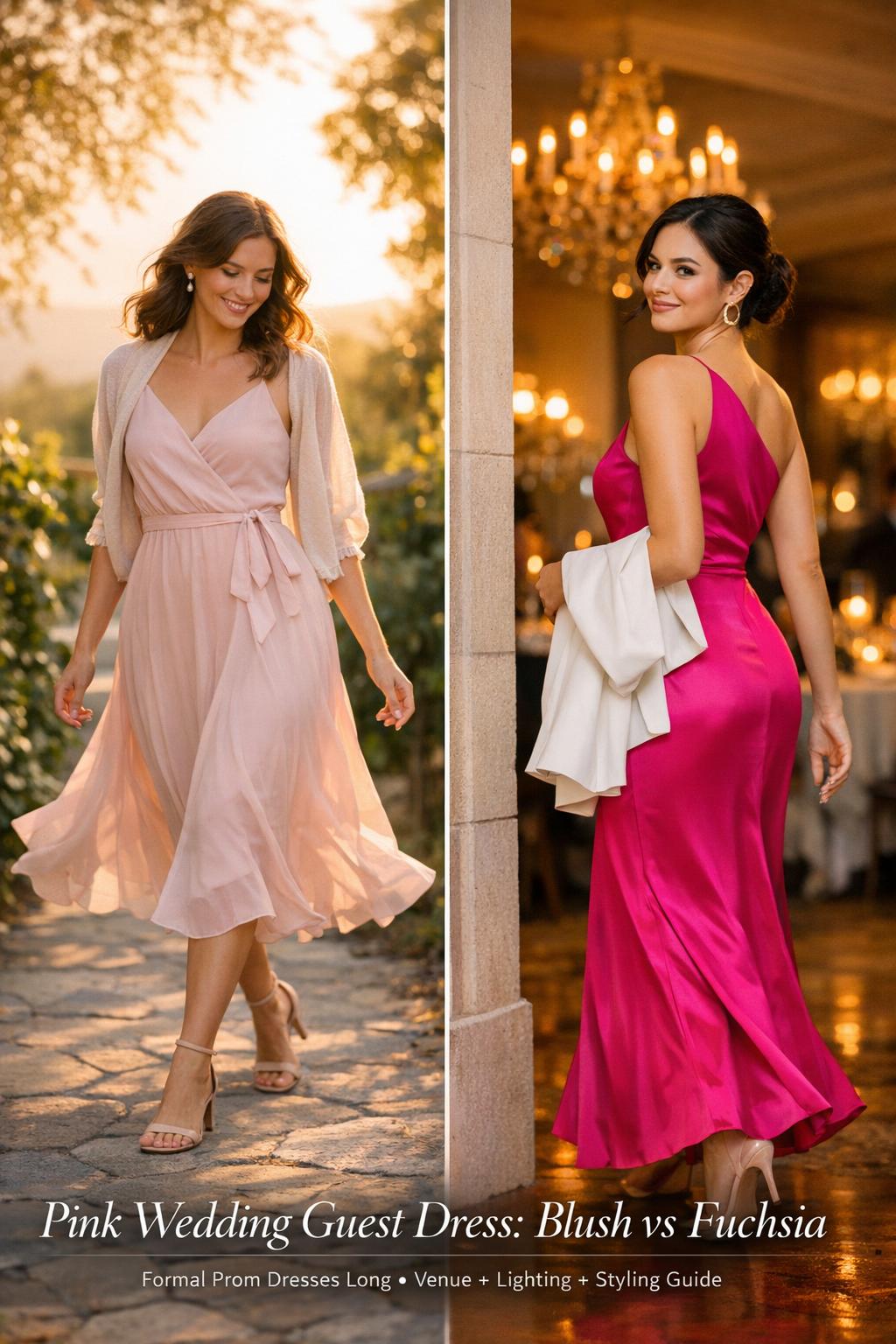
Romantic blush tends to “float”: it prioritizes movement, drape, and softness so the dress looks graceful in candid moments—standing during vows, walking across grass, turning to greet someone. Statement fuchsia tends to “frame”: it highlights clean lines, sharper shapes, or intentionally dramatic volume so the look reads with clarity and confidence, especially in formal interiors.
If you’re choosing between two dresses with the same length, look at how the fabric holds shape. The blush approach benefits from gentle motion. The fuchsia approach can handle crispness, weight, or a silhouette that stays visually strong even when you’re seated through dinner.
Color palette logic: watercolor vs jewel-tone energy
Blush is about nuance—soft pink that feels like it belongs beside florals, greenery, and natural textures. It photographs as romantic, especially in warm daylight. Fuchsia is about contrast—pink that becomes a centerpiece. It photographs as bold, especially in evening lighting where saturated color pops against darker backgrounds.
Neither is automatically more “wedding-appropriate.” The practical difference is how much visual space the color claims. If the couple’s celebration leans traditional and understated, blush blends gracefully. If the celebration leans modern and fashion-forward, fuchsia can feel perfectly aligned.
Level of formality: quiet refinement vs explicit glamour
Blush can be formal, but its formality often reads as quiet: refined and graceful rather than dramatic. Fuchsia tends to signal “event dressing” immediately. This is why statement pink is so often associated with pink formal dresses, elegant ball gowns, and formal prom dresses long—categories where the outfit is expected to command attention in a celebratory room.
If your invitation suggests a formal evening reception, fuchsia is an easy way to look “dressed up” without relying on heavy embellishment. If the invitation suggests daytime or semi-formal, blush often does the work of looking appropriate without looking overdone.
Styling philosophy: harmony vs focal point
Romantic blush styling aims for harmony: the dress, accessories, and beauty look should feel like one soft story. Statement fuchsia styling usually expects a focal point: the dress is the headline, and everything else supports it. That doesn’t mean fuchsia needs loud accessories—often the most polished approach is to let the color be the drama and keep the rest intentional and clean.
Visual style breakdown: how each look reads from ceremony to reception
Layering approach: light coverage vs polished outerwear
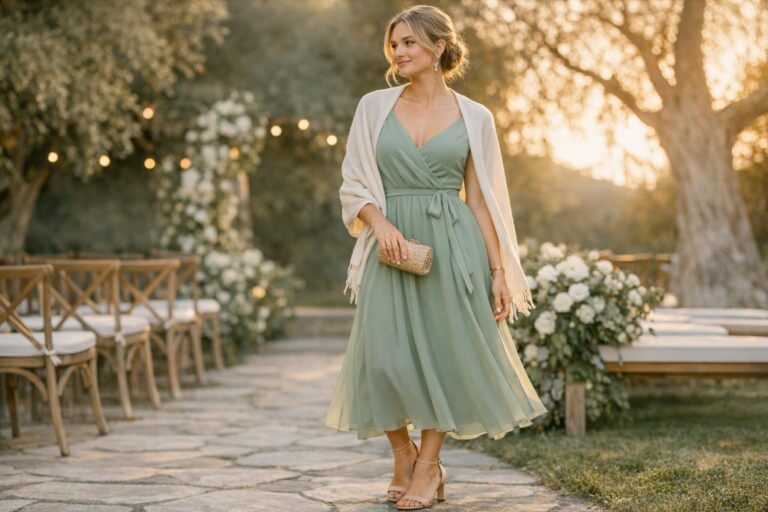
With romantic blush, layering usually stays airy so it doesn’t crush the softness of the dress. Think in terms of light coverage for a breezy ceremony or a cooler evening transition—something that maintains movement and keeps the silhouette delicate.
With statement fuchsia, layering often becomes part of the structure: a more polished piece that holds its own next to a strong color. In a formal setting, that can be the difference between looking like you’re wearing a bright dress and looking like you’re wearing a complete evening look.
Proportions and balance: softness needs editing, bold color needs restraint
Blush can drift into “too sweet” if everything is equally soft—soft dress, soft accessories, soft everything. The most flattering blush styling usually includes one edited element: a cleaner shoe line, a slightly more tailored bodice, or a simpler hairstyle that keeps the look modern.
Fuchsia, on the other hand, can feel heavy if the dress is dramatic and the accessories are equally dramatic. The visual win comes from restraint: clean jewelry, streamlined shoes, and a beauty look that feels intentional rather than competing.
Accessories and footwear: romantic detail vs sleek finishing
Romantic blush pairs naturally with delicate accessories—pieces that feel light in scale and echo the softness of the palette. Footwear tends to look best when it doesn’t visually “cut” the leg line; the goal is continuity and ease, especially for outdoor venues where walking surfaces may be uneven.
Statement fuchsia tends to look most elevated with sleeker finishing: accessories that feel graphic, clean, and deliberately chosen. Footwear can be more architectural in shape if the venue is formal and the walking surfaces are predictable, but comfort still matters through a long reception and plenty of standing.
Outfit comparisons: the same wedding scenario, two different pink philosophies
Garden ceremony with a late-afternoon reception
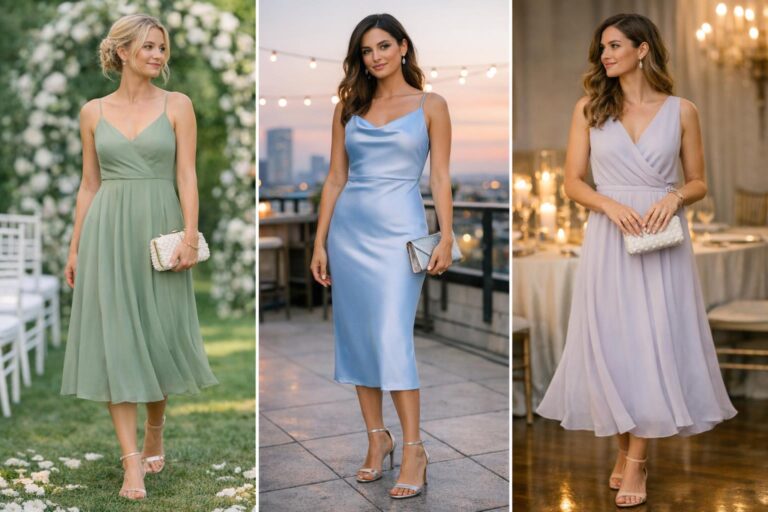
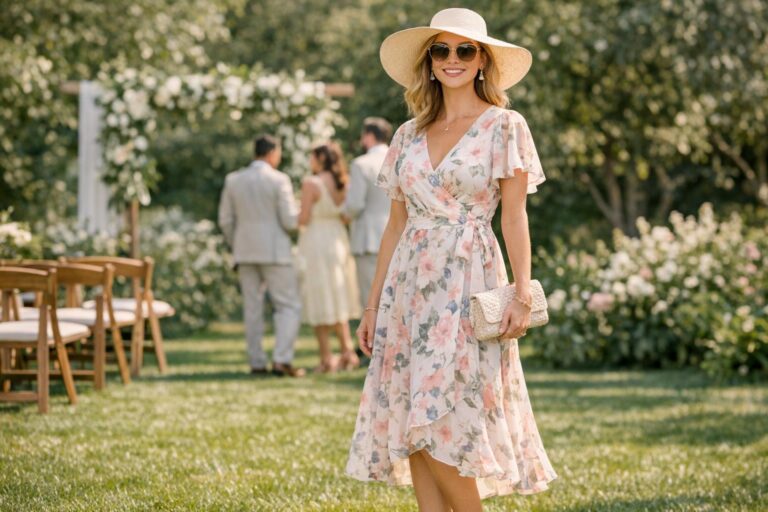
In romantic blush, the styling leans into the venue: a soft pink wedding guest dress with fluid movement and an airy finish that looks effortless in sunlight. The outfit feels like it belongs beside florals and greenery, and it photographs with a gentle, luminous mood during golden hour.
In statement fuchsia, the dress becomes the modern contrast against the garden setting. The look works best when it’s edited—clean lines, minimal competing details—so the color reads as celebratory rather than loud. The result is fashion-forward, especially when the reception shifts into evening lighting and the color gains depth.
Beach or coastal wedding where wind and walking are real factors
Romantic blush excels here because it can look elevated without looking heavy. The practical styling logic is movement plus control: a silhouette that won’t fight the wind and a length that won’t become a constant adjustment. A softer pink looks natural against sand and sea tones, keeping the overall effect serene.
Statement fuchsia can absolutely work on the coast, but it asks for more restraint in silhouette so the color doesn’t overpower the setting. A streamlined shape reads chic against a bright outdoor backdrop, but the best interpretation keeps the outfit grounded—comfortable footwear choices, secure straps or sleeves, and minimal fuss so you’re not styling yourself all day.
Formal evening reception (where pink formal dresses make sense)
Romantic blush in a formal evening context needs a deliberate upgrade: a more structured silhouette, richer-looking texture, and finishing details that read “night.” The goal is to keep the softness while raising the formality, so the dress doesn’t feel like it belongs to a daytime ceremony.
Statement fuchsia is naturally aligned with evening formality, especially when the dress is long and cleanly cut. This is where crossover categories—pink formal dresses, formal prom dresses long, and floor length prom dresses—start to overlap with wedding guest dressing. The difference is styling discipline: the look should feel celebratory and elegant, not costume-like, and never distract from the couple’s moment.
Ballroom wedding with a dramatic dress code (elegant ball gowns, thoughtfully chosen)
If the invitation and venue truly support it, romantic blush can enter elegant ball gowns territory in a softer, storybook way—especially when the dress relies on proportion and movement rather than loud detailing. In a ballroom, blush reads like romance under chandeliers, provided the overall look is intentional and polished.
Statement fuchsia in a ballroom can be breathtaking, but it’s also the easiest to overdo. If you choose a fuller skirt or more dramatic shape, keep the rest refined so the outfit stays within wedding guest etiquette rather than turning into a red-carpet moment. In this setting, the smartest fuchsia styling is often the most controlled.
The dress-code translation: where each pink sits on the formality spectrum
Dress codes are often written in a few words, but they imply a full atmosphere. Pink can fit nearly any code; the deciding factors are length, structure, and finish—how “evening” the dress reads, not just how bright it is.
- Cocktail: romantic blush reads refined with a clean silhouette and subtle movement; statement fuchsia reads modern and intentional with minimal competing details.
- Formal: blush needs added structure and polished finishing; fuchsia naturally suits pink formal dresses in long lengths when kept elegant.
- Black-tie: blush works when it looks undeniably evening; fuchsia works beautifully in long, sleek silhouettes and can edge toward floor length prom dresses in shape, as long as the styling remains wedding-appropriate.
If you’re torn between a blush midi and a fuchsia floor-length option, the invitation timing is a useful compass. Daytime often rewards softness and lightness; nighttime rewards depth and clarity. When the event spans both, your choice should prioritize the most photographed portion of the day—usually the ceremony and the first hour of the reception.
Tips from a wedding-stylist mindset: getting pink right without second-guessing
Tip: let the venue “choose” the finish
When you’re deciding between two pink wedding guest dresses, imagine them in the venue’s lighting. Soft blush thrives in natural light; fuchsia thrives in low light and evening glow. If the wedding is outdoors with abundant daylight, prioritize texture and movement. If it’s indoors with evening ambience, prioritize structure and a finish that reads polished.
Tip: use comfort as a formality tool
Comfort isn’t separate from elegance—at weddings, it’s part of it. A dress that restricts sitting through dinner or forces constant adjustment will read less polished over time. For blush, comfort often means breathable movement. For fuchsia, comfort often means secure structure: a bodice that stays in place, straps that don’t require fussing, and a silhouette that moves with you on the dance floor.
Tip: avoid the “everything matches” trap
In romantic blush, matching every element can tip the look into overly sweet. In statement fuchsia, matching too closely can tip into overly themed. Instead, aim for cohesion: one clear pink story, supported by neutral or restrained accents that keep the look editorial and wedding-ready.
Common styling missteps (and the subtle fixes that elevate the whole look)
The most common issues with pink guest dressing aren’t dramatic mistakes; they’re small mismatches between dress energy and wedding atmosphere. Fixing them is usually about one edited decision—choosing a different shoe line, simplifying accessories, or adjusting the silhouette to match the venue.
- Blush that reads too bridal-adjacent: choose a more defined silhouette or a less “bridal” overall finish so the look feels guest-appropriate rather than ceremonially centered.
- Fuchsia that feels overwhelming: streamline the styling and let the dress be the statement; avoid piling on competing dramatic elements.
- Formal length without formal presence: if you’re wearing a long dress, make sure the overall look reads intentional through polish—structure, neat finishing, and balanced proportions.
- Beautiful in photos, difficult in motion: prioritize walking, sitting, and dancing; a wedding is a long event, and comfort maintains elegance.
When to choose each style: a practical wedding calendar approach
Some style decisions become effortless once you anchor them to time, place, and mood. If you build a small mental map—day vs night, outdoors vs indoors, romantic vs high-glam—you’ll rarely regret your pink choice.
Choose romantic blush when the wedding feels light, airy, and naturally elegant
Blush is at its best when the wedding atmosphere is soft and scenic: garden ceremonies, vineyard gatherings, coastal events, and daytime-to-sunset celebrations. If you want a look that feels romantic without shouting, blush delivers the kind of understated polish that looks timeless in photos and effortless in motion.
Choose statement fuchsia when the wedding leans modern, festive, or formally glamorous
Fuchsia shines when the celebration has an evening heartbeat—formal receptions, ballroom settings, or any dress code where pink formal dresses make sense and stronger color reads intentional rather than loud. If you want your outfit to feel like a confident RSVP, statement pink delivers, especially when styled with restraint and clean finishing.
Blending the two: how to wear pink with nuance
Many of the most elegant wedding guest looks don’t sit at extremes. They borrow the softness of blush and the clarity of fuchsia, landing in a pink that feels personal and modern. The key is deciding which element will lead: a softer shade with a more structured silhouette, or a brighter shade with a more minimal shape.
If you love the romance of blush but want more presence, choose a clean, defined silhouette that reads polished in photos. If you love the impact of fuchsia but want more subtlety, choose a streamlined shape and keep the styling quiet. Either way, the goal is the same: a pink wedding guest dress that fits the celebration’s atmosphere and still feels like you.
A final styling note on long, formal silhouettes (where prom-formal overlaps with wedding guest dressing)
Long dresses live in a shared world: formal weddings, gala-like receptions, and yes, the visual language of formal prom dresses long and floor length prom dresses. The overlap isn’t a problem—it’s the styling that determines whether the look reads wedding-appropriate. For weddings, elegance is usually quieter: fewer competing focal points, a polished overall finish, and a mood that supports the couple rather than steals focus.
If you’re choosing a dramatic long pink dress—whether it resembles an elegant ball gown or a sleek formal column—anchor it to the wedding setting. Think about how you’ll move from ceremony to reception, how the dress behaves when seated, and how it photographs in the venue’s lighting. Those practical considerations are what make a formal look feel effortless instead of performative.
Conclusion: the core distinction, and how to spot it instantly
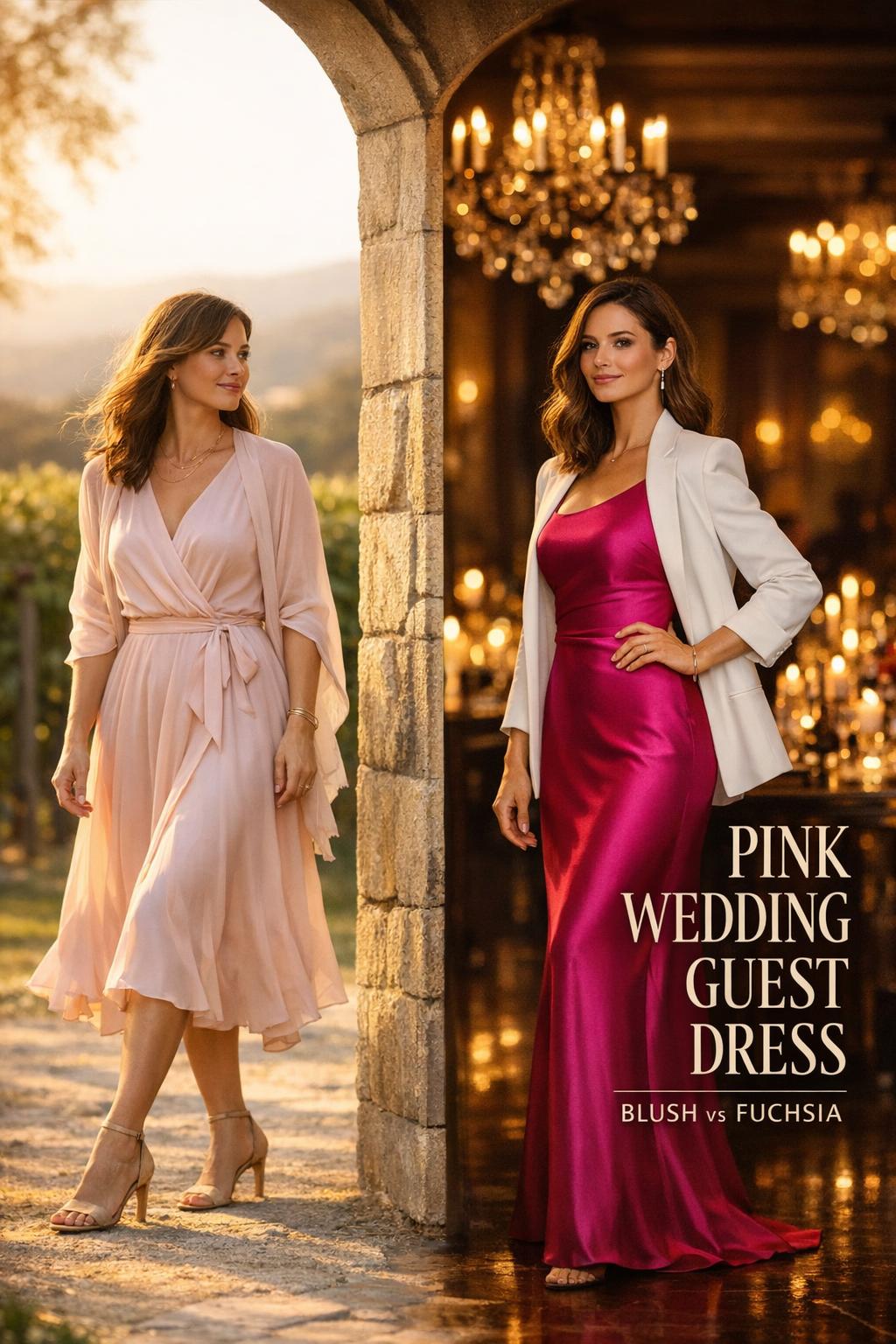
Romantic blush and statement fuchsia aren’t just different shades; they’re different styling philosophies. Blush is harmony—softness, movement, and a romantic mood that blends beautifully with daytime and scenic venues. Fuchsia is focus—color-driven confidence that feels especially right for evening receptions and formal rooms.
You can identify the difference instantly by asking what leads the outfit: texture and softness (blush) or saturated color and structure (fuchsia). And if you’re drawn to elements of both, the most modern approach is to blend them—soften a bold pink with minimal styling, or sharpen a soft pink with a more defined silhouette—so your look feels unmistakably wedding-ready.
FAQ
Is a pink wedding guest dress appropriate for a formal wedding?
Yes—pink can be formal when the overall look reads polished through length, structure, and finishing; statement fuchsia often signals evening formality naturally, while romantic blush typically needs a more defined silhouette and elevated styling to feel equally formal.
How do I choose between blush pink and fuchsia for the same wedding?
Use the venue and lighting as your guide: blush tends to look most natural in daylight settings like gardens or coastal ceremonies, while fuchsia looks especially intentional in evening lighting and formal interiors, where saturated color reads festive and refined.
Can I wear a long pink dress if the invite says “formal”?
Yes—long pink formal dresses can be an excellent match for formal dress codes, but aim for a silhouette and finish that feel wedding-appropriate in movement and proportion, since a long hemline should look elegant through an entire ceremony and reception.
Do elegant ball gowns work for wedding guests in pink?
They can, but only when the venue and dress code support true drama—typically a ballroom or very formal evening setting—and the styling remains refined so the look feels celebratory rather than competing with the couple’s spotlight.
What’s the difference between pink formal dresses and floor length prom dresses in a wedding context?
The categories can overlap in silhouette, but wedding guest dressing usually looks best with more restraint in overall styling—cleaner finishing and fewer competing focal points—so the outfit reads as elegant occasionwear rather than a themed statement.
How can I keep a bright pink dress from feeling overwhelming at a wedding?
Let the color be the focal point and streamline everything else: keep accessories and finishing details clean and intentional so the dress reads confident and celebratory instead of visually busy.
How can I make a soft pink dress feel more modern and less overly sweet?
Add one edited, structured element—such as a cleaner silhouette or a more minimal finishing approach—so the overall look feels refined and contemporary while keeping the romantic softness that blush does best.