Decoding the Wedding Guest Dress Code for Every Venue & Season
Introduction
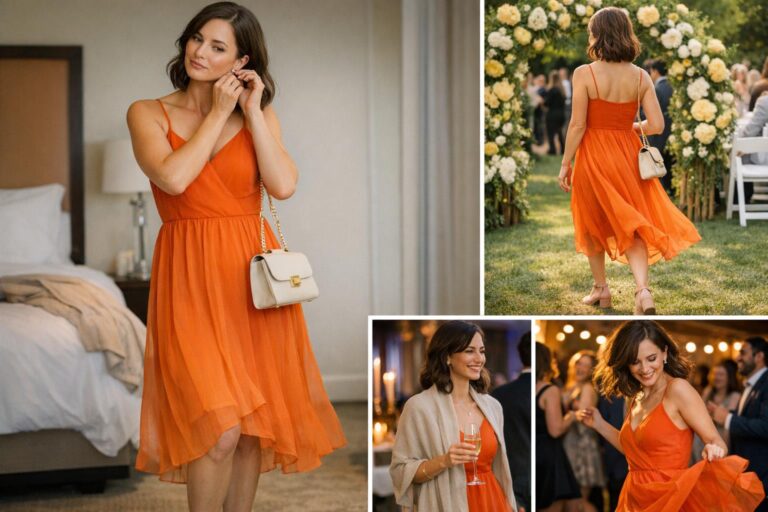
The invitation arrives, and with it the small line that quietly sets the tone for everything you’ll wear: the wedding guest dress code. It’s more than a formality—it’s a visual agreement between the couple and their guests. The best-dressed rooms aren’t the ones filled with identical outfits; they’re the ones where everyone speaks the same style language, from candlelit ballroom elegance to sunlit garden ease.
Think of this as a wedding attire guide written for real celebrations: long ceremonies, unpredictable weather, photos you’ll cherish, and dance floors that last longer than you planned. The aesthetic we’re building is polished and intentional—romantic silhouettes, considered textures, and accessories that feel like punctuation rather than noise. It’s the kind of dress code wedding style that reads elevated in every venue, without drifting into costume or overstatement.
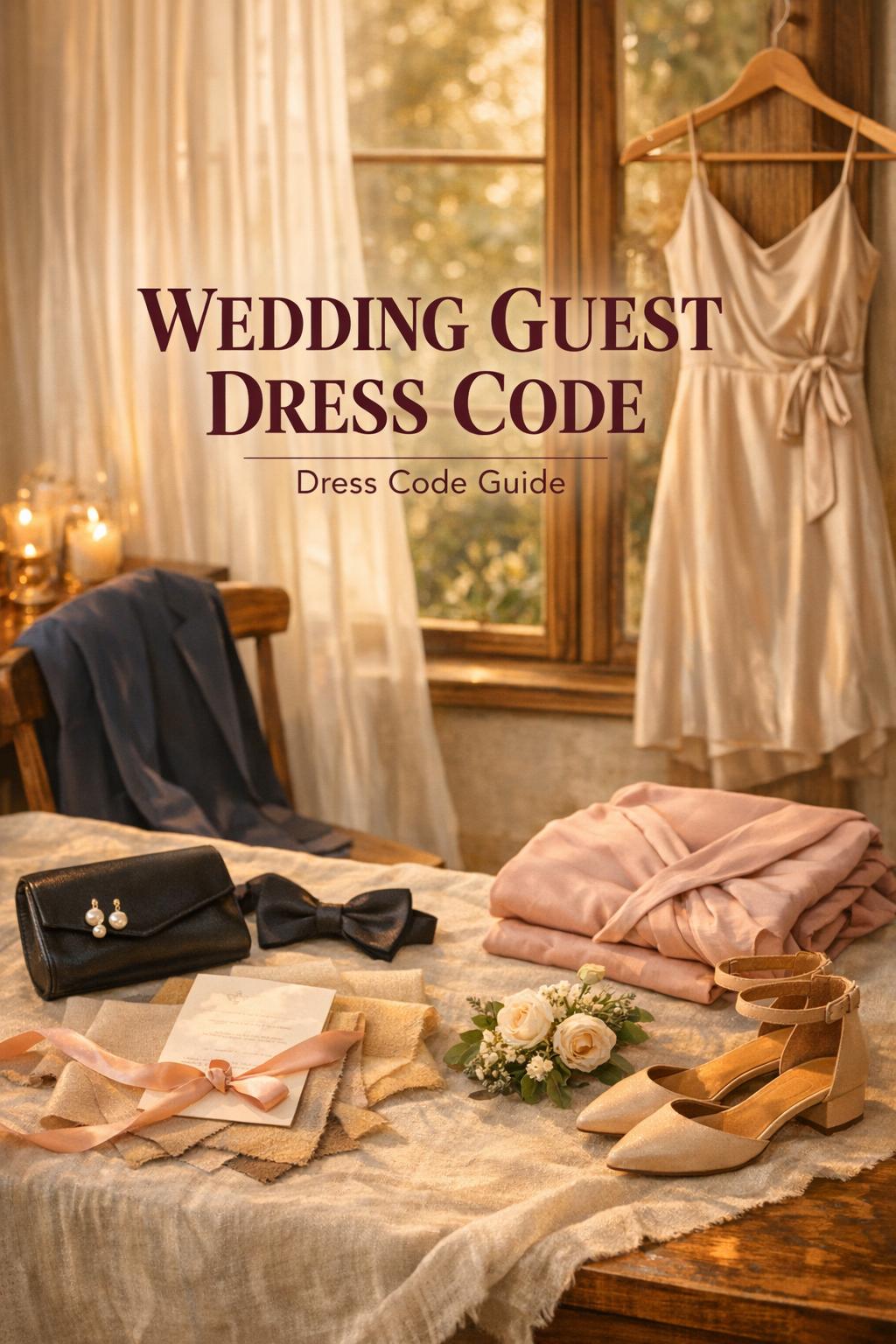
What makes this approach so appealing is its flexibility. The modern era has expanded the vocabulary—“dressy casual,” “garden party glam,” and other softer phrases appear more often—yet the foundations remain steady: formality levels, venue cues, and seasonality. Once you understand those relationships, you can translate almost any dress code guide into a look that feels like you, while still honoring the day.
How to read a wedding dress code like a stylist
A dress code is essentially a shorthand for three things: the formality level (how refined the silhouettes should be), the setting (venue type and whether it’s indoor or outdoor), and the timing/season (which influences fabrics, color depth, and layering). This is why two weddings can both say “cocktail,” yet one expects sleek evening energy while the other leans airy and daytime-bright—venue and season fill in the missing details.
When the language feels vague, look for context clues. A hotel ballroom and an evening reception suggest richer textures and sharper tailoring; a coastal ceremony hints at breathable materials and footwear that won’t sink. If you’re still unsure, the most respectful move is to confirm with the hosts. It’s not overthinking—it’s good etiquette, and it prevents the classic mismatch of a tuxedo in a backyard setting or a sundress in a formal reception room.
A quick decoding lens (the outfit logic behind every code)
Every formal wedding guest attire guide, no matter how fashion-forward, quietly relies on the same logic: dress code → garment type (gowns, dresses, suits, tuxedos) → fabric and finish (satin-like shine vs matte softness) → accessories and footwear. Once you see that chain, the decision becomes less about memorizing rules and more about building a cohesive visual story.
Dress code guide: the core wedding guest dress codes, interpreted through aesthetic looks
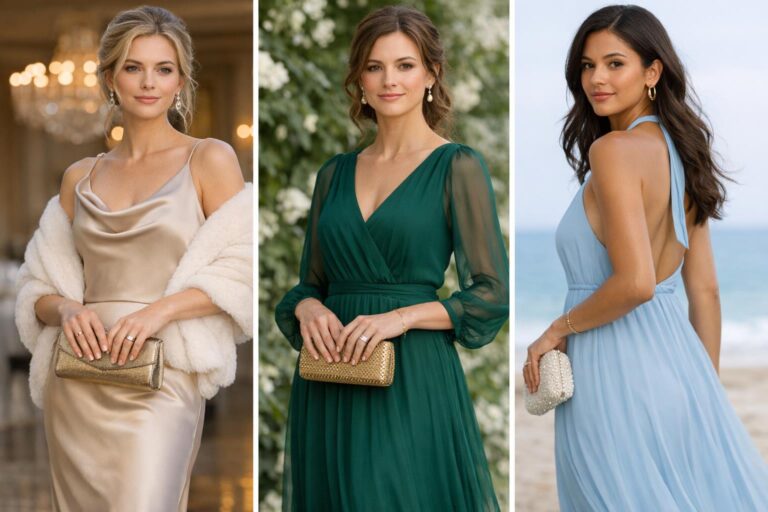
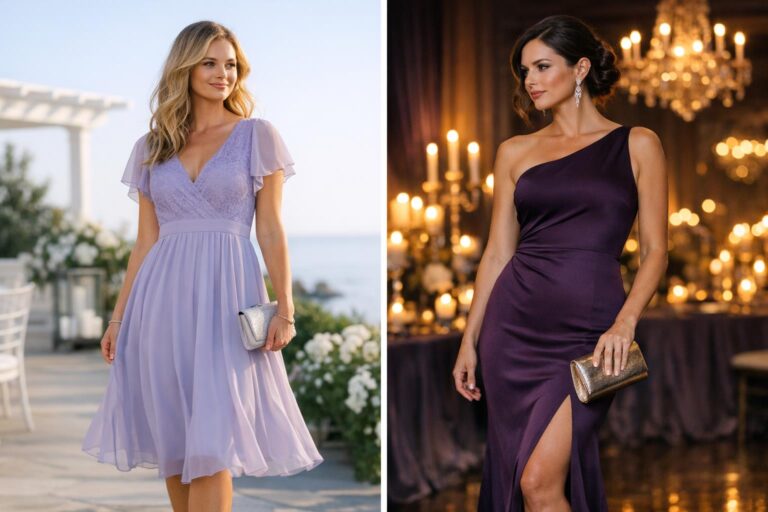
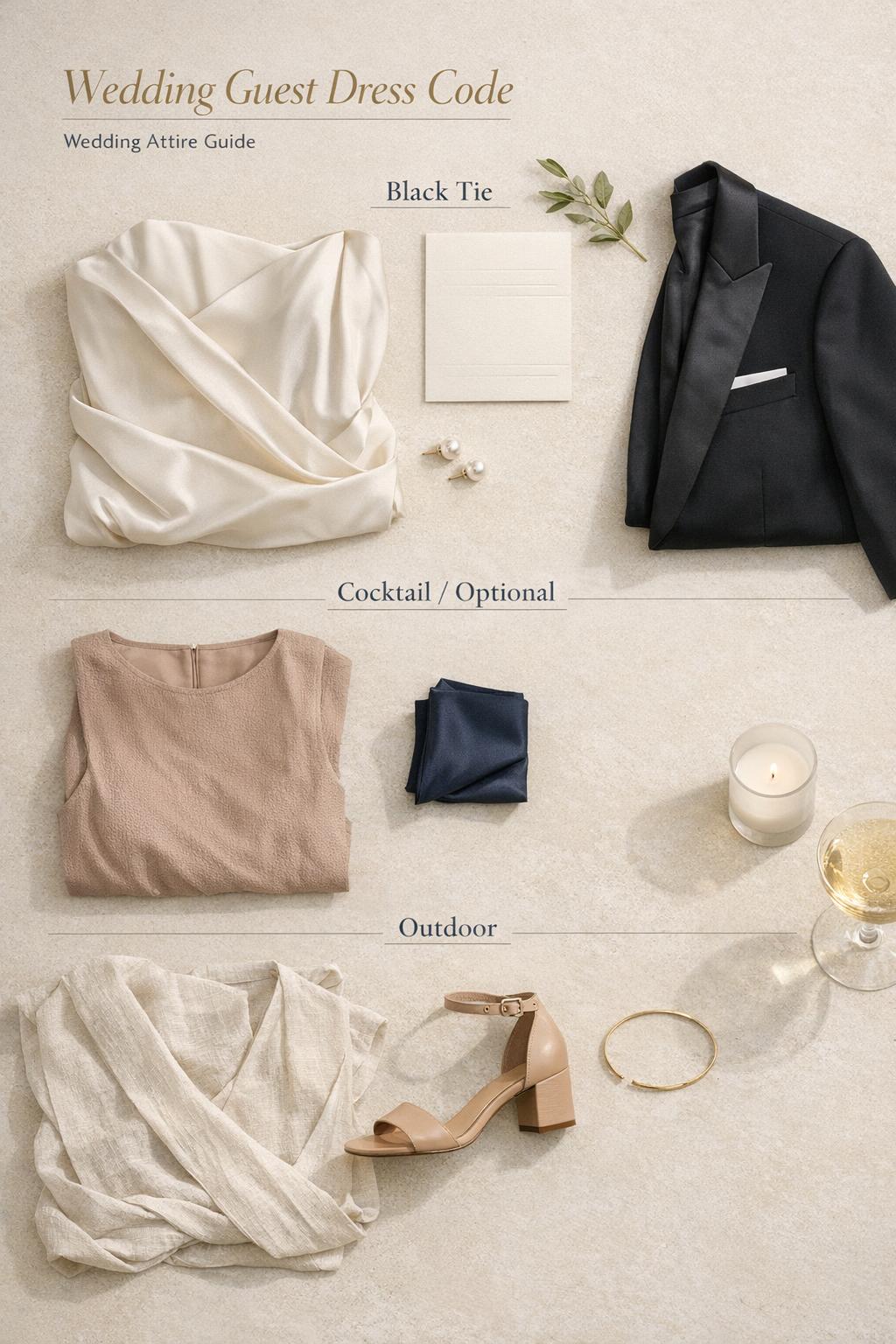
Below, each dress code is translated into a mood-driven look—something you can picture in a real wedding scene. You’ll see the same anchor entities appear again and again because they’re the true building blocks: gowns and dresses, suits and tuxedos, accessories, and the venue-season context that makes the outfit feel inevitable rather than improvised.
Look: black tie after-dark gloss
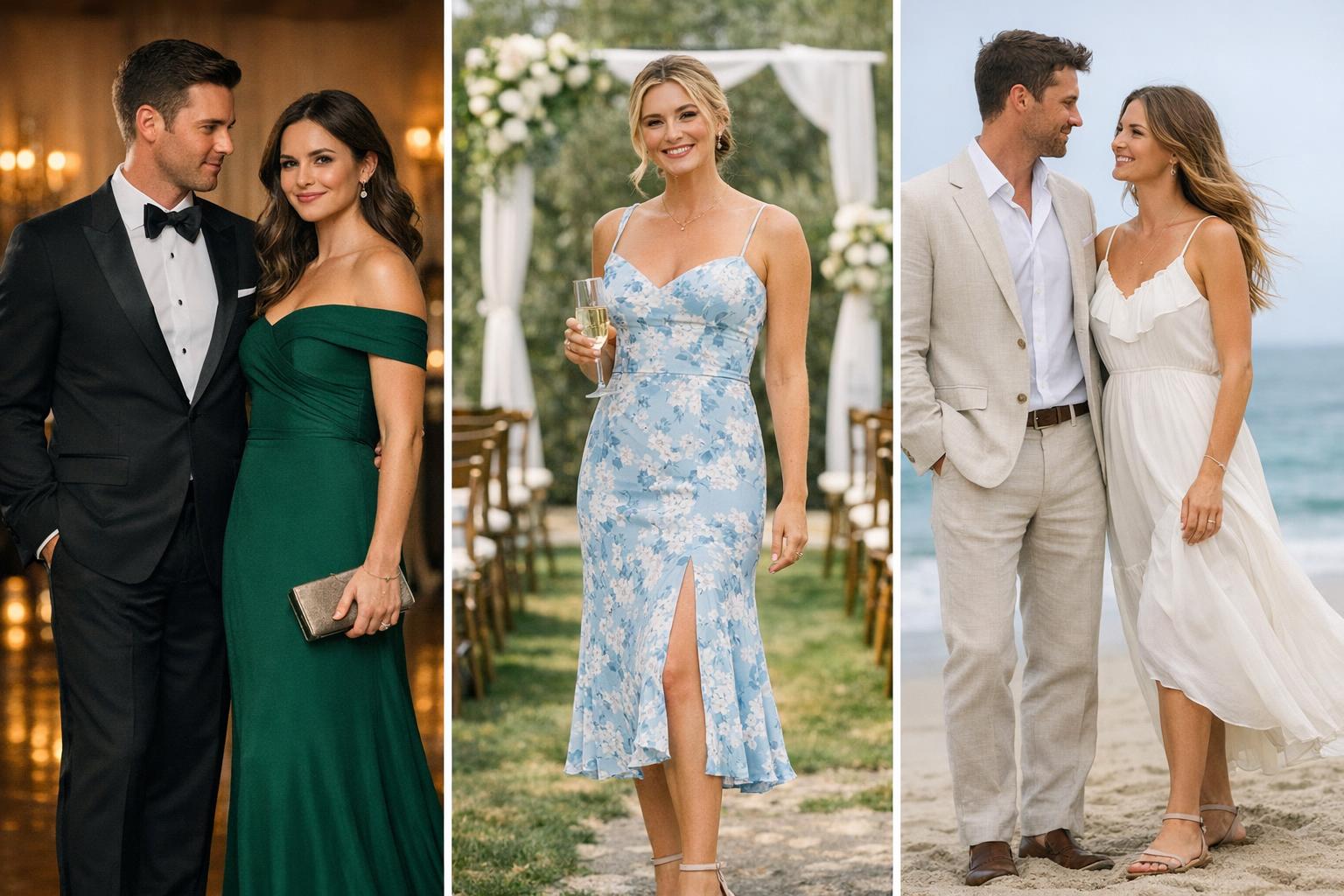
Black tie is the cinematic end of the spectrum—designed for formal rooms, dramatic lighting, and photography that rewards clean lines. The silhouette should feel elongated and intentional, whether that’s a floor-length gown with quiet movement or a tuxedo that holds its shape through dinner and dancing.
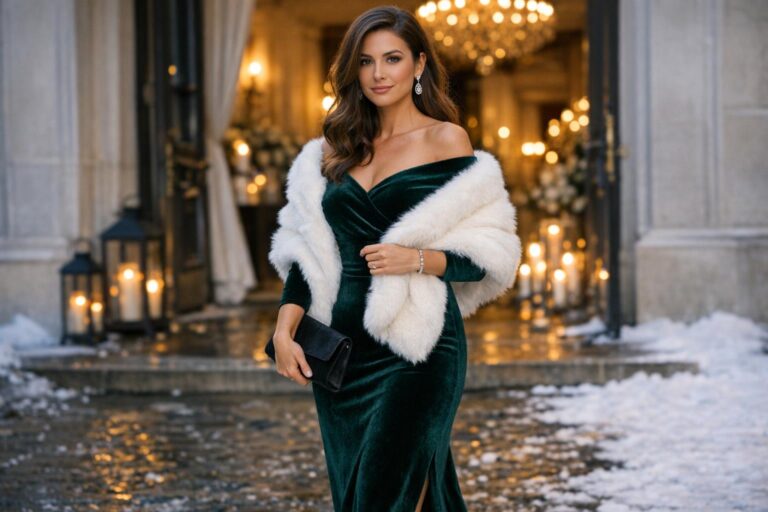
Texture matters as much as length here. Satin-like shine, velvet depth, or fluid chiffon drape reads “evening” immediately, especially when paired with sleek accessories. For many guests, this is where a formal wedding guest attire strategy becomes essential: choose one statement element, then let everything else support it.
- Key garments: floor-length gown or an impeccably tailored tuxedo
- Footwear: refined heels or polished dress shoes
- Accessories: clutch, minimal jewelry, a crisp tie or pocket square
Styling insight: black tie succeeds when the outfit looks “resolved.” If you’re wearing a gown, keep the accessories controlled; if you’re in a tuxedo, let the tailoring do the work and elevate with a considered tie and pocket square (this is where accessory-focused retailers like The Tie Bar naturally fit the moment).
Look: black tie optional, modern and flexible
Black tie optional is where many modern guests feel the most freedom—still formal, but with room for personal styling. The room will likely include tuxedos and gowns, yet a sharply tailored suit or an elevated evening dress can sit beautifully beside them.
Think of it as formal polish with a slightly lighter grip. A refined midi or a sleek, longer dress can work when the fabric carries the formality—smooth drape, rich color, or a structured silhouette. If you’re leaning toward a suit rather than a tuxedo, the details need to be deliberate: a well-chosen tie, a pocket square, and shoes that look evening-ready.
Styling insight: the “optional” is not permission to go casual; it’s permission to choose the formal path that feels most comfortable. A formal wedding guest attire guide mindset here is about fit and finish—prioritize tailoring, fabric quality, and accessories that look intentional under reception lighting.
Look: cocktail hour refinement
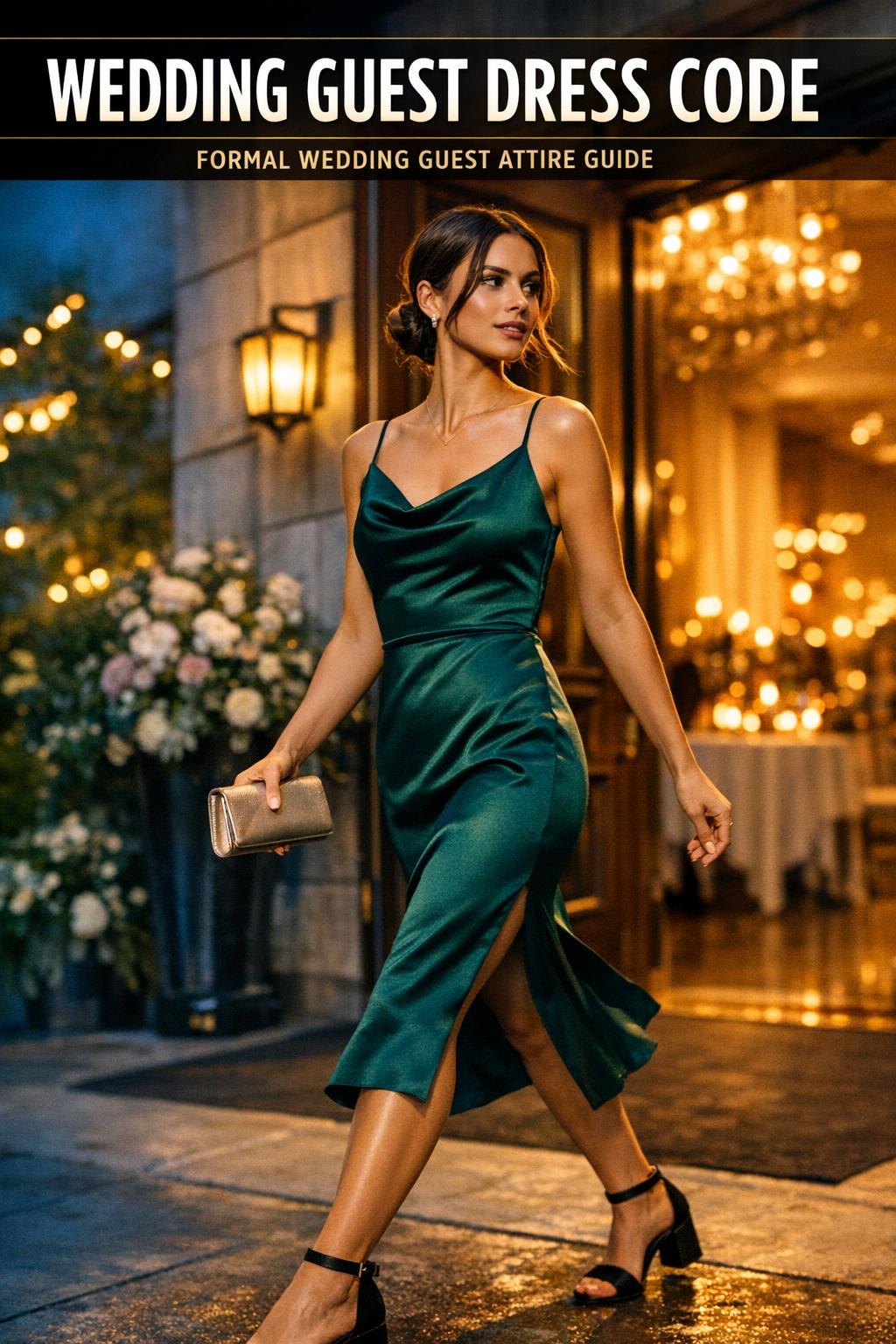
Cocktail is the wedding style sweet spot: festive, photo-ready, and designed for movement. The silhouette often sits around knee to midi length for dresses, with suiting that feels celebratory rather than corporate. You want a look that transitions seamlessly from ceremony to reception without needing a full outfit change.
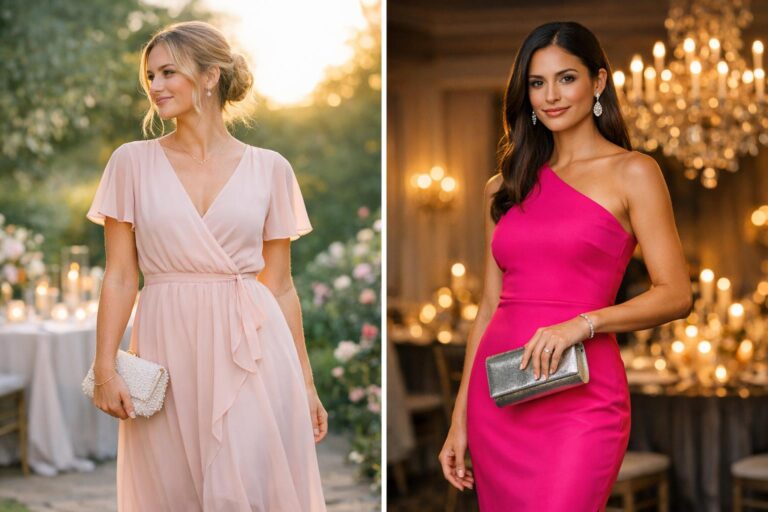
Lean into fabrics that hold a polished shape—structured satin-like finishes, soft chiffon overlays, or a clean, tailored suit. Color can be more playful than black tie, but still sophisticated: jewel tones, deep neutrals, or a refined print that doesn’t overwhelm group photos.
- Key garments: cocktail dress, dressy midi, or a tailored suit
- Footwear: heels that can handle long wear; dress shoes with a sleek profile
- Accessories: a small bag, jewelry with one focal point, optional pocket square
Styling insight: cocktail is where proportion does the heavy lifting. A simpler dress can be elevated by sculptural jewelry; a bolder dress looks best with quieter accessories. Brands that live in the wedding guest space—like Adrianna Papell—often align naturally with cocktail expectations because they balance occasion detail with wearable silhouettes.
Look: semi-formal, softly structured
Semi-formal is often misunderstood because it sits between casual ease and cocktail polish. The most successful semi-formal wedding attire feels “neatly elevated”—a dress that reads special, a suit that feels intentional, and accessories that tidy the overall impression.
Choose silhouettes that look composed rather than dramatic: a midi dress with a clean line, a dress with subtle texture, or a suit with a refined finish. Fabric is the quiet signal—lightweight drape for warmer months, a slightly richer hand for cooler evenings. Color can stay classic or gently expressive, as long as the outfit maintains a cohesive palette.
Styling insight: semi-formal rewards restraint. If you’re tempted to dress down, elevate with one intentional choice—sleek footwear, a structured bag, or a crisp accessory set. If you’re tempted to dress up, keep the silhouette simpler and let the fabric do the talking.
Look: dressy casual, the modern wedding uniform
“Dressy casual” is the phrase that captures how wedding dress codes are evolving—less rigid, more lifestyle-driven, and more dependent on venue and time of day. This is where you’ll see newer language like “garden party glam” or other theme-forward cues that prioritize a vibe over strict rules.
The silhouette should still look polished in photos, but it can be relaxed: an airy midi, a refined maxi dress, or smart separates. Fabrics matter even more than embellishment here—breathable textures for outdoor ceremonies, smooth drape for indoor dinners. Color and pattern can be brighter, especially for daytime or garden settings, as long as the overall styling stays intentional.
- Key garments: midi or maxi dress, refined separates, a smart suit
- Footwear: venue-appropriate shoes that won’t fight grass, gravel, or sand
- Accessories: lighter jewelry, a small bag, optional layers for temperature changes
Styling insight: dressy casual is not “anything goes.” It’s “well-considered.” If your look could also pass for an errand day, it needs a wedding upgrade—better fabric, sharper silhouette, or more polished accessories. This is the dress code wedding category where practical styling is the difference between looking effortless and looking underdressed.
Look: casual, but still guest-worthy
Casual weddings still come with a visual expectation: you’re attending a ceremony, appearing in photos, and spending hours celebrating. The aesthetic shifts toward comfort and simplicity, but the outfit should feel tidy, cohesive, and respectful of the event.
In practice, casual often means relaxed silhouettes in better materials—think soft, breathable fabrics that move easily, paired with clean accessories. The palette can be bright or neutral depending on the couple’s theme and the venue, but the overall look benefits from restraint: one clear focal point, minimal clutter.
Styling insight: casual becomes wedding-appropriate when it’s intentional. A polished shoe and a structured bag can elevate a simple dress dramatically. For suits, a neat finish and well-chosen accessories keep it celebratory rather than office-like.
Look: beach or outdoor ceremony, airy and resilient
Beach and outdoor weddings demand an aesthetic that photographs beautifully in natural light while surviving real conditions: wind, sand, heat, or uneven ground. The mood is romantic and sunlit, but the outfit must be practical enough to move comfortably from ceremony seating to reception mingling.
Choose breathable, fluid fabrics such as chiffon-like drape or lightweight materials that won’t cling uncomfortably. Silhouettes that flow—midi and maxi lengths, relaxed tailoring—look effortless against coastal or garden backdrops. Footwear is the make-or-break detail: shoes need stability, and accessories should feel secure rather than fussy.
Styling insight: for outdoor venues, prioritize fabric behavior. A look that seems perfect indoors can become high-maintenance outside. When in doubt, simplify: fewer pieces, cleaner lines, and accessories that won’t snag or shift in the breeze.
Venue and season: where the dress code becomes real
Dress codes rarely live in isolation. A “cocktail” wedding in a city venue feels different from cocktail in a vineyard or garden. The venue type—ballroom, hotel reception, outdoor lawn, coastal setting—quietly changes what looks appropriate, and it changes what feels comfortable for hours at a time.
Indoor ballrooms vs. outdoor gardens
Indoor spaces tend to reward structure: gowns that hold their line, suits with crisp tailoring, accessories with a refined finish. Outdoor ceremonies favor movement and adaptability—lighter fabrics, softer silhouettes, and shoes chosen for terrain as much as style. A garden ceremony calls for breathable fabrics and a palette that looks luminous in daylight; a ballroom reception invites deeper tones and richer texture as the lighting warms.
Seasonal fabrics and color palette shifts
Seasonality is one of the most reliable style cues because it affects both comfort and visual harmony. Warmer months often call for airy fabrics and lighter color stories; cooler seasons can handle richer texture and more depth. Even within the same dress code, fabric choice can shift the entire impression: a lightweight drape reads daytime and breezy, while a heavier, more lustrous finish reads evening and formal.
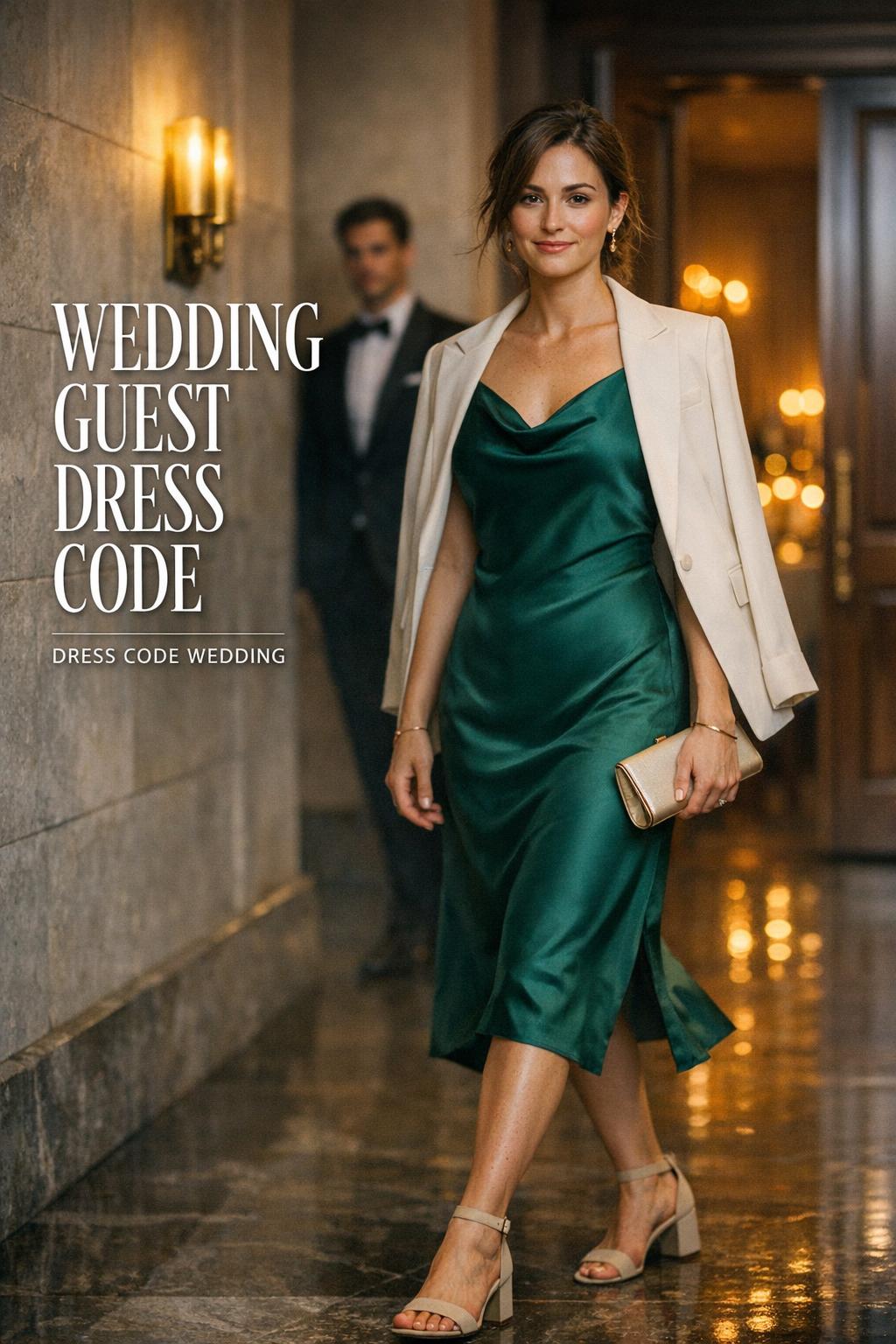
Tip: plan for temperature swings. Many weddings move between ceremony and reception spaces, and outdoor moments can cool quickly after golden hour. A thoughtful layer—kept sleek and aligned with the dress code—can preserve the aesthetic without distracting from it.
Color, pattern, and etiquette: the quiet rules guests forget
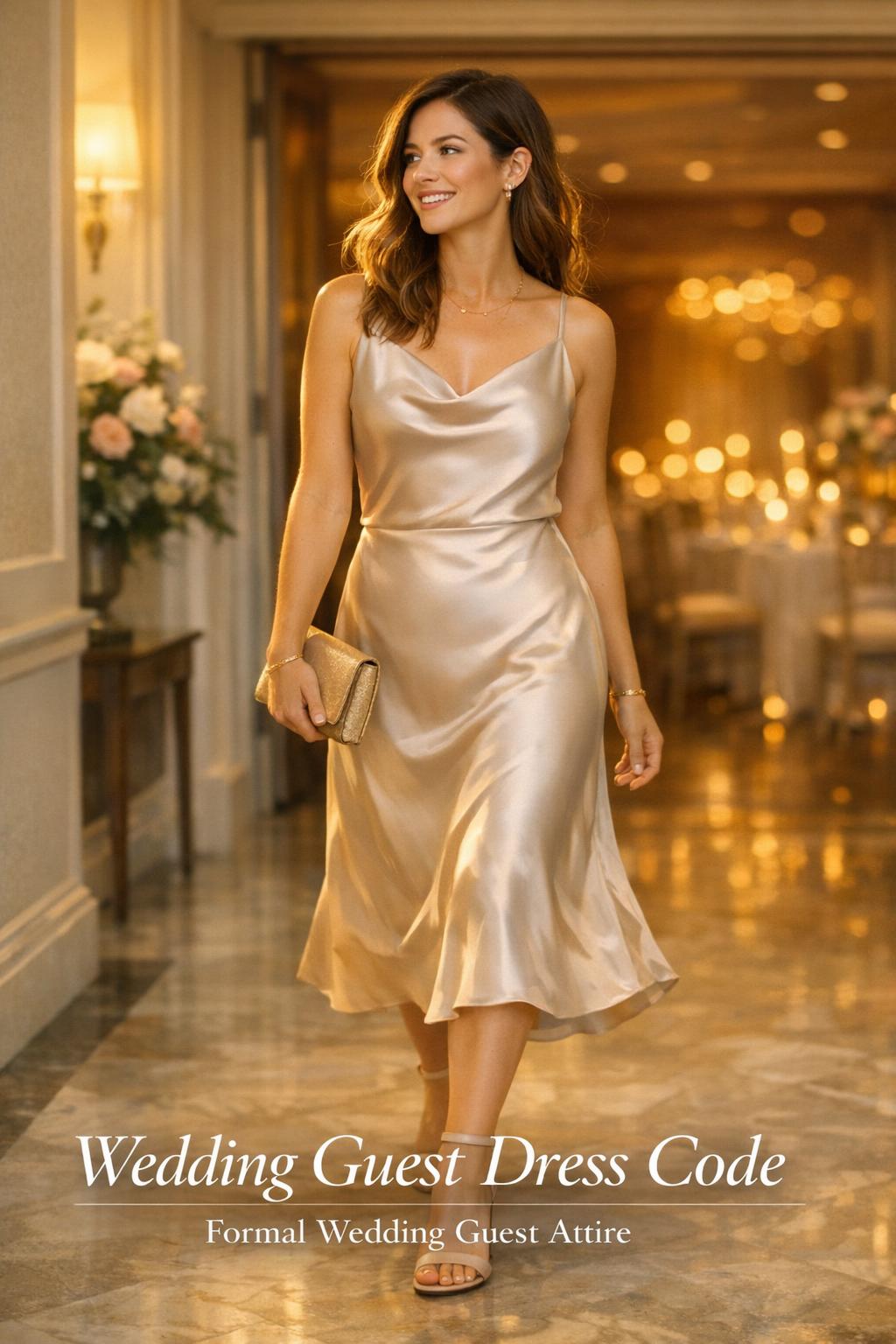
Color is one of the most emotional parts of guest dressing: it sets your mood, interacts with the wedding palette, and becomes part of the photographic story. This is where etiquette and aesthetics overlap. A cohesive guest look doesn’t need to be muted, but it should avoid becoming visually competitive with the wedding’s focal moments.
Color symbolism and cultural considerations
Not every wedding follows the same cultural expectations, and that’s where flexibility matters. Some celebrations include cultural attire guidance, and guests may be invited to wear cultural or ethnic attire that aligns with the couple’s traditions. In these contexts, color symbolism can carry meaning, and the most respectful approach is to follow the couple’s cues, read the invitation carefully, and ask when unclear.
What this looks like in practice: if a couple references cultural dress norms, treat that as part of the dress code rather than an optional theme. The goal is never to “approximate” a culture for aesthetics, but to dress appropriately and thoughtfully when guidance is given.
Prints, shine, and the photo test
Print can be beautiful for daytime and outdoor weddings, especially in dressy casual or cocktail settings, but scale and contrast matter. A refined print reads intentional; an overly loud pattern can dominate group photos. Shine works wonderfully for evening receptions—especially in black tie and black tie optional—yet too much reflective finish can feel distracting under flash photography. Aim for balance: one standout element, one steadying neutral.
Accessories, footwear, and comfort: the details that keep the look elegant all night
Accessories are where guests often overcorrect—either piling on too much to “make it wedding” or skipping details and looking unfinished. The most polished approach is to match accessory formality to the dress code, then tailor it to the venue. A clutch feels natural in formal rooms; a small, secure bag makes more sense outdoors. Jewelry should complement the neckline and fabric, not compete with it.
Shoes that respect the venue
The ideal wedding shoe is both elegant and realistic. Outdoor lawns, beach paths, and gravel can turn delicate footwear into a struggle, and discomfort changes your posture—something photos always reveal. For indoor receptions, polished footwear is part of the finish, especially in formal settings where a tuxedo, suit, or gown looks incomplete without equally refined shoes.
Tip: if the venue is outdoors, test your shoes on a similar surface before the event. A graceful look should never require you to watch the ground all night.
Accessory edit: ties, pocket squares, clutches, and jewelry
For suit and tuxedo looks, a crisp tie and pocket square can shift the entire outfit into the right formality level—small details that read sharply in photos. For dresses and gowns, a structured clutch and a single focal jewelry moment (earrings, bracelet, or necklace) keeps the look elevated without noise. Retailers and brand lines that foreground these finishing pieces—like The Tie Bar for men’s accessories—fit naturally into a wedding guest toolkit.
Style tip: a capsule mindset for wedding season
If you’re attending multiple weddings, the smartest approach is to build a small “occasion wardrobe” that can flex across dress codes. This is where a practical dress code guide becomes more than theory: you’re choosing a few high-impact pieces that adjust through accessories, layering, and formality cues.
- One refined dress or gown that can skew cocktail or formal depending on accessories
- One tailored suit option with upgradeable details (tie, pocket square, jewelry)
- One outdoor-friendly dressy casual look in breathable fabric
- A pair of polished shoes for indoor events and a venue-smart option for outdoor settings
- Two small bags: a sleek clutch and a secure, minimal bag for outdoor venues
Styling insight: the capsule approach keeps your aesthetic consistent while allowing the dress code wedding details to change. You’re not reinventing your style every weekend—you’re refining it for each setting.
Where brands fit in (without letting shopping override style)
Many guests use brand cues as a shortcut: certain labels and retailers are closely associated with wedding guest dressing, and that can be helpful when you need an outfit that reliably hits the expected tone. Adrianna Papell is often mentioned in wedding guest contexts because it’s aligned with occasion dressing; Davids Bridal, through Pearl, reflects the modern shift in language and the rise of “dressy casual” and vibe-based codes.
The key is to treat brand as an option, not a rule. A successful wedding guest look is ultimately about the relationship between dress code, garment type, fabric, and accessories. A beautifully cut dress in the right fabric will read correct even without a recognizable label, while the wrong fabric can look off even if it’s from a well-known source.
What stylists see most often: common dress code mistakes (and the graceful fixes)
Most dress code missteps aren’t dramatic—they’re subtle mismatches between the invitation’s expectation and the outfit’s finish. The good news is that small adjustments can usually bring a look back into alignment.
Mistake: matching the words, ignoring the venue
A “cocktail” outfit can feel too heavy at a beach ceremony or too airy in a formal hotel space. Fix it by adjusting fabric and accessories: outdoors, soften structure and prioritize breathable drape; indoors, sharpen the finish with a more refined shoe, a clutch, or a stronger accessory edit.
Mistake: dressing down with casual styling details
Even when the dress itself is appropriate, overly casual accessories can undercut the whole impression. The simplest fix is a polish pass: elevate footwear, choose a structured bag, and streamline jewelry so the look reads intentional.
Mistake: over-accessorizing to compensate for simplicity
A minimal dress can be stunning, but too many statement pieces can push it into visual clutter. Choose one focal point—earrings or a necklace, not both—and let the fabric and silhouette be the main story.
Practical tips for unclear invitations and evolving dress code language
Modern wedding invitations sometimes lean into mood-based phrasing rather than classic terms. That evolution can be refreshing, but it also creates uncertainty—especially for guests traveling from different regions or styling backgrounds. When you see a phrase like “garden party glam,” treat it as a dressy casual-to-cocktail zone: polished, daytime-friendly, and photo-ready.
- Read the invitation for venue clues (garden, beach, ballroom, destination) and timing (day vs evening)
- Choose your base piece first (dress, gown, suit, tuxedo), then calibrate with accessories
- If the code is unclear, ask a simple clarifying question rather than guessing
- Prioritize comfort for long celebrations—fit and breathable fabric matter as much as style
Tip: when you’re between two levels of formality, it’s usually safer to be slightly more polished—especially in photos and formal venues—than to arrive noticeably underdressed. The goal isn’t to stand out; it’s to belong beautifully in the room.
A quick cheat sheet: wedding guest dress code in one glance
Use this as a final check before you commit. It won’t replace the nuance of venue and season, but it will keep you anchored to the most common expectations.
- Black tie: floor-length gowns, tuxedos, elevated evening accessories
- Black tie optional: formal gowns or elevated dresses; tuxedo or sharp suit with refined accessories
- Cocktail: cocktail dresses and tailored suits; polished shoes and a small bag
- Semi-formal: refined midi dresses or intentional suiting; controlled accessories
- Dressy casual: polished daytime looks, breathable fabrics, venue-smart footwear
- Casual: simple but guest-worthy; cohesive styling and clean finishing details
- Beach/outdoor: airy fabrics, flowy silhouettes, stability-first shoes
Conclusion
The most memorable wedding guest style isn’t about chasing a trend—it’s about translating the wedding guest dress code into an aesthetic that feels harmonious with the venue, season, and celebration. When you anchor your choices in silhouette, fabric, and finish, you can move confidently between black tie, cocktail, and modern dressy casual invitations while keeping your look unmistakably polished—and unmistakably yours.
FAQ
What counts as a wedding dress code, and why does it matter?
A wedding dress code is the couple’s shorthand for the expected formality level and overall vibe of guest attire, often influenced by venue type and season; following it shows respect for the event and helps you feel appropriately dressed and comfortable throughout the ceremony and reception.
What is the difference between black tie and cocktail attire?
Black tie is the most formal common code, typically calling for floor-length gowns and tuxedos with refined evening accessories, while cocktail attire is dressy but shorter and more flexible—often a cocktail dress or tailored suit styled with polished shoes and a small bag.
What does black tie optional mean for guests?
Black tie optional means the event is formal and tuxedos and gowns will appear, but guests can choose an elevated alternative—such as a sharply tailored suit instead of a tuxedo or a very refined dress that still reads evening-appropriate through fabric and accessories.
Dressy casual and vibe-based phrases usually indicate polished comfort rather than strict formality: choose a refined silhouette (often midi or maxi), prioritize breathable fabrics for outdoor venues, and finish with intentional accessories and venue-appropriate footwear so the look still photographs as wedding-ready.
What should I do if the invitation doesn’t clearly state a dress code?
Use context clues like venue and time of day to estimate the formality level, then choose a base garment (dress, suit, gown, or tuxedo) and adjust with accessories; if you’re still uncertain, it’s appropriate to ask the hosts for guidance to avoid arriving noticeably under- or overdressed.
How should venue and season change my outfit choice?
Indoor ballrooms typically support structured, more formal finishes, while outdoor gardens or beach settings call for breathable fabrics and silhouettes that move well; seasonality affects comfort and visual tone, so lighter drape often suits warm weather and richer texture tends to read right for cooler evenings.
Are accessories really that important for a dress code wedding?
Yes—accessories often determine whether a look reads casual, cocktail, or formal, because details like a clutch, refined jewelry, and suit accessories such as ties and pocket squares can elevate an outfit’s finish without changing the main garment.
How do cultural or ethnic attire notes affect what I should wear?
If the couple includes cultural attire guidance or references cultural dress norms, treat that as part of the dress code and follow the invitation’s cues; when details are limited, asking a respectful clarifying question is the best way to honor the couple’s expectations and avoid missteps around color symbolism or formality.
What’s the easiest way to build a repeatable wedding guest wardrobe across multiple dress codes?
Adopt a capsule approach: keep a few adaptable core pieces—an elevated dress that can skew cocktail or formal, a tailored suit option, and an outdoor-friendly dressy casual look—then adjust the formality with fabric choice, footwear, and accessories to match each invitation.