Formal wedding guest dress rules, decoded for every venue
The moment you realize “formal” means more than just “nice”
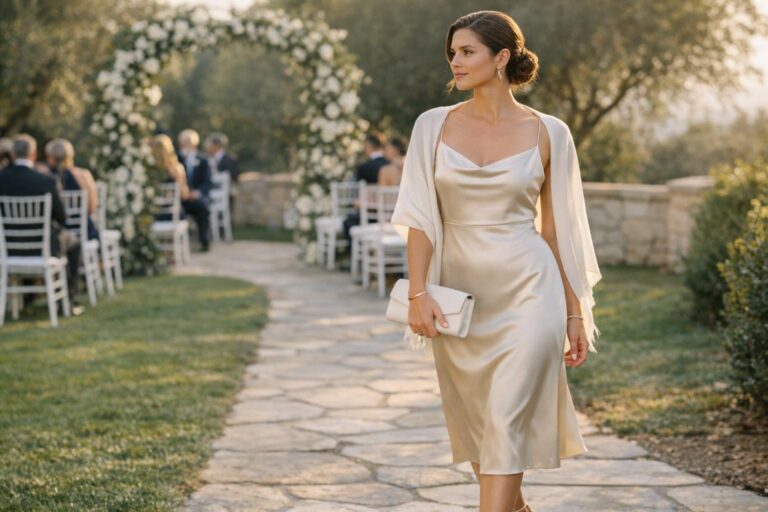
The dress code line on a wedding invitation can feel deceptively simple—until you’re standing in front of your closet picturing a ceremony, a long reception, and photos that will live forever. A formal wedding guest dress isn’t just about looking polished; it’s about matching the couple’s level of occasion, reading the room (and the venue), and choosing a silhouette and fabric that hold up through hours of sitting, standing, toasting, and dancing. The best approach blends etiquette with practicality: understand what “formal” signals, then choose a dress that behaves well in the real world—whether you’re headed to a city ballroom, a beach ceremony, or a destination weekend.
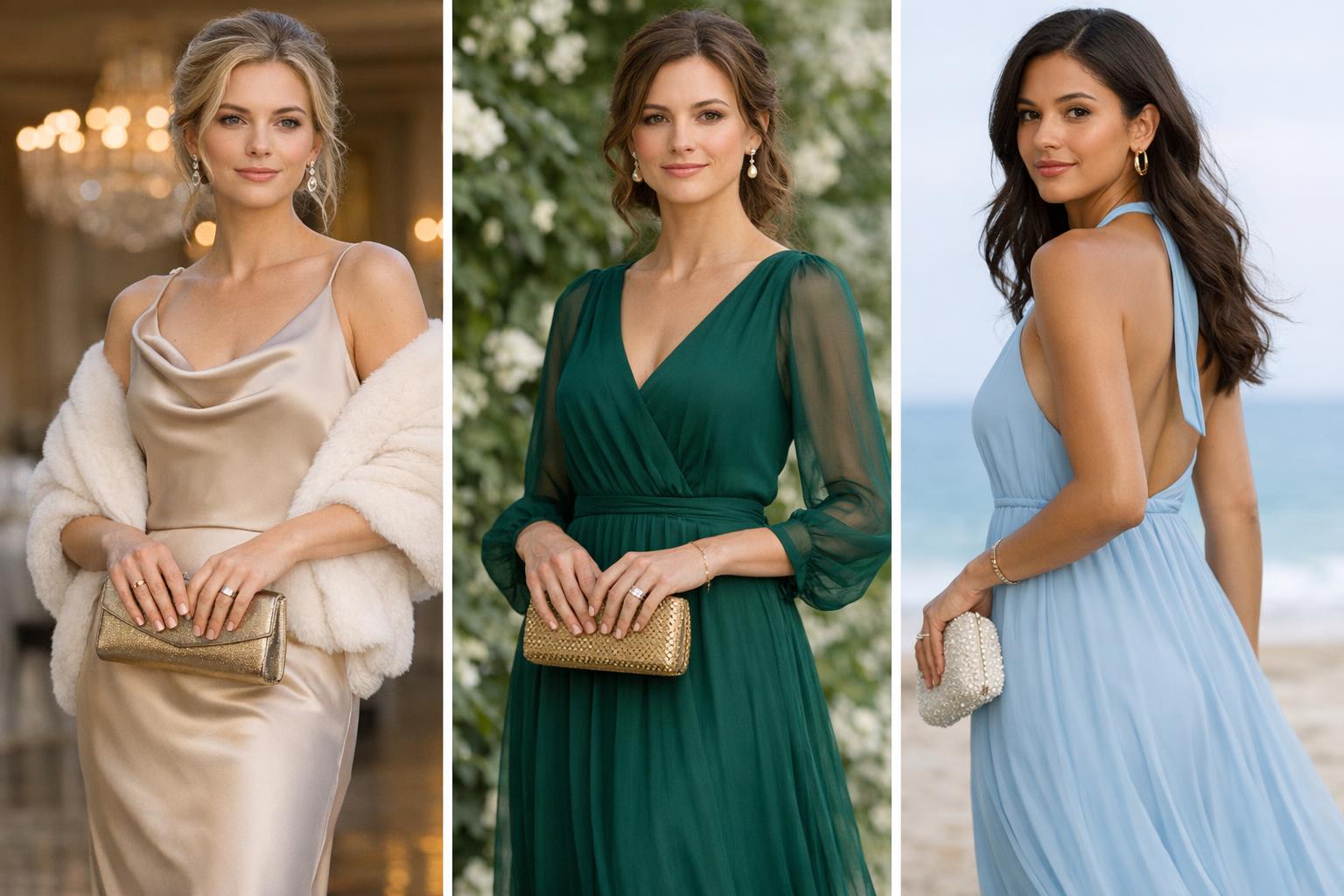
Across wedding guest fashion, the same style language keeps appearing for a reason: gowns and elevated maxi dresses, elegant midi lengths when appropriate, and fabrics like satin, velvet, crepe, metallic crepe, and organza that read “evening” rather than “everyday.” Add intentional accessories—jewelry, formal shoes, and outerwear that complements the dress—and you have guest attire that feels respectful, confident, and camera-ready.
What “formal wedding guest dress” actually means (and what it doesn’t)
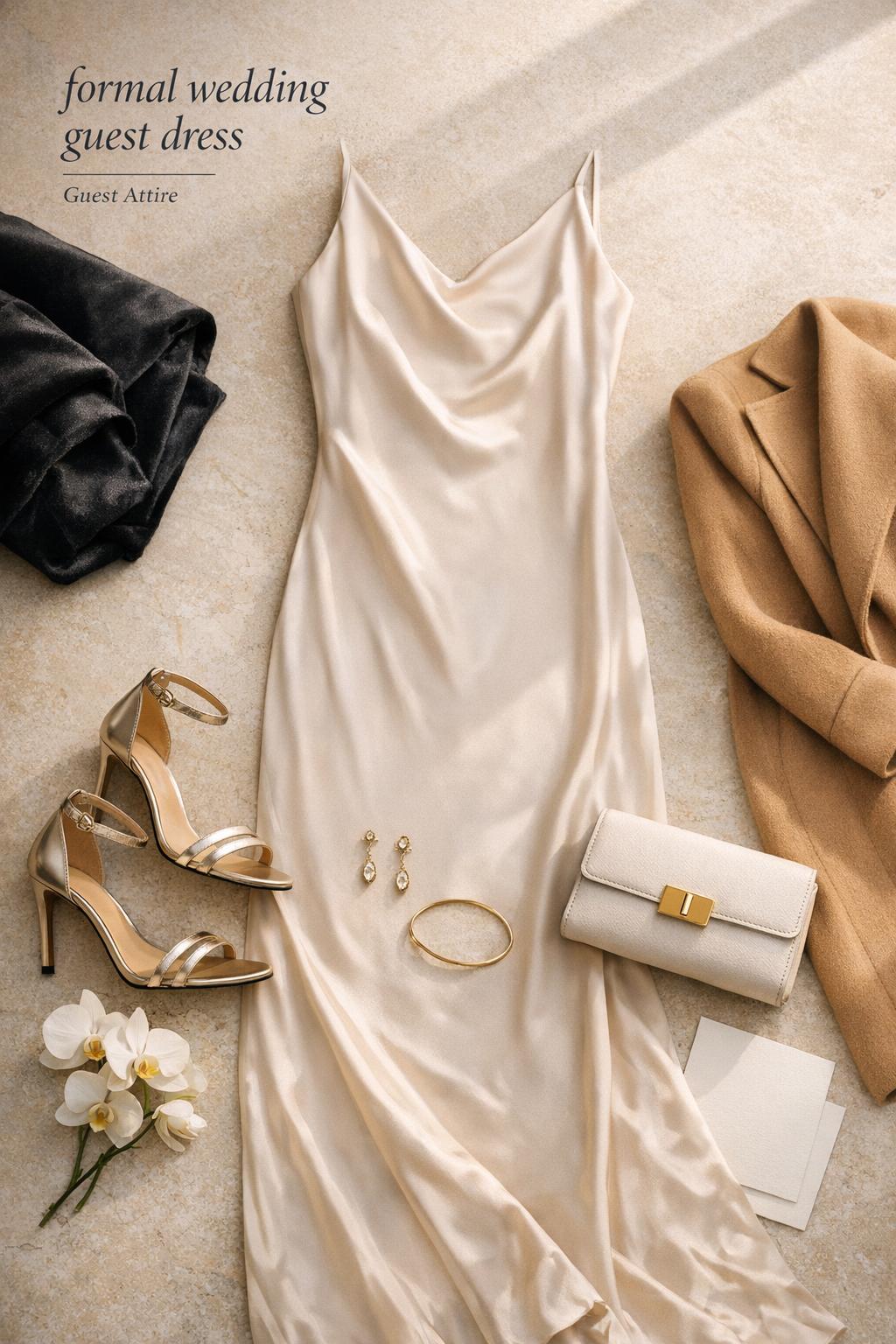
Formal wedding attire sits on the more elevated end of the formality spectrum. In practice, it often overlaps with “evening” styling cues: longer lengths (gowns, maxis), refined silhouettes (sheath, A-line), and fabrics that drape cleanly and photograph beautifully. The invitation may specify “black-tie,” “formal,” “cocktail,” or a venue clue like “beach” or “destination,” and each word shifts the expectations slightly. The easiest way to interpret it is to look for signals of intentionality: a dress designed to look finished without needing casual layering, with a fabric and cut that wouldn’t feel out of place at an evening event.
What it doesn’t mean: that you must wear the most dramatic gown possible, or that comfort doesn’t matter. Formal wedding guests still need to move, sit through a ceremony, and stay comfortable through temperature changes. A floor-length gown in velvet may be perfect for a winter wedding and completely wrong for a beach ceremony. Likewise, cocktail attire can sometimes work for formal weddings, but only when it’s executed with elevated fabric and accessories—and when the venue and time of day support it.
Start with the dress code, then let the venue and season decide the details
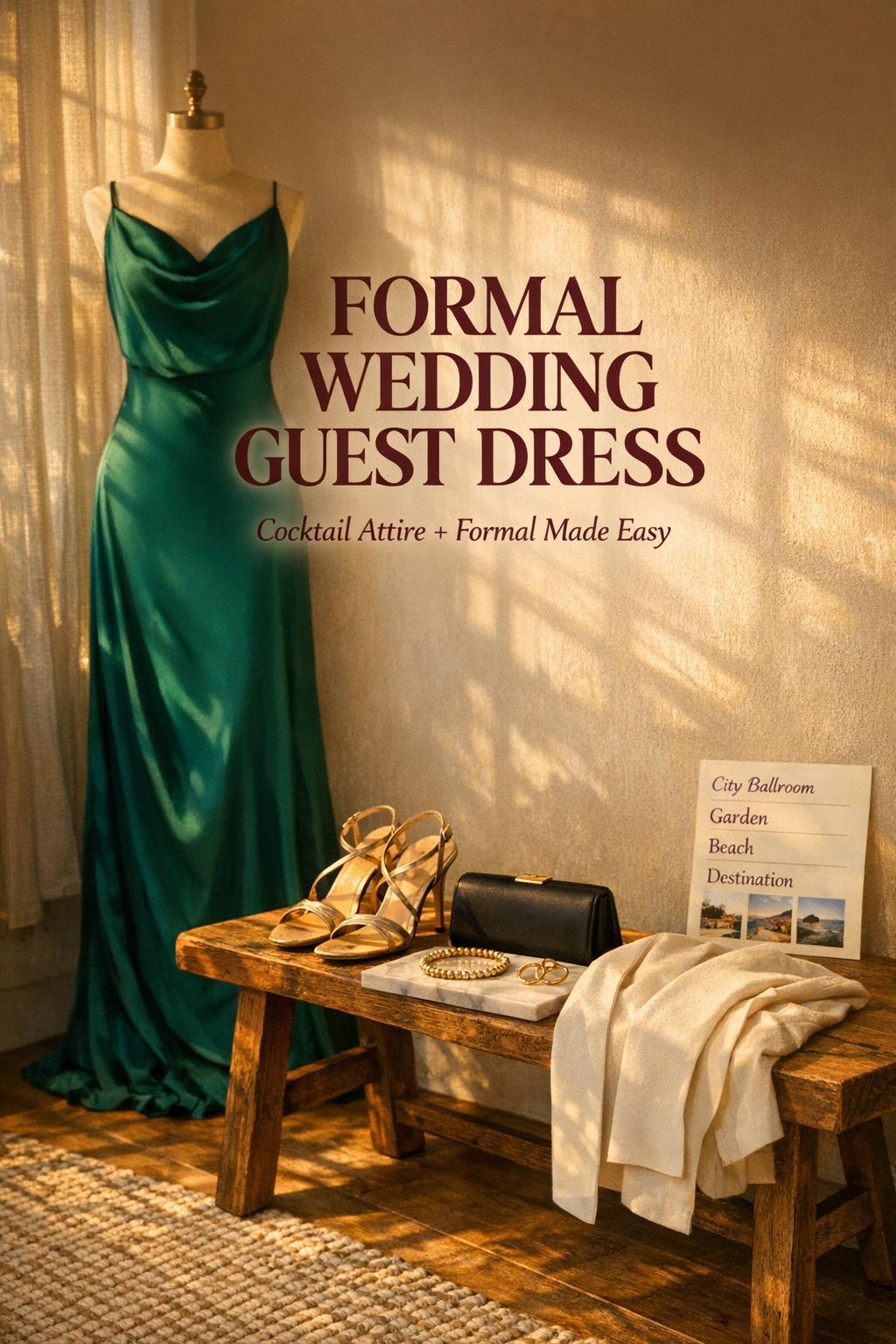
Most confusion comes from treating dress codes as isolated labels. In reality, dress codes interact with setting: a city formal wedding behaves differently from a destination celebration, and daytime weddings create different expectations than evening receptions. Editorial roundups commonly break wedding guest dresses into categories like black-tie, spring, summer, winter/fall, beach, floral, cocktail, daytime, and destination because those are the real-world variables guests feel most.
If you’re unsure, anchor your decision on three questions: How formal is the stated dress code? What is the venue (beach, garden, city, destination)? What season or temperature will you realistically experience? Once those are answered, silhouette and fabric become much easier to choose.
Tip: read the invitation like a stylist reads a brief
Think of the dress code as the couple’s “mood board” in one word. “Black-tie” usually suggests a gown-first mindset, while “cocktail” implies shorter hemlines can work. “Beach” and “destination” point to comfort and mobility—wind, sand, travel packing—while still aiming for polished wedding attire guest standards.
Black-tie wedding guest dresses: the clearest lane for formal wedding guests
Black-tie is the category where your choices can be the most straightforward: think floor-length gown territory, with fabric and structure doing the heavy lifting. Sleek silhouettes and rich materials like velvet, crepe, metallic crepe, and satin commonly read as ultra-formal because they hold shape and reflect light in a way casual fabrics don’t. When you see designer names like Victoria Beckham or Simkhai in editorial selections, it’s often because their cuts tend to be clean and modern—exactly what black-tie styling needs.
For black-tie wedding guest dress decisions, prioritize details that look intentional in photos: a defined neckline, a polished hemline, and a fabric that drapes smoothly. Even when you choose minimal jewelry, a gown that fits well and moves well will still feel complete.
- Best lengths: gowns and floor-skimming maxis
- Fabrics that signal formality: velvet, satin, crepe, metallic crepe
- Silhouettes that photograph well: sheath and A-line
Tip: choose a fabric that matches the time you’ll spend seated
A black-tie wedding can include a long ceremony and a long dinner; fabrics like crepe and satin tend to recover neatly after sitting, while some textures may show marks more easily. If you’re traveling to the event, consider how the fabric handles packing—wrinkle behavior is a real, practical part of formal guest attire.
Formal gowns and maxi dresses: the “safe but never boring” middle
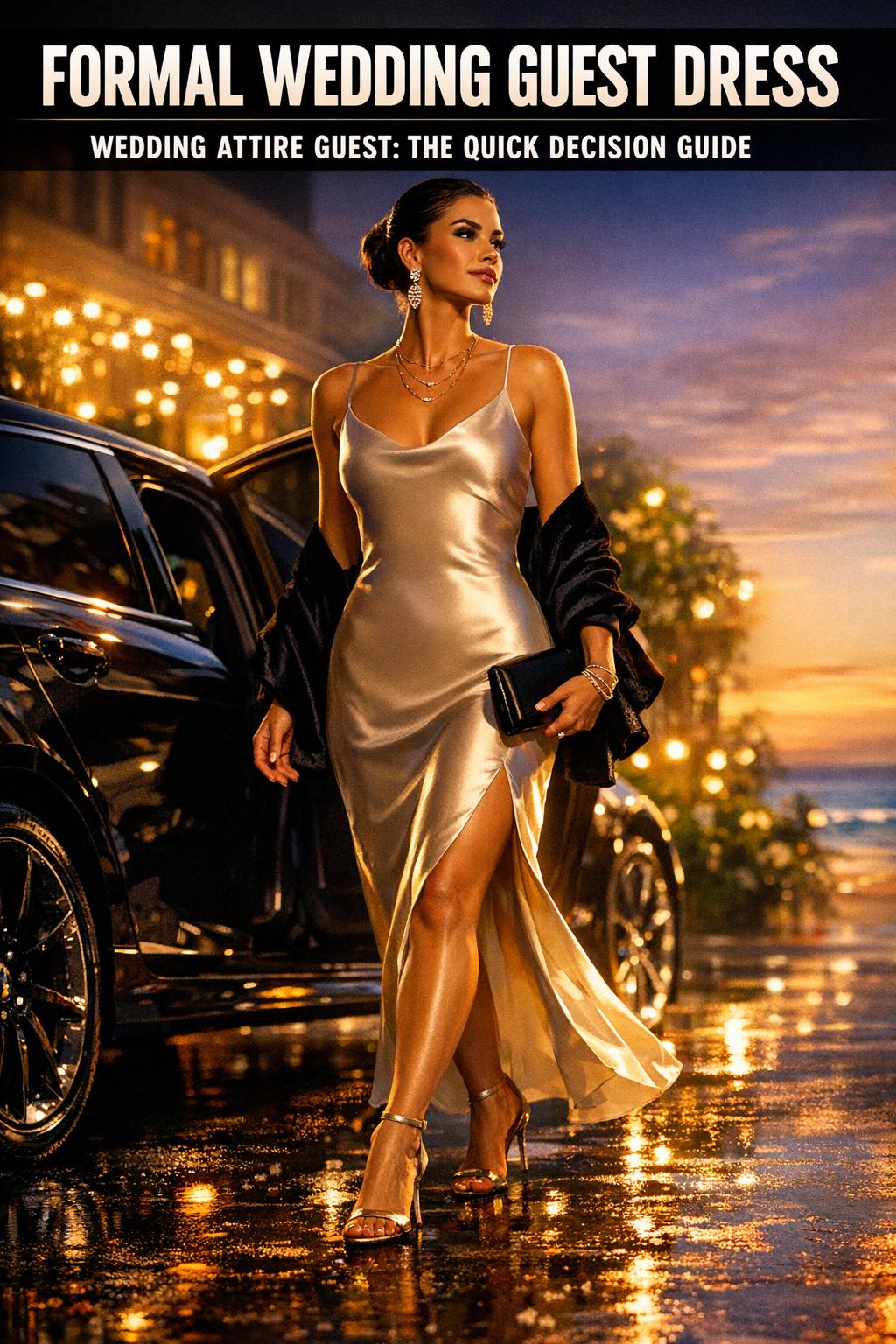
Not every formal wedding is labeled black-tie, and that’s where formal gowns and maxi dresses shine. A well-chosen maxi can feel just as elevated as a gown, especially in satin or crepe, and it often offers more versatility for varied venues. This is also the category where you can subtly express personal style: a sleek minimalist silhouette for a city venue, or something more romantic for a garden setting.
Retailers that focus on formal dresses for wedding guests—like David’s Bridal, Windsor, Sunfere, Alex Evenings, and Goddiva—typically build collections around this exact need: dresses that read formal immediately, without requiring complicated styling. The trade-off is that you need to be intentional about fit and finishing details so the look feels personal rather than generic.
A real-life use case: the “formal, no further guidance” invitation
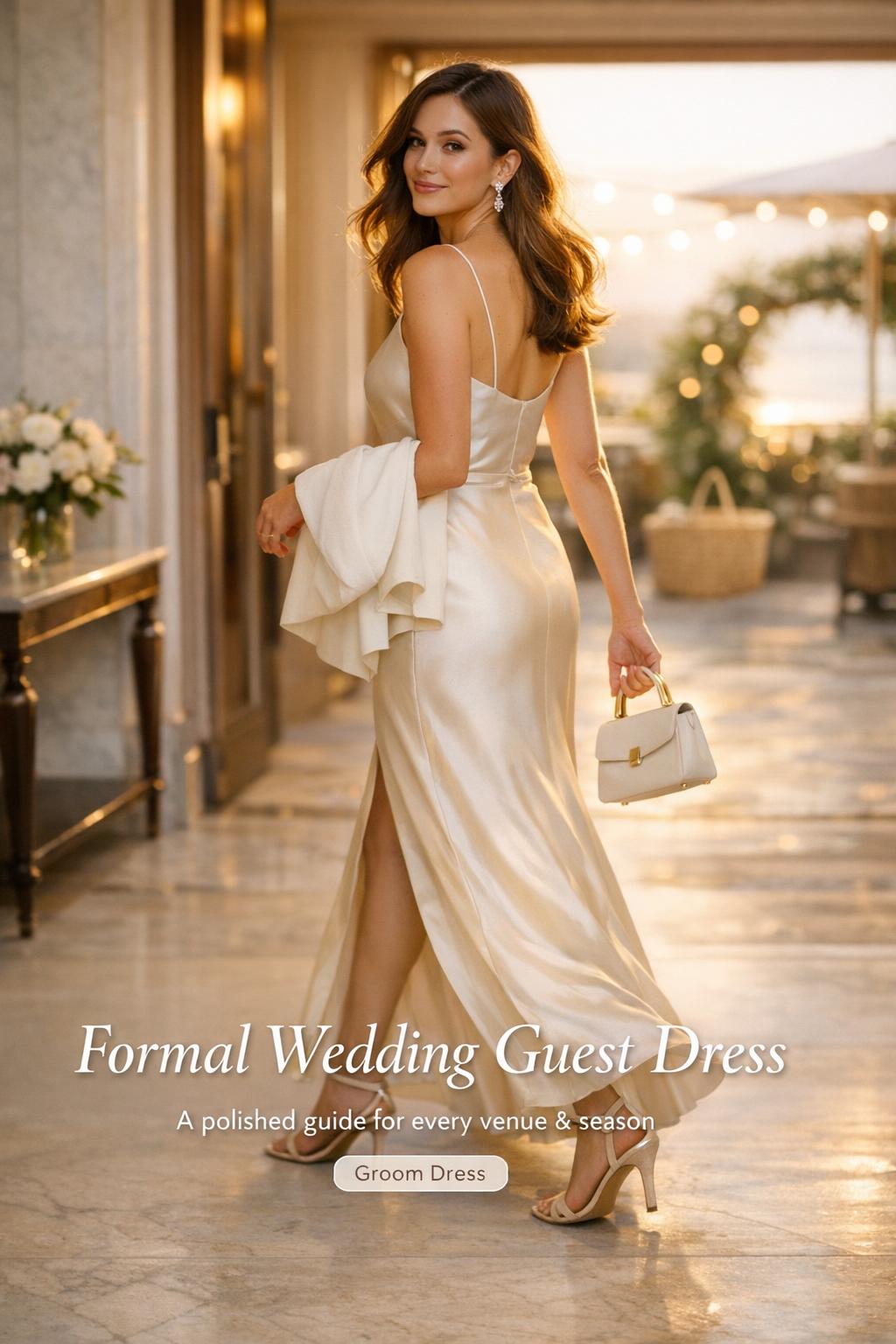
If the invitation simply says “formal,” a satin maxi dress with a clean neckline is often the easiest win. It respects the dress code, works across venues, and gives you flexibility to shift the vibe with accessories—more sparkle for evening, simpler jewelry for daytime. This is one reason satin wedding guest dresses show up repeatedly in wedding edit collections.
Elegant midi dresses and long sleeves: where cocktail attire meets formal polish
Midi dresses can be appropriate for formal wedding guests when they look decidedly elevated—particularly for daytime ceremonies or venues where floor-length feels impractical. Long-sleeve wedding guest dress options can also read formal quickly, especially for cooler temperatures or when you want a more modest silhouette without sacrificing style. You’ll see long-sleeve and season-friendly choices emphasized in collections that cater to evening events and cooler conditions, like Alex Evenings.
The key is to avoid anything that feels too casual in construction. A midi in a polished fabric with refined finishing can work beautifully, but a midi that resembles a casual day dress will likely fall short of the formal dress code. This is the line between cocktail attire and formal: cocktail can be shorter and playful, while formal asks for fabric and fit that look occasion-specific.
- When midi works best: daytime wedding guest dresses, some cocktail wedding guest dress scenarios that lean formal
- When long sleeves help: cooler weather, transitional seasons, or when you want coverage that still feels elegant
- What makes it formal: satin/crepe feel, structured bodice, intentional hem, refined neckline
Color and print: how to look festive without fighting the formality
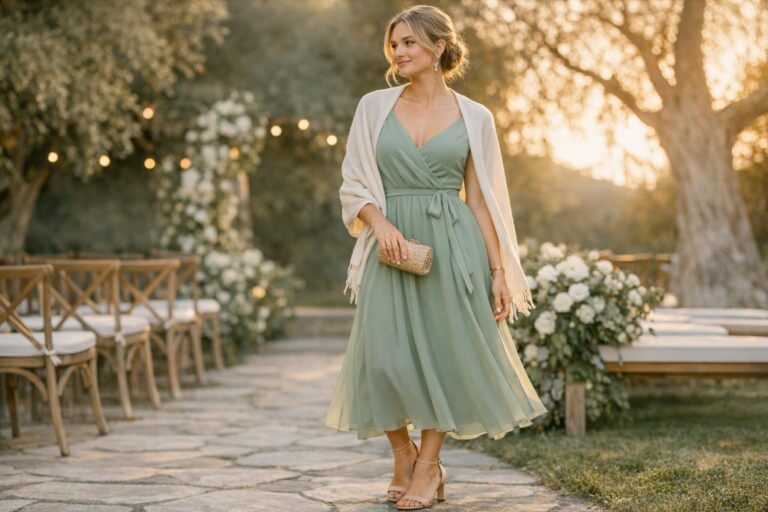
Color and print choices often depend on the wedding type: spring wedding guest dresses may lean brighter or softer, summer wedding guest dresses can support lighter palettes, and winter/fall weddings often look beautiful with deeper tones and richer textures like velvet. Many wedding edit collections highlight romantic shades like sage, blush, and lilac—colors that feel celebratory without overwhelming the moment.
Prints can absolutely belong in formal wedding guest attire, especially florals. Floral wedding guest dresses work particularly well for garden, spring, and some destination weddings, where a print can echo the setting while still being elevated. The trick is scale and fabric: a floral on an elegant silhouette in a dressy material reads far more formal than a casual floral in a lightweight day-dress construction.
Tip: match print energy to venue energy
A city formal event often rewards cleaner lines and more restrained prints, while a beach or destination wedding can handle a more expressive floral—provided the overall look still feels like wedding attire guest styling rather than vacation casual.
Fabric is the quiet signal everyone reads first
If you want a single, reliable rule for formal wedding guest dressing, it’s this: fabric does a huge amount of social signaling. Satin tends to read sleek and evening-ready; velvet reads rich and seasonal; crepe reads refined and structured; metallic crepe adds instant event polish; and organza can bring airy drama when the silhouette supports it. This is why formalwear pages and editorial selections consistently emphasize materials alongside silhouettes—because a simple cut in a dressy fabric often looks more formal than a complicated cut in an everyday fabric.
Satin, velvet, crepe, metallic crepe, organza: how to choose
For warm-weather weddings, satin and lighter-feeling crepes can be a comfortable way to look formal without feeling weighed down. For winter/fall, velvet and richer textures can look especially right. Metallic crepe is a strong choice when you want a more festive, evening-forward finish. Organza can be beautiful for statement volume, but consider how it behaves in wind and during travel—particularly for destination and beach weddings.
Venue-specific style decisions that actually change what works
A formal dress code doesn’t erase the realities of place. Beach wedding guest dresses need to account for sand, wind, and humidity; destination wedding guest dresses must survive packing and a full weekend of events; city venues often invite a more streamlined silhouette; and daytime ceremonies can make ultra-glam styling feel out of sync. This is why many of the most useful wedding guest dress roundups separate recommendations by beach, destination, daytime, cocktail, and black-tie—because each setting changes what “appropriate” looks like.
Beach formal: polish without heaviness
For a beach wedding guest dress that still feels formal, focus on an elegant silhouette that moves easily, and keep accessories secure and intentional. Formal doesn’t have to mean heavy; it means finished. A satin maxi can work well here because it looks elevated, while the cut can stay simple enough for comfort.
Destination formal: choose a dress that travels
Destination weddings often come with multiple events, limited packing space, and unpredictable logistics. Selecting a formal wedding guest dress that can be styled two ways—one jewelry set for the ceremony, another for the reception—reduces stress. Pay attention to wrinkle behavior and whether the hemline will be practical if you’re walking through unfamiliar streets or moving between venues.
Garden and spring: florals with structure
Spring wedding guest dresses and floral wedding guest dresses can feel perfectly aligned with a garden venue, but the most successful looks maintain structure: a defined waist, a clean hem, and a fabric that doesn’t collapse into “day dress” territory. When done right, floral can look formal, romantic, and intentional.
City formal and black wedding guest dresses: sleek, modern, confident
City venues often suit minimalist elegance—clean lines, refined fabrics, and confident color choices. Black wedding guest dresses are commonly featured as a versatile category because black can read instantly formal, especially in a gown or sleek midi. The differentiator is styling: the more streamlined the dress, the more your shoes, jewelry, and bag should look deliberate rather than incidental.
Where to shop in the U.S.: brand personalities and what they’re known for
Shopping for a formal wedding guest dress in the U.S. typically falls into two lanes: editorial inspiration and retail selection. Editorial roundups highlight a wide designer mix—names like Victoria Beckham, Simkhai, L’Idée, Chloé, Staud, Donde Esteban, Johanna Ortiz, Aje, Sir Calle, Zimmermann, Rixo, and Bernadette—often organized by wedding type (black-tie, beach, destination, cocktail, and more). Retailers then translate those categories into shoppable collections with filters for formality, length, sleeve, and print.
If you’re deciding quickly, think in terms of “match the retailer to the problem you’re solving”: do you need formal clarity, trend guidance, inclusive sizing, or an elegant edit you can browse fast?
- Vogue: editorial categories across spring, black-tie, beach, floral, summer, destination, cocktail, black, daytime, and winter/fall, with designer examples like Victoria Beckham, Simkhai, L’Idée, Chloé, Staud, Donde Esteban, Johanna Ortiz, Aje, Sir Calle, Zimmermann, Rixo, Bernadette
- Anthropologie: a broad wedding guest dresses hub with navigation by formality (including black-tie, floral, and casual wedding guest dresses)
- David’s Bridal: collections geared toward elegant formal dresses for wedding guests, with an emphasis on formal event suitability
- Windsor: dedicated edits for formal wedding guest dresses and elegant wedding guest attire, often focused on occasion-ready silhouettes
- Hello Molly (US): trend-forward wedding edit highlights like satin, long sleeves, florals, and romantic palettes (sage, blush, lilac)
- Showpo (US): a wedding guest section designed for browsing styles and pairing with accessories
- Alex Evenings: wedding guest dresses with an emphasis on evening-appropriate and cooler-temperature options, including long sleeves
- Sunfere: a formal wedding guest dresses collection with a clear formality focus
- Goddiva (US): wedding guest dresses with attention to formal/evening options and inclusive sizing
Styling that makes a formal dress feel intentional (not just “worn”)
A formal dress can still look unfinished if the styling is an afterthought. The goal is cohesion: accessories should reinforce the formality of the fabric and silhouette, not compete with it. Editorial wedding guest dressing often emphasizes jewelry and accessory suggestions because the final 10%—shoes, bag, outerwear—can change the entire read of the outfit.
Jewelry, shoes, and outerwear that reinforce formal wedding guests standards
For sleek gowns and satin maxis, jewelry can provide the “occasion signal” without adding visual clutter. For printed florals, simpler jewelry often looks more refined. Shoes should align with the venue: a beach ceremony may demand stability and practicality, while a city venue can handle more delicate formal shoes. Outerwear is frequently overlooked; a polished cover-up or coat can keep the look elegant during arrivals and departures, particularly in winter/fall.
Tip: let one element be the headline
When your formal wedding guest dress has a strong fabric story—velvet, metallic crepe, or a dramatic organza moment—keep accessories clean so the dress reads as the centerpiece. If the dress is minimal, use jewelry and a refined bag to add that event-level finish. This “one headline” approach also helps your photos look timeless instead of busy.
Fit, sizing, and inclusive options: the practical side of feeling confident
Formalwear is less forgiving than casual clothing because the fabrics and cuts are designed to look structured and intentional. That means fit matters—not in an abstract way, but in how you’ll feel at hour three of the reception. If you’re shopping online, build time for try-ons and small adjustments. Brands with strong formal categories (like David’s Bridal and Windsor) make it easier to find silhouettes intended for formal events, while Goddiva highlights inclusive sizing as a key part of its wedding guest offering.
Comfort is part of polish. A dress that restricts movement can read awkward on the dance floor and in candid photos. A dress that fits well supports the posture and ease that make guest attire look elevated. If you’re choosing between two sizes, consider how the fabric behaves; a sleek satin or crepe often looks best when it falls smoothly without pulling.
Tip: test the “wedding movements” before committing
Before you finalize your wedding attire guest look, do a quick at-home test: sit, stand, walk briskly, lift your arms as if hugging relatives, and take a few steps as if dancing. Formal silhouettes like sheath styles can be stunning, but you’ll want to confirm they move comfortably. This is especially important for long-sleeve wedding guest dress styles where shoulder fit can determine comfort for hours.
Daytime vs evening: the detail that changes everything
Daytime wedding guest dresses can still be formal, but the styling usually shifts toward lighter energy: softer colors, florals with structure, and silhouettes that feel elevated without looking overly dramatic in natural light. Evening weddings can support deeper tones, richer textures like velvet, and more pronounced shine like metallic crepe. This isn’t about strict rules—it’s about harmony with the atmosphere.
If the invitation timing is unclear, lean on the venue: destination resorts and beach venues often skew brighter and lighter; city ballrooms often skew sleek and evening-coded. When in doubt, choose a formal maxi or gown and keep styling flexible so you can adjust once you see the space.
Common missteps that can accidentally downgrade a formal look
Many “not quite formal” outfits fail for predictable reasons: a casual fabric, a too-informal shoe, or styling that doesn’t match the venue. It’s rarely the color alone—it’s usually the combination of fabric, silhouette, and finishing details. Formal wedding guests tend to look most polished when every part of the outfit agrees on the same level of occasion.
- Choosing a dressy silhouette in a fabric that reads casual, which can make the overall look feel like daytime wear
- Wearing shoes that fight the venue (for example, footwear that doesn’t handle beach conditions), leading to discomfort and awkward movement
- Overloading a floral or statement dress with heavy accessories, which can make the look feel busy rather than elevated
- Ignoring outerwear for winter/fall weddings, which can interrupt the formal impression during arrivals and photos
How cocktail attire fits in (and when it doesn’t)
Cocktail attire sits adjacent to formal, and many guests own cocktail dresses already—so the question comes up constantly: can cocktail attire work for a formal wedding? Sometimes, yes. A refined cocktail wedding guest dress in a formal fabric, paired with elevated accessories, can meet the spirit of a formal event—particularly for daytime weddings or venues where floor-length feels overly heavy.
Where it doesn’t work is when “cocktail” becomes shorthand for casual. If the fabric looks like a casual day dress, or if the styling is too relaxed, it can land underdressed in a formal room. If you’re uncertain, shift one step more formal: choose an elegant midi with a formal finish, or a maxi that reads event-ready immediately.
Tip: upgrade cocktail with fabric and finish, not just jewelry
Accessories can elevate, but they can’t fully transform a casual-feeling fabric into a formal one. If you want a cocktail-length hemline for comfort, prioritize satin or crepe and ensure the fit is clean and the hem looks intentional.
A quick note on “groom dress” searches and why guests see them
While shopping for formal wedding attire, it’s common to see adjacent searches like “groom dress” and other wedding-party terms. As a guest, the useful takeaway is contextual: the more formal the event is for the couple and wedding party, the more you should treat your guest attire as event-level. If the wedding is positioned as black-tie or deeply formal, your outfit should reflect that same elevated tone—without trying to compete with the couple.
Putting it all together: a simple decision framework you can use in five minutes
When time is short, you don’t need a hundred options—you need a clear sequence that leads to the right category fast. Use this as a final check before you shop or commit to a dress you already own.
- Dress code first: black-tie → gown/maxi; formal → gown or elevated maxi; cocktail attire → refined midi/structured cocktail, upgraded with formal fabric
- Venue reality: beach → movement and practicality; city → sleek silhouettes; destination → packable fabrics and versatile styling
- Season/temperature: winter/fall → velvet and richer textures; spring/summer → satin/crepe and lighter palettes
- Finish: formal shoes, cohesive jewelry, and outerwear that matches the level of dress
FAQ
What is considered a formal wedding guest dress?
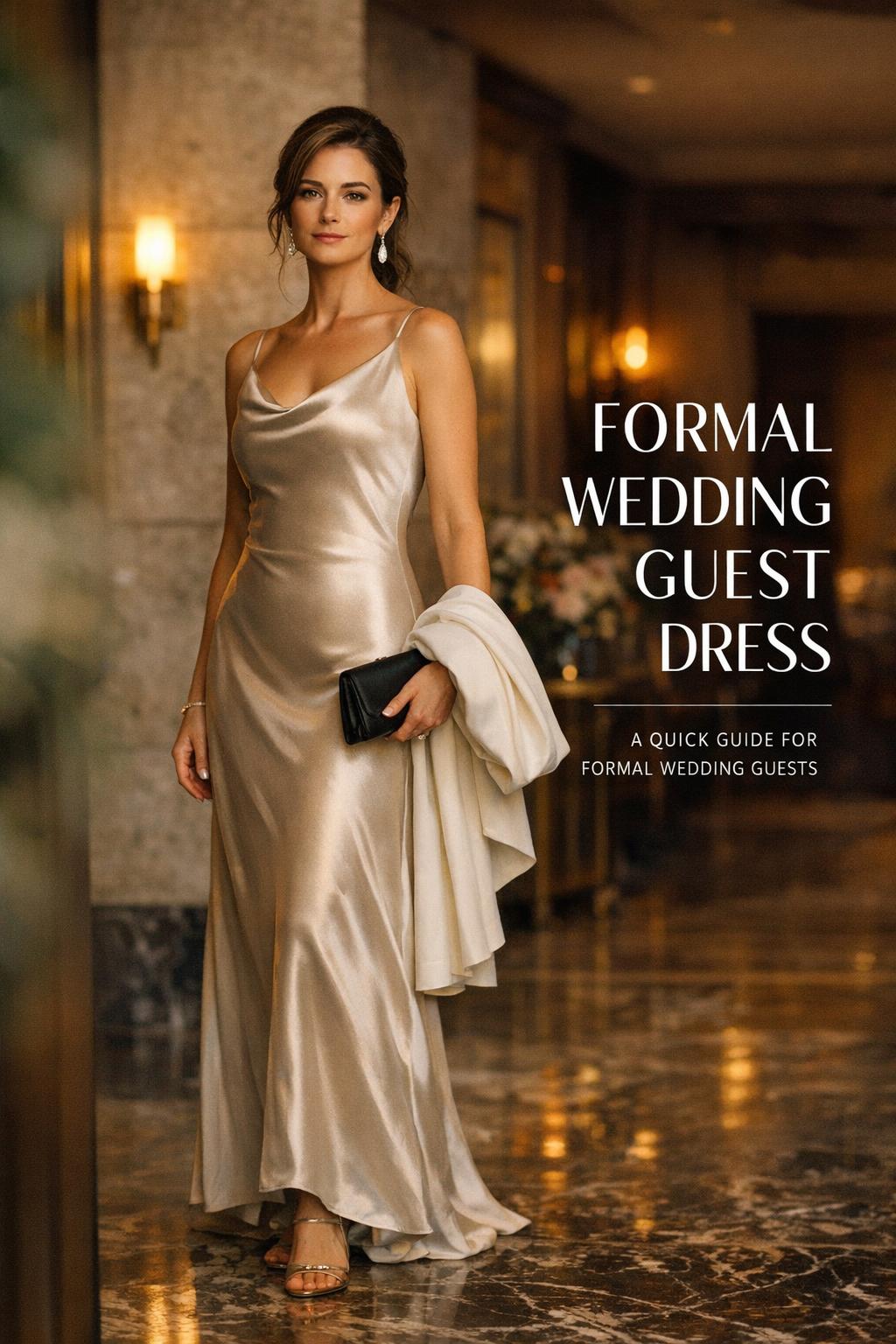
A formal wedding guest dress typically means an elevated silhouette—often a gown or polished maxi, and sometimes an elegant midi—made in occasion-forward fabrics like satin, velvet, crepe, metallic crepe, or organza, styled with accessories that reinforce an evening-ready finish.
What should I wear to a black-tie wedding as a guest?
For black-tie, aim for a floor-length gown or a very formal maxi dress, prioritizing refined fabric and clean fit; velvet, satin, and crepe are common choices that read instantly formal and photograph well.
Is a cocktail dress appropriate for a formal wedding?
It can be, if the cocktail dress is clearly elevated—think a structured silhouette or elegant midi length in a formal fabric like satin or crepe, with polished accessories—especially for daytime events or venues where floor-length feels impractical.
What fabrics look most formal for wedding guest attire?
Satin, velvet, crepe, metallic crepe, and organza commonly signal formality because they drape and finish in a way that reads “evening” rather than casual, making them reliable choices for formal wedding guests.
Can I wear a floral dress to a formal wedding?
Yes—floral wedding guest dresses can work for formal events, particularly in spring, garden, or some destination settings, as long as the silhouette and fabric feel elevated and structured enough to stay on the formal side rather than casual daytime.
What’s a safe choice if the invitation just says “formal”?
A satin or crepe maxi dress in a refined silhouette is a safe, versatile choice for “formal” because it can be styled up for evening or kept more restrained for daytime, while still meeting the baseline expectations of formal wedding attire.
How do I choose a formal wedding guest dress for a beach or destination wedding?
Choose an elegant silhouette that moves well and suits the setting—beach wedding guest dresses should balance polish with practicality, while destination wedding guest dresses should also consider packing and wrinkle behavior so the dress still looks intentional upon arrival.
Where can I shop for formal wedding guest dresses in the U.S.?
You’ll find dedicated wedding guest dress edits and formal collections at places like Anthropologie, David’s Bridal, Windsor, Hello Molly (US), Showpo (US), Alex Evenings, Sunfere, and Goddiva (US), while editorial roundups often reference designers such as Victoria Beckham, Simkhai, L’Idée, Chloé, Staud, Donde Esteban, Johanna Ortiz, Aje, Sir Calle, Zimmermann, Rixo, and Bernadette for inspiration across dress-code categories.