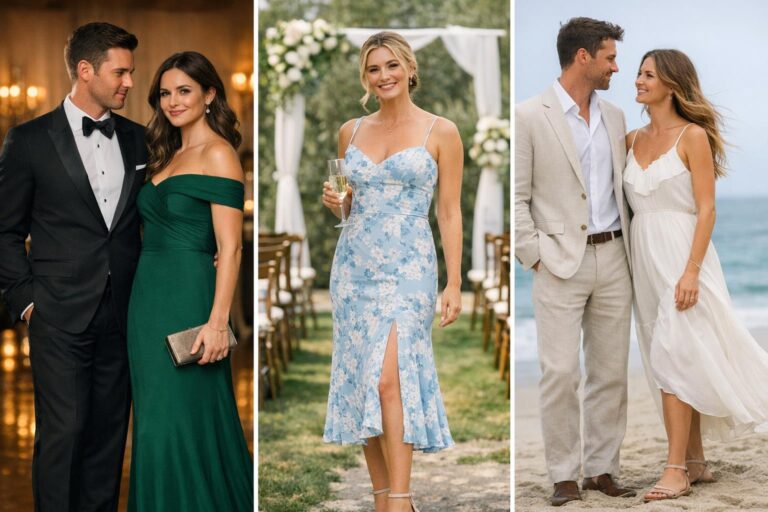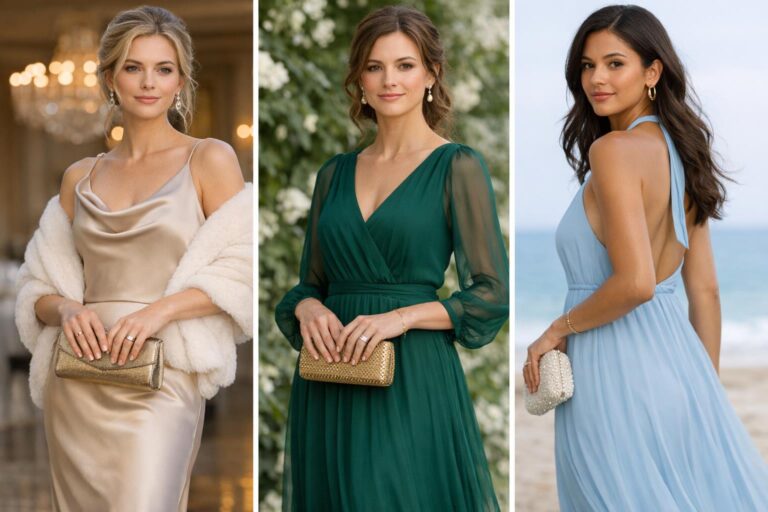
Formal Winter Wedding Guest Dress Ideas for Candlelit Nights
Formal winter wedding guest dress: where elegance meets the temperature drop
The most common winter-wedding style dilemma happens before you even open your closet: the invitation says “formal,” the forecast says “cold,” and the venue might be anything from a candlelit ballroom to a drafty destination ceremony. A formal winter wedding guest dress has to speak the language of eveningwear—polished silhouettes, elevated fabrics, intentional color—while still respecting the reality of winter coats, long waits outside, and temperature swings between ceremony and reception.
Across the most visible winter guest-dress ideas, certain themes repeat for a reason: velvet that photographs like a dream, sequins that feel festive for a New Year’s wedding, jewel tones that look rich under low light, and long sleeves that deliver warmth without looking “covered up.” At the same time, the best-dressed guests think in outfits, not just dresses: the gown, the outerwear, the footwear, and the accessories all have to work together. This guide approaches winter formality exactly that way—fabric, silhouette, color, and warmth, with real-world styling decisions you can actually use.
Decoding “formal” in winter: the dress code is the first layer
“Formal” is a dress-code signal first and a season second. In practice, formal winter attire usually leans toward floor-length gowns, refined midis, and elevated fabrics—especially when the event is evening-forward or the setting is upscale. Winter simply changes the material choices (hello, velvet and satin) and the styling strategy (outerwear and warmth become part of the plan instead of an afterthought).
Formal, black-tie, black-tie optional, semi-formal: why the wording matters in winter
Winter weddings are more likely to include evening receptions and holiday-adjacent celebrations, which can nudge the dress code toward black-tie, black-tie optional, or “formal.” The Knot-style dress code approach is useful here: start with the invitation’s terms, then interpret through venue and time. A black-tie winter wedding guest look typically calls for a full-length gown in luxe fabric or a truly elevated formal alternative; “formal” often allows a refined midi or a sleek maxi; semi-formal can still be winter-appropriate but usually won’t demand a floor-length silhouette. If you’re unsure, winter is the season where overdressing slightly tends to look intentional—especially when you choose rich textures and deep tones rather than summery prints.
The winter-specific clue most guests miss: warmth is part of the etiquette
Cold-weather weddings often involve transitions—valet lines, outdoor photos, walking between spaces, or travel between ceremony and reception. Dressing warmly isn’t only comfort; it helps you stay present and polished, rather than shivering through vows or clutching your coat in every photo. This is where winter-friendly fabrics, long sleeves, and smart layering become the quiet markers of a guest who understood the assignment.
Fabric families that instantly read winter-formal
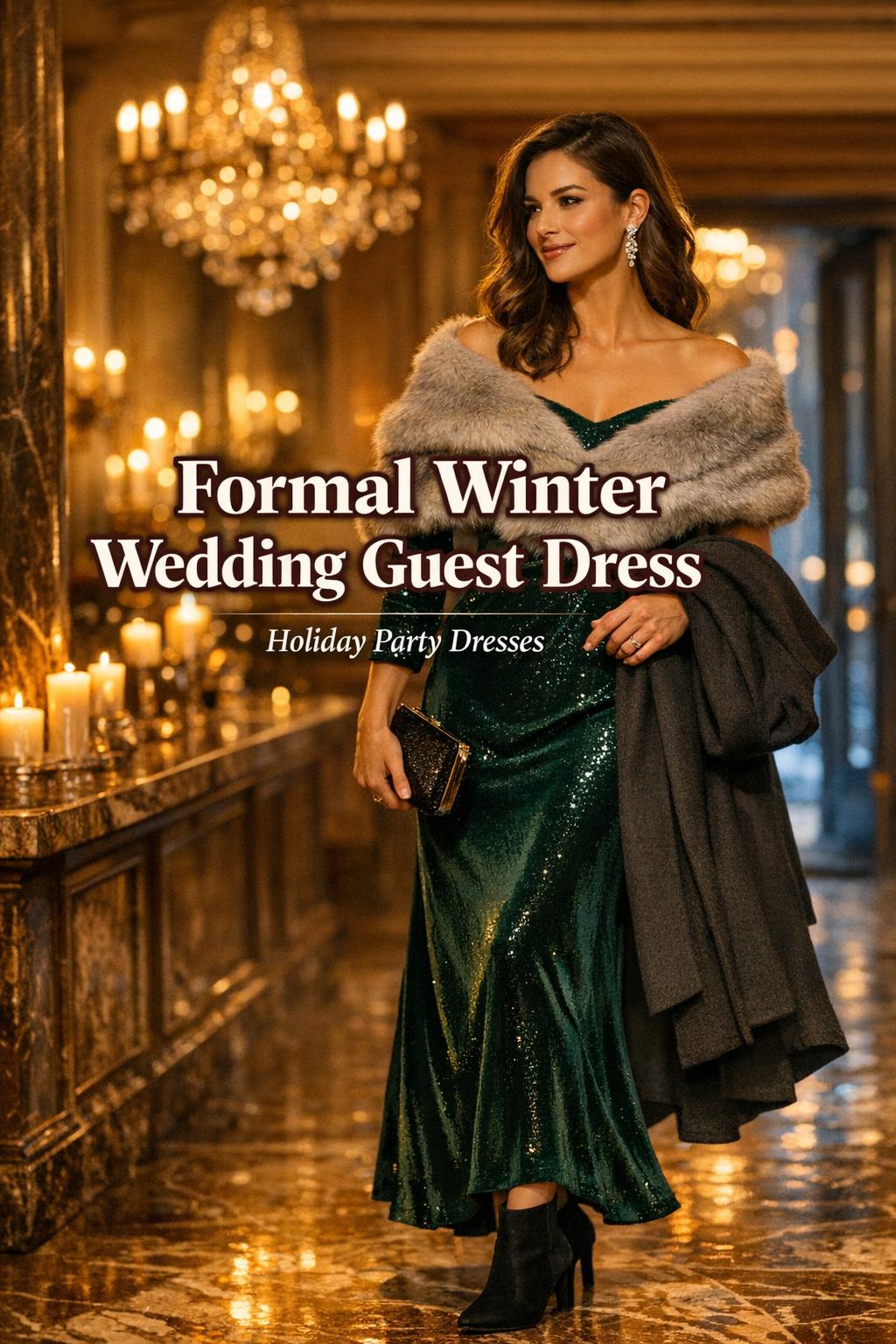
If you want your outfit to feel seasonally correct the moment you walk in, begin with fabric. The most consistent winter-formal fabric signals are velvet, sequins (and metallic finishes), and satin—each offering a distinct mood and level of drama. Crepe and matte finishes can also feel formal when the cut is impeccable and the color is deep, but winter’s signature is texture.
Velvet gowns (stretch velvet, crushed velvet) for depth, warmth, and candlelit romance
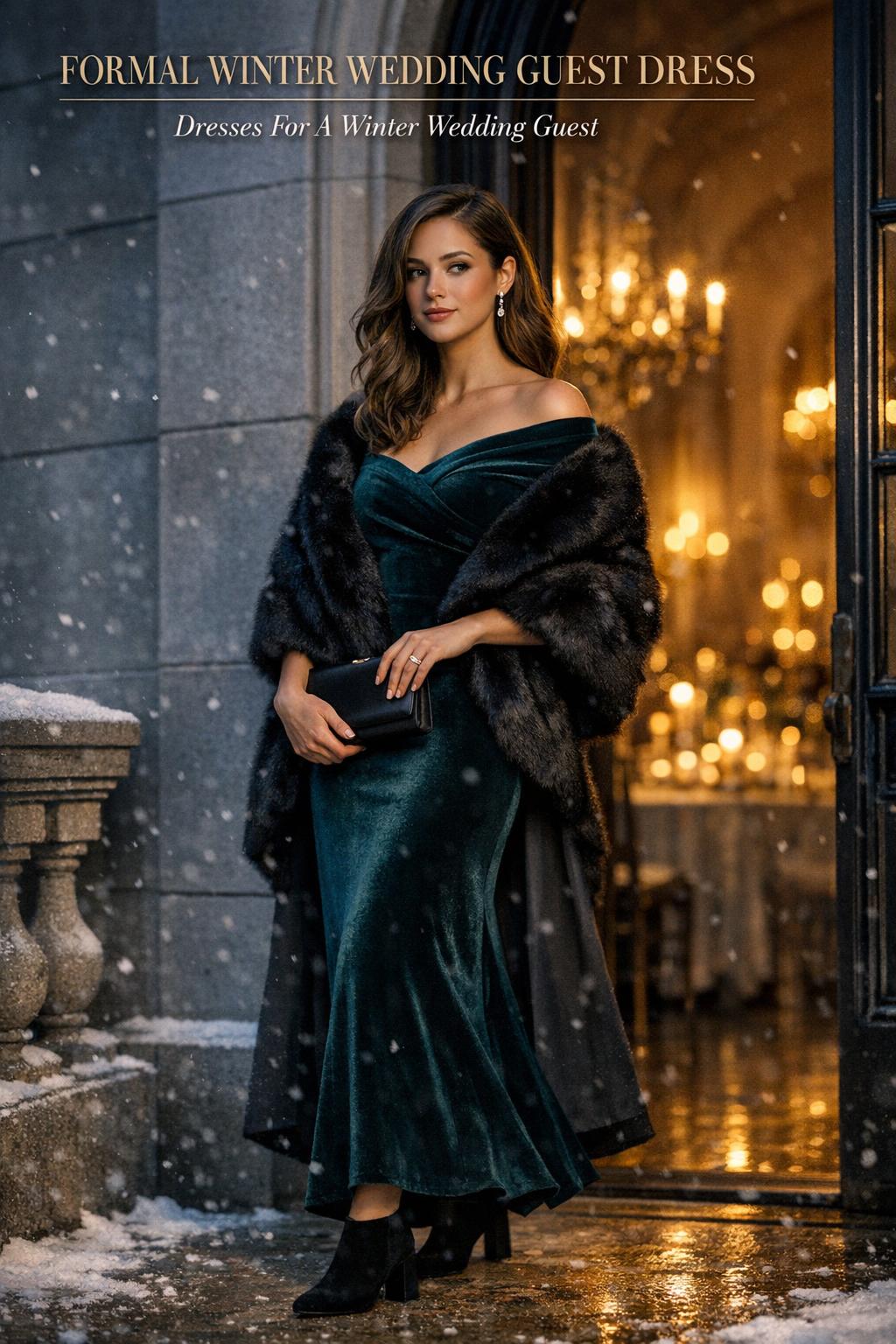
Velvet is the winter wedding guest fabric that rarely disappoints. It looks opulent under soft lighting, adds visual dimension in photos, and naturally suggests the season. Stretch velvet tends to skim the body with comfort (ideal for long receptions), while crushed velvet brings extra texture—especially striking in jewel tones. For formal settings, a velvet column gown feels modern and sleek; an A-line velvet gown feels classic and romantic; and a wrap-inspired velvet silhouette offers ease while still reading elevated.
Designer-forward inspiration often points to velvet in deep color—exactly the kind of choice you’ll see associated with fashion names like Stella McCartney. If you’re building a “wear again” wardrobe, velvet is one of the more versatile winter investments because it can travel from weddings to holiday party dresses with only a change of jewelry and shoes.
Sequins and metallics: festive formality for holiday and New Year’s weddings
There’s a reason sequined gowns anchor so many winter wedding guest dress edits: they carry celebration on their surface. For a candlelit reception or a formal ballroom evening, a sequin maxi with clean lines feels intentional rather than costume-like. If you love sparkle but want it refined, balance the shine with a more covered silhouette—long sleeves, a higher neckline, or a floor-length hem that feels “evening” rather than “party.”
Sequins also solve a practical winter problem: they look complete on their own. When you know you’ll be in a coat until the last possible second, it’s helpful to have a dress that doesn’t rely on a complicated accessory story to feel finished.
Satin (and satin-adjacent shine): elegant, fluid, and unmistakably formal
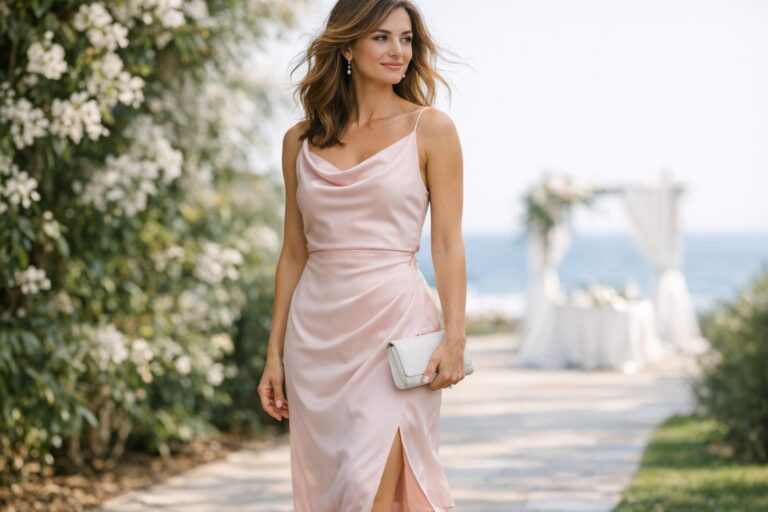
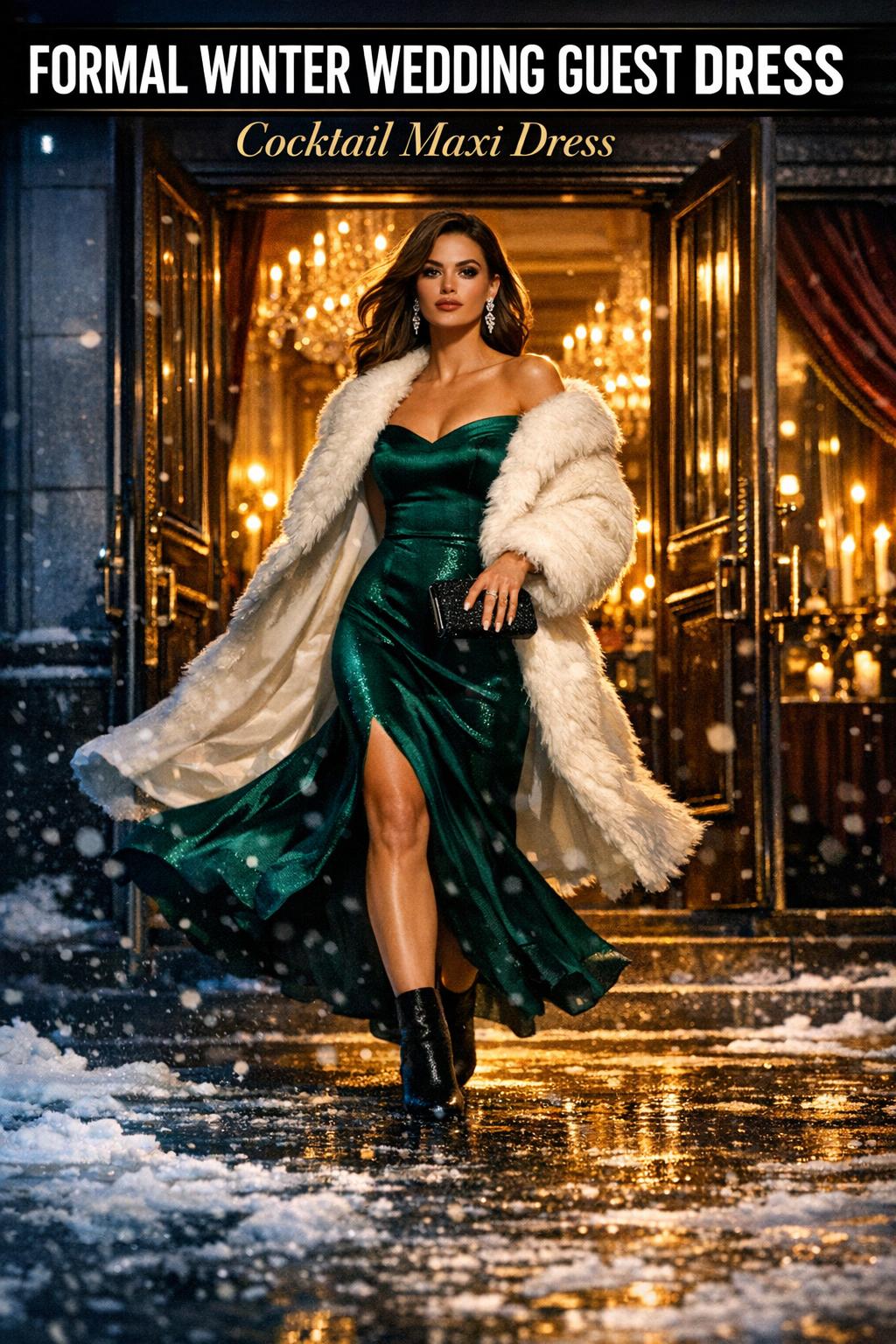
Satin brings a smooth, formal luster that pairs beautifully with winter’s deeper palette. It’s especially effective in a bias-cut or fluid silhouette that moves well from ceremony seating to dance floor. If you’ve been searching for a cocktail maxi dress that feels wedding-appropriate, satin is one of the easiest ways to make a “maxi” read formal rather than casual—particularly in midnight blue, emerald, or deep neutrals.
One winter-specific note: satin can feel chilly and unforgiving if the venue is cold. In that case, a long sleeve satin design, a more substantial lining, or a carefully chosen outer layer (like a tailored coat or faux fur stole) becomes the difference between looking elegant and feeling uncomfortable.
Silhouettes that suit winter venues: from ballroom to destination ceremony
Winter weddings tend to be architectural in atmosphere—grand interiors, darker skies, richer florals, and moodier lighting. The silhouettes that thrive here are the ones that hold their own against the setting: column gowns, A-line shapes, wrap silhouettes, and elevated midis that feel intentional rather than “day dress.”
Floor-length gowns: the simplest route to “formal”
A floor-length gown is the cleanest way to communicate formality, especially for black-tie optional or a formal evening reception. Velvet and sequins are natural partners here: velvet gives you winter richness, while sequins bring celebratory energy. In practical terms, a floor-length hem also reduces the styling pressure on shoes—an advantage when you’re choosing winter-friendly footwear and want warmth without sacrificing polish.
Long sleeves and modest silhouettes: elegant coverage that looks designed, not improvised
Long-sleeve winter wedding guest dresses show up repeatedly across editorials because they solve two problems at once: they look formal, and they help with warmth. The key is proportion. A long sleeve paired with a clean neckline and a refined fabric (velvet, satin, sequin) reads intentional. This is also where embroidered details can feel especially special—an embroidered midi dress with long sleeves, like the kind you’ll see from Mac Duggal via retailers such as PromGirl, can bridge the gap between “formal” and “wearable” when the event is a little less black-tie but still elevated.
The off shoulder wedding guest dress in winter: romantic, but plan the warmth
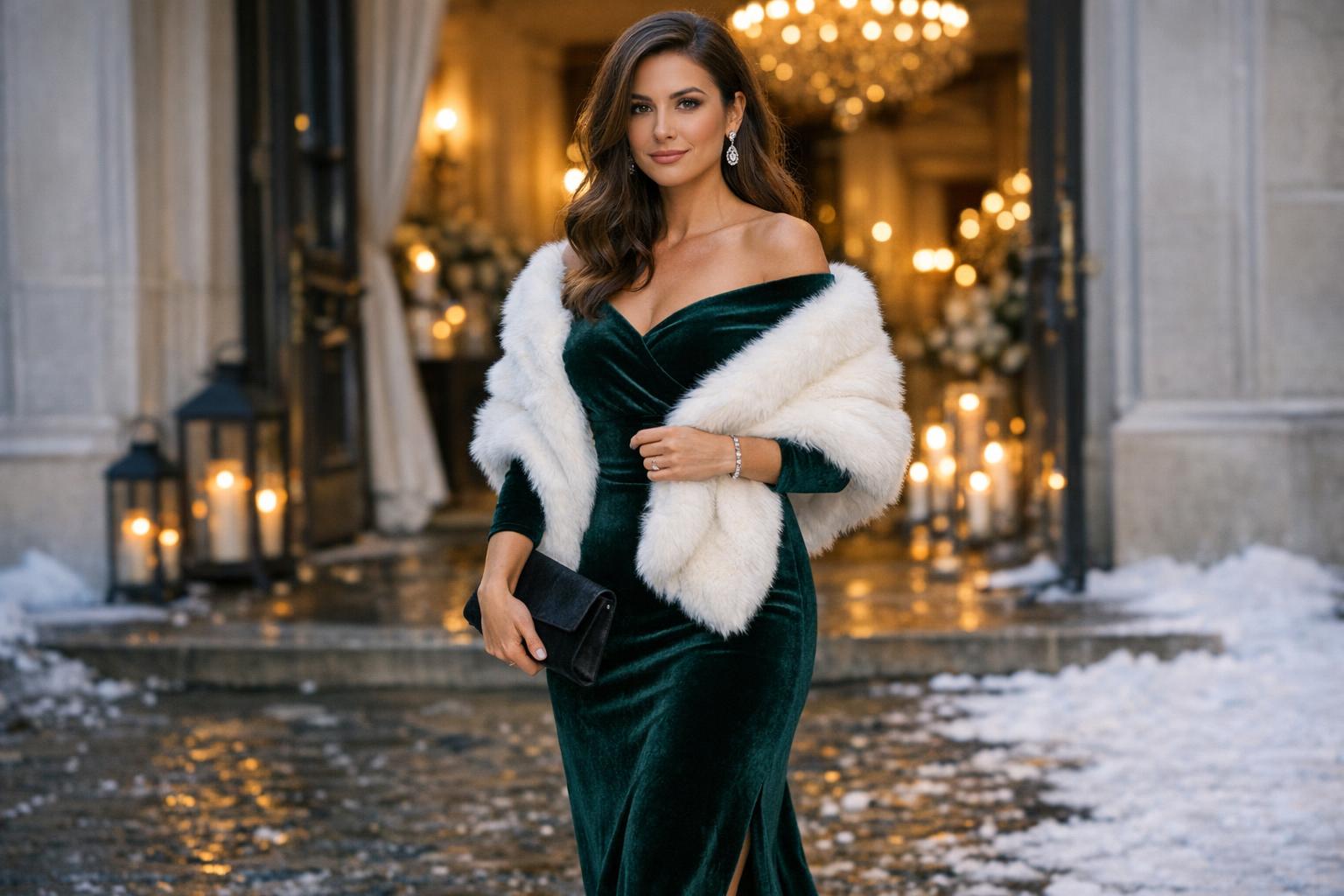
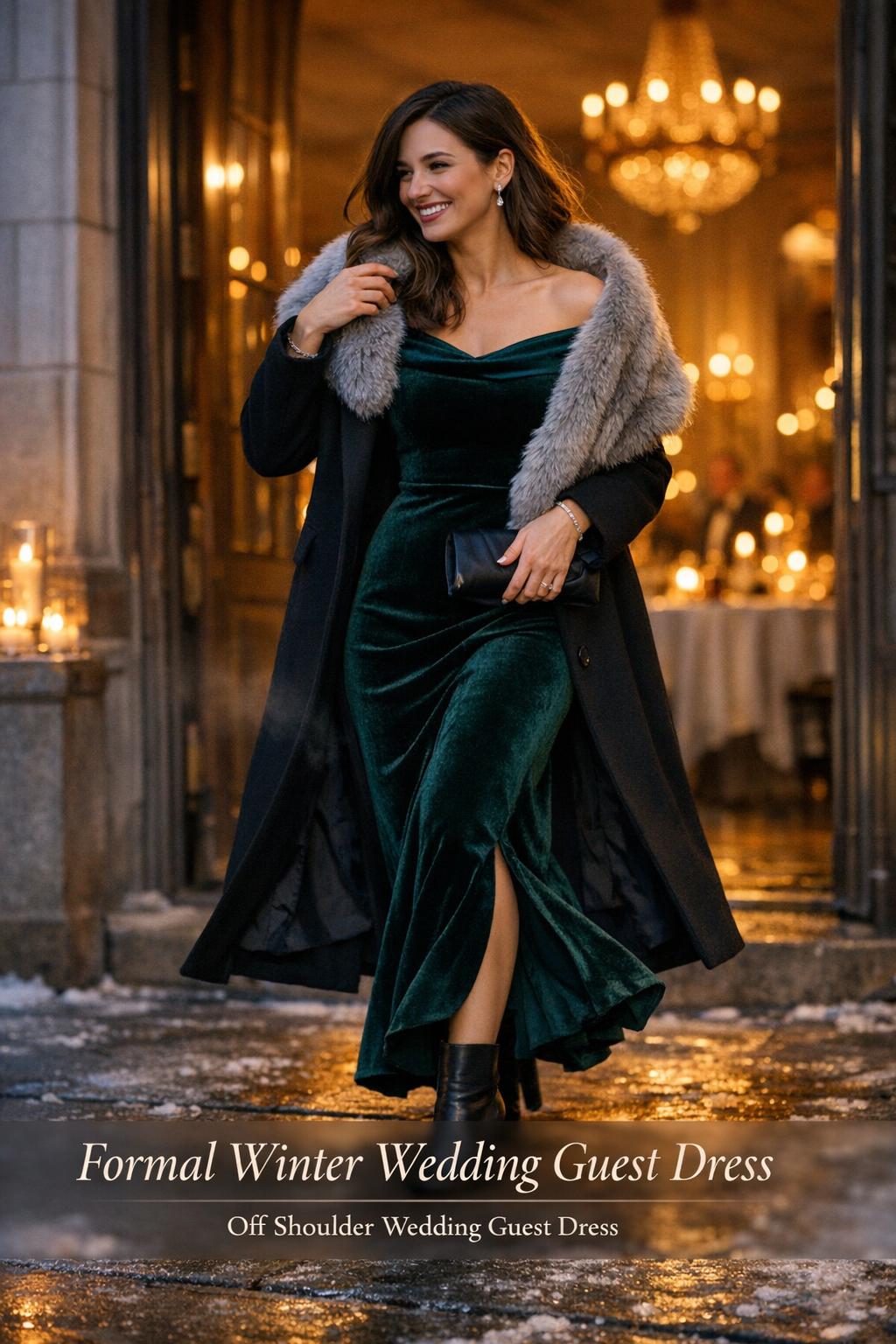
An off shoulder wedding guest dress can be breathtaking in winter—particularly in velvet, where the exposed neckline feels balanced by the fabric’s richness. This silhouette shines at an indoor ceremony followed by a formal evening reception, when you’ll mostly be in heated spaces and want a romantic, portrait-ready neckline. The trade-off is outerwear: off-shoulder styles pair best with a faux fur stole, a cape, or outer layers that don’t crush the neckline. If the event includes significant time outdoors, consider a long-sleeve alternative or a silhouette with straps for easier layering.
Midi and cocktail maxi dress options: when you want formal without a full gown
Not every winter wedding asks for a sweeping hemline. A structured midi in velvet, satin, or embellished fabric can feel absolutely right for a formal-leaning event—especially earlier start times or venues that feel stylish but not black-tie. A cocktail maxi dress works similarly: it gives length and elegance, but the design details (fabric, sleeve, neckline, and finish) do the heavy lifting. If the dress is matte and minimal, deepen the palette and elevate the accessories; if the dress has sequins or embroidery, keep styling streamlined so the overall look remains refined.
Winter color stories: jewel tones, deep neutrals, and the art of looking “seasonal”
Winter light changes everything. Indoor venues lean warm and golden; outdoor photos can be crisp and cool. The color palette that thrives in both is rich and saturated—jewel tones and deep neutrals that hold depth under evening lighting and still look luxurious in daylight.
Jewel tones (emerald, sapphire, ruby): the easiest way to look winter-formal
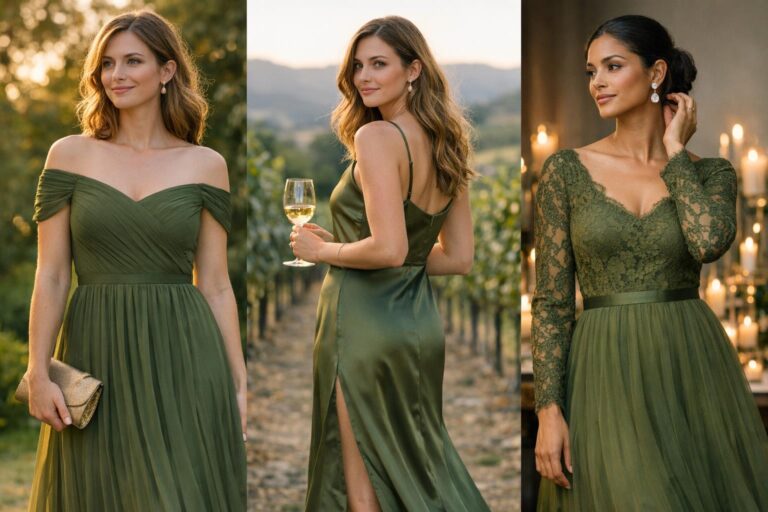
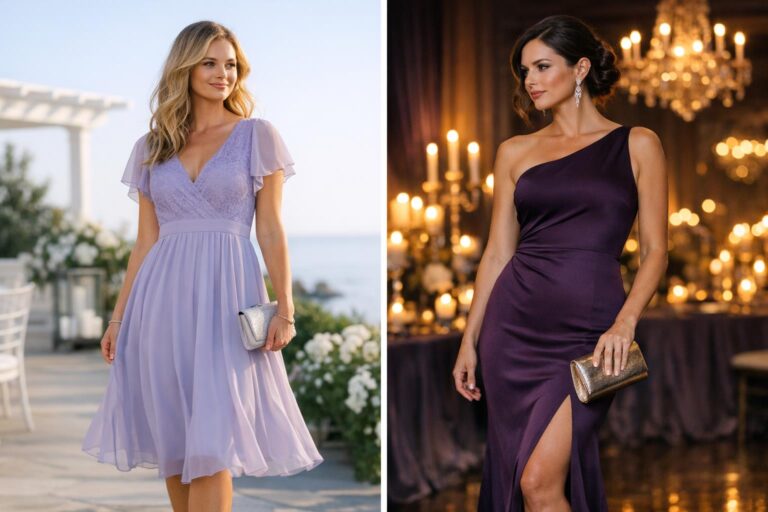
Emerald, sapphire, and ruby are the classic winter wedding guest colors because they echo the season’s richness without feeling heavy. These shades are especially effective in velvet and satin, where the fabric amplifies the color’s depth. For a formal setting, jewel tones also help a simple silhouette look more expensive—an understated column gown in emerald velvet can feel as impactful as a more embellished look.
Deep neutrals (charcoal, midnight blue, black): chic, but not always the safest default
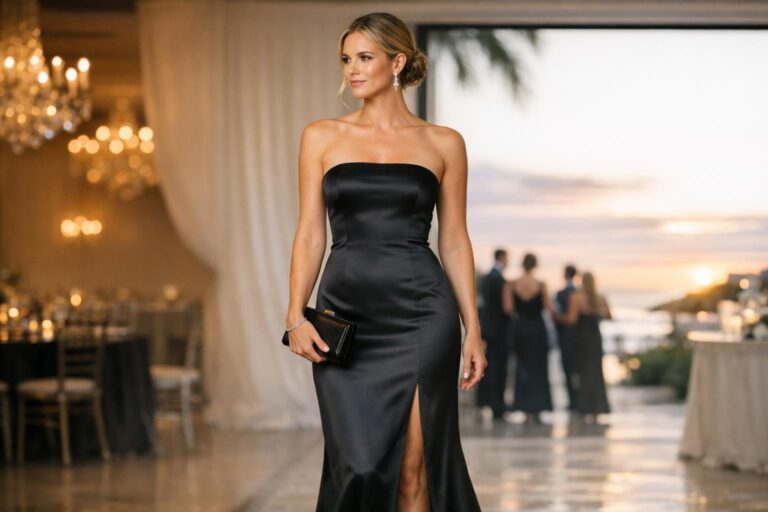
Deep neutrals are timeless for formal winter wear, and midnight blue is a particularly elegant alternative when you want darkness without the full severity of black. Black can absolutely work for a winter wedding guest dress, especially in luxe fabrics and formal silhouettes; the styling matters. Add dimensional accessories—pearls or a bold statement piece—to keep the look celebratory. The only caution is that some couples prefer guests avoid overly somber looks; when in doubt, choose black with texture (velvet, sequins) so it reads festive rather than austere.
Wedding guest dress red: how to keep it formal and refined in winter
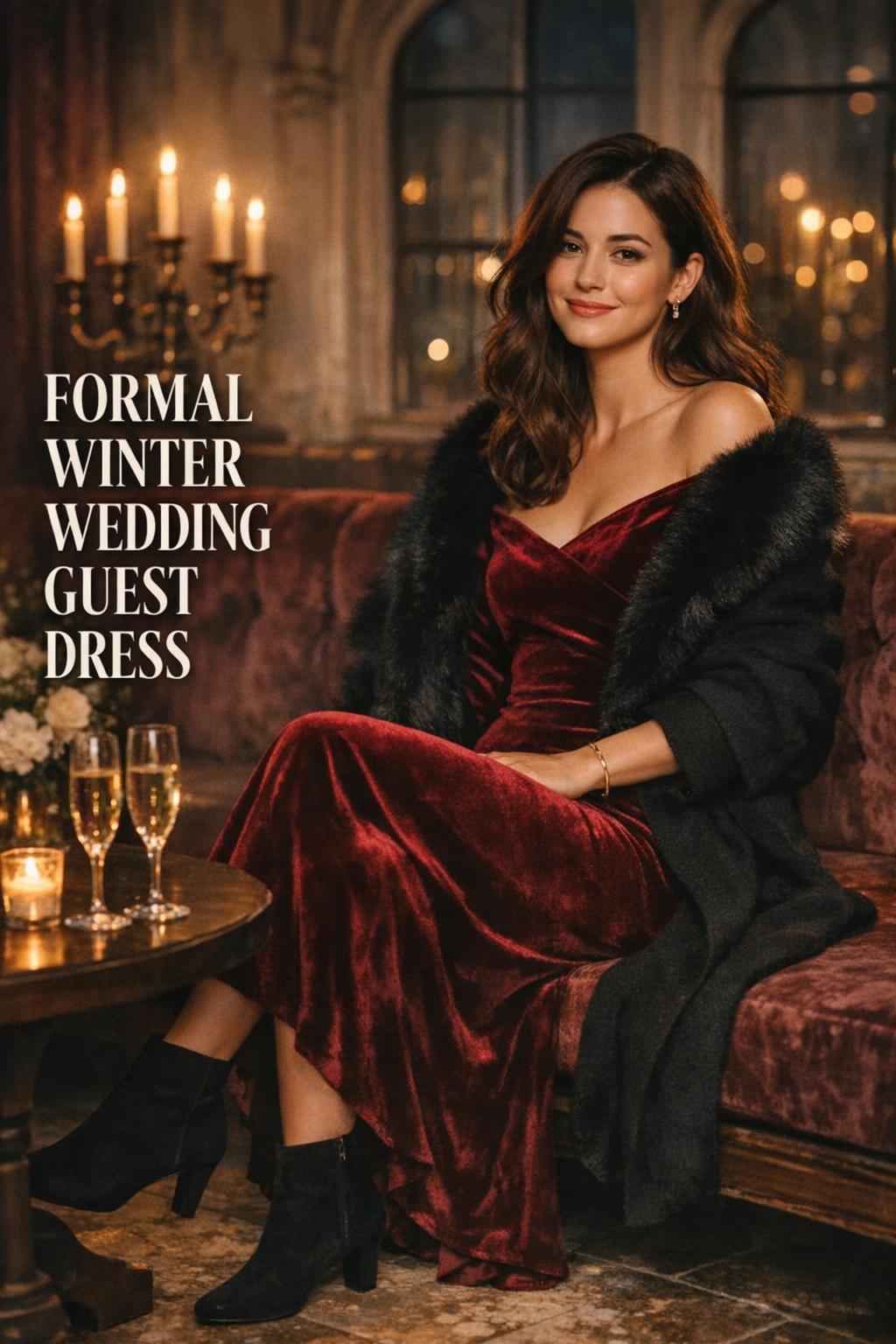
A wedding guest dress red moment feels especially appropriate in winter, when celebrations overlap with holiday energy and candlelit receptions. The secret is formality through fabrication and line: choose a floor-length gown or a refined midi in velvet or satin, and keep the styling elegant rather than loud. Red pairs beautifully with minimal metallic accessories and a streamlined coat; if the dress is already bold, let the silhouette be clean and the jewelry intentional.
Outerwear is part of the outfit: warmth without losing the silhouette
Winter wedding guest style falls apart fastest at the coat check. You can spend hours selecting the perfect dress and then throw on an everyday puffer that clashes with the entire look. For formal winter weddings, outerwear should feel like a continuation of the outfit—especially if you’ll be photographed arriving, leaving, or outdoors during transitions.
Faux fur stoles, capes, and tailored coats: three winter layers that photograph beautifully
Outerwear choices tend to land in three flattering families. A faux fur stole feels instantly formal and pairs naturally with off-shoulder necklines or sleeveless gowns. A cape offers drama and ease—ideal when you want warmth without wrinkling sleeves. A tailored coat (especially longer lengths) is the most versatile and often the most practical for travel, city venues, and cold-weather destinations.
- Faux fur stole: best with strapless or off-shoulder silhouettes; elegant for candlelit receptions and classic ballrooms.
- Cape: ideal for sequins and statement dresses; easy to remove before the ceremony without disturbing hair or jewelry.
- Tailored coat: the “always right” option for formal winter weddings in cities like New York or Chicago, where walking and waiting outside are realistic.
Footwear and legwear for winter nights: the comfort-polish negotiation
Winter footwear is where guests often compromise too far in one direction—either impractical heels that turn the night into a balancing act, or overly casual shoes that undermine the formality. Consider the venue flow: if there’s outdoor walking, booties can make sense with a midi or a longer hem that still shows the ankle; if it’s an indoor formal reception, classic heels remain the easiest pairing. Legwear can also be a quiet warmth strategy, particularly with midi lengths, though the overall look should stay refined and consistent with the dress’s formality.
Tips: a winter-wedding layering plan that won’t fight your dress
Plan your outer layers with the same care as your accessories. If your dress has long sleeves, choose outerwear with enough ease to avoid crushing the fabric. If your dress is sequined, keep the coat interior smooth so it doesn’t snag. And if your dress is velvet, remember that texture can pick up lint or marks—carry it carefully during travel and avoid over-layering bulky pieces that distort the silhouette.
Dresses for a winter wedding guest by mood: three editorial directions
The quickest way to narrow options is to choose a mood that matches the wedding’s atmosphere. Formal winter style isn’t one note—it can be regal and classic, modern and minimal, or festive and glittering. Below are three directions that consistently work, with fabric and silhouette choices that support each story.
Regal and romantic: velvet + jewel tone + graceful line
Picture a historic venue, warm lighting, and a ceremony that feels traditional. This is where a jewel-tone velvet gown shines—emerald, sapphire, or ruby—especially in a floor-length cut. Keep jewelry classic, let the fabric do the work, and choose outerwear that complements the richness: a tailored coat or a faux fur stole depending on your neckline. This mood reads beautifully in photos and feels appropriate for formal settings without needing excessive embellishment.
Modern city formal: column silhouettes, deep neutrals, and clean styling
For a winter wedding in a city setting—think sleek interiors, minimal florals, and a late start time—lean into simplicity with intention. A column gown in velvet or satin, in midnight blue, charcoal, or black, looks modern and confident. Pair it with a structured coat and streamlined accessories. This is also a strong direction if you’re shopping from designer-forward edits where brands like Stella McCartney or Bernadette may appear among the inspiration points—clean lines, elevated fabric, and a sense of restraint.
Festive formal: sequins that feel wedding-appropriate, not nightclub
Holiday-adjacent weddings and New Year’s celebrations invite sparkle, but the styling has to stay elegant. Choose a sequined maxi or a sequined gown with a refined neckline and balanced coverage. Keep the coat classic, the jewelry edited, and the footwear polished. If you’re tempted by the boldest shine, anchor it with a deep winter tone or a full-length silhouette so the look reads “formal celebration” rather than “party dress.”
Budget and brand perspective: from designer inspiration to accessible shopping
The winter guest-dress landscape spans glossy designer picks and practical retailer edits. The key is to shop by the elements that matter most—fabric, silhouette, and finish—then let brand and budget filter the final selection. A velvet gown from a luxury edit and a velvet gown from an accessible retailer can both look formal if the cut is right and the styling is cohesive.
Luxury and designer-forward edits: when the fabric and cut are the centerpiece
Designer-curated inspiration often highlights pieces from labels such as Stella McCartney, Bernadette, Amanda Uprichard, and Kallmeyer. The common thread isn’t just the name; it’s the clarity of design—rich fabric, intentional structure, and a silhouette that reads formal from across the room. If you’re shopping at this end, prioritize timelessness: a velvet floor-length gown or a satin column in a deep neutral can return for multiple winter events beyond weddings.
Retailer guides that make winter formal feel doable
Retailers like David’s Bridal and Azazie lean into the practical questions guests actually ask: what fabrics are winter-friendly, what sleeve lengths help, how to stay warm and still look formal. These are useful sources when your focus is wearability—especially if you want to balance formality with comfort and a realistic budget. If you’re shopping quickly, start with their winter-focused categories (velvet, long sleeves, satin) and filter by floor-length or refined midi shapes.
For guests who want a specific statement detail—like embroidery, a defined midi length, or a long-sleeve formal dress—a product-driven page (such as a Mac Duggal embroidered midi offered through PromGirl) can be a strong anchor piece. Just remember you’ll need to create the “wedding context” yourself through accessories and outerwear if the product page doesn’t provide styling guidance.
Tips: how to judge a “budget-friendly” dress as formal
When the price is accessible, your eye should go straight to three signals: fabric finish, construction at the neckline/waist, and how the hem looks in motion. Winter formal dresses look most convincing when the fabric has depth (velvet, satin shine, sequins) and the silhouette is clean. If the dress feels slightly simple, elevate it with a coat that belongs in the same world and jewelry that feels intentional rather than last-minute.
Inclusive sizing and fit: the most elegant dress is the one that fits beautifully
Many winter wedding guest dress roundups focus heavily on the dress itself and far less on fit realities. But fit is what turns an outfit from “nice” to undeniably formal. Winter fabrics like velvet and sequins can be less forgiving, and sleeves add complexity—so it’s worth approaching sizing and tailoring as part of the plan, not a backup option.
Plus-size formal options and what to look for in winter fabrics
For size-inclusive formal shopping, prioritize designs that look intentional on the body rather than overly delicate. Stretch velvet is often comfortable for long wear and movement, while a well-placed wrap silhouette can offer adjustability without sacrificing formality. Sequins can be stunning, but pay attention to comfort at the underarm and sleeve seams. If you’re shopping via retailers that offer practical guidance—like David’s Bridal or Azazie—use their winter fabric cues (velvet, satin, long sleeves) to narrow quickly, then focus on silhouette and neckline that make you feel secure for an all-night event.
Alterations that matter most for winter formal dresses
In winter, the most useful alterations are often the simplest: hemming for your exact shoe height, refining the waist so the silhouette reads intentional, and adjusting sleeves so you can move comfortably through dinner and dancing. If your outerwear is part of the photo story, bring it to fittings; a coat that pulls across the shoulders or snags on sequins can change your comfort level all night.
Destination and weather reality: dressing for winter across the U.S.
Winter in the U.S. isn’t one climate, and your formal look should respond accordingly. Cold-weather destination cues show up often in winter wedding edits for a reason: travel changes the logistics. A dress that feels perfect in a heated venue may feel impractical when you’re walking between locations, waiting for rides, or taking photos outside.
Cold cities and outdoor transitions: New York and Chicago energy
In colder cities, prioritize outerwear that’s genuinely warm and long enough to cover your dress without bunching. Tailored coats are the understated hero here, especially with floor-length gowns. Choose fabrics that hold warmth (velvet) or look complete without delicate layering (sequins). If you’re wearing a midi, consider footwear that can handle sidewalks and temperature drops without looking overly casual.
Milder winter climates: San Francisco as the in-between scenario
In milder winter cities, the challenge is less about extreme cold and more about unpredictable evenings. A cape, a lighter tailored coat, or a faux fur stole can be enough—especially if the reception is indoors. This is where satin and off-shoulder silhouettes become more realistic, because you’ll spend less time battling freezing temperatures and more time enjoying the styling details.
Tips for destination winter weddings: pack like a stylist
Destination winter weddings reward planning. Choose a dress that travels well for its fabric type, and build your outfit around pieces that can shift between ceremony and reception without a full change. If your dress is velvet, protect it from crushing; if it’s sequined, ensure your outerwear won’t snag. The goal is to arrive looking as polished as you imagined—without needing a last-minute reinvention in a hotel room.
Holiday party dresses vs. winter wedding guest dresses: how to keep it wedding-appropriate
Winter is full of invitations, and it’s tempting to treat a wedding like any other festive event—especially when your closet is already stocked with holiday party dresses. The difference is tone. Wedding guest style should feel celebratory without upstaging, glamorous without looking like a themed outfit, and formal without looking like you’re headed to a different event entirely.
- Choose wedding-polished finishes: velvet, satin, and refined sequins translate more naturally than overly playful party details.
- Keep the silhouette formal: floor-length gowns and refined midis read “wedding” more than mini lengths.
- Edit the accessories: if the dress is sparkly, keep jewelry sleek; if the dress is simple, add one statement piece.
If your favorite holiday dress is a sequined piece, it can still become a winter wedding guest dress with the right styling: a tailored coat, elegant shoes, and a balanced neckline can transform “party” into “formal celebration.”
The winter formal outfit map: a stylist’s way to choose quickly
When you’re overwhelmed by options, a simple decision framework helps. Start with the three anchors that do the most work—fabric, silhouette, and color—then add the supporting pieces: outerwear, footwear, and jewelry. This keeps you from buying a dress you love in theory but can’t wear comfortably in a winter setting.
Step 1: pick your anchor fabric
Choose velvet if you want warmth and romance, sequins if the wedding is festive or evening-forward, or satin if you want fluid elegance and a classic formal mood. If you’re torn, let the venue decide: velvet is effortless for a candlelit ballroom, sequins suit a formal celebration, and satin feels beautifully modern in sleek interiors.
Step 2: match silhouette to movement (and the length of the event)
Formal weddings are long: ceremony, cocktails, dinner, dancing, and often travel between spaces. Column and A-line gowns handle movement well; wrap silhouettes offer adjustability; long sleeves simplify layering. If you know you’ll be sitting through a lengthy ceremony, prioritize comfort at the waist and shoulders—winter fabrics can feel heavier as the night goes on.
Step 3: finalize color with lighting in mind
Jewel tones and deep neutrals are consistent winners for winter light. If you want a standout moment, a wedding guest dress red can be exquisite—especially in velvet or satin—while still feeling formal and seasonally right. If you choose black, make sure the texture and accessories keep the mood celebratory.
Common winter formal missteps (and how to avoid them)
Even experienced wedding guests can misjudge winter formality because so much attention goes to the dress alone. The most common issues come from ignoring outerwear, misreading dress code nuance, or choosing a fabric that fights the season.
- Buying a dress that needs “perfect weather”: an off-shoulder style can be stunning, but it’s a risky choice if you’ll be outside for long stretches without a compatible layer like a faux fur stole or cape.
- Undervaluing texture: a simple silhouette in a summer-leaning fabric can look flat in winter; velvet, satin, and sequins add the depth the season asks for.
- Forgetting the coat check photos: arrivals and departures are part of the wedding album now—outerwear should look intentional.
- Choosing shoes before confirming the venue reality: if you may walk outdoors, consider more stable options that still look formal, especially with midi lengths.
Correcting these missteps doesn’t require a new wardrobe; it requires an outfit plan. The winter guest who looks most polished is often the one who chose fewer, better-coordinated pieces.
FAQ
What fabrics are best for a formal winter wedding guest dress?
Velvet, sequins, and satin are the most reliable winter-formal fabrics because they look rich in low light, feel seasonally appropriate, and elevate even simple silhouettes; velvet also adds warmth, while sequins and satin deliver unmistakable evening polish.
Can I wear a long-sleeve dress to a black-tie optional winter wedding?
Yes—long sleeves often make a winter look feel more formal and more comfortable, especially in velvet, satin, or refined sequins; just keep the overall silhouette elevated, with a floor-length hem or a clearly formal midi.
Is an off shoulder wedding guest dress appropriate in winter?
It can be, particularly for indoor ceremonies and receptions, but it requires a thoughtful warmth plan—pair it with a faux fur stole, cape, or tailored coat that won’t crush the neckline, and reconsider it if the event involves significant outdoor time or cold-weather transitions.
What colors look best for winter wedding guest dresses?
Jewel tones like emerald, sapphire, and ruby and deep neutrals like charcoal, midnight blue, and black tend to photograph beautifully in winter lighting and feel naturally formal, especially when paired with velvet, satin, or sequin finishes.
Can I wear a wedding guest dress red to a formal winter wedding?
Yes—red can feel especially seasonally appropriate in winter, but keep it formal by choosing a refined silhouette (floor-length gown or elevated midi) and luxe fabric like velvet or satin, and style it with streamlined accessories so the look stays elegant.
What’s the difference between holiday party dresses and dresses for a winter wedding guest?
Holiday party dresses often skew shorter or more playful, while winter wedding guest dressing typically calls for more formal silhouettes and a wedding-appropriate balance of glamour and restraint; choosing velvet, satin, or refined sequins and pairing them with polished outerwear usually makes the difference.
Is a cocktail maxi dress formal enough for a winter wedding?
It can be, as long as the fabric and finish read formal—satin, velvet, or sequins help—and the overall styling is elevated; if the event is black-tie, a more traditional floor-length gown is usually the safer choice.
How should I choose outerwear for a formal winter wedding?
Think of outerwear as part of the outfit: faux fur stoles complement off-shoulder or sleeveless dresses, capes add dramatic warmth without crushing sleeves, and tailored coats are the most versatile choice for cold cities and destination transitions.
Where can I shop for formal winter wedding guest dresses at different budgets?
Designer-forward inspiration often features names like Stella McCartney, Bernadette, Amanda Uprichard, and Kallmeyer, while retailers such as David’s Bridal and Azazie provide more budget-conscious, practical winter options; for specific statement pieces like an embroidered midi, you may also find options from Mac Duggal through retailers like PromGirl.