Olive Green Wedding Guest Dress Ideas for Every Kind of Venue
Olive green wedding guest dress: the color that photographs like a dream
The invitation arrives, the venue is set, and suddenly the most practical question feels oddly poetic: what will you wear in the photos you’ll keep for years? An olive green wedding guest dress has become a quietly powerful answer in the U.S. wedding style landscape—elegant without being loud, distinctive without feeling risky, and versatile enough to move from sunlit ceremony to candlelit reception. It’s also one of the easiest colors to shop right now because so many retailers and marketplaces treat “olive green” as a dedicated category rather than a one-off shade.
What makes olive such a stylist’s favorite is how naturally it connects to the details that matter for wedding dressing: fabric choice (satin, chiffon, lace, tulle), silhouette (A-line, midi, maxi), and the finishing notes (long sleeves, off-shoulder, one-shoulder, pleats). This guide moves through those decisions the way a wedding stylist would—starting with the atmosphere of the celebration, then narrowing into the dress elements that help you look polished, feel comfortable, and shop with confidence across brands like Ever-Pretty, Leely, Target (including Cupshe), Walmart (including ZQUUVOU), Akaks, and marketplaces such as Etsy, Poshmark, and Curtsy.
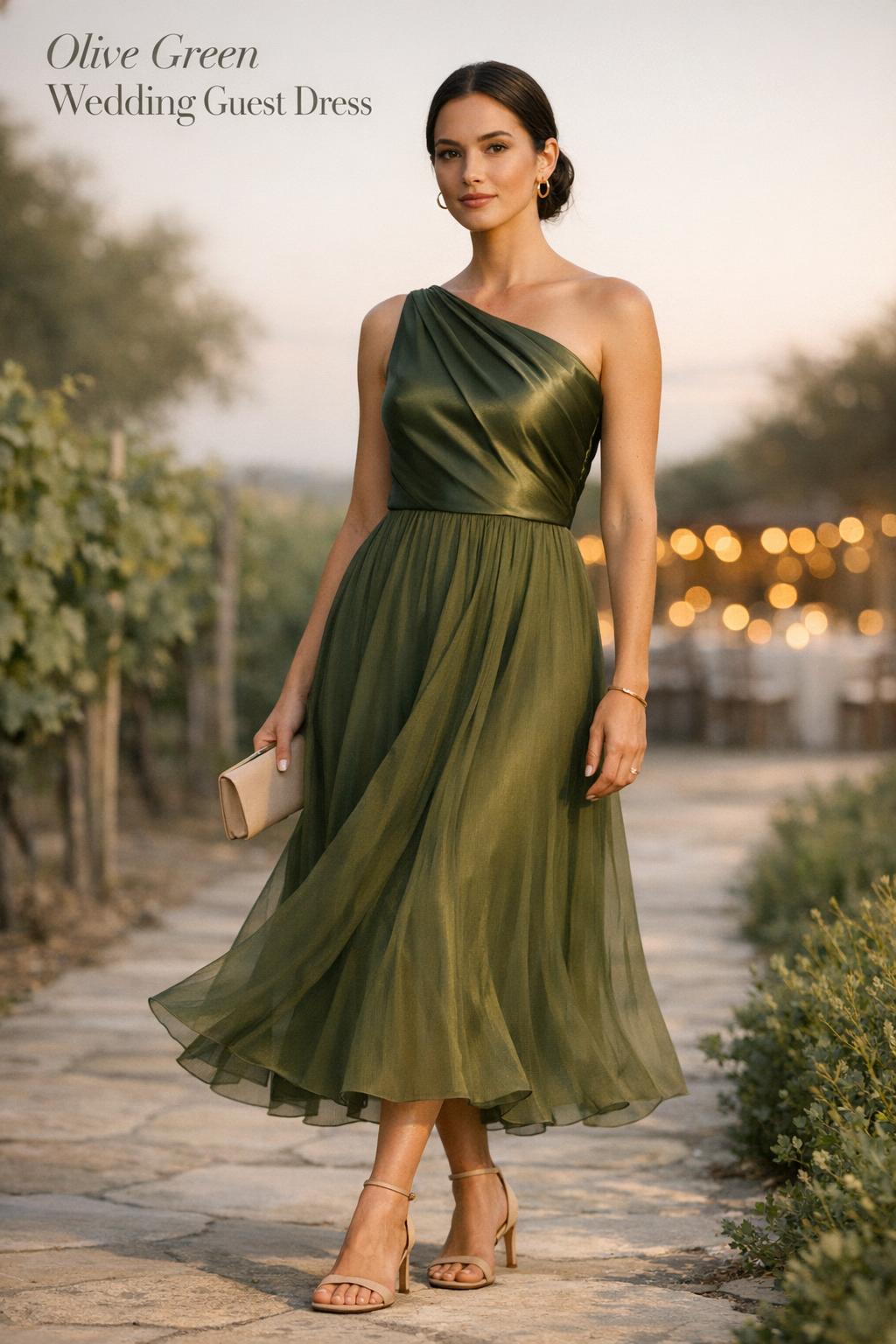
Why olive green works so well for guest dresses in real weddings
Olive is a color with built-in nuance. On a wedding day, that matters: lighting changes, venues shift, and your outfit needs to hold its own without looking harsh. Olive green sits in that sweet spot where it can read soft at golden hour yet still look refined at night, especially when paired with elevated textures like satin or chiffon. For guests, it’s also a tone that feels intentional—more styled than a generic “green,” yet less formal-feeling than ultra-bright jewel tones.
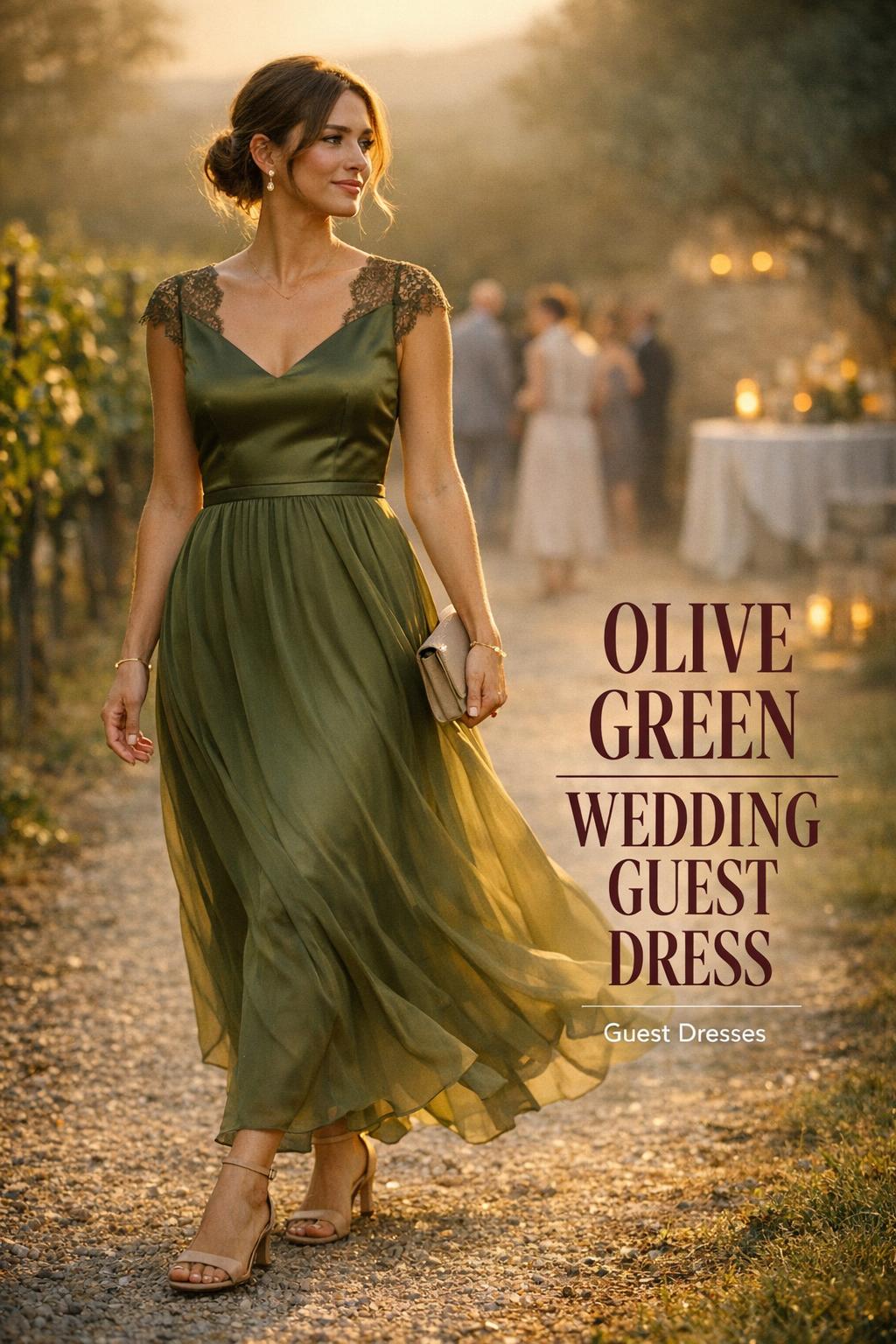
From a practical angle, olive is easy to anchor. It pairs naturally with wedding-appropriate materials and details that show up again and again in green wedding guest dresses: a flowing chiffon skirt for movement, a structured satin bodice for polish, lace for romance, and tulle for gentle volume. Because olive is often sold as a searchable color across stores, it’s also simple to compare options by sleeve style, length, and price without losing the thread of your original idea.
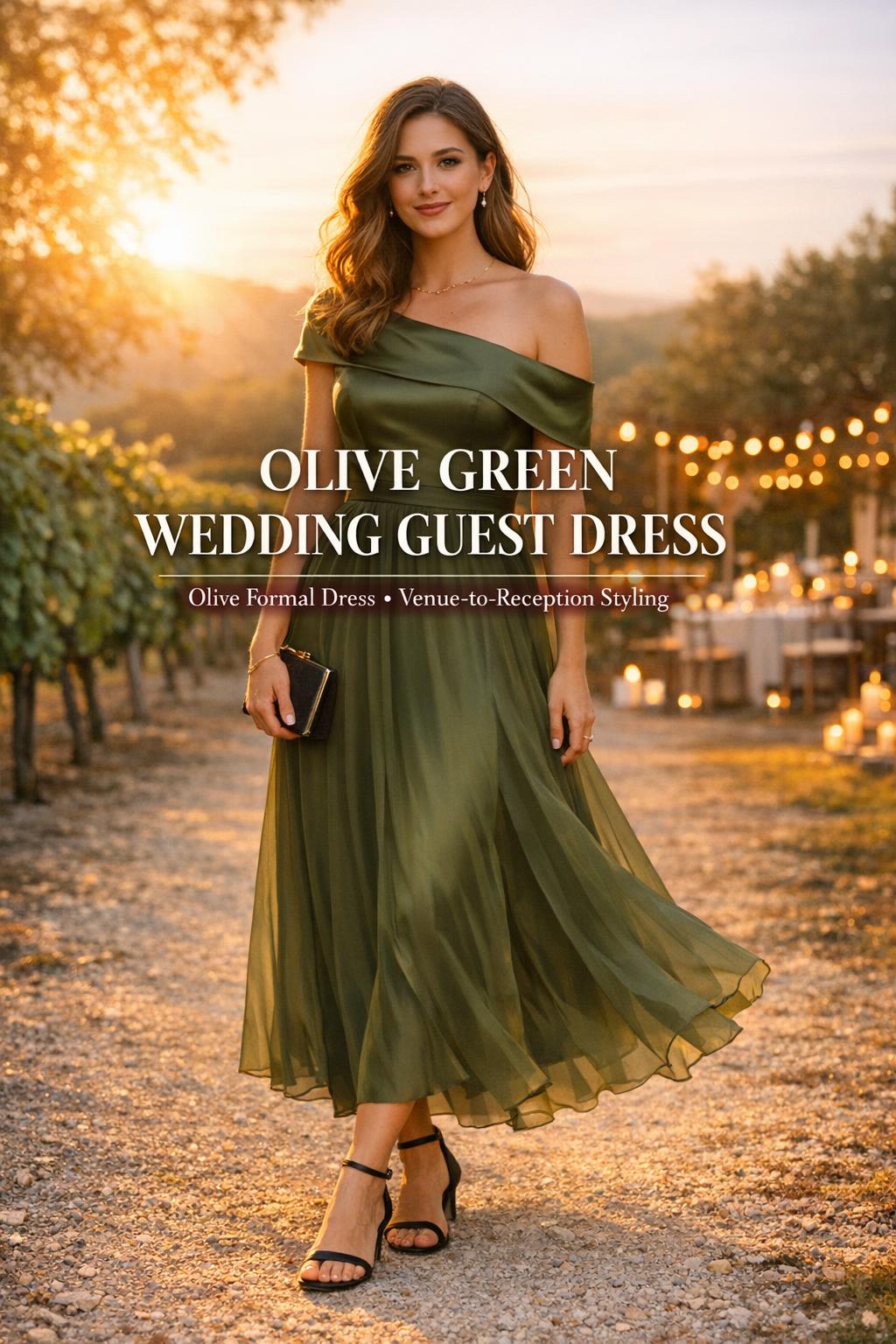
A venue-first way to choose your olive formal dress
Before you fall in love with a neckline or a hemline, picture where you’ll spend the day. Venue and timing shape what “appropriate” looks like—and they also shape what feels comfortable after hours of standing, sitting, walking, and dancing. This is where olive shines: it adapts.
Garden ceremonies and airy outdoor settings
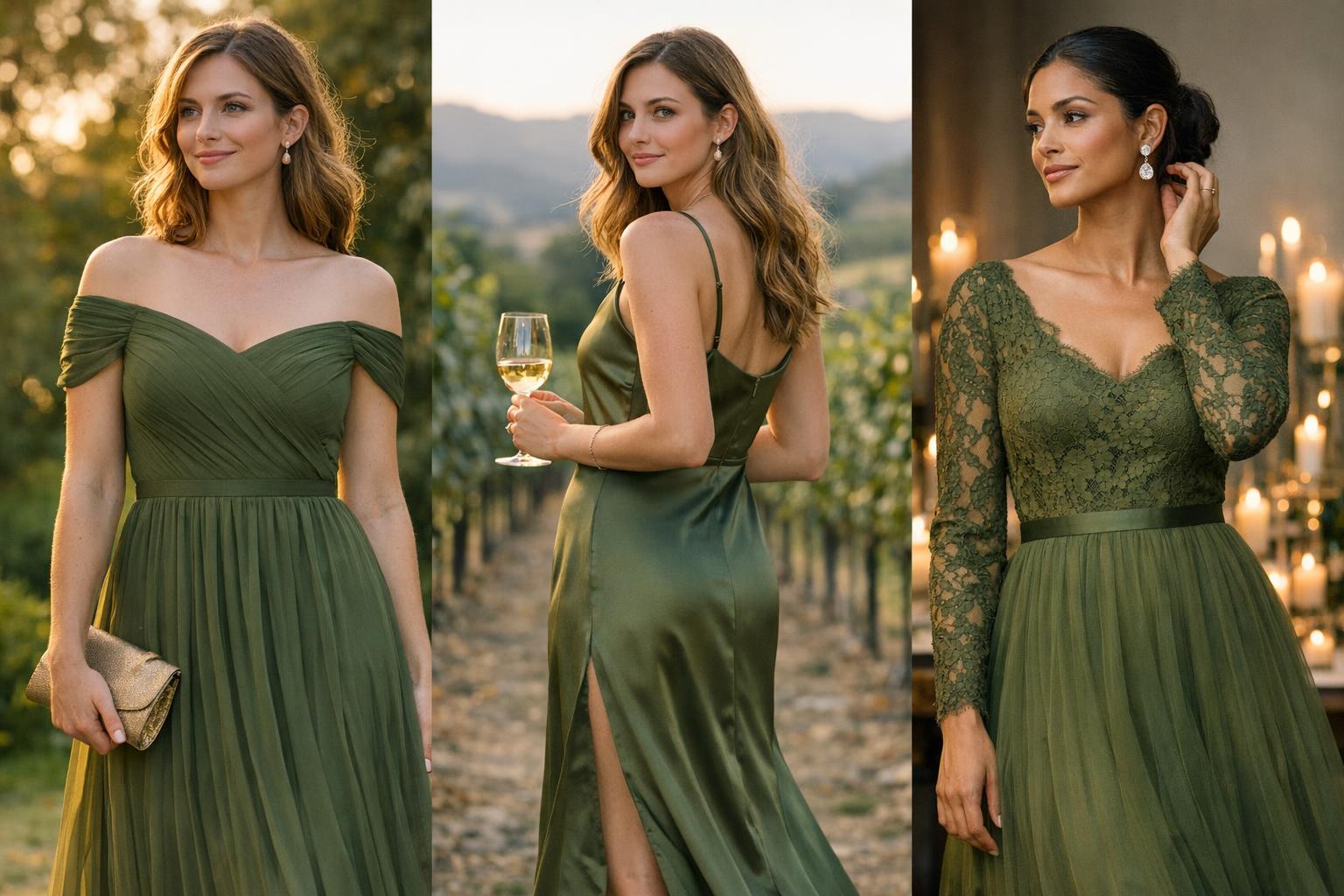
For outdoor weddings—garden paths, vineyard rows, and grassy ceremonies—movement is your friend. Chiffon and tulle bring that weightless feel that looks romantic in a breeze and forgiving in candid photos. A midi length often feels especially practical outdoors: it keeps you from wrestling a hem on uneven ground while still reading elevated. If you prefer a more classic shape, an A-line silhouette offers structure at the waist with an easy skirt that won’t cling in warm weather.
Evening receptions and more formal rooms
When the setting turns more formal—dim lighting, dressier rooms, late dinners—lean into richer-looking finishes. Satin and a more defined bodice can push olive into “olive formal dress” territory without changing the color itself. If you want a touch of drama that still reads guest-appropriate, details like pleats, a softly structured skirt, or a one-shoulder line add design interest without competing with the occasion.
Day-to-night celebrations (the most common reality)
Many weddings start in daylight and end after dark. For that schedule, choose a dress that can shift with accessories and outer layers rather than one that only works in one moment. A long-sleeve olive green wedding guest dress—like the kind you’ll find in an A-line cut—can feel refined for the ceremony and still effortless later. Alternatively, a sleeveless or one-shoulder style works beautifully if you’re comfortable adding a layer during cooler parts of the day.
Silhouette spotlight: the shapes that keep olive feeling modern
Olive is versatile, but silhouette is what tells the story: romantic, minimal, dramatic, or quietly tailored. When you’re browsing guest dresses across a collection page (like Ever-Pretty) or a marketplace feed (like Etsy), sorting by shape helps you compare apples to apples—especially when multiple fabrics and lengths appear under the same color label.
A-line and fit-and-flare: the safest bet for weddings
The A-line silhouette shows up repeatedly for a reason: it reads celebratory, it balances many body types, and it allows comfortable movement for a long day. A-line also pairs beautifully with statement fabrics. A satin bodice with an A-line skirt feels refined; an A-line with tulle feels more airy and romantic. If you like a gently “dressed up” effect without going full gala, A-line is often the cleanest path.
In the olive category, A-line is also where you’ll find details that elevate quickly—long sleeves, pleats, or a layered skirt. An example of this direction is an olive dress concept featuring a satin bodice and a pleated tulle skirt, which combines structure and softness in a way that photographs beautifully.
Sheath and column: sleek, modern, and detail-dependent
Sheath and column shapes can look striking in olive because the color reads calm and composed. The key is to ensure the fabric and finishing details support the formality of the wedding. Satin can look polished, chiffon can soften the line, and lace can add dimension so the look doesn’t feel too plain. If you’re shopping formal dresses olive green in a sleeker silhouette, pay attention to how the fabric drapes—this is where quality shows.
Maxi, midi, and mini: choosing the hemline that fits the invitation
Length sets the tone faster than almost any other feature. Maxi can feel instantly occasion-ready, especially in satin or chiffon. Midi is often the most versatile length for real weddings—comfortable, polished, and adaptable across daytime and evening settings. Mini can work, but it’s the most dependent on dress code and venue; in olive, it can still read sophisticated if the fabric is elevated and the design is restrained.
- Maxi: ideal when the event leans formal or when you want a more “evening” feel in olive.
- Midi: the reliable choice for mixed settings; it balances practicality with a styled finish.
- Mini: best reserved for clearly less formal celebrations; lean on refined fabrics and clean lines.
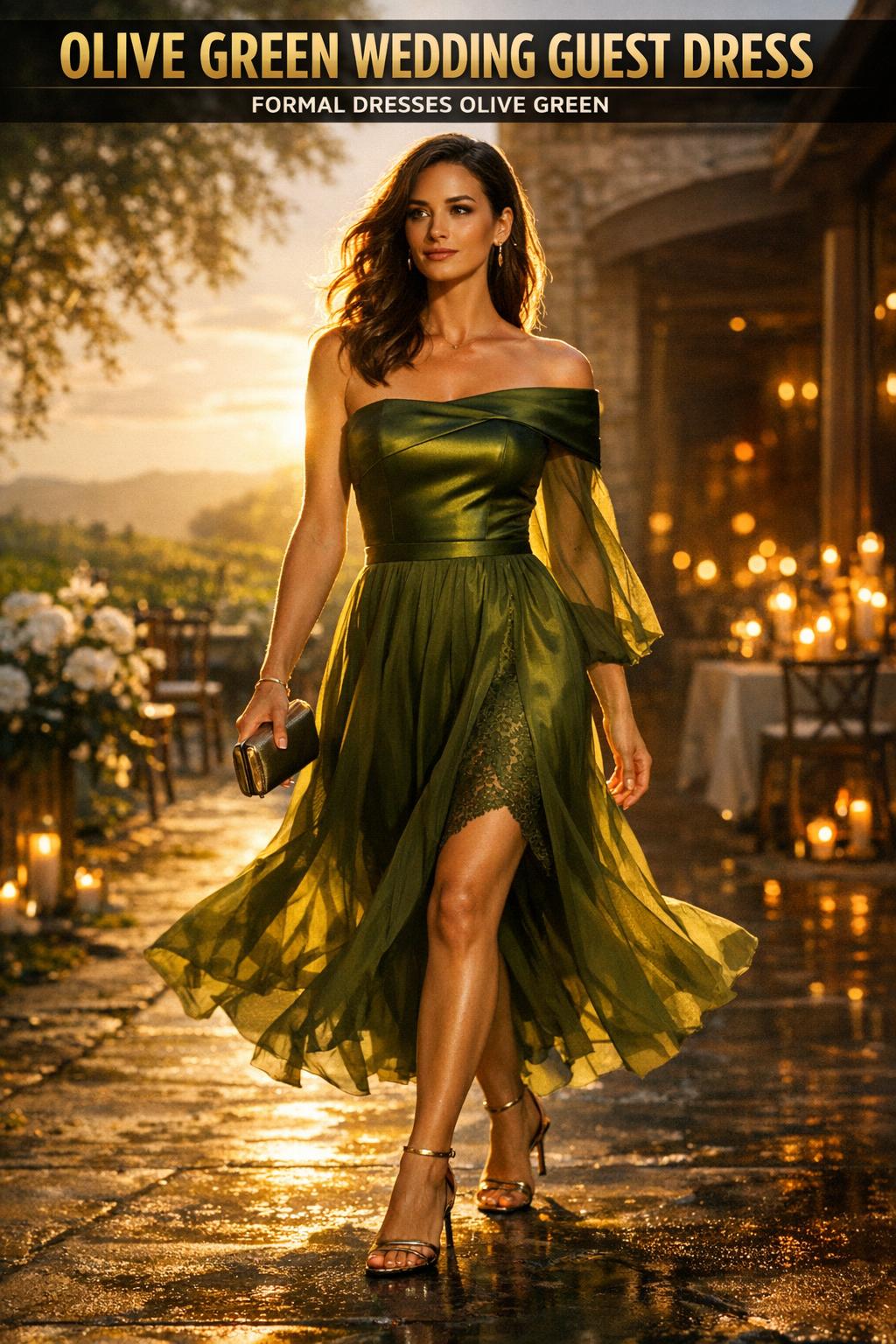
Fabric matters: how olive changes in satin, chiffon, lace, and tulle
Fabric is the difference between “green dress” and a wedding-ready piece. Olive is particularly sensitive to texture: it can look earthy and matte or luminous and formal depending on the material. When you’re comparing green wedding guest dresses across retailer listings and marketplaces, fabric is one of the most useful filters because it tells you how the dress will move, how it will catch light, and how it will read in photos.
Satin: the shortcut to an olive formal dress
Satin is where olive becomes distinctly evening-leaning. A satin bodice, satin slip-like structure, or satin finishing can make the shade look deeper and more polished—especially under reception lighting. Satin also highlights seams and construction, which is why it’s worth paying attention to fit and sizing tools provided on e-commerce product pages. If the wedding is more formal, satin is often the simplest way to make formal dresses olive green feel intentional rather than casual.
Chiffon: movement, softness, and ceremony-to-reception ease
Chiffon gives olive a lighter personality. It reads romantic and breathable, particularly in midi lengths that flow as you walk. Chiffon is also a practical choice when you expect temperature changes across the day, since the fabric feels less heavy than satin. Retailers with strong U.S. shopping infrastructure, such as Target, often present chiffon-like options with helpful size and review cues, which can make decision-making easier if you’re buying on a timeline.
Lace: dimensional and inherently wedding-appropriate
Lace adds texture that photographs well and signals occasion dressing without requiring extra embellishment. In olive, lace can lean romantic rather than overtly sexy, making it a thoughtful choice when you want a softer mood. You’ll see lace often in marketplace contexts—like Etsy for handmade or varied seller offerings, and resale platforms like Curtsy for brand-specific finds such as an olive green eyelet lace dress.
Tulle: light volume with a celebratory finish
Tulle in olive is a beautiful way to feel dressed up while keeping the palette understated. A pleated tulle skirt brings movement and a slightly ethereal effect, especially in A-line shapes. If you’re attending a wedding where guests will be photographed extensively—ceremony, cocktail hour, and dancing—tulle can create that soft, dimensional silhouette that reads special from every angle.
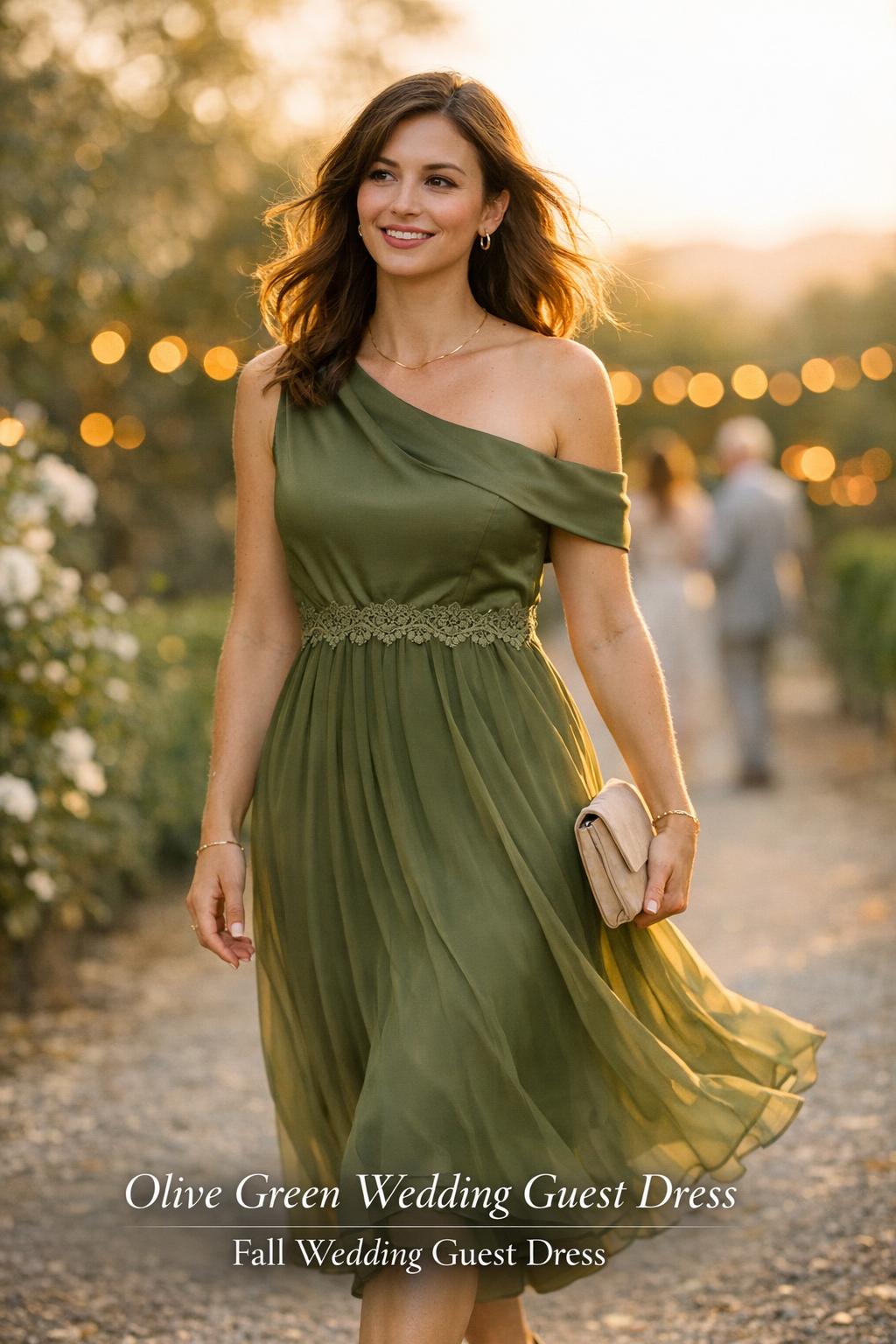
Sleeves, necklines, and details that define the mood
Once you’ve set silhouette and fabric, the most personal choices come down to sleeves and neckline. These details affect comfort, modesty, and how “formal” the look feels without relying on sparkle or loud color. They also matter for practical reasons: long sleeves change how warm you’ll feel, off-shoulder changes how you move your arms, one-shoulder changes bra planning, and mesh details change what underlayers you’ll want.
Long sleeves: polished, season-friendly, and quietly dramatic
A long-sleeve olive green wedding guest dress can feel especially elegant for fall and evening weddings. In an A-line shape, long sleeves create balance—covered arms with a skirt that still moves. This direction also aligns with a more modest styling preference without feeling overly conservative. When browsing brands that feature specific long-sleeve olive options (like an A-line long-sleeve product page), check sizing guidance carefully since sleeve fit and shoulder fit are often where comfort is won or lost.
Off-shoulder and one-shoulder: modern event dressing in olive
Off-shoulder and one-shoulder necklines are popular for cocktail-leaning weddings because they add shape and visual interest while keeping the color restrained. A one-shoulder design—sometimes paired with mesh—can feel sleek and fashion-forward, which is why it appears in mass retail contexts as an approachable option. The key is to ensure the overall look still reads wedding-appropriate: refined fabric, a secure fit, and a hemline that matches the invitation.
Pleats, ruffles, and subtle embellishment
Olive doesn’t need heavy beading to feel special. Pleats add structure and movement; ruffles add romance; layered skirts add dimension. These design notes are especially useful when you want your look to stand out in group photos without choosing a brighter color. If you’re shopping marketplaces with varied sellers and styles, look for clear photos and descriptions that specify how details are constructed—pleated tulle reads very differently than a simple gathered skirt.
Fall wedding guest dress styling: making olive feel seasonal, not heavy
Olive is frequently associated with fall palettes, which makes it a natural fall wedding guest dress choice—but fall weddings are rarely one-temperature events. You may have a warm ceremony, a breezy cocktail hour, and a cooler late-night exit. The goal is to choose an olive dress that feels seasonally rich while staying comfortable across those shifts.
Long sleeves are an obvious fit for fall, but fabric is just as important. A chiffon dress with sleeves can feel lighter than satin while still giving coverage. Satin can look stunning at night, but if the daytime portion is warm, consider a silhouette that doesn’t cling too tightly. Lace and tulle can be surprisingly flexible in fall because they add texture without adding the weight that some fully lined, structured dresses bring.
Tips for fall comfort that still reads formal
- Prioritize movement: A-line skirts and pleats help you stay comfortable through long seated dinners and dancing.
- Use coverage strategically: long sleeves or a higher neckline can feel seasonally right without needing extra layers.
- Let texture do the work: satin, lace, and tulle make olive feel elevated even with minimal accessories.
- Check fabric descriptions closely on product pages and listings so the dress matches the mood you want.
Body and fit considerations: the unglamorous step that makes the look
The most elegant olive look will only feel as good as it fits. The reality of wedding days is movement: you’ll hug people, navigate chairs, pose for photos, and likely spend hours in the dress. Fit is not about chasing a single ideal silhouette—it’s about choosing construction that supports your comfort and confidence. That’s why size guides, shipping details, and return policies matter as much as the aesthetic when buying guest dresses online.
Collection-style retailers like Ever-Pretty often provide broad size information across many silhouettes, while single-product pages (like those from Leely, Akaks, Target, or Walmart listings) focus on specific measurements, material notes, and reviews. On marketplaces like Etsy, you may find customization possibilities depending on the seller. On resale platforms like Poshmark and Curtsy, you’re often working with limited sizing and one-off availability, so it’s worth being extra careful about measurements.
Petite, tall, and curve-friendly logic (without overcomplicating it)
If you’re petite, midi lengths can be particularly useful because they often avoid overwhelming your frame, and A-line shapes can define the waist without requiring heavy tailoring. If you’re tall, maxi lengths can look especially effortless, but pay attention to where the waist seam hits—an A-line with a well-placed waistline keeps proportions elegant. If you prefer more room through the hips or midsection, A-line and fit-and-flare silhouettes are often the most forgiving; chiffon skirts can also skim rather than cling.
Tips: the fit checkpoints stylists look at first
- Shoulders and sleeves: long sleeves should allow you to raise your arms without pulling at the bodice.
- Waist placement: in A-line styles, the waist seam should sit where you naturally bend, not mid-ribcage or low hip.
- Skirt movement: take a few steps and imagine sitting; the skirt should move without riding up or twisting.
- Return and exchange reality: if you’re shopping close to the date, choose retailers with clear shipping and return information.
Accessories and beauty: letting olive stay the hero
Olive has a composed energy; accessories should enhance that rather than compete with it. Because olive is neither a bright pastel nor a deep black, it gives you room to play with texture and shine in your finishing pieces. Think in terms of balance: if your dress has volume (tulle, ruffles, pleats), keep accessories more streamlined; if the dress is sleek (sheath or column), you can afford a slightly more expressive earring or a more structured bag.
Shoes, bags, and jewelry: a polished capsule for green wedding guest dresses
Start with shoes that match the venue’s reality. Outdoors, you’ll want stability; indoors, you can lean more delicate. For jewelry, olive pairs beautifully with refined metallic touches—choose pieces that echo the dress’s level of formality. A satin olive formal dress can handle more shine; a chiffon midi often looks best with softer, minimal accents.
- For chiffon and daytime venues: lighter-feeling accessories, delicate jewelry, and a simple clutch shape keep the look airy.
- For satin and evening receptions: more structured accessories and slightly bolder jewelry bring out the dress’s polish.
- For lace: let the texture be the statement; keep jewelry clean so the pattern reads clearly in photos.
Hair and makeup: choosing softness or structure
Olive plays well with both romantic and modern beauty styling. If your dress is tulle or chiffon with movement, softer hair—smooth waves, a low twist—keeps the mood cohesive. If your neckline is one-shoulder or off-shoulder, a more structured hair choice can highlight the line of the dress. The aim is consistency: a sleek satin silhouette pairs naturally with a more defined beauty look, while lace and chiffon often look best with a gentler finish.
Where to shop: retailer ease vs marketplace discovery
Shopping an olive green wedding guest dress is unusually flexible because you can approach it through classic retail, dedicated brand collections, or marketplace hunting. Each route has its strengths—and its trade-offs. What matters is matching your shopping channel to your timeline, your budget, and how specific your vision is.
Brand and retailer collections for straightforward shopping
If you want to browse broadly across silhouettes and lengths in one place, a dedicated collection page can be efficient. Ever-Pretty, for example, presents olive green wedding guest dresses as a category experience with multiple silhouettes (A-line, midi, maxi) alongside the practical details that help you decide, like size guidance and shipping/returns information. This “collection” format supports comparison shopping: you can keep the color consistent while changing the shape, sleeve, or fabric.
Single-item retail pages can be equally useful when you already know your preference—say, chiffon in a midi length or a one-shoulder cocktail style. Target listings (including Cupshe) and Walmart listings (including ZQUUVOU) often emphasize variations, sizing, and customer feedback patterns that help you predict fit and fabric behavior.
Boutique-feel product pages for distinctive details
If you’re drawn to a specific design story—like an A-line olive dress with long sleeves, or a dress built around a satin bodice and pleated tulle skirt—boutique-style product pages can feel more curated. Leely and Akaks represent that product-focused experience: one dress, clearly described, with attention to features like sleeves, silhouette, and fabric. This can be a strong path when you want to commit to a particular mood and avoid endless scrolling.
Marketplaces and resale: the thrill (and responsibility) of the find
Marketplaces expand the world of olive beyond what’s currently trending in mainstream retail. Etsy is the broadest “discovery” space here, where you’ll see olive wedding guest dresses across materials like satin and lace, often with seller-specific options and a wide range of price points. The benefit is variety; the responsibility is due diligence—reading descriptions carefully and paying attention to materials, sizing notes, and the credibility signals each listing provides.
Resale platforms like Poshmark and Curtsy offer a different kind of charm: a single piece with a brand identity attached, such as an ASOS olive green wedding guest dress or a J.Crew olive green eyelet lace strapless style. Resale can be a smart way to access a specific look when you want that branded design language. The limitation is availability and return flexibility, so measurement checks are essential.
Tips for evaluating quality online (especially on marketplaces)
- Look for clear fabric naming (satin, chiffon, lace, tulle) rather than vague wording.
- Prioritize multiple photos that show the dress in different lighting so olive doesn’t surprise you.
- Check size charts and compare them to a dress you already own that fits well.
- On resale listings, confirm brand, size, and condition details before committing.
Common styling missteps with olive—and how to avoid them
Olive is forgiving, but it still has rules. The most common issues aren’t about taste; they’re about mismatched formality. An olive dress can look casual if the fabric is too plain or the finishing looks under-constructed. It can also skew “costume” if details fight each other—too many ruffles with too much shine, or dramatic mesh elements without the tailoring to support them.
Another misstep is ignoring the setting. A maxi hem in a delicate fabric may be gorgeous, but it can become high-maintenance on uneven outdoor ground. A sleek one-shoulder in mesh can be stunning for an evening cocktail reception, but it may feel out of place at a daytime garden ceremony. Olive gives you range; your job is to make sure the dress elements—length, fabric, sleeve, neckline—tell the same story.
Tips: the quick “does this match the wedding?” check
Ask yourself three questions before you click “buy”: Does the fabric read formal enough for the venue? Can you move comfortably for several hours (including sitting and dancing)? And does the neckline and sleeve style align with the event’s level of modesty and formality? If you can answer yes to all three, you’re likely choosing wisely—even before accessories.
Building a mini wardrobe around olive: repeat-wear, not one-night-only
One of the quiet advantages of olive is its repeatability. While some event colors feel tied to a single season or trend, olive moves across multiple wedding contexts. A chiffon midi can work for daytime celebrations; a satin option can shift into evening formality; lace can feel romantic for a range of venues. If you’re shopping with longevity in mind, focus on a silhouette that feels like “you,” then choose the fabric that aligns with the most common weddings on your calendar.
This is also where the category of formal dresses olive green becomes genuinely useful. You don’t have to buy a different color for each dress code; you can build within olive and adjust formality by fabric, sleeve, and detail. A long-sleeve A-line reads more refined; a one-shoulder mesh detail reads more cocktail; a satin bodice with a structured skirt reads more evening. The color stays consistent, and your styling evolves.
FAQ
Can I wear an olive green wedding guest dress to a formal or black-tie-optional wedding?
Yes, olive can work for more formal settings when the dress elements support the dress code—think longer lengths (often maxi), elevated fabrics like satin, and refined construction. If the invitation leans formal, prioritize a polished silhouette and avoid overly casual fabric finishes so the color reads as intentional eveningwear rather than daytime green.
What fabrics make olive look the most elevated in photos?
Satin, chiffon, lace, and tulle each elevate olive in different ways: satin brings a luminous, formal finish; chiffon creates soft movement; lace adds dimension and romance; and tulle gives airy volume that photographs beautifully. The “best” option depends on whether you want sleek polish (often satin) or a lighter, more romantic effect (often chiffon, lace, or tulle).
Is a long-sleeve olive dress too heavy for a daytime wedding?
Not necessarily—long sleeves can feel daytime-appropriate when paired with lighter fabrics and breathable silhouettes, such as an A-line with a chiffon-like skirt. The goal is balancing coverage with movement so the look stays airy for daylight while still feeling refined.
Where can I shop olive green guest dresses if I want lots of choices in one place?
Dedicated collection pages like Ever-Pretty’s olive green wedding guest dress category are designed for comparison shopping across silhouettes and lengths, often alongside practical information such as sizing and shipping/returns. Retailers like Target and Walmart also offer straightforward product listings with size and variant details, while marketplaces like Etsy provide broad variety from independent sellers.
What should I double-check when buying on Etsy, Poshmark, or Curtsy?
Confirm fabric and construction details (such as satin, chiffon, lace, or tulle), review sizing information carefully, and rely on clear photos that show the olive shade in more than one lighting condition. On resale platforms like Poshmark and Curtsy—where listings may include brands like ASOS or J.Crew—measurements and condition details are especially important because availability and returns can be more limited than standard retail.
How do I choose between midi and maxi lengths in olive?
Choose midi when you want versatility across day-to-night schedules and practical comfort for walking or outdoor venues. Choose maxi when the wedding leans more formal or when you want olive to read more evening-focused, especially in satin or other elevated fabrics that catch reception lighting.
Do one-shoulder or mesh details feel appropriate for weddings?
They can, especially for cocktail-leaning or evening receptions, as long as the overall dress remains refined in fabric and fit. A one-shoulder line can look modern and elegant in olive; just make sure the neckline, hemline, and material together align with the formality and atmosphere of the event.
What makes an olive dress feel like an “olive formal dress” rather than a casual green dress?
Formality comes from a combination of fabric, silhouette, and finishing. Satin or structured bodice details, A-line or column silhouettes with clean lines, and thoughtful design elements like pleats or lace texture help olive read as event-ready. Casualness often comes from simpler fabric finishes or less defined construction, even if the color is the same.