Purple Wedding Guest Dress: Lavender Day to Plum Night
There’s a particular moment in every wedding season when purple returns to the conversation: you’ve opened the invitation, you know the venue and the dress code, and suddenly you’re deciding between airy lavender and a deeper plum that feels more evening-ready. A purple wedding guest dress is one of the most flexible choices in occasion wear, yet it’s also one of the easiest to mis-style—mainly because “purple” isn’t one look. It’s an entire color family that changes personality depending on shade, fabric, and silhouette.
This is where many guests get caught: lavender and lilac can read soft and romantic, while violet, plum, and aubergine can feel dramatic, formal, or cocktail-forward. Add in the reality of wedding settings—garden ceremonies, urban ballrooms, coastal receptions—and the same purple dress can look completely different in daylight versus candlelight. That’s why purple is often discussed in the same breath as both modern wedding guest dressing and bridesmaid palettes like lavender bridesmaid dresses and lilac bridesmaid dresses: the shades overlap, but the styling intention is different.
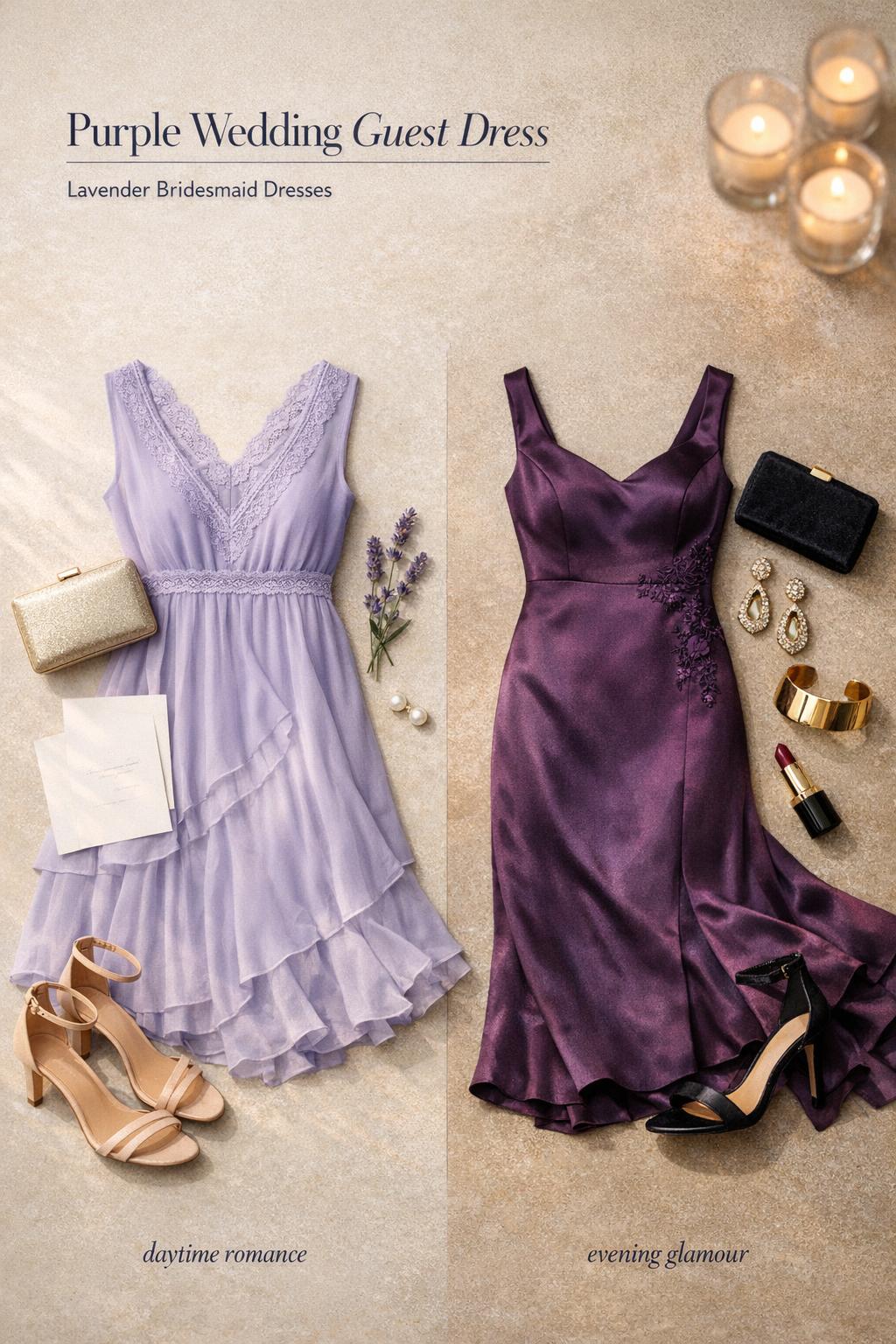
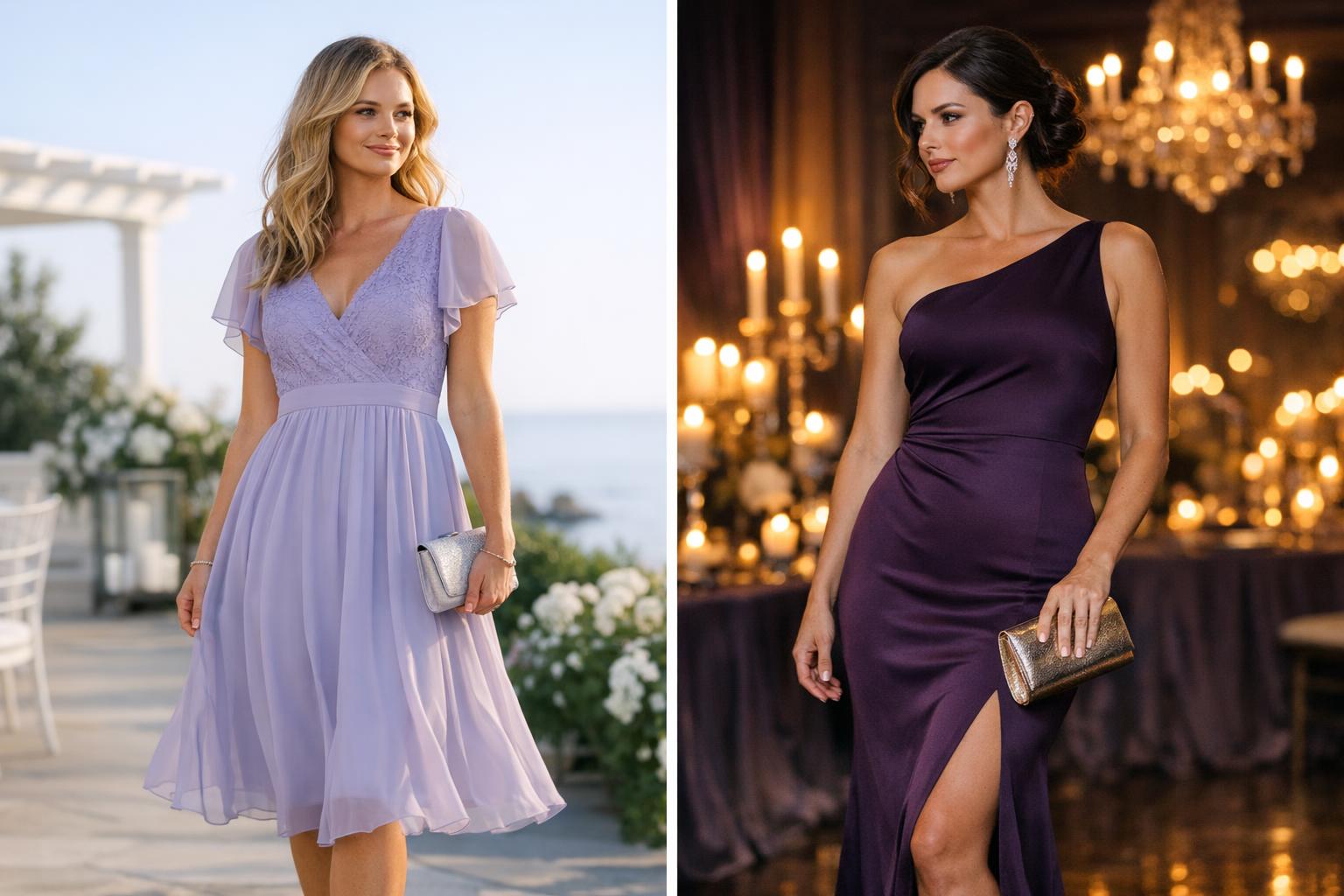
Below, we’ll compare two distinct styling approaches for purple wedding guest dressing—soft, light-toned “lavender & lilac romance” versus rich, deep-toned “plum, violet & aubergine glamour.” You’ll learn how these aesthetics differ in silhouette, texture, and formality; how to choose based on venue and season; and how to shop intelligently across recognizable retailer collections like Goddiva, IQ Collection, SilkFred, JJ’s House, Tobi, Hello Molly, Dillard’s, and a product-forward option like GemGrace.
The two purple aesthetics most guests toggle between
In wedding guest style, purple tends to split into two camps. The first leans light: lavender and lilac shades that feel airy, spring-leaning, and romantic. The second leans rich: plum, violet, and aubergine tones that photograph beautifully in low light and naturally suit evening dress codes. Both can be appropriate; the difference is how you build the look around the dress so it fits the occasion rather than just the color.
Think of these as styling philosophies rather than strict rules. A lavender dress can be formal if the silhouette and fabric are elevated, and a plum cocktail dress can be effortless if the cut is simple and the accessories are restrained. Still, comparing them side-by-side helps you make confident decisions—especially if you’re shopping from category collections where the filters highlight color, length, silhouette, and neckline rather than giving you a full styling story.
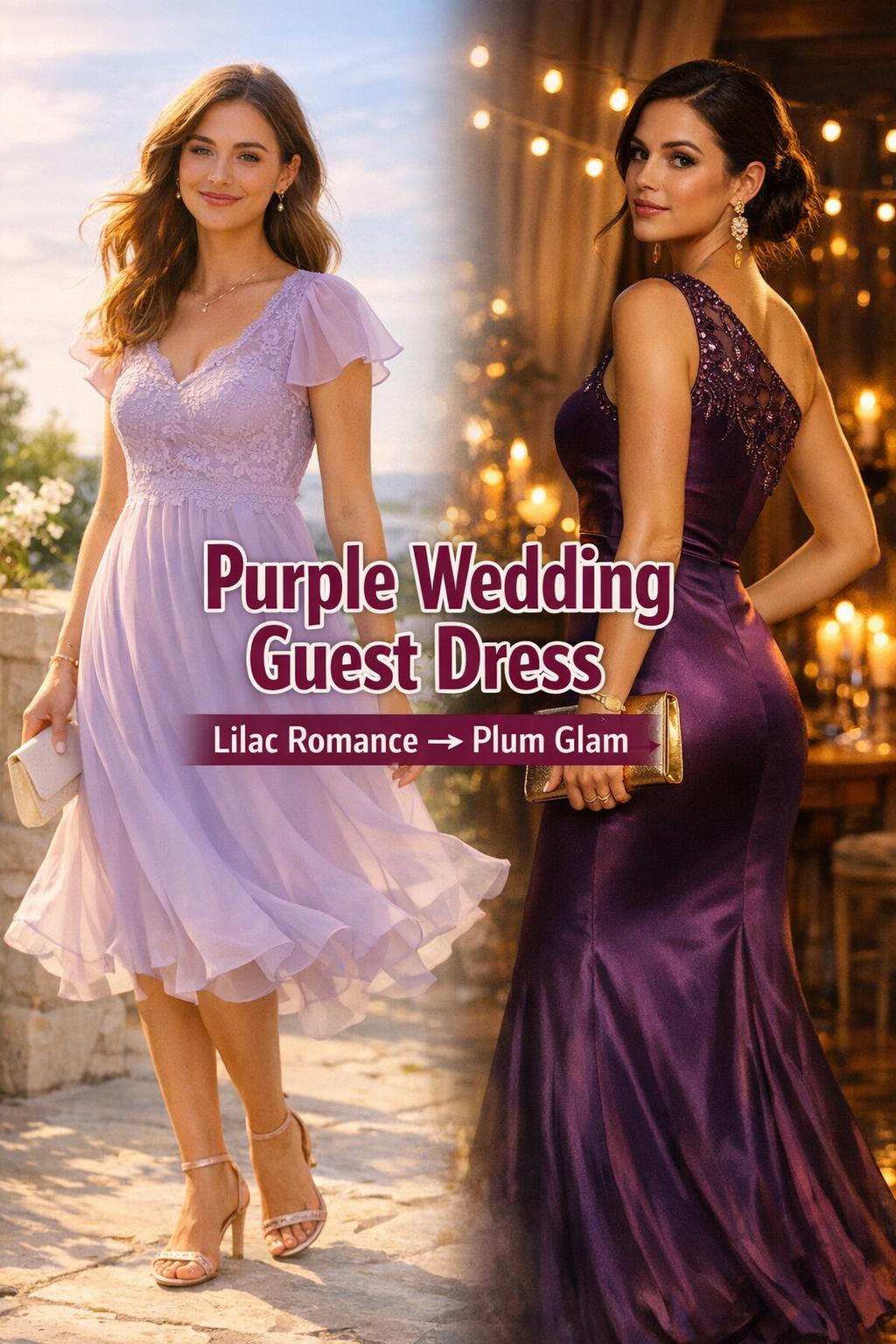
Style overview: lavender & lilac romance
Lavender and lilac sit on the lighter end of the purple spectrum, and their defining trait is softness—visually and stylistically. In a wedding setting, these shades often echo the airy mood of daytime ceremonies and outdoor venues. They’re frequently seen in flowing shapes and lighter fabrics, where movement is part of the charm: a skirt that sways as you cross a lawn, or a midi hem that feels crisp and modern at a rooftop ceremony.
Typical silhouettes in this aesthetic include midi and maxi lengths with gentle structure—A-line shapes, softly fitted sheaths, and designs that feel refined without being severe. While the research landscape emphasizes silhouette variety (A-line, sheath, mermaid, ballgown, empire) across retailers, the lavender/lilac mood most naturally aligns with silhouettes that emphasize ease and balance rather than high drama.
Texture matters here. Light purples tend to show fabric behavior more clearly—how it drapes, whether it holds shape, how it catches daylight. That’s why many guests gravitate to chiffon-like flow, satin-like sheen, or lace-like detail when seeking “lavender wedding guest dress” energy. When done well, the overall aesthetic reads romantic, calm, and intentionally celebratory, without competing with the wedding itself.
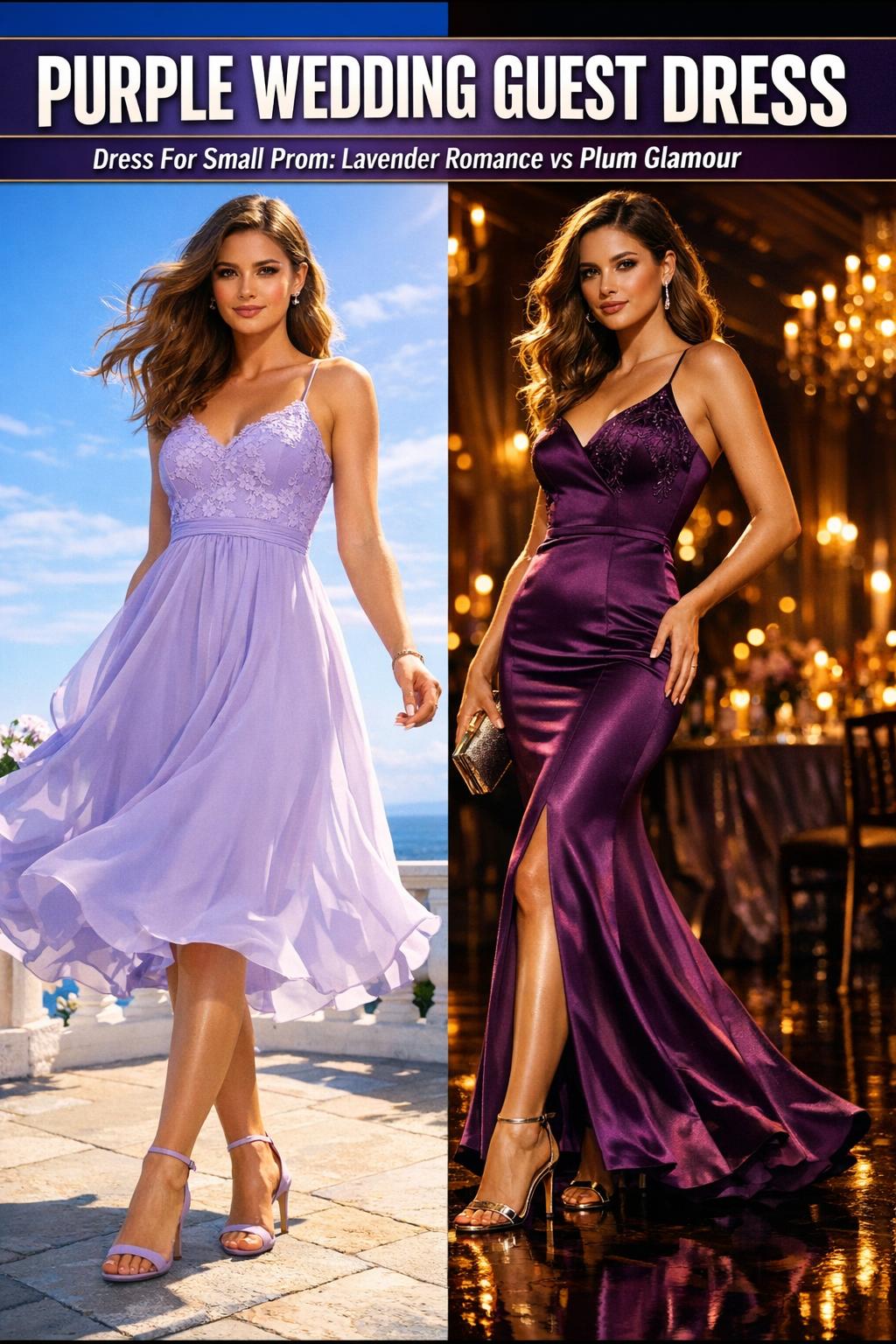
Style overview: plum, violet & aubergine glamour
On the deeper end, plum, violet, and aubergine turn purple into an evening language. These shades feel richer and more formal by nature, which is why they’re often chosen for cocktail receptions, formal weddings, and ballroom settings where lighting is warm and dimensional. If lavender is about softness, deep purple is about presence—still guest-appropriate, but undeniably polished.
Silhouettes in this category can range from sleek to sculpted. A body fitting dress in a rich purple reads immediately cocktail-forward; a mermaid or trumpet silhouette leans glamorous; and a structured maxi or gown-like shape can move toward black-tie territory (depending on fabric, neckline, and finish). The key is that deeper purple shades can “hold” bolder design details—clean lines, dramatic necklines, and fitted structure—without looking costume-like.
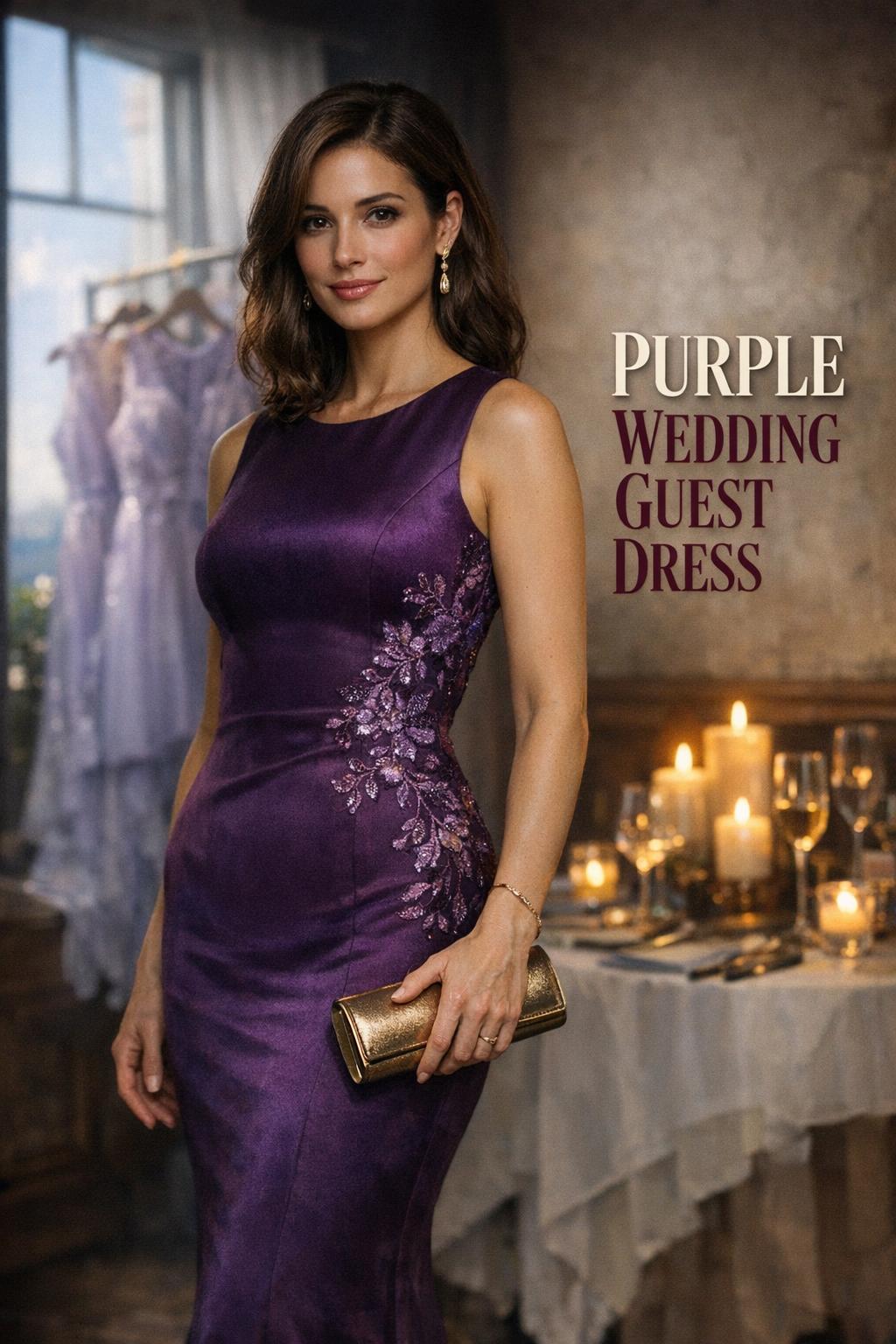
Texture is where this aesthetic becomes most distinct. The research landscape explicitly flags texture emphasis—embroidery, velvet, chiffon—and a single product example like the GemGrace purple embroidery fitted cocktail dress shows how detail work can anchor a rich purple look. In deeper shades, embellishment can look intentional and elevated, especially in evening lighting.
Key differences that change the entire look
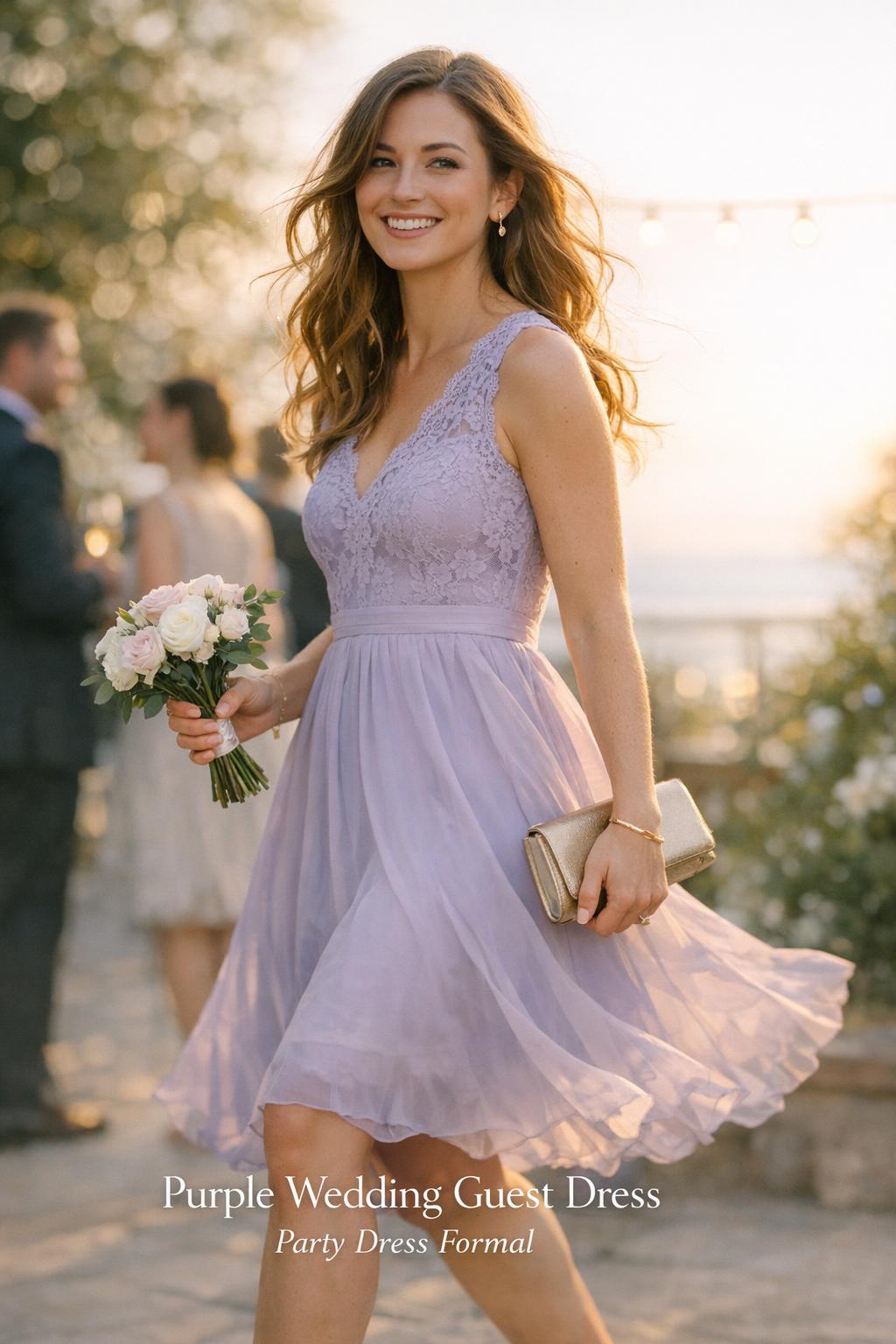
Silhouette and structure: float versus definition
Lavender and lilac styling typically favors silhouettes that move and breathe—A-line, softly cut midi dresses, and fluid maxi shapes that feel appropriate for garden weddings and daytime ceremonies. Deep purple styling more often leans into definition: sheath silhouettes, mermaid/trumpet lines, and body fitting dress options that feel precise and reception-ready. Neither is “better,” but they communicate different energy: one is romantic and light, the other sleek and intentional.
Color palette: pastel harmony versus jewel-toned contrast
Light purple shades tend to harmonize with soft palettes—neutral accessories, delicate metallics, and understated styling. Deep purples allow higher contrast: darker accents, bolder metallic choices, and stronger makeup and jewelry statements. This is why guests sometimes confuse the two aesthetics; both are “purple,” but the palette logic—soft blending versus deliberate contrast—creates a completely different visual story.
Level of formality: daylight etiquette versus evening polish
In practice, lavender/lilac tends to align with semiformal and daytime weddings, while plum/violet/aubergine naturally fits cocktail and formal settings. This isn’t a hard rule, because retailers like JJ’s House and Dillard’s carry wide ranges of purple wedding guest dresses across lengths and silhouettes, meaning you can find formal lavender and casual-ish plum. Still, if you’re reading a dress code quickly, deeper purple often “solves” formality more easily.
Fabric and texture: softness shows everything; depth forgives and elevates
Lighter shades can spotlight wrinkles, seams, and underlayers more noticeably, so fabric quality and fit become crucial. Deeper shades can appear smoother and more uniform in photos, and they tend to make textures like embroidery or velvet-like richness feel more pronounced. If you’re choosing between two similar silhouettes, fabric behavior should be a deciding factor—especially for long ceremonies and extended receptions where comfort and movement matter.
Visual style breakdown: how each approach looks in real wedding settings
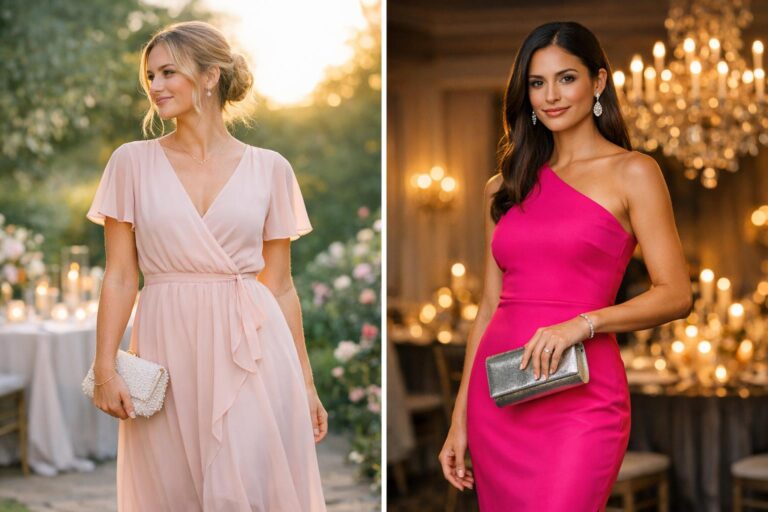
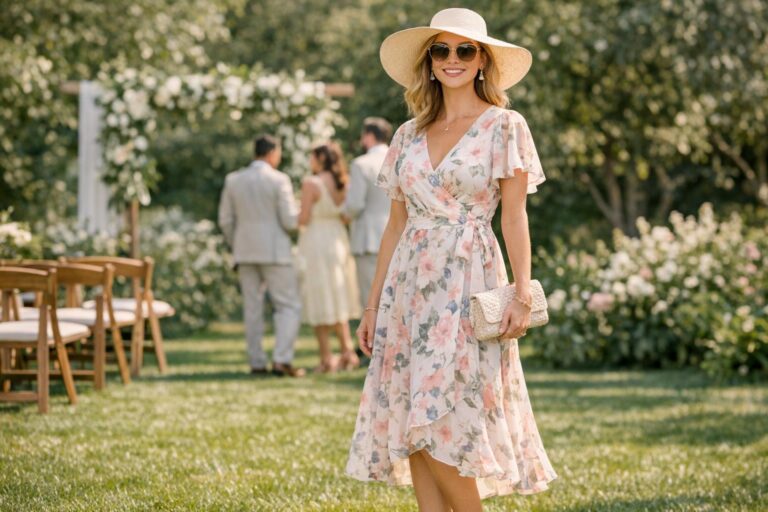
Imagine the same wedding day unfolding in two lighting conditions. At a garden ceremony, lavender and lilac look luminous—these shades pick up daylight and feel gentle against greenery, florals, and sunlit photography. The styling usually stays light: clean lines, subtle sparkle, and accessories that don’t weigh down the look.
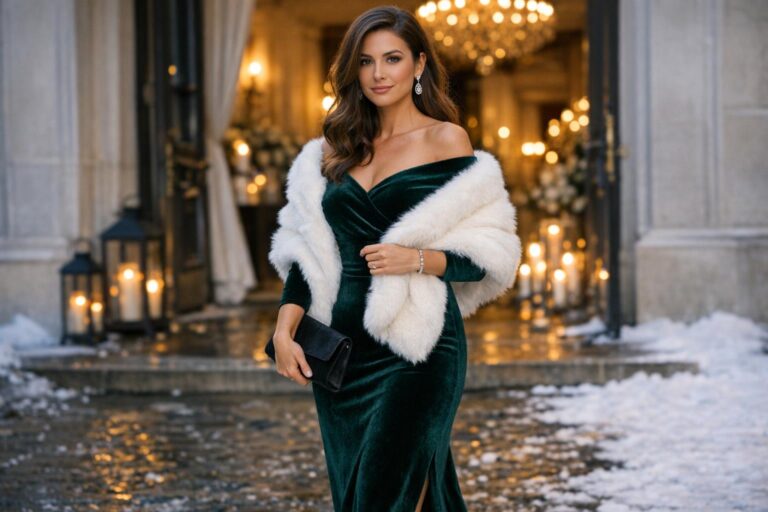
Now shift to an evening reception, where the room is warmed by candlelight or a dim ballroom glow. That’s where plum, violet, and aubergine excel. The dress becomes the anchor of the outfit, and your styling can take on more contrast—metallic shoes, a stronger clutch choice, and jewelry that reads clearly from across the room without feeling loud.
In both cases, proportion is what keeps the look modern. A midi or maxi silhouette needs balanced footwear for long standing periods; a body fitting dress needs thoughtful movement considerations for sitting through dinner and dancing later. The most polished wedding guest outfits are the ones that remain elegant for the entire timeline of the celebration, not just the first photo.
Shade-by-shade: pairing logic you can use while shopping
Lavender & lilac: light purple that reads romantic, not costume
Lavender and lilac are often chosen for spring and summer weddings because they feel airy and fresh. The pairing logic here is restraint: let the shade do the talking and keep everything else clean. Metallics can work beautifully, but the overall impression should remain soft rather than high-contrast.
If you’re drawn to the world of lavender bridesmaid dresses or lilac bridesmaid dresses, the wedding guest version usually benefits from one intentional point of distinction—either a more tailored silhouette, a slightly more fashion-forward neckline, or a fabric that reads “occasion” rather than “bridal party uniform.” That small shift keeps you aligned with the celebration without blending into the bridal party.
Violet: the bridge shade for guests who want versatility
Violet sits in the middle of the spectrum, which makes it one of the most adaptable choices when you’re unsure about the wedding’s lighting or formality. In a midi or sleek sheath, violet can look modern and refined; in a maxi silhouette, it can lean formal without feeling heavy. If you’re shopping across large collections—like the broad assortments seen on JJ’s House, Tobi, and Hello Molly—violet is often the shade that appears in multiple fabric stories and lengths.
Plum & aubergine: depth for formal receptions and rich textures
Plum and aubergine bring a dramatic richness that suits evening receptions and formal settings. They pair naturally with sleek silhouettes and detailed textures, which is why you’ll often see deep-purple looks presented as cocktail-ready or evening-leaning. A fitted shape with texture—like embroidery—can be particularly striking in these shades, echoing the kind of product-specific storytelling seen in a GemGrace purple embroidery fitted cocktail dress.
These deeper shades also make a strong case for a party dress formal approach: polished accessories, considered jewelry, and a finish that reads intentional. The trade-off is that darker tones can feel heavier in peak summer heat, so if your wedding is outdoors, you’ll want to lean into lighter-feeling silhouettes even when the color is deep.
Silhouette comparison: choosing shape the way a stylist would
Most shopping pages for a purple wedding guest dress are built around filters—length, neckline, silhouette, fabric. That’s efficient, but it can also make everything look equally “right.” In reality, silhouette should be chosen for the venue, the dress code, and how you want to feel moving through a long event.
A-line: the universally safe, always-elegant option
An A-line purple dress is the quiet hero of wedding guest dressing. It balances structure and movement, works across daytime and evening settings, and photographs beautifully in both lighter lavender and deeper plum. If you’re shopping across multi-SKU collections—Goddiva’s purple wedding guest dresses, Dillard’s purple category, or JJ’s House’s formalwear-focused assortment—A-line is the silhouette most likely to deliver that “effortless but correct” feeling.
Midi: modern sophistication that adapts to city venues
A purple midi dress is a strong choice for urban weddings, rooftops, and contemporary venues where you want polish without the formality of a full-length gown. Midi lengths also give you practical advantages—easier movement, less hem management, and more flexibility in footwear. In lighter lilac, midi reads crisp and fashion-forward; in violet or plum, it becomes quietly evening-ready.
Maxi: the easy route to formal, especially in rich tones
A purple maxi wedding guest dress can lean garden-romantic or black-tie-adjacent depending on fabric and finish. Maxi is especially effective when the wedding setting is grand—ballrooms, formal receptions, or any event where guests naturally dress up. The caution is practicality: outdoor ceremonies can make long hems more vulnerable, so consider venue ground conditions and whether you’ll be walking on grass, gravel, or boardwalk paths.
Sheath and body fitting dress silhouettes: cocktail energy with a confident edge
If your invitation points toward cocktail attire or a late reception, a sheath or body fitting dress in deep purple is one of the most direct interpretations. It reads intentional without needing excessive embellishment, and it pairs naturally with refined accessories. The trade-off is comfort over time: fitted silhouettes require attention to fabric stretch, sitting ease, and movement on the dance floor. When executed thoughtfully, this is where “purple cocktail dress for wedding guest” searches usually land.
Mermaid/trumpet and ballgown: high-impact silhouettes that need the right setting
More dramatic shapes—mermaid/trumpet or ballgown—are best reserved for formal weddings where the room can support the drama. In deep violet or aubergine, these silhouettes look especially elevated in evening light. For daytime or casual venues, they can feel too grand. If you’re browsing a formalwear specialist like JJ’s House, you’ll likely see these options presented alongside other event-driven categories; the key is to match the silhouette to the event’s scale.
Brand and retailer comparison: where purple shopping feels easiest
Most shoppers will encounter purple wedding guest dresses through collection hubs and filtered category pages. The experience differs depending on whether you’re shopping a brand storefront, a marketplace, a formalwear specialist, or a department store. Each has advantages, and understanding the difference helps you shop with fewer second guesses.
Brand storefront collections: Goddiva and IQ Collection
Brand-led collections like Goddiva (through its U.S. storefront) and IQ Collection tend to feel cohesive: consistent styling direction, a clear point of view on silhouettes, and messaging that frames purple as an intentional occasion choice. IQ Collection emphasizes empowerment and timeless elegance as part of its positioning, which pairs naturally with refined silhouettes and statement-but-controlled color. Goddiva’s purple wedding guest dresses collection is built to shop by color and style attributes, making it straightforward when your goal is “find the right purple fast.”
If you already know your aesthetic—lavender romance or deep purple glamour—brand storefronts can be efficient. The trade-off is breadth: you may see fewer distinct brand perspectives compared to a multi-brand environment.
Marketplace variety: SilkFred and its independent brands
SilkFred approaches purple wedding guest dressing as discovery. Because it aggregates independent brands, you get a broader range of design moods and price points within the same color theme. This is useful when you want “purple, but not the obvious purple everyone is wearing,” or when you’re comparing multiple silhouettes—midi versus maxi, structured versus fluid—without committing to a single brand identity.
The trade-off is decision fatigue: more options mean you’ll need a clearer plan on shade and silhouette before you scroll.
Formalwear focus: JJ’s House
JJ’s House functions like a formalwear specialist, and its purple wedding guest dresses category is designed around attribute-driven shopping: silhouette, length, neckline, and other details you’d expect when dressing for a wedding with a defined dress code. This is where shoppers often go when they need a more formal solution, or when they want to compare many variations of the same basic idea—such as a purple maxi in multiple necklines or a fitted cocktail silhouette in different finishes.
If you’re dressing for a very specific invitation—formal reception, evening ceremony—this type of catalog structure can make the search more precise.
Trend-forward retailers: Tobi and Hello Molly
Retailers like Tobi and Hello Molly offer purple wedding guest dresses in a way that feels contemporary and event-ready, often aligning with the idea of modern party dressing. Their category pages are built for browsing across multiple silhouettes and trends, which can be ideal if you’re attending a wedding where guests lean fashion-forward and you want a look that feels current without losing elegance.
This is also where the “party dress formal” mindset can be useful: you’re still honoring wedding etiquette, but you’re choosing pieces with a bit more energy—perhaps a sleeker silhouette, a bolder neckline, or a dress that reads like it belongs at a celebration that continues late into the night.
Department store breadth: Dillard’s
Dillard’s offers a purple wedding guest dress experience built around multi-brand variety. The advantage is range: you can browse different brand interpretations in one place, which helps when you’re not sure whether your wedding calls for soft lilac or deep aubergine, or whether you’ll feel best in midi versus maxi. Department store filtering also supports practical shopping—narrowing by style and occasion quickly—without locking you into a single brand voice.
Product-specific finds: GemGrace
Occasionally, the most helpful inspiration is a single, clear product concept. GemGrace’s purple embroidery fitted cocktail dress (presented specifically for wedding guest context) illustrates how detail and fit can define the entire mood. If you’re choosing between simple satin-like minimalism and a more textured, embroidered direction, a product page like this can clarify what you actually want your purple to say.
Tips: how to decide between soft purple and deep purple in five minutes
If you’re short on time, use the invitation as your styling filter. Venue, timing, and dress code are the three cues that matter most; everything else is personal taste. A light shade can work at night and a deep shade can work in the day, but you’ll need to adjust silhouette and accessories accordingly.
- Daytime ceremony, outdoor venue: start with lavender or lilac, then choose a midi or flowing A-line for movement.
- Evening reception, formal room: start with plum, violet, or aubergine, then choose a sleek sheath, maxi, or a body fitting dress silhouette.
- Unclear dress code: consider violet in a midi length; it reads balanced and flexible across venues.
- Long event timeline: prioritize fabric behavior and comfort; a dress that looks perfect but restricts sitting or dancing will feel “off” by hour three.
- Bridesmaid-adjacent colors: if the wedding palette may include lavender bridesmaid dresses or lilac bridesmaid dresses, choose a guest silhouette with distinct tailoring or texture so you look intentional, not assigned.
Outfit examples as direct comparisons (same wedding, two different purple strategies)
Garden ceremony at golden hour: lavender ease versus plum polish
In a garden setting, the lavender approach centers on lightness: a lavender midi or airy maxi with a soft silhouette that moves as you walk across grass, paired with understated metallic accessories so the look stays romantic and daytime-appropriate. The plum approach can still work outdoors, but it needs a lighter silhouette to avoid feeling heavy—think a streamlined cut rather than anything overly structured, and keep accessories refined so the color remains the focal point without overpowering the scene.
City wedding with a modern dress code: lilac modernity versus violet versatility
For an urban venue, lilac looks especially crisp in a clean midi silhouette—modern, polished, and slightly architectural without being severe. Violet is the alternative when you want the same modernity but with more depth for evening photos; in a sheath or A-line midi, violet reads sophisticated and camera-ready under mixed lighting. This is a smart comparison to keep in mind while browsing trend-forward collections at Tobi or Hello Molly, where multiple lengths and silhouettes sit side-by-side.
Candlelit ballroom reception: aubergine drama versus plum cocktail precision
In a ballroom, aubergine excels when you want richness—especially in a maxi silhouette that feels formal and grounded. Plum, on the other hand, is perfect for a more defined cocktail direction: a fitted, body fitting dress silhouette or an embroidered cocktail dress concept (like the GemGrace style) that reads elevated without requiring floor length. Both options feel correct; the difference is whether you’re aiming for sweeping formality or cocktail precision.
Wedding-setting logic: choosing purple by venue and atmosphere
Wedding guest dressing becomes easier when you imagine the environment your outfit must live in: heat, wind, indoor air conditioning, uneven ground, long periods of sitting, and the reality of dancing later. Purple is adaptable, but the venue sets the rules for how structured or fluid your dress should be.
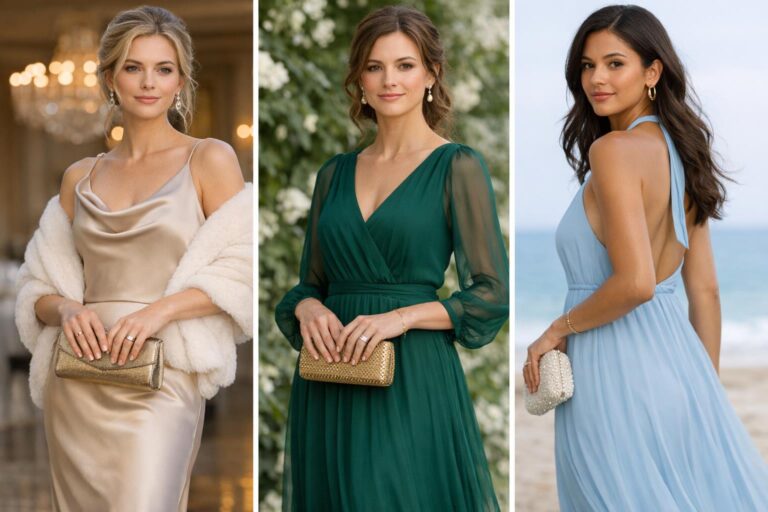
Garden weddings generally reward breathable, movement-friendly silhouettes—especially midi and maxi styles with an A-line shape. Ballrooms and formal venues welcome structure and richness: deeper purples, more defined silhouettes, and textures that show dimension in low light. Coastal settings tend to call for ease and practicality; in those cases, focus on a silhouette that moves naturally and a hemline you can manage without constant adjustment.
A note on adjacent occasions: from wedding guest to dress for small prom
Many guests shop a purple wedding guest dress with versatility in mind, and purple is one of the easiest colors to rewear for other formal moments. The same silhouettes that work for weddings—midi sophistication, sleek sheaths, formal maxis—often translate to a dress for small prom where you want elegance without overwhelming the room. The difference is styling emphasis: weddings call for guest-appropriate restraint, while prom styling can usually tolerate more drama in accessories and finish.
If you’re planning to rewear, prioritize a silhouette that feels timeless in your closet. That’s also where brand positioning matters: IQ Collection’s emphasis on timeless elegance aligns naturally with repeat-wear logic, while department store browsing at Dillard’s can help you compare multiple brand options in the same shade family.
Common styling mistakes with purple wedding guest dresses (and how to avoid them)
Purple is forgiving in some ways—it’s festive without being loud, and it suits a range of dress codes—but it can also amplify mismatches between shade, fabric, and setting. Most missteps aren’t about the color; they’re about the styling decisions around it.
- Choosing a deep shade for a hot outdoor ceremony without considering comfort: if you love plum or aubergine, balance it with a silhouette that breathes and moves.
- Over-accessorizing light purple: lavender and lilac are most elegant when the look stays refined and not overly contrasted.
- Ignoring venue ground conditions with a maxi hem: long dresses are beautiful, but they demand practical awareness for gardens or outdoor paths.
- Going too bridesmaid-adjacent in styling: if the palette suggests lavender bridesmaid dresses or lilac bridesmaid dresses, choose a guest look with a distinct silhouette, texture, or overall styling direction.
- Prioritizing a body fitting dress without movement testing: sit, walk, and consider the full event timeline—ceremony through dancing—before committing.
Tips: shopping smarter on purple category pages
Most of the leading shopping experiences for this query are collection pages: Goddiva’s purple hub, IQ Collection’s purple wedding guest dress collection, SilkFred’s purple wedding guest edit, JJ’s House’s formalwear category, Tobi and Hello Molly’s purple-filtered wedding guest pages, and Dillard’s department store category. These pages are designed for quick filtering, but you can make them work like a stylist would by choosing your “non-negotiables” before you scroll.
- Pick shade first: lavender/lilac for soft daylight romance, plum/violet/aubergine for evening richness.
- Pick length second: midi for modern versatility, maxi for formal impact, cocktail length for party dress formal energy.
- Pick silhouette third: A-line for reliability, sheath for streamlined polish, mermaid/trumpet for formal drama.
- Use texture as your tie-breaker: when two dresses feel similar, choose the one whose fabric behavior matches the venue and season.
Where to buy: a consolidated U.S. shopping guide by style priority
If your priority is speed and clarity, a brand storefront like Goddiva’s U.S. purple wedding guest dresses collection offers a focused, color-forward shopping experience. If you want a strong brand message around timeless elegance, IQ Collection frames purple as a statement while staying refined. If you prefer variety across independent labels, SilkFred’s marketplace approach gives you breadth within the purple theme.
For formalwear-specific browsing and detail-driven filtering, JJ’s House is structured around the realities of dress code shopping—silhouette and event-readiness first. For modern, contemporary party styling within the wedding guest context, Tobi and Hello Molly offer trend-forward options across multiple silhouettes. And if you want department store range across multiple brands in one place, Dillard’s provides breadth for comparison shopping within the purple category.
Finally, if a single detailed concept helps you decide—like an embroidered fitted cocktail dress—GemGrace offers a product-specific page that makes the silhouette-and-texture story clear. That kind of example is especially useful when you’re debating between minimalist and embellished approaches.
FAQ
What shade of purple is appropriate for a wedding guest dress?
Lavender and lilac typically read soft and daytime-appropriate, while violet, plum, and aubergine tend to feel more formal and evening-ready; the most appropriate choice depends on the venue, lighting, and dress code rather than the color alone.
How do I choose between a lavender wedding guest dress and a plum wedding guest dress?
Choose lavender when the wedding setting is outdoors or daytime and you want an airy, romantic mood; choose plum when the event leans cocktail or formal, especially for evening receptions where richer tones look more polished in low light.
Are purple dresses appropriate for formal weddings?
Yes, especially in deeper shades like violet, plum, or aubergine paired with a formal silhouette such as a maxi, a sleek sheath, or a more dramatic mermaid/trumpet shape, which many formalwear-focused collections highlight through silhouette and length filtering.
What silhouettes are most versatile for a purple wedding guest dress?
An A-line and a midi silhouette are the most adaptable across venues and seasons because they balance structure and movement, while still allowing you to shift the mood with shade choice, texture, and accessories.
How can I avoid looking like I’m wearing bridesmaid colors if I choose lavender or lilac?
If the wedding palette suggests lavender bridesmaid dresses or lilac bridesmaid dresses, choose a guest look with a distinct silhouette or texture and style it with refined, non-uniform accessories so the outfit reads intentional rather than coordinated.
Where can I shop purple wedding guest dresses across different retailers?
You can browse brand storefront collections like Goddiva and IQ Collection, marketplace variety through SilkFred, formalwear-focused catalogs like JJ’s House, trend-forward retailers like Tobi and Hello Molly, and multi-brand department store selections at Dillard’s, depending on whether you value cohesion or breadth.
What makes an embroidered purple cocktail dress feel more formal?
Embroidery adds visible texture and detail that reads elevated in event lighting, and when paired with a fitted silhouette—like a purple embroidery fitted cocktail dress concept—it naturally aligns with wedding guest cocktail attire and evening receptions.
Can a purple wedding guest dress work as a party dress formal option for other events?
Yes, purple is versatile across occasion wear, and silhouettes like a sleek sheath, a refined midi, or a body fitting dress in deep purple can transition easily into a party dress formal wardrobe with small styling adjustments.
Is a purple maxi wedding guest dress always the best choice for a formal wedding?
Not always; a maxi silhouette can read formal, but the overall formality still depends on shade, fabric behavior, and finish, and in some settings a structured midi or an elevated cocktail silhouette can feel more appropriate and practical.