Spring wedding guest dress picks for breezy, polished days
The spring wedding guest dress dilemma: pretty, practical, and photo-ready
The most complicated part of choosing a spring wedding guest dress isn’t finding something beautiful—it’s finding something that behaves well across a full day of real life. Spring weddings can move from a breezy ceremony to a warm reception, from a garden path to a city sidewalk, sometimes with travel in between. That’s why the best dresses for the season aren’t just “spring-colored.” They’re built around smart choices: dress code accuracy (formal, semi-formal, cocktail, casual), silhouettes that move (maxi, midi, A-line, sheath), and fabrics that photograph well without feeling fussy (satin, chiffon, organza, tulle).
Below, you’ll find a clear way to choose what works for your specific invite—plus practical styling logic, brand cues seen again and again in spring wedding shopping guides (STAUD, Rixo, Zimmermann, Cult Gaia, AJE, Hill House Home, Lulus, Mac Duggal, Cinq à Sept), and shopping considerations that matter in the U.S. market, where retailer availability and fast shipping often shape last-minute decisions. If you’re also navigating related looks—like pastel wedding attire for multiple events or even summer pastel bridesmaid dresses for another weekend—this guide will help you build a consistent approach without repeating the same outfit energy.
Start with guest attire rules: how to read the dress code in plain language
Spring “guest attire” tends to be described in a few recurring categories—formal, semi-formal, cocktail, and casual—plus venue cues that quietly change what’s expected. The invitation might be brief, but the combination of time of day, location, and formality language usually points to a narrow band of appropriate hemlines, fabrics, and styling.
Formal, black-tie optional, and evening-leaning spring weddings
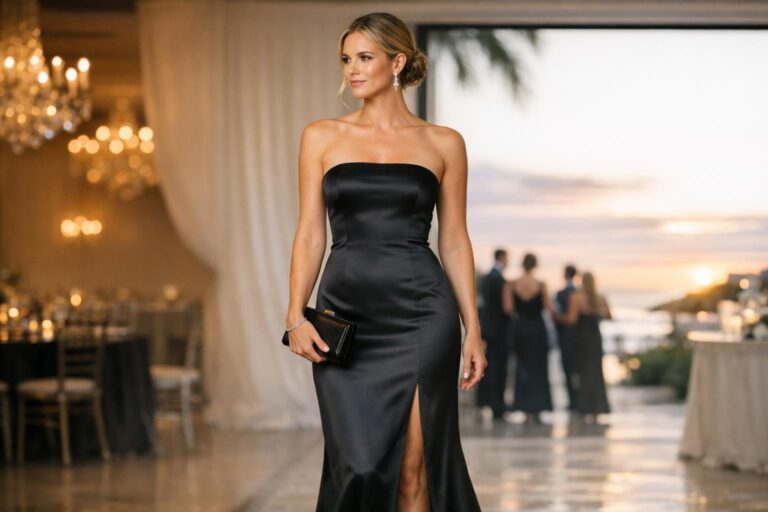
Formal spring weddings generally call for a longer hemline (often a maxi or gown), elevated fabric (satin, organza, or structured chiffon), and a finish that looks intentional in photos. This is where brands known for occasionwear—like Mac Duggal—can feel especially on-brief, and where a polished designer silhouette from Zimmermann, STAUD, or Cinq à Sept can read refined without needing heavy embellishment. If the invite hints at an evening mood, the safest move is a floor-skimming maxi in satin or a dress with a clean, tailored sheath line that doesn’t wrinkle or collapse after an hour of sitting.
Cocktail and semi-formal: the “most spring wedding” sweet spot
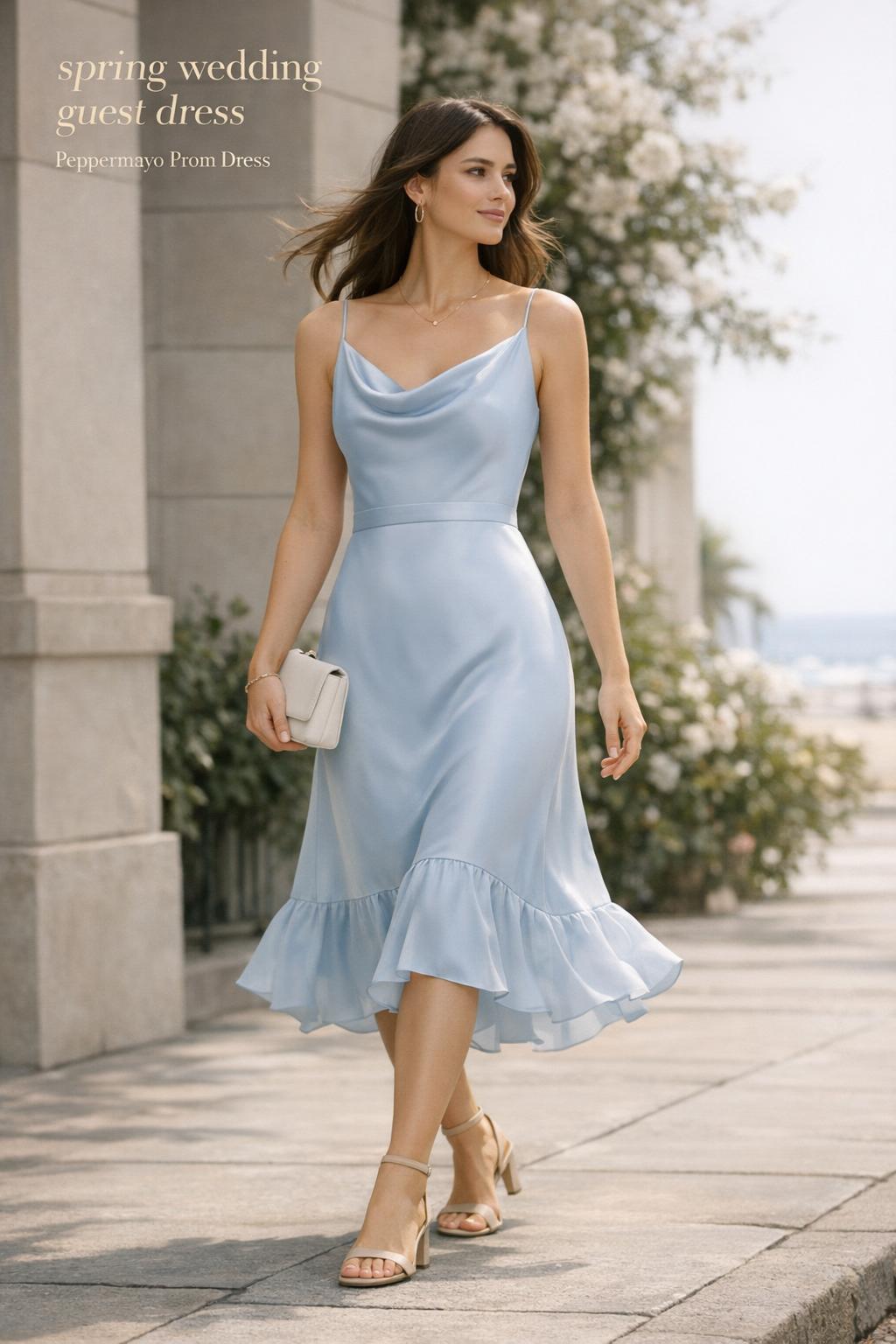
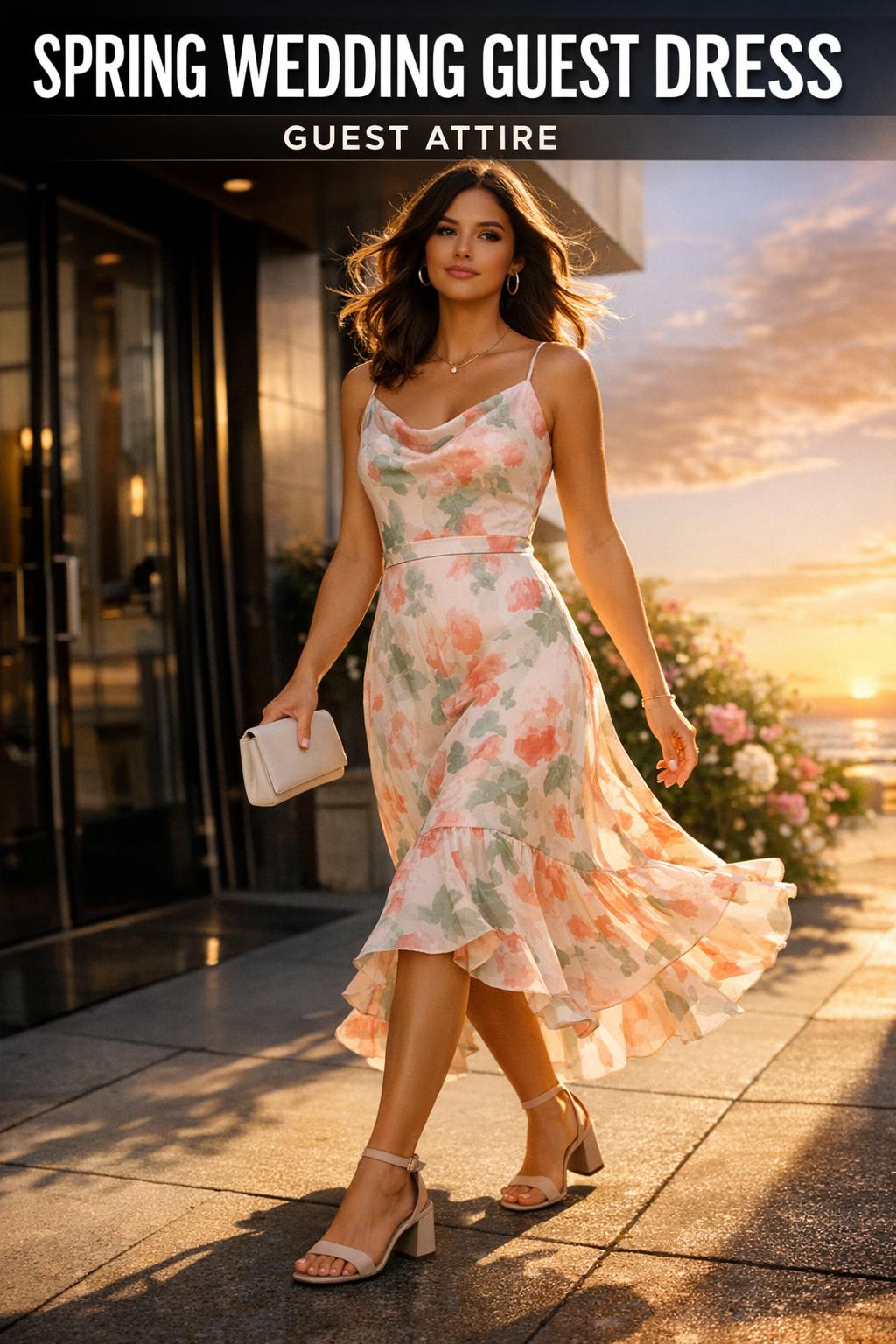
Cocktail attire is where a midi dress tends to outperform everything else. A satin cowl neck midi, a floral midi with a defined waist, or a soft A-line silhouette gives you movement for mingling and dancing while staying polished. Semi-formal often overlaps with cocktail, but it’s slightly more flexible—think refined prints, lighter fabrics like chiffon, and details like ruffles or tiering that feel celebratory without tipping into gala territory. This is also the dress code where labels like Rixo and AJE frequently show up in editorial roundups because they hit the intersection of statement print and wearable shape.
Casual, daytime, and “garden party” phrasing
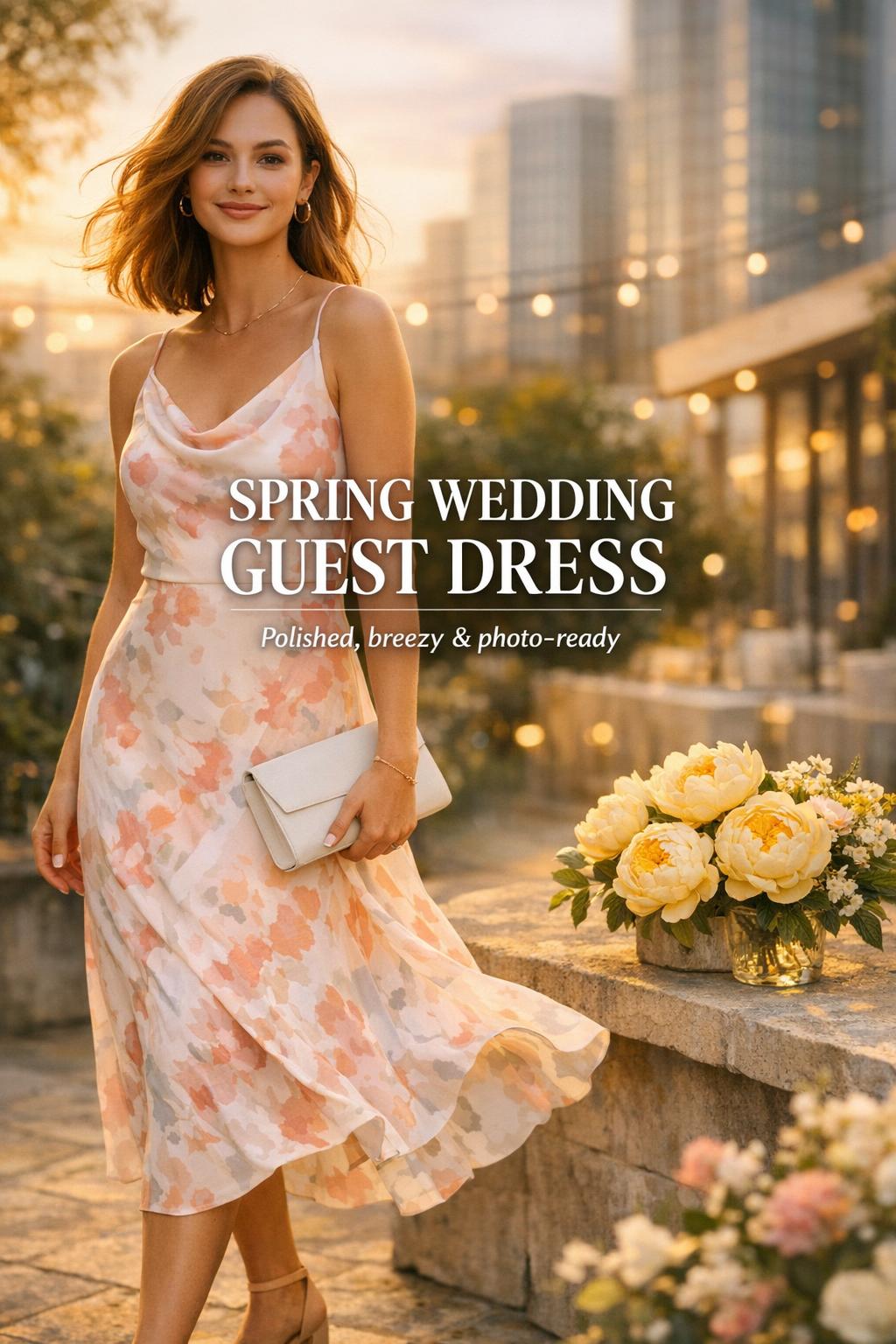
Casual doesn’t mean everyday. For spring weddings, casual guest attire typically means lighter color families, breathable fabrics (chiffon and airy blends), and silhouettes that can handle grass, uneven walkways, or a slightly windy ceremony. A tiered maxi, a high-low ruffle dress, or a floral midi can be ideal here—especially if the wedding is outdoors. If you’re imagining yellow peonies on tables and a ceremony framed by fresh blooms, lean into prints and pastels, but keep the finish dressy: clean shoes, a structured bag, and jewelry that looks deliberate.
Venue logic that changes everything: garden, beach, and city settings
The venue isn’t just scenery—it’s a practical filter. A dress that feels perfect indoors can become high-maintenance outdoors, and spring weather can amplify that difference. Use the location to choose fabric behavior first, then color and silhouette.
Garden venues: florals, pastels, and fabrics that won’t fight the breeze
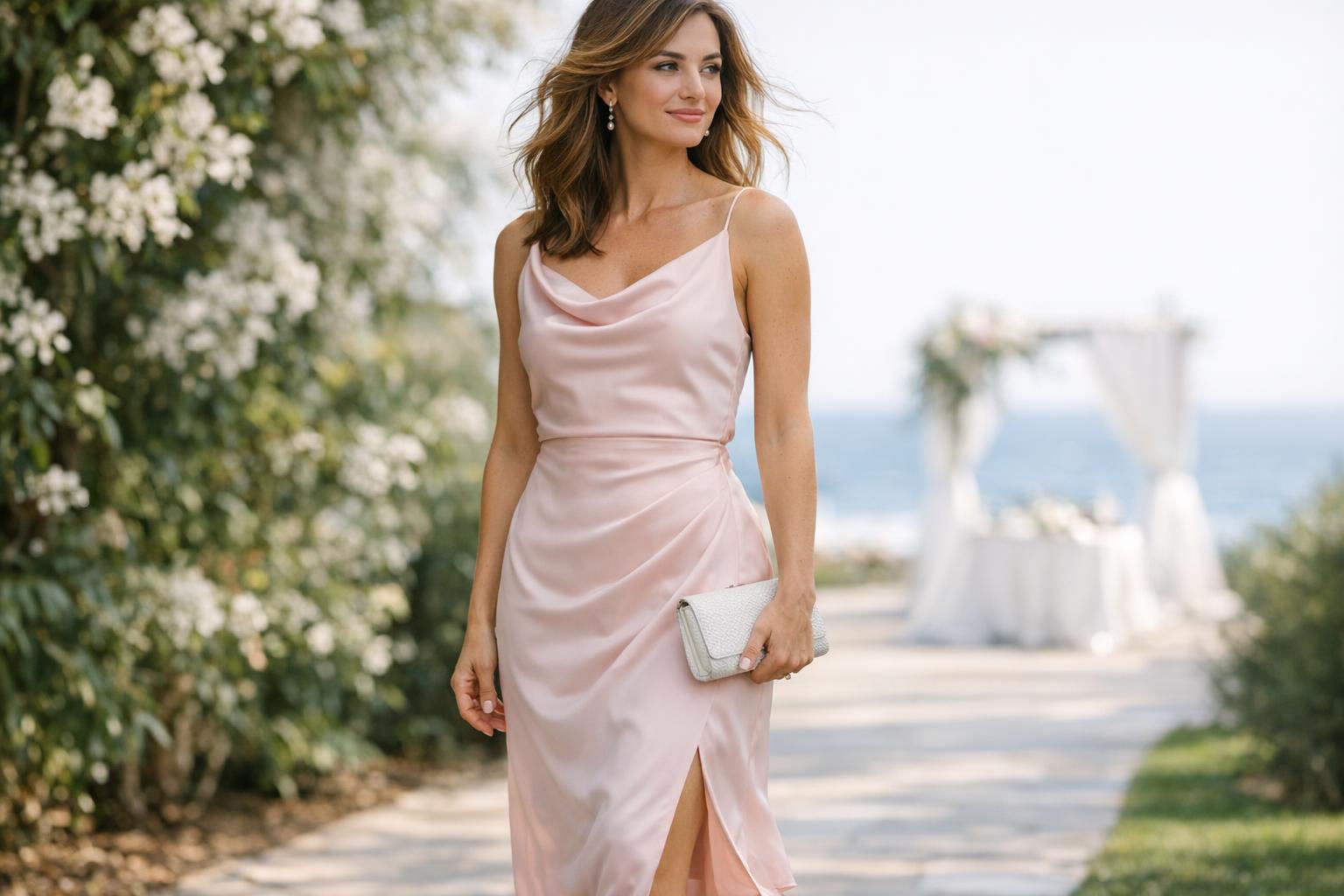
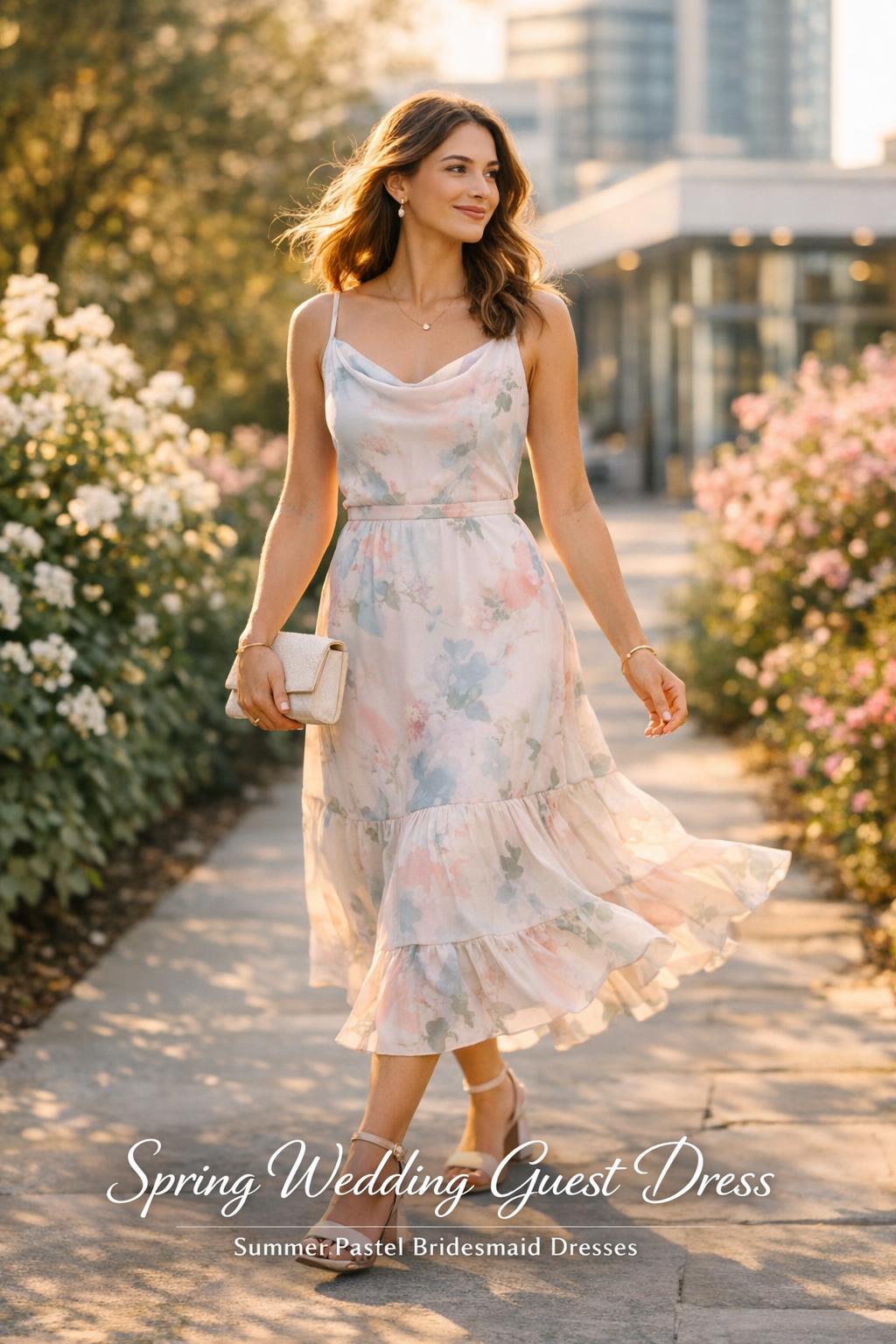
Garden weddings practically invite florals and pastel wedding attire. The best approach is to keep your print or color romantic, then keep your structure stable. Chiffon works beautifully for movement, while organza can hold shape and look intentionally “spring.” If you’re choosing ruffles or a high-low hem, check that the fabric doesn’t twist or cling in wind; a more stable weave reads elevated in photos and feels less distracting during the ceremony.
- Best silhouettes for gardens: A-line midi, tiered maxi, soft sheath midi
- Best fabrics for gardens: chiffon and organza; satin if the venue is more formal
- Easy styling cue: a floral dress plus a simple clutch keeps the look clean, not costume-like
Beach and destination-leaning weddings: packable options with polish
Beach ceremonies can tilt toward lighter fabrics and a more relaxed vibe, but you still want a dress that reads “wedding.” A midi or maxi in chiffon is often the most forgiving choice because it moves well and packs easily. If you’re traveling, prioritize pieces that don’t require constant steaming. This is one reason travel-minded spring dress edit guides often highlight wearable, wrinkle-tolerant silhouettes and easy-to-style colors like pastels and spring brights.
Tip: If you’re considering a more sculptural fashion moment—something you might also eye for a pepprmayo prom dress-style vibe—make sure it’s compatible with sand, wind, and walking. Dramatic shapes can be stunning, but a beach venue is the quickest way to discover a dress that looks better standing still than moving through a real event.
City venues: sleek lines, satin, and modern accessories
City weddings often reward a cleaner silhouette: a satin midi, a sheath, or a structured A-line. If the invite leans formal, consider a maxi in satin with a refined neckline (a cowl neck is a classic spring choice) and keep accessories sharp. This is where a modern brand perspective—often seen in recurring editorial picks from STAUD or Cult Gaia—can feel current without being loud. The key is balance: if the dress is minimalist, you can add interest through texture (satin sheen, subtle draping) rather than extra embellishment.
Silhouettes that consistently work: maxi, midi, A-line, and sheath
Silhouette is your comfort strategy and your photo strategy. In spring, you want a shape that moves, sits, and stands well, because weddings are long and full of transitions. The most frequently recommended shapes—maxi, midi, A-line, sheath—show up repeatedly for one reason: they’re adaptable across dress codes.
Maxi dresses: the easiest way to look formal without overthinking
A maxi is naturally aligned with formal and black-tie optional invites, but it can also work for outdoor ceremonies if the fabric is light enough. Satin maxis feel evening-leaning; chiffon maxis feel daytime and romantic; organza adds structure and volume when you want a statement. If you’re petite, the hem is the make-or-break detail—budget for a quick alteration so the dress doesn’t drag on grass or stairs.
Midi dresses: the most versatile spring wedding guest dress length
A midi is the sweet spot for cocktail and semi-formal guest attire. It keeps you comfortable during the ceremony, looks polished at a reception, and pairs easily with a wide range of shoes. A satin cowl neck midi reads sleek and modern; a floral midi reads garden-party romantic. Brands like Hill House Home are often associated with wearable florals and easy silhouettes, while editorial shopping guides frequently spotlight designer midis from Rixo and AJE when the goal is statement print with a tailored feel.
A-line vs. sheath: choosing based on movement and structure
An A-line shape is forgiving and photogenic, especially for outdoor weddings where you’ll walk and stand on uneven surfaces. It creates definition at the waist without requiring a bodycon fit. A sheath dress is sleek and often more city-appropriate, but it’s less forgiving if the fabric wrinkles easily or if the event includes lots of sitting and standing. If you want a sheath, prioritize a fabric that holds up—satin can look impeccable, but only if it’s cut well and not overly thin.
Tip: If you’re unsure, choose A-line for daytime and outdoor venues, sheath for evening and city venues. You can always adjust the formality with accessories and hairstyle, but you can’t change how comfortable a silhouette feels once you’re three hours into the reception.
Fabric strategy for spring: satin, chiffon, organza, and tulle
Fabric is where spring dressing either becomes effortless or unexpectedly complicated. The most common spring wedding fabrics—satin, chiffon, organza, and tulle—each have a distinct behavior in daylight, movement, and photography. Choosing based on behavior (not just appearance) saves you from the typical mid-event regrets.
Satin: sleek, reflective, and dress-code friendly
Satin is a frequent pick for cocktail and formal spring weddings because it reads elevated immediately. A satin cowl neck midi is a classic option in many shopping roundups for a reason: it’s minimal but undeniably dressy. The trade-off is that satin can highlight creases and underlayers, so it rewards careful fit and thoughtful undergarments. If you’re traveling, pack satin with care or plan time to steam.
Chiffon: airy, forgiving, and ideal for outdoor ceremonies
Chiffon is the spring workhorse—lightweight, romantic, and generally more forgiving through a full day. It’s especially comfortable for garden and daytime weddings, and it moves beautifully in photos without requiring heavy structure. If you’re worried about unpredictable weather, chiffon layers can be a practical choice because they don’t feel as heavy as satins or more structured fabrics.
Organza and tulle: statement texture with a careful dress-code check
Organza and tulle often appear in spring lists when the goal is drama: volume, shape, and a fashion-forward silhouette. STAUD is a brand frequently associated with organza options in seasonal roundups, and these fabrics can look stunning in spring light. The caution is context: a structured organza moment can overpower a low-key ceremony, and tulle can skew very “occasion.” If the invitation says casual, reserve these fabrics for subtle details rather than full-skirt volume.
Color and print: pastels, florals, and spring brights without feeling themed
Spring color is often described in three lanes: pastels, florals, and brights. The best choices feel like a nod to the season, not a costume. If you’re coordinating with friends (or attending multiple weddings), pastel wedding attire can also help you look consistent across events while still changing the mood with different silhouettes.
Pastels that photograph well: soft color, strong styling
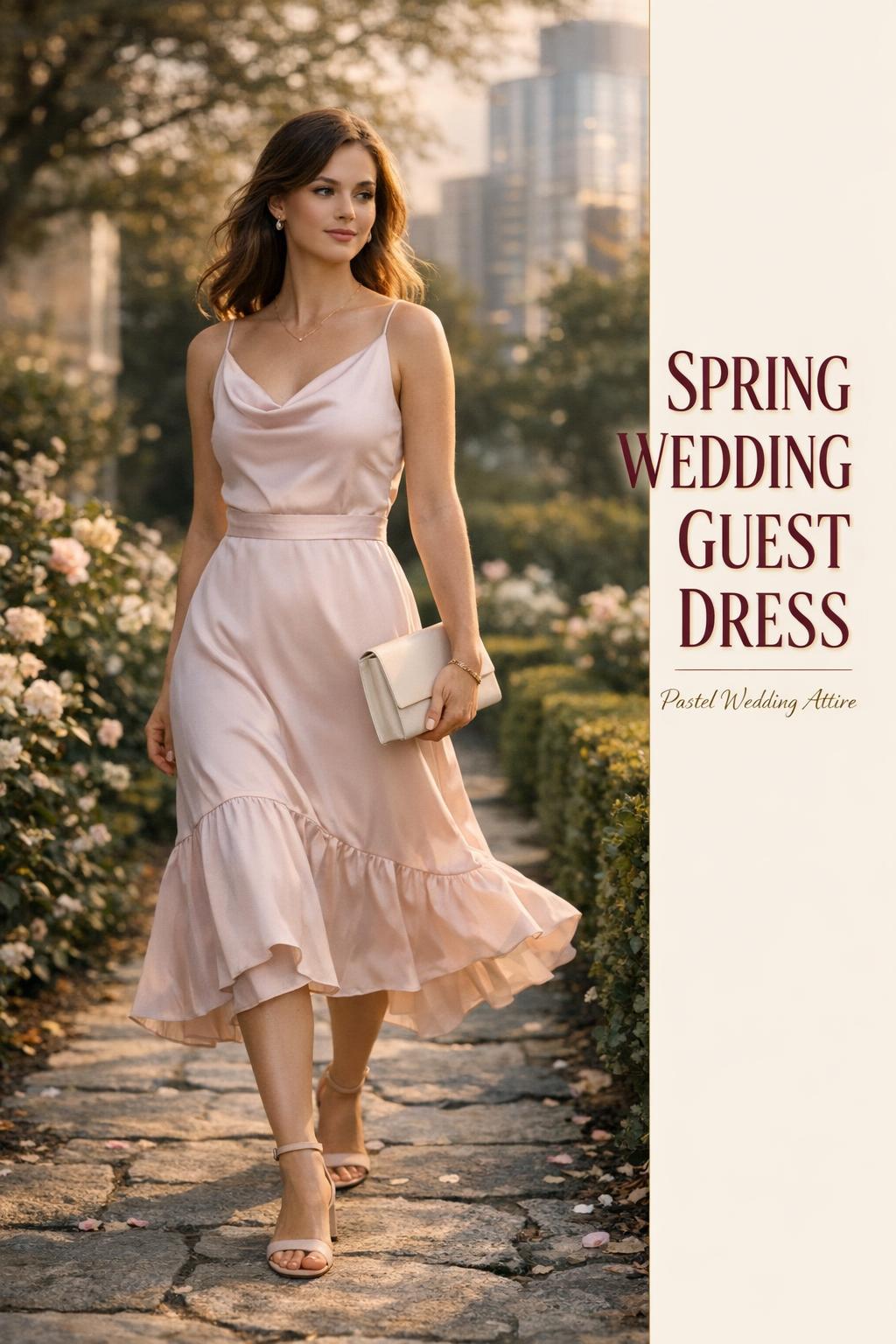
Pastels are popular because they signal “spring” instantly, and they pair well with the common fabrics of the season. The key is keeping the silhouette grown-up and the accessories crisp so the look doesn’t skew overly sweet. This is also where you can borrow inspiration from summer pastel bridesmaid dresses—without dressing like the wedding party—by choosing a guest-appropriate cut (midi length, cocktail silhouette) and avoiding overly uniform styling.
Tip: If your pastel dress is simple, elevate it with texture (satin sheen, organza structure) rather than piling on extra details. That keeps the look modern and event-appropriate.
Florals and botanical prints: the easiest route to “spring”
A floral dress is a straightforward way to align with the season, especially for garden venues. Brands like Hill House Home often appear in conversations about wearable florals and easy silhouettes, while editorial galleries frequently highlight bold floral designer options from Rixo or Zimmermann. The deciding factor is scale: smaller florals can read softer and more classic, while large botanicals can feel fashion-forward and make the dress the focal point.
Spring brights: confident color that still respects the occasion
Brighter colors can be stunning at spring weddings, especially when the venue is minimal or modern. A clean silhouette (sheath or minimalist A-line) keeps a bright color from feeling overwhelming. If the wedding decor leans floral and romantic—think yellow peonies and pastel arrangements—brights can still work when you keep the styling streamlined and avoid competing textures.
Brand and designer shortcuts: why certain names keep showing up
In spring wedding dress edits, the same brands appear because they reliably deliver on a few hard-to-balance requirements: a silhouette that fits the dress code, fabric that looks elevated, and a design identity that feels current. You don’t need to shop by label, but it helps to know what each name tends to signal.
- STAUD: often linked with organza and modern silhouettes that feel fashion-forward but still wearable
- Rixo: frequently associated with standout prints and midis that suit cocktail and semi-formal weddings
- Zimmermann: commonly referenced for romantic, elevated occasion dresses that can skew more luxury
- Cult Gaia: a modern, statement-leaning approach that can suit city venues and sleek styling
- AJE: often highlighted for distinctive textures and party-ready designs that work for spring receptions
- Cinq à Sept: polished occasionwear that can read refined for formal invites
- Mac Duggal: a strong option when the invite is formal and you want a clear occasionwear point of view
- Hill House Home: wearable florals and approachable silhouettes for daytime and garden weddings
- Lulus: a frequently referenced option for accessible, budget-aware spring wedding guest dresses
- Revolve: a retailer that shows up often because it carries multiple brands in one place and supports shoppable browsing
Tip: Use labels as a navigation tool, not a rule. If a designer dress stretches your budget or feels too precious for an outdoor venue, you can still follow the same silhouette-and-fabric logic through more accessible options, especially when shopping through retailers that stock multiple price points.
Smart shopping in the U.S.: where to look and how to decide fast
Most people don’t shop for spring weddings in a vacuum; they shop with a calendar and a shipping window. In the U.S., that often means using multi-brand retailers to compare quickly, then narrowing by dress code and fabric rather than endlessly scrolling. Retailers like Revolve and Nordstrom are commonly linked in shopping guides because they offer breadth, while brand-direct shopping (like Lulus or Hill House Home) can be efficient when you already know the vibe you want.
A quick filter method that mirrors how editors curate
Instead of starting with “What’s trending?”, start with “What’s appropriate?” and build from there. Editors often curate by dress code (formal vs. cocktail and casual) and then show variations in fabric and silhouette within each bucket.
- Step 1: lock the dress code (formal, semi-formal, cocktail, casual)
- Step 2: pick the hemline that matches the venue (maxi for formal or evening; midi for cocktail; midi/maxi for garden)
- Step 3: choose fabric behavior (satin for sleek, chiffon for movement, organza/tulle for statement)
- Step 4: choose a palette lane (pastels, florals, spring brights)
Tip: If you’re shopping close to the date, avoid dresses that require extensive tailoring or complicated underlayers. A great spring wedding guest dress is one you can wear comfortably through ceremony, photos, dinner, and dancing with minimal fuss.
Budget and value: what’s worth paying for
Value usually comes down to fabric and cut. Satin and organza can look expensive but also show flaws if the cut is off. Chiffon tends to be more forgiving and can offer strong cost-per-wear for weddings across seasons. If you’re choosing between two options, pick the one that you can realistically re-wear to another event—especially if you’re also navigating multiple spring and summer invitations and building a rotation of pastel wedding attire that doesn’t look repetitive.
Size-inclusive reality check: fit strategies when brand sizing varies
Many spring wedding shopping edits emphasize the dress itself more than the realities of fit: size ranges, petite proportions, tall lengths, and how a fabric behaves on different body types. The most reliable way to shop is to prioritize adjustable or adaptable design features and to plan for small tailoring when needed.
What to look for in adaptable fits
- Defined waistlines in A-line shapes that create structure without clinging
- Straps that can be adjusted (or easily altered) for comfort and coverage
- Midis with intentional placement (true midi rather than “almost maxi”)
- Fabrics that forgive movement, especially chiffon for long events
Tip: If you know you’ll be seated for a long ceremony or dinner, test-sit at home in your dress. Sheath silhouettes can feel sleek but may ride up or crease; a midi A-line often stays comfortable and polished longer.
Alterations that make a bigger difference than people expect
Hem length is the most impactful adjustment for spring weddings, particularly for outdoor venues. A maxi that drags can look less polished and becomes difficult on grass or stairs. Strap adjustments matter too: a dress that slips or needs constant pulling breaks the relaxed confidence you want as a guest. When in doubt, choose the dress that needs the fewest changes—especially if you’re shopping on a tight timeline.
Accessories that finish the look without competing with the dress
Most spring wedding guest dresses already carry visual interest—through satin sheen, floral prints, ruffles, or draping—so accessories should support, not overwhelm. Many editorial outfit-idea guides focus on the “complete look” effect: cohesive shoes, a clutch that feels intentional, and jewelry that matches the mood of the dress code.
When the dress is the statement (prints, organza, ruffles)
If you’re wearing a bold floral from Rixo or a more structured organza silhouette reminiscent of STAUD’s spring-leaning options, keep your accessories quieter. A streamlined bag and minimal jewelry let the dress read expensive and deliberate. The goal is to look styled, not busy.
When the dress is minimal (solid satin, sleek sheath)
A solid satin midi or a clean sheath can take more accessory personality. This is where a modern styling approach—often associated with city-venue outfit ideas—adds polish: a crisp clutch, refined jewelry, and shoes that match the event’s formality. If your dress is pastel wedding attire in a solid color, accessories can help it feel adult and event-specific rather than “just a pretty dress.”
Real-world outfit planning: three scenarios you’ll actually encounter
In practice, “what to wear” becomes easier when you plan around the moments that tend to create wardrobe stress: arrival, ceremony seating, photos, and dancing. Here are three realistic spring scenarios that show how to apply dress code, silhouette, and fabric logic without overcomplicating it.
A garden ceremony with cocktail attire
Choose a midi in chiffon or satin, ideally with a defined waist and enough movement to handle an outdoor aisle. A floral midi aligns naturally with the setting (especially if the decor leans toward soft blooms like yellow peonies), while a pastel solid can look equally spring-appropriate if the fabric has a refined finish. Keep shoes walkable for grass and avoid anything that requires constant adjusting in wind.
A city wedding that leans formal
A satin maxi or a sleek midi in a formal-leaning cut reads right for the setting. Consider brands known for polished occasionwear like Cinq à Sept or Mac Duggal if you want a clear formal signal. If you choose a minimalist dress, let texture—satin sheen, subtle draping—do the work, and keep your accessories modern rather than overly ornate.
A destination spring wedding with travel days built in
Prioritize packability and comfort: chiffon is often the easiest to travel with, and a midi can reduce hem headaches. If your style leans more fashion-forward—maybe you’re tempted by something with the bold energy people associate with a pepprmayo prom dress moment—aim for a silhouette that still functions in warm air and movement, rather than something that only looks good in posed photos. Plan a simple “one-bag” accessory set: one clutch, one pair of dressy shoes, and jewelry that works across rehearsal dinner and wedding day if your calendar is stacked.
Common spring guest attire mistakes (and how to avoid them)
Most spring wedding guest dress mistakes are predictable—and avoidable—because they come from choosing a dress for a single moment instead of the whole event.
- Choosing fabric first and dress code second: a casual silhouette in satin can still look mismatched, and a formal silhouette in overly casual fabric can read off.
- Overcommitting to trend details: dramatic ruffles and sculptural shapes can be beautiful, but they need the right venue and comfort tolerance.
- Ignoring the “sit test”: sheath styles can crease or ride; if you’re unsure, a midi A-line is often safer.
- Not planning for outdoors: lawns, gravel, wind, and temperature shifts can turn a perfect dress into a high-maintenance one.
- Over-accessorizing prints: a bold floral dress already carries the look; keep the rest clean.
Tip: If you’re stuck between two options, choose the dress you can forget about once it’s on. The best-dressed guests are usually the ones who look comfortable enough to be fully present.
A focused checklist for choosing the best spring wedding guest dresses
Use this as a final decision tool when you have a few tabs open and need to commit. It’s designed around the categories that show up most often in spring dress curation: dress codes, silhouettes, fabrics, and palettes.
Quick decision checklist
- Does the hemline match the invite’s formality (maxi for formal; midi for cocktail/semi-formal)?
- Does the fabric match the venue (chiffon for outdoors; satin for city or evening; organza/tulle for statement moments)?
- Is the color aligned with spring (pastels, florals, brights) without feeling overly themed?
- Can you move, sit, and dance without adjusting the dress constantly?
- Do you have a complete look (shoes, clutch, jewelry) that fits the same dress code?
If you’re building a season-long wardrobe—maybe you need one outfit now, but you’re also attending events where summer pastel bridesmaid dresses are part of the broader wedding calendar—choose a spring wedding guest dress with a silhouette you’d wear again. A midi in satin or chiffon is often the most repeatable choice across spring and summer.
FAQ
What makes a spring wedding guest dress different from a summer wedding guest dress?
Spring wedding guest dresses are often chosen for flexibility: they need to handle changing temperatures and a mix of indoor and outdoor settings, so fabrics like chiffon, satin, and organza and versatile silhouettes like midi and maxi show up frequently, along with season-forward palettes like pastels and florals.
What should I wear to a spring wedding with cocktail attire?
A midi dress is typically the safest and most versatile choice for cocktail attire, especially in satin or chiffon; look for a polished silhouette like an A-line or a clean sheath, and choose a spring-friendly palette such as pastels, florals, or a controlled bright.
Are florals always appropriate for spring guest attire?
Florals are widely worn for spring weddings and work especially well for garden venues, but the print scale and silhouette should match the dress code; a refined floral midi often fits cocktail and semi-formal, while a more dramatic print or volume can feel better suited to a more formal setting.
Which fabrics are best for a spring wedding guest dress?
Satin, chiffon, organza, and tulle are common spring wedding fabrics: satin reads sleek and formal, chiffon is airy and outdoor-friendly, and organza or tulle add statement structure that works best when the venue and dress code support a more fashion-forward look.
How do I choose between a maxi and a midi for a spring wedding?
Choose a maxi when the invite leans formal or evening-leaning, and choose a midi for cocktail and many semi-formal weddings; also consider the venue, since midis are often easier for gardens or travel-heavy days, while maxis can require more careful hem planning outdoors.
What’s the safest approach to pastel wedding attire so it doesn’t look too sweet?
Keep the silhouette and accessories polished: a satin midi, a tailored A-line, or a clean sheath in a pastel tone reads more grown-up than overly ruffled styling, and minimal accessories help the color feel intentional rather than overly themed.
How can I shop quickly if I need a spring wedding guest dress soon?
Start by locking the dress code, then filter by hemline (midi or maxi), then choose a reliable spring fabric (often chiffon or satin) and a palette lane (pastel, floral, or bright); shopping through multi-brand retailers can also make it easier to compare silhouettes and price points efficiently.
Can I wear something dramatic, like a pepprmayo prom dress style, to a spring wedding?
You can wear a more statement-leaning dress if the wedding is formal or fashion-forward, but check the venue and comfort needs first; structured fabrics like organza or tulle can look striking, yet they can be less practical outdoors or during travel-heavy days compared with chiffon or a simpler satin cut.