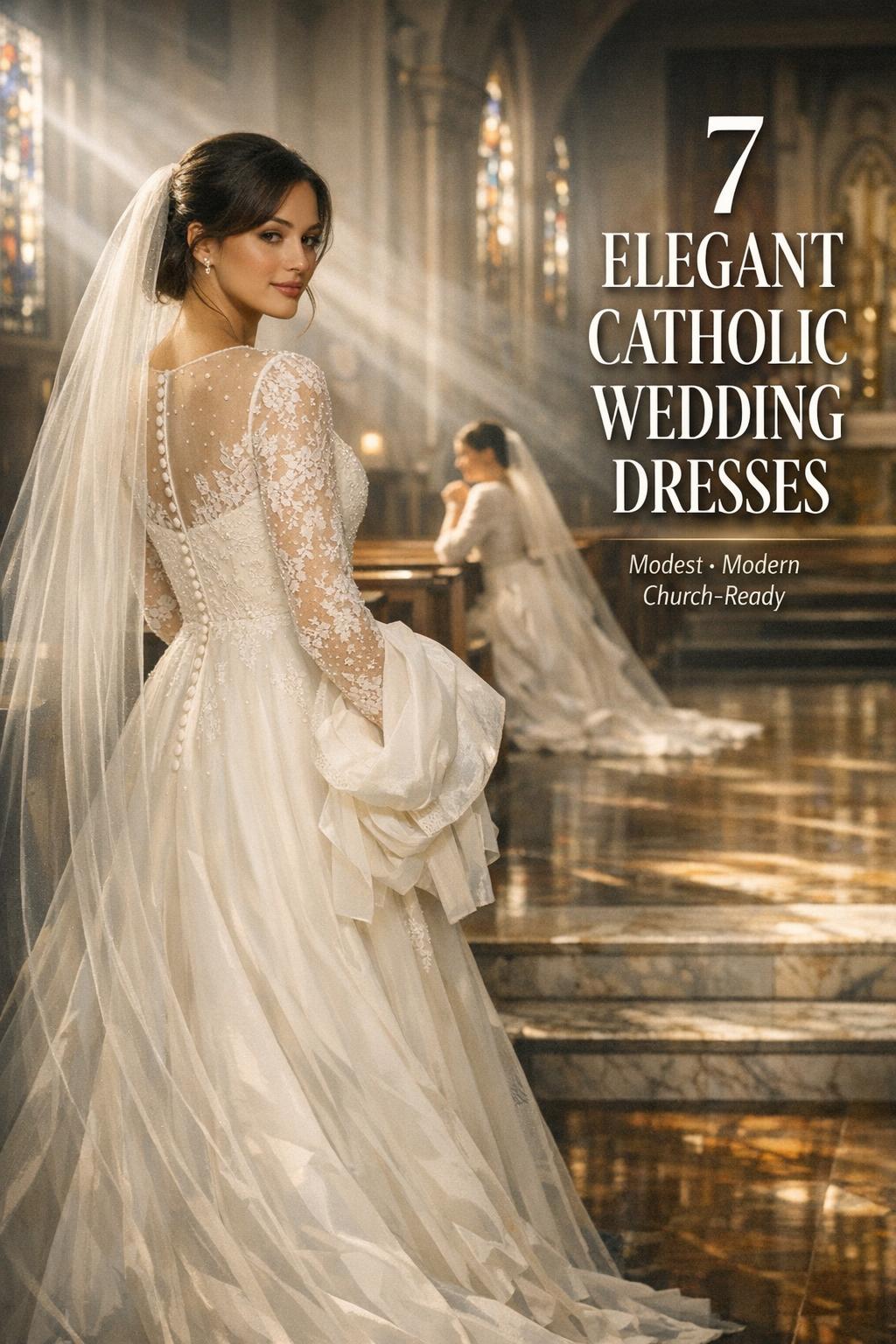
7 Elegant Catholic Wedding Dresses for US Church Ceremonies
Catholic Wedding Dresses: Modesty, Tradition, and Modern Style
Catholic wedding dresses sit at a meaningful intersection of personal style and the expectations of a sacred space. Many brides want a gown that feels unmistakably bridal and contemporary while also reflecting modesty, reverence, and the practical realities of a church ceremony.
This guide brings together the most common elements that define Catholic-appropriate bridal attire, how parish policies often shape dress decisions, and how to shop (or alter) a gown so you can feel confident from the aisle to the altar. You’ll also find styling ideas—like sleeves, veils, and cover-ups—plus a verification process to confirm what your specific church requires.
The Catholic Dress Ethos: Modesty Meets Modern Bridal Fashion
Within Catholic bridal fashion, “modesty” is often less about limiting beauty and more about choosing coverage and design details that suit the dignity of the setting. In practice, that means many Catholic brides prioritize thoughtful necklines, secure coverage on the back and shoulders, and fabrics that feel appropriate under bright church lighting and during moments like kneeling or sitting.
At the same time, modern Catholic wedding dress styles span from minimalist gowns to lace-forward ballgowns, and from timeless silhouettes to contemporary tailoring. Many designers and boutiques now build “faith-meets-fashion” collections that blend traditional bridal cues—sleeves, lace, structured bodices, layered skirts—with updated fits and styling.
Your wedding look is only the beginning.
Keep your guest list, vendors, timeline, and every important detail together with Zarellea — so your day feels as considered as your style.
Tip: When you’re evaluating a dress for a Catholic ceremony, look at it in motion, not just in a mirror. Imagine walking, sitting, and kneeling. A gown can look modest standing still and feel very different once you move through the ceremony.
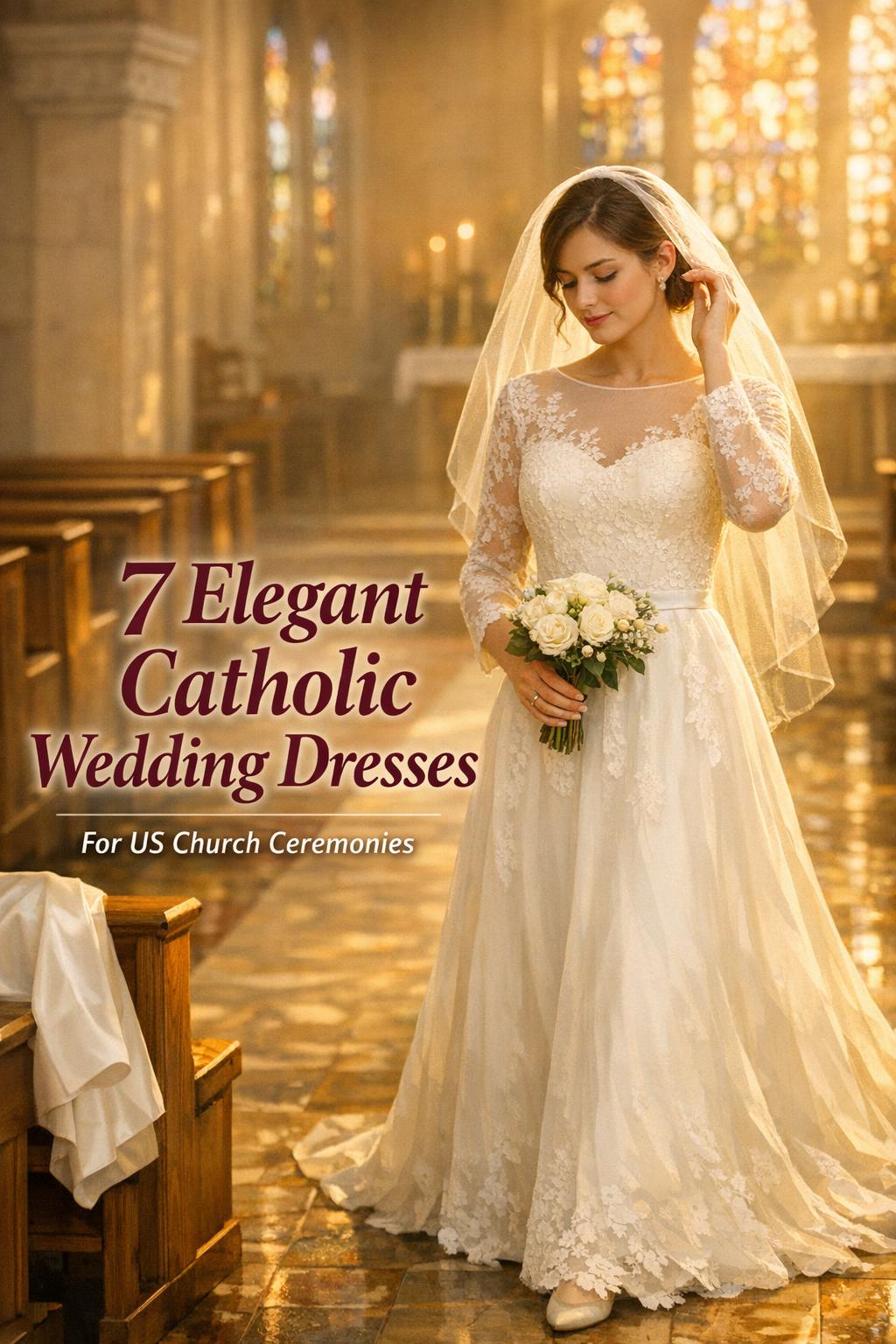
Key Elements That Define a Catholic Wedding Dress
Because parish and diocesan expectations can vary, there is no single universal template. Still, the same practical design elements come up repeatedly in Catholic church dress guidance and in real-world Catholic wedding styling: sleeves and shoulder coverage, neckline and back coverage, length, fabric opacity, and how embellishments read in a sacred space.
Sleeves, Necklines, and Back Coverage
Sleeve and bodice coverage is one of the biggest decision points for brides planning a Catholic ceremony. Many churches prefer covered shoulders and a neckline that stays secure and appropriate throughout the liturgy. Back coverage matters, too—especially for dresses that shift with movement or have deep cuts that become more noticeable from pew level.
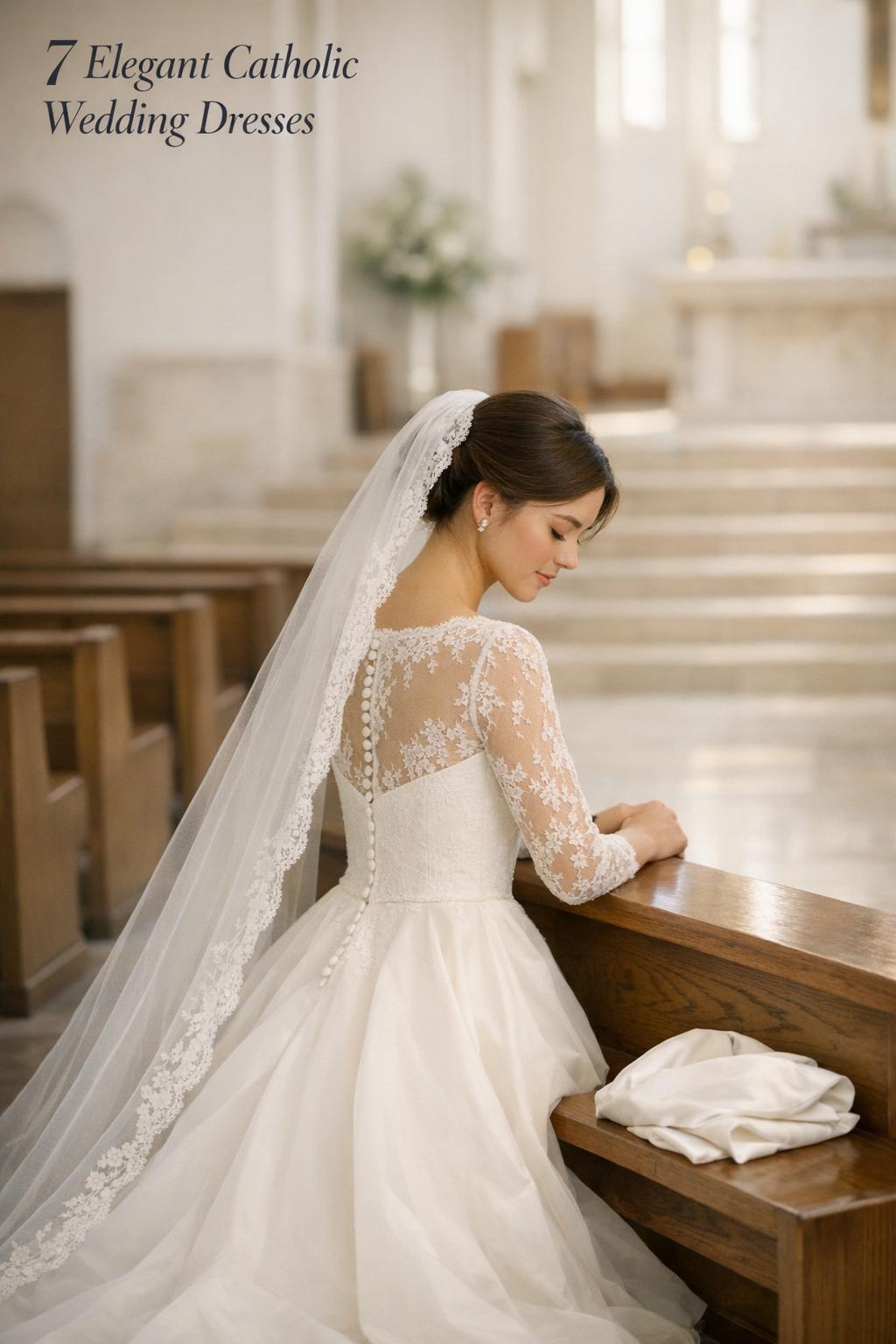
For some brides, this naturally points toward a Catholic wedding gown with sleeves—long sleeves, three-quarter sleeves, or substantial cap sleeves—while others choose a sleeveless gown and plan a ceremony-specific cover-up. Lace and illusion panels can also offer coverage while keeping the look light and bridal.
- High-confidence choices: long sleeves, three-quarter sleeves, lace sleeves, modest cap sleeves, higher necklines, and secure backs.
- Often needs planning: strapless or spaghetti straps (typically paired with a bolero, jacket, shawl, or overlay for the ceremony).
- Check carefully: plunging necklines, very low backs, and sheer panels that may look more revealing in bright church lighting.
Tip: If you love a gown that’s close to church-appropriate but not quite there, don’t dismiss it immediately. Many brides achieve a respectful look with a simple layering plan: ceremony coverage first, then remove the layer for the reception if desired.
Length, Fabric Opacity, and Embellishments
Length and opacity become more important in a church setting because you’ll be sitting, standing, and sometimes kneeling. A hemline that feels “fine” in a boutique can behave differently on steps, around a kneeler, or when you’re seated in a pew. Fabric opacity matters as well—especially for fitted skirts, sheer overlays, or lighter linings.
Embellishments can be as minimal or ornate as you like, but many Catholic brides gravitate toward details that feel timeless: lace, structured bodices, elegant buttons, and refined beading rather than overly flashy elements that distract from the ceremony. The goal isn’t to avoid sparkle; it’s to choose design elements that support a reverent, classic impression.
- Test opacity by viewing the gown in brighter light and from multiple angles, including the back.
- Consider how the skirt behaves when you sit: does it ride up, pull tight, or become translucent?
- If you’re wearing shapewear, choose options that won’t show through under church lighting.
Tip: Bring a light-colored slip or lining sample to your appointment if you’re considering lace or illusion layers. A small change in lining tone or thickness can shift a dress from “borderline” to confidently church-appropriate.
Colors and Veils: Traditional vs. Contemporary
Many Catholic brides choose traditional bridal tones, but contemporary preferences also show up in modern Catholic wedding dresses. The key is less about a single “approved” color and more about the overall formality and suitability for the sanctuary. If you’re considering a less traditional shade, the safest approach is to keep the silhouette and coverage aligned with the church’s expectations.
Veils are common in Catholic bridal styling, and many brides see them as a timeless way to complement a modest dress silhouette. Whether you choose a shorter veil, a long veil, lace edging, or a simpler drape, coordinate it with your gown’s neckline and back so the overall look feels intentional rather than “added on.”
Tip: If your dress includes ornate lace or textured fabric, a simpler veil can keep the look balanced. If your gown is minimalist, a veil with delicate detail can add dimension without changing the dress itself.
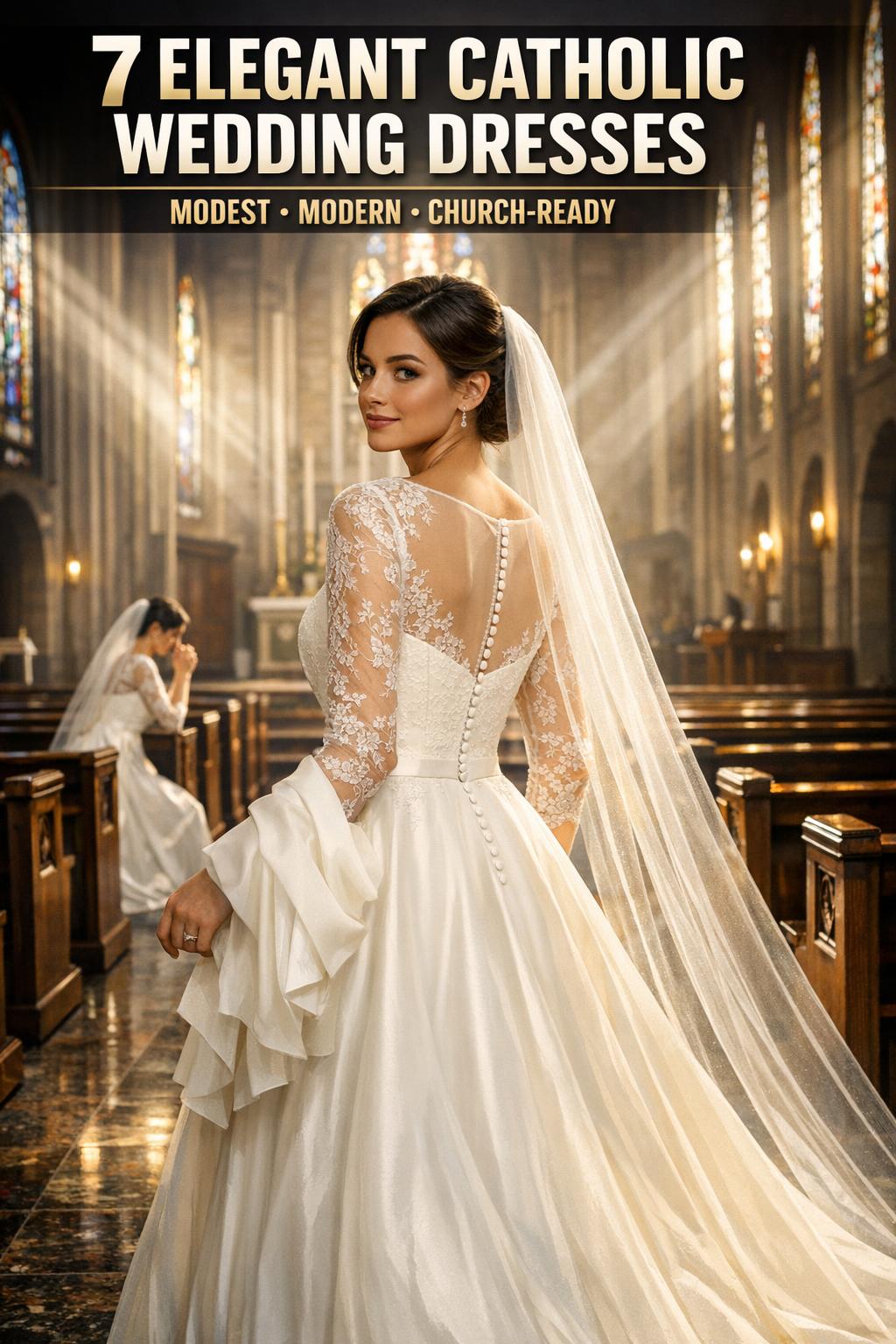
Diocese-Ready: U.S. Dress Guidelines by Region
In the U.S., Catholic wedding attire expectations can vary by parish and region, and churches may publish their standards in wedding guidelines or policy booklets. Some parishes spell out specific modesty requirements and prohibit certain silhouettes; others give general guidance and ask brides to coordinate with the wedding coordinator or clergy.
The most consistent theme across parish documents is the expectation that the bridal party will dress in a way that respects the sacredness of the church. When a parish provides specific dress expectations for brides and bridesmaids, it’s typically focused on coverage and overall modesty rather than dictating a particular style aesthetic.
What Parish Policies Commonly Emphasize
Parish guidelines that address wedding attire often emphasize modesty expectations and may restrict or discourage certain revealing cuts. Even when a guideline is brief, it tends to serve as a baseline for conversation with the parish’s wedding coordinator or clergy, especially if the dress is sleeveless, strapless, low-cut, low-back, or uses sheer fabric.
- Covered or appropriately covered shoulders for the ceremony
- Necklines that are secure and not overly revealing
- Back coverage that remains modest from multiple viewing angles
- Fabric opacity that prevents see-through effects in bright light
- Bridesmaid dress expectations aligned with the same principles
Tip: Treat parish dress guidance as a planning tool, not a last-minute hurdle. If you know early that coverage is required, you can shop with that filter from the beginning and avoid costly rush alterations.
How to Verify Your Church’s Rules (Step-by-Step)
Because Catholic church dress code expectations can be parish-specific, the most reliable approach is to confirm requirements directly with your ceremony location. This prevents confusion and helps you confidently choose between a fully covered gown and a layered approach.
- Ask your parish for their wedding guidelines or policy booklet (many provide a PDF or printed packet).
- Identify any sections that mention modesty, bride/bridesmaids attire, necklines, sleeves, or “prohibited” silhouettes.
- Confirm details with the wedding coordinator (or the parish staff member assigned to weddings).
- If your dress is borderline (strapless, low back, sheer), ask what solutions are acceptable (bolero, lined bodice, sleeves added, etc.).
- Re-check after alterations so the final version still meets expectations.
Tip: If you’re communicating by email, include clear photos of the dress from the front, back, and side, plus a photo of any planned cover-up. That makes it easier for the parish to give a practical answer.
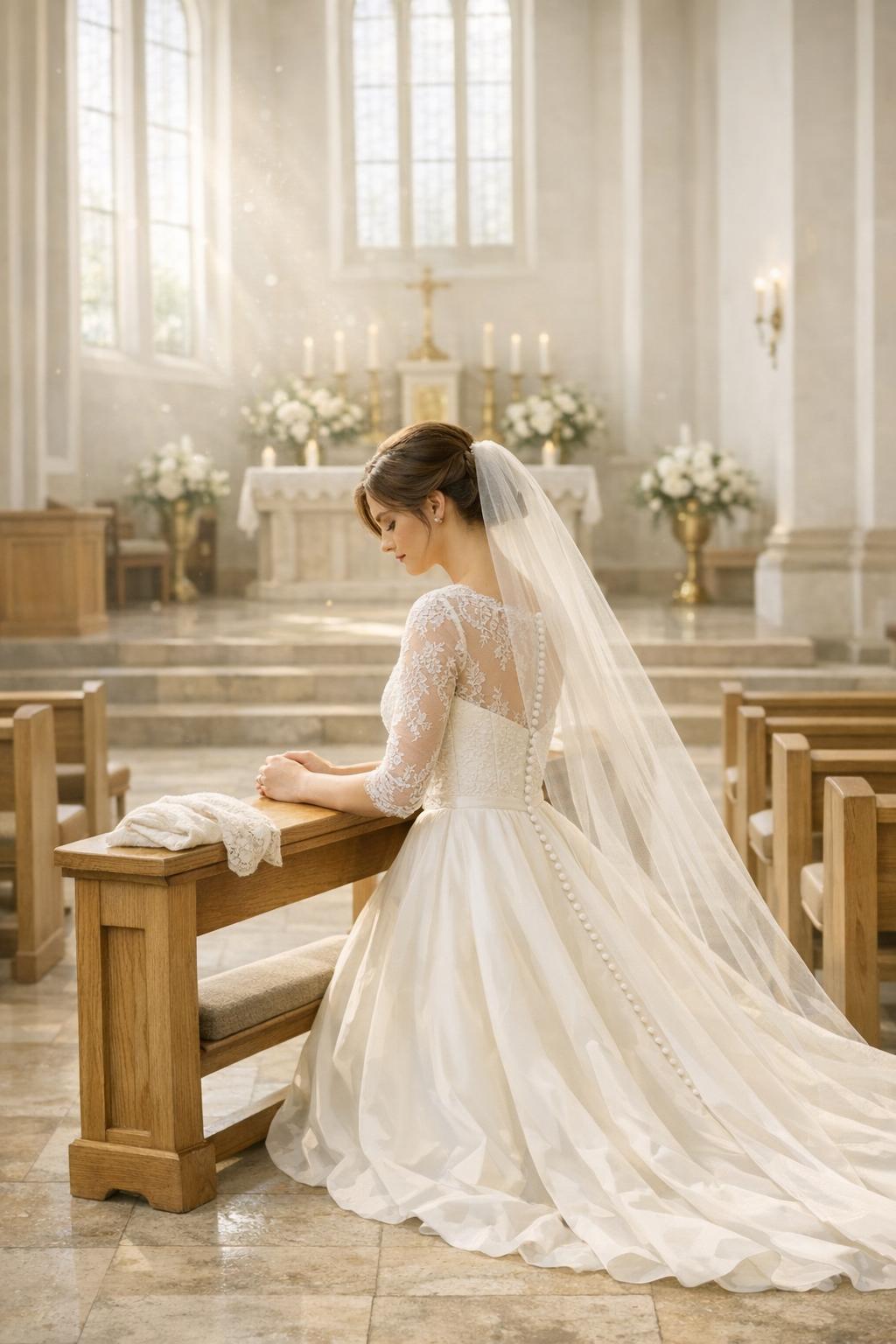
Ready-to-Shop: Modest Catholic Wedding Dress Styles (By Silhouette)
Shopping for a church-appropriate gown doesn’t mean sacrificing style. Many catholic wedding dresses are built around silhouettes that naturally support coverage and structure, while still feeling modern and flattering. Below are style categories that commonly align with Catholic ceremony needs, especially when you prioritize sleeves, secure necklines, and thoughtful fabric choices.
A-Line and Ballgown With Long Sleeves
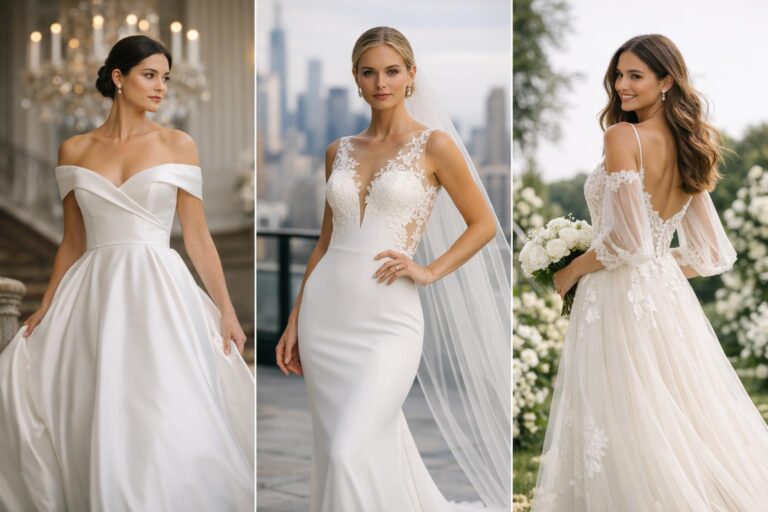
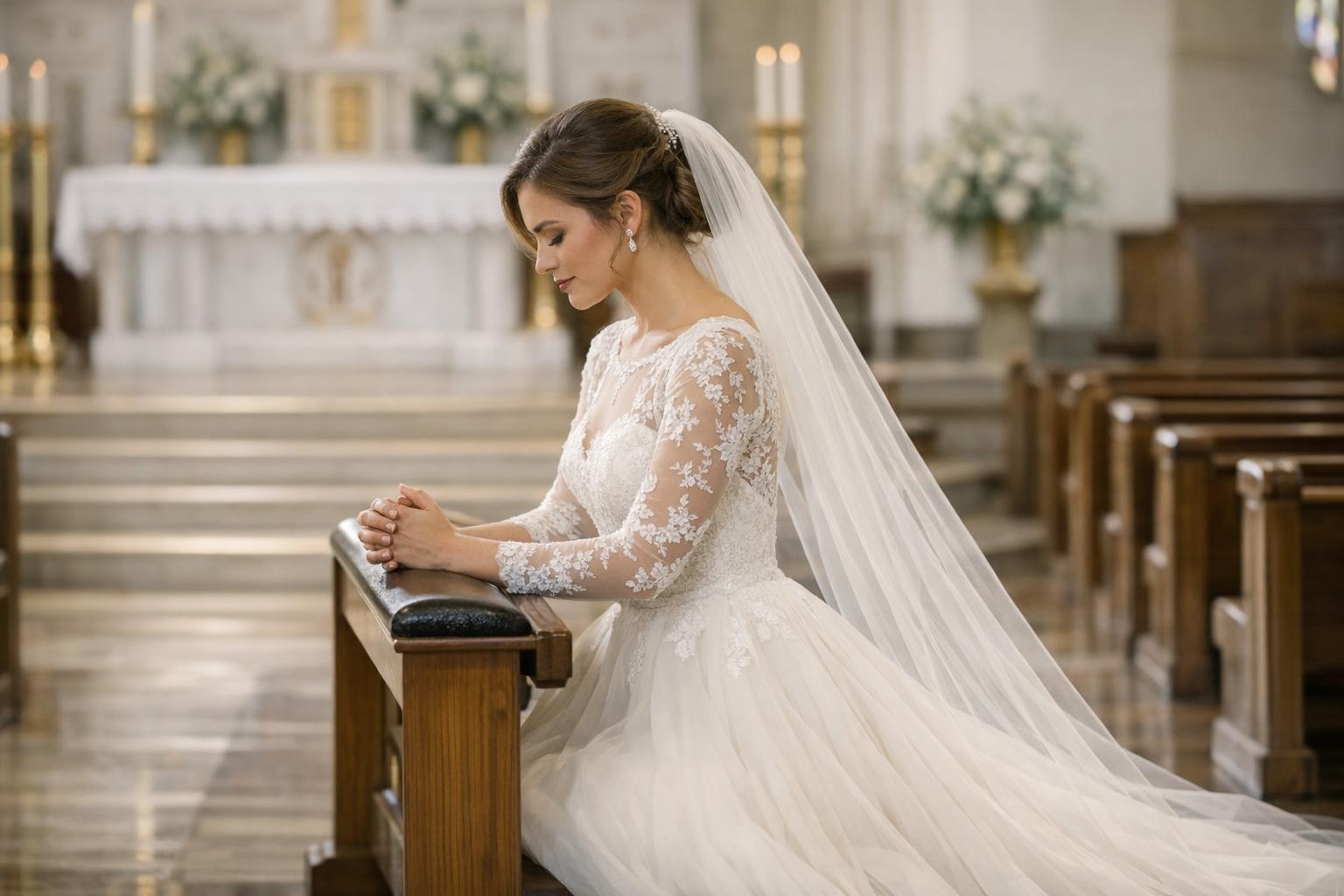
A-line and ballgown silhouettes are popular for traditional Catholic weddings because they often feel formal and timeless, and they pair naturally with sleeves and structured bodices. Long sleeves can be lace, illusion, or fully lined; the main advantage is that the overall look reads “ceremony-ready” without requiring extra layers.
These silhouettes also tend to support modesty in practical ways: the skirt provides coverage and movement, and the bodice can be designed for security and comfort during a longer ceremony.
Tip: If you want the elegance of long sleeves without feeling too covered, try lace sleeves with a lined bodice. This combination often balances modesty and modern bridal fashion especially well.
Lace, Illusion, and Layered Skirts
Lace and illusion details show up frequently in Catholic bridal fashion because they can create coverage while still feeling light, romantic, and detailed. Illusion necklines or sleeves can provide a higher-coverage look without heavy fabric, and layered skirts can add fullness and movement while remaining formal.
These design elements can be especially helpful if you’re trying to meet parish expectations around necklines, shoulders, or back coverage while still choosing a dress that feels current.
- Illusion sleeves can mimic long sleeves while maintaining a delicate look.
- Lace overlays can soften a structured bodice and add a traditional feel.
- Layered skirts often photograph beautifully in church aisles and on steps.
Tip: Not all illusion is equal. Some illusion panels appear subtle in indoor boutique lighting but become more transparent in bright spaces. View the dress in bright light and take photos to see how it reads.
Minimalist and Elegant: Slip-Style Options With Coverage
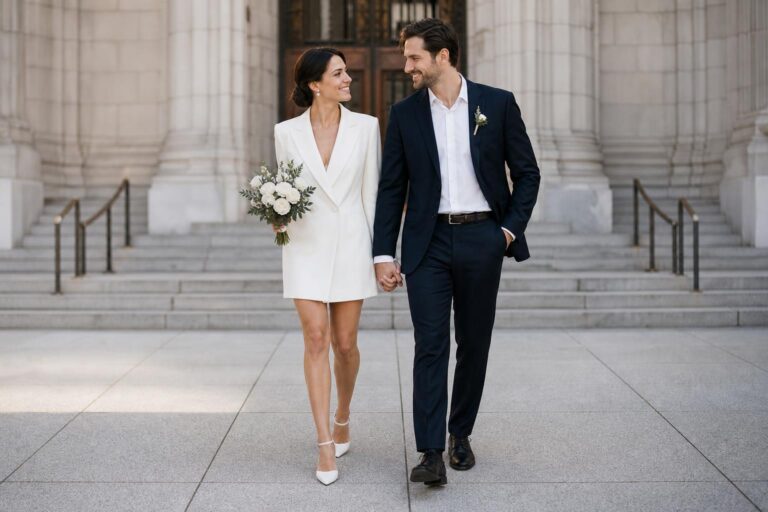
Minimalist gowns can absolutely work for a Catholic ceremony, especially when paired with a coverage plan. If you love a clean silhouette—such as a slip-style dress—consider how you’ll address shoulders, neckline stability, and back coverage during the church portion of the day.
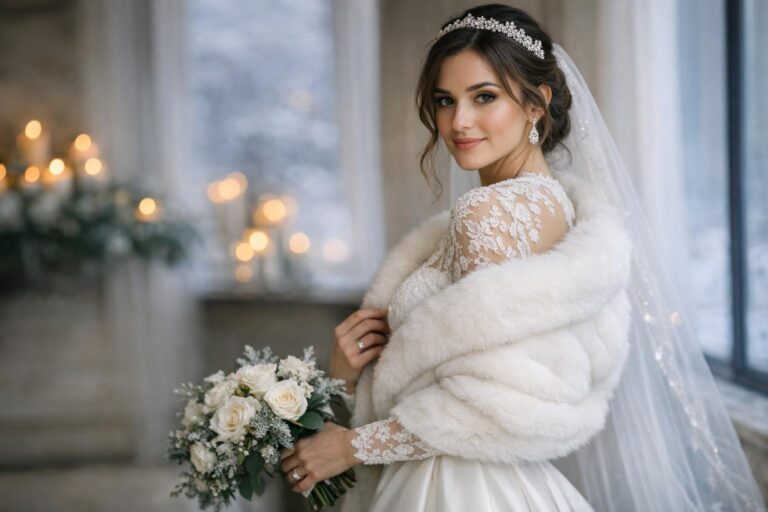
A ceremony layer can be as simple as a tailored jacket, a bridal bolero, a shawl, or an overlay that complements the gown’s simplicity. This approach allows you to maintain a modern aesthetic while respecting church expectations.
Tip: Choose a cover-up that looks like it “belongs” with the dress. Matching fabric tone and texture (or intentionally contrasting in a classic way) helps the layered look feel planned, not improvised.
How to Accessorize for a Respectful Catholic Ceremony
Accessories are more than finishing touches in a Catholic wedding—they can be functional tools for meeting church guidelines while maintaining your preferred style. The right veil, jewelry, and cover-up can bring the entire look into alignment with parish expectations without forcing you into a dress you don’t love.
Jewelry, Veils, and Cover-Ups
When you’re planning a church-appropriate bridal look, start with the ceremony-first view: what will be seen from the pews, during processional moments, and in photos at the altar. A veil is a common choice in Catholic ceremonies and can complement a modest silhouette beautifully. Cover-ups—boleros, jackets, shawls, or overlays—are also a practical solution when a gown needs added shoulder or neckline coverage.
- Use a bolero or jacket for structured shoulder coverage, especially with strapless gowns.
- Choose a shawl or wrap if you want a softer look and flexible coverage.
- Coordinate veil length and edging with your gown’s level of detail.
- Keep jewelry balanced so it supports, rather than competes with, lace or beading.
Tip: Bring your cover-up to your alteration appointments. Small tailoring tweaks can ensure it sits correctly over your neckline, doesn’t bunch at the waist, and stays secure while you move.
Shoes and Visible Skin Considerations
Comfort matters in a church ceremony, especially when you’re standing for extended periods and walking on steps or down a long aisle. Shoe choice also affects posture and how your hem falls, which can influence whether the dress remains elegant and appropriately covered throughout the ceremony.
Visible skin considerations go beyond shoulders: a dress that shifts, a slit that opens while walking, or a skirt that behaves differently when seated can change the overall impression. Planning a practical underlayer or modesty adjustment in advance can prevent constant tugging or self-consciousness.
Tip: Do a full “ceremony movement test” at home: walk, turn, sit, and (if relevant to your ceremony) practice kneeling. If anything feels unstable or reveals more than intended, bring that exact issue to your alterations specialist.
Real-World Inspiration: Heirloom Style and Timeless Catholic Bridal Looks
Many Catholic brides are drawn to timeless styling—sometimes through an heirloom dress, sometimes through details that evoke heritage, tradition, and continuity. A classic silhouette, refined lace, or a veil with family significance can create a look that feels both deeply personal and fitting for a church wedding.
Even if you aren’t wearing a literal heirloom gown, you can borrow the same principles: choose elements that feel enduring, prioritize fit and coverage for the ceremony, and let the dress support the sacred setting rather than fight it.
Case Studies: Three Ceremony-Ready Approaches
Different brides arrive at “Catholic-appropriate” in different ways. The examples below show how you can meet modesty expectations while still choosing a style that feels like you.
- Approach 1: Fully covered dress from the start. A structured gown with long or three-quarter sleeves, a secure neckline, and an opaque lining—minimal extra styling needed beyond veil and jewelry.
- Approach 2: Sleeveless gown plus ceremony cover-up. A modern sleeveless silhouette paired with a bolero or jacket for church, then removed for the reception to reveal the original styling.
- Approach 3: Lace/illusion coverage. A gown that uses lace sleeves or an illusion neckline to provide coverage while keeping the overall look light and contemporary.
Tip: If you’re unsure which approach your parish prefers, ask the wedding coordinator whether they view lace/illusion as acceptable coverage in your church. Practices can differ, and confirming early can save you from last-minute changes.
Shopping Guide: How to Choose a Catholic-Suitable Dress
Shopping for a Catholic wedding gown is easiest when you combine style preferences with a practical compliance plan. Some brides choose a dress designed specifically around modesty. Others buy the dress they love and then tailor it thoughtfully—especially for sleeves, neckline stability, back coverage, and opacity.
Working With Boutiques and Designers
When you’re shopping, be direct about your venue: a Catholic church ceremony with potential modesty guidelines. Many boutiques and designers are familiar with church wedding dress considerations and can suggest silhouettes that naturally meet typical expectations.
If you’re looking at a brand or collection that emphasizes Catholic wedding gowns, you’ll often find category-level browsing designed around the “essence” of a Catholic wedding dress—coverage-friendly options, timeless styling cues, and gowns that prioritize modest elegance while still feeling modern.
- Ask to see gowns with sleeves, higher necklines, and secure backs first, then branch out if your parish is flexible.
- Bring reference photos of looks you consider modest and ceremony-appropriate.
- Ask the boutique how they handle common church modifications (lining, sleeves, raising necklines).
Tip: If you’re shopping online, focus on listings that show multiple angles and close-ups of the bodice and back. Coverage details are hard to judge from a single front-facing photo.
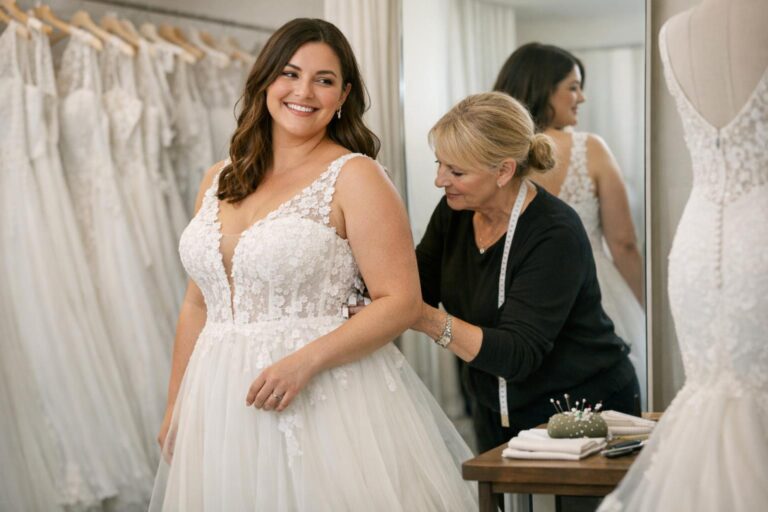
Customization and Alterations for Modesty
Alterations are often the bridge between modern bridal fashion and church-appropriate modesty. Some adjustments are small—adding lining under lace, reinforcing a neckline, or altering strap placement. Others are more significant, such as adding sleeves or redesigning the back for more coverage.
Customization can also be aesthetic rather than corrective. Brides sometimes add sleeves or adjust necklines simply because they love the traditional Catholic look and want the ceremony attire to feel more timeless.
- Add sleeves (lace, illusion, or lined) to convert a sleeveless gown into a Catholic-appropriate ceremony dress.
- Line sheer bodices or skirts for greater opacity under bright church lighting.
- Stabilize plunging necklines with additional structure or tasteful inserts.
- Adjust low backs with modest panels or redesigned closures.
Tip: Plan alterations around your church’s expectations first, then your personal preferences. If you do it the other way around, you may end up paying twice to undo changes that don’t meet guidelines.
Budgeting for a Catholic-Style Gown
Budgeting should include not just the dress, but also the pieces that make it ceremony-ready: veil, cover-up, lining, and any modesty-driven alterations. Brides sometimes underestimate these costs when they purchase a dress that needs substantial coverage adjustments.
On the other hand, a gown designed around modesty from the beginning may reduce alteration needs and simplify decision-making. The right path depends on your parish requirements, your style goals, and whether you want a single look all day or a ceremony-to-reception transition.
Tip: If you’re choosing between two gowns you love equally, price out the total “ceremony-ready” cost for each (dress plus likely alterations and accessories). The less expensive dress on the tag isn’t always the less expensive final choice.
Tips for Building a Catholic-Appropriate Bridal Capsule
Thinking in terms of a “bridal capsule” can make choices easier. Instead of treating the gown as the only decision, plan a coordinated set: dress, veil, ceremony cover-up (if needed), and accessories. This approach also helps if you want one look for Mass or the church ceremony and a slightly different look for the reception.
- Start with the ceremony standard: Determine shoulder, neckline, back coverage, and opacity expectations.
- Select the base gown: Choose a silhouette that aligns with your comfort and the church setting.
- Add a coverage layer if needed: Bolero, jacket, shawl, or overlay that complements the gown.
- Choose the veil: Match detail level to the gown (simple with ornate dresses; detailed with minimalist dresses).
- Finalize accessories: Keep jewelry refined and balanced with lace or beading.
Tip: If you want to change your look after the ceremony, build that plan intentionally. A removable cover-up is often the simplest transition: ceremony-appropriate in church, then a more relaxed silhouette at the reception without changing dresses.
Summary and Quick Checklist
Catholic wedding dresses can be traditional, modern, minimalist, or lace-forward—what matters is that your final look respects the sacred setting and aligns with parish guidelines. By focusing on coverage essentials, verifying requirements early, and planning accessories and alterations as a coordinated system, you can choose a gown that feels beautiful, confident, and ceremony-ready.
- Confirm your parish wedding guidelines early (ask for a policy booklet or written guidance).
- Evaluate shoulders, neckline, and back coverage from multiple angles and in motion.
- Check fabric opacity in bright light and when seated.
- Decide whether you want a fully modest gown or a ceremony cover-up plan.
- Coordinate veil and accessories to support a timeless, reverent look.
- Reconfirm compliance after alterations, not just before.
FAQ
Do Catholic churches allow strapless wedding dresses?
Some parishes may allow strapless dresses, but many expect covered shoulders for the ceremony, so a strapless gown often requires a bolero, jacket, shawl, or another cover-up; the best approach is to confirm directly with your parish using their wedding guidelines or coordinator.
What makes a wedding dress “church-appropriate” for a Catholic ceremony?
Church-appropriate typically centers on modesty and reverence: secure coverage at the shoulders, neckline, and back, an overall formal silhouette, and fabrics that are sufficiently opaque for bright church lighting and seated moments during the ceremony.
Are sleeves required for Catholic wedding gowns?
Sleeves are not universally required, but many Catholic brides choose sleeves because they naturally meet common modesty expectations; if your dress is sleeveless, a ceremony cover-up is a common and practical solution when a parish prefers shoulder coverage.
Can I wear an illusion neckline or lace sleeves instead of fully lined coverage?
Illusion and lace can be a great way to balance modesty with modern style, but acceptability varies by parish and how sheer the material appears in bright light, so it’s wise to show photos (front and back) to your wedding coordinator for confirmation.
Do parishes have different dress rules for bridesmaids than for the bride?
Many parish guidelines address both bridesmaids and the bride, often with the same modesty principles; if your parish provides written expectations, review bridesmaid sections carefully so the entire bridal party aligns with the church’s standards.
How do I verify my Catholic church’s wedding dress code?
Request your parish wedding guidelines or policy booklet, identify any attire and modesty sections, and confirm details with the wedding coordinator or parish staff; if your gown is borderline, share clear photos and ask whether a cover-up or specific alteration is required.
Can I change my look between the church ceremony and the reception?
Yes, many brides keep the same gown but add a ceremony cover-up for church and remove it for the reception, which preserves a reverent ceremony look while allowing a more relaxed or revealing styling later in the day.
What alterations are most common for making a gown suitable for a Catholic ceremony?
Common modesty-focused alterations include adding sleeves, lining sheer bodices or skirts, reinforcing or raising necklines, and adjusting low backs with additional coverage or redesigned closures, with final details confirmed against parish expectations.
Do I need to consider fabric opacity differently for a church wedding?
Yes, fabric can appear more translucent in bright church lighting and when you’re seated, so it’s important to assess the dress under brighter conditions and from multiple angles, especially with lace, illusion panels, or lighter linings.