Why Non Traditional Wedding Dress Feel So Modern Now
A non traditional wedding dress has become one of the most expressive choices in modern bridal style because it shifts the focus from expectation to atmosphere. Instead of centering only on a classic white gown, today’s bridal mood moves through color, sculptural silhouettes, vintage references, jumpsuits, separates, and couture-inspired details that feel deeply personal. The result is a wedding look that reads less like a uniform and more like a visual identity.
The appeal is easy to understand. A city ceremony in New York, an art-forward celebration in Los Angeles, a candlelit evening reception, or a relaxed coastal gathering can all ask for a different kind of bridal statement. Some brides want archival romance, some lean toward edgy texture, and others prefer a soft colored wedding dress that feels modern rather than conventional. Across these settings, the common thread is intention: the dress reflects the event, the mood, and the wearer.
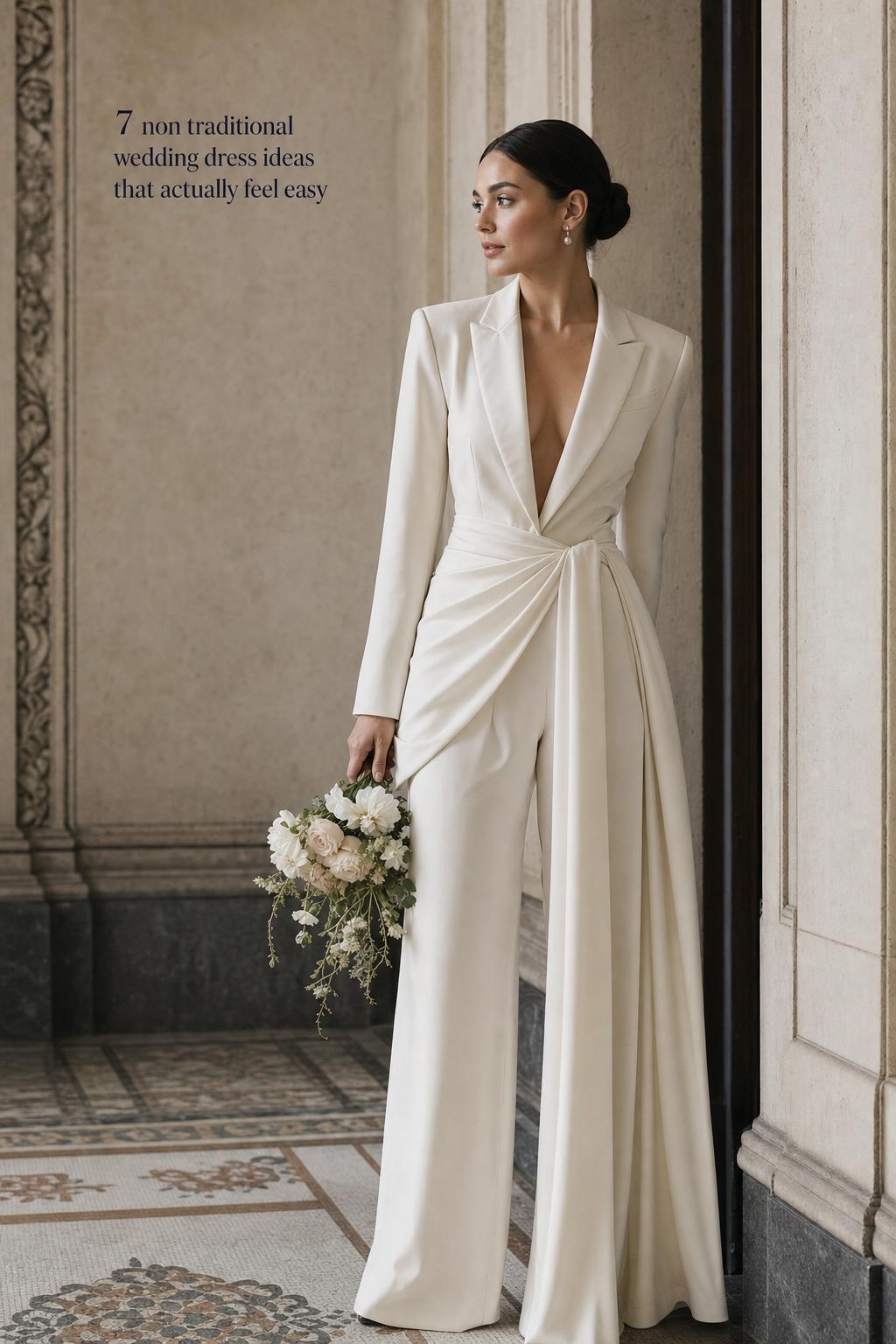
That is why non-traditional bridal fashion continues to resonate. It offers room for personality without losing elegance, and it allows the entire wedding wardrobe—dress, accessories, shoes, tailoring, even photography styling—to feel coherent. From Maggie Sottero and Martin Thornburg to Dreamers & Lovers, from editorial galleries to brand collections and real-wedding inspiration, the conversation around modern bridal style now embraces alternatives with confidence.
What makes a wedding dress feel non-traditional now
Non-traditional does not describe one single silhouette. It is better understood as a spectrum. At one end, the look may still resemble a classic gown, but with a shift in color, texture, or styling. At the other, it may become a bridal pantsuit, a jumpsuit, a set of separates, or a vintage archival piece that intentionally steps away from standard bridal codes. This broader definition matters because many brides are not trying to reject romance; they are trying to refine it.
Your wedding look is only the beginning.
Keep your guest list, vendors, timeline, and every important detail together with Zarellea — so your day feels as considered as your style.
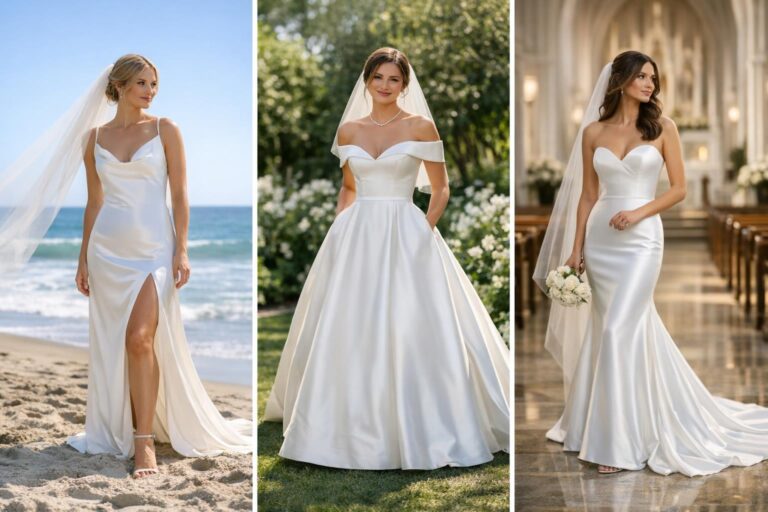
The strongest modern alternatives usually change one or more of the visual foundations of bridal dressing: color, fabric, silhouette, or structure. A matte satin gown with sculpted corsetry can feel more directional than a traditional full-skirt design. A lace dress with colorful embroidery can read softer and more personal than pure white. A clean crepe bridal jumpsuit can feel sharp, architectural, and entirely ceremony-ready. Each choice creates a different mood, which is why the term non traditional wedding dress now includes everything from subtle updates to dramatic fashion statements.
- Color beyond white, including pastel or deeper jewel-toned direction
- Architectural silhouettes, draping, or sculpted bodices
- Jumpsuits, pantsuits, and separates
- Vintage and archival-inspired gowns
- Edgy materials, unusual textures, or modern couture finishing
There is also a practical side to this shift. Brides increasingly want a look that reflects how they actually dress in the world. Someone who wears tailoring beautifully may feel more polished in a bridal pantsuit than in a ballgown. Someone drawn to romantic fashion may prefer lace in a soft color palette rather than bright white. The most successful choice is not the boldest one; it is the one that creates harmony between the bride, the venue, the season, and the tone of the day.
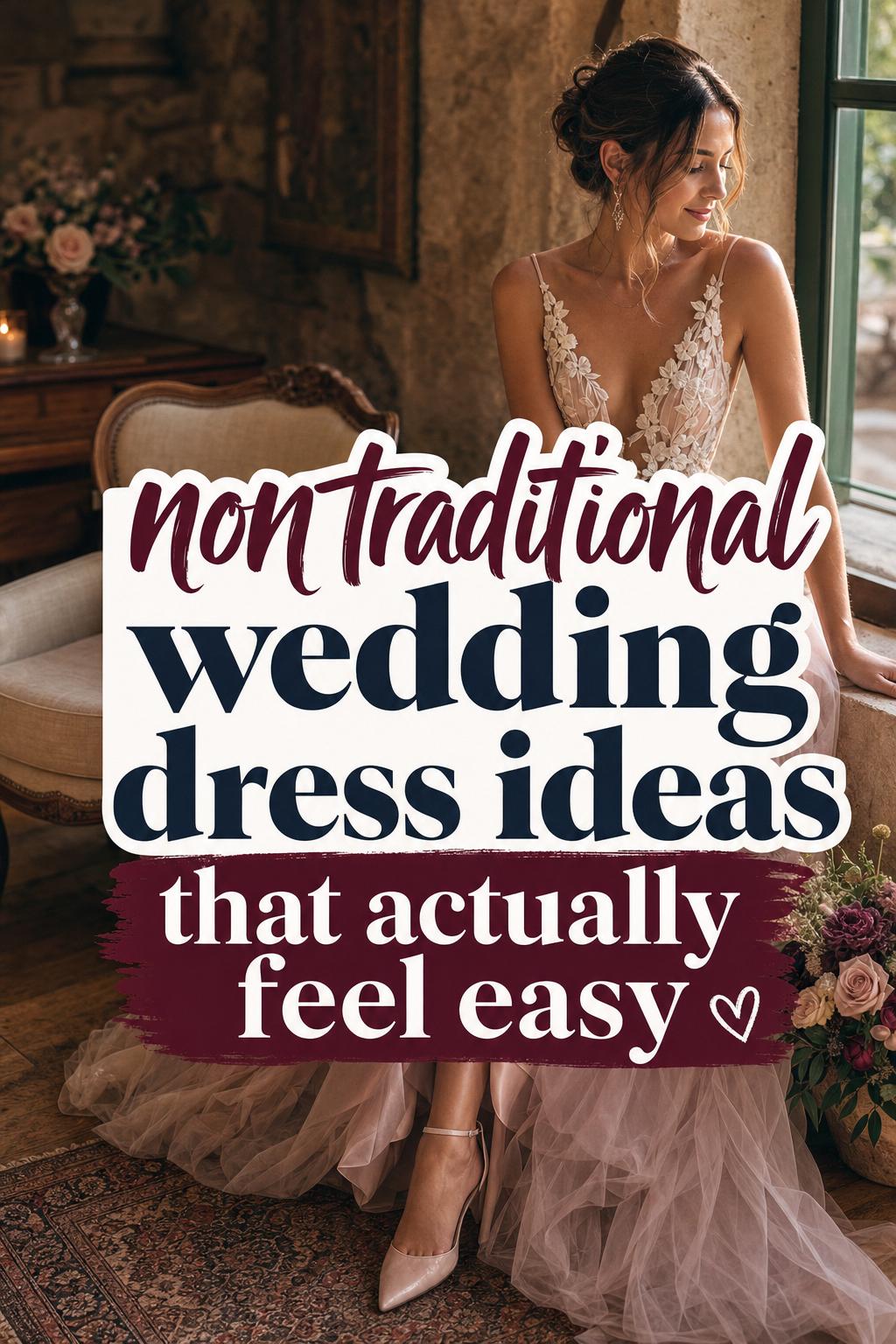
Look: color-forward romance with a soft fashion edge
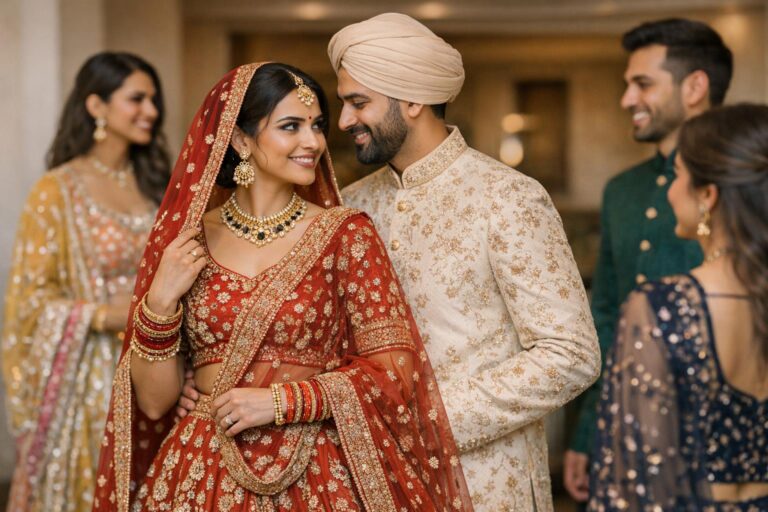
This interpretation of the non-traditional bridal mood feels luminous and modern, especially for a garden ceremony, a vineyard wedding, or a golden-hour outdoor celebration. The silhouette can remain gentle and bridal, but the atmosphere changes the moment the color palette shifts away from optic white. Pastel haze, muted tones, or richer shades such as emerald or red create a striking visual language that still feels ceremonial.
Fabrics matter here because color behaves differently depending on surface. Organza and satin catch light with softness, while crepe gives a cleaner, more graphic finish. Lace with colored embroidery, like the direction seen in Dreamers & Lovers’ Lily dress, brings depth without overwhelming the bridal feeling. This is where a colored wedding dress often feels most compelling: not as costume, but as a subtle reworking of bridal codes through texture and tone.
- Key garments: a colored gown, embroidered lace dress, or ombré-inspired silhouette
- Footwear: understated heels or refined flats that do not compete with the dress
- Accessories: delicate jewelry, a minimal veil, or a headpiece that echoes the palette rather than introducing a new one
The reason this look works so well is emotional as much as visual. Color can soften a formal dress, modernize a romantic one, or make an editorial silhouette feel more personal. For photography, especially during natural light ceremonies, color also creates dimension that reads beautifully against outdoor landscapes and floral settings. Brides considering this direction often do best when they keep the rest of the styling disciplined, so the gown remains the focal point.
Style tip: let one element lead
If the dress carries unusual color, keep accessories calm. If the silhouette is minimal, a more expressive veil or earring can be enough. A common styling mistake is trying to prove the non-traditional point in every detail at once. The most elegant results usually come from one clear visual decision supported by quieter finishing pieces.
Look: sculpted couture for the modern city ceremony
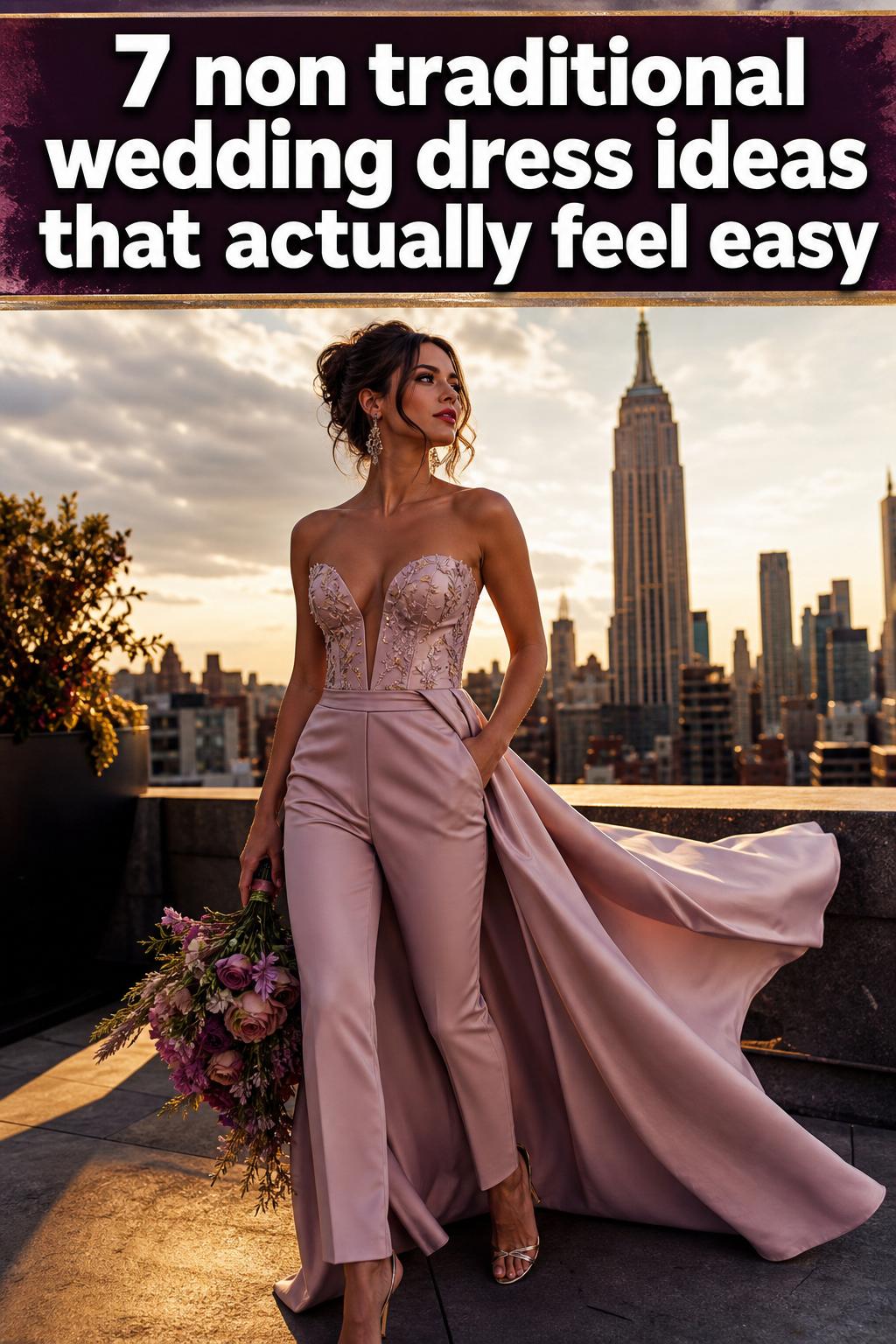
For a rooftop wedding, a gallery venue, or a formal downtown celebration, a sculpted bridal silhouette offers one of the strongest modern alternatives to a classic gown. This mood is sleek, deliberate, and fashion-led without losing ceremony polish. The line of the dress matters more than embellishment, and the effect comes from structure: corsetry, draping, sharp seams, or an architectural bodice that feels almost like wearable design.
Maggie Sottero’s emphasis on sculpted bodices and modern fabrics aligns naturally with this aesthetic. So does the broader category of couture non-traditional gowns represented across designer-led collections and editorial bridal coverage. Matte satin, crepe, or clean fabric with subtle weight gives the structure authority. The color palette may still stay near white, ivory, or soft neutrals, but the visual impression is unmistakably contemporary because the shape is doing the work.
This direction is especially effective for brides who want a strong entrance and clean photography. Architectural gowns tend to hold their silhouette well, which helps in both ceremony processional images and reception portraits. The trade-off is that structured dresses often require more careful fittings and thoughtful movement planning. Sitting, dancing, and extended wear should all be tested during alterations, particularly if the bodice is highly sculpted.
How to recreate the look
- Choose one structural statement: corsetry, draping, or a sculptural neckline
- Favor fabrics with shape, such as crepe or satin
- Keep jewelry refined and intentional
- Select shoes that support long standing periods at ceremony and reception
- Ask for fitting adjustments that protect both posture and movement
When styled well, this kind of non traditional wedding dress feels timeless in a different way. It is not vintage or overtly romantic; it is remembered for line, confidence, and restraint. For brides who naturally gravitate toward tailored fashion, this can feel far more authentic than a heavily embellished gown.
Look: jumpsuits and pantsuits with bridal sharpness
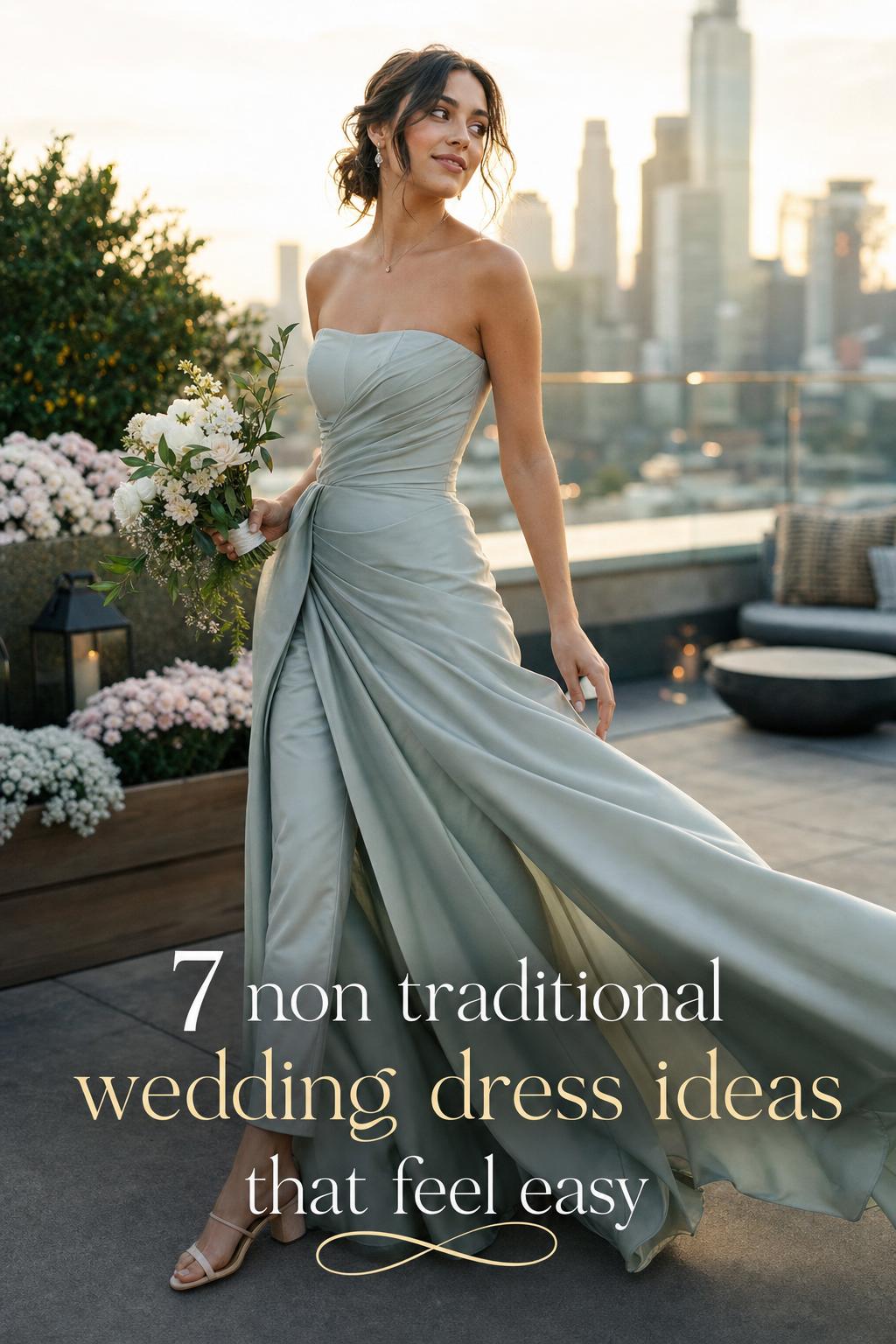
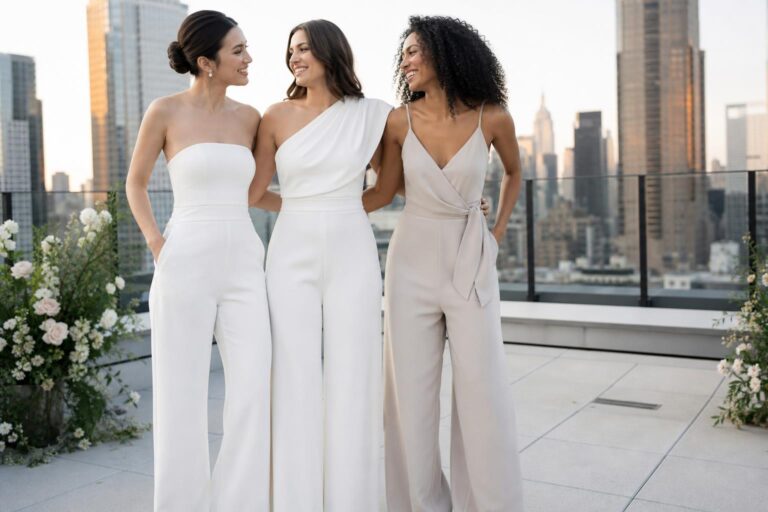
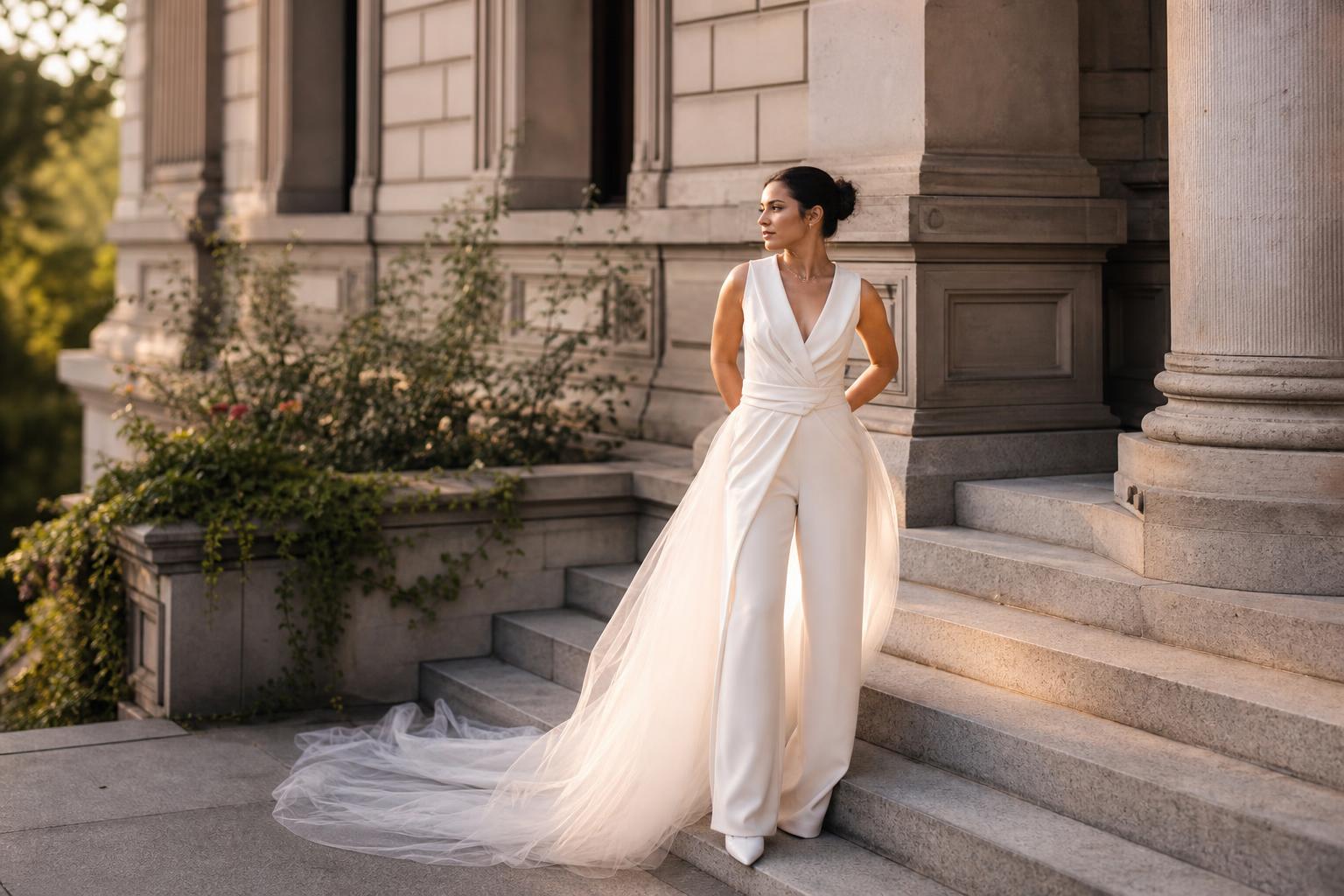
Among all wedding dress alternatives, the jumpsuit and bridal pantsuit remain some of the clearest expressions of modern confidence. They suit city halls, rehearsal-adjacent ceremonies, fashion-forward receptions, and smaller urban weddings where ease and movement matter as much as visual impact. A well-cut jumpsuit can feel crisp in daylight and sophisticated in evening lighting, especially when the setting is minimal and the styling is precise.
The silhouette here depends on tailoring. A bridal pantsuit with strong shoulders and fluid trousers leans into menswear-inspired bridal, while a jumpsuit with a fitted bodice and elongated leg line creates a more streamlined fashion image. Editorial features and curated lists frequently place jumpsuits and separates within the non-traditional bridal conversation because they answer a real need: some brides want elegance without a skirt, and some venues simply reward mobility.
- Key garments: bridal jumpsuit, pantsuit, tailored blazer, fluid trousers
- Footwear: pointed heels, sleek sandals, or polished flats for long wear
- Accessories: statement earrings, a short veil, or minimalist gloves depending on the mood
This look fits the aesthetic because it reframes bridal ceremony dressing through line rather than volume. It also works especially well for transitions across the day. A bride can move from ceremony to reception to after-party without needing a second outfit, which is part of the appeal. The limitation is that tailoring must be exact. A gown can hide small fit issues more easily than trousers can, so alterations become even more important.
Look: separates for a layered bridal wardrobe
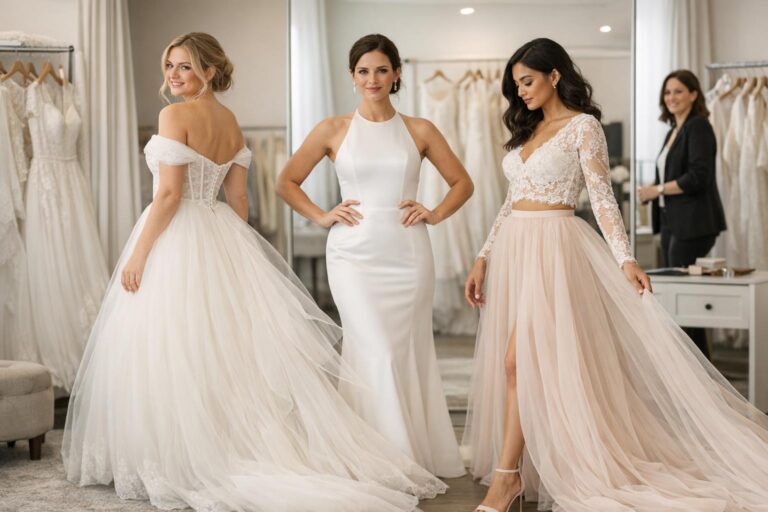
Separates are one of the most flexible ways to approach a non traditional wedding dress, particularly for brides who want a bridal wardrobe rather than a single fixed look. A top and skirt combination can feel soft and romantic, sharply modern, or quietly editorial depending on fabrication and proportion. This approach suits celebrations where the bride wants to shift mood between ceremony and reception without a full outfit change.
A fitted top with a fluid skirt creates movement and definition, while a cleaner column skirt paired with a statement bodice can feel more architectural. Fashion Magazine’s coverage of suit-style bridal and separates captures how this category extends beyond novelty. It is genuinely practical. It allows mix-and-match dressing, supports a more individualized fit, and gives room for brides to interpret the bridal aesthetic in a way that feels closer to how they actually assemble fashion.
Separates also solve certain styling tensions. If a bride loves dramatic volume but worries about comfort all night, she can begin with a fuller skirt for the ceremony and shift into a sleeker piece for the reception. If she loves couture texture but wants simplicity overall, she can place the statement in the top and keep the bottom clean. This layered approach works beautifully in destination weddings and long event days because it builds flexibility into the wardrobe itself.
Key pieces for this aesthetic
- A statement top with texture, draping, or sculptural shape
- A skirt in satin, crepe, or another fabric that complements movement
- Accessories that unify the two pieces into one visual story
- Tailoring that ensures the proportions feel intentional from every angle
Look: vintage and archival-inspired bridal with modern styling
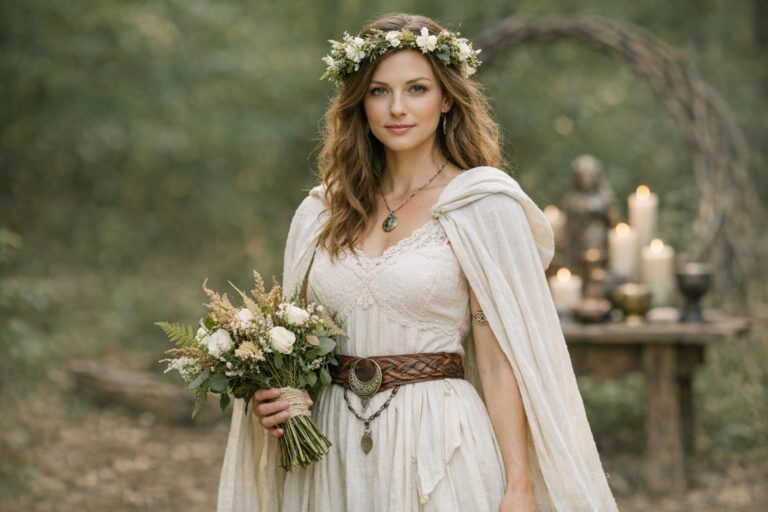
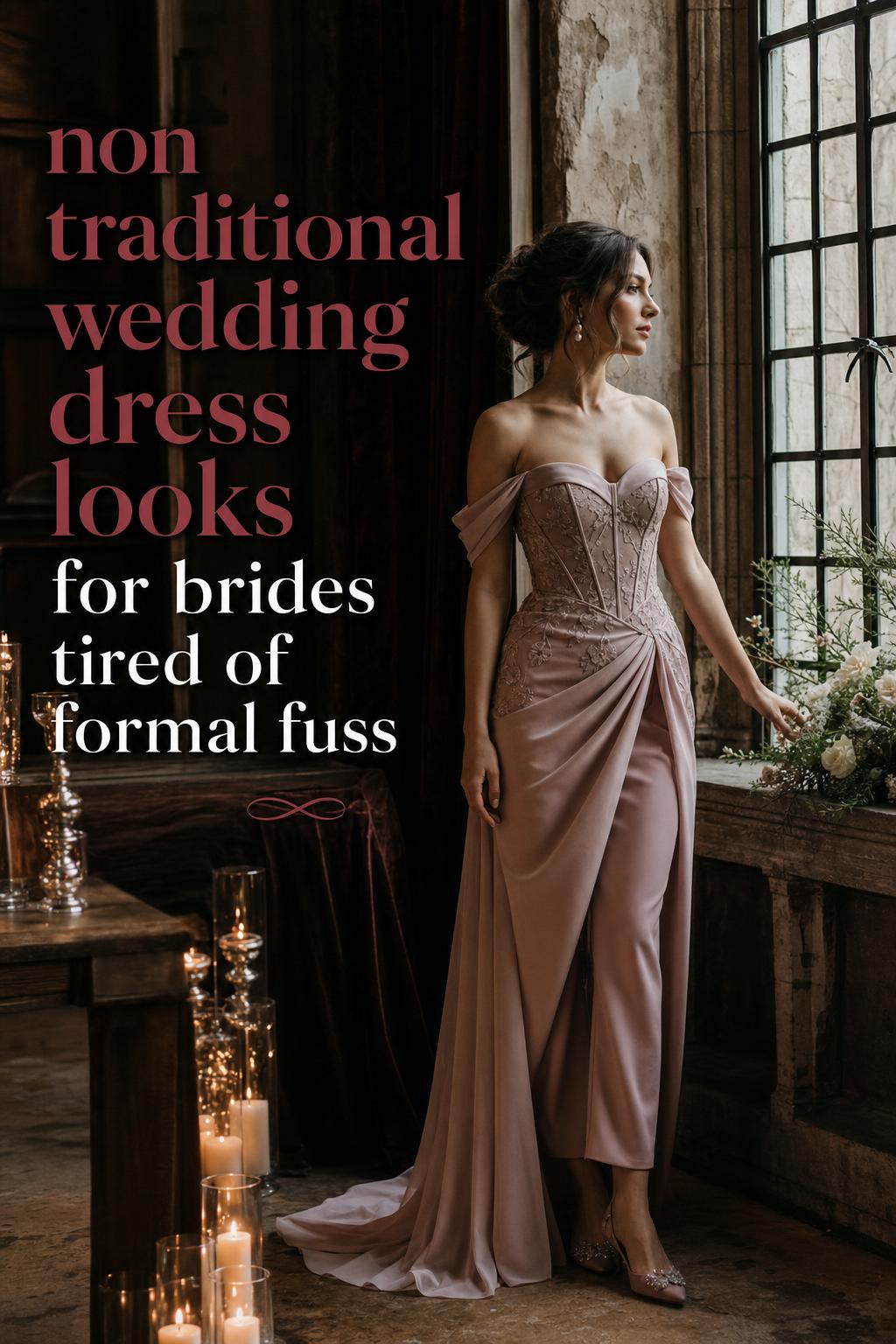
Vintage influence has become one of the most romantic pathways into non-traditional bridal style, especially for brides who want depth, memory, and a sense of fashion history in their wedding look. The appeal is not only nostalgia. It is the way archival references bring texture and individuality to the aisle. A vintage-inspired dress can feel softly unconventional even when the silhouette remains recognizably bridal.
Editorial coverage around the vintage wedding dress trend, including discussion tied to archive fashion and figures such as Samantha Greenberg, highlights how modern weddings increasingly borrow from fashion history rather than only from bridal tradition. In this space, the dress may reference older lacework, period-inspired drape, or the attitude of an archival piece, while accessories and styling keep the result current. Related fashion conversation often touches the wider orbit of designers such as Vivienne Westwood, whose name frequently appears in networked fashion coverage when archival and bridal style intersect.
The balance is crucial. A fully vintage look can become costume-like if every element comes from the same era or visual language. A more successful styling approach is usually to let the gown carry the archival mood while hair, shoes, and jewelry feel cleaner and more present. This keeps the bride from disappearing into the reference and allows the wedding setting to stay part of the story. In candlelit indoor venues or historic spaces, this kind of bridal styling can feel especially resonant.
Why archival influence feels fresh
Archival inspiration works because it adds narrative. It brings a sense of fashion continuity to the wedding day and makes the dress feel chosen rather than merely expected. It is particularly effective for brides who want non-traditional style with softness, because the dress can remain romantic while still stepping outside predictable bridal formulas.
Look: edgy textures for a fashion-led reception mood
Some brides do not want softness at all. They want edge, precision, and a look that belongs as much to the fashion world as to bridal tradition. That is where textured, edgy wedding dresses enter the picture. This interpretation is well suited to evening celebrations, industrial venues, art spaces, or editorially styled receptions where mood lighting and strong silhouettes create the atmosphere.
Ritual Unions’ focus on edgy wedding dresses and modern bridal design reflects this aesthetic language clearly: unusual materials, assertive silhouettes, and customization that leans away from conventional sweetness. The palette may still stay restrained, but fabric treatment, finish, and shape create the statement. Metallic suggestion, matte contrast, dramatic cut, or an unconventional surface texture can all make a bridal look feel alternative without losing polish.
This is also a category where styling discipline matters. An edgy dress can quickly become too heavy if paired with equally dominant accessories, oversized hair styling, and intense makeup all at once. The strongest version often relies on one disruptive idea—an unusual silhouette, a textured surface, or a sharp line—balanced by a cleaner beauty and accessory direction. For a bride planning a reception-focused wardrobe, this can be a powerful way to move beyond the ceremony gown without feeling disconnected from the wedding aesthetic.
Designer and brand perspectives shaping the aesthetic
The non-traditional bridal space is not defined by one house or one editorial voice. It is shaped by a mix of fashion publications, curated blogs, and brand-led collections that each interpret the idea differently. Maggie Sottero approaches the category through modern silhouettes, sculpted corsetry, and product-driven bridal inspiration. Martin Thornburg connects non-traditional style to couture-inflected gown design. Dreamers & Lovers gives the conversation a softer, often color-conscious perspective with lace and romantic individuality. Alisse Bridal frames the category through collection shopping, while blogs like Emmaline Bride and editorial platforms such as Fashion Magazine broaden the view through curation and trend storytelling.
That range is useful because it mirrors how brides actually shop. Some begin with inspiration and mood. Others start with a product category, such as jumpsuits, colored dresses, or edgy wedding dresses. Some want a boutique-feeling discovery path, while others prefer a designer collection that makes the choices easier to compare. The best bridal search process usually includes both: editorial inspiration to define the mood, and brand pages to test how that mood translates into real garments.
For U.S. brides, this layered approach matters because venue, geography, and event format shape the right answer. A dramatic couture silhouette may feel perfect in a formal city venue but overly heavy at a destination ceremony. A colored lace gown may feel poetic outdoors but less impactful in a dark ballroom unless the styling is adjusted. Looking across different bridal voices helps clarify not only what is beautiful, but what is appropriate for the setting and comfortable over a long celebration.
Choosing the right silhouette for your venue and wedding rhythm
A strong non-traditional bridal look should make visual sense in motion, not only on a hanger. That means thinking about venue conditions, timing, and how the dress will behave through the day. A soft garden ceremony often rewards movement, airiness, and fabrics that respond well to natural light. A formal evening reception can support richer structure, stronger tailoring, or more sculptural design. An urban civil ceremony may call for sleek efficiency rather than volume.
This is where brides often make the smartest decisions. Instead of asking only whether a dress is different enough, ask whether it belongs in the wedding environment. A bridal pantsuit can be transformative in a courthouse or rooftop setting. Separates can be ideal for a destination event with multiple style moments. A vintage-inspired dress may feel extraordinary in a historic venue. An edgy textured gown can dominate an evening reception beautifully but may need lighter accessories if the ceremony begins in daylight.
- For outdoor weddings: favor movement, breathable texture, and color that reads softly in natural light
- For city weddings: consider structured gowns, jumpsuits, or clean separates
- For formal receptions: deeper texture, sculpted lines, and stronger accessories can hold the room well
- For long celebrations: prioritize ease of movement, stable footwear, and alterations that support sitting and dancing
The most polished bridal style always feels intentional from ceremony entrance to final dance. That is why silhouette choice is never only aesthetic. It is also logistical, emotional, and venue-aware.
An overlooked advantage: building a complete bridal look around the dress
One of the strongest arguments for a non traditional wedding dress is that it encourages better overall styling. Because the dress is less formulaic, the bride tends to think more carefully about accessories, footwear, jewelry, and visual balance. This often leads to a more cohesive final result. Rather than adding expected bridal pieces automatically, each item is chosen to support the mood of the look.
A colored gown may call for jewelry that echoes its warmth or coolness rather than competing with it. A bridal jumpsuit may benefit from a sharper heel and a more graphic earring. A vintage-inspired silhouette may need modern restraint elsewhere so the outfit remains current. An architectural dress can often carry the entire statement, which means the styling should support line and proportion rather than decorate every inch. These are small decisions, but they create the difference between a stylish dress and a complete bridal image.
Tips for a cohesive finish
- Repeat the dress mood in one or two accessory choices rather than all of them
- Test your shoes for comfort across ceremony, portraits, and reception hours
- View the full look in different lighting, especially if color or texture is central
- Think about photography: movement, contrast, and silhouette clarity all matter
- If the dress is highly directional, keep beauty styling polished and controlled
Where many articles still fall short on non-traditional bridal style
Plenty of bridal inspiration focuses on visual novelty but stops short of practical guidance. Yet brides choosing a non-traditional look often need more nuance, not less. They are balancing aesthetics with shopping realities, fit, comfort, alterations, and the social expectations that still surround wedding dressing. A dress can be visually exciting but still wrong for the setting, difficult to tailor, or too disconnected from the bride’s actual comfort level.
Another common issue is treating all alternatives as equally dramatic. In reality, non-traditional bridal style can be very subtle. A softly tinted lace gown, a minimalist structured dress, and a full bridal pantsuit are all valid, but they speak in different volumes. The smartest approach is to choose the level of departure that feels right for the wedding and for the person wearing it. Not every bride wants to make a theatrical statement. Some simply want modern bridal elegance without following the most expected route.
It is also worth noting the practical categories that deserve more attention in this space: pricing bands, long-term wearability, alteration planning, rental or second-hand considerations, inclusive sizing, adaptive dressing, and sustainability-minded choices. Even when those subjects are not always foregrounded in visual bridal coverage, they matter deeply in real decision-making. A wedding dress, especially a non-traditional one, should feel as workable as it is beautiful.
Look: the photo-ready editorial gown
There is a version of non-traditional bridal style that is less about rebellion and more about image-making. This is the photo-ready gown: visually strong, immediately readable in portraits, and designed to hold presence across ceremony, couple photos, and reception coverage. Wedding Look’s editorial angle and similar gallery-led features often frame this kind of bridal inspiration around how the dress interacts with camera perspective, movement, and setting.
In practice, that might mean a silhouette with clear structure, a color story that photographs with depth, or texture that catches light without becoming visually busy. Designers and curated bridal sources frequently pair this approach with controlled styling because camera clarity matters. Too many competing details can flatten the effect. A strong line, a purposeful accessory, and a dress that suits the venue often create the most memorable images.
This look is especially effective for brides planning fashion-conscious weddings or editorially styled celebrations. It is also useful for anyone who knows photographs will be central to how the day is remembered. The important thing is to avoid choosing a dress solely for still images. It should also move well, feel good over time, and support the actual rhythm of the event.
Shopping with clarity: inspiration, product pages, and realistic decision-making
Brides searching for a non traditional wedding dress often move between different kinds of sources for a reason. Magazine features and blogs help define the aesthetic language: vintage, edgy, color-forward, modern bridal, suit-style, couture, or archival. Brand pages and collection pages then show what those ideas look like as products. One without the other can leave the process incomplete. Pure inspiration can feel abstract, while product-only browsing can make it hard to understand the bigger style direction.
A balanced process might begin with identifying the mood first. Is the wedding leaning romantic, architectural, editorial, or fashion-historical? From there, compare silhouettes across collection pages such as Alisse Bridal, Martin Thornburg, Maggie Sottero, and Dreamers & Lovers. Then look at practical concerns: how much structure feels comfortable, whether a separate or jumpsuit better suits the venue, and how color or texture will read in the actual ceremony setting.
This is also the stage where honesty matters most. Some dresses are compelling in editorial images but demand more confidence, more fittings, or more venue alignment than a bride truly wants. Others may seem less dramatic at first glance but become perfect once styling, lighting, and movement are considered. The goal is not to choose the most unusual option. It is to choose the most convincing one.
A practical bridal fitting mindset
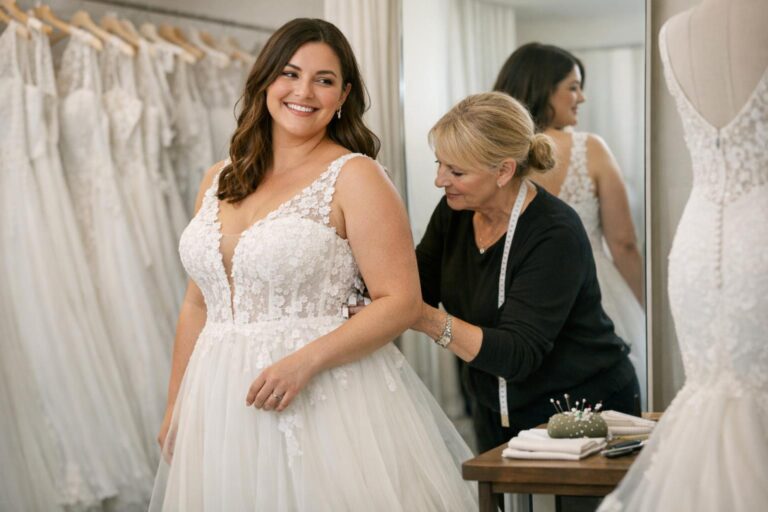
When trying on non-traditional silhouettes, test them as full-event garments rather than momentary fitting-room statements. Walk, sit, lift your arms, and imagine the ceremony, portraits, dinner, and dance floor. A striking dress that limits the entire day may still be worth it for some brides, but it should be a conscious trade-off rather than a surprise.
How to interpret non-traditional without losing bridal elegance
One quiet concern many brides share is whether an unconventional choice will still feel bridal enough. In practice, elegance rarely comes from following a standard formula. It comes from proportion, quality of fabric, thoughtful styling, and confidence in the visual message. A colored gown can feel deeply bridal if the silhouette is ceremonial. A jumpsuit can feel refined if the tailoring is exact. A vintage-inspired dress can feel elevated if the accessories are edited and current.
Bridal elegance also depends on coherence. When the dress, venue, and styling all belong to the same story, the result feels intentional rather than experimental. That is why even bold alternatives can look polished. They are not random deviations. They are complete, context-aware style decisions. Modern bridal fashion has simply broadened the language of what elegance can look like.
FAQ
What is considered a non traditional wedding dress?
A non traditional wedding dress is any bridal look that moves away from the most expected formula of a classic white gown. That can include colored dresses, jumpsuits, pantsuits, separates, vintage or archival-inspired gowns, edgy textures, or sculptural modern silhouettes.
Can a colored wedding dress still feel bridal?
Yes, especially when the silhouette, fabric, and styling still carry ceremony presence. Soft color, embroidered lace, satin, organza, or crepe can all feel bridal when the overall look is intentional and the accessories support the dress rather than distracting from it.
Are jumpsuits and pantsuits appropriate for weddings?
They can be an excellent choice for city ceremonies, smaller weddings, rooftop events, and fashion-forward receptions. The key is tailoring, because a bridal pantsuit or jumpsuit relies on fit more than volume, and precise alterations make the difference between polished and unfinished.
How do I choose between a sculpted gown and a softer romantic style?
Start with the setting and your personal style. A sculpted or architectural gown often suits urban venues, formal interiors, and brides who prefer sharp fashion lines, while a softer romantic look works beautifully in gardens, vineyards, and outdoor celebrations where movement and lightness matter.
Do separates work for a wedding day look?
Yes, separates can be one of the most flexible bridal options because they allow you to balance fit, comfort, and styling changes across the day. They are especially useful when you want a ceremony look and reception look that feel connected but not identical.
Is vintage bridal the same as non-traditional bridal?
Not always, but vintage and archival-inspired gowns often fall within non-traditional bridal because they step outside standard contemporary bridal formulas. The most successful vintage-inspired looks usually pair historical influence with modern accessories so the final effect feels intentional rather than costume-like.
Which brands are often associated with non-traditional bridal style?
Brides often encounter this aesthetic through brands and collections such as Maggie Sottero, Martin Thornburg, Dreamers & Lovers, and Alisse Bridal, along with editorial and curated inspiration from outlets like Fashion Magazine, Emmaline Bride, Ritual Unions, and Wedding Look.
How should I style accessories with a non-traditional wedding dress?
The best approach is usually restraint. Let the most distinctive part of the outfit lead—whether that is color, shape, texture, or vintage influence—and choose shoes, jewelry, veils, or headpieces that reinforce that mood without adding too many competing statements.
What should I keep in mind during alterations?
Test movement as seriously as appearance. Sit, walk, turn, and imagine the full event timeline, especially if you are wearing a structured gown, pantsuit, or separates. Non-traditional silhouettes often depend on precision, so comfort and function should be checked as carefully as the visual fit.
How do I make sure my unconventional dress still suits my venue?
Think about light, setting, and event rhythm. Color-forward romance often shines outdoors, sculpted gowns suit city and formal venues, jumpsuits work beautifully in modern spaces, and vintage-inspired looks feel especially compelling in historic or atmospheric settings. The most elegant choice is the one that feels natural in its surroundings.