Romantic or Minimalist? wedding dress inspo to Know
wedding dress inspo: romantic vs minimalist bridal style
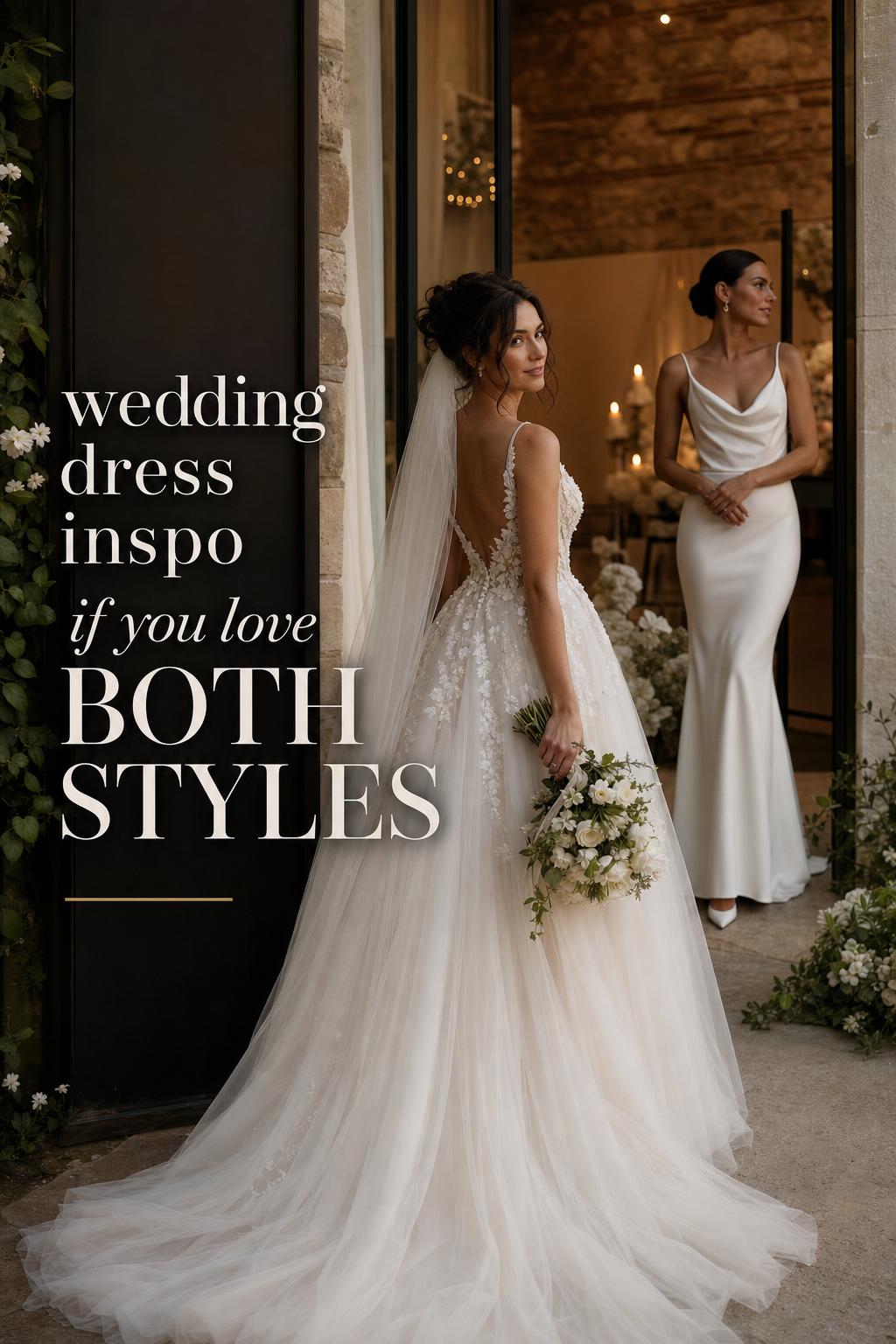
The search for wedding dress inspo often begins with images, but the real decision usually comes down to something more personal: mood. Some gowns feel soft, expressive, and layered with detail. Others feel restrained, architectural, and quietly striking. Romantic bridal style and minimalist bridal style are discussed together because both can be elegant, modern, and timeless, yet they communicate very different kinds of beauty.
For a bride standing between these two directions, the distinction matters. A candlelit ballroom, a garden ceremony at golden hour, a breezy destination setting, or a clean city venue can all shift how a dress reads in motion, in photographs, and over the course of a long celebration. This comparison breaks down how each aesthetic works, where they overlap, and how to tell which one suits your wedding atmosphere, comfort needs, and personal style with more clarity.
The two bridal moods at a glance
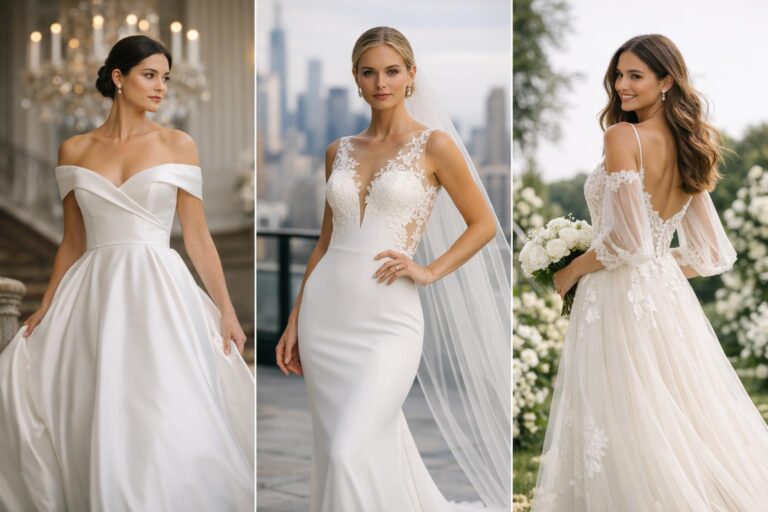
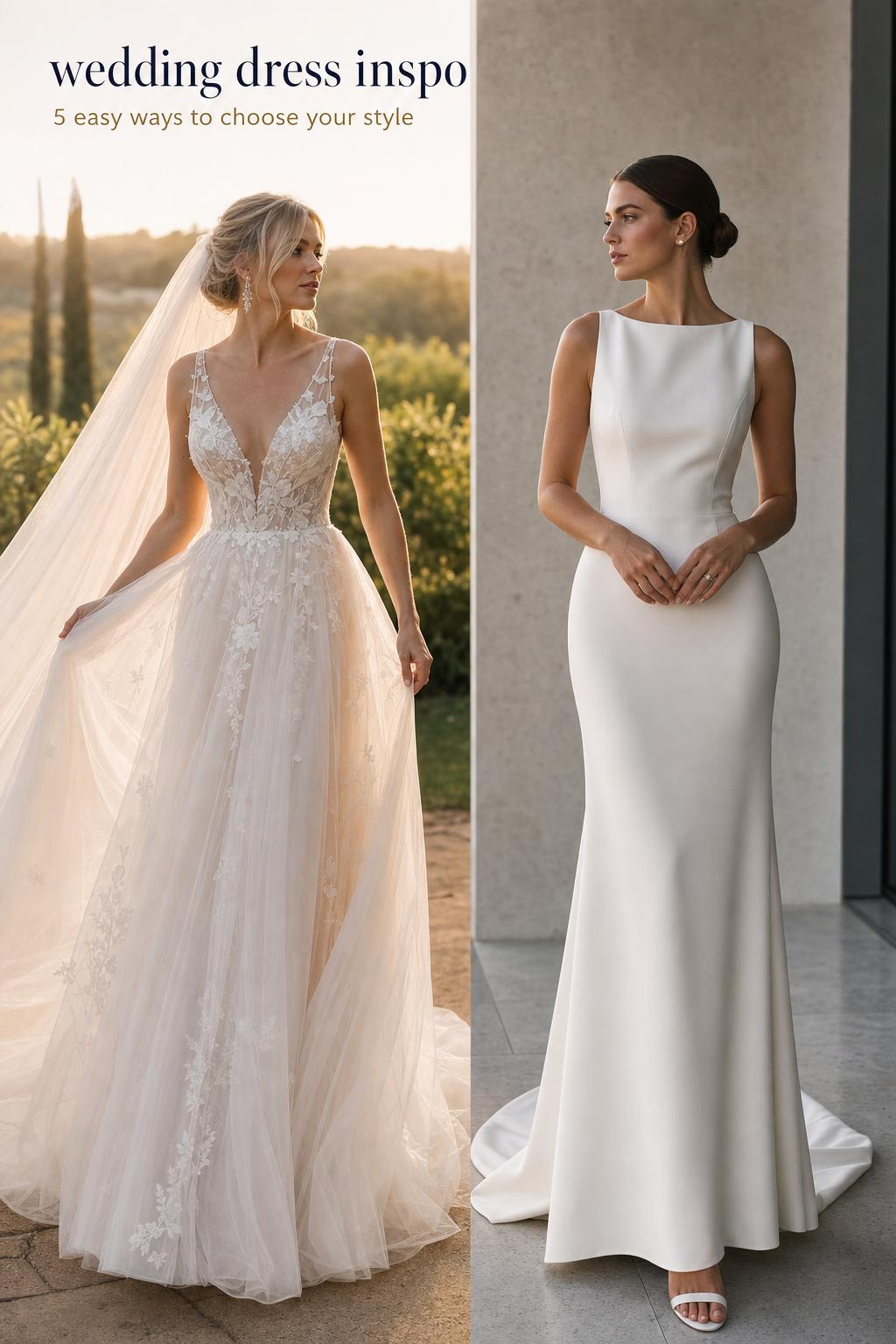
Style overview: romantic bridal
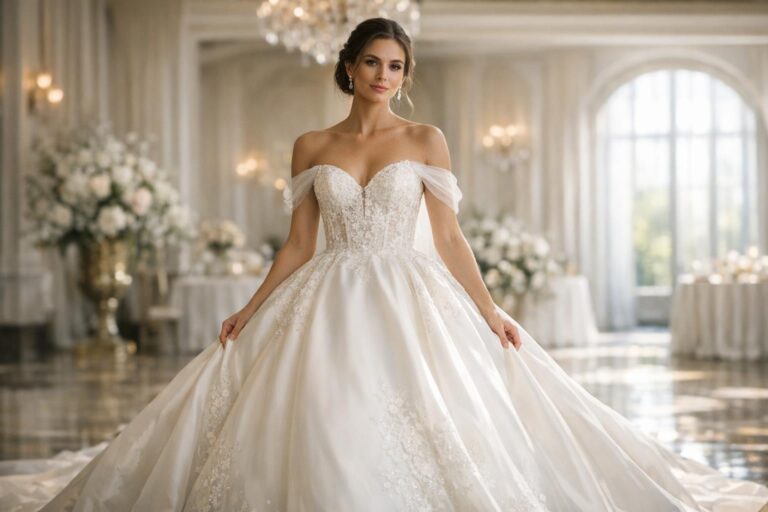
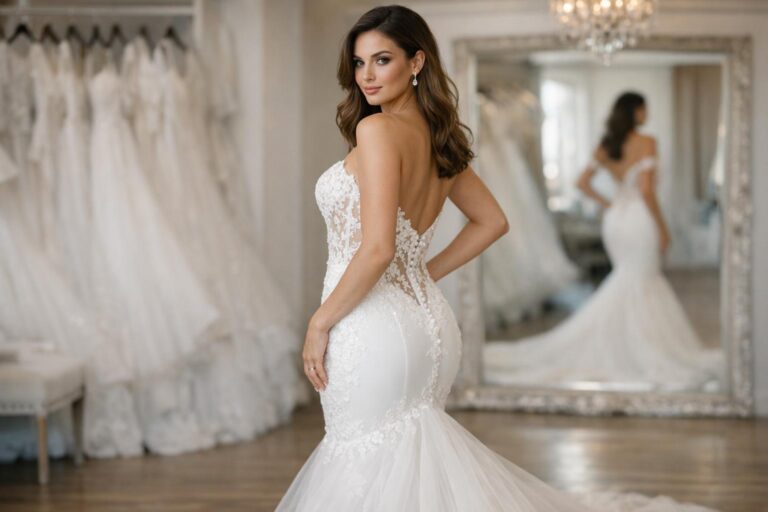
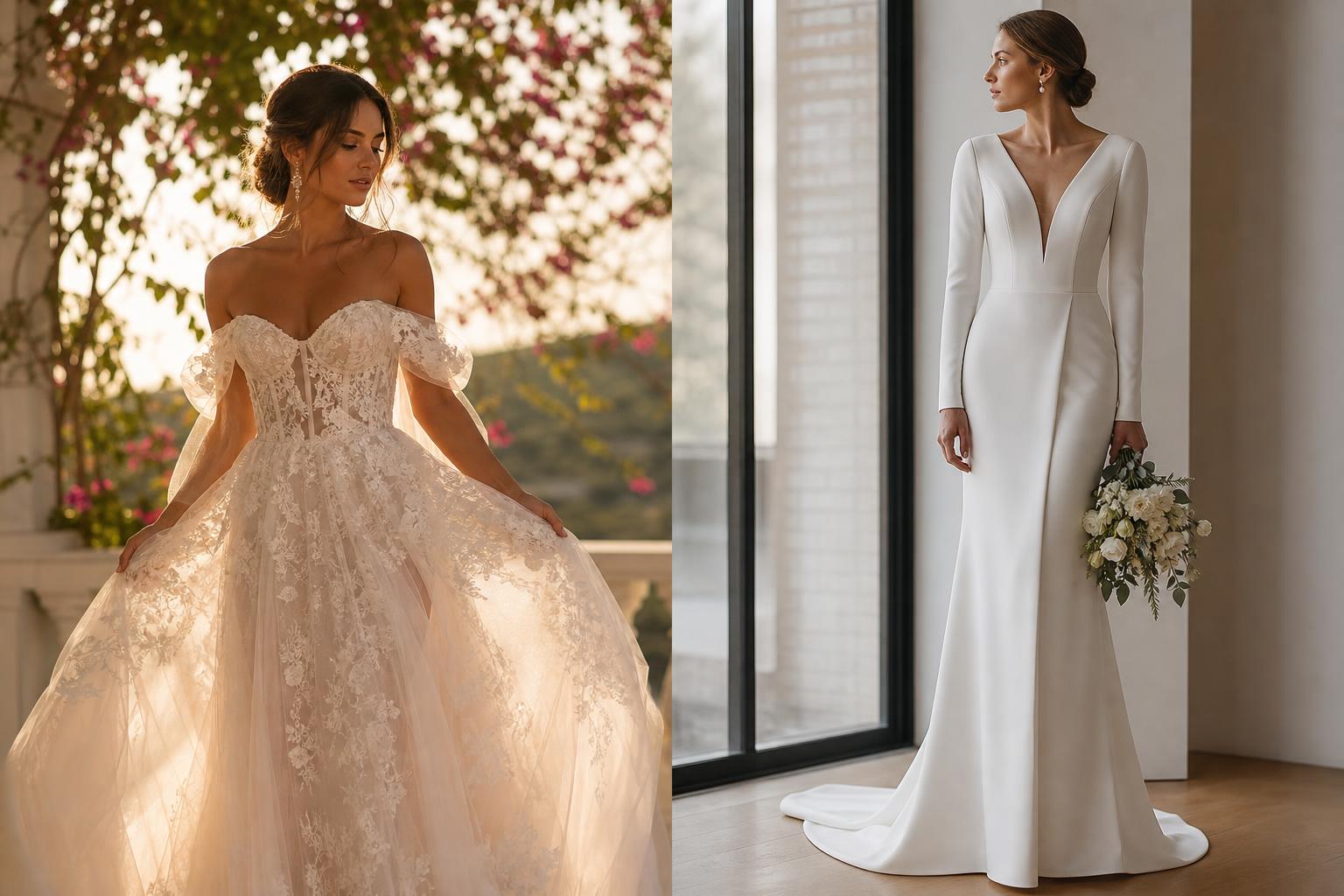
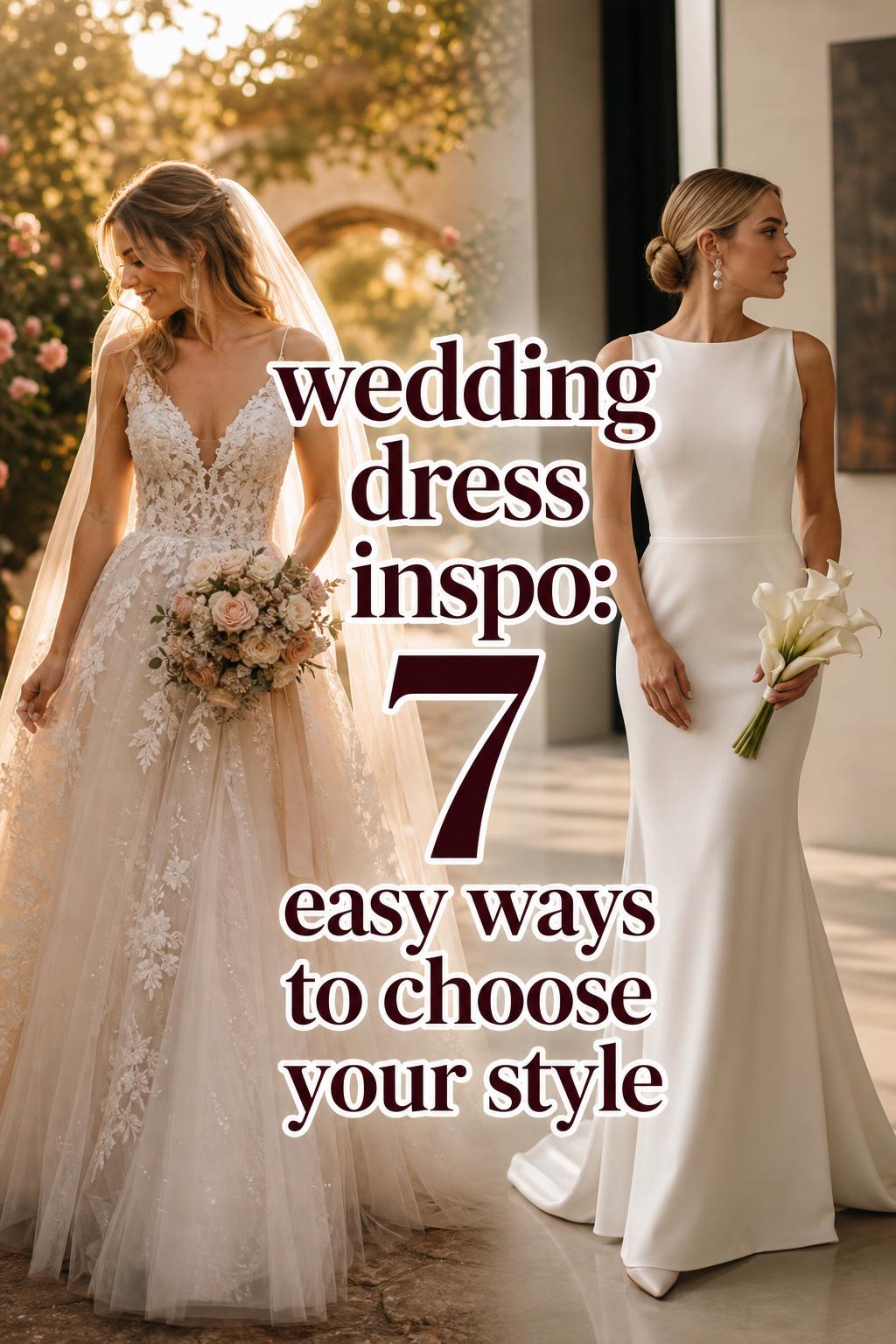
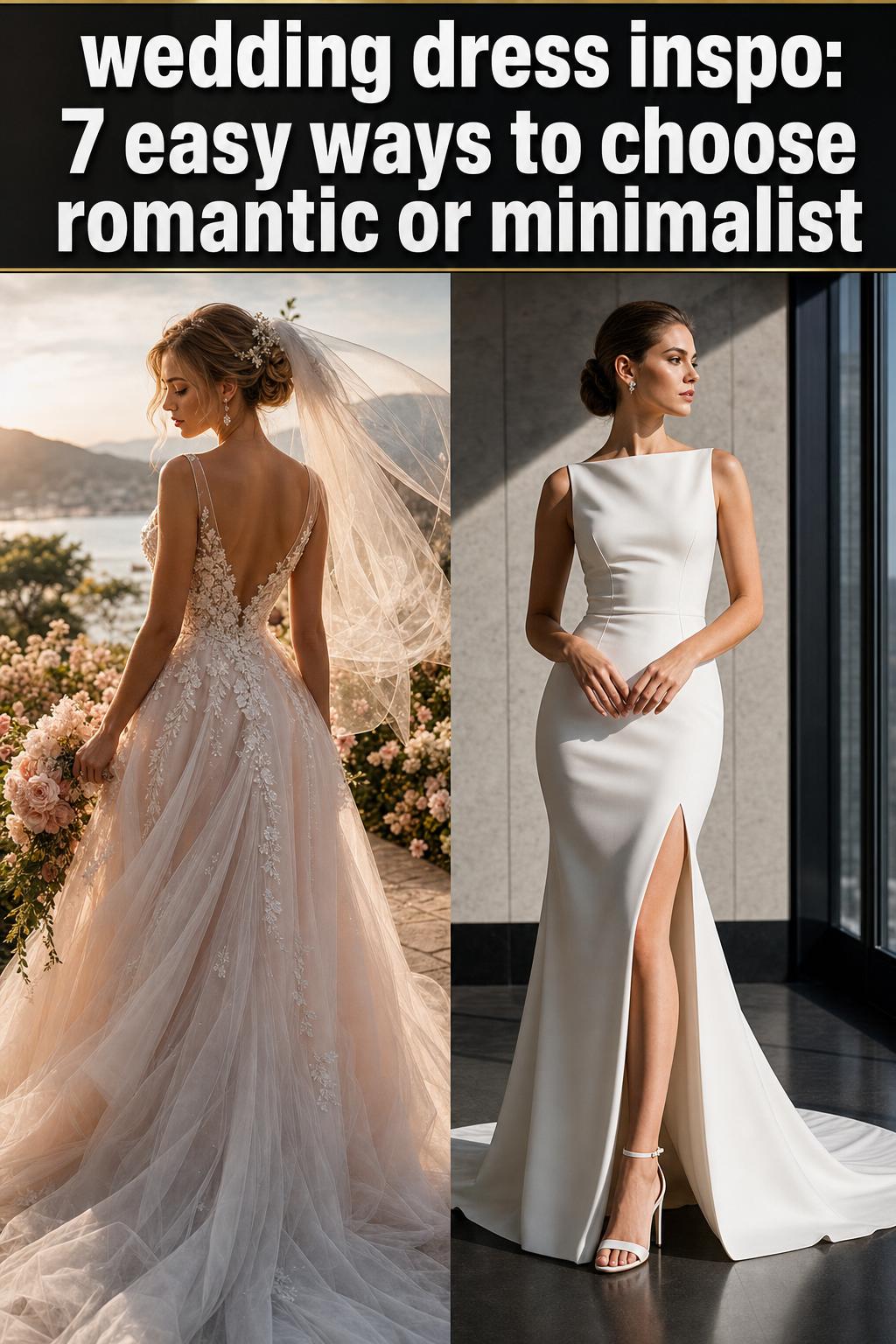
Romantic bridal style is defined by softness. It tends to favor fluid movement, gentle shaping, and decorative elements that create a dreamy impression rather than a sharply tailored one. In practice, that often means airy skirts, delicate texture, and details that catch light in a subtle way during a ceremony or reception.
The silhouettes within a romantic direction usually feel graceful rather than strict. They may skim the body, float away from it, or build volume in a way that still appears light. Fabrics and textures often support this softness, and the overall mood leans emotional, ethereal, and visually layered. In a garden, vineyard, or outdoor celebration, this style can feel especially at home because it echoes movement, light, and atmosphere.
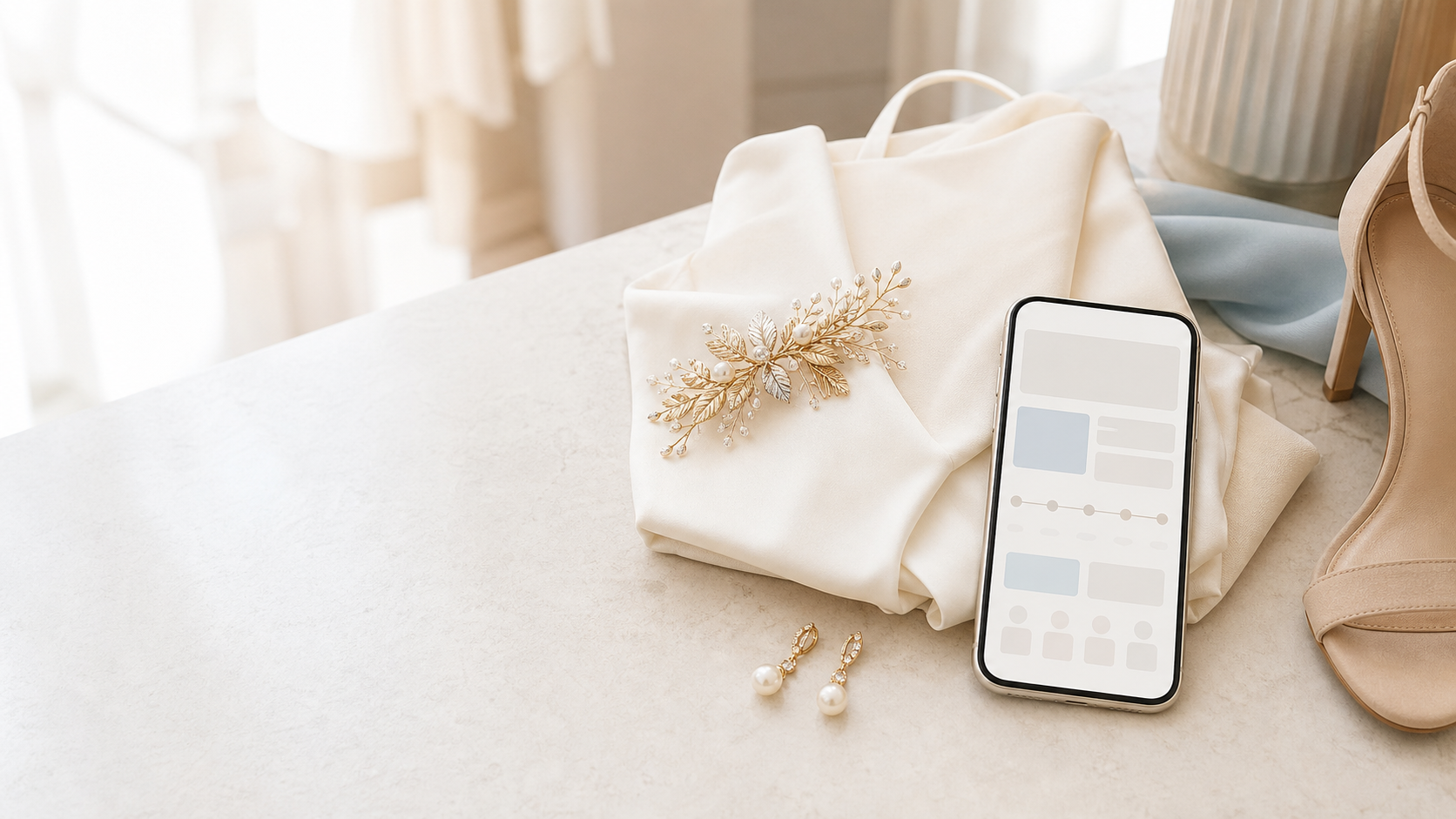
Your wedding look is only the beginning.
Keep your guest list, vendors, timeline, and every important detail together with Zarellea — so your day feels as considered as your style.
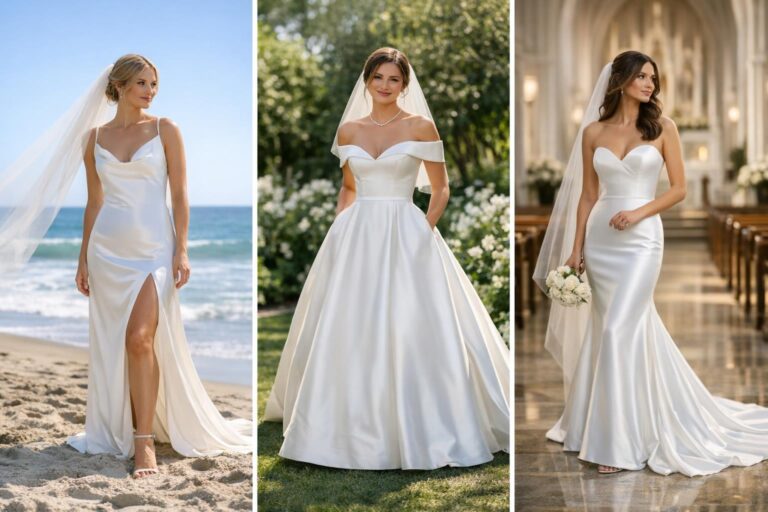
Style overview: minimalist bridal
Minimalist bridal style centers on clarity of line. Instead of relying on decorative detail, it draws its strength from silhouette, proportion, and finish. The effect is polished and intentional, with each element of the gown working harder because there is less visual distraction.
Typical minimalist silhouettes feel clean and controlled, whether close to the body or more sculptural in shape. The color impression is usually refined and pared back, while fabric choice becomes crucial because smooth surfaces and structure are more visible when embellishment is minimal. The mood is modern, composed, and often quietly dramatic, especially in city venues, gallery-like spaces, or formal evening settings where clean design stands out.
Why these aesthetics are often confused
Both styles can appear timeless in photos, and both can be interpreted in a modern way. A romantic gown may have a simple shape with only a touch of softness, while a minimalist dress may still feel feminine and fluid. Because of that overlap, brides sometimes identify with both at first glance.
The difference is less about whether a dress is elegant and more about where the elegance comes from. Romantic style creates beauty through softness, texture, and feeling. Minimalist style creates beauty through restraint, precision, and silhouette. Once that distinction is clear, the choice becomes easier.
Where the core distinction really lives
Silhouette and structure
A romantic wedding dress usually prioritizes motion and softness. The structure may be present, but it is rarely the first thing the eye notices. Instead, the dress tends to create a gentle outline that moves beautifully during the ceremony, down the aisle, and on the dance floor. The silhouette often feels forgiving and atmospheric.
A minimalist wedding dress, by contrast, makes structure part of the statement. Even when the gown is fluid, the line is more deliberate. The eye notices the shape quickly: the neckline, the fall from shoulder to hem, the clean fit through the waist or hip, the controlled sweep of a train. This is the style for brides who want the cut itself to carry the visual impact.
Surface detail and visual texture
Romantic bridal looks tend to build interest through visible texture. That texture softens the gown and creates depth in photographs, especially in natural light. It can make a dress feel more storybook, more expressive, and more connected to settings with floral or outdoor elements.
Minimalist bridal looks reduce surface activity. Instead of detail spread across the gown, the impact comes from the quality of the fabric surface and the discipline of the design. In a candlelit evening reception or a sleek indoor venue, this restraint can read as especially sophisticated because the dress does not compete with the setting.
Formality and fashion language
Romantic style often feels ceremonial in an emotional sense. It suits weddings that lean into softness, atmosphere, and a sense of occasion shaped by florals, landscape, or light. It can be formal, but the formality feels poetic rather than strict.
Minimalist style often feels formal in a sharper, more edited way. It is particularly effective when the bride wants to project composure and modern confidence. The result can feel almost architectural, especially when accessories and styling remain equally disciplined.
Styling philosophy
Romantic dressing usually builds a full mood. The gown, the veil, the hair, and the setting often work together to create softness from every angle. Minimalist dressing tends to edit that mood down. Each styling choice is selected with restraint so the gown remains the focus through line and proportion rather than layered embellishment.
How they read in real life, not just in saved images
On a mood board, the difference may look simple. In person, it becomes more physical. Romantic gowns tend to come alive in motion. Walking across grass, turning at the altar, stepping into golden-hour portraits, or moving through a breezy outdoor reception can bring out the softness of the silhouette. The dress participates in the atmosphere.
Minimalist gowns often make their strongest impression through stillness and posture. They photograph beautifully when the bride is standing tall, entering a clean-lined venue, or framed by dramatic interior architecture. The shape remains composed, and that composed quality often reads as strikingly modern.
This is one of the most useful decision points. Brides who want movement, texture, and visual softness often feel more at ease in a romantic dress once the day begins. Brides who want polish, control, and a refined silhouette often feel more themselves in a minimalist design, particularly if they prefer a less ornamental overall look.
Visual style breakdown from head to hem
Layering approach
Romantic bridal styling tends to welcome layers. A veil, soft wrap, or additional airy elements can feel natural because the aesthetic already embraces dimension. These layers can be especially useful at outdoor ceremonies where weather shifts between the ceremony and reception.
Minimalist bridal styling treats layering more carefully. Additional pieces need to preserve the clean line of the look rather than interrupt it. In practical terms, less is usually more. If the venue or season calls for coverage, the added layer needs to feel just as refined as the dress itself.
Garment proportions
Romantic proportions are often softer at the edges. Fullness tends to diffuse rather than look severe, and even volume can appear delicate if the fabric is light. This makes romantic silhouettes especially flattering for brides who want an easeful outline rather than a crisp, sculpted one.
Minimalist proportions depend on exact balance. Because there is less detail to distract the eye, every line matters. A clean neckline, a controlled waist, or a long uninterrupted skirt can make a gown feel powerful, but those elements also need to fit beautifully. Precision matters more here than in a style where softness naturally disguises minor fit issues.
Accessories
Romantic dresses generally support accessories that reinforce softness. The overall look can carry a little more visual detail without losing balance, especially in floral, outdoor, or daylight settings. The styling feels cohesive when every element contributes to the same gentle mood.
Minimalist dresses ask for editing. Accessories should sharpen or complete the look, not compete with it. This is where many brides accidentally blur the aesthetic: a clean dress styled with too many decorative additions can lose the clarity that made it appealing in the first place.
Footwear and movement
Romantic gowns often pair naturally with footwear chosen for comfort across changing terrain, especially if the ceremony takes place in a garden, vineyard, or destination setting. Since movement is central to the look, the bride often feels best when walking, standing, and dancing are all considered from the beginning.
Minimalist gowns can tolerate more formal-looking footwear because the overall style already leans polished. Still, the cleaner the silhouette, the more visible any disruption to posture becomes. Shoes need to support the line of the dress through a long day, not merely look sleek in a fitting room.
Bridal outfit comparisons by wedding setting
For a garden ceremony at golden hour
A romantic interpretation feels instinctive here. The styling logic centers on softness that catches light gently and moves with the outdoor setting. The gown becomes part of the atmosphere, echoing florals, warm light, and the easy movement of an open-air ceremony. This approach works especially well when the wedding mood is tender, natural, and visually layered.
A minimalist interpretation can also be beautiful in a garden, but it reads differently. Instead of blending into the setting, it creates contrast. A clean dress against a lush backdrop feels crisp and intentional. That contrast suits a bride who loves nature but still wants her look to feel edited rather than overtly soft.
For a formal evening reception
Romantic bridal style in a formal evening setting tends to feel cinematic. The look benefits from richer atmosphere, especially under candlelight or in a ballroom where layered texture can glow rather than disappear. The result is elegant and emotionally expressive.
Minimalist bridal style often becomes especially strong at night. In a refined indoor setting, the clean silhouette can feel almost sculptural. The dress holds its own without extra decoration, and the mood turns sleek, sophisticated, and quietly dramatic. Brides drawn to city weddings or modern venues often find that minimalist styling feels most natural here.
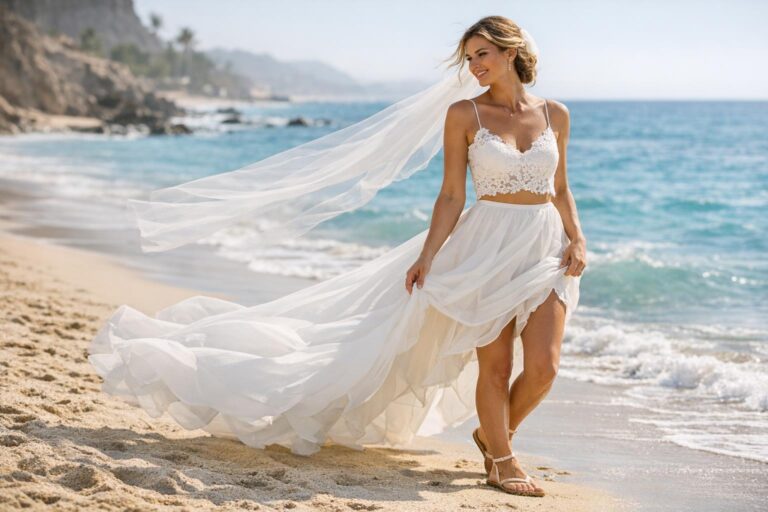
For a beach or destination celebration
A romantic approach works when the fabric and silhouette remain light enough for heat, breeze, and movement. The appeal comes from softness that responds to the setting rather than fighting it. For long outdoor celebrations, comfort becomes part of the beauty.
A minimalist approach can be excellent for destination weddings too, particularly for brides who want a cleaner, less fussy travel-friendly look. The key is avoiding anything that feels too rigid for the climate or too heavy for the mood of the location. In warm weather, simplicity only works if it still feels breathable and easy to wear over many hours.
What stylists notice first when a bride is deciding
One of the clearest clues is how a bride talks about her wedding. If she describes it in emotional images, such as softness, light, flowers, movement, and romance, she often gravitates toward a gown with visual texture and a gentler silhouette. If she talks about polish, clean lines, modernity, or wanting to feel effortlessly put together, minimalist bridal style is often the stronger fit.
Another clue is comfort with attention. Romantic dresses can feel expressive and atmospheric. Minimalist dresses can feel exposed in a different way because there is nowhere for the eye to go except shape and fit. Some brides feel more secure in softness; others feel more powerful in simplicity. Neither instinct is more correct, but it is useful to be honest about which type of visibility feels right.
Tips for choosing between romantic and minimalist wedding dress inspo
- Look at your venue before committing to a mood board. A ballroom, beach, garden, or city space changes how the same silhouette is perceived.
- Pay attention to movement. If you care deeply about how the dress floats, sways, or softens in outdoor light, romantic styling may feel more satisfying.
- Focus on fit if you prefer minimalist dressing. Clean gowns reveal construction and proportion immediately.
- Consider event length. A ceremony, cocktail hour, dinner, and dancing require a dress that remains comfortable after the first photographs are over.
- Think about styling discipline. If you enjoy layered visual details, romantic dressing is more forgiving. If you prefer a more edited finish, minimalist style usually rewards restraint.
It also helps to consider how you want to remember yourself in photographs. Some brides want softness and emotion to lead. Others want clarity and composure. Both can be timeless, but they tell different visual stories.
When romantic bridal style makes the most sense
Romantic bridal style is often strongest when the celebration itself has an atmospheric quality. Outdoor ceremonies, floral-heavy settings, vineyard weddings, countryside venues, and soft daylight all support this aesthetic naturally. The dress feels integrated into the environment rather than separate from it.
It also suits brides who want a little more visual softness around the body. If the goal is to feel graceful, easeful, and moved by the moment rather than sharply tailored, a romantic silhouette can offer both beauty and emotional comfort. This can be especially helpful during long days when photos, greetings, and dancing all demand ease of movement.
A practical note on comfort
Softness does not automatically mean easier wear, but romantic gowns often adapt well to events where walking outdoors, navigating uneven ground, or moving between ceremony and reception spaces is part of the day. The best results come when airy visual appeal is matched by thoughtful construction and realistic footwear planning.
When minimalist bridal style feels most at home
Minimalist bridal style tends to shine in settings that support clean visual lines: city venues, formal interiors, modern spaces, and evening celebrations with a polished atmosphere. In these environments, a simple gown can feel especially elevated because the surroundings frame its shape so well.
This style also works beautifully for brides who want the impact of confidence without the language of ornament. The overall look feels intentional and controlled, often with an understated elegance that remains memorable because nothing feels excessive. For a bride who values refinement over softness, this can be the more natural choice.
A practical note on precision
Minimalism asks more from tailoring, posture, and styling edits. Because the design is pared back, any issue with fit becomes more obvious. The reward is a look that feels clean and powerful, but it only achieves that effect when every element is carefully considered, from hem length to shoes to how the dress holds through sitting, standing, and dancing.
The mixed approach: combining both without losing clarity
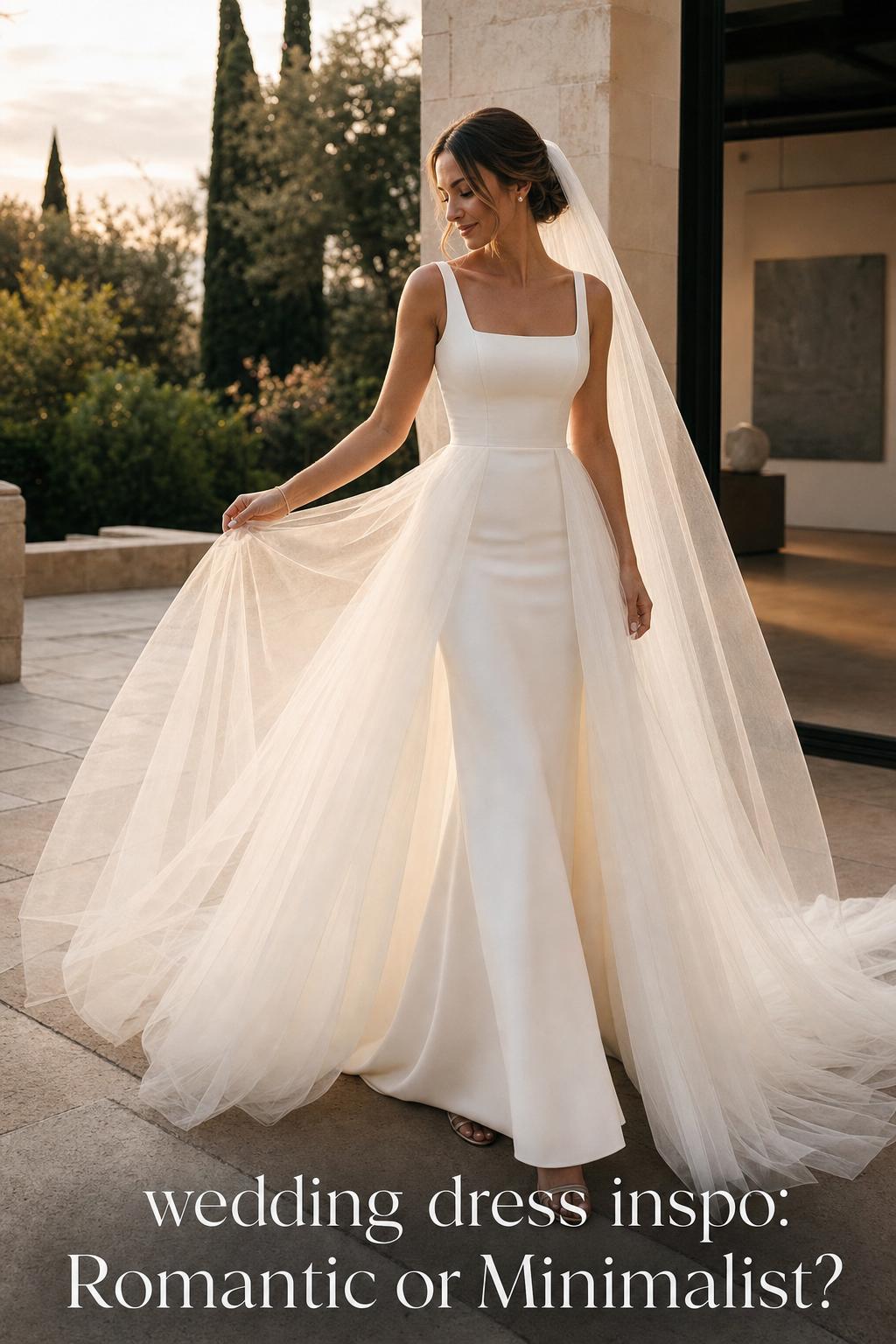
Many brides do not belong entirely to one category. A gown can have a clean, minimalist silhouette while still carrying a soft romantic mood through movement. Likewise, a romantic dress can be edited so it feels fresher and more modern rather than overly ornate. The most successful combinations happen when one aesthetic leads and the other supports.
For example, a bride may choose a clean line because she loves minimalist polish, then keep the overall mood romantic through softer styling and a more atmospheric venue. Another bride may prefer a romantic silhouette but reduce accessories so the final impression remains refined. The key is avoiding equal emphasis on both ideas at once, which can make the look feel undecided.
Common mistakes that blur the look
- Choosing a romantic gown but styling it too severely, which can strip away the softness that gives it character.
- Selecting a minimalist dress and then adding too many decorative accessories, which weakens its clean impact.
- Ignoring venue context, especially when a dress feels disconnected from the atmosphere of the day.
- Prioritizing the first fitting-room impression over long-hour comfort, movement, and weather.
- Assuming timeless always means plain. Timelessness can come from softness just as much as simplicity.
These are not rigid rules, but they are useful checkpoints. The most convincing bridal look usually feels coherent, not crowded with competing messages.
A final way to tell which one is yours
Imagine your wedding in motion. Not just the entrance, but the entire sequence: greeting guests, standing through the ceremony, walking across the venue, sitting through dinner, moving under evening light, and stepping onto the dance floor. If you picture yourself wanting softness, airiness, and a sense of romance around you, that instinct points clearly in one direction. If you picture poise, clean lines, and a silhouette that feels strong even in stillness, that points in the other.
The core distinction is simple. Romantic bridal style expresses beauty through softness and atmosphere. Minimalist bridal style expresses beauty through restraint and line. Once you know which language feels more like you, wedding dress inspo becomes less about endless saving and more about choosing a look that belongs to your day, your setting, and your sense of self. And if you love elements of both, let one lead while the other adds nuance.
FAQ
How do I know if my wedding dress inspo is romantic or minimalist?
Look at what draws your eye first. If you consistently save dresses for their softness, movement, and dreamy mood, your taste likely leans romantic. If you are more focused on clean lines, polished silhouettes, and a refined overall impression, your style is likely minimalist.
Can a wedding dress be both romantic and minimalist?
Yes, but the most successful version usually has one clear leading identity. A gown might have a minimalist silhouette with a softer mood, or a romantic shape with cleaner styling. The look stays strongest when one aesthetic anchors the design and the other plays a supporting role.
Which style works better for an outdoor wedding?
Romantic bridal style often feels especially natural outdoors because it responds well to movement, daylight, and softer surroundings. Minimalist style can also work beautifully outside, particularly when the bride wants visual contrast against a lush setting, but comfort and climate need to be considered carefully.
Is minimalist bridal style always more formal?
Not always, but it often reads more polished because the design depends on clean structure and clarity. Romantic style can be equally formal, though its formality usually feels softer and more atmospheric rather than sharply tailored.
What kind of venue suits a romantic wedding dress best?
Romantic dresses tend to feel especially at home in gardens, vineyards, countryside settings, and other venues where natural light, floral design, and movement are part of the atmosphere. They also work beautifully in candlelit interiors when the goal is a more cinematic, emotional mood.
What kind of venue suits a minimalist wedding dress best?
Minimalist dresses often shine in modern venues, city settings, formal indoor spaces, and elegant evening receptions where clean lines feel intentional and elevated. These environments support the simplicity of the gown and allow the silhouette to stand out clearly.
Which style is easier to accessorize?
Romantic bridal style is generally more forgiving because it already embraces visual softness and layered detail. Minimalist style can be accessorized beautifully as well, but it requires more restraint so the additions do not interrupt the gown’s clean impact.
Does minimalist mean plain?
No. In bridal fashion, minimalist usually means the impact comes from silhouette, proportion, and finish rather than from decorative detail. A minimalist gown can feel striking, dramatic, and highly memorable when the cut and styling are handled well.
Which style is better for long wedding days?
Either can work for a long celebration if comfort is considered from the start. Romantic styles often support ease of movement well, especially outdoors, while minimalist styles need careful attention to fit and posture because clean silhouettes reveal discomfort more quickly.