
Purple Wedding Dress Ideas for a Romantic Bridal Mood
The romantic pull of a purple wedding dress
A purple wedding dress carries a mood that feels both regal and deeply expressive. It steps away from the expected without losing the sense of occasion that makes bridal fashion so memorable. Depending on the depth of the shade and the way the fabric catches light, purple can read soft and ethereal, dramatic and evening-ready, or quietly modern in a way that feels entirely personal.
That is part of the enduring appeal. In wedding style, color is never only color; it shapes atmosphere, photography, and the emotional tone of the day. A lavender tulle silhouette at golden hour creates a very different impression from a richer plum gown under ballroom lighting. For brides drawn to a look with identity, nuance, and a little visual poetry, purple offers a striking middle ground between romance and individuality.

The style also adapts beautifully across settings. A garden ceremony, a candlelit reception, a destination celebration, or a formal evening event can all support this color story when the cut, texture, and accessories are chosen with intention. What makes the look so compelling is not simply that it is different, but that it can still feel bridal, elegant, and considered from the first step down the aisle to the last dance.
Understanding the visual identity of purple in bridal style
In a wedding context, purple sits in an unusually versatile place. It can lean pastel and dreamy, which gives it a softness associated with spring gardens and open-air ceremonies. It can also become moody and formal, especially when a deeper tone is paired with satin, velvet-like richness, or evening lighting. This range is what makes a purple wedding dress feel less like a single trend and more like a broad aesthetic family.
Your wedding look is only the beginning.
Keep your guest list, vendors, timeline, and every important detail together with Zarellea — so your day feels as considered as your style.
From a styling perspective, the color affects silhouette in subtle ways. Lighter violets and lavender shades often emphasize movement, airiness, and translucence, particularly in chiffon or layered tulle. Darker purple tones tend to sharpen structure, highlight drape, and create visual depth, which suits gowns intended to feel sculptural or refined. The same color family can therefore support very different bridal moods without feeling disconnected.
That flexibility matters because weddings rarely happen in a vacuum. Venue, season, lighting, and dress code all shape whether a look feels harmonious. A bride choosing purple is often not just selecting a color, but choosing the emotional register of the day: romantic, artistic, bold, vintage-leaning, whimsical, or formal. The strongest styling decisions come from seeing the dress as part of a complete scene rather than an isolated garment.

Look: Lavender garden softness
For an outdoor ceremony surrounded by flowers, greenery, and natural light, a pale lavender interpretation feels especially convincing. The silhouette here is light, floating, and unforced, with enough movement to respond beautifully to a breeze or a walk across grass. The overall mood is tender rather than theatrical, ideal for a celebration that favors softness over spectacle.
Layers of airy fabric give this look its visual ease. Think tulle or chiffon that diffuses the color rather than concentrating it, allowing the purple tone to appear washed with light. A gentle waist definition, soft skirt volume, and delicate draping help the gown feel bridal without becoming heavy. In this palette, accessories are best kept refined and quiet so the color remains the focus.
- Key garments: flowing lavender gown with soft volume
- Footwear: elegant shoes that handle garden paths comfortably
- Accessories: minimal jewelry and a veil or hair detail with an understated finish
The strength of this look is balance. A pastel purple wedding dress can feel distinctive, but in a garden setting it remains gentle, photogenic, and romantic. The effect is less about making a loud statement and more about creating a visual harmony with the venue.
Style tip: keep the hem practical outdoors
On lawns, gravel paths, or vineyard grounds, the most beautiful gown is still one you can move in comfortably. A lighter skirt with manageable volume often photographs better than an overly long, cumbersome train when the ceremony and reception involve outdoor walking.
Look: Dusty lilac for a quiet modern ceremony
There is a more understated way to wear purple, and dusty lilac captures it beautifully. This version feels modern, refined, and slightly architectural, making it especially fitting for a city wedding, a contemporary venue, or a minimalist celebration where every element is edited with care. The silhouette is cleaner, the lines more intentional, and the romance comes through shape rather than ornament.
A dress in this mood benefits from controlled drape and a polished finish. Satin or similarly smooth fabric gives dusty purple a composed elegance, while a slip-inspired line, column shape, or softly structured bodice can sharpen the effect. Because the palette is muted, it works well with restrained styling and a clear focus on proportion. The dress does not need excess detail to feel memorable.
This interpretation suits brides who want to depart from traditional white without moving into overt fantasy. It feels assured rather than whimsical. In practical terms, it can also transition well from ceremony to reception because the silhouette tends to be easier to wear over a full day of standing, greeting guests, and dancing.
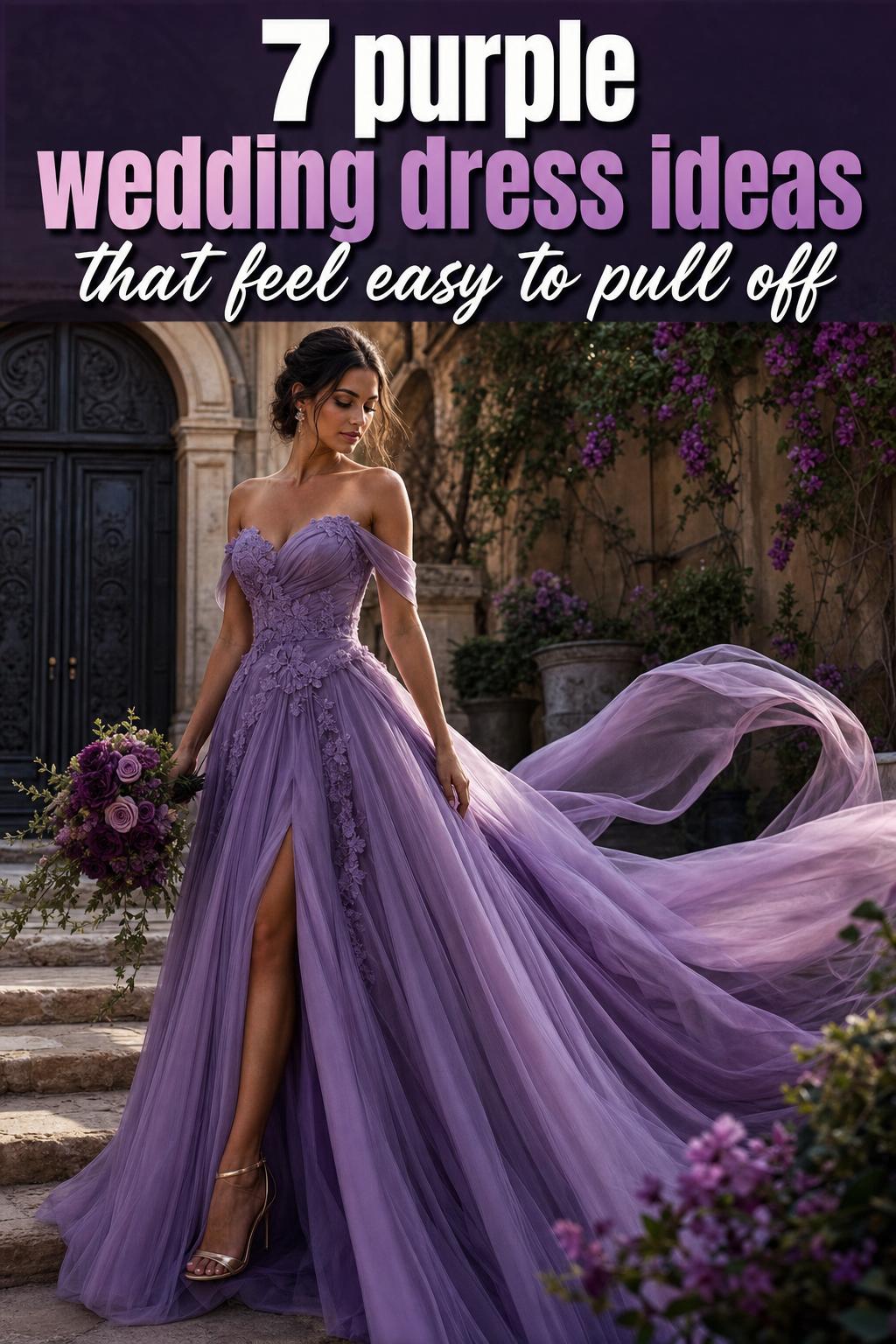
Look: Deep plum for a candlelit reception
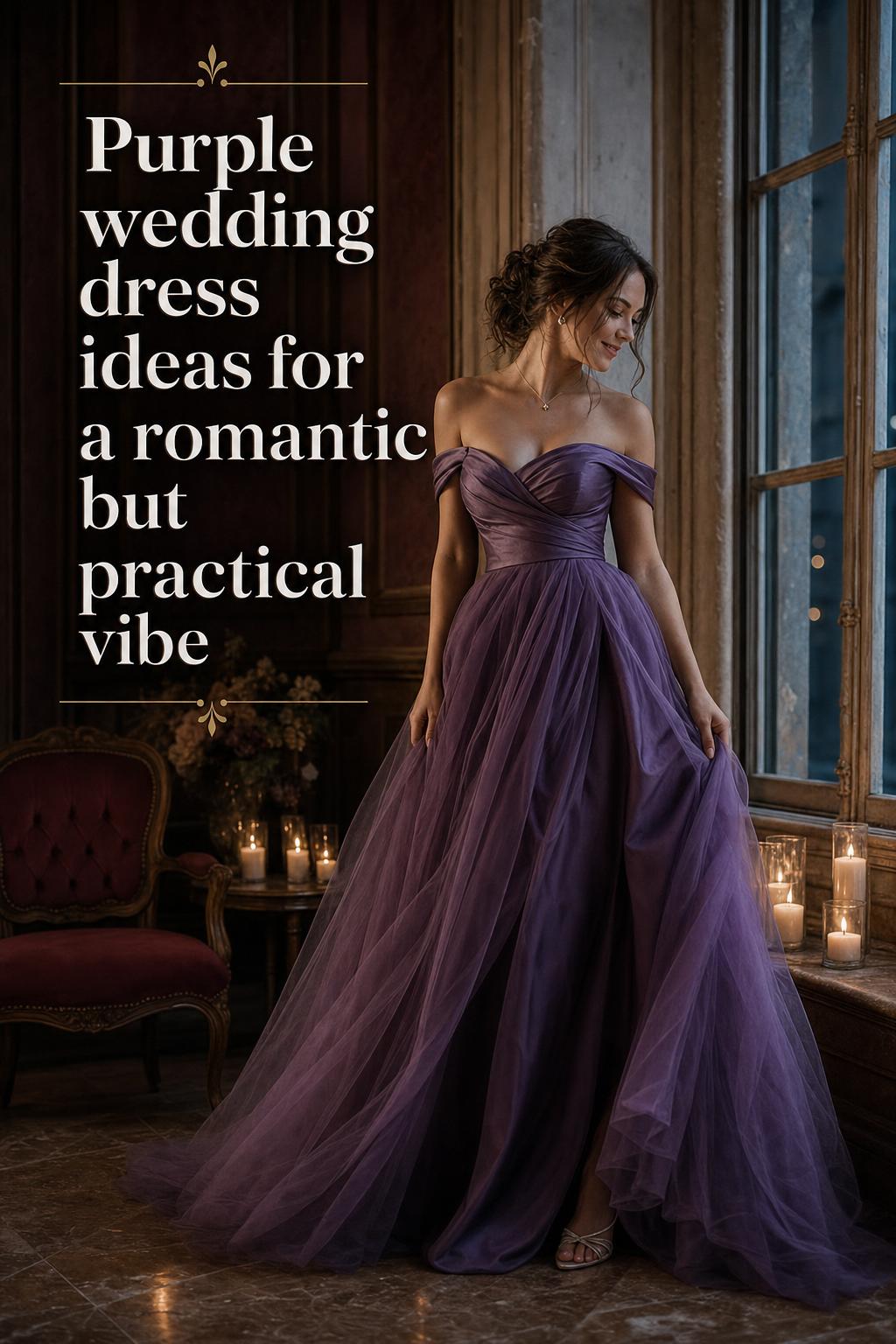
When the wedding atmosphere turns formal, intimate, and evening-led, a deep plum gown becomes especially compelling. The visual mood is richer and more dramatic, suited to ballrooms, grand indoor venues, and receptions lit by candles or low ambient lighting. This is purple at its most sophisticated, where the color conveys depth, gravity, and a sense of occasion.
The silhouette can hold more structure here. A fitted bodice, sculpted waist, or fuller skirt works well because darker purple shades carry visual weight beautifully. Fabrics with depth, whether lustrous satin or dense layered textiles, tend to elevate the tone further. Rather than appearing costume-like, the look feels formal because the intensity of the color is supported by a gown with clear shape and presence.
- Key garments: plum gown with defined structure and evening polish
- Footwear: refined heels appropriate for indoor formal venues
- Accessories: elegant jewelry used sparingly to avoid visual competition with the gown
This is the version of the purple wedding dress that appeals to brides seeking drama without losing elegance. It works particularly well once daylight fades, when richer tones become even more dimensional in photographs and in person.

Look: Mauve movement for a destination celebration
A destination wedding often asks more from a gown than beauty alone. It needs to travel, move, and remain comfortable through changing temperatures, unfamiliar terrain, and a day that may begin in bright sun and end in a festive outdoor dinner. A mauve or softened purple tone offers a romantic answer that feels distinctive without becoming impractical.
The most successful version leans into fluidity. Lightweight fabrics, easy drape, and a silhouette that feels graceful rather than restrictive suit beach ceremonies, coastal settings, and warm-weather locations. In this context, the color should feel sunlit and breathable. A heavy, overly structured design can fight against the ease of the setting, while a softer cut works with the rhythm of travel and celebration.
From a stylist’s perspective, this look succeeds because it respects context. Destination weddings reward clothes that are beautiful in motion and manageable over long hours. A purple tone with a softened finish keeps the gown visually special while allowing the bride to feel relaxed rather than overburdened.
How to recreate the look
- Choose a lighter purple tone rather than a dense, dark shade for warm climates
- Prioritize airy fabric and a silhouette that moves easily
- Keep accessories streamlined so the dress remains effortless
- Consider ceremony-to-reception comfort before committing to volume or train length
Look: Romantic violet volume for a statement aisle moment
Some brides want their gown to feel like the emotional centerpiece of the visual story, and a more saturated violet can create that effect with extraordinary presence. This interpretation is fuller, more expressive, and ideal for a ceremony where the aisle entrance, floral installations, and photography all contribute to a grand romantic atmosphere. The mood is lush rather than minimal.
Volume is essential to this version, but it must be controlled. Layers, skirt sweep, and a clearly defined upper silhouette keep the look from feeling overwhelming. Purple with this level of intensity benefits from thoughtful restraint elsewhere, especially if the venue itself is visually ornate. The gown should command attention, but it should still leave room for the setting and the bride to feel harmonious together.
What makes this aesthetic work is confidence in proportion. A statement purple wedding dress does not need every embellishment at once. When the color already carries emotion and drama, line and movement become more powerful than excess decoration.
Choosing the right shade for the venue and time of day
One of the most important decisions is not simply whether to wear purple, but which purple belongs in the setting. The same gown color can shift dramatically depending on natural light, indoor lighting, surrounding decor, and even how formal the guest attire feels. Brides often find that the shade they love in isolation needs refinement once the full wedding environment is considered.
For daytime ceremonies, particularly in gardens, vineyards, and open-air venues, lighter shades such as lavender, lilac, and mauve tend to feel cohesive. They interact gently with sunlight and floral surroundings, and they preserve the softness many brides still want from a wedding look. For evening receptions or formal indoor spaces, deeper purple tones often feel more grounded and luxurious because they hold their own under lower, warmer light.
This is also where photography matters. A color that appears ethereal in person may read differently on camera depending on fabric sheen and lighting conditions. That is why it helps to imagine the dress in the actual mood of the day rather than only on a hanger or in a fitting room. Bridal style is ultimately experienced in motion, in light, and in context.
Key pieces for this aesthetic
- A purple tone that complements the venue mood
- Fabric that supports the chosen silhouette rather than fighting it
- Shoes suited to the surface and event length
- Accessories that enhance, not distract from, the dress color
Fabric changes everything
In bridal fashion, shade and fabric are inseparable. Purple in chiffon behaves differently from purple in satin, and that difference is not minor. Chiffon tends to soften the tone, creating movement and a slightly diffused effect that feels dreamy and light. Satin, by contrast, gives the color more precision and depth, often making it feel more formal and polished.
Tulle adds another dimension because it can layer color delicately, allowing purple to appear almost clouded or watercolor-like. This is especially appealing for brides seeking softness and volume without heaviness. More structured fabrics sharpen the silhouette and lend the gown stronger presence, which can be useful when the wedding setting calls for ceremony, drama, or architectural clarity.
A practical note matters here as well: fabric influences comfort across the day. Breathability, weight, and how easily a material creases all affect the lived experience of wearing the dress. A beautiful color choice should still support movement, sitting, travel, and dancing. The most successful bridal looks are never only visual; they are wearable for the entire celebration.
Where a purple wedding dress feels most at home
Although purple can be adapted broadly, certain wedding settings bring out its strengths in especially elegant ways. Garden weddings naturally suit softer purples because the floral context gives the dress an intuitive romance. Vineyards and countryside venues also pair well with dusty or muted tones that feel organic and elevated rather than overly formal.
Beach and destination ceremonies benefit from lighter, more fluid interpretations. Here, movement and comfort are crucial, and purple works best when it looks sun-touched rather than heavy. Formal evening receptions, on the other hand, open the door to plum, violet, and deeper jewel-like expressions. Candlelight, rich interiors, and darker hours allow these tones to feel luxurious and fully intentional.
There is also a strong case for contemporary city weddings. In cleaner venues, a muted or sleek purple gown can feel quietly fashion-forward. Without the visual busyness of a heavily themed setting, the color has room to speak with precision. That makes purple especially appealing for brides who want personality delivered through elegance rather than novelty.
Styling insight: how to keep the dress bridal
A common concern with a colored gown is whether it will still feel bridal enough. The answer usually depends less on the color itself and more on the overall styling language. Bridal presence often comes from silhouette, fabric quality, styling restraint, and occasion-appropriate finishing rather than from white alone.
That is why a purple wedding dress feels most convincing when the surrounding details support its elegance. Refined accessories, clean hair or romantic softness, and a strong understanding of venue formality all help the look remain ceremonial. If every element competes for attention, the gown can lose its clarity. If the styling is disciplined, purple reads as an intentional bridal choice rather than an offbeat one.
In practice, this often means editing rather than adding. Brides are sometimes tempted to overcompensate for a nontraditional gown by layering on more embellishment, more color, or more statement details. Usually the more elevated approach is the opposite: let the dress carry the identity, and allow the rest of the styling to frame it.
Tips for a polished finish
- Match the mood of the dress to the formality of the venue
- Use accessories to support the gown, not overshadow it
- Consider how the dress looks in daylight and evening light
- Choose comfort-conscious shoes for a long celebration
- Let fabric and silhouette do more of the work than excessive embellishment
Common styling mistakes brides can avoid
The most frequent mistake is choosing a shade that clashes with the wedding atmosphere. A very dark, dramatic purple may feel disconnected at a breezy beach ceremony, while an extremely airy pastel can feel visually slight in a grand evening ballroom. The dress should not disappear into the venue, but it should belong there.
Another issue is ignoring how fabric changes the emotional reading of the color. Brides often focus on the shade name alone, but purple in matte layers and purple in high-shine satin can feel like entirely different concepts. The same applies to silhouette. If the dress shape, color intensity, and venue formality are all pulling in different directions, the overall look can feel unresolved.
Finally, there is the practical challenge of wearing an expressive gown for many hours. A dress that looks beautiful standing still may become difficult during the reception if the skirt is too cumbersome, the bodice too rigid, or the shoes too delicate for the surface. Bridal style has to endure real movement. That lived experience is often what separates a look that is merely striking from one that feels truly successful.
A wedding stylist’s approach to deciding if purple is right for you
The most helpful question is not whether purple is acceptable, but what version of purple reflects the kind of bride and celebration you want to embody. Some brides are drawn to the softness of the color family and want something romantic that still feels light. Others are looking for distinction, a stronger editorial statement, or a sense of richness that traditional bridal white does not provide. Both instincts are valid, but they call for different dress decisions.
It helps to think in terms of mood words before specifics: airy, formal, artistic, regal, muted, whimsical, or modern. Once the emotional direction is clear, the right combination of shade, fabric, and silhouette becomes easier to identify. This approach usually leads to a better result than beginning with a trend image and trying to force it into an unrelated venue or dress code.
There is also no rule that the boldest interpretation is the best one. For some brides, the most beautiful choice is a whisper of lilac in layers of soft fabric. For others, it is a decisive plum gown worn in a candlelit room. A successful bridal look feels aligned with the celebration, comfortable over the full event, and unmistakably personal without requiring explanation.
Adapting the aesthetic across seasons
Seasonality shifts how purple is perceived. In spring and early summer, lighter tones naturally echo blooming landscapes, softer daylight, and the ease of outdoor ceremonies. Fabrics that breathe and move well tend to complement that atmosphere, keeping the gown fresh rather than weighty. A lavender or lilac palette feels especially at home in these settings because it carries color without heaviness.
As celebrations move into late autumn or more formal winter evenings, deeper purples become more persuasive. Indoor venues, richer floral palettes, and lower light support tones like plum and violet with natural elegance. The color gains drama without looking out of place, especially when paired with structured silhouettes and polished finishing details.
What matters most is not following a rigid seasonal rule, but understanding how color behaves within the atmosphere of the day. Purple can work beautifully year-round when it is chosen with attention to light, venue texture, and how much softness or formality the celebration calls for.
Making the look feel personal, not performative
A colored bridal gown becomes most convincing when it feels like a natural extension of the wearer rather than a dramatic gesture for its own sake. That distinction is subtle but important. Guests and photographs respond strongly to authenticity; when the dress reflects the bride’s actual style language, the result feels effortless, even when the color choice is unusual.
This is why restraint and self-awareness matter. A bride who normally loves soft romance may feel most comfortable in lilac layers, while someone with a taste for sleek evening dressing may be better served by a satin plum silhouette with clean lines. The aim is not simply to choose a purple wedding dress, but to choose the version that still feels unmistakably like you at your most elevated.
That personal clarity also helps with every other decision, from shoes to jewelry to outer layers for changing weather. Once the mood is defined, the supporting pieces become easier to edit. The entire wedding look gains coherence, which is always what makes a bridal style feel memorable.
Conclusion
A purple wedding dress works because it offers more than novelty. It creates mood, supports a wide range of venues and formality levels, and allows bridal style to feel expressive without losing elegance. Whether the vision is lavender in a garden, mauve by the sea, or deep plum in a candlelit room, the most successful choice is the one that aligns shade, silhouette, fabric, and atmosphere with care. When those elements come together, purple feels not unconventional, but beautifully intentional.
FAQ
Is a purple wedding dress appropriate for a traditional wedding?
Yes, if the styling remains formal and intentional. A purple gown can still feel bridal when the silhouette, fabric, and accessories reflect the tone of the ceremony. Softer shades often suit romantic traditional settings, while deeper tones work well for more formal evening celebrations.
What shade of purple wedding dress is best for an outdoor ceremony?
Lighter shades such as lavender, lilac, or mauve usually feel most natural outdoors because they work gently with daylight, flowers, and open-air settings. They also tend to look especially soft in photographs taken during daylight or golden hour.
Can a deep purple wedding dress still feel bridal?
Absolutely. A deep purple gown can feel highly bridal when it is paired with an elegant silhouette, refined styling, and a venue that supports its richness. In candlelit receptions, ballrooms, and formal indoor weddings, darker purple tones often read as luxurious and intentional.
Which fabrics work best for a purple wedding dress?
The best fabric depends on the mood you want. Chiffon and tulle soften purple and create movement, while satin gives the color more structure and depth. Fabric choice matters because it changes how the shade appears in light and how the gown feels throughout the day.
How do I choose between lavender and plum for my wedding dress?
Start with the setting and time of day. Lavender tends to suit garden weddings, destination ceremonies, and daytime celebrations, while plum often feels stronger in formal evening venues and candlelit receptions. Your personal style also matters: lavender reads softer, while plum feels more dramatic and refined.
What kind of venue suits a purple wedding dress best?
Purple can work in many venues, but it is especially effective in gardens, vineyards, destination settings, modern city spaces, and formal indoor reception venues. The key is matching the shade and fabric to the atmosphere so the dress feels connected to the celebration rather than separate from it.
How can I keep a purple wedding dress from looking too busy?
Let the color be the statement and keep the rest of the styling edited. Clean accessories, thoughtful proportions, and fabrics that support the silhouette help the look stay elegant. The more expressive the color, the more important it is to avoid unnecessary competition from excessive embellishment.
Is a purple wedding dress practical for a long wedding day?
It can be, as long as comfort is considered from the start. Lightweight fabrics, manageable volume, and shoes suited to the venue make a major difference. Brides should think about walking surfaces, dancing, temperature, and how the gown will feel after many hours, not just how it looks at first fitting.