Why Black Bridesmaid Dresses Mismatched Feel So Chic
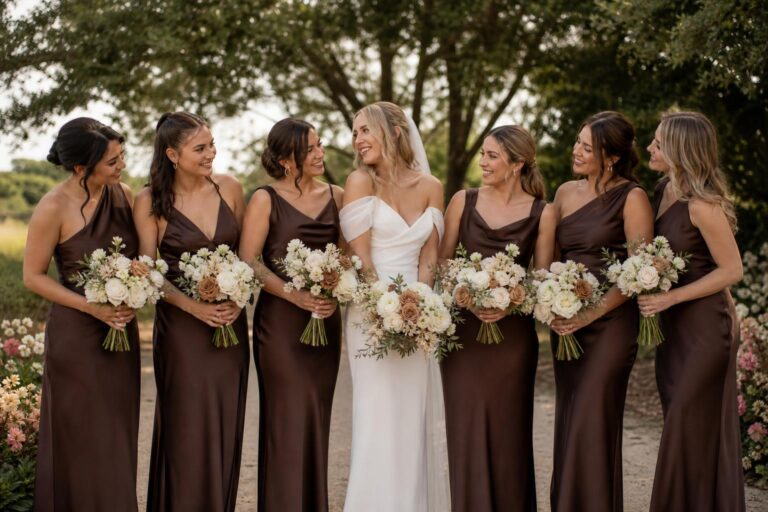
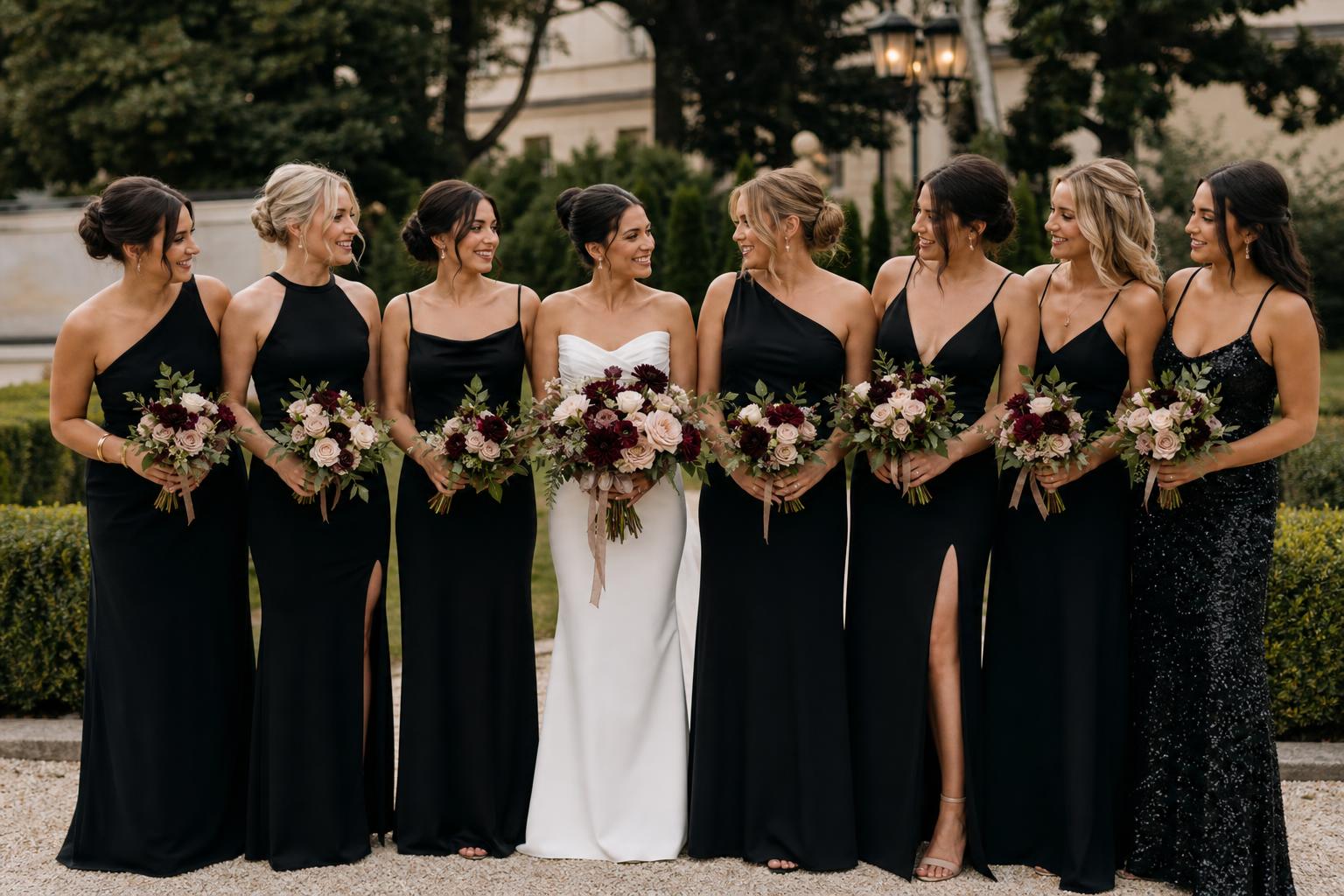
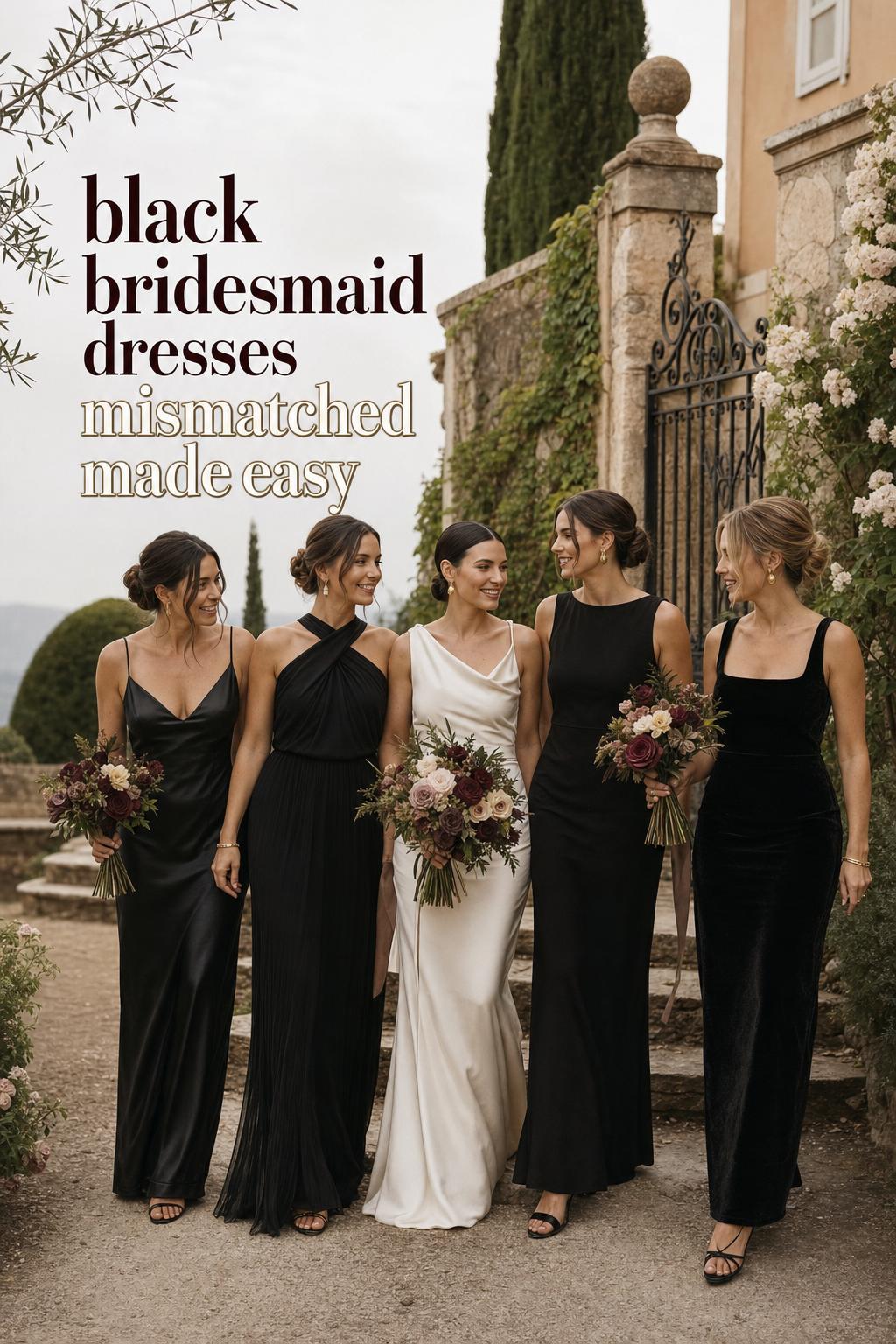
The appeal of black bridesmaid dresses mismatched is easy to understand the moment you picture them in a wedding album: one bridal party, one deep and polished color story, but with enough variation in silhouette, fabric, and texture to make each person look like herself. It solves a very specific styling problem many couples face now. Matching dresses can feel too uniform, while fully mixed colors can sometimes lose cohesion. Black offers structure. Mismatching adds personality. Together, they create a wedding party look that feels modern, editorial, and surprisingly practical.
This approach works especially well for brides planning a celebration with different body types, comfort needs, budgets, and style preferences in mind. A satin slip catches candlelight differently from chiffon; a mermaid silhouette creates drama next to a soft A-line; velvet deepens the mood for an evening setting, while crepe keeps the line clean and understated. The result can feel fashion-forward without becoming chaotic, provided the styling choices are intentional.
Why black works so beautifully for mismatched bridesmaid dresses
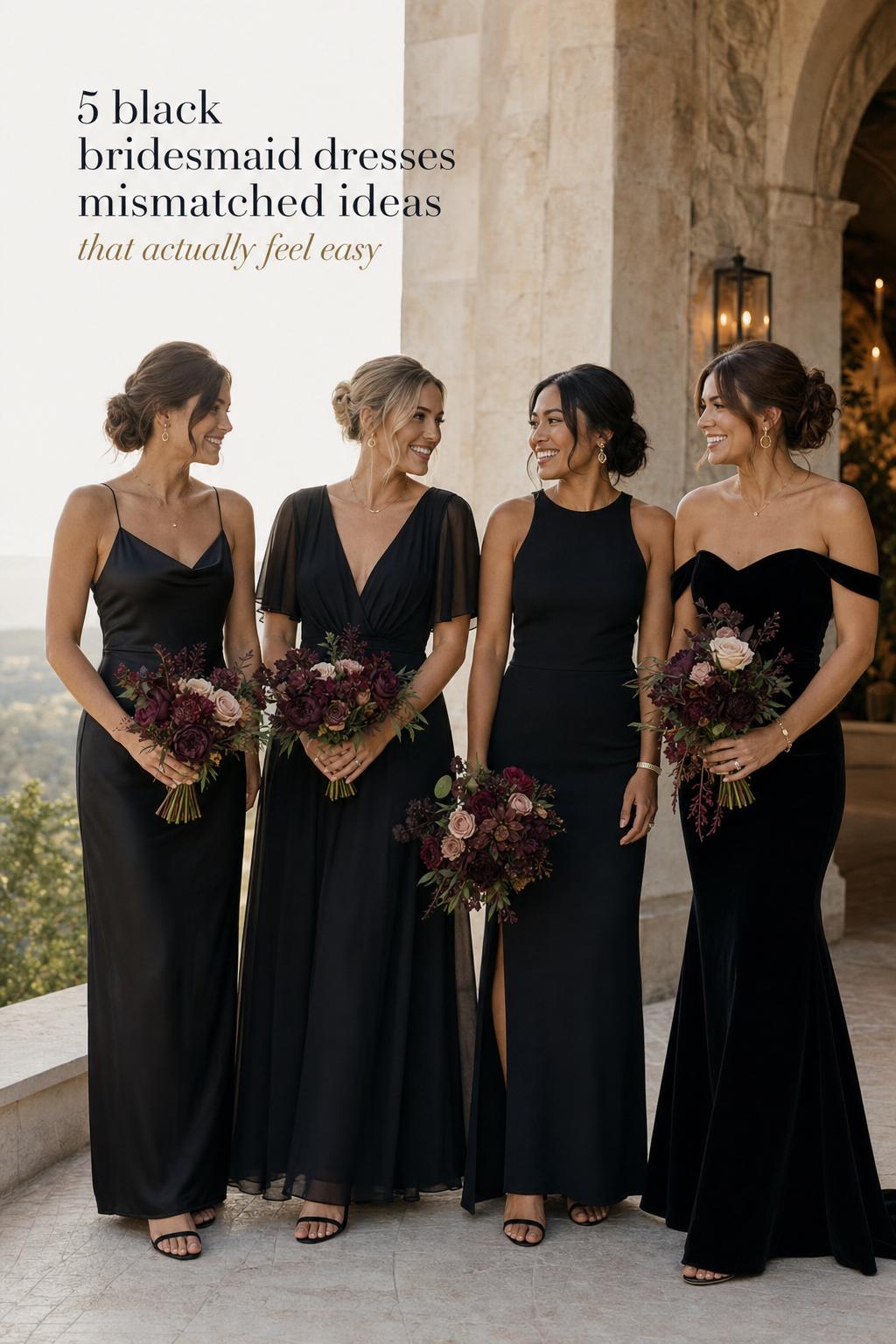
Black is one of the easiest colors to unify across different gowns because it naturally absorbs variation. If one bridesmaid wears chiffon and another chooses satin, the shared black palette still keeps the group visually connected. This is why so many editorial features and retailer collections return to black when discussing mismatched bridesmaid dresses. It allows individuality without sacrificing the clean line a wedding party needs in photos.
There is also a practical side. Black often feels rewearable, which matters to bridesmaids investing in a formal dress. It can suit a formal ballroom, a modern city venue, or a candlelit reception with equal ease. In editorial coverage, little black dresses for bridesmaids appear again and again because they balance fashion with familiarity. Bridesmaids tend to know how they feel in black, and that confidence shows.
Your wedding look is only the beginning.
Keep your guest list, vendors, timeline, and every important detail together with Zarellea — so your day feels as considered as your style.
- Best for: couples who want cohesion without forcing one silhouette on everyone
- Style tip: keep the color exact or very close, then let fabric and neckline create the variation
- Avoid this: mixing too many competing design ideas at once, such as extreme sequins, velvet, satin, and heavily embellished styles all together
- Pinterest-worthy idea: a lineup of black gowns in soft candlelight, each dress different, all tied together with matching bouquets
The first decision: what exactly should be mismatched?
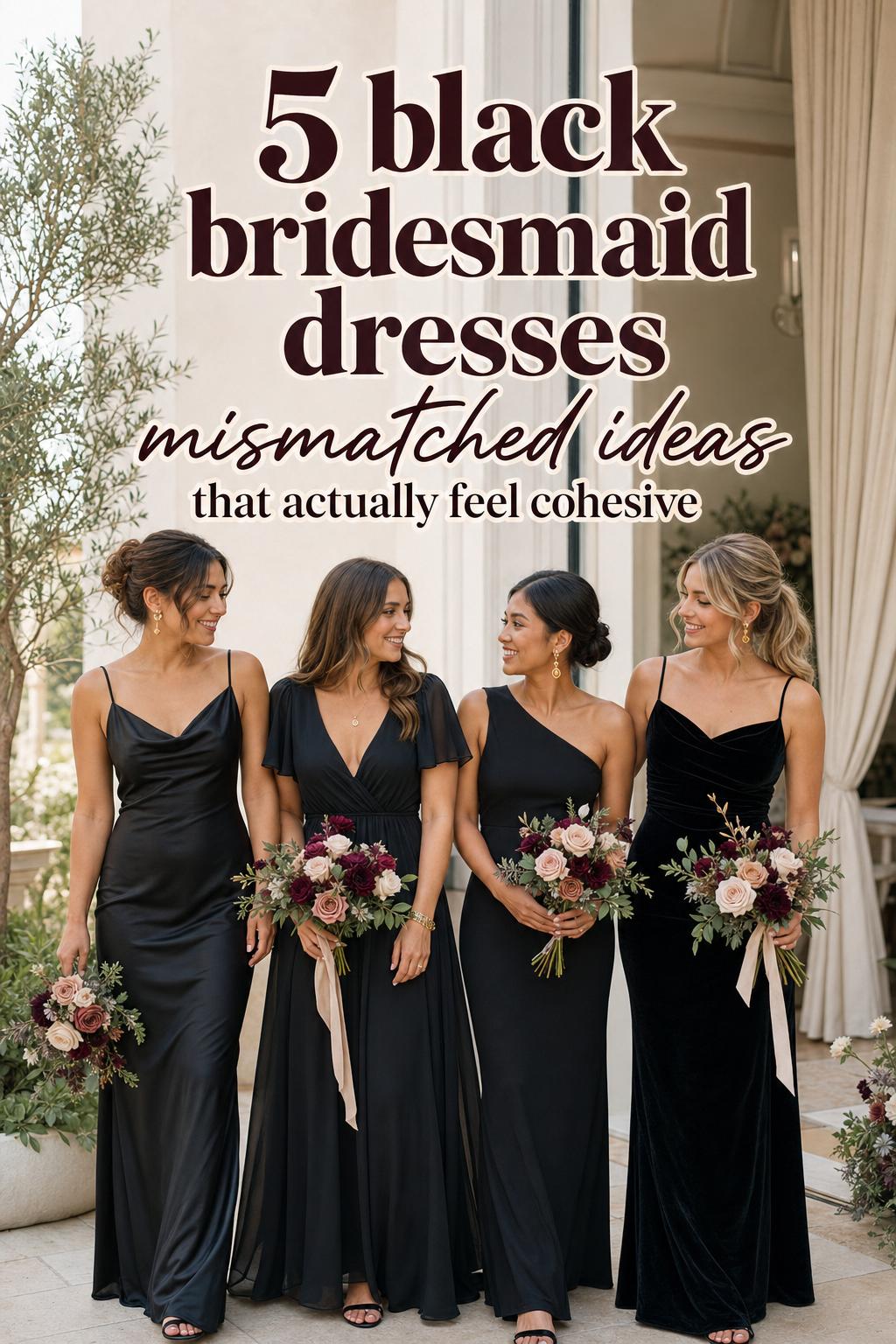
A mismatched bridal party does not need every element to vary. In fact, the strongest styling usually comes from choosing one category to keep consistent and one or two to vary. For black gowns, that decision is what separates a polished editorial look from a bridal party that feels visually busy.
Keep the color consistent, vary the silhouettes
This is the safest and most versatile route. Everyone wears black, but one bridesmaid chooses sheath, another A-line, another mermaid, and another a more fluid shape. The shared color immediately creates order, while the silhouette choices let each person select what feels flattering and comfortable. Retailer collections such as Avery Austin and Adrianna Papell naturally support this approach because their black bridesmaid dresses span multiple shapes within one color family.
Keep the fabric consistent, vary the cut
If your eye is sensitive to detail, this option often photographs beautifully. A bridal party wearing black chiffon in different necklines and lengths tends to feel soft and unified. The same idea applies to black satin gowns, which create a more elevated, reflective finish for evening weddings. This concept appears often in styling guidance because fabric consistency is one of the easiest ways to make mismatched dresses feel intentional.
Keep the silhouettes related, vary the texture
This is a more editorial choice. Imagine a group wearing mostly long black gowns, but one is crepe, one is satin, one includes subtle sequins, and one is chiffon. Fashion coverage tends to highlight this kind of texture mixing because it adds depth without requiring additional color. The key is restraint. Matte and glossy contrast can be striking, but too many standout finishes can pull attention away from the bridal overall.
Choose this if: you want black bridesmaid dresses with different silhouettes but still want a cohesive wedding party look in photos. Works especially well with: modern venues, evening ceremonies, and weddings where candles, city lights, or indoor lighting will reflect beautifully off satin and sequins.
How to mix fabrics without making the lineup feel disconnected
Fabric is where black gowns become visually rich. Because the color itself is controlled, the eye notices movement, sheen, and texture more than hue. This is helpful, but it also means fabric choices need a plan. A garden ceremony calls for airy movement. A formal night reception can handle richer texture and more contrast.
Chiffon for softness and ease
Black chiffon bridesmaid dresses are one of the easiest ways to build a mismatched bridal party because chiffon drapes gently and moves well outdoors. It softens the darkness of black, which can be especially useful if you want the color to feel romantic rather than severe. Retailer pages such as Dolly Gown lean into black mismatched chiffon bridesmaid dresses for exactly this reason.
Chiffon is especially convincing at garden venues, open-air ceremonies, or daytime celebrations where movement matters. In photos, it reads lighter than dense fabrics, so a full lineup feels less heavy.
Satin for polish and evening light
Black satin gowns create a more directional, fashion-led effect. Satin reflects light, so it adds glamour to a monochrome bridal party without needing bright accessories. This works beautifully in candlelit receptions or formal city venues. However, because satin catches light differently on each cut, it can make inconsistency more visible. That is why it helps to keep silhouettes elegant and uncluttered when using satin across multiple bridesmaids.
Velvet and crepe for depth
Velvet deepens black and makes it feel richer, while crepe offers a smoother, cleaner finish. Together, they can create an editorial contrast of plush and minimal. This pairing makes more sense for evening weddings and cooler-season celebrations than for a bright outdoor ceremony. If you love the drama of black but still want variation, mixing velvet with crepe or satin can feel very intentional.
Sequins as an accent, not the whole plan
Editorial galleries often include sequins to show how black can shift from classic to celebratory. One sequined black gown in a lineup of matte or satin dresses can create a beautiful focal point. Several sequin-heavy dresses, however, can compete with each other. For most weddings, sequins are strongest when treated as one textural note rather than a repeating demand for attention.
- Best for: brides who want black to feel dimensional rather than flat
- Style tip: pair one high-shine fabric with one or two softer textures
- Avoid this: choosing fabrics independently without checking them together in similar lighting
- Works especially well with: bouquets that add softness and movement against darker dresses
Silhouettes that flatter a mixed bridal party
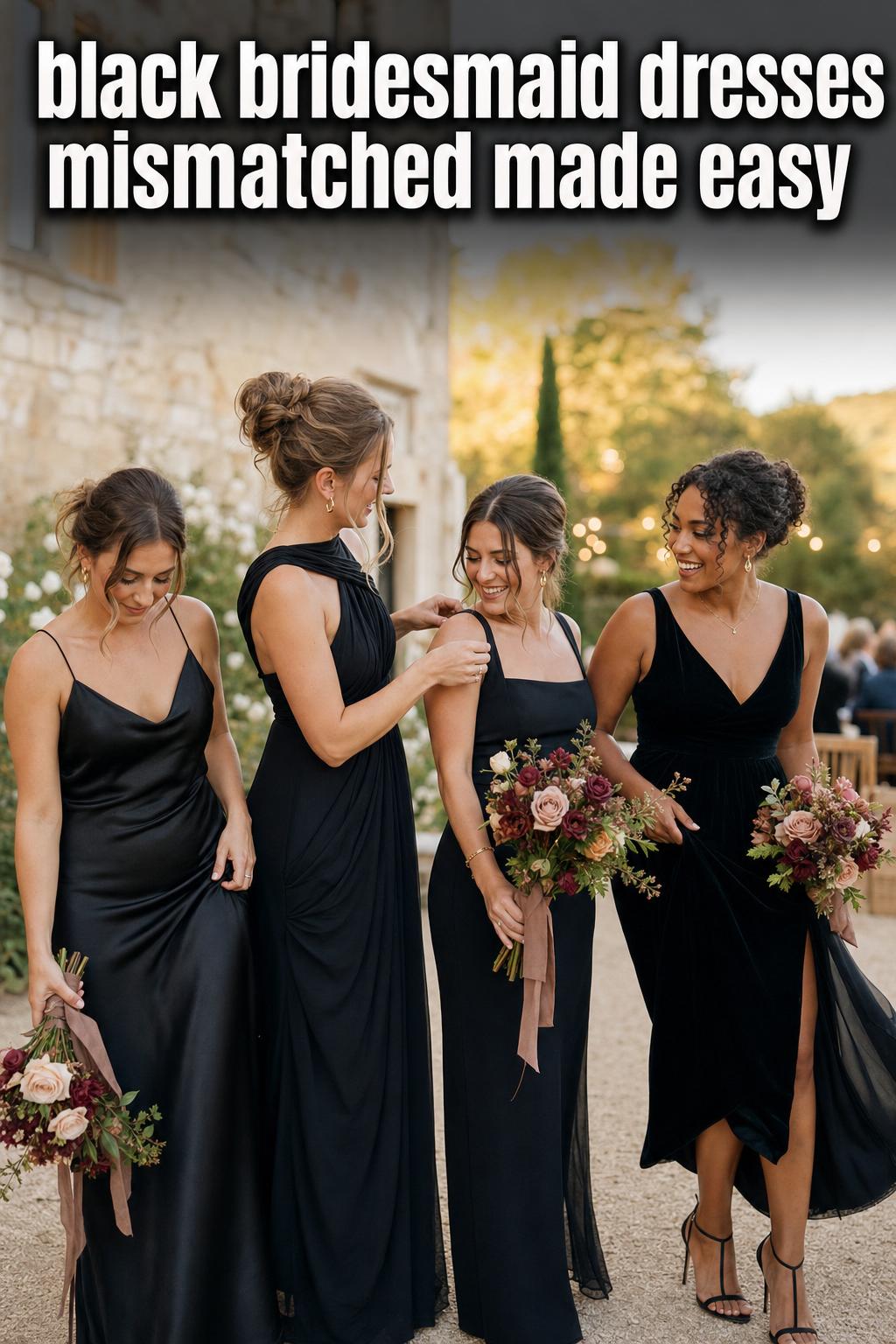
The strongest reason to choose mismatched black gowns is often fit. A bridal party rarely shares one body type or comfort preference, and the wedding day is long. There is standing, sitting, walking, hugging, and dancing. A dress that looks beautiful for ten minutes but feels restrictive for ten hours is rarely the right choice, however polished it appears on a hanger.
A-line for universal ease
An A-line black gown is often the stabilizing piece in a mismatched group. It creates shape without clinging too tightly and tends to suit many venues and dress codes. If some bridesmaids want drama and others prefer simplicity, keeping at least one or two A-line options in the mix usually helps the lineup feel balanced rather than overly stylized.
Sheath for a modern, minimal mood
Sheath dresses work especially well in sleek venues and city weddings where a more minimalist bridal aesthetic makes sense. In black, a sheath silhouette feels clean and architectural. It pairs nicely with satin, crepe, or subtle chiffon overlays. If you are building a modern mismatched group, sheath styles keep the line refined.
Mermaid for sculpted drama
A black mermaid bridesmaid dress adds formality and presence. Retailer examples from Royce Bridal show how this silhouette fits naturally into the mismatched black concept. Used selectively, mermaid styles can give the lineup dramatic shape. Used on everyone, they can feel too uniform or too restrictive. A single mermaid gown paired with softer cuts often creates the best balance.
Ballgown-inspired volume for a statement moment
Volume can be beautiful in black, but it needs context. At a formal evening wedding, one fuller skirt among cleaner silhouettes can add fashion contrast. In a more relaxed venue, too much volume may feel disconnected from the setting. Consider how much space the dresses occupy together, especially in group portraits and tighter ceremony aisles.
Pinterest-worthy idea: a bridal party in all-black gowns where one bridesmaid wears a sleek sheath, one wears an A-line chiffon dress, one chooses satin with a gentle drape, and one wears a mermaid silhouette for contrast. The result feels curated rather than copied.
How to make the bridal party look cohesive in photos
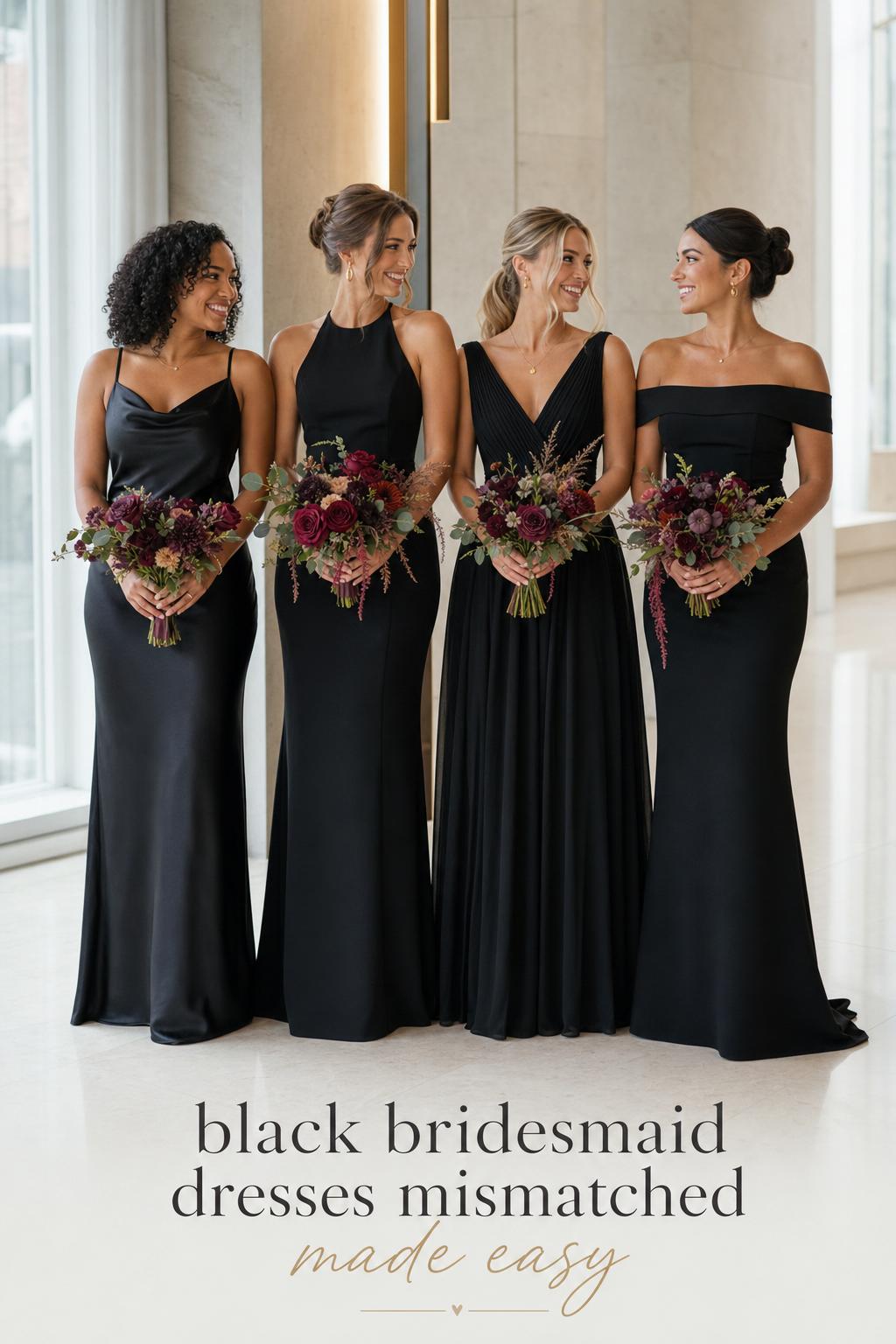
Couples often love the idea of mismatch until they imagine the group photo. That concern is reasonable. What makes the look succeed in photography is not sameness, but repetition. The eye needs enough repeated elements to understand the styling on purpose. With black gowns, repetition can come through color, hem direction, bouquets, jewelry, or texture balance.
One helpful way to think about it is this: if every bridesmaid is different in every category, the lineup feels random. If each bridesmaid is different in one or two categories while the rest repeat, the lineup feels edited. This is why so much styling guidance around black gowns focuses on cohesion through texture and fabrics rather than identical dresses.
- Use one dominant dress length if possible
- Repeat one accessory finish, such as metallic jewelry
- Keep bouquets in a consistent shape or tone
- Limit standout embellishment to one or two gowns
- Check the dresses together in indoor and outdoor light if your wedding uses both
Style tip: black fabric behaves differently in sunlight, shade, and candlelight. A satin gown can look much brighter than crepe at golden hour, while velvet can look almost ink-dark indoors. If your ceremony is outdoors and your reception is inside, think about how that contrast will feel across the full day, not just in one setting.
Accessories and color accents that lift black gowns
Accessories are where black bridesmaid dresses can either become elevated or fall flat. The dress color already gives you a strong base, so accessories do not need to work hard. They need to connect the party and support the mood of the wedding. This is especially true when silhouettes are already mixed.
Metallic jewelry for quiet structure
Gold jewelry is one of the most commonly suggested pairings because it warms black and adds a celebratory finish without introducing a new dominant color. A matching gold jewelry direction across the bridal party can instantly tie together gowns that differ in neckline, sleeve, or fabric. If the wedding mood is more understated, keep the metallic accents delicate rather than statement-heavy.
Jewel-tone bouquets for depth
Black dresses paired with jewel-tone florals create one of the strongest visual combinations for Pinterest-worthy wedding imagery. The dresses provide contrast, while the bouquets bring softness and richness. This also prevents the bridal party from feeling too monochrome in portraits. If you want the lineup to feel romantic rather than stark, florals are often the easiest place to add that softness.
Monochrome accessories for a fashion-led finish
For a cleaner aesthetic, black shoes or understated accessories can keep the focus entirely on the silhouette and texture of the gowns. This works particularly well in modern weddings where simplicity is part of the visual direction. The trade-off is that the look depends more heavily on the dresses themselves, so the fabric mix needs to be considered carefully.
Choose this if: you want black gowns to feel refined and contemporary. Works especially well with: sleek venues, evening receptions, and bridal parties wearing satin, crepe, or other polished fabrics.
Venue mood matters more than most brides expect
The same lineup of black dresses can feel completely different depending on the setting. That is why venue style should shape your final decisions. A bridesmaid look that feels striking in a ballroom may feel too heavy on a bright outdoor lawn. Likewise, an airy chiffon mix that feels perfect in daylight may not have enough visual weight for a formal evening reception.
For a garden or outdoor ceremony
Lean toward chiffon, lighter movement, and silhouettes that do not feel overly dense. Black can still be beautiful outdoors, especially when bouquets and soft textures offset it. A-line, sheath, and lightly draped gowns tend to photograph well in motion and breeze. Avoid making every dress high-shine, since daylight will emphasize those differences strongly.
For a ballroom or candlelit evening reception
This is where black truly shines. Satin, velvet, crepe, and even subtle sequins feel at home in low, dramatic lighting. Mismatched dresses can look especially rich here because texture becomes part of the atmosphere. A bridal party in black under chandeliers or candlelight often feels elegant without needing additional color complexity.
For a modern city wedding
Black bridesmaid dresses with different silhouettes make immediate sense in an urban setting. Cleaner lines, sleek accessories, and a controlled palette can feel very editorial. This is one of the easiest settings for a fully black bridal party because the venue itself often supports that sharper visual language.
Avoid this: choosing your bridal party dresses only from close-up product photos without imagining them in your actual venue mood. The same gown can feel airy, dramatic, or severe depending on architecture, lighting, and how the fabrics interact with the space.
Shopping ideas: where black mismatched bridesmaid dresses usually come together best
When shopping, it helps to think in categories rather than in one perfect dress. Some brands and collections are more useful because they offer a strong range of black bridesmaid dresses across silhouettes and fabrics, making it easier to build a mismatched bridal party with consistency.
Avery Austin and Adrianna Papell are natural starting points when you want multiple black options with a polished bridesmaid feel. Royce Bridal is relevant when a mermaid silhouette is part of the vision. Dolly Gown appears in the conversation around black mismatched chiffon bridesmaid dresses, especially if softness and flow are the priority. Editorial inspiration often references BHLDN, Nocturne, Revelry, and even gallery mentions such as Prabal Gurung for JC Penney when illustrating how variation in cut and texture can still look cohesive.
- For a soft, romantic lineup: prioritize chiffon and fluid shapes
- For a sleek, formal lineup: look for satin, crepe, and sheath or mermaid silhouettes
- For a fashion-editorial lineup: mix matte and glossy black fabrics within a controlled shape story
- For easier coordination: shop one collection first, then introduce a second source only if needed
Budget matters here too. A mismatched strategy can help because not everyone needs the exact same dress at the exact same price point. But the visual difference between gowns can become more noticeable if quality varies too widely. If some dresses are extremely matte and others highly reflective, or if fabric weight differs dramatically, the group can feel less cohesive. Matching by finish is often more important than matching by price.
The styling mistakes that make black mismatched dresses look accidental
Black is forgiving, but it is not automatic. The weddings where this concept feels beautiful are usually the weddings where someone made a few disciplined choices early. The ones that struggle are often trying to please every taste without any visual framework.
Too many fabrics with no common thread
If one dress is velvet, one is satin, one is chiffon, one is crepe, and one is sequined, the eye may struggle to read the group as one story. Texture variation needs a lead voice. Let one or two fabrics dominate and use any other texture as an accent.
No accessory plan
Because the dresses differ, accessories matter more. If jewelry, shoes, and bouquets all vary widely too, the bridal party can start to look more like separate guests than one coordinated group. A shared metallic direction or a unified bouquet style is often enough to solve this.
Ignoring movement and comfort
A bridal party is in motion all day. Dresses that fight walking, sitting, weather, or dancing may look polished in one still photo but create stress through the event. This is where chiffon, flexible silhouettes, and body-aware cut choices become especially valuable. A mismatched bridal party should feel supportive, not high maintenance.
Choosing black without considering the atmosphere
Black can feel chic, romantic, formal, or stark depending on what surrounds it. Without thoughtful flowers, lighting, or texture, it may read flatter than you hoped. This is why bouquets, metallic accents, and venue mood matter so much. They complete the tone.
A simple planning framework for a polished mismatched bridal party
If the idea feels inspiring but slightly overwhelming, a small framework makes the process much easier. You do not need endless rules. You need a visual lane. Once that lane is clear, bridesmaids can make choices confidently.
- Pick one black tone direction and stay close to it
- Choose your main variable: silhouette, fabric, or texture
- Decide whether the mood is soft, sleek, dramatic, or minimal
- Select one accessory language, such as gold jewelry or monochrome styling
- Check how the dresses will look in your ceremony and reception lighting
- Make sure each bridesmaid can move, sit, and celebrate comfortably
This framework is especially helpful when coordinating a group from different locations in the United States, where everyone may be shopping separately. If the bridal party shares a clear set of references such as “all long black dresses, satin or chiffon only, simple silhouettes, gold jewelry,” the final result is far more likely to feel intentional.
Pinterest-worthy ideas to save for later
Some black bridesmaid concepts work immediately because they are easy to picture. They have contrast, movement, and a clear mood. These are the combinations readers tend to save because they feel both aspirational and realistic.
- A candlelit reception with black satin and crepe gowns, delicate gold jewelry, and deep-toned bouquets
- An outdoor ceremony with black chiffon dresses in different necklines, soft floral movement, and understated shoes
- A modern city wedding with sleek sheath and mermaid silhouettes, monochrome accessories, and clean bouquet shapes
- A little black dress bridesmaid lineup for a more fashion-led celebration, keeping the lengths and styling aligned
- A texture-led bridal party with one subtle sequin gown among mostly matte black dresses for a quiet focal point
Style tip: when you save inspiration, do not only save close-ups. Save full bridal party images, ceremony shots, and reception photos too. Black dresses change character depending on lighting and setting, and those wider images often reveal why a look truly works.
Quick styling tips before you decide
If your wedding style leans romantic, soften black with chiffon, drape, and florals. If it leans formal, let satin, crepe, and a more sculpted silhouette take the lead. If you want the bridal party to feel inclusive and comfortable, give each person room to choose a shape that suits her. If you want the photos to feel organized, repeat at least one strong element across everyone.
Most importantly, remember that mismatched does not mean unplanned. The most elegant bridal parties look effortless because the structure was decided in advance. Color, fabric, silhouette, and accessories each play a role. Once those pieces are aligned, black becomes one of the most forgiving and sophisticated ways to create a bridal party that feels individual and cohesive at once.
Final checklist before you choose
The safest route is a consistent black palette with varied silhouettes. The most fashion-forward route is controlled texture mixing. The most comfortable route is giving bridesmaids flexibility within one dress language, such as black chiffon or black satin with simple lines. The most Pinterest-worthy route is usually the one that balances all of these: visual depth, consistent styling, flattering shapes, and a venue-aware mood.
If you are deciding between several approaches, choose the one that still looks elegant when imagined in portraits, movement, and real wedding timing. Think about daylight, reception light, weather, comfort, and how each bridesmaid will feel standing beside the others. A well-planned mismatched bridal party in black rarely feels risky in the end. It feels considered, modern, and beautifully personal.
FAQ
Can bridesmaids wear mismatched black dresses?
Yes, and black is one of the easiest colors to mismatch successfully because it keeps the bridal party visually unified even when silhouettes, necklines, or fabrics vary. The key is to repeat at least one element consistently, such as fabric family, dress length, or accessories.
What is the easiest way to coordinate mismatched black bridesmaid dresses?
The simplest method is to keep the color consistent and let each bridesmaid choose a flattering silhouette. This creates individuality without losing cohesion, and it is usually easier to manage than mixing many fabrics, embellishments, and lengths at once.
Which fabrics work best for mismatched black gowns?
Chiffon, satin, velvet, and crepe are the most useful fabric directions because they each offer a distinct mood. Chiffon feels soft and airy, satin looks polished in evening light, velvet adds richness, and crepe keeps the look clean and modern. The strongest results usually come from choosing one or two of these rather than all of them together.
Do black mismatched bridesmaid dresses photograph well?
They can photograph beautifully when the styling has repetition and balance. Black creates a strong visual line in group portraits, while different silhouettes and textures add depth. It helps to consider how fabrics will look in both outdoor and indoor lighting, since sheen and texture become more noticeable in photos.
What accessories look best with black bridesmaid dresses?
Metallic jewelry, especially gold accents, is a strong choice because it adds warmth and polish without competing with the dresses. Jewel-tone bouquets also pair especially well with black gowns by softening the look and adding color depth to photos.
Are little black dresses a good option for bridesmaids?
They can be, especially for a fashion-led or less traditional wedding where a shorter hemline suits the setting. Little black dresses work best when the bridal party still shares a common styling direction, such as similar fabrics, accessories, or silhouette mood.
Where can I shop for black bridesmaid dresses with different silhouettes?
Collections from Avery Austin and Adrianna Papell are useful when you want multiple black bridesmaid options within one shopping direction. Royce Bridal can be relevant for mermaid silhouettes, while Dolly Gown appears in the black chiffon mismatched category. Editorial inspiration often also references BHLDN, Nocturne, Revelry, and Prabal Gurung for JC Penney in broader styling conversations.
How do I keep black dresses from feeling too heavy for an outdoor wedding?
Use softer fabrics such as chiffon, choose silhouettes with movement, and rely on florals or lighter styling details to bring contrast. Black can still feel romantic outdoors, but it usually benefits from airy texture and a less rigid overall finish.
Is it better to mix silhouettes or mix fabrics?
For most weddings, mixing silhouettes is easier to coordinate and more universally flattering. Mixing fabrics can look very editorial and beautiful, but it requires more control because sheen, texture, and weight show up strongly in black. If you are unsure, vary the cuts first and keep the fabrics closer.