Spring Pastel Bridesmaid Dresses With a Polished Feel
Choosing pastel bridesmaid dresses sounds simple until the decisions begin piling up. A soft palette can look airy and effortless in photos, but in practice, many bridal parties struggle with the same questions: which pastel shades belong together, whether everyone should wear the same silhouette, how satin differs from chiffon in a pastel tone, and whether these dresses feel right beyond a spring garden ceremony. The challenge is not finding pretty colors. It is building a bridal party look that feels cohesive, flattering, and appropriate for the setting.
That is why pastel styling needs more than a shopping roundup. A beach celebration in Maui, a garden wedding in Ojai, a ballroom evening on Long Island, and a romantic destination event in Vancouver or Ontario all ask something slightly different from color, fabric, and shape. The most successful pastel wedding parties balance softness with structure, and beauty with practicality.
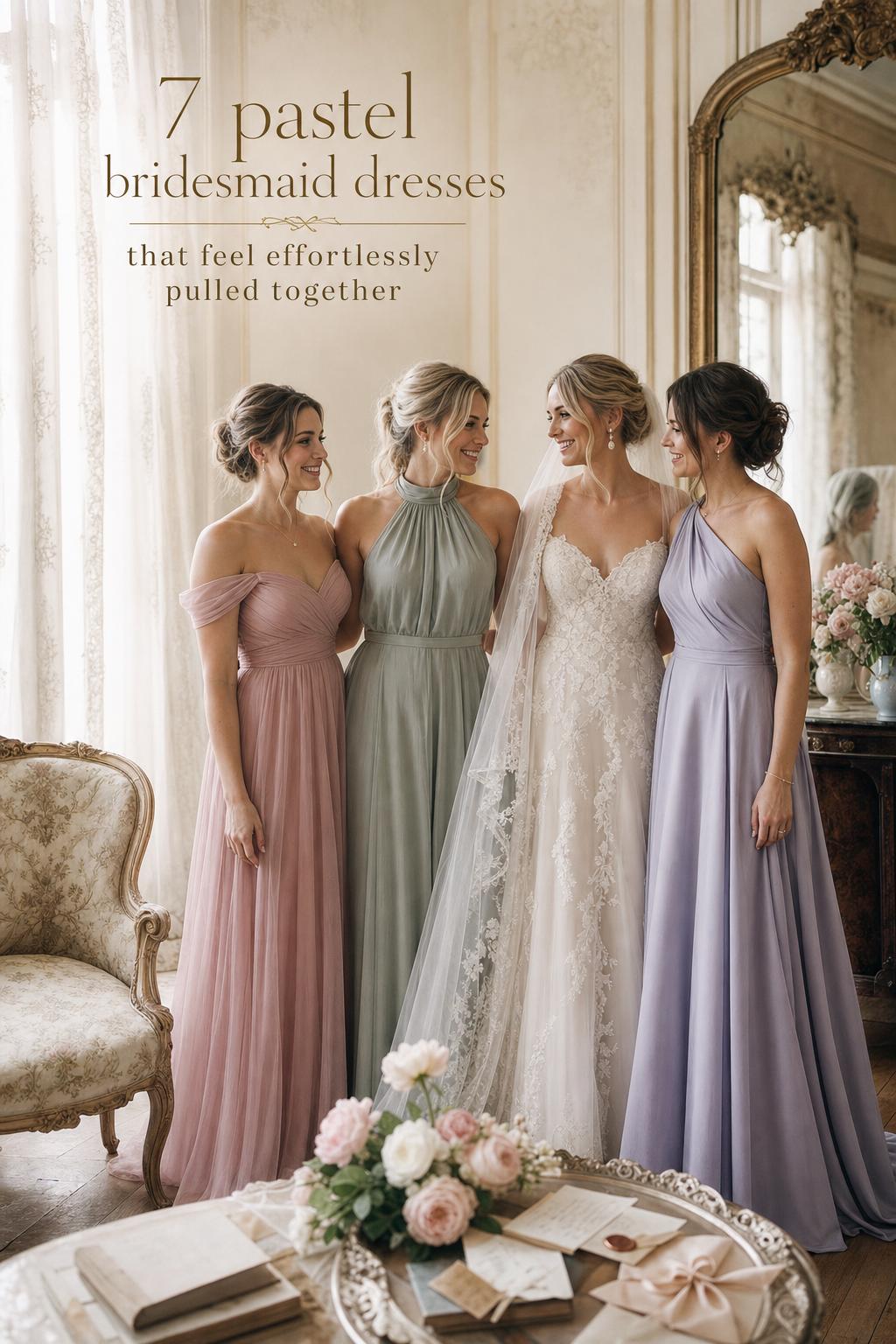
This guide approaches pastel bridesmaid dresses as a styling problem worth solving carefully. You will find color-family guidance, silhouette logic, venue-based ideas, fabric recommendations, shopping direction across brands such as Bella Bridesmaids, Anthropologie and BHLDN, Ever-Pretty, WeddingWire-featured labels, and designer names that appear often in bridal fashion, including Nouveau Amsale, Jenny Yoo, LulaKate, Sachin & Babi, Amsale, and Hayley Paige Occasions.
Why pastel bridesmaid styling can be harder than it looks
Pastels are delicate by nature. That is exactly what makes them beautiful, and exactly what makes them unforgiving when the details are off. A blush chiffon gown and a powder blue satin slip may both belong to the same soft-color family, yet they can read very differently in motion, under daylight, and beside floral arrangements or venue décor. The styling problem usually appears when color, fabric, silhouette, and season are chosen separately instead of as one visual story.
Your wedding look is only the beginning.
Keep your guest list, vendors, timeline, and every important detail together with Zarellea — so your day feels as considered as your style.
Comfort also matters more than many people expect. Bridesmaids are not standing still for a portrait and then going home. They are walking across grass at a garden ceremony, navigating sand at a coastal venue, sitting through dinner, dancing late into the reception, and often wearing the dress for many hours. A pastel look that seems perfect on a hanger can become less convincing if the fabric wrinkles too easily, the neckline feels restrictive, or the silhouette only flatters one body type.
Another common issue is seasonality. Some readers still associate soft colors only with spring, yet editorial coverage and product roundups repeatedly show that pastel bridesmaid dresses are not limited to one season. The real question is not whether pastels are appropriate, but which version of pastel makes sense for the wedding atmosphere, the light, and the surrounding textures.
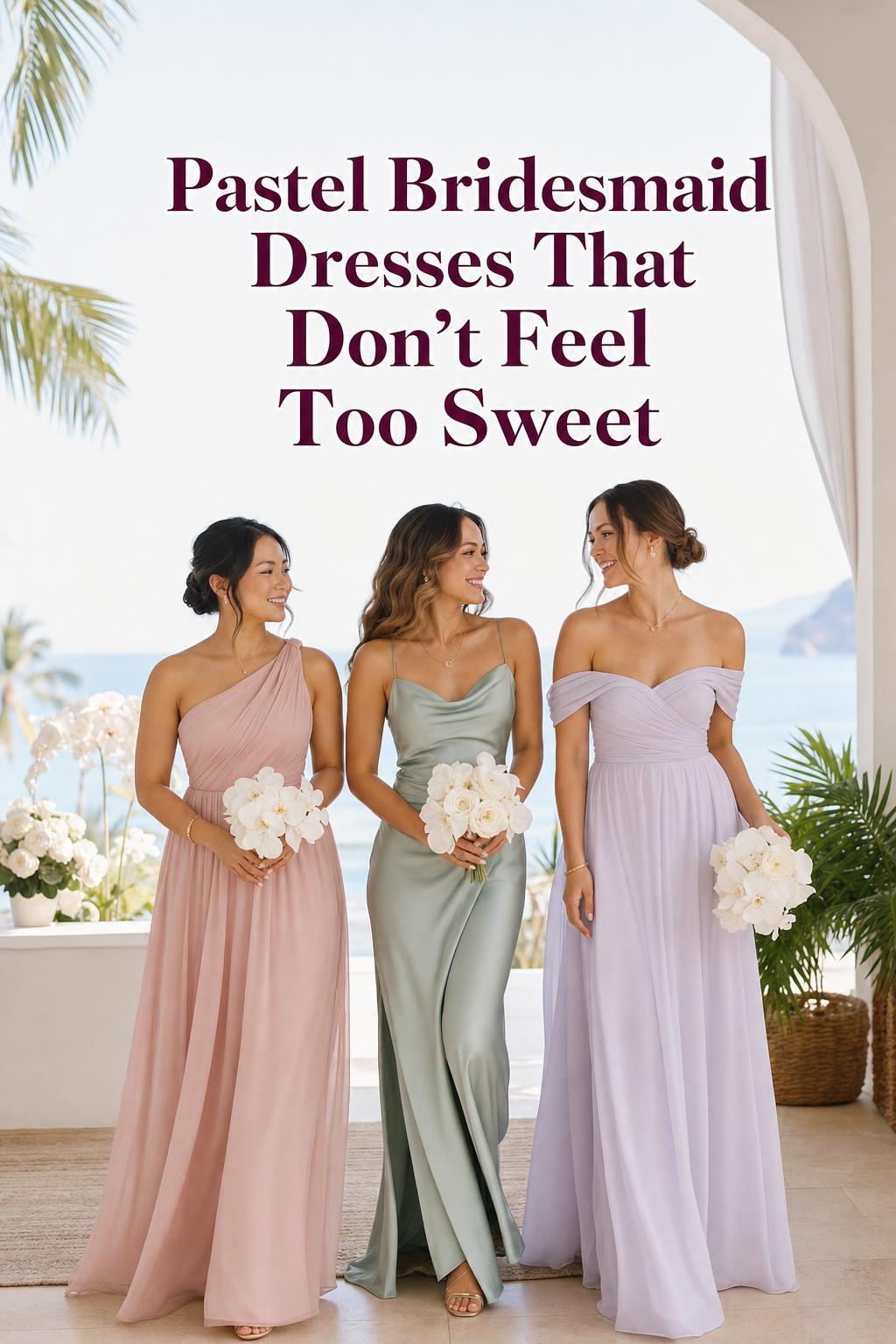
The principles that make a pastel bridal party feel intentional
The easiest way to make a soft palette work is to think in connected decisions rather than isolated ones. Start with the overall pastel family, then choose silhouettes and fabrics that support it. This prevents the bridal party from looking accidentally mixed instead of thoughtfully coordinated.
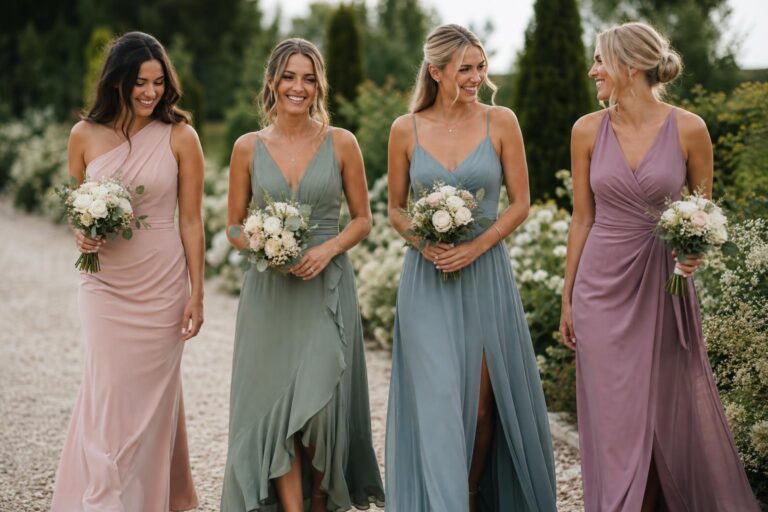
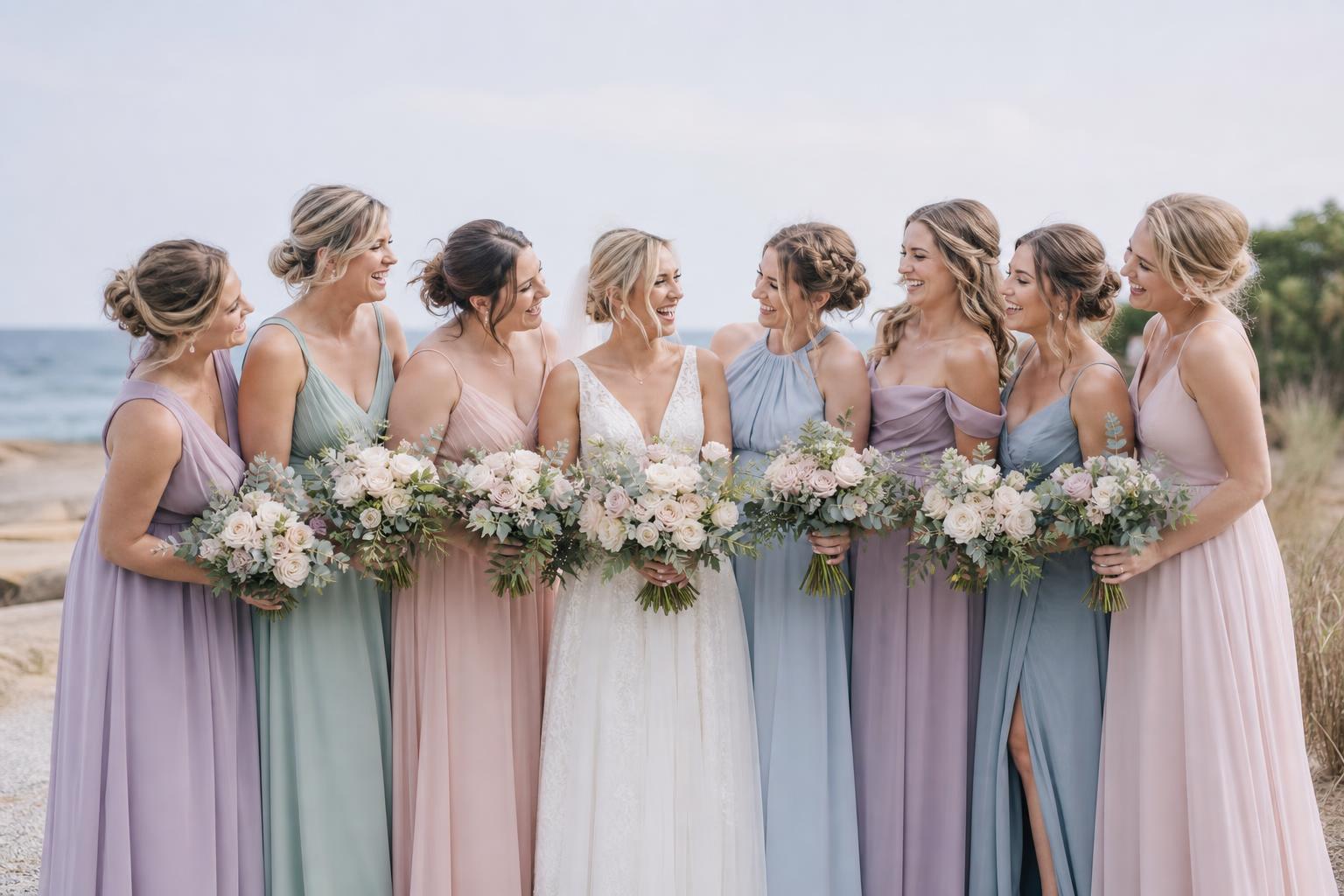
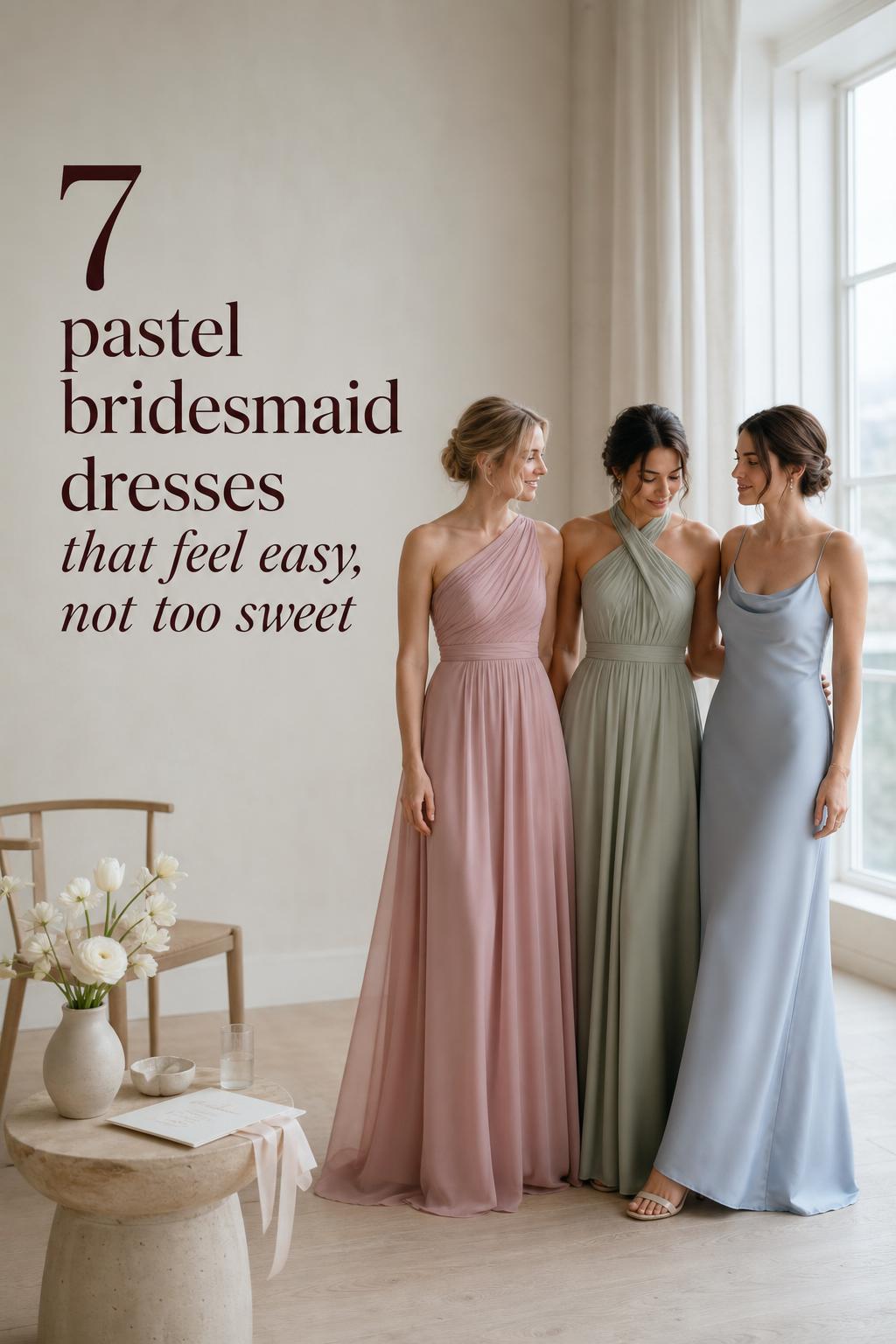
- Keep the palette clear. A painterly range of blush, dusty rose, lilac, sage, mint, powder blue, and periwinkle can be beautiful, but it works best when the tones share a similar softness.
- Match fabric mood to venue mood. Chiffon and tulle lean romantic and airy, while satin and sleeker column shapes feel more modern.
- Use silhouette variety with purpose. Mismatched bridesmaids work best when one element stays consistent, such as color family, fabric direction, or dress length.
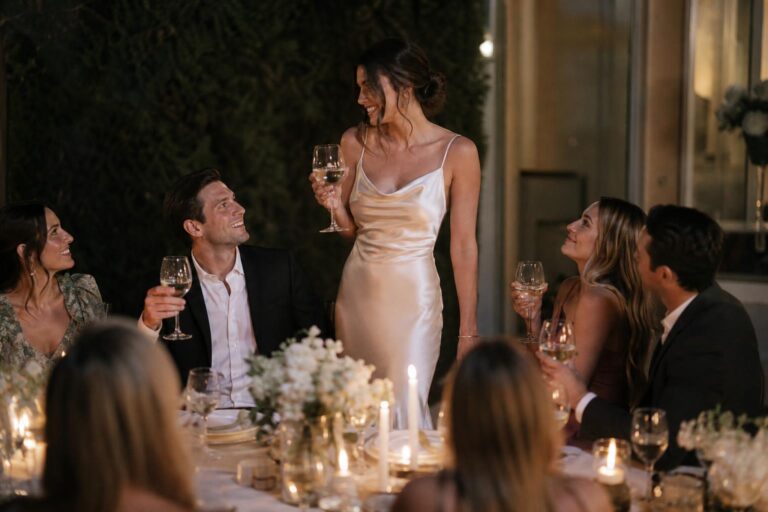
- Consider the light. Pastels can read differently in golden hour, bright beach sun, or a candlelit ballroom reception.
- Remember movement. The best bridesmaid dress is one that still looks elegant after a full day of ceremony, photos, dinner, and dancing.
These principles are especially useful when you are balancing multiple preferences. One bridesmaid may prefer a halter neckline, another may want off-shoulder styling, while someone else feels best in an A-line gown. A coordinated pastel palette allows individuality without losing visual harmony.
Reading the pastel palette: color families and the mood they create
Blush and dusty rose for soft romantic weddings
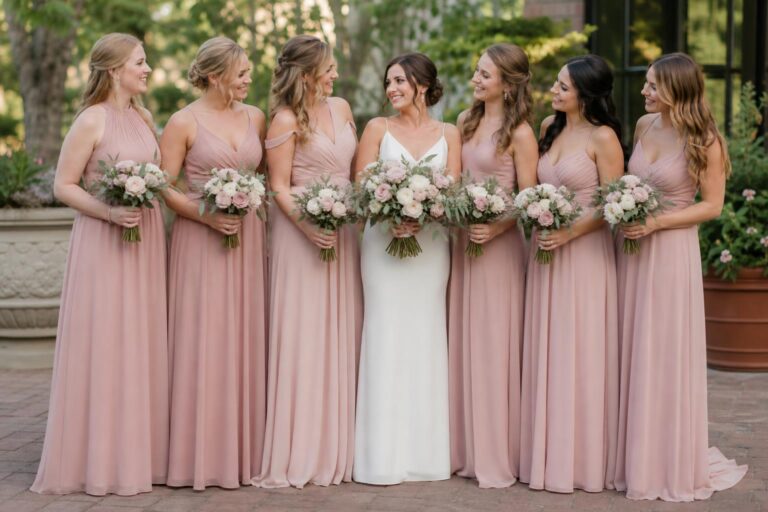
Blush and dusty rose are among the easiest pastel families to style because they already sit naturally inside romantic wedding imagery. They pair especially well with chiffon gowns, fluid A-line silhouettes, and gardens or floral-heavy settings. Designers frequently associated with this soft, refined direction include Jenny Yoo, Nouveau Amsale, and Amsale, all of which are often featured in pastel dress roundups.
If the wedding has a romantic editorial tone, blush and dusty rose tend to feel graceful rather than overly sweet when the silhouettes stay clean. A satin slip in a muted pink can modernize the palette, while chiffon keeps it classic. This color family is especially helpful for bridal parties that want softness without the cooler cast of blue or lavender tones.
Powder blue, ice blue, and sky tones for fresh coastal light
Powder blue and related sky tones bring an airy, polished quality to pastel bridesmaid dresses. They are often most convincing in beach, coastal, or open-sky settings, where the dress color feels connected to the surroundings rather than decorative. In a place like Maui, these tones can feel natural and elegant, especially in flowing fabrics that move beautifully in wind.
Blue pastels also suit brides who want softness without leaning floral. A column silhouette, a halter neckline, or a sleek satin finish can stop the palette from feeling too delicate. If the ceremony moves from daylight into an evening reception, powder blue often retains its clarity better than some pinks that may shift warmer under reception lighting.
Mint, sage, lavender, and lilac for a floral, nature-forward palette
Mint, sage, lavender, and lilac create a more botanical kind of pastel story. These are the shades that often feel at home in garden ceremonies, vineyard-style settings, or destination celebrations with abundant natural texture. Sage in particular bridges pastel softness with a grounded look, which is useful when a bridal party wants color without too much sweetness.
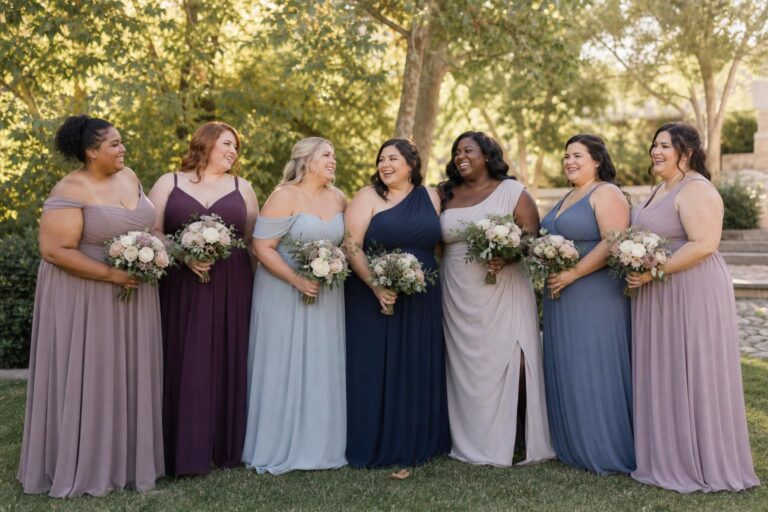
Lavender and lilac can lean whimsical or modern depending on the silhouette. A ruffled dress or softer chiffon shape highlights the floral quality of the shade. A cleaner slip silhouette or one-shoulder cut makes the same color look more contemporary. This is where mix-and-match styling becomes particularly effective: a bridal party can combine sage, mint, and lilac if the saturation stays similarly muted.
Periwinkle and dusty blue-purple for a modern pastel direction
Periwinkle sits in that elegant space between blue and lavender, which is why it feels fresh for bridesmaids who want a modern twist on soft color. It is less expected than blush, but still gentle enough to fit a romantic event. In editorial-style wedding coverage, periwinkle and dusty blue-purple shades often read especially well in refined silhouettes and more polished evening settings.
For a formal reception, these shades benefit from simpler shapes. A fit-and-flare gown, a column dress, or a structured satin design keeps the palette elevated. They also work well when mixed with powder blue or lilac, provided the overall range still feels cohesive rather than overly broad.
Silhouette first or color first? How stylists solve the mismatch question
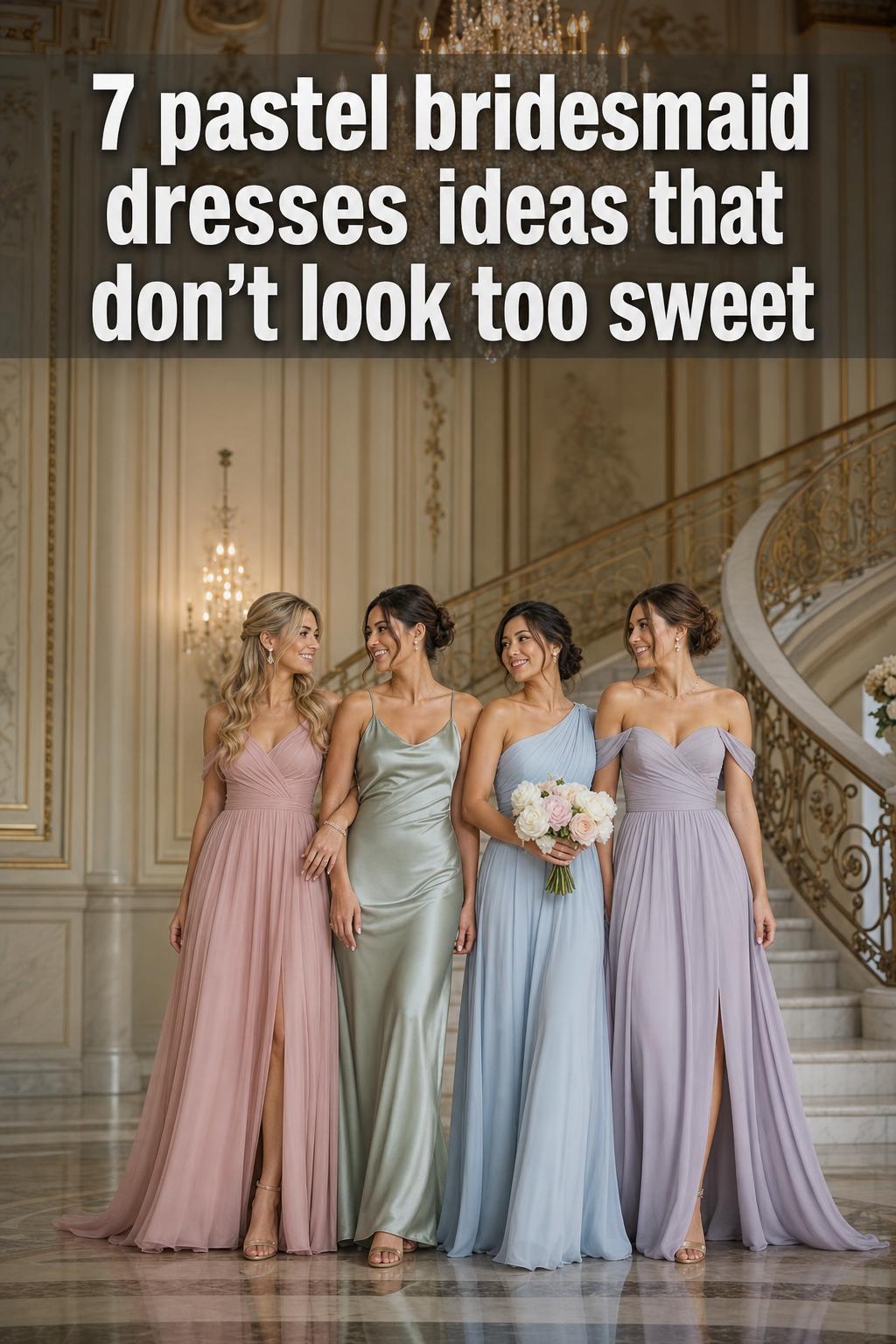
One of the biggest decisions in pastel bridesmaid styling is whether to coordinate silhouettes or embrace a mismatched look. Both approaches can work. The mistake is treating mismatching as random. The strongest bridal party styling usually keeps one anchor steady.
If your palette includes several shades such as blush, sage, powder blue, and lilac, keeping fabric or dress length consistent helps the group feel edited. This is why brand collections from Bella Bridesmaids or Anthropologie and BHLDN often appeal to bridal parties: they make it easier to mix different shapes within a controlled pastel story. You may see a halter gown beside an off-shoulder dress, or a slip shape beside an A-line silhouette, but the overall mood remains aligned.
On the other hand, if everyone is wearing the same pastel shade, variation in silhouette can add interest without complicating the palette. This works particularly well when bridesmaids have different fit preferences. A single-shade focal palette feels clean and intentional, especially in photos, while still allowing comfort and body-shape flexibility.
- Choose coordinated silhouettes if the wedding aesthetic is formal, minimal, or ballroom-oriented.
- Choose mismatched silhouettes if comfort, individuality, and a more editorial bridal-party look matter most.
- Choose one color for all if the venue is visually busy and you want the party to look calm and unified.
- Choose multiple pastel shades if the setting is romantic, painterly, and suited to layered color.
Fabric decisions that change the entire look
Pastel color does not exist on its own. It is shaped by the fabric carrying it. This is why satin versus chiffon appears so often in pastel bridesmaid discussions: the same shade can look dramatically different depending on texture, sheen, and movement.
Chiffon for softness, movement, and romantic settings
Chiffon is a natural choice for pastel bridesmaid dresses because it supports the lightness of the color. It drapes softly, moves beautifully in outdoor settings, and works especially well in blush, dusty rose, sage, and powder blue. For a garden ceremony in Ojai or a breezy destination event, chiffon feels visually at home.
It is also practical for bridal parties that want comfort across different body types. A-line chiffon gowns and soft fluttering silhouettes generally photograph well and allow easier movement than more rigid constructions. The trade-off is that chiffon leans more romantic than modern, so if the wedding style is very sleek, it may need cleaner accessories and simpler shapes.
Satin for a polished, modern pastel finish
Satin gives pastels a richer, more directional quality. A pastel satin slip dress in lilac, powder blue, or dusty rose can feel especially elegant for an evening reception or a city-leaning wedding aesthetic. Anthropologie and BHLDN collections often reflect this mix-and-match approach, where fabric and silhouette do much of the styling work.
The main advantage of satin is refinement. The caution is that satin highlights fit, understructure, and movement more clearly than chiffon. For that reason, it often works best when the bridal party has enough time for alterations and when the dress shape suits the wearer comfortably.
Tulle, lace, organza, capes, and soft statement details
Pastel styling does not need to stay minimal. Lace, tulle, organza, capes, and ruffled details appear in collections and editorial roundups because they add dimension to lighter shades. These details can be beautiful, especially in ceremony-focused looks, but they need restraint. When the color is already delicate, too many decorative elements can make the bridal party feel visually crowded.
A useful rule is to let either the color story or the embellishment lead. If your palette is already multicolored and mismatched, simpler silhouettes often look stronger. If the palette is a single pastel shade, one statement detail such as a cape or softly structured sleeve can add interest without disrupting cohesion.
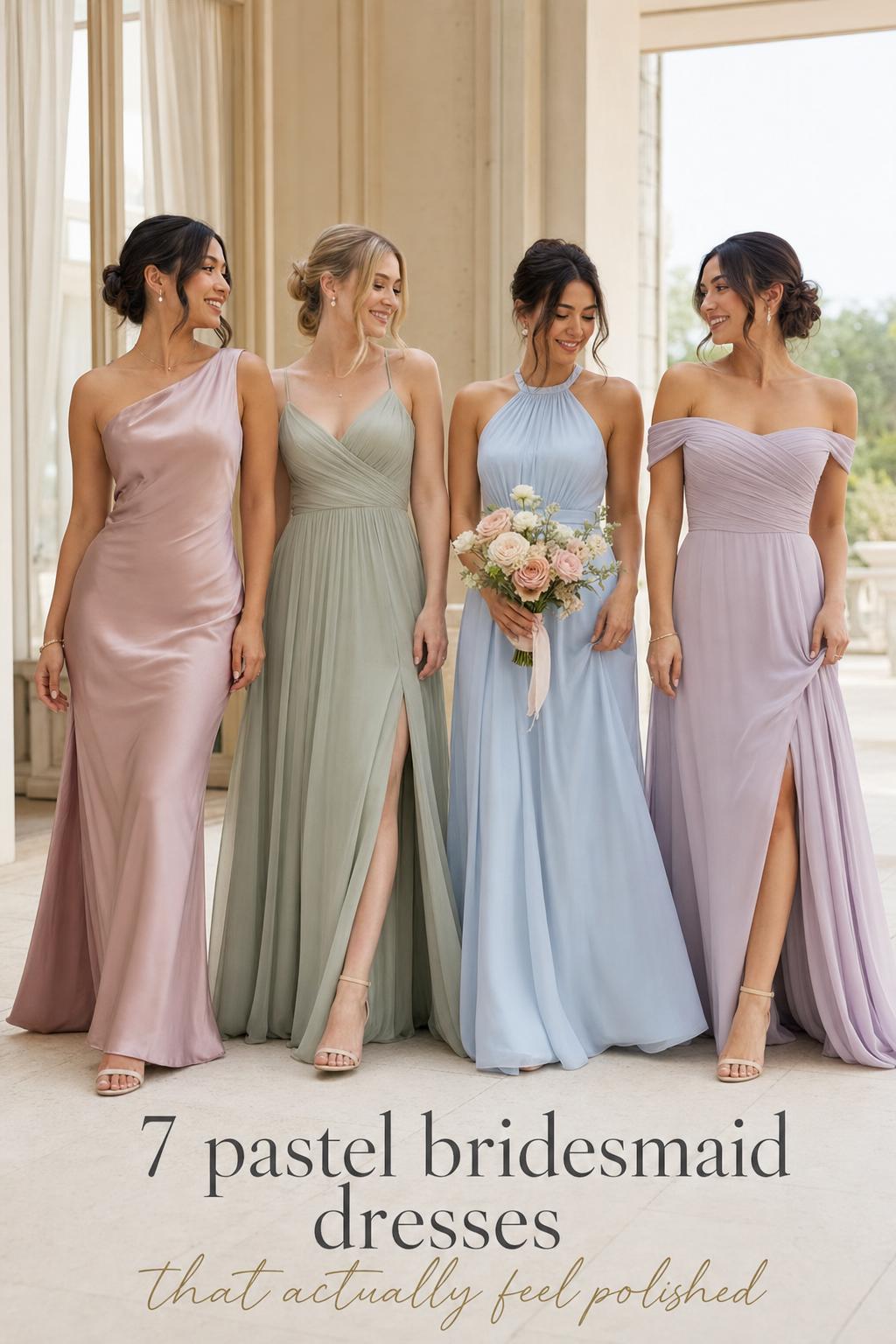
Venue-driven outfit solutions for pastel bridesmaid dresses
Garden ceremony: layered softness without visual clutter
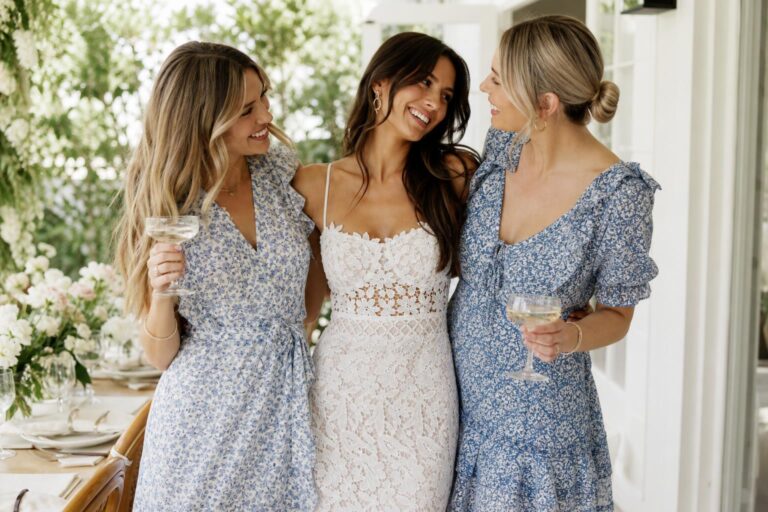
A garden wedding invites pastel bridesmaid dresses naturally, but it also requires discipline. Flowers, greenery, and natural light already bring plenty of visual detail. The most polished approach is usually a palette of two to four related shades, such as blush, dusty rose, sage, and lilac, in flowing chiffon or similarly soft fabrics. A-line, one-shoulder, and halter silhouettes create variation without excess.
This is the setting where mismatched bridesmaids often look their best. The organic atmosphere supports a painterly range of color, and the softness of chiffon suits movement on paths, lawns, and outdoor aisles. A designer-led assortment from Jenny Yoo, LulaKate, or Amsale can help keep the styling elevated rather than improvised.
Beach or coastal wedding: airy colors that hold up in bright light
At a beach ceremony, pastel choices should feel light enough for the setting but not so pale that they disappear in strong daylight. Powder blue, ice blue, mint, and sage are especially effective here. They echo the environment and tend to look fresh in photography. Silhouettes should move easily, whether that means a simple maxi shape, a slip silhouette, or a softly draped chiffon gown.
Pastels for the coast benefit from clean styling. Fewer heavy details, less structured volume, and fabrics with fluidity make sense both visually and practically. A bridal party walking near sand or uneven ground needs dresses that move gracefully and remain comfortable through wind and heat.
Ballroom reception: soft color with stronger structure
Ballroom weddings often make brides hesitate about pastel bridesmaid dresses, yet soft color can be striking in a formal room if the dress construction is refined. Satin, cleaner columns, fit-and-flare shapes, and more tonal matching tend to work better here than highly varied chiffon styles. Periwinkle, dusty blue-purple, lilac, and dusty rose all translate beautifully when the finish feels polished.
In a candlelit reception, too many pastel shades at once can lose definition. A narrower palette, or even one unified shade with varied necklines, usually looks more elegant. This is where dress names and designer-specific pieces from Bella Bridesmaids can be useful, since their curated selections often show how different formal silhouettes can still fit inside the same soft-color direction.
Designer and brand routes that solve different bridesmaid problems
Bridal parties do not all shop the same way. Some want designer-led cohesion, some want catalog-style mix-and-match convenience, and some need a more budget-aware path. Understanding how each brand or retailer tends to approach pastel dressing helps narrow the search.
Bella Bridesmaids is especially useful for readers drawn to named styles and designer clarity. Pastel-focused edits often feature Nouveau Amsale Amelia, Jenny Yoo Amara, LulaKate Demi, Sachin & Babi Bianca Gown, and Amsale Cora. That kind of product-specific curation helps when the bridal party wants recognizable silhouettes tied clearly to a designer aesthetic.
Anthropologie and BHLDN are strong options for the mix-and-match approach. Their pastel bridesmaid assortments often emphasize collection thinking: slip dresses, midi and maxi lengths, satin and chiffon, and enough variety to let each bridesmaid choose a shape that feels comfortable while still fitting the palette.
Ever-Pretty speaks more directly to the romantic, practical shopper who wants accessible pastel options with style guidance built in. WeddingWire roundups add a wider shopping lens by grouping pastel dresses across different brands and often highlighting shopping cues and price awareness. Love & Lavender contributes a more image-led perspective, showing how soft colors come alive in real wedding settings from Maui to Long Island and Ojai, which can be particularly helpful for brides making decisions from inspiration photos rather than a fixed shopping list.
Real-wedding inspiration: what pastel palettes look like in practice
Pastel styling becomes easier once you picture it in a setting rather than as a row of swatches. A bridal party in Long Island may look strongest in a refined dusty rose and lilac palette with cleaner gowns that suit a more polished venue. In Ojai, the same group could shift toward sage, blush, and lavender in flowing chiffon, creating a softer connection to the landscape. In Maui, powder blue and mint become especially compelling because the tones feel lifted by sea light rather than competing with it.
These examples reveal an important truth: the best pastel palette is not just the prettiest one in isolation. It is the one that belongs to its environment. That is why location references in bridal inspiration matter. They help brides understand that a pastel dress does not simply need to match a color scheme. It needs to respond to venue texture, weather, light, and the formality of the event.
For bridal parties using real-wedding images as a guide, look for patterns rather than copying one photo too literally. Notice whether the dresses share a fabric finish, whether the tones all lean cool or warm, and whether the most successful mismatched groups still keep one common thread. That is usually where the styling discipline lives.
Tips for making soft colors look stronger in photos and in person
- If you are mixing shades, keep the depth similar. A very pale mint beside a deeper dusty rose can feel disconnected unless the rest of the palette bridges them.
- Use silhouette repetition if you are uncertain about color mixing. Even two or three similar shapes can make varied pastels feel more deliberate.
- For outdoor weddings, flowing fabrics such as chiffon often create the most photogenic movement.
- For evening receptions, satin and more structured silhouettes help pastels retain presence under lower light.
- When in doubt, narrow the palette instead of expanding it. Two harmonious shades usually look more polished than five that only loosely relate.
A further practical note: soft colors can be sensitive to alterations and fit. A beautifully chosen pastel loses some of its elegance if the neckline shifts awkwardly or the hem length fights the shoe. This is one reason size inclusivity and alteration planning deserve attention early, even though they are sometimes treated as afterthoughts in inspiration-focused shopping.
Common mistakes that make pastel bridesmaid dresses feel less refined
The most frequent mistake is confusing variety with cohesion. A bridal party can wear different colors, different necklines, and different fabrics, but not every variation is equally helpful. Too much contrast makes a soft palette look accidental. The dresses stop reading as a group and start reading as separate outfits.
Another misstep is choosing pastels purely by trend without considering setting. A beach wedding may not need heavy satin with intricate details. A ballroom reception may not benefit from a very loose painterly mix that looked charming in a meadow editorial. The venue should shape the final edit.
There is also the issue of overdecorating. Because pastel shades already convey romance, they often need less help than people think. Capes, ruffles, lace, off-shoulder details, halter necks, and dramatic color mixing can all be beautiful, but they do not need to appear at once. The strongest bridal styling usually edits itself.
A practical shopping framework for the U.S. bridal party
For a U.S.-based bridal party, the most useful shopping path begins with decisions before browsing. First choose whether the wedding needs a single-shade palette or a mix-and-match approach. Then decide the visual direction: romantic chiffon, polished satin, or a blend of the two. Only after that should you begin comparing designers and retailers.
If designer identity matters, start with Bella Bridesmaids and its designer-led assortments from Nouveau Amsale, Jenny Yoo, LulaKate, Sachin & Babi, and Amsale. If flexibility matters more, Anthropologie and BHLDN are especially suited to bridesmaids selecting different silhouettes within one color story. If budget and accessibility are central, Ever-Pretty and broader WeddingWire-style product roundups can widen the field.
During this stage, think about alterations early rather than late. Pastel dresses often rely on drape and line for their elegance, so fit issues become more visible. A gown does not need to be complicated to look exceptional. It simply needs to be cut well for the person wearing it and suited to the venue where it will be seen.
Conclusion
The beauty of pastel bridesmaid dresses lies in their restraint. They create softness without heaviness, romance without excess, and flexibility across many wedding styles when handled thoughtfully. The key is to stop treating color, silhouette, fabric, and venue as separate choices. Once they are considered together, the right palette becomes much easier to see.
Whether you are drawn to blush chiffon, powder blue satin, sage mix-and-match gowns, or a refined periwinkle lineup, the strongest bridal party look will always feel connected to its setting and comfortable enough to last through the entire celebration. That combination of beauty and practicality is what makes a pastel palette truly successful.
FAQ
Can you mix different pastel bridesmaid dress colors in one wedding party?
Yes, and it often looks especially beautiful when the tones share a similar softness. The easiest way to make mismatched pastel bridesmaids feel cohesive is to keep one anchor consistent, such as fabric type, dress length, or overall color depth.
Are pastel bridesmaid dresses only appropriate for spring weddings?
No. Pastels appear in styling guides and dress roundups well beyond spring. The better question is which pastel family suits the venue and atmosphere, since powder blue, periwinkle, dusty rose, sage, and lilac can all work across different seasons when styled appropriately.
What fabrics work best for pastel bridesmaid dresses?
Chiffon and satin are the most consistently useful choices. Chiffon supports a romantic, airy look and moves well outdoors, while satin gives pastel shades a cleaner, more polished finish that often suits formal receptions and modern silhouettes.
Do pastel dresses photograph well in different lighting?
They can photograph beautifully, but lighting matters. Outdoor daylight tends to flatter airy shades such as powder blue, mint, and blush, while evening settings often benefit from more structured silhouettes or satin finishes so the dresses keep visual definition.
What is the easiest pastel color family to coordinate?
Blush and dusty rose are often the simplest starting points because they fit naturally into romantic wedding styling and pair well with many fabrics. They also blend easily with adjacent shades such as lilac, sage, and soft champagne-toned décor references.
Should bridesmaids all wear the same silhouette in a pastel palette?
Not necessarily. If everyone is wearing one pastel shade, varying the silhouettes can add interest and comfort. If the bridal party is wearing multiple pastel shades, keeping the silhouettes more coordinated can help the overall look stay polished.
Where can you shop for pastel bridesmaid dresses in the U.S.?
Bridal parties often look to Bella Bridesmaids for designer-focused options from names such as Nouveau Amsale, Jenny Yoo, LulaKate, Sachin & Babi, and Amsale. Anthropologie and BHLDN are especially useful for mix-and-match collections, while Ever-Pretty and WeddingWire-style roundups help broaden the search.
Which pastel shades work especially well for beach or garden weddings?
For beach weddings, powder blue, ice blue, mint, and sage tend to feel natural in bright coastal light. For garden weddings, blush, dusty rose, lavender, lilac, and sage often create the most romantic, floral-forward effect.
How do you keep pastel bridesmaid dresses from looking too sweet?
Use cleaner silhouettes, controlled color ranges, and fabrics that suit the formality of the event. Satin slip dresses, halter necklines, column gowns, and refined periwinkle or dusty blue-purple tones can make a pastel palette feel modern rather than overly delicate.