Spring Floral Mother of the Bride Dresses That Feel Modern
By the time wedding plans reach the mother-of-the-bride wardrobe conversation, one question often rises quickly: should the dress lean into a floral print, or should it stay more textural with floral lace, embroidery, or a quieter formal finish? Floral mother of the bride dresses sit at an interesting intersection of romance and occasion dressing. They can feel soft and celebratory in a garden ceremony, refined in a ballroom, or fresh and light at a destination wedding, yet the difference between a tasteful floral and an overpowering one is usually found in silhouette, fabric, and scale.
That is why floral styles are so often discussed together, and so often confused. A watercolor chiffon gown from Azazie creates a very different impression from a floral lace option at ADASA, and both read differently again from a structured print-led style seen at Karen Millen or a designer-driven statement dress in a Bloomingdale’s lookbook. The category is broad, but not vague. It has clear style families.
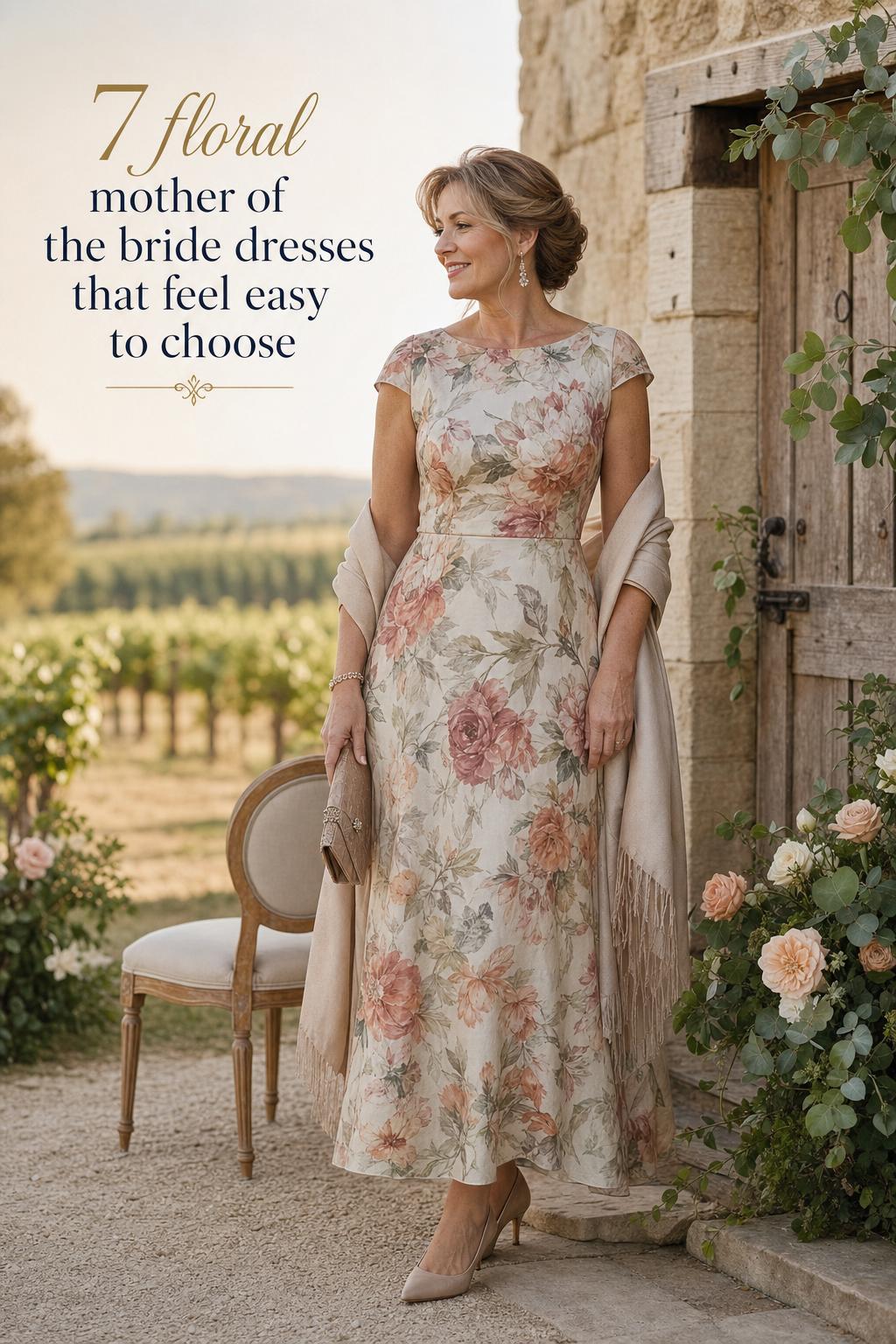
This comparison breaks down the main approaches to floral mother of the bride dresses, from bold floral prints to subtle floral lace and embroidery, and from flowing A-line silhouettes to more polished sheath or ballgown-inspired shapes. Along the way, it also compares seasonal use, venue suitability, accessories, alteration considerations, and where different brands and retailers fit within the picture.
The three floral directions most mothers consider
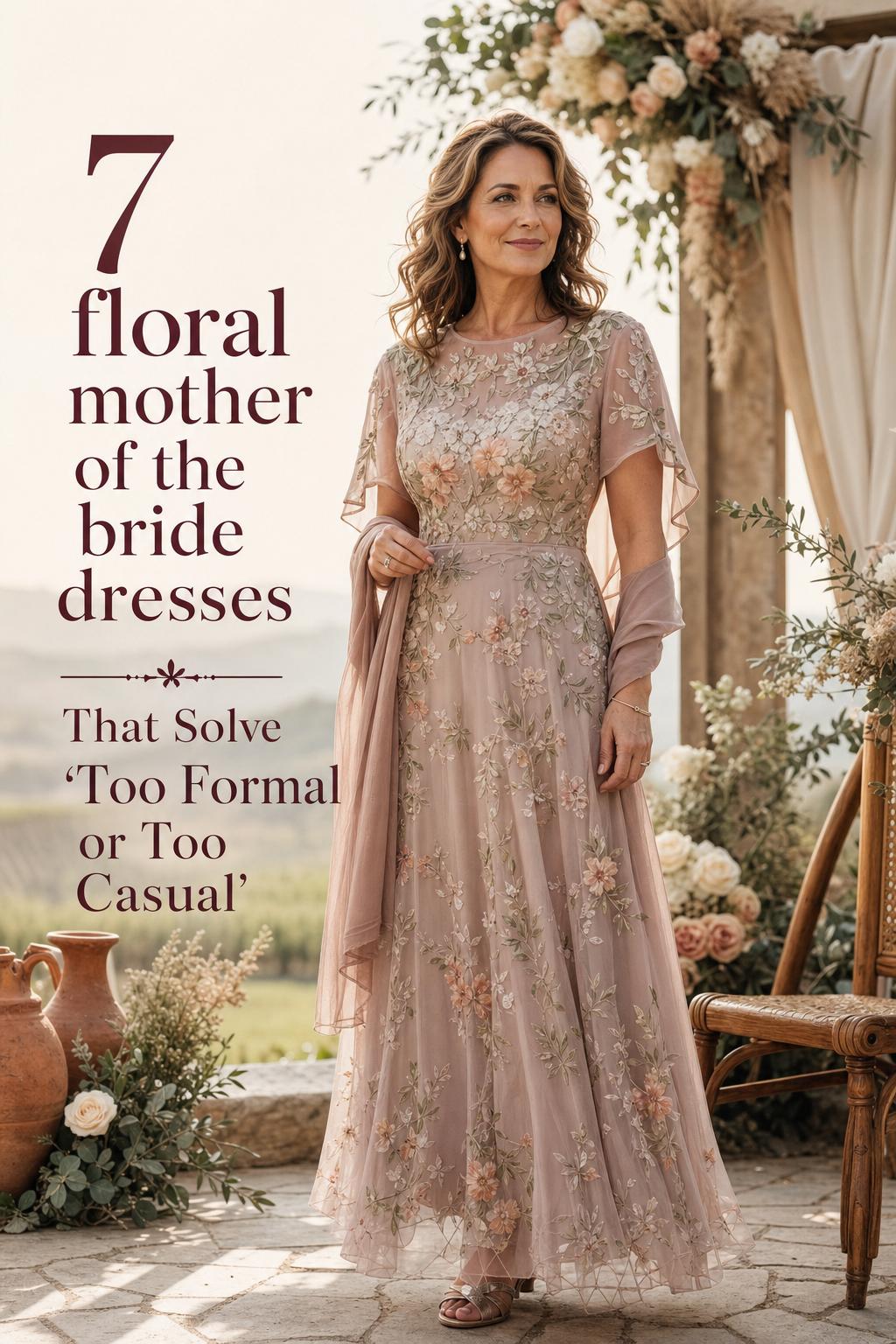
In practice, most floral mother of the bride dresses fall into three style directions. The first is the floral print dress, where the pattern is the main visual feature. The second is floral texture, which includes floral lace, floral embroidery, and similar surface detail. The third is the blended floral formal dress, where the floral element is present but balanced by a stronger eveningwear structure, richer fabric handling, or elevated designer styling.
Your wedding look is only the beginning.
Keep your guest list, vendors, timeline, and every important detail together with Zarellea — so your day feels as considered as your style.
These directions share the same romantic starting point, yet they communicate different levels of softness, formality, and visual presence. Understanding that difference makes shopping much easier, especially when comparing category pages at Macy’s, AW Bridal, Azazie, Teri Jon, or Bloomingdale’s, where many dresses technically belong to the same floral group but deliver very different effects.
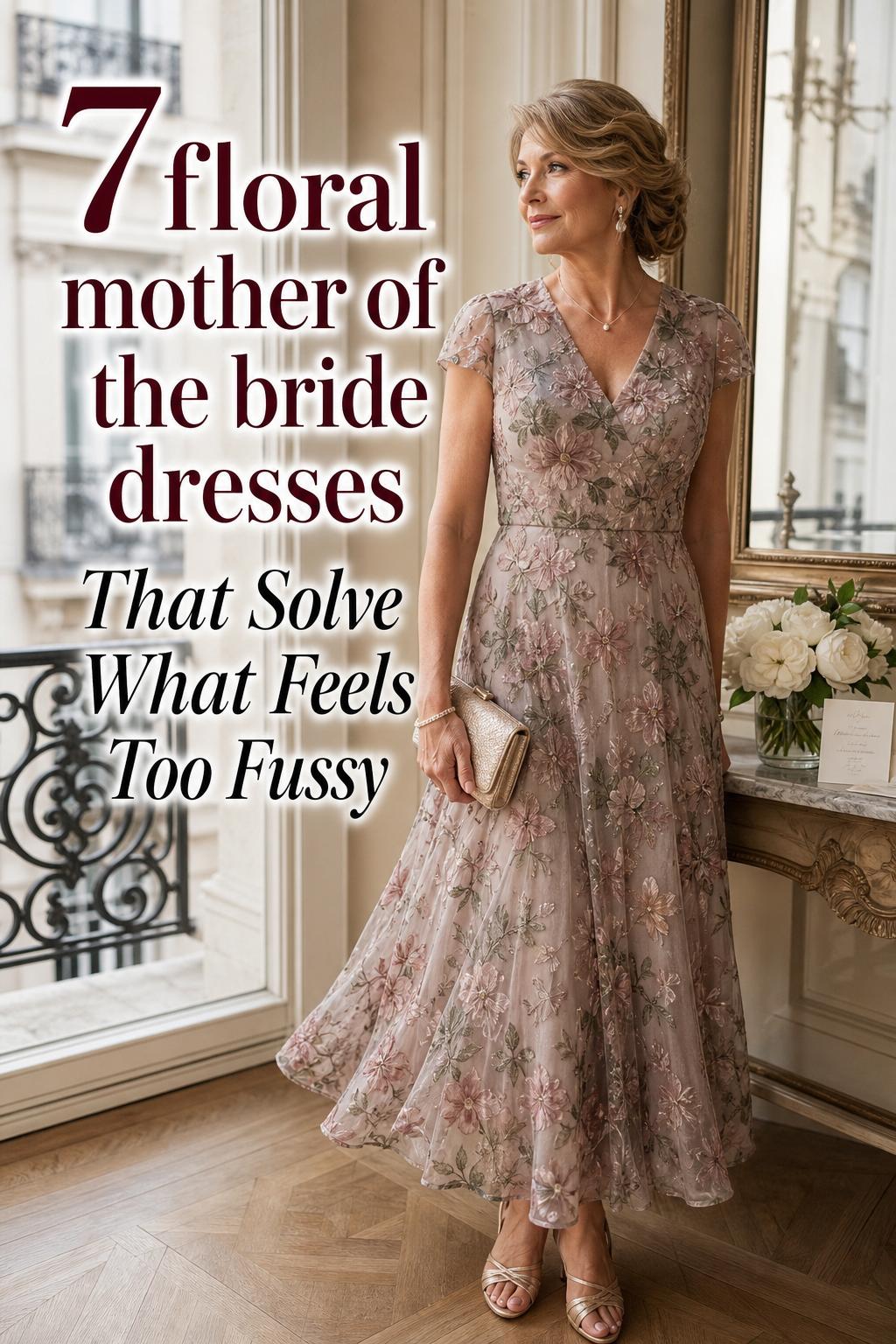
Style overview: floral print dresses
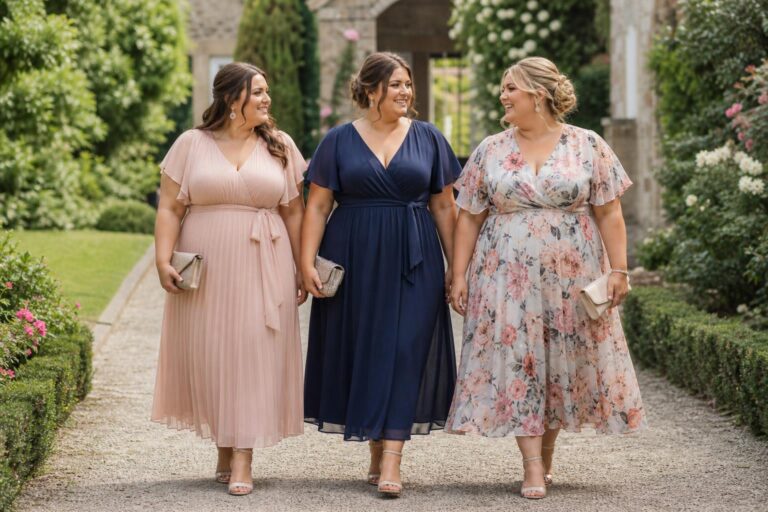
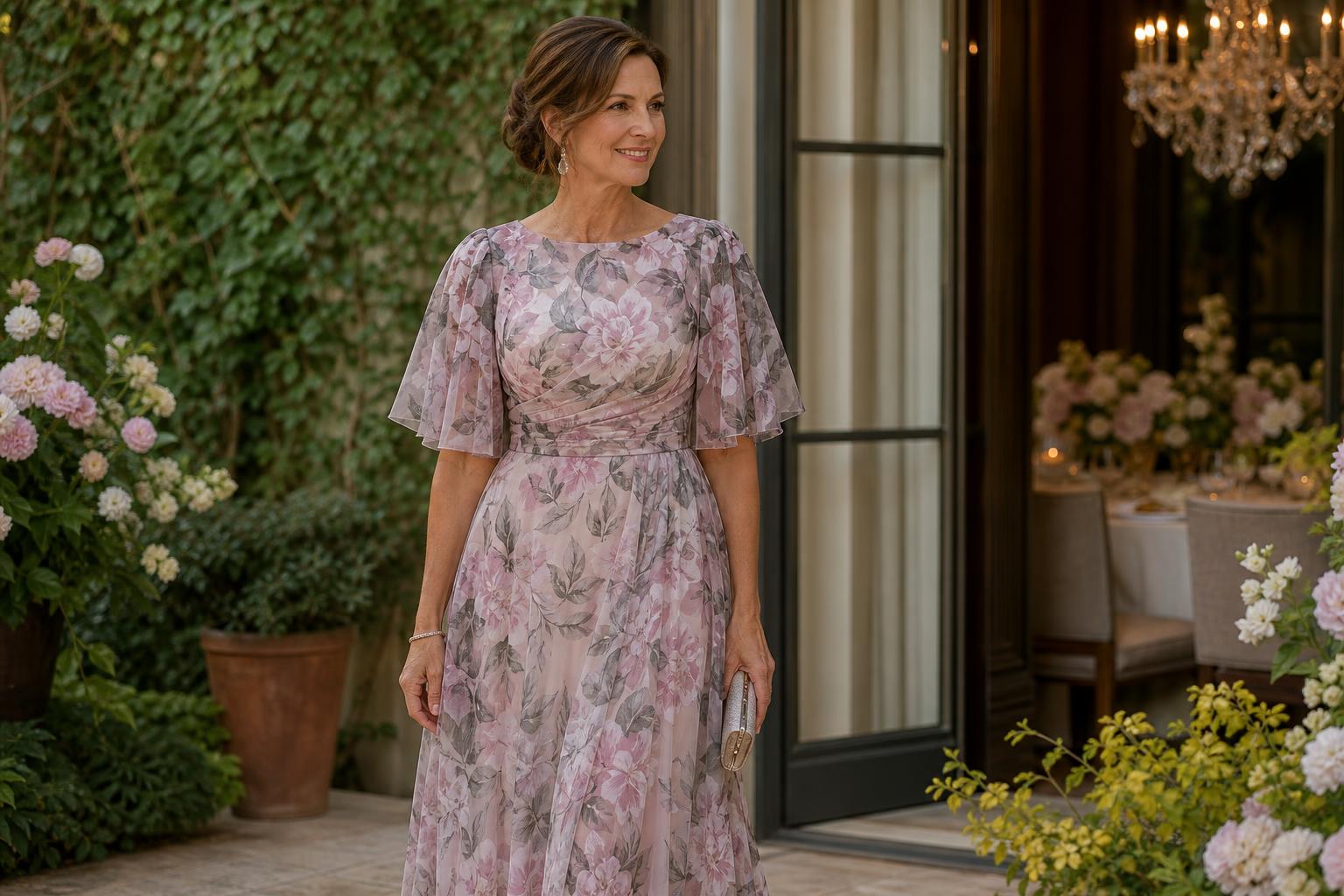
Floral print mother-of-the-bride dresses are defined by visible pattern placement. They may feature botanical motifs, garden-inspired blooms, or softer watercolor florals. Typical silhouettes include A-line gowns, maxi lengths, and midi options, with chiffon and lighter formal fabrics often helping the print move gracefully. The overall mood is expressive, romantic, and often seasonally linked, especially for spring and summer weddings.
Style overview: floral lace and embroidered florals
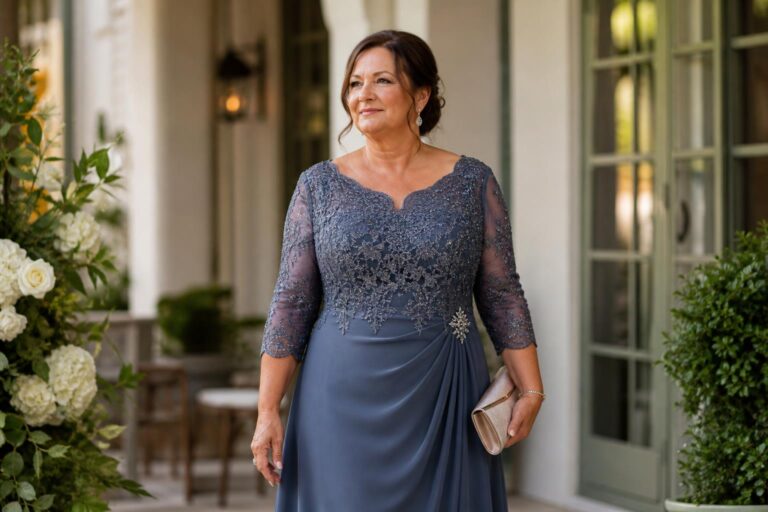
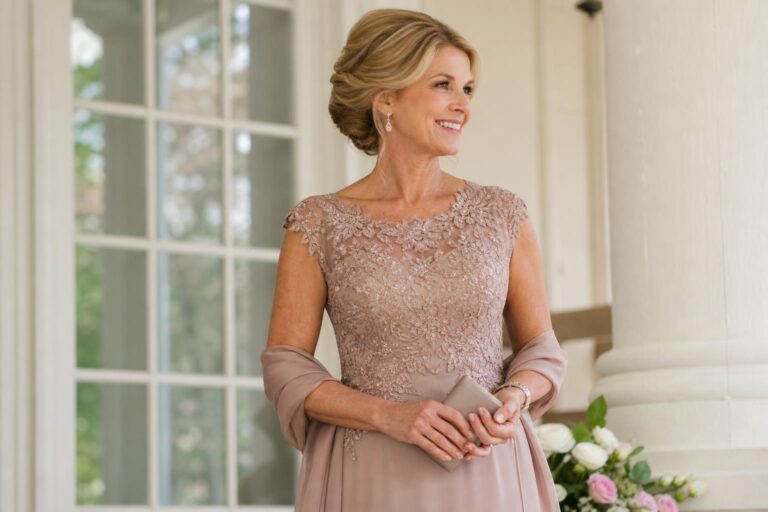
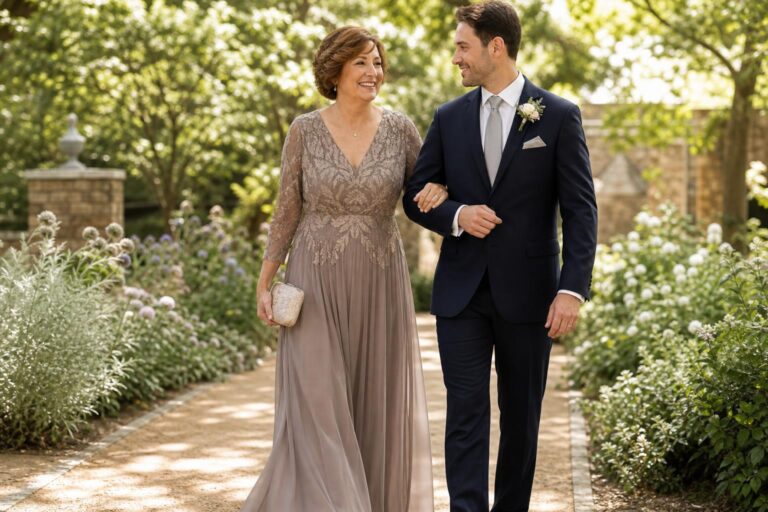
Floral lace and embroidered styles focus less on printed pattern and more on surface texture. These dresses often feel more refined at first glance because the floral detail is integrated into lace, appliqué-like decoration, or stitched embellishment. Silhouettes vary from sheath to A-line and cape-sleeve gowns, while fabrics such as lace and chiffon create a softer, more dimensional finish. The mood is elegant, polished, and often slightly more formal than a straightforward print.
Style overview: floral formal statement dresses
This category includes dresses where the floral motif is only one part of the visual story. A gown may have a stronger evening silhouette, a dramatic neckline, cape sleeves, or designer-led styling, as seen in lookbook-style assortments from Bloomingdale’s or brand collections from Teri Jon by Rickie Freeman. Color can shift from pastels into jewel tones, and the overall aesthetic is more structured, more event-aware, and often suited to formal receptions.
Why floral print and floral lace are often mistaken for the same style
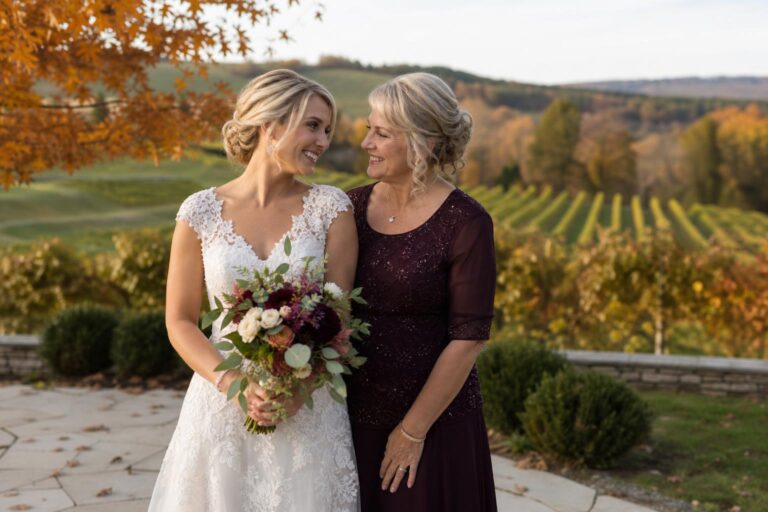
They belong to the same visual family, but they do not behave the same way on the body or in photographs. A print sits on the fabric surface and tends to read immediately, even from a distance. Floral lace or embroidery reveals itself more gradually, often through texture, light, and movement. In wedding settings, that distinction matters. At golden hour in a vineyard venue, a printed chiffon gown may look airy and visible from across the lawn. In a candlelit ballroom, floral lace may feel more nuanced and formal.
Another reason they are grouped together is that retailers organize both under floral filters. That makes sense for shopping, but not always for styling. A mother deciding between floral lace and floral print is not only choosing a motif. She is choosing how much pattern she wants, how structured she wants the dress to feel, and how the dress should coordinate with the bride’s gown, the wedding palette, and the venue atmosphere.
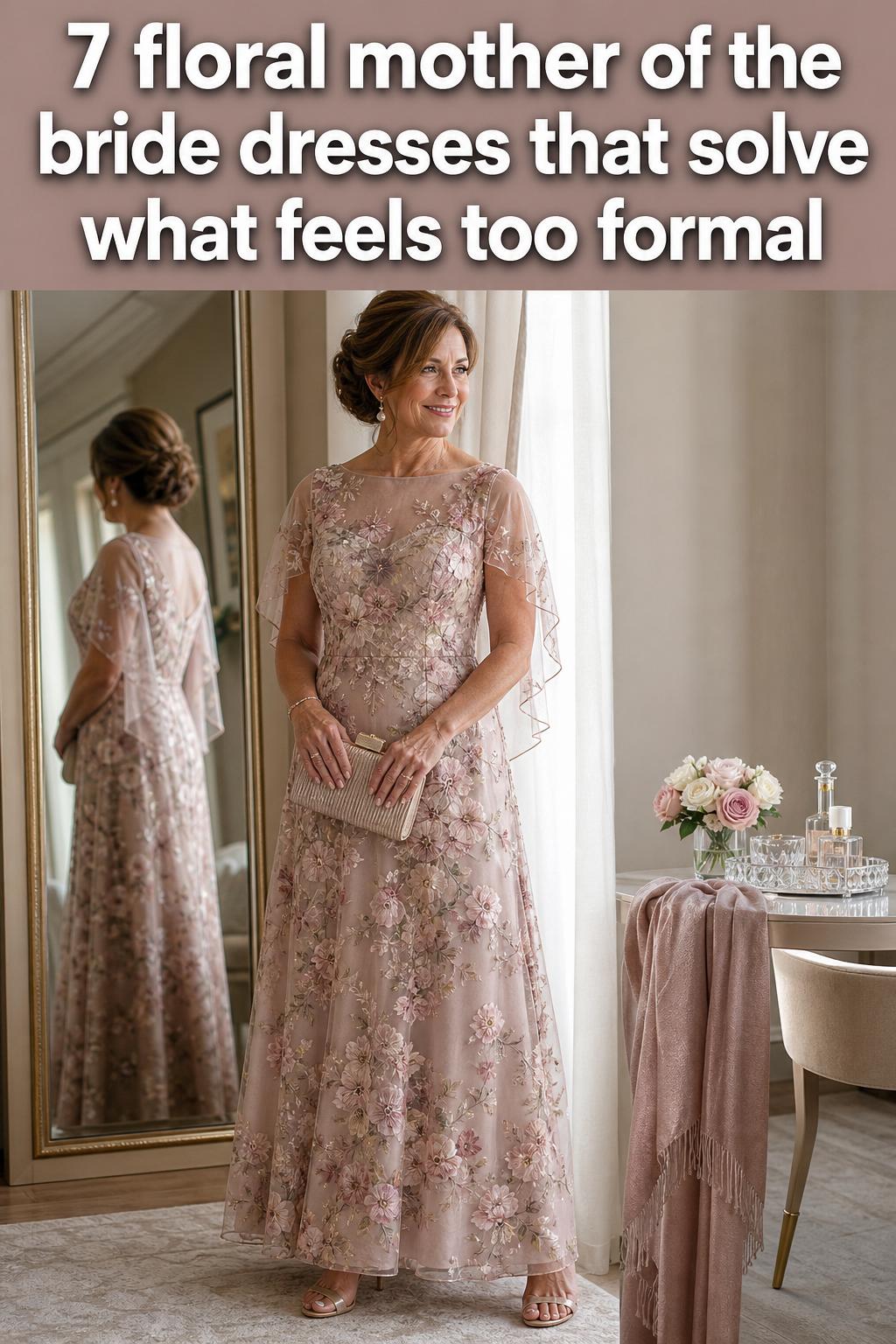
Silhouette changes the entire message of a floral dress
The same floral motif can look softly romantic or highly formal depending on silhouette. This is one of the most important distinctions in the category, and it is often overlooked when shoppers focus only on color or print.
A-line: the most flexible option
An A-line silhouette is the easiest bridge between floral softness and ceremony-level polish. It gives prints room to breathe, especially in chiffon, and it allows floral lace to drape without becoming stiff. For outdoor weddings, an A-line floral gown tends to move beautifully and remains comfortable through a long ceremony and reception. This is why A-line options appear so frequently in editorial guidance around mother-of-the-bride dressing.
Sheath: cleaner, more restrained, and often more modern
A sheath shape reduces visual volume, which makes it particularly useful when the floral detail is already strong. A bold print on a sheath feels more streamlined than the same print on a fuller silhouette. Likewise, floral lace on a sheath can feel quietly sophisticated. The trade-off is that a sheath generally asks for closer attention to fit and alterations, especially if the event runs all day and ease of movement matters.
Ballgown influence: formal and dramatic
Even when a mother-of-the-bride dress is not a full ballgown, some styles borrow from that sense of occasion through volume, stronger structure, or elevated skirt shape. Florals in this category tend to feel best when the pattern is balanced rather than busy. For a grand evening reception, this can be stunning. For a smaller daytime ceremony, it may feel too commanding unless the floral is subtle and the palette restrained.
Midi and maxi lengths: a practical visual difference
Karen Millen’s emphasis on midi and maxi options reflects a useful distinction. A midi floral dress often feels lighter, more contemporary, and especially appropriate for a daytime celebration or less formal venue. A maxi or long gown creates more ceremony presence and usually photographs as more traditional. The choice is not only about hemline. It is about how much visual weight you want the dress to carry.
Print versus texture: the most useful comparison in this category
If there is one comparison that clarifies floral mother-of-the-bride shopping, it is this: print creates immediate pattern impact, while texture creates depth. Both can be elegant. They simply express elegance differently.
- Printed florals tend to feel more seasonal, more visible, and often a little lighter in mood.
- Floral lace feels more formal, especially for evening receptions or traditional venues.
- Embroidery and textured floral finishes can soften the transition between print and formalwear.
- Watercolor or subtle floral patterns often behave like a middle ground between the two.
At ADASA, the presence of floral lace, chiffon, and cape sleeves points toward a polished formal interpretation. At Azazie, floral filters often connect with varied necklines and sleeves, which makes the category broad enough to include both airy prints and more occasion-focused versions. Teri Jon’s collection, with floral prints and distinctive details such as shawl options or cape sleeves, sits in a more dressed-up part of the floral spectrum.
For mothers who worry that a floral dress might feel too casual, floral lace is often the safest route. For mothers who feel that a plain formal dress lacks personality, a print-led gown can bring warmth and individuality without leaving the dress-code conversation altogether.
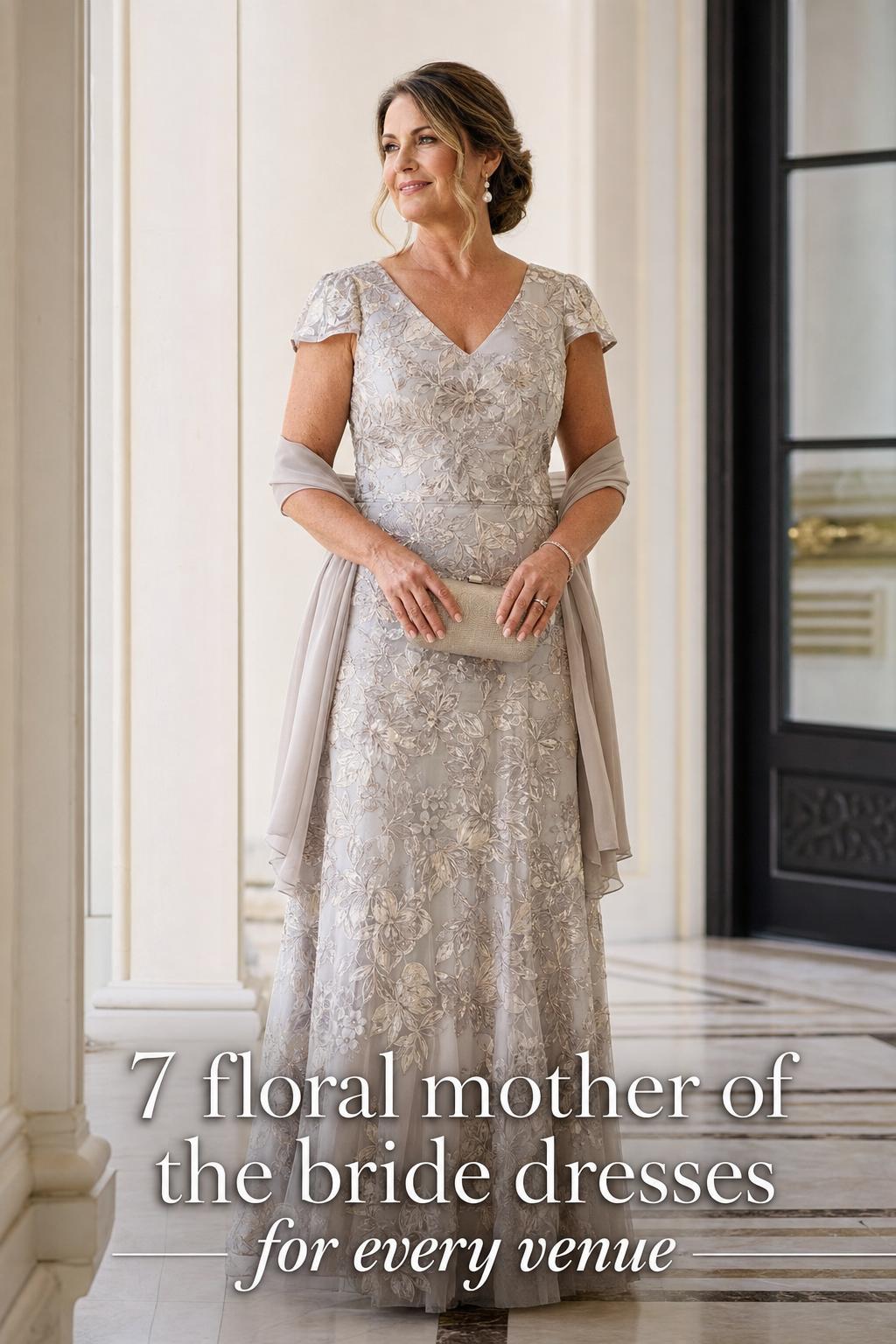
Color palette: soft pastels, jewel tones, and wedding coordination
Color is where floral mother-of-the-bride dresses become especially nuanced. A floral pattern is never only a pattern; it is also a palette. Even subtle florals introduce color complexity, and that means the dress needs to work in harmony with the wider wedding setting.
Pastels for garden, spring, and daytime weddings
Pastel florals usually create the softest impression. They suit spring florals, daytime ceremonies, and outdoor venues particularly well because the palette mirrors a brighter, more open atmosphere. In a garden ceremony or countryside celebration, a pastel chiffon A-line can feel naturally aligned with the surroundings rather than overly styled against them.
Jewel tones for evening depth
Jewel-toned florals shift the category toward formalwear. When richer tones are paired with a longer silhouette or more structured finish, the result can feel especially appropriate for a formal evening reception. The floral remains romantic, but the depth of color prevents the dress from reading too delicate under evening lighting.
How the bride’s look affects the floral choice
The bride’s gown and the wedding palette should guide scale and color intensity. If the wedding atmosphere is soft and tonal, a very bold floral may feel visually disconnected. If the celebration leans festive and expressive, a stronger floral can make sense. Coordination does not mean matching exactly. It means choosing a floral palette that feels in conversation with the wedding rather than in competition with it.
Tip: if the dress already includes multiple floral tones, keep accessories and shoes calmer. This preserves balance and makes the floral look intentional rather than busy.
Sleeves and necklines quietly decide how formal florals feel
Retailers often sort floral dresses by pattern first, but in real wear, sleeve and neckline details are what often determine whether a dress feels garden-party light or reception-ready. These details also affect comfort over the course of the day, especially during ceremonies, photographs, dinner, and dancing.
Cap sleeves and softer daytime polish
Long-tail shopping interest around floral mother of the bride dresses with cap sleeves makes sense because cap sleeves add light coverage without making a floral dress feel heavy. They work especially well on chiffon or lighter formal fabrics and often suit spring and summer weddings. Visually, they keep the dress gentle and refined.
Cape sleeves and elevated drama
Cape sleeves appear across floral collections at Teri Jon and ADASA because they bring movement and formality at once. In a ballroom or evening venue, cape sleeves can help a floral dress feel more sculpted and less purely decorative. They are particularly effective when the floral motif is subtle, since the sleeve shape becomes part of the statement.
Neckline choice and floral scale
When the floral pattern is bold, a cleaner neckline often creates the best balance. When the floral is quieter, a more distinctive neckline can add visual interest. Azazie’s floral category, for example, emphasizes how sleeve lengths and necklines can be part of the floral decision rather than separate from it. This is a useful way to shop: pattern first, then balance it with structure.
Visual style breakdown: how these dresses read in real wedding settings
On a rack, many floral dresses seem similar. In motion, under different light, and within different venues, their personalities separate quickly.
At a garden ceremony
A printed chiffon A-line with a soft pastel floral usually appears airy and relaxed. It belongs naturally among flowers, daylight, and open-air seating. Floral lace, by contrast, brings a more tailored note to the same setting. Neither is wrong. The print-led version feels integrated with the landscape; the lace version feels slightly more dressed for the occasion.
At a vineyard or countryside wedding
This is where floral formality matters most. Too much structure can feel disconnected from the venue, while too casual a floral may look underdressed by sunset. Midi florals, floral embroidery, and softer maxis often work especially well here because they carry elegance without becoming rigid. A shawl option, as seen in some Teri Jon styling, can be useful when the evening cools.
At a ballroom reception
Ballrooms usually ask florals to rise to a higher level of finish. This is where jewel tones, lace, embroidery, cape sleeves, and stronger silhouettes become persuasive. A floral that seemed lively in daylight can feel informal under chandeliers unless the fabric and shape support the setting. Bloomingdale’s lookbook-style presentation, with brands such as Hobbs London, Tadashi Shoji, and Oscar de la Renta, reflects this more elevated version of the floral category.
At a destination wedding
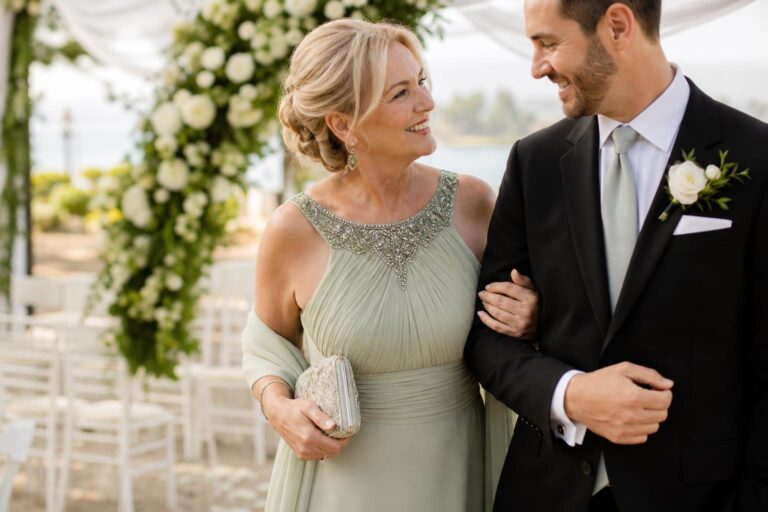
Destination settings generally reward breathable fabrics and easier movement. Chiffon florals, lighter A-line shapes, and less restrictive sleeves tend to be practical here. The key is avoiding a floral that looks beautiful standing still but becomes difficult over a long day of travel, outdoor ceremony conditions, or extended celebrations.
Outfit comparison moments: one wedding, two floral approaches
For a spring garden wedding
The print-led approach would favor a soft floral chiffon gown, likely in an A-line silhouette with cap sleeves or another light sleeve treatment. The styling logic is movement, freshness, and visual harmony with the venue. Accessories should stay restrained so the floral remains the main point of interest.
The textured floral approach would choose floral lace or embroidery in a similarly light palette, perhaps with a cleaner silhouette. This version feels a touch more formal and can be ideal for a mother who wants romance without a visibly printed dress. The effect is quieter but often more polished in close-up photography.
For a formal evening reception
The print-led interpretation works best when the floral is controlled by a deep palette or a more architectural silhouette. A long gown with a refined floral motif can still succeed, but it needs enough structure to hold its place in a candlelit room.
The lace or embroidered interpretation generally has the advantage here. Richer texture, cape sleeves, and a stronger neckline can make the floral feel fully evening-appropriate. This is often where floral formal statement dresses from brand collections and designer-focused department store assortments stand out.
For a summer wedding with a long day outdoors
The floral print route usually prioritizes chiffon, lighter construction, and a silhouette that remains comfortable through ceremony, cocktails, and dancing. It reads effortless and wedding-aware without becoming too heavy in the heat.
The textured route would need careful fabric handling. Floral lace can still work beautifully, but only if the dress maintains enough lightness and breathability for the climate. In this scenario, not every formal floral fabric is equally practical, even if it is visually elegant.
Where key brands and retailers fit in the floral landscape
Shopping for floral mother-of-the-bride dresses becomes easier when you recognize that different retailers represent different parts of the category rather than the same style repeated.
- Macy’s is useful for broad comparison across brands, sizes, styles, and price filters, especially when narrowing floral pattern options.
- Azazie is especially strong when sleeve length, neckline, and floral features need to be filtered together.
- Bloomingdale’s offers a more curated, lookbook-oriented approach, often useful for higher-formality inspiration and brand comparisons.
- Teri Jon by Rickie Freeman sits well within the elevated floral formal category, with prints and occasion details such as shawls and cape sleeves.
- ADASA stands out for floral lace, chiffon, and formal variations that emphasize texture.
- Karen Millen is helpful for mothers considering midi versus maxi and wanting a more brand-specific fashion point of view.
- AW Bridal becomes particularly relevant when ordering timelines, alterations, sizing, and consultation support are part of the decision.
Designers and brands visible in broader assortments, including Mac Duggal, XSCAPE, Hobbs London, Tadashi Shoji, and Oscar de la Renta, further show how wide the floral category is. Some names skew toward statement eveningwear; others sit more comfortably within accessible formal occasion dressing. The right choice depends less on the label itself than on how the dress balances floral motif, structure, and event setting.
A stylist’s note on common floral mistakes
The most frequent floral dressing mistake is treating all florals as equally formal. They are not. Scale, fabric, and silhouette completely change the effect. A large, highly visible print in a loose shape can look wonderful at a daytime celebration and underwhelming at a formal reception. Likewise, a heavily textured floral with dramatic sleeves may feel too weighty for a bright beach or destination ceremony.
The second mistake is over-accessorizing. Florals already carry visual information. Adding statement jewelry, ornate shoes, and competing embellishment can make the whole look feel crowded. In most cases, the best floral mother-of-the-bride styling is edited styling.
Tip: if you are unsure whether the dress is carrying enough formality, assess the structure before adding accessories. A dress rarely becomes truly formal just because the jewelry is more dramatic. Formality starts with silhouette, fabric, and finish.
Accessories, shoes, and the balance of the finished look
Accessories are an underused part of floral mother-of-the-bride guidance, yet they are often what make the dress feel complete. A floral dress usually benefits from support rather than competition. The goal is to let the motif lead while the accessories refine the message.
Jewelry with floral dresses
When the floral is bold, jewelry should usually stay cleaner and more contained. When the floral is delicate or textural, slightly more presence in jewelry can work because the dress itself reads quieter from a distance. Floral statement jewelry may suit very specific looks, but it needs restraint to avoid repeating the theme too literally.
Footwear and venue reality
Shoe choice depends heavily on venue. A garden or countryside wedding asks for stability as much as style, especially over grass or uneven paths. A ballroom allows a more traditional formal shoe choice. Because floral dresses often imply softness and movement, footwear should support that ease rather than interrupt it with something too visually heavy.
Shawls, layers, and long celebrations
Florals often appear in seasons and venues where temperatures shift between ceremony and reception. A shawl or light layer can be especially useful, and in some collections it is part of the dress story itself. This matters not only stylistically but practically. A mother who remains comfortable into the evening almost always looks more polished than one adjusting to weather or coverage concerns throughout the event.
Season by season: how the floral approach should change
Spring
Spring florals are the most intuitive. This is where pastel palettes, chiffon, cap sleeves, and lighter A-line silhouettes feel most at home. Prints can be more visible because the season naturally supports freshness and bloom-led styling.
Summer
Summer floral mother-of-the-bride dresses need to balance beauty with breathability. Chiffon and easier movement matter more here than in cooler seasons. A floral lace dress can work, but only if it does not become too dense for the weather or the length of the celebration.
Fall
Fall florals generally benefit from richer color direction and a slightly stronger silhouette. This is often where jewel tones, more defined sleeves, and dresses with a formal finish begin to shine. The floral still reads romantic, but the surrounding structure should feel more substantial than in spring.
Winter
Winter asks for the most selective floral approach. Not every floral dress translates well to a colder, more formal season. Texture becomes especially valuable here. Floral lace, embroidery, and stronger eveningwear styling usually make more sense than overtly light or breezy prints.
When to choose each floral style
Choosing among floral styles is easiest when you think in terms of setting, dress code, and how much visual softness or structure you want the dress to carry.
- Choose a floral print dress for spring weddings, summer weddings, garden ceremonies, destination celebrations, and venues with a relaxed romantic atmosphere.
- Choose floral lace or embroidery for formal daytime weddings, traditional ceremonies, and events where you want floral detail without a distinctly printed look.
- Choose a floral formal statement gown for ballroom weddings, evening receptions, and settings where stronger occasion dressing is expected.
- Choose midi florals when the event is polished but not heavily formal.
- Choose maxi or long florals when ceremony presence and traditional occasion dressing matter more.
For mothers who are torn between romance and restraint, the most reliable compromise is usually a subtle floral in a highly flattering silhouette. It gives the celebration mood of a floral without the risk of feeling overdone.
Fit, tailoring, and timing matter as much as the pattern
Floral dresses can be surprisingly sensitive to fit. If a print pulls across the body, the pattern may distort. If floral lace is too tight or too loose, the textural detail can lose its elegance. This is why sizing, ordering windows, and alterations deserve attention early, especially with specialty bridal retailers and formalwear brands.
AW Bridal’s emphasis on alteration services and consultations highlights a practical reality: mother-of-the-bride shopping is not only aesthetic. It is logistical. Hem length, sleeve comfort, and movement through the torso all matter because these dresses are worn for long, meaningful celebrations. A beautiful floral that cannot comfortably carry you from ceremony to final dance is not the right dress, even if it photographs well.
Tip: once you narrow the style family, compare lead times before falling in love with a particular dress. The most flattering floral is only useful if there is enough time for delivery and tailoring.
The core distinction to remember
The strongest way to read floral mother-of-the-bride dresses is not simply by asking whether the dress has flowers on it. Ask what kind of floral it is, how visible it is, and what the silhouette does with that motif. A soft printed chiffon A-line, a floral lace sheath, and a cape-sleeve formal gown may all belong to the same category, but they solve different wedding dressing needs.
Once you understand that floral print tends to deliver atmosphere, floral texture tends to deliver refinement, and formal floral silhouettes tend to deliver occasion presence, the category becomes much easier to navigate. Many mothers ultimately borrow from more than one approach: the softness of a floral, the control of a structured silhouette, and the polish of carefully chosen accessories. That balance is where the best floral wedding style usually lives.
FAQ
Are floral mother of the bride dresses appropriate for formal weddings?
Yes, but the floral needs the right support from silhouette, fabric, and finish. Floral lace, embroidery, jewel-toned florals, cape sleeves, and longer gowns usually feel more appropriate for formal receptions than light daytime prints in very relaxed shapes.
What is the difference between a floral print dress and a floral lace mother-of-the-bride dress?
A floral print dress shows the pattern directly on the fabric surface, so it reads more immediately and often more seasonally. A floral lace dress creates floral detail through texture, which usually feels more subtle, polished, and formal.
Which silhouettes work best for floral mother-of-the-bride dresses?
A-line silhouettes are the most versatile because they balance movement, comfort, and elegance. Sheath styles feel cleaner and more streamlined, while fuller or ballgown-influenced shapes suit more formal settings when the floral motif is handled with restraint.
Are cap sleeves a good choice for floral mother-of-the-bride dresses?
Cap sleeves are a very practical choice because they add light coverage without making the dress feel heavy. They work especially well for spring and summer weddings and pair naturally with chiffon and softer floral styling.
How should a floral mother-of-the-bride dress coordinate with the wedding palette?
The goal is harmony rather than exact matching. Pastel florals generally suit soft daytime palettes, while richer floral tones can align better with evening settings. The dress should feel connected to the wedding atmosphere without competing with the bride or the broader color story.
What fabrics are most common in floral mother-of-the-bride dresses?
Chiffon and lace are among the most common floral fabrics in this category. Chiffon tends to create light movement and works well for printed florals, while lace supports a more textured and formal interpretation of the floral theme.
Where can I shop for floral mother-of-the-bride dresses in the U.S.?
Common U.S.-focused options include Macy’s, Azazie, Bloomingdale’s, Teri Jon, ADASA, Karen Millen, and AW Bridal. Each offers a slightly different approach, from broad category comparison to designer-led occasionwear and alteration-focused bridal shopping.
Do floral dresses usually need alterations?
Often, yes. Hem length, sleeve comfort, and overall balance are especially important in mother-of-the-bride dressing, and floral details can be sensitive to fit. Planning enough time for alterations is wise, particularly for long gowns and more tailored silhouettes.
What accessories work best with floral mother-of-the-bride dresses?
Usually the best accessories are supportive rather than dominant. Cleaner jewelry, balanced shoes, and a light wrap or shawl tend to work well because they let the floral remain the focus while still completing the outfit for ceremony and reception.
Which floral style is best for a summer wedding?
For most summer weddings, a lighter floral approach works best, especially chiffon, breathable construction, and silhouettes that allow movement through a long day. Floral prints often feel especially natural in summer, while heavier floral lace should be chosen with care so the dress remains comfortable in warm weather.