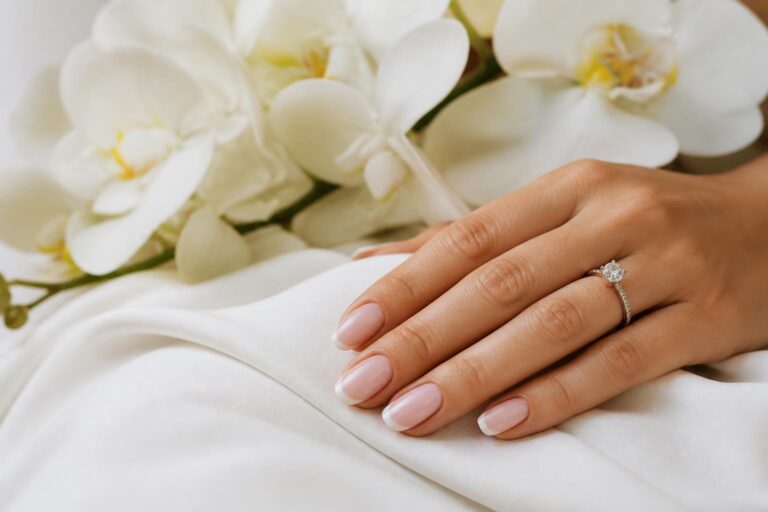
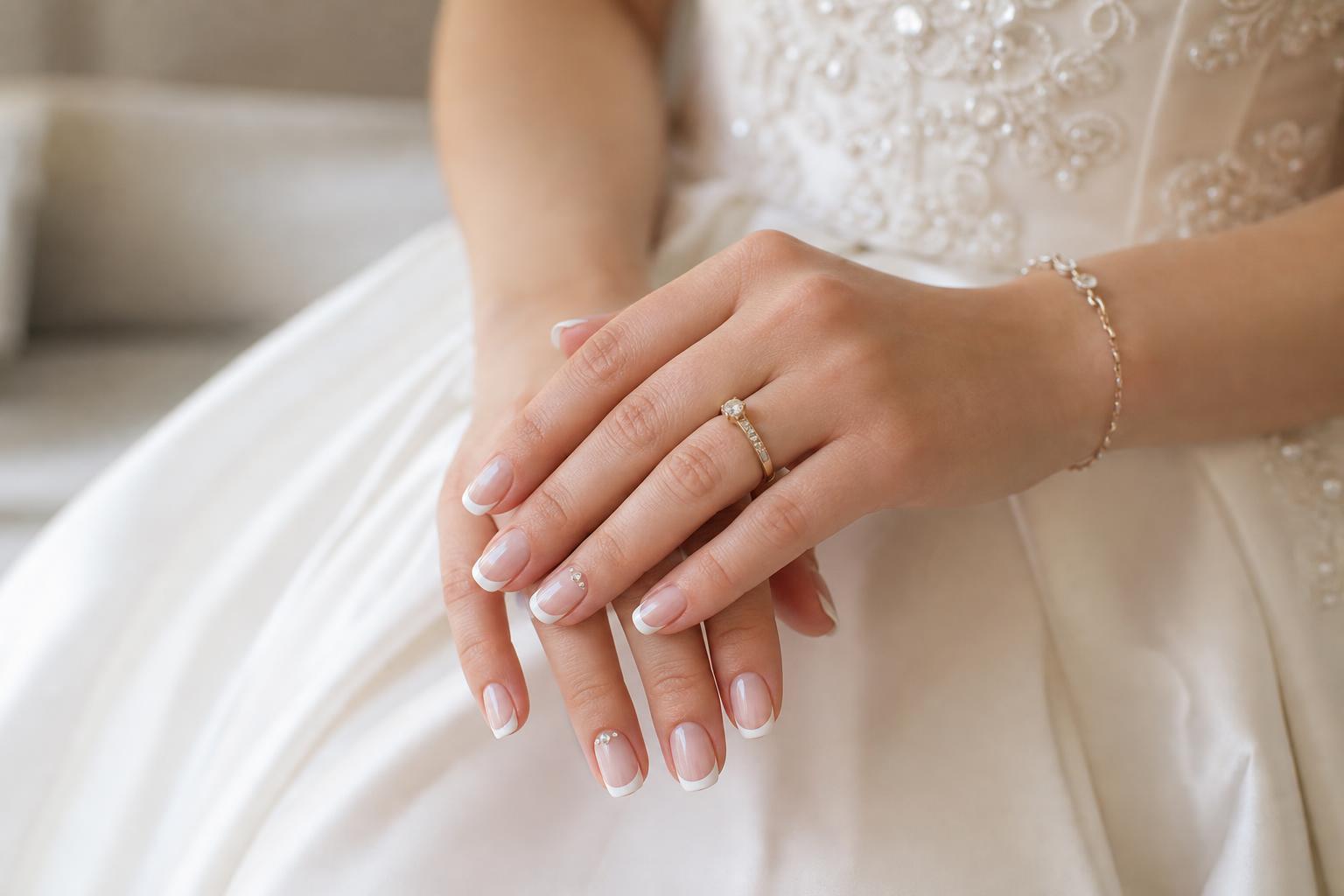
Wedding French Tip Nails for a Timeless Bridal Look
The appeal of wedding french tip nails is easy to understand, but choosing the right version is less simple than it first appears. A bride may love the idea of a classic French manicure, then realize she also needs her nails to suit the dress, flatter close-up ring shots, last through fittings and celebrations, and still feel like her personal style. What looks elegant in a salon chair can read too stark in bright daylight, too plain against statement jewelry, or too delicate for a full wedding week.
That is why French tip wedding nails deserve a more thoughtful approach than simply asking for white tips. The best bridal nails balance timelessness with context: venue, lighting, season, gown tone, embellishments, and wear time all matter. Whether your aesthetic leans classic, minimalist, romantic, glam, or softly modern, there is a version of the French tip that can solve the styling challenge without competing with the rest of your look.
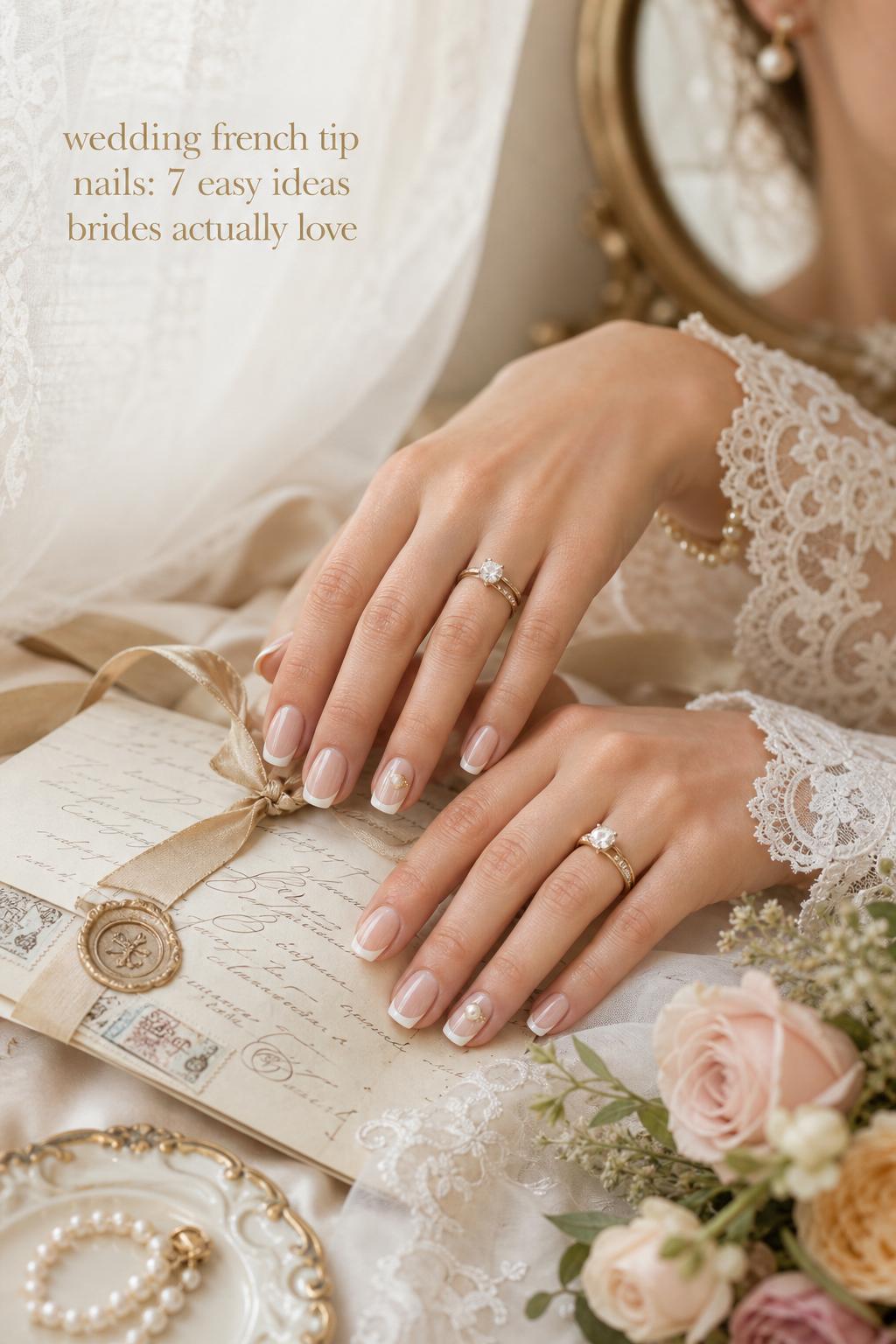
This guide brings those decisions into focus. You will find practical ways to choose a base, tip, finish, and nail system, along with styling logic for different wedding settings and realistic advice for keeping bridal nails polished from rehearsal events to the final dance.
Why this manicure choice feels harder than it should
A wedding manicure carries more pressure than an everyday beauty appointment because hands are unusually visible. They appear in bouquet photos, during the ring exchange, in champagne toasts, and in tightly framed close-ups where every line, chip, and texture shows. French tip nails are often recommended because they are timeless and photo-friendly, yet that same familiarity can make them feel difficult to personalize.
Your wedding look is only the beginning.
Keep your guest list, vendors, timeline, and every important detail together with Zarellea — so your day feels as considered as your style.
There is also a practical side to the challenge. Wedding nails need to work across a long schedule that may include travel, outfit changes, beauty appointments, and multiple events such as engagement parties or a bachelorette celebration before the ceremony itself. A manicure that looks refined on day one but loses shine or shape by the wedding day creates unnecessary stress. The solution is to think of bridal nails as part style choice, part event planning detail.
The styling principles that make French tips work for weddings
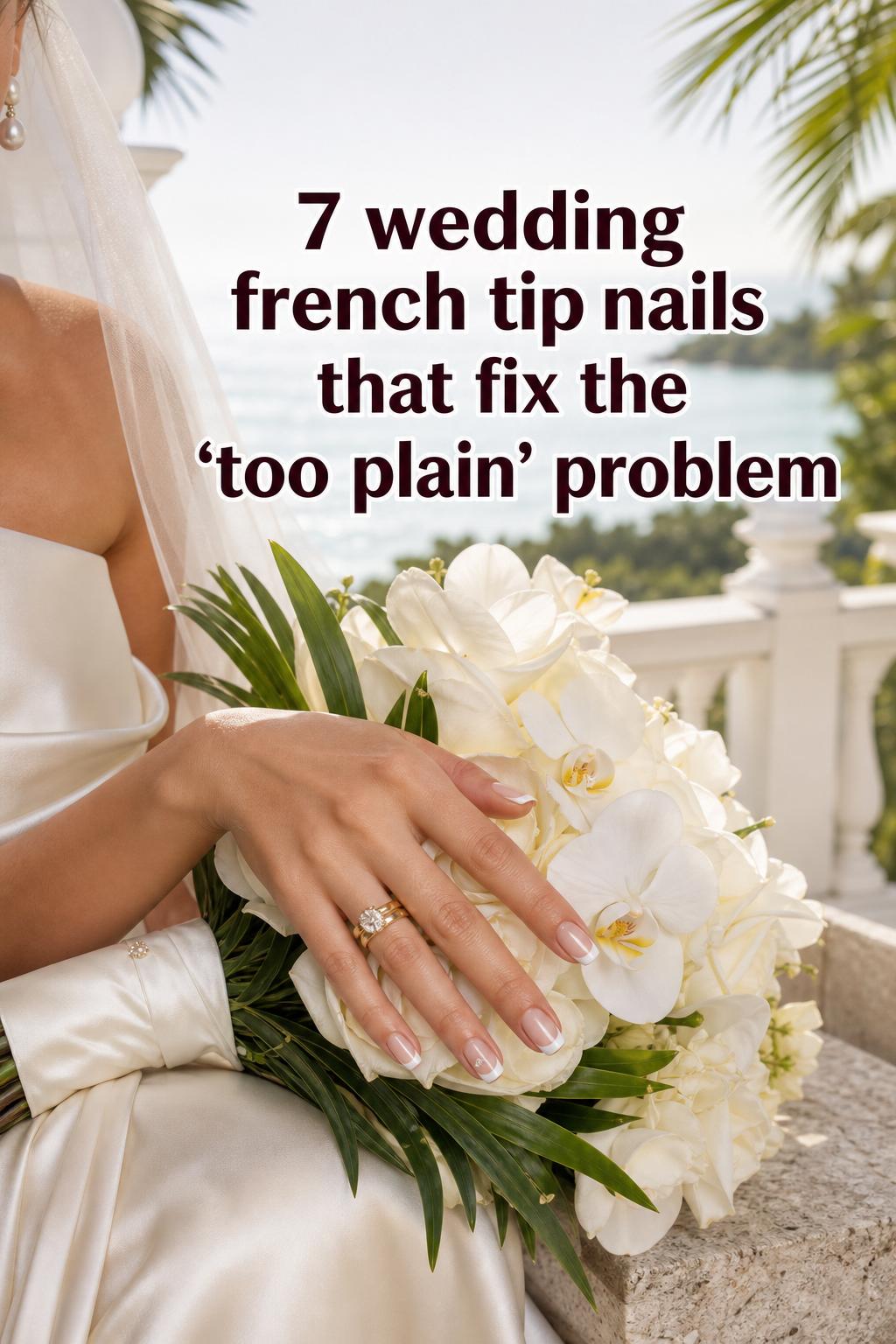
The most successful wedding nails follow a simple principle: they support the bridal aesthetic rather than trying to become the entire focal point. French tip nails already have a built-in elegance, so refinement usually comes from proportion, finish, and subtle detail instead of dramatic contrast.
- Choose balance over novelty. A classic French manicure remains popular for weddings because it complements dresses, jewelry, and bouquets without overwhelming them.
- Consider the base as seriously as the tip. Sheer pinks, milky tones, nude bases, and blush finishes all change the mood of the manicure.
- Think about lighting. Nails that look soft indoors may appear brighter in direct daylight, especially in ring shots and macro photography.
- Match the level of detail to the wedding style. Pearls, glitter, or rhinestones can be beautiful, but they should echo the gown and accessories rather than compete with them.
- Plan for durability early. Gel, acrylic, dip, and press-ons each solve different wedding-week needs.
In practice, this means a ballroom reception might call for a more polished shine and slightly more definition in the smile line, while a garden ceremony often benefits from a softer base and a lighter, more romantic finish. The manicure should feel intentional within the full scene, not separate from it.
Why French tip nails remain a bridal classic
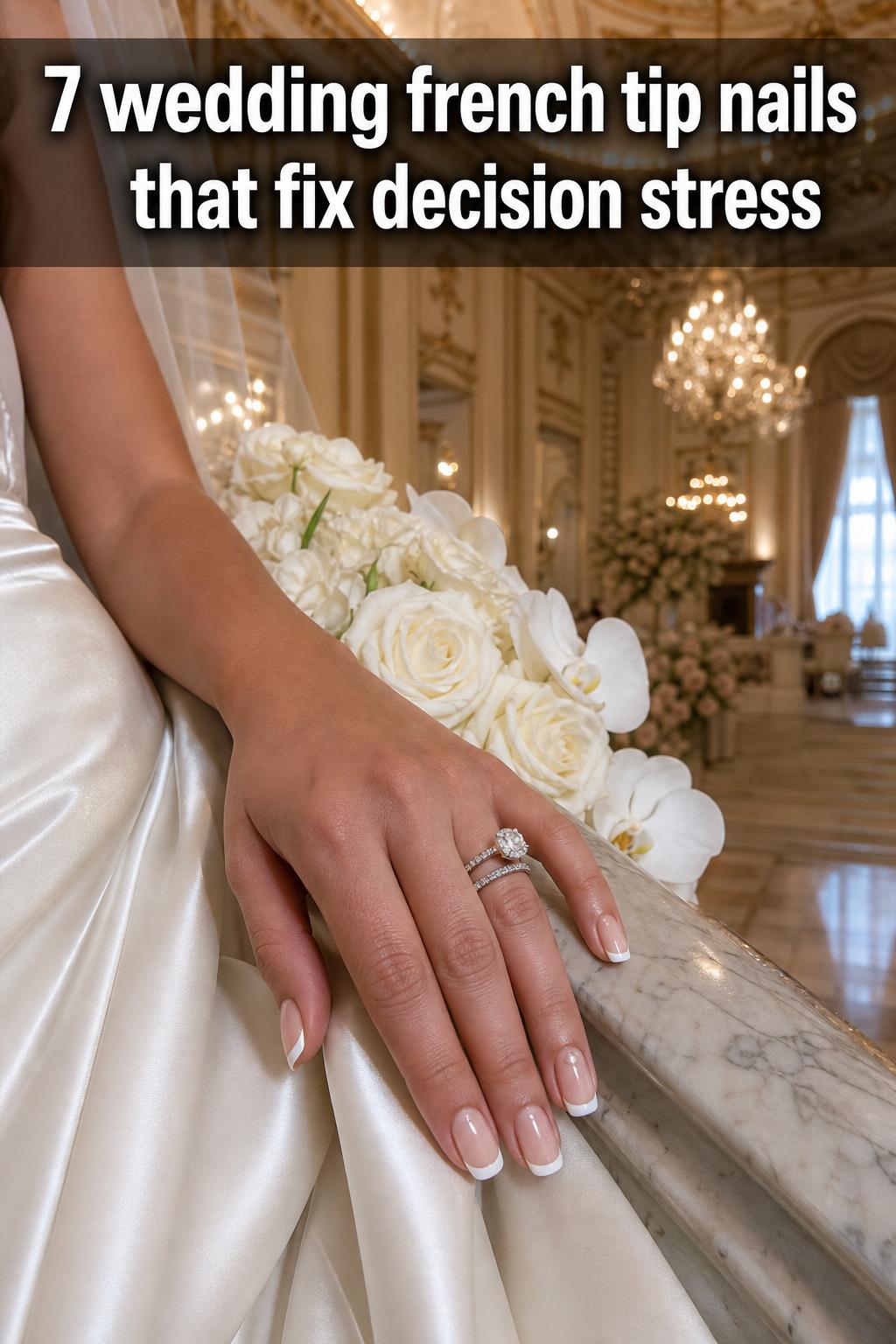
French tip nails hold their place in bridal beauty because they solve several style problems at once. They are versatile enough to work with traditional white gowns, softer ivory and blush tones, and a range of jewelry choices. They feel polished in person and photograph cleanly in close-ups, which matters on a day when hands are documented constantly.
They also bridge classic and modern bridal style with unusual ease. A bride in a minimalist satin silhouette may prefer crisp white tips on a sheer nude base, while someone wearing romantic textures and pearls may lean into a milky base with delicate adornment. In both cases, the manicure still reads as bridal rather than trend-driven for its own sake.
Publications such as The Knot, Wedding Forward, Marie Claire, and Who What Wear continue to position the French tip as a timeless baseline within broader bridal nail trends, which reflects how adaptable this manicure remains. Even when trends shift toward seasonal accents or embellished finishes, French tips consistently return as the anchor style.
Choosing by bridal aesthetic instead of copying a single photo
One of the most useful ways to narrow down wedding nails is to start with the overall mood of the day. Rather than selecting a manicure in isolation, tie it to the visual language of the wedding: the dress, the venue, the jewelry, and the tone of the photography.
For the classic bride: crisp white and clean lines
A traditional ceremony, cathedral setting, or formal ballroom reception naturally suits the classic white tip. This is the version most people picture when they hear French manicure: a neat pale base with a brighter white edge. The appeal lies in clarity. It looks finished, graceful, and universally bridal.
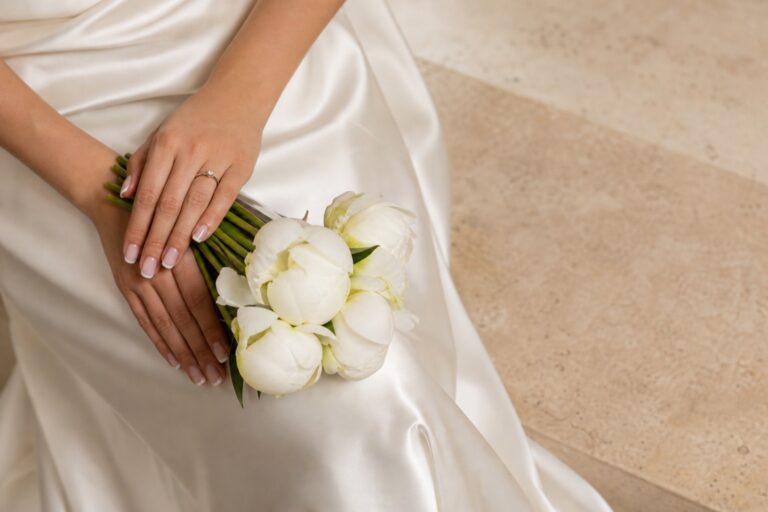
This approach works especially well when the gown has structured elegance or when accessories are refined rather than ornate. If the dress includes satin, clean seams, or a tailored bodice, the crisp line of the tip mirrors that precision.
For the minimalist bride: sheer nude with a subtle smile line
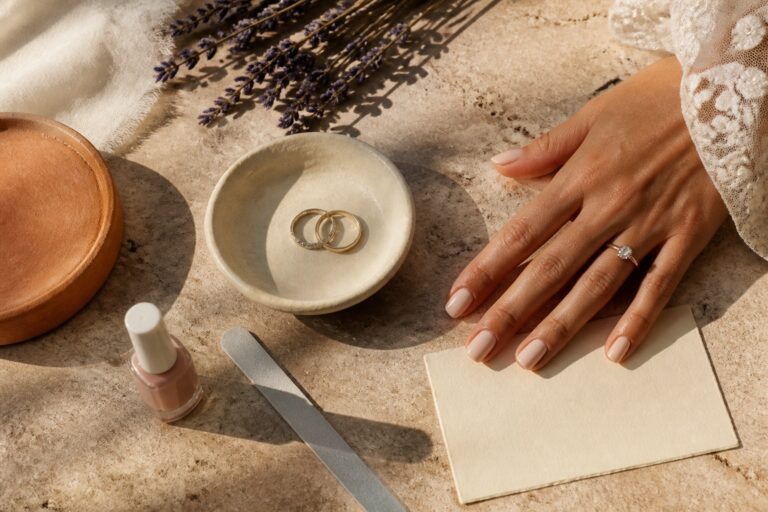
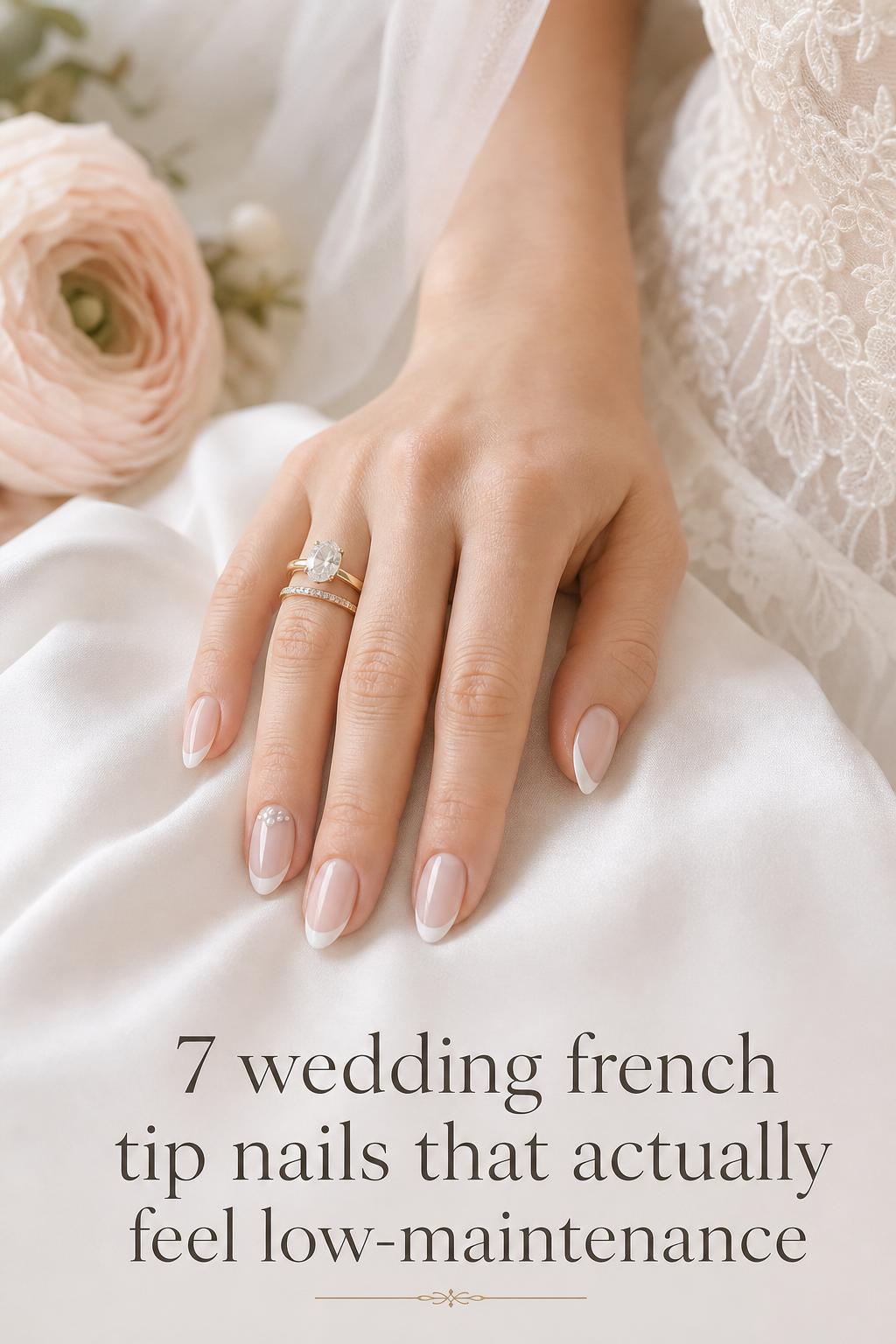
Minimalist bridal style often benefits from restraint. A sheer nude base with a fine white smile line feels understated and modern, particularly for city weddings, sleek venues, or ceremonies with a quieter palette. This version photographs beautifully because it elongates the fingers without drawing attention away from the ring.
If your dress is soft ivory rather than bright white, this can also feel more harmonious than a stark tip. The result is polished, but not overly contrasted.
For the romantic bride: milky bases and soft dimension
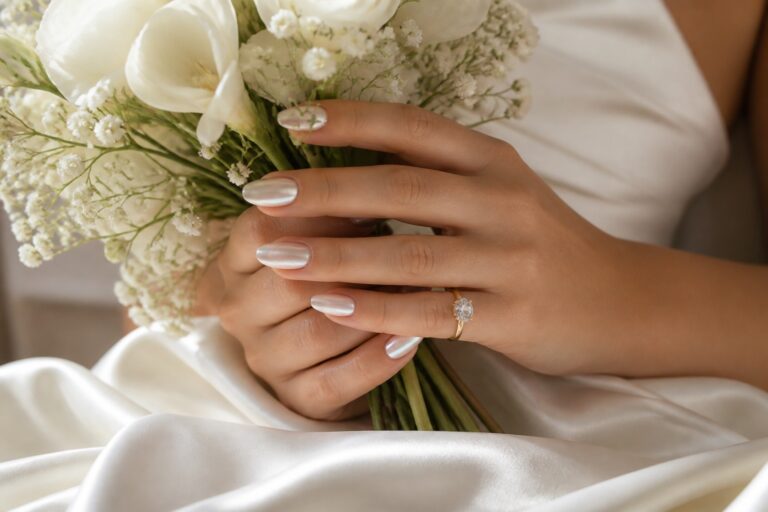
A milky base with a thin white tip creates a diffused finish that feels especially right for garden ceremonies, vineyard weddings, and golden-hour photography. This look is less sharp than the standard French tip, which makes it flattering in natural light and easy to pair with floral details, lace, and pearl jewelry.
Mirelle Inspo and similar inspiration-led bridal nail guides often highlight milky bases and sheer pinks because they add softness without losing the recognizable French tip structure. For brides who want classic nails with a romantic editorial mood, this is often the sweet spot.
For the glam bride: pearls, glitter, or rhinestone accents
French tip wedding nails can absolutely carry more ornamentation, especially for evening receptions, candlelit celebrations, or fashion-forward bridal looks. Pearls, glitter accents, and rhinestones are the most common decorative directions. The key is to keep the French tip as the foundation and add embellishment selectively.
Pearl-adorned nails feel bridal in a particularly natural way because they echo veils, jewelry, and gown beading. Glitter can add a celebratory finish, but works best when used with restraint so that the manicure still looks elegant in close-up photos. Rhinestones create a more overt statement and tend to suit glam styling better than soft romantic aesthetics.
For the softly modern bride: blush, beige, and color-tipped variations
Not every French tip needs a bright white edge. Soft pink, beige, and understated color accents can feel fresher while still remaining bridal. This is a strong option for contemporary venues, fashion-conscious ceremonies, or brides who want a little warmth against their skin tone and bouquet palette.
Color-tipped variations work best when the shift is subtle. Wedding nails should still feel cohesive with the dress and photos, so soft tonal adjustments often succeed where bolder contrasts would distract.
The nail–dress–jewelry connection
A beautiful bridal manicure usually looks considered because it speaks to nearby details: dress color, fabric finish, and jewelry tone. French tip nails are especially responsive to those elements because the design is simple enough for small differences to matter.
- A bright white gown often pairs comfortably with a more defined white tip.
- Softer ivory, champagne-leaning, or blush dresses tend to look more harmonious with sheer pink, milky, or nude bases.
- Pearl jewelry naturally supports pearl-accented French tips or soft luminous finishes.
- If the gown is heavily embellished, a quieter manicure usually feels more elevated than adding too much sparkle to the nails.
- If the dress is minimal, a refined decorative touch on the nails can provide balance without looking excessive.
This is also where bouquet color comes into play. A manicure with a blush base may echo pale floral tones beautifully, while a cooler base can feel more aligned with crisp white florals and cleaner styling. The goal is not exact matching. It is visual harmony across the details that appear together in photographs.
Photo-ready details that matter more than brides expect
Wedding photography is one reason French tip nails remain such a strong bridal choice. Ring shots, bouquet portraits, and close-up moments reward crisp shape and a polished finish. But not every French tip performs equally well on camera.
Sharp application matters because macro photography makes tiny inconsistencies more visible. A clean smile line generally reads better than a thick or uneven one, especially in close-up frames. Finish matters too. A smooth top coat catches light in a flattering way, helping the manicure look fresh rather than dry or textured.
Lighting also changes perception. In bright outdoor ceremonies, stark white tips can appear more prominent than expected, which is why many brides choose milky or sheer bases to soften the contrast. In evening receptions, a bit more shine can bring nails to life under lower light and make them feel polished rather than flat.
Tips for close-ups and ring shots
- Keep the tip proportion elegant rather than too deep, particularly on shorter nails.
- Choose a finish that looks smooth in direct light and soft flash.
- Make sure the base tone flatters the hand, not just the nail by itself.
- Schedule enough time for any touch-up before the ceremony if you are wearing your manicure for several days beforehand.
These details sound small, but they affect how polished the entire bridal look feels when captured in still images.
Wedding-week wear: gel, acrylic, dip, or press-ons?
The prettiest design is not automatically the most practical one. For wedding week, the right nail system depends on timing, routine, and how much flexibility you want. The most common options discussed in bridal nail content are gel, acrylic, dip, and press-on nails, each with its own strengths.
Gel for brides who want a polished, classic finish
Gel is often appealing for brides who want a sleek, glossy French manicure with a salon-finished look. It suits classic and minimalist styles especially well because the surface tends to look smooth and refined. For a wedding week filled with fittings, packing, and beauty prep, a gel finish can feel reassuringly put together.
The trade-off is that your timing matters. If you schedule too early, regrowth may be visible by the wedding. If you wait too late, there is less room for adjustments. Brides who prefer gel usually do best when they plan the manicure close enough to the event to preserve freshness without creating last-minute pressure.
Acrylic or dip when durability is the priority
Brides with heavy pre-wedding schedules sometimes prioritize durability above all else. Acrylic or dip may feel more appropriate when the manicure needs to hold up through travel, multiple events, or a longer lead-up. These systems can also support more defined shape if that is part of your preferred bridal look.
That said, a more durable system should still align with the desired finish. If your overall wedding aesthetic is soft, airy, and understated, the final appearance matters just as much as longevity. Strength is useful, but the nails still need to feel visually consistent with the rest of the day.
Press-on wedding nails for flexibility and quick changes
Press-on nails have become a practical bridal conversation because they solve a different problem: flexibility. A bride may want a polished French tip look without salon timing stress, or she may want a quick-change option for the wedding day itself. VSalon, for example, positions wedding French tip press-on nails as an elegant bridal solution with application guidance built around wedding wear.
Press-ons can be especially useful for destination weddings, last-minute adjustments, or brides who want a backup set on hand. They also work for bridal events beyond the ceremony, such as engagement parties or a bachelorette weekend, when a polished look is wanted without committing to one manicure for an extended stretch.
The important thing is fit and finish. A bridal press-on set should look seamless enough for close-up photography, and application should be practiced before the wedding day rather than treated as a first-time experiment.
Bridal scenarios where different French tips shine
It helps to picture the nails in the setting where they will actually be worn. Wedding style is always contextual, and the same manicure can feel entirely different depending on venue, light, and wardrobe details.
Garden ceremony in daylight
For an outdoor ceremony with soft florals and natural light, milky bases, sheer pinks, and thin white tips tend to feel the most graceful. They sit beautifully beside fresh bouquets and read softly in daylight photography. If jewelry is delicate or pearl-based, small pearl accents can add just enough detail.
Ballroom reception with formal styling
A formal evening celebration can support a crisper French manicure with a high-shine top coat. This is where a more defined white tip, a refined glitter accent, or a carefully placed rhinestone may feel appropriate. Under candlelight and reception lighting, a touch more contrast often reads as polished rather than severe.
Destination or travel-heavy wedding week
For a bride juggling flights, welcome events, and limited appointment time, practicality becomes part of the beauty brief. A durable gel or a well-fitted press-on set may make the most sense, especially if touch-ups are not convenient. In this context, wedding nails should be chosen not only for appearance, but for how calmly they fit into the schedule.
Minimal modern city celebration
A city wedding with sleek tailoring, clean florals, and understated styling often calls for a pared-back French tip. Think sheer nude base, precise smile line, and no unnecessary embellishment. This kind of manicure can feel incredibly luxurious because of its restraint.
How to personalize wedding french tip nails without losing their timeless quality
The smartest personalization is usually subtle. French tip nails become bridal and individual through finish, base tone, line thickness, and selective detail. They do not need to be radically reinvented to feel distinctive.
- Adjust the base first: sheer pink, blush, nude, or milky tones each change the mood.
- Refine the tip shape: thinner lines often feel more modern and delicate.
- Add one decorative language only: pearls, glitter, or rhinestones, rather than all three.
- Coordinate with jewelry and dress texture so the manicure feels intentional.
- Choose a nail system that supports your schedule, not just your inspiration board.
This approach keeps the manicure elegant in the long term. Many brides want their photos to feel timeless years later, and French tip variations tend to age beautifully when the details are chosen with restraint.
A few thoughtful additions for bridesmaids and wedding guests
Although bridal nails are the center of attention here, French tip styling also works well for bridesmaids and wedding guests who want a manicure that feels occasion-ready without overshadowing the bride. The difference is usually in emphasis. Bridesmaids may choose softer bases or less embellishment, while guests often do best with clean French-inspired nails that feel elegant but not overtly bridal.
This distinction matters because wedding beauty looks should respect role and context. A bride can comfortably wear pearl-adorned or more intentionally bridal French tips, while a guest may prefer a simpler nude-and-white variation that still suits the celebration beautifully.
Common mistakes that can make a bridal French manicure feel off
Most bridal manicure disappointments are not caused by choosing French tips. They happen when the details are disconnected from the rest of the wedding look or from the realities of the event timeline.
- Choosing overly stark white tips with a very soft gown tone, creating more contrast than intended.
- Adding embellishments that compete with heavily detailed dresses or statement jewelry.
- Scheduling the manicure too early and losing that fresh finish by the ceremony.
- Trying press-ons for the first time on the wedding day without testing fit and appearance.
- Ignoring photography and selecting a finish that looks uneven or dull in close-up images.
The fix is usually straightforward: edit, coordinate, and test. Bridal beauty nearly always looks more expensive and more elegant when it is thoughtfully restrained.
Practical finishing tips for a calm, polished result
As the wedding day gets closer, the manicure should feel like one less thing to worry about. A few practical decisions make a real difference.
Bring a touch-up mindset to wedding week. If you are wearing salon nails, preserve time for a quick pre-ceremony check so shine, edges, and overall neatness still look camera-ready. If you are using press-ons, keep your bridal kit nearby and make sure application steps have been rehearsed well before the event. Brides who want the most seamless experience usually treat nails with the same planning care they give accessories and beauty appointments.
It is also wise to look at your nails beside the dress, ring, and jewelry rather than assessing them in isolation. A manicure can seem perfect on its own, then look too bright, too cool, or too embellished once everything is styled together. That final visual check often prevents the small mismatches brides notice only after seeing their photos.
The lasting appeal of this bridal staple
French tip wedding nails remain enduring because they solve a uniquely bridal problem: how to look polished, romantic, and photogenic without drifting into something that competes with the gown. They can be classic, modern, soft, or slightly glamorous, but they almost always work best when the details are chosen in conversation with the full wedding look.
If you approach the manicure through styling logic rather than impulse, the decision becomes much easier. Start with your wedding aesthetic, refine the base and tip to suit your dress and lighting, and choose a nail system that matches your schedule. That is how a familiar manicure becomes a genuinely beautiful bridal detail.
FAQ
Are French tip nails a good choice for weddings?
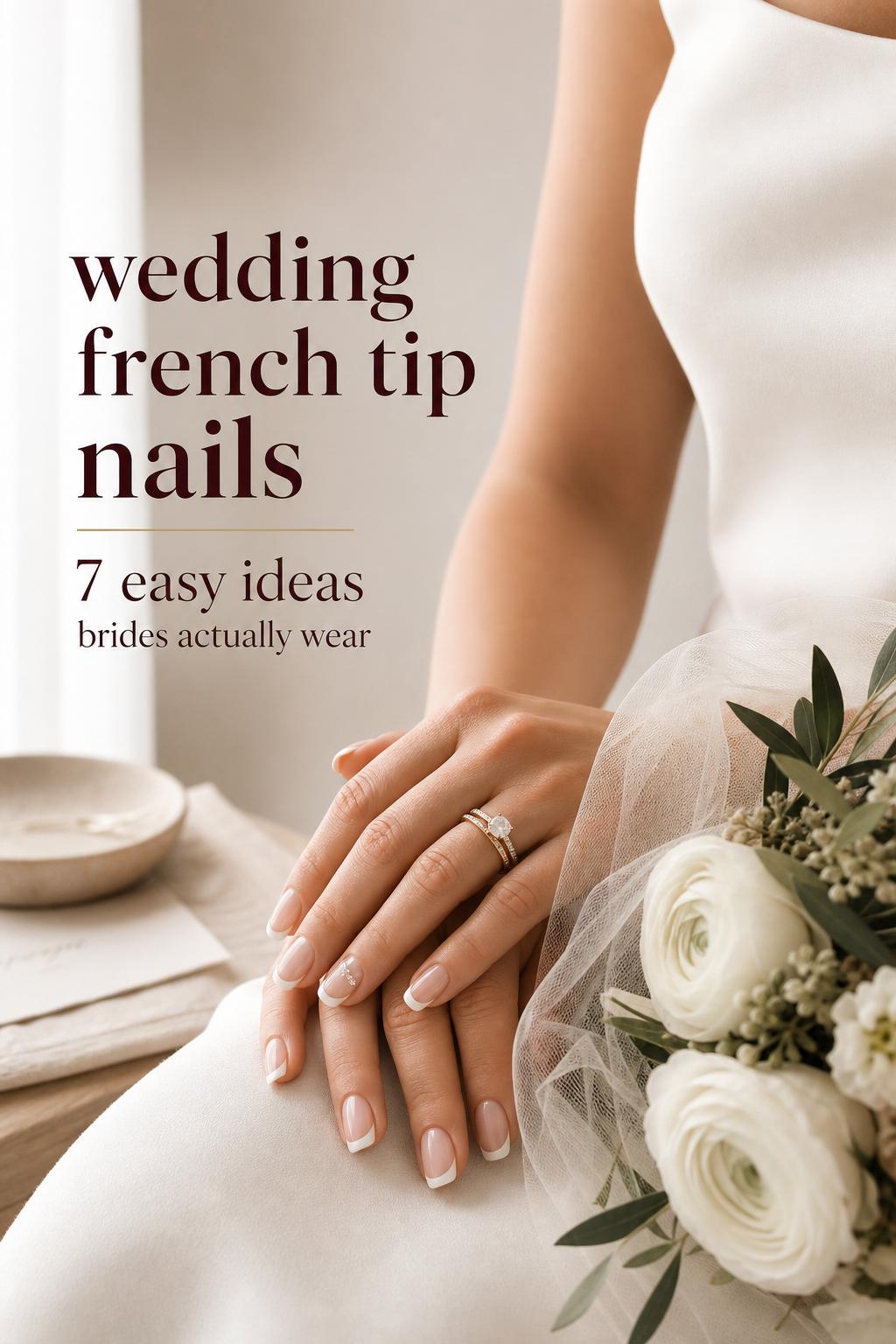
Yes, French tip nails are one of the most dependable bridal choices because they are timeless, versatile with different dress tones, and especially flattering in wedding photography. Their simplicity also makes them easy to adapt to classic, minimalist, romantic, or glam bridal aesthetics.
What base color looks best for wedding french tip nails?
The best base depends on the overall wedding look. Sheer pink, milky, nude, and blush tones are all popular because they soften the manicure and work well with bridal styling. A bright white gown may suit a more defined contrast, while ivory or softer dress tones often pair better with a gentler base.
Should wedding French tips be classic white or softer in tone?
Both can work beautifully, but the choice should reflect the dress, lighting, and desired mood. Crisp white tips feel more traditional and polished, while softer tones and thinner smile lines often feel more modern, romantic, or natural in daylight photography.
Are pearl or glitter accents too much for bridal nails?
Not necessarily. Pearls, glitter, and rhinestones can all suit bridal nails when used selectively and in harmony with the gown and jewelry. The strongest results usually come from choosing one decorative direction rather than layering multiple embellishment styles together.
How do I choose between gel, acrylic, dip, and press-on nails for my wedding?
The decision depends on your schedule and priorities. Gel suits brides who want a sleek salon finish, acrylic or dip may appeal when durability is the main concern, and press-ons are useful for flexibility, travel, or quick changes. The best option is the one that supports both your visual preferences and your wedding-week logistics.
Do French tip nails photograph well in ring shots?
Yes, they are especially well suited to ring shots because the clean lines and polished finish frame the hand without distracting from the ring. A smooth top coat, flattering base tone, and balanced tip width all help the manicure look refined in macro and close-up photography.
Can press-on French tip nails work for a wedding day?
They can, especially for brides who want convenience or a backup option. Bridal press-ons work best when the fit is tested ahead of time and the final look appears seamless enough for close-up photos. A wedding day is not the ideal moment for a first trial, so preparation matters.
When should I get my wedding manicure done?
It is best to time the manicure close enough to the ceremony that it still looks fresh, while leaving enough room for minor adjustments if needed. Brides who schedule too early often notice regrowth or reduced shine by the wedding day, which is why timing is part of the overall planning process.
Can bridesmaids or wedding guests wear French tip nails too?
Absolutely. French tip nails are elegant for bridesmaids and guests as well, though the styling is usually simpler than the bride’s. Softer bases, fewer embellishments, and understated finishes help keep the look occasion-appropriate without feeling overly bridal.