Nails for Wedding: 2026 Ideas That Feel Like You
Choosing nails for wedding celebrations can feel surprisingly difficult. Your hands will appear in ring photos, bouquet pictures, champagne toasts, table details, and candid moments, yet your manicure has to work with the whole look rather than compete with it. The best 2026 choices are not one single shade or shape. They are thoughtful interpretations of your personal style: soft shine instead of heavy glitter, refined details instead of crowded art, and lengths you can actually live with.
This guide turns the current conversation into an easy decision. You will see what is changing, how to translate each trend into a wearable set, and how to choose between polish, gel, extensions, and press-ons. Use the recommendations as a starting point, then adapt them to your dress, jewelry, venue, season, natural nail, and comfort level.
What Is Changing in Nails for Wedding Style
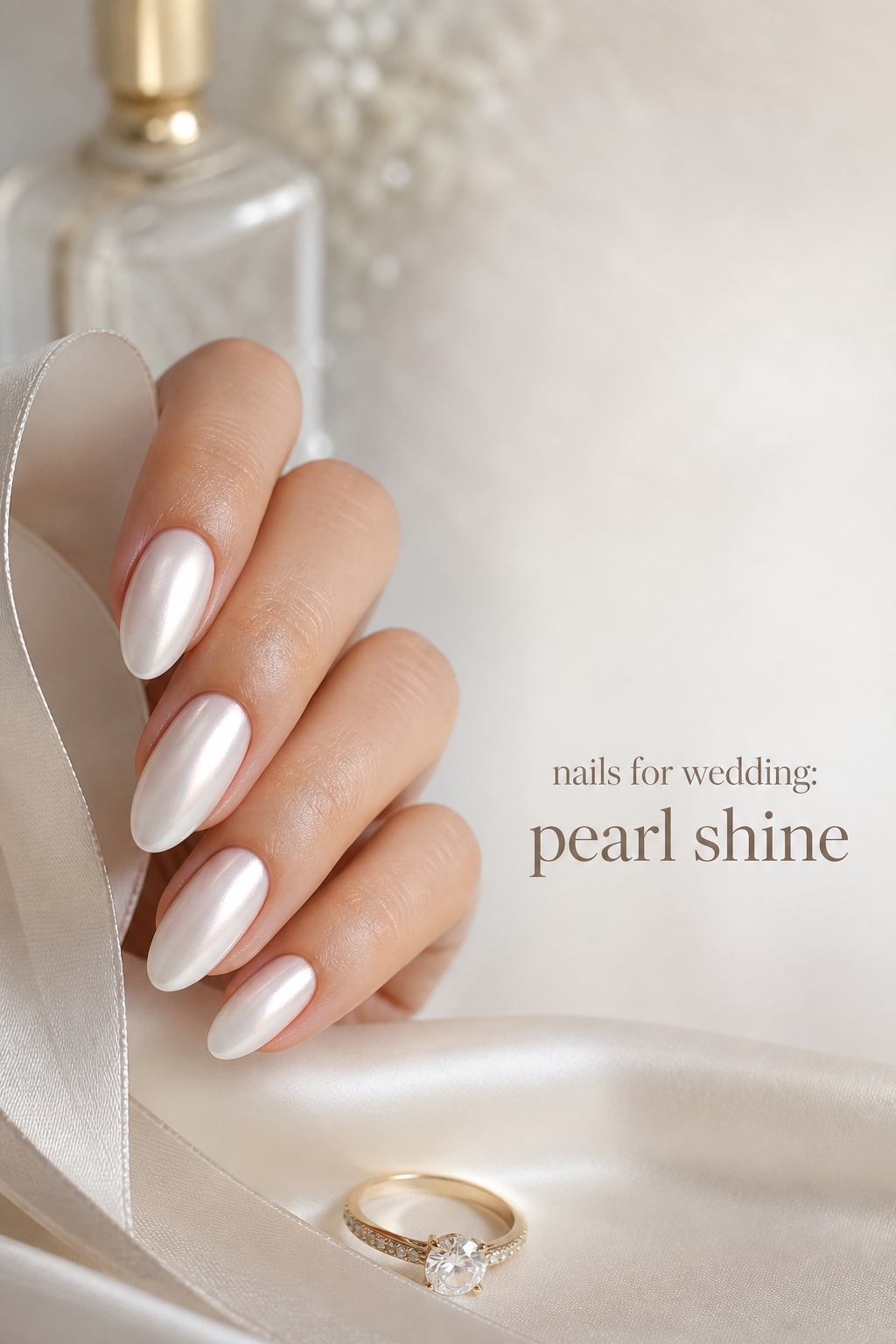
Bridal manicure inspiration has moved toward details that look intentional in person and still make sense years later. The strongest direction is quiet refinement: a milky base, a blurred pearl glow, a narrow French tip, a barely visible shimmer, or one small detail that connects to the celebration. This does not mean every bride needs a neutral manicure. It means the design should have a clear relationship to the person wearing it.
Shorter, neatly shaped nails are also becoming more visible. A short squoval or rounded nail can look incredibly polished with a sheer pink, while a short almond shape adds a little length without the maintenance of an extra-long extension. For someone who works with their hands, travels before the ceremony, or rarely wears enhancements, this shift is practical as well as current.
Your wedding look is only the beginning.
Keep your guest list, vendors, timeline, and every important detail together with Zarellea — so your day feels as considered as your style.
Finish matters more than decoration. Pearl chrome, glazed effects, translucent shimmer, and satin-like top coats catch light gently. They add dimension to a hand photograph without creating a hard block of white. If you love sparkle, use it as a concentrated accent: a reverse French line, a single crystal, or a fine veil over the ring finger rather than chunky glitter across every nail.
Color is widening, too. Bridal pinks range from barely-there blush to a richer rose. Pale blue can become a subtle something blue, while a classic red or plum can look remarkably elegant with a simple shape and glossy finish. The useful question is not whether a shade is traditionally bridal. Ask whether it supports the mood, photographs well beside your flowers and jewelry, and still feels like a color you would choose on an ordinary good day.
How to Translate the Biggest Trends Into Wearable Choices
The trend names are helpful only when they lead to a specific appointment request. Bring your nail artist a reference image, but also explain the result you want: clean and almost natural, softly luminous, graphic and modern, romantic with texture, or confidently colorful. Here are the most useful translations for current nails for wedding inspiration.
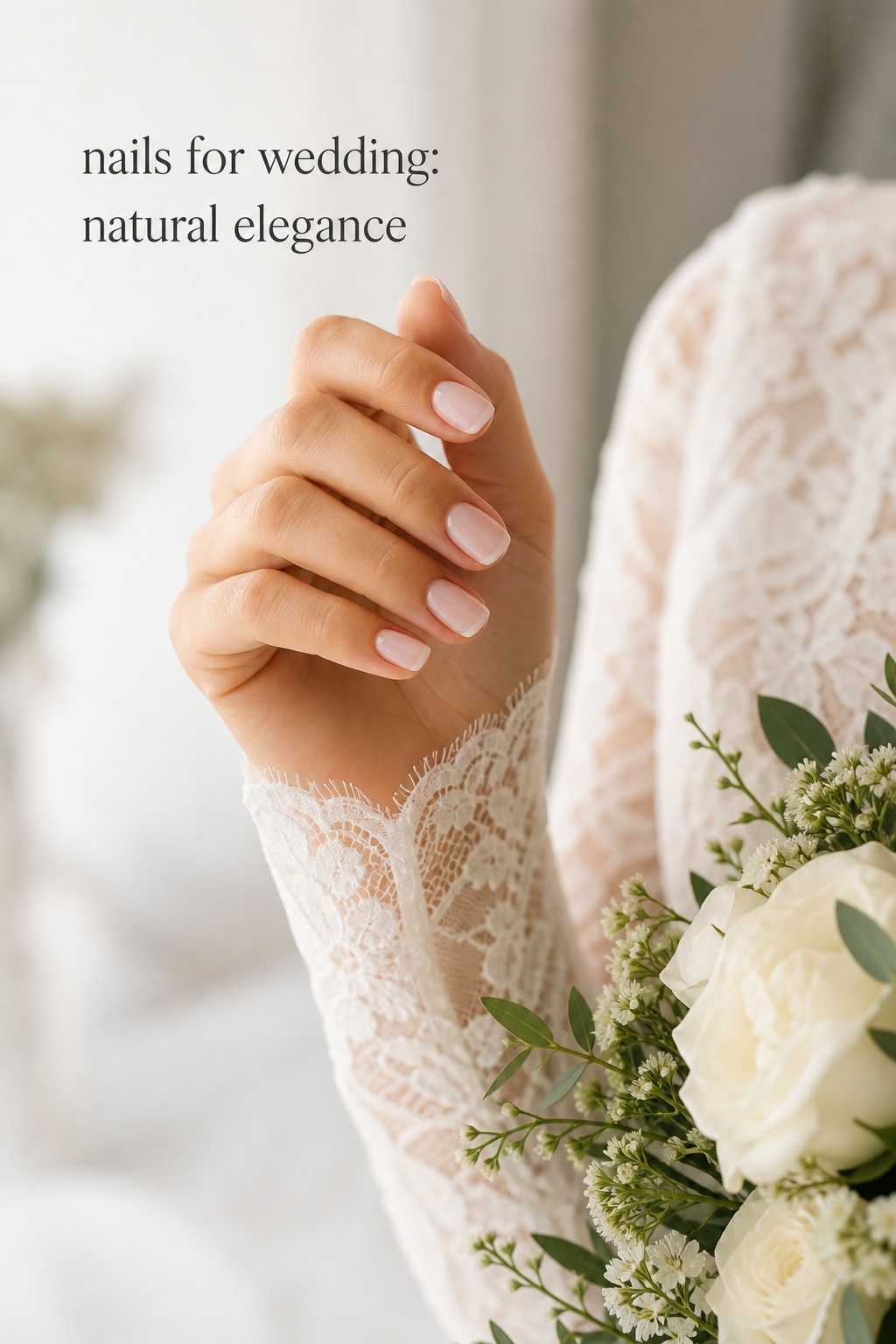
Natural elegance and the no-mani mani
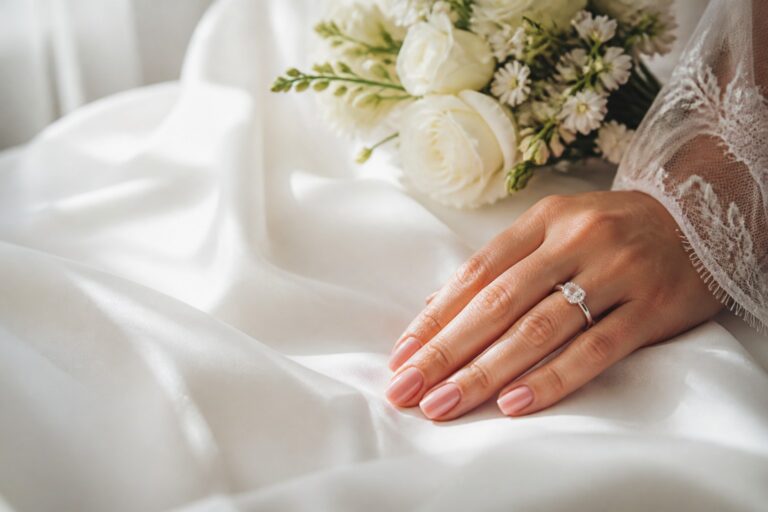
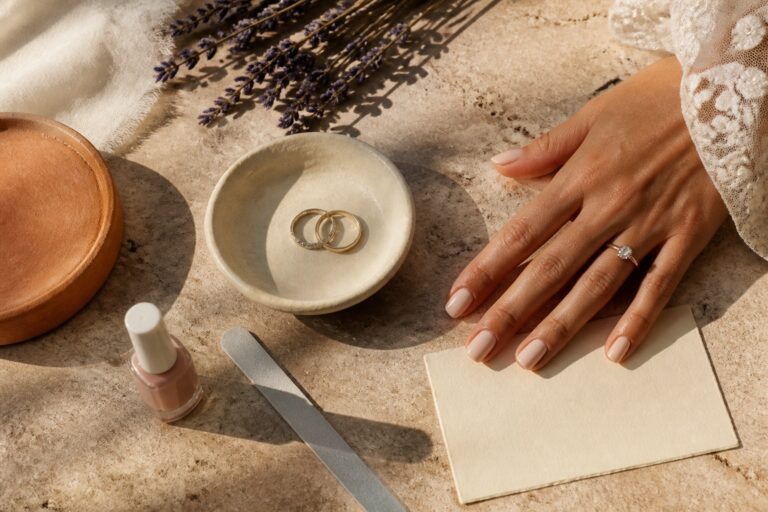
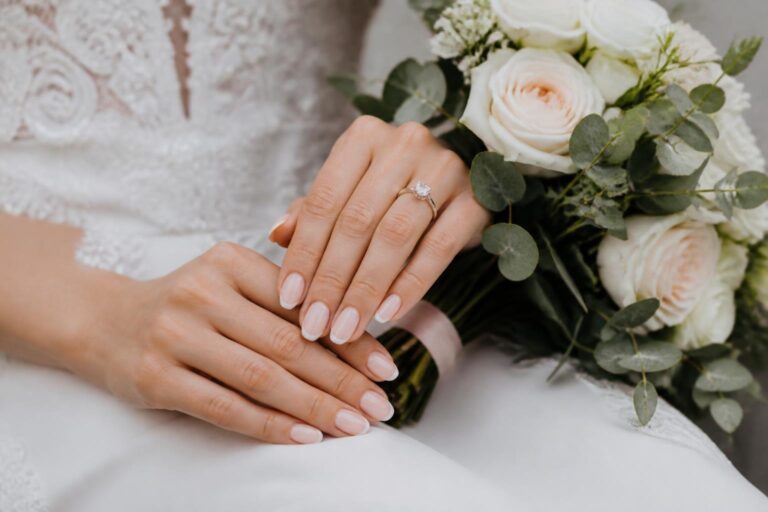
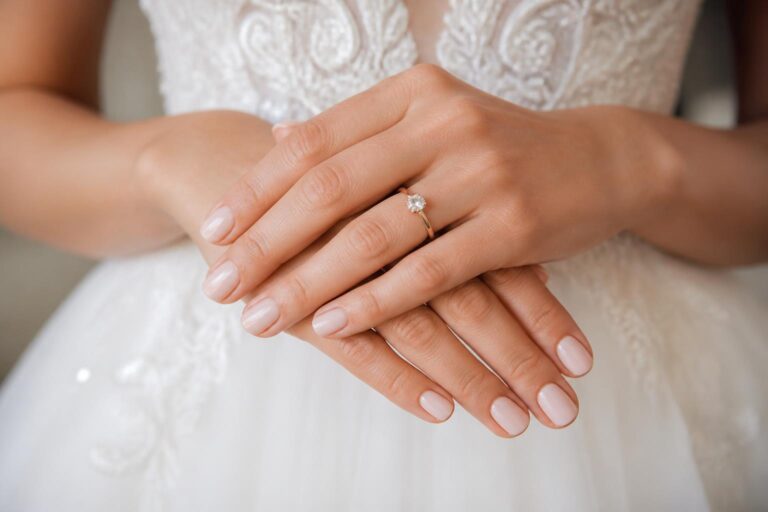
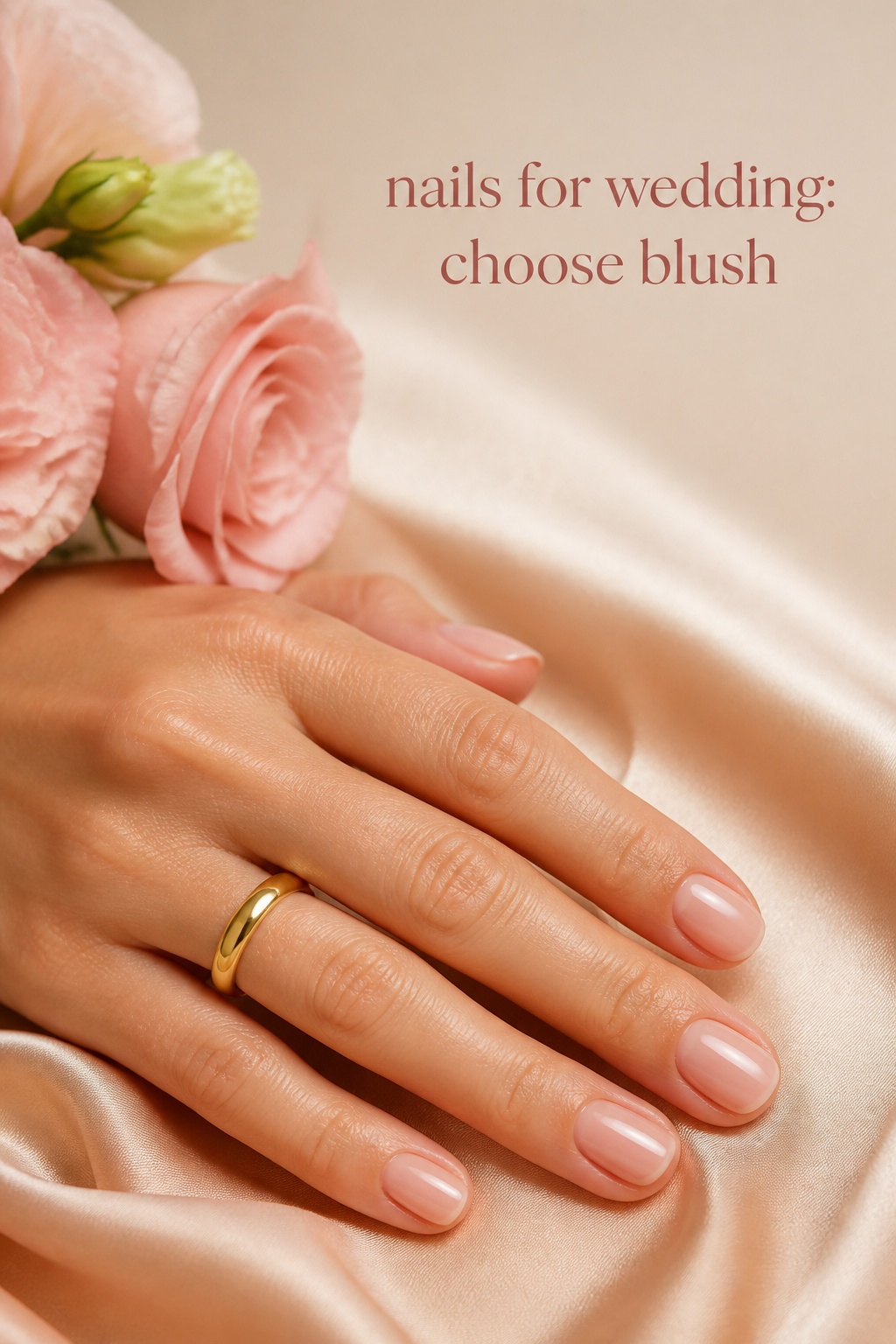
A natural look is not the same as doing nothing. It depends on careful cuticle work, even shaping, hydration, and a base product that smooths the nail. Choose a sheer pink, soft beige, or translucent milky shade that lets some natural variation show through. This is ideal if your gown has intricate lace, your jewelry is detailed, or your beauty style is deliberately minimal.
Milky white and soft pearl
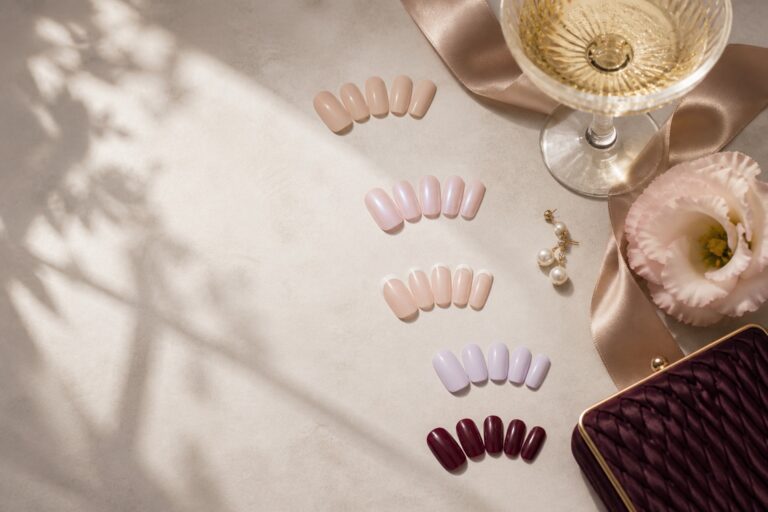
Milky white sits between opaque white and a nude manicure. It looks fresh against ivory, flattering beside bright white, and especially pretty with pearl earrings or a satin dress. Add a very fine pearl chrome powder if you want light to move across the nails. Ask for a thin, even application so the finish remains luminous rather than metallic. This is one of the safest choices for a bride who wants a visible bridal detail without nail art.
Micro-French and reverse French
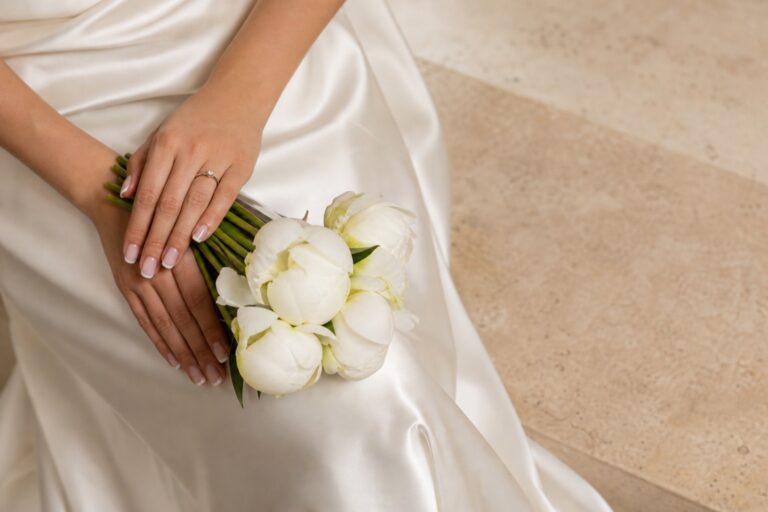
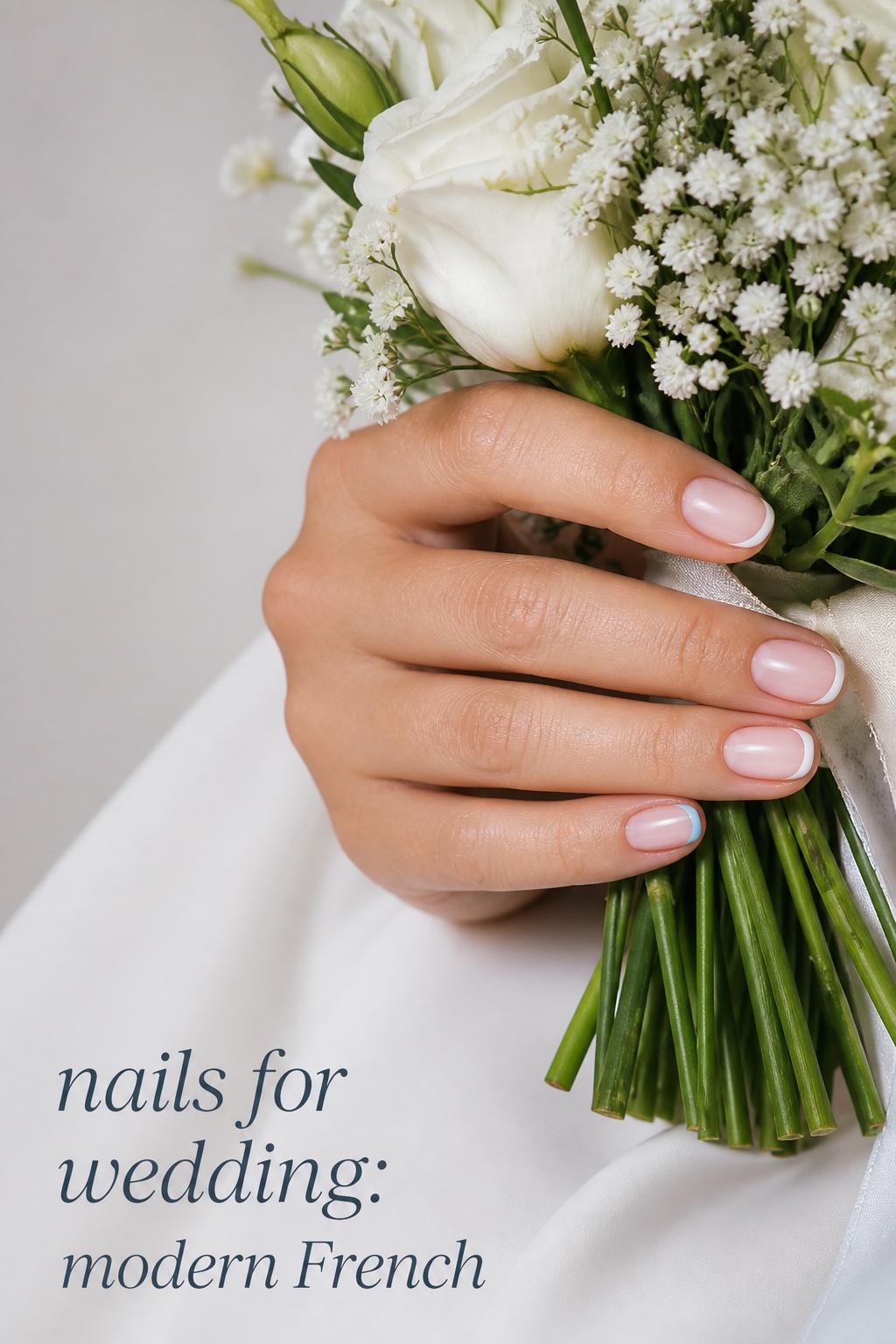
A micro-French keeps the tip narrow and delicate, which makes it work beautifully on short or medium nails. A classic white tip feels timeless; a champagne, blush, or pale blue tip makes it more personal. A reverse French places the line near the cuticle and can be finished with a little shimmer. Both designs benefit from clean negative space, so they will not look busy when your hands hold a bouquet.
Blush, rose, and barely-there color
Blush tones are flexible because they echo many bouquets and flatter a wide range of skin tones when the undertone is chosen carefully. Cool pink can balance silver jewelry; peachy pink can harmonize with warm gold; a dusty rose brings more contrast to a simple gown. Test the polish against your hands in daylight. A shade that looks delicate in the bottle can become surprisingly bright under salon lighting.
Quiet metallics, pearls, and tiny details
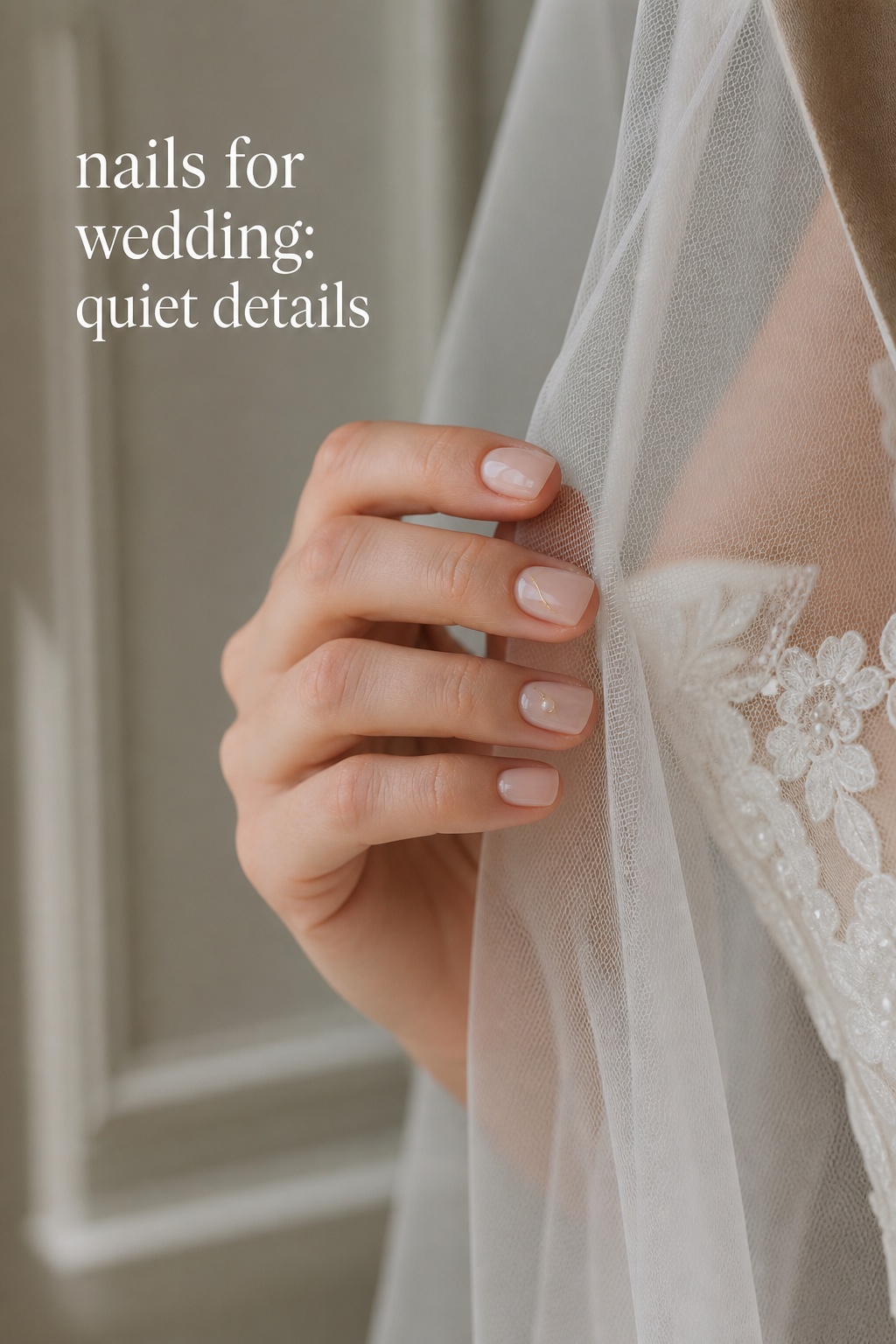
Metallic detail works best when it repeats something already present. A thin gold line can echo gold earrings, a silver accent can relate to cool-toned jewelry, and tiny pearls can mirror buttons or hair accessories. You can also choose a single accent nail, a minimalist dot, or a small abstract bow. Keep the scale modest; a detail that reads as texture in a close-up will look more sophisticated than a large motif on every finger.
Something blue, modern red, and deeper shades
Pale blue French tips or a translucent blue wash can fulfill the something-blue idea without changing your entire beauty identity. If you prefer a statement, glossy red gives a clean manicure a fashion-minded finish, while plum works especially well for fall or evening celebrations. With stronger color, simplify the shape and skip excessive embellishment. The color becomes the feature, so the rest should be precise.
Choose Nails for Wedding Details, Not in Isolation
A manicure is part of a visual system. Before choosing a design, look at the materials and contrasts that will surround your hands. This small exercise prevents the most common problem: selecting a beautiful nail set that feels disconnected from the rest of the day.
Match the finish to your dress and accessories
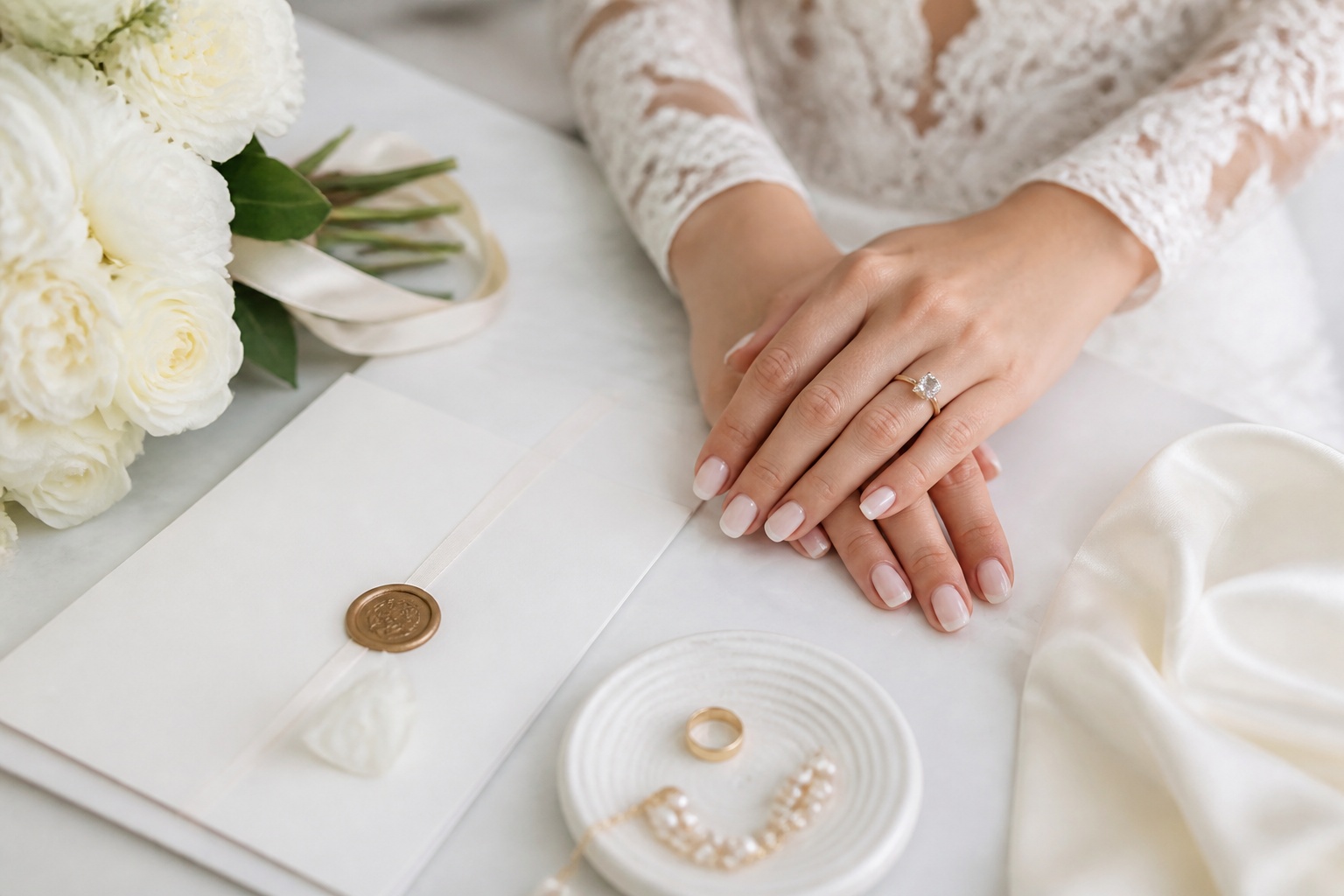
Satin and silk pair naturally with smooth gloss, soft pearl, or a restrained chrome. Lace can support a sheer base, micro-French, or one delicate line that repeats its fine pattern without copying it literally. Beaded or heavily embellished gowns usually need more breathing room on the nails. Consider a clean blush, a milky finish, or a tiny metallic accent rather than adding another busy surface.
Let the venue and season guide the mood
For a daytime garden wedding, translucent pink, pale blue, buttercream, or a soft floral detail can feel fresh. A city evening celebration can carry a sharper micro-French, pearl chrome, red, or metallic line. Warm autumn flowers may welcome cinnamon, rosewood, or plum; winter celebrations can make icy pearl, silver, and deep berry feel deliberate. Treat these as mood references, not rules.
Choose the shape for your real schedule
Almond shapes visually lengthen fingers, but they need enough free edge and may feel unfamiliar. Squoval nails are sturdy and versatile, while round nails are easy to maintain and forgiving if one nail grows at a different rate. Long extensions can create a dramatic silhouette, but they also affect typing, fastening clothing, opening packages, and traveling. The most photogenic set is the one you can wear confidently.
Pick the product that fits your nails
Regular polish is a good fit for someone who wants easy removal and a natural feel, though it is more vulnerable to chips. Gel polish gives a hard, glossy finish and usually lasts well through a wedding weekend when applied correctly. Builder gel or acrylic can add length and structure, but they deserve a trial because the sensation and upkeep are different. Quality press-ons can be a smart travel option when you have a reliable fit and an adhesive plan.
Do not make a major product change for the first time two days before the ceremony. A trial is about more than color. It lets you test length, shape, thickness, comfort, removal, and how the set looks with your ring. Photograph the manicure in daylight and under warm indoor light. If you dislike it during the trial, you have time to adjust without turning the final appointment into an emergency.
A Wedding Manicure Timeline That Reduces Stress
Good nails for wedding days are usually the result of a calm sequence rather than a last-minute appointment. Start by deciding whether you want to grow your natural nails, wear extensions, or use a short enhancement. If you bite your nails or have uneven lengths, a nail artist can suggest a gradual plan. Avoid aggressive filing or cutting cuticles at home; irritation is much harder to disguise than a small shape difference.
- Four to eight weeks before: book a consultation or trial, especially for extensions, nail art, or a new salon. Begin consistent hand cream and cuticle oil.
- Two to three weeks before: test the final shape and confirm that the color works with your dress fabric, ring, and bouquet palette.
- One week before: protect the nails from picking, harsh cleaning chemicals, and dramatic length changes. Confirm the appointment and ask what to bring.
- One to three days before: schedule the final manicure. This window gives polish time to settle while keeping the cuticles and shine fresh; follow your technician’s recommendation for the product used.
- Wedding morning: use hand cream sparingly, keep cuticle oil away from surfaces you need to hold, and pack a tiny emergency kit with a file, adhesive, and matching polish if appropriate.
Care is simple but important. Wear gloves for wet chores, do not use your nails as tools, and avoid soaking enhancement products for long periods. If a nail lifts, do not glue over trapped moisture or pull it off. Contact the salon or use the repair method your technician approved. A small professional repair is safer than turning one problem into several damaged nails.
Think about photography when you assess the final set. Clean edges, even lengths, and a smooth top coat matter more than tiny perfection. Your photographer may capture your hands close to the lens, but most images will show the manicure as part of a gesture. Comfort, hydration, and a design that does not make you hide your hands will always read better than a complicated set you are worried about.
Common Mistakes and the Better Fix
The first mistake is choosing from a trend list without deciding what you want the manicure to communicate. Save three references that share a mood, then remove anything that conflicts with your dress, jewelry, or everyday preference. Three coherent references help your nail artist more than a gallery of ten unrelated designs.
The second mistake is assuming a universal nude exists. Undertones change how pink, beige, white, and gray appear. Ask for a small test swatch on the actual nail and view it in daylight. The third is selecting length for the photograph alone. If you cannot comfortably hold your bouquet, clasp jewelry, or hug people, shorten the set and keep the design.
Another frequent issue is overloading every nail. A manicure can be bridal because of its finish, shape, or precision, not because it contains lace, pearls, glitter, flowers, initials, and chrome at once. Choose one main idea and one supporting detail. This makes the set easier to maintain and keeps your ring from disappearing in a crowded image.
Finally, do not ignore removal. Ask how the product should come off and schedule time after the wedding if you will be traveling or returning to work. Proper removal protects the natural nail and avoids the cycle of peeling, thinning, and emergency repairs before the next manicure.
There is also value in separating inspiration from the final brief. A screenshot may show a long almond nail on a hand with a different nail bed, skin undertone, or camera angle. Tell your nail artist which part you love: the translucent base, the narrow tip, the reflective finish, or the tiny pearl. That gives the artist room to recreate the feeling in a way that suits your hands.
If you are coordinating with bridesmaids, avoid making every person wear the exact same design unless the group genuinely wants that. A shared color family with different finishes can look intentional in getting-ready photos. One person might wear milky pink, another a sheer French, and another a short pearl finish. The result feels connected without forcing different nail lengths or comfort levels into one template.
For guests, the same principle applies. Wedding guest nails can be polished without looking like bridal replicas. Choose a berry, muted rose, soft taupe, or a delicate metallic, and reserve the most literal white details for the couple if that matters in your setting. If you are attending several celebrations, a neutral base with replaceable accents can stretch across different outfits.
When comparing reference images, notice the negative space around the nails. A design often looks expensive because the cuticle line is clean, the sidewalls are balanced, and the color is not flooding the skin. These technical details are worth discussing at the appointment. Ask how the artist will protect the natural nail, what removal involves, and whether the chosen design can be repaired if one tip breaks.
Budget can guide the decision as well. A regular polish manicure is usually the simplest route, while extensions, builder gel, hand-painted details, and chrome layers add time and cost. Decide where you want the visual investment. A simple base with one beautifully executed accent can have more impact than a complicated design applied too quickly. Book enough time for the shape and finish you actually want.
Finally, remember that a wedding manicure is a small styling choice, not a test of bridal correctness. Your hands should feel like yours when you look down at the bouquet or reach for your partner’s hand. Whether that means a barely-there pink, a pearl French, a short red manicure, or a blue accent, confidence is the detail that makes the whole set look finished.
FAQ
How many days before a wedding should I get my nails done?
For most brides, one to three days before the ceremony is a practical window. It keeps the manicure fresh while leaving a little time for a repair. Your product, nail growth, and salon’s advice may change that timing.
What is the safest nail color for wedding photos?
Sheer pink, soft blush, milky white, and a refined French manicure are dependable because they add polish without fighting the dress or flowers. Test the exact shade in natural light because undertones photograph differently.
Are short nails appropriate for a bridal manicure?
Absolutely. Short round, squoval, and soft almond shapes can look modern, elegant, and easier to maintain. A clean shape and smooth finish matter more than length.
Should I get a nail trial before the wedding?
Yes, especially if you are trying extensions, gel, nail art, or a shape you do not normally wear. A trial checks comfort, thickness, color, durability, and how the manicure looks with your ring.
Can I wear red nails for my wedding?
Yes. A glossy red is a confident, elegant choice when the shape is simple and the application is precise. It works particularly well when red appears in your flowers, shoes, lipstick, or other styling details.
What should I bring to a wedding nail appointment?
Bring reference images, a photo of your dress or fabric, and any information about your jewelry or bouquet. If possible, bring your ring so the artist can assess the manicure beside it.