
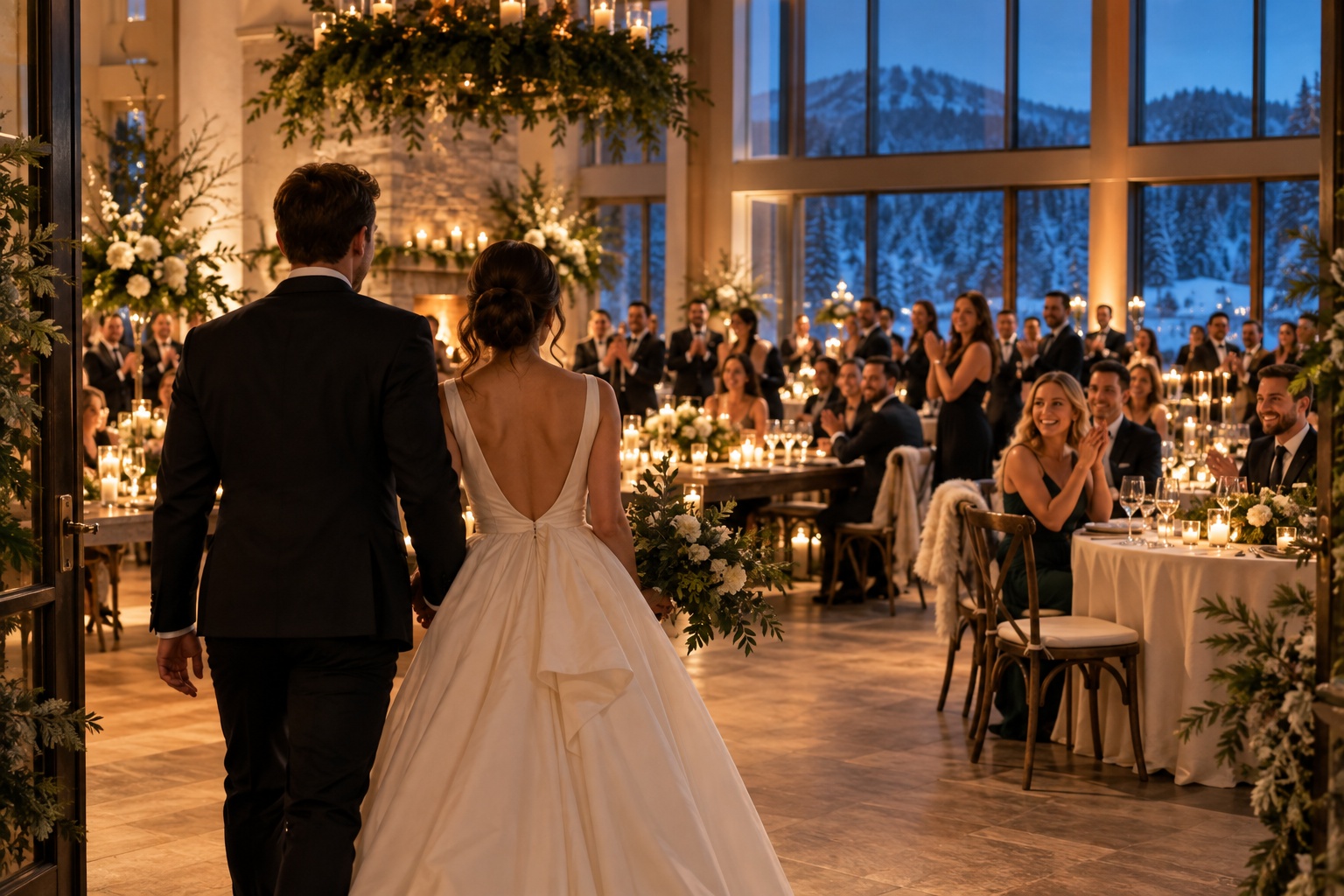
Winter Wedding Reception: A Cozy, Guest-First Plan
A winter wedding reception can begin before anyone sees the tables. It starts when a guest steps out of a cold car, shakes snow or rain from a coat, and wonders whether the room will feel welcoming. It continues through the first warm drink, the glow of the reception lighting, the first plate of food, and the moment the dance floor finally fills. When those transitions are planned, the season feels like part of the celebration rather than a problem the couple is trying to conceal.
The most memorable winter wedding reception is not necessarily the one with the most candles, velvet, or holiday references. It is the one where every choice supports an experience: guests can arrive comfortably, understand where to go, see one another clearly, eat food that suits the evening, and move through the schedule without waiting in the cold. Use the ideas below as a connected story rather than a shopping list.
Let the Reception Begin Before Guests Reach the Tables
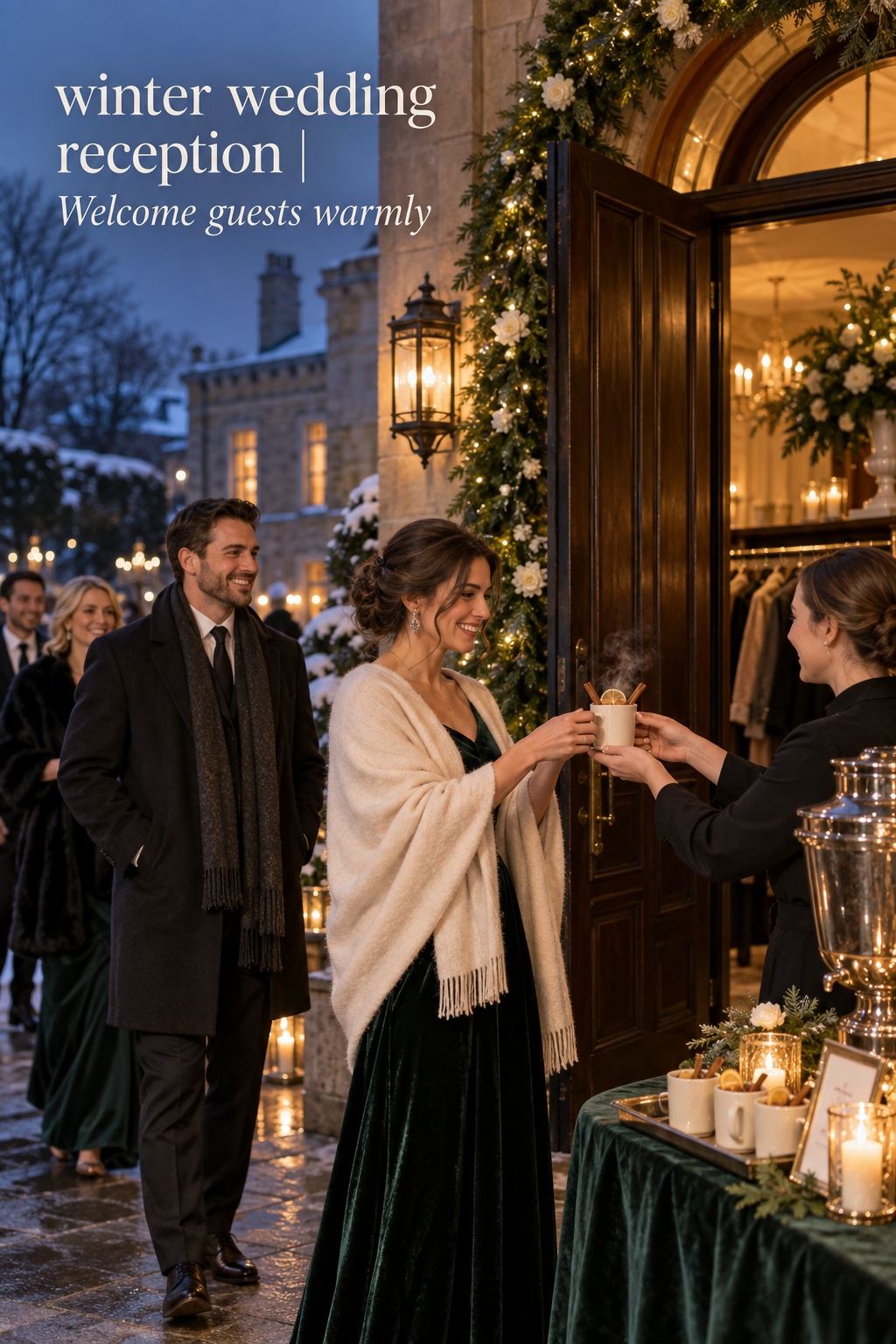
Imagine the first ten minutes. A guest walks from the parking area or rideshare drop-off toward the venue. Someone is holding a wrap over a formal outfit. Another guest is checking a phone for the room location. A parent is guiding a child around a wet patch on the pavement. These small moments shape the emotional temperature of the winter wedding reception before the music, speeches, and dinner have had a chance to do their work.

Your wedding look is only the beginning.
Keep your guest list, vendors, timeline, and every important detail together with Zarellea — so your day feels as considered as your style.
Start with the route. Ask the venue where guests will arrive, where coats will go, whether the entrance is protected from precipitation, and how far people must walk between ceremony and reception spaces. If the route is exposed, add clear directional signs, a covered waiting point when possible, and one person who can answer practical questions. A beautiful welcome becomes less convincing when guests are guessing which door is open.
- Coat and bag flow: Give guests an obvious place to leave bulky layers without blocking the entrance or dining path.
- First drink: Offer water, tea, coffee, cider, or another welcome choice quickly, with a non-alcoholic option that feels equally intentional.
- Temperature check: Confirm that the entry area, cocktail space, and dining room do not have very different temperatures that make guests keep coats on at the tables.
- Accessibility: Keep a dry, well-lit, step-friendly path available for guests using mobility aids or managing slippery ground.
- Quiet landing zone: Include a few seats away from the loudest music for older guests, children, or anyone who needs a slower arrival.
A welcome station can carry the visual language of the evening without becoming a themed display. Place a simple sign beside a tray of warm napkins, a small arrangement of evergreen or bare branches, and a drink menu that explains what is available. If you serve a warm beverage, keep the cups easy to hold and label ingredients clearly. A guest should not have to ask whether a drink contains alcohol, dairy, nuts, or a strong spice.
Coat handling deserves more attention than it usually gets. A crowded pile near the entrance creates a visual and practical bottleneck. If the venue has a coat check, confirm its location and hours, then make the process visible. If the venue does not, use a staffed room with numbered tags, sturdy hangers, and a clear return plan. Do not assume guests will be happy to keep winter coats over the backs of their chairs for the whole dinner.
The welcome moment also sets the level of winter styling. You can suggest the season through texture and light instead of repeating a holiday palette. A deep green ribbon, warm wood, ivory paper, amber glass, or a low arrangement of branches can feel wintry without announcing a particular holiday. The couple’s names, favorite colors, cultural references, and venue architecture should remain more important than a generic snowflake motif.
Build Warmth With Light, Texture, and Negative Space
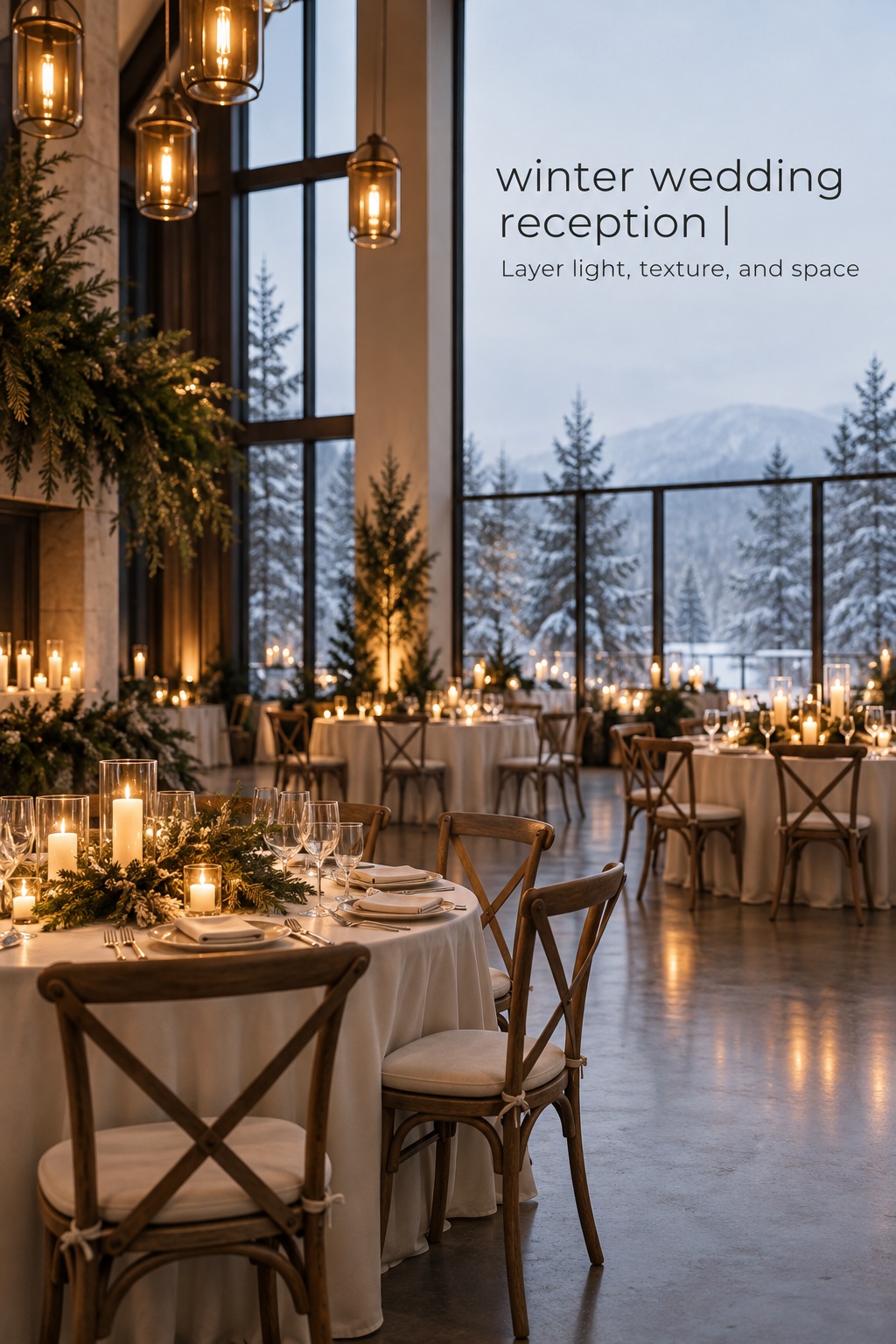
Once guests enter, the room should feel warm before they know why. Light usually does more of that work than decoration. In a winter wedding reception, daylight may disappear early, windows may show a dark landscape, and a large room can become visually flat when the only illumination comes from the ceiling. Layered lighting gives the space depth and helps the reception move from dinner into dancing without a complete visual reset.
Begin with the venue’s existing light. Find out which fixtures can be dimmed, whether the venue permits candles, how the dance floor will be lit, and whether photographs will require the room to stay brighter than the couple expects. Then choose a simple hierarchy: enough light to navigate, focused light for dining and faces, and softer points of glow that make the room feel intimate. Candlelight and string lights can be beautiful, but they should support visibility rather than replace it.
Give the room a warm center
A room needs a visual center, but the center does not have to be a large installation. It might be a sweetheart table framed by restrained greenery, a fireplace that is visible from the dining area, a bar with a warm backlight, or a dance floor surrounded by low pools of amber light. Guests should be able to understand the room’s rhythm at a glance: where to sit, where to get a drink, where to listen, and where to dance.
Negative space matters because winter styling can become dense quickly. Heavy fabrics, dark greenery, candles, metallic details, and floral arrangements all absorb visual attention. Leave enough breathing room around the bar, buffet, guest book, and dance floor. A smaller number of strong details often photographs better than a crowded collection of seasonal props. It also makes the room easier to clean, serve, and navigate.
Use texture without turning the room into a set
Texture is one of the easiest ways to make a winter wedding reception feel rich. Consider linen with a visible weave, velvet ribbon used in small amounts, matte ceramic vessels, brushed metal, wood, paper, and glass. The textures do not need to match exactly. They need to share a temperature and level of formality. A modern venue may benefit from one soft fabric and one natural material, while a lodge or historic hall may already provide enough visual character.
Greenery can be seasonal without becoming a forest of garlands. Use it to frame a doorway, soften the bar, connect two long tables, or draw attention toward a fireplace. Bare branches can create height and shadow, but keep them away from faces and sightlines. If the venue has beautiful windows, do not cover them completely. A winter view can be an atmospheric part of the reception design, especially when the room’s interior light is warm and controlled.
Keep photographs in mind without designing only for photographs
Reception lighting affects how guests see one another and how the photographer records the room. Ask where the couple will enter, where speeches will happen, and where the first dance will take place. Avoid placing a bright fixture directly behind the person speaking or creating a dark corridor between the dining room and dance floor. A few test photographs at the approximate evening light level can reveal problems that are invisible during a daytime venue visit.
Do not flatten every corner in the name of perfect documentation. A winter wedding reception can hold a little mystery. Let one lounge area feel softer, let the bar glow, and let the dance floor become brighter when the music changes. The room should be comfortable in person first. A thoughtful photographer can work with atmosphere when the major pathways and faces remain visible.
Serve a Winter Menu That Feels Generous, Not Heavy
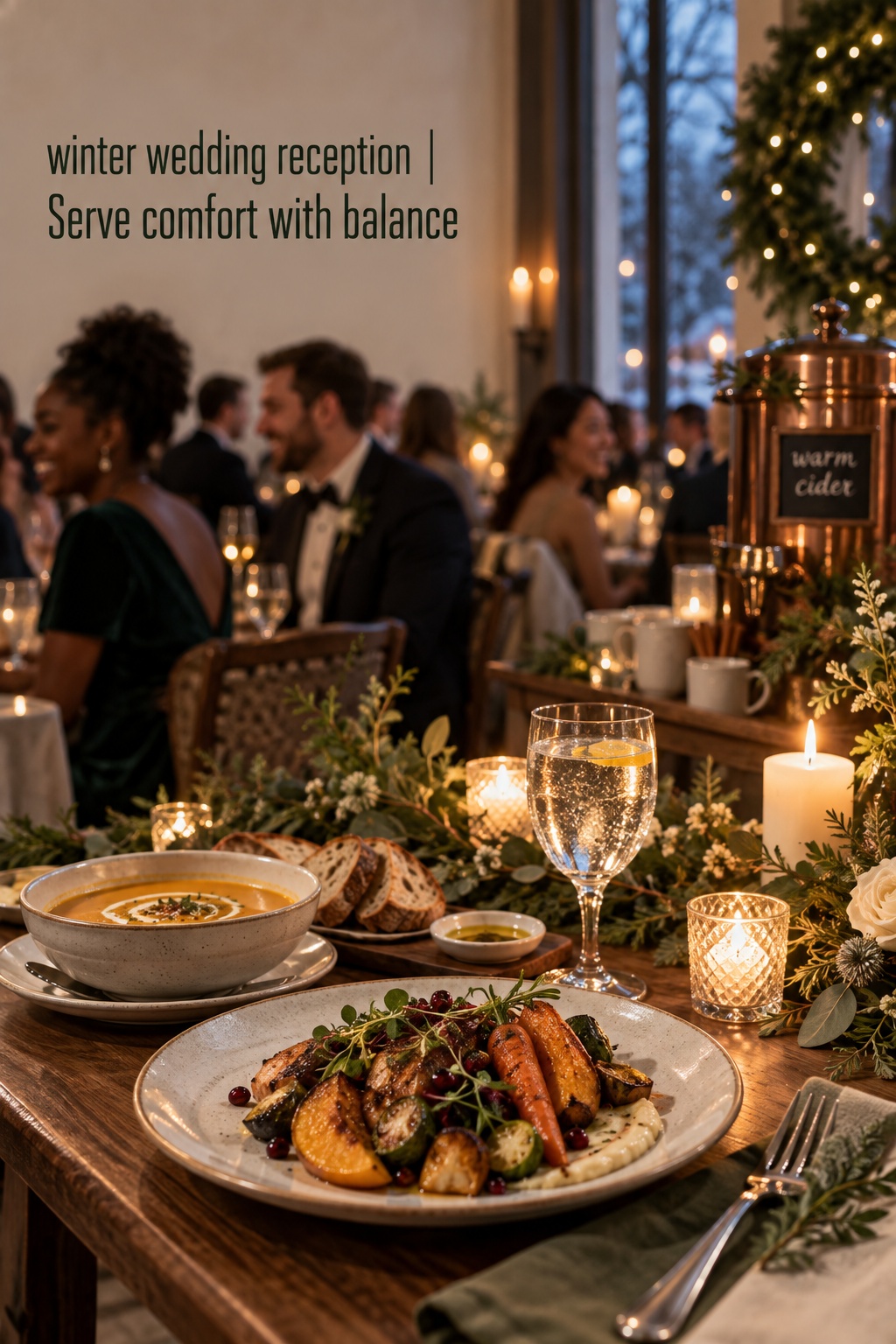
Food is the most immediate form of warmth at a winter wedding reception. A guest who has traveled through cold air or stood outside for photographs notices the first bite quickly. That does not mean every course should be rich, brown, or oversized. It means the menu should feel considered for the season, paced well, and generous to different appetites and dietary needs.
Build the menu around contrast. A warm soup or small savory bite can welcome guests, followed by a main course with roasted vegetables, grains, fish, poultry, or meat that feels satisfying without exhausting the palate. Add something fresh and bright so the meal does not become one long note. A winter menu can be comforting and elegant at the same time when the caterer balances temperature, texture, color, and portion size.
- Arrival: Offer one warm savory option and one fresh or crisp option so the welcome feels seasonal without being repetitive.
- Cocktail hour: Use small portions that are easy to hold, especially if guests are also carrying wraps, programs, or children.
- Dinner: Include a clearly explained vegetarian or vegan main rather than treating it as an afterthought.
- Drinks: Pair warm beverages with chilled water, sparkling water, and non-alcoholic choices that are not visually secondary.
- Late night: Choose a simple, satisfying bite that restores energy without requiring a second formal meal.
A hot cocoa station can be charming, but it should fit the reception’s tone. In a formal evening, serve a small menu of cocoa, espresso, tea, or spiced cider in coordinated cups with restrained toppings. At a relaxed lodge reception, the station can be more playful. Keep the setup clean, provide dairy-free and caffeine-free options, and place it where guests can reach it without forming a line through the dance floor.
Warm cocktails require the same clarity as any other bar service. A toddy, mulled wine, spiced cider, or warm non-alcoholic punch can create a memorable winter cue, but guests should know what is in the cup. Label alcohol, common allergens, and serving temperature. Ask the caterer how the beverage will be held safely and how long it can remain appealing. The goal is a welcoming detail, not a drink that arrives lukewarm or overly sweet.
Dessert can carry the season without repeating the main course. Think about baked fruit, chocolate, citrus, ginger, nuts, cream, or a small warm pastry, then balance it with fresh fruit or a lighter option. If you love a large cake, add one smaller late-night comfort bite rather than turning the dessert table into a second buffet. Guests remember how the evening felt, including whether they could find a final snack after dancing.
Ask the caterer to map service around the room temperature and the schedule. A buffet may need a layout that prevents cold air from reaching the food. Plated service needs enough time for guests to eat before the next major speech or performance. Family-style service can feel generous, but it needs enough table space and clear instructions for dietary substitutions. These are operational choices, yet they are part of the atmosphere because they determine whether guests feel relaxed.
Design the Timeline Around Early Darkness and Easy Movement
Winter changes the clock. In many locations, useful outdoor light arrives and disappears earlier than couples expect, but the exact timing depends on the date and city. Check the local sunset and civil twilight for the wedding date, then build the photography and travel plan around the actual venue distances. Do not copy a summer timeline and hope the reception will absorb the missing daylight.
The reception can become the steady center of the day when the schedule is designed well. Guests should not spend a long gap waiting in a cold lobby while the couple takes photographs. If portraits happen after the ceremony, offer a clear cocktail-hour plan with seating, warm drinks, and enough food to make the wait feel intentional. If the couple wants daylight portraits before the ceremony, communicate the plan so the wedding party and family know where to be and when.
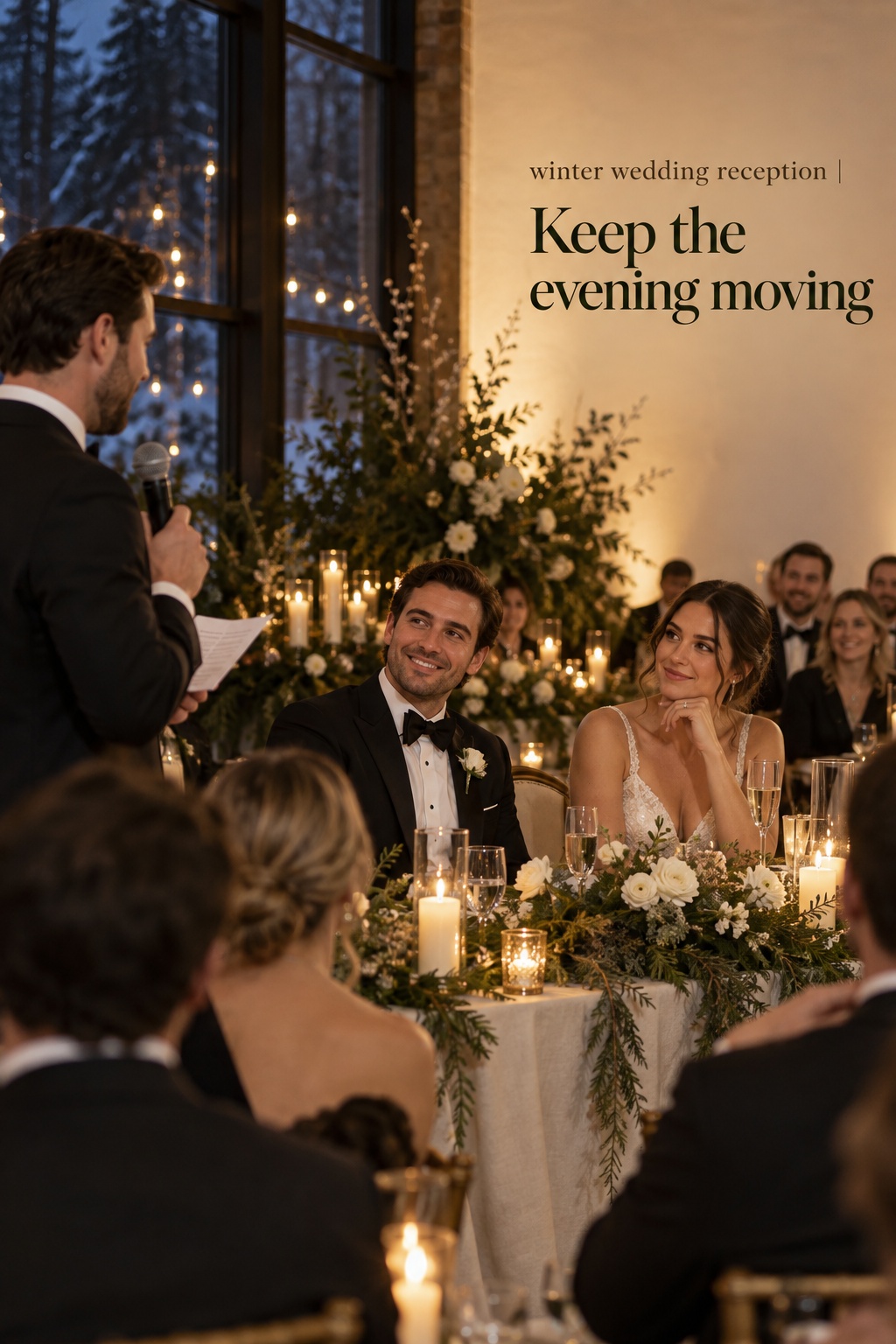
Think in transitions instead of isolated timestamps. The transition from arrival to cocktail hour needs coat flow and a welcome drink. The transition from cocktail hour to dinner needs a visible cue and an unobstructed path. The transition from dinner to speeches needs comfortable seating and a room that can shift focus. The transition from speeches to dancing needs a little energy, not another long pause. When every change has an owner, the winter wedding reception feels calm.
Protect the light you actually want
If a snowy or blue-hour portrait matters to you, tell the photographer before the timeline is final. A short outdoor session may need to happen before dinner, between courses, or during a planned dance-floor pause. Keep the request specific and brief. Guests should not lose the couple for a long stretch, and the couple should not have to choose between a meaningful photograph and enjoying the reception they planned.
After dark, design the photo moment rather than treating it as a failed version of daylight. A lit doorway, covered porch, window wall, fireplace, or line of warm trees can become a deliberate backdrop. Ask about safe pathways, footwear, coats, and the time required to reset hair or clothing. The strongest winter images often come from a clear lighting idea and a short, well-managed exit from the room.
Give guests a reason to keep moving
Winter receptions can feel slower when guests are carrying layers, sitting in a warm room, or waiting through several formalities. Alternate attention and movement. Place a short welcome before dinner, keep speeches focused, open the dance floor with a clear cue, and add a lounge or hot drink moment without making guests cross the entire venue. If children or older relatives are present, make sure they can participate without standing in a cold corridor or navigating a crowded dance floor.
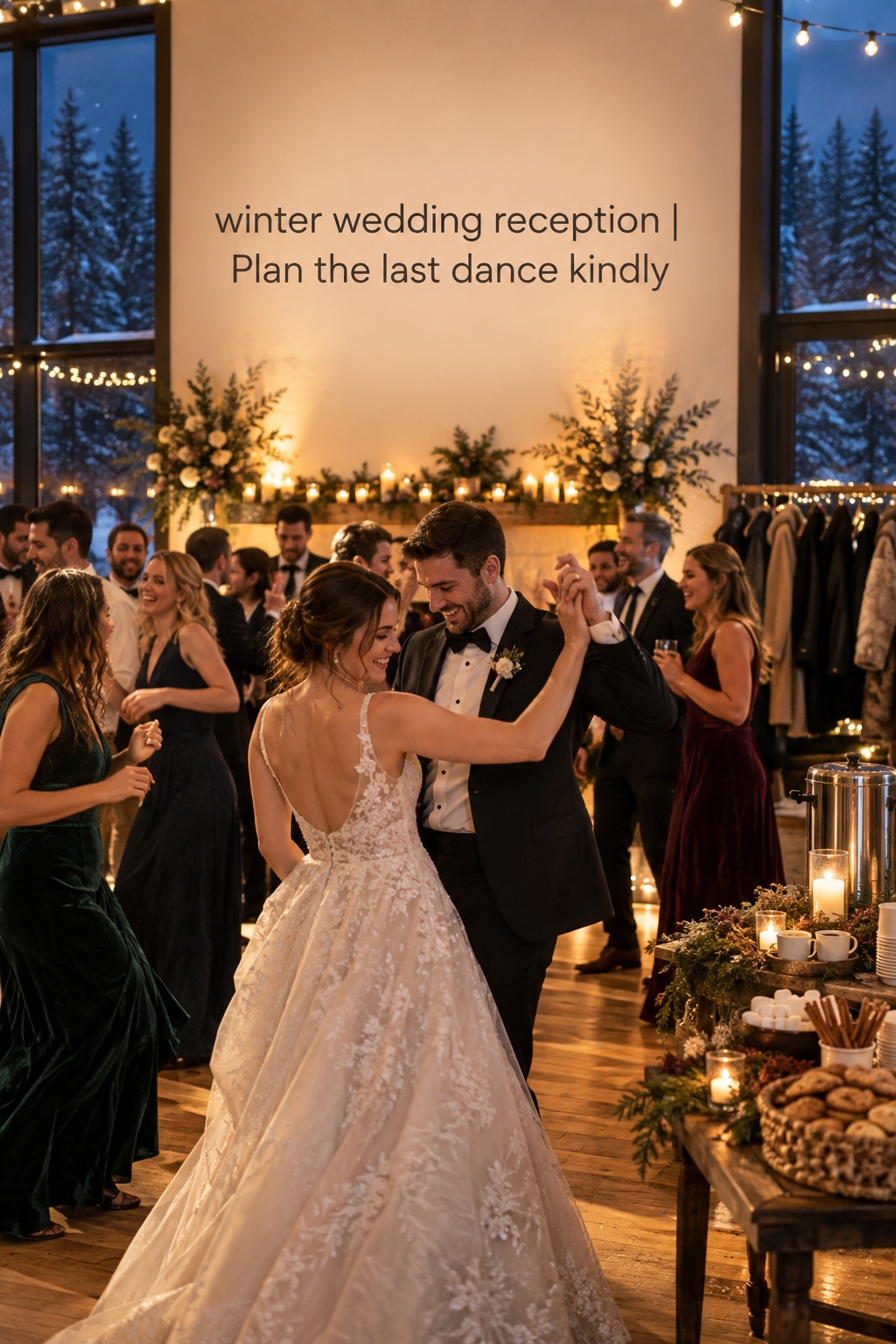
Plan the late-night exit with the same care as the welcome. Guests may need coats, rideshare pickup instructions, umbrellas, or a warm snack to take with them. If the couple is leaving through an outdoor path, give the photographer and planner a simple sequence. A final candlelit goodbye, sparkler alternative, or illuminated doorway can be memorable, but it should not force guests to stand outside without information or protection from the weather.
The best winter wedding reception feels generous because it respects attention, temperature, appetite, and movement. It does not ask guests to admire a beautiful room while ignoring practical discomfort. It uses winter’s early darkness to make light more meaningful, its cold air to make a warm drink feel special, and its textures to create a room that feels layered rather than overdecorated.
Sources and Methodology
This guide was developed from ten Google US organic results covering winter reception menus, candlelight and decor, venue warmth, guest comfort, low-light photography, and early-sunset timelines. Zola’s winter reception menu guide informed the discussion of warm food, drinks, and dessert. The Knot’s winter decor coverage informed the use of candlelight, market lights, greenery, and views. The remaining sources helped compare planning gaps and practical transitions rather than serving as product endorsements.
Sunset, venue rules, heating, accessibility, food safety, and service timing vary by location. Confirm final decisions with your venue, caterer, photographer, planner, and any relevant accessibility or safety professional.
FAQ
How can I make a winter wedding reception feel warm?
Start with guest comfort at arrival, then layer warm lighting, practical seating, seasonal food, and clear movement through the room. Candlelight, textured linens, greenery, wood, and amber glass can create warmth, but the venue’s actual temperature and coat flow matter just as much as the decor.
What food is good for a winter wedding reception?
Choose a balanced menu with a warm welcome bite, satisfying main options, something fresh, and a late-night snack. Soups, roasted vegetables, grains, comfort-food details, warm pastries, and hot drinks can work well when portions, dietary needs, and service temperature are handled carefully.
Should I serve hot drinks at a winter wedding reception?
Hot drinks can be a thoughtful addition, especially at arrival, cocktail hour, or late night. Offer at least one non-alcoholic option, label ingredients, use cups that are easy to hold, and place the station where it will not interrupt the main circulation or dance floor.
How early should winter wedding reception photos happen?
Use the sunset and civil-twilight times for your exact date and location, then work backward from the ceremony, travel, family photos, and reception start. Some couples choose a first look or pre-ceremony portraits, while others plan a short post-ceremony outdoor session and intentional night portraits.
How do I decorate a winter wedding reception without making it look like Christmas?
Use winter materials and atmosphere rather than holiday symbols. Warm light, ivory, deep green, wood, glass, soft fabric, bare branches, restrained metallics, and seasonal food can suggest the season while leaving room for your personal colors, culture, venue, and overall wedding style.
How do I keep guests comfortable during a winter reception?
Plan a protected arrival, visible coat storage, warm and cold drink choices, comfortable seating, dry accessible paths, and a schedule that avoids long outdoor waits. Tell guests what to expect, keep the room temperature consistent, and give one person responsibility for solving practical issues during the event.
