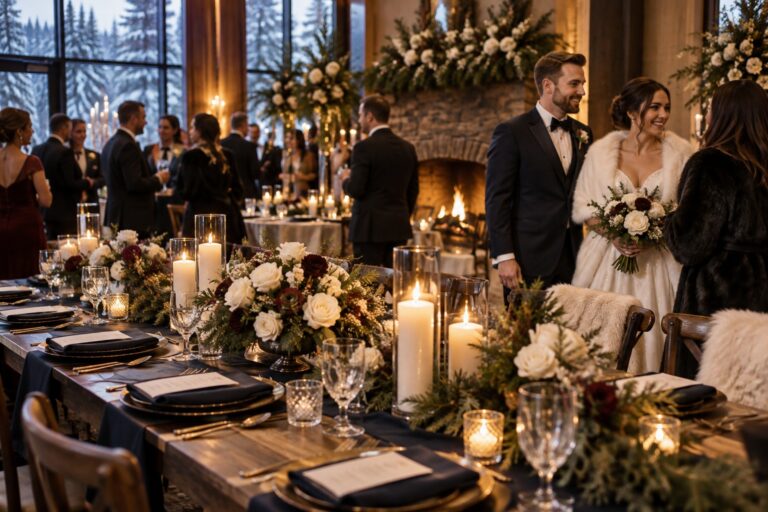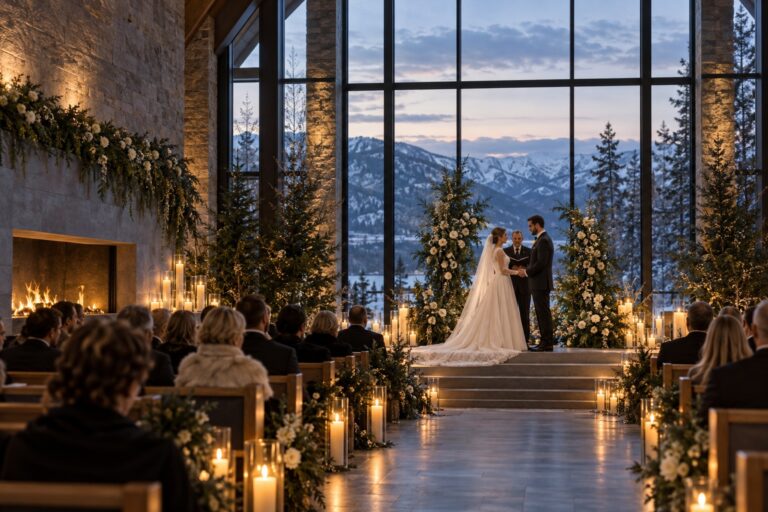
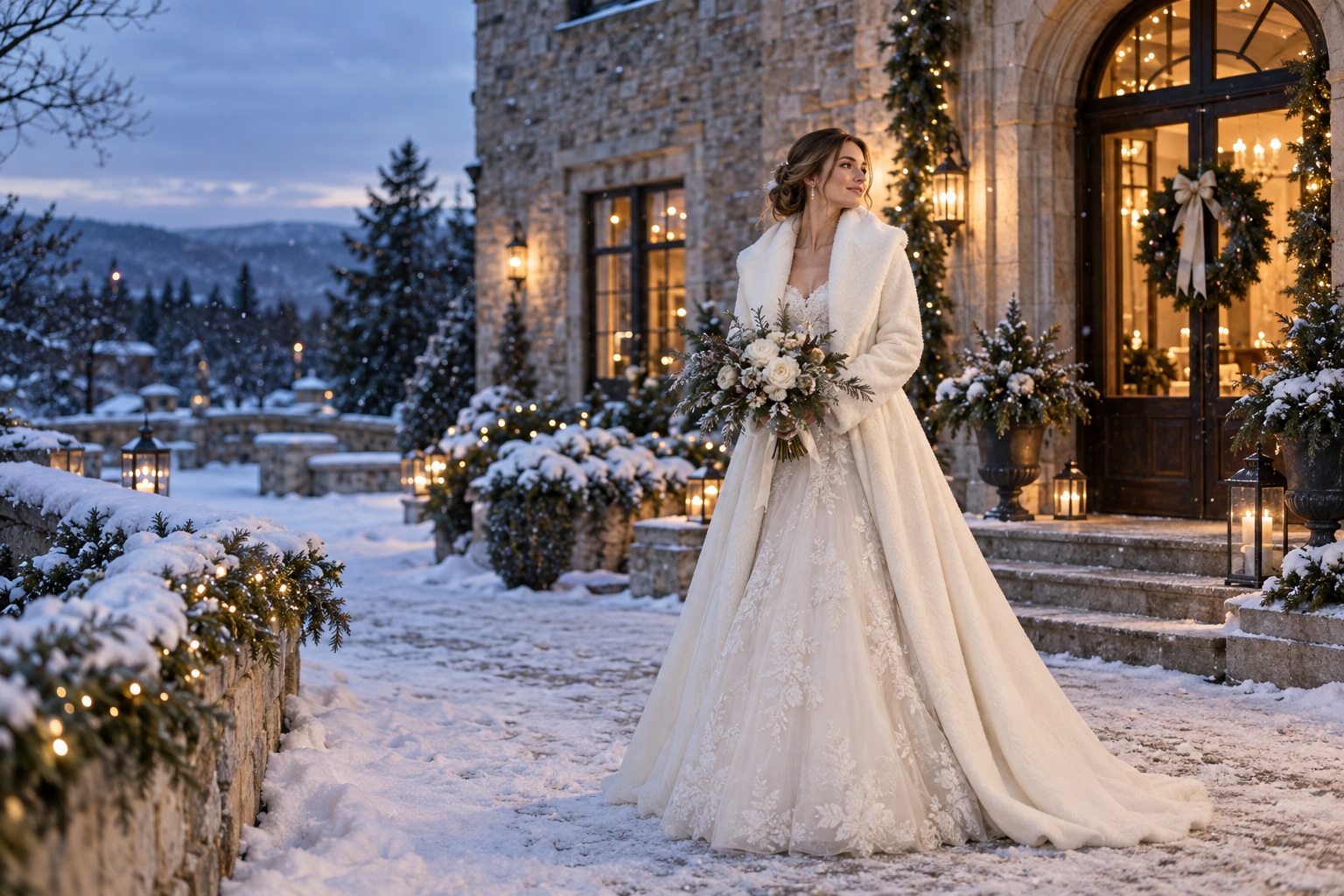
Winter Bride: A Warm, Photo-Ready Style Plan
A winter bride does not need to choose between looking beautiful and staying comfortable. She needs a plan for the changing conditions of the day. The walk from the car, the outdoor portraits, the ceremony, the warm reception room, and the late-night exit may all require a slightly different version of the same bridal look.
The smartest approach is to build the outfit as a small system. Start with the gown, add warmth where it can remain invisible, choose one removable layer for the moments that need it, and test the shoes and beauty details in real movement. That gives you a winter bride look that photographs well, feels like you, and can change without a frantic wardrobe reset.
Start With the Winter Bride’s Day-of Conditions
Before you shop for a cape or decide on sleeves, map the parts of the day that will expose you to cold, wind, moisture, or temperature changes. A bride having a short indoor ceremony in a city hotel has different needs from a bride taking a long portrait session beside a mountain lodge. Both can be winter brides, but the useful clothing solution will not be identical.
Write down four facts: where you will be outdoors, how long each outdoor segment may last, whether you will walk on pavement, grass, snow, or gravel, and whether you can return to a warm room quickly. Add the practical details your photographer or planner already knows. A beautiful layer is only useful if it lets you move, keeps the gown clean, and can be removed without disturbing your veil or hairstyle.
Your wedding look is only the beginning.
Keep your guest list, vendors, timeline, and every important detail together with Zarellea — so your day feels as considered as your style.
- Outdoor portraits: decide whether you need a complete coat, a fashion layer, or only brief shoulder coverage between shots.
- Travel between locations: prioritize a layer that closes, stays on the shoulders, and can be handed to an attendant.
- Wind: test the veil, loose hair, cape fastenings, and any wide sleeve before the wedding day.
- Wet ground: protect the hem with a practical route, a bustle plan, and shoes that will not slide.
- Indoor heat: make sure the removable layer can come off easily before you begin to feel overheated.
Do not use a weather app as the only decision-maker months in advance. Forecasts change, and winter conditions vary widely across the United States. Use the likely conditions to guide your trial, then ask the venue and photographer for a day-of backup plan. You want a clear decision rule, such as wearing the cape for the first-look walk and outdoor portraits, rather than debating every gust of wind while guests are waiting.
Your comfort threshold matters too. Some brides feel fine in a sleeveless gown for ten minutes and miserable after an hour. Others prefer a lighter layer because too much clothing changes how they carry themselves. The right winter bride plan should make it easier to relax, smile, hug people, and stand naturally. If an accessory makes you hold your shoulders tightly or worry about slipping, it is not solving the real problem.
Build the Bridal Look in Four Functional Layers
Think of the winter bridal outfit as four connected layers: the gown, the hidden base, the removable cover-up, and the footwear. Each layer should have a defined job. This makes shopping more focused and prevents the common mistake of buying a dramatic topper that looks beautiful but does not work with the neckline, sleeves, veil, or movement of the gown.
1. Choose the gown for the whole day
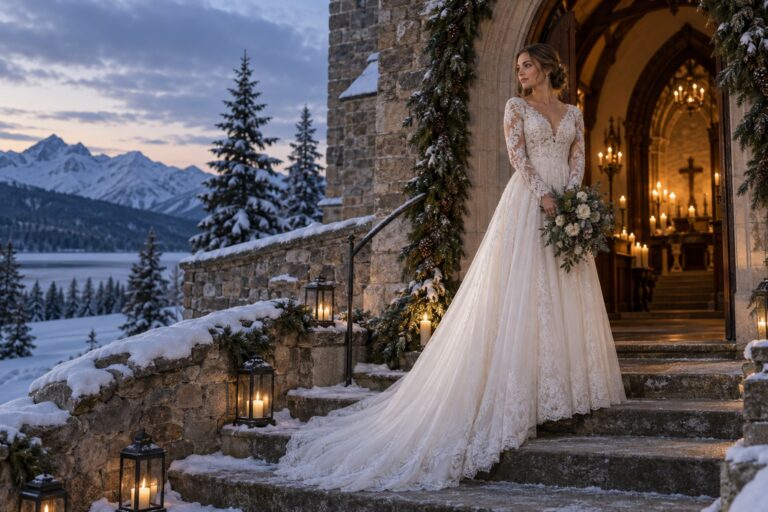
A winter gown does not have to be long-sleeved, heavy, or traditionally modest. It does need to work with the temperature plan you have chosen. Heavier fabrics such as satin, mikado, brocade, and velvet can bring structure and visual richness, while lace or illusion sleeves can add coverage without changing the spirit of a lighter silhouette. A detachable sleeve, overskirt, or cape can also give you two looks from one dress.
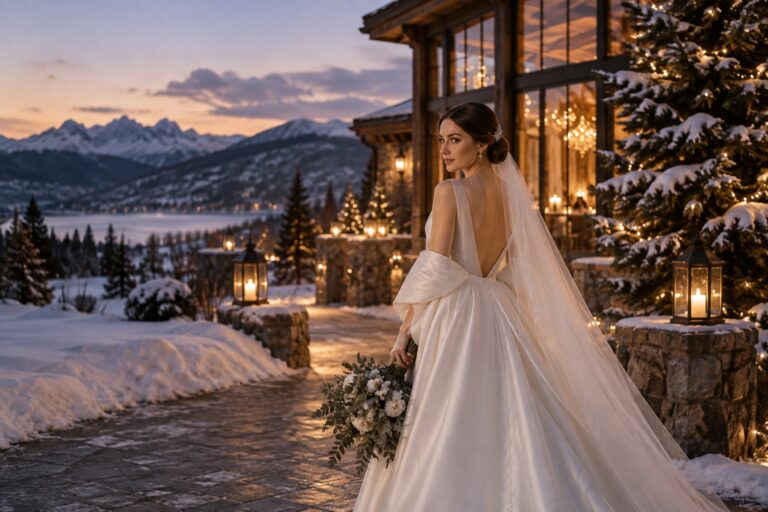
Look at the points where warmth and design may conflict. A high neckline may be elegant but difficult to layer under a closed coat. A low back may require an open-front wrap or a carefully shaped bodysuit. A very full skirt may accommodate a thermal slip but make a long coat awkward. Ask your stylist or dress consultant to evaluate the actual gown with the layers you are considering, not with a generic sample.
2. Add hidden warmth without changing the silhouette
Hidden warmth is often more useful than adding visible bulk. Depending on the gown, possibilities include a thin thermal slip, a seamless bodysuit, smooth tights, a petticoat with a lining, or warming patches placed where they will not show. Every option should be tested under the exact fabric. A layer that sounds invisible can still change the neckline, create a line across the waist, or affect how the dress moves.
Choose the least complicated solution that meets your needs. If the ceremony is indoors and the only cold exposure is a ten-minute photo set, you may need only tights and a removable shoulder layer. If you will stand outside, wear a thin base layer that supports the entire session. Avoid trying a new adhesive, fragrance-heavy product, or unfamiliar fabric during the wedding morning. Winter skin and nerves are not the right conditions for experimentation.
3. Make the cover-up part of the design
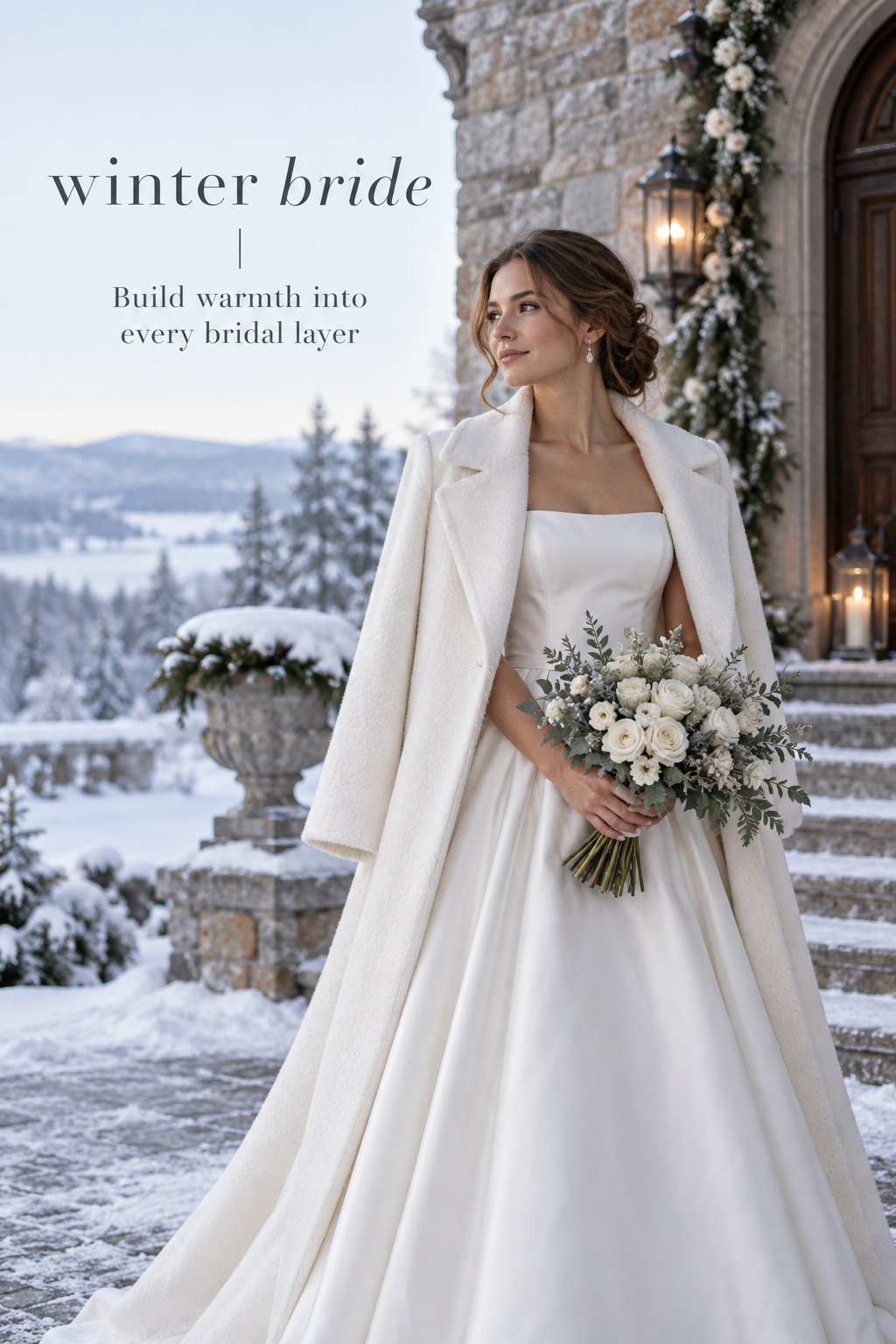
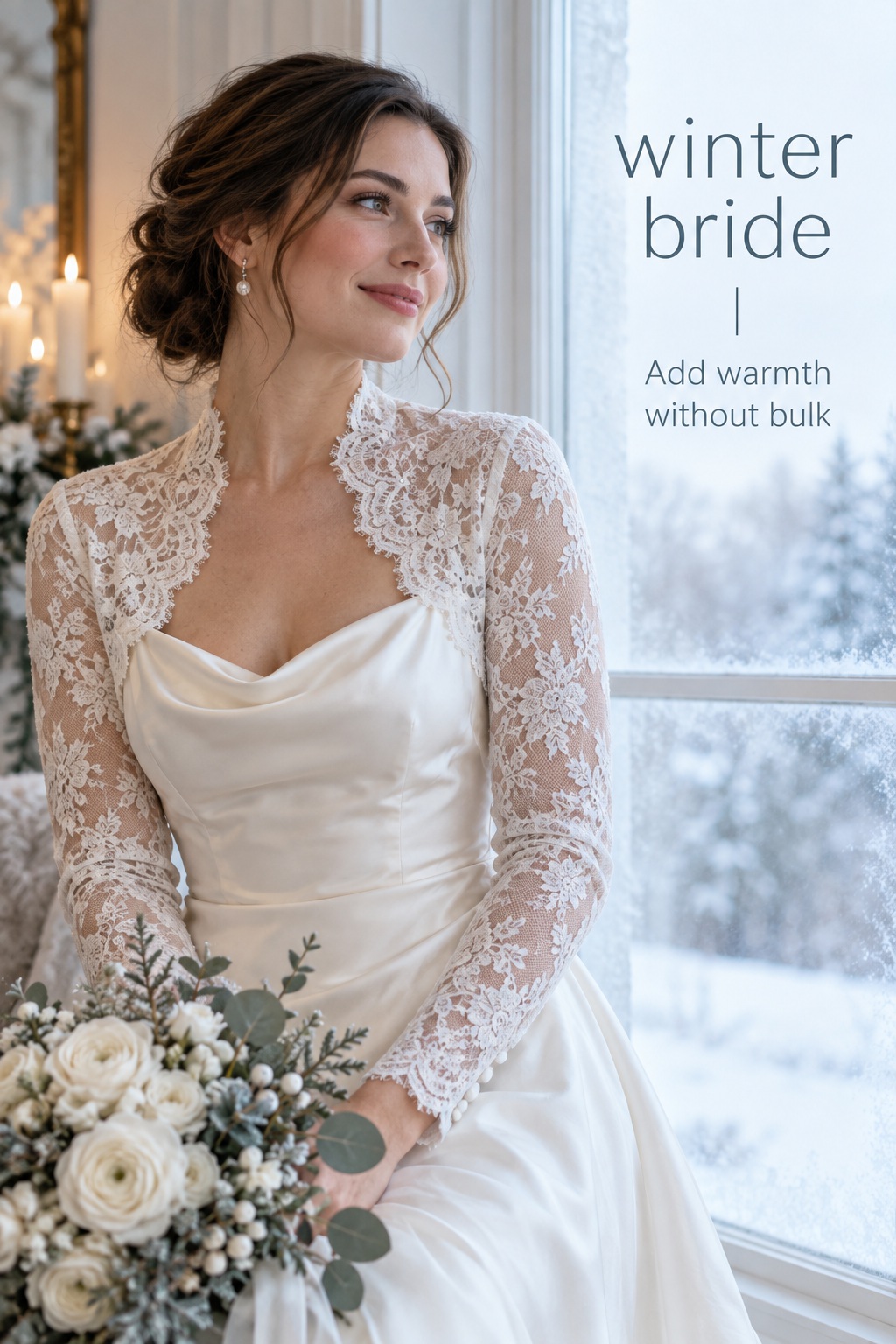
The visible cover-up should relate to the gown’s line, texture, and formality. A cropped faux-fur jacket can balance a simple fitted gown. A long cape can echo a column or sheath silhouette and create movement in an entrance photo. A lace bolero can extend a romantic dress without hiding its texture. A tailored coat can make a minimalist gown feel architectural. A soft cashmere or wool wrap can be right for travel between venues, even if it is not the piece you want in every portrait.
Use three tests. First, can you put it on and take it off without disturbing the veil? Second, does it leave enough room for your arms to hug, hold a bouquet, and sit comfortably? Third, does it look intentional in a full-length photograph? The best layer is not automatically the warmest-looking piece. It is the one that protects you while preserving the visual story of the gown.
4. Treat footwear as a weather decision
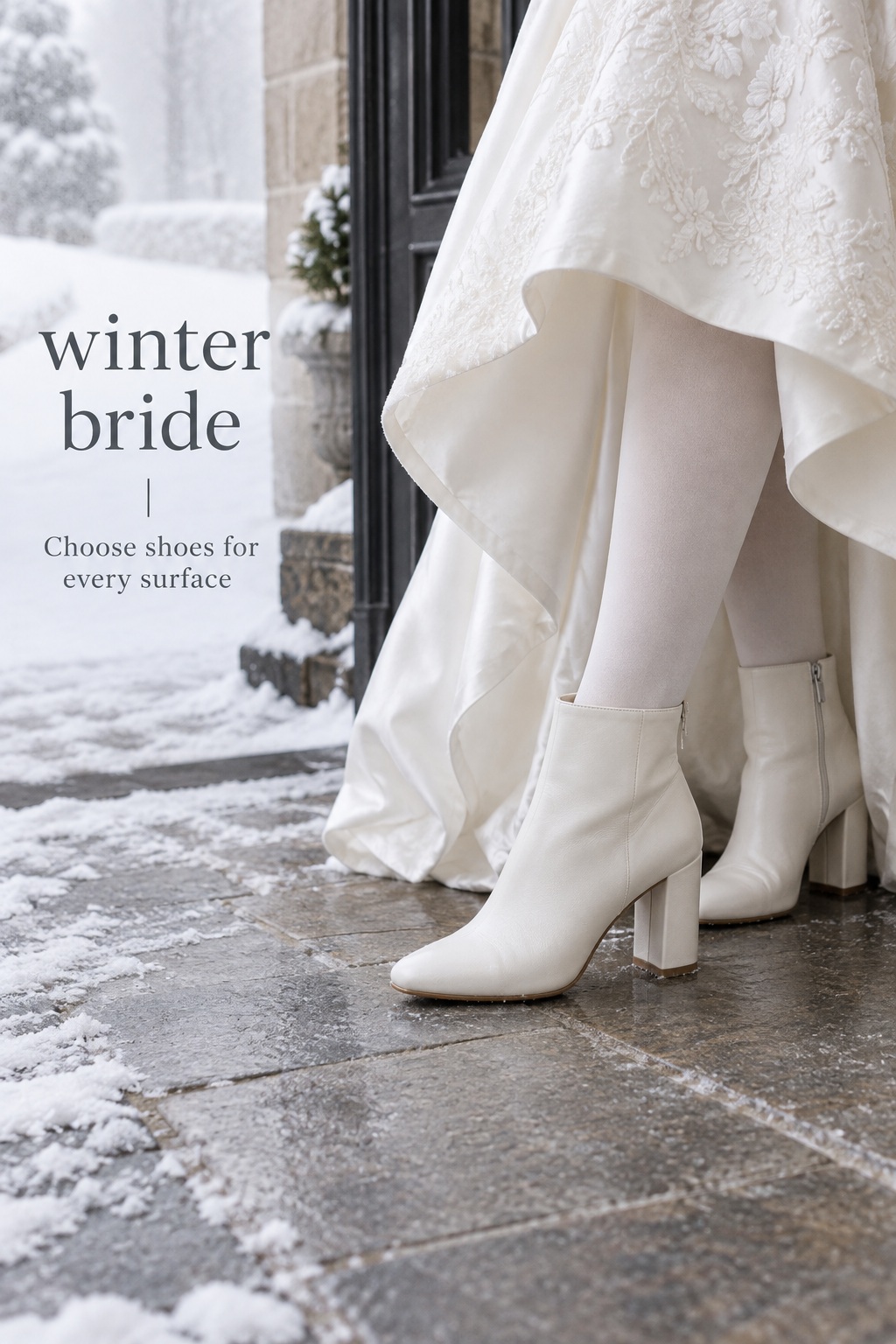
Winter bridal shoes have to handle more than a walk down the aisle. They may meet wet pavement, polished floors, stairs, snow, gravel, and a dance floor in one day. Closed-toe pumps, velvet shoes, bridal booties, and refined ankle boots can all work. What matters is grip, fit, heel stability, and the relationship between the shoe and the hem.
If you want a delicate ceremony shoe and a weatherproof outdoor option, plan the change in advance. Put both pairs in the timeline, assign someone to carry them, and photograph the dress length in each pair. A backup shoe is not useful if changing it means lifting the gown in a public hallway or delaying the portrait schedule. Walk in the complete outfit, including any petticoat or hidden layer, before you approve the plan.
Choose a Transition Plan for Photos and Reception
A winter bride often has more than one visual moment. The cover-up may define the first look, frame the outdoor portraits, and come off before dinner. That change can feel like a second outfit reveal without requiring a second gown. To make it look effortless, decide the sequence before the wedding and communicate it to the people who will help you.
Use the layer for the moments that benefit from it
Plan the cover-up around movement and photographs, not only around the temperature. A cape can create a strong walking image. Gloves can add a graphic detail in a close-up of the bouquet or rings. A coat can make an outdoor portrait feel more editorial and can protect the gown during the route between locations. A wrap may be best during travel and less useful once you begin posing.
Tell your photographer exactly which version you want documented. Ask for a few full-length frames with the cover-up, several portraits with the shoulders clear, and detail images after the layer is removed. If the accessory has a dramatic train, clasp, or sleeve, give the photographer time to capture it before it is handed away. This avoids the disappointment of owning a beautiful winter piece that appears only as a blurry edge in one image.
Build a simple sequence such as: gown and veil for the first indoor portraits, cover-up for the outdoor walk, cover-up open for movement, cover-up removed for close bridal portraits, then final touch-up before the ceremony or reception. The exact order depends on your schedule, but a sequence reduces decision fatigue. It also makes it easier for a maid of honor, planner, or attendant to help without asking you what to do next.
Protect the dress during outdoor portraits
Cold is not the only outdoor risk. Moisture, salt, mud, pine needles, and rough ground can mark a hem quickly. Ask your photographer to choose a clean route and keep the longest train moments for a controlled location. Have someone carry the train between setups. If a bustle or garment loop is part of the gown, make sure the person helping you has practiced using it.
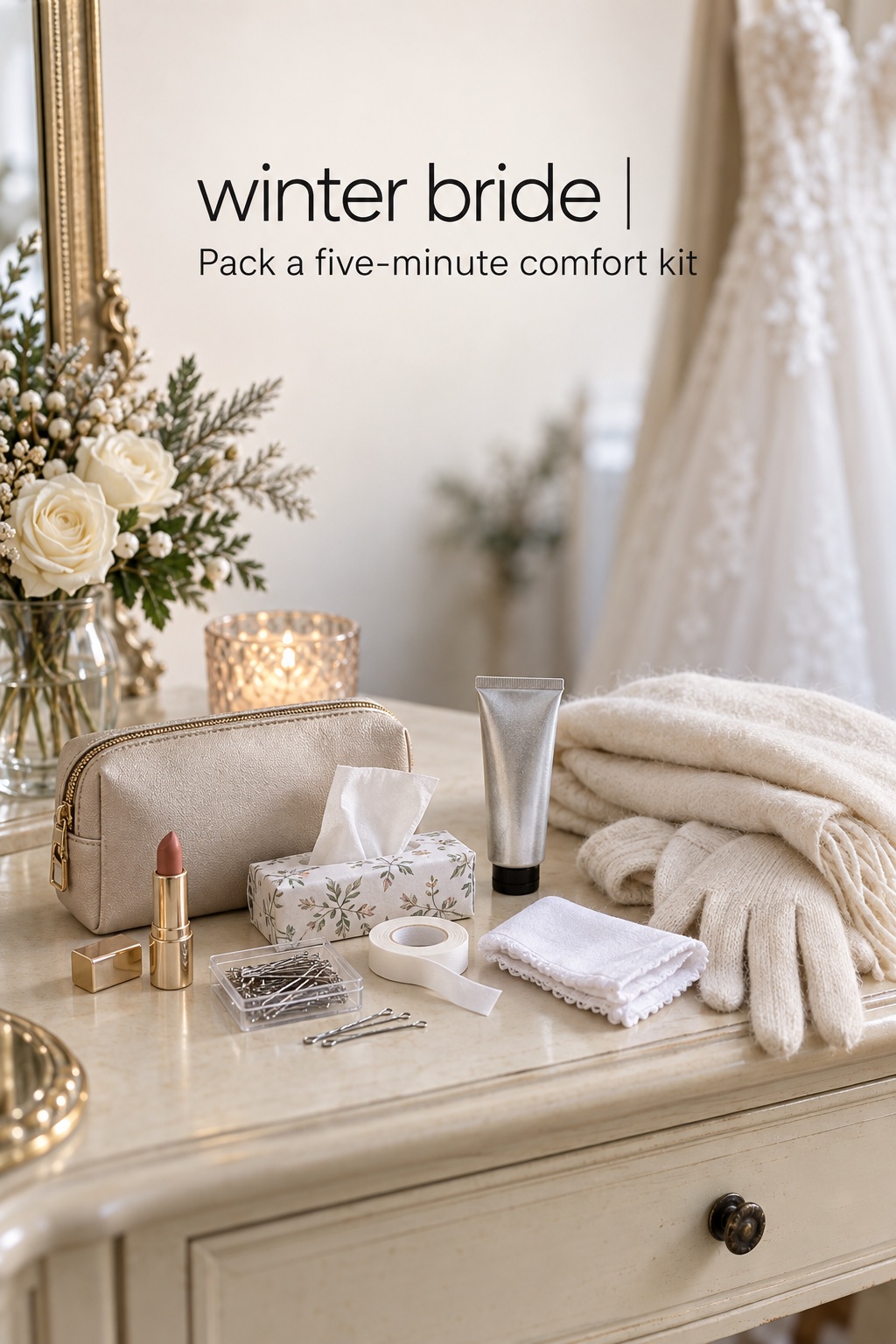
Use a small emergency kit with a clean cloth, tissues, a compact sewing kit, fashion tape, a stain-removal tool approved for the fabric, and a way to keep wet shoes separate from the dress bag. The goal is not to obsess over every speck. It is to prevent one small problem from becoming the reason you skip the photographs you wanted.
Plan the handoff before you need it
Choose one person to own the cover-up, gloves, second shoes, and any warming layer. That person should know where each item goes, how it closes, and whether it needs to be brushed, folded, or hung. Keep the plan simple enough to work in a crowded room. A labeled garment bag or one designated chair is better than several people carrying pieces without a clear owner.
If you remove a cape or jacket before the reception, check the hair, veil, straps, and shoulders immediately. Removing a tight collar or textured layer can disturb a style even when it feels gentle. Give yourself five minutes for a mirror check, lip touch-up, and a drink of water. The transition should restore your comfort, not create another rushed beauty moment.
Finish the Winter Bride Details Without Overstyling
Once the core layers are solved, keep the finishing details focused. Winter already gives you texture through fabric, light, and atmosphere. You do not need gloves, a cape, statement earrings, a jeweled veil, a dramatic hairpiece, and a sparkling shoe all at maximum intensity. Choose one or two seasonal details and let the rest support them.
Balance gloves, veil, and jewelry
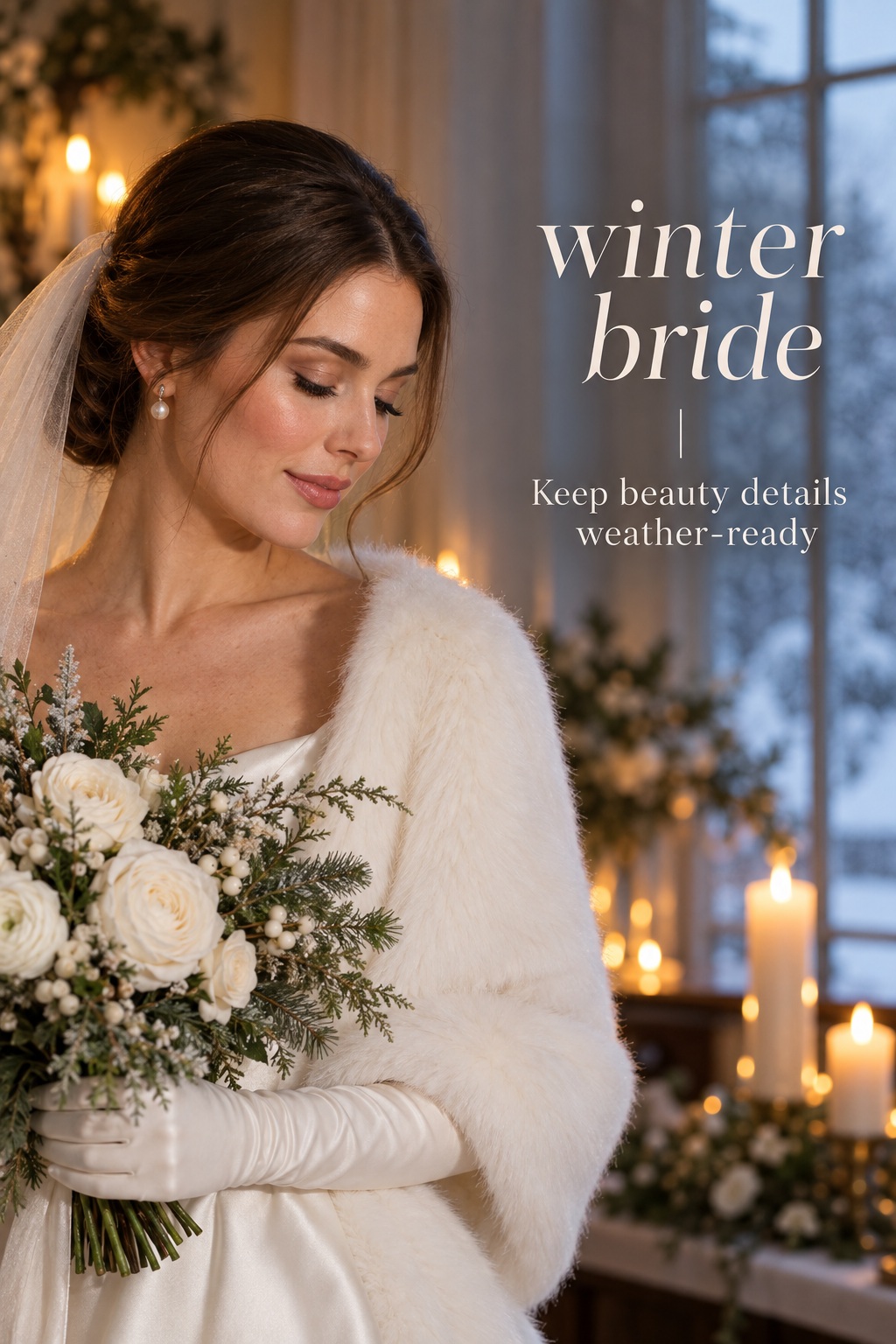
Gloves work best when they respond to the gown. Long gloves can emphasize a strapless or clean-lined dress. Short lace or knit styles can soften a romantic look. If you wear gloves for the ceremony, decide when the ring exchange requires removal and practice the motion. A glove that is difficult to remove can create more stress than warmth.
Let the veil and cover-up share space thoughtfully. A high collar, broad shoulder, or dramatic cape may need a simpler veil placement. A short jacket may work with a long veil, while a full wrap may be better with a shorter veil that remains visible. Jewelry should fill a real gap rather than compete with every texture. Photograph the complete combination from the front and side before making the final decision.
Prepare skin and hair for cold air
Cold air can make skin feel tight, while indoor heat can change how makeup sits. Keep the preparation routine familiar and give moisturizing products enough time to settle before makeup. Ask your artist how they want to handle dry areas, shine, and touch-ups. A comfortable complexion is more important than forcing an extreme matte or glow finish that has not been tested on your skin.
Wind and dampness can affect loose waves, fine tendrils, and a veil. You do not need a rigid updo, but you should know which parts of the style are secured and which are intentionally soft. Test the hairstyle with the veil, coat, and any hood or collar you may use. A strong anchor point lets you enjoy a winter portrait instead of protecting one curl with both hands.
Keep a compact comfort kit
Ask your attendant to carry a small kit with lip color, tissues, blotting paper, a small powder, hand cream, fashion tape, safety pins, blister protection, a hairpin, and any personal medication you normally need. Add a warm drink or water to the schedule, especially if you are spending time outside. Comfort is part of the look because it changes how you stand, smile, and move.
- One pair of practical shoes or warm socks for travel between locations.
- A clean cloth and stain-safe tool for the hem.
- A spare pair of hosiery or tights if the style allows them.
- A hanger or garment bag for the removed cover-up.
- A five-minute buffer before the next major photo or ceremony moment.
Common Winter Bride Mistakes to Avoid
The most common mistake is buying the visible accessory before checking how it interacts with the gown. A cape may cover a back detail, a jacket may fight the sleeves, and a wrap may slide off a smooth satin shoulder. Bring photographs or the actual gown measurements when possible. The cover-up should be judged as part of the outfit, not as a separate attractive object.
Another mistake is assuming long sleeves equal warmth. Sheer lace, thin mesh, and fitted sleeves can be beautiful but may not protect you during a long outdoor session. Consider what happens at the wrists, neckline, back, and legs. Add hidden warmth or a removable layer where it matters instead of relying on the word winter in the dress description.
Do not wait until the wedding morning to test the complete outfit. Wear the gown or a close stand-in with the base layer, shoes, veil, and cover-up. Sit, walk, hug someone, lift your arms, and practice the handoff. Pay attention to what catches, slips, overheats, or changes the hem. A short rehearsal can reveal a problem while there is still time to adjust it.
Finally, do not treat comfort as a compromise that must be hidden. A polished coat, elegant gloves, a clean boot, or a beautifully fitted cape can make the winter setting feel deliberate. The strongest winter bride look is not the one that proves you tolerated the cold. It is the one that lets the season, the gown, and your own style appear connected from the first photograph to the last dance.
Sources and Methodology
This practical guide was built from a review of ten Google US organic results covering winter bridal dresses, cover-ups, hidden layers, footwear, beauty preparation, and outdoor portrait transitions. The Knot’s guide to winter bridal wraps supported the distinction between optional accessories and useful shoulder coverage. Azazie’s winter dress guide supported the discussion of sleeves, cover-up removal, thermal layers, tights, and warming patches. Other sources were used to compare styling options and identify gaps in the usual cover-up list.
Recommendations are general styling guidance, not a claim of firsthand product testing. Weather, venue rules, fabric care, and personal comfort vary, so test the complete outfit and confirm any alteration or cleaning advice with your dress professional.
FAQ
What should a winter bride wear over her wedding dress?
Choose a cover-up based on the gown’s silhouette, the outdoor exposure, and the moments when you want it visible. A cape, tailored coat, faux-fur jacket, bolero, or wool wrap can work. The best option is warm enough for the route, easy to remove, and compatible with the veil and sleeves.
Can a winter bride wear a sleeveless wedding dress?
Yes. A sleeveless gown can work with hidden layers, tights, warming patches, and a removable cover-up. Plan for the coldest part of the day rather than assuming the dress alone will be enough. Test the complete combination so the extra layer does not change the fit or neckline.
Are bridal boots appropriate for a winter wedding?
They can be appropriate when they are polished, stable, and suited to the gown and venue. Refined ankle boots, velvet booties, or clean weatherproof boots can protect your feet during travel and outdoor portraits. Check the hem length and consider changing into a ceremony shoe only if the handoff is simple.
How can a winter bride protect her wedding dress outdoors?
Choose a clean portrait route, keep the longest train moments controlled, and assign someone to carry or lift the train. Carry a clean cloth, tissues, and a fabric-safe emergency tool. Ask the photographer to plan the outdoor sequence so the gown is not repeatedly dragged through wet or rough ground.
What beauty details matter most for a winter bride?
Focus on familiar skin preparation, a makeup plan for dry air and indoor heat, and a hairstyle that has secure anchor points for wind and layers. Test the look with the veil and cover-up. Keep touch-up products and lip color with one attendant so small changes do not become interruptions.
When should a winter bride remove her cover-up?
Remove it when you are comfortably indoors, before it begins to disturb the hairstyle or makeup, or when you want portraits that show the gown clearly. Decide the sequence with your photographer and attendant in advance. A planned removal can create a second bridal reveal instead of a rushed wardrobe problem.