Something Blue Bridal Shower Ideas: 3 Ways to Style It
The best something blue bridal shower ideas begin with a choice: should blue appear as a quiet accent, shape the whole room, or come from something guests create together? Each approach can feel thoughtful. The right one depends on the bride’s taste, the venue’s existing colors, and how much setup the host can comfortably manage.
This comparison helps you choose a direction before you buy décor or plan activities. You will see what each approach asks of the room, where to place the blue, and how to carry the idea into invitations, food, and guest participation without making every detail match. Start with the space you have and the guest of honor’s preferences, then choose a level of color that feels intentional rather than compulsory.
Choose how much blue the room can carry
Before comparing specific setups, look at the room in its ordinary state. Notice the wall color, flooring, furniture, natural light, and any permanent features you cannot move. A home dining room with patterned curtains already has a visual language. A restaurant private room may have table linens or wall finishes chosen by the venue. A backyard brings its own green backdrop. Your theme needs to work with those conditions instead of trying to erase them.
Then decide whether blue is meant to be a hint, the main visual story, or a shared activity. A hint works when the bride prefers an understated celebration or the room already has strong color. A main visual story suits hosts who want guests to recognize the theme as soon as they arrive. A shared activity makes the meaning personal through participation, even if the rest of the styling stays simple. These are different choices, not three steps you must complete at once.
Your wedding look is only the beginning.
Keep your guest list, vendors, timeline, and every important detail together with Zarellea — so your day feels as considered as your style.
Ask the bride, or someone who knows her taste well, what she actually likes. “Would you rather have a mostly neutral table with blue details, or a more colorful room?” gives her a useful choice without asking her to design the shower. If she dislikes being surprised by a dress code or public activity, keep those elements optional. The theme can celebrate a familiar wedding tradition while still reflecting her own style.
Make a quick inventory of what is already available. Existing white plates, clear glasses, linen napkins, or blue vases may provide enough of a starting point. Borrowed pieces can help make the color feel collected rather than purchased as a complete set. Choose one or two blue shades that sit comfortably beside the room, then repeat them in a few places. You do not need every object to carry the same hue.
Use three practical filters
First, consider the room’s visual weight. If it already contains bold patterns, dark furniture, or colorful art, small accents can keep the shower from feeling crowded. If it is mostly neutral, a fuller palette can create a clear focal point. Second, consider setup time. A host working alone may prefer a few repeatable details over a large installation. Third, consider how the bride likes to celebrate: some people enjoy a coordinated group moment, while others prefer atmosphere without being asked to perform for it.
- Choose accent-led styling when the room is already visually busy or the bride prefers subtle details.
- Choose a fuller palette when the room is neutral and the host wants a clearly themed setting.
- Choose a participatory element when a personal keepsake matters more than extensive décor.
Keep the decision reversible until you know the venue rules and the guest of honor’s preference. A mood board or a simple table mock-up can reveal whether a color feels too pale, too formal, or too saturated. Gather a napkin, flower, ribbon, or printed invitation sample and view them together in the actual room if possible. That small preview is more useful than ordering a large quantity of pieces based only on an online image.
Compare three ways to bring Something Blue into the shower
There are three useful routes: a few blue accents against a neutral foundation, a coordinated palette that carries through the room, or an interactive keepsake that lets guests contribute. All can make the theme legible. The tradeoff is where you invest attention: accents rely on editing, a full palette relies on repetition and setup, and a shared keepsake relies on a clear invitation and a low-pressure activity.
Option one: let a few accents do the work
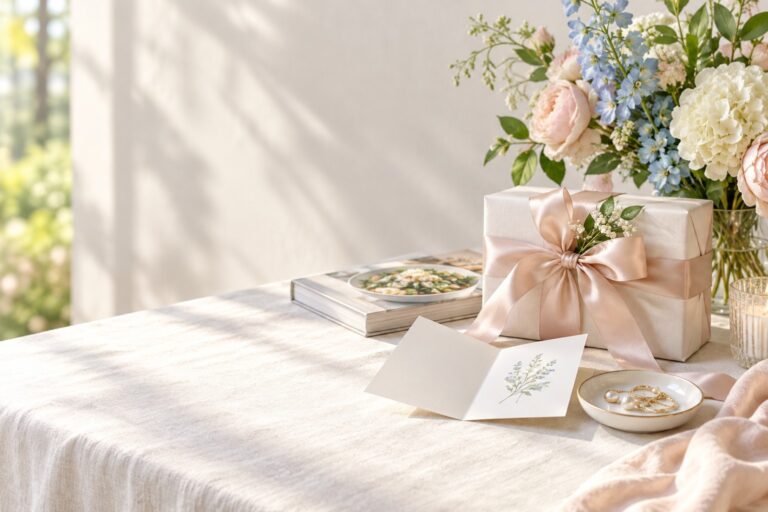
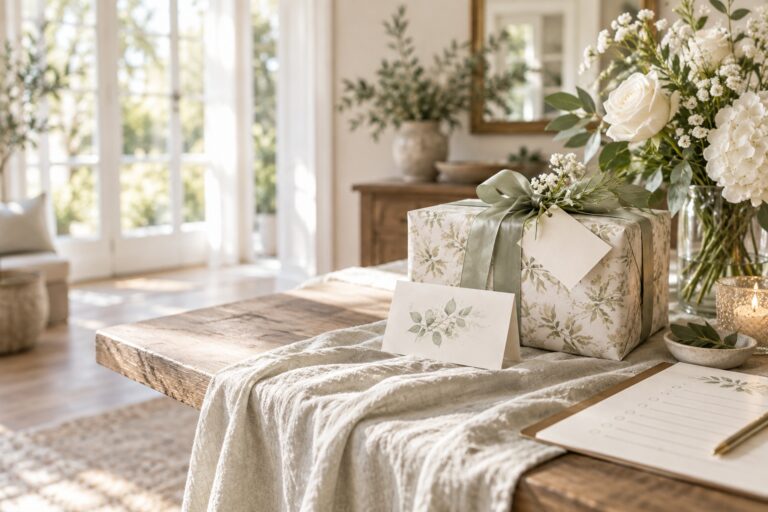
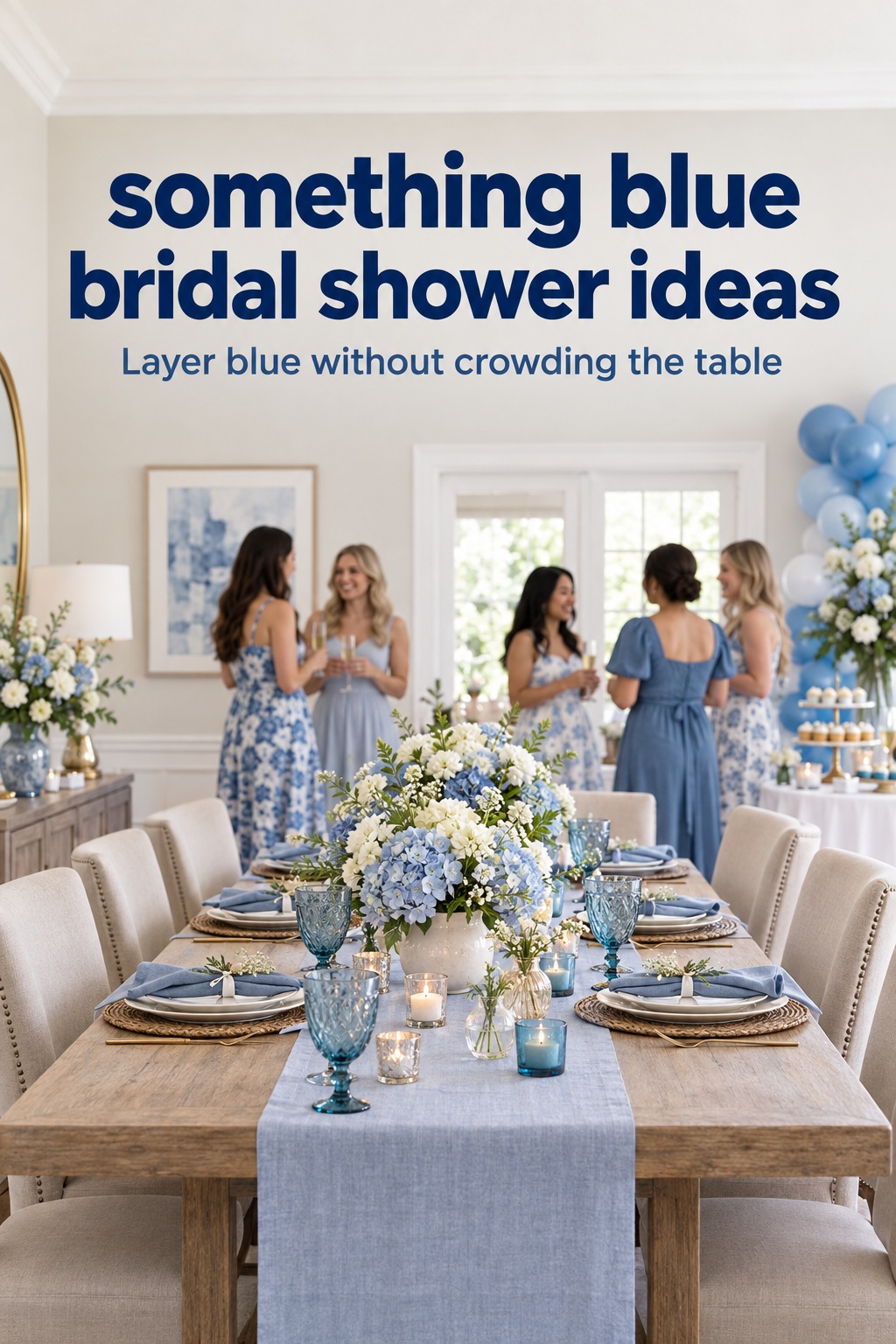
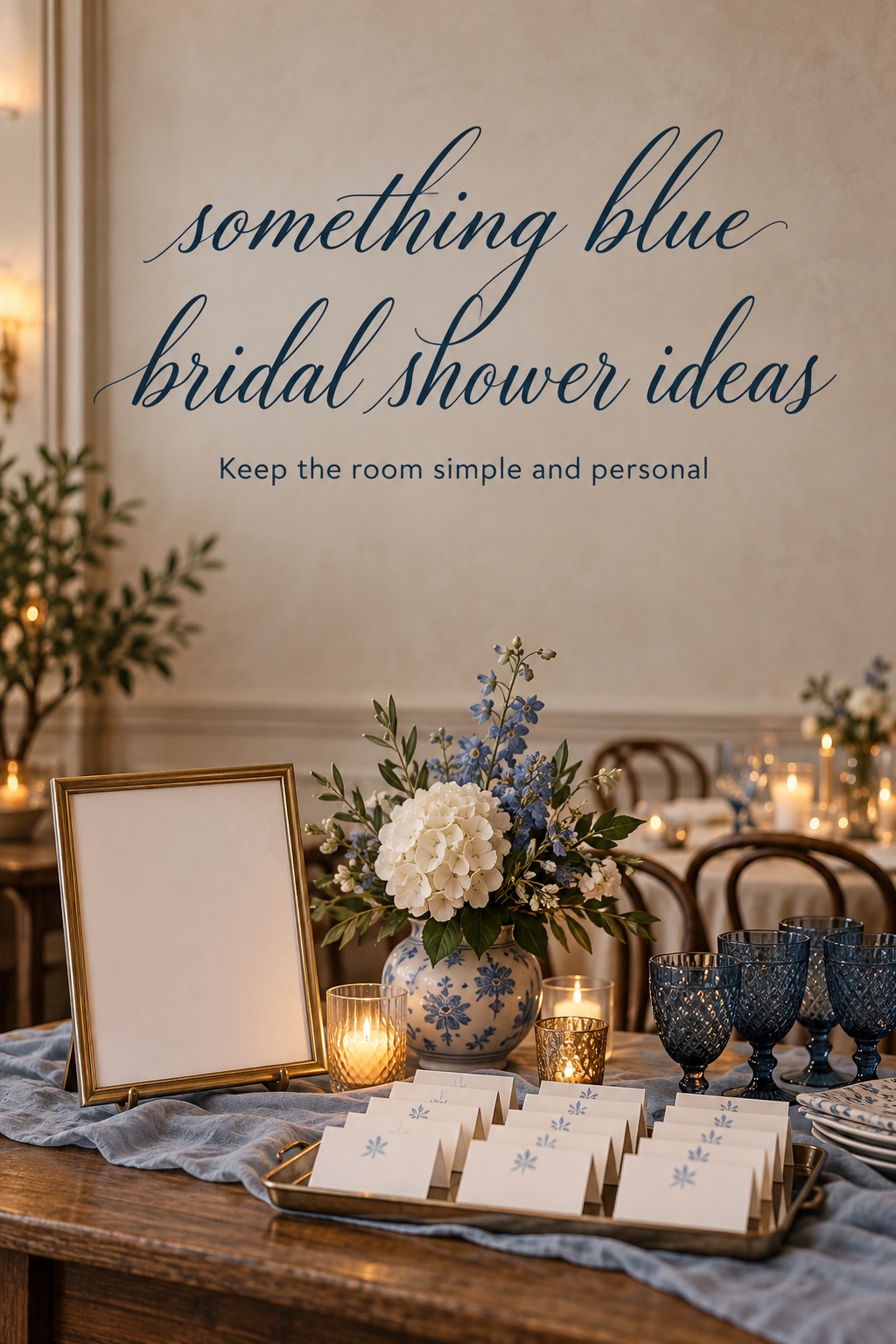
For a restrained version, keep the larger surfaces neutral and let blue appear in two or three considered places. A dusty-blue runner can anchor the table, while blue-and-white flowers or a small glass vase add a second point of color. Place cards, ribbon around a menu, or a single welcome sign can repeat the shade. The eye reads those details as connected when they share a hue or material, even if they are not a matching set.
This option suits a home or restaurant that already has character. It also leaves room for the bride’s everyday taste, rather than making the celebration feel like a themed retail display. Its main risk is scattering small blue objects without a visual anchor. Choose one prominent detail, such as the runner or a flower arrangement, then use the other accents to support it. If a piece does not help the main detail make sense, leave it out.
Keep this approach manageable by repeating one blue tone and one neutral. For example, pair pale blue with white, or navy with warm ivory. A single metallic detail can add contrast if it suits the setting, but it does not need to become another theme color. This is an easy route when the shower is intimate, the room is shared with its regular furnishings, or the host wants a polished table without changing the whole space.
Option two: build a full-room palette
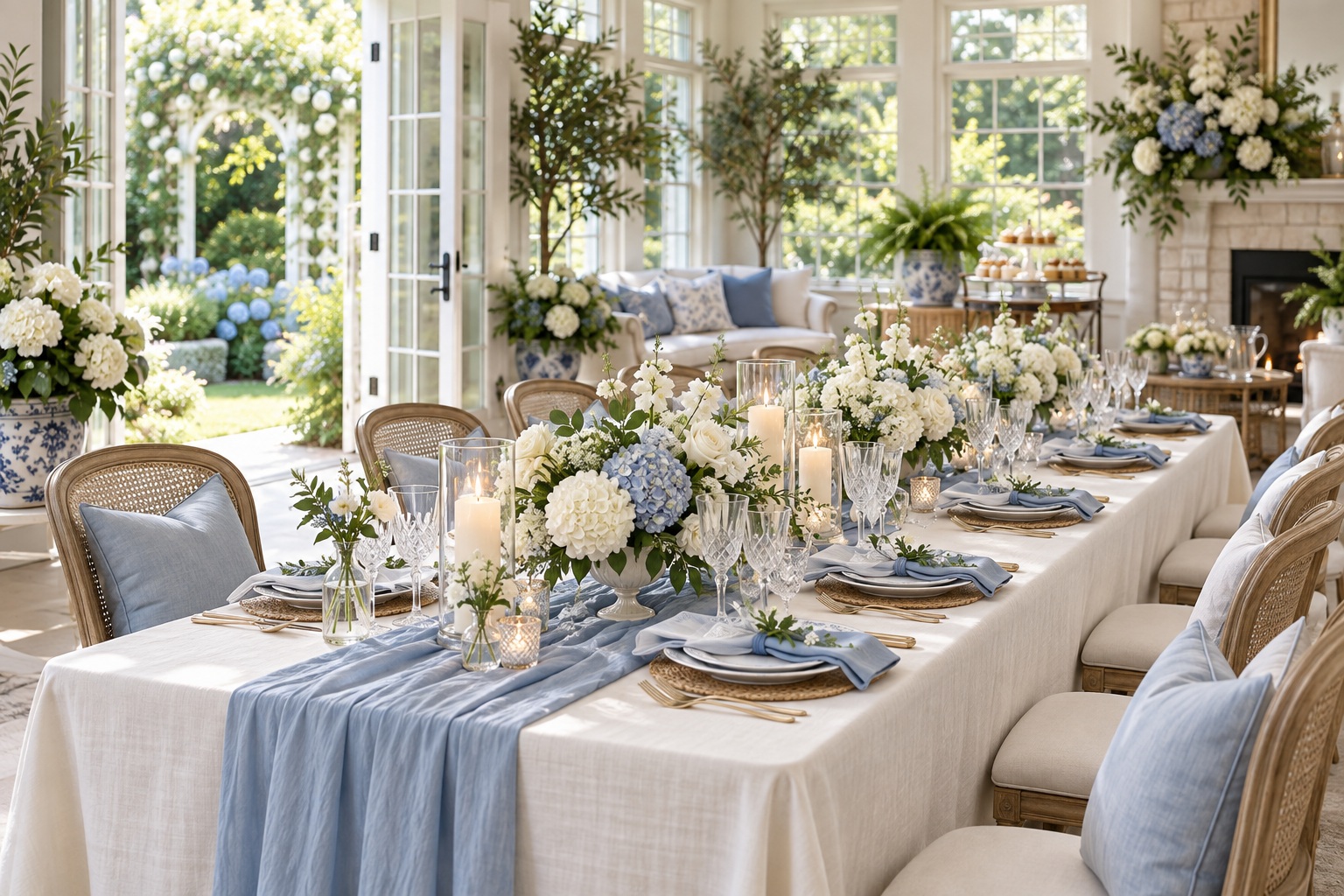
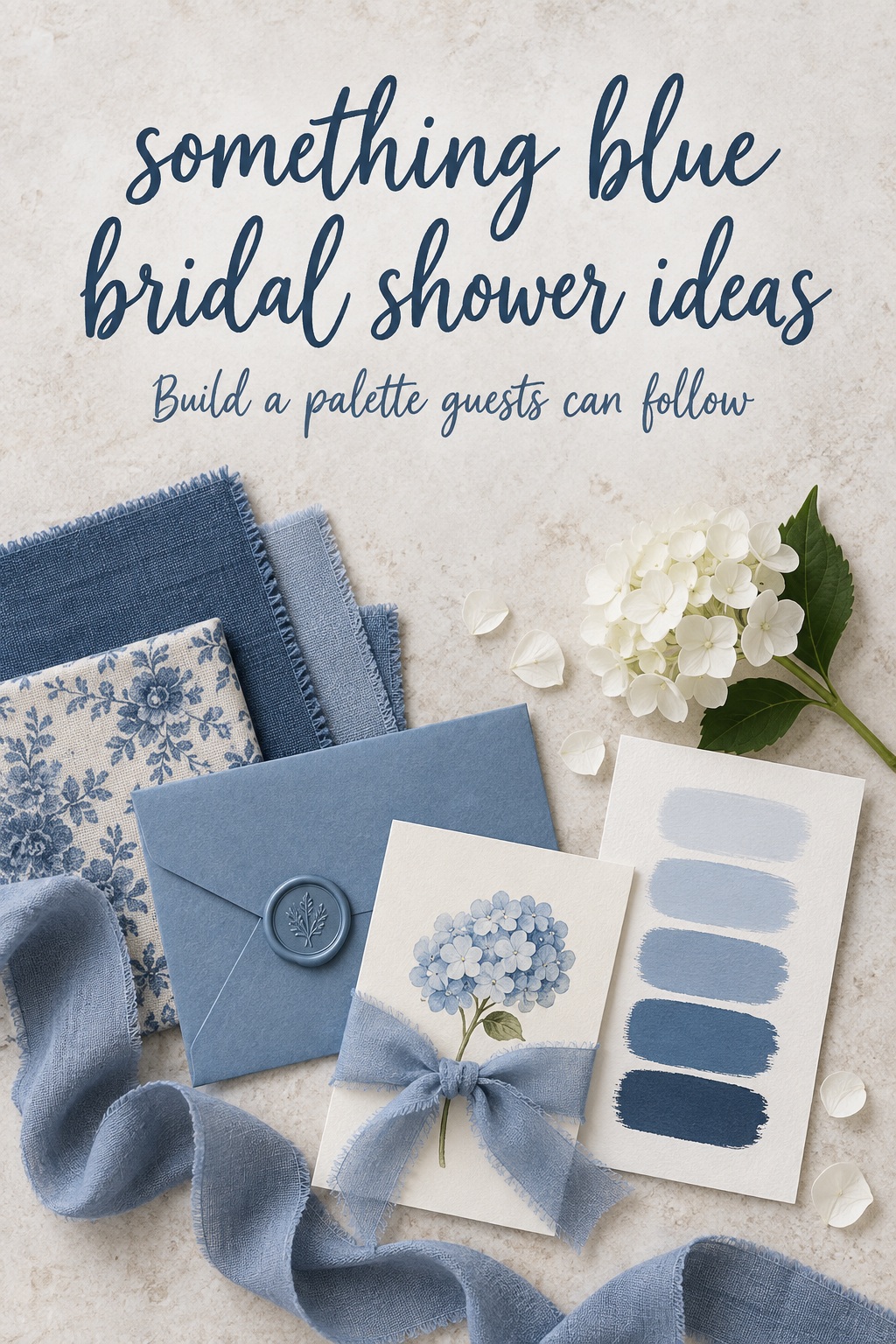
A fuller palette makes the theme visible across several parts of the event. Start with a primary blue and a supporting neutral, then decide where the color will appear: table linens, flowers, stationery, glassware, or one backdrop. The Knot’s examples group invitations, décor, and themed details under the same “Something Blue Before I Do” idea, which is useful inspiration for a coordinated look. Borrow the idea of repetition, but select only the elements that fit your room and plan.
Layering shades can create depth, but use a simple ratio. Let the lightest tone cover larger pieces, use a middle blue in flowers or table details, and reserve a deeper shade for small points such as ribbon or printed lettering. White, cream, or greenery can give the eye a place to rest. If every surface is the same strong blue, the space may feel flat; if every shade is different, the theme can lose its center.
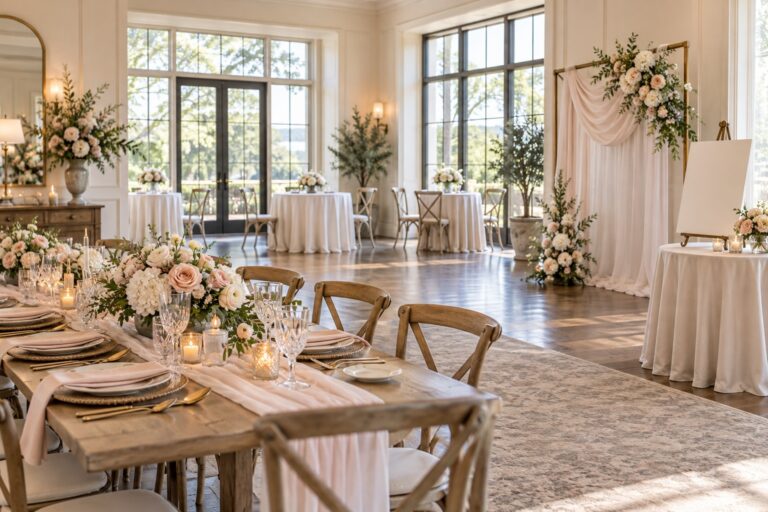
This approach is strongest in a neutral venue where repeated color can create atmosphere. It asks for more planning and setup, so decide early which elements the venue supplies and what the host must bring. A room-wide palette does not require an arch, balloon installation, or a custom backdrop. Repeating color through linens, printed pieces, flowers, and one serving detail can be enough to make the setting feel deliberate.
Option three: make one moment participatory
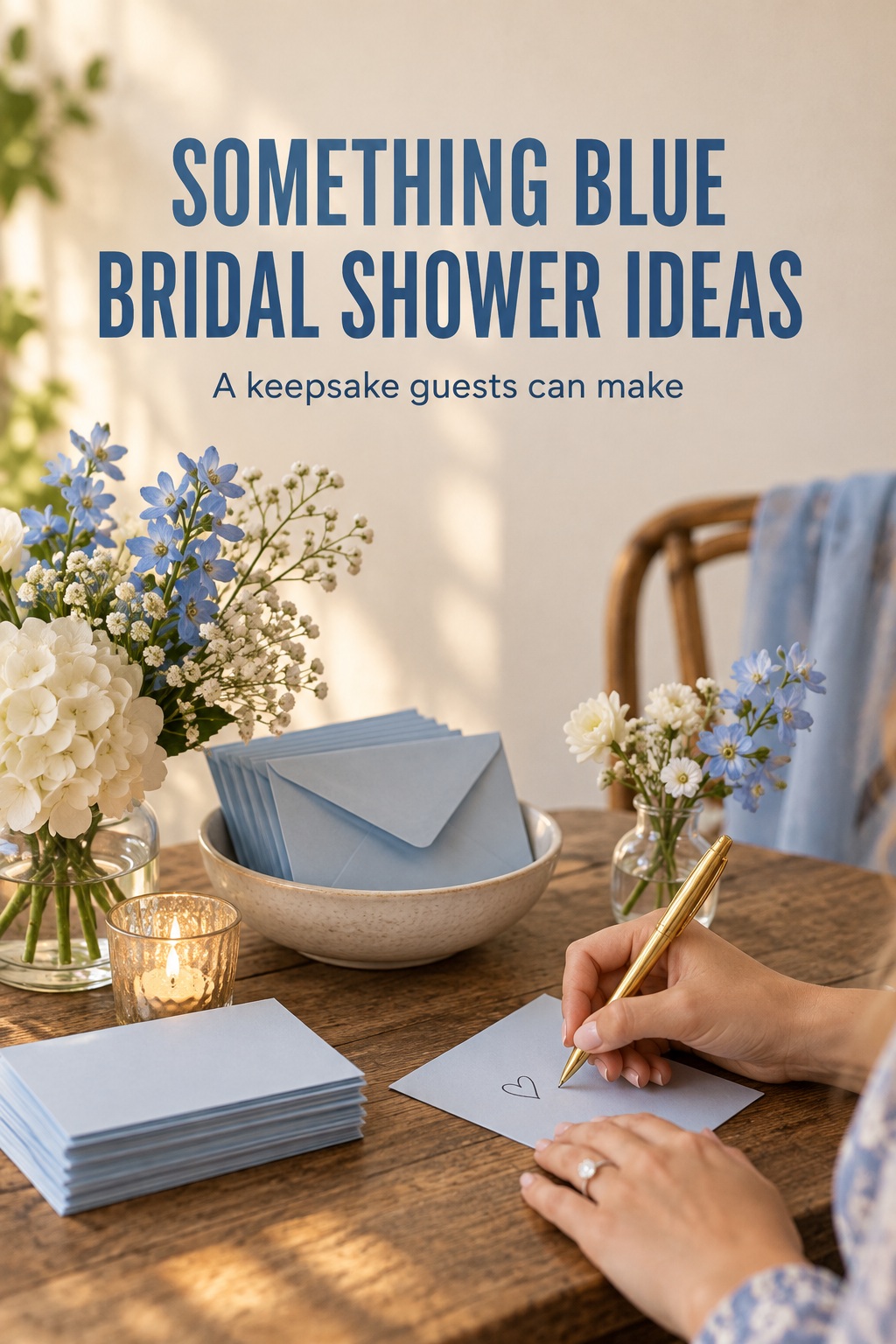
If the bride values personal meaning, let guests contribute to a small keepsake instead of adding more decorations. One possibility is a card where each guest writes a short wish or memory on blue stationery. Another is a discreet charm or ribbon contribution that the bride can choose to use later. A source about Something Blue showers describes guests contributing small objects to a pin for the bride; treat that as inspiration, then ask whether she would enjoy a tangible keepsake before planning one.
Participation works best when it has a clear beginning and end. Put the materials on one table, add a short sign explaining what to do, and let guests take part when they like. Do not make each person speak publicly or hand over a sentimental item. Guests may not know the bride well, may arrive late, or may prefer not to join an activity. A written contribution allows different comfort levels and keeps the moment from taking over the gathering.
The main tradeoff is coordination. Someone should set out supplies, collect finished cards, and hand the keepsake to the bride. Keep the activity compact, with materials that are easy to write on and store. If it requires a complicated craft, special tools, or a long queue, it can become another task for the host. A participatory detail should create connection, not make guests feel they have to finish a project.
Choose the route that matches the celebration rather than combining all three by default. A neutral brunch table with a blue runner may need no group activity. A large room with a full palette may benefit from a simple note station rather than several more decorations. A small gathering focused on close friends may use one keepsake as the central moment and leave the rest of the styling quiet. The point is to make the meaning clear with a scale of effort that feels comfortable.
Match food, invitations, and guest participation to your choice
After choosing a styling route, carry it into a few guest-facing details. The invitation, one food or drink moment, and any optional participation are enough to help guests understand the theme. Repeating the same idea in every menu item, favor, sign, and game can make the celebration feel more like a checklist than a gathering. Decide which details guests will notice or use, and let those carry the color.
Make the invitation a preview, not a demand
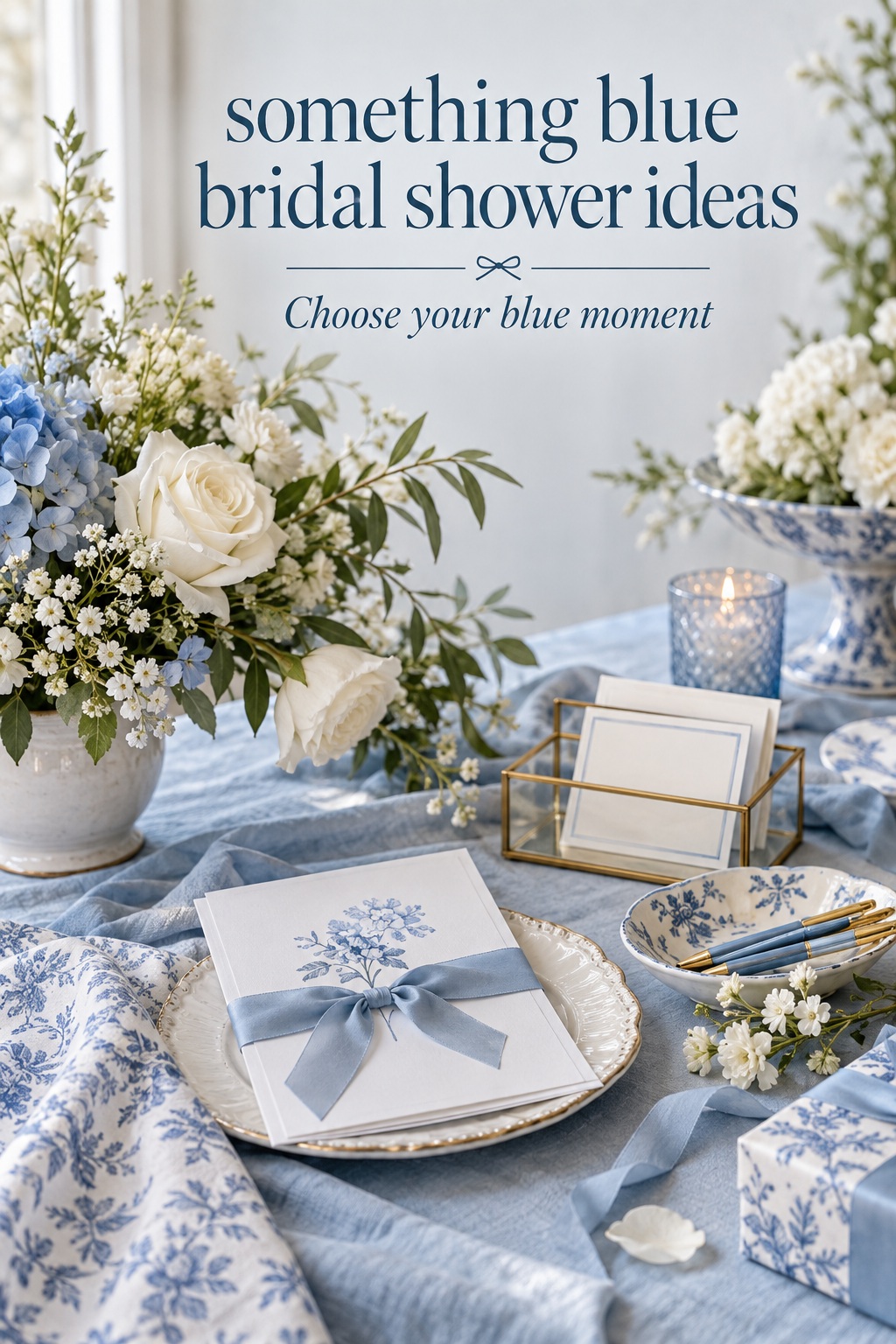
The invitation can introduce the wording “Something Blue Before I Do” and hint at the chosen palette through a border, flower, or small illustration. Include the practical event details clearly, then say whether guests are invited to wear blue or whether the color is simply part of the décor. A dress suggestion should remain a suggestion unless the bride specifically wants a coordinated look. Guests may have different wardrobes, budgets, and comfort levels.
If you want guests to wear blue, keep the request broad: any shade or one blue accessory is enough. Avoid requiring a precise color match. The bride’s outfit can stand apart in white, ivory, or a blue piece if that feels right to her. No one should need to purchase a new outfit to participate. A clear note also prevents guests from assuming the shower has a formal dress code when it does not.
Pick one edible or drink detail
Food can echo a blue theme through presentation rather than artificial color. Blueberries, blue-and-white icing, a blue cake detail, or a blue napkin beneath a dessert can add a visual cue. If the menu itself is not blue, a themed drink station can carry the color through glassware, a menu card, or a simple garnish. Modern MOH suggests a designated drink station with blue-hued glassware and fresh garnishes as one way to support a Something Blue shower theme.
Choose based on what guests will enjoy and what the venue can serve. Do not choose a drink solely because its color matches a picture. Offer a nonalcoholic option if you plan a signature cocktail, label beverages clearly, and confirm food restrictions with the host. A blue detail in the menu card or serving tray may be a better fit than trying to make every dessert or beverage match the palette.
One styled food moment is easier to keep coherent than a full menu built around a color. If you have a blue cake, let it be the focal point and keep the surrounding table simpler. If the food is mostly neutral, use blue dishes or a linen instead. Think about where people will gather, where plates will be set down, and whether the color detail will still be visible once the event is underway.
Keep activities optional and easy to understand
A small activity can reinforce the theme without turning the shower into a game marathon. Guests might write a brief wish for the couple, share a memory with the bride, or add a note to a keepsake box. Put the instructions where people can see them and give guests time to participate casually. If the bride prefers conversation over activities, skip the prompt and let the table styling carry the idea.
Plan a clear handoff. Decide who brings the materials, where they will be placed, and who will give the finished cards to the bride. If children or older relatives are attending, make sure writing materials and display height are comfortable for them. Keep the activity short enough that guests can join without missing food, conversation, or the bride’s time with people who traveled to celebrate.
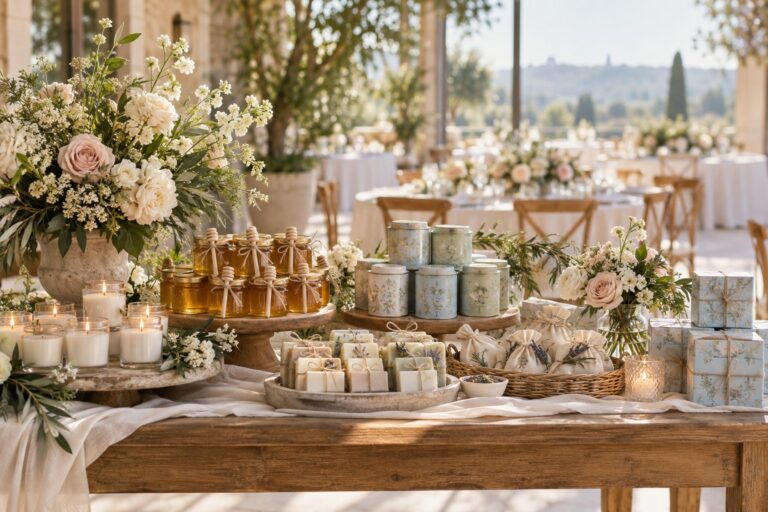
Favors are optional. If you include them, choose something small that connects naturally to the selected route, such as a blue-wrapped sweet or a handwritten thank-you card. The theme does not require a separate favor for every guest. A cohesive invitation, considered table, and enjoyable gathering will do more than another object that guests must carry home.
Check the plan against the room and the guest of honor
Before ordering or assembling anything, review the whole setup as if you were entering the room for the first time. Does the blue have a clear home? Can guests find the welcome area, food, and seating? Is there enough space to move around the table? A shower should remain comfortable to use after the decorations are in place. If something blocks a doorway, narrows a walkway, or competes with the conversation area, simplify it or relocate it.
Check venue rules early. Some spaces limit candles, wall attachments, confetti, outside food, or setup time. These constraints can change which styling route makes sense. A renter or restaurant may already supply linens and glassware, so ask what is included before bringing duplicates. For a home event, identify what can be moved and what should stay. Use removable or freestanding pieces where you do not have permission to alter a surface.
Look at the palette under the room’s actual lighting. A blue that looks soft on a phone may appear gray or much brighter beside the venue’s walls. Put the invitation sample, fabric, flowers, and any printed sign together before committing to multiple pieces. You can also take a quick phone photo of a table mock-up and look at it from a distance. If the color disappears, increase the size of one focal detail instead of adding many tiny accents.
Consider how much setup and cleanup the host can take on. A large balloon installation, many tabletop objects, or a hands-on craft may look inviting but require transport, assembly, and removal. Write down who is responsible for each task and when it must happen. If a plan depends on a single person arriving early with several bags, cut a few elements or ask the venue what it can provide. A simpler design that is ready on time is usually more relaxing for everyone.
Check that the guest of honor remains at the center. A theme can become too controlling if the bride must wear a particular color, pose in front of a backdrop, or participate in a public activity. Give her choices before the event and make any group participation voluntary. If the shower is a surprise, ask a trusted person to confirm the details she would dislike. Do not use the tradition as a reason to override her taste or privacy.
Common mismatches and simple fixes
- Too many shades: Select one primary blue and one supporting tone, then use a neutral to connect them.
- Theme feels faint: Add one visible anchor, such as a runner, flower arrangement, or welcome sign, instead of buying many small items.
- Room feels crowded: Remove tabletop clutter and keep the strongest color at the table or entry, not everywhere.
- Activity feels compulsory: Place it at a side table and invite guests to join when they want.
- Setup exceeds the host’s time: Remove any element that needs special installation or a last-minute vendor handoff.
Do a final pass using the bride’s preferences, venue rules, and host capacity as equal checks. A successful Something Blue shower is not measured by how many blue objects appear in photographs. It works when the visual idea feels clear, the guests can enjoy the event, and the bride recognizes herself in the choices. If one detail is causing stress or seems unlike her, it is reasonable to leave it out.
FAQ
What are good something blue bridal shower ideas for a small room?
Use a neutral foundation and one or two blue accents, such as a runner, flowers, place cards, or a small welcome sign. Keep larger installations and extra tabletop pieces out of narrow spaces. A clear focal point will make the theme easy to recognize without reducing room for guests to move and talk.
How do I make a Something Blue shower look elegant?
Choose a limited palette, repeat the same blue in a few visible places, and use a calm neutral to give the color space. The bride’s taste and the venue should guide the shade. A considered table and invitation can feel more polished than many unrelated decorations.
Do guests have to wear blue to a Something Blue bridal shower?
No. The host can invite guests to wear blue, but it is considerate to make the suggestion optional unless the bride has requested a coordinated dress code. State clearly on the invitation whether blue attire is encouraged or whether blue is simply part of the room styling.
What colors pair well with blue at a bridal shower?
White, ivory, and greenery are flexible companions, while a metallic detail can add contrast if it suits the setting. Pick the supporting colors after checking the room and the selected blue shade. Keeping the palette small makes it easier to coordinate flowers, stationery, and table details.
What can guests do for a Something Blue activity?
Guests can write a wish or memory on blue stationery, add a note to a keepsake box, or contribute a small approved item to a bride-selected memento. Keep participation optional and provide a simple way to take part. Ask the bride whether she would enjoy a keepsake before planning a group activity.
How can I make a blue theme without buying lots of decorations?
Use pieces you already have, borrow a few items, and add blue through flowers, fabric, stationery, or serving details. Choose one focal point and repeat the color once or twice. You can leave favors and a large backdrop out of the plan if they do not add something guests will use.
Should the bride wear blue to her shower?
Only if she wants to. She might prefer white, ivory, a patterned outfit, or a blue accessory. Let her choose what feels comfortable and make the room or stationery carry the theme if she does not want a blue outfit.