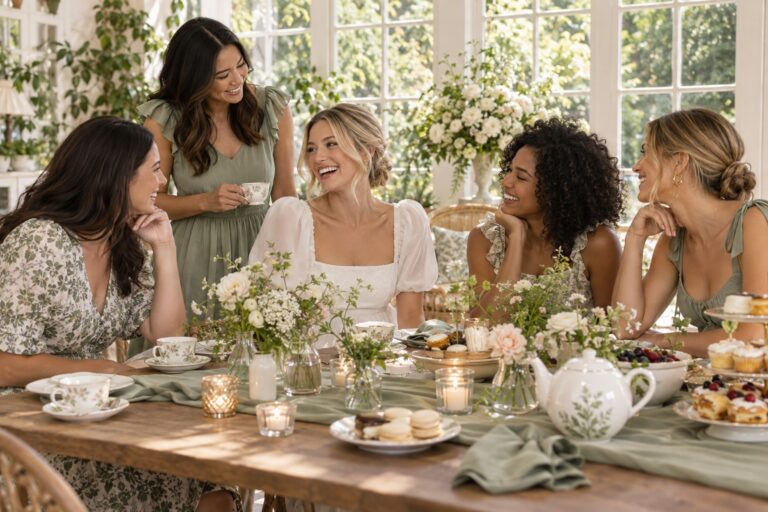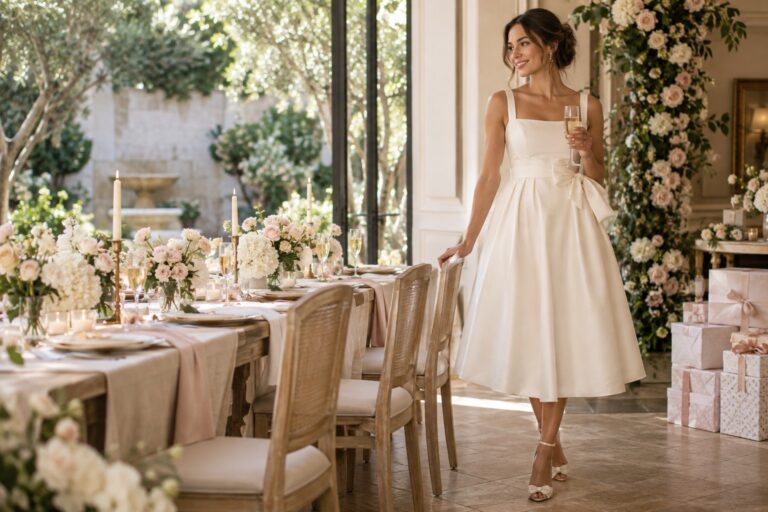
Shower Ideas for a Personal Celebration Guests Can Enjoy
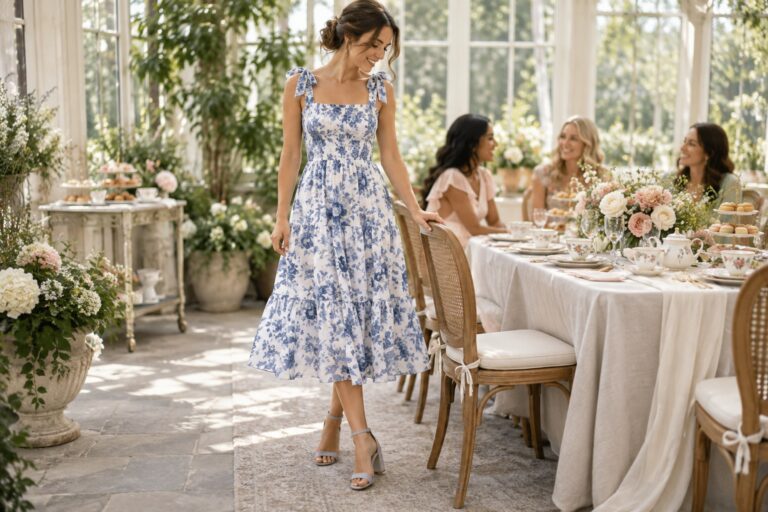
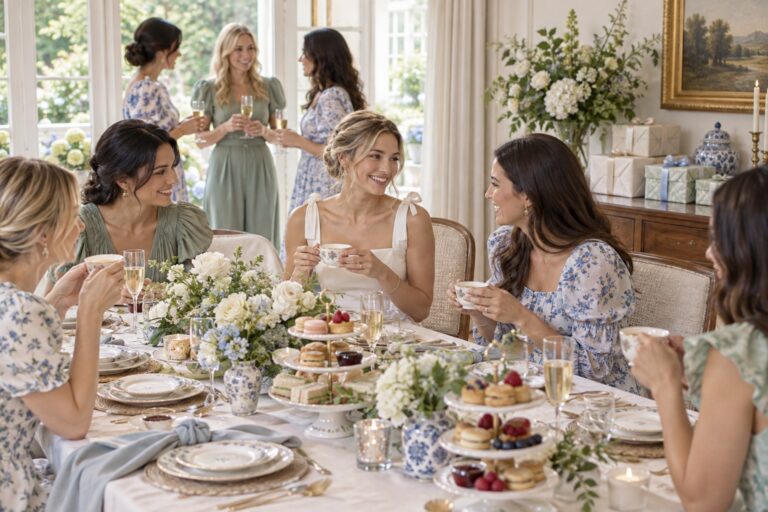
A host can spend an evening saving shower ideas and still feel unsure what the party should actually be. One picture shows a long table, another a craft station, another a room of guests watching the bride open gifts. The options multiply, but the invitation still needs to describe a real afternoon that people can picture attending.
Try beginning with one shared moment instead of a full schedule. It might be a meal the guest of honor loves, a small class everyone can try, a tasting with a few choices, or an outing that ends somewhere comfortable. That moment gives the gathering a center. The rest can be simple: a welcome, time to talk, and a natural way to wrap up.
Let One Shared Moment Hold the Afternoon Together
Imagine the room just before guests arrive. There are relatives who know every childhood story, friends who met the bride at work, and a couple of people who have not met anyone yet. The host is checking the food, the guest of honor is wondering whether she needs to be “on” the whole time, and a list of planned activities is starting to feel like one more job for everyone.
A shared moment can make that room easier to enter. People have something nearby to notice, taste, make, or talk about. No one needs to perform in front of the group for the gathering to feel purposeful. The moment can be structured enough to bring people together, while still leaving space for conversation and quieter guests.
Your wedding look is only the beginning.
Keep your guest list, vendors, timeline, and every important detail together with Zarellea — so your day feels as considered as your style.
This is a useful distinction when browsing shower ideas. A theme names the look or story of a party. A game is a planned activity with rules. A shared moment describes what people will actually experience together. It can be part of a traditional shower or take the place of a formal program. Some hosts choose a cooking session, a casual performance, or a hands-on class rather than making games the main event. Martha Stewart’s examples of bridal shower alternatives show how a group activity can become the reason to gather.
Start by asking the guest of honor what a good afternoon with these people looks like. Does she picture a long conversation over dinner, a new skill, a small adventure, or a place where guests can come and go? Ask how much attention she wants, whether she wants to open gifts in front of everyone, and what she would rather skip. These questions are about comfort, not about asking her to plan her own shower.
Then choose one experience that can carry the event without needing several backups. A short class may already give guests a shared focus. A dinner may only need a toast. An open house may benefit from an easy place to settle in, with no scheduled activity at all. Keeping one central moment makes it easier to decide what belongs in the invitation and what can be left out.
It can also make the gathering more personal without relying on a pun or an elaborate visual theme. A meal that recalls a favorite family dish, a neighborhood the couple enjoys, or a class the bride has wanted to try can say more about her than a room full of generic wedding props. The idea does not need to be unusual. It needs to feel like a good use of this particular group’s time together.
When choosing, picture the guest experience from arrival to goodbye. Is it clear what to do when someone walks in? Can people join the main moment without already knowing the group? Is there somewhere to sit if they would rather observe? Can the host manage setup and cleanup? These questions turn an appealing image into a party plan that can work beyond the screen.
Choose a Format That Feels Like Her, Not Like a Production
Not every shower needs a venue rental or a professional host. A strong idea can be scaled to a dining room, a restaurant, a neighborhood, or a small studio. The right setting is the one that makes the shared moment easy to enjoy and keeps the host from spending the entire event managing logistics.
For a home gathering, make the invitation specific about what guests will do. “Join us for a relaxed supper and a toast” sets a different expectation from “Come for a drop-in afternoon.” For a class or tasting, note whether guests will be standing, moving around, or handling materials. Clarity makes it easier for people to decide what to wear, when to arrive, and whether they need to bring anything.
Check capacity, access, timing, food rules, and cleanup before booking an experience. Ask the provider what is included and what the host must supply. For an outing, plan how guests will get there and whether the group can sit together. For an at-home idea, think about the work surfaces, seating, and storage it needs. A gathering feels relaxed when the practical details have somewhere to go.
A creative experience is especially appealing when the guest of honor enjoys making things, but guests should not be expected to finish a perfect project or take home an object they do not want. Choose a format where instruction is simple, materials are ready, and people can participate at different speeds. If a class has a minimum group size or a booking deadline, confirm those details before promising it on the invitation.
A shared meal can be the experience by itself. A meal does not need a strict menu theme or a series of table activities. Consider a potluck only if the guest of honor would enjoy it and someone can coordinate dishes, dietary notes, serving space, and cleanup. Otherwise, a host-provided menu or restaurant reservation may create less work for guests and the organizer.
Some gatherings are easier when they do not ask everyone to arrive at exactly the same minute. A short open-house window can suit guests who have long drives or other family commitments. In that case, keep the main moment available throughout the window, such as a self-guided display, a simple dessert table, or a place to write a note if the guest wants to. If the bride prefers everyone together, choose a seated meal or booked activity that naturally gives the group a shared start and finish.
Five Shower Ideas Built Around a Memorable Shared Moment
These formats are starting points, not fixed packages. Each gives guests a reason to gather, but the host can adjust the scale, level of participation, and setting to match the bride and the group.
Host a supper around a dish with a story
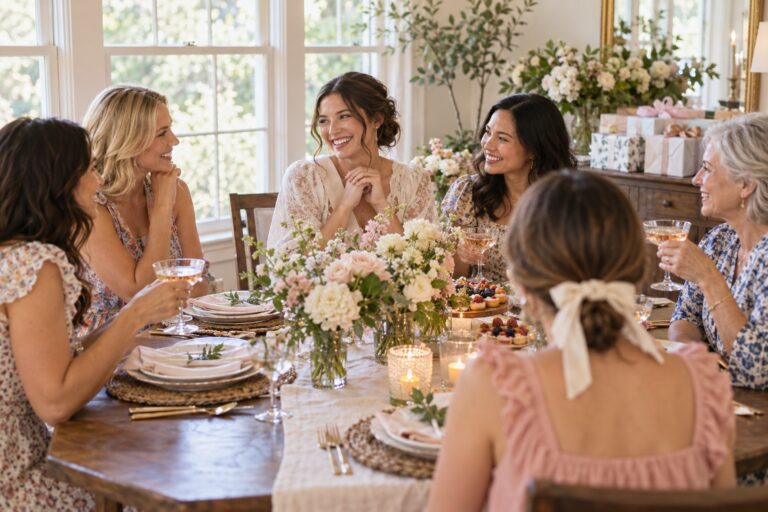
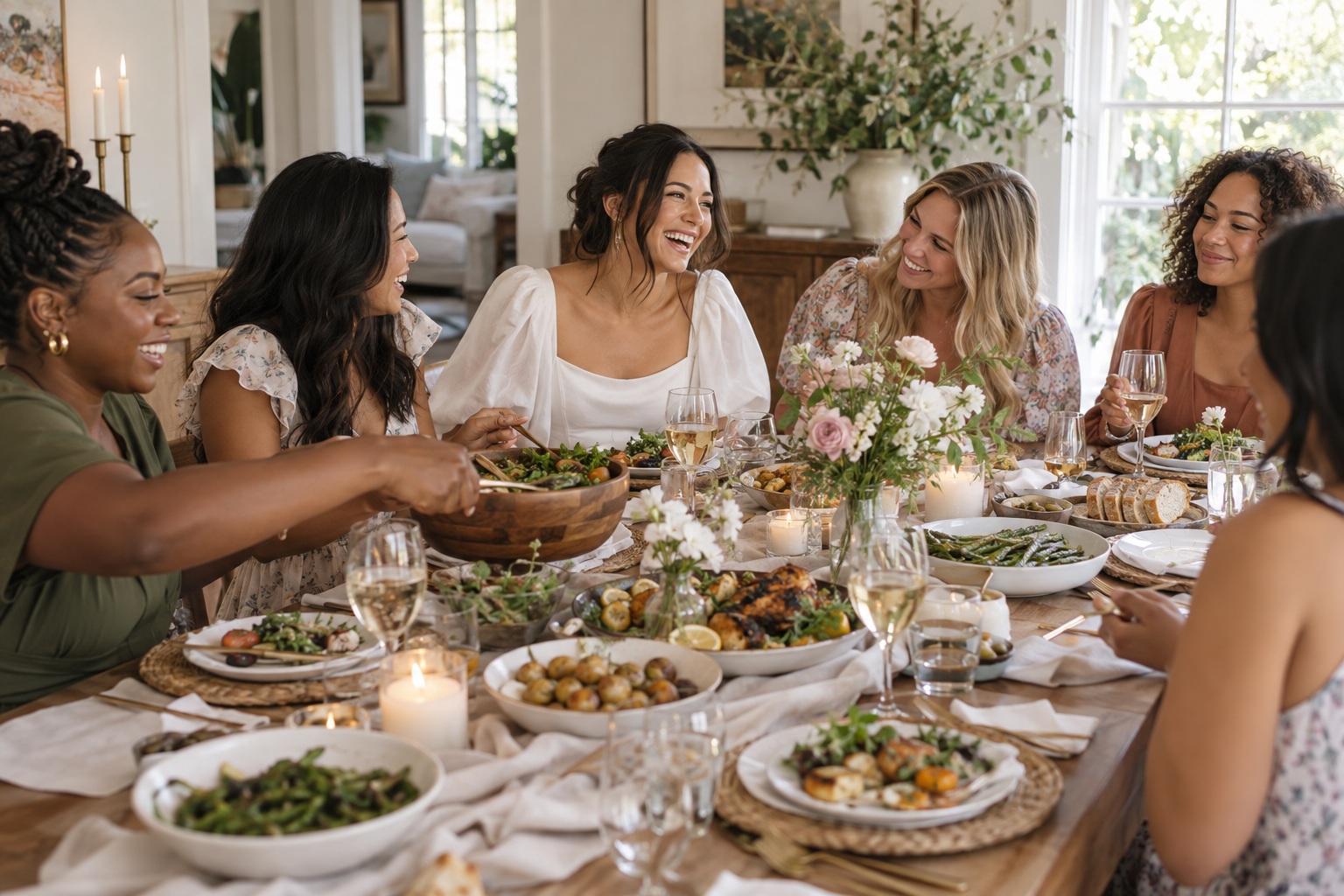
A supper is a warm fit for someone who loves feeding people or would rather talk than take part in a game. Choose one dish, dessert, or family recipe that has a connection to the guest of honor, then let the meal do most of the hosting. A handwritten menu can explain why that dish was chosen, but the story can be shared naturally at the table instead of turned into a program.
Keep the menu practical for the kitchen or restaurant. The host can ask a relative to prepare one familiar dish, order from a favorite local restaurant, or serve a meal that can be mostly ready before guests arrive. If guests are contributing food, coordinate the menu and dietary needs in advance so no one is guessing at the last minute. A recipe exchange is optional, and guests should not feel they must bring a present or a dish just to participate.
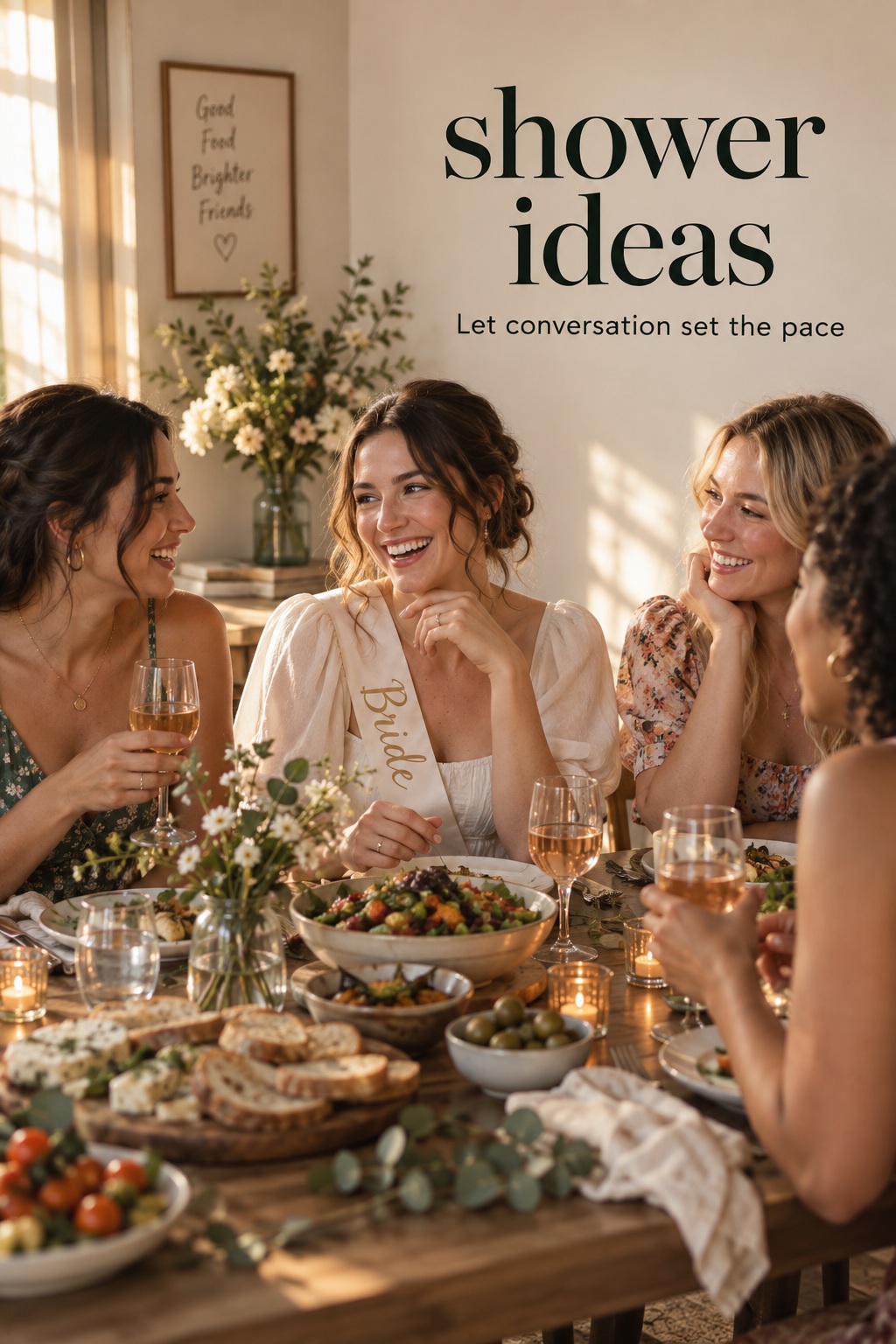
This works best when guests can sit comfortably and hear one another. A single table is lovely when it fits the group; a few smaller tables can make conversation easier in a larger room. If the bride enjoys a toast, make it brief and personal. Then give people time to linger over dessert or coffee without trying to fill every pause.
Book a creative class with room for different skill levels
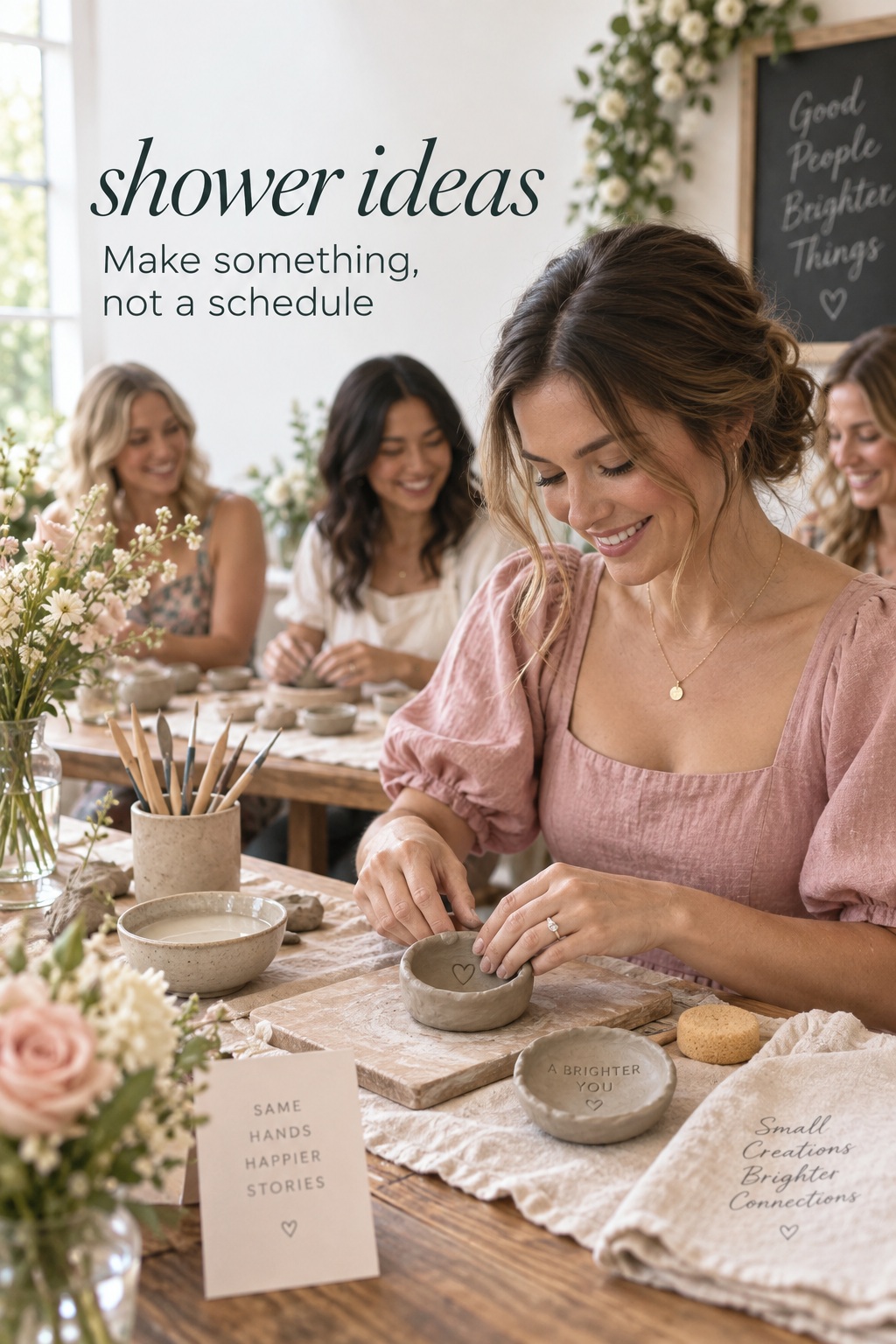
A class gives the party a natural focus and gives guests a reason to talk while they work. It could be a beginner ceramics session, a pasta-making lesson, a printmaking workshop, or a small cooking demonstration. The best choice comes from something the guest of honor is curious about, not from the idea that everyone must make an identical keepsake.
Ask the instructor how much time the activity takes, how accessible the space is, what guests should wear, and whether everyone can take part without prior experience. Confirm if materials, cleanup, and packaging are included. If the class requires standing or fine hand movements, ask about alternatives for guests who would be more comfortable sitting or observing. Participation should feel like an invitation rather than an entrance requirement.
After the class, leave a little room to eat or sit together. A workshop can be the centerpiece, but people may want a moment to compare what they made and catch up. For an at-home version, choose one simple project and prepare the table before guests arrive. The host should not have to teach the activity, serve the meal, and troubleshoot supplies all at once.
Set up a tasting flight with a clear nonalcoholic option
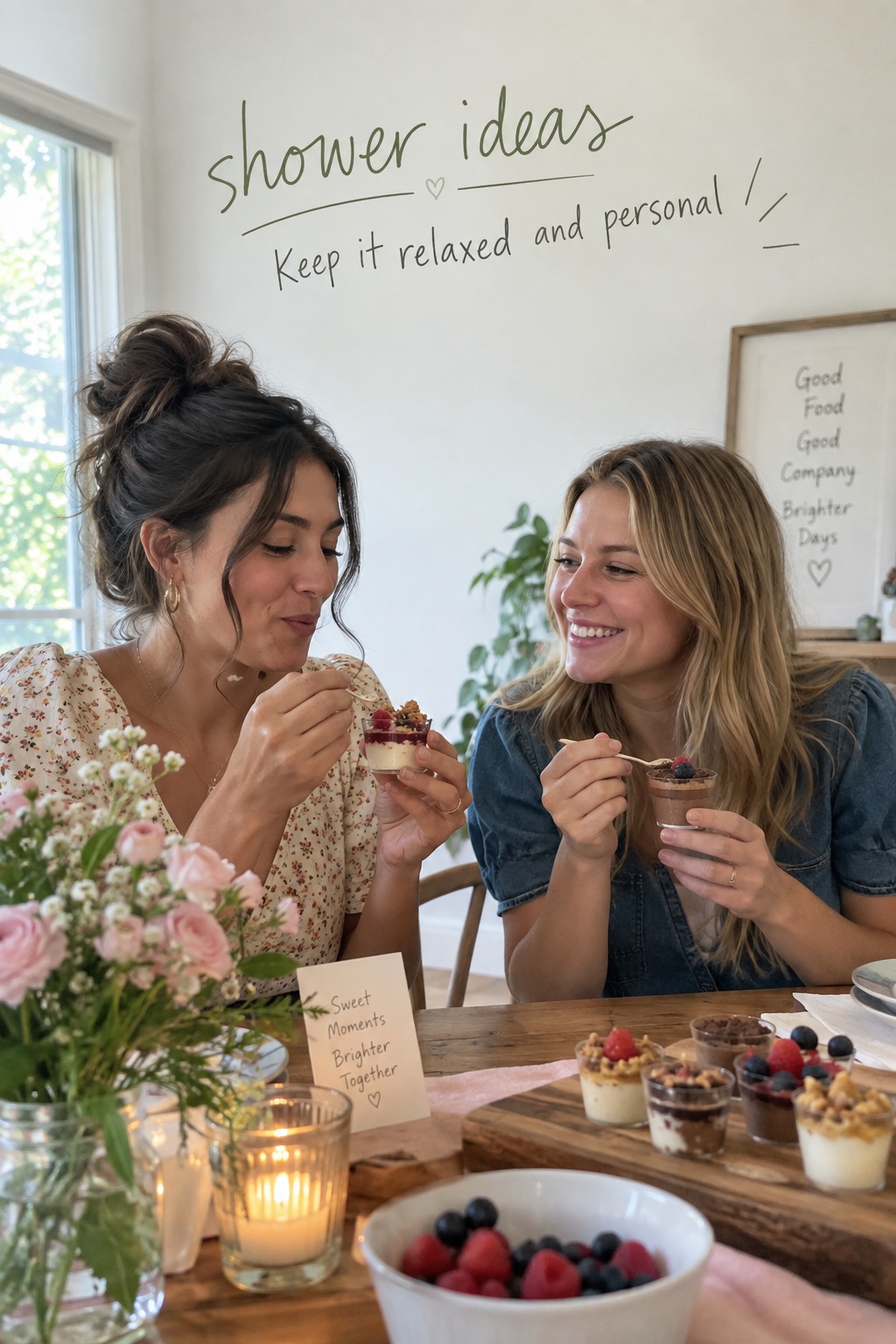
A tasting can bring a group together around a few small choices. It might feature desserts from local bakeries, sparkling drinks, coffee, chocolate, or a mix of cheese and fruit. Wine or beer can suit a group that enjoys it, but an event should not depend on alcohol for guests to take part. Make the nonalcoholic choice feel like a real option, not an afterthought.
Keep the flight manageable. A few samples with a short note about each are easier to enjoy than a table crowded with too many options. Label ingredients where useful, provide water, and check dietary requirements with the guests. If a venue or vendor is serving, confirm what is included and whether the group can reserve a table or private area.
The tasting can be guided by a host or left informal. A printed card can give guests something to compare, but no one needs to rate each sample out loud. The point is to share a small discovery and let conversation continue. If the bride enjoys hosting, finish with a favorite dessert or drink she can recommend to the group.
Make an outing with a relaxed place to land
A neighborhood outing suits a guest of honor who likes being out in the world more than sitting at a decorated table. The group could visit a museum or market, take a short guided walk, or meet for dinner and a show. Choose one main destination and a nearby place to sit and talk. The meal or coffee stop gives the group a chance to reconnect even if people explore at different speeds.
Before inviting guests, look at travel time, tickets, weather, parking or transit, and the amount of walking involved. Let people know what is included and what costs they should expect. A simple route is often more comfortable than trying to cover several stops. If the event depends on a reservation, know the cancellation policy and the date by which guests need to respond.
This idea can stay intimate, with a small group and one shared destination, or include a larger group that meets at the final location. Keep the plan easy to understand. An outing should give guests a change of scene, not make them feel they are following a tour schedule with no time to pause.
Plan an open house with a choice of pace
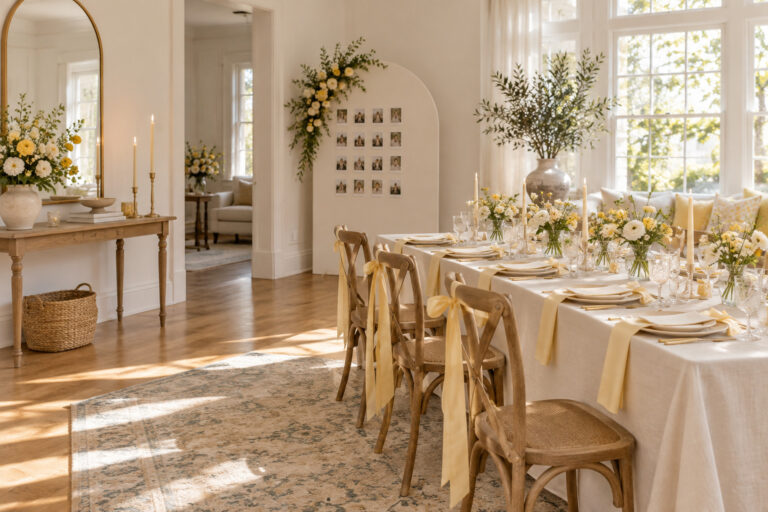
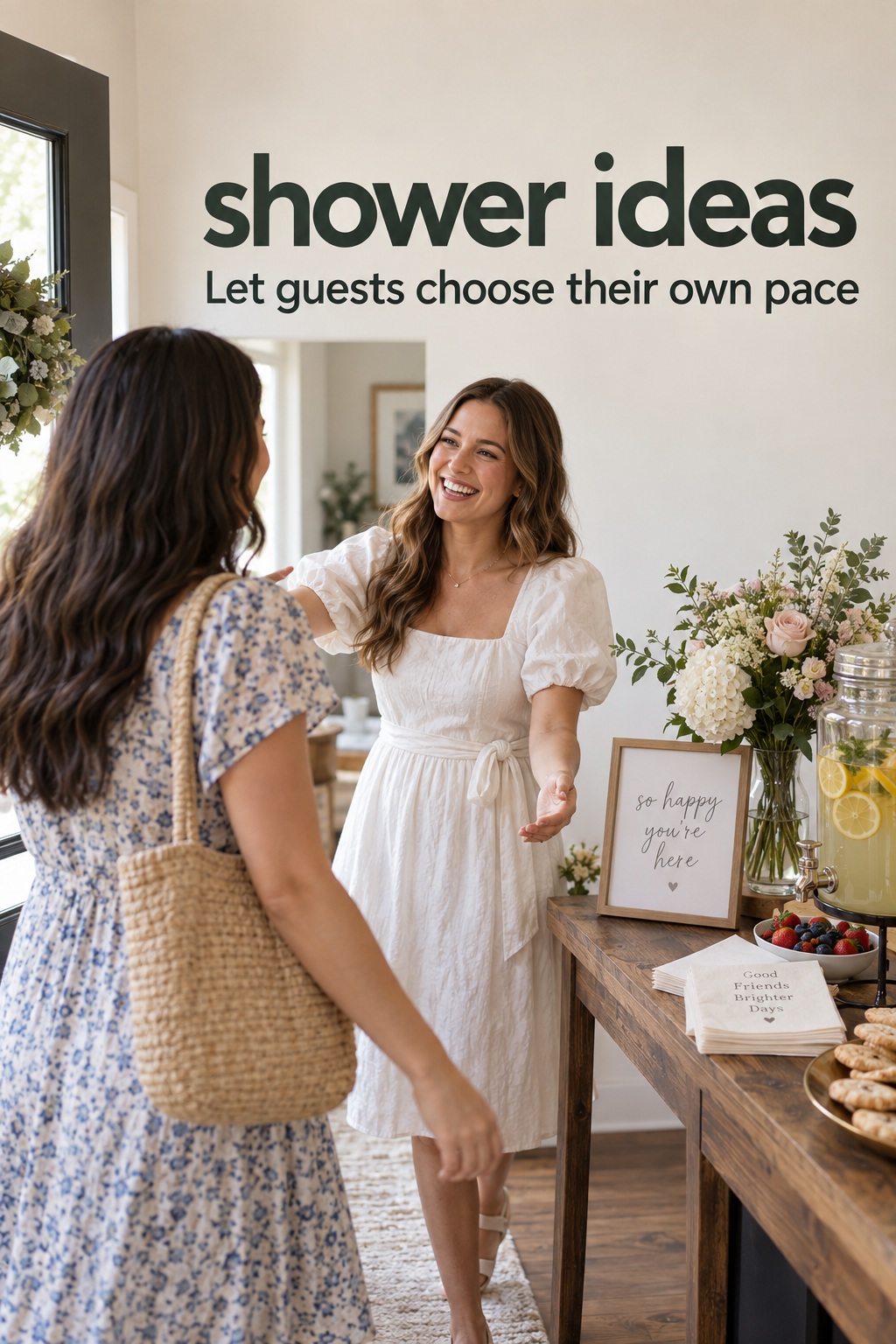
An open house can be thoughtful when guests have different schedules or the guest of honor prefers a less formal celebration. Choose a clear arrival window and create one welcoming place where people can find food, sit down, and greet the bride. If the group wants an activity, leave it available for guests to join on their own, such as a small display of photographs or a card where guests can leave a note.
Think about what happens when several people arrive at once. Someone can welcome guests while another person handles food. Keep the refreshments easy to serve, and make sure the seating works for people who want to stay longer. If gifts are part of the gathering, decide ahead of time whether the bride wants to open them during the event or take them home to open later.
This format does not mean the party has to feel unplanned. A simple start and end time, one shared focal moment, and a host who can greet people are enough structure. The rest can be conversation. It is a particularly gentle choice for a guest of honor who does not want to be the center of attention every minute.
Carry the Idea Into the Invitation, Then Leave Space for the Day
Once the format is clear, describe it plainly on the invitation. “Join us for a hands-on pasta class followed by lunch” tells guests what the day will involve. “Drop by for a relaxed afternoon to celebrate Maya” signals a different pace. Guests should not have to decode a pun to understand the location, timing, or whether they are expected to bring anything.
If there is a practical request, make it clear and optional where possible. Tell guests whether the class has an extra fee, whether the venue is outdoors, or whether they should wear clothes that can get messy. If gifts are welcome, provide the registry details in the expected way; if the bride prefers not to open gifts publicly, the invitation does not need to turn that choice into a theme. A thoughtful gathering leaves room for the guest of honor to set boundaries.
For hosts, the preparation list should be short enough to use. Confirm the guest count, booking, menu, access needs, food restrictions, and who is helping. Assign one person to welcome guests and another to manage the activity or meal if the host needs to do both. If the plan depends on weather, agree on the backup before the invitations go out.
Resist adding a second activity just because the first one ends early in your imagination. People may want to talk, eat, take a break, or simply watch. If the group needs an icebreaker, choose one gentle prompt at the table and let guests pass. The event does not have to maintain constant motion to feel special.
A useful last check is to picture one guest who does not know many people. Would that person understand how to join the shared moment? Is there a comfortable way to participate without being singled out? Can someone opt out and still feel included? If the answer is yes, the idea has room for the actual people who will be there.
Shower ideas become easier to choose when they describe a real experience instead of a collection of purchases. Start with what the guest of honor enjoys, choose one shared moment, and build only the details needed to support it. A supper, class, tasting, outing, or open house can all feel personal when the invitation is clear and the pace leaves room for people to be together.
There is no need to turn the gathering into a test of how much the host can organize. The most memorable part may be an easy conversation over food, a small thing everyone tried for the first time, or the feeling that no one had to pretend to enjoy an activity. Choose an idea with that kind of breathing room, and let the celebration unfold around it.
FAQ
What are some unique shower ideas?
Consider a hosted supper around a meaningful dish, a beginner-friendly creative class, a small tasting flight, an outing with a comfortable place to sit afterward, or a relaxed open house. Choose one idea that suits the guest of honor and the people invited.
What can guests do at a bridal shower besides play games?
Guests can share a meal, try a short class, sample a few foods or drinks, visit a place together, or simply talk during an open house. If you add a hands-on moment, make it easy to join and comfortable to skip.
How do I plan a shower idea on a budget?
Choose an idea that uses a space or service you already have access to, and keep the experience focused on one shared moment. A home supper, simple dessert tasting, or short open house can feel personal without a large decor order or multiple activities.
How long should a bridal shower activity last?
Set the length according to the activity and the guest of honor’s preference. Ask a class provider how much time the session needs, then leave enough time for guests to arrive, eat, talk, and leave without rushing. The activity does not need to fill the whole gathering.
What is a good shower idea for a mixed-age group?
A shared meal, tasting with nonalcoholic options, or open house can give guests different ways to participate. If you choose a class or outing, check access, seating, pace, and whether people can observe or take a break.
Can I host a bridal shower without opening gifts during the party?
Yes. Ask the guest of honor what she prefers and tell guests how gifts will be handled. The gathering can center on a meal, class, tasting, outing, or conversation, with gifts opened privately afterward if that is more comfortable.
How do I make shower guests feel comfortable?
Explain the plan in the invitation, make participation low-pressure, offer seating and breaks, and give guests a natural way to join the group. A shared moment works best when people can take part at their own comfort level.