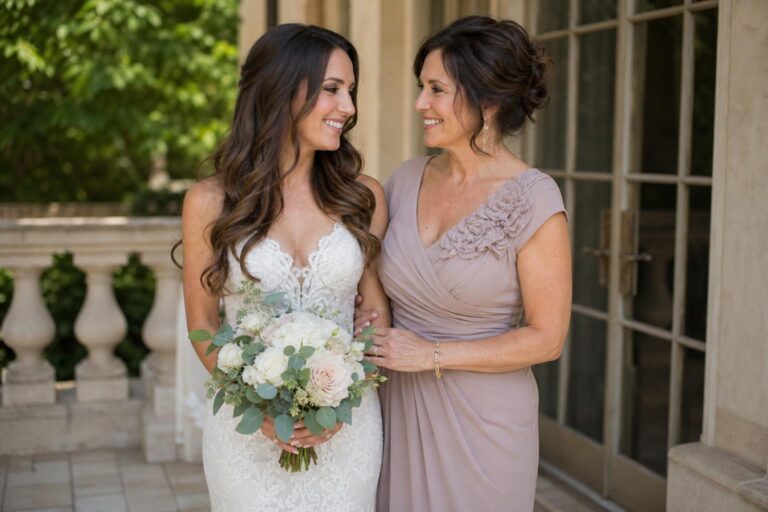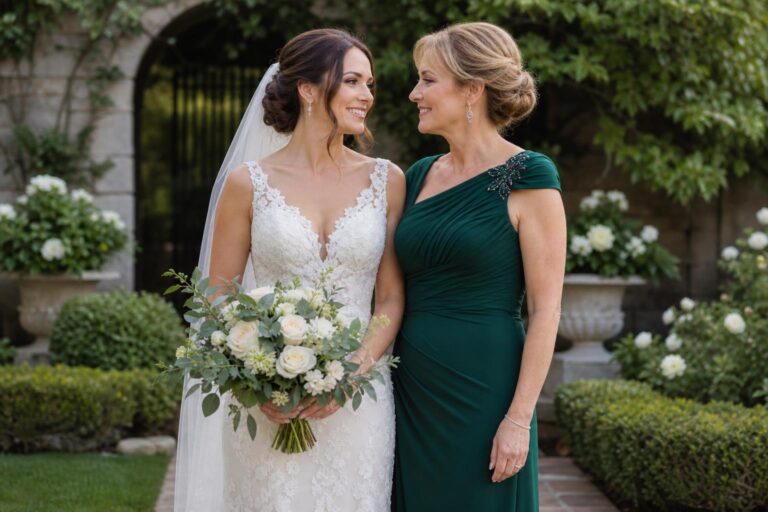
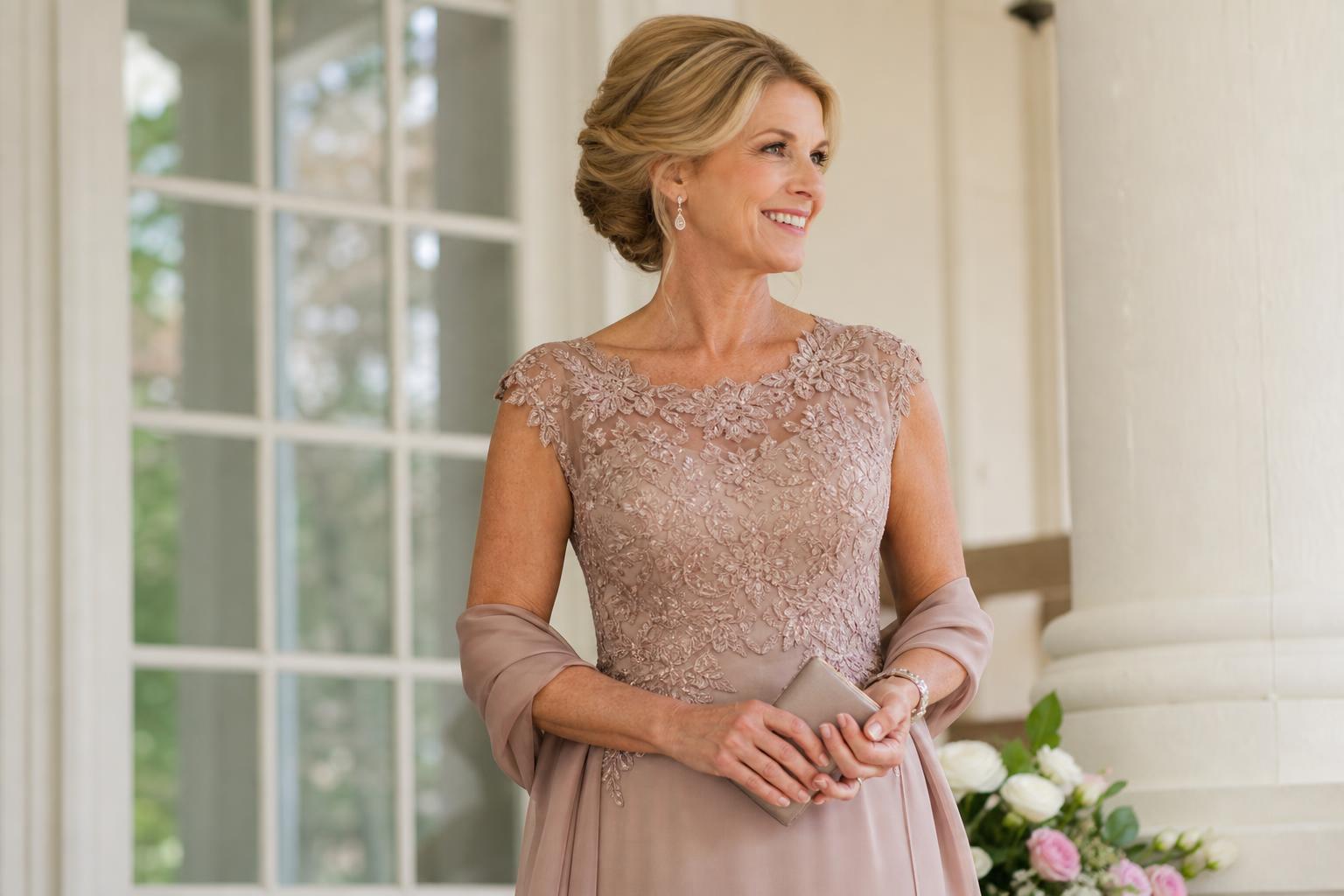
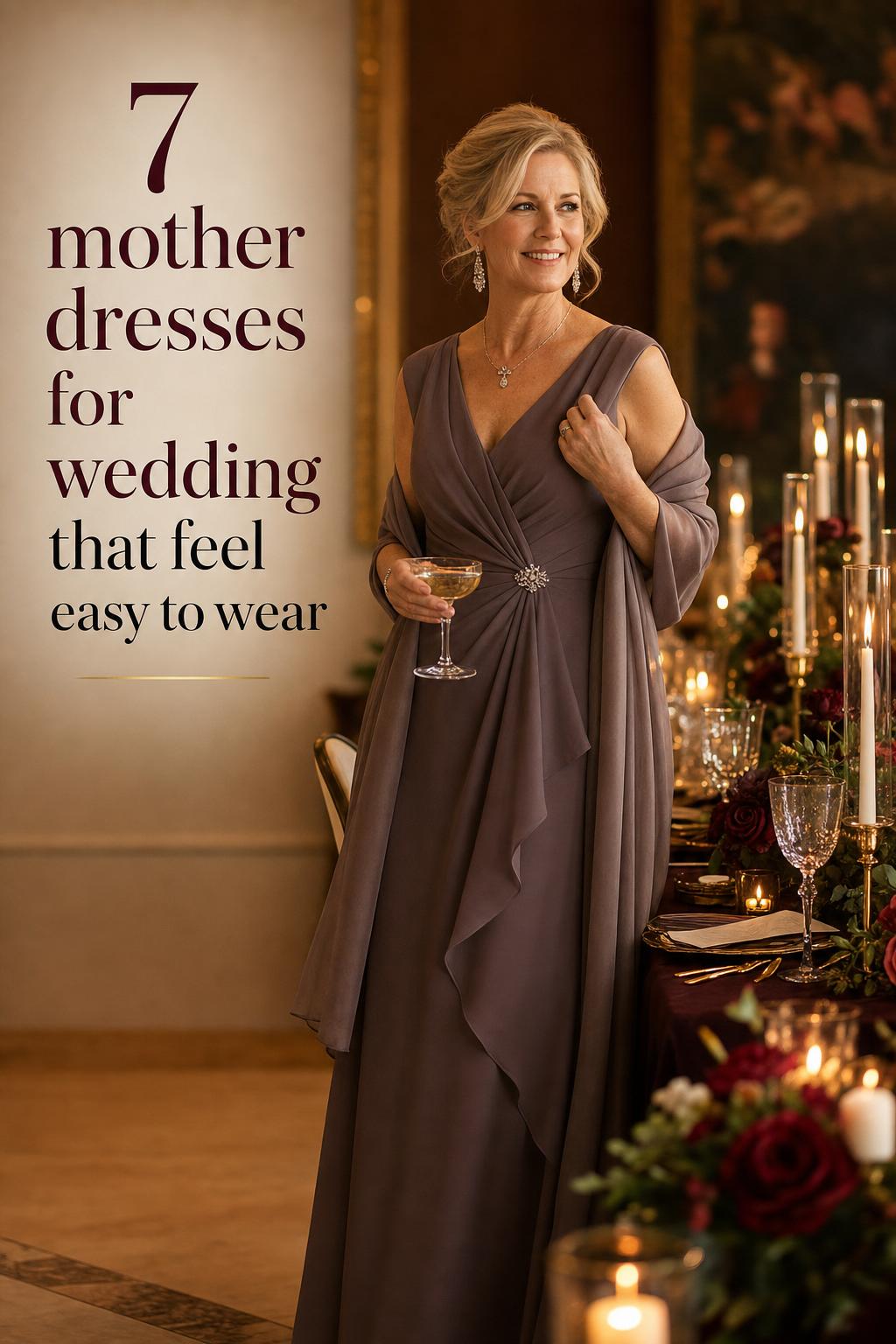
Mother Dresses for Wedding That Feel Polished and Modern
The most memorable mother dresses for wedding celebrations never feel like an afterthought. They carry a quiet authority: graceful silhouettes, intentional color, and fabrics that move beautifully from ceremony to reception. Whether the setting is a church aisle, a garden path, a ballroom staircase, or a breezy beachside terrace, the right look balances elegance with ease and reflects the importance of the role without competing with the bridal party.
That is why mother of the bride dresses and mother of the groom dresses sit in a distinct style category of their own. They are occasion wear, certainly, but they are also part of the wedding’s visual story. The appeal lies in that balance—polished but personal, celebratory but respectful, refined enough for photographs and comfortable enough for a long day of greetings, standing, sitting, dancing, and moving through every stage of the celebration.
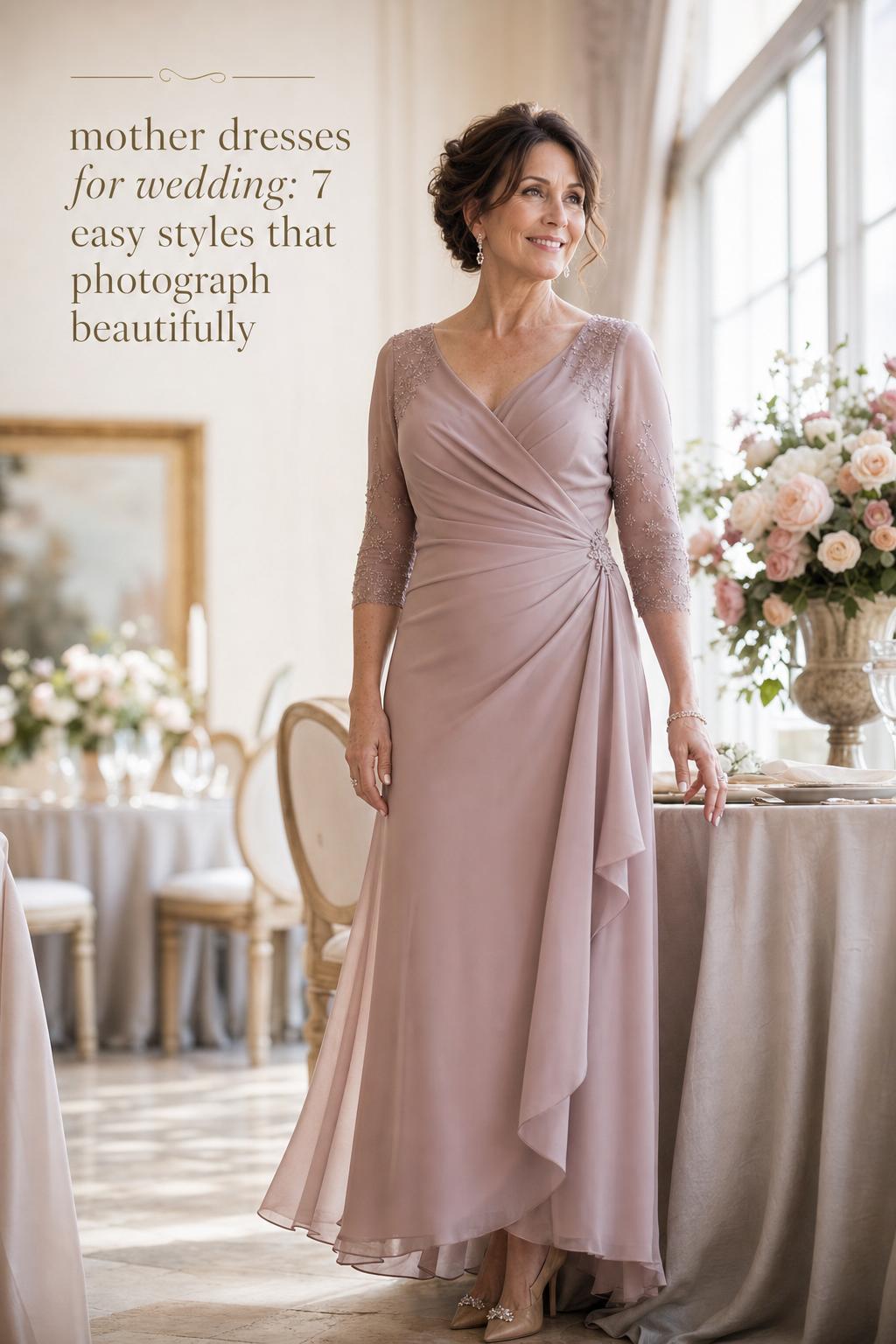
Across the U.S., the aesthetic has become especially compelling because it can shift so naturally with venue, season, and formality. A soft chiffon midi can feel perfect in golden-hour garden light, while a tailored maxi in satin or crepe suits a formal evening reception. The mood may change, but the styling logic remains the same: thoughtful coordination, flattering proportion, and confidence in every detail.
The silhouette sets the tone before color ever does
In mother-of-the-bride and mother-of-the-groom dressing, silhouette is the first decision that shapes the entire look. Before fabric, before sleeve length, before whether the palette leans pastel, neutral, or jewel-toned, the line of the dress determines how formal, how soft, and how architectural the final outfit appears. This is why so many successful MOBO outfits begin with shape rather than trend.
Your wedding look is only the beginning.
Keep your guest list, vendors, timeline, and every important detail together with Zarellea — so your day feels as considered as your style.
A-line, sheath, fit-and-flare, column, and trumpet silhouettes each create a different mood. An A-line reads classic and forgiving, often ideal when comfort and movement matter just as much as polish. A sheath feels cleaner and more tailored, especially in crepe or satin, and often suits contemporary ballroom or city weddings. Fit-and-flare styles introduce a more romantic line, while a column shape can feel especially elegant for formal evening celebrations. The key is not choosing the most dramatic option, but choosing the one that supports posture, proportion, and the day’s level of activity.
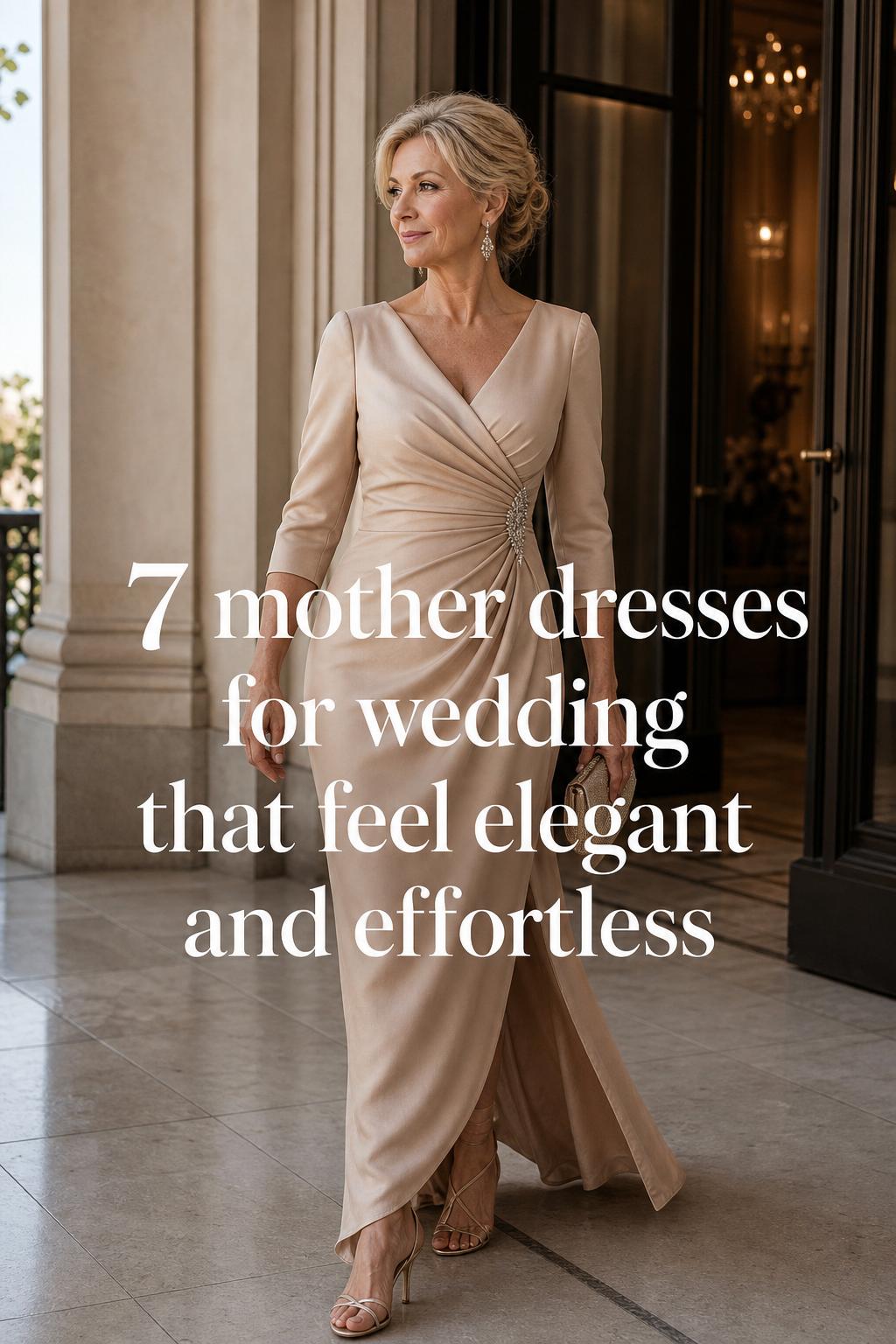
Look: Soft A-line romance for a garden ceremony
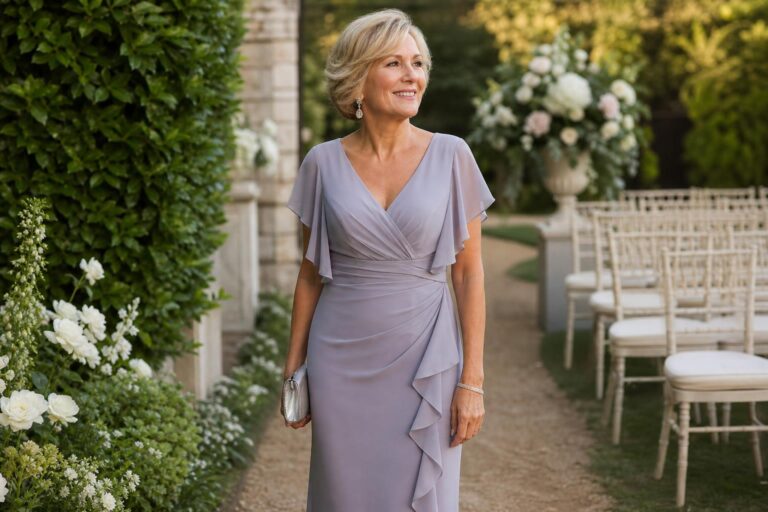
This look carries the kind of quiet movement that photographs beautifully outdoors. The mood is light, poised, and subtly feminine, with a silhouette that skims the body before opening into a gentle sweep. It feels especially right for a garden wedding, a daytime reception, or a semi-formal setting where ease matters as much as refinement.
Chiffon is the natural fabric language here, often paired with lace or soft textural detailing. A midi or maxi length in a pastel or neutral palette keeps the look aligned with the wedding atmosphere, while sleeve choices such as cap sleeves, 3/4 sleeves, or an illusion sleeve add softness without heaviness. This is the visual territory often associated with broad-appeal occasion collections, including options commonly seen through retailers and wedding-focused dress catalogs.
- Key garments: A-line chiffon dress, lace detail, soft sleeve coverage
- Best setting: garden wedding, church ceremony, daytime reception
- Visual mood: romantic, polished, easy to move in
The reason this look works so consistently is balance. It offers shape without restriction, and formality without stiffness. For mothers who want a look that feels timeless in family photos and comfortable over a full wedding day, this silhouette remains one of the strongest choices.
Look: Clean sheath elegance for a ballroom evening
Where the garden A-line whispers, the sheath speaks with precision. This is a more sculpted interpretation of the mother dresses for wedding aesthetic—sleek, composed, and especially effective in a formal venue with candlelit reception energy. The silhouette follows the body more closely, creating a longer visual line that feels elevated rather than overly ornate.
Crepe and satin are especially compelling here because they hold structure and light differently than chiffon. In deeper neutrals or jewel tones, a sheath can feel architectural and modern. Long sleeves or 3/4 sleeves reinforce the composed mood, while a midi or full-length hem keeps the finish ceremony-appropriate. This is the type of silhouette that aligns well with polished occasion wear collections such as Karen Millen, Bloomingdale’s designer assortments, and select styles highlighted by The Knot’s fashion guidance.
The styling logic is straightforward: when the venue is formal and the reception extends into evening, a cleaner silhouette often looks more intentional than an overly embellished one. It also works beautifully for women who prefer definition through tailoring rather than volume.
Color, palette, and the art of coordination
Color is where wedding etiquette and personal style meet. A mother’s dress should feel connected to the wedding palette, but not so coordinated that it blends indistinguishably into the bridal party. The most successful color choices acknowledge bridesmaid tones, the venue, the season, and the formality of the event, while still giving the wearer room to feel like herself.
Across mother of the bride and mother of the groom fashion, three palette directions appear again and again for good reason: pastels for softer daytime settings, neutrals for understated elegance, and jewel tones for richer evening celebrations. This is not about rigid rules so much as visual harmony. A ballroom reception can support more depth and saturation, while a beach or garden wedding often benefits from lighter, airier color stories.
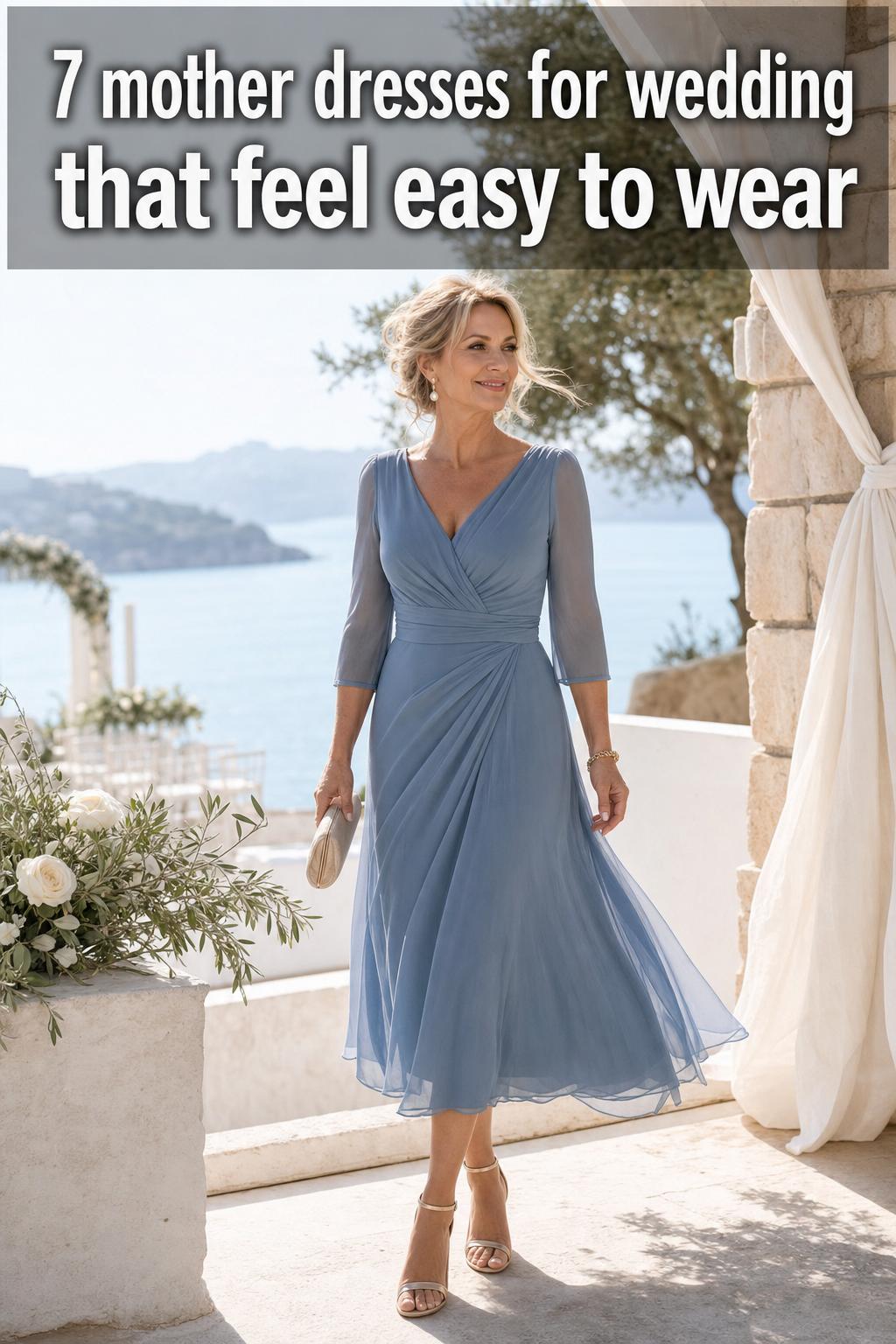
Look: Dusty pastels in soft daylight
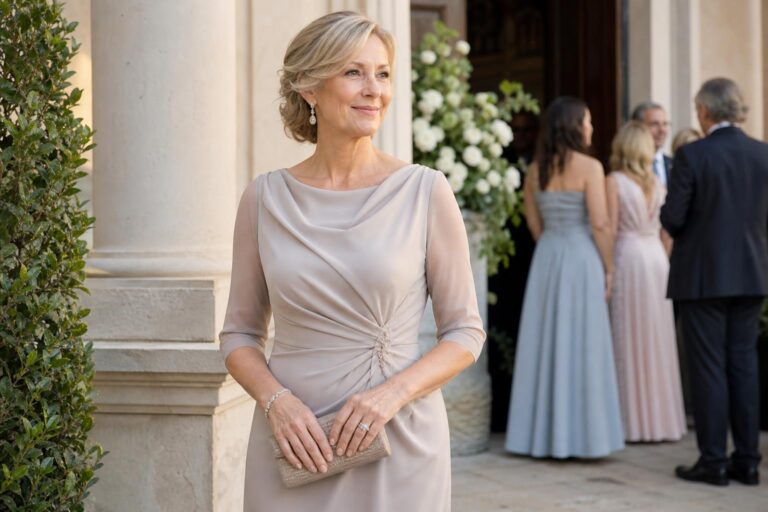
There is a distinctly graceful mood to a pastel MOBO outfit at an outdoor ceremony. The look feels luminous rather than loud, especially under natural light. A soft midi or maxi shape in chiffon or lace creates the kind of presence that reads elegant in motion and serene in photographs.
Pastel families work particularly well when the wedding palette is romantic and the bridesmaids are wearing similarly delicate tones. The dress may feature cap sleeves, an illusion sleeve, or a lightly draped bodice. The overall impression is calm and coordinated, not overly matched. This aesthetic is especially useful for spring and summer settings, or for weddings where florals, garden architecture, and soft scenery frame the event.
The appeal of this look lies in restraint. It honors the softness of the occasion while still feeling fully dressed. For mothers who want to look polished without the visual weight of darker evening shades, this palette offers a refined answer.
Look: Jewel-tone confidence for a formal reception
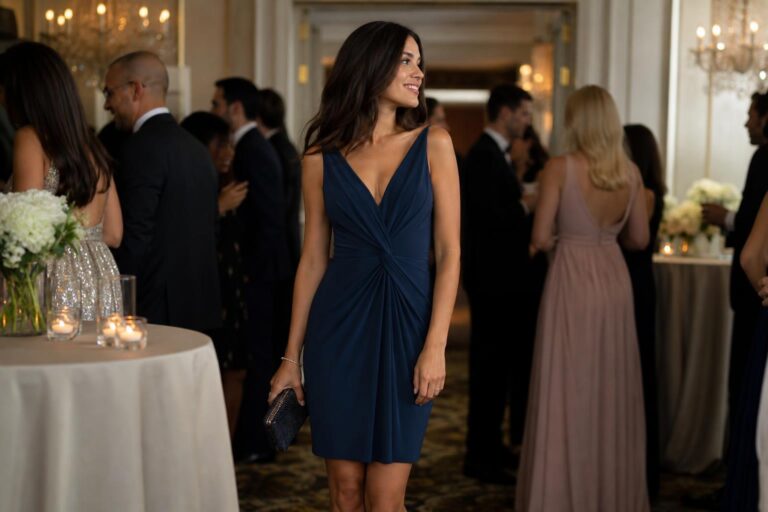
Jewel tones bring depth, richness, and a sense of occasion. In a formal wedding environment—especially a ballroom, evening church reception, or black-tie leaning celebration—they can elevate the mood instantly. The silhouette often becomes more streamlined here, allowing the color itself to carry much of the visual statement.
Satin, crepe, and lace all translate beautifully in this palette range. A full-length gown or a refined midi with 3/4 sleeves can feel especially strong, particularly when the wedding calls for a more dressed-up presence. Department store assortments such as Bloomingdale’s often reflect this direction well, with designer-led options that emphasize shape, color, and occasion formality.
This look fits the aesthetic because it understands evening light. Richer tones hold their own in reception spaces, in professional photography, and in more dramatic venues. They also offer a practical route for mothers who want sophistication without relying heavily on embellishment.
Style tip: coordination should be intentional, not identical
Color coordination works best when it follows the wedding palette loosely rather than literally. A mother of the groom dress and a mother of the bride dress do not need to match each other exactly, and they do not need to duplicate the bridesmaids. Instead, they should sit comfortably within the same visual world. That often means choosing a related tone, a complementary neutral, or a richer variation of a bridal party shade.
- Use bridesmaid colors as reference, not a strict uniform
- Let venue and time of day guide how light or deep the palette should feel
- Keep photo harmony in mind, especially for family portraits
- Choose a shade that still feels natural for your personal coloring and comfort
Lengths that change the mood: knee, midi, and maxi
Dress length does more than affect hemlines; it changes the attitude of the entire outfit. In practical terms, length also influences movement, ease on stairs, comfort during long celebrations, and how formal the look appears at first glance. For mother dresses for wedding events, knee-length, midi, and maxi options each have a clear place.
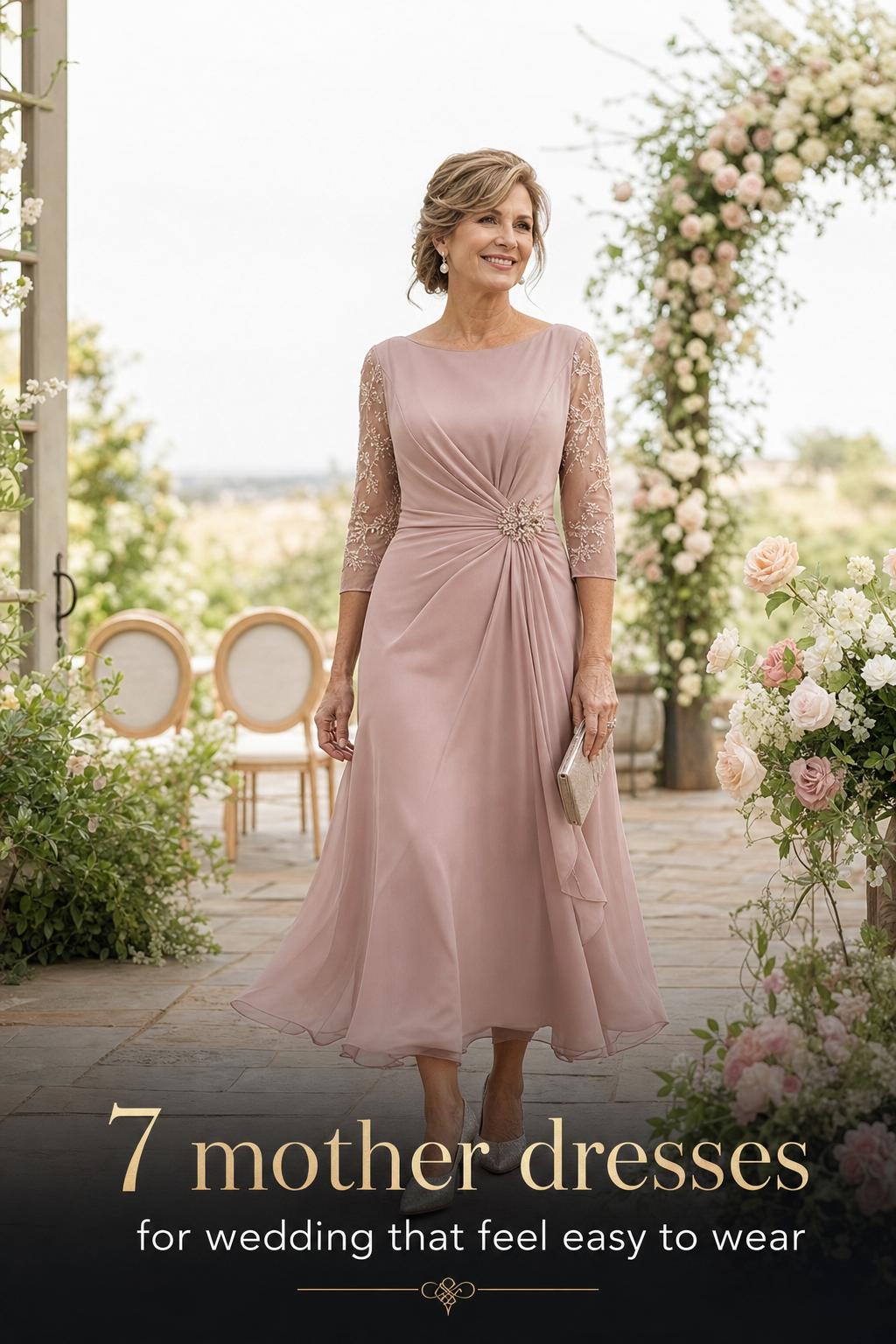
Look: Knee-length polish for a daytime celebration
Knee-length mother of the bride dresses have a crisp, approachable elegance that suits daytime weddings especially well. The mood is composed and practical, with enough structure to feel special and enough freedom to move easily through church seating, outdoor walkways, and busy reception spaces. It is one of the most versatile lengths for semi-formal celebrations.
This is the territory strongly associated with collections such as Ever-Pretty’s knee-length mother of the bride and groom dresses. Chiffon and lace are common fabric choices here because they soften the shorter line and keep it occasion-ready. Sleeve and neckline filters matter more in this category, since the balance between modesty and freshness often defines the look.
Knee-length styles work particularly well for garden weddings, daytime receptions, and church ceremonies where a mother may want comfort, coverage, and easy movement without stepping into full evening-gown territory.
Look: Midi refinement with modern versatility
The midi dress occupies a beautifully balanced middle ground. It feels more elevated than a simple daytime dress, but often lighter and more flexible than a full maxi. Visually, the midi can read romantic, tailored, or modest depending on fabric and sleeve choice, which makes it one of the most adaptable lengths across U.S. wedding styles.
In chiffon, the midi feels soft and fluid; in satin or crepe, it turns sharper and more contemporary. Brands and retailers that organize occasion wear by mini, midi, and maxi—such as Karen Millen—help illustrate how much the same category can shift in mood depending on finish and cut. A midi with 3/4 sleeves can suit a conservative church wedding, while a sleeveless or cap-sleeve version feels right for a more open garden or coastal setting.
This length fits the aesthetic because it adapts so gracefully. It allows the mother’s outfit to feel current without losing the maturity and dignity expected of the role.
Look: Maxi drama with graceful movement
The maxi silhouette is the natural choice when the wedding asks for clear formality. It carries presence as soon as the wearer enters the room and often reads beautifully in portraits, processional moments, and evening light. Yet the most effective maxi dresses do not rely on heaviness. They use movement, drape, and proportion to create elegance without overwhelming the wearer.
Chiffon maxi dresses feel romantic and airy, satin maxis read more polished, and lace details can soften either approach. This is the length most often associated with formal mother-of-the-bride gowns and many designer-led collections carried by Bloomingdale’s, Bella Bridesmaids, and bridal boutiques. It also suits situations where the ceremony and reception are held in especially grand spaces.
The maxi works because it reflects the scale of the event. For mothers who want a dress that feels ceremonial and unmistakably special, few options create that mood as naturally.
Regional wedding settings shape the aesthetic
One of the most overlooked decisions in MOBO shopping is how strongly region and venue influence what feels right. A dress that looks perfect in a candlelit ballroom may feel too heavy on a beach, while a breezy garden style can feel underpowered in a formal church-and-reception setting. Dressing well for a wedding in the U.S. often means reading the environment with care.
Look: Northeast garden wedding softness
For a Northeast garden wedding, the visual mood often leans romantic and cultivated. Think manicured grounds, floral ceremony backdrops, and shifting daylight that rewards texture and movement. A-line or fit-and-flare silhouettes in chiffon, lace, or soft crepe tend to feel especially natural here.
Pastels and neutrals fit the scenery beautifully, and midi or maxi lengths usually strike the right note. The look should feel polished enough for photos, but not so formal that it loses the relaxed elegance of the venue. A soft sleeve or light coverage layer often helps when the day begins cool and warms as the reception unfolds.
Look: Southern church wedding grace
A Southern church wedding often calls for a more composed interpretation of occasion wear. The atmosphere may be traditional, family-centered, and formal in a way that values modesty as much as elegance. Here, sleeve choices become especially important, and silhouettes that feel polished rather than revealing tend to work best.
Midi and maxi lengths in crepe, lace, or chiffon often feel appropriate, especially with long sleeves, 3/4 sleeves, or cap sleeves. Jewel tones and refined neutrals can suit the setting well, particularly when the reception that follows is more dressed up. This is where modest fashion cues—similar to those emphasized by Birdy Grey and boutique-led bridal shops—become especially useful.
Look: West Coast beach ease
A West Coast beach wedding asks for elegance with a lighter hand. The mood is open, natural, and often more relaxed, even when the event remains polished. Structured fabrics can feel too rigid in this setting, while lighter materials create movement that suits ocean air and softer outdoor light.
Chiffon midi dresses, easy A-lines, and gently flowing maxis work especially well here. Neutrals and lighter palettes often look at home against sand, sea, and sky. Practicality matters too: a hem that moves cleanly and a silhouette that does not feel cumbersome can make the day much more comfortable from ceremony to reception.
Tips for reading the venue correctly
- Let the venue’s formality guide fabric weight and structure
- Choose movement-friendly lengths for outdoor spaces and uneven ground
- Use sleeve coverage to adapt to church settings and changing temperatures
- Consider whether the wedding atmosphere is polished-romantic, traditional, or relaxed-elegant
The fabric story: chiffon, lace, satin, crepe, and velvet
Fabric is where a wedding outfit starts to feel truly atmospheric. The same silhouette can look entirely different depending on whether it is cut in chiffon, lace, satin, crepe, or velvet. For mothers dressing for weddings, this matters because fabric determines not just appearance, but how the dress behaves through a full day of ceremonies, portraits, sitting, standing, and dancing.
Look: Chiffon movement under golden-hour light
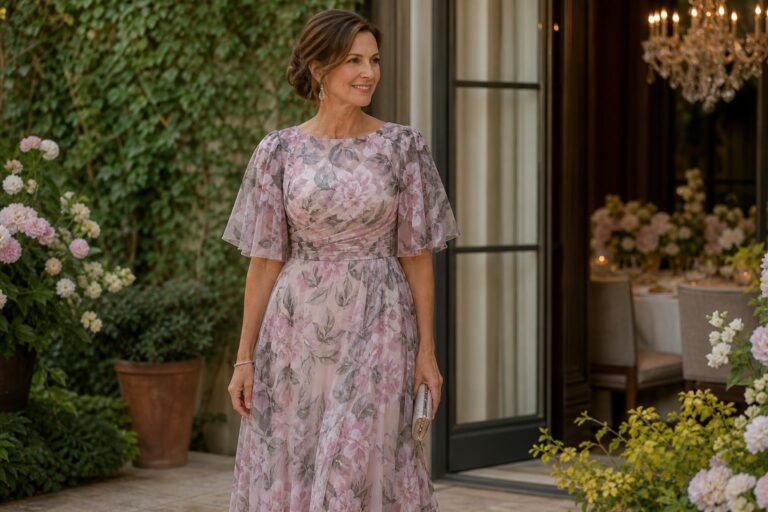
Chiffon is the language of softness. It drapes gently, catches motion beautifully, and often feels especially appropriate for spring and summer weddings, garden venues, and daytime celebrations. In an A-line or softly draped maxi, it creates a look that feels ceremonial without heaviness.
This is why chiffon appears so consistently across mother-of-the-bride collections and product filters. It supports pastel palettes well, handles midi and maxi lengths elegantly, and often pairs beautifully with lace detailing for additional texture. For mothers who want a look that feels light and forgiving, chiffon remains one of the most reliable choices.
Look: Satin shine for evening sophistication
Satin brings more polish and more visual definition. It reflects light in a way that can feel especially refined in an evening reception or ballroom setting, and it often elevates simpler silhouettes by giving them a richer finish. The mood is cleaner, sleeker, and slightly more dramatic than chiffon.
Because satin has more surface presence, it tends to pair best with thoughtful tailoring and uncluttered lines. In sheath or column-inspired shapes, it can look strikingly elegant. For mothers who want a formal look with modern presence, satin offers a compelling route.
Look: Lace and crepe for balanced structure
Lace carries romance, while crepe offers discipline. Together or separately, they create some of the most balanced MOBO looks because they combine softness with form. Lace can add delicacy to sleeves or overlays, while crepe helps the dress hold a cleaner line through the waist, skirt, or bodice.
This combination is especially useful when a mother wants elegance without excess. It suits church weddings, formal family celebrations, and situations where modesty and polish need to live side by side. Velvet also enters the conversation for richer-season dressing, bringing depth and occasion weight when the event calls for a more substantial mood.
Brand ecosystems and how to shop them with purpose
Shopping mother dresses for wedding events often means moving between editorial guidance and product-driven collections. Some women begin with inspiration from The Knot or style guidance from department stores, then move into brand collections and bridal boutiques once they know their preferred silhouette, sleeve, and length. Others start with a retailer that fits their budget or timeline. Both approaches work, provided the search stays focused.
Different brands and retailers often signal different strengths. Ever-Pretty is closely associated with knee-length mother-of-the-bride and mother-of-the-groom options. Karen Millen frames the category through occasion wear with mini, midi, and maxi dress styles. Bloomingdale’s offers a broader department store environment with multiple designers and stronger filtering by color, fit, fabric, and price. Birdy Grey leans into elegant, modest options and practical availability notes such as in-stock versus made-to-order timing. Bella Bridesmaids and local bridal shops bring a more appointment-led, designer-guided approach. JCPenney stands out for style variety, plus size options, and budget awareness. Hello Molly brings a more trend-forward edge to the category.
How to recreate a focused shopping strategy
- Start with wedding formality: church, garden, beach, or ballroom
- Decide on your ideal length first: knee, midi, or maxi
- Narrow by sleeve preference and level of coverage
- Use fabric to refine the mood: chiffon for softness, satin for polish, crepe for structure, lace for romance
- Check whether the dress is in-stock or made-to-order if timing is tight
This approach reduces the overwhelm that often happens when mothers shop too broadly. Rather than comparing every possible dress, it becomes easier to compare the right dresses within the right context.
Look: Modest elegance with sleeve coverage
Some of the strongest mother-of-the-bride and mother-of-the-groom looks are built around coverage rather than exposure. The mood is dignified, intentional, and often especially resonant in church weddings, traditional family celebrations, and formal ceremonies where respectful styling carries real importance. This aesthetic is not about looking conservative in a limiting way; it is about using sleeve, neckline, and silhouette choices to create composed beauty.
Long sleeves, 3/4 sleeves, cap sleeves, and illusion sleeves all offer different versions of this idea. Birdy Grey’s emphasis on modest styles and sleeve options reflects this well, as does the guidance from bridal shops that consider stepmothers and mother figures as part of the same dressing conversation. A midi or maxi silhouette in chiffon, lace, or crepe often completes the look with enough softness to avoid severity.
The reason this works so well is that modesty can be incredibly elegant when the line is clean and the fabric is refined. It also provides practical comfort through longer ceremonies, air-conditioned interiors, and a full day of social interaction.
Fit, sizing, and the quiet importance of alterations
Even the most beautiful dress can lose its effect if the fit is slightly off. In wedding dressing, this matters more than many shoppers expect because the day involves constant movement and visibility from every angle. A mother may walk in processional moments, stand for portraits, sit through the ceremony, and move around the reception floor. A fit that feels only acceptable in a fitting room can become distracting over the course of the event.
This is why dress sizing and alteration planning should be treated as part of the styling process, not an afterthought. Retailers and brands often provide size charts, but practical fit decisions usually come down to where the dress must skim, where it should define, and how the fabric behaves. Chiffon may forgive more through movement, while satin and crepe often reveal fit issues more quickly. Bridal boutiques and occasion specialists are particularly useful when a mother wants guidance that goes beyond standard online filters.
Real-life styling insight
A mother attending a formal ballroom wedding may love the look of a full-length satin sheath online, but if the hem drags slightly or the waist sits too low, the dress can feel less elegant by hour three than it did in the mirror. By contrast, a softly tailored midi in crepe with a well-placed sleeve may feel polished from ceremony through reception because it supports movement and posture. The smartest choice is often the dress that continues to look composed late in the day, not just at first try-on.
Look: Budget-conscious polish with department-store versatility
Not every elegant wedding look has to come from a bridal boutique or designer appointment. There is a refined, practical aesthetic in shopping broad-appeal retailers well—especially when the goal is to find a dress that suits the event beautifully without creating unnecessary pressure around price. The mood here is confident, smart, and selective rather than compromising.
JCPenney’s mother of the bride dress selection points to this styling path clearly, with options spanning garden, beach, and church weddings, alongside plus size and budget-aware shopping considerations. Bloomingdale’s offers a higher-end department-store version of the same logic, combining multiple labels with style-guide support. The visual identity can still be romantic, formal, or modest; the difference is that the search is built around variety and filtering rather than a single designer perspective.
This look fits the larger aesthetic because wedding style is not only about labels. It is about choosing a silhouette, color, and fabric that align with the event and feel excellent to wear. A thoughtful department-store find can look every bit as intentional as a boutique purchase when it is selected with clarity.
Common styling missteps that can flatten an otherwise lovely look
The most common mistakes in mother-of-the-bride and mother-of-the-groom dressing are rarely dramatic. More often, they are subtle mismatches: a fabric that feels too heavy for the venue, a length that fights the setting, a color that ignores the wedding palette, or a silhouette that looks elegant standing still but uncomfortable in motion. These are not fashion failures so much as context failures.
- Choosing evening-rich fabric for a relaxed daytime or beach setting
- Ignoring coordination with bridesmaids and the broader wedding palette
- Prioritizing trend over formality and venue logic
- Selecting a beautiful dress without enough time for alterations or delivery
- Forgetting that modest coverage can be both practical and stylish in many wedding settings
What stylists often recommend, quietly and consistently, is to think in layers of decision-making: event first, then silhouette, then length, then fabric, then color. Once those elements align, the outfit usually begins to make sense on its own.
Look: Coordinated but individual for mothers, stepmothers, and mother figures
Weddings increasingly include more than one maternal figure in the visual frame, and that changes the styling conversation in a meaningful way. The goal is no longer simply finding one dress that works, but creating a family of looks that feel harmonious without becoming repetitive. There is a thoughtful elegance in allowing each woman to reflect her role and personality while still respecting the wedding’s shared aesthetic.
Bridal boutiques that explicitly address stepmothers and mother figures underscore this beautifully. One woman may choose a jewel-tone crepe midi with 3/4 sleeves, while another wears a neutral chiffon maxi with lace detail. The silhouettes differ, but the palette relationship and level of formality connect them. This approach prevents visual competition and helps every person feel considered.
The styling insight here is simple but powerful: cohesion matters more than sameness. Especially in family portraits, dresses that speak the same language without copying one another create a far more polished result.
Bringing the full wedding-day timeline into the outfit decision
A mother’s dress does not exist for the ceremony alone. It has to function across the wedding day timeline: arrivals, seating, processional moments, photographs, cocktail hour, dinner, and reception. This broader view often clarifies why one dress works and another does not. A gown may look stunning in a product photo but feel too restrictive during portraits or too formal once the mood relaxes. Another dress may seem understated online and become exactly right in motion.
For that reason, practical elegance is not a lesser form of style. It is often the highest form of it. A knee-length dress that moves effortlessly through a daytime garden wedding, a midi that transitions cleanly from church ceremony to reception, or a maxi that remains graceful through a formal evening celebration all succeed because they support the lived rhythm of the day.
Key pieces for this aesthetic
- A silhouette chosen for the venue, not just the hanger
- A color that relates to the wedding palette without duplicating it
- A fabric suited to season, light, and formality
- Sleeve coverage that feels both flattering and useful
- A hemline that supports movement from ceremony to reception
That is the real heart of wedding occasion dressing for mothers: elegance that lives well in real time.
FAQ
What are the best mother dresses for wedding ceremonies in the U.S.?
The best choice depends on the wedding’s formality, venue, and season, but the most reliable options are A-line, sheath, fit-and-flare, midi, and maxi styles in chiffon, lace, satin, or crepe. Garden weddings often suit softer silhouettes and lighter fabrics, while ballroom or evening receptions usually support more tailored lines and richer finishes.
How should a mother of the bride dress coordinate with bridesmaids?
The dress should feel connected to the wedding palette without matching the bridesmaids exactly. A related tone, complementary neutral, or deeper variation of a bridal party color usually looks more polished than a direct copy, especially in family photos.
Are knee-length mother of the bride dresses appropriate for weddings?
Yes, especially for daytime, garden, church, and semi-formal weddings. Knee-length styles can feel elegant and practical, particularly in chiffon or lace, and they are often a strong choice for mothers who want easy movement and a lighter overall look.
What is the difference between mother of the bride dresses and mother of the groom dresses?
In practice, the styling principles are very similar. Both categories focus on occasion-appropriate silhouettes, coordinated color, refined fabrics, and wedding formality. The main difference usually comes down to coordination within the family and the wedding palette rather than a separate set of dress rules.
Which dress length is most versatile: knee, midi, or maxi?
Midi is often the most versatile because it can shift easily between daytime and evening settings and works across many venue types. Knee-length is especially practical for daytime and semi-formal weddings, while maxi is the strongest option for clearly formal celebrations.
What fabrics work best for a mother’s wedding outfit?
Chiffon works beautifully for soft movement and lighter settings, satin suits polished evening looks, crepe offers clean structure, and lace adds romantic texture. The best fabric is the one that matches the event’s formality and stays comfortable through a full day of celebration.
How important are sleeves and coverage in MOBO outfits?
Sleeves and coverage can shape both the mood and practicality of the outfit. Long sleeves, 3/4 sleeves, cap sleeves, and illusion sleeves are especially useful for church weddings, traditional settings, modest styling preferences, and changing indoor-outdoor temperatures.
Where can mothers shop for wedding dresses with different budgets and styles?
Shoppers often move between style guidance and retailer collections. The Knot offers fashion inspiration, while Ever-Pretty, Karen Millen, Birdy Grey, Bella Bridesmaids, Hello Molly, JCPenney, Bloomingdale’s, and local bridal boutiques each serve different needs around length, modesty, style direction, designer range, and budget.
Should a mother choose an in-stock dress or a made-to-order dress?
If timing is tight, in-stock options are often the safer choice because they leave more room for tailoring and fewer delivery concerns. Made-to-order dresses can still be worthwhile when there is enough lead time and the style is exactly right, but timeline planning matters.
What makes a mother’s wedding dress look truly polished?
The most polished looks come from alignment: the right silhouette for the body and venue, a fabric that suits the setting, a color that coordinates with the wedding, and a fit that remains comfortable through the full event. Elegance usually looks strongest when every element feels intentional rather than overstated.