Wedding Hairstyles for Short Hair With Modern Bridal Poise
Bridal hair conversations often center on length, yet wedding hairstyles for short hair have become one of the most nuanced style categories in modern bridal beauty. A cropped cut, a soft bob, or a polished pixie asks a different question than long hair does: not how much can be done, but which direction feels most intentional. That is why sleek buns, finger waves, half-up textures, mini updos, braided accents, and accessory-led looks are so often discussed together. They all solve the same bridal challenge in different ways.
Short hair also sits at an interesting point between classic and current. One bride may want the Audrey Hepburn elegance that magazines still reference, while another is drawn to the Mia Farrow spirit of clean lines and confident simplicity. Add a veil, crystal pins, a comb, flowers, or a headband, and the mood changes again. The most useful way to approach the subject is as a comparison: vintage versus modern, minimal versus embellished, sculpted versus soft, and pixie-specific styling versus bob-friendly structure.
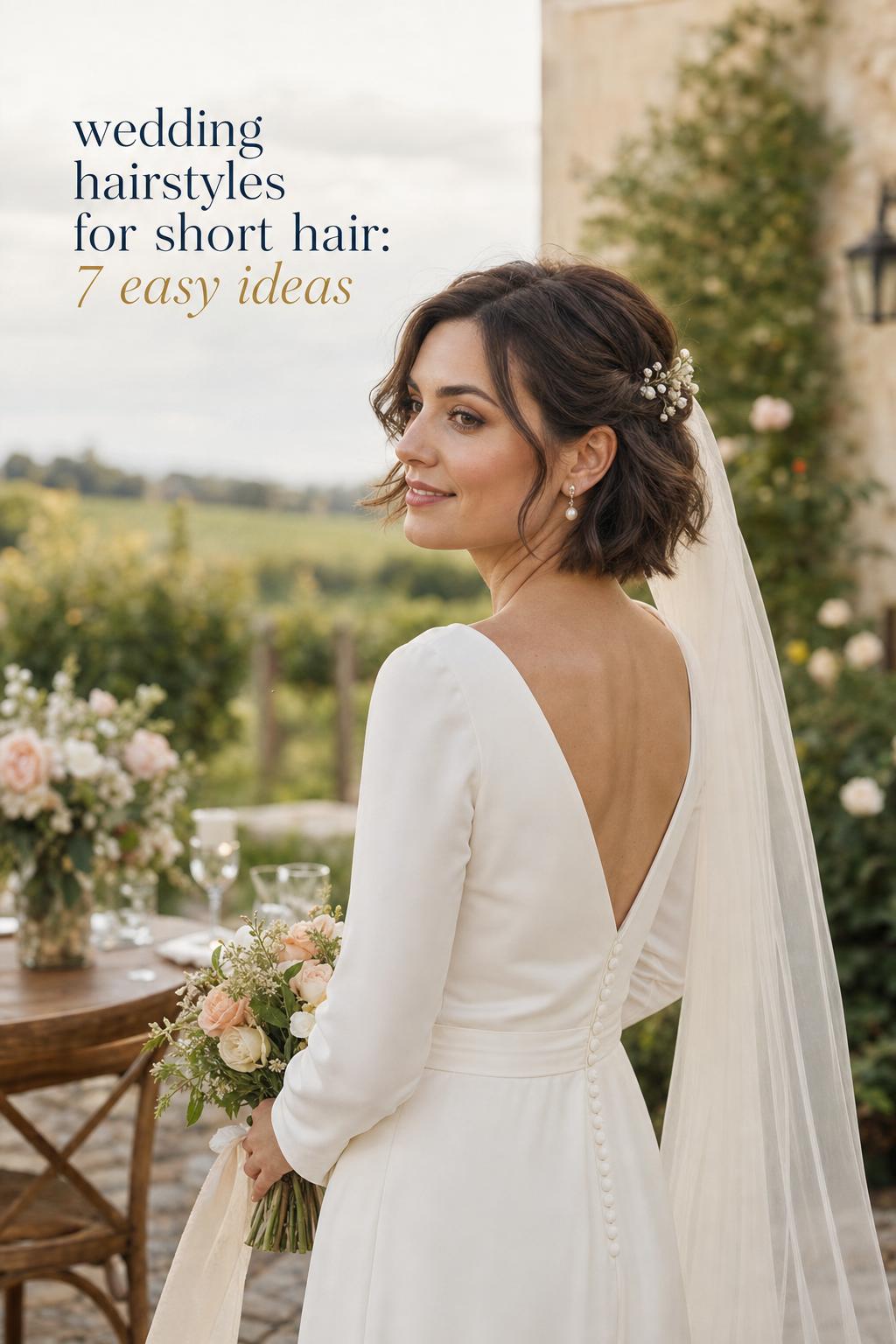
This guide breaks down those approaches clearly, so you can see how each one looks, where it works best, and what trade-offs come with it. Rather than treating short bridal hair as one category, it compares the leading short-hair aesthetics and explains how dress necklines, hair texture, wedding setting, and accessories shape the final result.
The short-hair bridal spectrum at a glance
Short bridal hair tends to fall into a few recurring style families. The first is sleek and sculpted, which includes polished buns, tucked styles, finger waves, and controlled side parts. The second is soft and textured, with waves, half-up styling, and airy movement. The third is accessory-driven, where the cut itself stays relatively simple and the visual statement comes from pins, combs, veils, crowns, flowers, or hair jewelry. A fourth category, especially important in the U.S. bridal market, is pixie-cut glam, where styling is focused less on gathering hair and more on surface finish, shape, and ornament.
Your wedding look is only the beginning.
Keep your guest list, vendors, timeline, and every important detail together with Zarellea — so your day feels as considered as your style.
These categories overlap, which is why they are often confused. A half-up bob can still feel vintage if styled with finger-wave influence. A pixie can feel romantic rather than sharp when paired with pearl-like or sparkling pins. A low bun on short hair can read modern or timeless depending on whether it is glossy and minimalist or softened with loose texture. Seeing those distinctions is often what makes a bridal hair decision easier.
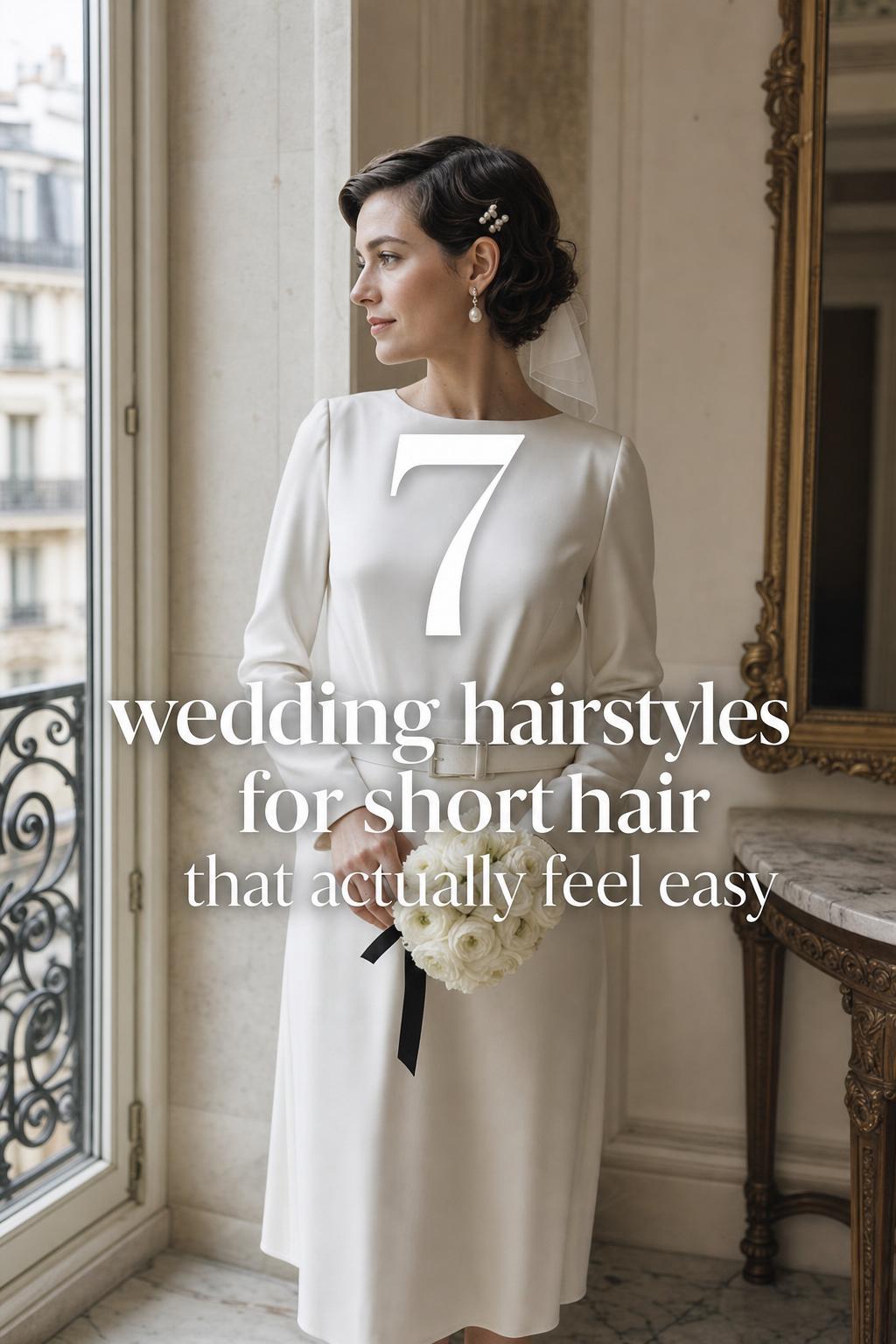
Style overview: sleek and sculpted short wedding hair
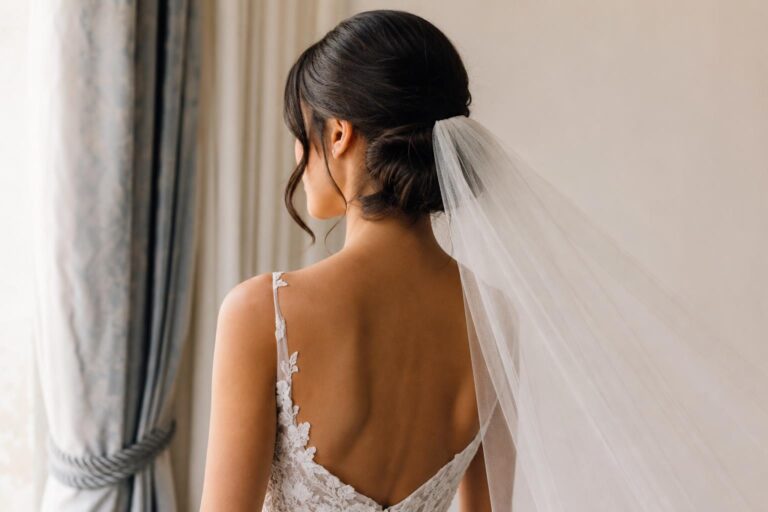
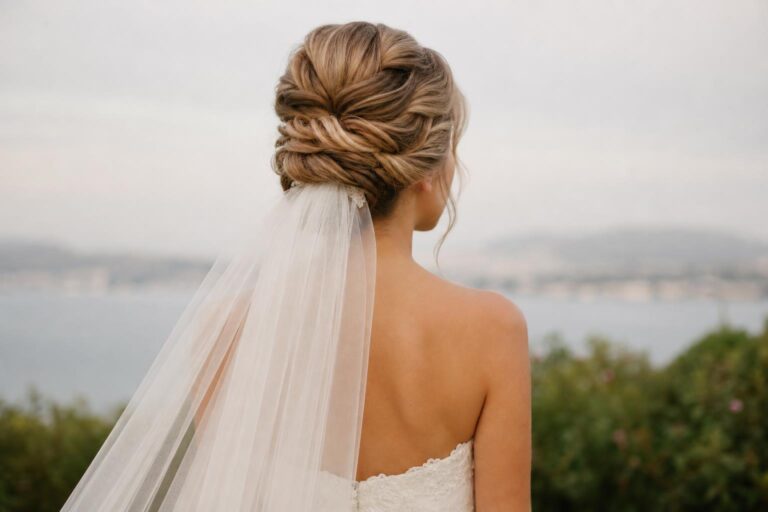
This is the most architectural family of short bridal hair. Its defining characteristics are polish, clean lines, controlled volume, and a deliberate silhouette. In practice, that can mean a sleek low bun for a short bob, a mini updo that sits close to the head, a deep side part, or finger waves with a refined finish. The aesthetic mood is formal, elegant, and often camera-ready in a very direct way.
Historically, this style family is closely tied to classic references such as Audrey Hepburn and Mia Farrow. Those names continue to appear because they represent two useful bridal ideas: precision and restraint. Even when updated for current bridal fashion, the underlying logic stays the same. The hair does not compete with the dress; it sharpens the overall line.
The typical silhouette is close to the head or neatly anchored at the nape. Texture is smooth rather than airy, and accessories are usually selected with care rather than abundance. A single sparkling pin, a sleek headband, or a veil placed cleanly behind the crown often works better here than multiple decorative elements.
Style overview: soft and textured short wedding hair
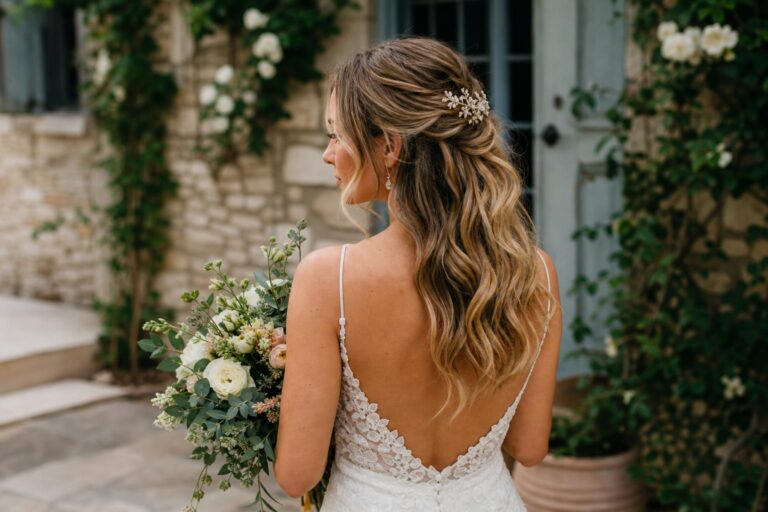
If sleek styles are about structure, soft styles are about movement. This family includes textured waves, half-up styling, loose twists, and small-volume updos that preserve softness around the face. The overall mood is romantic, lighter, and often more relaxed, though not necessarily casual. It suits brides who want their short hair to feel gentle and dimensional rather than sharply defined.
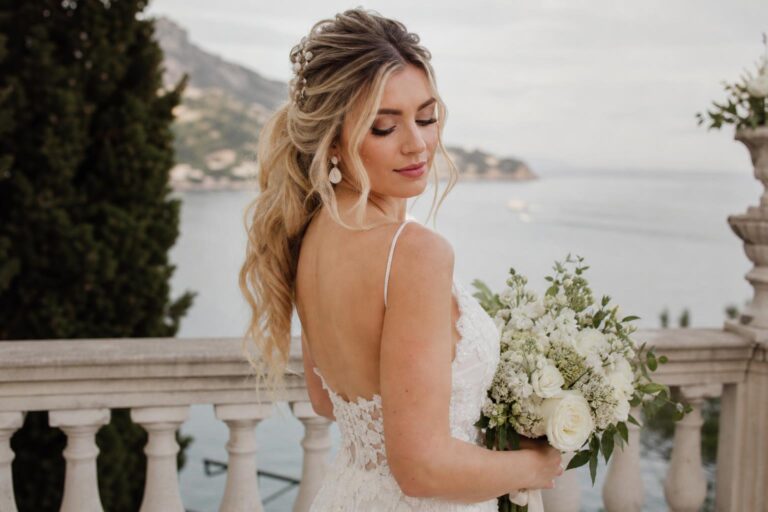
For a short bob, this is often the easiest way to create bridal softness without forcing the hair into a style it cannot comfortably hold. Half-up, half-down looks are especially important here because they offer lift and shape while keeping the length visible. On the wedding day, that balance can feel particularly flattering with textured fabrics such as lace or tulle, and in settings like a vineyard, garden ceremony, or golden-hour outdoor reception.
Accessories in this category tend to feel integrated rather than dominant. Small combs, delicate clips, floral accents, or a light veil can support the look without interrupting its softness. Compared with sculpted styles, the impression is less formal and more atmospheric, though it can still be polished enough for a ballroom or evening celebration when executed carefully.
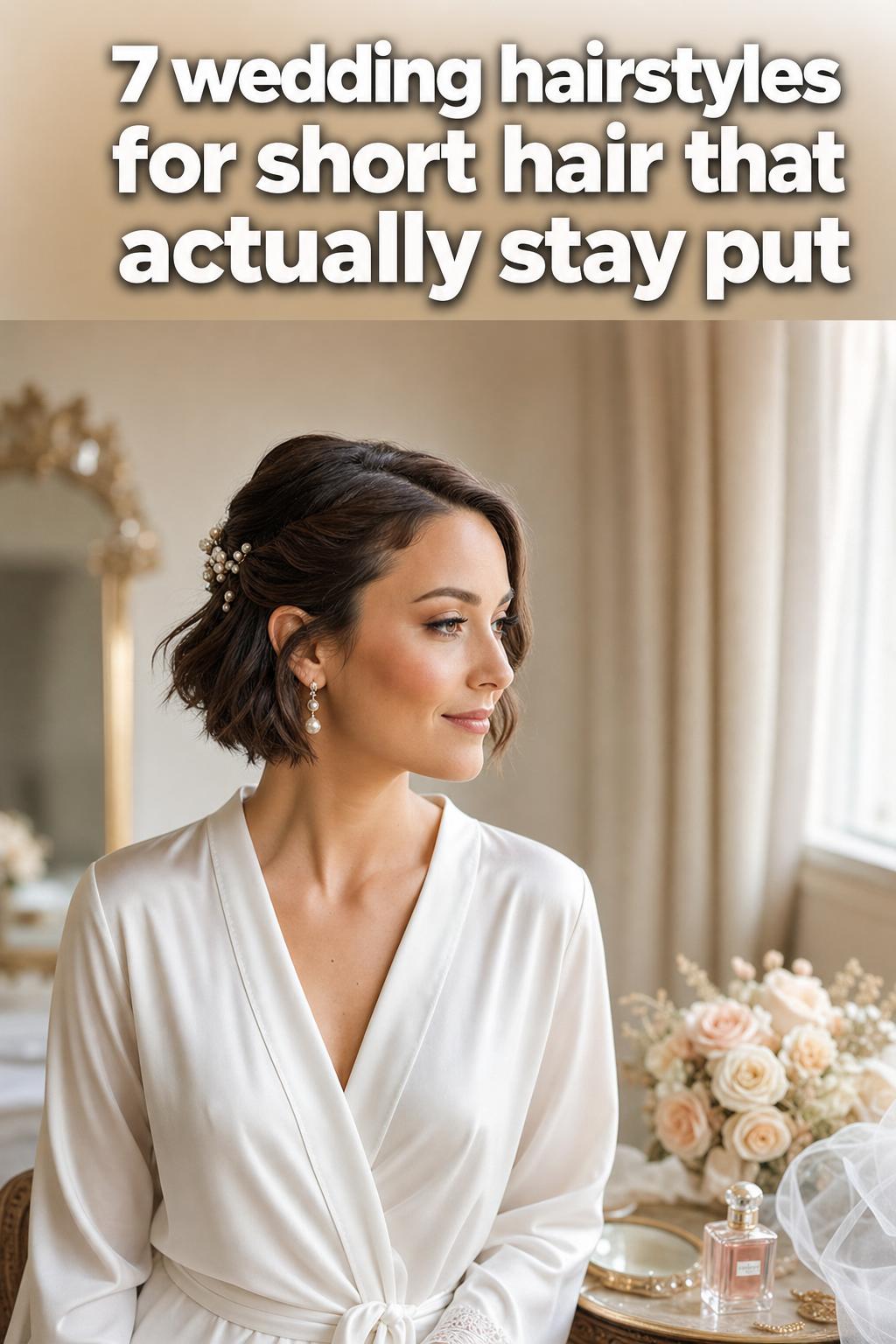
Style overview: accessory-led short wedding hair
This approach deserves its own category because many of the strongest short bridal looks rely on adornment. When hair is cropped or lightly layered, accessories do more than decorate; they create focal points, redirect the silhouette, and signal bridal intention. Zola, WeddingWire, Vogue, and other editorial bridal sources frequently return to this theme because short hair responds especially well to thoughtful placement.
The defining characteristics are simplicity in the base style and visual interest through detail. Hair may be softly waved, sleekly parted, half-up, or tucked back, but the finishing element does much of the storytelling. Combs, pins, headbands, veils, crowns, flowers, and hair jewelry all live in this space. The overall mood can range from minimalist to ornate depending on scale.
This family is often the smartest choice for brides who love their haircut as it is and do not want to force it into a new shape. Rather than asking a pixie or bob to imitate long hair, accessory-led styling allows short hair to look unmistakably bridal while staying true to its natural length and identity.
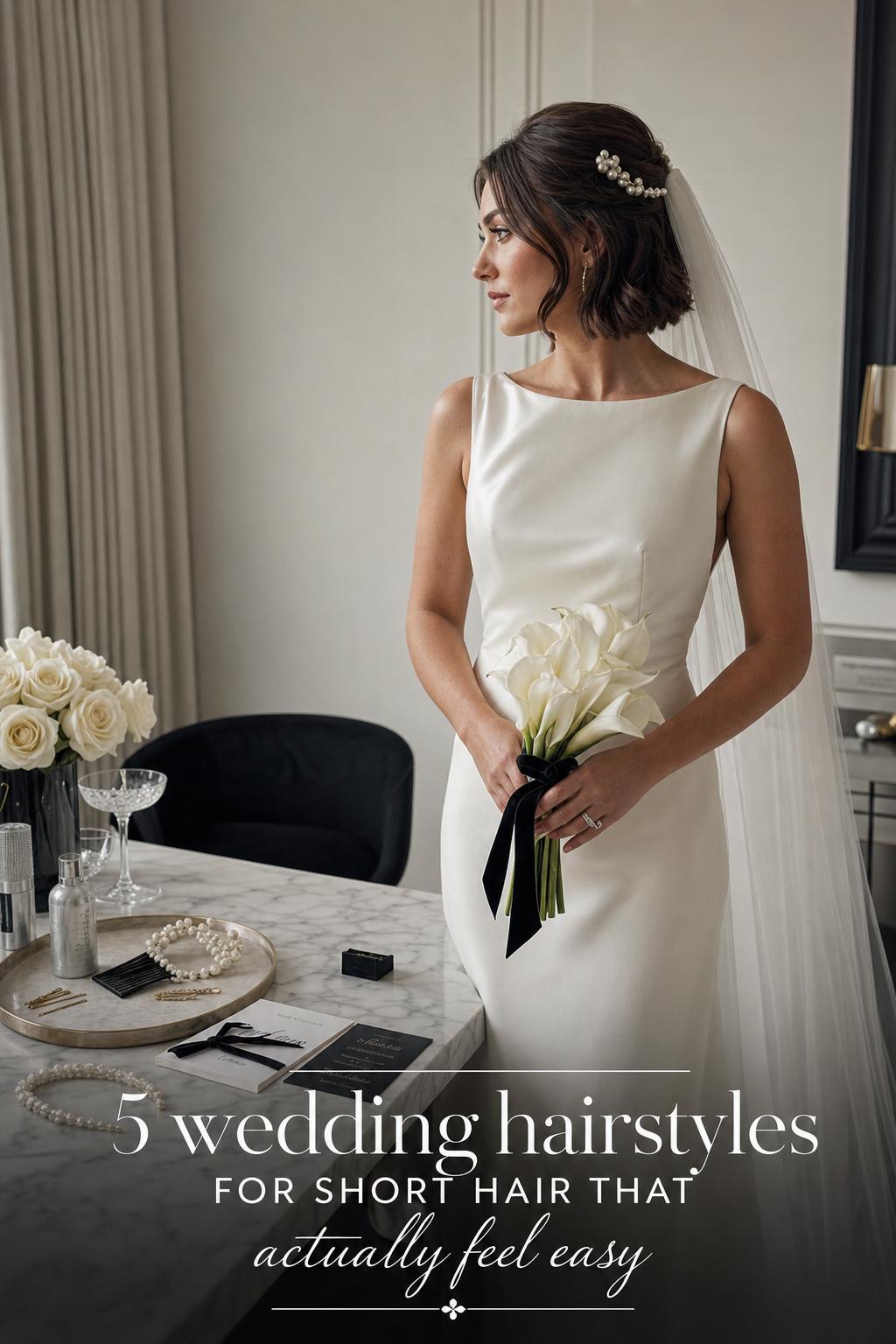
Style overview: pixie-cut glam versus bob-based styling
Among all wedding hairstyles for short hair, the difference between pixie styling and bob styling is one of the most important. They are often grouped together, but they behave very differently. A pixie relies on finish, shape, and embellishment. A bob offers more room for tucking, twisting, mini buns, and half-up structure. Comparing them directly helps narrow expectations.
Pixie-cut bridal hair is usually about emphasis: defined waves, soft curls, slicked-back glamour, a side-swept front section, or crystal and pearl-like accents placed with intention. Bob-based bridal hair is about options: low buns, mini updos, partial braids, waves, and accessory pairings that can change the mood from modern to vintage within minutes.
All Things Hair highlights the pixie category because it addresses a very specific bride: someone whose hair is truly cropped and who needs styling ideas that are realistic, not aspirational in the wrong way. That distinction matters. A cropped cut should not be compared against a chin-length bob as if they offer the same silhouette possibilities.
Where the styles part ways most clearly
The first major difference is silhouette. Sleek and sculpted styles create a clean outline and often expose the neck and jawline. Soft textured styles create width, movement, or gentle framing. Accessory-led looks can shift either way depending on the base style, but their defining feature is visual emphasis rather than shape alone.
The second difference is formality. Sculpted styles generally read more formal, especially for evening receptions, black-tie wedding settings, or dresses with strong structure. Soft styles feel more romantic and often more at ease in daylight ceremonies, garden venues, or destination celebrations. Accessory-led styles can move up or down in formality depending on whether the chosen piece is a simple comb, a headband, a crown, or a veil with more presence.
Another clear dividing line is styling philosophy. Some looks transform the hair itself through waves, twists, or tucked construction. Others let the haircut remain nearly unchanged and rely on finishing touches. Brides often discover that this is the real decision point: do you want your wedding hair to look like an elevated version of your everyday cut, or do you want it to feel noticeably reimagined?
- Sculpted styles prioritize line, shine, and control.
- Soft styles prioritize texture, movement, and romantic framing.
- Accessory-led styles prioritize detail, focal points, and bridal identity.
- Pixie styling prioritizes finish and placement.
- Bob styling prioritizes shape versatility and partial updos.
Sleek low bun versus textured mini updo
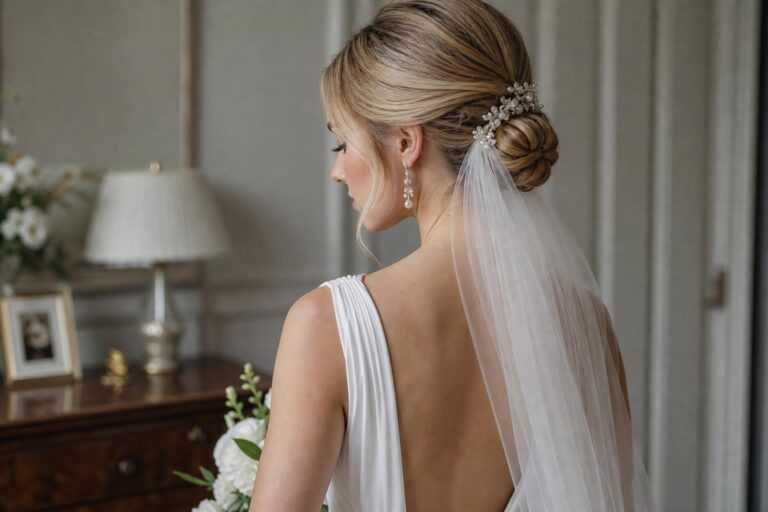
These two styles are frequently discussed together because both solve the same bridal problem for bobs and short cuts: how to create an updo effect without long lengths. Yet they create very different moods. The sleek low bun is refined, contained, and elegant in a way that suits satin, crepe, and clean dress lines. It works beautifully in candlelit receptions, city venues, and ceremonies where minimalism is part of the fashion story.
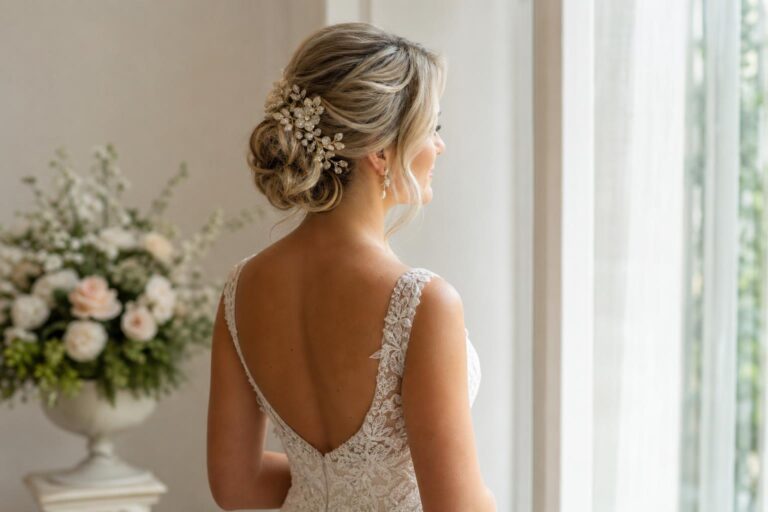
A textured mini updo keeps the same basic idea but softens the result. Instead of a polished finish, it introduces dimension through loose texture, gentle volume, or piecey detailing. This style tends to pair more naturally with lace, tulle, or floral settings because it feels less strict. For many brides, especially those who worry that sleek hair may look severe in photographs, the textured mini updo provides a more forgiving and romantic interpretation.
The trade-off is durability of impression rather than durability of hold. A sleek style tends to maintain its visual message from ceremony to reception with very little change. A textured style can feel more organic and atmospheric, but it may also shift more over the course of a long celebration. That is not necessarily a flaw. For some brides, a style that softens slightly by the dance floor feels exactly right.
Tips for choosing between the two
If your dress has a strong neckline or crisp tailoring, the sleek low bun usually reinforces that clarity. If your wedding setting leans romantic, playful, or outdoors, a textured mini updo often feels more in tune with the atmosphere. Hair texture matters as well: naturally smooth hair may support sleekness more easily, while textured or wave-prone hair often lends itself gracefully to a softer finish.
Half-up short hair versus fully pinned-back styling
Half-up styling has become one of the most useful formats for short bridal hair because it creates shape without requiring significant length. It allows a bride to keep the essential identity of a bob or cropped cut while still adding a ceremonial quality. The effect is especially appealing in daylight: soft waves catching golden-hour light, a small comb secured at the back, and enough movement left around the face to keep the look youthful and easy.
Fully pinned-back styling, by contrast, is more intentional and often more formal. Whether the hair is tucked, twisted, or clipped away from the face, the result places emphasis on earrings, neckline, and facial structure. This can be ideal for a halter or bateau neckline, where too much side volume may compete with the upper line of the dress.
The visual difference in real life is balance. Half-up styles preserve horizontal softness. Fully pinned-back styles create vertical clarity. One feels more open and flowing; the other feels more edited. Neither is universally better. The right choice depends on whether the bride wants her hairstyle to frame her features or reveal them fully.
Vintage-inspired short hair versus modern bridal minimalism
This is one of the most elegant comparisons in bridal beauty because the same haircut can move between both aesthetics. Vintage-inspired short hair draws on classic references such as Audrey Hepburn and Mia Farrow, with finger waves, smooth shaping, retro side parts, and accessories that nod to old-Hollywood or mid-century refinement. The mood is timeless, polished, and slightly cinematic.
Modern bridal minimalism uses many of the same foundational techniques but strips away overt references. A short bob may be sleekly tucked with only a single pin. A pixie may be shaped cleanly with little more than shine and a veil. Instead of looking back, the style prioritizes clean restraint. This approach has become especially relevant in editorial bridal fashion because it complements contemporary gowns without overcomplicating the beauty direction.
Visually, the difference often comes down to styling cues. Finger waves and overt retro structure immediately signal vintage influence. A central or precise side part with a smooth surface and minimal accessories signals modern simplicity. Brides who love both can blend them carefully: a classic wave pattern with understated embellishment, for example, creates a bridge between eras.
The accessory question: subtle detail or statement finish
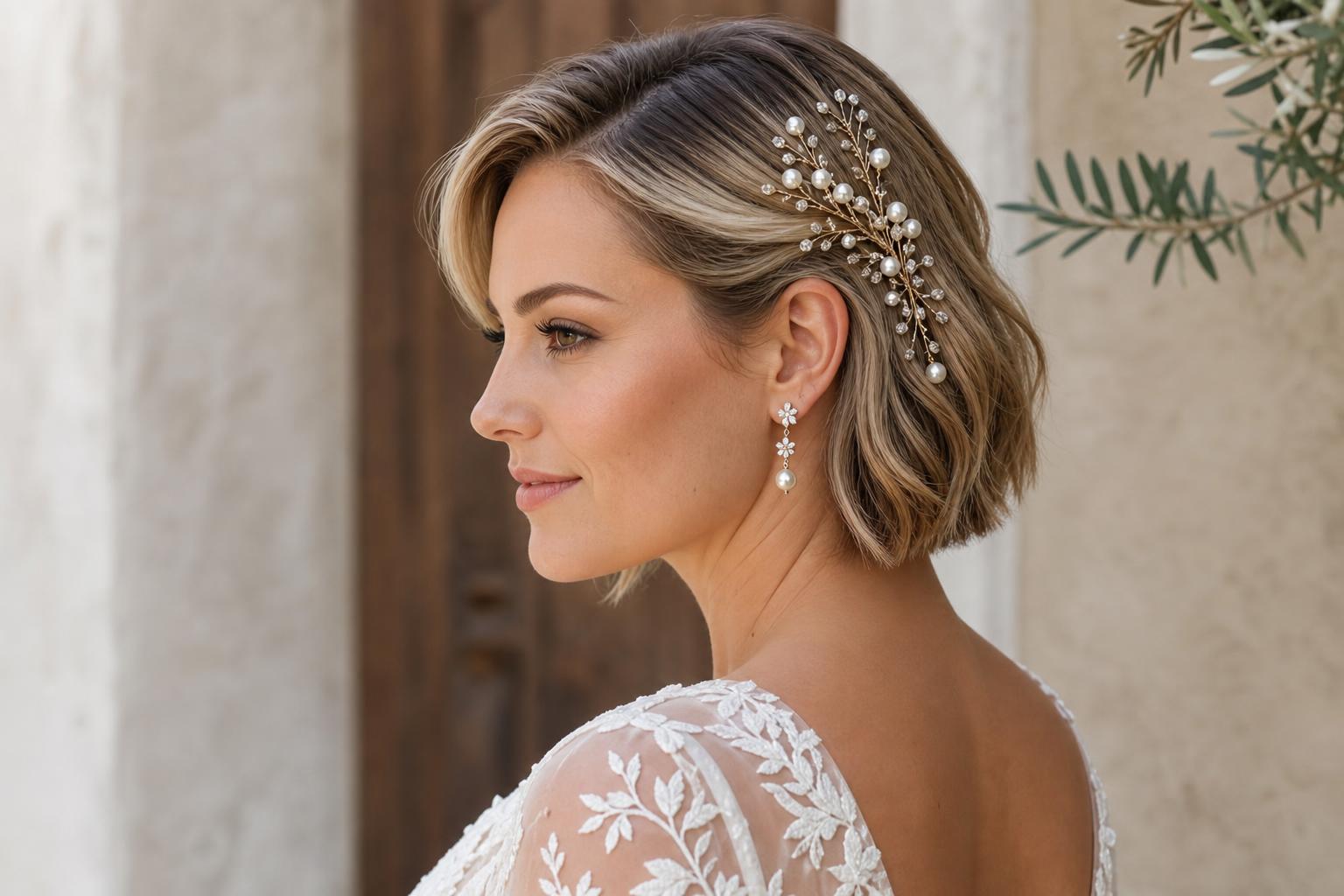
Accessories transform short hair more dramatically than many brides expect. On long hair, a pin may disappear into volume. On short hair, placement is visible and often architectural. That is why accessories deserve a comparison of their own. A few crystal-like pins at the side create sparkle without changing the silhouette much. A comb can direct attention backward and create a bridal anchor point. A headband frames the face more decisively. A veil changes the entire ceremony mood.
Statement accessories work best when the haircut or styling base remains disciplined. If the hair is highly textured and the accessory is equally ornate, the look can lose definition. By contrast, subtle accessories can disappear if the hairstyle itself is the main feature. The most successful pairings are usually balanced rather than maximal. Short hair rewards editing.
- Pins and clips suit pixies, bobs, and side-parted styles where placement can be seen clearly.
- Combs work well with half-up looks, mini updos, and tucked bobs.
- Headbands complement sleek, vintage, or minimalist aesthetics.
- Veils pair especially well with cleanly secured styles that provide a stable base.
- Flowers and crowns add softness and are often strongest with textured waves or romantic half-up hair.
Tips for making accessories look intentional
Choose one visual leader. If the veil is dramatic, keep the pins restrained. If the headband is the statement, let the styling beneath it stay clean. Brides with short hair often get the most polished result when accessories are placed to support the haircut’s existing line instead of fighting it. A side clip that follows the arc of a pixie fringe or a comb that sits naturally at the back of a bob usually reads more elegant than forcing decoration into an awkward angle.
Pixie-cut wedding hairstyles compared
Pixie bridal styling tends to separate into three clear directions: polished and sleek, softly waved, or ornamented. The polished version is the most minimalist. It focuses on shape, shine, and confidence, often paired with a veil, earrings, or a refined headpiece. This style is especially strong in city weddings, modern venues, and dresses with sculptural silhouettes.
The softly waved pixie introduces romance without requiring length. This can feel particularly effective for brides who want a more expressive surface texture in photos. Rather than transforming the haircut into something else, it gives the pixie movement and a softer bridal finish. In daylight and outdoor settings, that touch of texture can keep the look from feeling too sharp.
The ornamented pixie relies on clips, pins, combs, or small jewelry-like details. This is often the most practical path when the bride loves her cut exactly as it is. It also solves a common concern: how to make very short hair feel wedding-specific. The answer is usually not more structure, but more thoughtful decoration.
Bob-length wedding hairstyles compared
A bob offers the broadest styling range within short bridal hair. It can become a sleek low bun, a mini updo, a half-up style, a waved romantic look, or a tucked accessory-focused style. The comparison here is less about whether the bob can do enough and more about what visual direction best serves the dress and venue.
A sleek bob with tucked ends and a comb can feel polished and contemporary. A waved bob with soft texture and floral accents can feel lighter and more playful. A half-up bob often strikes the most universal balance, especially for brides who want softness without sacrificing structure. Braided accents and twists work best when used sparingly, as details rather than full constructions, because they preserve proportion on shorter lengths.
One of the strengths of bob-based wedding styling is that it can support both editorial and traditional bridal moods. It can look at home at a formal evening reception, then just as convincing at a countryside ceremony with flowers and a veil. That range is why so many wedding magazines treat the bob as the hero length within short bridal hair.
Dress necklines change the entire hairstyle conversation
Many short-hair decisions become much clearer once the neckline is considered. This area is still under-discussed in bridal hair advice, yet it affects visual balance more than many brides realize. A hairstyle does not exist separately from the gown. It sits directly above the dress line, and together they create the full portrait.
Strapless and sweetheart necklines often welcome softness because there is open space through the shoulders and collarbone. A waved bob, half-up style, or textured mini updo can fill that visual openness beautifully. Bateau and halter necklines usually benefit from cleaner styling because the dress already occupies more of the upper frame. Here, a sleek tucked style, mini bun, or pixie with polished shape often reads more balanced.
With heavily detailed gowns, especially those with lace or ornate embellishment, simpler hair can be a wise editorial choice. With minimalist gowns, the hair and accessories may carry more of the expressive work. This is not a rule, but it is a useful styling principle. Short hair becomes most powerful when it answers the dress rather than competing with it.
A practical neckline guide
- Strapless: soft waves, half-up hair, or a textured updo can add balance.
- Sweetheart: romantic movement and delicate accessories often feel natural.
- Bateau: sleek tucks, polished pixies, and restrained adornment keep the line elegant.
- Halter: pinned-back or sculpted styles prevent visual crowding near the neck.
How these styles read at different wedding settings
Venue atmosphere quietly changes what feels right. At a garden ceremony, soft waves, half-up texture, and floral or delicate accessory choices often feel harmonious because the environment already suggests ease and movement. In a vineyard or countryside setting, a slightly undone bob or textured mini updo can feel romantic without looking casual. Short hair does not need to become overly formal to look bridal there.
For a ballroom reception or evening city wedding, sleek styles often become more compelling. A polished low bun, sculpted pixie, or sharp side part works well under lower light and alongside richer fabrics. The clean finish tends to read strongly in photographs and complements a more formal mood.
Destination and beach celebrations often favor lighter styling logic. That does not necessarily mean loose hair, but it does suggest choosing looks that can tolerate movement and still feel beautiful. A soft half-up style or accessory-led short cut often makes more sense than a heavily controlled shape if the celebration has an airy, sunlit atmosphere.
Braids, twists, and small details: where they fit and where they do not
Braided accents are one of the more fashion-forward options within short bridal hair, especially as trend-focused bridal publications continue to feature them. Their strength lies in detail. A small braid at the hairline, a twisted section feeding into a mini updo, or a delicate braided accent within a half-up style can introduce intricacy without overwhelming the cut.
Where they often fall short is scale. On short hair, too much braiding can look dense or visually busy, particularly if paired with a detailed dress or statement accessory. The most successful use of braids on shorter lengths tends to be editorially restrained. Think accent, not dominance.
Twists can be even more adaptable because they mimic the softness of a braid without requiring the same visible structure. For brides who want romantic detail but not overt trendiness, twists often offer the cleaner solution.
The product-and-finish difference brides feel on the day
Bridal hair decisions are not only visual. They affect how the style feels during a long celebration. Brand-led editorial sources such as L’Oréal Paris USA and Schwarzkopf reinforce an important point: product category matters, even when the article is inspiration-first. Hold, texture, and finish are not abstract concerns for short hair. They determine whether a sleek look remains sleek or whether a soft look still reads intentional by the reception.
Short hair tends to show surface changes quickly. A bit too much texture product can make a refined style feel heavy. Too little hold can leave a mini updo looking incomplete. This is one reason brides with short cuts often benefit from deciding early whether the desired finish is glossy, airy, defined, or piecey. Each choice implies a different product family and technique, even if the exact brand varies between L’Oréal Paris, Schwarzkopf, or editorially recommended categories such as mousse, hairspray, and texturizing products.
The practical takeaway is simple: choose a style whose finish suits both your hair type and the wedding timeline. A look that photographs beautifully for one hour but feels unstable over eight can become distracting. Bridal elegance is not just appearance; it is ease across the whole event.
Tips for trial-day thinking
At a hair trial, pay attention to more than the front view. Move, sit, and turn your head. Notice whether the accessory placement stays comfortable and whether the style still feels balanced with the neckline. Short-hair bridal styling is often won or lost in profile and three-quarter angles, because that is where pins, tucks, and wave shape become visible.
Visual breakdown in real outfits and real wedding moments
Imagine the same bride in two wedding scenarios. At a candlelit evening reception in a clean satin gown, a sleek short bun with a precise part and one crystal-like pin creates a controlled line from hair to neckline. The whole look feels intentional, grown-up, and polished. Change only the hairstyle to a soft waved half-up bob with floral accents, and the mood becomes more romantic, more open, and less formal even though the dress has not changed.
Now picture a garden ceremony at golden hour. A pixie styled smooth with a statement headband can look fashion-forward and striking, especially if the dress itself is simple. The same setting with a softly textured pixie and a light veil feels gentler and more classic. The haircut is identical, but the styling philosophy shifts the emotional tone.
This is where short bridal hair becomes especially expressive. Because there is less length to distract from shape, every choice shows: wave versus tuck, comb versus headband, sleek finish versus textured finish. In practical terms, short hair is not limiting. It is revealing.
Styled comparisons for common bridal scenarios
For a formal evening reception
A sculpted approach usually has the advantage here. A sleek low bun on a bob or a polished pixie with a controlled side part mirrors the sophistication of a ballroom or city venue. A soft textured style can still work, but it should be refined enough that it does not disappear against richer fabrics or evening lighting. In this context, a single comb or subtle pins often feel more elevated than floral accessories.
For a garden or vineyard ceremony
Softness tends to feel more natural in these settings. Waves, half-up styling, or a lightly textured mini updo move well with daylight and outdoor scenery. That said, a minimalist bride may still prefer a sleek style; in that case, a softer accessory such as a delicate veil or understated clip can prevent the look from feeling too severe against a romantic landscape.
For a bride wearing a very simple gown
Hair and accessories can carry more of the expression. This is often where vintage finger-wave influence, a stronger headband, or a more decorative comb becomes compelling. A pared-back gown leaves room for the short hairstyle to speak more clearly, whether through structure or embellishment.
For a bride wearing a detailed lace dress
Editing matters. Soft hair may echo lace beautifully, but it should not become visually crowded. Often, a simpler wave pattern or a restrained tucked style with one accessory works better than layering braids, flowers, and jewelry all at once. With short hair especially, elegance often comes from what is left out.
When to choose each short-hair bridal direction
Choose sleek and sculpted styling when the wedding mood is formal, the gown has strong lines, or you want a look that feels timeless and precise from first look to final dance. This route also suits brides who prefer a cleaner beauty aesthetic in everyday life and want the wedding version to feel elevated rather than transformed.
Choose soft and textured styling when romance, movement, and ease are part of the wedding atmosphere. It is especially useful for outdoor venues, for dresses with softer fabrics, and for brides who want to feel recognizably themselves with a touch more dimension. It can also be a flattering choice when the goal is gentle facial framing.
Choose accessory-led styling when your haircut is the point and you do not want to reshape it dramatically. This approach is particularly effective for pixies and very short cuts, where the right veil, pins, comb, or headband can make the look feel fully bridal without overworking the hair.
Choose bob-based half-up or mini-updo styling when you want flexibility. It often offers the most balanced middle ground: enough structure for formality, enough softness for romance, and enough visibility of the haircut to keep the style personal.
A final editorial note on short bridal hair
The central distinction in short bridal hair is not between “simple” and “special.” It is between styling philosophies. Some looks celebrate line. Others celebrate texture. Some rely on history, drawing subtly from icons such as Audrey Hepburn and Mia Farrow. Others feel modern through restraint. Accessories may whisper or they may define the entire mood.
Once you learn to identify those differences, wedding hairstyles for short hair become much easier to navigate. A pixie is not a bob, a sleek bun is not a soft mini updo, and a comb-led look is not the same as a veil-led one, even if all of them are bridal. The most memorable results often come from combining elements thoughtfully: modern polish with a romantic accessory, vintage shape with minimalist finishing, or soft texture with disciplined placement.
Short hair does not ask for compromise. It asks for clarity. And on a wedding day, clarity often looks like the most elegant choice of all.
FAQ
what is the best wedding hairstyle for a short bob?
The best style for a short bob depends on the dress, venue, and finish you prefer, but the most versatile options are a sleek low bun, a textured mini updo, soft waves, or a half-up style. A bob works especially well when the hairstyle preserves the cut’s shape while adding a more bridal finish through tucking, texture, or accessories.
can a pixie cut look bridal enough for a wedding?
Yes, a pixie cut can look distinctly bridal through surface styling and accessory placement rather than length-based construction. A polished shape, soft waves, a side-swept finish, or the addition of pins, a comb, a headband, or a veil can give a pixie a wedding-day presence without forcing it into a style that does not suit the cut.
how do i choose between sleek and textured wedding hair for short hair?
Sleek styles usually suit formal settings, strong necklines, and minimalist gowns, while textured styles often feel more romantic and natural with softer fabrics or outdoor venues. The choice also depends on whether you want your hairstyle to look precise and controlled or softer and more atmospheric throughout the day.
do veils work with short wedding hair?
Veils can work beautifully with short wedding hair, especially when the hairstyle has a secure area for placement such as a tucked bob, a mini updo, a sleek crown section, or a polished pixie with controlled shape. The cleanest results usually come when the veil is paired with a style that already feels intentional on its own.
what accessories work best for wedding hairstyles for short hair?
Pins, clips, combs, headbands, veils, crowns, flowers, and delicate hair jewelry all work well, but scale and placement matter more on short hair than on long hair. Smaller, well-positioned pieces often look more elegant than too many competing accessories, especially when they follow the haircut’s natural line.
are half-up styles possible on short hair for a wedding?
Yes, half-up styling is one of the strongest options for short bridal hair, particularly for bobs and slightly longer cropped cuts. It offers a balanced look by adding shape and lift while keeping visible length and softness, which is why it appears so often in bridal inspiration galleries.
how should dress necklines influence short bridal hair?
Open necklines such as strapless and sweetheart often pair well with softness and movement, while higher or more structured necklines like bateau or halter usually benefit from cleaner, pinned-back, or sculpted hair. The goal is to create balance between the upper line of the gown and the silhouette of the hairstyle.
when should i do a hair trial for short wedding hair?
A hair trial is especially useful for short hair because the details of placement, proportion, and finish are so visible. During the trial, it helps to test the hairstyle with your planned accessory and consider how it looks from the front, side, and back, since short bridal styles often rely on subtle shaping rather than dramatic length.