White Flower Girl Dresses for a Timeless Wedding Mood
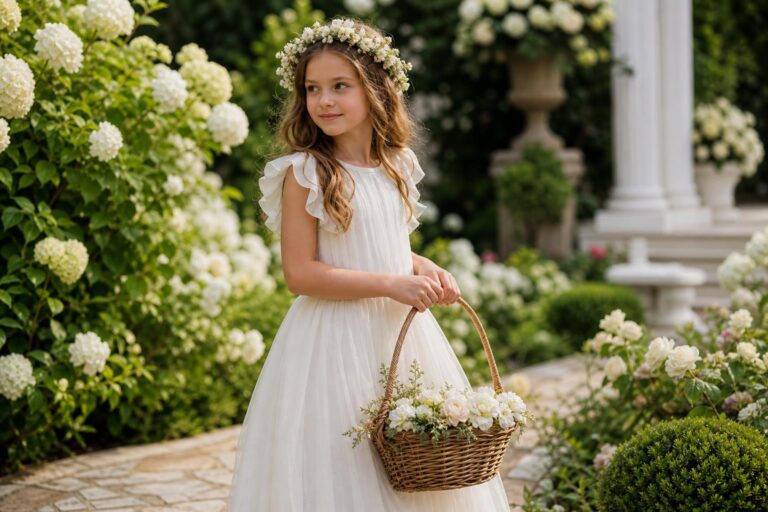
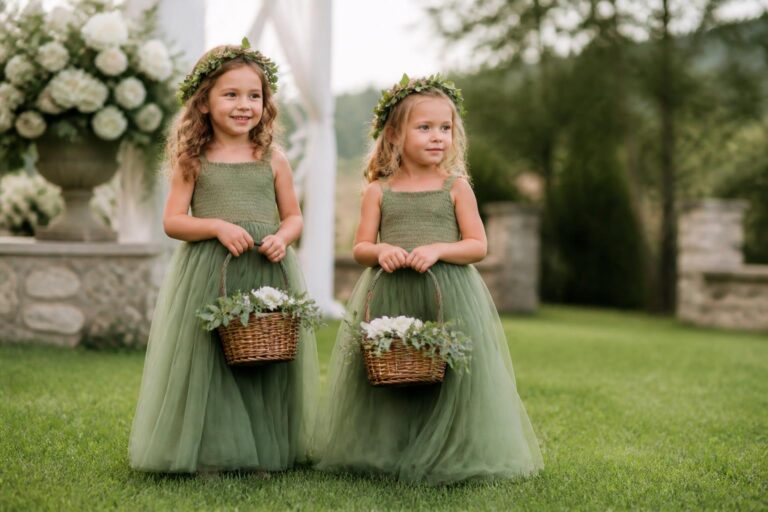
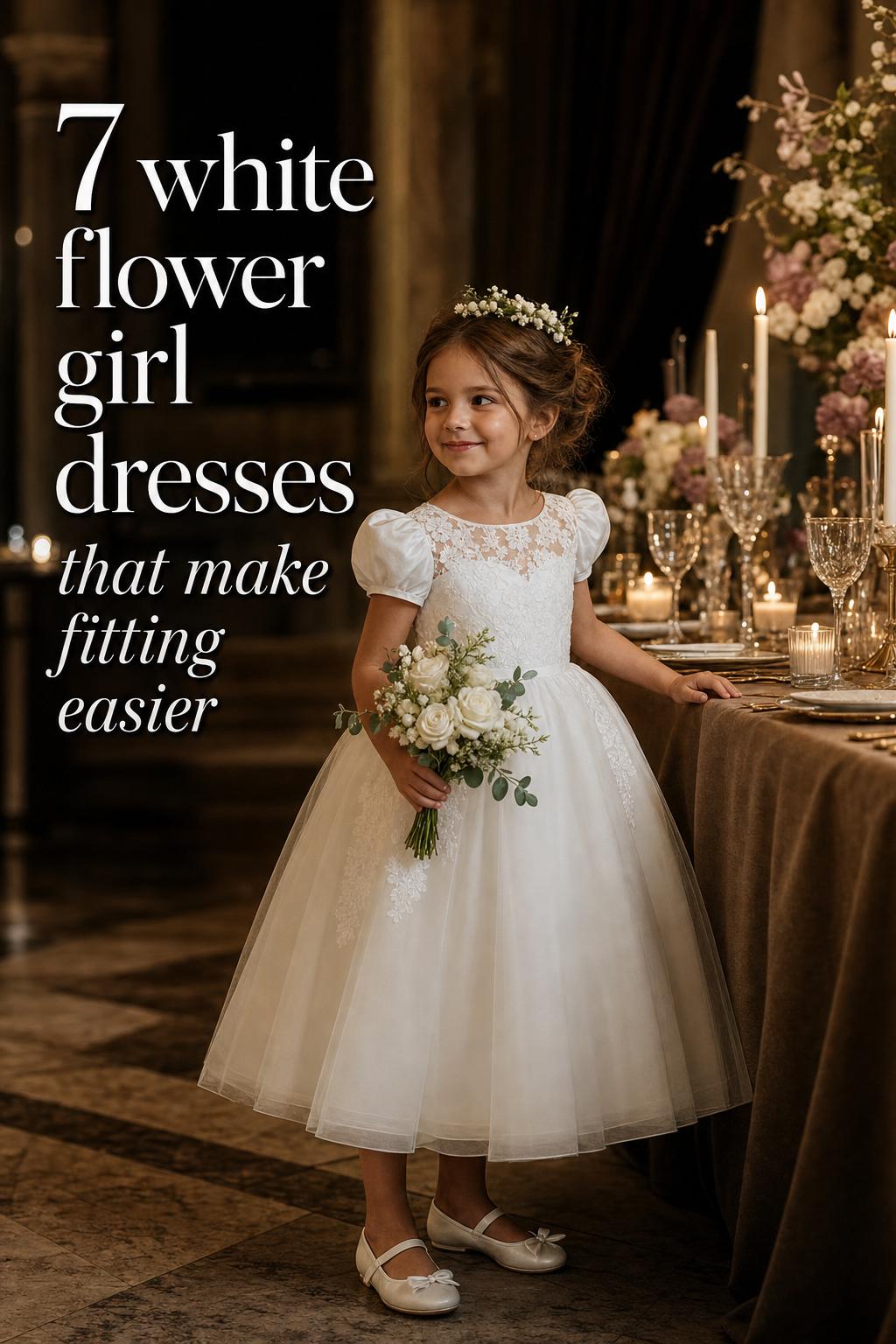
There is a particular kind of charm to white flower girl dresses that never feels overstated. In the soft light of a garden ceremony, under the glow of a candlelit reception, or against the clean formality of a ballroom aisle, the look carries a quiet romance. White reads classic, but it can also feel playful, airy, and modern depending on the silhouette, the fabric, and the finishing details.
The appeal lies in that balance. A flower girl dress is part of the wedding story, yet it should still allow ease of movement, comfort, and a childlike sense of delight. Twirl-worthy skirts, puff sleeves, satin sheen, lace texture, and tea-length proportions all shape the mood in different ways. Some families prefer a polished knee-length satin dress, while others are drawn to softer tulle overlays or a lace bodice with an ivory-leaning finish.
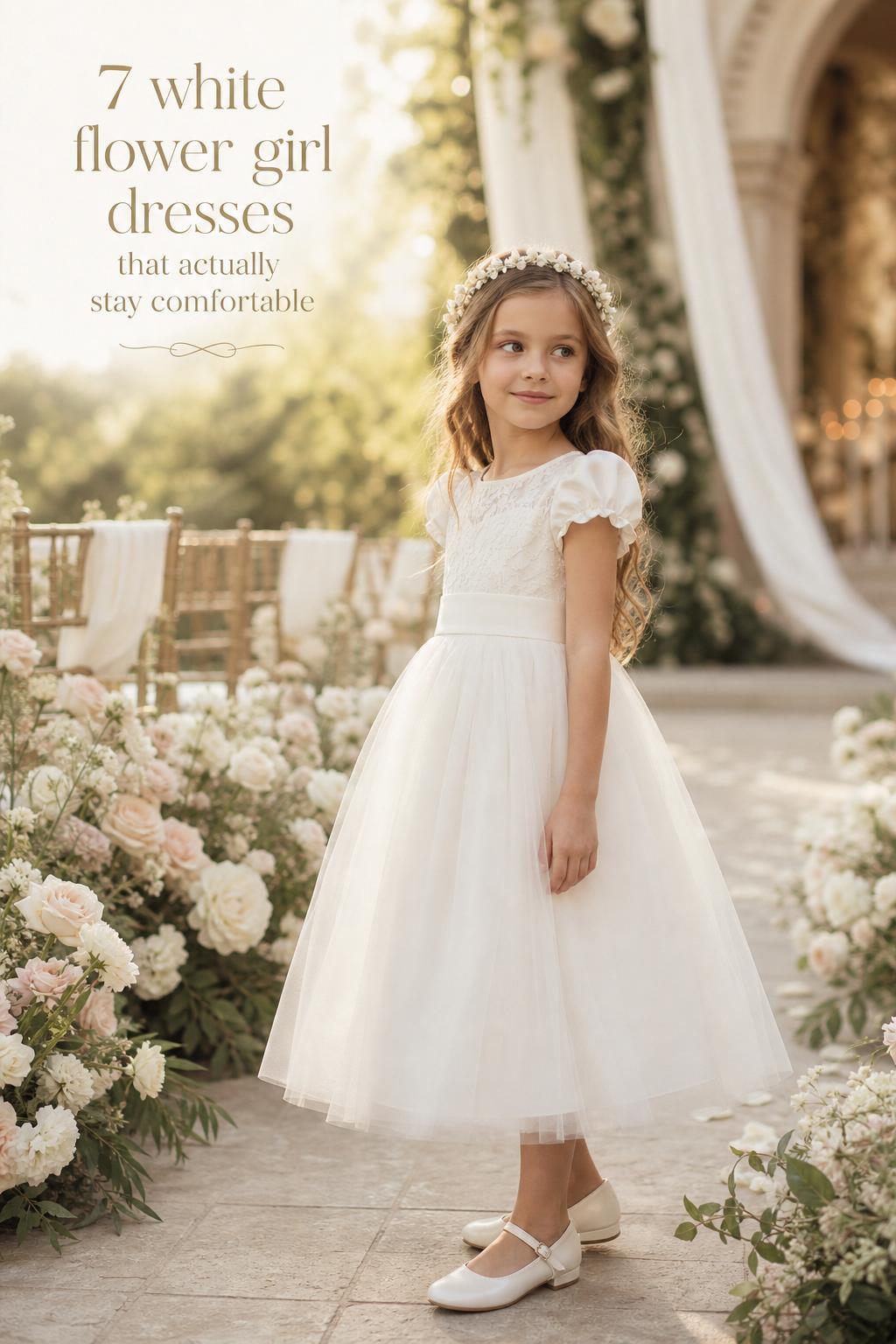
Because white flower girl dresses sit at the intersection of style and occasion, choosing well is less about chasing a single formula and more about creating a cohesive visual moment. The most successful choices consider the wedding setting, how long the day will be, whether the child will be walking, sitting, dancing, or posing for photos, and how the dress relates to the broader bridal palette. That is why this category remains so popular: it feels timeless, but it still leaves room for personality.
The visual language of white flower girl dresses
A white flower girl dress is defined less by one exact shape than by a recognizable aesthetic. The overall mood is delicate and ceremonial, with design elements that often include satin, puff sleeves, pleating, lace, tulle, or a gently structured skirt. Even a relatively simple style can feel special when the proportions are thoughtful and the finish is refined.
Your wedding look is only the beginning.
Keep your guest list, vendors, timeline, and every important detail together with Zarellea — so your day feels as considered as your style.
Among the clearest examples of this mood is the Birdy Grey peony flower girl dress, a knee-length satin design with puff sleeves and a pleated skirt. That combination illustrates many of the details families respond to: a silhouette that feels polished for a wedding, enough volume to create movement, and practical structure that does not overwhelm a smaller frame. It is romantic, but still easy to understand at a glance.
Part of the style conversation also comes down to white versus ivory. Both sit within the same bridal family, yet they can create a slightly different impression in photos and alongside the wedding wardrobe. White can look crisp and classic, while ivory often softens the palette. Neither is universally better; the right choice depends on the atmosphere of the event and how closely the family wants the flower girl look to align with the bridal styling.
Look: satin innocence for the formal aisle
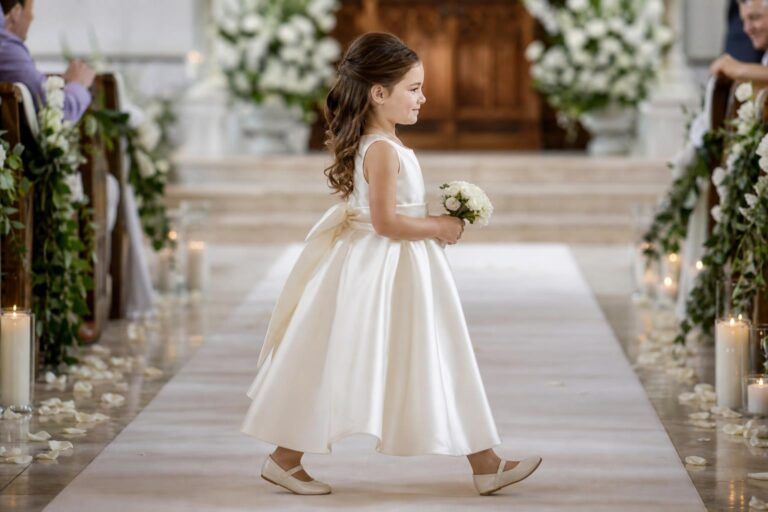
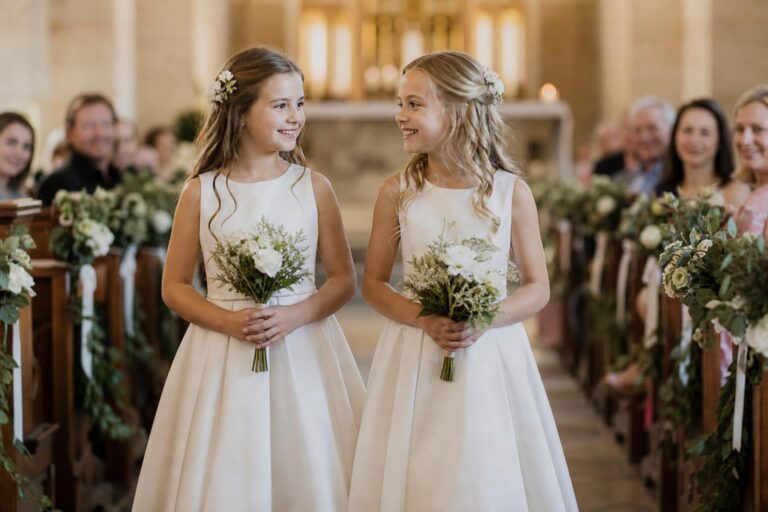
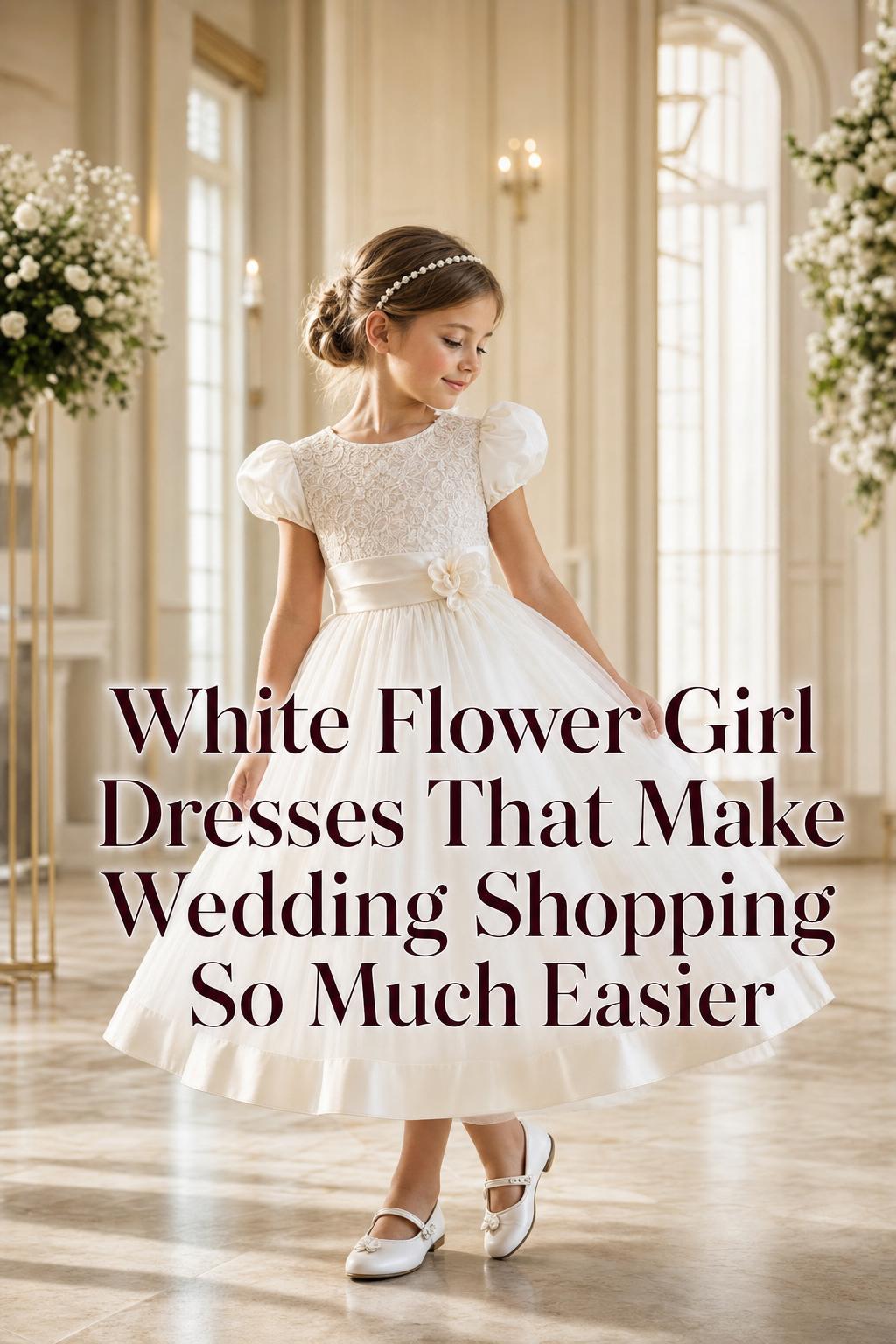
For a traditional ceremony, the most enduring interpretation is a satin-led silhouette with gentle structure and clear lines. This is the look that feels especially natural in a church wedding, a formal indoor venue, or a classic ballroom where polished textures matter. The mood is composed and graceful, with just enough shine to catch the light as the flower girl walks down the aisle.
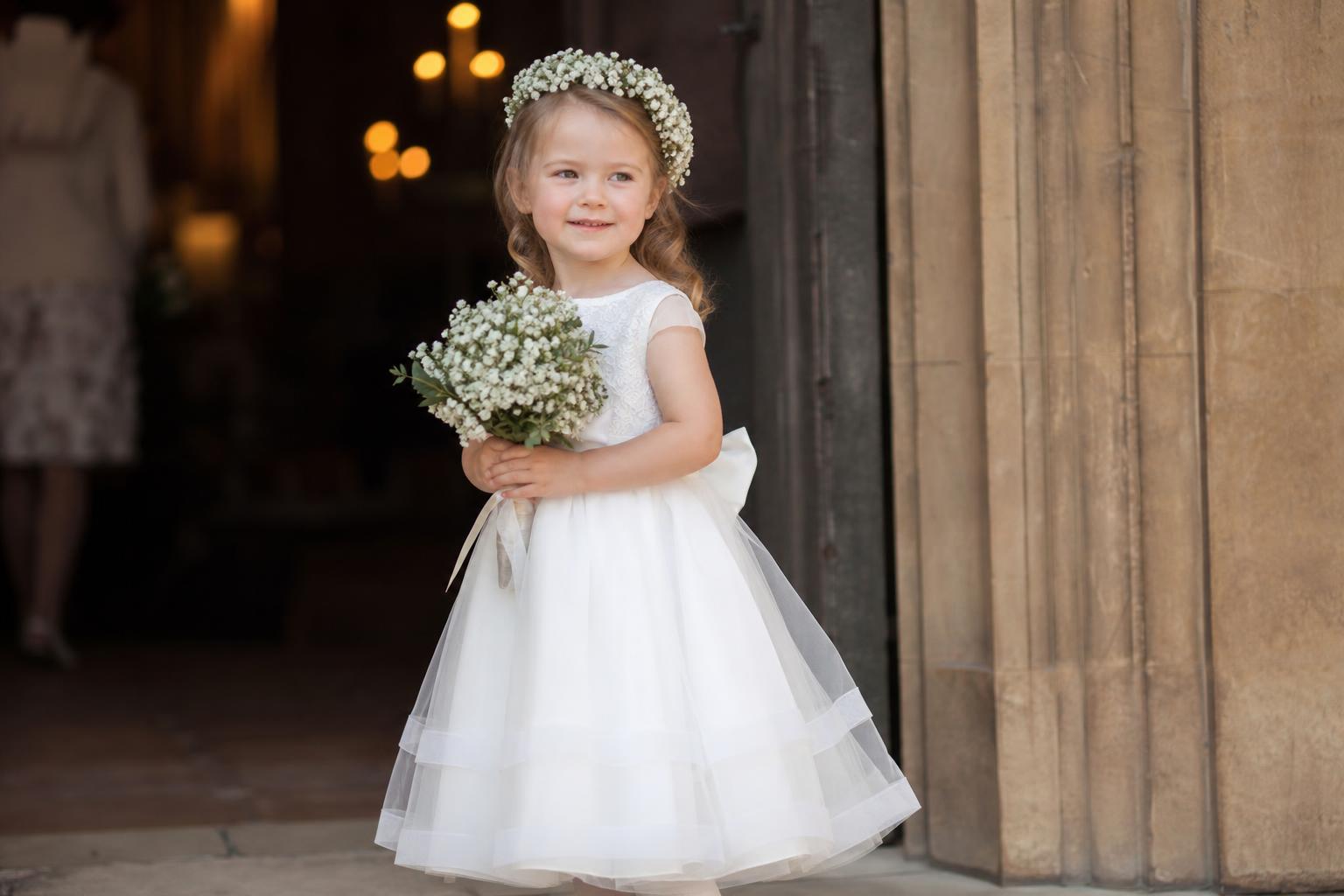
A knee-length satin dress with puff sleeves and a pleated skirt creates that effect beautifully. The shorter length keeps the silhouette youthful and easier to move in, while the satin finish adds occasion-worthy depth. Details such as a back belt or defined waist help the dress hold its shape without making it feel stiff. A white flower girl dress in this category often works best when the styling stays clean rather than overly embellished.
- Key garments: knee-length satin dress, puff sleeves, pleated skirt
- Footwear: simple dress shoes chosen with comfort in mind for a long ceremony and reception
- Accessories: a restrained sash, a small headband, or soft florals
This aesthetic works because it honors the ceremony first. It looks appropriate in formal wedding photography, coordinates easily with a bridal party, and still gives the child enough room to move. For families who want a polished answer to the question of what a flower girl should wear, satin remains one of the clearest and most dependable choices.
Look: soft tulle romance for garden light
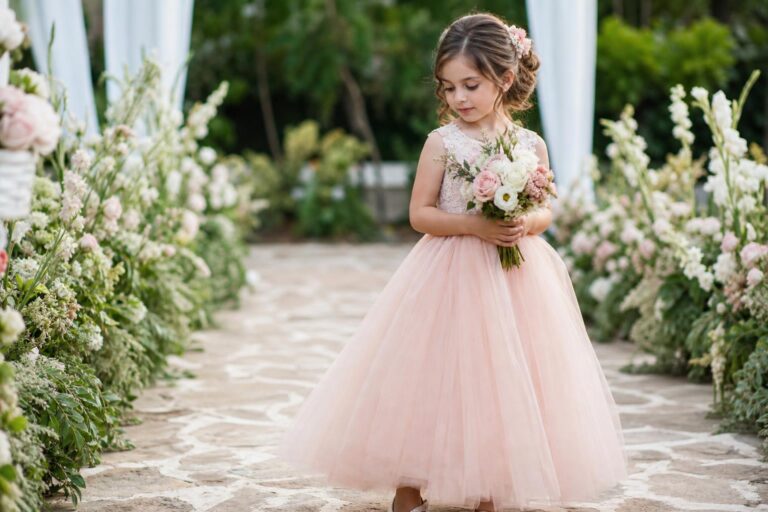
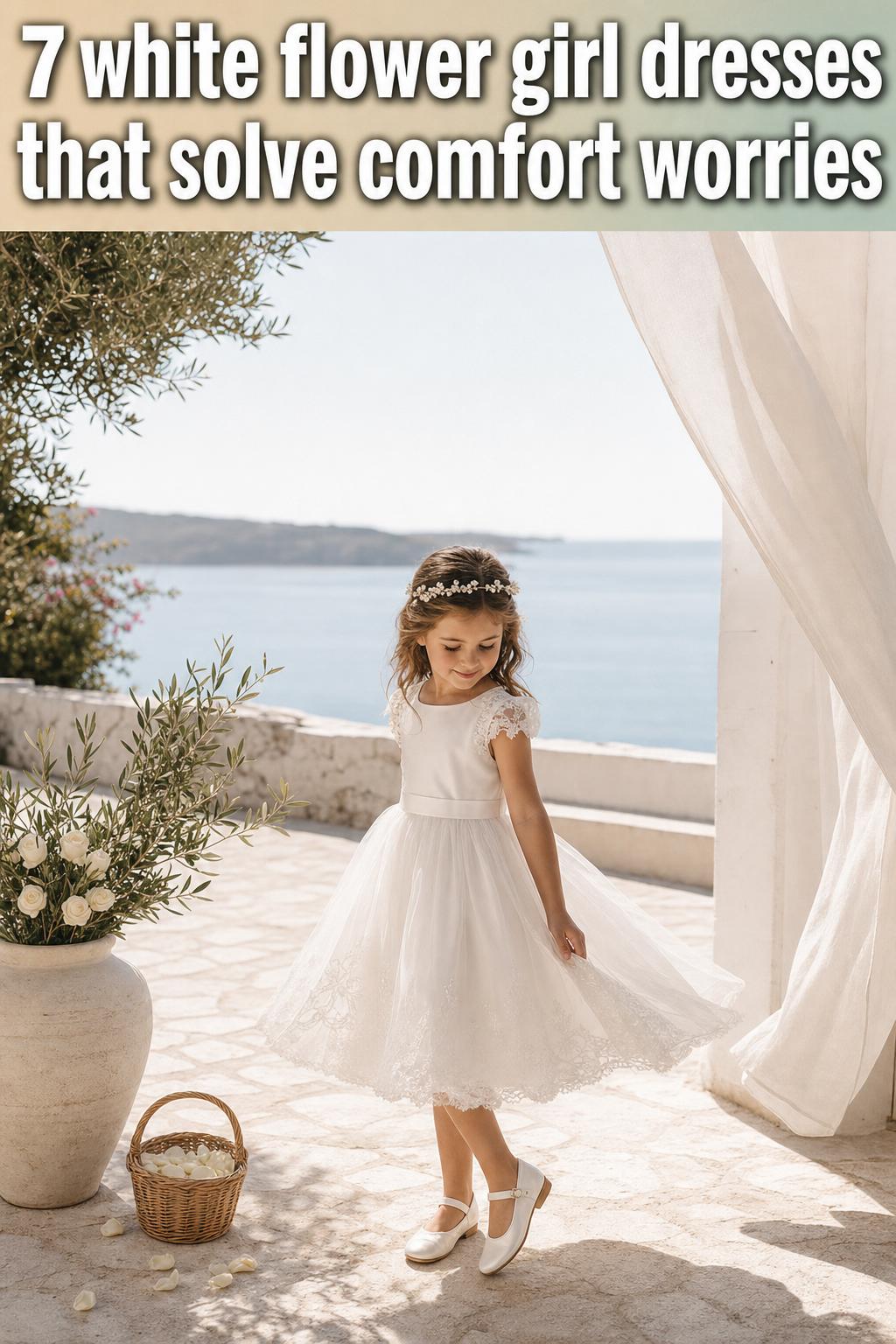
Some weddings call for a dress with more air and softness. In a garden ceremony, at golden hour, or during a spring photoshoot around the venue, a look built around tulle overlays creates a lighter visual rhythm. The silhouette feels dreamy rather than structured, with movement that reads beautifully in candid moments.
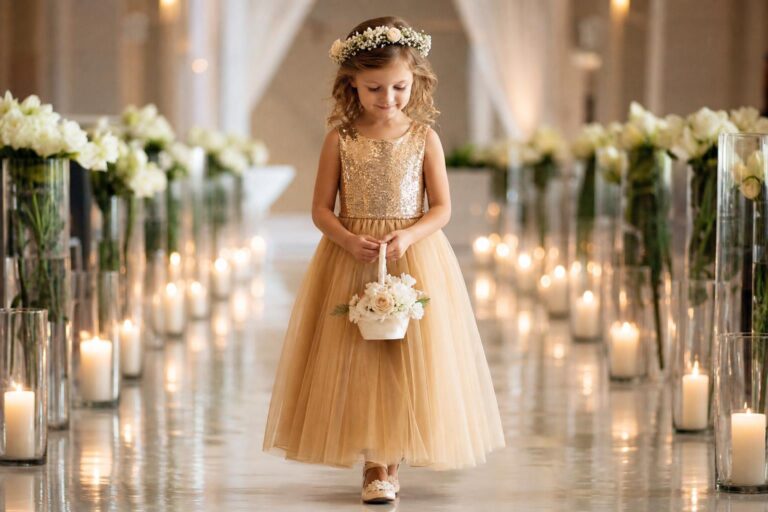
White flower girl dresses in this mood often pair a simple underlayer with sheer volume on top. Tea-length proportions can be especially effective here, since they preserve the romantic sweep of the skirt without creating the heaviness of a full gown. If the fabric mix includes lace at the bodice and tulle through the skirt, the result is textured but still gentle.
The reason this look is so appealing for outdoor celebrations is practical as much as visual. A soft overlay catches movement and breeze, photographs beautifully, and contributes to the fairytale atmosphere many couples want from the ceremony. At the same time, it is wise to keep the styling balanced. Too many decorative additions can compete with the airy effect that makes this look successful in the first place.
Style tip: keep the softness intentional
When a dress already has tulle, lace, or a twirl-worthy skirt, accessories should usually support the dress rather than compete with it. A single floral detail, a subtle sash color, or a slim headband often creates a more elevated result than multiple statement pieces worn together.
Look: lace bodice elegance for a refined bridal palette
There is a more delicate, slightly dressier version of the white flower girl aesthetic that centers on texture rather than shine. This interpretation feels especially suited to a romantic wedding where the visual story leans soft, tonal, and detailed. Think of a venue with floral arrangements, layered bridal fabrics, and an atmosphere that values subtle intricacy over bold contrast.
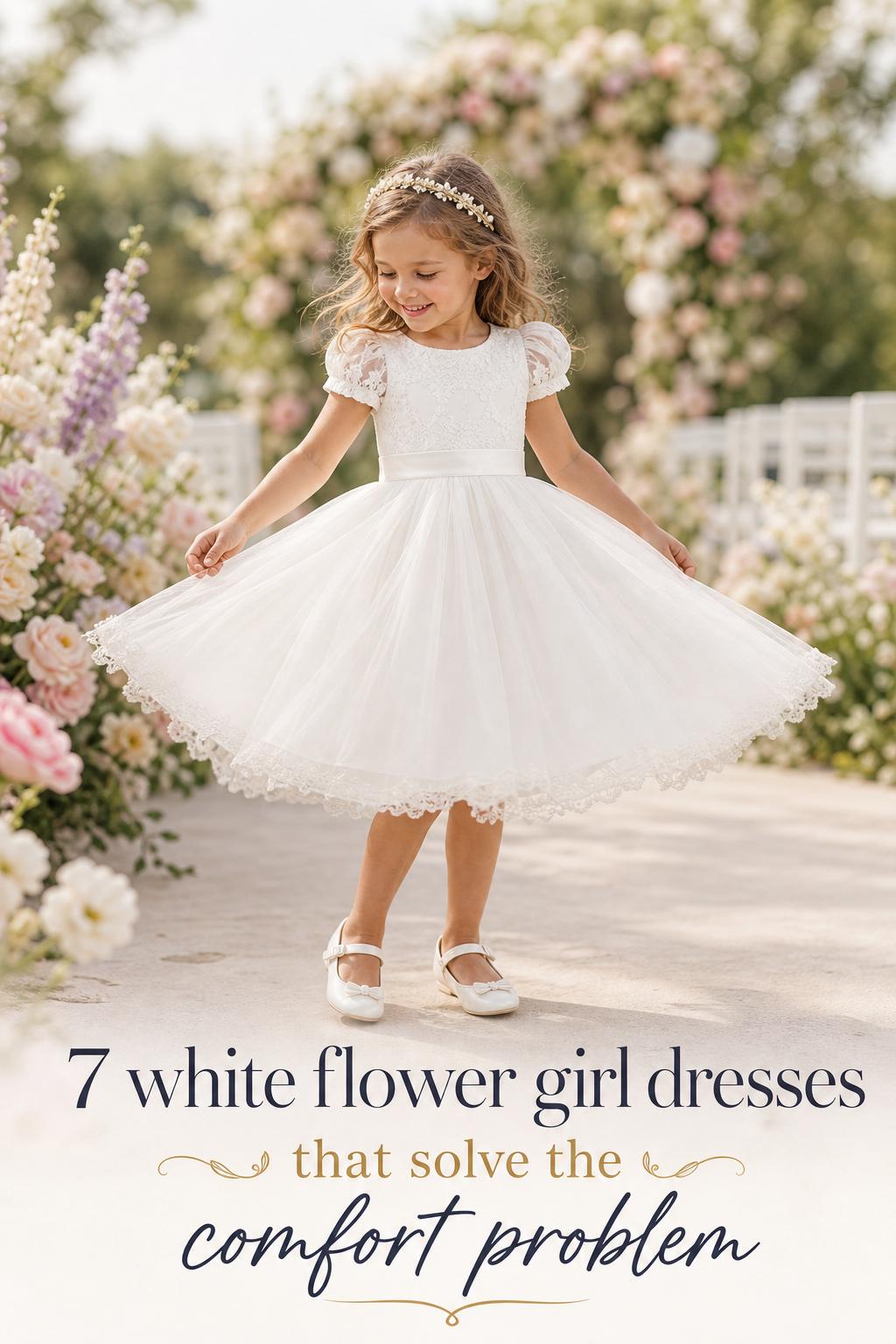
A lace bodice paired with a smooth or lightly voluminous skirt creates a lovely balance. The top half carries visual detail close to the face, while the lower silhouette stays easy and wearable. This kind of dress can work beautifully in white or in an ivory-adjacent tone, depending on how it is being styled against the wedding wardrobe and décor.
What makes this look feel refined is its restraint. Lace has enough character on its own, so the overall shape should remain simple. If the child will be at the wedding from ceremony through reception, this approach can also be easier to wear than a very heavy or highly embellished gown. It feels special in photos, yet still grounded in comfort and movement.
Choosing white or ivory with intention
One of the most common style decisions is whether to choose white or ivory. In conversation, the terms are sometimes used loosely, but visually they can produce different effects. White tends to feel crisp, bright, and traditional. Ivory usually feels softer and slightly warmer. In a bridal setting, that difference can become noticeable when dresses are placed next to each other in natural light or photographed against bridal fabrics.
The best choice depends on the larger styling picture. If the wedding clothing palette is very clean and bright, white may feel more cohesive. If the celebration is built around a softer romantic mood, ivory can blend more gently. For families shopping online, this is one area where product imagery, reviews, and fabric descriptions matter. A dress described as white may still read softly depending on the material and lighting.
It is also worth remembering that flower girl etiquette can vary by wedding. Some couples want close coordination with the bridal look, while others simply want the child to feel dressed for the occasion. That is why the most practical approach is to treat white and ivory as styling tools rather than strict rules.
Look: tea-length charm for movement, comfort, and photos
Tea-length and knee-length dresses occupy a particularly useful place within this category. They preserve the ceremonial feel of a flower girl dress while making movement easier throughout the day. For a child who will be walking on grass, navigating steps, sitting through a longer service, and later joining in the reception energy, this silhouette often proves the most versatile.
The visual mood is sweet and composed rather than dramatic. A tea-length hem reveals the shoe slightly, encourages a light sense of motion, and gives twirl-worthy volume room to show. In satin, the result looks polished; in tulle or a mixed-fabric design, it feels softer and more whimsical. This is also one of the easiest lengths to style for real wedding logistics.
- Works well for walking down the aisle without excess fabric
- Feels age-appropriate and comfortable over several hours
- Photographs beautifully in both posed portraits and candid movement
- Adapts easily across formal weddings, garden venues, and family celebrations
For many families, this is where beauty and practicality meet most successfully. The dress still reads unmistakably as occasion wear, but it avoids some of the challenges of a longer gown. That trade-off matters, especially for younger children who may not enjoy being adjusted or redirected all day.
Brand perspective: Birdy Grey and the editorial gap in shopping
Birdy Grey stands out in this space because the presentation is direct and product-focused. The peony flower girl dress page centers the essentials families need at the point of purchase: the title, design details, material, care guidance, sizing support, shipping and returns, and customer reviews. For shoppers who already know they want a white flower girl dress, that clarity is helpful.
At the same time, product pages often leave an editorial gap. They explain what the dress is, but not always how it fits into a larger wedding style story. That is where details like wedding setting, color pairing, accessory restraint, and silhouette choice become important. A family may know they like satin or puff sleeves, but still need help deciding whether a knee-length dress feels right for a formal venue or whether a softer lace style better suits the day.
Other leading brands mentioned alongside Birdy Grey, such as Nicolette’s Couture and FleurKids, belong to the broader conversation around style variations and designer identity. Even when a shopper begins with one specific product, the real decision often becomes comparative: satin or lace, structured or airy, white or ivory, simple or embellished. The strongest shopping decisions are made when these style questions are answered before checkout.
How to read a product page like a stylist
Look beyond the hero image. The most useful signals are the fabric content, the care instructions, the size chart, the hem length, and the return policy. A beautiful dress is only a good choice if it suits the event and can realistically be worn, moved in, and maintained.
Look: understated modern white for a minimal wedding mood
Not every wedding calls for overtly decorative styling. Some celebrations feel cleaner and more modern, with a restrained palette and simple lines. In that setting, a white flower girl dress with a neat silhouette and only a few defining details can feel especially chic. The overall effect is subtle, polished, and quietly confident.
A plain satin base, a gently pleated skirt, and a soft sleeve shape are often enough. The beauty here comes from proportion and finish rather than embellishment. A back belt can provide shape, while the smooth surface of the fabric keeps the dress aligned with a minimalist bridal aesthetic. This is where a product like the Birdy Grey peony flower girl dress feels particularly relevant: the design details are clear, but not excessive.
This look works because it respects visual balance. If the wedding décor, bridal fashion, or venue architecture is already making a strong statement, a simpler flower girl dress allows the child to remain part of the picture without looking overstyled. It is a thoughtful choice for families drawn to elegance with a contemporary edge.
Sizing, fit, and why proportion matters more than decoration
Even the most beautiful dress loses its effect if the fit is not right. In flower girl styling, proportion matters more than many people expect. A skirt that is too long can interfere with walking. A bodice that is too loose may look untidy in photographs and become uncomfortable over time. Sleeves that pinch or neckline shapes that shift too much can turn a charming dress into a distracting one.
This is why sizing guidance and size charts are not just a technical shopping feature but an essential part of choosing well. Families should pay close attention to how the dress is cut, whether it includes adjustable details such as a back belt, and whether the silhouette allows enough ease for movement. A flower girl is not standing still for a product image; she is moving through a real event.
When deciding between two sizes, the event context helps. A slightly fuller skirt may still look lovely, but excess length can create practical problems. In many cases, a well-proportioned knee-length or tea-length dress offers the best balance of elegance and function, especially when the child will be attending from start to finish.
Key pieces for this aesthetic
- A white or ivory dress with a clear ceremonial silhouette
- Fabric interest through satin, lace, or tulle rather than heavy ornament
- Comfort-led footwear suitable for the venue
- One restrained accessory story, such as a sash or headband
- A fit that supports walking, sitting, and photos throughout the day
Care, maintenance, and longevity after the celebration
Care instructions deserve more attention than they usually receive. A white flower girl dress is often worn during a long event that includes walking outdoors, sitting through a ceremony, family photos, and a reception. Fabrics such as satin can show marks easily, while layered skirts may need gentle handling after wear. When a product specifies material and cleaning guidance, that information should shape the buying decision.
The Birdy Grey example lists 100% polyester and hand wash cold, which tells shoppers two important things. First, the visual effect of the dress comes from a fabric designed to hold shape and sheen. Second, aftercare will require a degree of attentiveness. That does not make the dress difficult, but it does mean families should be realistic about maintenance, especially if the dress may be reused, stored, or passed along.
Longevity also relates to design. Dresses with classic lines and minimal trend-driven embellishment are easier to repurpose for photoshoots, family celebrations, or future formal moments. A timeless white flower girl dress may have a very specific wedding role, but the more balanced and comfortable the design, the more life it can have afterward.
Accessories, shoes, and the art of not doing too much
The most polished flower girl styling usually comes from editing. Once the dress has a clear identity, accessories should reinforce that mood rather than compete with it. Sash colors, headbands, and florals can all work beautifully, but they are most effective when chosen in service of the wedding palette and the dress silhouette.
For a satin dress with puff sleeves and pleating, a simple accessory direction often feels right. For a lace bodice or tulle overlay, the same principle applies: let the texture of the dress remain visible. Shoes should be selected with venue conditions and event duration in mind. A child at a garden wedding may need something secure and easy to walk in, while an indoor formal setting allows a slightly dressier finish as long as comfort remains the priority.
One common mistake is trying to create impact through too many sweet details at once. The result can feel visually busy and less elegant in photos. The stronger approach is to let one element lead. If the dress is the star, everything else should support its line, texture, and movement.
Tips for finishing the look
- Choose either a statement fabric or a statement accessory, not both at full strength
- Match footwear to the venue conditions as carefully as you match it to the dress
- Use sash colors or florals to connect the flower girl gently to the wedding palette
- Keep the overall finish light so the child still looks natural and comfortable
Where these dresses make the most sense
White flower girl dresses are most closely associated with weddings, but the styling logic extends into nearby occasions as well. The research around this category also points to baptisms and photoshoots as natural settings for similar silhouettes. What changes is not always the dress itself, but the way it is styled and the level of detail it carries.
For weddings, the dress has to function within a broader visual narrative. It should align with the ceremony mood, the formality of the venue, and the expectations of family photography. For baptisms or portraits, the same white or ivory silhouette may be styled more simply, with less emphasis on bridal coordination and more emphasis on softness and tradition.
This flexibility is part of why the category remains so useful. A white dress for flower girl styling can feel ceremonial in one context and quietly heirloom-inspired in another. The key is to respect the occasion rather than treating all white dresses as interchangeable.
Shopping with realism: price, policies, and confidence before you order
Shopping for a flower girl dress online can feel deceptively simple because the visual appeal is immediate. In practice, the most confident purchase usually comes from slowing down and checking the details that affect the actual experience of ownership. Shipping policy, return policy, availability, and reviews all matter because wedding timelines are fixed and there is rarely much room for error.
Product pages that include customer review snippets, size information, and clear care guidance tend to be the most helpful. They support the emotional side of the purchase with practical information. For a child’s occasion dress, that balance is essential. Families are not only buying for appearance; they are buying for timing, fit, comfort, and the possibility that adjustments may be needed.
A dress can look ideal in a gallery and still be the wrong choice if the return window is tight, the sizing is uncertain, or the care routine is more demanding than expected. On the other hand, a slightly simpler style with better clarity around fit and policies may become the stronger decision. That is often what separates a visually pleasing purchase from a genuinely successful one.
What stylists tend to prioritize first
Before falling in love with embellishments, confirm the event date, the venue mood, the needed hem length, and the care expectations. Those four factors usually narrow the field quickly and make the final style choice much easier.
Look: the twirl-worthy reception moment
There is also a more playful interpretation of the white flower girl aesthetic, one built around movement and delight. This is the dress that comes alive when the ceremony is over, the formal portraits are done, and the reception becomes warm and celebratory. The silhouette still needs to feel wedding-appropriate, but it can carry a touch more bounce and softness.
A pleated skirt, a lightly flared shape, and fabrics that hold a clean line while moving easily are the foundation here. Twirl-worthy does not have to mean oversized. In fact, a knee-length white flower girl dress often creates the most charming version of this mood because it allows the skirt to swing freely without becoming cumbersome. Puff sleeves can add sweetness, while a simple waist detail keeps the look anchored.
This style resonates because it acknowledges the child’s experience of the day. Weddings are long, emotional, and full of transitions. A dress that still feels lovely when the child wants to move, dance, or simply be comfortable tends to create happier photographs and a more relaxed atmosphere overall.
A final note on building a cohesive wedding look
The best white flower girl dresses are not chosen in isolation. They work because they belong to the atmosphere of the celebration, whether that atmosphere is formal and satin-finished, airy and garden-soft, or modern and understated. The details that matter most are often the least dramatic ones: the right hem length, a fabric that suits the venue, styling that does not overcomplicate the look, and enough comfort for the child to enjoy the day.
Whether you are considering Birdy Grey, comparing a satin dress with a lace option, or deciding between white and ivory, the goal is the same. Choose a dress that feels visually coherent, emotionally appropriate, and realistic to wear. That is what gives the style its lasting elegance.
FAQ
Are white flower girl dresses appropriate for all weddings?
They are appropriate for many weddings, but not automatically for every one. Some couples want a classic white or ivory flower girl look, while others prefer a different palette or a softer coordination with the bridal party. The most respectful approach is to consider the wedding’s visual direction and any preferences the couple has already set.
What is the difference between white and ivory for a flower girl dress?
White typically looks crisper and brighter, while ivory reads softer and warmer. In photos and beside other wedding fabrics, that difference can become noticeable. Choosing between them usually depends on how closely you want the flower girl dress to align with the broader bridal palette and the mood of the event.
Is a knee-length dress better than a long gown for a flower girl?
Knee-length and tea-length styles are often easier for movement, especially during a long wedding day. They reduce the risk of tripping, feel lighter to wear, and still look ceremonial in photographs. A longer gown can be lovely, but it may be less practical for walking, sitting, and dancing.
What details should I check before buying online?
Pay close attention to the size chart, fabric content, care instructions, shipping policy, return policy, and any customer review information. These details help you judge whether the dress will work not only visually but also in terms of fit, timing, and maintenance for the wedding.
Are satin flower girl dresses a good choice?
Satin is a strong choice when you want a polished, formal look with a clean finish. It suits classic wedding settings particularly well and gives structure to silhouettes such as knee-length dresses with puff sleeves or pleated skirts. The main consideration is care, since satin-like finishes can require more attentiveness after wear.
How should a flower girl dress fit?
The dress should feel secure and comfortable through the bodice and shoulders, with enough ease for walking, sitting, and moving naturally. Hem length is especially important, since too much length can interfere with movement. A well-proportioned fit usually matters more than extra decoration.
Can a white flower girl dress be reused after the wedding?
Yes, especially if the design is classic and not overly tied to one specific bridal theme. Depending on the style, it may work for photoshoots, baptisms, or other formal family occasions. Simpler silhouettes and timeless fabrics tend to have the most flexibility after the wedding day.
What accessories work best with white flower girl dresses?
The most effective accessories are usually the most restrained. A soft sash, a simple headband, or a small floral detail can complement the dress without overwhelming it. The goal is to support the dress’s texture and silhouette, not to compete with it.
Why are reviews and return policies so important for this type of dress?
Because weddings run on fixed timelines, families need confidence before ordering. Reviews can offer insight into fit and real-world wear, while return policies affect how manageable the purchase will be if sizing or expectations are off. These practical details are often just as important as the design itself.