Rustic or Formal? A November Wedding Guest Dress Guide
November weddings, one invitation, and two very different style directions
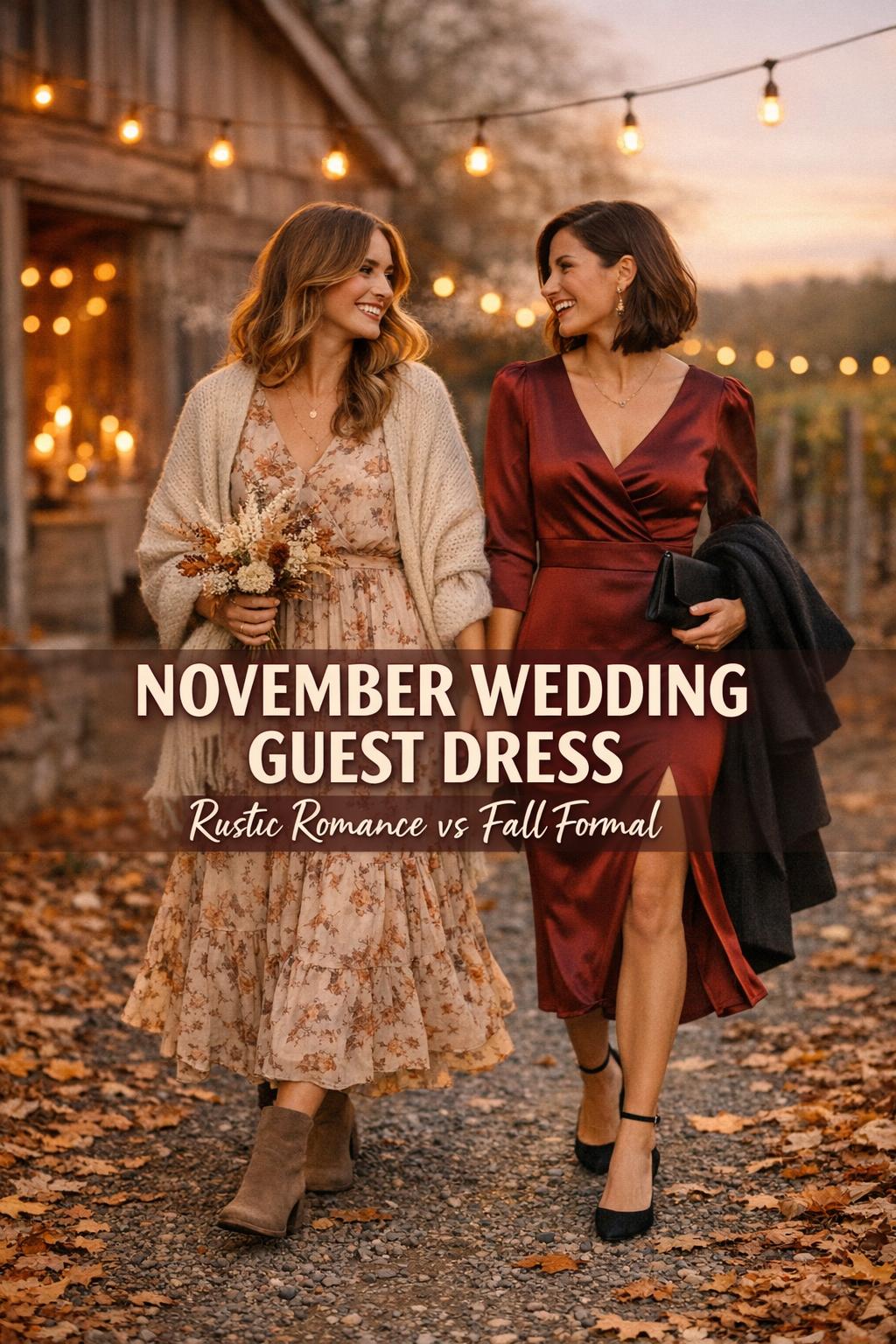
A November wedding guest dress has to do more than photograph beautifully. It has to move gracefully from a crisp ceremony to a longer reception, often with shifting temperatures, darker evenings, and venues that feel moodier than midsummer celebrations. That reality is why so many guests end up weighing two styling approaches that can look similar at a glance but wear very differently in real life: rustic romance versus fall formal polish.
Both aesthetics live comfortably in autumn color stories and both can include midi lengths, long sleeves, and richer textures, which is why they’re frequently discussed together when planning november wedding guest outfits. Yet their priorities diverge: one leans into natural softness and a “countryside” ease, while the other is built around structure, refinement, and dress-code clarity.
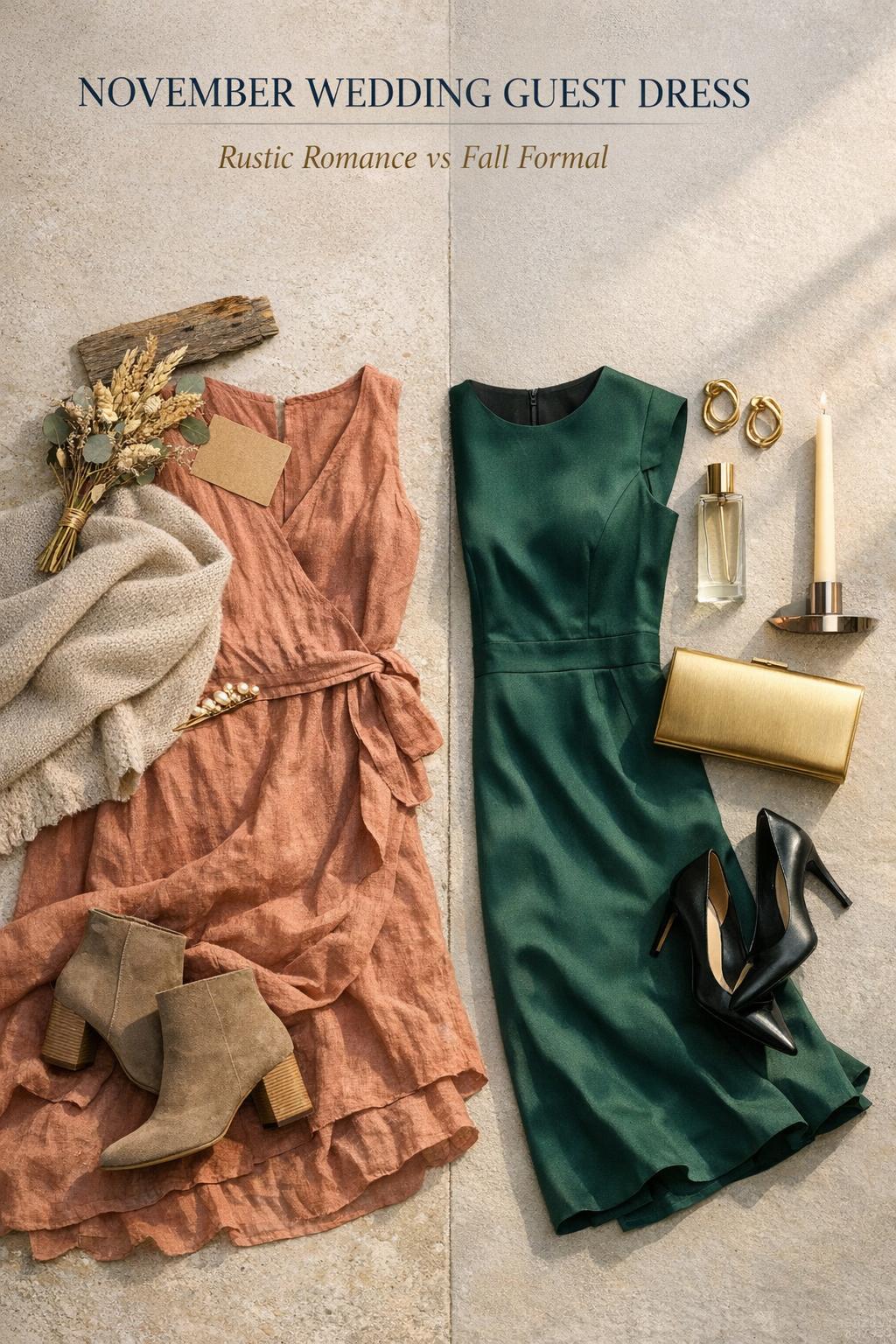
This comparison-style breakdown will help you identify the visual cues of each look, understand how they interpret silhouette, color, and accessories, and choose the right direction for your venue and dress code. Think of it as wedding guest style guidance that translates the same season—late fall—into two distinct, wedding-appropriate wardrobes.
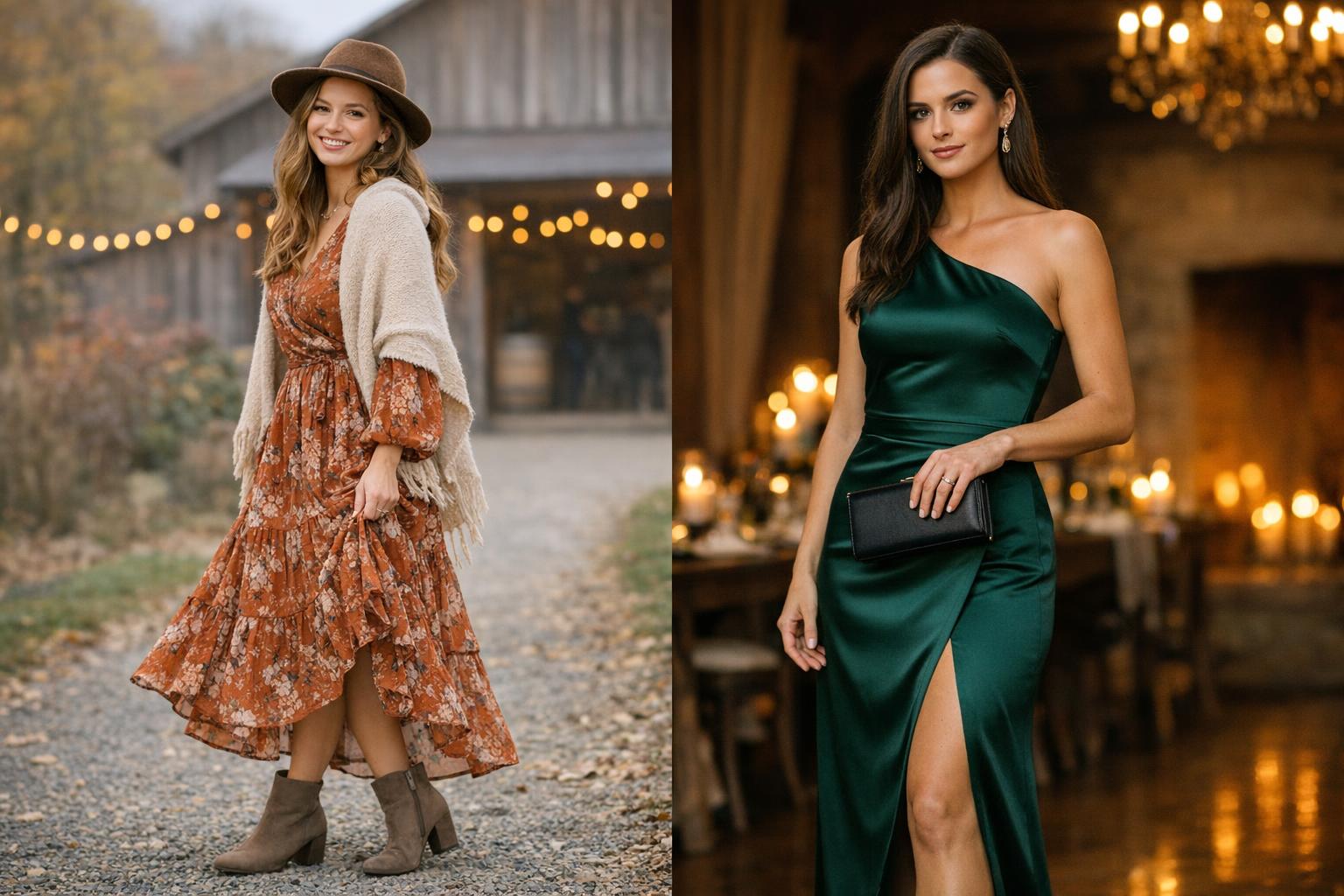
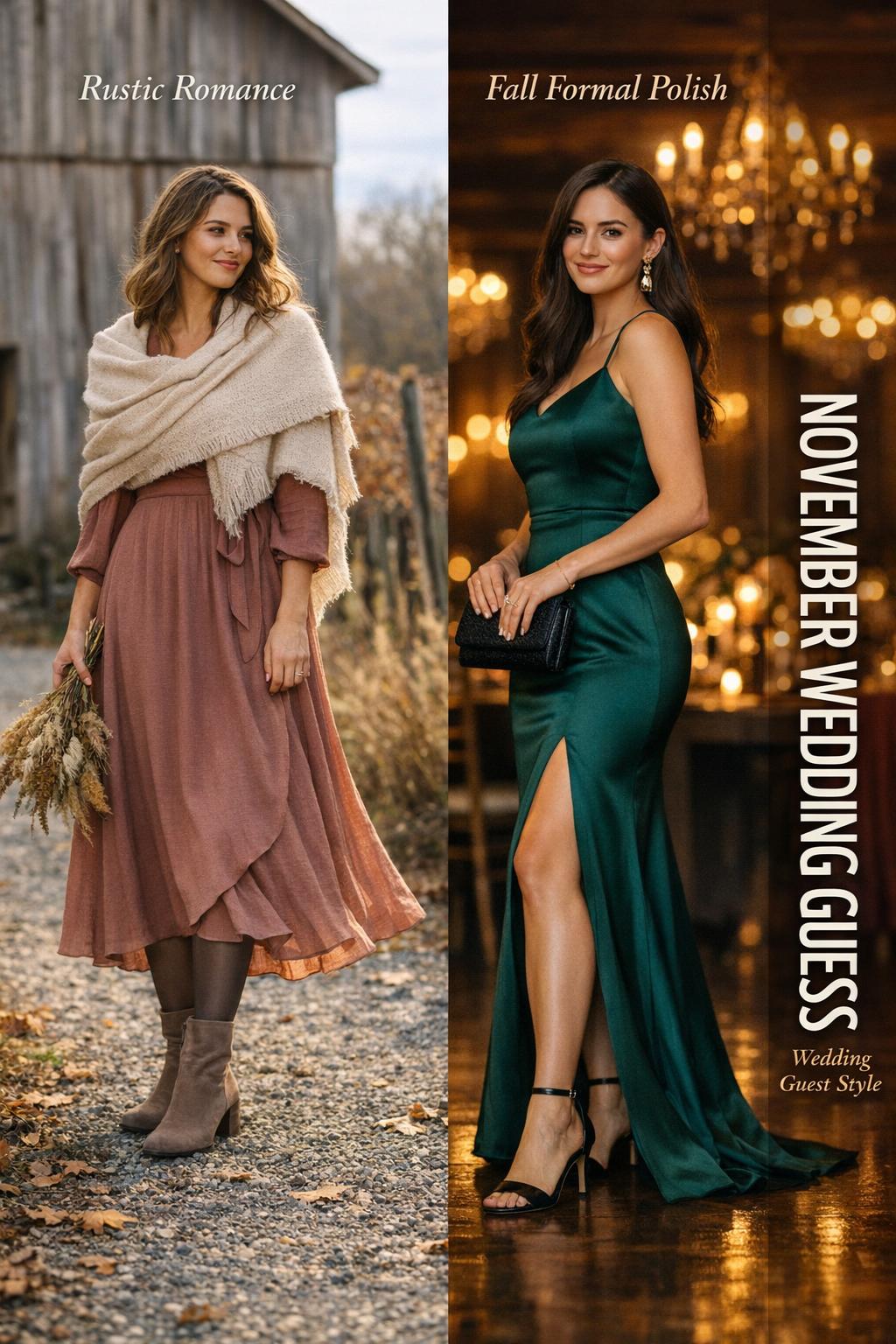
Style overview: rustic wedding guest dress (the romantic countryside approach)
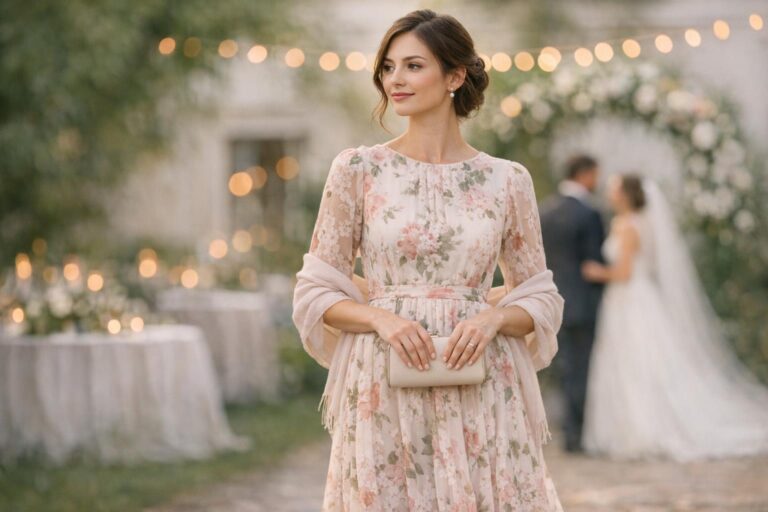
A rustic wedding guest dress reads romantic first and polished second. The defining characteristic is an intentional softness: the outfit looks like it belongs in natural light, surrounded by wood textures, wild florals, and a venue that feels grounded in the outdoors—even if the celebration moves inside later.
Your wedding look is only the beginning.
Keep your guest list, vendors, timeline, and every important detail together with Zarellea — so your day feels as considered as your style.
Silhouettes tend to be fluid and forgiving rather than sharply tailored. Midi dresses and longer hemlines feel especially at home here, because they pair naturally with layering and seasonal footwear. The mood is gentle, feminine, and a little storybook, with comfort built in for uneven ground, outdoor walkways, or a ceremony that includes a bit of travel across a property.
Color is typically drawn from late-fall landscapes—deeper, warmer, and softly muted rather than high-shine. Fabrics and textures support that organic feeling: anything that looks touchable and slightly matte will feel more aligned with this approach than a glossy, highly structured finish.
Style overview: fall formal wedding guest attire (the refined evening approach)
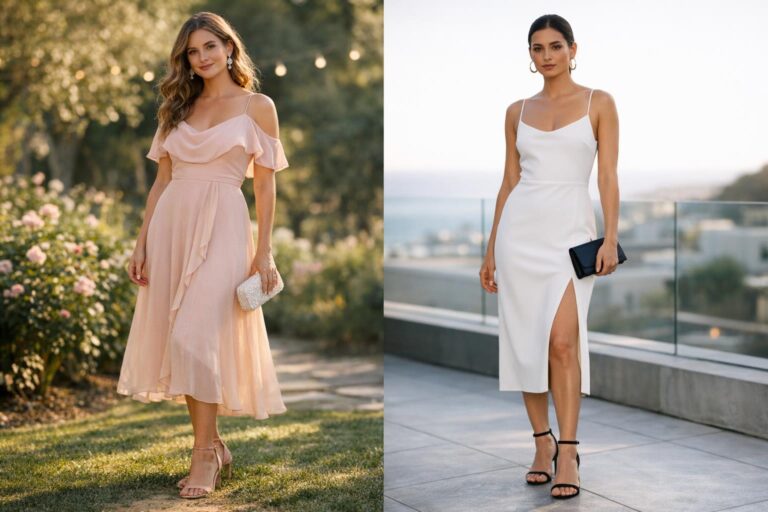
Fall formal wedding guest attire is about clarity and intention. Instead of blending into a natural setting, this style aims to look composed in low light: candlelit receptions, evening ceremonies, and indoor venues where the dress code is communicated more explicitly and photos will capture more contrast.
Silhouettes tend to have more structure, even when they’re not rigid. The fit looks deliberate at the shoulders, waist, or neckline, and the finishing details read “occasion” rather than “everyday.” In november wedding guest outfits, this style often feels like a response to the season’s built-in drama—earlier sunsets and deeper color stories—without drifting into anything costume-like.
The palette typically pushes darker or more saturated tones, and the overall effect is sleek. Fabrics appear smoother and more elevated, and accessories often act like punctuation: minimal but impactful, or classic and coordinated.
Why these styles get confused in November
In November, the same practical needs show up across almost every invitation: warmth, layering, and a hemline that won’t feel out of season. That overlap can make a rustic wedding guest dress and fall formal wedding guest attire look similar on a hanger, especially when both options are long-sleeved or midi length.
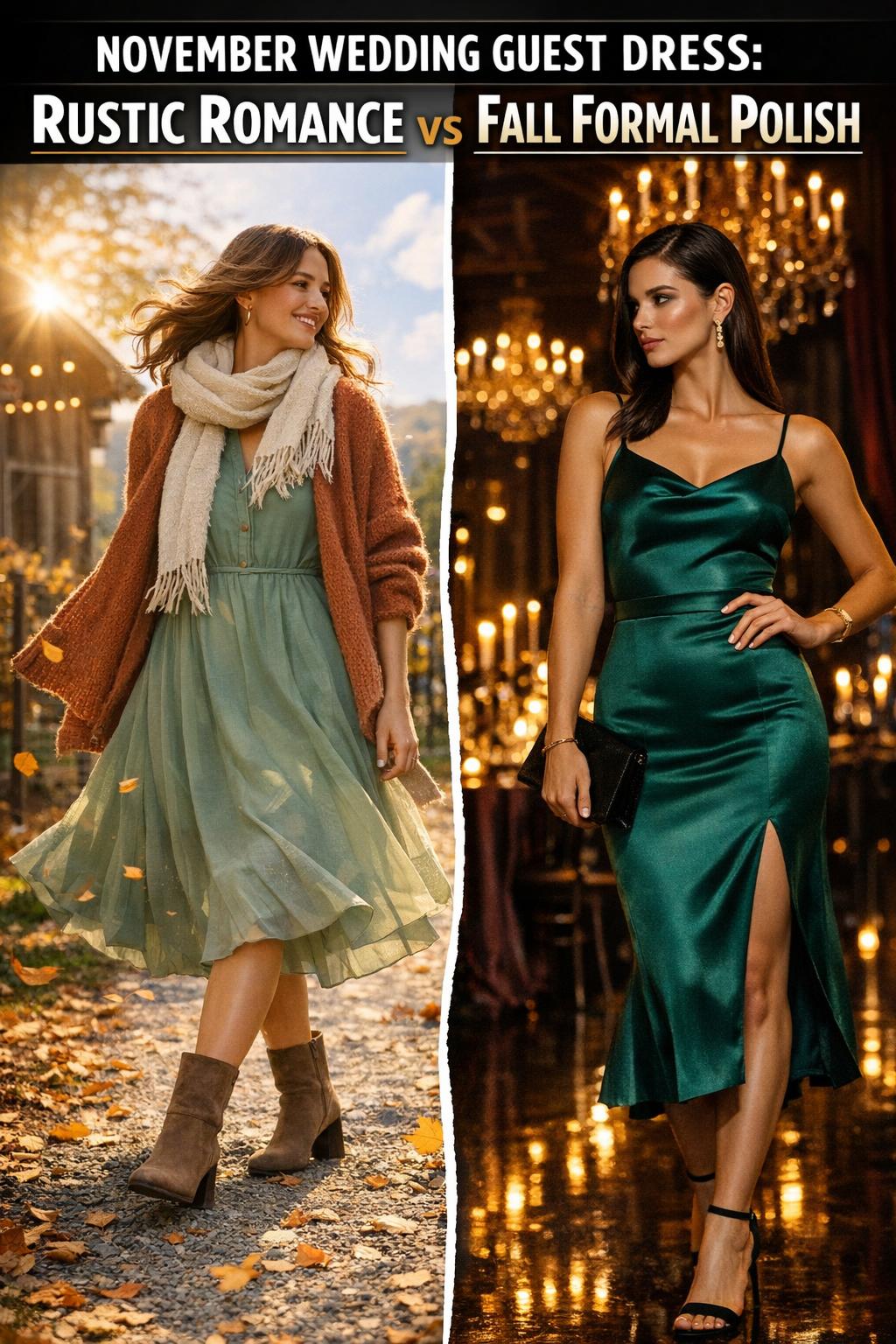
The difference is less about coverage and more about the “finish.” Rustic romance usually looks softer and more textured, while fall formal polish looks smoother and more defined. If you’ve ever tried on a dress that felt perfect for golden-hour portraits but suddenly too casual under reception lighting, you’ve felt this distinction in real time.
Key differences: silhouette, palette, formality, and styling philosophy
Silhouette and structure
A rustic wedding guest dress typically prioritizes movement. The silhouette tends to skim rather than hold, giving you that airy, romantic shape that photographs beautifully outdoors and feels comfortable through a long day. Fall formal wedding guest attire, by contrast, leans into shape definition—cleaner lines and a more intentional fit that reads “evening” at first glance.
Color palette and contrast
Rustic styling tends to favor softer contrast: colors that feel pulled from nature and wear well in daylight. Fall formal looks often embrace stronger contrast and richer depth, which holds up in dimmer venues and feels more aligned with a formal dress code. Both are “fall,” but one is whisper-soft and the other is confidently saturated.
Level of formality and how it’s communicated
Rustic wedding guest style communicates formality through romance—details and softness that still feel special—while fall formal wedding guest attire communicates formality through precision: a more elevated finish and a styling approach that feels intentionally composed. When the invitation calls for formal, the second approach is usually safer because it signals dress code compliance more clearly.
Styling philosophy: “effortless” versus “edited”
The rustic approach aims for an effortless beauty, where the outfit feels like it belongs to the setting. The fall formal approach is more edited: every element feels chosen to support the same polished story. Neither is better; they simply prioritize different kinds of elegance, which matters when you’re trying to interpret fall wedding guest expectations in November.
Visual style breakdown: what you notice first in real outfits
Layering approach
Layering is where these two aesthetics separate quickly. Rustic wedding guest style tends to layer in a way that looks integrated—outerwear and warmth read as part of the outfit’s romance. Fall formal wedding guest attire treats layers as sleek finishing pieces: a clean silhouette maintained even with added warmth, so the look stays sharp from ceremony to reception.
Garment proportions
Rustic proportions often feel relaxed: gentle volume, a softer waist emphasis, or a hemline that moves with you. Fall formal proportions tend to feel more intentional—balanced, smooth, and designed to look composed in photos taken after sunset.
Accessories as mood-setting
In a rustic wedding guest dress direction, accessories support romance and texture. In fall formal wedding guest attire, accessories support refinement and crispness. This is why the same base dress can shift aesthetics depending on what you add: the finishing pieces decide whether the outfit reads “countryside celebration” or “evening reception.”
Footwear choices and how they relate to the venue
Footwear is where practicality becomes visible. Rustic wedding settings often involve grass, gravel, barns, vineyards, or outdoor paths, so the shoe needs to look elegant while handling terrain. Fall formal settings tend to assume stable indoor floors and a more traditional arrival-to-reception flow, where the shoe can be more delicate without risking comfort or stability.
Fall wedding guest reality check: venue, weather, and the “late ceremony” factor
November is the month where a wedding can feel like two different events in one day: daylight vows and an evening reception where the lighting changes the entire visual mood. That’s why choosing a november wedding guest dress isn’t only about the dress itself—it’s about how the look behaves over time.
A rustic approach tends to excel when you expect movement between indoor and outdoor moments, or a venue where the celebration is spread across different spaces. A fall formal approach tends to excel when the wedding is anchored indoors, the reception is more evening-forward, and you want your outfit to look equally strong under ambient lighting.
Outfit comparisons: the same scenario, two different styling solutions
Example comparison: countryside ceremony with golden-hour portraits
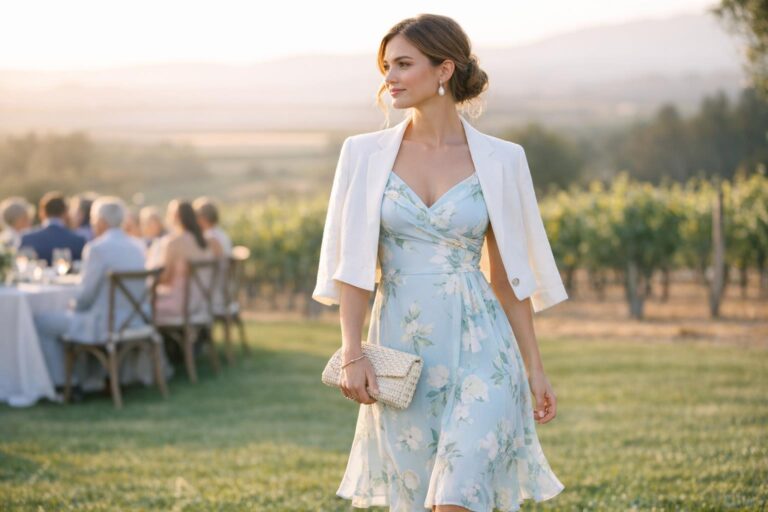
The rustic wedding guest dress approach would lean into softness and a natural palette, choosing a silhouette that moves gently in the breeze and feels graceful on outdoor walkways. The styling logic is romance-meets-comfort: you want to look elevated in photos without looking overstyled against the landscape.
The fall formal wedding guest attire approach would still honor the season but aim for a more defined presence, especially if the celebration transitions into a more formal reception space. The styling logic is “camera-ready after sunset”: the outfit holds shape and reads polished even when daylight fades.
Example comparison: indoor evening reception with a formal dress code
Rustic wedding guest style can work indoors, but it needs careful editing so it doesn’t read too casual under low lighting. The best rustic-to-formal translation keeps the romance while sharpening the finish—cleaner lines, more intentional accessories, and a sense that the look is “occasion” rather than weekend.
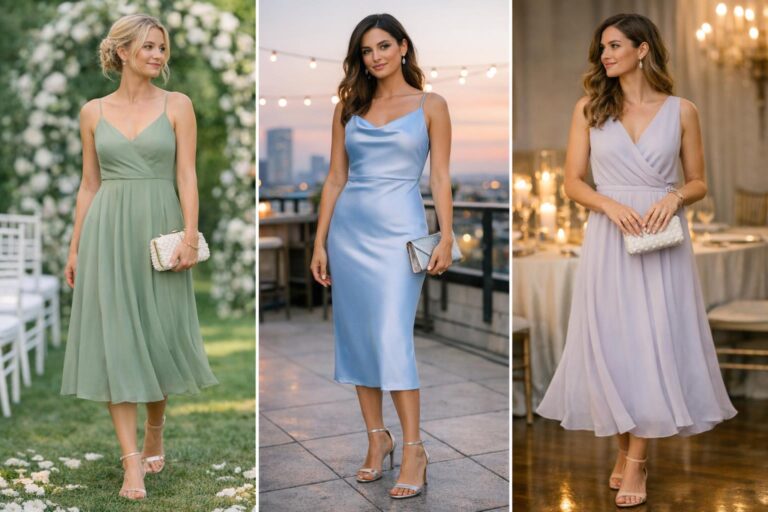
Fall formal wedding guest attire is naturally in its element here. The styling logic is restraint and refinement: a clear silhouette, a richer palette, and accessories that support a composed look from cocktail hour to the last dance.
Example comparison: rustic venue, but the invitation says “formal”
This is where many fall wedding guest outfits go off track. A rustic venue does not automatically mean a casual dress code. In this scenario, the rustic wedding guest dress approach should borrow from fall formal polish—more structure, less “day dress” energy—while still nodding to the venue through texture and romantic details.
The fall formal approach remains the anchor, but it can soften slightly to feel appropriate for a countryside setting. The most successful looks feel like formalwear with warmth: refined, but not stark against the venue’s natural character.
Tips from a wedding stylist’s perspective: making November outfits feel intentional
November wedding guest outfits succeed when they’re planned as a full look, not a dress chosen in isolation. The season is less forgiving: temperature shifts, earlier sunsets, and longer layers can quickly make an outfit feel mismatched if the finishing pieces don’t belong to the same story as the dress.
- Decide your “anchor” first: rustic romance or fall formal polish, then build every piece to reinforce that direction.
- Consider how the dress reads in low light; what looks airy in daylight can look casual in the evening without a more refined finish.
- Choose warmth that doesn’t interrupt the silhouette; the best layering feels like part of the outfit, not an afterthought.
- Plan footwear around the venue path, not just the photos; comfort shows in posture, and posture shows in pictures.
If you’re torn between the two aesthetics, aim to keep one element consistent. For example, you can keep a rustic color palette while choosing a more formal silhouette, or keep a formal palette while using a softer, more romantic shape. The mistake is mixing signals so evenly that the outfit reads undecided.
The biggest styling mistakes with a November wedding guest dress
Mistake 1: dressing for the venue and ignoring the dress code
A rustic venue can still host a formal wedding. If the invitation calls for formal, your outfit needs to communicate that first. Rustic wedding guest style can still be present, but it should be expressed through mood—softness and romance—without sacrificing the level of polish expected for the event.
Mistake 2: choosing a look that only works in one temperature
November weather often changes between ceremony and reception. A dress that feels perfect outdoors can feel heavy indoors, while a sleek formal look can feel underprepared outside. The best fall wedding guest planning includes a layer strategy that keeps the look cohesive from arrival to exit.
Mistake 3: mismatched footwear for rustic terrain or long receptions
Wedding guest style is not only visual—it’s physical. If you’re stepping onto grass, gravel, or uneven paths, shoes that sink or slip will affect your comfort and the way you carry the outfit. Conversely, if you’re in a formal indoor venue, overly casual footwear can flatten an otherwise elegant look.
How to choose between rustic and formal for a fall wedding guest invitation
If you’re deciding between a rustic wedding guest dress and fall formal wedding guest attire, start with what the couple is asking for, then refine based on setting and timing. The dress code is the clearest signal of expectation; the venue and season tell you how to interpret it.
- Choose rustic first if the celebration is countryside-forward, includes outdoor moments, and the overall mood is romantic and natural.
- Choose fall formal first if the ceremony or reception is evening-forward, the invitation signals formality, or the venue is primarily indoors.
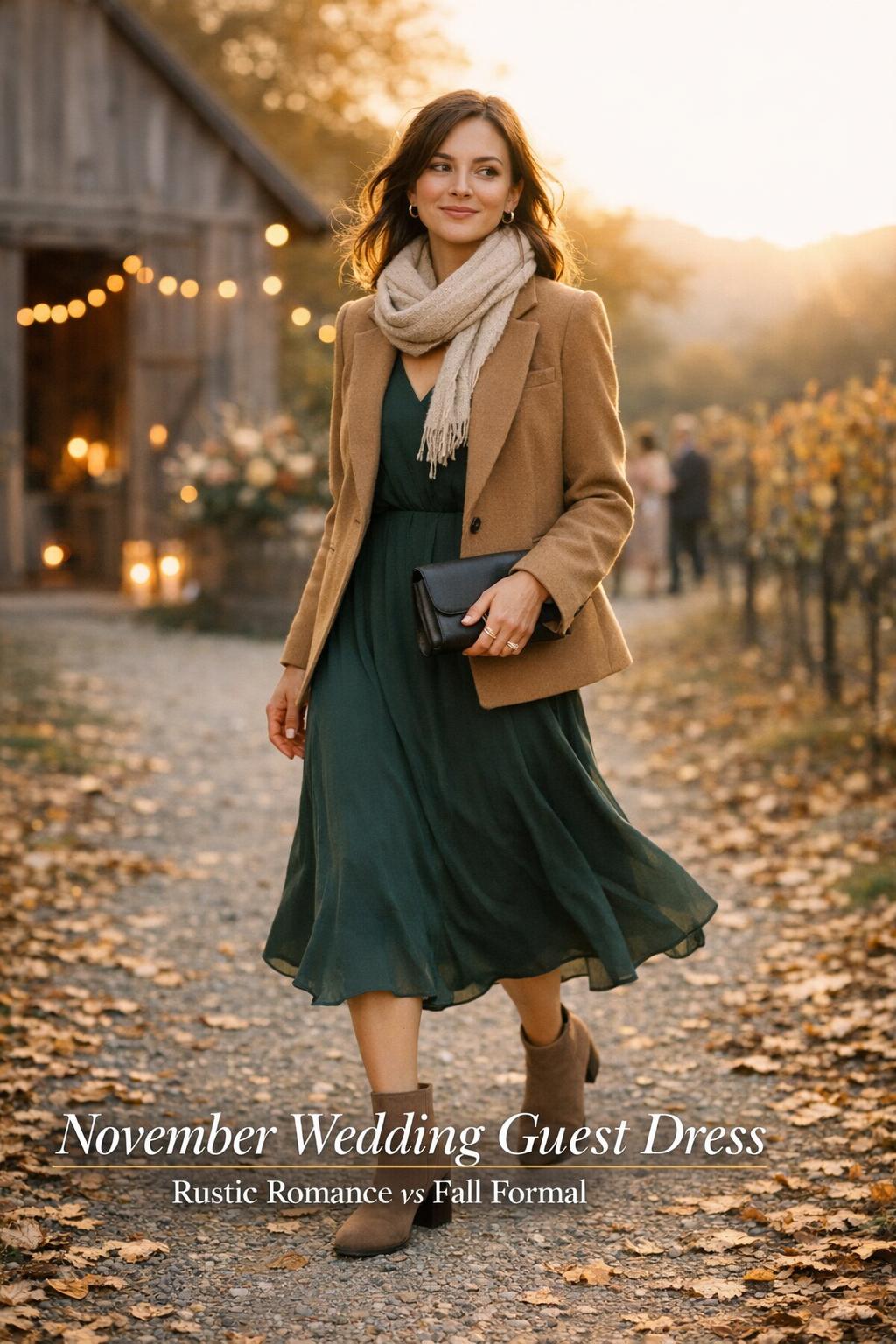
- Blend them if the venue is rustic but the dress code is formal; prioritize formal polish and add rustic softness through subtle details.
In practice, the “right” answer often comes down to where you want your outfit to peak. Rustic looks peak in natural light and scenic backdrops. Fall formal looks peak under evening lighting, in reception photos, and in settings where elegance reads as crisp rather than airy.
Bringing the two aesthetics together without looking conflicted
Some of the most memorable november wedding guest outfits sit in the space between rustic romance and fall formal refinement. The key is to combine them with a clear hierarchy: one style provides the foundation, the other provides the accent.
If you start with a rustic wedding guest dress foundation, the “formal” accent should be focused and minimal—think cleaner finishing choices that elevate the look without changing its character. If you start with a fall formal wedding guest attire foundation, the “rustic” accent should soften the edges—subtly romantic details that keep the outfit from feeling too severe for a countryside venue.
Tips for a balanced hybrid
A successful hybrid reads as one story in photos. That usually means repeating a single visual idea—softness, depth, or structure—at least twice across the outfit so it feels intentional rather than accidental.
- Repeat your “mood” in two places: if the dress is soft, keep accessories soft; if the dress is sleek, keep accessories refined.
- Let only one element be the standout: a dramatic silhouette or a rich palette, not both at maximum intensity.
- Plan the outer layer early so it doesn’t disrupt the outfit’s identity when temperatures drop.
Choosing your look by wedding moment: ceremony, cocktail hour, reception
November weddings often unfold in phases with different lighting and comfort needs, which makes “moment-based” styling especially useful. Think of your look as a small capsule: the dress, the warmth layer, and the footwear must all belong together across multiple settings.
Ceremony: first impressions and weather readiness
For a ceremony that may include outdoor waiting or a breezy walk to the venue, rustic wedding guest style naturally accommodates warmth without looking overly severe. For a formal ceremony, fall formal wedding guest attire ensures your first impression matches the dress code, especially when the venue itself signals tradition and polish.
Cocktail hour: movement, mingling, and layering
Cocktail hour is where comfort becomes visible—standing, greeting, moving between rooms or outdoor areas. A rustic wedding guest dress approach tends to feel effortless here, while fall formal looks feel strongest when the silhouette remains clean and your layering is streamlined enough to keep the outfit’s lines intact.
Reception: low light, photos, and longevity
Receptions in November are often darker, longer, and more photo-heavy. Fall formal wedding guest attire tends to hold the spotlight under evening lighting, while rustic looks can still shine if their details don’t disappear in dim settings. This is also where footwear matters most; the longer you’re on your feet, the more a thoughtful choice supports your overall wedding guest style.
Conclusion: two autumn aesthetics, one clear decision
The core distinction is simple: a rustic wedding guest dress is romantic, natural, and softly textured, while fall formal wedding guest attire is refined, structured, and designed to read elegantly in evening settings. You can spot the difference in the finish—matte softness versus polished definition—and in how the outfit holds up from daylight to low light.
When choosing a november wedding guest dress, let the dress code set the boundary, let the venue set the mood, and let the season guide your layering and footwear. If you blend rustic and formal elements, do it with intention: one style as the foundation, the other as a gentle accent, so your november wedding guest outfits look cohesive in every moment of the celebration.
FAQ
What makes a dress feel appropriate as a november wedding guest dress rather than a summer style worn late?
It comes down to seasonal finish and function: a November-appropriate look reads intentional in cooler weather, supports layering without looking improvised, and holds up visually in darker evening light, which is often where late-fall receptions spend most of their time.
How do I decide between a rustic wedding guest dress and fall formal wedding guest attire?
Start with the dress code as your primary rule, then refine based on venue and timing: rustic styling aligns with romantic, countryside settings and outdoor moments, while fall formal is the safer choice for clearly formal invitations and evening-forward receptions.
Can rustic wedding guest style still work if the invitation says “formal”?
Yes, but rustic becomes an accent rather than the foundation; keep the overall look aligned with formal expectations through a more polished silhouette and finish, then nod to rustic romance through softer mood cues so the outfit doesn’t read casual.
What’s the biggest challenge with november wedding guest outfits compared to earlier fall weddings?
The “two atmospheres” problem: you may dress for daylight or mild temperatures, then find yourself in a colder outdoor moment or a dim, evening reception where the outfit reads differently, so planning for shifting light and comfort is more important than in early fall.
How can I keep fall formal wedding guest attire from feeling too severe for a rustic venue?
Soften the presentation without losing polish by choosing a romantic mood in your styling—subtle softness in the overall feel—while maintaining clean lines and a refined finish so the look still communicates formality.
What shoe considerations matter most for a fall wedding guest look in November?
Think about the path as much as the photos: rustic venues often involve uneven ground that demands stability, while formal indoor venues allow more delicate footwear; in both cases, comfort affects posture and movement, which directly affects how the outfit presents throughout the event.
How do I blend rustic and formal without my wedding guest style looking “in between” in a messy way?
Use a clear hierarchy: choose rustic or formal as the base, then add only a small amount of the other as an accent, making sure your layering and finishing pieces reinforce one consistent story in both daylight and evening lighting.