Spring Black Tie Wedding Guest Dress: Modern Romance, Polished
Introduction
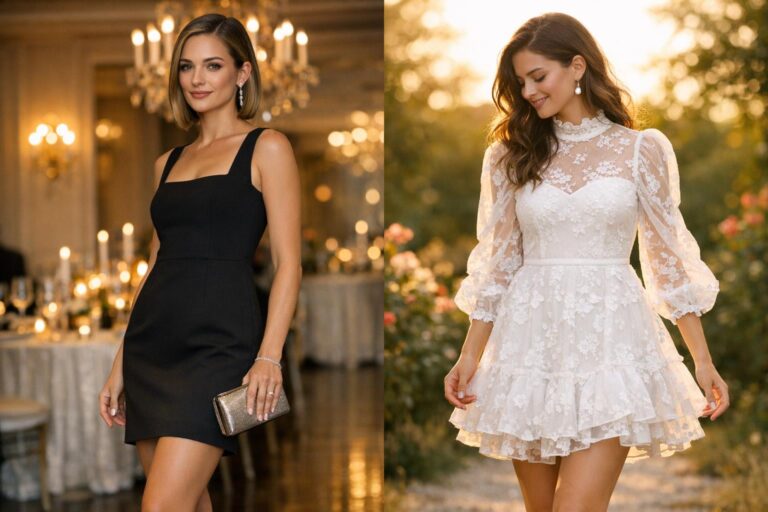
The moment a spring wedding invitation says “black tie,” the styling problem becomes beautifully specific. You’re dressing for a room that expects polish and formality, but you’re arriving in a season that leans airy, luminous, and alive with movement. A spring black tie wedding guest dress should feel like it belongs in soft daylight and flattering photographs—yet still reads unmistakably elevated when the reception lights dim.
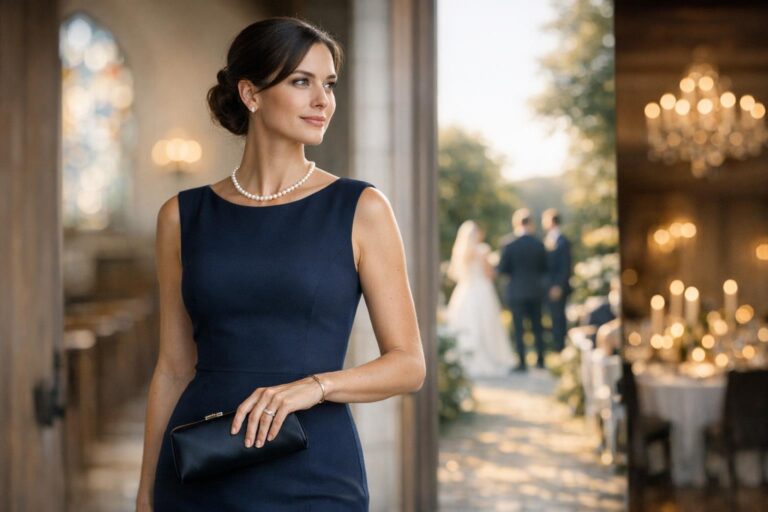
This aesthetic is formal romance with a fresh edge: clean lines, intentional glamour, and fabrics that hold their shape without feeling heavy. Think silhouettes that glide rather than cling, colors that look refined in golden hour, and finishing details that feel curated instead of costume. It’s the kind of look that makes sense in grand ballrooms and candlelit galleries, but also at garden ceremonies where formality meets breezy air.
What keeps the style so appealing is its quiet confidence. Black tie wedding guests don’t need to chase trends; they need to look composed through a full timeline—ceremony, cocktails, dinner, dancing, and the inevitable photos. The goal is a wardrobe choice that feels intentional from the first toast to the last song.
Reading “black tie” in spring: the formality stays, the mood lightens
Black tie is a dress code defined by formal eveningwear, but spring shifts how that formality is expressed. Instead of winter’s heavier textures and deeper tones, the season invites lighter palettes, breathable construction, and silhouettes that feel buoyant while remaining structured. The most successful spring interpretations still look “evening-ready,” just without visual heaviness.
Your wedding look is only the beginning.
Keep your guest list, vendors, timeline, and every important detail together with Zarellea — so your day feels as considered as your style.
In practice, that means choosing a dress that communicates occasion through length, fabrication, and finishing. Even when you reach for softer color, the overall impression should remain refined—clean seams, considered drape, and accessories that look like they were chosen for this exact celebration.
Look: Candlelit slip elegance with a spring palette
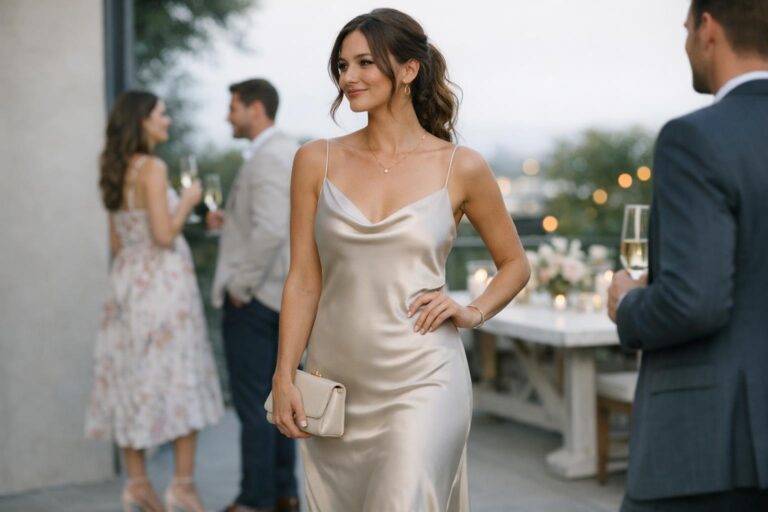
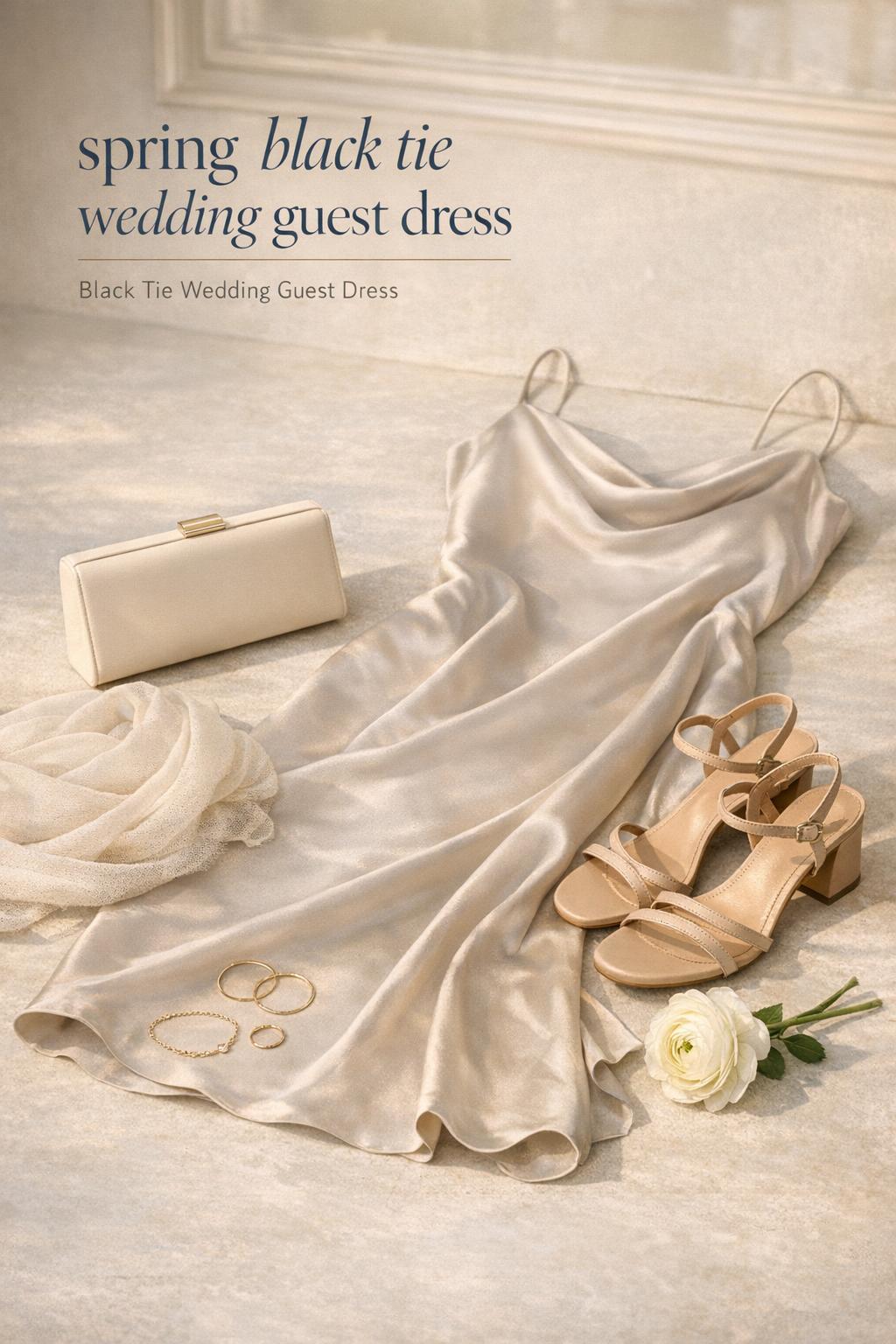
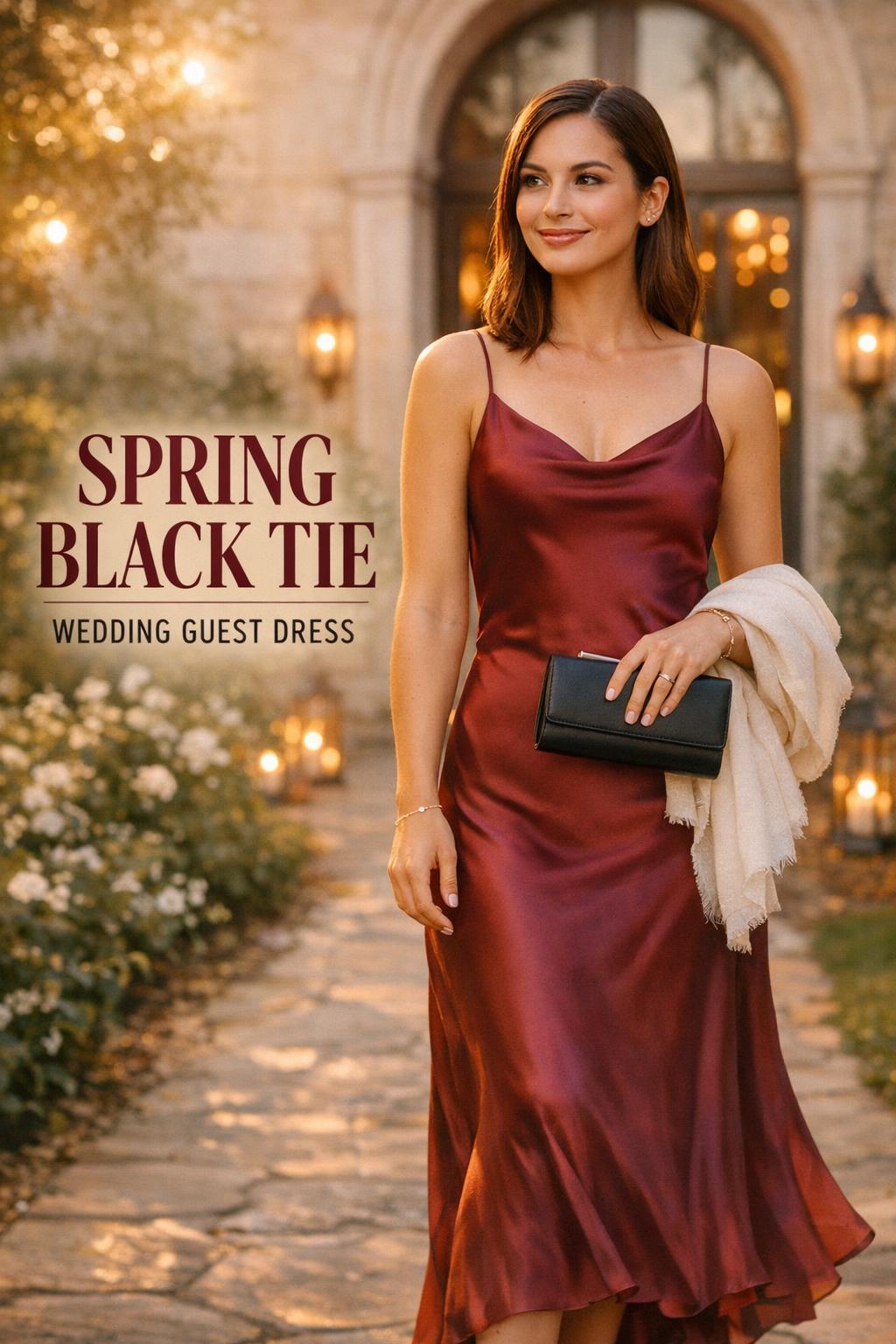
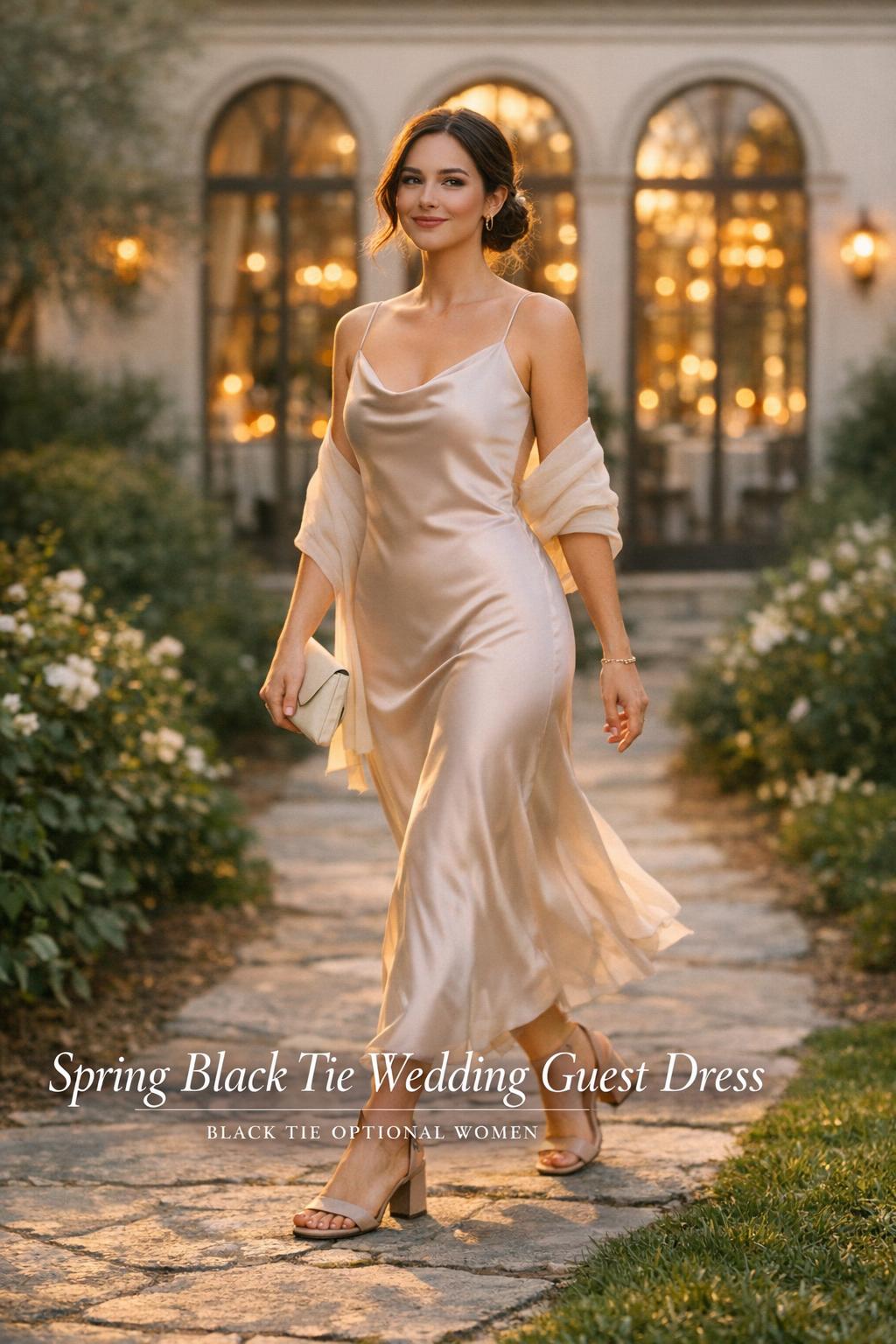
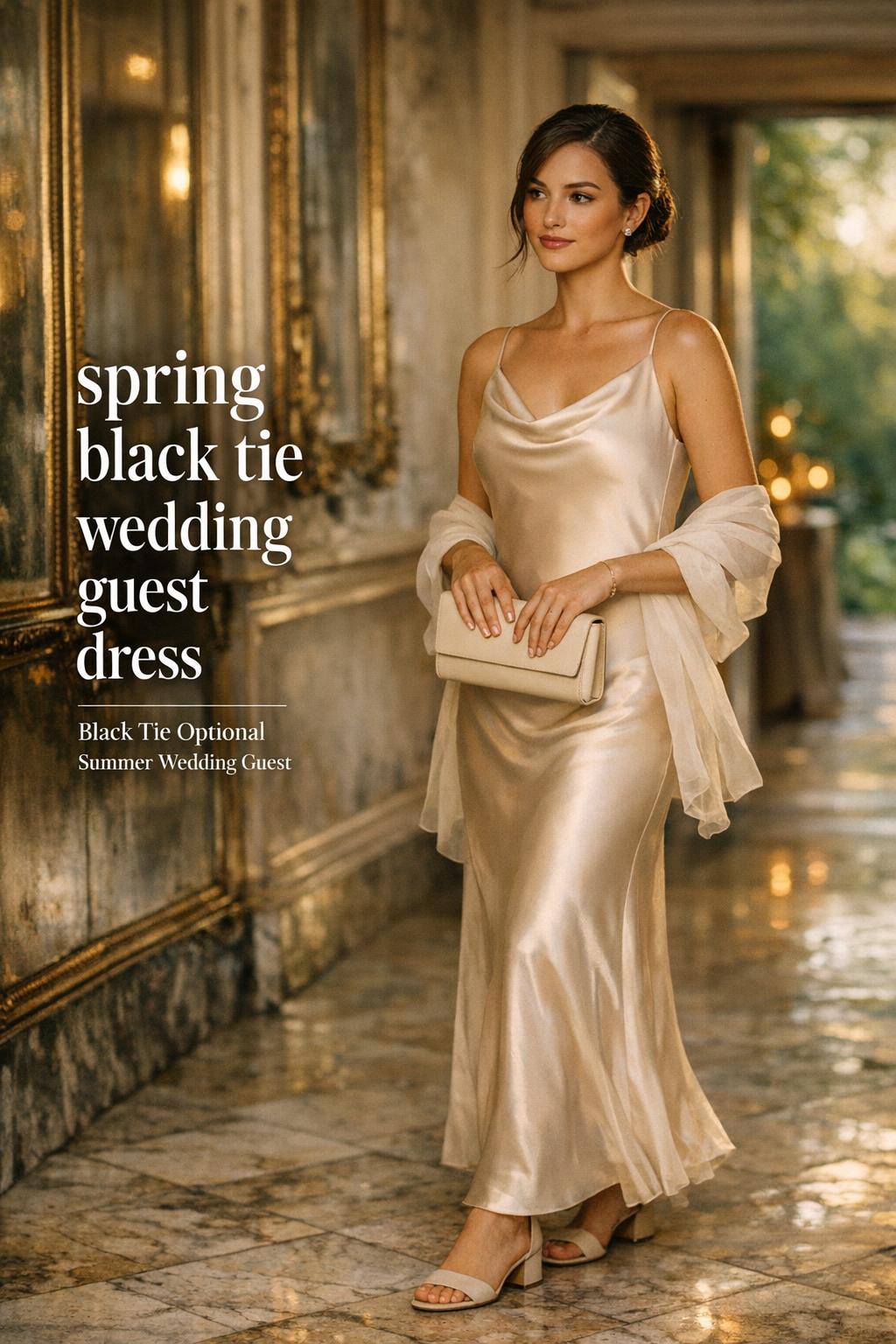
This look is about restrained glamour—the kind that looks effortless in a candlelit reception but still photographs beautifully in early-evening light. The silhouette skims and lengthens, creating a fluid line from shoulder to hem, with just enough shine to signal “black tie” without veering into flashy.
Choose a floor-length slip silhouette in satin or a similarly luminous fabric, then lean into spring by swapping typical darker tones for a lighter, romantic hue. Keep the neckline simple and the straps delicate; the elegance comes from drape and proportion rather than embellishment. Finish with a compact clutch and minimal jewelry to keep the visual story clean.
- Key garments: satin slip gown, optional light wrap for transitions
- Footwear: sleek heeled sandal or a refined closed-toe heel depending on venue flooring
- Accessories: small clutch, understated earrings, a single standout bracelet
The styling insight here is balance: when the dress is fluid and luminous, everything else should be edited. That restraint is what keeps the look firmly in black tie wedding guest territory, even with a spring-forward color mood.
Look: Modern strapless structure for ballroom polish
For a formal indoor venue—think ballroom lighting, mirrored walls, and a late start time—structure reads as instantly elevated. This look has presence before you say a word: a clean, sculpted bodice paired with a long hemline that holds its shape as you move through a crowd.
Go for a strapless or straight-neckline gown with a tailored bodice and a long, controlled skirt. The fabric should have body—something that maintains a crisp outline rather than collapsing. In spring, keep the overall effect fresh by opting for a sleek, minimal finish rather than heavy ornamentation, and let a polished shoe and a sharp clutch carry the “evening” signal.
Why it fits the aesthetic: spring black tie doesn’t have to mean floaty. A structured silhouette is a smart counterpoint to the season’s softness—especially for black tie wedding guests who want a modern, editorial edge that still feels timeless.
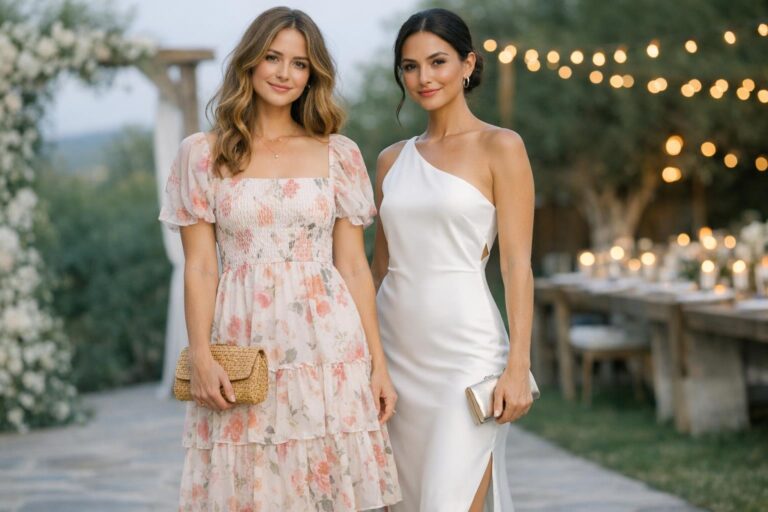
Look: Garden-formal romance in chiffon movement
A garden ceremony asks for a gentler kind of drama—one that moves with the breeze and looks graceful walking across grass, stone paths, and outdoor steps. The visual identity is romantic, airy, and lightly dimensional, with a skirt that catches light and creates motion in photographs.
Choose a long chiffon gown with soft volume, such as a flowing skirt and a bodice that feels secure without looking rigid. The color palette can lean pastel or floral-adjacent in mood, but keep the overall finish formal: a full-length hem, a refined neckline, and accessories that don’t compete with the dress’s movement.
- Key garments: chiffon gown with a flowing skirt, optional dressy wrap for cooler moments
- Footwear: a stable heel that won’t sink on grass
- Accessories: delicate jewelry, a small structured bag, hair pinned back to spotlight the neckline
This look works because it respects the dress code while acknowledging the venue. Chiffon reads elevated when it’s full-length and well-cut, and it delivers comfort through a long ceremony and reception without sacrificing that black tie glow.
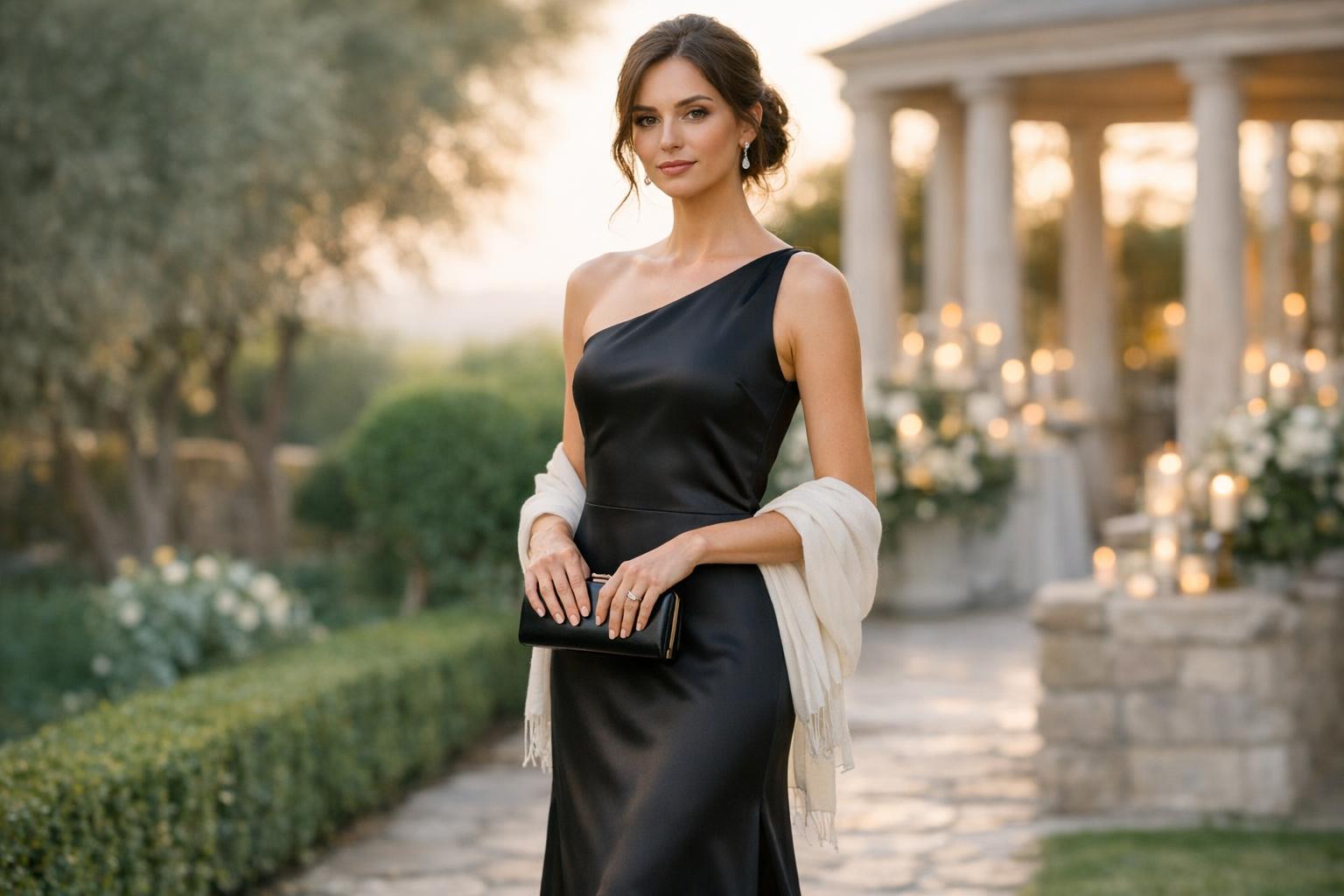
Look: One-shoulder confidence for a formal evening reception
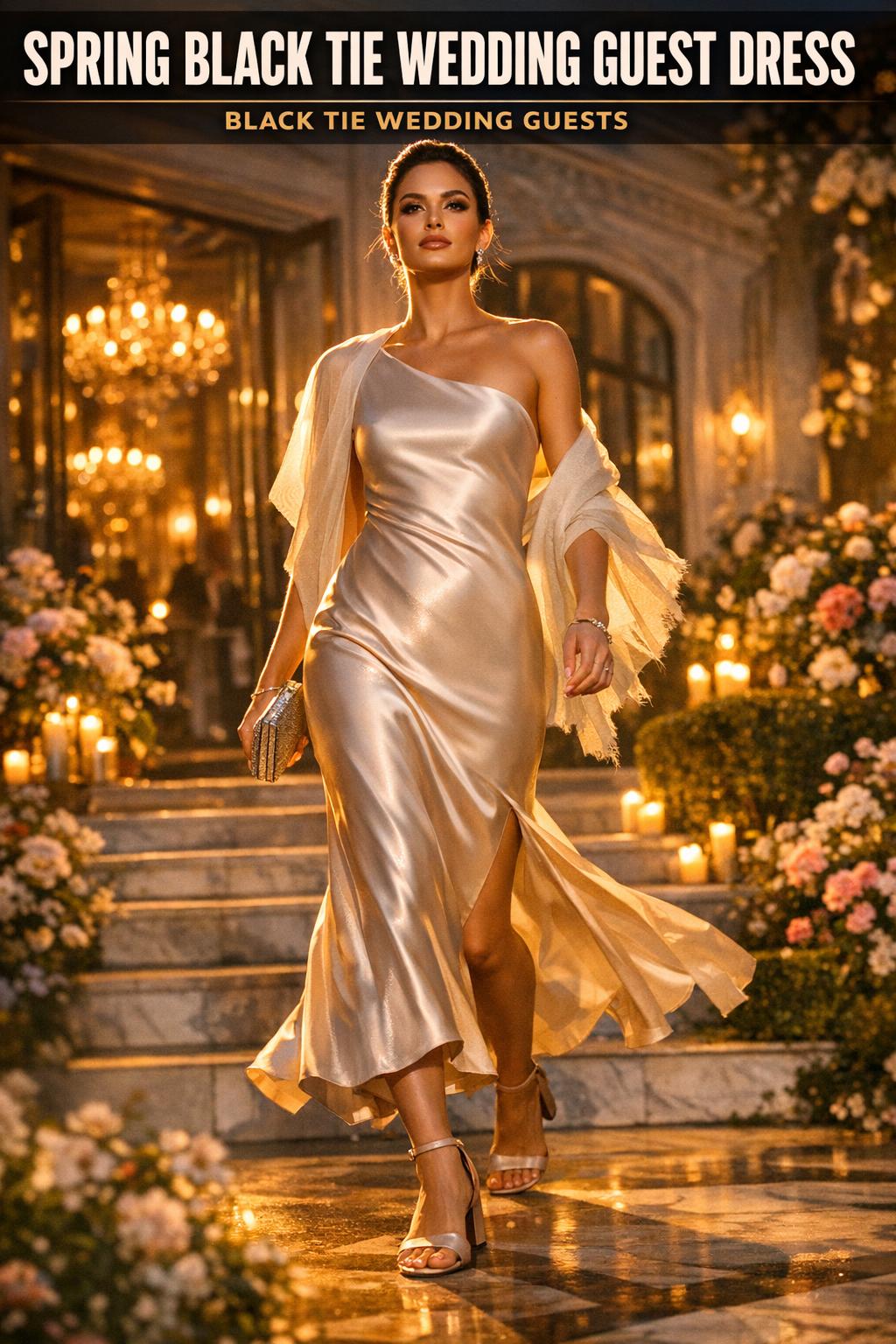
There’s a reason one-shoulder silhouettes feel so right for black tie: they’re instantly dressy, subtly dramatic, and surprisingly comfortable once fitted correctly. In spring, the asymmetry feels fresh—like a modern take on classic eveningwear—without needing heavy detailing.
Look for a full-length gown with a single-shoulder neckline and a clean, uninterrupted skirt line. The aesthetic here is sleek rather than ornate; the shoulder detail becomes the focal point, so the rest of the styling can stay quiet. Choose jewelry that complements the asymmetry—one statement earring or a refined cuff—and keep the hair either softly swept back or intentionally polished.
The key styling logic is proportion. A one-shoulder dress already creates visual interest at the top, so an overly busy bag, layered necklaces, or extra sparkle can tip the look into “trying too hard.” For black tie wedding guests, the most convincing luxury often looks like simplicity.
Look: High-neck minimalism with editorial restraint
This is for the guest who wants to look unmistakably formal without leaning into overtly romantic cues. The mood is sculptural and modern—clean lines, refined coverage, and a long silhouette that feels calm in a room full of shimmer.
Choose a full-length high-neck gown with an elegant, elongated torso line and a skirt that moves without excess volume. In spring, this look becomes especially striking in lighter, cooler tones that emphasize the garment’s shape rather than texture. Keep the accessories architectural: a structured clutch, a sleek heel, and jewelry that feels intentional, not abundant.
Why it fits the spring black tie wedding guest dress brief: high-neck minimalism photographs beautifully, holds its own in formal settings, and feels sophisticated across multiple venue types. It’s also a practical choice if you prefer not to adjust straps or worry about neckline movement through dancing.
Look: Subtle sparkle that reads black tie, not costume
Spring receptions often bring a softer atmosphere—string lights, a lighter menu, a more buoyant mood—yet black tie still asks for visual richness. This look answers with controlled shine: not head-to-toe glitter, but a measured sparkle that looks elevated under evening lighting.
Opt for a full-length dress with a subtle sheen or fine embellishment concentrated in one area—perhaps along the bodice or in a delicate overall texture that catches light when you move. Keep the silhouette straightforward so the finish feels intentional and modern. Let the accessories be quiet and polished: a sleek bag, simple earrings, and a shoe that supports a long night.
The styling insight is to treat sparkle like a seasoning. In black tie settings, especially in spring, the most flattering shimmer is the kind that reveals itself gradually—when you turn, when you laugh, when you step into a photo—rather than shouting from across the room.
Black tie optional women: how to stay formal without feeling overdressed
Some invitations sit in the gray area: “black tie optional.” For black tie optional women, the goal is to look elevated enough that you won’t feel underdressed beside gowns, while still having the flexibility to choose slightly less formal finishes. In spring, this can be especially useful for earlier start times, semi-outdoor venues, or celebrations that blend ceremony and reception in one flowing event.
A long dress is still the safest move when you want to align with black tie energy. But the “optional” element means you can choose a simpler fabrication, fewer embellishments, or a softer silhouette—so long as the total look reads deliberate. The difference between “optional” done well and “too casual” usually comes down to details: hemline, fit, and accessories that look evening-appropriate.
Style tip: the fastest way to elevate black tie optional
If you’re deciding between two dresses, choose the one with the more formal finish (a richer drape, a more substantial fabric, or a longer hem), then keep the styling refined and minimal. Black tie optional is not an excuse to go casual; it’s an invitation to choose sophistication without excess.
Black tie optional summer wedding guest: spring choices that transition effortlessly
Spring and summer weddings often overlap in styling—especially when the venue is warm, outdoors, or destination-adjacent. If you’re shopping now but thinking ahead to a black tie optional summer wedding guest look later, focus on versatility: breathable construction, a wearable neckline, and a color story that remains fresh in brighter months.
The most practical approach is to choose a formal silhouette in a lighter-feeling material, then adjust accessories to season. A spring wrap can become unnecessary in summer; a more covered shoe can become a lighter sandal; a deeper evening bag can be swapped for something with a cleaner, lighter finish. The dress remains the anchor—your styling does the seasonal shift.
How to recreate the look across seasons
- Keep the dress formal first: long hemline, clean fit, and an evening-ready finish
- Adjust coverage with removable layers: a wrap for spring breezes, none for summer heat
- Swap accessories, not the dress: change jewelry scale and bag structure to match the venue mood
This is the styling habit that seasoned black tie wedding guests rely on: invest in the dress silhouette, then let the season show up in the finishing touches.
Venue and weather considerations that change the entire outfit
Two spring weddings can feel like two different worlds. One might be a breezy garden ceremony with soft light and uneven paths; another might be a formal indoor reception with controlled temperatures and glossy floors. A spring black tie wedding guest dress should be chosen with the venue’s realities in mind—because comfort and confidence are part of looking polished.
Outdoor ceremony logistics
Grass, gravel, and garden walkways call for stable footwear and hems that won’t drag. If you’re wearing a long gown, consider how it moves when you walk and where it might catch. A wrap or formal layer is also worth planning for, since spring temperatures can drop quickly once the sun sets.
Indoor black tie formality
Ballrooms and formal reception spaces often reward sleek styling and controlled shine. Structured silhouettes, satin finishes, and polished accessories look especially at home here. The main comfort factor becomes wear time: you’ll likely be in the same look for hours, so prioritize secure fit at the bodice and shoes you can actually stand in for a full evening.
Common missteps stylists notice with black tie wedding guests in spring
Spring can tempt guests into treating “formal” like “pretty,” but black tie has a different standard. The most frequent issue isn’t a wrong color—it’s a look that doesn’t feel finished. A dress can be lovely and still read too casual if the fabrication looks daytime, the length feels informal, or the accessories don’t match the dress code.
- Choosing a dress that’s visually light but not structurally formal, then trying to “fix it” with accessories
- Underestimating the role of hemline and fit in making a look read black tie
- Wearing shoes that can’t handle outdoor terrain, then spending the event adjusting your posture and pace
- Over-accessorizing a simple gown, which can make the overall look feel busy instead of elevated
The best approach is to start with a dress that already communicates evening formality, then add subtle personal touches. Black tie optional women often have the most success when they pick a strong, simple base and style it with restraint.
Key pieces that make the aesthetic feel intentional
A cohesive black tie wardrobe isn’t built on endless dresses—it’s built on a few supporting pieces that make your outfit feel styled rather than assembled. For spring weddings, these are the items that solve practical issues (temperature shifts, venue changes) while keeping the look aligned with formal expectations.
- A formal wrap or layer that complements a gown without hiding it
- A structured clutch that keeps the silhouette polished
- Evening shoes chosen for the venue surface, not just the mirror
- Jewelry with a clear point of view: one focal piece rather than many competing ones
When these pieces are chosen thoughtfully, you can wear a black tie wedding guest dress with far more confidence—because you’re prepared for the full arc of the day, not just the first photo.
FAQ
What counts as a spring black tie wedding guest dress?
A spring black tie wedding guest dress is a formal, evening-appropriate dress—typically full-length—with a refined finish and intentional styling, interpreted in lighter seasonal tones, breathable-feeling fabrics, or silhouettes that move comfortably through spring temperatures while still reading unmistakably formal.
Can black tie wedding guests wear lighter colors in spring?
Yes—lighter colors can look especially elegant in spring as long as the dress remains formal through length, fit, and fabrication, and the overall styling is polished with evening-appropriate accessories.
How should black tie optional women interpret the dress code?
Black tie optional women should aim for a look that could comfortably sit beside full black tie gowns, which usually means choosing a long, refined dress or a clearly formal alternative and finishing it with elevated accessories so the outfit reads intentional rather than “almost formal.”
What’s the safest silhouette for a black tie wedding guest dress?
A full-length gown with a clean, flattering line—such as a slip, one-shoulder, strapless structured bodice, or high-neck minimal shape—is generally the safest because it signals formality immediately and can be styled to suit different venues.
How do I dress for an outdoor spring black tie wedding?
Choose a formal long dress that moves well, plan stable footwear for grass or uneven paths, and bring a refined wrap for temperature shifts; the key is staying comfortable without sacrificing the elevated finish that black tie requires.
Can I wear a subtly sparkly dress to a spring black tie wedding?
Subtle sparkle can be a beautiful choice for spring black tie, especially for evening receptions, as long as the shine feels controlled and elegant—more luminous detail than loud glitter—and the silhouette remains formal and well-balanced.
How can one dress work for spring now and a black tie optional summer wedding guest look later?
Start with a formal dress silhouette and finish, then adjust seasonality through removable layers and accessories—adding a wrap and slightly more coverage for spring, and switching to lighter styling details for summer while keeping the dress itself consistently elevated.
What’s the biggest mistake guests make with black tie in spring?
The most common mistake is choosing a dress that feels “pretty” but not truly formal—often due to an overly casual fabrication, an informal hemline, or unfinished styling—when black tie expectations are better met by a clearly evening-ready dress with restrained, polished accessories.